
Insights from recent episode analysis
Audience Interest
Podcast Focus
Publishing Consistency
Platform Reach
Insights are generated by CastFox AI using publicly available data, episode content, and proprietary models.
Most discussed topics
Brands & references
Total monthly reach
Estimated from 4 chart positions in 4 markets.
By chart position
- 🇦🇺AU · Places & Travel#1385K to 30K
- 🇪🇸ES · Places & Travel#1021K to 10K
- 🇿🇦ZA · Places & Travel#3310K to 30K
- 🇮🇱IL · Places & Travel#164500 to 3K
- Per-Episode Audience
Est. listeners per new episode within ~30 days
5.0K to 22K🎙 Daily cadence·25 episodes·Last published 3d ago - Monthly Reach
Unique listeners across all episodes (30 days)
17K to 73K🇦🇺41%🇿🇦41%🇪🇸14%+1 more - Active Followers
Loyal subscribers who consistently listen
6.6K to 29K
Market Insights
Platform Distribution
Reach across major podcast platforms, updated hourly
Total Followers
—
Total Plays
—
Total Reviews
—
* Data sourced directly from platform APIs and aggregated hourly across all major podcast directories.
On the show
From 10 epsHosts
Recent guests
Recent episodes
Jasmina Wanders: Living on Sicilian Time
Jun 27, 2026
Unknown duration
Banking In Italy: Revolut on IBANs, FX, And Skipping The Branch
Jun 20, 2026
Unknown duration
180 Empty Houses: One American Family's Mission in Abruzzo
Jun 6, 2026
Unknown duration
Italy or Malta: Where Would You Move?
May 30, 2026
Unknown duration
Italy’s Rail Connectivity: The True Story in Liguria and Beyond
May 23, 2026
Unknown duration
Social Links & Contact
Official channels & resources
Official Website
Login
RSS Feed
Login
| Date | Episode | Topics | Guests | Brands | Places | Keywords | Sponsor | Length | |
|---|---|---|---|---|---|---|---|---|---|
| 6/27/26 |  Jasmina Wanders: Living on Sicilian Time | At 24, Jasmina Wanders left the UK for Italy with no guarantees and a beginner's grasp of the language. First Mantova for a master's in historic architecture, then a leap most Italians warned her against: south, to Noto in Sicily, where she now works as an architect after sending her portfolio to studios across the country. This week she tells Anna what the move actually took. Converting a student permesso into a work permit before the deadline. Living without a car in a place that demands one. Watching Noto's property market reshape itself as tourism and the 7% pensioner tax regime pull in foreign buyers. And the quieter shift underneath it all: learning, in a place that runs on comu veni, si cunta, to stop daydreaming about another life and start living this one. A conversation about bureaucracy, belonging, and why the south rewards the people brave enough to bet on it. | — | ||||||
| 6/20/26 |  Banking In Italy: Revolut on IBANs, FX, And Skipping The Branch | Discover the ins and outs of banking in Italy with Magic Towns Italy podcast's latest episode. Join Luca and Anna as they chat with Revolut's Jeffrey Chanseau about opening accounts, saving on fees, and more. | — | ||||||
| 6/6/26 | 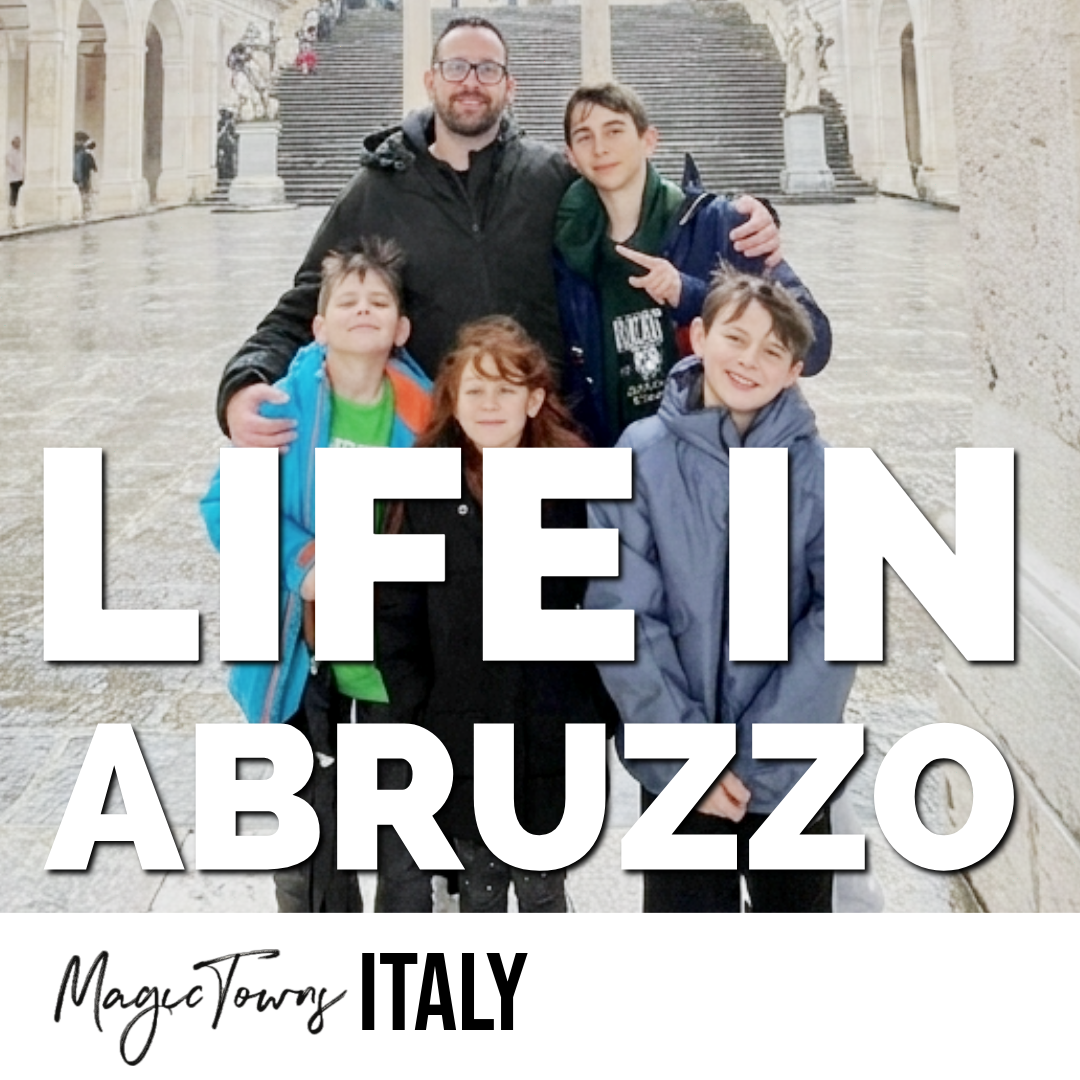 180 Empty Houses: One American Family's Mission in Abruzzo | Discover an inspiring journey of cultural integration on the Magic Towns Italy Podcast. Join us as Joe Reagan shares his adventures in revitalizing a remote Abruzzo community. | — | ||||||
| 5/30/26 |  Italy or Malta: Where Would You Move? | Discover the expat lifestyle in Malta with insights from Gill and Boba. Compare living in Malta versus Italy on the Magic Towns Italy podcast. | — | ||||||
| 5/23/26 | 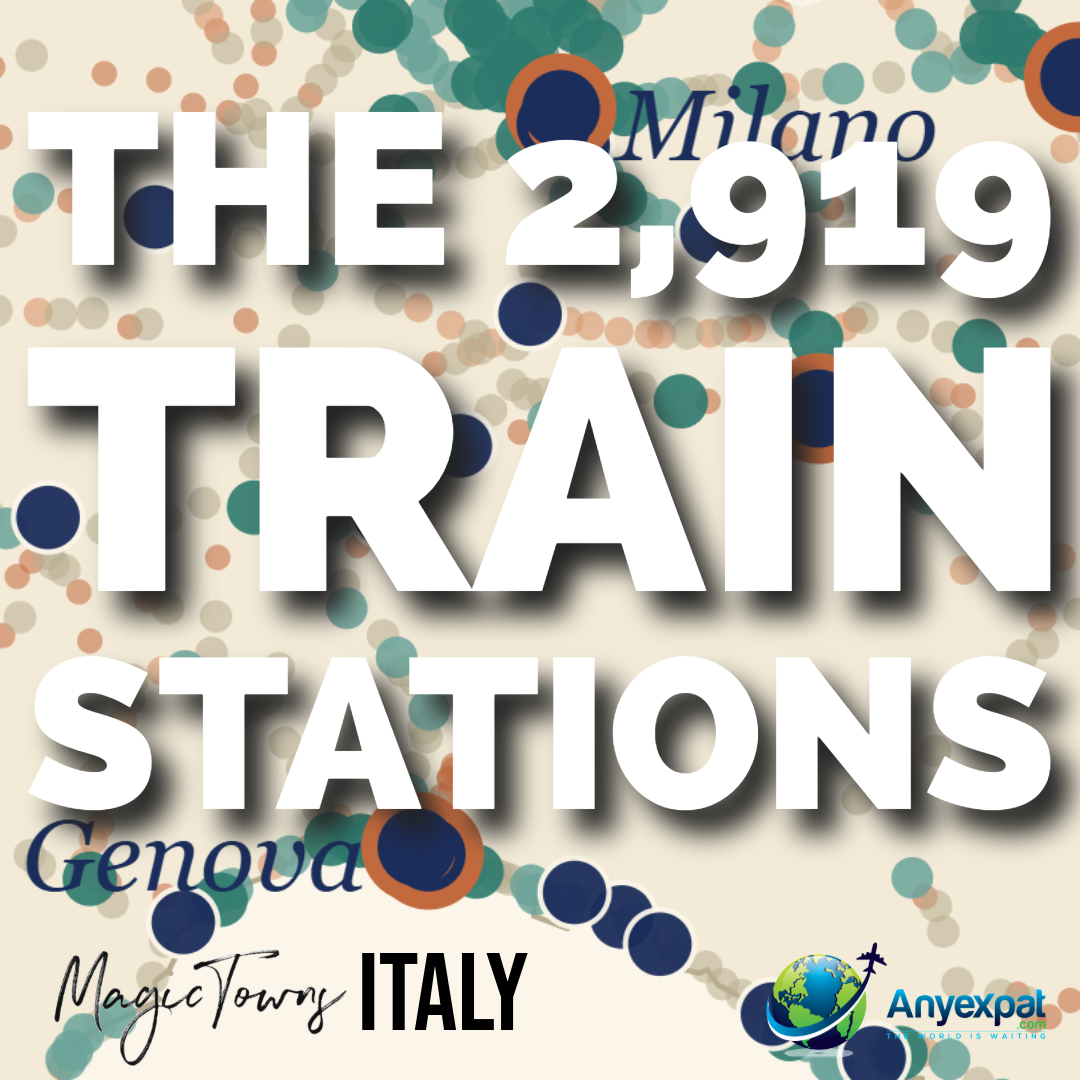 Italy’s Rail Connectivity: The True Story in Liguria and Beyond | Discover the surprising truths about Italy's rail network in this week's episode of Magic Towns Italy. Explore what data reveals about connectivity, debunking common myths of train travel in Liguria and beyond. | — | ||||||
| 5/16/26 |  Top Regions for Public Healthcare in Italy | Discover Italy's top regions for public healthcare, with insights into how data reveals surprising leaders in quality and access. | — | ||||||
| 5/9/26 |  Jaid Newstead: From Burnout to Bari | Discover Jaid Newstead's inspiring journey from Toronto to Bari, Italy, as she navigates challenges and embraces new beginnings in this engaging interview. | — | ||||||
| 4/25/26 |  Where Expats Actually Live in Italy (And Why) | Discover where expats settle in Italy beyond Rome and Milan. Explore the charm of smaller towns popular with Americans, Brits, and more on our latest podcast episode. | — | ||||||
| 4/18/26 | 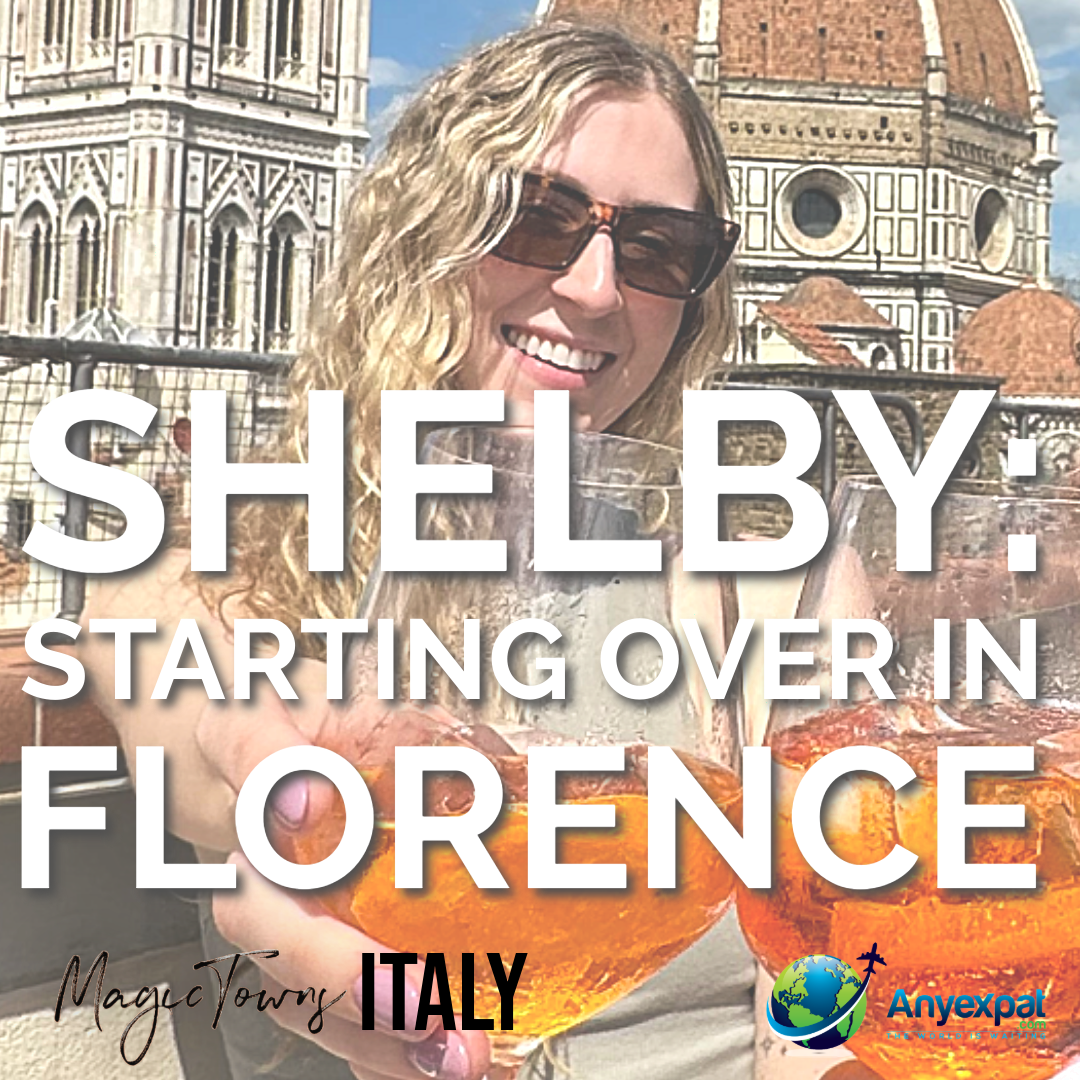 Starting Over in Florence: Shelby Canon’s Story✨ | inspirationmigration+2 | Shelby Canon | Starting Over in Florence | MichiganFlorence+1 | journeyhome+1 | — | 19m 02s | |
| 4/11/26 |  Italy’s 7% Tax Regime Expands: The New Towns Now in Play✨ | tax regimeretirement+3 | — | — | Italy | Italyretirement plans+1 | — | 12m 26s | |
Want analysis for the episodes below?Free for Pro Submit a request, we'll have your selected episodes analyzed within an hour. Free, at no cost to you, for Pro users. | |||||||||
| 3/28/26 |  Property in Italy Traps: An Interview With Realtor Justin Curtis Mavity✨ | real estateproperty buying+2 | Justin Curtis Mavity | Property in Italy Traps | AmericaItaly+6 | real estate agentlicensed+2 | — | 20m 15s | |
| 3/21/26 |  Demographics: Which Italian Towns Will Survive?✨ | demographicsItalian towns+3 | — | Magic Towns Italy | ItalyMilan+1 | town survivalpopulation data+2 | — | 14m 44s | |
| 3/14/26 |  How €1 Homes Changed Mussomeli (and What Happens Next)✨ | one euro homesSicily+3 | — | — | SicilyItaly+8 | MussomeliRecoaro+4 | — | 16m 21s | |
| 3/7/26 |  Sara Shepherd’s Journey From Australia To Le Marche✨ | Le Marchemoving to Italy+3 | Sara Shepherd | Magic Towns ItalyMagic Towns+3 | AustraliaItaly+12 | Italytravel+2 | — | 12m 43s | |
| 2/28/26 |  Exploring Sicily: Tour Highlights, One Euro Homes, Expat Life✨ | Sicilyexpat life+3 | — | CinquecentoFiat | SicilyCaltagirone+3 | CataniaCaltagirone+3 | — | 12m 41s | |
| 2/21/26 |  Italian Education: What It’s Like Growing Up and Attending School in Italy✨ | Italian educationgrowing up in Italy+2 | — | PISA | Italy | education systemchildren+3 | — | 15m 09s | |
| 2/14/26 |  Life-Changing Journey: From North America to Sardinia – An Interview with Charlotte Fortier-Mutzl✨ | Sardiniaentrepreneurship+3 | Charlotte Fortier-Mutzl | InstagramCOVID | North AmericaSardinia+13 | travelItaly+3 | — | 21m 39s | |
| 2/7/26 |  Italy’s Wealth Tax Myths: What Expats Need to Know✨ | wealth taxexpats+2 | — | ExpatsFacebook+1 | Italy | foreign wealth taxassets exempt+1 | — | 18m 30s | |
| 1/31/26 | 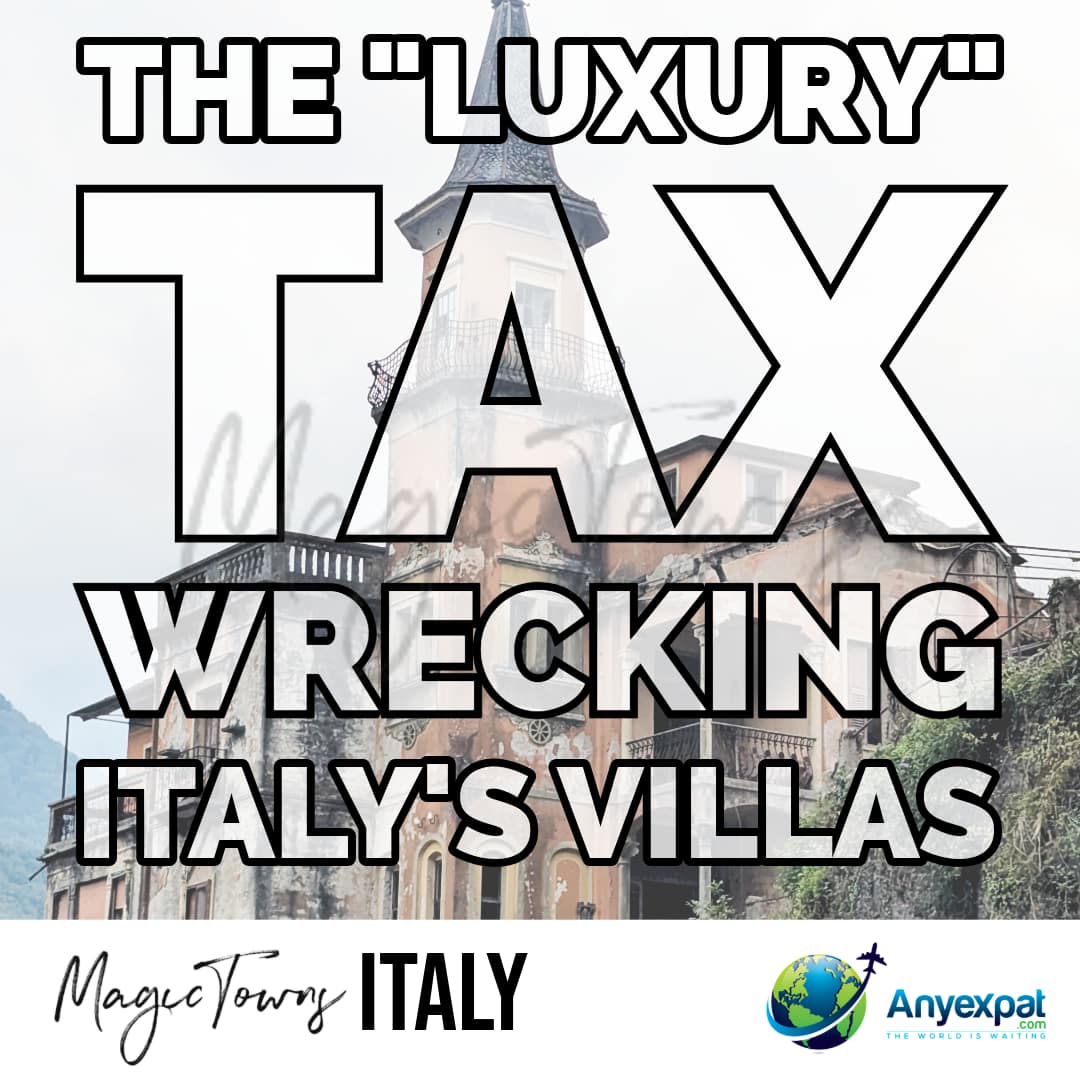 Why Are Italy’s Villas Crumbling? | Luca: Happy Saturday everyone, and welcome back to Magic Towns Italy. I’m Luca here with Anna. Good morning, Anna. Anna: Hi everyone. Hi Luca. Luca: This week we are talking about a question we get often, which is why are so many wonderful, gorgeous looking Italian villages and castles abandoned, or for sale for what looks like pocket change? I, myself have renovated several properties and I’m always looking for properties. It’s, uh, as people know, it’s a bit of an addiction for everyone that has it. The area around Venice alone is home to more than 5,000 historical villas. Hundreds of these are in disrepair and sell or sometimes are auctioned for prices as low as 100 or 200,000 euro. And when foreigners see this, they think, oh, Italy’s property market must be broken. How can it be [00:01:00] so cheap? Anna: Yeah, exactly. I mean, it sounds too good to be true and usually it is. So today we want to correct that view. The low price is often an illusion and it’s caused by real costs like taxes, you know, renovation works. So people and especially foreigners are often unaware of. Luca: That’s right. These properties are not cheap because Italians don’t think the castles or villas aren’t beautiful. They’re cheap because the system makes them very costly to buy and restore. And in the next minutes, we’re going to talk about, uh, Italy’s tax code, the property register system, and the heritage laws that structurally punish historical buildings. In other words, which part of the bureaucracy makes it so hard to use and maintain these villas? Anna: Yeah. By the end of this episode, you will understand the reason why these villas and castles languish unsold so we’ll break down the tax traps, the luxury [00:02:00] labels, the heritage protections. So all the unsexy realities. Luca: Unsexy realities. Let’s start with tax. Anna: Yeah. Luca: 30 second primer on the cadastral category. Please don’t tune out. This is important and most people don’t know what it is. In Italy, there is something called the cadastral category, and it is a code that, indicates what kind of property each property is. Castles, villas are in three of the A categories, A1, A8, or A9. It basically means that, anything that has that label given by the tax man is deemed to be a luxury property from fancy apartments to villas to castles or palazzi. Anna: But luxury sounds like a good thing. Like why do you say it’s a problem? Luca: Because in Italy, luxury is basically a tax warning label. Anna: A warning label, Luca: yes. There’s a whole set of tax benefits that disappear and more taxes kick in. Anna: Even [00:03:00] if the place is falling apart. Luca: Yeah, it doesn’t matter. There can be mushrooms growing through the floorboards, but if the property is tagged as A8 or A9, the tax system treats it like it’s a billionaire’s villa. Anna: What actually changes? Luca: The first thing is that you don’t get any first home tax breaks. Normally when you buy a property, you pay 2% purchase tax if you’re gonna go and live in it. In this case, you’re gonna pay 9% whether you live in it or not. Anna: That’s a big difference. Luca: Huge. Luxury homes are excluded from the benefit. So for the same house price, you could be looking at paying 70,000 euro tax instead of 15,000. Anna: Ah, okay. | — | ||||||
| 1/24/26 |  Interview With George Laing: Betting On A €1 House | Explore Italy's hidden gems with in this George Laing interview. Discover Mussomeli's one euro homes and their impact on the community! | — | ||||||
| 1/17/26 |  Italy’s Renovation Tax Credits 2026 | Luca: I’m excited about yet another episode of the Magic Towns Italy podcast. Are you excited, Anna? Anna: Yeah, I’m super excited also because we are talking about a really interesting topic, right? Luca: We always do. What’s this topic? Anna: So we were gonna keep talking about the most search towns in 2026, but we are pushing that to next week because that’s some really, really important tax news if you’re thinking about buying or fixing up a home in Italy. Luca: That is right. We are going to talk about Italy’s home renovation tax breaks for 2026. 2026 is actually a bit of a special year. We’ve even called it the last really good year to renovate with meaningful tax breaks. We’re going to talk about what incentives that are there now, especially compared to the crazy, [00:01:00] Superbonus 110% from a few years before. Anna: Oh yeah, that bonus, the government basically paid you more than what you spent. Crazy, right? Luca: Yes. I would say that Superbonus, born in 2020 let homeowners claim 110% of the renovation costs as a tax credit and in practice that meant that you could renovate your house and make a 10% profit in tax credits. It was the government paying for your renovation effectively. Anna: Yeah. Suddenly everyone was changing windows. Installing solar panels. But that, that couldn’t last forever, right? Luca: Yeah. The bill was astronomical. The super bonus blew a hole in Italy ‘s finances. The economy minister said that these incentives had a devastating impact on public Between one and the other these bonuses have cost 219 billion [00:02:00] euro. Anna: Oh my God, that’s insane. Like Italy basically threw hundreds of billions at home makeovers. Luca: The initial plan was for the scheme to cost maybe 35 billion Euro that is short up to a hundred around the 160 billion euro in just four years. And the worst thing is that because the government was effectively paying for people to renovate their home, the construction costs also went up by a lot. Uh, people weren’t even negotiating prices. I mean, uh, and why would they care if the state was paying for it? And did lead to some abuse. Anna: Yeah, I heard about the scams. People were definitely taking advantage. Luca: Yeah, taking advantage of the system. Um, so far, about 12 billion in fraudulent claims had been found out. Prime Minister Meloni called it the biggest scandal that the state has ever suffered. So there has been a lot of backlash on this tax scheme. And we could do an entire podcast about what went wrong with 110% super bonus.[00:03:00] So it shouldn’t be surprising that these incentives have been dialed back. Anna: So the Superbonus is basically done now, right? Luca: As of right now, January, 2026, the Superbonus, 105% is completely scrapped , for any of our listeners, this scheme is effectively over. Anna: Oh, okay. So no more free renovation for us. I mean, it was good while it lasted, but um, what about now? Like, if 2026 is the last good year, what can we actually get this year? Luca: That’s a good question. The government has not completely abandoned helping renovators, and in fact, uh, three of the key programs, the Bonus Casa, which is the oldest of them, has existed for maybe 20 years, the Ecobonus and Sismabonus have all been extended, but at lower rates and with simpler rules. Anna: Wait, but what’s the difference between them? Luca: So in a [00:04:00] nutshell, Bonus Casa is the gen... | — | ||||||
| 1/10/26 |  Top 20 Most Popular Expat Towns in Italy | Anna: Hi everyone and welcome back to the Magic Towns Italy podcast. For our first episode of the year, we’re gonna talk about some really cool research with you. We’re diving into the top towns in Italy that expats are looking to move to. What are these towns, the big busy cities like Milan or Rome? Tuscany, some beautiful places in Sicily. Luca: Hi Anna. Happy New Year. Anna: Happy New Year. Luca: Did you have a nice, uh, end of year break? Anna: Yeah, it was nice. I was in Rome and it was really, really nice. Luca: I have been, uh, home actually doing a little bit of gardening. I know it’s minus seven outside now, but it wasn’t quite so bad before New Year’s Eve Anna: you’re brave. Luca: Well, I have to. Today we’re going to talk about, uh, a, um, topic that I’m very excited [00:01:00] about, that we’ve been working on for some time. We have combined search engine data with usage of Magic Towns Italy own Town Explorer to see where expats are looking to move to in Italy. You’re not gonna hear from anyone else because they don’t have the data, but we do. And, um, we have quite a few surprises. So on the one hand, we looked at how often people abroad search for moving to specific cities or living in specific cities. And then we looked at, uh, which one of our town profiles are getting the most attention from international visitors. So this covers both the aspiration stage, kind of Googling what to do with your life, and then the serious research stage of the expat journey. Then we have blended this data together to provide the ranking of the top 20 towns that expats [00:02:00] had their eyes on in 2025. Anna: We’re not gonna just read you a boring list of towns, we’re gonna chat about the, you know, the surprising stuff, beyond the data and there’s a bunch. Luca: So we have big cities versus small town dynamics. There’s some regional trends that are interesting, uh, that are frankly unexpected and there are quite a few under the radar towns that are punching way above their weight. Uh, some of them you may have never heard about, but they’re still in the top 20. We are going to cover most of the ranking, but if you want to read the entire list and get to the top three , then you have to go to Magic Towns Italy and read the article that Anna published today. So let’s get on with it. Anna: The first thing is this when people first think about moving to Italy, it’s usually the big cities that pop into their heads. So, you know, Milan, Florence, Rome, but, what we found is once people go from just [00:03:00] dreaming to actually planning, a lot of them start looking at Italy, smaller towns and countryside instead. Luca: To confirm what Anna just said, the single most viewed town on Magic Towns Italy last year was not Milan or Rome. It was Scalea, a coastal town in Calabria that barely has 11,000 residents. And that must be a big surprise to everyone. On its full ranking basis scalea came in at number six. Although very few people frankly are Googling move to Scalea, it’s an area they discover once they get into the weeds. It is one of those towns that expats discover while browsing and using our filters and, to be fair, the place has a lot going for it. It’s where the sea, it’s very, very affordable and it is one of Italy’s special 7% tax towns, meaning that eligible retirees there, only get taxed 7% for an number of years. A topic that we have discussed time and [00:04:00] time and time and time again. So the tax break is huge for foreign retirees and no... | — | ||||||
| 12/20/25 |  Living in Italy as a Digital Nomad: Visa, Towns, and Reality | Luca: How are you, Anna? Anna: I’m good. What about you? Luca: I am doing great. It’s really good to see you for the last episode before Christmas. We’re gonna take a couple of weeks of well-deserved break. Anna: And today we’re diving into one of the most interesting topics for remote workers and expats, which is Italy’s new digital nomad visa. Luca: Yes. I’m so excited about that. And I know you’re excited about it too because you’ve been covering it assiduously for a couple of months now, haven’t you? Anna: And I’m sure lots of people are interested as well. Luca: The Digital Nomads Visa has been in the works for a while, and finally it’s live. The Italian government started talking about a couple of years ago, but as it happens in Italy, it only took off in, uh, May or June. Can we talk a little bit about what it really takes to get [00:01:00] it? Anna: The good thing is that it’s absolutely doable. Let’s break down what the visa is, uh, who it’s for and what the real world requirements look like. Luca: The digital nomad visa, like other digital nomad visas in Europe, like the Portuguese one is probably the best known one, is aimed at non- European citizens who work remotely as the, as freelancers or the business owners or the employees of foreign companies. It is valid for one year. It is renewable and it lets you live legally in Italy while earning more money from companies and customers based abroad. Anna: Exactly. So, there are two broad tracks. The remote worker visa, if you are employed by a company, and then digital nomad visa, if you are employed or if you’re self-employed or freelance. The paperwork changes slightly depending on which route you’re taking, but the general [00:02:00] principles, let’s say, are the same. Luca: Talking about what you need to qualify for the DNV, as we call it, income, you need to show earnings of at least 28,000 euro per year, which is the legal minimum. Anna: But realistically, successful applicants tend to earn quite a bit more so based on real cases. Most approval came in the 43,000, 80,000 range. Luca: And income alone is not enough for you to get the visa. You need to prove that you have financial stability historically. With things like tax returns, bank statements, client contracts. Anna: And a pro tip is to create an explanatory note in Italian. So this is like a financial cover letter. Luca: Now, paperwork wise, as we said, you need two to five years of tax returns. Six to 12 months worth of bank statements, a lease or registered housing [00:03:00] contract. And we’re gonna get back on that point because it’s a bit of a sticky point in a second. A private health insurance policy, a degree or proof of professional experience for the sector you’re applying in. And, don’t be discouraged sworn translations in Italian for a lot of these documents. Anna: So you need to prove you’ve got a place lined up before you even apply. So, 12 month lease registered with the Agenzia delle Entrate is the safest bet. Luca: You are an expert in this topic. You also wrote an article this week, Anna, about, how tricky it is to get these 12 month leases so listeners can go to Magic Towns directly and read it. It is, very, very interesting. It is true that the, for this particular type of visa some consulates accept Airbnb medium term rentals. So when in doubt go for a 12 month registered [00:04:00] lease. Anna: And people often ask like, how much is this going to cost me? So let’s be hone... | — | ||||||
| 12/13/25 |  Why Are Young People Leaving Italy? | Discover why Italy's population is rapidly shrinking in this insightful Magic Towns Italy podcast episode. Learn about declining birthrates and the impact of emigration. | — | ||||||
| 12/6/25 |  New Italian Ancestry Work Visa | Luca: Hello Anna, welcome back. Welcome back everyone to the Magic Towns Italy podcast. Anna: Hi everyone. Happy to be here again. Luca: Anna, it’s a pleasure to have you here again after our little Thanksgiving break. What did you do last week for Thanksgiving? Anna: Yeah, actually nothing special. What about you? Luca: I ate some chicken, not turkey really, but that’s a Okay. Yeah. But let’s not talk about this. I wouldn’t want to upset the vegans who are listening to the show. So today we are having a chat about a topic that is very important to a lot of our listeners, the new work visa for Italian descendants. Anna: Yeah, we finally got some good news for people with Italian roots. This is something the Italian diaspora has been waiting for forever. Luca: Italy has a enormous diaspora. Countries like Argentina and Brazil have tens of millions of people with [00:01:00] Italian heritage. In the US there’s about 20 million Italian Americans. These communities we know because most of our audience is Italian American, actually. Have a strong interest in reconnecting with Italy. And one of the main interests for many has been to obtain Italian citizenship through the ancestry, but in May things got much harder. Anna: Yeah, exactly. Back in May, 2025, Italy changed its citizenship law and putting this strict two generational limit for reclaiming citizenship by descent. So now only people with Italian parent or grandparent can automatically get recognized as Italian citizens through blood. Um, before that, there was no limit at all. So you could go back to great grandparents, or even farther you could prove the family line never broke. Luca: I helped a lady get her citizenship, as early as two years [00:02:00] ago through her great, uh, great, great grandfather who was born in the Grand Duchy of Tuscany. So that’s even before Italy even existed. And the reform from May caused a bit of a stir. Uh, we ourselves at Magic Towns ran a petition and over 600 people, um, who were cut out by the reform. Mostly Italian Americans committed to a minimum two year residency period. In order to get Italian citizenship, but the government did not listen. A lot of Italian descendants lost their straightforward route to Italian citizenship. Anna: Yeah, it really upset a lot of people and for a good reason. Literally overnight, thousands of people were in the middle of applying or planning to apply, just had the doors slammed in their face. It was pretty brutal for the diaspora communities. Luca: Someone wrote to us, they had already put down a hundred [00:03:00] thousand euro on renovating a property thinking that we’ll get citizenship and then suddenly, woo, they were cut out and they didn’t have a legal way to move through it. Anyway. That’s crazy. Talking about, yeah. Yeah. It is crazy. They’re talking about positive news. There is this new law we’re talking about. Mm-hmm. And the good news is there’s a new quota free work visa for descendants of Italian citizens from certain countries. Yeah. Can you tell us a little bit what happened, Anna? Anna: Basically on November 24, the Italian government put out this decree that creates a special work permit for people who are descendants of Italian citizens. And these permits don’t count against their normal immigration quotas. Usually Italy caps how many work visa they give you each year the decreto flussi, which is the early immigration quota. Those fill up super, super fast. And so, this new rule says that if you’ve got Italian ancestry and you’re from one of the [00:04:00] listed country, you can get a work visa Luca: | — | ||||||
Showing 25 of 25
Pitch Fit is a Pro feature
See how bookable this show is for guests, which brands already advertise, the per-episode ad value, and the best-fit guest and sponsor profile. The numbers are blurred on the free plan.
How readily this show books outside guests like you.
How proven this show is for host-read sponsorships.
For Guests
ProFor Advertisers
ProUpgrade to Pro to unlock guest cadence, sponsor categories, fit scores, and per-episode ad value for this show.
Chart Positions
4 placements across 4 markets.
Chart Positions
4 placements across 4 markets.