
Insights from recent episode analysis
Audience Interest
Podcast Focus
Publishing Consistency
Platform Reach
Insights are generated by CastFox AI using publicly available data, episode content, and proprietary models.
Most discussed topics
Brands & references
Total monthly reach
Estimated from 1 chart position in 1 market.
By chart position
- 🇳🇱NL · Careers#1401K to 10K
- Per-Episode Audience
Est. listeners per new episode within ~30 days
300 to 3K🎙 Daily cadence·140 episodes·Last published 3d ago - Monthly Reach
Unique listeners across all episodes (30 days)
1K to 10K🇳🇱100% - Active Followers
Loyal subscribers who consistently listen
400 to 4K
Market Insights
Platform Distribution
Reach across major podcast platforms, updated hourly
Total Followers
—
Total Plays
—
Total Reviews
—
* Data sourced directly from platform APIs and aggregated hourly across all major podcast directories.
On the show
From 17 epsHost
Recent guests
No guests detected in recent episodes.
Recent episodes
You Aren't Burning Out; You're Rusting Out - MAC146
Jun 23, 2026
Unknown duration
The Indispensability Ceiling - MAC145
Jun 16, 2026
Unknown duration
You Need a Public Portfolio - MAC144
Jun 9, 2026
16m 50s
Are you a Gear or a Field - MAC143
Jun 2, 2026
20m 50s
AI is Eroding the Career Ladder - MAC143
May 26, 2026
16m 07s
Social Links & Contact
Official channels & resources
Official Website
Login
RSS Feed
Login
| Date | Episode | Topics | Guests | Brands | Places | Keywords | Sponsor | Length | |
|---|---|---|---|---|---|---|---|---|---|
| 6/23/26 |  You Aren't Burning Out; You're Rusting Out - MAC146 | You left a job once because you were exhausted. Maybe more than once. You were drained, you couldn't recover, Sunday nights felt like dread, and eventually you decided this place is burning me out — so you left. Then, six months or a year later, you found yourself at a different desk, in a different company, with a different manager, and it felt exactly the same.That repetition is the most important clue most professionals never read correctly. This episode of Managing A Career is about stress — but not in the way stress usually gets discussed. It isn't about meditation apps, boundaries, or getting more sleep. It's about something more fundamental: what your stress is actually trying to tell you, and why getting that diagnosis wrong might be costing you more than you realize.The problem isn't the stress. It's the diagnosis.When most people say they're "stressed at work," they're using one word to describe three completely different experiences — and they don't know which one they're in. That isn't a vocabulary problem. It's a navigation problem, because the action that fixes one of those experiences will make the other two worse.Think about a fever. If you take an antibiotic, that's a reasonable first move — if you have a bacterial infection. If the infection is viral, that same antibiotic does nothing except wipe out the good bacteria you actually need. Same symptom, entirely different cause, entirely different treatment. Stress works the same way, and most professionals are reaching for the antibiotic when they need the antiviral, or the reverse.There's a researcher at Stanford named Alia Crum who has spent her career studying what she calls "stress mindset." One of her most striking findings is that roughly 85% of people hold a "stress-is-debilitating" view — the belief that stress is fundamentally harmful and should be minimized. The problem isn't that this view is completely wrong. The problem is that it's wildly incomplete. And because it's incomplete, it produces a reflex — I'm stressed, something is wrong, I need to fix this, I need to leave — that fires regardless of what kind of stress you're actually in. Crum's work on rethinking the stress response is worth sitting with, because it reframes the whole question: before you act on your stress, you need to know what it is.Three experiences hiding inside one wordThere are three distinct experiences that professionals collapse into the word "stressed." Knowing which one you're in is the entire game.The first is growth stress. This is the stress of a stretch role, a new responsibility, a skill you're actively building. It feels like cognitive overload — too many tabs open at once, the sensation of moving too fast through territory you don't fully know yet. It's uncomfortable, and it's supposed to be. It's the feeling of learning. Hans Selye, the endocrinologist who first distinguished what he called eustress — good stress — from distress, described eustress as the body's response to demands that are meaningful and within the range of your developing capacity. The key word is developing. Growth stress is bounded; it has an arc. And here is the single most useful heuristic for identifying it: growth stress gets smaller as your competence grows. If the overwhelm you felt in month two of a new role is smaller than the overwhelm you felt in week one, you're in growth stress. The stress is working for you. That distinction between eustress and distress is decades old, and it still gets lost the moment someone feels their heart rate climb on a Monday.The second category is burnout. Burnout is not a bad week. It's chronic, unresolved demand that has persisted long enough to deplete your capacity to recover. Its defining feature is that rest doesn't fix it. You take a long weekend, you come back, you're still depleted. You take a vacation, and on the first day back it returns within hours. Burnout isn't a temporary overload — it's a structural problem that has been accumulating long enough to compromise your baseline. Psychology research distinguishes stress types by duration and pattern: acute stress, which resolves on its own; episodic acute stress, where the same stressors recur often enough that you're always in recovery mode; and chronic stress, which is persistent, embedded in the structure of your situation, and doesn't resolve without structural change. Burnout lives in that third bucket. It requires more than rest — it requires that something actually change: the load, the role, the relationship, or the environment.The third category is the one most people don't have a name for: rust-out. Rust-out is not over-stimulation; it's under-stimulation. It's the experience of being in a role that no longer uses what you have. You're bored in a way that's slowly corrosive. You feel drained — but not from too much. From too little that matters. You notice that when you work on something outside of work — a side project, a hobby, a volunteer commitment — your energy comes back. At your desk on Monday morning, it disappears again. Rust-out is a misalignment signal. It means you've outgrown the role, or you're structurally blocked from using your primary capabilities, or the work has stopped providing what you need it to provide. The reason rust-out — sometimes called bore-out — is such an effective trap is that it feels exactly like burnout on the surface. Both leave you drained. Both make Sunday nights feel heavy. The only difference is the cause — and the cure is the opposite. Burnout requires less. Rust-out requires more. Treat rust-out like burnout and you rest when you should be seeking challenge; you leave when what you actually need is a different kind of work, not a different company.The misdiagnosis that follows you to the next jobHere's why this matters more than it might seem. There are professionals who have made two, three, four job changes in five years — each driven by the feeling that the previous place was burning them out. For some of them, that was exactly right. For others, the problem followed them. The same hollow, drained, Sunday-night-dread feeling showed up in the new role within a year, sometimes within six months.That's not burnout. Burnout doesn't transfer. If the problem is the load and you change the load, the burnout resolves. If you change the load and the feeling persists, the problem wasn't the load — it was misalignment. You were rusting out, and you carried the mismatch into the next opportunity because you never diagnosed what you were actually carrying.The same failure happens in reverse. A professional takes a stretch role — a real reach, something they were told they were ready for, something they wanted. By month three it's crushing. Every week feels like a deficit. They're staying late and still behind, exhausted by Friday. They decide it's burnout, step back, advocate for reduced scope, start protecting their calendar — and they quit the role quietly from the inside, right before the competence arrived, right before the stress would have started getting smaller. You can't fix what you can't name. In both of those stories, the naming was wrong.Why the reflex fires before the diagnosisIt's worth dwelling on why this misdiagnosis is so common, because the cause isn't carelessness. It's the default mindset Crum identified. When roughly 85% of people believe stress is fundamentally harmful, the felt experience of stress becomes an alarm rather than information. An alarm demands one response: make it stop. And "make it stop" is a treatment-agnostic instruction — it doesn't ask what's burning, it just reaches for the nearest extinguisher. For most professionals, the nearest extinguisher is one of two reflexes: rest harder, or leave. Both are sometimes right and frequently wrong, and the reason they're wrong is that they were chosen by the alarm, not by the diagnosis.Consider how differently the same Sunday-night dread reads depending on the category underneath it. For someone in growth stress, that dread is anticipation wearing an uncomfortable costume — the body bracing for a hard week it's actually equipped to handle and will handle a little more easily than the last one. For someone in burnout, that same dread is a genuine warning that the structure is unsustainable and the tank is empty. For someone in rust-out, it's the quiet protest of a capable person who knows Monday will ask almost nothing of them. Identical sensation. Three different meanings. If you only read the sensation, you will be wrong about two-thirds of the time, and the corrective action you take will make the situation worse rather than better. That's the real cost — not the discomfort of the stress itself, but the months or years spent applying the wrong remedy with full conviction.There's also a timing trap buried in here. Growth stress and burnout can look similar in any single week, because a hard week of learning and a hard week of depletion both leave you tired on Friday. The difference only becomes visible across time and across rest. That's why a snapshot fails you and a pattern doesn't. You cannot diagnose any of these three from a single bad day — you can only diagnose them from the trend line. A person who judges their career by their worst Tuesday will... | — | ||||||
| 6/16/26 |  The Indispensability Ceiling - MAC145 | There's a career trap that rewards you for walking into it. It doesn't announce itself. It builds quietly, one undocumented process at a time, one knowledge-transfer conversation that never happened, one person who came to you instead of figuring it out themselves because it was easier and faster and that's just how things work here.By the time you recognize it, you've been in it for a while.This is the indispensability ceiling.The Setup You Didn't See ComingStart with a single question: if you were out of office for a month — not a week, a month — what would break? Not slow down. Break.If the honest answer is "a lot," you're already in the trap.The indispensability ceiling is the point in your career where your excellence at your current level has made you structurally unavailable for the level above. You're performing well. Your manager depends on you. Your teammates come to you when things go sideways. By every visible measure, you're doing great.And yet the promotion doesn't come.What's happening isn't a mystery once you understand the mechanism. When you are the only person who can do the critical work in your role, your manager faces a genuine business risk in promoting you. It's not that they don't believe in you. It's that promoting you creates a hole — and if that hole has no obvious fill, the organization often defaults to keeping you exactly where you are. Forbes contributor Caroline Castrillon has documented this pattern across industries: talented professionals are routinely passed over for promotion — and external candidates are hired above them — precisely because internal high performers are seen as too hard to backfill.That label — "too valuable where you are" — sounds like a compliment. It functions like a sentence.There's a line worth sitting with: "If you're the only one who can... you're the one who always will." The knowledge you protect, the workarounds only you know, the relationships only you maintain — they feel like leverage. But leverage cuts both ways. The same thing that makes you essential today is the thing making you unavailable for tomorrow.The Manager's Math — Why the System Produces ThisBefore diving into the fix, something important needs naming clearly, because talented professionals get this wrong consistently.They blame their manager.And that's understandable — emotionally, it makes sense. You're delivering. You're performing. You want to grow. And the person with the most direct influence over your promotion isn't creating a path. That can feel like indifference. It can feel like betrayal.Here's what's actually happening.Your manager's performance — their bonus, their review, their standing with their own leadership — is often measured by the output of the team you're on. When you're the keystone of that output, exporting you isn't a gift to the organization. It's a risk to them personally. The Ambition in Motion leadership coaching team calls this the manager incentive problem: when a manager's results are tied directly to their team's output, losing a critical performer feels like self-harm.This isn't your manager being a bad person. This is the system paying them to keep you in place.That distinction is everything. If you mis-diagnose the source of the problem — if you treat a structural constraint as a personal failure — you'll spend your energy on the wrong solution. You'll have better 1:1s. You'll deliver more impressive results. You'll wait.And you'll still be in the same chair next year.The system isn't going to fix itself. Your job is to remove the reason the system is blocking you.The Knowledge Trap — What You're Carrying That Only You KnowGetting specific about what creates the ceiling is the first step to doing something about it.The technical term for what's happening is a single point of failure. When critical knowledge lives only inside one person, that person becomes a structural risk to the organization. They cannot be removed, moved, or promoted without operational disruption. The organization knows this, even if they don't say it out loud. Your manager knows it. The people who run talent reviews know it.And the knowledge that creates the single point of failure isn't usually something dramatic. It's the quiet accumulation of things only you know: The workaround for the system that nobody ever properly documented. The client who will only talk to you. The process that lives in a shared drive folder you built three years ago and nobody else has ever opened. The institutional history — the why behind a dozen decisions that predates everyone else on the team.You built that knowledge, often over years, often because you were simply good at your job and nobody else stepped up. That's not a character flaw. It's the natural result of being reliable and capable in an environment that rarely rewards people for making their knowledge transferable.But every piece of knowledge that only lives in you is a link in a chain that holds you in place.The behavioral economics research on this is sharp. The better you get at solving problems with your current knowledge set, the more the organization reinforces that behavior. You get recognized for it. You get rewarded for it. The incentive loop is self-reinforcing. And the more you accumulate — even inadvertently — the more essential you become at the current level, and the further the next level recedes.Brilliant people hit this ceiling. People who were performing at the top of their game, who had every technical skill and every interpersonal quality they'd need for the next level, but who could not get there because they had quietly made themselves impossible to replace where they were.Structurally: your knowledge is an asset to you and a liability to the organization. And until you resolve that liability, they cannot afford to move you.The Replaceable-by-Design PlaybookHere's where the frame flips, because the prescription for this problem is deeply counterintuitive.The path to promotion is making yourself replaceable.Not redundant. Replaceable. Those are not the same thing, and the distinction matters.Redundancy means you're no longer needed. Replaceability means you've built a system, a team, a knowledge base that runs without requiring your constant presence — which is exactly what the level above you requires. When you can say, "this function runs smoothly without me touching it every day," you have demonstrated the core competency of leadership. You've shown that your value is not in your execution — it's in your architecture.Executive coach May Busch has a framework she calls "role in a box." The idea is simple: before you can have a promotion conversation, your current role needs to be stable, documented, and transferable — in a box. As long as your manager is mentally holding your current responsibilities together with worry about what happens if you leave, they cannot simultaneously be building your path to the next level. They're too busy holding the floor.Your job is to put your current role in a box so that your manager can finally look up.The Five-Step Knowledge TransferThis is the action plan — and it runs over thirty days, not next quarter.Step 1: Run a Knowledge Audit. Before you can transfer anything, you need to inventory what only you know. Spend one hour listing everything in your current role that exists primarily in your head. Four categories: systems access, institutional history, client relationships, and process documentation. Don't edit while you list. Just map it. This work connects directly to Documenting Your Work (MAC-005) — the discipline of capturing what you know isn't just about protecting the organization, it's about liberating yourself. And the private record of your wins from the [[brag-document|Brag Document]] work in MAC-141 feeds your promotion case; the knowledge transfer document removes the reason you can't get promoted. Both matter. Neither substitutes for the other.Step 2: Rank by Criticality and Transferability. Not everything on your list is equal. Some of what only you know is genuinely critical — the kind of thing that would cause real disruption if you disappeared tomorrow. Some of it is lower stakes. Start with the things that are both highly critical and theoretically transferable. Those are your first targets. The workaround that keeps the report running. The client relationship you've never introduced anyone else to. The process that lives only in your head.Step 3: Identify One Person Who Could Learn It. You don't need to train the whole team. You need one person per critical knowledge area who could learn what you know. This... | — | ||||||
| 6/9/26 |  You Need a Public Portfolio - MAC144✨ | public portfoliocareer management+3 | — | — | — | public portfoliocareer+6 | — | 16m 50s | |
| 6/2/26 |  Are you a Gear or a Field - MAC143✨ | career transitionleadership+3 | — | — | — | career transitionleadership coaching+3 | — | 20m 50s | |
| 5/26/26 |  AI is Eroding the Career Ladder - MAC143✨ | AI impact on careerscareer ladder+3 | — | — | — | AIcareer ladder+3 | — | 16m 07s | |
| 5/19/26 |  Your Brag Document - MAC141✨ | career developmentperformance reviews+3 | — | — | — | brag documentperformance review+3 | — | 18m 54s | |
| 5/12/26 |  The Rain Doesn't Change - MAC140✨ | career reframingmindset shift+3 | — | — | — | careerreframe+5 | — | 15m 04s | |
| 5/5/26 |  Your Manager Is Not Your Sponsor - MAC139✨ | career advancementmanager relationships+3 | — | — | — | career conversationmanager+5 | — | 15m 49s | |
| 4/28/26 |  Eliminating Work, Not Jobs - MAC138✨ | AI toolsautomation+4 | — | VisiCalcLotus 1-2-3 | — | AIautomation+5 | — | 16m 29s | |
| 4/21/26 |  Protecting Time In Chaos - MAC137✨ | time managementcorporate chaos+3 | — | — | — | time managementcorporate chaos+3 | — | 16m 02s | |
Want analysis for the episodes below?Free for Pro Submit a request, we'll have your selected episodes analyzed within an hour. Free, at no cost to you, for Pro users. | |||||||||
| 4/14/26 |  When Leaders Speak, Teams React - MAC136✨ | leadership communicationteam dynamics+3 | — | — | — | leadershipcommunication+6 | — | 19m 02s | |
| 4/7/26 |  Handling a Disappointing Review - MAC135✨ | performance reviewcareer management+3 | — | — | — | disappointing reviewbounce back+3 | — | 13m 54s | |
| 3/31/26 |  Thriving in remote work: productivity, visibility, and wellbeing - MAC134✨ | remote workproductivity+4 | — | — | — | remote workproductivity+5 | — | 21m 53s | |
| 3/24/26 |  Finding Your Career Niche - MAC133✨ | career developmentniching down+3 | — | IBM | — | career nicheprofessional development+3 | — | 24m 55s | |
| 3/17/26 |  Getting Ahead By Saying YES - MAC132✨ | career advancementdecision making+3 | — | — | — | careeryes decisions+5 | — | 23m 12s | |
| 3/10/26 |  Supporting Women in the Workplace - MAC131✨ | women in the workplaceInternational Women's Day+3 | — | — | — | womenworkplace+5 | — | 18m 28s | |
| 3/3/26 | 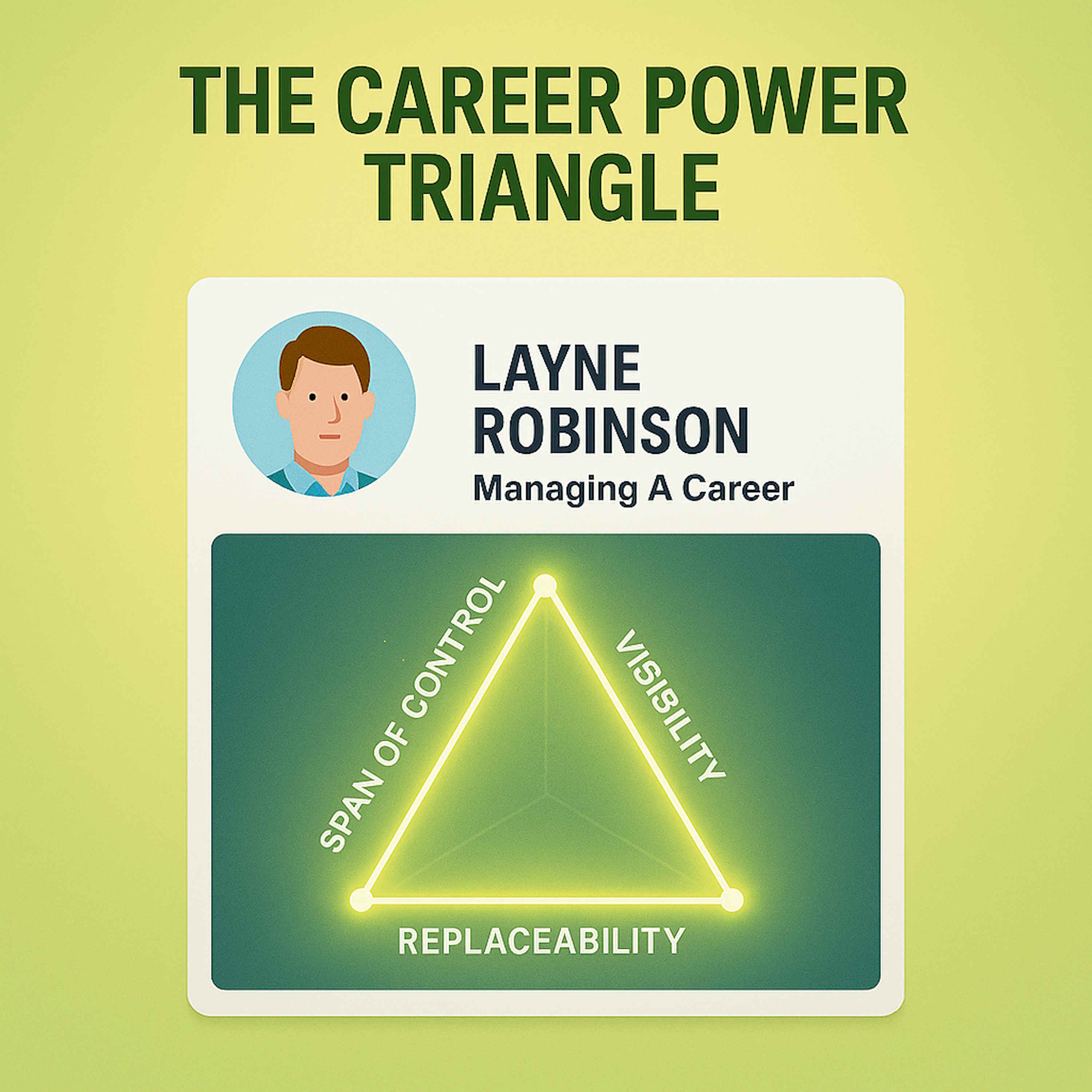 Career Power Triangle - MAC130✨ | career powerinfluence+4 | — | — | — | career powerinfluence+4 | — | 16m 14s | |
| 2/24/26 |  Your Legacy - MAC129✨ | legacyreputation+3 | — | — | — | legacycareer+5 | — | 14m 24s | |
| 2/17/26 |  Using AI to Learn Leadership - MAC128✨ | leadershipAI+4 | — | — | — | leadershipAI training+4 | — | 23m 16s | |
| 2/11/26 |  Ownership vs Leadership - MAC127 | You're being rewarded for ownership… and punished for it at the same time. Do you know the difference between Ownership and Leadership? Imagine a group setting up camp. The leader points and establishes intent. Tents should go in that area. The cooking space belongs over there. Water access matters. Safety matters. Time matters. Then the leader steps back and lets the team work. The owners move into the mechanics. They pitch the tents securely. They build the fire ring correctly. They store food so animals cannot get to it. They check the knots, test the setup, and make sure the plan becomes reality. If the leader starts hammering every stake, the campsite might still come together, but scale disappears. Direction collapses into labor. If the owners try to set direction without alignment, effort scatters. Both roles are essential. They are simply different jobs. Some people build careers by getting really good at placing tents. They know how to pick up the gear, move fast, secure the lines, and make sure nothing collapses overnight. Give them a spot and they will turn it into something solid and dependable. Organizations love these people. They are reliable. They are trusted. They are promoted. But, there's a moment in many careers that feels confusing, frustrating, and strangely personal. Progress slows down. Recognition changes. Opportunities that once came easily start requiring a different kind of effort. It is tempting to interpret this as politics or favoritism or bad luck. Success is no longer measured by how well you pitch the tent; it is measured by whether you chose the right terrain in the first place. Wind exposure. Water access. Safety. Distance. Tradeoffs. The questions get bigger and the answers determine whether everyone else succeeds. Many talented professionals keep perfecting their tent placement long after the company has started looking for terrain selection. The expectations have shifted, but no one announced the new rules. The behaviors that created momentum earlier are no longer the ones that unlock the next level. This is the passage from ownership to leadership. I've explored the idea back in Episode 101 (https://managingacareer.com/101) that leadership isn't assigned rather it's something that you take. Consider this the companion discussion. Same landscape; different capability. Ownership and leadership overlap, but they are not interchangeable. Mixing them up is one of the most expensive misunderstandings professionals make. Early on, personal responsibility is the engine of advancement. You are handed something discrete; a task, a ticket, a deliverable, a defined step in a larger machine. Your mandate is straightforward; take it seriously and make sure it lands. Along the way you build a reputation for quality, speed, responsiveness, and consistency. People learn they can trust you. As experience grows, the size of what sits on your plate expands. The assignment is no longer a task; it is an initiative. It is not a step; it is an outcome. You become accountable for a portion of the business, with real consequences attached. Yet the mental model remains familiar; success still depends on what you can personally drive across the finish line. And here is the part that feels wonderful; excellence begets more responsibility. Deliver well and the organization responds by giving you additional scope. You are rewarded with bigger problems, greater visibility, more influence. The loop reinforces itself. Until one day it breaks. Because at higher altitudes the question quietly changes. The evaluation is no longer centered on what you can carry yourself; it turns toward what happens through other people because of you. When that shift arrives, many high performers keep trying to win with the strategy that built their reputation. They lean harder into ownership. And that is where momentum stalls. Ownership is addictive because it produces visible proof. You can list what you launched, repaired, rescued, or completed. There is comfort in the clarity. The work is concrete; the contribution is undeniable. But personal control has a ceiling. Eventually the enterprise does not need another person capable of single-handedly absorbing a massive responsibility. It needs someone who can create progress across many fronts simultaneously, often without touching most of the work directly. Value is measured less by personal output and more by multiplied output. This is the inflection point where many strong careers plateau. Instead of adjusting, people redouble their effort. They volunteer for more. They stay later. They dive into details. They become the hero again and again. Meanwhile, the definition of senior impact has already evolved. Upstairs, the conversation sounds different. Executives are not primarily curious about your task list. They want to know what is advancing, accelerating, or improving because your presence changes the environment. That is a completely different question. Now we can reconnect this idea to leadership. Leadership is not conferred by a title. It is not defined by how many people report to you. It is not the authority to approve or deny. Leadership is the capacity to influence results without personally performing every step required to achieve them. You see leadership when people alter their approach because of how you shaped the conversation. You see it when choices become obvious because you clarified the tradeoffs. You see it when momentum increases because you eliminated obstacles others were tolerating. You see it when trouble never materializes because you surfaced the risk while there was still time. Look | — | ||||||
| 2/4/26 |  A Keg of Ketchup Will Make You Rethink Your Career - MAC126 | I was reading a post on LinkedIn (https://www.linkedin.com/feed/update/urn:li:activity:7423016998617473025/) by Jason Feifer (https://www.linkedin.com/in/jasonfeifer/), the Editor in Chief of Entrepreneur Magazine. In a recent article, Jason was interviewing Gary Vaynerchuk (https://www.linkedin.com/in/garyvaynerchuk/) about how marketing has changed, specifically through a redefinition of the mid funnel. The traditional idea of a funnel still exists, but where and how momentum is created has shifted.In the post, Jason shared a story that stuck with me. Heinz once posted a simple image on Instagram about a fictional keg of ketchup. It wasn't clever. It wasn't polished. It wasn't even particularly strategic. It was, by most standards, a "stupid" idea.But it caught.The post went viral, and instead of ignoring that signal, Heinz leaned into it. They took what worked, refined it, and eventually turned that one throwaway idea into a full marketing campaign tied to the Super Bowl. A joke became a brand moment.What really hit me was this; the exact same approach can unlock your own career growth.I've talked about marketing yourself before, all the way back in Episode 018, Selling Yourself (https://managingacareer.com/18 ). At its core, marketing is about understanding the needs of your customer and aligning your product to those needs. In your career, the "customers" are the leaders who influence your advancement, and the "product" is you.Traditionally, career growth follows a familiar funnel. You build awareness through visibility (Episode 081, Visibility - https://managingacareer.com/81 ), you demonstrate value over time, and eventually that narrows down to the "purchase" decision; a promotion, a bigger role, or expanded scope.But this is where Gary's insight becomes so useful. The traditional funnel doesn't work the same way anymore. In the modern world, social has become the mid funnel. That means you don't have to start with a perfectly crafted brand or a fully formed strategy. You can start by testing ideas.Simple ideas.Rough ideas.Even ideas that feel dumb or unfinished.If an idea hits, you work it in the lower funnel; executing, refining, and proving it delivers results. Once it's proven, you expand it upward, where it becomes part of your reputation and your brand.That's exactly what Heinz did with a silly idea about a keg of ketchup…and it's a playbook most professionals never realize they can use.When it comes to their careers, most people have traditionally focused on the ends of the funnel; either the upper funnel or the lower funnel.In the upper funnel, the goal is recognition. You bring big ideas to meetings. You look for moments to contribute something bold. You try to get your name and your thinking in front of leaders who matter. There's an element of performance here; a desire to stand out. At its worst, this looks like jumping up and down and shouting, "NOTICE ME!"In the lower funnel, the belief is almost the opposite. You expect your work to speak for itself. You execute…and you execute well. You hit deadlines. You deliver quality. You take pride in being reliable and consistent, trusting that results will eventually turn into recognition.In reality, both ends of the funnel matter. Living exclusively in the upper funnel without execution comes across as fluff and self-promotion. Living exclusively in the lower funnel without a personal brand (Episode 043, Personal Brand - https://managingacareer.com/43 ) feels invisible, no matter how good the work is.But in a modern marketing world, it may be time to try something different.Instead of starting at the top or grinding endlessly at the bottom, start in the middle.Work the mid funnel first. Test ideas in low-risk ways. Put thoughts, perspectives, and small experiments into the world and watch how people respond. If something resonates…if it creates pull rather than push…then you scale it.In marketing, Gary's point was simple. Organic social media is where you test ideas cheaply and quickly. You don't overthink them. You don't turn them into million-dollar campaigns. You post, you watch, you learn.At work, your mid funnel works exactly the same way…it's just not called social media.At work, it's the water cooler; real or virtual; where you run an idea by a peer.At work, it's a small demo shown to a single stakeholder.At work, it's an informal focus group that pokes holes in a broken process.At work, the mid funnel is small experiments and low-risk initiatives you try before you ask for permission and before you allocate real resources.Mid-funnel career moves aren't about being loud. They're about being observable.For an individual contributor, this shift can look subtle but powerful.Upper-funnel you says, "We should completely rethink how our team reports metrics."Lower-funnel you says, "I'll just keep updating the same spreadsheet every week."Mid-funnel you says something different; "I'm going to redesign one version of this report for one stakeholder and see if it helps them make decisions faster."That's it. No announcement. No steering committee. No permission slip.You test it. You watch how people react. You collect feedback. If it flops…nobody cares. If it works…now you have signal. And that signal is everything.In Jason's post, the next step was moving into the lower funnel. When something works, you refine it, optimize it, and amplify it. This is where most people hesitate at work, because amplification feels like self-promotion.Here's the reframe. You are not promoting yourself. You are promoting a proven result.Lower-funnel career moves look like this; sharing outcomes, not intentions…documenting impact, not effort…making it easy for others to reuse what worked…letting managers and peers see the before and after.This is where "I tried something" becomes "this created value."If you redesigned that report, now you send a quick note to your manager; "I tried a small tweak with one stakeholder. It cut their review time in half. I think this could scale." That's lower funnel. You're not asking for praise. You're offering leverage.Gary called the final step "sending it up to brand land." In career terms, this is when your work becomes part of how people talk about you…even when you're not in the room.Upper-funnel career outcomes look like this; being asked to present your approach…being pulled into bigger initiatives…your idea becoming "the way we do things now"…leadership referencing your work as an example.And here's the key insight. You don't start here. You earn your way here through mid-funnel testing and lower-funnel proof.People who skip straight to the upper funnel sound strategic but feel ungrounded.People who stay forever in the lower funnel feel reliable but forgettable.People who master the mid funnel become unavoidable.Now let's talk about leaders; managers, directors, and executives; because the mid funnel doesn't just get ignored by individuals. It often gets quietly killed by leadership.Most leaders don't do this on purpose. They do it because they're trying to be efficient, decisive, and risk-aware. Ironically, those instincts are exactly what shut down the mid funnel.Upper-funnel leadership sounds like this; "Bring me bold ideas. Think bigger. Be more strategic."Lower-funnel leadership sounds like this; "Just execute. We don't have time to experiment. Stick to the plan."Both sound reasonable. Together, they create a trap.When leaders only reward fully formed ideas or perfectly executed work, they leave no room for testing. People learn quickly that half-baked ideas aren't welcome. Small experiments feel dangerous. Early signals never surface. So instead of learning cheaply, teams either stay silent or wait until something is "big enough" to justify the risk.That's how innovation slows down without anyone realizing it.Mid-funnel leadership looks different.Mid-funnel leaders invite rough drafts. They ask, "What did you try?" before asking, "Did it work?" They create space for pilots, prototypes, and small bets that don't require a business case or a blessing from three layers up.For a leader, working the mid funnel might look like this.Instead of asking for a full rollout plan, you ask someone to test an idea with one customer or one team.Instead of demanding certainty, you ask what they learned.Instead of shutting something down because it's incomplete, you help shape it into something testable.The signal this sends matters. It tells your | — | ||||||
| 1/28/26 |  Fast to Decide, Slow to Act - MAC125 | "Be quick to decide…but slow to act." This isn't just a pithy saying you nod along to and forget; there's real weight behind it. It's a quiet strategy that shows up again and again in fast career growth and strong professional reputations. If you've ever watched someone get promoted and thought, That seemed sudden, there's a good chance this was part of the story. From the outside, it looks like an overnight decision; behind the scenes, it's anything but. They were making clear decisions early, then deliberately working the back-channels; socializing ideas, pressure-testing assumptions, and building confidence in the outcome before taking visible action. This week, we're taking a deeper look at how this strategy actually works…and how you can apply it at any stage of your career. Most professionals make the mistake of reversing the adage. They sit with a decision; weighing possibilities, scanning for trouble spots, and searching for more data to increase confidence in the "right" answer. This approach feels responsible. Thoughtful, even. The intent is good; no one wants to make a bad call; especially one that's visible. So the decision gets pushed later and later; right up to the point where it can't be delayed any further. Then something subtle but costly happens. Once the decision is finally made, the switch flips. Action has to be immediate because there's no runway left. The plan is announced in an email or unveiled in a meeting; fully formed and already in motion. Almost instantly, resistance shows up. Concerns are raised. Questions surface. The data gets analyzed and reanalyzed. Stakeholders ask why they weren't involved sooner. From the perspective of the decision-maker, this feels like friction or second-guessing. From everyone else's perspective, it feels abrupt. And even when the decision itself is solid, it's now at risk; not because it's wrong, but because people haven't had time to absorb it. This resistance isn't politics in the way most people mean it. It's not sabotage, or ego, or a hidden agenda suddenly emerging at the worst possible time. It's a predictable organizational response to surprise. Humans don't resist decisions; they resist being surprised by decisions that affect them. When a fully formed plan appears without warning, people instinctively shift into evaluation mode. They ask questions not because they oppose the outcome, but because their brains are trying to close the gap between what just happened and how did we get here. The more consequential the decision, the stronger this reaction becomes. What feels like friction is often just the organization doing what it always does when it's caught flat-footed; slowing things down to regain a sense of understanding and control. Back to the adage. "Be quick to decide, but slow to act." The first thing to internalize is that deciding is not the same as announcing. Many professionals conflate the two; assuming a decision only exists once it's public. In reality, the decision is simply the moment you stop debating and start moving forward. It's the point where second-guessing ends. Where hesitation fades. Where you stop asking should we and start asking how do we position this. Deciding early creates internal clarity; and that clarity is what allows everything that follows to be intentional rather than reactive. Once that decision is made, action doesn't mean immediate implementation. There is a critical phase between the decision point and the execution point; and this phase is where careers quietly accelerate. Instead of rushing to roll something out, high performers use this time to socialize the decision with the people who have influence over whether it succeeds. They invite pressure. They ask for pushback. Not to abandon the idea, but to strengthen it. They win over influencers early. This signals competence. It signals leadership. It builds momentum before anything is formally announced. And when the decision finally reaches the wider group, it no longer feels abrupt; it feels inevitable. That's when things take off. Before going further, there's one detour worth taking. Jeff Bezos popularized the idea of one-way door and two-way door decisions. One-way door decisions are difficult or impossible to reverse. Two-way door decisions are easier to unwind. Both types should be decided quickly; but one-way door decisions demand a longer, more deliberate socialization phase. This is where assumptions get challenged, risks get surfaced, and the decision gets reinforced. When a decision can't easily be undone, that strengthening process isn't optional; it's what makes the eventual action durable. Let me offer a concrete formula you can use at any career level. It's deliberately simple; because complexity creates hesitation. Decide. Seed. Shape. Act. First; Decide. This is internal work. No audience. No deck. No Slack message. You decide what you believe should happen and why. Not perfectly. Not with all the data. But clearly enough that you could explain your reasoning if someone asked. If you can't articulate the logic in two or three sentences; you haven't actually decided yet. You're still circling. Decision is the moment you stop debating and start orienting everything that follows. Second; Seed. This is where buy-in quietly begins. You choose two or three people who are adjacent to the outcome. Not necessarily the formal decision-makers; often influencers matter more. You bring the idea up casually; one-on-one; low pressure. Your language matters here. You don't say, "Here's what I think we should do." You say, "I've been thinking about something and I'm curious how you see it." You're not selling. You're observing. You listen for reactions. You note hesitation. You ask follow-up questions. This isn't about convincing anyone; it's about mapping the terrain before you start moving across it. Third; Shape. This is where the idea evolves; not to water it down; but to make it land. You incorporate language others used. You surface and address objections before they show up in a public forum. You refine the timing, the scope, or the framing. At this stage, people start saying things like, "Yeah, that makes sense," or, "I hadn't thought about it that way." When that happens; something important has shifted. The idea is no longer just yours; it's becoming shared. Finally; Act. Now; and only now; do you formalize. Now you send the email. Now you propose the plan. Now you ask for the decision. And here's the tell that you've done this well; the meeting feels anticlimactic. People nod. The questions sound familiar. The outcome feels obvious. That's not luck. That's preparation. This formula works at every career stage; it just shows up a little differently depending on where you sit. Early in your career, seeding might mean a conversation with a senior teammate or a manager you trust. You're learning how decisions ripple through a system before you trigger them. Mid-career, seeding tends to happen laterally. Peers matter more than titles at this stage; and alignment sideways prevents painful escalation problems later. If you manage a team, seeding is about emotional readiness. You decide direction quickly; but you give people time to process before expecting execution. Different roles; same rhythm. Now let's talk about why this feels so uncomfortable. Being slow to act pushes directly against your ego. You don't get immediate credit. You don't feel productive in obvious ways. There's no visible progress you can easily point to. But here's the tradeoff. You gain credibility. You reduce resistance. You increase follow-through. Careers aren't accelerated by motion; they're accelerated by outcomes that stick. And outcomes that stick almost always feel slower on the front end. Careers don't stall because people lack ideas. They stall because ideas arrive too fast and land too hard. Be quick to decide; because clarity is power. Be slow to act;... | — | ||||||
| 1/21/26 |  How to Partner with AI instead of being replaced by it - MAC124 | When it comes to AI, a lot of professionals are still telling themselves the same story; "I'll get around to learning it when I get the chance." That mindset made sense when AI felt like a curiosity…or a distant threat that might someday take everyone's jobs. But that phase is already over. AI is no longer a hypothetical technology sitting on the sidelines; it's being quietly woven into daily workflows, baked directly into the tools you already use, and increasingly embedded into what managers and companies expect from their employees. At this point, AI isn't going away. The real question isn't whether you'll work alongside it; the question is whether you'll treat it like an adversary…or learn how to turn it into a coworker, even a partner. This isn't about becoming an AI expert or reinventing yourself as a technologist. It's about learning how to incorporate AI into the way you already work. The most useful way to think about AI is as someone you delegate to. You hand it the mundane, repetitive, and energy-draining tasks…the first drafts, the summaries, the pattern-spotting…so you can spend more time on work that actually creates value. When you stop seeing AI as a threat to your job and start treating it like a member of your team, something important happens. You gain leverage. And that leverage is what allows you to move faster, think more strategically, and quietly leap ahead of peers who are still hesitating. Over the past year, companies have been quietly recalibrating roles. The expectation is shifting; humans are being asked to focus on judgment, problem-solving, and relationship-building…while AI handles more of the foundation work underneath. We've seen this pattern before. It happened when spreadsheets replaced manual accounting ledgers; when email replaced the fax machine; when cloud storage replaced file cabinets. No one lost their job because of the spreadsheet. They lost their job because they never learned how to use it. What we're watching now is simply the next version of that same cycle. Here's the shift most people still haven't internalized. AI isn't replacing jobs wholesale; it's replacing tasks. And careers are usually built on task mastery. If the bottom half of your tasks can be automated, then the only way to stay competitive is to own the top half at a higher level. That's why treating AI as a coworker is so powerful. You become the supervisor; the editor; the critical thinker; the strategist. AI becomes the junior analyst, the assistant, the execution engine underneath you. And this is where promotions actually come from. Leaders notice the people who produce more, produce better, and produce strategically. Increasingly, AI is how you get there. If you're early in your career, AI becomes a force multiplier. It allows you to deliver senior-level polish while you're still learning the job itself. The people who rise fastest in entry-level roles over the next few years won't be the ones trying to "prove themselves" by doing everything manually. They'll be the ones using AI to create leverage. Your real focus should be on understanding the why behind the work; then learning which tasks actually matter, when they matter, and how to guide AI to do the execution underneath you. If you're mid-career, the expectation shifts toward breadth. Your company assumes you can operate outside your narrow lane…but that's often where burnout begins. AI gives you a way to expand without drowning. It can help you run competitive analyses, prepare presentations, review data, or draft communications so you can show cross-functional value. The classic mid-career stall comes from being overworked and under-leveraged. AI addresses that directly. You already understand the core of your role; AI helps you stretch into the edges without losing control. If you're senior or managing a team, this may be the most important category of all. Leaders who learn to orchestrate both humans and AI will outperform those who don't. If your team is using AI but you personally aren't, you'll eventually lose credibility in how you model productivity, judgment, and decision-making. Senior leaders don't need to be the most technical person in the room…but they do need to demonstrate how human insight and automated support work together at scale. Every career stage benefits from this shift. The risk only appears when someone ignores it and hopes it will blow over. Once you recognize that the world is changing, the next step is obvious. You start looking for where AI can actually help you in your day-to-day work. A simple way to do this is to borrow the same filter leaders use when they delegate to junior team members. Ask yourself three questions. First; is this repetitive? If you've done a task three or more times this month, AI can probably handle eighty percent of it without much effort. Repetition is a strong signal that delegation makes sense. Second; does this require real brainpower or just structure? Summaries, outlines, pattern detection, first drafts, and templated responses are tailor-made for AI. These tasks benefit more from organization than original thinking. Third; is perfection required or is forward momentum enough? AI excels at creating a solid foundation that you can then refine with your judgment. It gets you out of "blank page" mode and into decision-making mode faster. When you apply this filter, the list of tasks AI can handle becomes obvious. Drafting or revising emails and proposals. Creating first-pass presentations. Organizing information. Summarizing meetings or documents. Researching industry trends. Generating alternative solutions to a problem. Spotting risks or gaps in a plan. And here's a simple rule of thumb. If you find yourself avoiding a task because it feels tedious, that's usually the perfect task to delegate to AI. But those are also the tasks everyone is focusing on. If you really want to separate yourself from the pack, the shift isn't "I need to learn AI someday." It's committing to a small, repeatable experiment. One that runs every week. Here's how it works. Every Monday, identify a single task you can delegate to AI. Keep it small. Keep it manageable. The only requirement is that it saves you time. Then, at the end of the week, document three things; what you delegated, how much time it saved, and how accurate or useful the output actually was. This weekly experiment does two powerful things. First, it builds your personal "AI leverage muscle." You stop guessing and start learning where AI truly helps. Second, it creates evidence. Not opinions or enthusiasm…but proof that you're delivering more value than before. Over time, look for natural moments to share those wins with your team. Not as hype, but as examples. You're not positioning yourself as "the AI person"; you're positioning yourself as someone who improves how work gets done. When promotion conversations arrive, you're no longer making vague claims about productivity. You're showing documented improvements. Leaders pay attention to employees who pilot new capabilities, measure the results, and scale what works. That signals initiative. It signals adaptability. It signals future potential. And it makes you very hard to ignore. This... | — | ||||||
| 1/14/26 |  Just Because You're Scared, Doesn't Mean You Do NOTHING - MAC123 | I heard a quote on a recent episode of the Hidden Brain podcast that really hit me. It was so powerful that I had to rewind the podcast just to hear it again. It was simple, almost obvious once you heard it; "Just because you're scared doesn't mean you do nothing." The line came from a story the guest was telling about his mother. The story had nothing to do with careers, promotions, or performance reviews…but the moment I heard it, I knew it applied perfectly to work. Fear shows up any time you're trying to grow. Any time you're pushing beyond what's familiar. Any time you're aiming for more responsibility, more visibility, or more impact. And yet, in the workplace, we treat fear like a personal defect; something to hide, suppress, or wait out. As if confident people simply don't feel it. So this episode is about fear; not as a flaw, and not as something to eliminate. It's about fear as a constant companion if you're doing anything that actually moves your career forward. And I want to be clear upfront; this is for everyone. If you're early in your career and scared to speak up. If you're mid‑career and worried you're becoming replaceable. If you're senior and afraid of making the wrong call in front of your team. Fear doesn't disappear with titles. It just changes shape. Let's talk about what fear actually does to careers…and what happens when you stop letting it freeze you in place. Early in your career, fear is loud. Sometimes almost debilitating. It shows up as self‑doubt and imposter syndrome; that constant internal narration asking questions like, "Am I actually qualified to be here?" "Am I about to ask a dumb question?" "If I mess this up, will people remember it forever?" I've talked about this before in Episode 83, Faking It, because this phase is nearly universal…even if no one around you admits it. This kind of fear has a very specific effect on behavior. People stay small. They stay quiet. They wait to be invited instead of volunteering. They do exactly what's asked…and nothing more. There's an unspoken assumption running in the background; once I feel confident, then I'll raise my hand, speak up, or go after something bigger. But confidence doesn't come first. Action does. Confidence is built after you do the uncomfortable thing, not before it. I go deeper on this dynamic in Episode 85, Confidence Builds Confidence, because it's one of the most misunderstood ideas in career growth. Waiting to feel ready is one of the most reliable ways to stall out early. Most people don't realize this, but the people you admire at work…the ones who seem comfortable speaking up, offering opinions, or volunteering for stretch projects…they were scared too. The difference wasn't a lack of fear. The difference was that they didn't let fear decide their behavior. Fear tells you to stay invisible. Careers are built by people who feel fear…and choose visibility anyway. If you've managed to quiet the fear of self‑doubt, you've probably advanced into the middle stages of your career. This is where fear gets more subtle…and far more dangerous. You've built credibility. You know your job. You're good at it. And that's exactly when fear shifts from "Should I even be here?" to "What if I fail?" or "What if I lose what I've already built?" This is the kind of fear that doesn't feel dramatic. It feels reasonable. And it's the kind that can keep people stuck for years. At this stage, fear shows up in restraint. You don't apply for the role because you might not get it. You don't challenge a decision because you don't want to be labeled difficult. You don't ask for clarity on promotion criteria because what if the answer is uncomfortable? So instead, you optimize for safety. You become dependable. Reliable. Low‑risk. Here's the hard truth; organizations don't promote people because they are safe. They promote people because they trust them with uncertainty. Mid‑career fear quietly convinces people to protect their current role instead of preparing for the next one…and the longer that pattern holds, the harder it becomes to break. If you manage a team or sit in a senior role, fear doesn't disappear. It just gets dressed up as responsibility. You're scared of making the wrong call. Scared of losing credibility. Scared of admitting you don't have all the answers. Scared of pushing someone too hard…or not hard enough. So leaders hesitate. They delay feedback. They avoid hard conversations. They stick with familiar strategies long after those strategies have stopped working. And here's the irony; the fear of doing harm often creates more harm than action ever would. Teams feel the hesitation. Problems linger. Decisions get deferred instead of made. Strong leaders aren't fearless. They're decisive despite fear. This is where that quote comes back into play; "Just because you're scared doesn't mean you do nothing." That sentence reframes everything. It doesn't say fear is irrational. It doesn't say fear is a weakness. It simply says fear does not get veto power over your actions. Fear can ride in the car…it just doesn't get to drive. Naming something reduces its power and now that we've named your fear, let's talk about how it actually blocks career growth. Not loudly. Not dramatically. Quietly. Fear keeps you waiting for permission. It keeps you over‑preparing instead of acting. It keeps you saying yes to work that keeps you busy…but not visible. It keeps you quiet in meetings and loud in your own head afterward. And the most dangerous thing fear does is this; it convinces you that inaction is neutral. That doing nothing somehow keeps the scoreboard unchanged. It doesn't. Doing nothing is a decision. And over time, it's a very loud one. When leaders look around the room and think about who's ready for more, they don't just look at output. They look at how you handle the unknown; whether you freeze when things are unclear, or whether you move forward in spite of the uncertainty. Fear tells you to wait for clarity. Careers are built by people who move before clarity exists. Let's make this practical, because motivation without application doesn't change anything. Courage at work is rarely dramatic. It's not quitting your job on the spot or delivering a fiery speech. It's usually small, uncomfortable actions taken consistently. It's asking a question even though your voice shakes a little. It's offering an opinion without a disclaimer. It's asking for feedback you might not like. It's saying "I'd like to be considered for that" instead of hoping someone notices. Courage looks boring from the outside. From the inside, it feels terrifying. One of the biggest mistakes people make is assuming courageous action should feel good. It usually doesn't. If it feels comfortable, it's probably familiar. And familiar rarely moves your career forward. The goal isn't to eliminate fear. The goal is to shorten the time between feeling fear and taking action anyway. That gap…that pause where you debate yourself…that's where careers stall or accelerate. Let me offer a simple reframe that helps. Instead of asking "what if this goes wrong," ask "what happens if I... | — | ||||||
| 1/7/26 |  Why Excellence Isn't Enough - MAC122 | If you've been listening to this podcast for any length of time, you know I like to pull ideas from real situations… not theory, not hypotheticals, but things people are actually living through at work. This week's episode came together exactly that way. I was scrolling LinkedIn and came across a post by Ethan Evans about an engineer who had been stuck in a mid‑level role for more than thirty years. Thirty years. Not because this person wasn't talented… not because they were lazy or disengaged… but because they focused exclusively on technical excellence and didn't care what their managers thought. That post immediately took me back to Episode 75 of this podcast, where I talked about the transition from Junior to Senior roles. Ethan's story and that episode are really saying the same thing from different angles; careers stall when the rules for promotion change, but you keep playing the game the same old way. Today, we're going to connect those dots. We're going to talk about why excellence alone doesn't get you promoted… why that first major career transition is where a lot of people get stuck… and how to reframe your work so it actually translates into advancement. Whether you're early in your career, deep into it, or managing a team of people who want to grow, this episode is for you. Let's start with something uncomfortable but important. Most people believe promotions are the reward for being really good at your job. That belief works… for a while. Early in your career, advancement is often driven by competence. You learn faster. You make fewer mistakes. You need less supervision. You can handle a heavier workload without things breaking. That's why those early promotions sometimes come quickly; Analyst I to Analyst II. Junior Engineer to Engineer. Associate to Senior Associate. It feels linear. Predictable. And then… it just stops. That moment is what Episode 75 was really about. The transition from junior to senior is the first time your career asks something fundamentally different from you. Not more effort. Not longer hours. Not a bigger to‑do list. Something else entirely. And this is where Ethan's post fits perfectly. His point was simple but powerful; technical excellence alone does not create business value. Promotions, especially as you move up, are not awarded for effort or purity of craft. They're awarded for impact. That's not cynical… that's just how organizations work. If you've been rewarded your entire career for being excellent at execution, it's logical to believe the way forward is to double down. Do better work. Take on more work. Be the person who fixes everything. Be the reliable one. But continuing down that path is a trap. It's how people accidentally build maintenance careers. Ethan used that phrase very intentionally. Doing maintenance work exclusively leads to a maintenance position; stable, valuable, necessary… but rarely fast-growing or far-reaching. And maintenance work doesn't just mean keeping systems running or lights on. It shows up in every role. It's the analyst who produces flawless reports that nobody uses to make decisions. It's the marketer who executes campaigns perfectly without ever tying them to revenue. It's the project manager who keeps plans immaculate but never challenges whether the plan makes sense. All of this is high-quality output. All of it takes effort and skill. And almost all of it is invisible when promotion decisions are being made. Now let's layer in the junior-to-senior transition. The biggest change at that point in your career is not scope; it's perspective. Senior roles require you to understand why the work exists, not just how to do it. They require you to connect your effort to outcomes that matter to the business. And that's where Ethan's three buckets become incredibly useful; revenue generation, cost reduction, and moat construction. These aren't engineering concepts, or marketing concepts, or finance concepts. They're business concepts. They're the lenses leadership uses when deciding where to invest time, money, and attention. And the moment you start framing your work through those lenses, something shifts. You stop sounding like someone who executes tasks well and start sounding like someone who understands the business. That's the moment you begin thinking like someone who gets promoted. Let's walk through each of these, but through a career lens rather than a technical one. Revenue generation doesn't mean you personally sell something. It means your work creates the conditions for revenue to grow. Early in your career, that can look like asking better questions; who uses this output, how does it help them move faster, what decision does it enable? As you become more senior, it often means prioritizing work that expands capability rather than endlessly refining what already exists. And if you manage people, this shows up as translation. Helping your team understand how their work ties to revenue matters, because if they can't articulate that connection, you can't advocate for them effectively. Cost reduction is often misunderstood. People hear that phrase and think layoffs or budget cuts. In reality, cost reduction is about efficiency; time, risk, rework, and complexity. Junior employees contribute here by eliminating friction, simplifying processes, and automating repetitive tasks. Senior employees contribute by redesigning systems, not just operating within them. Leaders contribute by making tradeoffs explicit and aligning effort to what actually matters. If your work reduces the effort required to achieve the same outcome, that's business value. But only if someone knows it happened. Moat construction is the least obvious and the most senior-coded of the three. This is work that creates defensibility; knowledge that's hard to replicate, processes competitors don't have, capabilities that compound over time. Early in your career, this might look like developing deep expertise in a niche area that becomes strategically important. Later, it might look like standardizing best practices or mentoring others so the organization doesn't rely on a single hero. From a leadership perspective, moat construction often looks like culture, talent development, and institutional memory. And here's the key insight that ties this back to Episode 75. When you move from junior to senior, you're expected to shift from producing outputs to shaping outcomes. That shift is invisible if you don't name it. This is where so many careers stall. People are doing work that creates value, but they're not framing it in a way the organization recognizes. Or worse, they're doing work that feels valuable to them but doesn't map cleanly to revenue, cost, or moat. The engineer Ethan mentioned didn't get stuck because they lacked skill. They got stuck because they optimized for the wrong scoreboard. And organizations always promote against a scoreboard… whether they admit it or not. Let's talk about force multiplication. In Episode 75, I described the shift from doing to influencing. This is another way of naming the same transition. When your impact is one-to-one, your ceiling is low. When your impact is one-to-many, your ceiling rises. Mentoring is force multiplication. Removing roadblocks is force multiplication. Clarifying priorities is force multiplication. And every one of those maps directly to Ethan's framework. Mentoring reduces cost by increasing efficiency. Removing roadblocks accelerates revenue. Building better systems creates a moat. But again, none of this matters if you assume people will notice on their own. <p... | — | ||||||
Showing 25 of 150
Pitch Fit is a Pro feature
See how bookable this show is for guests, which brands already advertise, the per-episode ad value, and the best-fit guest and sponsor profile. The numbers are blurred on the free plan.
How readily this show books outside guests like you.
How proven this show is for host-read sponsorships.
For Guests
ProFor Advertisers
ProUpgrade to Pro to unlock guest cadence, sponsor categories, fit scores, and per-episode ad value for this show.
Chart Positions
1 placement across 1 market.
Chart Positions
1 placement across 1 market.