Insights from recent episode analysis
Audience Interest
Podcast Focus
Publishing Consistency
Platform Reach
Insights are generated by CastFox AI using publicly available data, episode content, and proprietary models.
Most discussed topics
Brands & references
Total monthly reach
Estimated from 1 chart position in 1 market.
By chart position
- 🇰🇷KR · Marketing#1391K to 10K
- Per-Episode Audience
Est. listeners per new episode within ~30 days
300 to 3K🎙 Daily cadence·151 episodes·Last published 1w ago - Monthly Reach
Unique listeners across all episodes (30 days)
1K to 10K🇰🇷100% - Active Followers
Loyal subscribers who consistently listen
400 to 4K
Market Insights
Platform Distribution
Reach across major podcast platforms, updated hourly
Total Followers
—
Total Plays
—
Total Reviews
—
* Data sourced directly from platform APIs and aggregated hourly across all major podcast directories.
On the show
From 15 epsHost
Recent guests
Recent episodes
The Man Who Built 17 Billion Views, Now He Wants a Baseball Team
Jun 15, 2026
Unknown duration
The Ad Tax: Dennis Pekel quit GumGum to sit at home and think.
Jun 8, 2026
33m 49s
John Nardone placed the first paid internet ad in 1994. Now he's calling BS on Jeff Green of #ttd
Jun 1, 2026
41m 31s
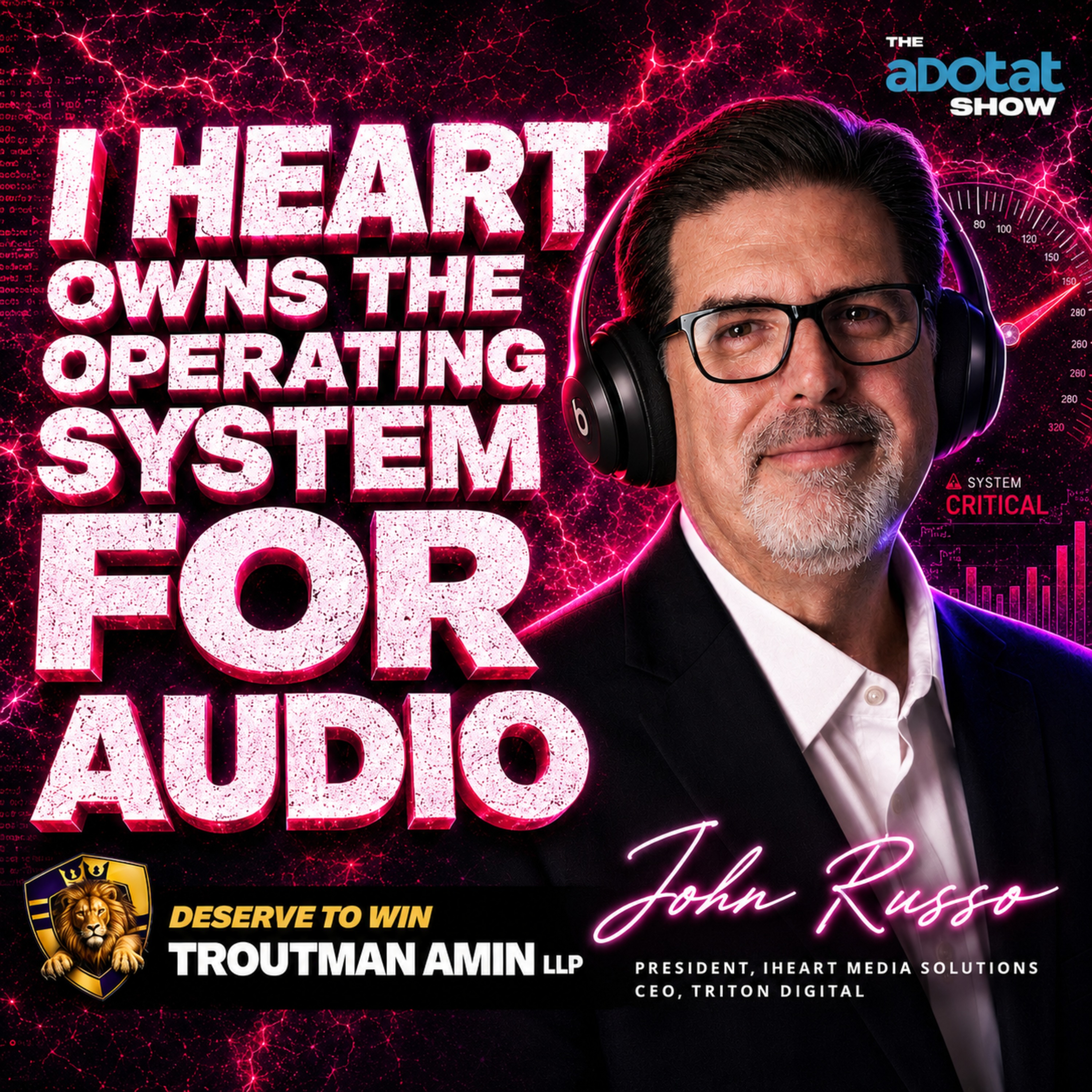
How iHeart Quietly Bought the Operating System for Audio | John Rosso, CEO of Triton Digital
May 18, 2026
41m 31s
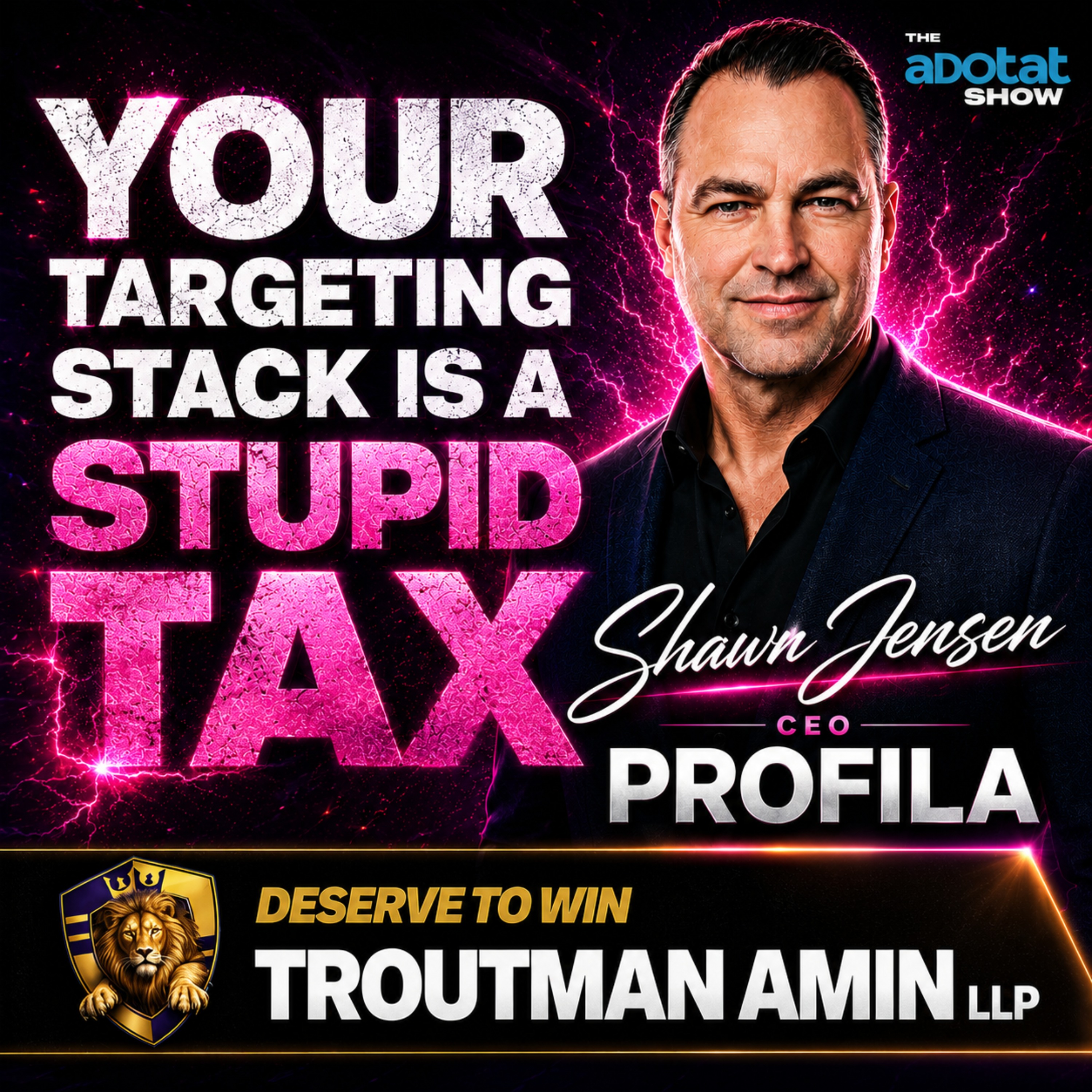
The Swiss Founder Who Says Your $700B Ad Stack Is a Lie | Shawn Jensen, Profila | ADOTAT Show
May 11, 2026
27m 08s
Social Links & Contact
Official channels & resources
Official Website
Login
RSS Feed
Login
| Date | Episode | Topics | Guests | Brands | Places | Keywords | Sponsor | Length | |
|---|---|---|---|---|---|---|---|---|---|
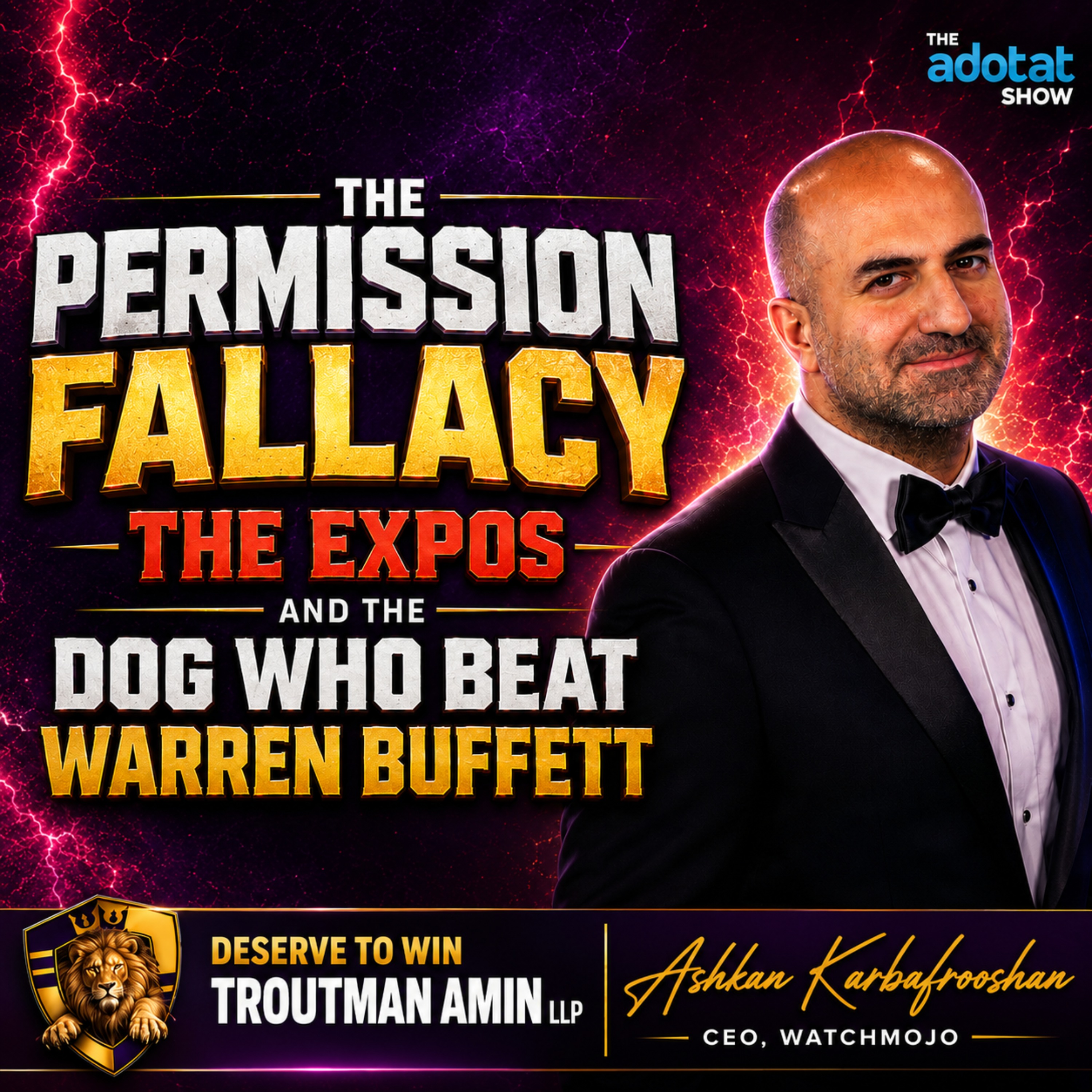
| 6/15/26 | ![]() The Man Who Built 17 Billion Views, Now He Wants a Baseball Team | Ashkan Karbasfrooshan built one of the biggest channels on the planet from Montreal. 17 billion views. 40 million subscribers. Fifteen years without a dollar of outside money. Six of those years, he lost money and took out a second mortgage. Now he wants to do something harder: bring Major League Baseball back to Montreal. A team that left in 2004. A four-billion-dollar price tag he doesn't have. A stadium that doesn't exist. And a plan that's mostly phone calls and a refusal to ask anyone's permission. In this episode we get into all of it. The "10-year overnight success." The four-quadrant theory of using AI without torching your own brand. Cyrus the Great as a management consultant. Why he picked Montreal on purpose. The permission fallacy that built an empire and might just build a ballpark. And the desert-island question that ends with him choosing his wife, his daughters, and a Shih Tzu named Lily over Warren Buffett and every investor in his phone. The dog, for the record, has no idea she won. Funny, occasionally feral, and weirdly moving by the end. 🎙️ This is the ADOTAT Show. 🔔 Subscribe for more conversations with the people building the future without waiting for permission. | — | ||||||
| 6/8/26 | ![]() The Ad Tax: Dennis Pekel quit GumGum to sit at home and think.✨ | AI in advertisingAdtech+5 | Dennis Pekel | GumGumJustPremium+3 | — | AI bubbleadtech+7 | — | 33m 49s | |
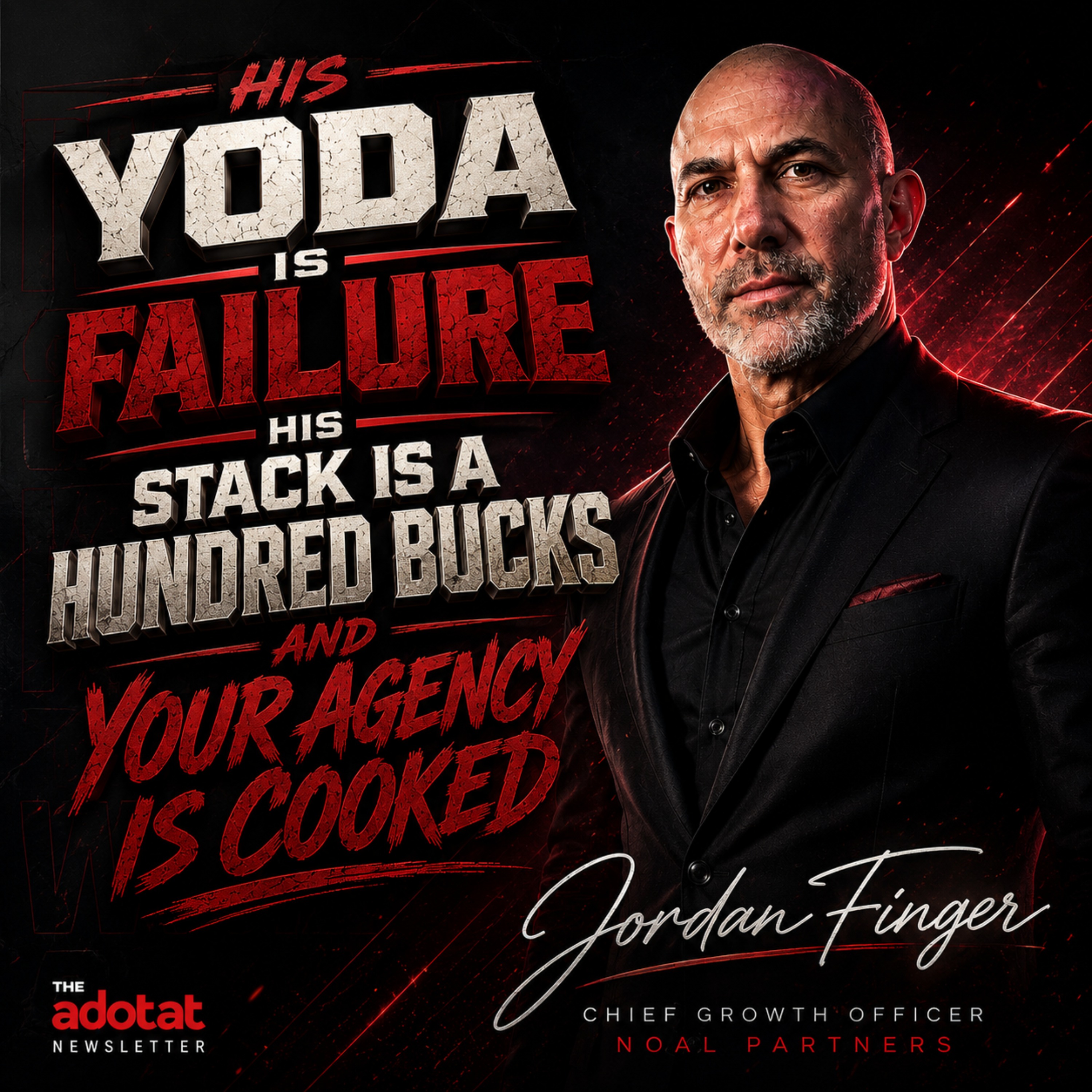
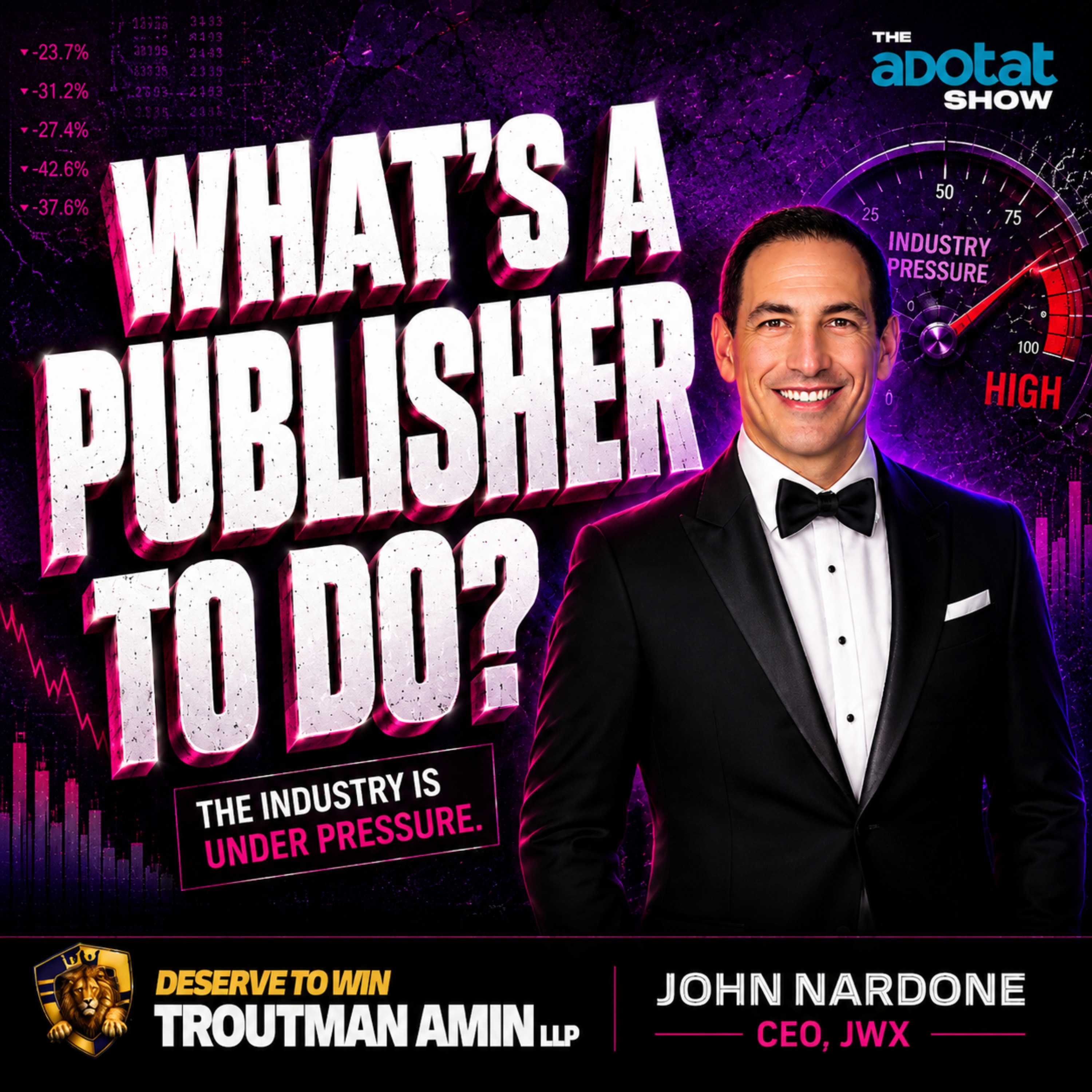
| 6/1/26 | ![]() John Nardone placed the first paid internet ad in 1994. Now he's calling BS on Jeff Green of #ttd✨ | advertisingdigital marketing+3 | John Nardone | IABWired+4 | — | John NardoneJeff Green+5 | — | 41m 31s | |
| 5/18/26 | ![]() How iHeart Quietly Bought the Operating System for Audio | John Rosso, CEO of Triton Digital✨ | audio infrastructureadvertising technology+4 | John Rosso | iHeartMediaTriton Digital+4 | — | iHeartMediaTriton Digital+6 | — | 41m 31s | |
| 5/11/26 | ![]() The Swiss Founder Who Says Your $700B Ad Stack Is a Lie | Shawn Jensen, Profila | ADOTAT Show✨ | zero-knowledge advertisingprivacy-first AdTech+5 | Shawn Jensen | ProfilaGDPR+3 | — | AdTechCPM+7 | — | 27m 08s | |
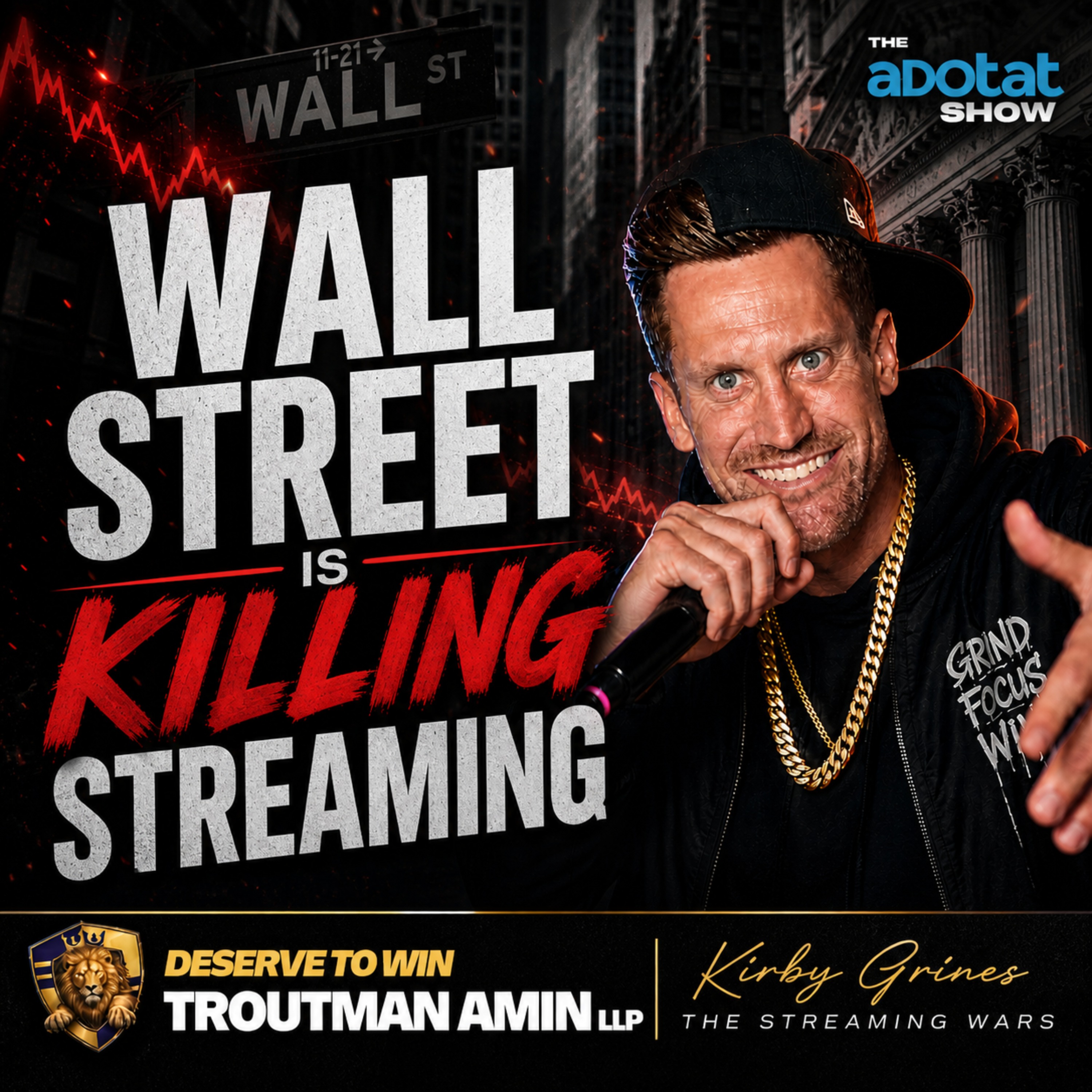
| 5/5/26 | ![]() Rapping About Roku: Kirby Grimes on Broken Ad Tech, YouTube TV, and the Death of Display Ads✨ | ad-supported digital publishingstreaming industry+5 | Kirby Grimes | Float LeftYouTube TV | — | ad techstreaming+5 | Troutman Amin LLP | 1h 03m 37s | |
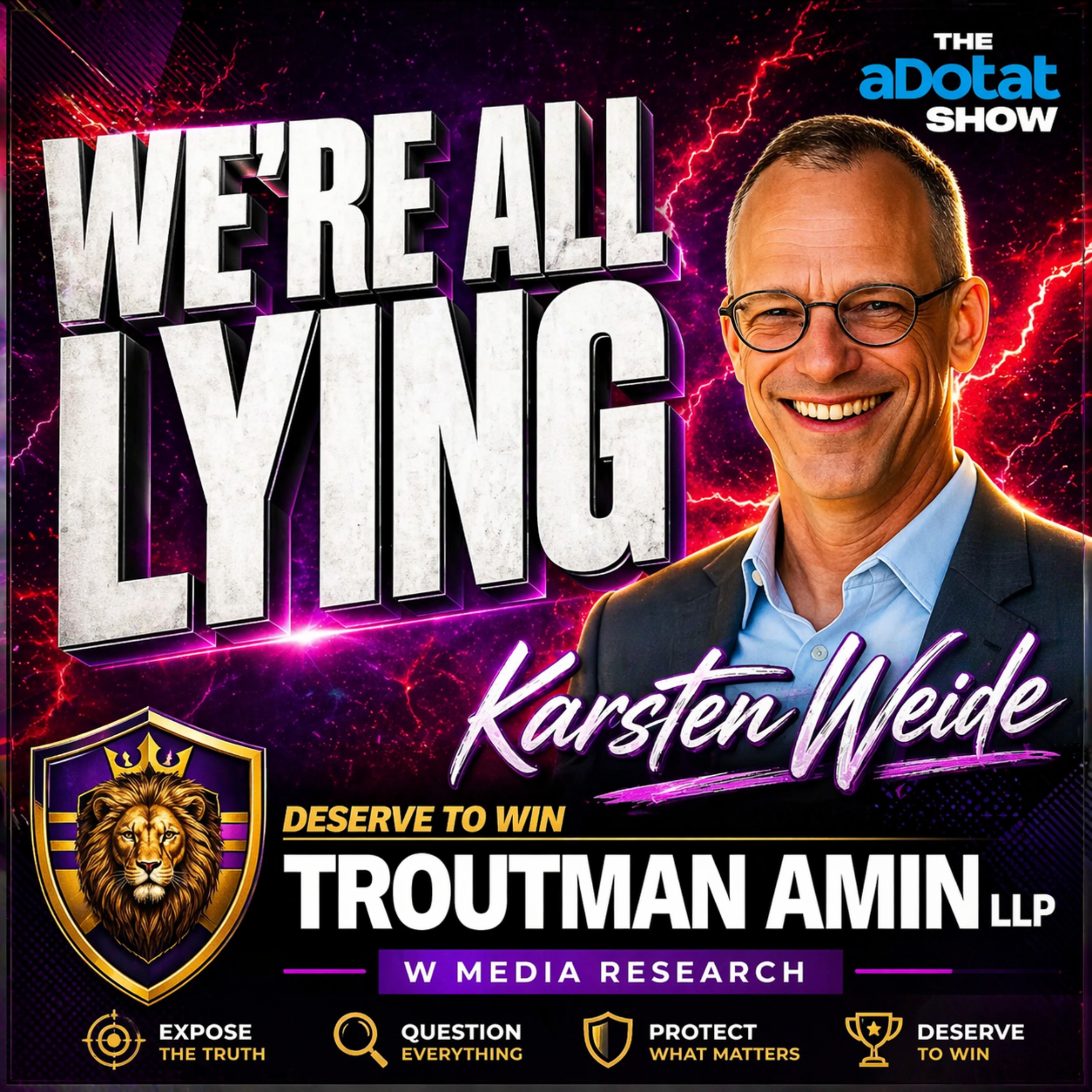
| 4/27/26 | ![]() 35 years in ad tech, one crazy opinion: if we stopped lying, we'd have more fun. | Karsten Weide✨ | advertising technologyAI in advertising+4 | Karsten Weide | Ziff DavisYahoo Germany+4 | Santa Cruz | ad techAI agents+5 | — | 35m 47s | |
| 4/22/26 | ![]() The Future of Retail Media: A Candid Conversation with Mark Donohue, Placements.io✨ | retail mediaadvertising landscape+5 | Mark Donohue | Placements.ioeBay+2 | — | retail mediaadvertising+5 | — | 37m 50s | |
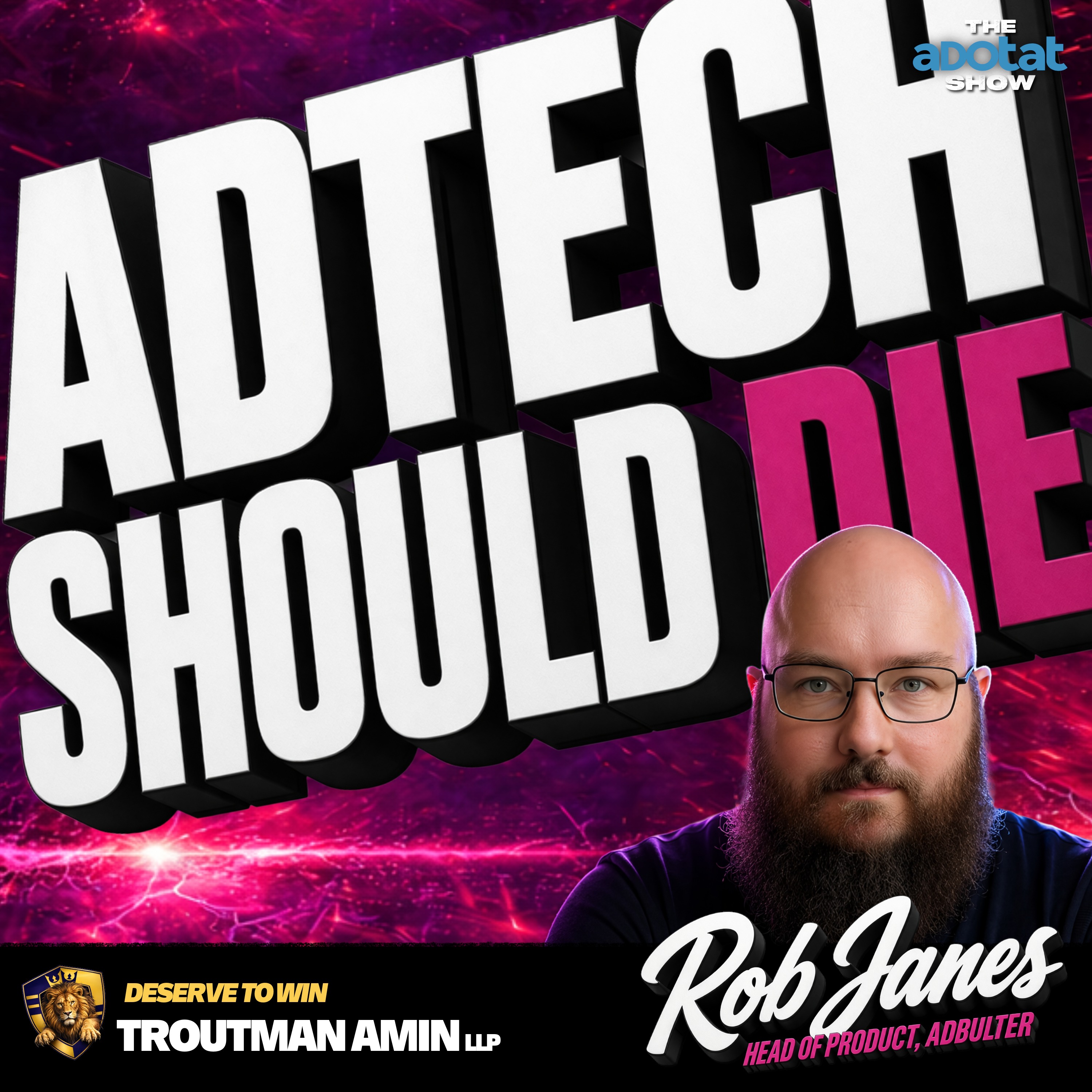
| 4/13/26 | ![]() Rob Janes Told A Room Full Of Ad Tech People That Programmatic Should Die. He Was Not Wrong.✨ | programmatic advertisingad tech+4 | Rob Janes | Ad ButlerGoogle+1 | — | programmaticad tech+6 | — | 52m 12s | |
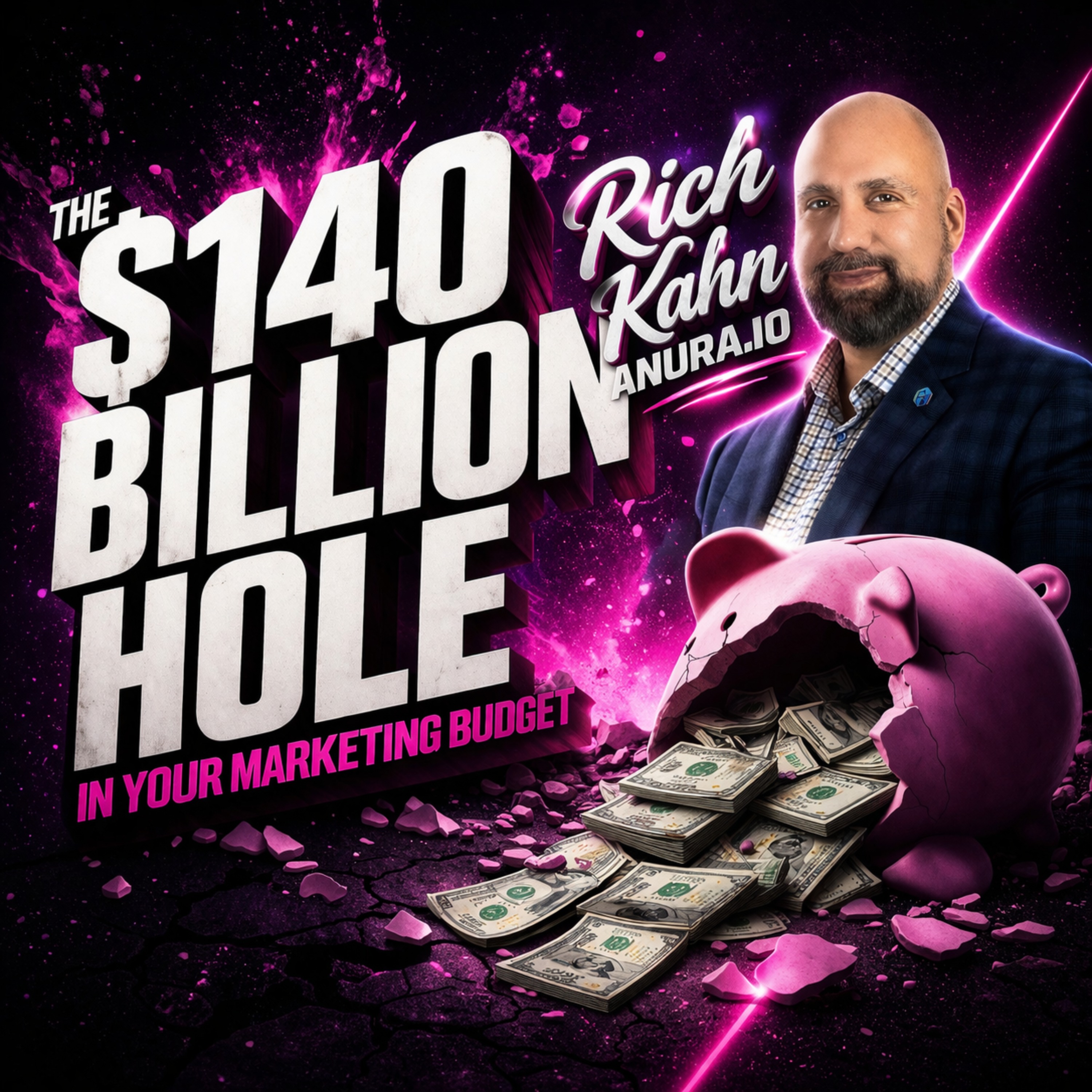
| 4/5/26 | ![]() The $140 Billion Ad Fraud Problem Nobody Wants to Fix | Rich Kahn, Anura | The ADOTAT Show✨ | ad frauddigital advertising+3 | Rich Kahn | AnuraAffiliate World Bangkok | — | ad fraudprogrammatic advertising+3 | — | 36m 44s | |
Want analysis for the episodes below?Free for Pro Submit a request, we'll have your selected episodes analyzed within an hour. Free, at no cost to you, for Pro users. | |||||||||
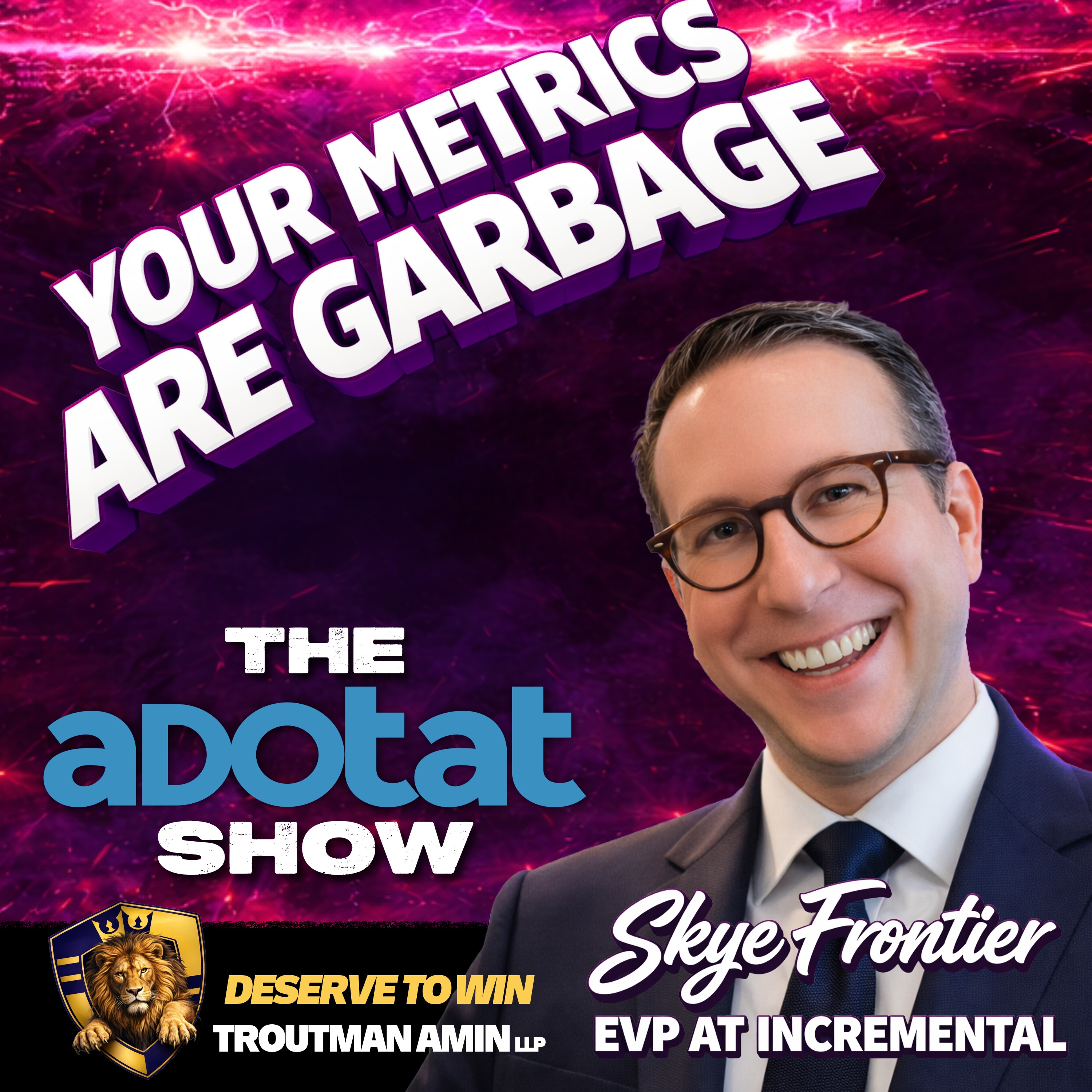
| 3/30/26 | ![]() Why Your ROAS Is Lying to You: Last-Touch Attribution, Retail Media's Dirty Secret✨ | ROASattribution+4 | Skye Frontier | IncrementalADOTAT+1 | — | ROASattribution+5 | — | 44m 42s | |
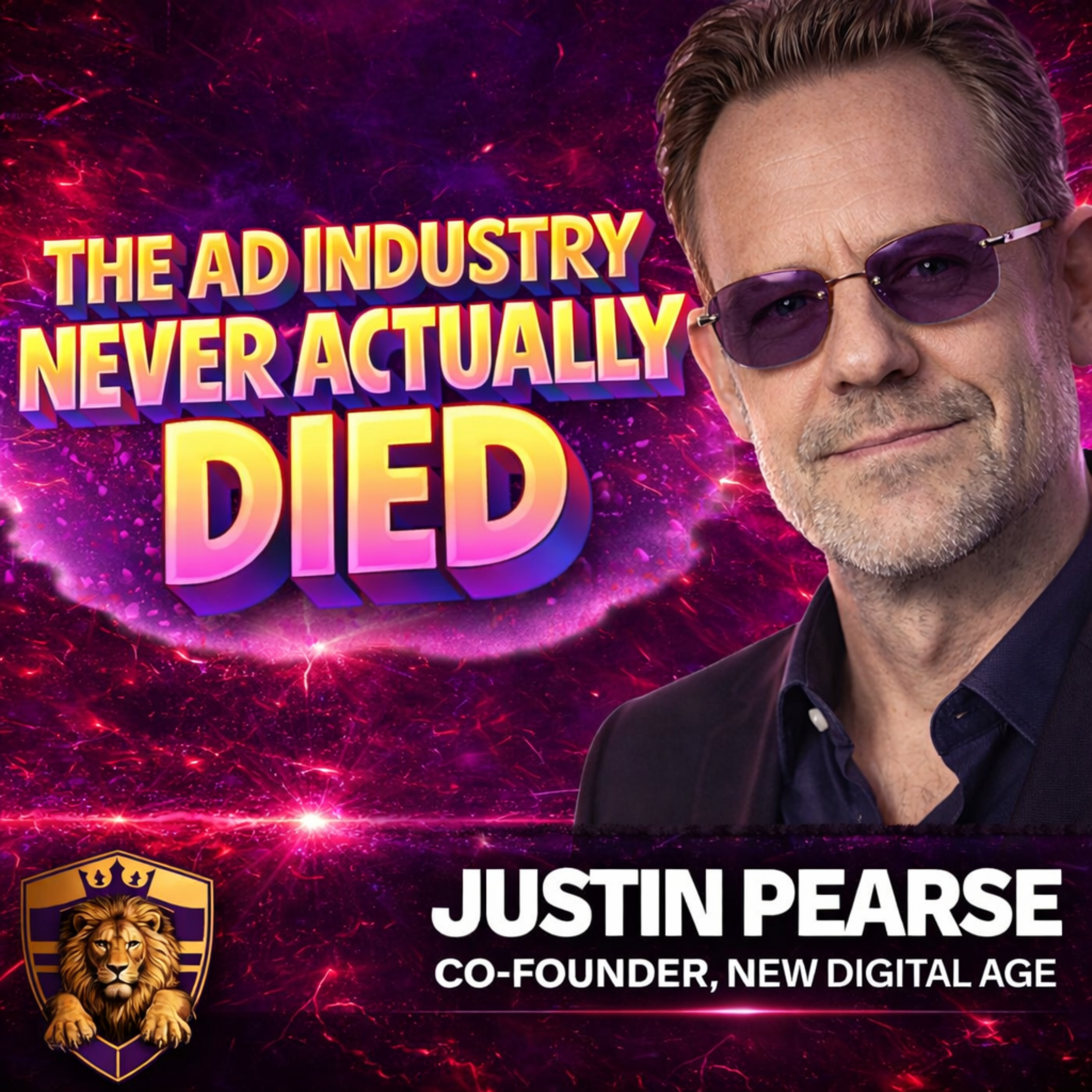
| 3/25/26 | ![]() Justin Pearse | Thirty Years Covering Ad Tech, Attention Metrics, The Open Web, And Why The Industry Never Actually Dies | ADOTAT Show Season 8✨ | digital advertising historyattention metrics+5 | Justin Pearse | BlueStrike GroupNew Digital Age | — | advertisingattention metrics+5 | — | 31m 55s | |
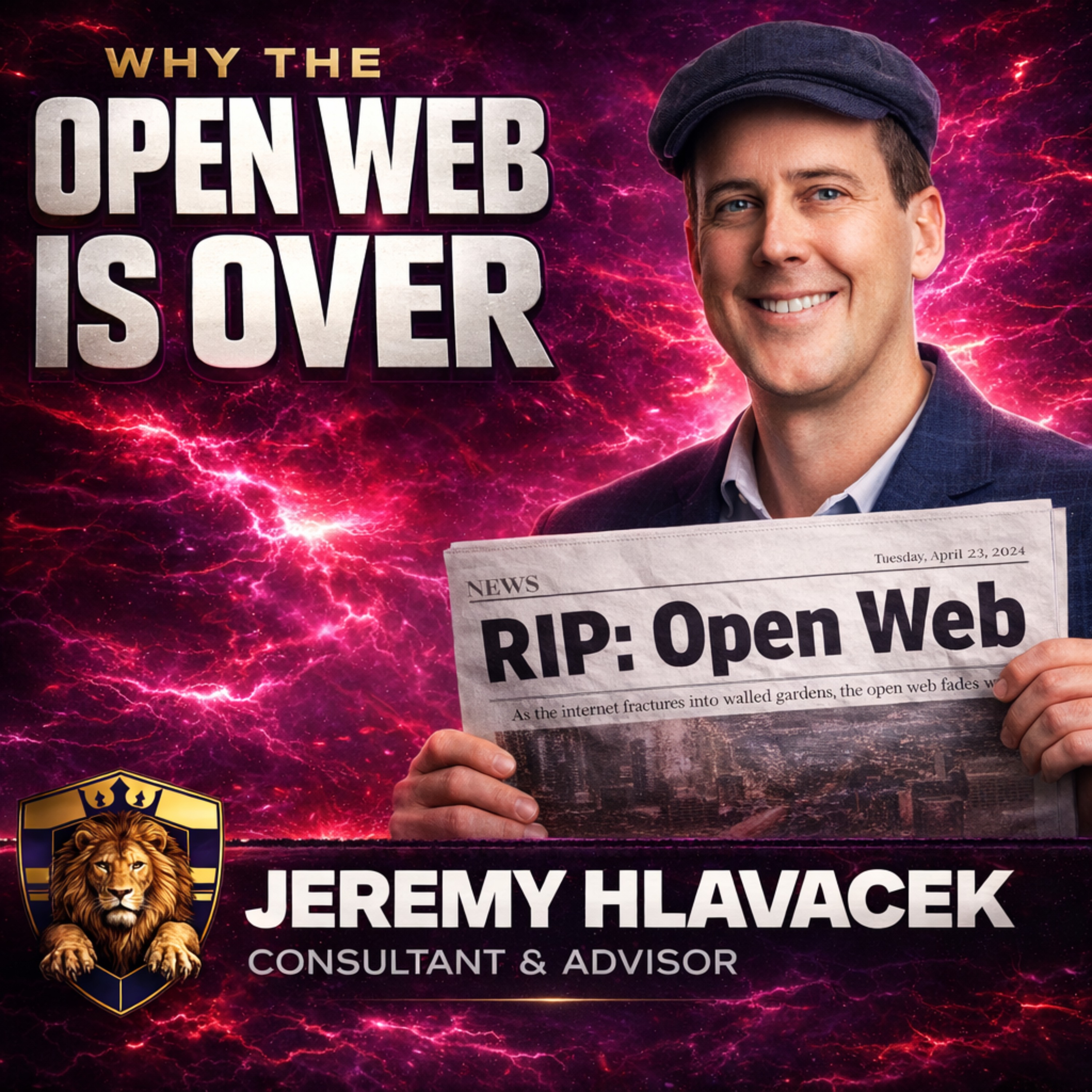
| 3/24/26 | ![]() Jeremy Hlavacek | The Open Web Is Over, CTV Is A Mess, And Your Data Is Lying To You | ADOTAT Show Season 8✨ | digital advertisingprogrammatic+5 | Jeremy Hlavacek | The Weather CompanyIBM Watson Advertising+5 | — | digital advertisingprogrammatic+5 | — | 44m 28s | |
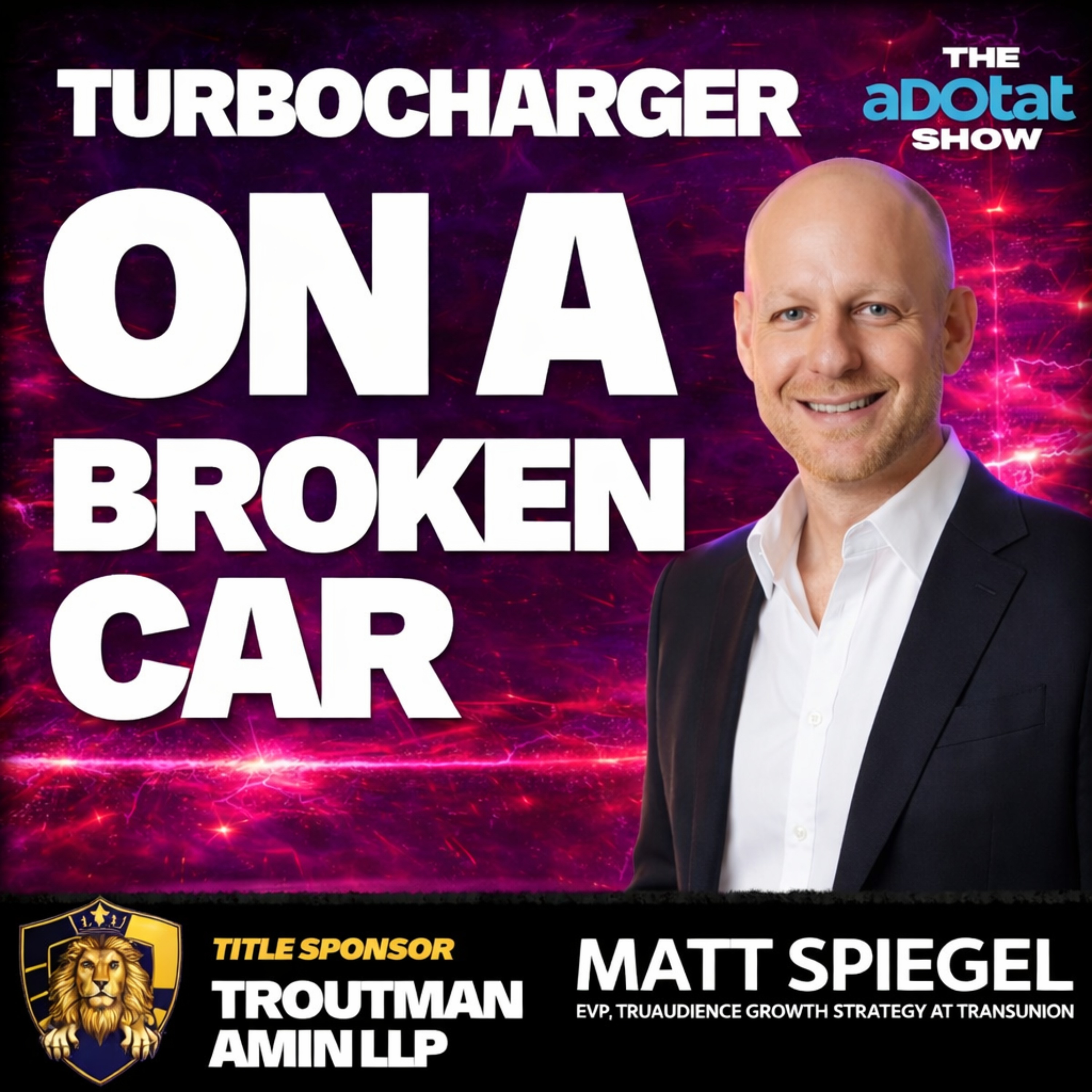
| 3/23/26 | ![]() Your AI Is Just Stupid Faster | Matt Spiegel TransUnion | ADOTAT Show Season 8✨ | AI in advertisingdata problems+4 | Matt Spiegel | TransUnionOmnicom+1 | — | AIdigital advertising+5 | Troutman Amin LLP | 38m 10s | |
| 3/9/26 | ![]() He Thinks Your CTV CPMs Are Too Low (And He Has Receipts) | Jordan Greene | ADOTAT Show Adtech✨ | CTV advertisingdigital advertising+4 | Jordan Greene | Alpha Precision MediaNMSDC+2 | — | CTV CPMsdigital advertising+5 | — | 42m 22s | |
| 3/4/26 | ![]() He Milked Cows Before He Milked Data — Tim Armstrong on Why AI Can't Fix Stupid | ADOTAT Show✨ | AIdigital transformation+4 | Tim Armstrong | Mangrove Digital | New ZealandAustralia | AIad tech+4 | — | 45m 23s | |
| 2/23/26 | ![]() Frazer Locke Won't Say Adtech"Broken" But His Eyes Are Screaming It | ADOTAT Show | Frazer Locke has 34 years of retail and ad tech scars. He spent a decade inside Amazon building the ads machine before anyone took it seriously, and now he's SVP of International Sales at TripleLift, the creative SSP trying to keep retail media from becoming an unwatchable Blade Runner hellscape of infinite ads.In this episode of the ADOTAT Show, Pesach Lattin sits down with Frazer to talk about what's actually broken in retail media (even though he's too British to use that word), why frequency capping is a sanity check the industry is failing, what he learned from Seth Dallaire in the early Amazon Ads trenches, why Aldi and Lidl might be the dark horses nobody's watching, and whether full funnel measurement is real or just a really convincing PowerPoint slide.We also strand him on a desert island with Superman, Tom Hanks, and a British comedian you've never heard of. It goes exactly how you'd expect.🔥 WHAT WE COVER: 0:00 - Intro 0:56 - Who is Frazer Locke 2:42 - Career journey from Sainsbury's to Amazon to TripleLift 3:51 - What's broken in brand-consumer relationships 5:29 - The refresh ad problem nobody asked for 7:08 - When ad tech rewrote the retail playbook 8:37 - Retail media internationally vs the US 9:54 - If 1991 Frazer walked into today's office 11:23 - What separates real integration from bolt-on media 13:12 - Creative tech: innovation or automated mediocrity 16:02 - Is TripleLift still just an SSP? 17:50 - Cultural vs technological barriers to creative innovation 19:02 - Does contextual advertising actually work? 19:56 - AI-generated dynamic supermarket shelves 20:26 - The Aldi and Lidl retail media dark horse theory 21:40 - Retail media gold rush or cable TV fragmentation? 22:06 - Does full funnel measurement actually exist? 25:47 - Is retail media brand building or a click casino? 26:43 - Sacred cows: what would Frazer burn down? 28:16 - Programmatic transparency or smarter ways to hide fees? 30:35 - Will most DSPs exist in 10 years? 31:36 - If publishers and advertisers swapped roles 32:30 - Leadership across continents and time zones 33:28 - LinkedIn leadership vs real leadership 34:42 - Are we over-romanticizing culture? 35:32 - Desert island companions 39:04 - AI takes over: first question to robot overlords 39:29 - What the island teaches about ad tech 40:02 - What drives Frazer when the decks close 41:23 - The Seth Dallaire mentor lesson 44:00 - Frequency capping as industry sanity check 44:44 - If not advertising, then what? 45:22 - Legacy: what Frazer wants to be remembered for📰 READ THE FULL BREAKDOWN on ADOTAT.com — including the ADOTAT+ deep dive on what Frazer was too diplomatic to say out loud, why he really left Amazon, and whether "creative SSP" is genius positioning or a holding pattern.👉 Subscribe to ADOTAT+ for the inside baseball: [link]🎙️ THE ADOTAT SHOW — where we cut through the buzzwords, the hype decks, and the endless talk of revolutionary solutions to talk about who's actually moving the needle in advertising. Hosted by Pesach Lattin.Be bold. Be curious. Know more than you did yesterday.💼 SPONSORS: Troutman Amin LLP — the ad tech lawyers who actually get it Incremental — measure what actually moves the needle#retailmedia #adtech #programmaticadvertising #amazonads #triplelift #retailmedianetwork #CTV #connectedTV #digitaladvertising #SSP #DSP #commercemedia #creativetechnology #marketingstrategy #brandbuilding #walmartconnect #ecommerce #advertisingtechnology #mediaplanning #digitalmarketing #marketingpodcast #adtechpodcast #retailmedia2025 #futureofadvertising #programmatic #supplypathooptimization #nativeadvertising #frequencycapping #adindustry #mediainnovation #retailmedianetworks #offsite #amazon #tesco #aldi #Lidl #marketplaceLoaded with the high-search-volume terms: retail media, programmatic advertising, Amazon Ads, connected TV, DSP, SSP, digital marketing, e-commerce, creative technology, and brand building. | — | ||||||
| 2/17/26 | ![]() Programmatic Is Just Capitalism at Its Worst | Liz DeAngelis on Attribution Theater, Performance CTV | Liz DeAngelis from Brainlabs joins Pesach Lattin on the ADOTAT Show to tear apart everything the ad tech industry pretends is working. From programmatic advertising's broken incentives to why attribution is theater, why video completion rate is an emotional support KPI, and why cheap never actually means efficient, this conversation pulls no punches. Liz has seen it all. Mobile app marketing. The Ad Council's COVID-19 vaccine campaign. Growth at Monks. And now leading programmatic strategy at Brainlabs where she's asking the questions nobody wants to answer: does any of this actually drive business impact or are we just funding a swamp? We get into the Pinterest CTV Scientific acquisition and what it means for intent-based TV buying, why "performance CTV" is a branded concept and not a real capability, why Google can't reconcile its own platforms, why display advertising destroyed itself through measurement, why agencies can't figure out which team owns new channels, and what actually breaks first when growth outpaces maturity. Plus: hustle culture is dead, founder intuition is bullshit, and the opinion Liz softens in public but holds privately is that advertising has ruined a lot of the internet. | — | ||||||
| 2/9/26 | ![]() Gaming's $200 Billion Blind Spot with Itamar Benedy of Anzu.io | Why Brands Are FINALLY Waking Up | Gaming is the single largest media channel on the planet. Bigger than streaming. Bigger than social media. Bigger than CTV. 3.5 billion people play at least one game every month — that's 90% of everyone connected to the internet. And yet the advertising industry has spent the last two decades pretending gaming doesn't exist. In this interview, I sit down with Itamar Benedy, the founder and CEO of Anzu, the company pioneering programmatic in-game advertising with native 3D ad placements inside video games. After eight years building Anzu, Itamar says they haven't even hit 1% of the journey — and explains why that's both the most honest and the most terrifying thing a founder can admit. We dig into why "the year of gaming advertising" has been promised every single January since the Blackberry era and never delivered. Why brands are finally moving budget into gaming — some because the performance arbitrage is undeniable, others because every other channel is collapsing under them. And some just because McKinsey told them to. We break down the infamous Netflix campaign disaster — when Netflix ran ads inside games telling players to stop playing and go watch Netflix — and why that's the perfect case study for everything brands get wrong about gaming audiences. The irony? Netflix is now a gaming company with an ad-supported tier as its fastest-growing revenue line. Itamar explains why lumping 3.5 billion people into one category called "gamers" is the laziest move in media buying, why in-game advertising is essentially digital out-of-home but with actual measurement and targeting, and why the gaming industry sabotaged its own advertising potential for years by going to war with the companies that make advertising work. This conversation is essential viewing for CMOs, media buyers, brand strategists, ad tech professionals, and anyone trying to understand where attention is actually going in 2025 and beyond. ABOUT ITAMAR BENEDY: Itamar Benedy is the founder and CEO of Anzu, a leading in-game advertising platform that delivers programmatic, brand-safe ad placements rendered natively in 3D within video game environments. Anzu works with major brands and game publishers to bridge the gap between where audiences spend their time and where advertising dollars actually go. | — | ||||||
| 2/3/26 | ![]() Sam Bloom on AI Hype, CTV's Growing Pains & Why Two People in a Garage Scare Him | Sam Bloom, Head of Partnerships at PMG, returns to the ADOTAT Show for round two. Either that's heroic or deeply concerning. In this episode, Sam gets brutally honest about the AI hype cycle flooding ad tech, why most "agentic" tools are just the same old crap with a .ai domain, and how to tell the difference between real innovation and vendor theater. He breaks down his two-question filter that every pitch must pass, explains why 70% of agency time disappears into work nobody enjoys, and reveals why he fears two people in a garage more than the big holding companies. We also dive deep into CTV's graduation from high school (still figuring out laundry), why attention metrics are overrated, the coming tsunami of AI slop hitting connected TV, and how retail media is becoming identity infrastructure for a post-cookie world. Plus: the transparency paradox, why CMOs keep signing deals with agencies whose profits depend on opacity, and what happens when agencies disappear entirely. 🔥 IN THIS EPISODE: 00:00 - Intro 02:15 - The AI Hype Cycle: Sorting Wheat from Slop 08:30 - Sam's Two-Question Vendor Filter 12:45 - What "Agentic" Actually Means (And How It's Abused) 18:20 - The 70% Problem: Why Agency Work Sucks 24:00 - Mental Health in Advertising 28:15 - The Garage Threat: Why Small Teams Win 35:40 - What AI Cannot Replace 42:00 - CTV: Graduating High School 48:30 - Why Attention Metrics Are Overrated 54:15 - The AI Slop Tsunami Coming to CTV 59:00 - Retail Media as Identity Infrastructure 1:05:30 - The Measurement Reckoning: Killing Last-Click 1:12:00 - The Transparency Paradox 1:18:45 - What Clients Actually Need 1:24:00 - The Agency Extinction Scenario 📢 SPONSORS: Troutman Amin LLP - https://www.troutmanamin.com/ Incremental - https://www.incremental.com/ 🎙️ ABOUT THE ADOTAT SHOW: The ADOTAT Show with Pesach Lattin. Where ads get torched, truth gets told, and the industry pretends not to read us. Stay Bold. Stay Curious. Know More Than You Did Yesterday. 👉 SUBSCRIBE for weekly episodes with the sharpest minds in advertising, media, and ad tech. CONNECT WITH US: 🌐 Website: https://www.adotat.com 📧 Newsletter: https://new.adotat.com 🐦 Twitter: https://x.com/pesach_lattin?lang=en 💼 LinkedIn: https://www.linkedin.com/in/pesach-lattin/ #AdTech #DigitalMarketing #AI #ArtificialIntelligence #CTV #ConnectedTV #RetailMedia #ProgrammaticAdvertising #MediaBuying #MarketingStrategy #AgencyLife #PMG #SamBloom #ADOTATShow #PesachLattin #MarketingPodcast #AdvertisingPodcast #MediaPlanning #Attribution #Transparency #AdAgency #MarketingTech #MarTech Tags: sam bloom, pmg, adotat show, pesach lattin, ad tech, advertising technology, ai in advertising, agentic ai, connected tv, ctv advertising, retail media, retail media networks, programmatic advertising, media buying, digital marketing, marketing strategy, agency life, marketing podcast, advertising podcast, ai hype, attention metrics, last click attribution, incrementality, media mix modeling, transparency in advertising, principal media, holding companies, marketing technology, martech, cmo, media planning, ad agency, future of advertising, ai slop, streaming advertising | — | ||||||
| 1/26/26 | ![]() Bob Lord Escaped Advertising and Came Back Angrier | Bob Lord: The Quantum Computing Defector Who Escaped Advertising, Spent 8 Years Learning How Technology Actually Works at IBM, and Then Came Back to Burn Down the FTE ModelHere's a career arc that sounds like a fever dream: He ran Razorfish, sold it to Microsoft, sold it again to Publicis, became president of AOL during Verizon's $4.4 billion acquisition, then completely abandoned advertising to become a senior vice president at IBM where he got "steeped in large language models, neural networks, quantum computing" and learned to track a single product floating somewhere in the South China Sea. Now he's back as President of Horizon Media—one of the largest independent agencies in the country with $10 billion in billings—and he has some thoughts about why everything is broken.In this wide-ranging conversation, Bob Lord walks us through the career nobody plans, the lessons that shaped how he operates, and why he thinks the entire agency compensation model is a dying relic that's holding the industry hostage.We get into:The great escape and return: Why would anyone leave advertising at the top of their game, spend nearly a decade at IBM learning about quantum computing and supply chain software, and then voluntarily come back to an industry that had only gotten more chaotic in his absence?The damning comparison: At IBM, Lord could track a single product across global supply chains and tell you exactly when it would dock in San Francisco. Meanwhile, back in advertising? "I still couldn't tell a marketer how their campaign ran in the last week. Something went wrong."The Rube Goldberg problem: More ad tech vendors. More data companies. More martech platforms. More confusion. More complexity. Less clarity. The industry spent a decade building an elaborate machine and forgot what it was supposed to be making.The FTE model must die: Lord is pitching clients on performance-based compensation tied to actual business outcomes—not marketing qualified leads, not downloads, but actual transactions. Cars sold. Internet packages purchased. Widgets moved. "If I can swap out technology and cut the staff by a third—shouldn't that be the model?"The boots story: How a 19-year-old Bob Lord on a GM factory floor learned the hard way that not everyone operates from goodness—a lesson that's guided his trust-but-verify approach for four decades.Growth and comfort don't coexist: The mantra he picked up from IBM's Ginni Rometty that sounds like a LinkedIn platitude but that Lord means literally. He talks about being in the "muddy middle" at Horizon—knowing where he wants to go, not having all the answers, watching everyone's role change in real time.The first P&L: The exhausting, trial-by-fire experience of running a $20 million business in North Carolina with no idea how to hire, fire, or run a sales department—and why he keeps putting himself through these sink-or-swim moments decade after decade. | — | ||||||
| 1/22/26 | ![]() Adtech & AI: Built not Bullshit with Jason White of Mula AI | Jason White has spent 20+ years actually BUILDING technology at Viacom, OpenX, CBS, Fox MySpace, and multiple startups. Unlike the PowerPoint warriors flooding LinkedIn, he's coded real systems, invented RTB structures, and survived every hype cycle from the dot-com bubble to today's AI frenzy. In this brutally honest conversation, Jason exposes: ❌ Why 60-70% of "AI features" are just rule-based logic with an LLM wrapper ❌ The platform risk nobody talks about (spoiler: when ChatGPT builds your feature, you're done) ❌ Why ChatGPT is only right 50% of the time—and argues when it's wrong ❌ How ad blockers are inexplicably allowed in buying platforms ❌ Why programmatic "transparency" is the industry's biggest joke ❌ The real reason companies blow $100M on shiny objects (metaverse, anyone?) ✅ But also what ACTUALLY works: ✅ The three-circle test for real innovation (save money + bandwidth + revenue = unicorn) ✅ Why ad networks worked better than what replaced them ✅ How to build culture that doesn't turn teams into "office hostages" ✅ The future of AdCP and agents talking to each other ✅ Why democratizing information still matters 🔥 CONTROVERSIAL TAKES: "Programmatic guaranteed pricing makes no sense" - Google's $0.40 on $2 CPM vs $6 on $30 CPM "SSPs were taking 30-50% margins as intermediaries" "The Trade Desk hasn't integrated with a new SSP in 8 years" "Token costs are going to rise—this automation party won't last" "ChatGPT will lose a billion dollars a month... not for long" 📊 BY THE NUMBERS: 60-70% of AI features are just rule-based logic AI costs went from $50/month to $1,000/month in one year 30-50% margins taken by intermediary SSPs Only 10% of companies survive hype bubbles—but they change the world 🎯 WHO IS JASON WHITE? 20+ years building advertising technology across: Fox MySpace (invented client-side programmatic) CBS Interactive (built MyAds) OpenX (ad exchange infrastructure) TrueCar (growth) Arena Group (revenue turnaround) Jiffy AI (RPA-based ad operations) Mula (current: combining ML, RTB, header bidding, analytics) Survived: dot-com bubble, ad networks, programmatic, mobile, and now AI hype 🗣️ QUOTES THAT HIT DIFFERENT: "I've never seen an absolute. I immediately discount it when somebody says everything." "There's little people behind the green curtain running data back and forth." "Maybe if ad networks were just transparent with their margins..." "Culture is how people behave when things go wrong, not the posters you put up." "My religion is democratizing information." "Life is what happens when you're busy making other plans." 📚 READ THE FULL SERIES: This interview is being turned into a 4-part article series: Part 1: The AI Hype Bubble (FREE) Part 2: Revenue Discipline in the Age of Shiny Objects (FREE) Part 3: The Programmatic Paradox (PAID) Part 4: The Future of Advertising Technology (PAID) 🔔 SUBSCRIBE for more unfiltered conversations with people who actually build technology instead of selling PowerPoint decks. 👍 LIKE if you're tired of AI theater and want to hear the truth. 💬 COMMENT: What's the biggest BS claim you've heard about "AI" in your industry? 🎙️ The ADOTAT Show Hosted by Pesach Lattin Where we separate real innovation from LinkedIn theater #AIinAdvertising #AdTech #Programmatic #ChatGPT #MarketingTechnology #DigitalAdvertising #AdOperations #SSP #DSP #AIHype #TechForGood #StartupLessons #JasonWhite #ProgrammaticAdvertising #AdExchange #RevenueGrowth | — | ||||||
| 1/19/26 | ![]() Adtech: Household Identity Versus the Buzzwords. Jason Manningham of Blockgraph | Local TV has been written off as plumbers, pizza shops, and leftover budgets for far too long. Jason Manningham is here to explain why that take is lazy, expensive, and wrong. In this episode of The ADOTAT Show, Pesach Lattin sits down with Blockgraph CEO Jason Manningham to unpack the part of the TV ecosystem everyone pretends to understand and absolutely does not. We dig into why local advertising is actually a $170B market, why zip codes are a blunt instrument, and why proximity and household identity outperform the buzzword soup most decks are built on. This conversation covers: Why local TV is bigger than national TV, and why brands keep missing it Household identity vs “targeting a person” on a shared screen Why IP targeting is mostly fiction and why geo still matters when done right Attribution dashboards as cosplay and the limits of last-click thinking Currency wars, outcomes measurement, and why Nielsen isn’t the whole story What AI gets wrong about TV and why the real world still matters Why most “performance TV” claims collapse under basic scrutiny No hype. No vendor theater. Just infrastructure, incentives, and the uncomfortable math underneath modern TV advertising. Sponsored by: Troutman Amin LLP – When ad tech deals get complicated, regulated, or quietly risky. Incremental.com – Because lift beats vibes, and proof beats promises. This is The ADOTAT Show. Stay Bold, Stay Curious, and Know More than You Did Yesterday. | — | ||||||
| 1/13/26 | ![]() The Adtech Metadata Apocalypse with Nick Stark | Nick Stark didn’t come on The ADOTAT Show to talk about “the future of CTV” in soft-focus buzzwords. He came to talk about why connected TV advertising quietly bleeds money every day and why most of the industry pretends it’s normal. Nick is the CEO of GoGoCTV, a company that exists for one uncomfortable reason: streaming ads are often built on bad metadata, missing signals, broken ad plumbing, and contracts nobody audits after signing. If you’ve ever seen premium CTV inventory monetize like clearance-bin display, this episode explains exactly how that happens and why it keeps happening. We unpack how a single missing metadata field can slash revenue by up to 90%, why “data-driven marketing” often means “staring at dashboards you don’t fully understand,” and how optimization culture turned creativity into a hostage negotiation with math. Nick breaks down dirty vs missing metadata, IVT detection gone sideways, why new devices get punished for not being on whitelist spreadsheets, and how “fixed pricing” quietly sabotages performance in a dynamic market. There’s also a blunt conversation about: CTV ad tech infrastructure and ad serving Metadata hygiene, data quality, and monetization leakage Programmatic advertising myths and supply chain confusion IVT, SIVT, fraud detection, and false positives Attention economics vs impressions vs results Dynamic pricing, floor management, and latency realities Why audits matter more than optimism Why half the industry is confident their stack works and wrong Plus desert-island adtech hypotheticals, a reality check on AI in advertising, why consultants behave exactly like mosquitoes, and an honest look at leadership when everything runs in milliseconds and ego runs in seconds. If you work in CTV, streaming advertising, programmatic media, ad operations, ad tech infrastructure, media buying, data engineering, or revenue optimization, this episode is required listening. If you don’t, it’s still a great tour of how complex systems fail politely while everyone nods. Huge thanks to our sponsors: Troutman Amin LLP, because when ad tech deals get strange, you want lawyers who actually understand how this industry breaks. Incremental.com, because outcomes beat vibes, lift beats dashboards, and proof beats promises. This is The ADOTAT Show. Stay Bold, Stay Curious, and Know More than You Did Yesterday. | — | ||||||
| 1/13/26 | ![]() ADOTAT Adtech: The Adults Are Talking: Identity, Outcomes, and the End of Adtech Fantasy Camp | Founders love telling you they’re “building the future.” Most of them are really just building new ways to charge you for the same old chaos. On this episode of The ADOTAT Show, Pesach Lattin runs a rare double-header: Amol Waishampayan (the product philosopher behind Full Throttle AI) and David Regn (the guy who helped build Stream into a 27-year force of nature without lighting the building on fire). Together, they walk straight into adtech’s identity problem and do the unthinkable: talk like adults. Topics include: First-party identity: why the industry treated it like optional kale until the cookies started entering hospice care “95%+ confidence” household identity: less magic, more math, way more uncomfortable truths Third-party data: useful, sure… if you enjoy navigating by fog Mid-market miniaturization: why measurement is finally getting shrink-wrapped instead of locked behind enterprise gates Automation: the kind that replaces five humans and three spreadsheets, not the kind that needs constant supervision and snacks Leadership delusion: why “tools” won for so long and “outcomes” got avoided like an audit Desert island adtech: no dashboards, no WiFi, just coconuts and the terrifying realization you might need common sense Also: Flash nostalgia, Newgrounds deep cuts, and Pesach attempting to strand two executives on an island for content. Because this is what passes for “media” now. Stay Bold, Stay Curious, and Know More than You Did Yesterday. | — | ||||||
Showing 25 of 159
Pitch Fit is a Pro feature
See how bookable this show is for guests, which brands already advertise, the per-episode ad value, and the best-fit guest and sponsor profile. The numbers are blurred on the free plan.
How readily this show books outside guests like you.
How proven this show is for host-read sponsorships.
For Guests
ProFor Advertisers
ProUpgrade to Pro to unlock guest cadence, sponsor categories, fit scores, and per-episode ad value for this show.
Chart Positions
1 placement across 1 market.
Chart Positions
1 placement across 1 market.