Insights from recent episode analysis
Audience Interest
Podcast Focus
Publishing Consistency
Platform Reach
Insights are generated by CastFox AI using publicly available data, episode content, and proprietary models.
Most discussed topics
Brands & references
Est. Listeners
Insufficient chart data. Estimates will improve as the show charts.
- Per-Episode Audience
Est. listeners per new episode within ~30 days
N/A🎙 Weekly cadence·70 episodes·Last published 5d ago - Monthly Reach
Unique listeners across all episodes (30 days)
N/A - Active Followers
Loyal subscribers who consistently listen
N/A
Market Insights
Platform Distribution
Reach across major podcast platforms, updated hourly
Total Followers
—
Total Plays
—
Total Reviews
—
* Data sourced directly from platform APIs and aggregated hourly across all major podcast directories.
On the show
From 10 epsHost
Recent guests
Recent episodes
Impact of the Interstate Highway System on Miami
Jun 22, 2026
Unknown duration
Miami Pioneers: Isidor & Ida Cohen
Jun 15, 2026
Unknown duration
City of Opa-locka Centennial
May 14, 2026
Unknown duration
Miami Pioneers - Sewell Brothers
Apr 23, 2026
23m 49s
Olympia Theater in Downtown Miami
Feb 25, 2026
29m 02s
Social Links & Contact
Official channels & resources
Official Website
Login
RSS Feed
Login
| Date | Episode | Topics | Guests | Brands | Places | Keywords | Sponsor | Length | |
|---|---|---|---|---|---|---|---|---|---|
| 6/22/26 | ![]() Impact of the Interstate Highway System on Miami | This podcast episode explores South Florida's embrace of automobile transportation, beginning with the opening of the Dixie Highway in 1915. The discussion traces the evolution of the region's road network from early state highways to the creation of the federal Interstate Highway System, a transformative public works initiative whose impact has shaped South Florida since construction began in the late 1950s. The story is not solely one of progress and mobility. From the use of eminent domain to clear established neighborhoods to proposals that would have routed Interstate 95 through some of Miami's most treasured green spaces, the highway system came with significant social costs. While the network enabled unprecedented economic growth, regional connectivity, and suburban expansion, many communities bore the burden of its construction. Nowhere was that impact more profound than in Overtown, where large portions of Miami's historic Black community were displaced to make way for the transportation infrastructure that South Floridians rely upon today. | — | ||||||
| 6/15/26 | ![]() Miami Pioneers: Isidor & Ida Cohen | This episode explores the remarkable story of Miami pioneers Isidor and Ida Cohen, whose lives and contributions helped shape the city's early history. Isidor Cohen arrived on the banks of the Miami River in February 1896, months before Miami was incorporated, determined to become one of the first merchants in the fledgling community. His journey to South Florida was not without challenges, but he successfully established a store in a building leased from the Brickell family on the south side of the river before relocating to the emerging business district on the north bank. Following his marriage to Ida in September 1904, the couple became influential figures in both the business and civic life of the young city. Over the ensuing decades, they played important roles in Miami's growth, contributing to its commercial development while helping build many of the community institutions that would leave a lasting impact on the region. As one of Miami's earliest settlers and merchants, Isidor Cohen occupies a prominent place in the city's history, and together the Cohens are widely regarded as the "first family" of Jewish Miami. | — | ||||||
| 5/14/26 | ![]() City of Opa-locka Centennial | This podcast episode explores the history of the Opa-locka, which celebrates the 100th anniversary of its incorporation on May 14, 1926. Founded by aviation pioneer Glenn Curtiss, the distinctive North Miami-Dade community was envisioned around an "Arabian Nights" theme. Opa-locka became renowned for its remarkable collection of Moorish Revival architecture, the largest concentration of its kind in the Western Hemisphere, featuring onion domes, minarets, courtyards, and whimsical street names inspired by tales such as Ali Baba and Aladdin. The city also developed into an important aviation hub through the growth of Miami-Opa Locka Executive Airport, which at one time ranked among the busiest commercial airports in the United States. In 1982, Opa-locka established a Historic Environment Preservation Board to help protect its architectural heritage, and many of the city's signature buildings from its formative years have since been carefully restored and preserved, ensuring that its unique character continues into its second century. | — | ||||||
| 4/23/26 | ![]() Miami Pioneers - Sewell Brothers✨ | Miami historypioneers+5 | — | Jackson Health ComplexChamber of Commerce | Biscayne BayMiami River+2 | Sewell brothersMiami pioneers+5 | — | 23m 49s | |
| 2/25/26 | ![]() Olympia Theater in Downtown Miami✨ | Olympia TheaterMiami history+5 | — | Paramount EnterprisesFamous Players-Lasky+1 | MiamiDowntown Miami+1 | Olympia TheaterMiami+6 | — | 29m 02s | |
| 1/15/26 | ![]() Biltmore Hotel in Coral Gables✨ | Biltmore HotelCoral Gables+4 | — | Biltmore Corporation | Coral GablesSouth Florida | Biltmore HotelCoral Gables+6 | — | 26m 27s | |
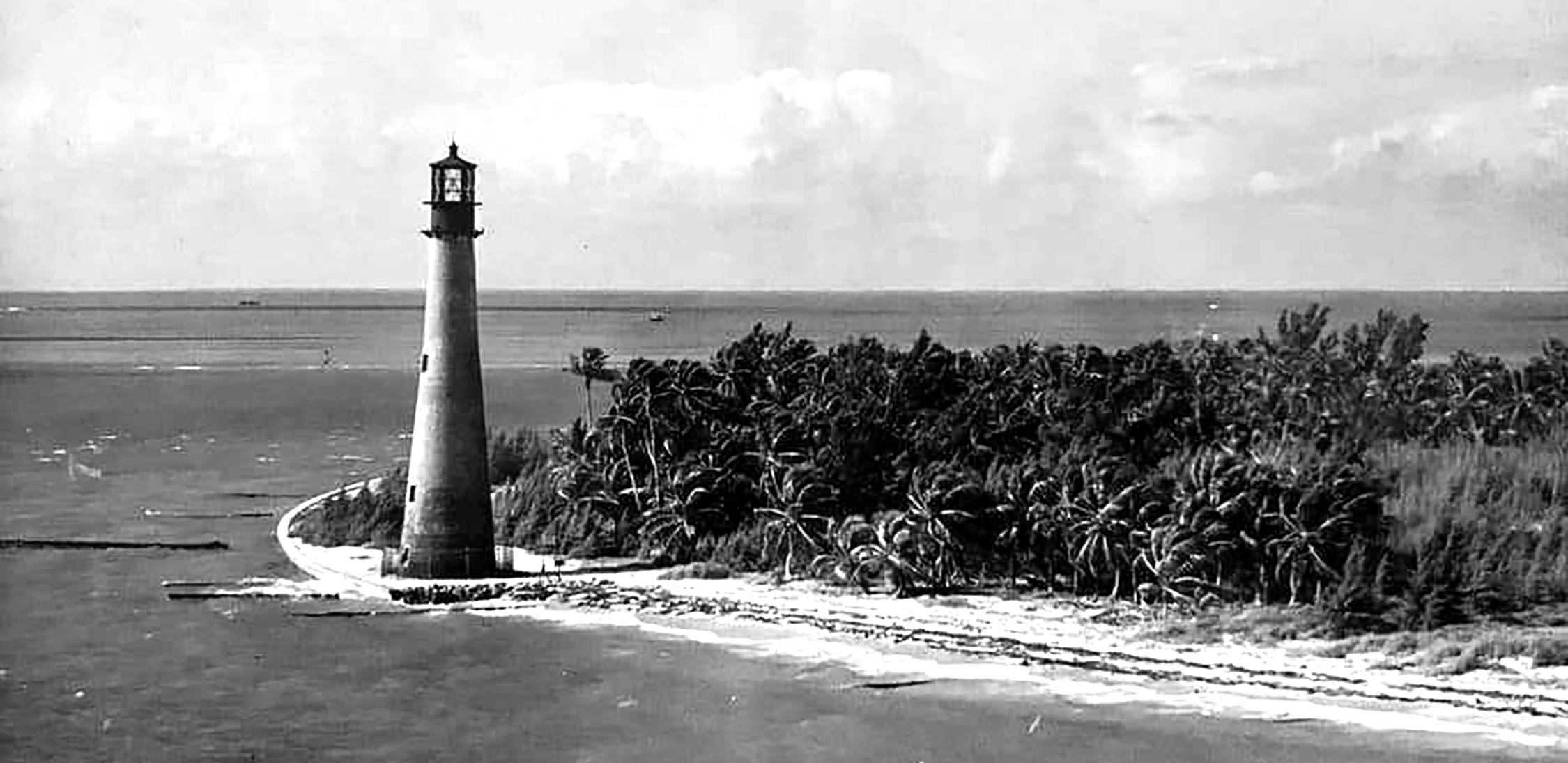
| 1/13/26 | ![]() Cape Florida Lighthouse✨ | lighthouse historyMiami landmarks+4 | — | Dade Heritage Trust | Cape Florida LighthouseMiami-Dade County+1 | Cape Florida LighthouseMiami-Dade County+6 | — | 28m 29s | |
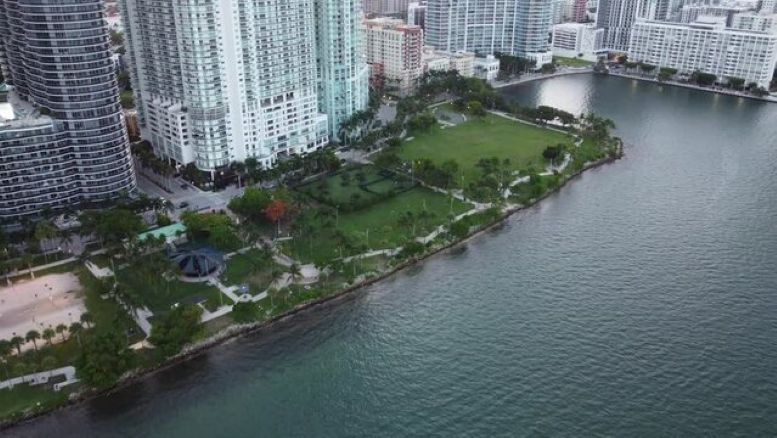
| 1/2/26 | ![]() Miami's Edgewater Neighborhood✨ | neighborhood developmentMiami history+4 | — | — | EdgewaterMiami+4 | EdgewaterMiami+5 | — | 23m 05s | |
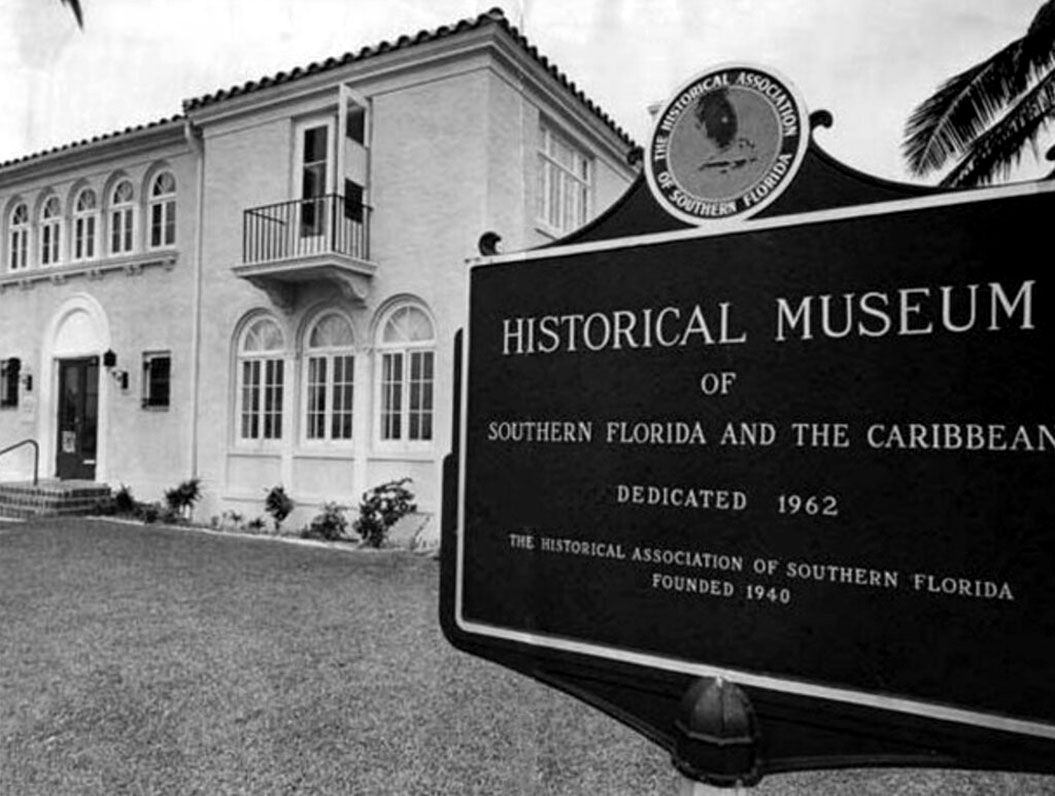
| 11/13/25 | ![]() HistoryMiami Museum✨ | HistoryMuseums+3 | — | HistoryMiami MuseumHistorical Association of Southern Florida+1 | Greater MiamiEdgewater+2 | HistoryMiami MuseumGeorge Merrick+3 | — | 29m 04s | |
| 10/13/25 | ![]() Miami Pioneer Architect August Geiger✨ | architectureMiami history+3 | — | Dade County School DistrictDade County Courthouse+8 | MiamiNew Haven, Connecticut+1 | August GeigerMiami architecture+3 | — | 25m 51s | |
Want analysis for the episodes below?Free for Pro Submit a request, we'll have your selected episodes analyzed within an hour. Free, at no cost to you, for Pro users. | |||||||||
| 9/22/25 | ![]() Theme Villages of Coral Gables✨ | Coral Gablestheme villages+3 | — | American Building CorporationCoral Gables Unique Villages+1 | Coral Gables | Coral Gablestheme villages+5 | — | 28m 46s | |
| 9/10/25 | ![]() City of Hialeah Centennial✨ | historyHialeah+3 | — | — | City of Hialeah | Hialeahhistory+5 | — | 22m 35s | |
| 9/3/25 | ![]() Architect Lawrence Murray Dixon✨ | architectureArt Deco+3 | Lawrence Murray Dixon | Georgia School of TechnologyGeorgia Tech+3 | South FloridaLive Oak, Florida+1 | Lawrence Murray Dixonarchitecture+3 | — | 22m 26s | |
| 7/14/25 | ![]() Village of Key Biscayne | This podcast episode features the story of the Village of Key Biscayne. What was once an important island for the Tequesta tribe more than 2000 years ago, Key Biscayne has become an important island in the Greater Miami area. It hosts Crandon Park, Bill Baggs Cape Florida State Park, as well as years of rich history. The village was once the home of South Florida's Crandon Park Zoo. Ownership of the island held various stakeholders beginning with the first land grants by the King of Spain in 1760, to the Davis family from 1821 – 1885, to Field and Osborne for a coconut plantation, then to James Deering and William Matheson, both of whom had great plans for the island during their stewardship. The village's history is riddled with interesting stories, colorful characters, and disputes over land ownership. | — | ||||||
| 7/10/25 | ![]() South Florida Centennials | This podcast episode features South Florida institutions and places that are celebrating their 100th birthday over the course of the next year (2025 -26). The great building boom of the 1920s peaked 100 years ago in 1925, and many of Dade County's prominent cities were founded during this time. Coral Gables, Miami Springs, Opa-locka, and Hialeah are several of these municipalities that are celebrating their centennial. One of Miami's most prominent education institutions, University of Miami, was founded in 1925. The Venetian Pool, Biltmore, Miami News / Freedom Tower, as well as many other building boom edifices that are still standing will celebrate their 100th anniversary. Join me and Joshua Ceballos from WLRN as we discuss some of the many centennial celebrations which will be highlighted as part of WLRN's 'History We Call Home' series which will share stories of these places over the course of the next year. Further Reading: WLRN: "History We Call Home" - https://www.wlrn.org/century | — | ||||||
| 5/9/25 | ![]() Miami-Dade College Wolfson Campus | This podcast episode tells the story of the Wolfson Campus at Miami Dade College. Originally established as Dade Junior College in 1960, the institution held classes wherever space was available including a local high school and other borrowed buildings. A decade later, the college began planning for its first permanent facility in downtown Miami. The site for this new building was made possible by Mitchell Wolfson, the campus's namesake, who donated a block of land that once housed aging apartment buildings, the former Realty Board building, and the White Temple Church. With funding primarily secured through loans from the Department of Housing and Urban Development (HUD), construction was completed in 1973. | — | ||||||
| 3/16/25 | ![]() The Deering Family in South Florida | This podcast episode shares the story of the Deering family's impact on South Florida during the first half of the Twentieth Century. The family first arrived in South Florida in 1900 when the patriarch, William Deering, purchased a home in Coconut Grove. His sons, Charles and James, would follow him to the region and each of the Deerings would make a tremendous impact and contribute to the community. James Deering purchased property in the Brickell neighborhood from Mary Brickell in 1912 and built his Vizcaya Estate. Charles Deering acquired land in today's Buena Vista and South Dade, where he constructed the 'Deering Estate'. Prior to his death, William Deering, along with William Matheson, acquired most of Key Biscayne in 1913. | — | ||||||
| 2/9/25 | ![]() Miami Aviation Pioneer Eddie Rickenbacker | This podcast episode features the life and legend of aviator Eddie Rickenbacker, nicknamed the 'Aces of Aces', based on his heroics while leading the 94th Squadron during World War I. Even as a young man, Eddie had a strong sense of adventure and even was a relief driver in the first ever Indianapolis 500, which took place in 1911. A car man, pilot, entrepreneur and born leader are just some of the terms that best describe Eddie Rickenbacker. He went out to found a car company, that was acquired by General Motors, an airline, which later merged with Pitcairn Airlines and became Eastern Airlines, one of the largest employers in South Florida during the middle decades of the Twentieth Century. | — | ||||||
| 1/8/25 | ![]() South Florida Aviation History | This podcast episode shares Miami's history of being an aviation hub in America. What was deemed as an ideal location for flight exhibitions and training due to the region's ideal climate and flat surface, Miami became an early test ground for aviation. The city celebrated its 15th birthday with a bi-plane show piloted by stunt pilot Howard Gill. The following decades of flight history were influenced by aviation pioneers Glenn Curtis, Juan Trippe, and Eddie Rickenbacker, just to name a few. Based in South Florida, Pan American Airlines, founded by Trippe, and Eastern Airlines, headed by Rickenbacker, made Miami one of the largest aviation centers in the world during the middle decades of the Twentieth Century. | — | ||||||
| 10/10/24 | ![]() South Florida During World War I | This podcast episode features the story of South Florida during World War I. The story begins just prior to the United States entry into World War I on April 6, 1919, and shares how South Florida and Miami were transformed as a training center during the war. South Florida began its journey as an aviation training ground preparing flyers for the war. Local residents in Dade County welcomed the soldiers and cadets as they prepared for war in places such as Coconut Grove, Allapattah, and Hialeah. Like so many other parts of the country, bond drives were an important part of daily life in South Florida and were pivotal in financing the war effort. After the celebration of Armistice Day on November 11, 1918, the region was stricken with a world-wide flu epidemic that had far reaching implications. Once the epidemic concluded, South Florida would return to life before the war. Given the exposure of the area to soldiers who trained in Miami and surrounding areas, the decade that followed the war, and subsequent flu epidemic, was one of the most prosperous boomtimes in Miami's history. | — | ||||||
| 8/29/24 | ![]() Miami Pioneer Locke T. Highleyman | This podcast episode features the story of Miami Pioneer Locke T. Highleyman and his family. Highleyman was the developer of the Point View subdivision in Brickell, Palm and Hibiscus Islands, the Meyer-Keyser building, and helped judge the selection of the name for the Wynwood neighborhood. He also held the lease to manage the Elser Pier and served as a four-term councilman for the City of Miami. While Locke did not spend his entire adult life in Miami, his contributions were extensive. Tune into this week's podcast episode to hear more about Locke and the Highleyman family. You can download this episode on your favorite podcast platform (iTunes, Stitcher, Soundcloud, Spotify), or listen directly on the Miami-History website. Please remember to click on the subscribe button and to provide a rating and comment on any of the aforementioned platforms. Correction: Locke and Katherine Highleyman were married in 1900, not 1902 as was stated in the podcast episode. | — | ||||||
| 6/28/24 | ![]() Historic Ingraham Building in Downtown Miami | This podcast episode features the history of the Ingraham Building at 25 SE Second Avenue in downtown Miami. This building is named for Miami pioneer James Ingraham and was constructed from 1926 – 27, near and during the end of the building boom of the 1920s. James Ingraham played an important role for Henry Flagler as a vice president of the Florida East Coast (FEC) Company, and as president of the Model Land Company, the organization responsible for marketing and selling land acquired by the FEC. Ingraham was an icon in early Miami. When he died unexpectedly on October 25, 1924, the city and the FEC organization were shocked and left to fill a big void in leadership. When the Model Land Company announced that they would construct their corporate office building at the western edge of the former Royal Palm Park, the corner of SE Second Avenue and SE First Street, they naturally named it for their former leader. Despite several setbacks during construction, the building finally celebrated its grand opening on May 1, 1927. | — | ||||||
| 3/26/24 | ![]() History Dade County Seats | This podcast episode features the inception and the history of Dade County and its many different county seats. Originally slated to be named Pinckney County, the municipality was named for Major Francis Dade who lost his life in a battle with the Seminole Indians in December of 1835. The county was formed in January of 1836 and was named to honor the fallen West Point graduate. The original county seat was placed in Indian Key and was there from 1836 until 1844. It was moved to the banks of the Miami River, then referred to as Biscayne Bay Country, when William English used his influence to initiate a special election in 1844 to change the county seat. By 1888, the northern part of the county, which included what is now Palm Beach and Broward County, became more densely populated and triggered another special election to move the county seat to Juno. A decade later, in 1899, a third special election was initiated to move the county seat back to the new City of Miami, founded in 1896, which had become the largest city in the county by that time. | — | ||||||
| 11/28/23 | ![]() Federal Buildings in Downtown Miami | This podcast episode features the buildings that served as the federal courthouse and post office in Miami from 1915 through the present day. The first courthouse was designed by Oscar Wenderoth in the early 1910s and opened at 100 NE First Avenue in downtown Miami. This building provided for all federal agencies including the courthouse, post office, and weather bureau from its opening until the peak of the Great Depression in 1933. When the city's federal business outgrew the original building, a new federal courthouse and post office building was constructed beginning in 1932 on the site of Miami's first school building known as the Miami Central Grammar School which opened on that site in the early 1900s. This edifice was designed by the architectural firm of Paist and Steward and opened two blocks north of the first building at 300 NE First Avenue in 1933. The second federal building was in use as a federal building from its opening until it was replaced in 2008 by today's Wilkie D Ferguson Jr. building at 400 North Miami Avenue. | — | ||||||
| 7/18/23 | ![]() History of Port of Miami | This podcast episode discusses the early history of the Port of Miami. From the first channel dredged by Henry Flagler in 1897 to the move of the port to the Dodge Islands, the overriding theme throughout the history of this most important institution was "Watch the Port of Miami". What began with the start of steamship service from Royal Palm Docks to transport tourists from Miami to Key West, grew into one of the largest port operations in the nation by the 1930s. When the port moved from the mouth of the Miami River to today's Maurice Ferre Park (aka Bicentennial Park), it was not well received by many of Miami's civic leaders. The fear was that the beauty of the shoreline along the bay would be overtaken by the industrial operations of the port. From the onset, city leaders had a plan to move the port from the shoreline to somewhere else. Finally, beginning in the late-1950s, the Metro Dade County government partnered with the City of Miami to bulkhead and connect the chain of Dodge Islands to create one of the busiest ports in the world. Tune into this week's podcast episode to hear more about the Port of Miami. You can access this episode on your favorite podcast platform (iTunes, Stitcher, Soundcloud, Spotify), or listen directly on the Miami-History website. Please remember to click on the subscribe button and to provide a rating and comment on any of the aforementioned platforms. | — | ||||||
Showing 25 of 74
Pitch Fit is a Pro feature
See how bookable this show is for guests, which brands already advertise, the per-episode ad value, and the best-fit guest and sponsor profile. The numbers are blurred on the free plan.
How readily this show books outside guests like you.
How proven this show is for host-read sponsorships.
For Guests
ProFor Advertisers
ProUpgrade to Pro to unlock guest cadence, sponsor categories, fit scores, and per-episode ad value for this show.