Mid-Atlantic - conversations about US, UK and world politics
by Roifield Brown
Is this your podcast?Insights from recent episode analysis
Audience Interest
Podcast Focus
Publishing Consistency
Platform Reach
Insights are generated by CastFox AI using publicly available data, episode content, and proprietary models.
Total monthly reach
Estimated from 1 chart position in 1 market.
By chart position
- 🇻🇳VN · Society & Culture#144500 to 3K
- Per-Episode Audience
Est. listeners per new episode within ~30 days
250 to 1.5K🎙 Weekly cadence·346 episodes·Last published 1mo ago - Monthly Reach
Unique listeners across all episodes (30 days)
500 to 3K🇻🇳100% - Active Followers
Loyal subscribers who consistently listen
150 to 900
Market Insights
Platform Distribution
Reach across major podcast platforms, updated hourly
Total Followers
—
Total Plays
—
Total Reviews
—
* Data sourced directly from platform APIs and aggregated hourly across all major podcast directories.
On the show
Recent episodes
94 Votes: Tyrone Fowles on Losing Birmingham
Jul 8, 2026
Unknown duration
A Game of Nations, A Test of Britain
Jun 12, 2026
Unknown duration
Starmer, Reform and the Hollowed-Out Centre
May 14, 2026
Unknown duration
State of the Union, State of the Monarchy
Feb 28, 2026
Unknown duration
Mandelson, Starmer, and a Scandal That Was Wired to Explode
Feb 6, 2026
Unknown duration
Social Links & Contact
Official channels & resources
Official Website
Login
RSS Feed
Login
| Date | Episode | Description | Length | ||||||
|---|---|---|---|---|---|---|---|---|---|
| 7/8/26 | 94 Votes: Tyrone Fowles on Losing Birmingham | The political map of Birmingham has been redrawn.After decades of Labour dominance, the May elections left Birmingham City Council with no overall control. Anger over the city's financial crisis, the prolonged bin strike, rising council tax and declining public services produced one of the most dramatic electoral shifts in the city's modern history.In this wide-ranging conversation, Roifield Brown sits down with Tyrone Fowles, Labour's candidate for Bordesley & Highgate, who narrowly lost his seat by just 94 votes.Together they explore:Why Labour suffered such heavy losses across Birmingham.Whether Keir Starmer became a liability on the doorstep.The impact of the city's financial crisis and bin strike.Why voters are turning towards the Greens, Liberal Democrats and independents.Andy Burnham's emergence as Labour's new standard bearer.Whether British politics needs a new generation of leaders who understand social media and modern political communication.Poverty, crime and deteriorating public services in Birmingham.Tyrone's journey from the UK Youth Parliament to Labour candidate.Why local politics must reconnect with communities before trust can be rebuilt.It's an honest discussion about political failure, renewal and what happens when one of Britain's largest cities decides enough is enough. Hosted on Acast. See acast.com/privacy for more information. | — | ||||||
| 6/12/26 | A Game of Nations, A Test of Britain | Mid-Atlantic Podcast SummaryThis week's Mid-Atlantic examined two stories where sport, politics, identity, and power collided.In the first half, Roifield Brown was joined by John Gunnerson and Tonye Altrade to discuss the 2026 World Cup. The conversation explored FIFA's relationship with political power, visa refusals affecting officials and visitors, Gianni Infantino's leadership, Donald Trump's use of the tournament as a showcase for American influence, and growing concerns that the World Cup is becoming increasingly entangled with geopolitical tensions.The panel questioned whether the tournament can still serve as a global celebration when participants, journalists, and officials from some countries face barriers to entry. They also debated whether FIFA's pursuit of profit and political patronage has undermined the spirit of the game.The second half focused on the riots in Belfast following the attempted murder case involving a Sudanese asylum seeker. The discussion examined how a criminal incident became a flashpoint for wider debates about race, immigration, social media, political opportunism, and public trust. The panel explored the role of figures such as Elon Musk, the influence of online platforms, media responsibility, and whether Britain is becoming increasingly vulnerable to division driven by grievance politics.Despite concerns about rising tensions, the discussion ended on a note of cautious optimism, asking whether Britain can still pull itself back from the edge and reaffirm its tradition of tolerance and democratic resilience.Five Main Quotes"The difference is here is that America is denying people to come to the party.""Football doesn't need to be chasing dirty politics to get money.""I think he wants to be on camera. He wants Gianni Infantino to kiss his ass.""They need to continue keeping them emotionally enraged.""Whilst Belfast shows a very ugly side of human nature... we have seen what people are also capable of in this country to turn the tide."Key ThemesThe politicisation of the World CupFIFA, power, and accountabilityTrump's America and global sportImmigration, race, and public angerElon Musk's influence on political discourseThe role of media and social media in amplifying conflictWhether Britain's institutions can withstand growing polarisationHope versus grievance in modern democratic societiesOverall, the episode argues that both the World Cup and the Belfast riots are symptoms of a broader global struggle over identity, belonging, power, and who gets to shape the narrative in an increasingly fragmented world. Hosted on Acast. See acast.com/privacy for more information. | — | ||||||
| 5/14/26 | Starmer, Reform and the Hollowed-Out Centre | Episode summaryWestminster was meant to be projecting calm. Instead, this episode of Mid-Atlantic finds Labour staring into a leadership crisis, with Keir Starmer under pressure after bruising local election results and a party increasingly unsure what, or whom, it represents. The panel weighs whether Starmer can survive, how a Labour leadership contest would work, and why Andy Burnham, Angela Rayner, Wes Streeting and others are being talked up as possible successors.The conversation then moves from palace intrigue to the larger political fracture: Reform gaining ground in working-class areas, the Greens attracting disillusioned progressives, and Labour struggling to explain what it has actually achieved in government. Palestine, energy prices, public ownership, immigration and the cost of living all surface as signs of a party caught between managerial caution and a country demanding something with a pulse.And because despair has its limits, the panel ends where all serious political analysis eventually must: the World Cup. America is apparently excited, England is apparently good, and Arsenal fans are, as ever, treating optimism as a constitutional right.Pull quotes“Political parties appear detached from the people they are created to represent.”“Nobody knows what this Labour Party actually stands for.”“The middle ground is losing.”“Reform are more than the opposition. They’re the favourites now.”“We’re in this constant psychodrama.” Hosted on Acast. See acast.com/privacy for more information. | — | ||||||
| 2/28/26 | State of the Union, State of the Monarchy | Episode SummaryOn this week’s Mid-Atlantic, Roifield Brown convenes his transatlantic panel to examine two democracies straining under the weight of power, personality and public distrust. In Washington, President Trump’s State of the Union address is dissected less as governing document and more as performance art, heavy on self congratulation, generous with medals and applause lines, and sharply combative toward Democrats. The panel questions whether such rhetoric represents democratic resilience, institutions holding firm, or simply the normalization of political antagonism as spectacle.Across the Atlantic, the arrest of Prince Andrew under investigation, alongside renewed scrutiny stemming from the Epstein files, pushes Britain into uncomfortable constitutional territory. Is this elite accountability finally catching up with power, or is it a carefully managed distancing exercise by an institution that has survived by cutting loose liabilities? The monarchy’s durability, its relationship to political neutrality, and the erosion of deference are all put under the microscope. Comparisons with the United States are unavoidable, particularly the appetite, or lack thereof, for holding powerful figures to account.The conversation then turns to the Gorton and Denton by election, a contest that feels bigger than its geography. With Labour, Reform and the Greens in a tight race, the panel debates whether Britain is entering a period of structural political realignment. Is Reform’s ascent a populist vindication or a short term protest vehicle? Can the Greens convert authenticity and digital savvy into sustained influence? And are the Conservatives facing something more existential than a bad polling cycle? On both sides of the Atlantic, the episode leaves listeners with a bracing question, are these systems bending or quietly being remade?Five Key Quotes“It’s presidential politics as world wrestling, this is what Trump does.”“You can’t tell people that things are great when they’re not.”“There’s a reason they’ve survived for 1,100 years, they’re experts at survival.”“The splintering is extraordinary, it’s all to play for.”“Authenticity is the difference, people can tell.” Hosted on Acast. See acast.com/privacy for more information. | — | ||||||
| 2/6/26 | Mandelson, Starmer, and a Scandal That Was Wired to Explode | The Mandelson affair didn’t arrive as a shock so much as a delayed detonation. On Mid-Atlantic, Roifield Brown and his panel argue that the controversy surrounding Peter Mandelson’s appointment as UK ambassador to the US was neither unforeseeable nor accidental. It was the result of a conscious political decision one that traded judgment and party trust for perceived expediency, and one now threatening to corrode Labour’s credibility as a governing force.Steve O’Neill frames the issue bluntly as a failure of judgment at the very top. Keir Starmer’s admission that he knew about Mandelson’s ongoing relationship with Jeffrey Epstein at the time of the appointment turns the scandal from an oversight into a choice. Leah Brown widens the lens, describing a cultural problem inside Labour’s leadership: a growing comfort with elite networks, transactional politics, and risk-taking that sits uneasily with the party’s professed values. Mandelson, long distrusted by Labour’s rank and file, becomes less an anomaly than a symptom.The panel also grapples with why this scandal has landed so forcefully in Britain while similar Epstein-adjacent figures in the United States remain largely untouched. Mike Donahue argues that American politics has lost its capacity for collective shame, trapped in hyper-partisanship and institutional paralysis. In contrast, Britain—still angry, poorer, and distrustful of elites after Brexit—retains a shared sense that some lines simply should not be crossed. Whether Starmer survives the fallout may depend less on process than on whether Labour can convince voters that this was an aberration, not a reflection of who now governs in its name.Five Key Quotes“This wasn’t bad luck. It was a conscious choice.”“You can have all the vetting processes you like, but someone still decides to override them.”“Mandelson was playing from a different playbook one far closer to billionaires than to Labour members.”“In the US, we’ve lost our sense of shame. Not even this is enough to force accountability.”“The problem isn’t just Mandelson being found out it’s how many others are playing the same game.”Further Reading / References MentionedChannel 4 Dispatches (2019) investigation into Peter Mandelson and Jeffrey EpsteinHistorical comparison: The Profumo Affair (1960s UK political scandal)Ongoing criminal and parliamentary investigations relating to Epstein-linked figures Hosted on Acast. See acast.com/privacy for more information. | — | ||||||
| 2/4/26 | The Mark Carney Moment, Canada’s New Global Role | In this episode of Mid-Atlantic, Roifield Brown sits down with Canadian political commentator and host of The O Show, Laura Babcock, to dissect Canada’s unexpected political upheaval and its new identity on the world stage. With Mark Carney now prime minister, what was once unimaginable has become policy: a technocratic, globally respected leader is now seen by many Canadians as their country’s best defense against the growing unpredictability of the United States under Donald Trump.Babcock explains how Trump’s revived “51st state” rhetoric and a separatist push from Alberta have shaken Canadian politics out of its usual calm. Mark Carney, a former governor of both the Bank of England and the Bank of Canada, was drafted into leadership in a moment of national anxiety. The result? What many are calling the “Carney Doctrine” a centrist, pragmatic, globally cooperative approach that reasserts Canada's place as a serious voice in a chaotic international landscape.But this isn’t a cheerleading session. Carney’s past as a global banker still raises eyebrows among populists, and there are strategic risks in rebalancing trade and security away from the U.S. toward other powers like China. Still, Babcock argues that Carney's blend of calm pragmatism and sharp global insight has given Canada a renewed sense of unity, purpose and relevance. Hosted on Acast. See acast.com/privacy for more information. | — | ||||||
| 1/27/26 | 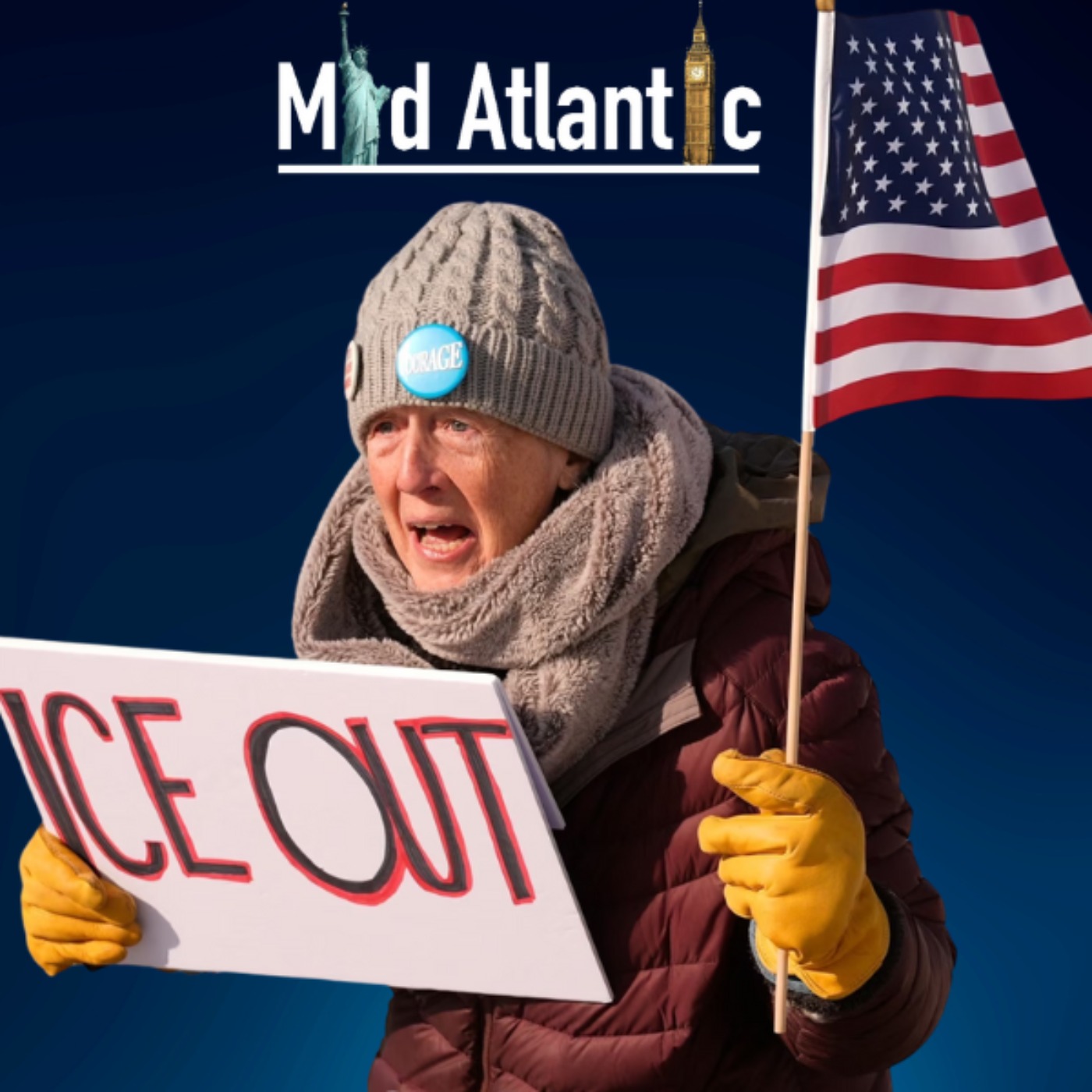 Execution in Minneapolis, Burnham is Blocked | In this week’s episode of Mid-Atlantic, the panel dissects two unsettling scenes of political drama — one on the streets of Minneapolis, the other in the corridors of Westminster. The fatal ICE shooting of a civilian in Minneapolis, initially misrepresented by the Trump administration, has unleashed a bipartisan backlash. Tensions flare as footage shows an unarmed veteran stepping in to aid a protester only to be shot dead. Host Roy Field Brown is joined by panelists Logan Phillips and Mike Donahue for a conversation that shifts from outrage to hard political analysis, exposing a nation’s frayed moral seams.Across the pond, the Labour Party blocks Andy Burnham — the “King of the North” — from contesting a Westminster seat, triggering speculation of Keir Starmer’s insecurity. Is this about party discipline or political self-preservation? Corey Bernard decodes the local maths in Manchester’s Gorton and Denton constituency, while Leah Brown challenges Starmer’s leadership style, likening it to brittle control masquerading as strategy.This episode weaves grief, fury, and policy fatigue with snappy transatlantic banter — and asks the fundamental question: when institutions crack, what do ordinary people do? Hosted on Acast. See acast.com/privacy for more information. | — | ||||||
| 1/20/26 | Greenland, Trump, and the Transatlantic Stress Test | If you thought the idea of the US buying Greenland was a historical curiosity, think again. In this episode of Mid-Atlantic, Roifield Brown returns to YouTube with geopolitical analyst Pyotr Kurzin of The Global Gambit to peer into the mess that is Trump-era foreign policy is creating in the North Atlantic. Spoiler: It’s not just about a frozen island with more musk oxen than people. It’s a full-blown stress test for NATO, Europe, and what’s left of the post-WWII international order.Kurzin lays out the Trump worldview: alliances are optional, leverage is everything, and territorial sovereignty is up for negotiation. European leaders are adjusting, some more bravely than others. Macron is saying the quiet part out loud, Germany is quietly recalibrating, and the UK is hedging its bets, Brexit hangover and all.This isn’t just about Greenland. It’s about whether Europe can finally stop outsourcing its security to a partner that may now be actively undermining it. The conversation ends with an uncomfortable but necessary truth. If this is the new normal, then Europe, Britain included, needs to grow up, gear up, and rethink everything from trade to deterrence.Selected Quotes from the Episode“Trump sees Greenland as an extension of the Americas, which therefore by default is de facto America’s to control.”“Europe needs to behave in the reality that it is, not in the way that it wants it to be.”“We live in an age of international disorder.”“Britain needs to pick a side. Be more consistent in its messaging and positioning.”“Hope is not a strategy.”Further Reading & References from the EpisodeThe Global Gambit YouTube Channelhttps://www.youtube.com/@TheGlobalGambitThe Global Gambit Substackhttps://theglobalgambit.substack.comFinancial Times illustration of global powers carving up the worldhttps://www.ft.com Hosted on Acast. See acast.com/privacy for more information. | — | ||||||
| 1/17/26 | Reform and Fallout | A defection, a photocopied resignation, and an airborne crisis: welcome to politics in 2026.In this week’s episode of Mid-Atlantic, Royfield Brown leads a transatlantic panel through the latest signs of fracture on the British right and a chaotic shift in U.S. foreign policy. Robert Jenrick’s defection from the Conservatives to Reform UK is dissected not as a grand ideological realignment, but as a cynical career move amid a floundering party machine. Corey Bernard and Tanya Altrade offer little sympathy, framing the departure as more “photocopier farce” than political earthquake, while Logan Phillips warns of what happens when short-termism becomes the only strategy left standing.Attention then pivots to Washington, where Trump’s erratic foreign policy has turned the Monroe Doctrine into something far more impulsive—and combustible. From the disastrous optics of promising support to Iranian protesters (then ghosting them), to the bizarre muscle-flexing over Greenland, Logan paints a picture of a White House driven by ego, not doctrine. As European troops cautiously land in Greenland and NATO solidarity is tested in real-time, the panel reflects on the geopolitical aftershocks of U.S. unpredictability.The episode closes on a lighter note—sort of—with Gregorian chants, Game of Thrones hypotheticals, and Roy Field’s lament that YouTube might be eating TV’s lunch… and possibly dinner.Selected Quotes:“Robert Jenrick left the Conservative Party because he saw no future in it, only a future for himself elsewhere.” — Corey Bernard“Farage is not anti-establishment. He’s just mad the establishment won’t let him in.” — Tanya Altrade“Americans want to be the big dog, but not the bully. Trump makes that distinction hard.” — Logan Phillips“We’re living in a world shaped by how Donald Trump’s father treated him.” — Corey BernardFurther Reading & Links Mentioned:Race to the White House – Logan Phillips' election forecasting siteBreaking Points on YouTubeThree-Eyed Theorist on YouTube (Game of Thrones What-Ifs)Chess.com YouTube ChannelScreen Crush – Film and Marvel CommentaryGregorian Chant YouTube SearchNext Episode Preview:Join us next time as Mid-Atlantic shifts to YouTube—bringing panelist beards, political insights, and probably more broadband-related complaints into full 4K view. Hosted on Acast. See acast.com/privacy for more information. | — | ||||||
| 1/8/26 | The US attacks Venezuela, When the Rules Become Optional | Host: Roifield BrownProducer: Connor BegleyGuests: Mike Donahue, Mike Holden, Tony AlltradeEpisode summaryThis week, Mid-Atlantic looks at what happens when the “rules-based international order” stops behaving like a system and starts behaving like a slogan. The conversation centres on the US seizure/extraction of Venezuela’s president and the eerie normalisation of an act that by the usual standards would be labelled rogue behaviour. From there, the panel widens the lens: spheres of influence, NATO’s credibility, Britain’s silence, and the uncomfortable possibility that “rogue state” is becoming a category defined by power, not principle.What we coverThe “rules-based order” feels retired: how language about sovereignty and international law collapses when allies break it.Why Britain went quiet: the panel digs into the significance of Keir Starmer’s (and the UK government’s) muted response—and what that says about the “special relationship.”Foreign policy vs domestic distraction: is this about strategy (oil, BRICS, China/Russia influence), or a political smokescreen (Epstein files, domestic turmoil, midterms)?“Trump pushes until stopped”: the idea that boundary-testing is the method, not a side-effect.Greenland as the next anxiety: not just as a hypothetical, but as a test of whether NATO is a system with teeth or a club with vibes.Spheres of influence, back to the 19th century: are we sliding into a three-bloc world and if so, what replaces the pretence of universal rules?NATO: paper, system, or faith?: argument over whether annexation would shatter the alliance or merely bruise it.The “moral high ground” problem: what the West can and can’t say about Russia/Ukraine or China/Taiwan after a precedent like this.Can US institutions stop a rogue executive?: sharp disagreement on whether the military, courts, Congress, or wider civil society can meaningfully constrain Trump.Consequences if the order collapses: sanctions, trade wars, defence spending spikes, market shock, and realignment away from US leadership.A little football palate cleanser: Arsenal title optimism, Burnley survival nerves, Portsmouth loyalty, and a classic Mid-Atlantic sign-off.Key moments & quotes (highlights)Ro: “If that doesn’t count as rogue behaviour, then the term has become meaningless.”Mike Donahue: “He’ll push and push and push boundaries until someone actually stops him.”Mike Holden: “Yes, any maniac looks strong. But that doesn’t mean they’re trustworthy.”Tony: “We’re almost having to reset… we have no semblance of what is right again.”On NATO/Europe’s response: “Very strongly worded diplomatic messages… very strongly worded.”Big questions the episode asksWhat does a world look like when rules become optional?Who gets to break the rules and who gets punished for trying?If the old system is dead, what replaces it: blocs, spheres, or chaos?How does the West criticise Russia or China after this precedent?Is the real battle now internal to the US rather than international?People & accounts mentionedMike Donahue — (social: discussed on-air)Mike Holden — @MikeHolden42Tony (“Alltrade”) — @alltrade_ (Twitter) / Tony on the… / alt aLT (as mentioned)Closing beatThe episode ends where it began: with disbelief, unease, and a running (and increasingly personal) disagreement between Ro and Donahue about whether anyone can stop Trump or whether the rest of the world is simply getting a late invitation to the chaos Americans have already been living through. Hosted on Acast. See acast.com/privacy for more information. | — | ||||||
Want analysis for the episodes below?Free for Pro Submit a request, we'll have your selected episodes analyzed within an hour. Free, at no cost to you, for Pro users. | |||||||||
| 12/20/25 | Has Trump Permanently Coarsened American Political Language? | In this week’s episode of MidAtlantic, host Roifield Brown asks whether Donald Trump’s corrosive rhetoric is a momentary blip or a seismic shift in the way American presidents speak and more importantly, lead. Is the bar for political discourse permanently lowered, or are we just watching a uniquely toxic figure dominate a uniquely toxic moment?The transatlantic panel includes Steve Krone in LA, Denise Hamilton in Houston, Mike Donahue in the U.S., and Mike Holden in Preston, UK. Together, they grapple with whether Trump’s verbal scorched-earth tactics are just personal style or indicative of something more lasting. Krone argues the bigger threat isn’t Trump’s words but his authoritarian ambitions. Hamilton disagrees, insisting rhetoric and policy now move hand in hand, eroding trust in institutions and in each other. Donahue adds that Trump’s cult-like grip on the Republican base makes critique feel futile. “There is no bottom,” he says.From the UK, Holden observes the creeping Trumpian tone in Reform UK’s politics. One Reform candidate telling David Lammy MP to “go back where he came from” may be Britain’s own grotesque baby step in that direction. But Boris Johnson, for all his rule-breaking, used elevated language. Trumpism in tweed, you might say.So what’s the right response? Fight fire with fire or take the high road? The panel is split. Gavin Newsom’s choice to hit back with the same kind of crassness raises the question: is this tactical jiu-jitsu or just more degradation of political standards?The conversation closes with a tribute to Rob Reiner, whose films offered a more decent and coherent version of the American story. The contrast is stark and perhaps intentional.Five Key QuotesSteve Krone: “Trump is vile, yes, but has he changed the baseline of political discourse? I don't think so.”Denise Hamilton: “Rhetoric plus policy equals destruction. That’s the true Trump legacy.”Mike Donahue: “There is no bottom. We’ve just given up caring. If you haven’t figured out who Trump is by now, there’s no hope.”Mike Holden: “Some UK politicians are trying out Trumpism but in lowercase.”Denise Hamilton: “How do you fight a sociopath? Michelle Obama said go high. My mother said gouge their eyes out.”Further Reading & MentionsRob Reiner's Work and TributesRob Reiner's IMDb FilmographyThis Is Spinal Tap (1984)Politics and RhetoricPeople for the American Way (Founded by Norman Lear)Harry Enten’s CNN Polling on TrumpTrump’s Approval Ratings – FiveThirtyEightGavin Newsom OnlineGavin Newsom on X (Twitter) Hosted on Acast. See acast.com/privacy for more information. | — | ||||||
| 12/5/25 | 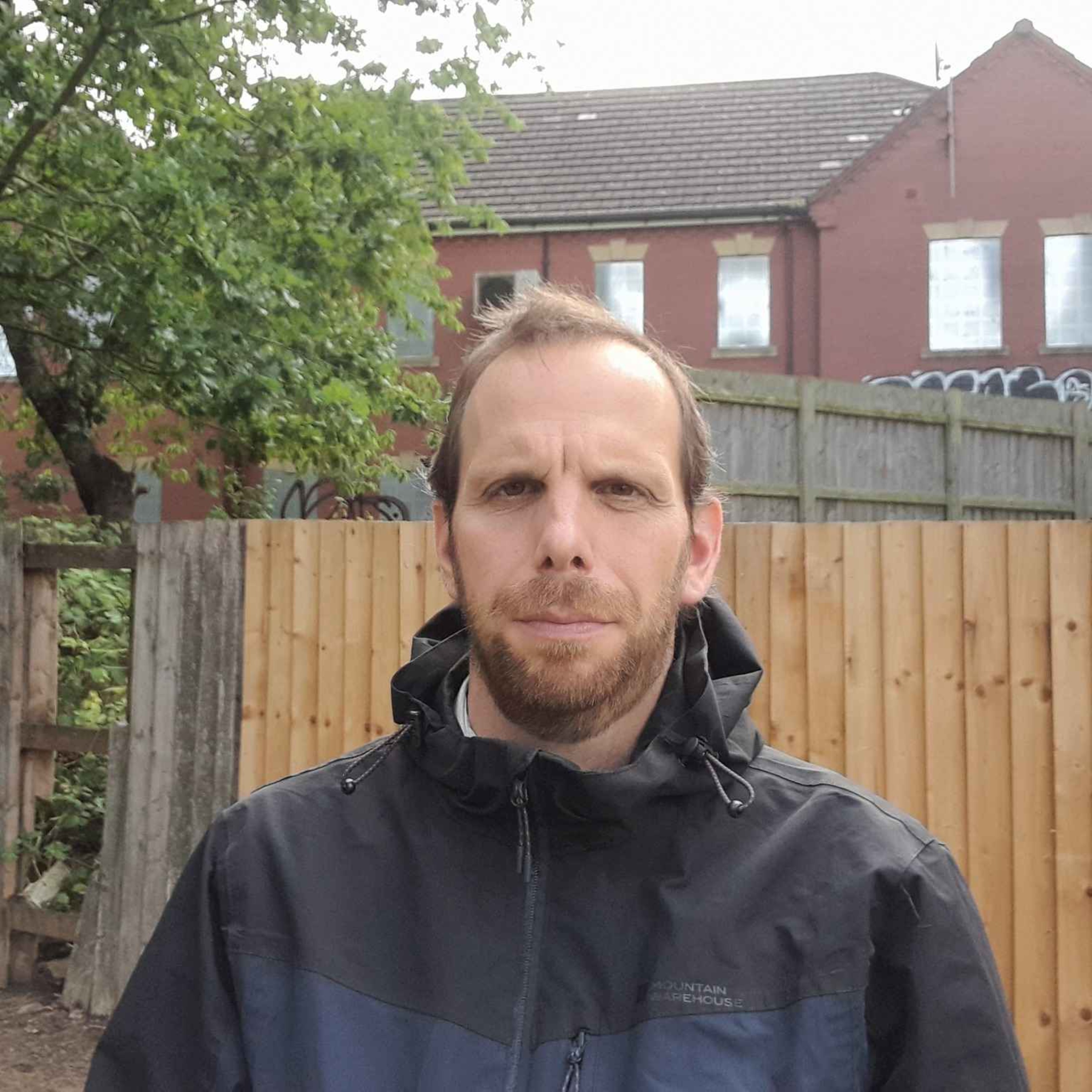 From Council Estates to the Green Surge, Local Power and National Shifts with Cllr Julian Pritchard | In this episode, RoyField Brown revisits his Birmingham radio roots with an interview that blends the local and the political. Green Party councillor Julian Pritchard joins from his ward of Druids Heath and Monyhull, a place that even the most civic-minded Brummies might struggle to locate on a map. But that’s the point. Pritchard has been trying to change that for over seven years, turning up, knocking doors, chasing bin collections, and campaigning for a more equitable form of regeneration that isn’t developer-led and value-extractive. His success there is more than a hyper-local curiosity. It’s part of a wider green moment.The conversation moves between the nitty-gritty of grassroots activism and the broader surge in national Green Party support, spurred in part by leader Zack Polanski’s recent media breakthrough. Pritchard, a methodical campaigner, credits Polanski with articulating long-held Green values, on social justice and climate policy alike, with clarity and conviction. Unlike Labour’s technocratic drift, the Greens now appear to be talking about transformation and redistribution, and crucially, they’re being heard.As for Druids Heath, it's a case study in how regeneration can alienate when it doesn’t centre residents. Pritchard pushes back against full demolition plans for the estate, highlighting the murky logic of “affordable housing” that may not be affordable at all. He’s advocating for proper social housing, not policy euphemisms. Amid a national housing debate, the fate of Druids Heath could be a local test case with national implications.5 Selected Quotes"We need somebody like your leader who can grab the attention and articulate a vision, not just for now, but where we are going." — RoyField Brown"It's about changing systems and policies, not saying that everybody makes real choices." — Julian Pritchard"People felt taken for granted, and nobody did anything." — Julian Pritchard"This is trust us from the council that's delivered us equal pay liability, bankruptcy, Oracle disaster, yearlong bin strike..." — Julian Pritchard"To save the planet fairly, we’ve got to focus on both people and planet." — Julian PritchardFurther Reading & Links MentionedGreen Party UK – Official party siteZack Polanski's profile – London Assembly bioBirmingham Regeneration Plans – Birmingham City Council’s regeneration proposal for Druids HeathShared Ownership vs. Social Rent Explained – Shelter UKPodcast Producer Connor Begley Hosted on Acast. See acast.com/privacy for more information. | — | ||||||
| 11/20/25 | The New Left Is Here And It’s Winning | What do a Democratic Socialist in New York and a Green Party leader in Britain have in common? Charisma, clarity, and, apparently, a hatred of high bus fares. In this episode of Mid-Atlantic, host Roifield Brown and the transatlantic panel tackle the political rise of Manami in NYC and Zack Polanski in the UK—two left-wing politicians who’ve gone from fringe to front page without watering down their message.Manami’s victory over Andrew Cuomo to become New York’s mayor-elect wasn’t just an electoral upset; it was a messaging masterclass. Free buses, city-run groceries, and rent freezes—policies that many establishment Democrats wouldn't touch with a barge pole—landed him in City Hall with a wave of grassroots energy and a TikTok-savvy machine behind him. Meanwhile, across the pond, Polanski’s strategic reframing of the Green Party—away from "tree hugger" stereotypes and toward a hard-hitting, cost-of-living political vehicle—has seen the party overtake the Lib Dems and Tories in membership numbers.But is this revival of unapologetic leftism a fleeting blip, or a realignment? Can charisma and clear messaging finally outgun billionaire-backed centrism and weary technocracy? Roifield is joined by regulars Denise Hamilton (Houston), Steve O'Neill (London), Cory Bernard (Manchester), and Mike Donahue (Los Angeles) to unpack what the centre-left keeps missing—and why hope might just be the most radical policy of all.Five Standout Quotes:“If people feel seen, they feel heard, they feel valued, they will support you—and they will vote for you.” – Denise Hamilton“Corbyn always sounds like someone’s just stolen his lunch.” – Corey Bernard“Even if you elect Bernie Sanders president, how effectual is he going to be? But the mayor of New York—he can change things.” – Mike Donahue“Polanski just sounds like he enjoys it. Same message as Corbyn, but without the gloom.” – Steve O'Neill“We’ve embraced a cynicism and a hopelessness that Manami rejected—and people gravitated to it.” – Denise HamiltonPanel Social Handles:Denise Hamilton: @officialdhamMike Donahue: [@MichaelDonahue on Bluesky]Steve O’Neill: [@SteveZeroONeill] – Mostly on LinkedInCory Bernard: @168PolymerNext Episode Tease:Will the UK general election be a bloodbath for Labour—or will Starmer’s centrism survive the green wave? Stay tuned.Need tweaks to match a specific platform (Spotify, Apple, etc.) or want a shorter version for email/newsletter blasts? Let me know. Hosted on Acast. See acast.com/privacy for more information. | — | ||||||
| 9/5/25 | Gaza, Genocide and the West’s Moral Failure | In this charged episode of Mid-Atlantic, host Roifield Brown is joined by Palestinian analyst Mouin Rabbani, along with regular contributors Cory Bernard in Manchester and Mike Donahue in Los Angeles, to lay bare the harrowing conditions in Gaza and the political cowardice of the West. With over 60,000 Palestinians killed and famine declared by the IPC, the panel asks a blunt question: why does the so-called democratic world continue to stall, excuse, and equivocate?Rabbani underscores the systematic assault not just on Gaza, but on the Palestinian people as a whole — from military aggression and forced displacement to attempts at erasing Palestinian refugees from political consideration. The conversation pivots to the deafening silence from Washington, London, and Brussels, and the wider consequences for international law, human rights, and geopolitical credibility. Meanwhile, domestic shifts are underway: US support for Israel is fracturing along generational lines, while in the UK, groups like Palestine Action face state repression under terrorism legislation — raising questions about civil liberties and the hypocrisy of Western democratic claims.Finally, the guests wrestle with the viability of a two-state solution. Mouin Rabbani insists that any hope for Palestinian sovereignty must come with political renewal and an end to the current PA-Hamas schism. But even that hinges on one thing Western governments refuse to offer: meaningful pressure on Israel. For now, the focus must be immediate — stop the famine, stop the bombs, and stop the enabling.Selected Quotes"The PA has essentially assumed the role of a powerless spectator." — Mouin Rabbani"It's Marjorie Taylor Greene saying, 'Why are we supporting genocide?' That's how much the conversation has shifted." — Roifield Brown"You should not be able to break into an RAF base. That says more about our military than it does about Palestine Action." — Cory Bernard"The West has made Israel a special case because of the Holocaust. That indulgence is eroding — and fast." — Mouin Rabbani"We can talk about statehood tomorrow. But tonight, people are starving. Get them food." — Roifield BrownFurther Reading & ResourcesFamine Review Committee / IPC: https://www.ipcinfo.orgHaaretz Podcast & Coverage: https://www.haaretz.comInternational Court of Justice – South Africa v. Israel (Genocide Case): https://www.icj-cij.org/case/192Palestine Action: https://palestineaction.orgUN Headquarters Agreement: https://www.un.org/en/about-us/host-country Hosted on Acast. See acast.com/privacy for more information. | — | ||||||
| 8/15/25 | Gaza, Moral Clarity and Complicity | Mid-Atlantic: Gaza—Moral Clarity and ComplicityGuests: Dave Smith (North London), Michael Donahue (Los Angeles), Tonye “T” Trade (East London), Safana “Saf” Monajed (East London) Host: Roifield BrownEpisode summaryRoifield opens with a stark personal statement: Gaza is a genocide, and Britain’s leadership—particularly the Labour government—has failed morally and politically. The panel examines the collapse of a “rules-based order,” Western complicity, media cowardice, the role of the IDF, Netanyahu’s politics, and why Arab and Western governments have not stopped the slaughter. The conversation closes with appeals to justice, courage, and hope.One quote per speakerRoifield Brown (Host): “There comes a point when you have to stand up and call out mass murder and crimes against humanity when you see them on your smartphone, your TV, in your newspaper.”Dave Smith: “Yes, it is genocide—ethnic cleansing—and a holocaust in our own time; the rules-based order has given way to might-is-right.”Michael Donahue: “Netanyahu isn’t leading so much as riding a wave of anti-Palestinian sentiment—everything about this is just crushingly depressing.”Tonye Altraide “This is the naked expression of extreme Zionism; our media’s silence is enforced by influence, cowardice, and self-preservation.”Safana “Saf” Monajed: “What you see on the micro you see on the macro—states and people alike choose self-preservation over justice.”Key themesThe collapse of Western moral authority and selective application of “rules-based order.”Genocidal rhetoric, systematic targeting of civilians, and destruction of civilian infrastructure.Media gatekeeping and the costs of speaking plainly about Gaza.U.S./UK complicity through arms and political cover; cautious divergence only very recently.Arab regimes’ calculus of self-preservation.Holding onto a “moral imperative of hope” and a future Palestinian state. Hosted on Acast. See acast.com/privacy for more information. | — | ||||||
| 6/3/25 | Westminster vs. Washington: Musk’s Exit Scam | This week’s Mid-Atlantic served up a blistering transatlantic roundup, with host Roifield Brown and a sharp panel of commentators dissecting political dysfunction from the White House to Westminster. First, Elon Musk’s abrupt departure from the Trump administration drew collective side-eye. Denise Hamilton called it a “planned grift,” while Michael Donahue reminded us Musk’s firms are still swimming in government contracts. As for public perception? Let’s just say Tesla’s aura now smells a lot like diesel.Next, Trump’s vendetta against Harvard and foreign students provoked righteous fury. Michael labelled it “vindictive chaos,” while Denise broke down how this could gut America’s soft power for decades. Meanwhile, Cory Bernard coolly suggested British universities may opportunistically benefit from Trump’s xenophobic overreach. A win for Oxford, a loss for everyone else.On the UK side, Labour’s Brexit “reset” is, according to Cory, “technocratic fudge.” While the EU quietly standardises global regulation, Britain remains a rule-taker masquerading as a rule-maker. The panel skewered Starmer’s “quiet alignment” approach, calling it necessary but cowardly. Gaza and the UK’s too-little-too-late condemnation of Israeli settlements brought a sombre close, with Denise lamenting performative outrage after the damage is done. Oh, and Trump’s tariffs? Illegal, inflationary, and economically suicidal—now rubber-stamped as such by the courts.Selected Quotes from the Episode“This is just a three-card monte. You’re looking over here, meanwhile, you’re being robbed mercilessly.” – Denise Hamilton“You can’t run a country like a business because government’s job isn’t to make money—it’s to deliver the mail and send checks to old people.” – Michael Donahue“The UK’s condemnation is just performative. Now that Gaza’s flattened, suddenly everyone finds their moral compass.” – Cory Bernard“We are experiencing a level of grift we can’t even process.” – Denise Hamilton“The EU is stealthily rewriting global corporate governance—and Britain is just cosplaying sovereignty.” – Roifield Brown Hosted on Acast. See acast.com/privacy for more information. | — | ||||||
| 5/15/25 | Post-Election Blues, Reform’s Rise, and Labour’s Messaging Meltdown | British politics post-local elections resembles less a democracy in action and more a therapy session with occasional shouting. In this episode of Mid-Atlantic, the panel tears into the latest electoral results, with Reform UK bulldozing their way through local councils, Labour sleepwalking through governance, and the Tories doing their best impression of a political hospice.Dave Smith kicks things off with a cold, hard look at Reform UK’s momentum. With council control and a surprise mayoral win in Lincolnshire, Reform is no longer on the fringes. Smith calls them a “galvanising force for the working class,” prompting an awkward reckoning from the left. Labour, once the natural home for these voters, is now seen as distant, managerial, and uninspiring. Steve O’Neill admits his past support for Labour’s “do nothing and hope” Ming vase strategy was misplaced—an understatement.Tonye Altrade and Leah Brown grapple with Labour’s post-landslide hangover. Starmer’s white paper on immigration is dissected not just for its policies but for the gaping hole where vision should be. It's tough to sell a national direction when no one can tell what lane you’re driving in. Leah Brown underlines the real crisis: Labour may be governing, but Reform is winning the emotional war by peddling a message of hope, however dubious the details.The Tories, according to Brown, are in survival mode. Talk of new leadership is already swirling, with Kemi Badenoch eyed as the phoenix to rise from electoral ashes. But internal division and reformist flirtations risk turning the party into political mulch. Meanwhile, the Lib Dems are cheerfully slicing up the Tory carcass in the South West and beyond. Steve O’Neill calls it “vibes-based campaigning,” and frankly, it's working. While Reform is tapping into disillusionment and Labour fumbles the bag it just won, the Lib Dems are slowly, quietly positioning themselves as the adults in the room—if only anyone knew who Ed Davey was.5 Quotes from the Episode“It's still like being crowned the tallest dwarf.” – on Lib Dems’ electoral wins.“Populism doesn’t equate to good governance.” – Leah Brown“Labour basically ran on being ‘not the Tories’. Now Reform is running on being ‘not Labour’.” – Dave Smith“Starmer behind a lectern won't fix Britain's sinking ship. He needs to be laying bricks on a building site.” – Royfield Brown“We knew what the last Tory government said it stood for. I have no idea what this one does.” – Steve O’Neill Hosted on Acast. See acast.com/privacy for more information. | — | ||||||
| 4/30/25 | Canada Votes 2025 – A Maple-Syrup-Soaked Middle Finger to Trumpism | In this post-election special of Mid-Atlantic, host Roifield Brown and Canadian political analyst Adam Schaan break down what might be the most consequential Canadian election in recent memory—not just for the results, but for what they signal about the country’s identity. In a week where Donald Trump’s bombastic threats of annexation echoed from below the 49th parallel, Canada’s electorate responded with an unmistakable rejection of populist rhetoric, economic fearmongering, and American political toxicity.Mark Carney’s Liberal Party managed to claw its way back into minority power, with 169 seats and 43.7% of the vote, largely thanks to a generational divide and the NDP’s collapse. While Pierre Poilievre’s Conservatives posted their strongest popular vote showing since 1988, a loss of his own riding and a perception problem with key demographics (read: older voters and women) left the party licking its wounds. The NDP, Greens, and Bloc all bled support, caught in the crossfire of a campaign where sovereignty and survival overshadowed ideology.Adam Schaan, fueled by cigarettes and sheer political obsession, paints a picture of a fractured federation temporarily glued together by a fear of becoming the 51st state. Whether unity can hold, and whether Carney truly walks the walk of humility and coalition-building, remains to be seen. But one thing’s clear: Canada is reasserting its independence not with sabres, but with ballots. Hosted on Acast. See acast.com/privacy for more information. | — | ||||||
| 4/28/25 | Executive Overreach and Rightwing Realignments | In Washington, a rare flicker of institutional resistance is lighting up the political gloom. As the Supreme Court sides 7-2 against mass deportations and Harvard takes legal aim at executive power, Roifield Brown and his panel ask the awkward but necessary question: Is the American Republic finally growing a spine? Panelists Denise Hamilton and Mike Donahue agree that while Trump’s pressure tactics aren’t new, the scale of legal and educational defiance certainly is. Meanwhile, they also highlight the existential threat: America’s fragmented information ecosystems mean citizens no longer even start from the same facts, making any comeback for democratic norms a grinding uphill struggle.Across the Atlantic, a different kind of existential crisis unfolds. Robert Jenrick, already measuring the curtains for Tory leadership, hints at a tactical realignment between the Conservative Party and Reform UK. Cory Bernard and Steve O’Neill dissect the fine line between electoral pragmatism and political self-destruction. They warn that while Britain’s political history favours the Conservative Party's survival, wealth inequality and voter volatility could easily tear up the rulebook. Roy Field, clearly unimpressed by complacency, reminds everyone that assuming Britain’s institutions are immune to collapse is dangerously naive.The panel closes with a lighter moment: each guest picks a hometown hero worthy of a street name. Harriet Tubman, Jackie Robinson, and Clement Attlee are among the choices, though Steve O’Neill’s initial bid for "Roger Federer Street" suggests some people should stay away from naming contests. Throughout the episode, the tone is bracing: whether it's executive overreach in the U.S. or far-right drift in the U.K., democracy’s defenders will need a lot more than nostalgia and wishful thinking to hold the line.5 Selected Quotes:“I think what we're seeing is a stiffening of the spine and a bigger commitment to holding up our institutions.” — Denise Hamilton“It’s not left versus right anymore — it’s institutions versus chaos.” — Roifield Brown“You can't rationalize with people who aren't working with the same facts.” — Mike Donahue“Britain's political history doesn't guarantee immunity from collapse.” — Roifield Brown“One street at a time, we still get to choose who we celebrate.” — Denise Hamilton Hosted on Acast. See acast.com/privacy for more information. | — | ||||||
| 4/11/25 | The Tariff Tantrum, Trump and the End of Brand America | This week on Mid-Atlantic, Roifield Brown hosts a packed panel to break down Donald Trump's latest economic gamble: a 10% blanket import tariff and steeper levies on select countries, with China squarely in the crosshairs. The result? Global market chaos, retaliatory threats, and international alarm bells over the US’s role in the rules-based economic order.Joining from across the Atlantic and the US are Logan Phillips in D.C., Michael Donahue in L.A., and Cory Bernard in Manchester. The panel weighs whether the tariff plan is part of a coherent economic strategy or just political theatre aimed at riling up Trump's base — spoiler: coherence is not in attendance. More than just a trade war, this marks a serious erosion of trust in the US as a trading partner. The dollar might be strong, but America's brand value? Not so much.The second half turns sharply towards the UK's options in a world where the US is a geopolitical liability. Roifield pitches a Commonwealth-centric economic bloc as a post-Brexit survival strategy — cue a full-on diplomatic skirmish. What follows is a clash of economic realism, nostalgia, and pride as the panel debates whether Britain should grovel, realign, or get louder. Yes, tempers flare. And yes, someone gets called Neville Chamberlain.Five Standout Quotes:“This was not Team Trump’s best moment. It’s like trying to put out a fire with gasoline.” – Logan Phillips“If you know tariffs are coming and then vanishing, there’s billions to be made — and lost. That’s terrifying.” – Michael Donahue“Brand America just took a six-trillion-dollar hit. But it’s the trust deficit that really stings.” – Roifield Brown“Trump won’t lose his base until their wallets feel it. If they can’t feed their families, that’s the break.” – Cory Bernard“I’m not giving away the Sudetenland — I’m trying to build a coalition against economic lunacy.” – Roifield Brown Hosted on Acast. See acast.com/privacy for more information. | — | ||||||
| 3/29/25 | Signal Failure, Leaks, Bombs, and Budget Cuts | This week’s Mid-Atlantic felt like reading classified memos in the group chat, except the group chat accidentally included a journalist and the memos were about bombing Yemen. Host Roifield Brown and his panel of sharp minds, Aram Fischer in Oakland, Denise Hamilton in Houston, Steve O’Neill in London, and Leah Brown in Broadstairs, looked at two transatlantic absurdities: national security leaks from Team Trump 2.0, and a British Labour government budgeting like it’s still 2010.In the US, cabinet officials used Signal to discuss military strikes in Yemen, adding a reporter to the chat by mistake. The conversation quickly turned from emoji-filled incompetence to existential dread. Denise Hamilton called it what it is: “a cabinet of convenience and fealty,” while Aram Fischer reminded us that when the “vibes” run the state, reality bites hard. Bombs fell, 53 people died, and somehow no one resigned.Across the pond, Chancellor Rachel Reeves delivered a Spring Budget that sounds progressive until you read it. Welfare cuts, frozen benefits, and a forecast of a quarter-million more people—including 50,000 children—falling into poverty. All while wealth remains virtually untaxed. The panel didn’t hold back. “Tories in all but name,” Roifield declared, with Steve admitting he didn’t vote Labour to get austerity rebranded with a red rosette.Takeaway: If this episode had a moral, it’s this: Government by vibes kills. And Labour’s soft technocracy might just be Tories on mute.5 Pull Quotes:“This is not a cabinet of excellence. This is a cabinet of convenience and fealty.” – Denise Hamilton“They added a journalist to the Signal thread and thought, ‘Eh, it’s fine.’ That’s where we’re at.” – Aram Fischer“Nothing really matters as long as the vibes are right.” – Aram Fischer, summarising MAGA foreign policy“Labour’s playing a long game with no message. That’s a strategy with a short shelf life.” – Leah Brown“You knew what the Tories stood for. I’ve got no idea what this lot stand for.” – Roifield Brown Hosted on Acast. See acast.com/privacy for more information. | — | ||||||
| 3/20/25 | Canada Under Siege? The Trump Trade War and a Resurgent Liberal Party | Mark Carney is Canada’s new prime minister, the Liberals are surging in the polls, and the country is locked in an escalating trade war with its unpredictable southern neighbour. At the centre of it all? Donald Trump. Since returning to the White House, Trump has hit Canada with aggressive tariffs and even floated the outrageous idea of annexation. The result? A nationalist backlash, a boycott of U.S. goods, and a shifting political landscape that could redefine Canada’s future.Roifield Brown is joined by media strategist Laura Babcock and political analyst Adam Schaan to unpack what Carney’s leadership means for Canada and whether Pierre Poilievre, Canada’s own mini-Trump, can survive the fallout. Has Trump inadvertently handed the Liberals a lifeline? Will Canada turn further toward Europe as America becomes an unreliable partner? And is this trade war just a symptom of a much deeper ideological battle?Five Notable Quotes from the Episode:“We are in a propaganda war with our southern neighbors, and they are trying to get us to question our own democracy.” – Laura Babcock“This election won’t be about facts—it will be fueled by emotions, and right now, Canadians feel under siege.” – Adam Schaan“Trump didn’t think this through. He needs Canada’s resources far more than Canada needs his nonsense.” – Roifield Brown“If Trump can do this to Canada, what’s stopping him from doing it to any other ally?” – Laura Babcock“If Poilievre can’t secure a majority, his leadership will be on borrowed time.” – Adam SchaanFurther Reading & Resources:The Times UK: “Mark Carney Must Beat Canada’s Mini-Trump”Toronto Star: “Canada’s Elbows-Up Response to Trump’s Trade War”CBC: “How Canada’s Trade Strategy is Shifting Amid U.S. Tensions”For more, follow @LauraBabcock and @AdamK on social media, and don’t forget to subscribe to Mid-Atlantic for the latest political analysis from both sides of the pond. Hosted on Acast. See acast.com/privacy for more information. | — | ||||||
| 2/24/25 | Kash Patel, Trump 2.0, and Britain's Identity Crisis | On this episode of Mid Atlantic, host Roifield Brown, broadcasting from sunny Oakland, takes on a transatlantic feast of political intrigue with guests Aram Fischer, Cory Bernard, Denise Hamilton, and Mike Donahue.In the U.S., Kash Patel’s confirmation as FBI director raises alarm bells about the erosion of institutional integrity. Denise calls it “catastrophic,” while Aram points out the grim normalization of political weaponization. The panel digs into Robert F. Kennedy’s new role as health secretary, questioning what it means for evidence-based policy when a vaccine skeptic helms public health. Trump 2.0 looms large, with concerns about transactional diplomacy in Ukraine and a revamped "America First" agenda that feels all too familiar.Across the pond, the UK's proposed youth mobility scheme sparks debate. Cory argues it’s a pragmatic fix for Brexit’s labor shortages, but Mike warns of political skittishness. Nigel Farage’s departure from Reform UK has mixed implications—could his influence truly wane? Kemi Badenoch’s warnings of Western decline also come under the microscope, with the panel parsing whether this is a genuine call to unity or a veiled push against multiculturalism.Notable Quotes:“We need these institutions to work, and they are being compromised from the inside out.” — Denise Hamilton“It’s a hostile takeover of government, plain and simple.” — Aram Fischer“If you think the park ranger was keeping you from living your best life, maybe reevaluate.” — Denise Hamilton“Farage knows how to speak to regular people, but that doesn’t mean he’s good for them.” — Mike Donahue“We need someone to present a vision of Britishness that feels real—not just a reactionary echo.” — Cory Bernard Hosted on Acast. See acast.com/privacy for more information. | — | ||||||
| 2/7/25 | Trump’s Gaza Gambit & Britain’s Colonial Reckoning | This episode of Mid Atlantic tackles two seismic geopolitical issues shaping transatlantic discourse. First, Donald Trump’s alarming suggestion that the U.S. should take control of Gaza sparks global outrage, raising questions about America’s stance on foreign intervention and human rights. The panel—featuring host Royfield Brown, progressive organizer Aram Fischer, polling expert Logan Phillips, mediator Leah Brown, and tech entrepreneur Michael Donahue—dissects the domestic and international fallout, the Republican Party’s reaction, and how this aligns with Trump’s broader disregard for international norms.Then, the UK’s agreement to transfer sovereignty of the Chagos Islands to Mauritius—while retaining control of Diego Garcia for military operations—triggers fresh debates about colonial legacy and national security. As Keir Starmer takes heat for a deal orchestrated under the Conservatives, the panel examines Britain’s reluctance to fully reckon with its imperial past and whether this move signals true decolonization or a carefully managed power play.To wrap up, the panel weighs in on the Super Bowl—some with genuine excitement, others with absolute indifference. Hosted on Acast. See acast.com/privacy for more information. | — | ||||||
| 1/31/25 | Trump’s Executive Orders, UK Immigration, and the AI Power-Shift | This episode of Mid-Atlantic examines the latest political and economic turmoil on both sides of the Atlantic. In the US, Trump’s sweeping executive orders, including plans for an immigration detention center at Guantanamo Bay, signal a hard-line second-term agenda. His tariffs threaten global trade, while his federal appointments prioritize loyalty over competence. Across the UK, immigration dominates headlines as the population surpasses that of France, fueling debates over national identity, economic necessity, and post-Brexit trade strategy. Meanwhile, China’s DeepSeek AI has sent shockwaves through Silicon Valley, raising questions about the West’s technological dominance and the future of work in an AI-driven world.Logan Phillips, Denise Hamilton, Dave Smith, Tonye Altraide, and Michael Donahue break down the real motives behind Trump’s policy blitz, the UK’s struggles to reconcile border control with labor shortages, and whether AI will lead us toward utopia or economic collapse. With a mix of analysis, frustration, and a few well-placed snarky remarks, this episode tackles the intersection of power, populism, and technology.Notable Quotes:Logan Phillips: “Building an immigration detention centre at Guantanamo Bay? It’s cruelty for the sake of spectacle.”Denise Hamilton: “You can’t negotiate with someone willing to cut the throats of his own people just to stop minorities and women from succeeding.”Michael Donahue: “AI is going to rule our lives in 30 years anyway—enjoy it while it’s still fun.”Dave Smith: “Britain keeps trying to reclaim a role it held by force, not by consensus. Maybe it’s time to figure out what we actually want to be.”Tonye Altraide: “We’ve allowed people to redefine Britain as something it’s not. This country is supposed to be about fairness, inclusion, and dignity.”Further Reading:Race to the White House – US Election ForecastsThe Guardian: UK Immigration and Economic PolicyBBC: AI and the Future of Work Hosted on Acast. See acast.com/privacy for more information. | — | ||||||
Showing 25 of 349
Pitch Fit is a Pro feature
See how bookable this show is for guests, which brands already advertise, the per-episode ad value, and the best-fit guest and sponsor profile. The numbers are blurred on the free plan.
How readily this show books outside guests like you.
How proven this show is for host-read sponsorships.
For Guests
ProFor Advertisers
ProUpgrade to Pro to unlock guest cadence, sponsor categories, fit scores, and per-episode ad value for this show.
Chart history for Mid-Atlantic - conversations about US, UK and world politics
Peaked at #144 in VN, currently #144 in VN.
| Market | Genre | Peak | Current | Trend |
|---|---|---|---|---|
| VN | — | #144 | #144 | — |
Chart Positions
1 placement across 1 market.
Chart Positions
1 placement across 1 market.