

Mobility Club
by Isabella Waldorf, Santiago Álvarez-Ossorio Martínez, Friederike Beck, Athanasia Karalakou
Is this your podcast?Insights from recent episode analysis
Audience Interest
Podcast Focus
Publishing Consistency
Platform Reach
Insights are generated by CastFox AI using publicly available data, episode content, and proprietary models.
Total monthly reach
Estimated from 7 chart positions in 7 markets.
By chart position
- 🇨🇦CA · Social Sciences#1095K to 30K
- 🇩🇪DE · Social Sciences#1635K to 30K
- 🇮🇹IT · Social Sciences#17100K to 300K
- 🇳🇱NL · Social Sciences#1901K to 10K
- 🇯🇵JP · Social Sciences#1941K to 10K
- Per-Episode Audience
Est. listeners per new episode within ~30 days
57K to 193K🎙 ~2x weekly·5 episodes·Last published 6d ago - Monthly Reach
Unique listeners across all episodes (30 days)
113K to 386K🇮🇹78%🇨🇦8%🇩🇪8%+4 more - Active Followers
Loyal subscribers who consistently listen
45K to 154K
Market Insights
Platform Distribution
Reach across major podcast platforms, updated hourly
Total Followers
—
Total Plays
—
Total Reviews
—
* Data sourced directly from platform APIs and aggregated hourly across all major podcast directories.
On the show
Recent episodes
How can we fight congestion?
May 20, 2026
35m 29s
Where should I meet my friends for dinner?
Apr 29, 2026
42m 44s
Why do people (not) take public transport?
Apr 8, 2026
43m 05s
Why is walking joyful?
Mar 18, 2026
31m 03s
How can data help build better cycle lanes?
Feb 25, 2026
48m 00s
Social Links & Contact
Official channels & resources
Official Website
Login
RSS Feed
Login
| Date | Episode | Description | Length | |
|---|---|---|---|---|
| 5/20/26 | 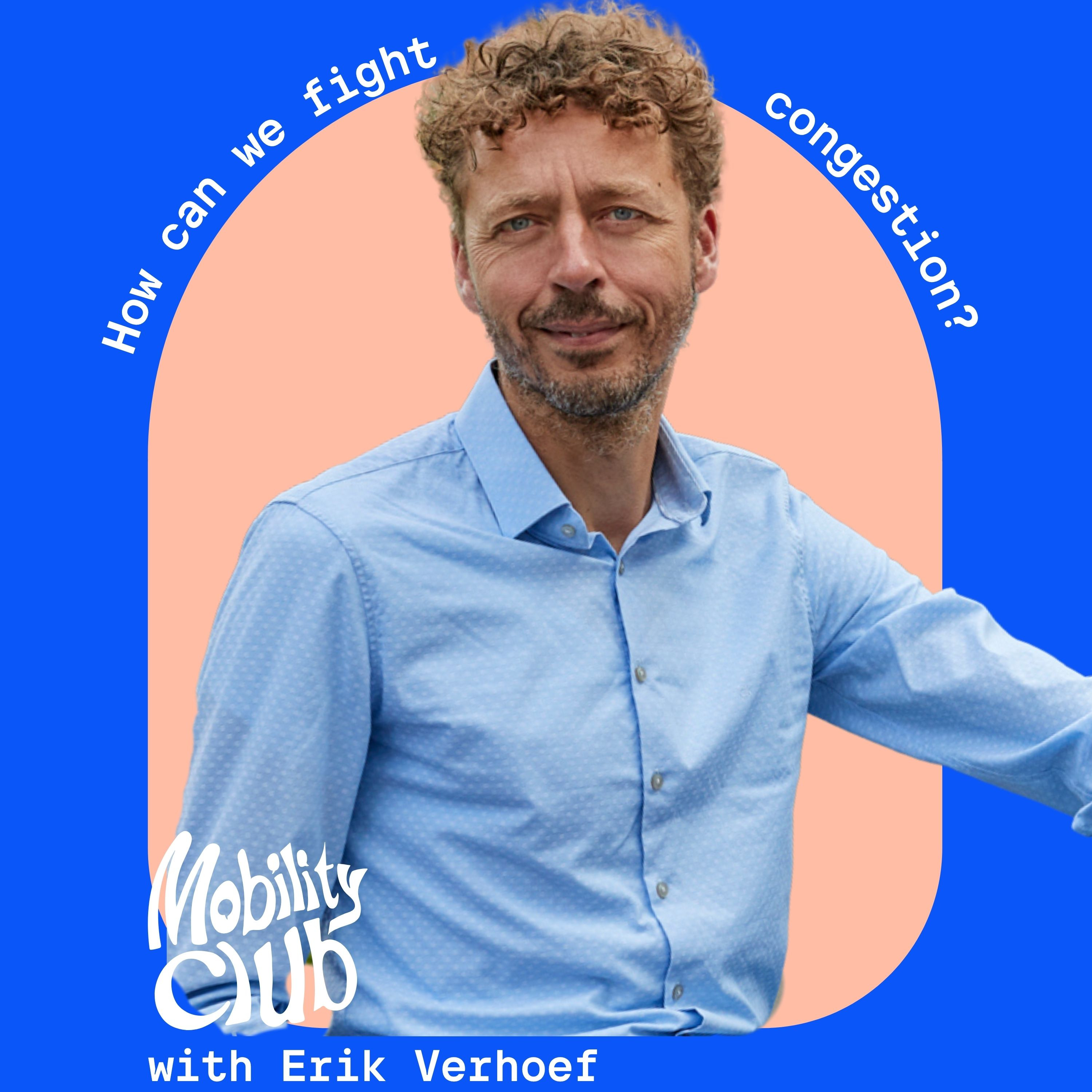 How can we fight congestion? | Why do traffic jams happen in the first place? Why don’t we simply build more roads? And should drivers really have to pay for using them? In this episode, we talk about congestion pricing with Erik Verhoef, professor at the Vrije Universiteit Amsterdam and research fellow at the Tinbergen Institute. His research focuses on how economic instruments can help address the negative externalities of transport, with a particular focus on road congestion. We discuss why economists have long seen congestion pricing as an effective solution to traffic, why expanding road capacity alone often fails to solve the problem, and how congestion depends on where and when people travel. From electronic road pricing in ingapore to congestion charging in London and Stockholm, we explore how different systems work in practice and what policymakers can learn from them. Finally, we look at the politics of congestion pricing, why public opposition often declines after implementation, how revenues can shape perceptions of fairness, and why solving congestion may require changing the behavior of only a small share of travelers. More about our guest: https://research.vu.nl/en/persons/erik-verhoef/ Music recommendation of the episode: https://open.spotify.com/intl-de/track/06ypiqmILMdVeaiErMFA91 | 35m 29s | |
| 4/29/26 |  Where should I meet my friends for dinner? | How do we make decisions about where to go - and how to get there - when they involve other people? Why do most transport models still assume that individuals act independently? And what can we learn from something as simple as deciding where to meet friends for dinner? In this episode, we explore the role of social networks in mobility with Giancarlos Parady, whose research focuses on how social interactions shape travel behavior and decision-making. We discuss why traditional transport models often overlook the social nature of travel, how leisure activities differ from routine trips, and what happens when decisions are made jointly rather than individually. From choosing a restaurant location to coordinating schedules, these everyday interactions reveal how mobility is embedded in social relationships. Finally, we explore what it means to plan transport systems not just for individuals, but for social networks: from improving access to “third places” to addressing loneliness, and understanding how behavior spreads through social ties. More about our guest: https://gparady.net Music recommendation of the episode: “アルクアラウンド” by Sakanaction https://open.spotify.com/track/3ov6DXhs8UfsHqoMLz4zO9?si=e729c676023b4348 | 42m 44s | |
| 4/8/26 |  Why do people (not) take public transport? | Why should we care about public transport ridership? Why do so few people use it in some places? And what has changed since the pandemic? In this episode, we explore the dynamics behind public transport use with Candace Brakewood, professor at the University of Tennessee. Her research focuses on transit systems, travel behavior, and how emerging mobility options interact with public transport. We discuss what ridership actually measures and which role new modes such as bikesharing or e-scooters play. We also look at long-term trends before the pandemic, the impact of telework and relocation, and what these shifts mean for the future of transit. Finally, we explore what makes public transport more attractive: from better funding and fare policies to digital tools. More about our guest: https://candacebrakewood.com Music recommendation of the episode: M.T.A. by the Kingston Trio https://open.spotify.com/intl-de/track/3jqgtknEHeqWMaL558O3YL?si=238812fea2004ffb | 43m 05s | |
| 3/18/26 |  Why is walking joyful? | Why do we still understand so little about walking, despite it being the most fundamental form of transport? How does the built environment shape not just how we move, but how we feel? And what would it mean to plan cities not just for efficiency, but for joy?In this episode, we explore the connection between transport, public health, and urban design with Kelly Clifton, professor at the University of British Columbia. Her work focuses on travel behavior, walking, and the ways in which the built environment influences both mobility and well-being.We discuss how urban form shapes both movement and mood, why walking should be understood as more than just a functional mode of travel, and which role new forms of micromobility can play.More about our guest:http://kellyjclifton.comMusic recommendation of the episode:“Higher Ground” by Stevie Wonder | 31m 03s | |
| 2/25/26 |  How can data help build better cycle lanes? | How can data-driven tools improve transport policymaking? How should researchers use AI responsibly? And why can simpler models sometimes lead to better decisions?In this episode, we talk about the power of mobility data with Robin Lovelace, Professor of Transport Data Science at the University of Leeds Institute for Transport Studies. His work combines research, software development, and teaching to advance evidence-based transport planning.We discuss what makes data-driven tools not only open but truly usable, how travel-to-school data can help address biases in cycling infrastructure planning, and how researchers can make their work more accessible and actionable for practitioners.More about our guest: https://www.robinlovelace.netExplore the Propensity to Cycle Tool: https://www.pct.bikeMusic recommendation of the episode:“Only So Much Oil in the Ground” by Tower of Powerhttps://open.spotify.com/track/4L6cv7W4EpaB62kPoyCQK7?si=YBJ6JtquTVao-coETRy7Vw | 48m 00s | |
| 2/4/26 | 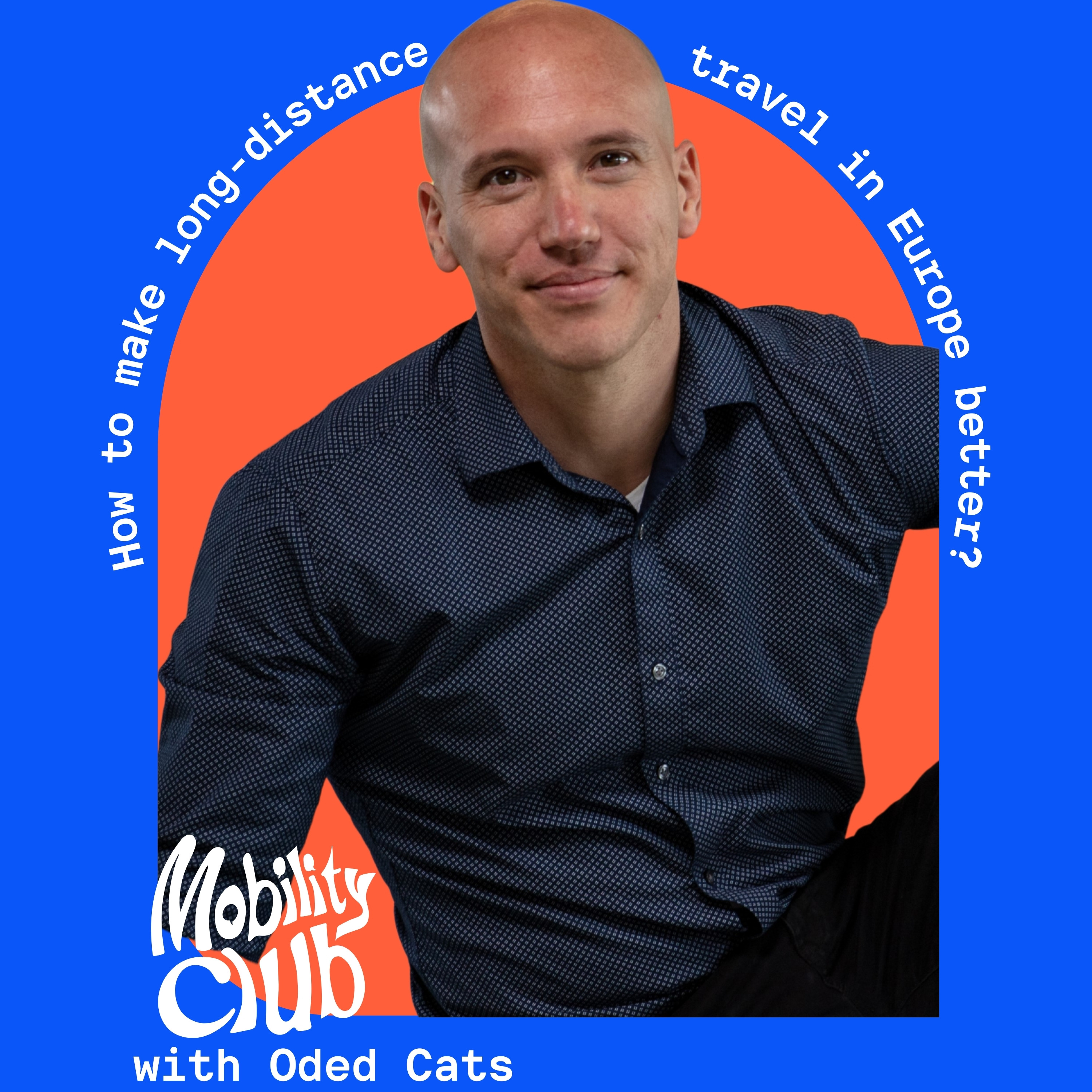 How to make long-distance travel in Europe better? | Why is it still so complicated to book a train ticket from Munich to Lisbon? Should short-haul flights in Europe be banned? And can night trains really become a viable alternative?In this episode, we talk about the challenges of long-distance travel in Europe with Oded Cats, full professor at the Delft University of Technology. He recently received an ERC Consolidator Grant to study how long-distance passenger transport systems can be better designed, coordinated, and scaled across borders.We discuss why international rail travel is still so fragmented, what role policy and infrastructure play, and why banning short-haul flights might not be as effective as we might think.More about our guest:https://www.tudelft.nl/citg/over-faculteit/afdelingen/transport-planning/staff/persoonlijke-paginas/cats-oMore about the research project:https://www.tudelft.nl/citg/over-faculteit/afdelingen/transport-planning/labs/smart-public-transport-lab/3mars Music recommendation of the episode:The Warmth, by Incubushttps://open.spotify.com/intl-de/track/0LkssuXRYPFYapjXH9pJBX | 35m 37s | |
| 1/27/26 |  Introducing Mobility Club! | Mobility Club is the podcast where we meet and talk transport. Supported by EIT Urban Mobility. Season 1 airs in February | 0m 56s |
Showing 7 of 7
Sponsor Intelligence
Sign in to see which brands sponsor this podcast, their ad offers, and promo codes.
Chart Positions
8 placements across 7 markets.
Chart Positions
8 placements across 7 markets.