
Insights from recent episode analysis
Audience Interest
Podcast Focus
Publishing Consistency
Platform Reach
Insights are generated by CastFox AI using publicly available data, episode content, and proprietary models.
Total monthly reach
Estimated from 5 chart positions in 5 markets.
By chart position
- 🇩🇪DE · Mathematics#21100K to 300K
- 🇬🇧GB · Mathematics#25100K to 300K
- 🇺🇸US · Mathematics#7630K to 100K
- 🇿🇦ZA · Mathematics#1230K to 100K
- 🇨🇭CH · Mathematics#2110K to 30K
- Per-Episode Audience
Est. listeners per new episode within ~30 days
189K to 581K🎙 Weekly cadence·44 episodes·Last published 5d ago - Monthly Reach
Unique listeners across all episodes (30 days)
270K to 830K🇩🇪36%🇬🇧36%🇺🇸12%+2 more - Active Followers
Loyal subscribers who consistently listen
81K to 249K
Market Insights
Platform Distribution
Reach across major podcast platforms, updated hourly
Total Followers
—
Total Plays
—
Total Reviews
—
* Data sourced directly from platform APIs and aggregated hourly across all major podcast directories.
On the show
Recent episodes
Fractional Laplacian
Jun 19, 2026
Unknown duration
LLM statistics
Jun 7, 2026
Unknown duration
Bayesian Learning
May 2, 2025
Unknown duration
Spectral Geometry
Jun 1, 2022
Unknown duration
Allyship
Jan 27, 2022
Unknown duration
Social Links & Contact
Official channels & resources
Official Website
Login
RSS Feed
Login
| Date | Episode | Description | Length | ||||||
|---|---|---|---|---|---|---|---|---|---|
| 6/19/26 |  Fractional Laplacian | Gudrun talks with Debajyoti Choudhuri. He is staying at KIT as a short term guest. He is Associate Professor in the School of Basic Sciences at IIT Bhubaneswar, India. He did his M.Sc. and Ph.D. in Mathematics at the University of Hyderabad. His research interest lies in the analysis of elliptic PDEs using Functional Analytic and topological methods. In this he touches and has a slight overlap with the research of Gudrun. The conversation starts with the discussion about a small paper which Debajyoti put on the archiv. It is about understanding how to work with the Fractional Laplacian. This means extending the classical Laplace operator Δ to non-integer powers. This operator is the main part in PDEs which model, e.g, anomalous diffusion, probability theory, image processing, finance, and nonlocal mechanics. (-Δ)s, where 0 < s < 1. What makes It different to the ordinary Laplacian? While the traditional Laplace operator is local, i.e. it depends only on values of u and its derivatives near x, the fractional Laplacian is nonlocal, it depends on values of u everywhere in space. Thus, for the analytical and numerical treatment one needs very different methods. There are several possible definitions. Some of them can be found in the Wikipedia article which is cited below. On ℝn, the cleanest definition is the Fourier definition which follows the idea: Take the Fourier transform. Multiply by |ξ|2s. Transform back. In the short paper which is discussed the singular integral definition is used: For 0 < s < 1: (-Δ)^s u(x) = C(n,s) PV ∫ [u(x) - u(y)] / |x - y|^(n + 2s) dy This makes the nonlocality explicit: every point y contributes to the value at x. The method central in studying Laplace problems is variational. It considers an (infinite) family of generalised problems and works on the existence of so-called weak solutions. These problems are formulated with the help of Sobolev spaces. The weak solution for the Laplace problem is an element of the space H1=W1,2. This means the solution and its (generalised) gradient are bounded in L2 in the domain in which the problem is solved. This has physical meaning and due to known properties (embedding) of Sobolev spaces the pointwise (strong) solutions often can be constructed when enough regularitiy of the weak solutions is proved. Fractional Laplacians naturally live in fractional Sobolev spaces. These are not that easy to connect to physical properties and a few of the equivalent definitions in the context of classical Sobolev spaces are not equivalent any more everywhere. Common approaches for numerics for PDEs including the fractional Laplacian are: Fourier spectral methods (periodic domains) Finite element methods for fractional PDEs Matrix-function methods (As) Caffarelli–Silvestre extension methods Quadrature approximations of singular integrals The Extension trick introduced by Caffarelli and Silvestre in 2007 (their original paper is cited below) is also discussed as part of the short note. p-laplacian augurs well in the sense because the unicity of the definitions of the s-laplacian is still lacking. The conversation then turns to how Debajyoti found his way into mathematics and the topic of PDEs and how life and work feel like in his university. More information: Webpage of Debajyoti Choudhuri Debajyoti Choudhuri: A quick sneak-peek at the s-fractional Laplacian operator (2022) Wikipedia on the Fractional Laplace operator Mateusz Kwaśnicki: Ten equivalent definitions of the fractional Laplace operator (2015) E. Di Nezza, G. Palatucci, E. Valdinoci, Hitchhiker’s guide to the fractional Sobolev spaces, Bull. Sci. Math., 136(5), 521–573 (2012) L. Caffarelli, L. Silvestre, An extension problem related to the fractional Laplacian, Communications in Partial Differential Equations, 32, 1245–1260 (2007) | — | ||||||
| 6/7/26 |  LLM statistics | This episode was recorded in March 2026. Gudrun speaks again with Nadja Klein and Moussa Kassem Sbeyti who work at the Scientific Computing Center (SCC) at KIT in Karlsruhe. As a new person in our conversation we welcome Nicolas Bianco. The research of the scientists in Nadja's MBD Lab is at the intersection of statistics and machine learning. It spans theoretical analysis, method development and real-world applications. Last time we focussed on Baysian statistics. With the help of Nicolas we want to examplify how interdisciplinary work is done and how his journey led him into this field of research. Since in this episode we very much focussed on Nicolas decision process and steps in his carrier we plan to have an episode on the topics later in the year. | — | ||||||
| 5/2/25 |  Bayesian Learning | In this episode Gudrun speaks with Nadja Klein and Moussa Kassem Sbeyti who work at the Scientific Computing Center (SCC) at KIT in Karlsruhe. Since August 2024, Nadja has been professor at KIT leading the research group Methods for Big Data (MBD) there. She is an Emmy Noether Research Group Leader, and a member of AcademiaNet, and Die Junge Akademie, among others. In 2025, Nadja was awarded the Committee of Presidents of Statistical Societies (COPSS) Emerging Leader Award (ELA). The COPSS ELA recognizes early career statistical scientists who show evidence of and potential for leadership and who will help shape and strengthen the field. She finished her doctoral studies in Mathematics at the Universität Göttingen before conducting a postdoc at the University of Melbourne as a Feodor-Lynen fellow by the Alexander von Humboldt Foundation. Afterwards she was a Professor for Statistics and Data Science at the Humboldt-Universität zu Berlin before joining KIT. Moussa joined Nadja's lab as an associated member in 2023 and later as a postdoctoral researcher in 2024. He pursued a PhD at the TU Berlin while working as an AI Research Scientist at the Continental AI Lab in Berlin. His research primarily focuses on deep learning, developing uncertainty-based automated labeling methods for 2D object detection in autonomous driving. Prior to this, Moussa earned his M.Sc. in Mechatronics Engineering from the TU Darmstadt in 2021. The research of Nadja and Moussa is at the intersection of statistics and machine learning. In Nadja's MBD Lab the research spans theoretical analysis, method development and real-world applications. One of their key focuses is Bayesian methods, which allow to incorporate prior knowledge, quantify uncertainties, and bring insights to the “black boxes” of machine learning. By fusing the precision and reliability of Bayesian statistics with the adaptability of machine and deep learning, these methods aim to leverage the best of both worlds. The KIT offers a strong research environment, making it an ideal place to continue their work. They bring new expertise that can be leveraged in various applications and on the other hand Helmholtz offers a great platform in that respect to explore new application areas. For example Moussa decided to join the group at KIT as part of the Helmholtz Pilot Program Core-Informatics at KIT (KiKIT), which is an initiative focused on advancing fundamental research in informatics within the Helmholtz Association. Vision models typically depend on large volumes of labeled data, but collecting and labeling this data is both expensive and prone to errors. During his PhD, his research centered on data-efficient learning using uncertainty-based automated labeling techniques. That means estimating and using the uncertainty of models to select the helpful data samples to train the models to label the rest themselves. Now, within KiKIT, his work has evolved to include knowledge-based approaches in multi-task models, eg. detection and depth estimation — with the broader goal of enabling the development and deployment of reliable, accurate vision systems in real-world applications. (...) | — | ||||||
| 6/1/22 |  Spectral Geometry | Gudrun talks with Polyxeni Spilioti at Aarhus university about spectral geometry. Before working in Aarhus Polyxeni was a postdoctoral researcher in the group of Anton Deitmar at the University of Tübingen. She received her PhD from the University of Bonn, under the supervision of Werner Mueller after earning her Master's at the National and Technical University of Athens (Faculty of Applied Mathematics and Physics). As postdoc she was also guest at the MPI for Mathematics in Bonn, the Institut des Hautes Etudes Scientifiques in Paris and the Oberwolfach Research Institute for Mathematics. In her research she works on questions like: How can one obtain information about the geometry of a manifold, such as the volume, the curvature, or the length of the closed geodesics, provided that we can study the spectrum of certain differential operators? Harmonic analysis on locally symmetric spaces provides a powerful machinery in studying various invariants, such as the analytic torsion, as well as the dynamical zeta functions of Ruelle and Selberg. | — | ||||||
| 1/27/22 |  Allyship | One of the reasons we started this podcast in 2013 was to provide a more realistic picture of mathematics and of the way mathematicians work. On Nov. 19 2021 Gudrun talked to Stephanie Anne Salomone who is Professor and Chair in Mathematics at the University of Portland. She is also Director of the STEM Education and Outreach Center and Faculty Athletic Representative at UP. She is an Associate Director of Project NExT, a program of the Mathematical Association of America that provides networking and professional development opportunities to mathematics faculty who are new to our profession. She is a wife and mother of three boys, Milo (13), Jude (10), and Theodore (8). This conversation started on Twitter in the summer of 2021. There Stephanie (under the twitter handle @SitDownPee) and @stanyoshinobu Dr. Stan Yoshinobu invited their fellow mathematicians to the following workshop: Come help us build gender equity in mathematics! Picture a Mathematician workshop led by @stanyoshinobu Dr. Stan Yoshinobu and me, designed for men in math, but all genders welcome. Gudrun was curious to learn more and followed the provided link: Gender equity in the mathematical sciences and in the academy broadly is not yet a reality. Women (and people of color, and other historically excluded groups) are confronted with systemic biases, daily experiences, feelings of not being welcome or included, that in the aggregate push them out of the mathematical sciences. This workshop is designed primarily for men in math (although all genders are welcome to participate) to inform and inspire them to better see some of the key issues with empathy, and then to take action in creating a level-playing field in the academy. Workshop activities include viewing “Picture a Scientist” before the workshop, a 2-hour synchronous workshop via zoom, and follow-up discussions via email and Discord server. *All genders welcome AND this workshop is designed for men to be allies. This idea resonated strongly with Gudrun's experiences: Of course women and other groups which are minorities in research have to speak out to fight for their place but things move forward only if people with power join the cause. At the moment people with power in mathematical research mostly means white men. That is true for the US where Stephanie is working as well as in Germany. Allyship is a concept which was introduced by people of colour to name white people fighting for racial justice at their side. Of course, it is a concept which helps in all situations where a group is less powerful than another. Men working for the advancement of non-male mathematicians is strictly necessary in order for equality of chances and a diversity of people in mathematics to be achieved in the next generation. And to be clear: this has nothing to do with counting heads but it is about not ruining the future of mathematics as a discipline by creating obstacles for mathematicians with minoritized identities. (...) | — | ||||||
| 2/27/20 |  Photoacoustic Tomography | In March 2018 Gudrun had a day available in London when travelling back from the FENICS workshop in Oxford. She contacted a few people working in mathematics at the University College London (ULC) and asked for their time in order to talk about their research. In the end she brought back three episodes for the podcast. This is the second of these conversations. Gudrun talks to Marta Betcke. Marta is associate professor at the UCL Department of Computer Science, member of Centre for Inverse Problems and Centre for Medical Image Computing. She has been in London since 2009. Before that she was a postdoc in the Department of Mathematics at the University of Manchester working on novel X-ray CT scanners for airport baggage screening. This was her entrance into Photoacoustic tomography (PAT), the topic Gudrun and Marta talk about at length in the episode. PAT is a way to see inside objects without destroying them. It makes images of body interiors. There the contrast is due to optical absorption, while the information is carried to the surface of the tissue by ultrasound. This is like measuring the sound of thunder after lightning. Measurements together with mathematics provide ideas about the inside. The technique combines the best of light and sound since good contrast from optical part - though with low resolution - while ultrasound has good resolution but poor contrast (since not enough absorption is going on). In PAT, the measurements are recorded at the surface of the tissue by an array of ultrasound sensors. Each of that only detects the field over a small volume of space, and the measurement continues only for a finite time. In order to form a PAT image, it is necessary to solve an inverse initial value problem by inferring an initial acoustic pressure distribution from measured acoustic time series. In many practical imaging scenarios it is not possible to obtain the full data, or the data may be sub-sampled for faster data acquisition. Then numerical models of wave propagation can be used within the variational image reconstruction framework to find a regularized least-squares solution of an optimization problem. Assuming homogeneous acoustic properties and the absence of acoustic absorption the measured time series can be related to the initial pressure distribution via the spherical mean Radon transform. Integral geometry can be used to derive direct, explicit inversion formulae for certain sensor geometries, such as e.g. spherical arrays. At the moment PAT is predominantly used in preclinical setting, to image tomours and vasculature in small animals. Breast imaging, endoscopic fetus imaging as well as monitoring of perfusion and drug metabolism are subject of intensive ongoing research. The forward problem is related to the absorption of the light and modeled by the wave equation assuming instanteneous absorption and the resulting thearmal expansion. In our case, an optical ultrasound sensor records acoustic waves over time, (...) | — | ||||||
| 2/6/20 | 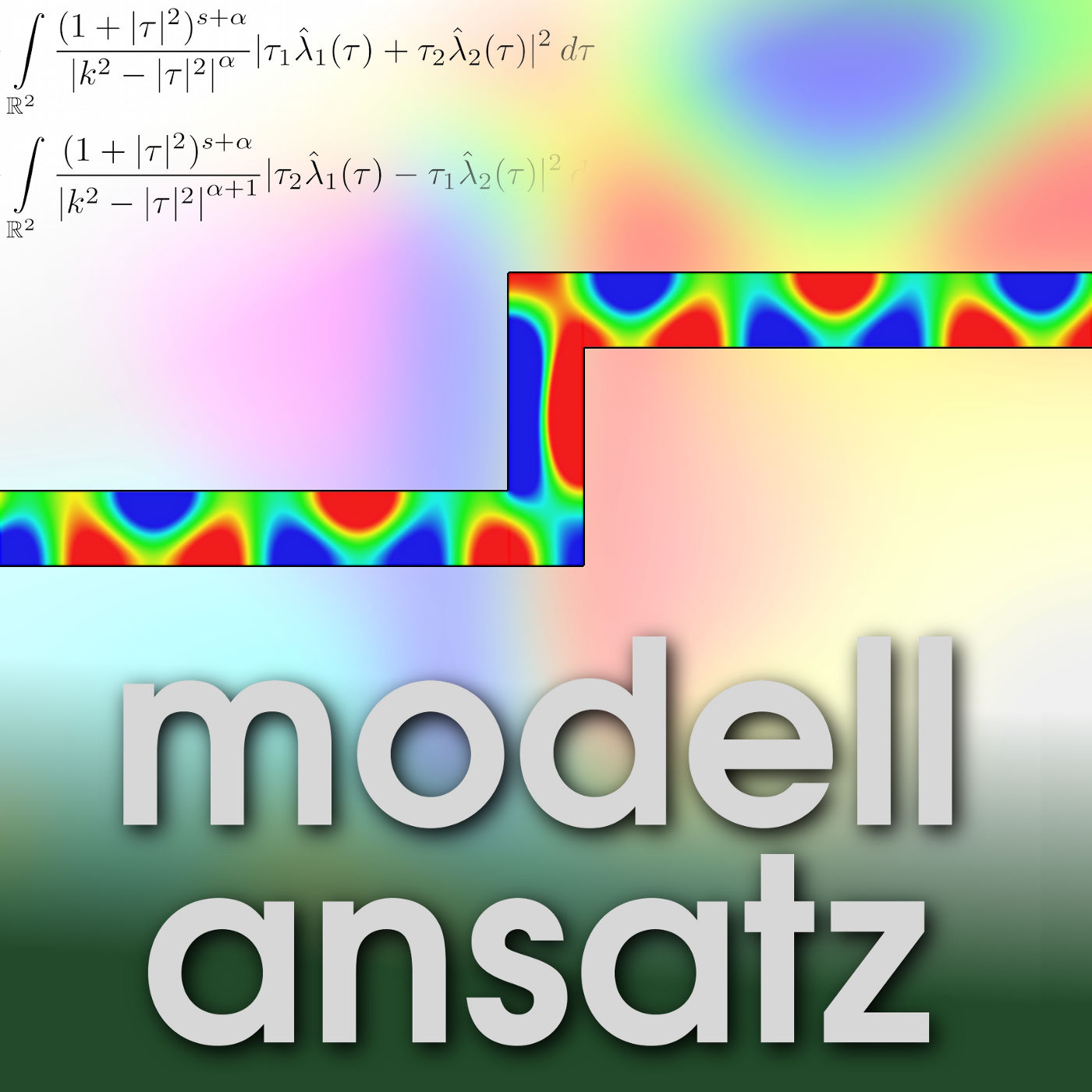 Waveguides | This is the third of three conversation recorded during the Conference on mathematics of wave phenomena 23-27 July 2018 in Karlsruhe. Gudrun is in conversation with Anne-Sophie Bonnet-BenDhia from ENSTA in Paris about transmission properties in perturbed waveguides. The spectral theory is essential to study wave phenomena. For instance, everybody has experimented with resonating frequencies in a bathtube filled with water. These resonant eigenfrequencies are eigenvalues of some operator which models the flow behaviour of the water. Eigenvalue problems are better known for matrices. For wave problems, we have to study eigenvalue problems in infinite dimension. Like the eigenvalues for a finite dimensional matrix the Spectral theory gives access to intrinisic properties of the operator and the corresponding wave phenomena. Anne-Sophie is interested in waveguides. For example, optical fibres can guide optical waves while wind instruments are guides for acoustic waves. Electromagnetic waveguides also have important applications. A practical objective is to optimize the transmission in a waveguide, even if there are some perturbations inside. It is known that for certain frequencies, there is no reflection by the perturbations but it is not apriori clear how to find these frequencies. Anne-Sophie uses complex analysis for that. The idea is to complexify the (originally real) coordinates by analytic extension. It is a classic idea for resonances that she adapts to the problem of transmission. This mathematical method of complex scaling is linked to the method of perfectly matched layers in numerics. It is used to solve problems set in unbounded domains on a computer by finite elements. Thanks to the complex scaling, she can solve a problem in a bounded domain, which reproduces the same behaviour as in the infinite domain. Finally, Anne-Sophie is able to get numerically a complex spectrum of frequencies, related to the quality of the transmission in a perturbed waveguide. The imaginary part of the complex quantity gives an indication of the quality of the transmission in the waveguide. The closer to the real axis the better the transmission. | — | ||||||
| 1/16/20 |  Pattern Formation | This is the second of three conversation recorded Conference on mathematics of wave phenomena 23-27 July 2018 in Karlsruhe. Gudrun is in conversation with Mariana Haragus about Benard-Rayleigh problems. On the one hand this is a much studied model problem in Partial Differential Equations. There it has connections to different fields of research due to the different ways to derive and read the stability properties and to work with nonlinearity. On the other hand it is a model for various applications where we observe an interplay between boyancy and gravity and for pattern formation in general. An everyday application is the following: If one puts a pan with a layer of oil on the hot oven (in order to heat it up) one observes different flow patterns over time. In the beginning it is easy to see that the oil is at rest and not moving at all. But if one waits long enough the still layer breaks up into small cells which makes it more difficult to see the bottom clearly. This is due to the fact that the oil starts to move in circular patterns in these cells. For the problem this means that the system has more than one solutions and depending on physical parameters one solution is stable (and observed in real life) while the others are unstable. In our example the temperature difference between bottom and top of the oil gets bigger as the pan is heating up. For a while the viscosity and the weight of the oil keep it still. But if the temperature difference is too big it is easier to redistribute the different temperature levels with the help of convection of the oil. The question for engineers as well as mathematicians is to find the point where these convection cells evolve in theory in order to keep processes on either side of this switch. In theory (not for real oil because it would start to burn) for even bigger temperature differences the original cells would break up into even smaller cells to make the exchange of energy faster. In 1903 Benard did experiments similar to the one described in the conversation which fascinated a lot of his colleagues at the time. The equations where derived a bit later and already in 1916 Lord Rayleigh found the 'switch', which nowadays is called the critical Rayleigh number. Its size depends on the thickness of the configuration, the viscositiy of the fluid, the gravity force and the temperature difference. Only in the 1980th it became clear that Benards' experiments and Rayleigh's analysis did not really cover the same problem since in the experiment the upper boundary is a free boundary to the surrounding air while Rayleigh considered fixed boundaries. And this changes the size of the critical Rayleigh number. For each person doing experiments it is also an observation that the shape of the container with small perturbations in the ideal shape changes the convection patterns. Maria does study the dynamics of nonlinear waves and patterns. This means she is interested in understanding processes which (...) | — | ||||||
| 1/9/20 |  Linear Sampling | This is the first of three conversation recorded Conference on mathematics of wave phenomena 23-27 July 2018 in Karlsruhe. Gudrun talked to Fioralba Cakoni about the Linear Sampling Method and Scattering. The linear sampling method is a method to reconstruct the shape of an obstacle without a priori knowledge of either the physical properties or the number of disconnected components of the scatterer. The principal problem is to detect objects inside an object without seeing it with our eyes. So we send waves of a certain frequency range into an object and then measure the response on the surface of the body. The waves can be absorbed, reflected and scattered inside the body. From this answer we would like to detect if there is something like a tumor inside the body and if yes where. Or to be more precise what is the shape of the tumor. Since the problem is non-linear and ill posed this is a difficult question and needs severyl mathematical steps on the analytical as well as the numerical side. In 1996 Colton and Kirsch (reference below) proposed a new method for the obstacle reconstruction problem in inverse scattering which is today known as the linear sampling method. It is a method to solve the above stated problem, which scientists call an inverse scattering problem. The method of linear sampling combines the answers to lots of frequencies but stays linear. So the problem in itself is not approximated but the interpretation of the response is. The central idea is to invert a bounded operator which is constructed with the help of the integral over the boundary of the body. Fioralba got her Diploma (honor’s program) and her Master's in Mathematics at the University of Tirana. For her Ph.D. she worked with George Dassios from the University of Patras but stayed at the University of Tirana. After that she worked with Wolfgang Wendland at the University of Stuttgart as Alexander von Humboldt Research Fellow. During her second year in Stuttgart she got a position at the University of Delaware in Newark. Since 2015 she has been Professor at Rutgers University. She works at the Campus in Piscataway near New Brunswick (New Jersey). | — | ||||||
| 10/31/19 | 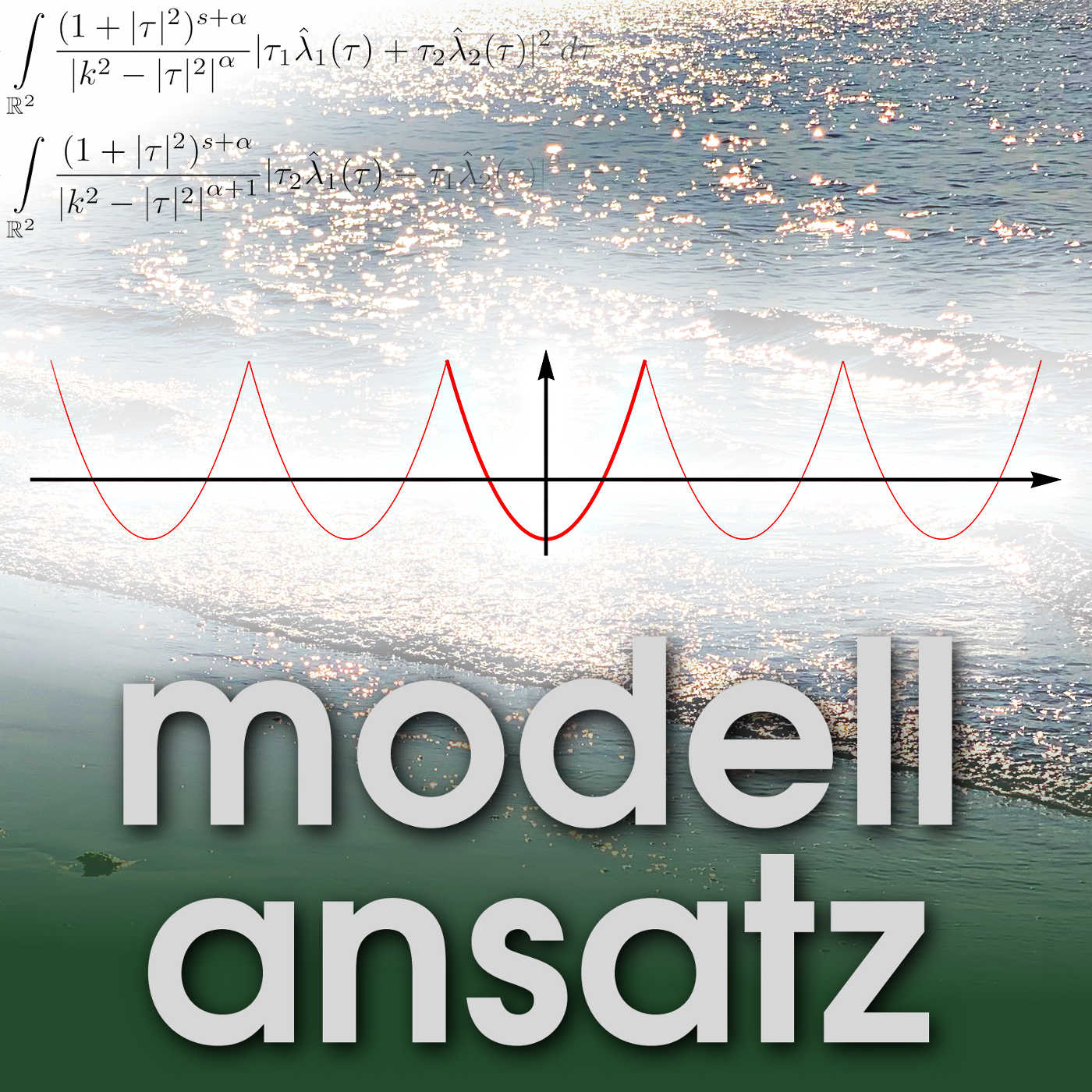 Peaked Waves | Gudrun talks to Anna Geyer. Anna is Assistant professer at TU Delft in the Mathematical Physics group at the Delft Institute of Applied Mathematics. She is interested in the behaviour of solutions to equations which model shallow water waves. The day before (04.07.2019) Anna gave a talk at the Kick-off meeting for the second funding period of the CRC Wave phenomena at the mathematics faculty in Karlsruhe, where she discussed instability of peaked periodic waves. Therefore, Gudrun asks her about the different models for waves, the meaning of stability and instability, and the mathematical tools used in her field. For shallow water flows the solitary waves are especially fascinating and interesting. Traveling waves are solutions of the form u(t,x)=f(x-ct) representing waves of permanent shape f that propagate at constant speed c. These waves are called solitary waves if they are localized disturbances, that is, if the wave profile f decays at infinity. If the solitary waves retain their shape and speed after interacting with other waves of the same type, we say that the solitary waves are solitons. One can ask the question if a given model equation (sometimes depending on parameters in the equation or the size of the initial conditions) allows for solitary or periodic traveling waves, and secondly whether these waves are stable or unstable. Peaked periodic waves are an interesting phenomenon because at the wave crest (the peak) they are not smooth, a situation which might lead to wave breaking. For which equations are peaked waves solutions? And how stable are they? Anna answers these questions for the reduced Ostrovsky equation, which serves as model for weakly nonlinear surface and internal waves in a rotating ocean. The reduced Ostrovsky equation is a modification of the Korteweg-de Vries equation, for which the usual linear dispersive term with a third-order derivative is replaced by a linear nonlocal integral term, representing the effect of background rotation. Peaked periodic waves of this equation are known to exist since the late 1970's. Anna presented recent results in which she answers the long standing open question whether these solutions are stable. In particular, she proved linear instability of the peaked periodic waves using semi-group theory and energy estimates. Moreover, she showed that the peaked wave is unique and that the equation does not admit Hölder continuous solutions, which implies that the reduced Ostrovsky equation does not admit cusps. Finally, it turns out that the peaked wave is also spectrally unstable. This is joint work with Dmitry Pelinovsky. For the stability analysis it is really delicate how to choose the right spaces such that their norms measure the behaviour of the solution. The Camassa-Holm equation allows for solutions with peaks which are stable with respect to certain perturbations and unstable with respect to others, and can model breaking waves. (...) | — | ||||||
Want analysis for the episodes below?Free for Pro Submit a request, we'll have your selected episodes analyzed within an hour. Free, at no cost to you, for Pro users. | |||||||||
| 10/17/19 |  Cancer Research | Gudrun talks with Changjing Zhuge. He is a guest in the group of Lennart Hilbert and works at the College of applied sciences and the Beijing Institute for Scientific and Engineering Computing (BISEC) at the Beijing University of Technology. He is a mathematician who is interested in system biology. In some cases he studies delay differential equations or systems of ordinary differential equations to characterize processes and interactions in the context of cancer research. The inbuilt delays originate e.g. from the modeling of hematopoietic stem cell populations. Hematopoietic stem cells give rise to other blood cells. Chemotherapy is frequently accompanied by unwished for side effects to the blood cell production due to the character of the drugs used. Often the production of white blood cells is hindered, which is called neutropenia. In an effort to circumvent that, together with chemotherapy, one treats the patient with granulocyte colony stimulating factor (G-CSF). To examine the effects of the typical periodic chemotherapy in generating neutropenia, and the corresponding response of this system to given to G-CSF Changjing and his colleagues studied relatively simple but physiologically realistic mathematical models for the hematopoietic stem cells. And these models are potential for modeling of other stem-like biosystems such as cancers. The delay in the system is related to the platelet maturation time and the differentiation rate from hematopoietic stem cells into the platelet cell. Changjing did his Bachelor in Mathematics at the Beijing University of Technology (2008) and continued with a PhD-program in Mathematics at the Zhou-Peiyuan Center for Applied Mathematics, Tsinghua University, China. He finished his PhD in 2014. During his time as PhD student he also worked for one year in Michael C Mackey's Lab at the Centre for Applied Mathematics in Bioscience and Medicine of the McGill University in Montreal (Canada). | — | ||||||
| 7/11/19 | 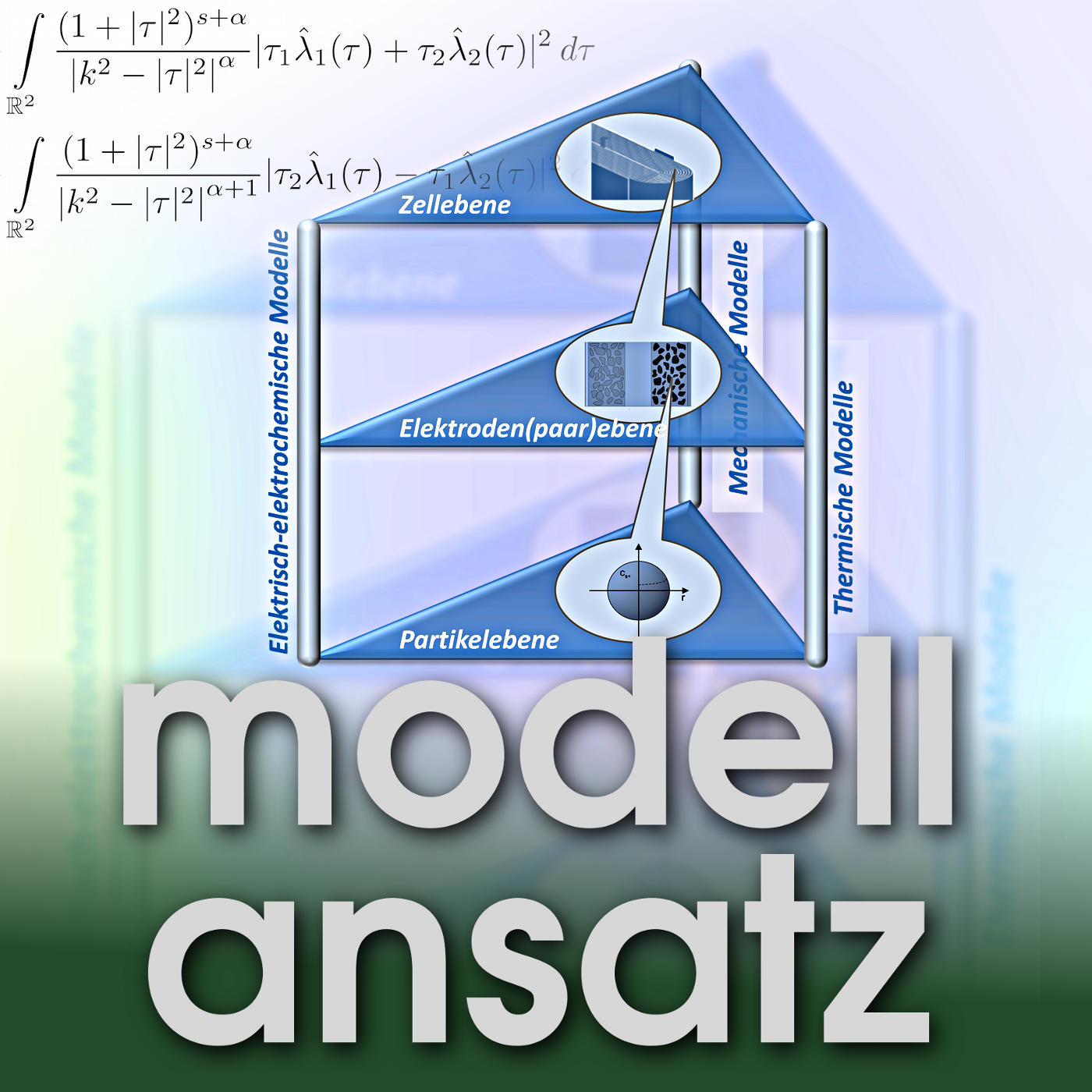 Batteries | In June 2019 Gudrun talked with Serena Carelli. Serena is member of the Research Training Group (RTG) Simet, which is based in Karlsruhe, Ulm and Offenburg. It started its work in 2017 and Gudrun is associated postdoc therein. The aim of that graduate school is to work on the better understanding of Lithium-ion batteries. For that it covers all scales, namley from micro (particles), meso (electrodes as pairs) to macro (cell) and involves scientists from chemistry, chemical engineering, material sciences, electro engineering, physics and mathematics. The group covers the experimental side as well as modeling and computer simulations. Serena is one of the PhD-students of the program. She is based in Offenburg in the group of Wolfgang Bessler (the deputy speaker of the RTG). Her research focusses on End-of-life prediction of a lithium-ion battery cell by studying the mechanistic ageing models of the graphite electrode among other things. Mathematical modelling and numerical simulation have become standard techniques in Li-ion battery research and development, with the purpose of studying the issues of batteries, including performance and ageing, and consequently increasing the model-based predictability of life expectancy. Serena and others work on an electrochemical model of a graphite-based lithium-ion cell that includes combined ageing mechanisms: 1. Electrochemical formation of the solid electrolyte interphase (SEI) at the anode, 2. breaking of the SEI due to mechanical stress from volume changes of the graphite particles, causing accelerated SEI growth, 3. gas formation and dry-out of the electrodes, 4. percolation theory for describing the loss of contact of graphite particles to the liquid electrolyte, 5. formation of reversible and irreversible Li plating. The electrochemistry is coupled to a multi-scale heat and mass transport model based on a pseudo-3D approach. A time-upscaling methodology is developed that allows to simulate large time spans (thousands of operating hours). The combined modeling and simulation framework is able to predict calendaric and cyclic ageing up to the end of life of the battery cells. The results show a qualitative agreement with ageing behavior known from experimental literature. Serena has a Bachelor in Chemistry and a Master's in Forensic Chemistry from the University of Torino. She worked in Spain, the Politécnico de Torino and in Greece (there she was Marie Curie fellow at the Foundation for Research and Technology - Hellas) before she decided to spend time in Australia and India. | — | ||||||
| 2/22/19 |  Portrait of Science | Gudrun met Magdalena Gonciarz in Dresden. They sat down in a very quiet Coffeeshop in Dreikönigskirche and talked about their experiences as scientists giving science an image. Magda started Portrait of science in 2016 with two objectives: to show that science is a process with many contributors at all carreer levels and to have a get-away from a demanding PhD-project, to express her creativity and have tangible results. The person who pointed Gudrun in Magda's direction is Lennart Hilbert, a former co-worker of Magda in Dresden who is now working at KIT on Computational Architectures in the Cell Nucleus (he will be a podcast guest very soon). On the Portrait of Science page one can find photographs of people from Dresden's Life Science campus. Apart from the photographs, one can also find their stories. How and why did they become scientists? What do they do, what are they passionate about? Magda invites us: "Forget the tubes and Erlenmeyer flasks. Science is only as good as the people who do it. So sit back, scroll down and get to know them looking through the lens of Magdalena Gonciarz. Have you ever wondered what kind of people scientists are? Would you like to know what are they working on? What drives and motivates them - spending days in the basement without the sun? Portrait of Science project aims at uncovering more about people who contribute to science at all levels - Research Group Leaders, Postdocs, PhD Students, Staff Scientists and Technicians. All of them are vital for progress of scientific research and all of them are passionate people with their own motivations." When she started the Portrait of Science project, Magda challenged herself to take more pictures. She wanted to show the real people behind science and their personality. This was a creative task, quite different from her work as scientist - done with comparably little time. On top of taking the pictures, interviewees were asked to fill out a questionaire to accompany the story told by the photographs. Surprisingly, the stories told by her co-workers turned out to be quite inspiring. The stories told have shown the passion and the diverse motivations. People mentioned their failures as well. There were stories about accidents and their crucial role in carreers, about coincidence of finding a fascinating book or the right mentor - even as far back as in early childhood sometimes. Sharing ups and downs and the experience that there is a light at the end of the tunnel was a story she needed and which was worth to be shared. Knowing how hard scientific work can be, and how multiple friends and colleagues struggled more than she herself, Magda still strongly feels that it is useful to show that this is not a private and unique experience, but probably a part of the life of every scientist. This struggle can be overcome with time, effort, and help. Magda comes from Poland. During her Master's studies, she had an opportunity to do a research placement (...) | — | ||||||
| 12/21/18 |  Energy Markets | Gudrun Talks to Sema Coşkun who at the moment of the conversation in 2018 is a Post Doc researcher at the University Kaiserslautern in the group of financial mathematics. She constructs models for the behaviour of energy markets. In short the conversation covers the questions: How are classical markets modelled? In which way are energy markets different and need new ideas? The seminal work of Black and Scholes (1973) established the modern financial theory. In a Black-Scholes setting, it is assumed that the stock price follows a Geometric Brownian Motion with a constant drift and constant volatility. The stochastic differential equation for the stock price process has an explicit solution. Therefore, it is possible to obtain the price of a European call option in a closed-form formula. Nevertheless, there exist drawbacks of the Black-Scholes assumptions. The most criticized aspect is the constant volatility assumption. It is considered an oversimplification. Several improved models have been introduced to overcome those drawbacks. One significant example of such new models is the Heston stochastic volatility model (Heston, 1993). In this model, volatility is indirectly modeled by a separate mean reverting stochastic process, namely. the Cox-Ingersoll-Ross (CIR) process. The CIR process captures the dynamics of the volatility process well. However, it is not easy to obtain option prices in the Heston model since the model has more complicated dynamics compared to the Black-Scholes model. In financial mathematics, one can use several methods to deal with these problems. In general, various stochastic processes are used to model the behavior of financial phenomena. One can then employ purely stochastic approaches by using the tools from stochastic calculus or probabilistic approaches by using the tools from probability theory. On the other hand, it is also possible to use Partial Differential Equations (the PDE approach). The correspondence between the stochastic problem and its related PDE representation is established by the help of Feynman-Kac theorem. Also in their original paper, Black and Scholes transferred the stochastic representation of the problem into its corresponding PDE, the heat equation. After solving the heat equation, they transformed the solution back into the relevant option price. As a third type of methods, one can employ numerical methods such as Monte Carlo methods. Monte Carlo methods are especially useful to compute the expected value of a random variable. Roughly speaking, instead of examining the probabilistic evolution of this random variable, we focus on the possible outcomes of it. One generates random numbers with the same distribution as the random variable and then we simulate possible outcomes by using those random numbers. Then we replace the expected value of the random variable by taking the arithmetic average of the possible outcomes obtained by the Monte Carlo simulation. (...) | — | ||||||
| 12/13/18 |  Nonhomogenous Fluids | In this episode Gudrun talks with her new colleague Xian Liao. In November 2018 Xian has been appointed as Junior Professor (with tenure track) at the KIT-Faculty of Mathematics. She belongs to the Institute of Analysis and works in the group Nonlinear Partial Differential Equations. She is very much interested in Dispersive Partial Differential Equations. These equations model, e.g., the behaviour of waves. For that it is a topic very much in the center of the CRC 1173 - Wave phenomena at our faculty. Her mathematical interest was always to better understand the solutions of partial differential equations. But she arrived at dispersive equations through several steps in her carreer. Originally she studied inhomogeneous incompressible fluids. This can for example mean that the fluid is a mixture of materials with different viscosities. If we have a look at the Navier-Stokes equations for materials like water or oil, one main assumption therein is, that the viscosity is a material constant. Nevertheless, the equations modelling their flows are already nonlinear and there are a few serious open questions. Studying flows of inhomogneous materials brings in further difficulties since there occur more and more complex nonlinearities in the equations. It is necessary to develop a frame in which one can characterise the central properties of the solutions and the flow. It turned out that for example finding and working with quantities which remain conserved in the dynamics of the process is a good guiding line - even if the physical meaning of the conserved quantitiy is not always clear. Coming from classical theory we know that it makes a lot of sense to have a look at the conservation of mass, energy and momentum, which translate to conserved quantities as combinations of velocity, its derivatives, pressure and density. Pressure and density are not independent in these simplified models but are independent in the models Xiao studies. In the complex world of inhomogeneous equations we lose the direct concept to translate between physics and mathematics but carry over the knowledge that scale invarance and conservation are central properties of the model. It is interesting to characterize how the complex system develops with a change of properties. To have a simple idea - if it is more developing in the direction of fast flowing air or slow flowing almost solid material. One number which helps to see what types of waves one has to expect is the Mach number. It helps to seperate sound waves from fluid waves. A mathematical/physical question then is to understand the process of letting the Mach number go to zero in the model. It is not that complicated to make this work in the formulae. But the hard work is done in proving that the solutions to the family of systems of PDEs with lower and lower Mach number really tend to the solutions of the derived limit system. For example in order to measure if solutions are similar to each other (...) | — | ||||||
| 12/6/18 | 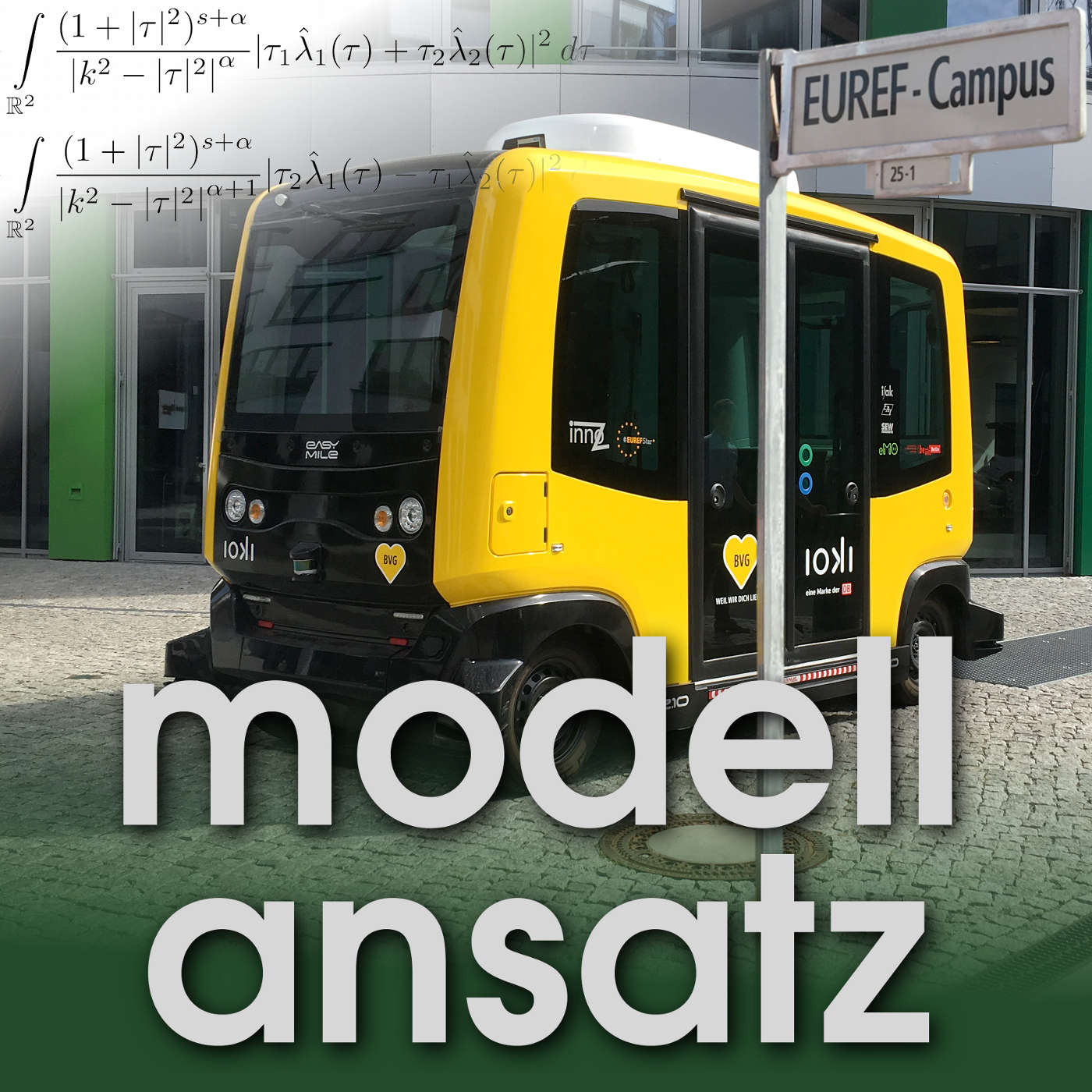 Inno2Grid | Gudrun talks to Carlos Mauricio Rojas La Rotta. They use a Skype connection since Carlos is in Berlin and Gudrun in Karlsruhe. Carlos is an electrical engineer from Colombia. His first degree is from Pontifcia Universidad Javeriana in Bogotá. For five years now he has been working at Schneider Electric in Berlin. In September 2018 Gudrun met Carlos at the EUREF-Campus in Berlin for discussing the work of Claire Harvey on her Master's thesis. The schedule on that day was very full but Gudrun and Carlos decided to have a Podcast conversation later. Carlos came to Germany as a car enthusiast. Then he got excited about the possibilities of photovoltaic energy production. For that from 2005-2007 he studied in the Carl von Ossietzky Universität in Oldenburg in the PPRE Master course Renewable Energies. When he graduated within a group of about 20 master students they found a world ready for their knowledge. Carlos worked in various topics and in different parts of Germany in the field of renewable energies. Now, at Schneider he has the unique situation, that he can combine all his interests. He develops the most modern cars, which are driving with renewable energy. In the course of his work he is also back at his original love: working with electronics, protocols and data. The work on the EUREF-Campus in Berlin started about 8-10 years ago with more questions than clear ideas. Schneider Electric is a big company with about 150.000 employees all over the world. They deal in all types of software and hardware devices for energy delivery. But the topic for Berlin was completely new: It was a test case how to construct energy sustainable districts. They started out investing in e-mobility with renewable energy and making their own offices a smart building. It is a source of a lot of data telling the story how energy is produced and consumed. At the moment they collect 1GB data per day in the office building on about 12.000 measure points into database and build this as a benchmark to compare it to other scenarios. The next step now is also to find ways to optimize these processes with limited computational possibilities. This is done with open source code on their own interface and at the moment it can optimize in the micro smart grid on the Campus. For example with 40 charging points for e-cars - consumption is planned according to production of energy. On Campus traditional batteries are used to buffer the energy, and also a bus now works on the Campus which can be discharged and is loaded without a cable! One can say: Carlos is working in a big experiment. This does not only cover a lot of new technical solutions. The Energiewende is more than putting photovoltaic and wind power out. We as a society have to change and plan differently - especially concerning mobility. Schneider Electric just started an expansion phase to the whole campus, which has a size of 5.5 ha and 2500 people working there. (...) | — | ||||||
| 11/9/18 |  Micro Grids | Gudrun talks with the Scotish engineer Claire Harvey. After already having finished a Master's degree in Product design engineering at the University of Glasgow for the last two years Claire has been a student of the Energy Technologies (ENTECH) Master program. This is an international and interdisciplinary program under the label of the European Institute of Innovation and Technology (EIT) inbetween a number of European technical universities. She spent her first year in Lisbon at Instituto Superior Técnico (IST) and the second master year at the Karlsruhe Institute of Technology (KIT). Gudrun had the role of her supervisor at KIT while she worked on her Master's thesis at the EUREF Campus in Berlin for the Startup inno2grid. Her study courses prepared her for very diverse work in the sector of renewable energy. Her decision to work with inno2grid in Berlin was based on the fact, that it would help to pave the way towards better solutions for planning micro grids and sustainable districts. Also, she wanted to see an actual micro grid at work. The office building of Schneider Electric, where the Startup inno2grid has its rooms is an experiment delivering data of energy production and consumption while being a usual office building. We will hear more about that in the episode with Carlos Mauricio Rojas La Rotta soon. Micro grids are small scale electrical grid systems where self-sufficient supply is achieved. Therefore, the integration of micro grid design within district planning processes should be developed efficiently. In the planning process of districts with decentralised energy systems, unique and customised design of micro grids is usually required to meet local technical, economical and environmental needs. From a technical standpoint, a detailed understanding of factors such as load use, generation potential and site constraints are needed to correctly and most efficiently design and implement the network. The presence of many different actors and stakeholders contribute to the complexity of the planning process, where varying levels of technical experience and disparate methods of working across teams is commonplace. Large quantities of digital information are required across the whole life-cycle of a planning project, not just to do with energetic planning but also for asset management and monitoring after a micro grid has been implemented. In the design of micro grids, large amounts of data must be gathered, there are initial optimization objectives to be met, and simulating control strategies of a district which are adapted to customer requirements is a critical step. Linking these processes - being able to assemble data as well as communicate the results and interactions of different "layers" of a project to stakeholders are challenges that arise as more cross-sector projects are carried out, with the growing interest in smart grid implementation. (...) | — | ||||||
| 10/19/18 | 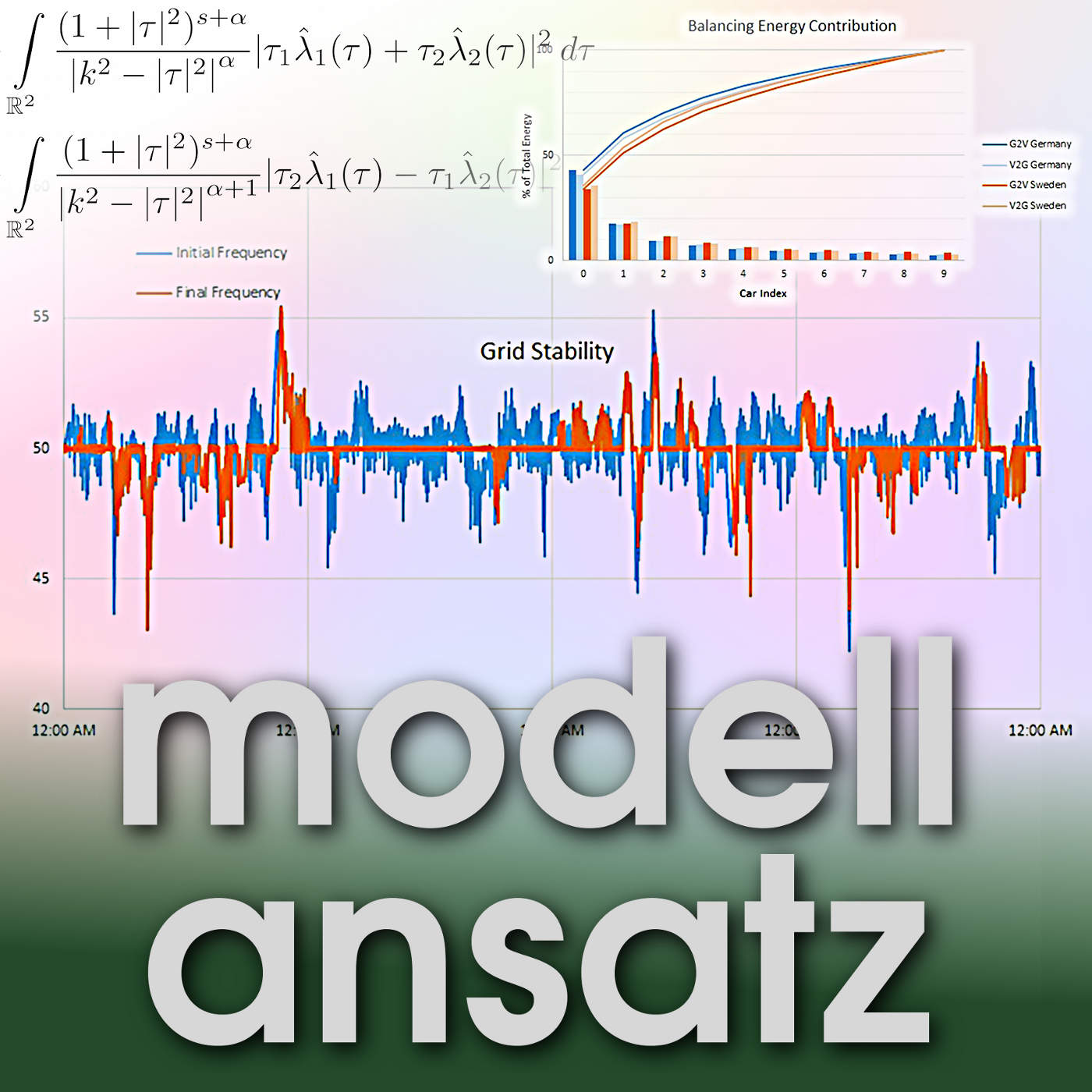 Electric Vehicles on the Grid | Gudrun talks to Zaheer Ahamed about the influence of an increasing number of Electric vehicles (EV) to the electrical grid. Zaheer just finished the ENTECH Master's program. He started it with his first year at the Karlsruhe Institute for Technology (KIT) and continued in Uppsala University for the second year. Gudrun was part of the grading process of Zaheer's master thesis "Estimating Balancing Capacities of Electric Vehicles on the German and Swedish grids in 2030". The rising awareness of pollution from transport is leading to innovations within the transport sector. At the moment EVs are the leading technology. With many countries Germany and Sweden joined the so-called EV30@30 campaign, aiming for 30% of new vehicles sales to be electric by 2030. These ambitions alongside an ever increasing capacity of variable renewable energy sources (RES) in our power systems, pose a concerning challenge for Transmission systems operators (TSO) to maintain proper power system operation. Imbalances between supply and demand are undesirable in any electrical power system and with the rising popularity of EVs and RES such events are only expected to continue or increase. Fortunately, with the recent development of Vehicle to grid (V2G) concepts as well as extensive studies into the load-shifting potential of EVs, EVs presents an interesting solution for power system balancing distributed energy storage system. Zaheer's study showed that EV are capable of balancing the grid for approximately 60% of the time providing 55-60% of the total balancing energy required. However, the operation also took heavy toll on the EV’s battery performance as it could potentially reduce its life to a 1/7th of its original lifetime. | — | ||||||
| 10/11/18 |  SimScale | Gudrun talks to Jousef Murad about the computing platform SimScale. Jousef is currently studying mechanical engineering at the Karlsruhe Institute of Technology (KIT) and focuses on turbulence modelling and computational mechanics in his Master's studies. He first learned about the existence of SimScale early in the year 2015 and started as a FEA (finite element analysis) simulation assistant in November 2016. Meanwhile he switched to Community Management and now is Community and Academic Program Manager at the company being responsible for user requests and Formula student teams all over the world. Formula student is a name for design competitions for teams of students constructing racing cars. SimScale is a cloud-based platform that gives instant access to computational fluid dynamics (CFD) and finite element analysis (FEA) simulation technology, helping engineers and designers to easily test performance, optimize durability or improve efficiency of their design. SimScale is accessible from a standard web browser and from any computer, eliminating the hurdles that accompany traditional simulation tools: high installation costs, licensing fees, deployment of high-performance computing hardware, and required updates and maintenance. Via the platform, several state-of-the-art open solvers are made available like,e.g., OpenFOAM and Meshing with SnappyHexMesh. More information about the packages being used can be found at https://www.simscale.com/open-source/ . On top of having easier access to open source software, the connected user forum is very active and helps everybody to enter the field even as a person without experience. Founded in 2012 in Munich (Germany), nowadays SimScale is an integral part of the design validation process for many companies worldwide and individual users. It is mainly used by product designers and engineers working in Architecture, Engineering and Construction or Heating, Ventilation and Air-Conditioning. Also in the Electronics, Consumer Goods and Packaging and Containers industries SimScale is useful for testing and optimizing designs in the early development stages. SimScale offers pricing plans that can be customized, from independent professionals to SMEs and multinational companies. The Community plan makes it possible to use SimScale for free, with 3000 core hours/year using up to 16 cloud computing cores. | — | ||||||
| 8/2/18 |  Mechanical Engineering | In the last two semesters Gudrun has taught the courses Advanced Mathematics I and II for Mechanical Engineers. This is a mandatory lecture for the International mechanical engineering students at KIT in their first year of the Bachelor program. This program is organized by the Carl Benz School of Engineering. Beside the study courses, the school also provides common housing for students coming to Karlsruhe from all over the world. The general structure and topics of the first year in Advanced Mathematics were already discussed in our episode 146 Advanced Mathematics with Jonathan Rollin. This time Gudrun invited two students from her course to have the student's perspective, talking about mathematics, life, and everything. Yueyang Cai grew up mostly in China. In 2015, the work of her mother led Yueyang to Stuttgart. While looking for opportunities to study a technical subject in Germany the English speaking program in Karlsruhe somehow suggested itself. After one year she is sure to have made the right decision. The second student in the conversation is Siddhant Dhanrajani. His family is Indian but lives in Dubai. For that he got his education in Dubai in an Indian community follwowing the Indian educational system (CBSE). He had never heard of the Engineering program in Karlsruhe but found it through thourough research. He is really amazed at how such an excellent study program and such an excellent university as the KIT are not better known for their value in the world. In the conversation both students talk about their education in their respective countries, their hopes and plans for the study course mechanical engineering and their experiences in the first year here in Karlsruhe. It is very interesting to see how the different ways to teach mathematics, namely, either as a toolbox full of recipes (which the students get well-trained in) or secondly as a way to approach problems in a context of a mathematical education contribute to an experience to be well-equipped to work creative and with a lot of potential as an engineer. Though the students finished only the first year in a three years course they already work towards applications and necessary certificates for their possible master program after finishing the course in Karlsruhe. | — | ||||||
| 7/12/18 |  Dynamical Sampling | Gudrun met the USA-based mathematician Roza Aceska from Macedonia in Turin at the Conference MicroLocal and Time-Frequency Analysis 2018. The topic of the recorded conversation is dynamical sampling. The situation which Roza and other mathematician study is: There is a process which develops over time which in principle is well understood. In mathematical terms this means we know the equation which governs our model of the process or in other words we know the family of evolution operators. Often this is a partial differential equation which accounts for changes in time and in 1, 2 or 3 spatial variables. This means, if we know the initial situation (i.e. the initial conditions in mathematical terms), we can numerically calculate good approximations for the instances the process will have at all places and at all times in the future. But in general when observing a process life is not that well sorted. Instead we might know the principal equation but only through (maybe only a few) measurements we can find information about the initial condition or material constants for the process. This leads to two questions: How many measurements are necessary in order to obtain the full information (i.e. to have exact knowledge)? Are there possibilities to choose the time and the spatial situation of a measurement so clever as to gain as much as possible new information from any measurement? These are mathematical questions which are answered through studying the equations. The science of sampling started in the 1940s with Claude Shannon who found fundamental limits of signal processing. He developed a precise framework - the so-called information theory. Sampling and reconstruction theory is important because it serves as a bridge between the modern digital world and the analog world of continuous functions. It is surprising to see how many applications rely on taking samples in order to understand processes. A few examples in our everyday life are: Audio signal processing (electrical signals representing sound of speech or music), image processing, and wireless communication. But also seismology or genomics can only develop models by taking very intelligent sample measurements, or, in other words, by making the most scientific sense out of available measurements. The new development in dynamical sampling is, that in following a process over time it might by possible to find good options to gain valuable information about the process at different time instances, as well as different spatial locations. In practice, increasing the number of spatially used sensors is more expensive (or even impossible) than increasing the temporal sampling density. These issues are overcome by a spatio-temporal sampling framework in evolution processes. The idea is to use a reduced number of sensors with each being activated more frequently. Roza refers to a paper by Enrique Zuazua (...) | — | ||||||
| 6/28/18 | 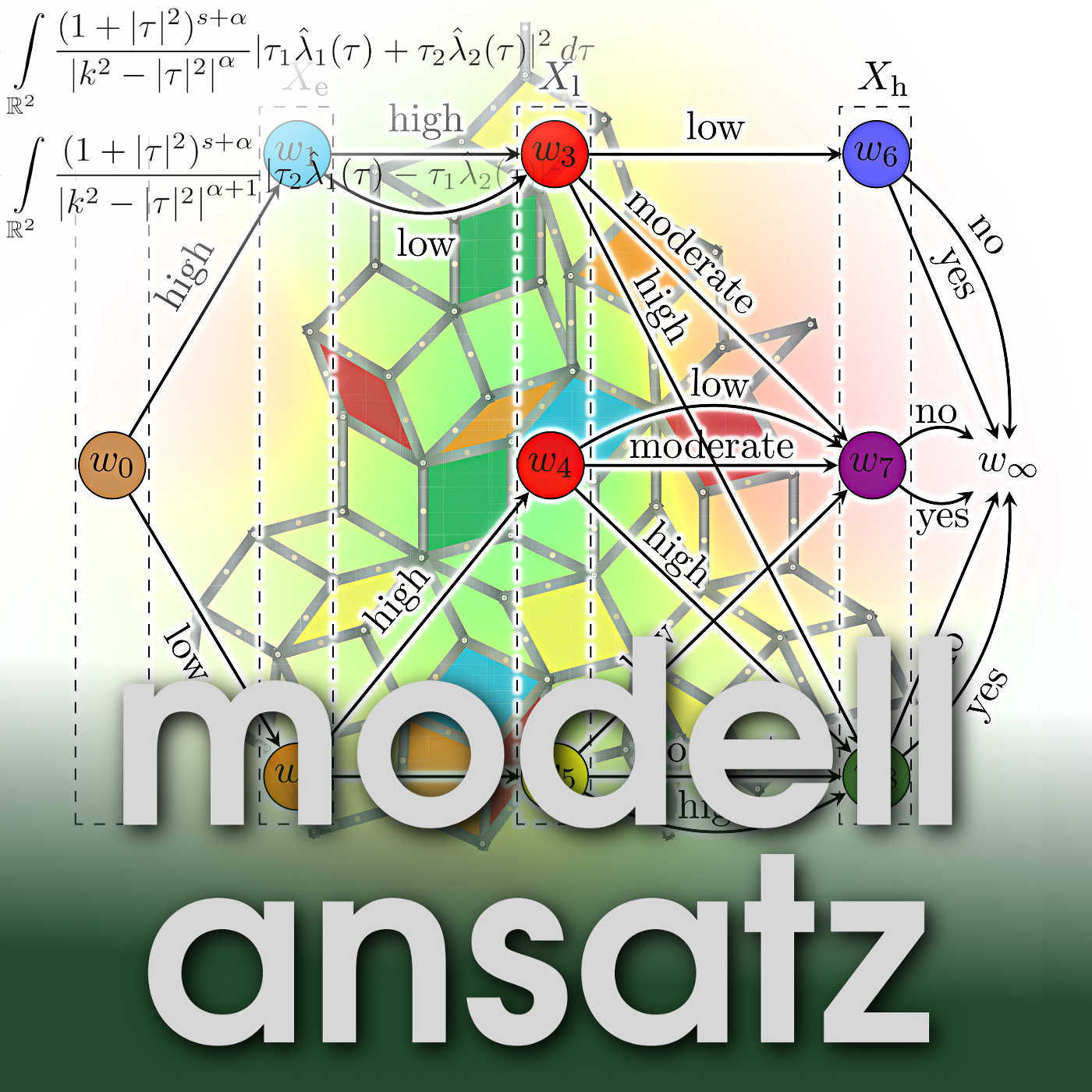 Algebraic Geometry | Gudrun spent an afternoon at the Max Planck Institute for Mathematics in the Sciences (MPI MSI) in Leipzig. There she met the Colombian mathematician Eliana Maria Duarte Gelvez. Eliana is a PostDoc at the MPI MSI in the Research group in Nonlinear Algebra. Its head is Bernd Sturmfels. They started the conversation with the question: What is algebraic geometry? It is a generalisation of what one learns in linear algebra insofar as it studies properties of polynomials such as its roots. But it considers systems of polynomial equations in several variables so-called multivariate polynomials. There are diverse applications in engineering, biology, statistics and topological data analysis. Among them Eliana is mostly interested in questions from computer graphics and statistics. In any animated movie or computer game all objects have to be represented by the computer. Often the surface of the geometric objects is parametrized by polynomials. The image of the parametrization can as well be defined by an equation. For calculating interactions it can be necessary to know what is the corresponding equation in the three usual space variables. One example, which comes up in school and in the introductory courses at university is the circle. Its representation in different coordinate systems or as a parametrized curve lends itself to interesting problems to solve for the students. Even more interesting and often difficult to answer is the simple question after the curve of the intersection of surfaces in the computer representation if these are parametrized objects. Moreover real time graphics for computer games need fast and reliable algorithms for that question. Specialists in computer graphics experience that not all curves and surfaces can be parametrized. It was a puzzling question until they talked to people working in algebraic geometry. They knew that the genus of the curve tells you about the possible vs. impossible parametrization. For the practical work symbolic algebra packages help. They are based on the concept of the Gröbner basis. Gröbner basis help to translate between representations of surfaces and curves as parametrized objects and graphs of functions. Nevertheless, often very long polynomials with many terms (like 500) are the result and not so straightforward to analyse. A second research topic of Eliana is algebraic statistics. It is a very recent field and evolved only in the last 20-30 years. In the typical problems one studies discrete or polynomial equations using symbolic computations with combinatorics on top. Often numerical algebraic tools are necessary. It is algebraic in the sense that many popular statistical models are parametrized by polynomials. The points in the image of the parameterization are the probability distributions in the statistical model. The interest of the research is to study properties of statistical models using algebraic geometry, for instance describe the implicit equations of the model. (...) | — | ||||||
| 5/24/18 | 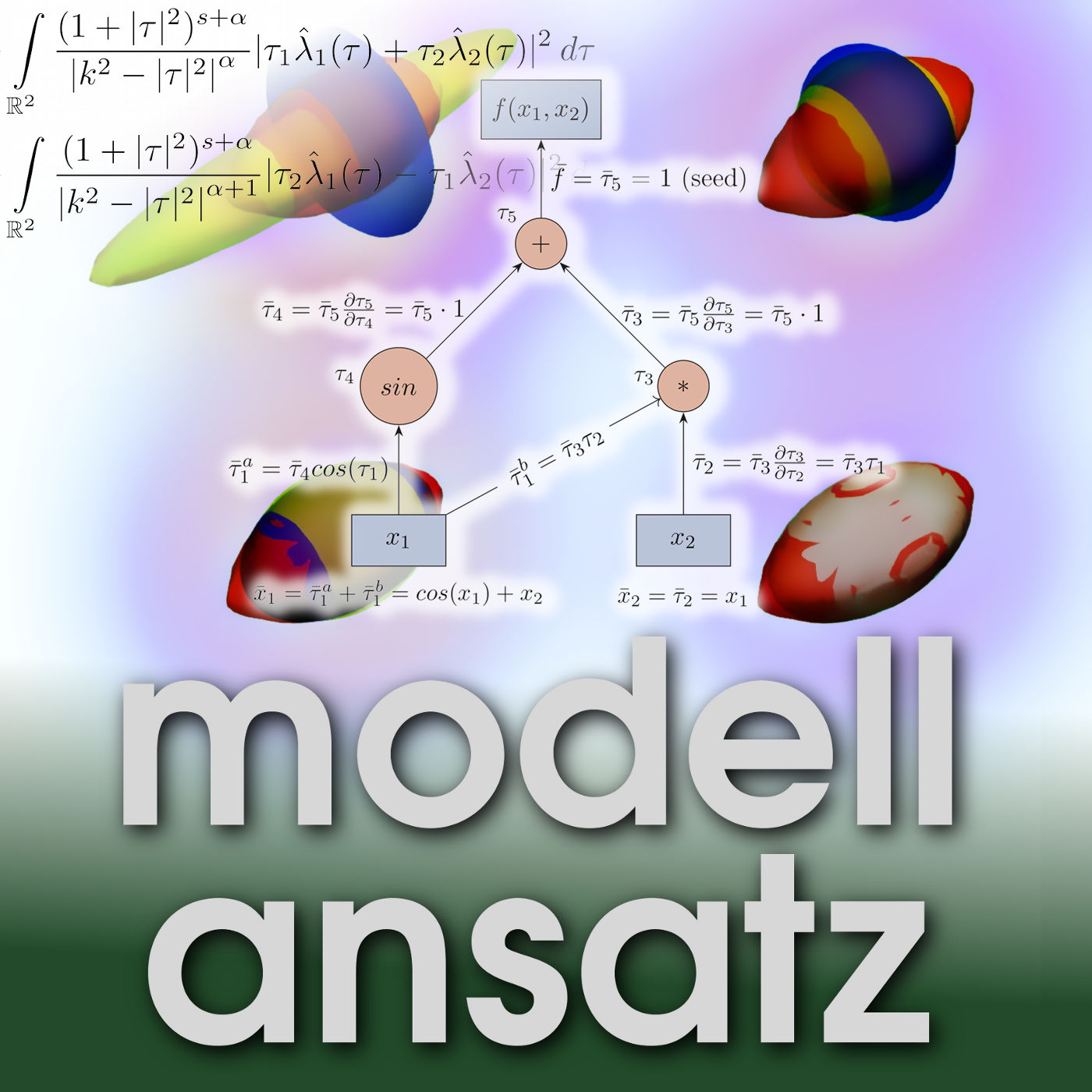 Automatic Differentiation | Gudrun talks with Asher Zarth. He finished his Master thesis in the Lattice Boltzmann Research group at the Karlsruhe Institute for Technology (KIT) in April 2018. Lattice Boltzmann methods (LBM) are an established method of computational fluid dynamics. Also, the solution of temperature-dependent problems - modeled by the Boussinesq approximation - with LBM has been done for some time. Moreover, LBM have been used to solve optimization problems, including parameter identification, shape optimization and topology optimization. Usual optimization approaches for partial differential equations are strongly based on using the corresponding adjoint problem. Especially since this method provides the sensitivities of quantities in the optimization process as well. This is very helpful. But it is also very hard to find the adjoint problem for each new problem. This needs a lot of experience and deep mathematical understanding. For that, Asher uses automatic differentiation (AD) instead, which is very flexible and user friendly. His algorithm combines an extension of LBM to porous media models as part of the shape optimization framework. The main idea of that framework is to use the permeability as a geometric design parameter instead of a rigid object which changes its shape in the iterative process. The optimization itself is carried out with line search methods, whereby the sensitivities are calculated by AD instead of using the adjoint problem. The method benefits from a straighforward and extensible implementation as the use of AD provides a way to obtain accurate derivatives with little knowledge of the mathematical formulation of the problem. Furthermore, the simplicity of the AD system allows optimization to be easily integrated into existing simulations - for example in the software package OpenLB which Asher used in his thesis. One example to test the algorithm is the shape of an object under Stokes flow such that the drag becomes minimal. It is known that it looks like an american football ball. The new algorithm converges fast to that shape. | — | ||||||
| 4/5/18 | 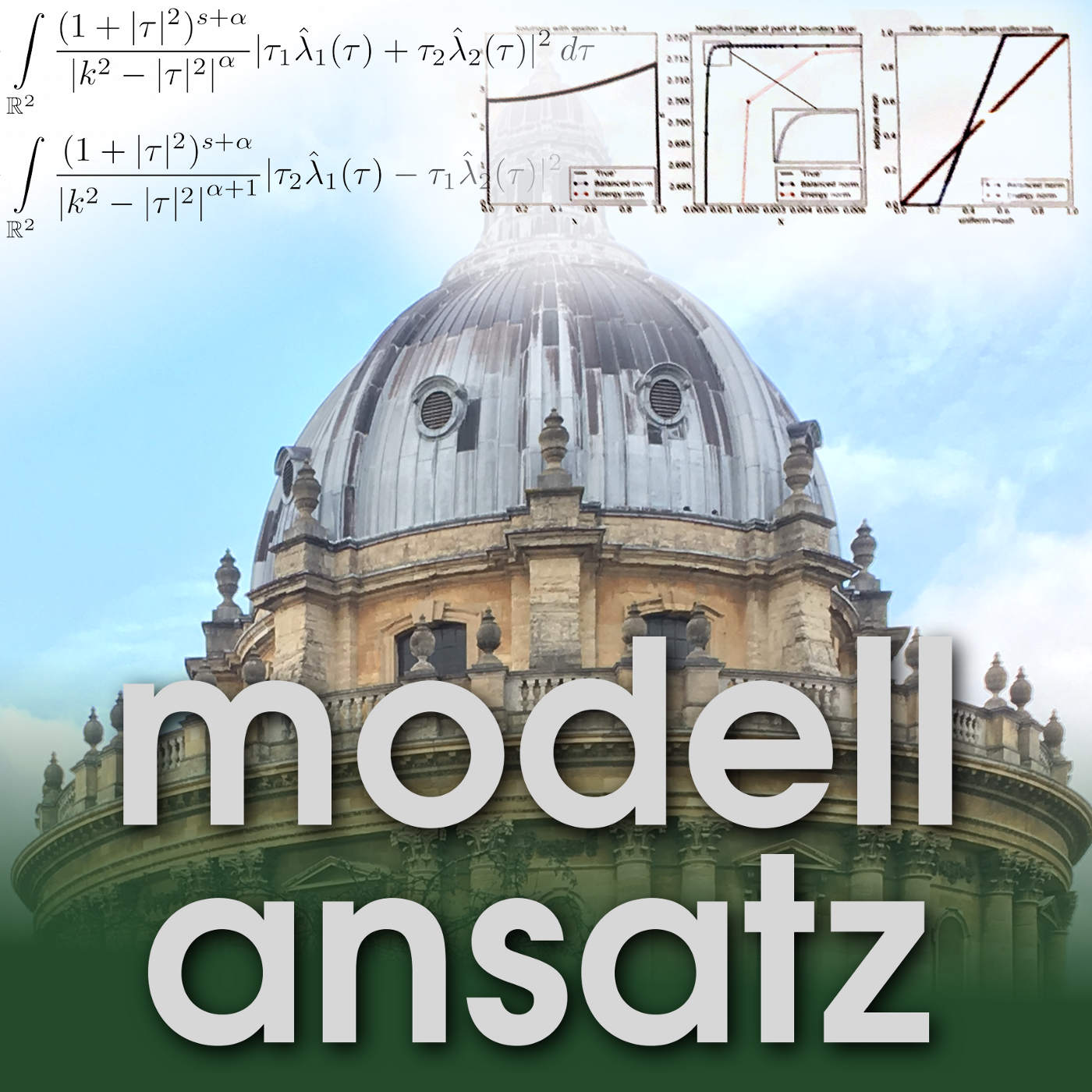 Singular Pertubation | Gudrun had two podcast conversations at the FEniCS18 workshop in Oxford (21.-23. March 2018). FEniCS is an open source computing platform for solving partial differential equations with Finite Element methods. This is the first of the two episodes from Oxford in 2018. Roisin Hill works at the National University of Ireland in Galway on the west coast of Ireland. The university has 19.000 students and 2.000 staff. Roisin is a PhD student in Numerical Analysis at the School of Mathematics, Statistics & Applied Mathematics. Gudrun met her at her poster about Balanced norms and mesh generation for singularly perturbed reaction-diffusion problems. This is a collaboration with Niall Madden who is her supervisor in Galway. The name of the poster refers to three topics which are interlinked in their research. Firstly, water flow is modelled as a singularly perturbed equation in a one-dimensional channel. Due to the fact that at the fluid does not move at the boundary there has to be a boundary layer in which the flow properties change. This might occur very rapidly. So, the second topic is that depending on the boundary layer the problem is singularly perturbed and in the limit it is even ill-posed. When solving this equation numerically, it would be best, to have a fine mesh at places where the error is large. Roisin uses a posteriori information to see where the largest errors occur and changes the mesh accordingly. To choose the best norm for errors is the third topic in the mix and strongly depends on the type of singularity. More precisely as their prototypical test case they look for u(x) as the numerical solution of the problem $$\varepsilon^2u''(x) + b(x)u(x)\ =\ f(x)\quad \mathrm{on}\quad \Omega = (0, 1)$$ $$u(0)\ =\ u(1)\ =\ 0$$ for given functions b(x) and f(x). It is singularly perturbed in the sense that the positive real parameter ε may be arbitrarily small. If we formally set ε = 0, then it is ill-posed. The numercial schemes of choice are finite element methods - implemented in FEniCS with linear and quadratic elements. The numerical solution and its generalisations to higher-dimensional problems, and to the closely related convection-diffusion problem, presents numerous mathematical and computational challenges, particularly as ε → 0. The development of algorithms for robust solution is the subject of intense mathematical investigation. Here “robust” means two things: The algorithm should yield a “reasonable” solution for all ranges of ε, including resolving any layers present; The mathematical analysis of the method should be valid for all ranges of ε. In order to measure the error, the energy norm sounds like a good basis - but as ε^2 → 0 the norm → 0 with order ε . They were looking for an alternative which they found in the literature as the so-called balanced norm. That remains O(1) as ε → 0. Therefore, it turns out that the balanced norm is indeed a better basis for error measurement. (...) | — | ||||||
| 3/29/18 | 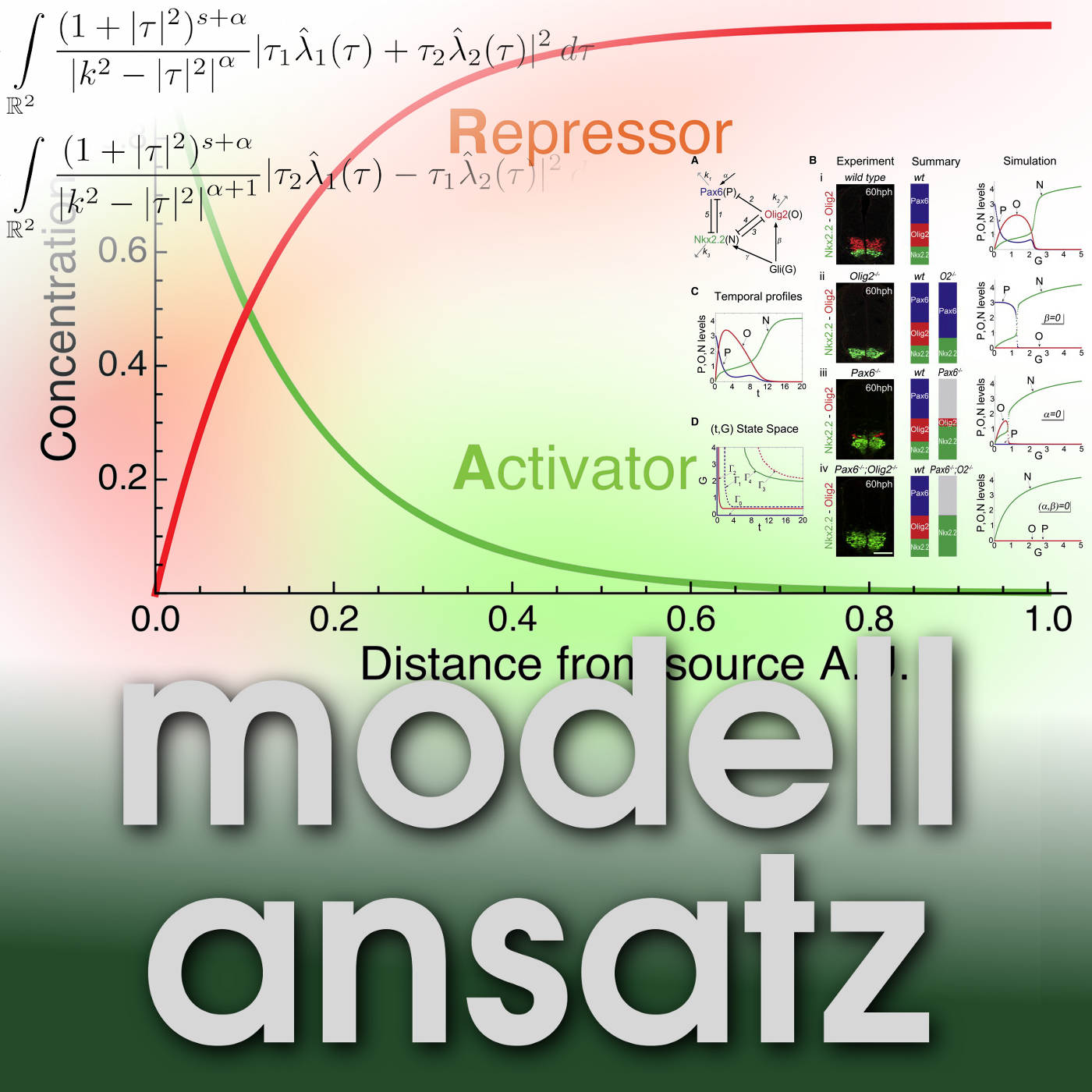 Embryonic Patterns | In March 2018 Gudrun visited University College London and recorded three conversations with mathematicians working there. Her first partner was Karen Page. She works in Mathematical Biology and is interested in mathematical models for pattern formation. An example would be the question why (and how) a human embryo develops five fingers on each hand. The basic information for that is coded into the DNA but how the pattern develops over time is a very complicated process which we understand only partly. Another example is the patterning of neurons within the vertebrate nervous system. The neurons are specified by levels of proteins. Binding of other proteins at the enhancer region of DNA decides whether a gene produces protein or not. This type of work needs a strong collaboration with biologists who observe certain behaviours and do experiments. Ideally they are interested in the mathematical tools as well. One focus of Karen's work is the development of the nervous system in its embryonic form as the neural tube. She models it with the help of dynamical systems. At the moment they contain three ordinary differential equations for the temporal changes in levels of three proteins. Since they influence each other the system is coupled. Moreover a fourth protein enters the system as an external parameter. It is called sonic hedgehog (Shh). It plays a key role in regulating the growth of digits on limbs and organization of the brain. It has different effects on the cells of the developing embryo depending on its concentration. Concerning the mathematical theory the Poincaré Bendixson theorem completely characterizes the long-time behaviour of two-dimensional dynamical systems. Working with three equations there is room for more interesting long-term scenarios. For example it is possible to observe chaotic behaviour. Karen was introduced to questions of Mathematical Biology when starting to work on her DPhil. Her topic was Turing patterns. These are possible solutions to systems of Partial differential equations that are thermodynamically non-equilibrium. They develop from random perturbations about a homogeneous state, with the help of an input of energy. Prof. Page studied mathematics and physics in Cambridge and did her DPhil in Oxford in 1999. After that she spent two years at the Institute for Advanced Study in Princeton and has been working at UCL since 2001. | — | ||||||
Showing 25 of 47
Sponsor Intelligence
Sign in to see which brands sponsor this podcast, their ad offers, and promo codes.
Chart Positions
5 placements across 5 markets.
Chart Positions
5 placements across 5 markets.