

Insights from recent episode analysis
Audience Interest
Podcast Focus
Publishing Consistency
Platform Reach
Insights are generated by CastFox AI using publicly available data, episode content, and proprietary models.
Total monthly reach
Estimated from 1 chart position in 1 market.
By chart position
- 🇨🇦CA · Books#1885K to 30K
- Per-Episode Audience
Est. listeners per new episode within ~30 days
2.5K to 15K🎙 ~2x weekly·260 episodes·Last published 5d ago - Monthly Reach
Unique listeners across all episodes (30 days)
5K to 30K🇨🇦100% - Active Followers
Loyal subscribers who consistently listen
2K to 12K
Market Insights
Platform Distribution
Reach across major podcast platforms, updated hourly
Total Followers
—
Total Plays
—
Total Reviews
—
* Data sourced directly from platform APIs and aggregated hourly across all major podcast directories.
On the show
Recent episodes
'Unlikely insider' critiques how law school thinking can reinforce injustices
May 27, 2026
49m 19s
How we deploy the military domestically, and why
May 6, 2026
1h 07m 13s
Sherry Thomas's sleuthing librarians and gender-bent Sherlock
Apr 16, 2026
43m 52s
Book Club: The Brethren introduces Tricky Dick's chief justice
Apr 1, 2026
39m 00s
Your household devices are tracking you—but who else is watching?
Mar 18, 2026
49m 25s
Social Links & Contact
Official channels & resources
Official Website
Login
RSS Feed
Login
| Date | Episode | Description | Length | ||||||
|---|---|---|---|---|---|---|---|---|---|
| 5/27/26 | 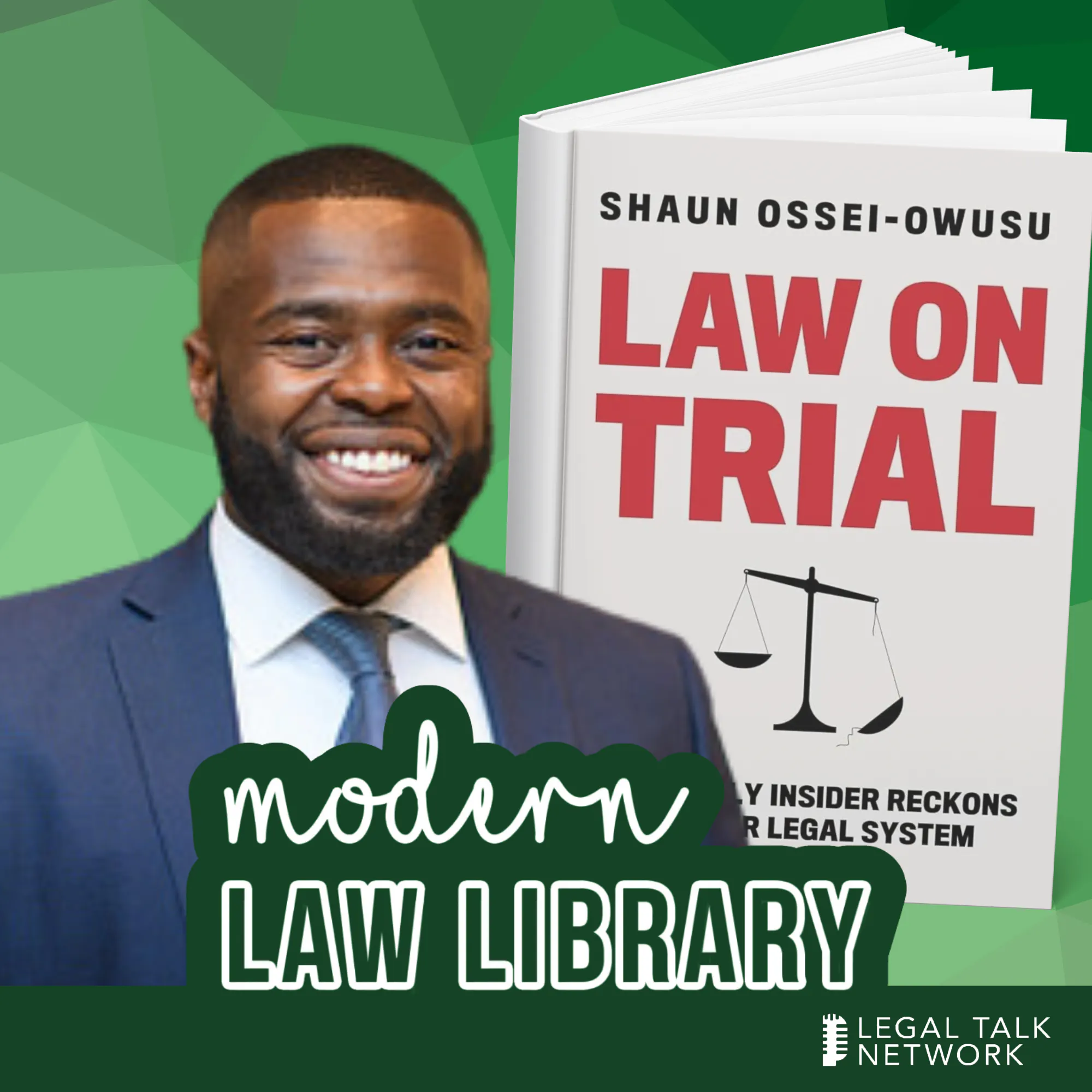 'Unlikely insider' critiques how law school thinking can reinforce injustices | When Shaun Ossei-Owusu looked around at his classmates at UC Berkeley School of Law, there were many upper middle class children of lawyers who were coming straight from their undergraduate degrees. There were not many people like him, a child of Ghanaian immigrants who grew up in an impoverished South Bronx community and was now finishing his PhD as a returning student. That background and his academic training gave him a different perspective on the law school curriculum. For example, his Property Law class was mostly focused on the ins and outs of titles and transfers. "It was strange to me, particularly being going to school at Berkeley, how little the class said about homelessness," Ossei-Owusu tells host Lee Rawles in this episode of the Modern Law Library. "We have about 750,000 people in this country who are unhoused in any given night. And this is the course, Property Law, that's most directly concerned with how we organize access space and shelter. And the course doesn't say much about homelessness. And so I felt that that was strange, but I didn't want to be the student in class saying, 'Well, why aren't we talking about this?' " Ossei-Owusu went on to practice healthcare enforcement law at Sidley Austin, and worked for the Legal Aid Society of the District of Columbia. His time as a litigator and public interest lawyer gave him a look at how law school principles fared in real world situations. "Lawyers are implicated in many of the hot-button issues of the day, and much of that is tied to the ways that we train lawyers in law school to distance legal reasoning from social and moral consequences–and the ways they bring that habit into legal practice, whether it be BigLaw, public interest lawyering, or government lawyering," Ossei-Owusu says. It's something he now thinks deeply about as a professor at the University of Pennsylvania Law School who focuses on criminal justice, social welfare and professional responsibility. In Law on Trial: An Unlikely Insider Reckons with Our Legal System, he calls out the ways this early training can result in further injustice and inequality for society. "Professional ethics say your job is to primarily serve clients, which creates an inevitable distance between what lawyers do and who pays the price," writes Ossei-Owusu in Law on Trial. "The result is a system that trains smart people to engineer brilliant solutions while staying disconnected from the human wreckage they may leave behind." In this episode of the podcast, Ossei-Owusu and Rawles talk about the hard truths of public interest legal work, how regulatory work can sometimes have more impact than litigation, and and how good intentions alone cannot erase harm. | 49m 19s | ||||||
| 5/6/26 | 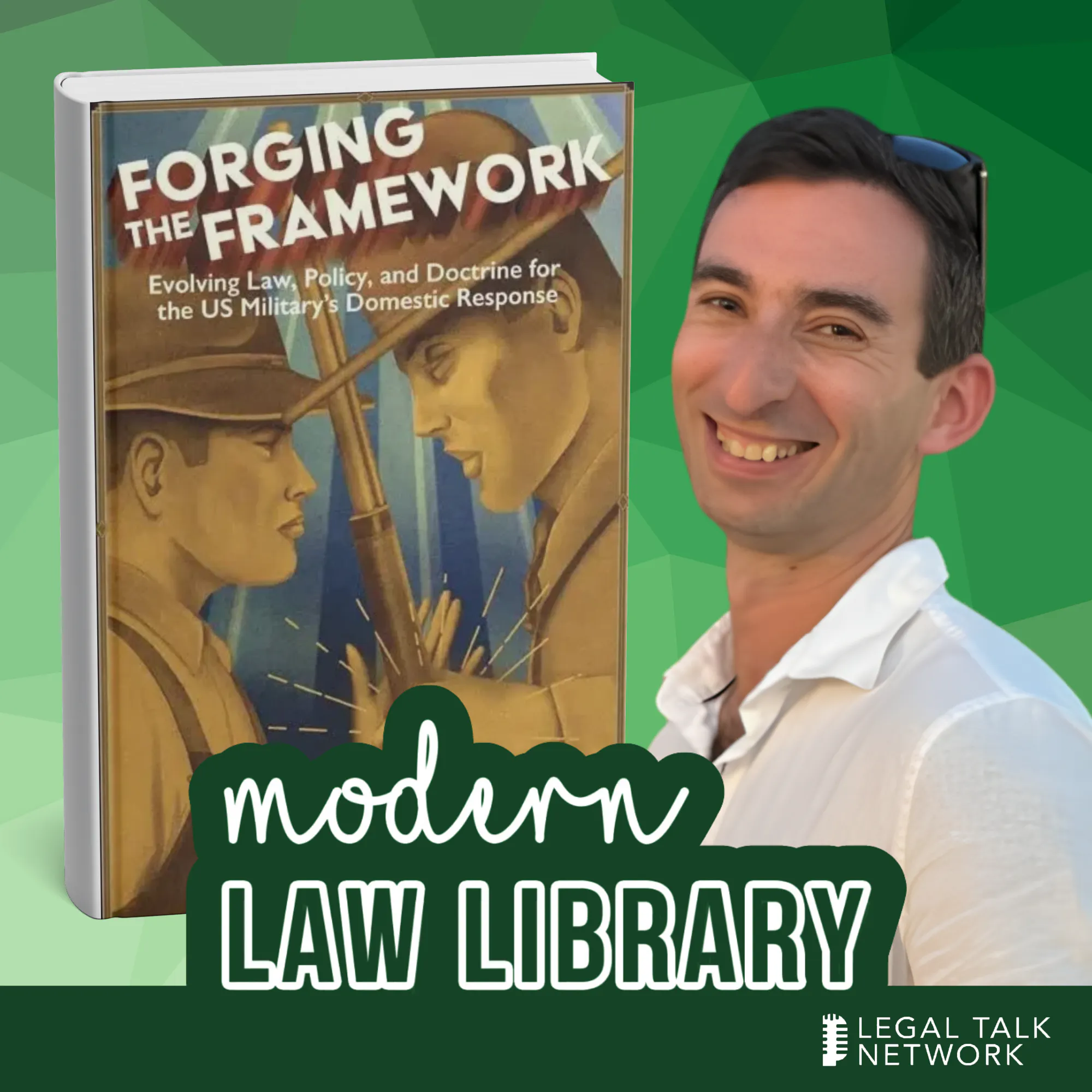 How we deploy the military domestically, and why | The Third Amendment to the Constitution forbids the quartering of troops in Americans' houses. It's a reminder of how uneasy the people of the country have been about the domestic deployment of our soldiers. There are robust rules about how the military can be used on American soil, but how did those rules come about? It's a question that National Guard officer Jonathan Bratten hoped to help answer in Forging the Framework: Evolving Law, Policy, and Doctrine for the US Military's Domestic Response, which he edited and contributed to as one of the authors. "It was really cool to see the way that the roots of our processes are built into the colonial era, just as the roots of a lot of our frictions are built into the colonial era," Bratten tells Modern Law Library host Lee Rawles. Forging the Framework, which is available for free from the Army University Press, looks at how different periods of American history shaped how the military operates on American soil today. As a country that has not faced many invasions, the bulk of domestic military operations have been to respond either to civil unrest or to natural disasters. "When you look at how this affects those who serve, I just think about the number of people who got called off of the COVID-19 mission, where [you were] helping your community members to go deploy, to protect, go into support of law enforcement during the George Floyd protests," says Bratten. "There's just that weird duality that exists in the Guard and these experiences sort of ripple through." In this episode of the Modern Law Library, Bratten and Rawles dive deep into the Pullman Strike, Posse Comitatus, slave revolts, the rewards of disaster response and the difficulty of convincing militiamen to confront their rioting relatives. Download Jonathan's book here. | 1h 07m 13s | ||||||
| 4/16/26 |  Sherry Thomas's sleuthing librarians and gender-bent Sherlock | Coming across the right book at the right time can make all the difference, says Sherry Thomas, author of the popular Lady Sherlock series. In her case, picking up a historical romance from the library led to her writing career. "Two years into my career as stay-at-home mom, I grabbed a historical romance, which I devoured growing up," Thomas tells the Modern Law Library's Lee Rawles. "I grabbed a historical romance from the library, took it home and was going to spend my son's nap time enjoying it. But it turned out that I did not enjoy that book at all. In fact, I was kind of furious at it because I didn't enjoy it at all. And I spent the entirety of my available time that day on that and did not get any pleasure in return. So very seldom does this ever happen to me. But on that day, I was kind of angry. And by the time my husband returned home from work, I said to him, 'I am going to write historical romances.'" Thomas did successfully publish several historical romances, then shifted genres to historical mysteries, publishing eight books in her best-selling Lady Sherlock series. The ninth will be released in the fall. Her newest release is a contemporary mystery, The Librarians, prompted by a suggestion by her publishers. "They specifically said, 'We want this to be The Thursday Murder Club, but with librarians,' " says Thomas. In this episode of the Modern Law Library, Thomas shares more about her writing journey, how she came up with her Charlotte Holmes character, her love of libraries and her tips for other would-be mystery writers. | 43m 52s | ||||||
| 4/1/26 | 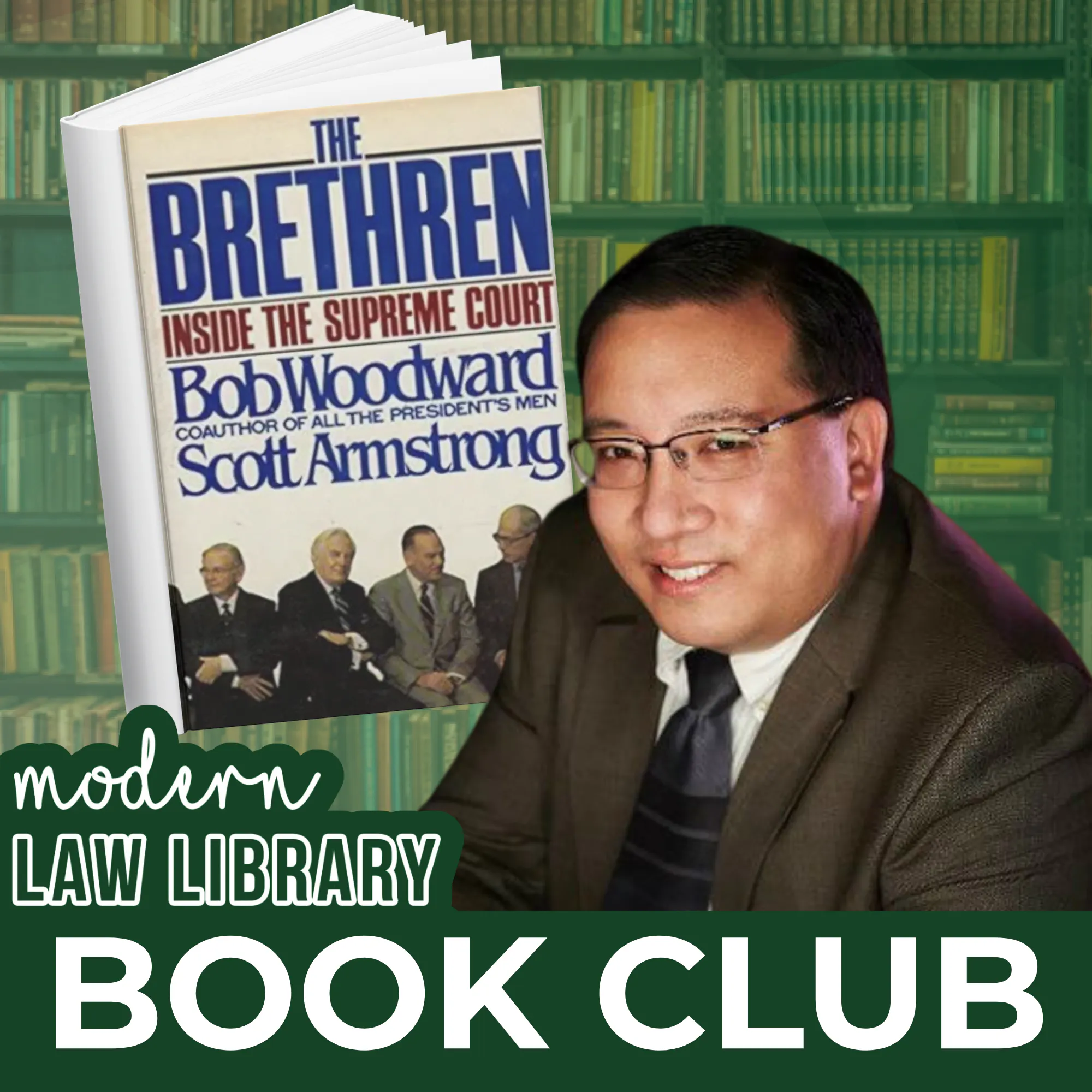 Book Club: The Brethren introduces Tricky Dick's chief justice | It's time for the first official meeting of the Modern Law Library Book Club, and Lee has invited on her friend (and go-to Nixon expert) Victor Li to talk about his experience reading the 1979 bestseller The Brethren: Inside the Supreme Court. As both a lawyer and journalist, Victor gives his thoughts on how Woodward and Armstrong were able to pierce the secrecy of the Supreme Court and show the behind-the-scenes wrangling as Nixon's newly-appointed chief justice, Warren Burger, took over from famed liberal Chief Justice Earl Warren. Up next, we'll be discussing Chapter 1, the 1969 Term, and we want to hear from you! Email your comments or a voice message to modernlawlibrary@legaltalknetwork.com to appear on a future episode. Check out our discussion group on Goodreads: https://www.goodreads.com/group/show/1285340-modern-law-library Purchase your copy of The Brethren: Inside the Supreme Court: https://amzn.to/4cRQivF | 39m 00s | ||||||
| 3/18/26 | 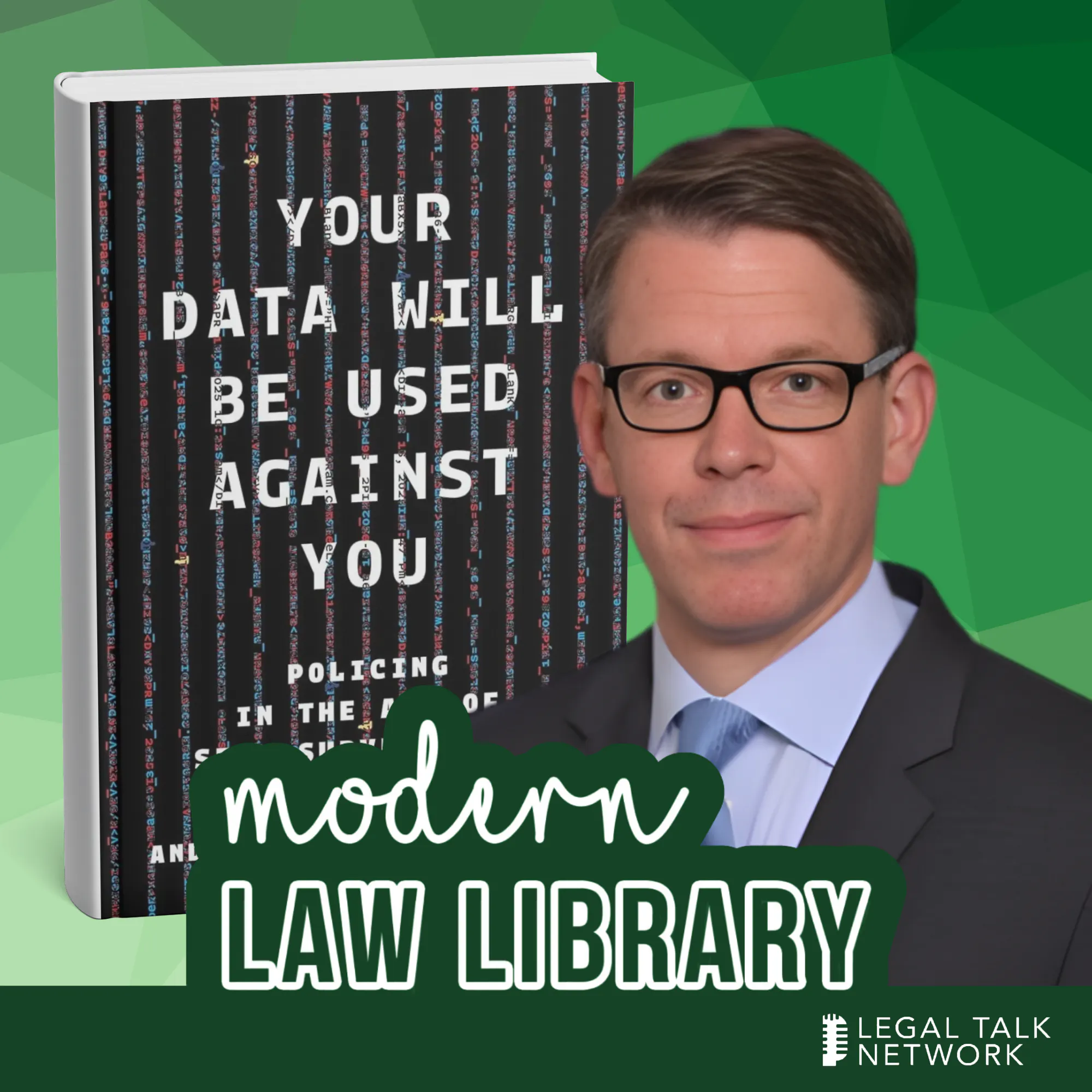 Your household devices are tracking you—but who else is watching? | Your smartwatch tracks your heart rate and counts your calories. Your Ring camera lets you know when a package has been delivered. The GPS in your car smoothly directs you to a restaurant you've never been to before. We've grown used to getting a technological assist for everything from finding our keys to checking where our children are at curfew. But the consumer electronics which can make our lives easier can also be used by the government to track and prosecute us–and Fourth Amendment protections haven't been keeping up. Prof. Andrew Ferguson of George Washington University Law School has long been an advocate for digital privacy, and in his new book, Your Data Will Be Used Against You: Policing in the Age of Self-Surveillance, he hopes to kick off a movement to protect Americans from government intrusion. In this episode of the Modern Law Library, Ferguson and host Lee Rawles talk about cases where people's device data wound up being used against them, how personal information is being sold by data brokers, and how the Wiretap Act could point the way forward for future data privacy protections. Ferguson also shares tips on how to sabotage your data and explains the Tyrant Test. | 49m 25s | ||||||
| 3/4/26 |  Introducing the Modern Law Library Book Club | For more than a decade, the Modern Law Library has been chatting with authors about their books. But there haven't been many opportunities to talk directly with our listeners, and we want that to change. We are so excited to announce that we are launching a monthly book club series, which will appear in your normal podcast feed. This year, we are going to be diving into The Brethren: Inside the Supreme Court, by Bob Woodward and Scott Armstrong. This book made waves when it was released in 1979, giving readers an unprecedented look into the U.S. Supreme Court chambers. Covering the 1969 to 1975 terms, The Brethren exposed the internal debates over matters like the Pentagon Papers and Roe v. Wade. Each month, we will be reading a section of the book and inviting on a guest to discuss the issues raised. To be ready for the first book club meeting at the end of March, read the introduction and prologue! We are hoping to hear from you, so if you have a comment about the book or want to share your experiences with it, email us a written message, video or audio recording to modernlawlibrary@legaltalknetwork.com. You can purchase a copy here and join in the discussion in our Goodreads group athttps://www.goodreads.com/group/show/1285340-modern-law-library | 10m 06s | ||||||
| 2/19/26 | 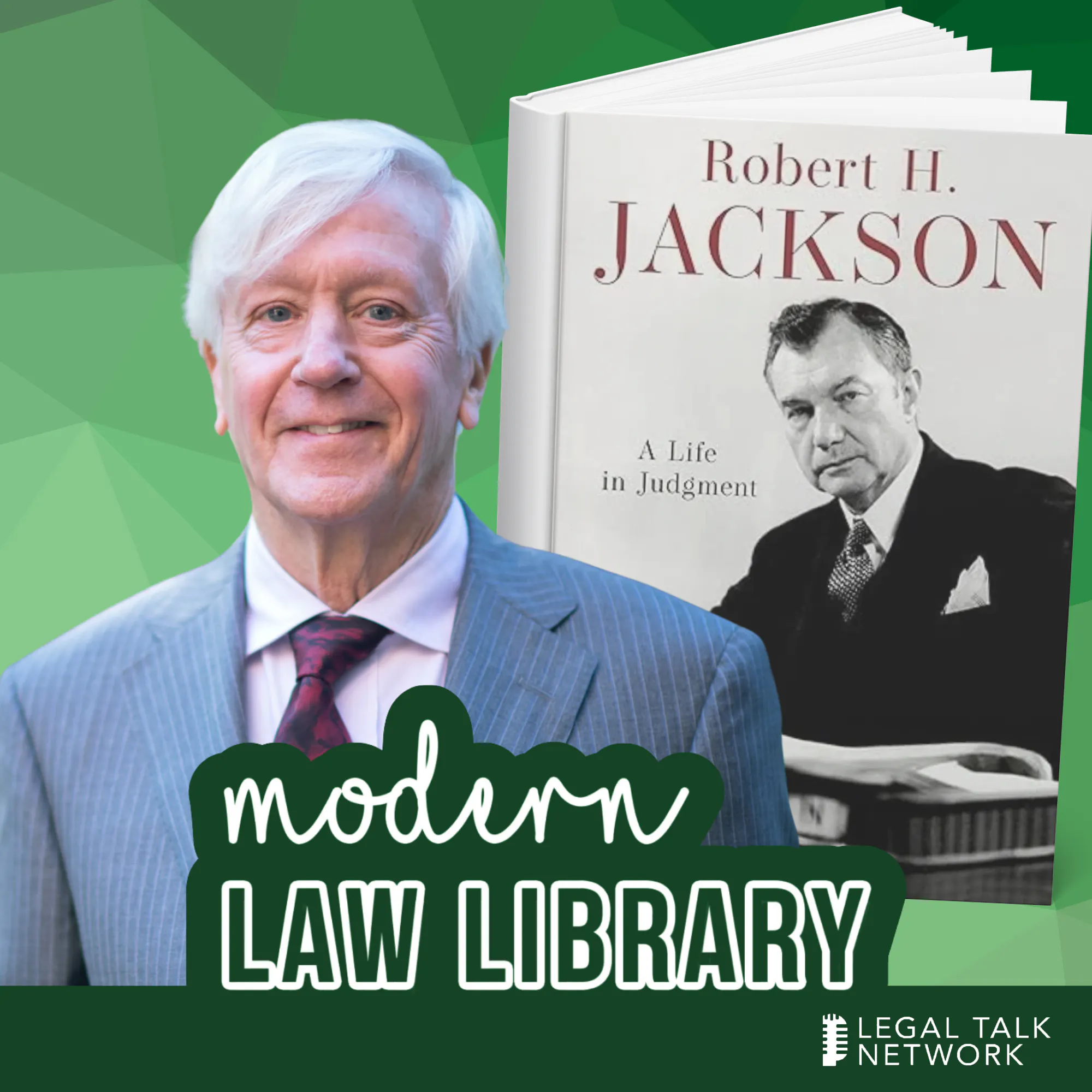 Meet the 'inscrutable' SCOTUS justice who made the Nuremberg trials possible | Robert H. Jackson was not an easy man to know, but "I found being in Robert Jackson's company on the whole a great pleasure," says G. Edward White, author of the new biography Robert H. Jackson: A Life in Judgement. A longtime ally of Franklin Delano Roosevelt, Jackson served as both Solicitor General and Attorney General before FDR nominated him to the U.S. Supreme Court. However, he often pined for his previous life as a small-town litigator in Jamestown, New York. A solitary worker by nature, Jackson did not relish the collegiate aspects of the court, and his influence was therefore limited. "Jackson was nominally gregarious, active, fun-loving, witty pleasant–but at the same time, he was remote," White tells Modern Law Library's host Lee Rawles. "In some ways, his gregariousness was a barrier to maybe a closer understanding of him." But as a litigator and as a justice, Jackson made important historical contributions. One major such contribution was in establishing the format and location of the post-World War II international military tribunals of Nazi leaders, now known as the Nuremberg Trials. Jackson took a leave of absence from the U.S. Supreme Court to be the country's lead negotiator as the United States, Great Britain, France and the Soviet Union debated how tribunals would take place. He then served as the United States' chief prosecutor. White and Rawles also discuss the roadblocks that have prevented Jackson from being better known in legal history; how Justice Felix Frankfurter tried to protect Jackson's post-death legacy; and Jackson's controversial cross-examination of Nazi politician Hermann Goering. In honor of the Olympics, White (who has written books on baseball and soccer) also shares his perspective on the benefits that athletics brings to lawyers. | 55m 59s | ||||||
| 2/5/26 |  The Help: What labor rights do domestic workers have | A foundational principle of Anglo-American law is that "a man's house is his castle." It establishes rights ranging from privacy to justifiable homicide. But what about when your castle is another person's workplace? What rights do they have? In Bringing Law Home: Gender, Race and Household Labor Rights, Katherine Eva Maich examines the history of labor protections for nannies, housecleaners and other household employees, and compares how domestic workers fare under the laws in New York City and Lima, Peru. In this episode, Maich and the Modern Law Library's host Lee Rawles discuss human trafficking, worker rights and responsibilities, the impacts of slavery and colonialism on the Global South, and the real human relationships that develop between employees and employers within the home. | 45m 16s | ||||||
| 1/23/26 | 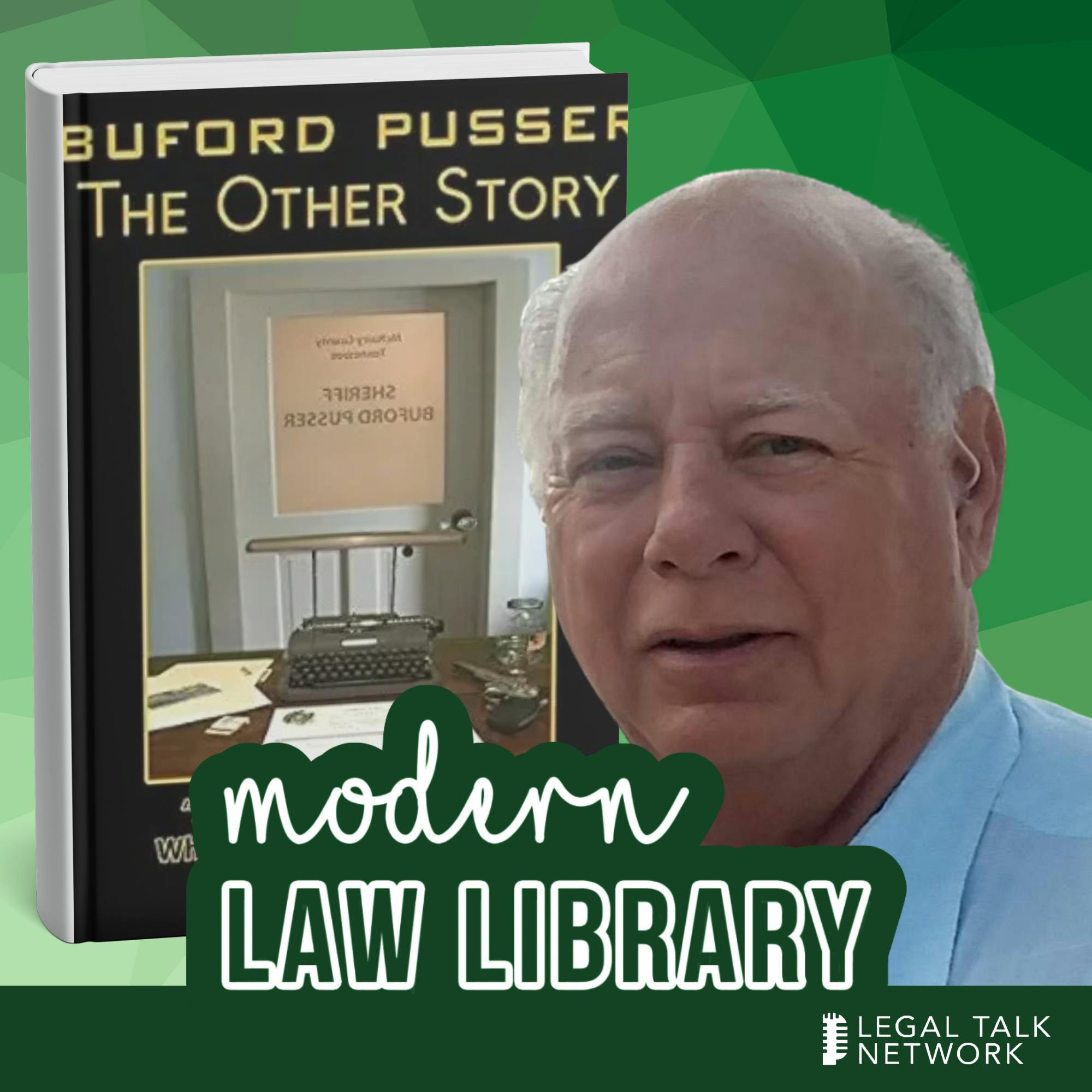 Cold case investigation into 'Walking Tall' sheriff uncovers murder | In the movie 1973 film Walking Tall, Sheriff Buford Pusser is a heroic law enforcement officer in small-town Tennessee whose fight against the Dixie Mafia leads to an ambush and shooting that left his beloved wife Pauline dead. The movie and its sequels and remakes made Pusser, who died in a 1974 car crash, into a folk hero. Dwayne "The Rock" Johnson played him in the 2004 Walking Tall remake. The Pusser legend became a cottage industry for Adamsville, Tennessee, where the Buford Pusser Home and Museum is based. Mike Elam, a former law enforcement officer, started researching Pusser's life as a hobby back in the 1970s. Once the internet became an avenue for exploration, "I started a social media page and I was very much a fan of Buford Pusser at that time," Pusser tells Modern Law Library host Lee Rawles. "And it was one of those things where I got to researching it and learned far too much for my own liking, because I did not like the man I saw as opposed to the one that was in the movie." Elam's decades of research and interviews with people who had encountered Pusser led to a book, Buford Pusser: The Other Story. It also led to the Tennessee Bureau of Investigations reopening the case into Pauline Pusser's murder and exhuming her body. In 2025, they announced that the investigation revealed details that pointed to one suspect: Buford Pusser himself. In this episode, Elam discusses his long investigation, tips for other true crime citizen detectives, what he thinks now about the way Buford Pusser has been memorialized–and how he found the gun that killed Pauline. | 36m 17s | ||||||
| 1/8/26 |  What place do prisons have in democracies? | The idea that prisoners should be treated humanely was discussed by Enlightenment Era aristocrats, "but the idea that they are people who are peers is new," says Yale Law professor Judith Resnik. "As Democratic norms turned us all into equal citizens, equal persons in a jurisdiction, the question of government's relationships in courts, policing, schools and prisons changed over the last hundred years," says Resnik, author of Impermissible Punishments: How Prison Became a Problem for Democracy. In this episode of the Modern Law Library, Resnik walks host Lee Rawles through centuries of discussion about how punishments are deemed to be permissible, from a trial about whipping prisoners in Arkansas to the League of Nations' effort to develop minimum standards of treatment in prisons worldwide. "People who run prisons have a very challenging time, and there's a body of data growing that people who work in prisons, like people who live in them, have higher stress, heart attacks, blood pressure, suicide rates," Resnik tells Rawles. "These are terrible environments of concrete and metal and noise and often dirt and violence. In the United States, many people who are in detention have had mental health issues and behavioral issues of significant kinds. And when you take people with limited training, often with staffs that are too thin, interacting with overcrowded facilities of metal and concrete, with limited resources, you end up generating scary places for everybody. "So one of the kind of puzzles, if you step back, is how a thing called corrections, that promises safety, has generated institutions that are deeply unsafe for the people who live and work in them." | 1h 03m 06s | ||||||
Want analysis for the episodes below?Free for Pro Submit a request, we'll have your selected episodes analyzed within an hour. Free, at no cost to you, for Pro users. | |||||||||
| 12/18/25 |  Pop culture picks of 2025 | Looking for something to occupy yourself over the holidays, or to kick off your 2026? Lee Rawles is joined by her fellow Legal Talk Network hosts Stephanie Everett of the Lawyerist podcast and Conrad Saam and Gyi Tsakalakis of Lunch Hour Legal Marketing to share what books, TV shows and movies they enjoyed this year. They also share some of their own resolutions for 2026–and reveal a special new project for the Modern Law Library, coming soon to your podcast feed. | 33m 25s | ||||||
| 12/3/25 |  John Lennon's lawyer explains how the musician's deportation case changed immigration law | Rebroadcast | December 8th marks the 45th anniversary of John Lennon's death in 1980. In this special rebroadcast of Modern Law Library, we're looking back at how his immigration helped expose corruption within the Nixon administration and rewrote the immigration process. His attorney, Leon Wildes, sat down with Lee Rawles and his son Michael Wildes to discuss what the case and the legal legacy Lennon left behind. ----- When immigration attorney Leon Wildes got a call from an old law school classmate in January 1972 about representing a musician and his wife who were facing deportation, their names didn’t ring a bell. Even after meeting with them privately at their New York City apartment, Wildes wasn’t entirely clear about who his potential clients were. He told his wife that he’d met with a Jack Lemon and Yoko Moto. “Wait a minute, Leon,” his wife Ruth said to him. “Do you mean John Lennon and Yoko Ono?” What Wildes didn’t know when accepting the Lennons’ case was that he and his clients were facing a five-year legal battle which would eventually expose corruption at the highest levels of the Nixon administration and change the U.S. immigration process forever. His account of that legal battle is told in “John Lennon vs. the USA: The Inside Story of the Most Bitterly Contested and Influential Deportation Case in United States History.” Leon Wildes and his son Michael (now a managing partner at the firm his father founded, Wildes & Weinberg) joined the ABA Journal’s Lee Rawles to discuss the legacy of the case and the effect it’s had on the entire family. Mentioned in This Episode: John Lennon vs. The U.S.A.: The Inside Story of the Most Bitterly Contested and Influential Deportation Case in United States History | 16m 00s | ||||||
| 11/19/25 | 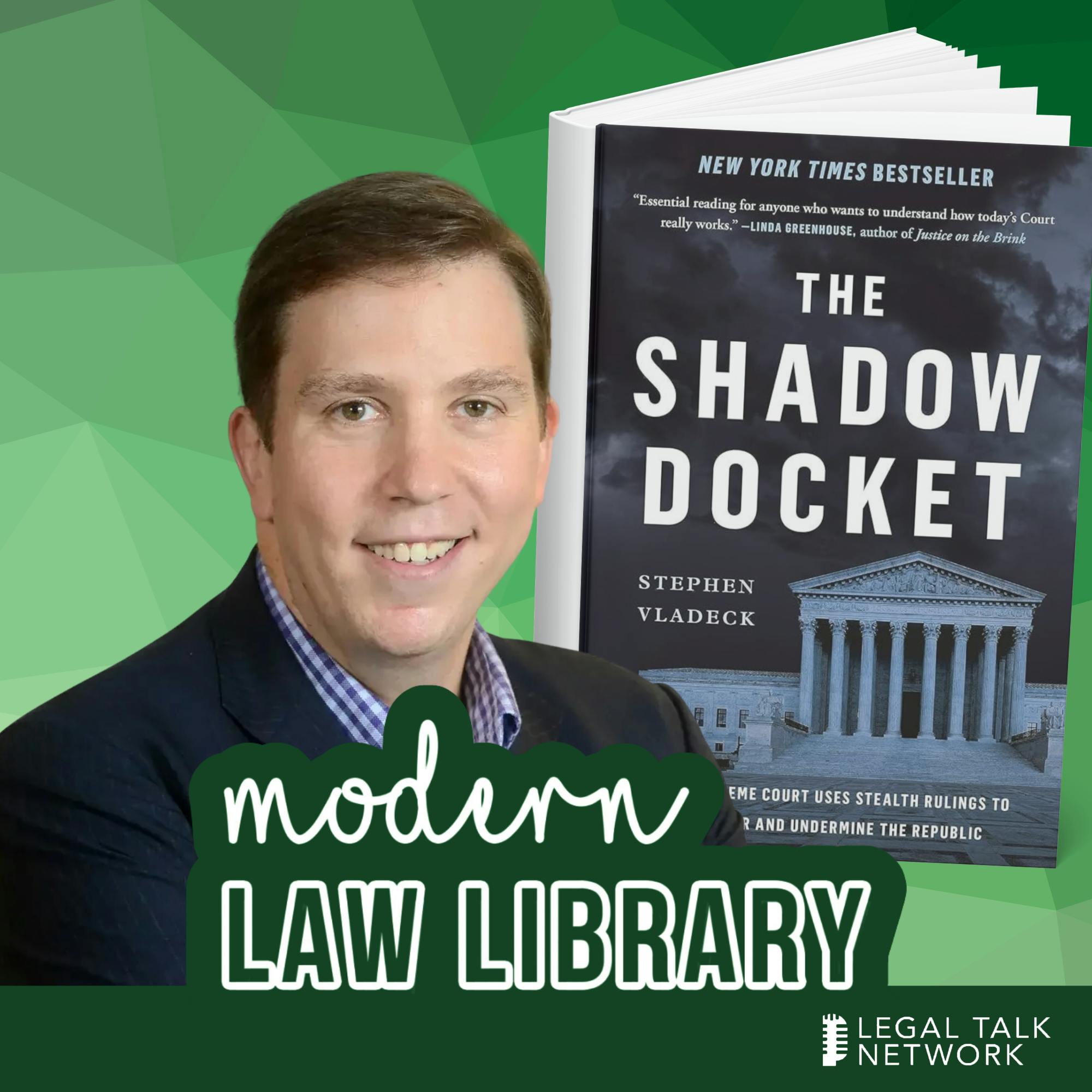 ‘The Shadow Docket’ shines light on an increasingly uncommunicative Supreme Court | Rebroadcast | If you’re dreading your family’s lack of communication this Thanksgiving, here’s a conversation about another group that’s saying less and less with real consequences. In this rebroadcast, University of Texas law professor Stephen Vladeck joins The Modern Law Library to discuss The Shadow Docket and how the Supreme Court’s growing use of secretive, unsigned emergency orders is reshaping transparency, civic discourse, and public trust in the rule of law. ----- In The Shadow Docket: How the Supreme Court Uses Stealth Rulings to Amass Power and Undermine the Republic, University of Texas law professor Stephen Vladeck argues the U.S. Supreme Court is expanding its powers at the expense of the rule of law and public transparency. A case ordinarily comes before the U.S. Supreme Court after a long appellate process; receives a public hearing where the case is argued before the justices; then a signed opinion or series of opinions and a majority ruling are issued, which generally comes months after oral arguments—and years after a matter first entered the court system. Given the limited length of each Supreme Court term, there has always been the need for an alternative form of response when the court is not in session or a swift response was absolutely necessary. The vast bulk of those occasions have been in capital cases, where a last-minute appeal might be the difference between life and death. But since 2017, the U.S. Supreme Court has issued many more emergency orders than at any time previously, and on matters ranging from election law to immigration bans, from abortion access to COVID-19 restrictions on public gatherings. By issuing unsigned majority emergency orders rather than signed majority opinions, Vladeck says the court is establishing precedents without supplying the legal reasonings behind its rulings. During a time when the U.S. Supreme Court and individual justices are being criticized for not abiding by a clear judicial code of ethics, Vladeck argues the secretive nature of the shadow docket will only further undermine public trust in the rule of law. In this episode of the Modern Law Library, Vladeck discusses with the ABA Journal’s Lee Rawles the origin of the term “shadow docket,” the dangers he sees for the court and the country, and what remedies may be available to the republic. | 47m 06s | ||||||
| 11/5/25 | 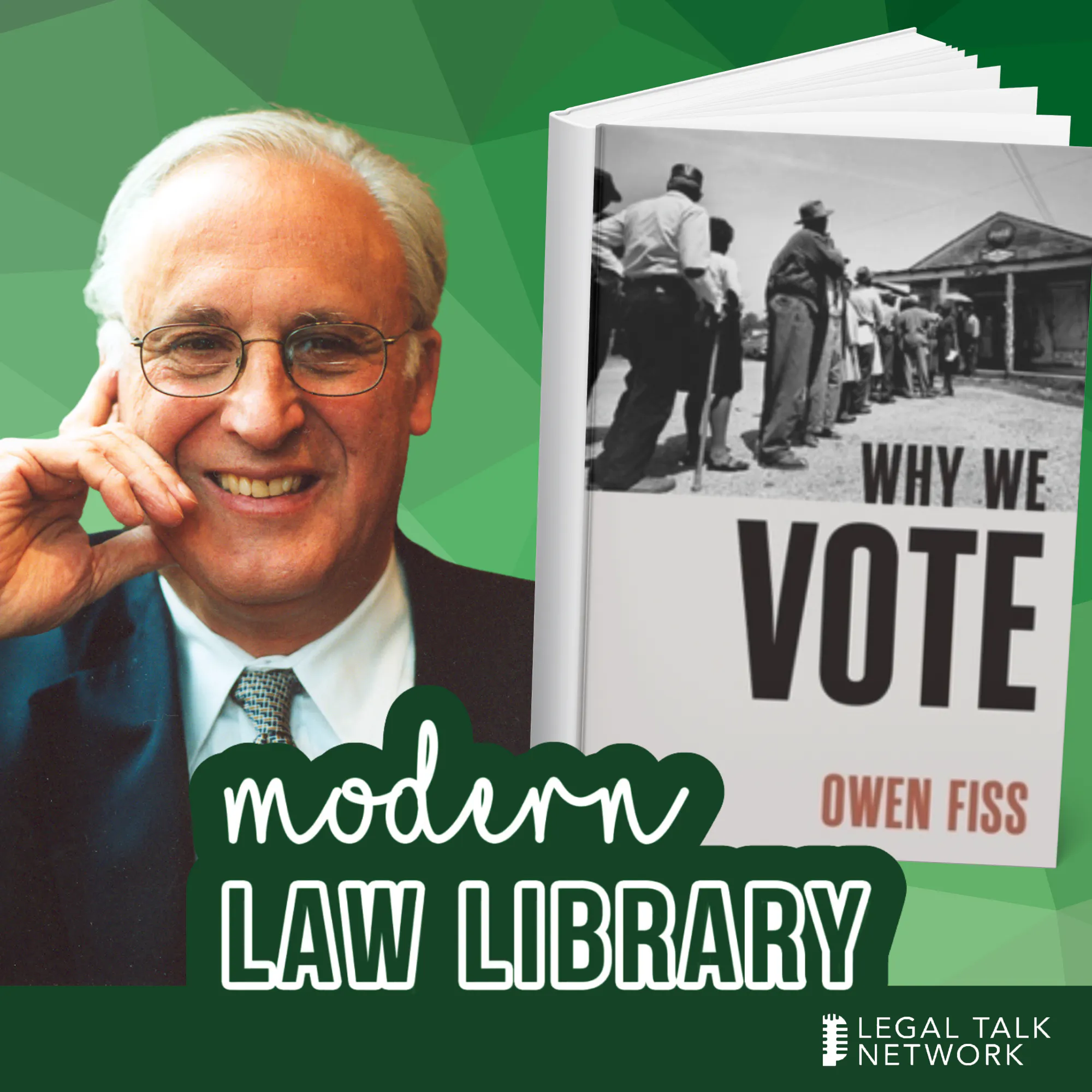 Yale Law’s Owen Fiss talks about threats to democracy and ‘Why We Vote’ | Rebroadcast | It’s election week in the U.S., and while many eyes are on the polls, we’re revisiting a conversation that reminds us why voting matters in the first place. In this rebroadcast, Yale Law professor Owen Fiss reflects on his work enforcing the Civil Rights and Voting Rights Acts, the courts’ role in protecting democracy, and why casting a ballot remains both a privilege and a duty. ----- After 50 years as a professor at Yale Law School, Owen Fiss says his students are still idealistic and passionate about the rights won in the Civil Rights Act of 1964 and Voting Rights Act of 1965. As a young lawyer in the late 1960s, Fiss worked with the Department of Justice to implement those laws. A classroom discussion in the spring of 2020 prompted him to draw upon his legal expertise and decades of experience to produce his new book, Why We Vote. In this episode of The Modern Law Library podcast, Fiss speaks with the ABA Journal’s Lee Rawles about the paradox of the court system–the least democratic branch of government–having the responsibility of safeguarding the right to vote. He looks back on his work with the DOJ in southern states, and his time as a clerk for Justice Thurgood Marshall (then on the 2nd U.S. Circuit Court of Appeals in New York) and Justice William Brennan. Rawles and Fiss also discuss recent threats to the electoral system and right to vote, including the insurrection on Jan. 6, 2021. Fiss shares his thoughts about Section 3 of the 14th Amendment, and whether former President Donald Trump should be removed from the ballot on that basis. While every book he writes is for his students, Fiss says, he hopes Why We Vote can impress upon a broader audience the privilege and duty of voting and participating in a democracy. | 40m 59s | ||||||
| 10/15/25 |  Users keepers: Pirates, zombies and adverse possession | Rebroadcast | As Halloween swiftly approaches, we’ve conjured up a classic from the Modern Law Library crypt. What do zombies and pirates have to do with the law? Grab your candy and find out as host Lee Rawles is joined by Paul Golden, author of Litigating Adverse Possession Cases: Pirates v. Zombies. —---- “Trespassing plus time equals adverse possession,” Paul Golden writes in his new book, Litigating Adverse Possession Cases: Pirates v. Zombies. When someone has occupied or used a piece of property as though they own it for long enough, a court could determine that they are the rightful owner—regardless of what the paperwork says. It’s a concept more popularly discussed as squatter’s rights. In this episode of The Modern Law Library, Golden speaks with the ABA Journal’s Lee Rawles about the ancient concepts underlying modern adverse possession law; some quirky state laws; and why societies would allow land to be transferred in this way. They also discuss how the plain meaning of terms like “hostile” are changed when used in adverse possession cases, and Rawles raises a hypothetical—taken from real life—of a neighbor’s crooked fence. During Golden’s first appearance on The Modern Law Library, he explained how the lack of a written contract could be navigated by a savvy lawyer. In his new book, Golden guides attorneys and their clients through the finer points of arguing for and against adverse possession claims. He shares some of the errors he’s seen pop up in adverse possession cases, and offers advice for how to avoid common pitfalls. | 33m 00s | ||||||
| 10/1/25 |  The Supreme Court’s colorful history with alcohol gets a look in ‘Glass and Gavel’ | Rebroadcast | As the Supreme Court returns to the bench, we’re raising a glass to a favorite from our archives. In this episode, Nancy Maveety shares stories from Glass and Gavel, where cocktails meet constitutional law. ----- From the earliest days of the U.S. Supreme Court, alcohol has been part of the work lives and social lives of the justices. In the book “Glass and Gavel: The U.S. Supreme Court and Alcohol,” Nancy Maveety takes readers on a tour through the ways that SCOTUS and spirits have overlapped. In this episode of the Modern Law Library, she speaks with the ABA Journal’s Lee Rawles about how she came to write this in-depth history. While the Prohibition Era would immediately spring to mind, the court faced a number of cases involving alcohol that impacted commerce, advertising, criminal justice and even gender discrimination laws. Maveety, who in addition to being a scholar of constitutional law also studies mixology, shares how she selected a signature cocktail for each chief justice’s tenure. She also has a drink suggestion for readers which incorporates an ingredient that’s known to be one of Justice Ginsburg’s favorites–and a cautionary tale about a normally teetotaling chief justice who dropped dead after sipping a sherry. | 33m 59s | ||||||
| 9/17/25 |  David Grann uncovers the deadly conspiracy behind murders of oil-rich Osage tribe members | Rebroadcast | As Native American Day approaches on September 25, we’re revisiting a story that still resonates today. Author David Grann takes us inside the Osage murders—a chilling chapter in U.S. history where oil wealth brought tragedy, corruption, and the rise of the FBI. ----- Although the Osage tribe had been forced from their ancestral lands by the U.S. government, through shrewd and careful bargaining they retained the mineral rights to one of the richest oil fields in the world: Osage County, Oklahoma. But instead of insuring the prosperity and safety of the tribe, the wealth of the Osage made them targets for what was later known as the Reign of Terror. The task of solving dozens of murders fell in the 1920s to the newly formed FBI and its young director, J. Edgar Hoover. In this episode of the Modern Law Library, author David Grann tells the ABA Journal’s Lee Rawles how he first learned of this series of murders and decided to write Killers of the Flower Moon: The Osage Murders and the Birth of the FBI. He also discusses the brave Osage woman at the heart of his story, Mollie Burkhart, who defied the local white-dominated power structure to discover who was responsible for the deaths of her family members. Mentioned in This Episode: Killers of the Flower Moon: The Osage Murders and the Birth of the FBI by David Grann | 23m 18s | ||||||
| 9/3/25 |  How to be (sort of) happy in law school | Rebroadcast | As summer winds down and school beckons, we’re looking back in our archives and assigning some back-to-school reading—grown-up style. In this episode, Professor Kathryne M. Young shares advice from her book How to Be Sort of Happy in Law School—from tackling imposter syndrome to finding your own path through law school’s pressures. —-- Law school can be a lonely, stressful time, and it’s easy to feel like you’re failing to fit the model of the perfect law student. But there’s no one right way to go to law school, says Professor Kathryne M. Young, author of How to Be Sort of Happy in Law School; you can craft your own experience. In this episode of the Modern Law Library, Young talks with the ABA Journal’s Lee Rawles about tackling imposter syndrome; advice that alumni wish they could give their younger selves; and techniques for getting along with your fellow students. Young uses lessons from her own law school experience and a sociological study she conducted to give practical tips for keeping a mental balance; choosing which courses and activities to pursue; managing the practical aspects of your household and budget; forming relationships with mentors and peers–and even deciding when if it’s time to leave law school altogether. Young’s book offers a holistic approach to surviving–and thriving–under the social, academic and economic pressures of law school. | 31m 34s | ||||||
| 8/20/25 | 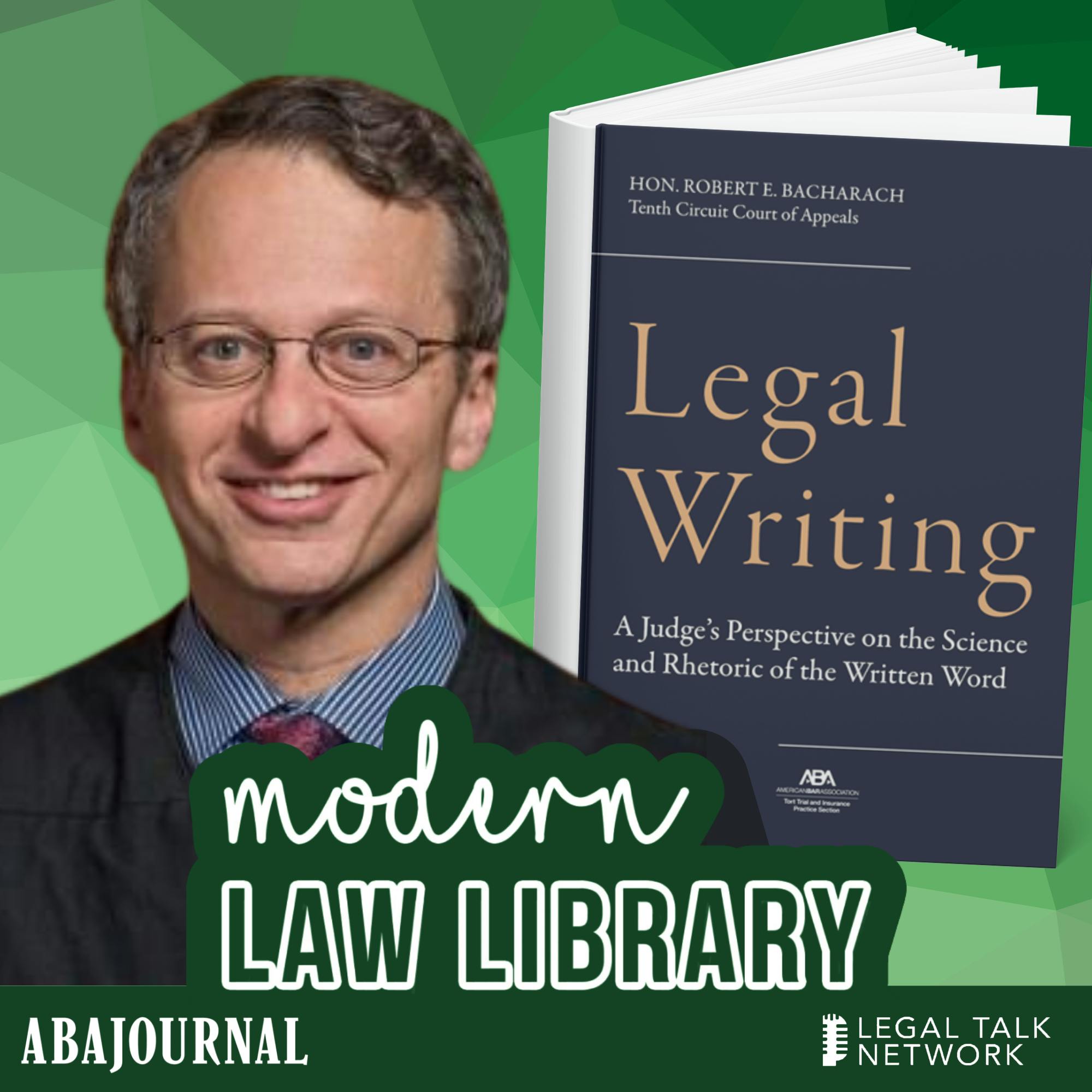 Need to sharpen your legal writing? 10th Circuit Court judge shares his tips | Rebroadcast | As summer winds down and school beckons, we’re looking back in our archives and assigning some back-to-school reading—grown-up style. In this episode, Judge Robert Bacharach shares insights from his book on the science of persuasive legal writing and why judges love to talk about language. —-- There’s plenty of conventional wisdom about what makes a good legal brief or court opinion. Judge Robert E. Bacharach of the Denver-based 10th Circuit Court of Appeals says that when judges socialize, their conversations often devolve into discussions about language and pieces of writing they enjoy or revile. But Bacharach decided he wanted to dive deeper, to see what the science of psycholinguistics could teach lawyers and judges about how written words persuade an audience. The result was his new book, Legal Writing: A Judge’s Perspective on the Science and Rhetoric of the Written Word, published by the ABA. Legal Writing is a slim volume, but it’s packed with tips. It considers details as microscopic as a serif on a letter and as macroscopic as how to create an outline for an argument. In this episode of the Modern Law Library podcast, Bacharach chats about his own writing process; shares his top takeaways from the psycholinguists he consulted; and offers his advice for young litigators looking to hone their skills. | 33m 59s | ||||||
| 8/6/25 |  James Patterson dishes on his new legal thriller, ‘The #1 Lawyer’ | Rebroadcast | With a new legal thriller on the horizon, we're revisiting James Patterson’s 2024 interview about #1 Lawyer. The bestselling author shares how he builds courtroom suspense and what makes a legal story truly gripping. —-- James Patterson has written bestsellers in many genres. But as he tells the ABA Journal’s Lee Rawles in this episode of The Modern Law Library, he has always been fascinated by legal thrillers, courtroom dramas and crime novels. He even considered becoming a lawyer, before his literary career took off. In his newest release, The #1 Lawyer, James Patterson partnered with co-author Nancy Allen to tell the story of Stafford Lee Penney, a criminal defense attorney in Biloxi, Mississippi, who’s never lost a case. But after handing a high-profile murder trial involving the son of a mobster, Penney finds himself on the other side of the bench as a defendant himself, charged with murdering his own wife. Patterson has written and co-written more than 300 books, including bestselling series like Alex Cross, Women’s Murder Club and Maximum Ride. He had some writing tips for attorneys, particularly on how to work collaboratively. As Patterson tells listeners in the podcast, he is open about working with other writers on many of his books, and he finds tools like outlining absolutely essential. He also shares with Rawles how he thinks co-writers should handle interpersonal communication while working together. Patterson says one of the major benefits of working with co-authors is pulling from their experiences to make his books more accurate and true to life. When he wrote The President is Missing with Bill Clinton, the former president could tell Patterson the inside details of how a Secret Service detail worked. When he wrote Run, Rose, Run with Dolly Parton, she walked him through the production cycle for a song. Allen, who conducted more than 30 jury trials as a prosecutor in Missouri and taught law for 15 years at Missouri State University, contributed her firsthand courtroom experience to The #1 Lawyer. Patterson says they worked to make everything as accurate as possible—while still allowing for a good story. It’s the pair’s second book together, following a previous standalone novel, Juror #3. In this episode of The Modern Law Library, Patterson shares some of his favorite law-related pop culture picks; news about new and ongoing projects; and describes a very special birthday event with Dolly Parton. He also discusses how his children’s series Maximum Ride got caught up in Florida book bans in 2023. For fans of Patterson’s breakout success, the Alex Cross series launched in 1993 with Along Came a Spider, the author shares updates about what’s next for the intrepid detective—including details about the upcoming Amazon Prime TV series Cross, starring Aldis Hodge. | 37m 31s | ||||||
| 7/30/25 |  3 trial court judges share the tough cases that stuck with them | Rebroadcast | This month, we're revisiting some standout conversations from our archives. In this episode, three seasoned trial court judges reflect on the cases that have stayed with them throughout their years on the bench. ----- All judges have cases that stick with them and linger in their memories. Sometimes it was because of the high profile of the case, and sometimes an obscure case had personal resonance because of the people or issues involved. In this episode of the Modern Law Library, the ABA Journal’s Lee Rawles speaks with Judges Russell F. Canan, Gregory E. Mize and Frederick H. Weisberg, who all sit on the Superior Court of the District of Columbia. The three judges were contributors to and the editors of “Tough Cases: Judges Tell the Stories of Some of the Hardest Decisions They’ve Ever Made.” Canan, Mize and Weisberg share their own stories, including why Canan’s well-meant gesture to avert an injustice in a gun case still troubles him. Mize explains why a child-custody case haunted him for decades, and what happened when he tracked down the now-grown child as he was deciding whether to write about it for “Tough Cases.” Weisberg talks about dealing with the emotional fallout from overseeing a case where a mother had murdered her four children. | 43m 03s | ||||||
| 7/9/25 |  Try estate law for a practice with work-life balance, says ‘Lifestyle Lawyer Revolution’ author | Laura Cowan started her career in finance, earning a CPA and working at Ernst & Young and Goldman Sachs. When she decided to go to law school at 35, she knew that she wanted to launch a boutique firm with a practice area that complemented that financial background. Estate law seemed a good fit—but fate threw her a curve ball just as she launched her firm.“I had to turn my entire practice virtual overnight in 2020 in New York City because of COVID,” Cowan tells the ABA Journal’s Lee Rawles in this episode of the Modern Law Library. “I moved to Rhode Island to shelter in place with my dad. During that couple of months that I was sheltering in place, I still had to get my law firm running. I had a business to run and bills to pay. So I made everything virtual, and I really streamlined everything. And what I found was that I could make pretty easily $10,000 a month, working just a couple of hours a day.” She has now leveraged the experience of launching an all-virtual estate-planning practice into a coaching program, 2-Hour Lifestyle Lawyer, to help other lawyers launch similar practices. Her new book, Lifestyle Lawyer Revolution: Live a Life You Love (Without Leaving the Law), is full of tips and advice for building a personalized practice to provide work-life balance for attorneys. “Now, what we found is that there’s a lot of lawyers who are happy working a lot more than that and are happy earning a lot more, but the name of the business really comes from just this idea that you can still be a really great attorney without working 10 hours a day, and you can make a nice living without working 10 hours a day,” says Cowan. A key part of not working too many hours is to hire appropriate assistance, even as a solo just starting out, says Cowan. “What I see a lot of is lawyers that spend too much time in the weeds of executing and doing all these different things that an admin could be doing, and not spending enough time doing what the lawyer should be focusing on,” says Cowan. “So they’re both working too much and not making enough money, which is the worst possible combination.” Cowan encourages estate attorneys to hold community workshops to help people understand the importance of wills and trusts. She says it’s an excellent way to establish connections that can lead to further business. “The real reason that people hire us is because of the connection,” Cowan tells Rawles. “And I firmly believe this. People don’t hire you because you’re the best drafter in the world. They hire you because of the way that you make them feel. So use AI and technology behind the scenes to help you get your work done and deliver a really great client experience, but never forget that it’s going to be that that makes them hire you.” In this episode, Cowan also discusses the benefits of value-based pricing versus the billable hour; attracting the client base you want to target; and how to deal with your biggest frenemy: technology. | 31m 44s | ||||||
| 6/18/25 |  Barrister’s new mystery novel offers glimpse inside the Inner Temple | Since it was seized from the Knights Templar in the 14th century, the Inner Temple in London has housed acolytes of a different sort: men (and eventually women) who serve as advocates of the law. Sally Smith spent her legal career—and now is spending her retirement—inside the 15 acres that comprise the Inner Temple, now one of the four Inns of Court. Smith has previously written non-fiction books about historical crimes and legal figures. When she decided to turn her hand to writing fiction, the familiar setting of the Inner Temple was the perfect setting for her new mystery novel, A Case of Mice and Men. Set in 1901, mere months after the death of Queen Victoria, A Case of Mice and Men introduces a new (and very reluctant) sleuth to the literary scene. Sir Gabriel Ward KC is happiest either when holed up in his Inner Temple lodgings with his books, or when making a compelling case in front of the High Court judges. A solitary, particular and cerebral man, Ward is not looking for excitement beyond the intellectual. But he finds it early one morning when he trips over the body of the Lord Chief Justice of England, which has been left on the doorstep of his professional chambers. The ancient privileges afforded to the Inner Temple mean that no policeman is allowed to enter without permission, and an aghast Ward is told he will conduct the investigation himself or be at risk of being kicked out of his lodgings. Unused to the world outside the Temple walls, or of conversing with any women apart from his old nanny or his mother, Ward must stretch himself to discover who killed Lord Norman Dunning. All the while, Ward is also wrestling with a knotty legal issue involving the rights to a bestselling children’s book, and will need to exercise all his skills on behalf of his client, the publisher of Millie the Temple Church Mouse. Written by a mysterious author, the book has been a runaway success, bringing throngs of children to the Temple Church and spawning toys, games and an American publishing deal. Now that the author has reportedly surfaced and is demanding her share of the money and control of the intellectual property, what will happen to Millie the Temple Church Mouse? In this episode of the Modern Law Library, Smith and the ABA Journal’s Lee Rawles discuss the launch of this new series, which will contain at least three books following Ward’s adventures. Smith describes her own career as a barrister, and why she chose to set the series at the beginning of the Edwardian era. She also discusses the issues of class, gender and the complex world within the walls of the Inner Temple. | 36m 10s | ||||||
| 6/4/25 |  How a Florida murder and an unlikely justice created a ‘criminal procedure revolution’ | In Chambers v. Florida and the Criminal Justice Revolution, historian and former ABA Journal reporter Richard Brust lifts the veil on a case that laid the groundwork for some much more famous civil rights victories. On May 13, 1933, shopkeeper Robert Darsey was robbed and murdered in Pompano, Florida. Four Black migrant farm workers—Izell Chambers, Walter Woodard, Jack Williamson and Charlie Davis—were seized and pressured by the local sheriff into confessing to the murder under threat of lynching. Their appeals eventually reached the U.S. Supreme Court through the efforts of some dedicated African American attorneys, and succeeded in 1940. In Justice Hugo Black’s written opinion for the majority, the justice drew parallels between the Jim Crow regime in the American South and the rise of authoritarianism and fascism in Europe. Chambers v. Florida forbade the use of psychological coercion—such as threatening to turn prisoners over to lynch mobs—as well as physical abuse to extract confessions. The court’s ruling declared that the protections of the Bill of Rights extended into states’ criminal cases, and began to change the kinds of cases that made it onto the Supreme Court docket.Brust sees it as part of a trio of cases, which includes Moore v. Dempsey (1923) and Brown v. Mississippi (1936), that led to a “criminal procedure revolution,” he tells the ABA Journal’s Lee Rawles. In this episode of The Modern Law Library, Brust discusses the lawyers who worked on the case, most prominently Simuel D. McGill, a Black attorney in Jacksonville. He delves into the generational differences between the Floridian defense lawyers and the attorneys of the NAACP’s Legal Defense Fund who would go on to win key civil rights battles. He explains why Justice Black would have been considered an unlikely author for this opinion. And he shares what he could discover about the fates of Chambers, Woodard, Williamson and Davis after the trial. | 41m 54s | ||||||
| 5/21/25 | 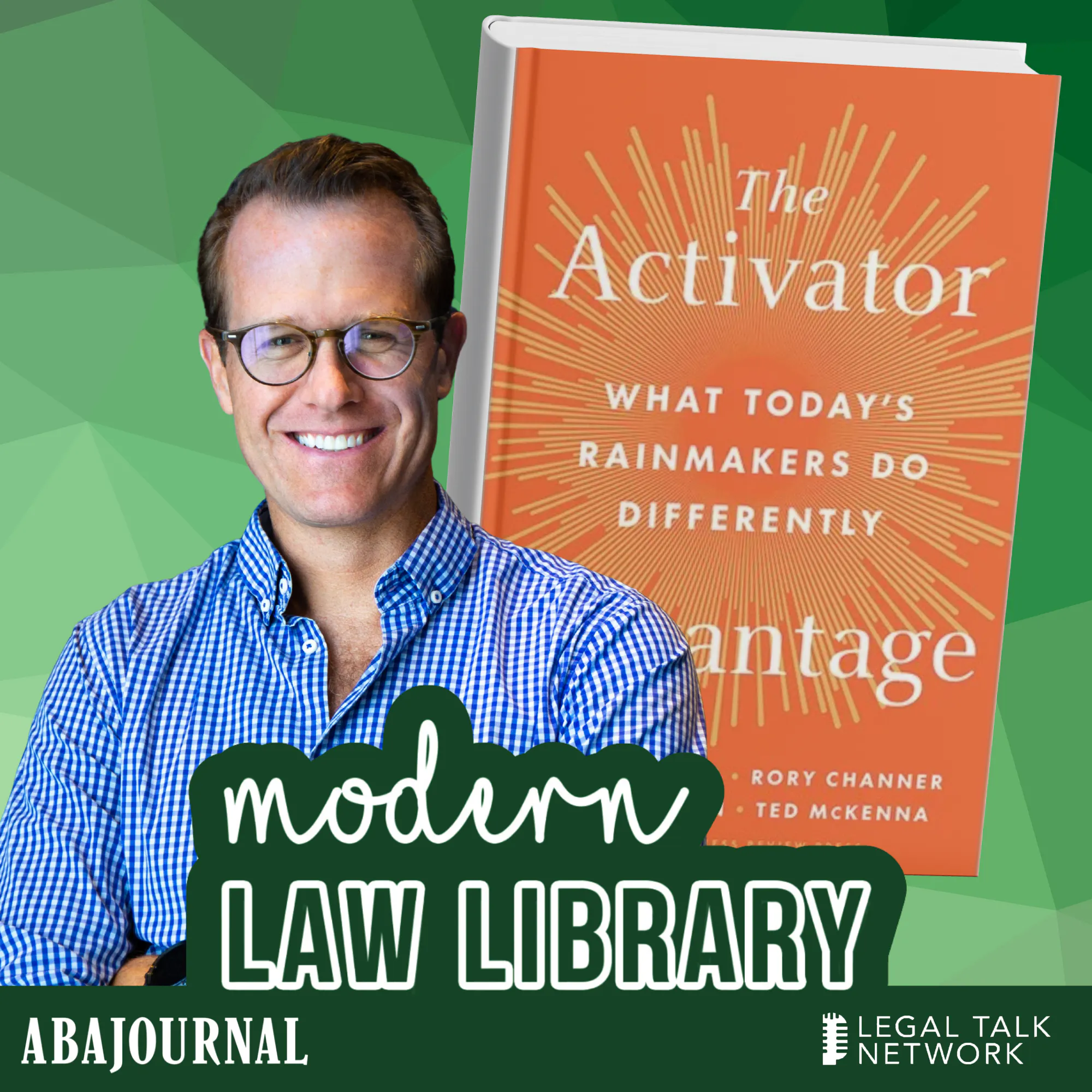 What today’s rainmakers do differently | Matthew Dixon, co-founder of DCM Insights, is a researcher who’s spent much of his career studying the shared characteristics and behaviors of successful B2B salespeople. In 2011, he released a study called “The Challenger Sale.” While giving a keynote on his findings at an annual partner retreat, an audience member stood up and challenged him. “He said, ‘Dr. Dixon, you’ve been talking for 45 minutes about sales effectiveness and salespeople and selling and sales process, and it’s all very fascinating and I’m sure our clients would be very interested in this,’” Dixon recounts to the ABA Journal’s Lee Rawles in this episode of The Modern Law Library. “‘And after all, we do a lot of consulting around go-to-market strategy. But what maybe you don’t recognize is that we are partners at our firm. We are not salespeople. In fact, there’s not a single salesperson in this audience. I might go so far as to say we don’t sell anything here.’” Dixon was taken aback. “What I realized was this world of partnerships, of professional services, of doer-sellers is actually quite a bit different from the world of sales and what we had written and all this research we’d done over the years.” In 2022, he tackled this population with the Rainmaker Genome Project, a study that became the basis for The Activator Advantage: What Today’s Rainmakers Do Differently, co-written by Dixon, Rory Channer, Karen Freeman and Ted McKenna. The Rainmaker Genome Project surveyed 3,000 partner-level professionals in 41 firms across law, public relations, accounting and investment banking. About 39% of respondents were lawyers. Each received a score for effectiveness in business development and were analyzed for how they provided client services. And it turns out that partner was correct: What makes a lawyer an effective rainmaker is not necessarily what makes a salesperson effective. After doing a vector analysis on the data, “what we found was that every one of those 3,000 professionals could be placed into one of five business development profiles,” says Dixon. The five profiles were the expert, the confidant, the debater, the challenger and the activator. Dixon stresses that the five categories are not about personality. While personalities are immutable, behaviors can be changed. “These are about the things we can all learn to be better at,” says Dixon. “It’s about how we spend our time, how we engage clients, how we use resources, how we collaborate with colleagues—and those are things we can all get better at with the right training, coaching and support from our firms.” In this episode, Dixon expands on each type, but the most effective performers in business development were the activators. “The reason we chose the term ‘activator’ instead of ‘connector’—people have asked—is that they’re not about collecting business cards and letting them collect dust or just hoarding LinkedIn connections,” Dixon tells Rawles. “What these folks do is try to turn these relationships into paying client relationships. They activate those relationships by proactively bringing new ideas—ways to mitigate risk, make money, save money—to clients.” Dixon offers practical advice on how to behave like an activator, including the most effective ways to use LinkedIn. Lawyers and other client-servicing professionals can’t just sit back and wait for business to find them, he warns. “Whether we like to admit it or not, clients are less loyal today than they once were,” he says. “They’re less likely to come back automatically to their incumbent provider. No matter how great the relationship or the value you’ve delivered, they’re forcing us to compete in ways we didn’t have to in the past. So activators want a backup plan. They know today’s great client might not be a client tomorrow, no matter what you’ve done. So you need a backup plan.” | 49m 14s | ||||||
Showing 25 of 262
Sponsor Intelligence
Sign in to see which brands sponsor this podcast, their ad offers, and promo codes.
Chart Positions
1 placement across 1 market.
Chart Positions
1 placement across 1 market.