

Insights from recent episode analysis
Audience Interest
Podcast Focus
Publishing Consistency
Platform Reach
Insights are generated by CastFox AI using publicly available data, episode content, and proprietary models.
Total monthly reach
Estimated from 1 chart position in 1 market.
By chart position
- 🇳🇿NZ · Food#543K to 10K
- Per-Episode Audience
Est. listeners per new episode within ~30 days
1.5K to 5K🎙 Weekly cadence·11 episodes·Last published yesterday - Monthly Reach
Unique listeners across all episodes (30 days)
3K to 10K🇳🇿100% - Active Followers
Loyal subscribers who consistently listen
900 to 3K
Market Insights
Platform Distribution
Reach across major podcast platforms, updated hourly
Total Followers
—
Total Plays
—
Total Reviews
—
* Data sourced directly from platform APIs and aggregated hourly across all major podcast directories.
On the show
Recent episodes
Happy 20th Birthday, Hawthorn Lounge.
Jul 9, 2026
1h 08m 23s
And A Pickle Margarita On The Side
Jul 3, 2026
25m 47s
Ryan Oliver Is Quietly Curious
Jul 3, 2026
47m 24s
Fizzy For Good Sh*t
Jun 25, 2026
30m 05s
Tasmanian Whisky Is Part Mythology, All Passion and Increasingly World Class.
Jun 25, 2026
34m 36s
Social Links & Contact
Official channels & resources
Official Website
Login
RSS Feed
Login
| Date | Episode | Description | Length | ||||||
|---|---|---|---|---|---|---|---|---|---|
| 7/9/26 |  Happy 20th Birthday, Hawthorn Lounge. | You need to know that in a time of calamitous headlines, it’s important to celebrate the milestones. And Hawthorn Lounge is just that. Originally meant to be a slow-burner of a pop-up (let’s build it for a few years, sell it and buy a house) it’s a Wellington institution that defies the rules of evolution by remaining exactly the same but always relevant. This month celebrates 20 years since Hawthorn Lounge opened with a backbar stock from the 2 of the McKenzie brothers’ home bars (yes, those McKenzie brothers). Not only is Justin still running Hawthorn all these years later, but he’s also pragmatic and political when it comes to what it takes (and takes) to run a small bar in Wellington, New Zealand these days. Don’t misunderstand me. He’s one of the most proactive bar owners in the city and there’s plenty to unpack. Join us as Justin McKenzie from Hawthorn Lounge shares the story of 20 years of building a legendary Wellington bar. Discover his philosophies on hospitality, staff culture, pricing strategies, and the importance of maintaining tradition amidst industry changes.Main Topics:* The journey of Hawthorn Lounge from inception to 20-year milestone* The art of creating a consistent customer experience and staff culture* Challenges of pricing, licensing, and industry economics over two decades* The significance of authenticity, storytelling, and community in hospitality* Adapting to industry shifts and maintaining longevity in a competitive marketIn this episode:* Justin recounts how the bar was originally intended as a two-year project, which turned into a 20-year journey* The influence of family, nostalgia, and storytelling on Hawthorn’s unique brand* How Hawthorn maintains its essence through staff engagement and careful control* The impact of industry trends, licensing laws, and economic pressures* Practical advice for small operators on long-term sustainability* Justin’s reflections on the importance of responsible service, pricing models, and community engagementTimestamps:00:00 - Celebrating Hawthorn’s 20-year journey02:13 - The original concept and early ambitions04:07 - The importance of atmosphere and storytelling05:47 - Consistency in design and staff approach07:28 - How staff are selected and cultivated09:25 - Responsible service measures and customer care11:00 - The qualities of successful Hawthorn staff15:01 - Industry challenges over recent decades16:10 - Adjusting to economic shifts and costs20:24 - Industry history: Wellington’s iconic venues23:10 - Industry regulation and licensing issues26:49 - Costs, waste culture, and sustainability30:57 - Menu innovation, iconic drinks, and cocktail evolution37:13 - Pricing strategies and economic sustainability44:13 - Industry trends, gentrification, and community role50:55 - The future of hospitality and staying authentic55:14 - Origins of signature spirits and collaborations58:48 - Nostalgia, storytelling, and creating memorable environments66:39 - The importance of authenticity in customer experience70:32 - Community involvement and industry advocacy74:16 - The essence of Hawthorn’s culture and tradition77:48 - The joy of crafting perfect drinks and staff enthusiasm78:07 - Closing thoughts and toast to continued success Get full access to More Good Drinks at www.moregooddrinks.com/subscribe | 1h 08m 23s | ||||||
| 7/3/26 |  And A Pickle Margarita On The Side | The Great New Zealand Toastie Takeover is back for its ninth year, and from 24 June until 5 August, 200-odd venues from Paihia to Dunedin will be arguing their case for the country’s best toasted sandwich. There’s whitebait in there this year. Veal. Prawns. Raclette. Somebody has gone paneer. It is, as always, an exercise in seeing how far a grilled cheese can be pushed before it stops being a grilled cheese.But if you actually want to understand what makes a Toastie Takeover entry work, don’t start with the sandwich. Start with the drinks match - exactly what will balance all that cheese and acidity?Shining Peak Brewing usually enters the competition always as a brewery first: toastie on one side of the pairing, beer suggestion on the other. This year they’ve gone one further, building a full drink to match rather than just a suggestion, and the drink might be the more interesting creation of the two.A brewery that thinks in matches, not menusShining Peak’s whole operation celebrates pairing. Every beer comes with a suggested food match as standard, which head brewer and co-founder Jesse Sigurdsson says has been core to the place since it opened. It’s partly practical — a genuinely enormous range of beer styles and flavours gives you far more to play with than the traditional wine list — and partly a deliberate play for people who wouldn’t otherwise order a beer. “It’s trying to capture people from all walks of life,” Sigurdsson told me on More Good Drinks this week, not just the beer-drinking crowd that would find the brewery anyway.The toastie itself leans hard into that pairing instinct rather than sitting on the sidelines of it. It’s built on pickle-studded bread, layered with smoked beef and smoked cheddar, caramelised sweet onion and pickle relish, finished with pickle aioli and served alongside a beef consommé for dipping — a nod to the traditional beef dip. Sigurdsson tried for the first time in Vancouver last year and has become a fan of the richness and depth of flavour it delivers. Why there’s a margarita involved at allThe brief to the bar team was simple: everyone online is mixing pickle juice into Coke and Pepsi, there’s clearly an appetite for pickle-forward drinking right now, so what happens if we take that seriously? Restaurant and bar manager Luke landed on a margarita almost immediately (sorry cola & pickle, this is not your time to shine) — tequila, triple sec, lemon juice, McClure’s sweet and spicy pickle juice, rimmed with pickle and chilli salt — reasoning that a margarita’s citrus-forward brightness was already halfway to pickle territory.It’s a good instinct. Pickle brine and a well-made margarita are chasing the same thing: a clean, high-acid hit that resets your palate rather than filling it up. Put it next to a toastie that’s rich with smoked beef, caramelised onion and a consommé dip, and the drink is playing a key role in delicious balance and leaving you begging for more, instead of bloated and full.Sigurdsson’s own explanation of what makes a beer work with food doubles as a pretty precise account of why this pairing succeeds: it comes down to balance, and to matching texture as much as flavour. A rich, fatty dish wants something with genuine acid cut, he says, in the same way a bitter IPA can work brilliantly against pork belly. The margarita’s job here isn’t to complement the toastie quietly. It’s to argue with it a little, in exactly the way a good pairing should.There’s experience and passion behind the philosophy and execution. Sigurdsson has been brewing for close on fifteen years, starting out scrubbing floors and cleaning kegs at Whitecliffs Brewery north of New Plymouth in exchange for the chance to learn. Fifteen years later, his conversation keeps coming back to drinkability and inviting people into a great beer experience the same way chefs develop tasting menus. It also fits a brewery that’s built its identity on very local, very specific storytelling — beers named for Taranaki eccentrics like the Citroën-obsessed Mad Max, another local hero now celebrated. How to get amongst itToastie Takeover runs 24 June to 5 August, with finalists announced on 5 August and the Supreme Winner revealed on 20 August. Every entry has to sit between two slices of bread, include cheese (or a vegan alternative), be eatable by hand, and feature McClure’s Pickles — the Detroit-founded, now globally stocked pickle brand behind the whole competition, distributed here by Cook & Nelson. Judging runs on presentation, preparation, eatability, taste, provenance and innovation, with a People’s Choice vote running alongside the judges’ picks, so turning up and ordering the thing genuinely counts for something.If you’re anywhere near New Plymouth — or Christchurch, once Shining Peak’s new site is open — this is the entry worth ordering as a pair rather than picking apart. Get the toastie. Get the margarita next to it. Notice how much work the drink is quietly doing. Then go find the venue near you doing the same thing badly, so you know the difference when you taste it.Full entrant list and voting at toastietakeover.com. Get full access to More Good Drinks at www.moregooddrinks.com/subscribe | 25m 47s | ||||||
| 7/3/26 |  Ryan Oliver Is Quietly Curious | There’s something uniquely special about learning what shapes the people who shape some of our most memorable moments. Hospitality is all about helping people to make connections, but sometimes the most interesting person in the room is not the loudest. Ryan Oliver is warm, gentle, and often finds himself a watcher before he’s a participant. This episode goes behind that reserve: an OE that started with forensics and ended in a London events agency, four formative years at Deadshot under Ali and Heather, a stint running Caretaker that taught him as much about people as it did about cocktails, and where he’s landed now — Panacea’s batch-built, whisky-forward bar, where the focus is the welcome. Along the way: an annual pilgrimage back to a European fencing club, a hostel night in Vienna that turned into an impromptu spirits tasting, a Prague bartender baffled by the very idea of batching, and the vintage Manhattan that’s about to disappear from the menu because the vermouth ran out decades ago. In this episode* On learning bartending from Ali and Heather at Deadshot: the technical skill turned out to be secondary to learning how to get a guest to tell you what they actually want when they say “I don’t know.”* On the difference between fresh service and batch service: it’s not a downgrade in craft, it’s a different lens — creativity moved from the guest’s hand guiding you in the moment to designing for a much wider frame beforehand.* On travel: an annual fencing reunion in Europe going back to his OE years anchors a month of travel every year, built around visiting old teammates from Belgium, Spain, Italy and the US.* On hospitality across cultures: the standout memory is a Hungarian father, house-sitting for his daughter’s hostel in Vienna, sharing four bottles of his own homemade spirit with a handful of strangers at midnight.* On regulation: a Prague bartender’s disbelief that Panacea can batch and store cocktails at all — in the Czech Republic, mixing has to happen in view of a camera in the walk-in. Get full access to More Good Drinks at www.moregooddrinks.com/subscribe | 47m 24s | ||||||
| 6/25/26 |  Fizzy For Good Sh*t | Fizzy For Good Sh*tTash sits down with Becs Caughey — the brand mind behind Cook and Nelson, importer/distributor of some genuinely excellent global products, and founder of Good Sht Soda — to mark the launch of their new Apple flavour. Becs unpacks how Good Sht became the world’s first pre- and probiotic soda, why fibre deserves “its full belt-singing moment,” and what four years of working with international scientists looks like when you’re trying to make a probiotic shelf-stable without refrigeration. The conversation moves from can design (deliberately uniform, deliberately legible — no shouty health claims, just the actual ingredient list blown up large) into the bigger picture: GLP-1 medications, an FMCG sector forced to do more with less food, and why “wellness” has quietly become a trust argument as much as a taste one. Becs and Tash also trade notes on apple and whisky pairings, because priorities.In this episode:* The origin story: a stalled shipping container, a tiny American brand and a decision to build something local* Why the prebiotic fibre matters as much as the probiotic — “it’s like a dog with a bone”* The science behind an ambient, non-refrigerated probiotic that “wakes up” on your tongue* Designing a can that’s colour-blocked, uniform, and built to make the ingredient list the hero* Apple flavour development: nostalgia, orchard-fresh aromatics, and getting the granny smith/braeburn balance right* GLP-1 drugs, shrinking portion sizes, and what that’s doing to restaurant menus and bar pours overseas* Why Good Sh*t makes zero claims on pack — and the food lawyer reality behind that decision* Distribution: where to find it in NZ, and the early export push into Australia and Asia Get full access to More Good Drinks at www.moregooddrinks.com/subscribe | 30m 05s | ||||||
| 6/25/26 |  Tasmanian Whisky Is Part Mythology, All Passion and Increasingly World Class. | Tash speaks with Mark Teague about the evolution of Tasmanian whisky, the stories behind its growth, and why Tasmania’s distilling scene has become such a compelling global reference point. Mark shares how a lifelong connection to Tasmania and a deep love of whisky led him into event organising, whisky advocacy, and a central role in Tasmanian whisky culture.The conversation explores the true history of whisky in Tasmania, including early distilling on the island, the complexities of the laws that shaped the industry, and why the common “origin story” is often oversimplified. Mark and Tash also discuss how the industry has matured from a small cluster of similar distilleries into a much broader and more varied whisky landscape, with a growing focus on volume, innovation, and distinct house styles.The episode also looks ahead to Tasmanian Whisky Week, including the showcase, meet-the-maker events, bus tours, awards, and the community atmosphere that draws whisky lovers from across Australia and New Zealand. It’s a lively, insightful conversation about whisky, place, people, and the future of one of the Southern Hemisphere’s most exciting spirits regions.Key topics* Mark Teague’s whisky journey and connection to Tasmania* The real history of distilling in Tasmania* How Tasmanian whisky has matured and diversified* Volume, cask strategy, and production changes* Tasmanian Whisky Week and its signature events* Community, tourism, and the culture around whisky loversNotable moments* Mark explains how he became involved in Tasmanian whisky through events and tastings* Tash and Mark unpack the myths around Tasmania’s whisky history* The discussion turns to how distilleries are now building for scale and distinction* Mark shares what makes Tasmanian Whisky Week such a unique destination event* The episode closes with excitement around upcoming festivals, previews, and awardsWhy listenIf you’re interested in whisky, Tasmanian food and drink culture, or how a regional industry builds identity over time, this episode offers a thoughtful and well-informed look at the people and ideas shaping the scene.Mentioned in this episode* Tasmanian Whisky Week* Bill Lark* Casey Overeem* Sullivan’s Cove* Belgrove* Old Kempton* Greenbanks* Hunter Island* Derwent Distillery* Royal Agricultural Society of TasmaniaQuote“Whisky doesn’t matter where it’s from — it’s from everybody.” Get full access to More Good Drinks at www.moregooddrinks.com/subscribe | 34m 36s | ||||||
| 6/18/26 |  Ice is Nice: A Wellington Stalwart on the Art of Service, Good Ice and Building A Cocktail | Wellington hospitality has a few genuine institutions left. Dee’s Place — basement bar, no signage, twelve seats at the bar, juicer running — is becoming one of them. This week Tash sits down with Devan Nesbitt, bar manager and day-one crew at Dee’s, to talk about how you build a bar that people actually want to drink in, when you’re the customer. Devan’s path runs through Matterhorn and Hawthorne Lounge to name just a couple and a slice of iconic Wellington bartending compressed into one conversation. A business degree that didn’t finish. A Negroni he’d never heard of. A pact with a mate that turned into a career pivot. They get into the ice. Specifically: why ice is the most important ingredient in any bar, what a Hoshizaki cube tilted just off-centre does to the drinking experience, and why Tash has never had a cold nose problem at Dee’s. From there: vermouth blending as house philosophy, the slow conversion of single malt loyalists to American whiskey, and what seasonal produce-led menus actually look like when you don’t have a rotovap.Also: milk punch, the Remember the Maine, Chattanooga Bottled in Bond, and why the staffy drink is a Michelob Ultra. Maybe a whiskey. Depends on the weekend.In this episode:* How Matterhorn and Hawthorne shaped a generation of Wellington bartenders* Why Dee’s was designed around the bar, not the tables* Ice as the most considered ingredient in the glass* The American whiskey conversion programme, and how rye is usually where it starts* Seasonal menus without the fancy equipment* On mentorship: teaching fundamentals without the kitchen militia energy* Outstanding Bartender of the Year, and why it still comes back to service Get full access to More Good Drinks at www.moregooddrinks.com/subscribe | 38m 07s | ||||||
| 6/12/26 | 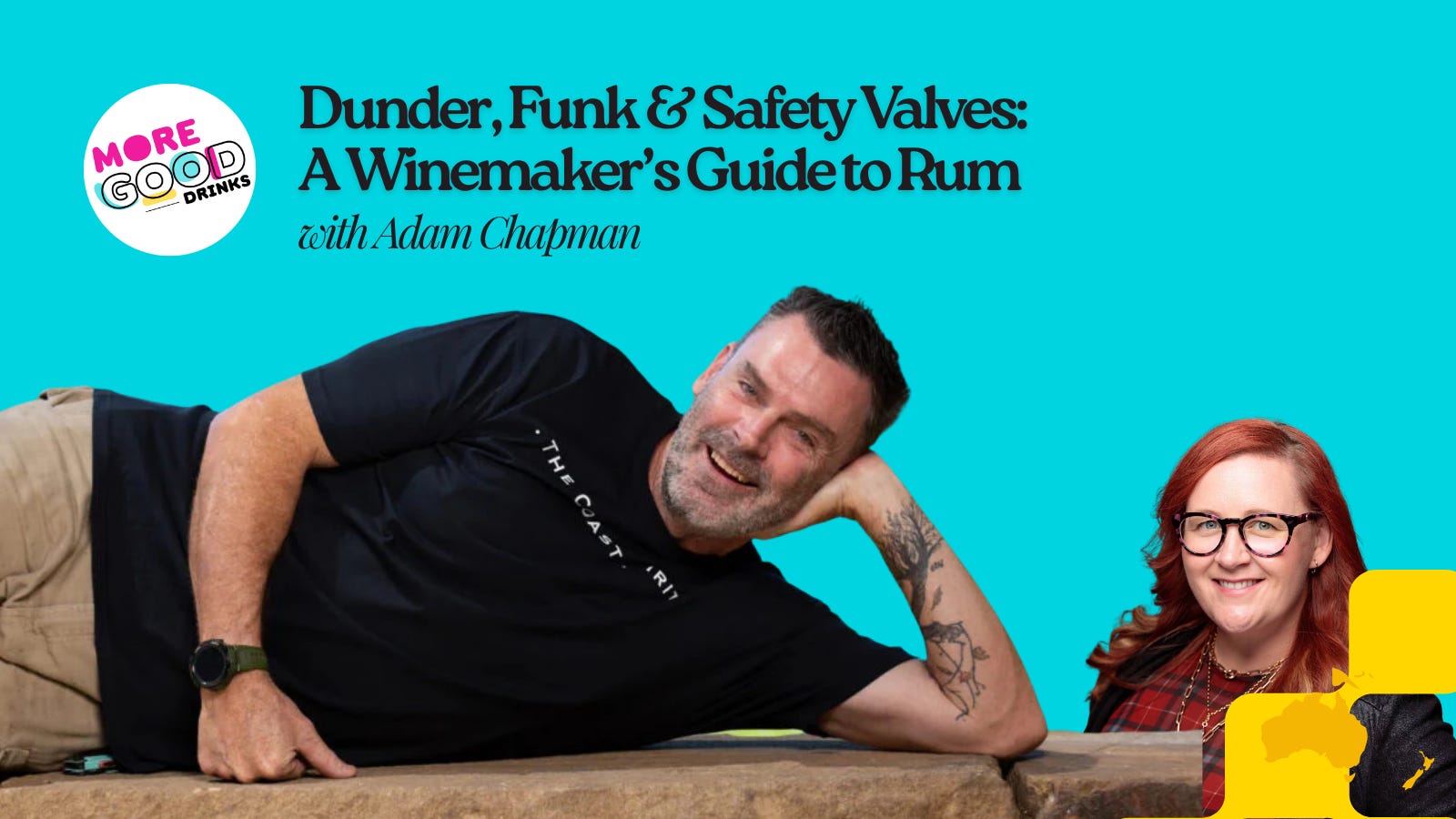 Dunder, Funk & Safety Valves: A Guide to Rum with Adam Chapman | Adam Chapman of Sunshine & Sons in Australia, joins the More Good Drinks Podcast to dive into his unique approach to rum distillation, safety, and education. With over 30 years in winemaking and a passion for teaching, Adam shares profound insights into spirit craftsmanship, sensory evaluation, and industry challenges.Why Adam? Well - he has a unique ability to call a spade a spade, and an unerring drive for accuracy and understanding. There’s plenty here to examine by way of inspiration, attention to craft and just a good bloke having a bloody good time and trying to stay alive doing it.He’s not afraid to call out what craft distillers could be doing better and to share his rich knowledge. So listen in, you’ll benefit.In this episode:* The transition from winemaking to rum distillation driven by climate change and a passion for spirits* How wild fermentation and organic molasses create a full-bodied, muscular rum profile* The importance of texture, mouthfeel, and structure in spirit evaluation and how Adam measures these aspects* An overview of his innovative tasting scale from 1 to 5 across various characteristics* His approach to blending, maturation, and experimenting with fermentation processes to develop signature styles* The critical role of safety equipment, including pressure relief valves, in small-scale distilling* Emphasizing industry safety, compliance, and the importance of education in spirits production* Adam’s perspective on Australian rum’s potential and the influence of terroir* The value of sensory education, understanding compounds, and how to communicate complexity to consumers* Insights into his ongoing training contributions and plans to influence the industry positively* The significance of respecting cultural traditions like Baiou and indigenous ingredients in spirit innovationTimestamps:00:00 - Introduction: Rum innovation and Adam’s background02:00 - Transition from winemaking to rum distillation05:15 - Wild fermentation and organic molasses as signature elements08:30 - Texture, structure, and sensory evaluation in spirits12:45 - The unique tasting scale and scoring process16:10 - Maturation styles and blending strategies20:20 - Safety practices: pressure relief and distillation equipment24:00 - Industry challenges and safety standards28:30 - Australian rum: terroir and style evolution33:20 - Cultural influences: Baiou and indigenous ingredients39:00 - Education: training, sensory analysis, and industry standards43:30 - Future trends and innovation in spirits48:00 - Final thoughts and Adam’s passion for safety and education Get full access to More Good Drinks at www.moregooddrinks.com/subscribe | 1h 02m 34s | ||||||
| 6/5/26 |  Stop the Copy & Paste, For True Innovation in Drinks | Rethinking Innovation and Authenticity in the Drinks Industry with Mikey BallDive into a compelling conversation with Mikey Ball, a product development expert at Woodward Street Distillery, as we explore what genuine innovation really means in the drinks industry. Discover how ancient techniques, authenticity, and storytelling shape truly original products, and learn practical insights on navigating the balance between tradition and modernity.In this episode:The difference between copying techniques and building original flavoursHow ancient traditions inform innovative product developmentThe importance of deep foundational knowledge and contextRecognising the role of storytelling and narrative in product positioningExamples of misleading terms such as "ultrasonic distillation"Authenticity as a marker of genuine innovationPractical approaches for elevating industry standards and consumer experiencesThe parallels between product creation behind the bar and in distilleriesHow to embed culture, technique, and authenticity into branding and packagingInsights into navigating market demands and consumer perceptionsFuture-focused topics: water sourcing, mineral analysis, and regional identityTimestamps:00:00 - Opening thoughts on what constitutes true innovation in drinks02:26 - Mikey shares insights on building flavor through ancient techniques03:35 - Deep dive into question everything approach in product development05:03 - The pitfalls of superficial innovation and copycat culture07:12 - Clarifying misleading terminology like ultrasonic distillation09:12 - Authenticity versus superficial branding in industry claims11:19 - The importance of understanding ingredients and processes13:23 - The thin line between inspiration, learning, and recipe copying16:35 - The ongoing nature of product refinement and consistency challenges18:03 - Connecting product stories with consumer perceptions20:04 - The importance of visual branding and market positioning22:20 - Embracing continuous learning and innovation as a mindset24:37 - The influence of tradition, culture, and regional identity27:03 - The story behind Chi Chi Vodka and its approach to authenticity30:36 - Navigating market demands and product differentiation32:17 - The role of narrative in brand building and consumer connection34:27 - How storytelling enhances product experience in hospitality37:42 - The power of simplicity and core technique in a saturated market40:49 - Envisioning a future where hospitality deeply values understanding45:11 - Upcoming workshops on carbonation, liquids, and innovation tools48:02 - Exploring water sourcing and mineral profiles in New ZealandResources & Links:Woodward Street DistilleryChi Chi VodkaConnect with Mikey Ball:mikey@woodward-distillery.com Get full access to More Good Drinks at www.moregooddrinks.com/subscribe | 43m 40s | ||||||
| 5/29/26 |  Building Community, Advocating for Change & Embracing Balance in Hospitality | Join me as Alice Newport, ambassador for James B. Beam Distilling and advocate for community and education within the spirits industry, shares her insights on evolving advocacy roles, building authentic communities, and balancing health with a demanding travel schedule.In this episode:* Evolution of advocacy and community engagement in the spirits industry over the past decade* The importance of authentic, safe spaces for bartenders and trade and how to foster them* The significance of education — from upskilling trade to empowering consumers* Navigating the misconceptions around whiskey and diversity in the industry* Addressing mental health, safety, and industry shifts towards healthier habits* How societal changes influence drinking culture and social interactions* Alice’s travel routines and personal rituals for grounding and recharge* The future of hospitality: creating meaningful connections and communityThis episode highlights the importance of authentic connection, ongoing advocacy, and the delicate balance between professional passion and personal well-being in the vibrant, demanding world of hospitality. Get full access to More Good Drinks at www.moregooddrinks.com/subscribe | 48m 25s | ||||||
| 5/22/26 |  Auckland Cocktail Week Is On The Way | It’s time to lock in some key dates for cocktail lovers and spirits producers alike. But first the big news: lots of award wins in for NZ distillers like Clarity, Awildian, Roots, Sandymount, Cardrona and Pōkeno… but right at a time when the fragile homegrown distilling industry is in more flux than ever before. Tune in to celebrate our smash hit Kiwi success stories before the NZ awards season kicks off and learn all about Auckland Cocktail Week, coming up June 22 - 28th. There’s plenty to be optimistic about for those of us who love celebrating the best of the industry. Get full access to More Good Drinks at www.moregooddrinks.com/subscribe | 20m 08s | ||||||
Want analysis for the episodes below?Free for Pro Submit a request, we'll have your selected episodes analyzed within an hour. Free, at no cost to you, for Pro users. | |||||||||
| 5/14/26 |  Starting As You Mean To Go On - An Ardnamurchan Whisky Tale | Twelve years in the middle of nowhere: Ardnamurchan Distillery sits on the farthest West Coast of Scotland, where everything has to be thought through with exacting detail.Connal Mackenzie has been Sales Director at Ardnamurchan and Adelphi for eight years. He was in the warehouse the fortnight they didn’t see daylight, picking the casks that became the inaugural single malt. He came through Christchurch last week, back to the country his daughter holds a passport in, back to Whisky Galore where he used to work before he went home to Scotland. We sat down at the Howff to talk about adventures in whisky. Ardnamurchan is four hours from Edinburgh. Four hours from Glasgow, four hours from Inverness. “Ardnamurchan is four hours from Ardnamurchan,” Connal says, because anyone who’s driven the single-track road out to the peninsula understands what exactly what the geography means and costs. But it also gives back in delightful ways. Lorries come and go on roads really better suited for sheep. Power, when it goes, doesn’t come back quickly. What the geography gives back is the freedom to start the way you intend to continue. Ardnamurchan started distilling in 2014, released their inaugural single malt in 2020 (listen for more shared trauma). We talk about pricing and structures for understanding earning trust with whisky lovers. Twelve years in, the things they decided early are the things that now look prescient. Solar in the warehouse, hydroelectric off the river, a Swiss biomass boiler that cost 1.2 million pounds and is quietly delivering a cost-per-litre of alcohol that’s, in Connal’s words, “maybe quite sharp” compared to the rest of the field during an oil crisis. He isn’t boasting but you can’t help noting that the ROI on a sustainability decision made for the right reasons in 2013 looks different in 2026. A clipboard person told them last year they could go off-grid if they wanted to. For a site Ardnamurchan’s size, that’s an extraordinary achievement.The blending team is made up of four or five noses across different backgrounds: a single Master Blender can be a brand asset, a face and a consistency of vision, and that’s a real thing. It’s also a narrow filter on what gets into a bottle. The committee model is less heroic but it produces whisky that passes the compounding demands of groiup assessment, which is what you want when you’re trying to become someone’s third bottle on the shelf after their favourite Islay and their favourite Speyside. That’s Connal’s stated ambition for the brand. The reliable Highland coastal dram that needs replacing when it runs out.We talk about cask provenance in one of the most interesting cask programmes currently operating. Most distillery sales directors, asked about cask provenance, will give you the line. Connal gave the actual breakdown. Around 75 to 80 per cent of fills are ex-bourbon, mostly from Old Forester, direct relationship. Sherry casks come direct from Jerez, one of the best suppliers plus a small bodega, bought in Spain and not (and this is the aside that earns its keep) imported via France, which apparently is a thing some distilleries now do because the maths works out and the geography evidently doesn’t matter to them. Paul Lanois Champagne casks, fifteen to twenty-five barriques a year, bought direct from the family.Port, Madeira, Mizunara, Tokaji, Mezcal. They know the cooperages and the people moving the wood, as much as possible. But we’re also in a long, gentle inflection where transparency to that degree isn’t something we talked about as aggressively twenty years ago. This matters because the new-distillery marketing playbook of the last decade has been to lean very hard on provenance language while quietly running the same broker calls everyone else runs. Ardnamurchan saying “we have direct relationships on the casks where we have direct relationships, and we don’t pretend on the ones where we don’t” is a more useful kind of transparency.Cask costs, while we’re here. Bourbon barrels peaked at 250 US dollars last year and Connal calls that frightening, rightly. The relief, eight years in, is that Ardnamurchan is now reaping the second-fill, third-fill, sometimes fourth-fill yields off the casks they bought in the early years. The 2020 balloon, and what it cost the industry to mistake it for growthIf there’s a single argument worth carrying out of the conversation, this is it. Connal and the Adelphi team were in Christchurch for Dramfest in March 2020, then crossed to Australia. Cancelled cricket games, a phone call from the chairman, last flight out via Dubai, house-bound for two and a half months. Standard 2020.What happened next is what matters. Furlough money, locked-down consumers, bored, cashed-up. Every new release sold out instantly, anything new an instant seller, anything new an instant seller. The entire industry read those numbers as a category in ascent. It wasn’t. It was a balloon.The reasonable thing, and Connal’s word here is “potentially”, would have been to base next year’s gross-profit forecast on 2019, not on the spike. Plenty of brands didn’t. Plenty built capacity, built inventory, built marketing budgets and crowdfunding rounds against numbers that were never going to repeat. Then Brexit landed for the UK side. Then two wars affected barley pricing and freight. Then UK duty went up twice. Sure, the calculation shifts at different volumes and price points, and global premium-spirit demand isn’t dead. But for a lot of mid-range single malt brands trading on that 2020-21 hockey stick, the curve they’re now trying to explain to a board is the curve of a normal year against an abnormal comparable. That’s a different conversation than a downturn, it’s a correction.Ardnamurchan kept production flat. Same volume they made three years ago, same volume they made last year. The bet is that there’s a stock lull eight to ten years out and the boring decision to keep distilling through the wobble pays off then. Whether that’s right is unknowable. What’s defensible is that the call was made on what was actually happening in 2020, not on what the spreadsheet wanted to be true.Price discipline, in a category that’s lost its head about priceForty-five pounds in 2020. Two and a half UK duty increases later, still under fifty quid. Ninety-nine dollars on the shelf at Whisky Galore. No relabelling, no relaunching, no “now with extra story” repricing.For a category that has spent five years aggressively premium-positioning everything in sight, including a lot of nine-year-old single cask releases priced like they’re surely crafted from solid gold, Ardnamurchan’s pricing discipline is … disciplined. The proposition is liquid to dollar. The bet is that a drinker who buys the bottle at a reasonable price three times comes back for the cask-strength, comes back for the Tokaji release, comes back for the Mezcal cask when it lands. Loyalty is built on the second purchase, not the first.Most of the loud premium-launch playbook of the last few years has been built on the opposite assumption. Extract margin on the first bottle because there might not be a second. The honest answer is what Ardnamurchan has done, which is run the core range honestly and let the limited releases (quarterly, 8,500 bottles across 48 markets, gone fast) do the storytelling.What he’s drinkingArdnamurchan Cask Strength, when he reaches for his own stuff. The new Tokaji, which has “real funkiness to it” and lands here in the next couple of months. And outside whisky, because anyone who works whisky knows you don’t always pour whisky on a Friday, a Negroni with Old Raj Navy Strength gin from Cadenhead’s at 55.4 per cent, because if you’re making a Negroni you may as well really make one.Listen to the whole chat for a solid dose of whisky business, banter and Scottish brogue. Get full access to More Good Drinks at www.moregooddrinks.com/subscribe | 33m 23s | ||||||
| 5/8/26 |  Woven Whisky Meets The Moment | Nick Ravenhall doesn’t think he’s a New Zealand whisky maker. He’ll tell you that himself, in the same breath he uses to name-check Mat or Rach Thomson, Mark and Ro on Waiheke, and a list of others he’s careful not to leave out. But he is one of three ‘washed-up bartenders’ collecting awards and redefining the playing field in New World whisky.Woven Whisky landed back in New Zealand last month — second time around, but this in 700ml bottles. We sat down at the tail end of his trip home to talk about what’s actually happening underneath the hood and making blended whisky such an exciting place to make whisky right now: the structural argument that makes blending — proper, contemporary, world-spanning blending — the format that meets the moment the industry is in.Because whisky is genuinely strange right now.“There was an upswing in the purchasing of bottles,” Ravenhall says of the bubble, “but I don’t think there was the upswing in consumption to keep consuming all the extra bottles that people were buying.”Somewhere around 2012, Scotch — and then much of new world whisky riding the same wave — started being a thing you bought, collected and talked avbout more than you drank it. Cask releases stacked on cask releases. Small batches stacked on small batches. New releases every month, each one as collectable as the last. China running hot on Western premiumisation. Then COVID struck, where everyone went home and bought the bottles they’d been meaning to try, just to pass the time.And the whisky makers, beholden to forecasts built on all of that purchasing, kept making.What no one had clean data on was whether any of it was being drunk. Sales reports showed movement. You know I talk about this a lot. Depletion reports — the actual re-orders, the rotation through retail, the second and third bottle bought by the same household — were a different story. “All you have to do is see a new release and just scroll down the commentary,” Ravenhall says, on where customers landed. “They’re like, not another blah, blah, blah, blah.”The current correction isn’t really a whisky problem but there’s definitely a trust problem with whisky pricing among enthusiasts. Value for dollar dram videos flood YouTube. Customers haven’t stopped drinking. They haven’t even stopped seeking out the unicorn bottles, but the promise on the label has to land in the glass.Which is where Woven, offers an incredibly well-timed offer to the market.“As a blender,” Ravenhall says, “we have the extreme privilege of not being distillers.”A distiller wanting to try something has to make it, fill a cask, and wait three years minimum, six or seven before the liquid does what they hoped. A blender can buy something today and put it in a glass tomorrow. No three-year capital lockup on every experiment and no forecast built on whisky futures, in a world where value continually goes up. What that unlocks, when you do it well, is a flavour proposition no single distillery can offer. Pure Malt, the blend Ravenhall and I tasted through, takes a Sherry-led Speyside heart and layers it with single malts from Starward in Australia, Kavalan in Taiwan, Paul John in India.“If you as a customer wanted to experience those three other things, you’re going to be buying three other bottles at north of $100. Are you going to do that? Not ever.”For a while now, blends got left on the bottom shelf at the UK’s Tesco for £18, while every distiller and their distributor chased the cask-strength single malt premium. The category that is actually solved a price-and-discovery problem for the modern customer was the category nobody was really paying attention to.Woven came into being in the gap.Sure, three washed-up bartenders — Nick’s words, not mine — turning up to blend at the level Scotch holds blenders to is a high bar. The first couple of years, he says, were just figuring out whether it could work at all. The next couple were realising they had to change how it worked. They’re five years in. Operationally, they now know how to land a price point on the shelf the customer is happy to pay, and then they over-deliver on experience. They’ve moved from single blended expressions to stamping their confidence and hard-won customer trust into a core range.“It’s just a f*****g simple equation,” Ravenhall says. “Respect your customer. Put a price on the shelf they’re happy to pay. Make sure you keep your whisky promise. Make something that surprises and delights them.”Ravenhall is candid that the rules-and-regulations approach Scotch has used to police itself for two centuries — the SWA, the sensory panels, the Appellation discipline — has almost nothing to teach New World whisky makers. He’d know. He was running Holyrood when SWA put a Rauchmalt-distilled spirit through a blind sensory panel to determine whether birch-smoked malt could legitimately be called single malt. (It could, in the end.) But that machinery exists to protect a 200-year-old category from itself. Trying to retrofit it onto Australasian or Nordic or Taiwanese whisky-making is not going to help. “Stop trying to make rules and regulations to gather in your whisky-making,” he says. “We’re all too early in the process.”The implication is bold, but is worth some consideration. New World makers who treat Scotch as the template — the rules, the price ladder, the cask-release cadence, the founder-as-hero marketing — are competing on Scotch’s terms in a market Scotch already owns the high ground in. The interesting move is to do the things Scotch doesn’t do.Blend across borders. Build a flavour proposition that isn’t tied to a single still. Tell the customer what they’re actually getting. Charge them what it’s worth. Land on the shelf at a price that lets them say yes.Whether the rest of the category catches up to that argument is a different conversation. Some of it will. Some of it won’t survive long enough to.The full conversation with Nick Ravenhall — including how a job at Cragganmore turned into Holyrood turned into Woven, why he passed his business card across the desk at Blair Athol like a crazed antipodean fanboy, and what it feels like to ship whisky home and watch your mum run out of it — is on the More Good Drinks podcast now. Get full access to More Good Drinks at www.moregooddrinks.com/subscribe | 55m 03s | ||||||
| 11/18/24 | 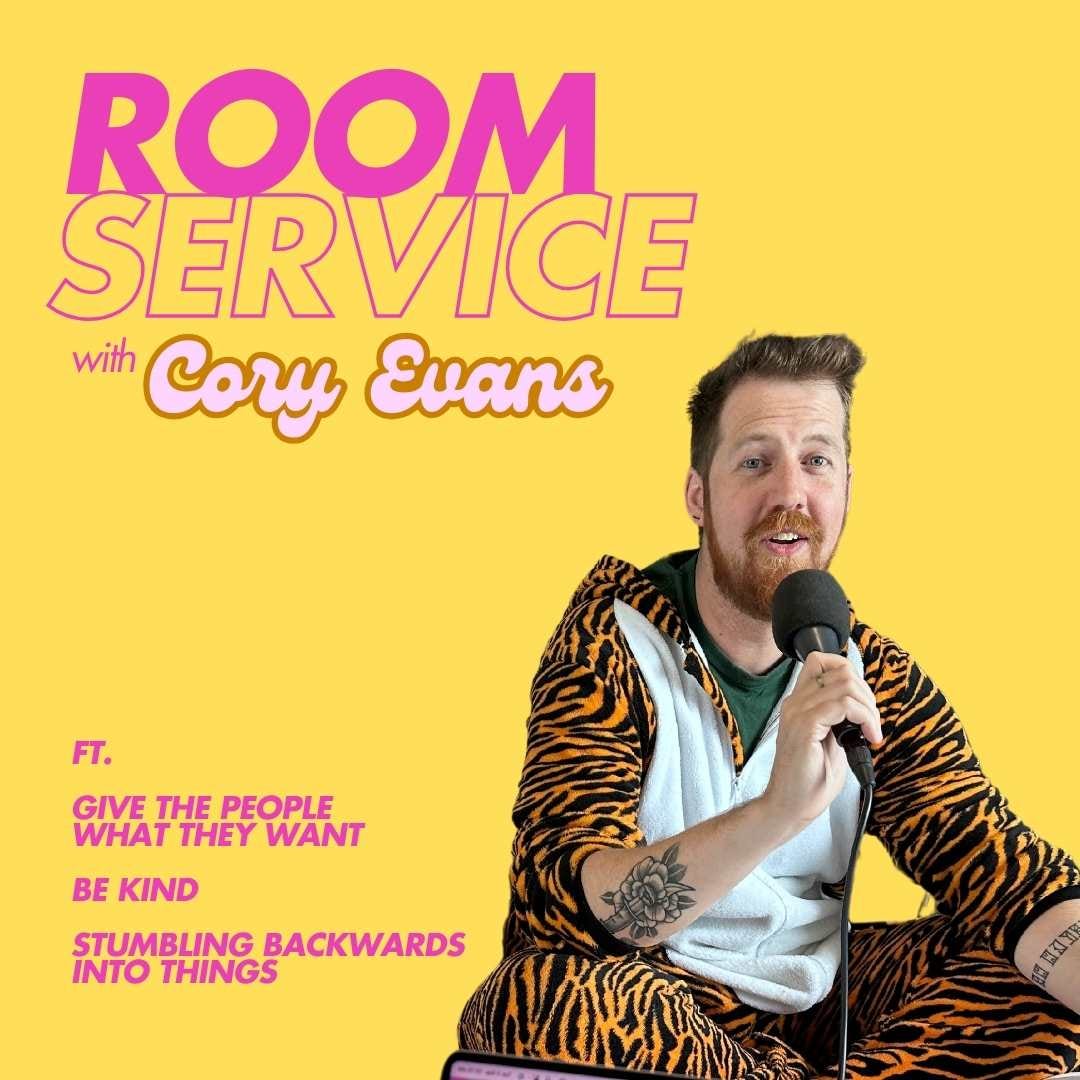 Room Service with Cory Evans | Cory Evans is a really nice guy. Or he might just be Canadian. I invited Cory to get tiger-onesie comfy so we could unpack a few layers about what one of the stalwarts of New Regent St is like off shift and outside the bar. We learn about the trade he took up when he thought he was done with hospo, why he came and what he loves about Christchurch hospitality specifically. Along the way, maybe Cory finds out he has changed a little bit in the five years he’s been in the 03 and calling NZ home and personally, I think it’s a refreshing kind of wisdom to process ego alongside self-deprecating humour and generally bringing the golden retriever energy to people around him. But decide for yourself and let me know if you’re up for a dose of room service. Get full access to More Good Drinks at www.moregooddrinks.com/subscribe | 46m 26s | ||||||
| 11/11/24 | 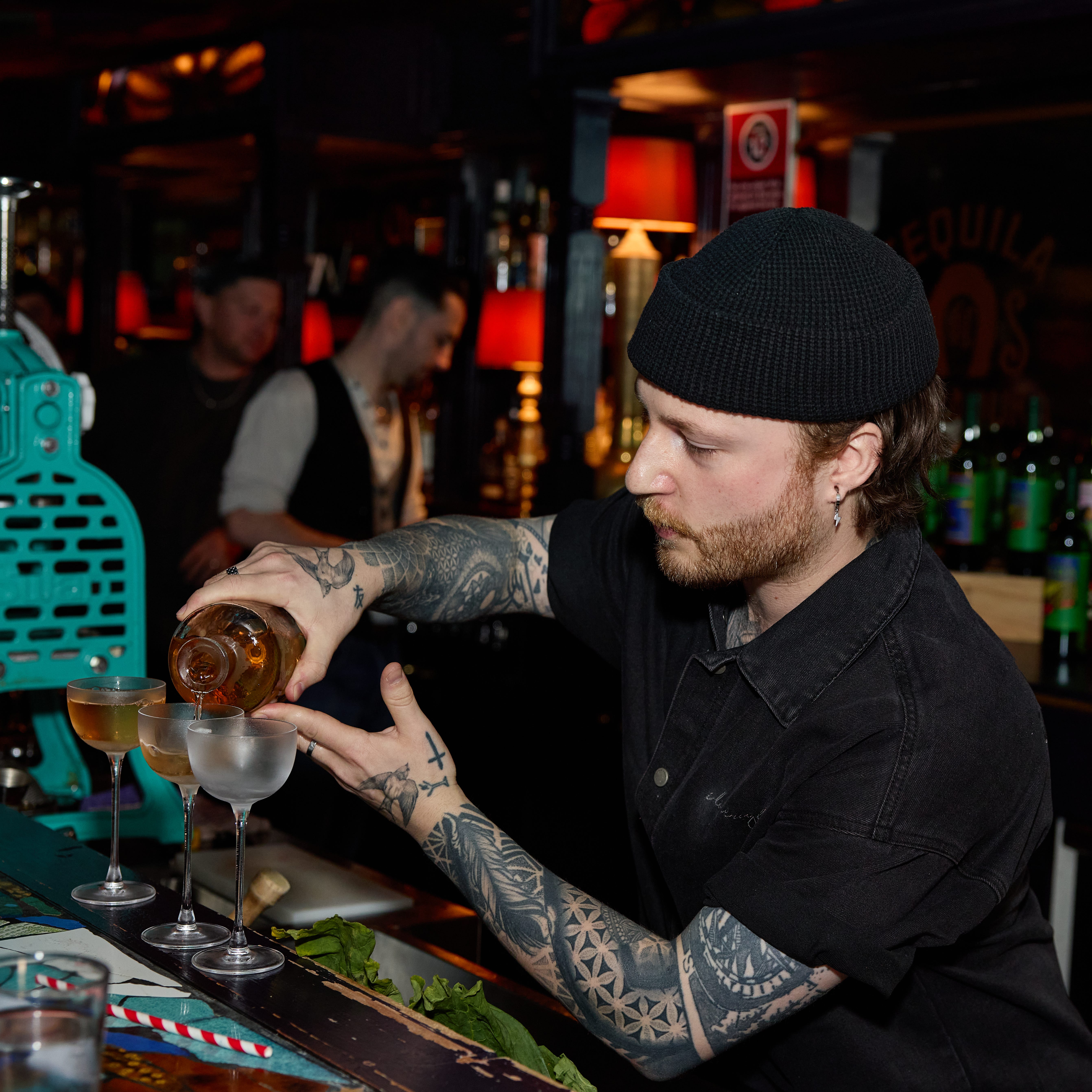 Cal Ross is On The Couch | Have you sat beside Cal Ross on the couch at Panacea? This time we turn the tables and get cosy unpacking the tension, struggle, triumph and the bonds as tight as family and tighter that accompanied every step of his journey to success this year. From defeat and nearly giving up to now being a double champion of Del Maguey and Scapegrace Uncharted - you won’t help but fall a little bit in love with the heart and soul of Cal Ross. You may even learn a little about the battle with ego, self-reflection and feedback to become better than ever and tightly bound to those who journey with you along the way. Get full access to More Good Drinks at www.moregooddrinks.com/subscribe | 37m 47s | ||||||
| 7/17/24 | 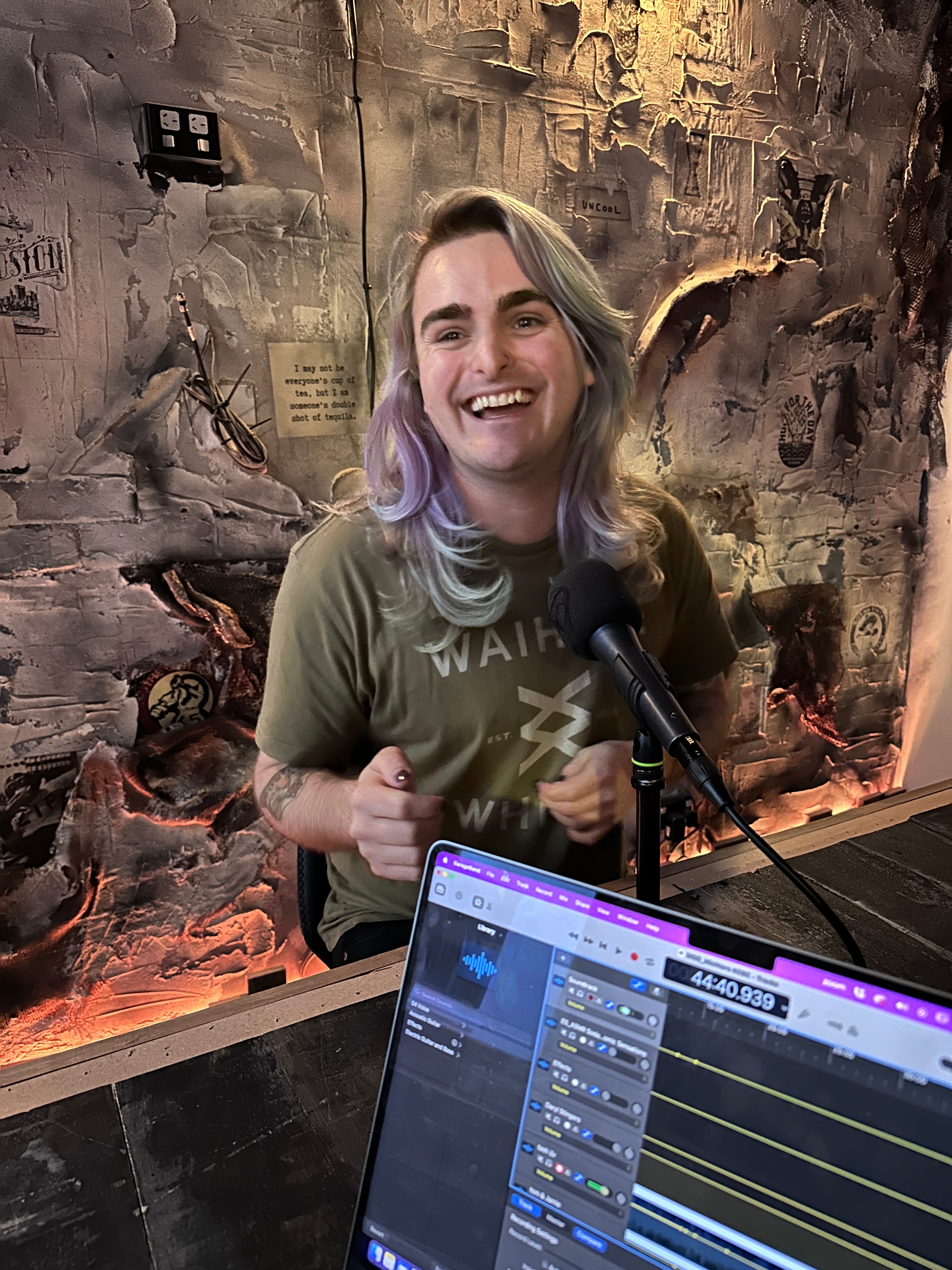 The 1 Point Club: Learning to Lose with PJ Renaud | Want to know what’s like to get an email saying - well done, you came 51st in the world but it wasn’t quite enough? PJ opens up about a recent cocktail competition experience and we break down the lessons we’ve both learned about losing well. The TLDR: Meet the brief, champion the spirit, compete together not against each other and .. the power of the Edit. I hope you’ll love this chat and feel inspired to share your own lessons with the More Good Drinks community. Get full access to More Good Drinks at www.moregooddrinks.com/subscribe | 42m 08s | ||||||
| 7/16/24 |  Building Community at NZBarCon w/ Stephen Burke | We all want more community and connection in our hospo industry but it’s not easy to know how and where to begin. Appleton Estate have come to the party, bringing together some leading doers of community to showcase what’s been working and to get honest and vulnerable about building a supportive community with or without a drink in hand. Plus, we tease a little Aperol Spritz Karaoke, an event designed to bring nothing but joy to your face, if not your ears. Get full access to More Good Drinks at www.moregooddrinks.com/subscribe | 28m 38s | ||||||
| 7/5/24 |  Backyard Sessions w/ James Millar & Evan Hales | Big energy and big smiles as we talk about the big parties Pernod are hosting at NZBarCon - with one big takeaway… New Zealand hospitality has great stories to tell on a global stage… and we’re on our way there. In this episode you’ll hear a big shout out to Kismet, where James recently had a great time at the Winter Whisky Festival, Evan’s tales of learning the art of the Kiwi barbeque, another Kiwi off to the Global Top 10 for the Jameson Black Barrel comp and where you can find massages, brekky and coffee after a huge weekend at NZBarCon. Not to mention - bartenders have three days to get their Del Maguey entries in. Get full access to More Good Drinks at www.moregooddrinks.com/subscribe | 24m 25s | ||||||
| 7/1/24 |  Michter's X Tickety-Boo: The Art of Hospitality | We chat with Tom Price of Michter's, alongside Jamie Dickens of Tickety-Boo Liquor about their upcoming events at NZBarCon and the broader benefits of connecting with community.Plus, it’s Excise Day so be nice to the people who pay the bills. We do celebrate an increase in the newly renamed Pae Ora Agency levy - that’s the tax that actually goes to alcohol harm prevention. Be sure to throw your questions, topics you’d like to see covered and guests at us too. tash@solafida.co.nz Get full access to More Good Drinks at www.moregooddrinks.com/subscribe | 17m 32s | ||||||
| 6/27/24 |  Mikey Ball: An Odyssey of Flavour & Education at NZBarCon | Mikey Ball covers the taster of Scapegrace’s FlavourLab 2.0 that will be on offer at NZBarCon - an education spotlight that will be limited seats but free to attend. Mikey will walk you through the process of deliberate drinks - from story to process and prep through to delivery. You won’t want to miss this - especially if menu development and drink development is your interest. He’s also delivering a ton of lessons in carbonation - call it the Fizzness! And more puns will be on offer I’m sure. Plus we cover the details of Scapegrace Uncharted - a 48hr deadline to get those flavour & locality driven entries in. And NZBarCon is giving away 3 prize packs of flights to Auckland with a prezzy card to help accom. It’s lal on. Get full access to More Good Drinks at www.moregooddrinks.com/subscribe | 20m 05s | ||||||
| 6/24/24 | 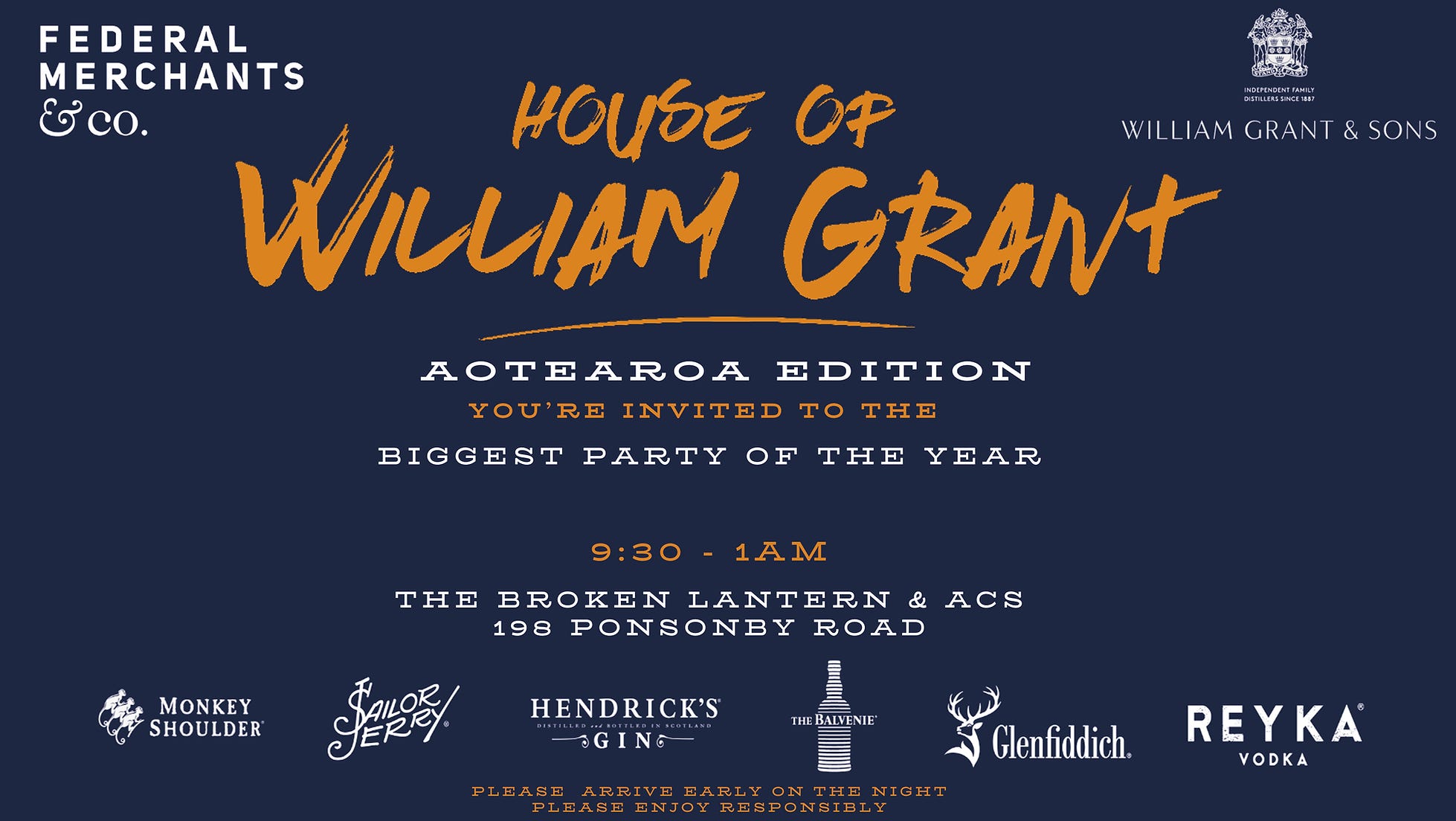 The House of William Grant: Disco balls, barley and good times beckon at NZBarCon | With NZBarCon just around the corner, Tash sat down with Drew Down, William Grant & Sons ambassador in the NZ market to talk about all things House of William Grant party on the 5th of August, the importance of fun, community, brand love and immersion experience. Get full access to More Good Drinks at www.moregooddrinks.com/subscribe | 14m 32s | ||||||
| 5/16/24 | 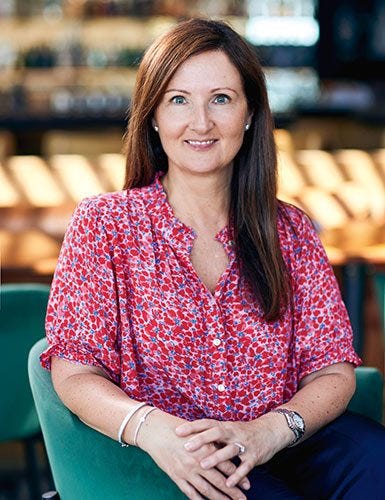 Jane Torrance - Unlocking the Power of PR | Jane is one of the most effective hospitality PR specialists in the marketplace, as well as being warm, generous and genuinely invested in seeing her clients get great results. She’s also been named one of the Top 50 Women in Food & Drink.Listen in for* when and how to engage effectively with PR* understanding a good brief and when not to act in a cluttered market* what PR can help you with and what it can’t Get full access to More Good Drinks at www.moregooddrinks.com/subscribe | 52m 56s | ||||||
| 5/16/24 | 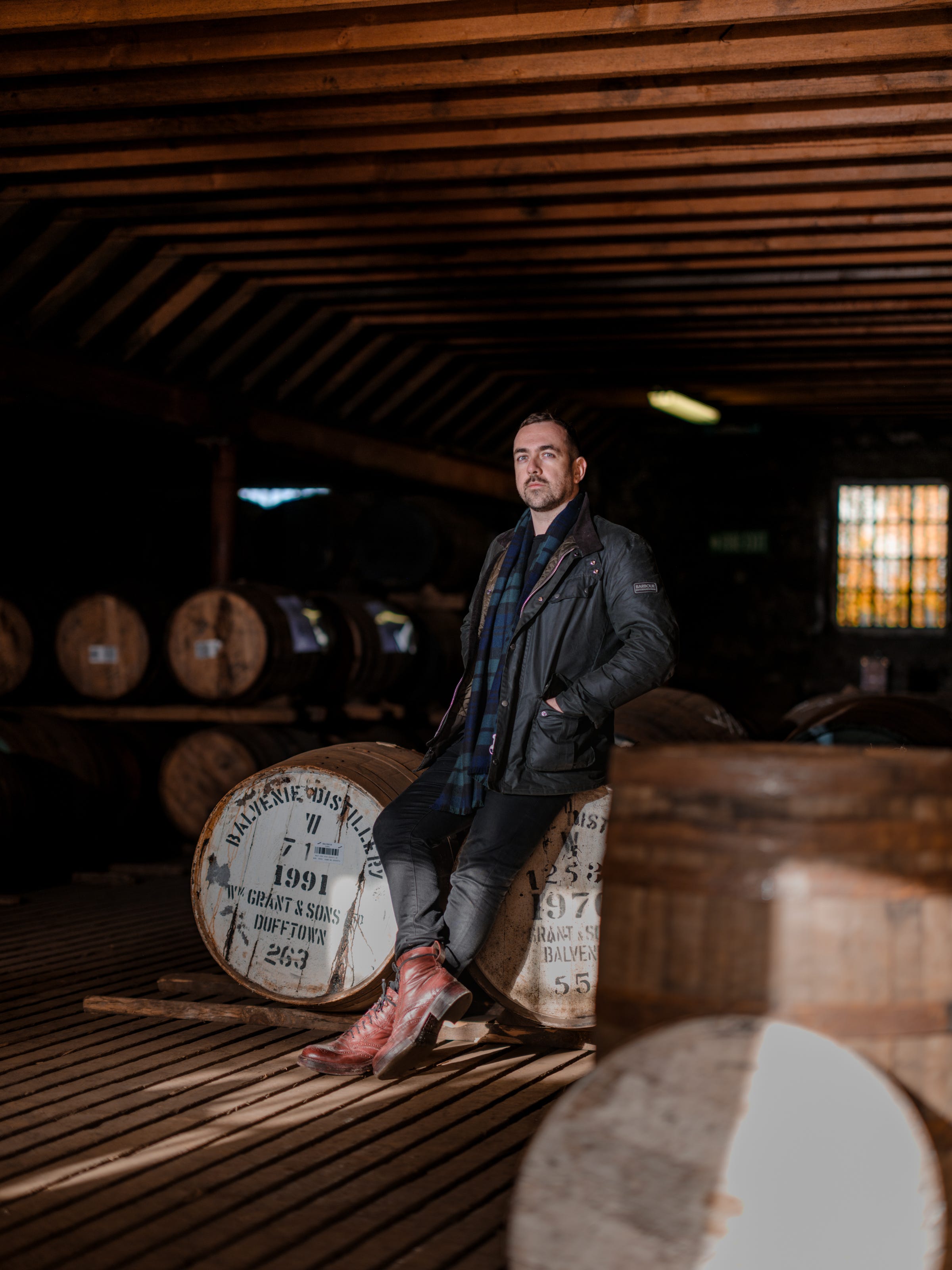 Ross Blainey - The Art of Creative Collaborations | There’s nothing I love more than a rich conversation spanning a range of inspirations and inputs - which is exactly what Ross Blainey brought to our deep dive into what it takes to make a creative collaboration work for both brands and their creative partners. Listen in for:* the process of connecting and supporting brand partners* identifying how to make collaborations win for both parties* keeping your inspiration and creative source high Get full access to More Good Drinks at www.moregooddrinks.com/subscribe | 1h 02m 04s | ||||||
| 11/14/23 | 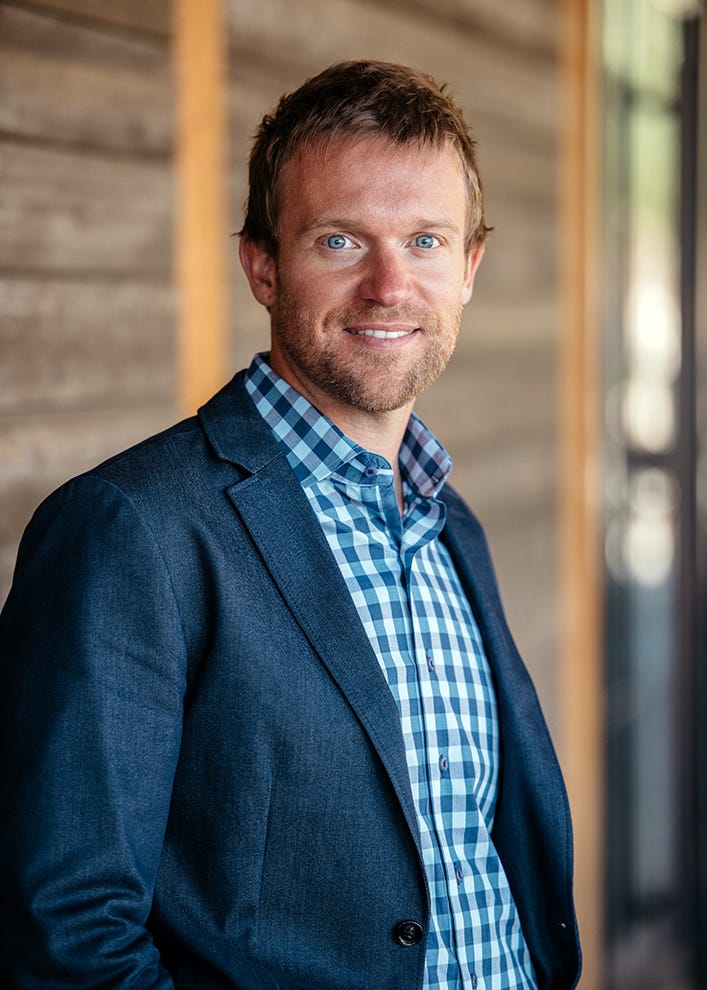 Brendan Coyle, High West Distillery | A deep dive into all things American whiskey with Brendan Coyle, master distiller at High West Distillery out of Park City, Utah. We talk about all things High West to celebrate the NZ launch. Explore the High West blending programme, challenges facing the industry and what innovation in the heritage category of American whiskey might look like. Get full access to More Good Drinks at www.moregooddrinks.com/subscribe | 43m 47s | ||||||
Showing 23 of 23
Pitch Fit is a Pro feature
See how bookable this show is for guests, which brands already advertise, the per-episode ad value, and the best-fit guest and sponsor profile. The numbers are blurred on the free plan.
How readily this show books outside guests like you.
How proven this show is for host-read sponsorships.
For Guests
ProFor Advertisers
ProUpgrade to Pro to unlock guest cadence, sponsor categories, fit scores, and per-episode ad value for this show.
Chart Positions
1 placement across 1 market.
Chart Positions
1 placement across 1 market.