

Insights from recent episode analysis
Audience Interest
Podcast Focus
Publishing Consistency
Platform Reach
Insights are generated by CastFox AI using publicly available data, episode content, and proprietary models.
Most discussed topics
Brands & references
Total monthly reach
Estimated from 6 chart positions in 6 markets.
By chart position
- 🇺🇸US · History#1895K to 30K
- 🇰🇷KR · History#14100K to 300K
- 🇮🇳IN · History#1201K to 10K
- 🇹🇭TH · History#3210K to 30K
- 🇮🇱IL · History#4210K to 30K
- Per-Episode Audience
Est. listeners per new episode within ~30 days
63K to 202K🎙 Weekly cadence·49 episodes·Last published 7mo ago - Monthly Reach
Unique listeners across all episodes (30 days)
127K to 403K🇰🇷74%🇺🇸7%🇹🇭7%+3 more - Active Followers
Loyal subscribers who consistently listen
38K to 121K
Market Insights
Platform Distribution
Reach across major podcast platforms, updated hourly
Total Followers
—
Total Plays
—
Total Reviews
—
* Data sourced directly from platform APIs and aggregated hourly across all major podcast directories.
On the show
From 10 epsHosts
Not detected.
Recent guests
Recent episodes
The Harvard Plan
Nov 18, 2025
47m 01s
No More Souters - Revisited
May 9, 2025
49m 07s
Andy Warhol and the Art of Judging Art
Aug 3, 2023
41m 12s
The Original Anti-Vaxxer
Jul 27, 2023
40m 57s
Not Even Past: Dred Scott Reprise
Jul 20, 2023
35m 24s
Social Links & Contact
Official channels & resources
Official Website
Login
RSS Feed
Login
| Date | Episode | Topics | Guests | Brands | Places | Keywords | Sponsor | Length | |
|---|---|---|---|---|---|---|---|---|---|
| 11/18/25 | 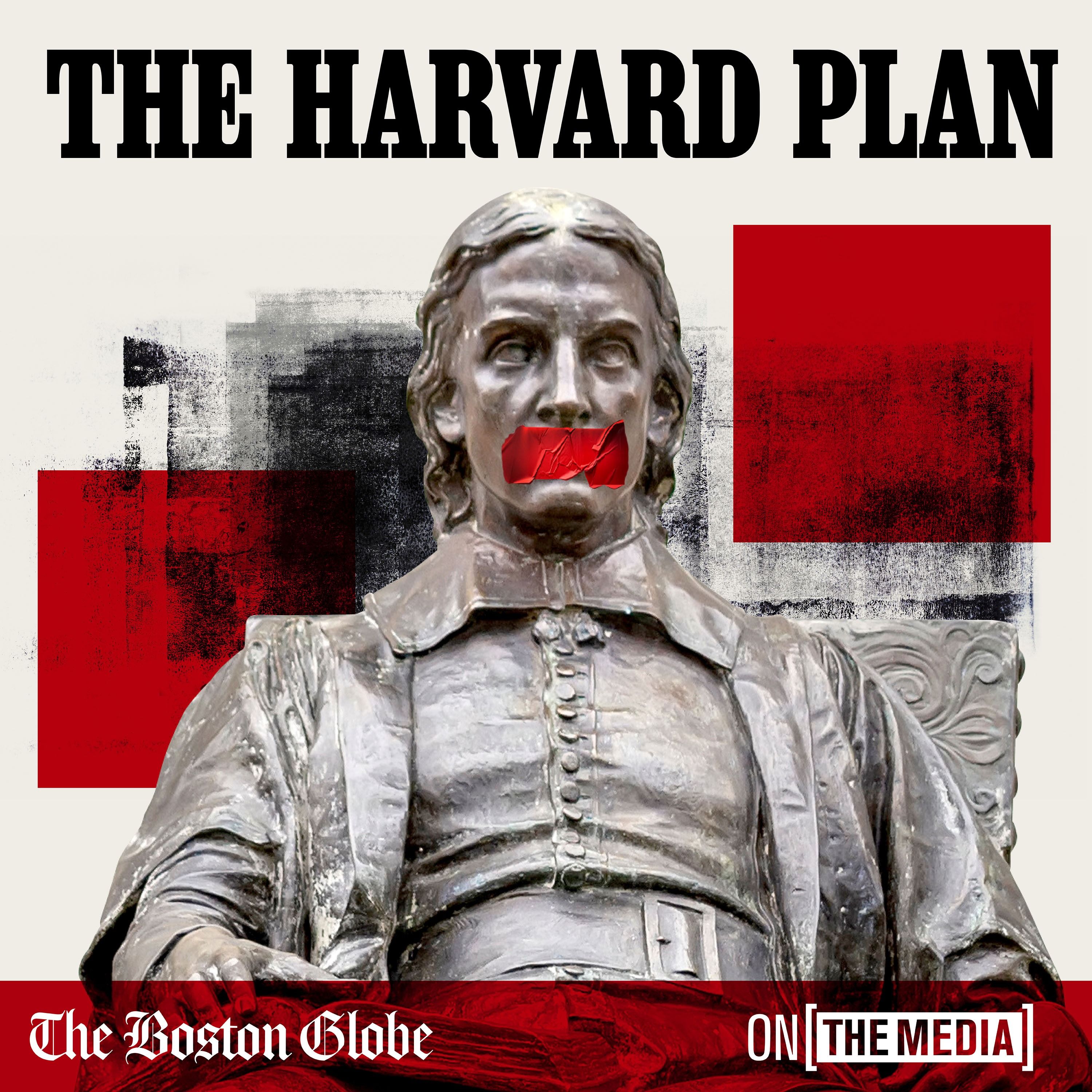 The Harvard Plan✨ | Trump administrationAmerican universities+3 | Ilya Marritz | The Harvard PlanThe Boston Globe+3 | — | Harvard PlanBoston Globe+2 | — | 47m 01s | |
| 5/9/25 | No More Souters - Revisited✨ | Supreme CourtJustice David Souter+2 | — | the Supreme CourtCourt+1 | — | No More Soutersrallying cry+2 | — | 49m 07s | |
| 8/3/23 | Andy Warhol and the Art of Judging Art✨ | artlaw+3 | Andy WarholDavid Hobbs+4 | Andy Warhol Foundationthe Andy Warhol Foundation+18 | New York | copyright lawart criticism+2 | — | 41m 12s | |
| 7/27/23 | The Original Anti-Vaxxer✨ | vaccinationSupreme Court+2 | Michael WillrichWendy Parmet+1 | Pox: An American HistoryConstitutional Contagion: COVID, the Courts, and Public Health+31 | CambridgeMassachusetts+1 | Henning Jacobsonsmallpox vaccine+3 | — | 40m 57s | |
| 7/20/23 | Not Even Past: Dred Scott Reprise✨ | Dred ScottSupreme Court+3 | Lynne JacksonDred Scott Madison+3 | A Man of His TimeSupreme Court+13 | Missouri | Dred Scott Heritage FoundationRoger Brooke Taney+2 | — | 35m 24s | |
| 7/13/23 | No More Souters✨ | Supreme CourtDavid Souter+3 | Ashley LopezAnna Sale+5 | Planned Parenthood v. CaseyLee v. Weisman+20 | New Hampshire | home run nomineepartisan expectations+2 | — | 48m 37s | |
| 6/29/23 | Off the Record, On the Stand✨ | journalismcourt testimony+3 | Micah LoewingerEarl Caldwell+2 | On the MediaOn the Media’s+15 | Maryland8th District | Supreme Courtmedia law+1 | — | 33m 23s | |
| 6/22/23 | Adoptive Couple v. Baby Girl Reprise✨ | Indian Child Welfare ActSupreme Court+3 | Allison HerreraMelanie Capobianco+8 | RadiolabRadiolab episode+18 | — | Haaland v. BrackeenBaby Veronica+3 | — | 46m 23s | |
| 6/15/23 | Part 2: If Not Viability, Then What?✨ | abortionlaw+2 | Mary J. BrowningGreer Donley+2 | the Supreme CourtThe Justice Foundation+9 | America | Roe v. WadeDobbs v. Jackson Women's Health Organization+2 | — | 35m 24s | |
| 6/8/23 | Part 1: The Viability Line✨ | abortionlaw+3 | George FramptonKhiara Bridges+2 | Jackson Women’s Health OrganizationMore Perfect+10 | — | viabilityabortion rights+1 | — | 44m 37s | |
Want analysis for the episodes below?Free for Pro Submit a request, we'll have your selected episodes analyzed within an hour. Free, at no cost to you, for Pro users. | |||||||||
| 6/1/23 | The Political Thicket Reprise | This week, we revisit one of the most important Supreme Court cases you’ve probably never heard of: Baker v. Carr, a redistricting case from the 1960s, which challenged the justices to consider what might happen if they stepped into the world of electoral politics. It’s a case so stressful that it pushed one justice to a nervous breakdown, put another justice in the hospital, brought a boiling feud to a head, and changed the course of the Supreme Court — and the nation — forever. Voices in the episode include: • Tara Grove — More Perfect legal advisor, University of Texas at Austin law professor • Guy-Uriel Charles — Harvard Law School professor • Louis Michael Seidman — Georgetown Law School professor • Sam Issacharoff — NYU law school professor • Craig A. Smith — PennWest California humanities professor and Charles Whittaker's biographer • J. Douglas Smith — author of "On Democracy's Doorstep" • Alan Kohn — former Supreme Court clerk for Charles Whittaker (1957 term) • Kent Whittaker — Charles Whittaker's son • Kate Whittaker — Charles Whittaker's granddaughter Learn more: • 1962: Baker v. Carr • 2000: Bush v. Gore • 2016: Evenwel v. Abbott Music in this episode by Gyan Riley, Alex Overington, David Herman, Tobin Low and Jad Abumrad. Archival interviews with Justice William O. Douglas come from the Department of Rare Books and Special Collections at Princeton University Library. Special thanks to Jerry Goldman and to Whittaker's clerks: Heywood Davis, Jerry Libin and James Adler. Supreme Court archival audio comes from Oyez®, a free law project by Justia and the Legal Information Institute of Cornell Law School. Support for More Perfect is provided in part by The Smart Family Fund. Follow us on Instagram and Facebook @moreperfectpodcast, and Twitter @moreperfect. | — | ||||||
| 5/25/23 | The Court’s Reporters | Unlike other branches of government, the Supreme Court operates with almost no oversight. No cameras are allowed in the courtroom, no binding code of ethics, and records of their activities are incredibly hard to get. So how do reporters uncover the activities of the nine most powerful judges in the country? Live from the Logan Symposium on Investigative Reporting at UC Berkeley’s Graduate School of Journalism, host Julia Longoria talks to journalists behind bombshell investigations of the Court and its justices and how Clarence Thomas’ personal relationships intersect with his professional life. Voices in the episode include: • Jo Becker — New York Times reporter in the investigative unit • Justin Elliott — ProPublica reporter Learn more: • "The Long Crusade of Clarence and Ginni Thomas" by Danny Hakim and Jo Becker • "Clarence Thomas and the Billionaire" by Joshua Kaplan, Justin Elliott and Alex Mierjeski • "Billionaire Harlan Crow bought property from Clarence Thomas. The Justice didn’t disclose the deal" by by Justin Elliott, Joshua Kaplan and Alex Mierjeski Supreme Court archival audio comes from Oyez®, a free law project by Justia and the Legal Information Institute of Cornell Law School. Support for More Perfect is provided in part by The Smart Family Fund. Follow us on Instagram and Facebook @moreperfectpodcast, and Twitter @moreperfect. | — | ||||||
| 5/18/23 | Clarence X | To many Americans, Clarence Thomas makes no sense. For more than 30 years on the Court, he seems to have been on a mission — to take away rights that benefit Black people. As a young man, though, Thomas listened to records of Malcolm X speeches on a loop and strongly identified with the tenets of Black Nationalism. This week on More Perfect, we dig into his writings and lectures, talk to scholars and confidants, and explore his past, all in an attempt to answer: what does Clarence Thomas think Clarence Thomas is doing? Voices in the episode include: • Juan Williams — senior political analyst at Fox News • Corey Robin — professor of political science at Brooklyn College and the CUNY Graduate Center • Angela Onwuachi-Willig — Dean of Boston University School of Law • Stephen F. Smith — Notre Dame Law School professor Learn more: • 1993: Graham v. Collins • 1994: Holder v. Hall • 1999: Chicago v. Morales • 2003: Grutter v. Bollinger • 2022: Students for Fair Admissions v. President and Fellows of Harvard College • 2022: Students for Fair Admissions v. University of North Carolina • “The Enigma of Clarence Thomas” by Corey Robin • “Black Conservatives, Center Stage” by Juan Williams • “Just Another Brother on the SCT?: What Justice Clarence Thomas Teaches Us About the Influence of Racial Identity” by Angela Onwuachi-Willig • “Clarence X?: The Black Nationalist Behind Justice Thomas's Constitutionalism” by Stephen F. Smith • “My Grandfather’s Son” by Justice Clarence Thomas Supreme Court archival audio comes from Oyez®, a free law project by Justia and the Legal Information Institute of Cornell Law School. Support for More Perfect is provided in part by The Smart Family Fund. Follow us on Instagram and Facebook @moreperfectpodcast, and Twitter @moreperfect. | — | ||||||
| 5/11/23 | The Supreme Court v. Peyote | More than 30 years ago, a Native American man named Al Smith was fired for ingesting peyote at a religious ceremony. When his battle made it to the Supreme Court, the decision set off a thorny debate over when religious people get to sidestep the law — a debate we’re still having today. Voices in the episode include: • Garrett Epps — University of Oregon Law School professor • Ka’ila Farrell-Smith — Al Smith’s daughter, visual artist • Jane Farrell — Al Smith's widow, retired early childhood specialist • Galen Black — Al Smith’s former coworker • Steven C. Moore — senior staff attorney at the Native American Rights Fund • Craig J. Dorsay — lawyer who argued Al Smith’s case before the Supreme Court • Dan Mach — director of the ACLU Program on Freedom of Religion and Belief Learn more: • 1963: Sherbert v. Verner • 1990: Employment Division, Department of Human Resources of Oregon v. Smith • 2022: 303 Creative LLC v. Elenis • "Peyote vs the State: Religious Freedom On Trial" by Garrett Epps • Factsheet: Religious Freedom Restoration Act Of 1993, The Bridge Initiative at Georgetown University • Our History, the Klamath Tribes Supreme Court archival audio comes from Oyez®, a free law project by Justia and the Legal Information Institute of Cornell Law School. Support for More Perfect is provided in part by The Smart Family Fund. Follow us on Instagram and Facebook @moreperfectpodcast, and Twitter @moreperfect. | — | ||||||
| 5/4/23 | The Preamble: Introducing More Perfect Season 4 | To kick off the new season, host Julia Longoria returns to high school, where she first fell in love with the Supreme Court. She was a star on her high school’s nationally-ranked “Constitution team” (read: nerd Super Bowl). For Julia, the Court represented a place where two sides of an issue could be discussed and debated. A lot has changed since then — and public perception around the Court is polarized, to say the least. Which is why we’re taking a cue from high schoolers: this season on More Perfect, we’re questioning everything. Learn more: • The We the People, The Citizen, and the Constitution Program Supreme Court archival audio comes from Oyez®, a free law project by Justia and the Legal Information Institute of Cornell Law School. Support for More Perfect is provided in part by The Smart Family Fund. Follow us on Instagram and Facebook @moreperfectpodcast, and Twitter @moreperfect. | — | ||||||
| 7/14/22 | More Perfect Is Coming Back | More Perfect has been dark for four years now. But next year, hosted by Julia Longoria, we're coming back! The past few weeks have been historic, to say the least, in Supreme Court history. So in the meantime, we want to hear from you. What do you want to know right now about the Supreme Court? What are your questions, your worries, your fears? Record a voice memo or write us a note and send it to moreperfect@wnyc.org. | — | ||||||
| 12/4/18 | The Unfinished Amendments with Kevin Devine | In More Perfect's final episode of the season, listen to liner notes for two amendments that contemplate the still-unfinished status of our Constitution. "27" is an album that marks a particular point in our history: this moment when we have 27 Amendments to our Constitution. What will be the 28th? Maybe it will address our nation's capital. The capital has been a bit of a Constitutional anomaly for much of our nation's history — it's at the heart of the democracy, but because it's not a state, people in Washington D.C. have been disenfranchised almost by accident. The 23rd Amendment solved some of the problem — it gave D.C. the right to vote for president. But it left much of D.C.'s representation questions unanswered. D.C. still does not have voting representation in Congress. Instead, D.C. sends a "non-voting delegate" to Congress. For this liner note, More Perfect profiles that delegate, Congresswoman Eleanor Holmes Norton, and her unique approach to fighting for power in a virtually powerless role. The song for the 23rd Amendment is by The Mellow Tones, a group of students from D.C. high school Duke Ellington School of the Arts, along with their teacher Mark G. Meadows. The chorus, "Why won't you count on me?" reflects on the continued disenfranchisement of our nation's capital. The final amendment of the album, the 27th Amendment, put limits on Senators' ability to give themselves a pay raise, and it has arguably the most unusual path to ratification of all 27. The first draft for the amendment was written by none other than James Madison in 1789, but back then, it didn't get enough votes from the states for ratification. It wasn't until a college student named Gregory Watson awakened the dormant amendment centuries later that it was finally ratified. The 27th Amendment song is by Kevin Devine and tells Watson's story. In Season Three, More Perfect is taking our camera lens off the Supreme Court and zooming in on the words of the people: the 27 amendments that We The People have made to our Constitution. We're taking on these 27 amendments both in song and in story. This episode is best listened to alongside "27: The Most Perfect Album," an entire album (an ALBUM!) and digital experience of original music and art inspired by the 27 Amendments. Think of these episodes as the audio liner notes. You can listen to all of the songs on "27: The Most Perfect Album" on YouTube and watch music videos from the album. Follow us on Instagram, Threads and Facebook @moreperfectpodcast, and X (Twitter) @moreperfect. | — | ||||||
| 11/30/18 | The Democracy Amendments with Stef Chura | This week, More Perfect takes a look at three amendments on the more obscure end of the spectrum. The 12th, 17th, and 20th Amendments made fine-tune adjustments to the way we pick our leaders. More Perfect is here to prove these three are more interesting than you think they are. For starters, the 12th Amendment is the secret star of the hit musical "Hamilton." The Election of 1800 and the kerfuffle between Aaron Burr and Thomas Jefferson was one of the reasons we passed the 12th Amendment, which made it so that presidential and vice presidential candidates run alongside each other on a single ticket. It was meant to avoid awkward situations where political opponents suddenly had to be partners in government. But Radiolab's Rachael Cusick reflects on the Clinton-Trump race and the ways the 12th Amendment may have polarized politics. Then, listen to Octopus Project's original song about the 12th Amendment. The idea for the 20th Amendment, which shortened the "lame duck" period for outgoing presidents and members of Congress, was first proposed around the same time as the 12th, but it took years to get political momentum to pass it. That momentum came in part from infamous president, Warren G. Harding, whose missteps ignited a movement to pass it. Huey Supreme wrote an original song about the 20th Amendment from the perspective of a lame duck. Then, More Perfect skips back to the 17th Amendment, which made the election of U.S. senators more democratic. Our state legislatures used to hand-pick Senators, but the 17th made it so the people elect their Senators directly. More Perfect reflects on whether direct democracy is all it's cracked up to be. Listen to original songs about the 17th Amendment by Stef Chura and Donny Dinero (of Mail the Horse). In Season Three, More Perfect is taking our camera lens off the Supreme Court and zooming in on the words of the people: the 27 amendments that We The People have made to our Constitution. We're taking on these 27 amendments both in song and in story. This episode is best listened to alongside "27: The Most Perfect Album," an entire album (an ALBUM!) and digital experience of original music and art inspired by the 27 Amendments. Think of these episodes as the audio liner notes. You can listen to all of the songs on "27: The Most Perfect Album" on YouTube and watch music videos from the album. Follow us on Instagram, Threads and Facebook @moreperfectpodcast, and X (Twitter) @moreperfect. | — | ||||||
| 11/20/18 | The Power Player Amendments with Devendra Banhart | The 25th and 26th Amendments — ratified in 1967 and 1971, respectively — are some of the newest additions to our founding document. However, they tackle some pretty basic questions: who gets to rule, and who gets to vote? If a president dies or is incapacitated, who takes over? And how old do you have to be in order to participate in American democracy? In recent months, the 25th Amendment has swirled in and out of news cycles as Americans debate what it takes to declare a president unfit for office. But this episode looks back, even before the 25th Amendment was ratified, at a moment in 1919 when President Woodrow Wilson became bedridden by stroke, and his wife, Edith Wilson, became our country’s unofficial first female president. The 26th Amendment is best encapsulated in a Vietnam-era slogan: “Old enough to fight, old enough to vote.” Eighteen-year-olds at the time argued that if they were old enough to be drafted to fight in the war, they were old enough to have a voice in our democracy. But what about today, when even younger Americans are becoming victims of gun violence and finding themselves at the center of national political debates? Does it mean we should lower the voting age even further? When you're done with the episode, check out songs by Devendra Banhart and Suburban Living inspired by Amendments 25 and 26 on "27: The Most Perfect Album." In Season Three, More Perfect is taking our camera lens off the Supreme Court and zooming in on the words of the people: the 27 amendments that We The People have made to our Constitution. We're taking on these 27 amendments both in song and in story. This episode is best listened to alongside "27: The Most Perfect Album," an entire album (an ALBUM!) and digital experience of original music and art inspired by the 27 Amendments. Think of these episodes as the audio liner notes. You can listen to all of the songs on "27: The Most Perfect Album" on YouTube and watch music videos from the album, including this one from Devendra Banhart. Video illustration by Justin Buschardt.Video animation by The Mighty Coconut. Special thanks to The White House Historical Association. Follow us on Instagram, Threads and Facebook @moreperfectpodcast, and X (Twitter) @moreperfect. | — | ||||||
| 11/14/18 | The Sleeper Amendments with Post Animal | On first read the 16th and 22nd Amendments are at best sleepers and at worst, stinkers. In a list of Constitutional hits like the right to free speech, the right to bear arms, and birthright citizenship, the amendments covering taxes and term limits tend to fall by the wayside. But in this episode of More Perfect we take these forgotten gems and make them shine. The 16th Amendment sets up the income tax, sinking dread into the hearts of millions of Americans every April. But if the income tax is so hated, why did we vote to put it in the Constitution? And why do so many people willingly pay? In this episode we take on those questions and contemplate whether the 16th Amendment might be less about money or law, than is about deciding what it means to belong. Next we move on to the 22nd Amendment and presidential term limits. If we as U.S. citizens are happy with our leadership, why shouldn't we be able to keep electing the same president for as many terms as we want? The ghost of George Washington comes back to give Franklin Delano Roosevelt some major side-eye as we explore the roots of the rule, and why it matters today. When you're done with the episode, check out songs by Post Animal and Pavo Pavo inspired by Amendments 16 and 22 on "27: The Most Perfect Album." In Season Three, More Perfect is taking our camera lens off the Supreme Court and zooming in on the words of the people: the 27 amendments that We The People have made to our Constitution. We're taking on these 27 amendments both in song and in story. This episode is best listened to alongside "27: The Most Perfect Album," an entire album (an ALBUM!) and digital experience of original music and art inspired by the 27 Amendments. Think of these episodes as the audio liner notes. You can listen to all of the songs on "27: The Most Perfect Album" on YouTube and watch music videos from the album. Follow us on Instagram, Threads and Facebook @moreperfectpodcast, and X (Twitter) @moreperfect. | — | ||||||
| 10/24/18 | The Reconstruction Amendments with Kash Doll | Amendments 13, 14, and 15 are collectively known as the Reconstruction Amendments: they were passed as instructions to rebuild the country after the Civil War. They addressed slavery, citizenship, equality, and voting rights for Black people. This week, the More Perfect team explores the legacy of the amendments beyond the Civil War — the ways the promises of these amendments changed the country and the ways they've fallen short. First, More Perfect Executive Producer Suzie Lechtenberg and Legal Editor Elie Mystal explore the loophole in the 13th Amendment's slavery ban that's being used in a strange context: college football. We share songs about the 13th Amendment from Kash Doll and Bette Smith. Then, producer Julia Longoria shares a conversation with her roommate, Alia Almeida, exploring their relationship to the amendments. Inspired by the 14th Amendment's grant of equal protection and citizenship rights, Sarah Kay's poem tells the story of her grandmother, a U.S. citizen who was interned during World War II in a Japanese American Internment camp. Despite the 14th Amendment's equal protection clause, the Supreme Court upheld the internment of U.S. citizens based solely on their Japanese heritage in a case called Korematsu v. United States. In 2018, the Supreme Court said Korematsu was "wrong the day it was decided." The Court went on to uphold President Trump's controversial travel ban in Trump v. Hawaii. "Korematsu has nothing to do with this case," wrote the majority. In a dissenting opinion, Justice Sotomayor accused the majority of "redeploying the same dangerous logic underlying Korematsu" when they upheld the ban. Finally, hear songs inspired by the 15th Amendment by Aisha Burns and Nnamidi Ogbonnaya. In Season three, More Perfect is taking our camera lens off the Supreme Court and zooming in on the words of the people: the 27 amendments that We The People have made to our Constitution. We're taking on these 27 amendments both in song and in story. This episode is best listened to alongside "27: The Most Perfect Album," an entire album (an ALBUM!) and digital experience of original music and art inspired by the 27 Amendments. Think of these episodes as the audio liner notes. You can listen to all of the songs on "27: The Most Perfect Album" on YouTube and watch music videos from the album. Follow us on Instagram, Threads and Facebook @moreperfectpodcast, and X (Twitter) @moreperfect. | — | ||||||
| 10/12/18 | The 19th Amendment with Dolly Parton | Episode Four begins as all episodes should: with Dolly Parton. Parton wrote a song for us (!) about the 19th Amendment and women (finally) getting the right to vote.Also in this episode: Our siblings at Radiolab share a story with us that they did about how the 19th Amendment almost died on a hot summer night in Tennessee. The 19th Amendment was obviously a huge milestone for women in the United States. But it was pretty well-understood that this wasn’t a victory for all women; it was a victory for white women. People of color have faced all sorts of barriers to voting throughout our nation's history. This includes poll taxes, which were fees people had to pay in order to vote. The 24th Amendment eliminated federal poll taxes in 1964. We hear a song inspired by the 24th Amendment, created for us by Caroline Shaw. Kevin Morby made an excellent song for us about the 24th, too. Check it out here. Finally, Simon Tam, from the band The Slants tells the story of the Supreme Court case about their name, and talks about the song they wrote about the 18th and 21st Amendments for our album. (It’s a jam!) In Season Three, More Perfect is taking our camera lens off the Supreme Court and zooming in on the words of the people: the 27 amendments that We The People have made to our Constitution. We're taking on these 27 amendments both in song and in story. This episode is best listened to alongside "27: The Most Perfect Album," an entire album (an ALBUM!) and digital experience of original music and art inspired by the 27 Amendments. Think of these episodes as the audio liner notes. You can listen to all of the songs on "27: The Most Perfect Album" on YouTube and watch music videos from the album, including this one. Follow us on Instagram, Threads and Facebook @moreperfectpodcast, and X (Twitter) @moreperfect. | — | ||||||
| 10/2/18 | The Eccentric Amendments with The Kominas | The first eight amendments to the U.S. Constitution are literal, straightforward, and direct. But when we get to Amendments Nine, 10, and 11, things get hazy. These are some of the least literal amendments in the Constitution: they mean more than they say, and what they say is often extremely confusing. So in the third episode of the new More Perfect season, we take these three blurry amendments and bring them into focus, embarking on a metaphorical, metaphysical, and somewhat astronomical journey to find the perfect analogies to truly understand each one. Episode Three reaches for lofty metaphors of moon shadows, legal penumbras, and romantic relationships — as well as more guttural, frankly gross ones, like the human appendix, to describe the three amendments that define the nature of our union and the powers of the government and the people. And when you're done with the episode, listen to the songs by The Kominas, Lean Year, and Field Medic inspired by Amendments Nine, 10 and 11 on "27: The Most Perfect Album." In Season Three, More Perfect is taking our camera lens off the Supreme Court and zooming in on the words of the people: the 27 amendments that We The People have made to our Constitution. We're taking on these 27 amendments both in song and in story. This episode is best listened to alongside "27: The Most Perfect Album," an entire album (an ALBUM!) and digital experience of original music and art inspired by the 27 Amendments. Think of these episodes as the audio liner notes. Follow us on Instagram, Threads and Facebook @moreperfectpodcast, and X (Twitter) @moreperfect. | — | ||||||
| 9/25/18 | The Criminal Justice Amendments with Adia Victoria | The Fourth, Fifth, Sixth, Seventh and Eighth Amendments enshrine some of our most important civil liberties. They tell us about the rights we have when the government knocks on our door, including protections from "unreasonable searches and seizures," self-incrimination, "cruel and unusual punishments," and the right to "a speedy and public trial" — among others. Episode Two looks at these amendments through the story of one man, Christopher Scott, who finds himself face-to-face with Dallas police officers as they investigate a violent crime. The role that these amendments play — and fail to play — in Christopher’s encounter tells a profound story about the presence of the Constitution in our everyday lives. And when you're done with the episode, listen to the songs by Briana Marela, Torres, Sons of an Illustrious Father, Adia Victoria, Nana Grizol, and High Waisted inspired by Amendments Four, Five, Six, Seven and Eight on "27: The Most Perfect Album." Special thanks to Gloria Browne-Marshall and David Gray. In Season three, More Perfect is taking our camera lens off the Supreme Court and zooming in on the words of the people: the 27 amendments that We The People have made to our Constitution. We're taking on these 27 amendments both in song and in story. This episode is best listened to alongside "27: The Most Perfect Album," an entire album (an ALBUM!) and digital experience of original music and art inspired by the 27 Amendments. Think of these episodes as the audio liner notes. You can listen to all of the songs on "27: The Most Perfect Album" on YouTube and watch music videos from the album. Follow us on Instagram, Threads and Facebook @moreperfectpodcast, and X (Twitter) @moreperfect. | — | ||||||
| 9/19/18 | The Gun Show Reprise | Last year in the wake of the attack in Las Vegas, reporter Sean Rameswaram took a deep dive into America's twisty, thorny, seemingly irreconcilable relationship with guns. It's a story about the Second Amendment, the Black Panthers, the NRA, and a guy named Dick Heller, who in 2008 brought the Second Amendment to the Supreme Court for the very first time. | — | ||||||
Showing 25 of 49
Pitch Fit is a Pro feature
See how bookable this show is for guests, which brands already advertise, the per-episode ad value, and the best-fit guest and sponsor profile. The numbers are blurred on the free plan.
How readily this show books outside guests like you.
How proven this show is for host-read sponsorships.
For Guests
ProFor Advertisers
ProUpgrade to Pro to unlock guest cadence, sponsor categories, fit scores, and per-episode ad value for this show.
Chart Positions
6 placements across 6 markets.
Chart Positions
6 placements across 6 markets.