

Insights from recent episode analysis
Audience Interest
Podcast Focus
Publishing Consistency
Platform Reach
Insights are generated by CastFox AI using publicly available data, episode content, and proprietary models.
Total monthly reach
Estimated from 1 chart position in 1 market.
By chart position
- 🇨🇦CA · Wilderness#7130K to 100K
- Per-Episode Audience
Est. listeners per new episode within ~30 days
21K to 70K🎙 Biweekly cadence·89 episodes·Long inactive - Monthly Reach
Unique listeners across all episodes (30 days)
30K to 100K🇨🇦100% - Active Followers
Loyal subscribers who consistently listen
9K to 30K
Market Insights
Platform Distribution
Reach across major podcast platforms, updated hourly
Total Followers
—
Total Plays
—
Total Reviews
—
* Data sourced directly from platform APIs and aggregated hourly across all major podcast directories.
On the show
Recent episodes
089 Calls to Action of the Truth and Reconciliation Commission of Canada
Jul 2, 2021
Unknown duration
088 Bringing nature closer when you can't go far.
Apr 22, 2020
Unknown duration
087 Ice Battleships and Alberta's Connection to WWII's Battle of the Atlantic.
Mar 15, 2020
Unknown duration
086 Dangers of the Insect Apocalypse
Feb 26, 2020
Unknown duration
085 Looking at the 25th anniversary of the reintroduction of wolves to Yellowstone
Feb 11, 2020
Unknown duration
Social Links & Contact
Official channels & resources
Official Website
Login
RSS Feed
Login
| Date | Episode | Description | Length | ||||||
|---|---|---|---|---|---|---|---|---|---|
| 7/2/21 |  089 Calls to Action of the Truth and Reconciliation Commission of Canada | Over the past few weeks, the news has been flooded with stories of countless graves of indigenous children, forgotten victims of Canada's Residential School system. This has brought into clear focus the horrible indignities done to our first nations over the span of more than a century and has forced many of us to open our eyes and recognize the horrible legacy of colonization and cultural genocide. As someone lucky enough to born into a life of privilege, I've always known about residential schools, but like many of us, I had no idea of the depth of abuse and sadness that was connected to these schools. This past week has hopefully opened the door for these forgotten voices to finally be heard and the process of true reconciliation to begin. It struck me that I haven't even read the 94 Calls to Action of the Truth and Reconciliation Commission and so today, I'm going to use my voice to share them with you. | — | ||||||
| 4/22/20 |  088 Bringing nature closer when you can't go far. | If you'd like to listen to this episode, visit the show notes at www.MountainNaturePodcast.com/ep088 | — | ||||||
| 3/15/20 |  087 Ice Battleships and Alberta's Connection to WWII's Battle of the Atlantic. | Visit www.MountainNaturePodcast.com/ep087 for links to additional information, historic images, and to listen to this episode. | — | ||||||
| 2/26/20 |  086 Dangers of the Insect Apocalypse | If you'd like to listen to this episode, please visit www.MountainNaturePodcast.com/ep086. | — | ||||||
| 2/11/20 |  085 Looking at the 25th anniversary of the reintroduction of wolves to Yellowstone | If you'd like to check out this episode, visit the web page at www.MountainNaturePodcast.com/ep085 | — | ||||||
| 1/24/20 |  084 Feeding Birds Ethically and Effectively | To listen to this podcast, visit the show notes at www.MountainNaturePodcast.com/ep084. | — | ||||||
| 1/14/20 |  083 The Real Story Behind the Movie The Revenant | If you'd like to check out the show notes for this episode, visit www.MountainNaturePodcast.com/ep083 | — | ||||||
| 12/21/19 |  082 We're one of the top 15 podcasts on Ecology, and grizzlies digging up the high country | If you'd like to check out the show notes for this episode, visit www.MountainNaturePodcast.com/ep082 | — | ||||||
| 6/13/19 |  081 Overtourism in Canada's Mountain National Parks | If you'd like to check out the show notes for this episode, visit www.MountainNaturePodcast.com/ep081 | — | ||||||
| 5/30/19 |  080 Conserving caribou by blaming carnivores and ancient human footprints lead the way to a new coastal migration theory | If you'd like to view the show notes to this episode, please visit the website at www.MountainNaturePodcast.com/ep080 | — | ||||||
Want analysis for the episodes below?Free for Pro Submit a request, we'll have your selected episodes analyzed within an hour. Free, at no cost to you, for Pro users. | |||||||||
| 4/25/19 |  079 season of the crocus, earlier blooming is stressing bird populations and early berries for bears may not be a good thing. | If you'd like to listen to this episode, or check out the show notes, please visit www.MountainNaturePodcast.com/ep079 | — | ||||||
| 4/17/19 |  078 Examining a new Fire Management Plan for Banff, Yoho, and Kootenay National Parks and Game of Thrones connections in western Canada | If you'd like to listen or view the show notes for this episode, please visit www.MountainNaturePodcast.com/ep078. | — | ||||||
| 4/10/19 |  077 Wolverines in the mountain west, and tick season is upon us | To view the show notes and listen to this episode, please visit www.MountainNaturePodcast.com/ep077 | — | ||||||
| 4/4/19 |  076 New report shows Canada warming up twice as fast as most of the world, a look a the biggest, the cuddliest, and the most frightening T. Rex's, and the day the world ended for the dinosaurs. | If you'd like to visit the show notes for this page, please go to: www.mountainnaturepodcast.com/ep076 | — | ||||||
| 4/1/19 |  075 Grizzly bears emerge from their winter dens, and Montana's Glacier National Park is losing its glaciers | No description provided. | — | ||||||
| 3/21/19 |  074 Keepiing Alberta Rat Free, and how adding one non-native fish to Yellowstone caused a food web to collapse | If you'd like to listen to this episode, please visit www.MountainNaturePodcast.com/ep074. | — | ||||||
| 3/13/19 |  073 Scientific mysteries around ancient pictographs in Grotto Canyon, and how winters with lower snowpacks will effect local wildlife. | If you'd like to see the show notes for this episode, please visit www.MountainNaturePodcast.com/ep073 | — | ||||||
| 3/7/19 |  072 Saying goodbye to the father of Global warming, Canmore's Nuclear Bunker, New Train Service to the Mountains, and watching for the bears to emerge | This week we say goodbye to Wallace Smith Broeker, the groundbreaking climatologist that coined the term "global warming'. I also look at a cold war bunker near Canmore, Alberta that forms a stark reminder of a more dangerous time in our history. A propos | — | ||||||
| 2/27/19 |  071 Smoke melts glaciers, and winter wildlife survival strategies | Check out the show notes for this episode at www.MountainNaturePodcast.com/ep071 for links to additional information. | — | ||||||
| 2/19/19 |  070 Polar bears and climate change denial, Alberta's mountains see the highest temperature increases, and did European contact in the New World cause the Little Ice Age | If you would like to view the transcript and show notes for this episode visit our web page at www.mountainnaturepodcast.com/ep070. | — | ||||||
| 11/25/18 | 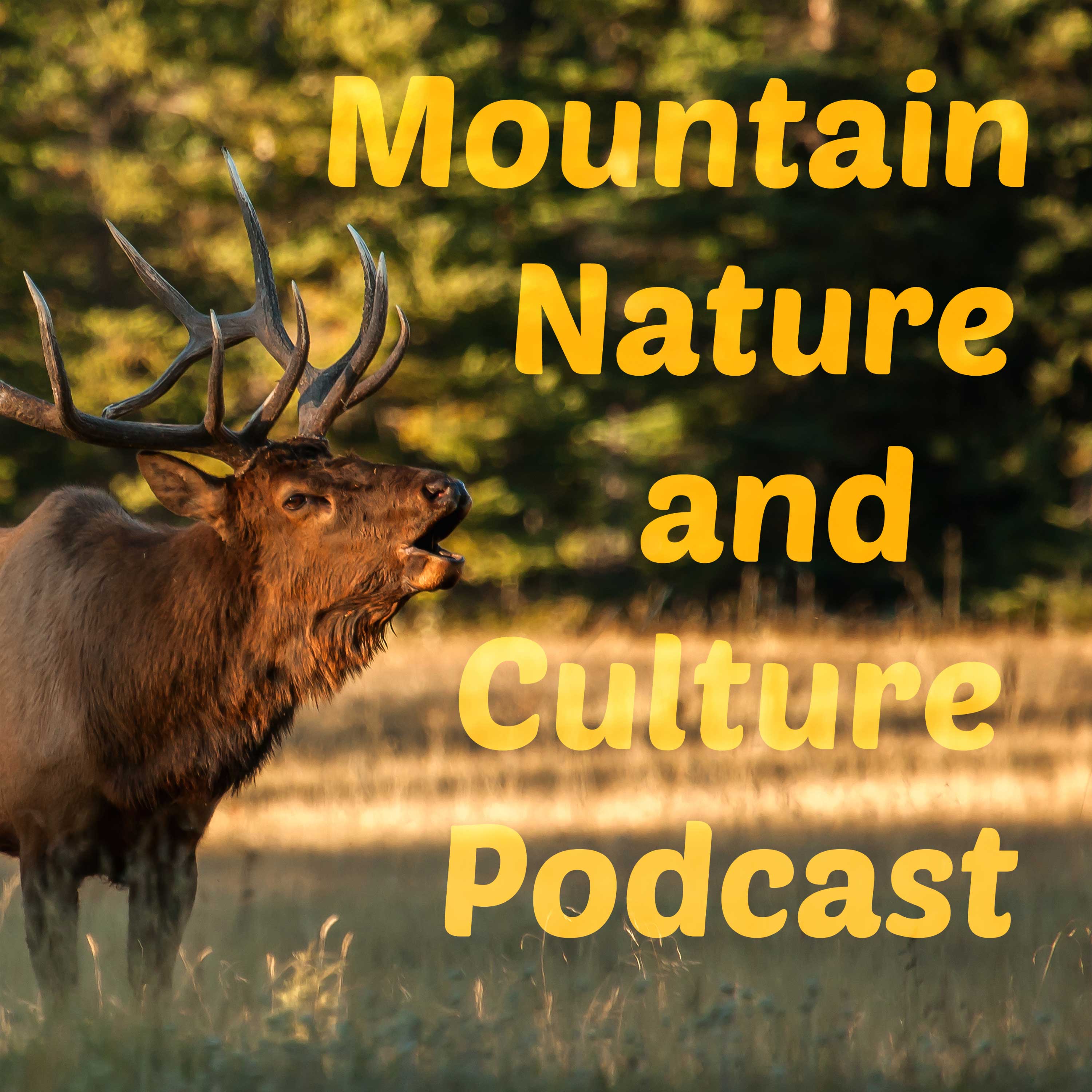 069 Looking at why elk keep their antlers througout the winter, and forest fires in California and British Columbia | If you'd like to see the detailed show notes for this episode, please visit: www.MountainNaturePodcast.com/ep069. | — | ||||||
| 9/10/18 |  068 Fire ecology in western Canada with fire expert Cliff White. | This is a special episode that I wanted to get out right away. It's an important talk about the fire situation in western Canada, but more importantly, what we can do in townsites like Banff, Canmore, and Jasper…and with that said, let's get to it. This presentation was organized through the Rockies Institute and featured Cliff White who worked for almost 4 decades with Banff National Park. He started as a park warden but rose through the ranks to positions including vegetation fire management specialist, manager of ecosystem research and restoration, as well as three years as the National Fire Management Officer. Cliff knows forest fires. He understands the ecology surrounding fire ecology and has dedicated his career to working with government to help to bring wildfire back to the landscape while at the same time helping communities to better protect themselves from fires that threaten homes and properties. In this program, he details the fire history of the Rockies while also showing how the lack of fire has altered the ecology for the worse. His message focuses not only on how the return of fire is critical to the landscapes of western North America, but also how communities can play a role in protecting their perimeter from the potential for Fort MacMurray style fires. In the next episode, I'll be talking a lot more about fire. This year has created a situation where the mountain west has been defined by the threat of fire. Unfortunately, it is a bill that has been long due. The fires we've been experiencing have long been inevitable and I'll look at British Columbia and how the fires of 2003 helped to provide a prescription for a better future but unfortunately, little was done towards accomplishing those goals. In the presentation, the Rockies Institutes Laura Lynes introduces the Institute and is followed by Karen Barkely, a program manager with the Rockies Institute who introduces Cliff. This program is one that all residents of the Bow Valley and wider mountain landscape should listen to. I hope you enjoy it. | — | ||||||
| 8/29/18 |  067 Mapping the Expansion of Coyotes, Reintroduced Bison Test Their Boundaries, and Time to Stop Making Rock Sculptures | Mapping the Expansion of Coyote Range across the Continent In the mountain west, we simply accept the presence of coyotes on the landscape. They're simply a part of the mountain environment that we call home. For many places though, that isn't the case. Coyotes are one of the continent's most successful predators and have always been one of the first carnivores to explore potential new habitats. But just how native are they too much of their current range? If we were to look back...waaaaay back, would we find them in the same places we encounter them today? What can we learn from their range expansions that can help us predict where they might move in the future? In a report published in the Journal Zookeys in May of 2018, biologists James Hody and Roland Kayes looked to scientifically quantify both the historic range of the coyote over the past 10,000 years, but also to look at how the influence of civilization has aided them in dramatically increasing their range. Reintroduced Banff Bison Decide to Move Towards the Prairies Last episode I crowed triumphantly at the release of Banff's new bison herd from its paddock into its 1,200 sq km release zone. This was a very exciting time that was also filled with some trepidation. Bison have not roamed free on this landscape for some 130 years, and now, here they were, able to make their own choices of how to explore their new home. It was always a possibility that some may decide to push the boundaries once they were released from the paddock. I also talked about how the bison headed off in the wrong direction that parks staff had hoped and were literally headed off at the pass and encouraged to move further into their release zone where officials hope they will stay. The goal is to use a variety of techniques to guide them until they truly settle into their new landscape. This involves a combination of baiting them to get them to move into areas with rich food rewards while also using aversive conditioning to discourage them from heading towards the open prairies where support for the release is still quite low. These massive animals have been penned up for their entire lives, either in their Banff Park pen or in Elk Island National Park in the case of the original 16 reintroduced to the park. Once the gates opened up, one direction would seem as good as any other…"I wonder what's over there…or there…or there?" In the August 9 edition of the Rocky Mountain Outlook, we learned that one of the big bulls had decided to go on a walkabout and had bolted eastward towards the prairies. It was always a risk that some of the bulls might assert their dominance and begin to head in unwanted directions. This was complicated by the fact that they had no legal protected status once they left the protection of Banff National Park and stepped onto provincial lands. This first bull was followed by a second, and unfortunately, on Aug 16 Parks were forced to Euthanize one of the two bulls when it moved into much more high-risk landscapes within provincial lands. According to a release, they stated that they: "made the difficult decision to euthanize one of the bison bulls who had continued to move eastward toward private grazing lands and was posing a risk to public safety and to the safety of livestock." Park officials ask visitors to stop making rock sculptures or Inukshuks Ever since the Vancouver Winter Olympics adopted the Inukshuk as its logo, it seems that every time visitors see a bunch of rocks, they can't help themselves. They need to pile them up into either poor renditions of Inuit rock sculpture, or they simply make a tall pile trying to balance as many stones as possible in one spot. The problem has gotten out of control in the past few years as Instagrammers began to invade the mountain wilderness. Suddenly no wild place is immune. Take a long day-hike or multi-day backpack trip and these stone piles are there to greet you and remove any feeling of wilderness you might have been enjoying up until that point. Recently Kevin Gedling, the Partnering and Engagement Officer in Jasper National Park, has asked people to stop building these geological eyesores. For more details on the episode and detailed show notes, please visit the page at www.MountainNaturePodcast.com/ep067 | — | ||||||
| 8/4/18 |  066 Finally, free roaming bison in Banff, and bear safety during buffaloberry season. | Parks Canada has just announced that it has opened the gates and finally allowed its growing herd of wild bison out of their enclosure and, for the first time, letting them wander somewhat freely within the park, at least within a 1,200 sq km release zone. The release has happened a little later than planned. The calving season was delayed and while last year saw its first birth on Earth Day, this year calving only began on July 15. In a recent article in The Province, Banff's Resource Conservation Manager was quoted as saying: "We've been expecting calves this spring, but it's certainly been a little later than we saw last year, but because these are young cows, we also anticipated the calving dates might be stretched out over a longer period this year. "The first two calves were born July 15 and the last of the three was born on the 19th." As of July 23, Park staff were hoping to see as many as 6 more additional calves. All of that changed on August 1st when Parks Canada staff opened the gate to allow the growing herd to leave the enclosure and begin to explore their 1,200 sq. km soft-release zone. Almost immediately, the bison zigged when the Park's staff wanted them to zag. According to the Rocky Mountain Outlook: "The bison reportedly headed toward Scotch Camp, but were stopped on the Snow Creek Summit before being herded back towards the upper Panther River Valley." Park staff realized they would need to guide the bison during the early part of their release. They don't want them to move east towards the plains because they have no legal status there. All of that changed on August 1st when Parks Canada staff opened the gate to allow the growing herd to leave the enclosure and begin to explore their 1,200 sq. km soft-release zone. Almost immediately, the bison zigged when the Park's staff wanted them to zag. According to the Rocky Mountain Outlook: "The bison reportedly headed toward Scotch Camp, but were stopped on the Snow Creek Summit before being herded back towards the upper Panther River Valley." Park staff realized they would need to guide the bison during the early part of their release. They don't want them to move east towards the plains because they have no legal status there. Bears, Buffaloberry, and Bikes Well, it's already happened this year! On Saturday, July 21 a mountain biker collided at high speed with a black bear at the Canmore Nordic Centre. Just last week, I warned that the buffaloberry season was upon us and that we need to begin to be extra vigilant. According to a story in the Rocky Mountain Outlook, Alberta Environment and Parks human-wildlife conflict specialist Jay Honeyman stated: "They were coming downhill at a fairly good clip and came over a rise and there was the bear…He literally hit and flattened the bear and got knocked off his bike." Luckily, the rider had bear spray on his person and he got ready to deploy it, but the stunned bear took off before he needed to spray it. He also saw a second bear that also ran away from the commotion. Here are 10 tips for staying safe while riding and hiking during buffaloberry season: Make lots of noise. Since bears are not paying attention to what's happening around them while they're busy mowing down their berry feast, it's important that we make lots and lots of noise; and not all noise is created equal. The best sound is the sound of your voice. Bears know that humans mean danger and if they know you're coming before you arrive, then they'll usually move away from the trail until you pass. You probably won't even know they were there. Bear bells are just marketing hype and they won't keep you safe. Just throw them in the garbage. You're more likely to be killed by your hiking companions for the sheer irritation they provide. Remember that sound may not travel as fast as you do. Much like the sound of an approaching train, it isn't always as evident when the train is approaching. The bear may not hear you if you're flying down the hill. Slow down, and if possible, stop before the descent and give a loud "Hey bear" before you slowly go down the hill. Learn to recognize buffaloberry. If you learn one plant in the mountains, make it buffaloberry. If the trail is lined with these tasty morsels, then the chance of meeting a bear goes up dramatically. If the trail is berry free, it doesn't mean there won't be a bear, but the odds at this time of year will have the bear focusing on berry-rich sites. Make sure you have bear spray and know how to use it. It's also critical that the spray is on your person and not on your bike. This recent encounter really brings this to the forefront. The rider collided with the bear and was ejected from his bike. Had the spray been on the forks or handlebars of the bike, he would have been separated from it just when he needed it most. The same goes with spray on or in your pack. Encounters happen fast and without warning. Have it on your body and you'll have it when you need it. You also want to practice so you don't have to think about how to deploy it when the time comes. Head to the high country. While this tip may not apply to mountain bikers, it definitely is a good one for hikers. Since the berries happen at lower elevations, this is a good time to go high. While the berries are more common in the valley bottom, they can extend into the subalpine as well. This is a great time to bag those peaks and passes. Trails like the Centennial Ridge Trail (the highest trail in the Canadian Rockies), Ha Ling (check the trail report as they are doing trail maintenance), and scrambles like the East End of Rundle are perfect choices. Keep in mind that the approaches will likely be at a lower elevation so keep an eye on the foliage and if buffaloberries are present, make a ton of noise. Watch for droppings. When bears are mowing down massive quantities of berries, let's just say, it keeps them regular. Watch for dark red piles of former buffaloberries. If it looks fresh, then it's likely the bear may still be in the area. Look for moving bushes. Very large bears can completely disappear behind a buffaloberry bush. Sometimes the easiest way to spot the bear is to not look for the bear. Look for something that doesn't belong - like one bush moving when none of the others are. On a still day, this can often be a sure sign that something is hanging out behind the bush. Keep dogs on leash; or better yet, leave them at home. I know you want to hike with your dog, but every encounter with wildlife has a worse outcome when a dog is involved. They are likely to be perceived as a threat by a bear and now you are also perceived as a threat. Take Fido to the off-leash area and give him a good run there. Be aware though that the margins of the Grassi Lakes off-leash area are also a great habitat for buffaloberries so watch if he's playing too close to this area. Leave your earbuds at home. One of the most dangerous things you can do in bear country is to wear earbuds when walking on trails - even within the townsite boundaries. When you wear earbuds, you're not aware of the sounds around you. You are not paying attention to what's happening around you. Earbuds put you at a much higher risk of a negative encounter, and you won't even hear it approaching. When you're out in nature, pay attention to nature, and stay safe. Respect closures. During buffaloberry season, it's much easier to manage people than bears. Unfortunately, in the recent past, locals and tourists alike have violated closures with the mistaken belief that they don't apply to them. Alberta Environment and Parks, Parks Canada, and the Towns of Canmore and Banff take these closures very seriously. If you're caught you will be charged! Don't put a bear's life at risk simply because you were too lazy to walk around the closure. Always remember that you are also a risk by ignoring closure signs. For the full show notes for this episode, visit www.MountainNaturePodcast.com/ep066 | — | ||||||
| 7/22/18 |  065 The buffaloberries are back, and a new report on Coexisting with Wildlife in the Bow Valley | No description provided. | — | ||||||
Showing 25 of 89
Sponsor Intelligence
Sign in to see which brands sponsor this podcast, their ad offers, and promo codes.
Chart Positions
1 placement across 1 market.
Chart Positions
1 placement across 1 market.