
Insights from recent episode analysis
Audience Interest
Podcast Focus
Publishing Consistency
Platform Reach
Insights are generated by CastFox AI using publicly available data, episode content, and proprietary models.
Total monthly reach
Estimated from 2 chart positions in 2 markets.
By chart position
- 🇦🇺AU · Entrepreneurship#1995K to 30K
- 🇸🇦SA · Entrepreneurship#165500 to 3K
- Per-Episode Audience
Est. listeners per new episode within ~30 days
2.8K to 17K🎙 Weekly cadence·46 episodes·Last published 3w ago - Monthly Reach
Unique listeners across all episodes (30 days)
5.5K to 33K🇦🇺91%🇸🇦9% - Active Followers
Loyal subscribers who consistently listen
1.6K to 9.9K
Market Insights
Platform Distribution
Reach across major podcast platforms, updated hourly
Total Followers
—
Total Plays
—
Total Reviews
—
* Data sourced directly from platform APIs and aggregated hourly across all major podcast directories.
On the show
Recent episodes
LIve @ Money 20/20, 2025 - 1033: The Great Debate
Apr 21, 2026
Unknown duration
Live @ Open Banking Expo Canada, 2025 - Canada Strong
Dec 24, 2025
Unknown duration
Live @ Fintech Americas, 2025 - Only Human
Nov 11, 2025
Unknown duration
Live @ Fintech Americas, 2025 - Brazil Redux
Sep 16, 2025
Unknown duration
Live @ Money 20/20, 2024 - The U.S. Cores
May 2, 2025
Unknown duration
Social Links & Contact
Official channels & resources
Official Website
Login
RSS Feed
Login
| Date | Episode | Description | Length | ||||||
|---|---|---|---|---|---|---|---|---|---|
| 4/21/26 |  LIve @ Money 20/20, 2025 - 1033: The Great Debate | Recorded live at Money 20/20 in Las Vegas, Eyal is joined by two guests at the center of the great debate surrounding open banking in the United States: John Court, EVP & General Counsel at the Banking Policy Institute (BPI) and Penny Lee, President & CEO at the Financial Technology Association (FTA). In late 2024, after many years of deliberation, the U.S. Consumer Financial Protection Bureau (CFPB) released the final version of their Personal Financial Data Rights rule, also known as Section 1033. On the day of its release, the rule was immediately challenged in court, marking the beginning of a drama unlike any other in the open banking space. John and Penny represent the two major players on either side of the court case itself, making them uniquely qualified to discuss where American open banking is headed. Specifically they discuss: How Section 1033 came to beWhat happened the day of its releaseMajor issues in the great debateThe validity of charging for data accessWhere 1033 currently stands | — | ||||||
| 12/24/25 |  Live @ Open Banking Expo Canada, 2025 - Canada Strong | Recorded live at Open Banking Expo Canada in Toronto, Eyal is joined by Saba Shariff, Chief Strategy, Product & Innovation Officer at Symcor, a leading infrastructure provider to the largest Canadian banks. The road to open banking in Canada has been long and difficult. After many years of deliberation and delay, they finally passed their first open banking regulation in 2024, known as the Consumer-Driven Banking Act. Since then, progress has been stalled by political turmoil. However, with a new prime minister now in place and a renewed focus on nation building, Canada’s 2025 budget announcement aims to take their open banking efforts to the next level. Eyal and Saba discuss the journey of open banking in Canada so far, the approach taken in the Consumer-Driven banking regulation, and what the new budget announcement portends for the near future.Specifically they discuss:A history of open banking in CanadaThe Consumer-Driven Banking ActWhat makes Canada’s approach uniqueThe advantages of being lateBig updates from the 2025 budget | — | ||||||
| 11/11/25 |  Live @ Fintech Americas, 2025 - Only Human | Recorded live at Fintech Americas in Miami, Florida, Eyal is joined by author and advisor Chris Colbert, former Managing Director at the Harvard Innovation Lab and Partner at Digital Fuel Capital. Technological innovation is often a double-edged sword; despite our best intentions, the progress we make often comes with unintended consequences. As open banking and other technological initiatives change the nature of money itself, we must be thoughtful and intentional about the direction of that change, with a particular focus on human values. This episode looks at open banking and technology in general through a philosophical lens, asking how our innovations can help bring us closer to each other and closer to understanding ourselves. Eyal and Chris discuss the negative impact of technology, the role of humanism in designing better systems, and how open banking has a part to play. Specifically they discuss:The three technological pillars of societyModern negative consequencesHow humanism leads to better systems Measures for a successful societyKeeping the human at the center | — | ||||||
| 9/16/25 |  Live @ Fintech Americas, 2025 - Brazil Redux | Recorded live at Fintech Americas in Miami, Florida, Eyal is joined by Matheus Rauber, Senior Advisor and Head of the Open Finance division at the Central Bank of Brazil. Of all the countries that have begun their open banking journeys, few have been as successful as Brazil. Today, their open finance ecosystem supports broad consent-based data sharing (including for insurance and investments), seamless integration with a public real-time payment rail, and a comprehensive trust framework for accreditation and liability. While many are familiar with Brazil's early success in 2021, far fewer know what has happened since then; this conversation revisits Brazil, to see where they are today, four years later. Eyal and Matheus discuss how Brazil achieved their early success, some of the challenges they have faced since, and where they intend to go next in maintaining their coveted position as global leaders. Specifically they discuss:Brazil's road towards open finance Challenges faced along the wayBalancing the market and regulations The critical importance of governanceNext steps for Brazilian open finance | — | ||||||
| 5/2/25 | 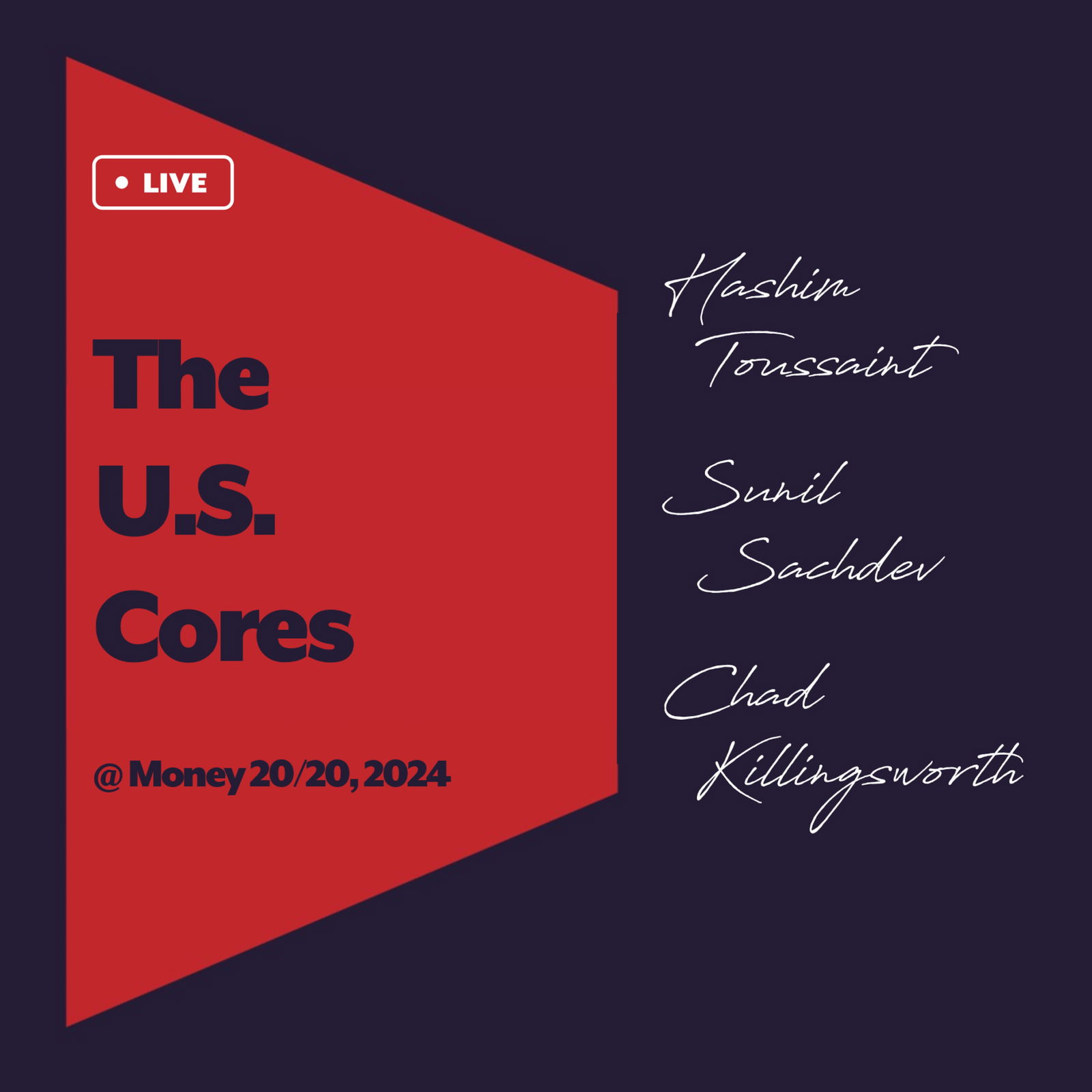 Live @ Money 20/20, 2024 - The U.S. Cores | In the final episode recorded live from Money 20/20 in Las Vegas, Nevada, Eyal sits down with leaders from the the three major U.S. core banking providers: Hashim Toussaint, General Manager of Digital & Open Banking at FIS; Chad Killingsworth, Head of Engineering at Jack Henry; and Sunil Sachdev, SVP, Head of Embedded Finance at Fiserv. Among them, these three providers serve not dozens or even hundreds of banks, but thousands, as they enable the long tail of a richly diverse and populous American banking ecosystem. Given their reach, for open banking to succeed in the U.S. the cores will have to embrace it, and throughout this discussion our guests break down exactly how their firms intend to do so. The conversation covers the latest regulatory developments, including the new compliance timeline, the exclusion of smaller banks from regulatory requirements, and how the U.S. cores are ultimately being driven by the real demands of digitally-savvy consumers more than by regulatory mandates. Specifically they discuss:The role of core banking providersThe CFPB rule and compliance timelines Security frameworks and API strategies Smaller banks’ exclusion from regulationThe choice to build vs. buy vs. partner | — | ||||||
| 4/17/25 | 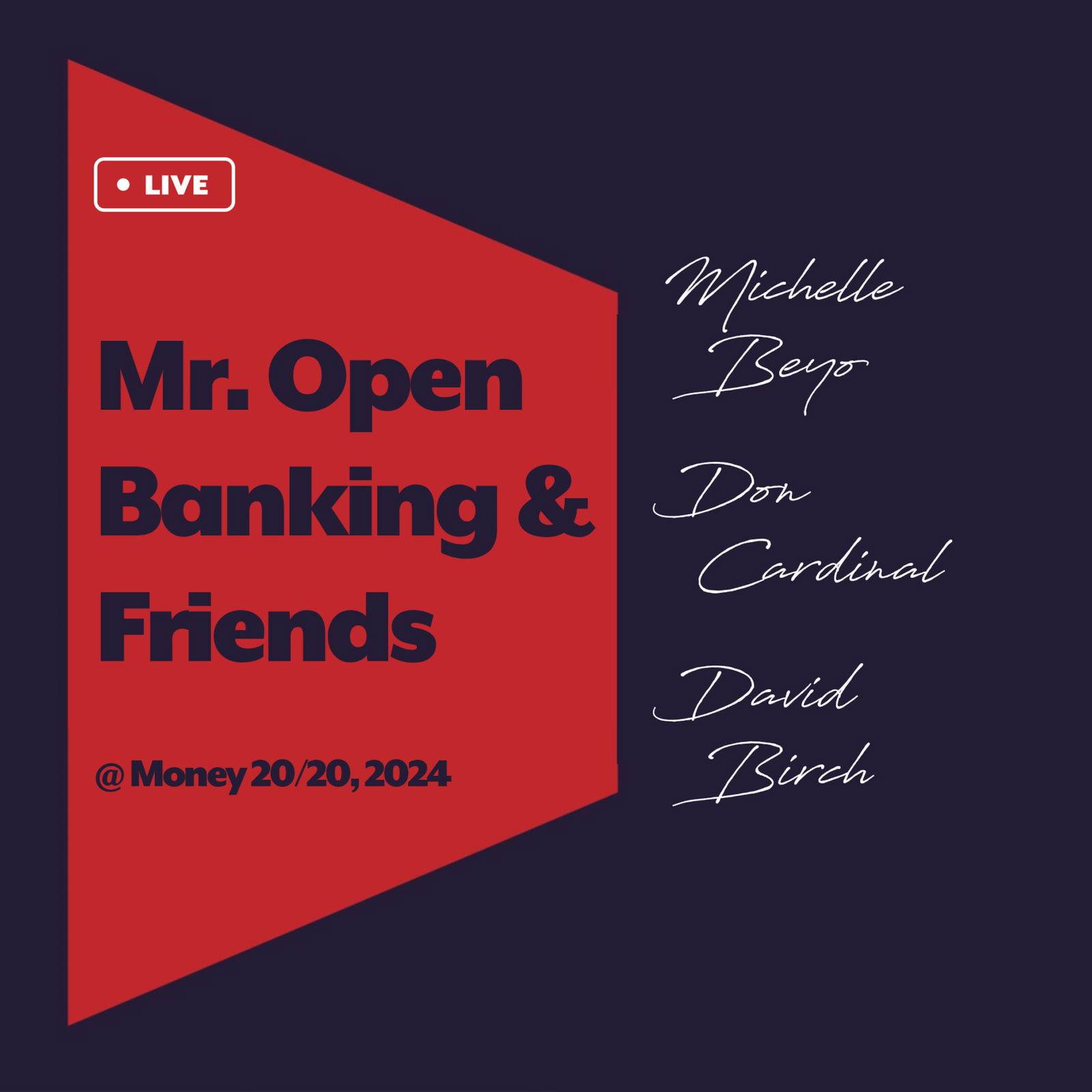 Live @ Money 20/20, 2024 - Mr. Open Banking & Friends | Recorded live at Money 20/20, 2024 in Las Vegas, Nevada, Eyal is joined by three leading voices from the open banking community whom he knows rather well: Michelle Beyo, CEO & Founder of Finavator; David Birch, Author, Advisor and Principal at 15Mb; and Don Cardinal, Senior Vice President at the Financial Data Exchange. Together, they examine how open banking is taking shape across Canada, the United Kingdom, and the United States, offering insights informed by their respective regions. Between them, they provide a global perspective on the evolution of open banking, not only based on activity in different regions, but across the three main pillars of open banking infrastructure: data sharing, real-time payments, and digital identity. David delves into the UK's early open banking implementation, Don explores the U.S.’ market-driven approach to open finance, and Michelle shares her advocacy for a human-rights-based view of data ownership. From universal data rights to the rise of digital wallets, this conversation provides a comprehensive look at where the open banking standard is today and where it is headed. Specifically they discuss:Global approaches to open banking The significance of data rightsReal-time payments and digital walletsHow digital identity plays a crucial roleThe future of open banking in the US | — | ||||||
| 4/10/25 | 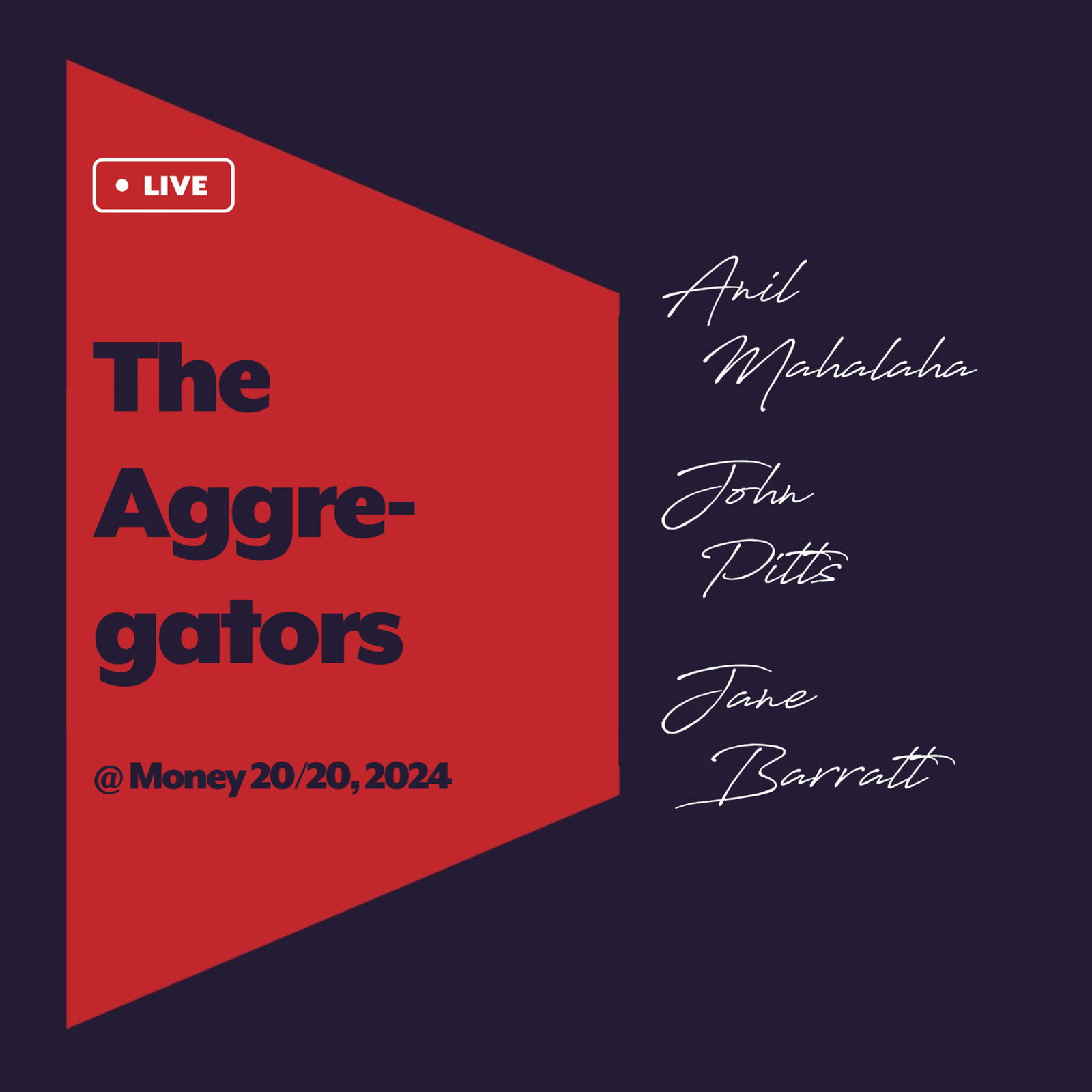 Live @ Money 20/20, 2024 - The Aggregators | Recorded live at Money 20/20, 2024 in Las Vegas, Nevada, Eyal is joined by the open banking leads from three major US aggregators: John Pitts, Head of Policy at Plaid; Jane Barratt, Chief Advocacy Officer at MX; and Anil Mahalaha, Chief Evangelist at Akoya. Aggregators, sometimes called data access networks, provide third parties with connectivity to a wide range of banks. In the US in particular, they are uniquely crucial, having built out an early form of open banking over the past few decades. As the region moves towards standardization and regulation, they will continue to play a pivotal role. Together, Eyal and his guests discuss the continued implications of the CFPB’s final ruling on Personal Financial Data Rights, the evolving role of aggregators, and the impact of API-driven connectivity. The conversation explores whether regulation is truly necessary, how it will shape the competitive landscape, and what’s next for the future of financial data access in America. Specifically they discuss:CFPB’s Personal Financial Data Rights RuleThe role of aggregators in the U.S.The transition from screen scraping to APIsPerspectives on secondary data useThe commercialization of data access | — | ||||||
| 12/19/24 | 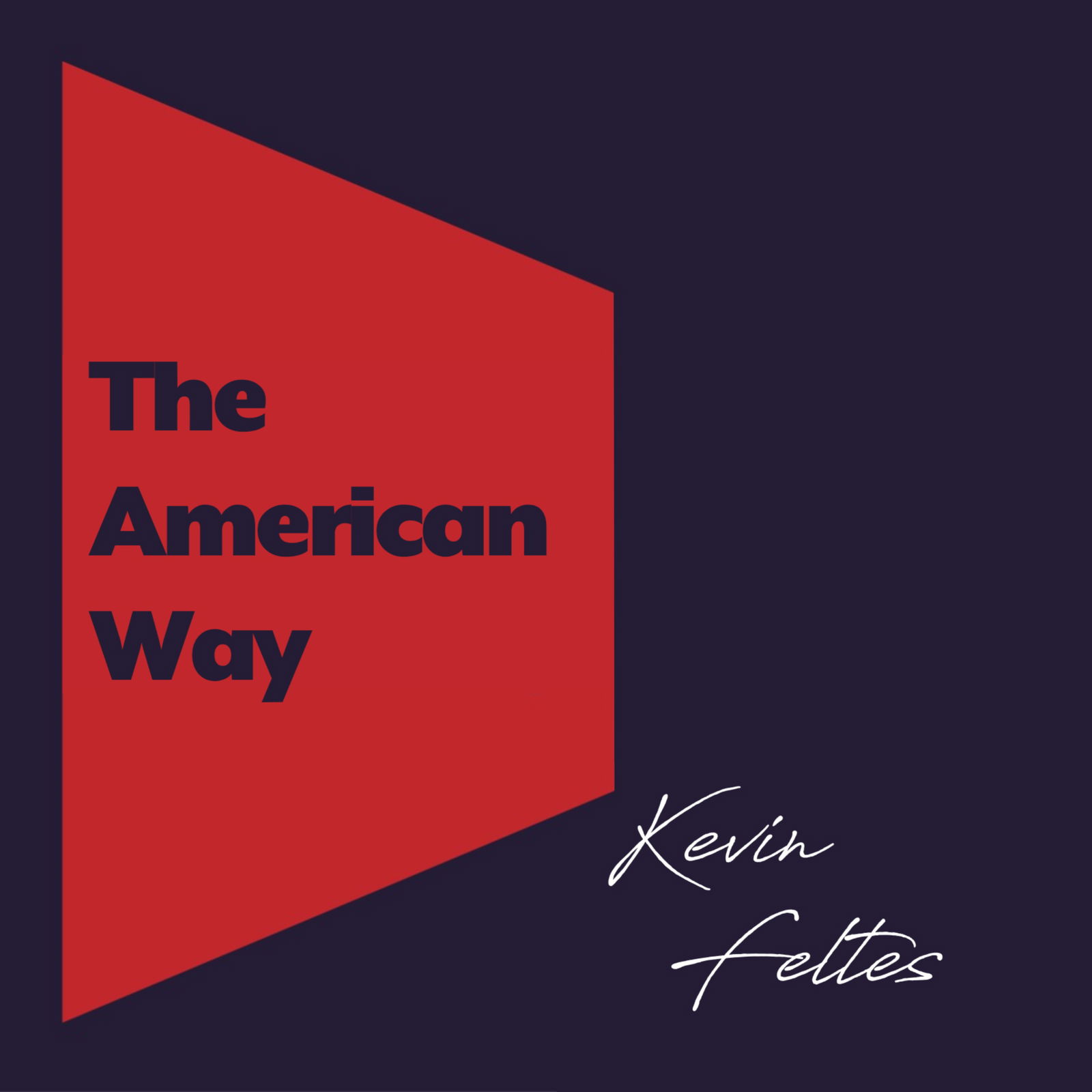 The American Way | Does the United States have open banking? Well, that depends on how it’s defined. If that definition is less about regulation and more about the adoption of a common technical standard for the secure exchange of financial data, then the U.S. is considerably further along. Much of this progress is due to the Financial Data Exchange (FDX), a private non-profit founded in 2018 to unite players across financial services in creating a common standard for consent-driven data sharing. For the final, extra-length episode of Season 5, Kevin Feltes, the new CEO of FDX, joins us to discuss the state of American open banking amidst the regulatory changes unfolding under Section 1033. Eyal and Kevin sit down to talk about all things FDX, sharing the organization’s origins, what’s in the FDX tool belt to help it punch above its weight, and what it means for FDX to operate at the intersection of regulatory and market forces. Diving into possible futures, they unpack how flexibility is the key to ensuring American open banking continues to grow and thrive. Specifically they discuss:The origins of the Financial Data ExchangeHow the FDX API is member-drivenThe impact of Section 1033 regulationBalancing market and regulatory forcesThe role FDX plays in U.S. open banking | — | ||||||
| 11/26/24 |  The Data Sharing Economy | Open banking aims to revolutionize data sharing by giving individuals full control over their data - deciding who can access it, for what purpose, and for how long. Instead of personal data being locked in silos and exchanged without consent by an opaque and precious few, this shift empowers people to gain value from their data for themselves, using it, trading it and protecting it as they see fit, while engaging in the data sharing economy. In this episode, Eyal dives into these possibilities with fintech visionary Ghela Boskovich, Head of FData Europe and founder of FemTech Global. By putting control back into the hands of individuals, Ghela envisions a future where consumers can derive personal economic benefits by deciding how, and with whom, their data is shared. They explore the foundational keystones of this economy, the varying approaches nations are taking to implement it, and the transformative potential of a more equitable digital landscape. Specifically they discuss:Data as a renewable resourceConcentration of data in few handsKeystones of the data sharing economyGlobal regulations and perspectives A more just approach to training AI | — | ||||||
| 10/23/24 |  Making Better Decisions | Underlying open banking is an important assumption: That if you give the consumer all the information about what data is held on them and all the control over how that data is shared, that they will be better off. That they will use that information and control to make better decisions, decisions that benefit them. But is that actually so? Behavioral economics says that perhaps the answer is no. Rising to prominence in the late nineties and two-thousands, behavioural economics challenges the idea that people always behave rationally. For those building open banking environments aimed at truly helping consumers make better decisions about their money and their data, its lessons are invaluable. In this episode, Eyal sits down with renowned behavioural economist Dan Ariely, a professor, scientist and best-selling author, to discuss the roots of behavioral economics, the role of paternalism, and how friction and motivation can be applied to building better financial services.Specifically they discuss: Understanding behavioural economicsVisible money vs. invisible moneyUsing friction and motivationPaternalism and responsibilityBuilding environments that benefit us | — | ||||||
Want analysis for the episodes below?Free for Pro Submit a request, we'll have your selected episodes analyzed within an hour. Free, at no cost to you, for Pro users. | |||||||||
| 9/17/24 |  Fast Future Blur | We are living through a period of unprecedented technological change, an era that has been dubbed the Fourth Industrial Revolution. Building upon the previous three, this current transformative era is marked by the convergence of advanced technologies, such as robotics, AI, IoT and blockchain, that together are reshaping both industries and society at large. Navigating all these changes can be a challenge; more and more, it feels like looking into the future offers nothing but a blur. But among the interconnections between these technological trends lies opportunity. In this episode, Eyal sits down with Dr. Efi Pylarinou, renowned Fintech influencer and Co-author of Fast Future Blur, to discuss how this period of rapid digital transformation is shaping our future, including how business archetypes are evolving, the types of leaders we need and the crucial role of open standards.Specifically they discuss: The Fourth Industrial RevolutionThe four business archetypesMoving from digital native to AI nativeHow the nature of banking is changingThe importance of openness | — | ||||||
| 8/13/24 |  Embedded Finance | Imagine a world where financial services are no longer separate, daunting entities but seamlessly integrated into the digital experiences you know and love. A world where buying a car, booking a trip, or even grabbing a coffee means having instant access to personalized financing options, secure payments, and innovative insurance solutions. This is Embedded Finance: an omnipresent, invisible hand guiding your financial decisions with unprecedented ease and intelligence, so that financial services are always there when you need them, and fade into the background when you don’t. In this episode, Eyal sits down with Simon Torrance, CEO and Founder of Embedded Finance & Insurance Strategies, to discuss how open banking, paired with real-time payments and agentic A.I., will help fill the gap between financial needs and financial services.Specifically they discuss: Why Embedded Finance is about collaborationAdvantages to banks and non-banks alikeMoving from Embedded Finance 1.0 to 2.0The Embedded Finance operating systemReal-time payments and agentic A.I. | — | ||||||
| 7/3/24 |  All That Glitters | The open banking community has long believed the path to open data starts with open banking. The general idea is that the common standards used to share banking data will inevitably expand in scope, leading to open data standards which will eventually cover all sectors of the economy. Australia, unique among open banking regions, has been on that road for several years. Although some now say their ambitious regulatory effort, the Consumer Data Right (CDR), has fallen short of its initial bold vision. In this episode, Eyal sits down with Jamie Leach, Open Data Strategist for Raidiam, and a self-proclaimed data champion. Jamie and Eyal discuss the origins of open banking in Australia, the significant challenges the CDR now faces, and the future of open data in the region.Specifically they discuss: The origins of Australia’s foray into open dataWhat made CDR so ambitious and forward-thinkingThe challenges that have caused the CDR to stallHow ConnectID offered a market-driven alternativeWhere Australian open banking is headed from here | — | ||||||
| 5/28/24 |  Checks and Balances | To date, the United States has taken a staunchly market-driven approach to open banking, and has been doing so for decades. But all that is about to change: the U.S. has now begun their own journey towards regulated open banking, with the Consumer Financial Protection Bureau (CFPB) introducing a new regulation to solidify and protect Personal Financial Data Rights. In this episode, Eyal sits down with John Pitts, the Global Head of Policy at Plaid, the most well-known financial data aggregator in the world, who enables more than 100 million consumers to link their financial accounts with over 8,000 apps across 17 countries. Prior to joining Plaid, John served as Deputy Assistant Director for Intergovernmental Affairs at the CFPB, working to promote cooperation and coordination in enforcing the Consumer Financial Protection Act, also known as Dodd-Frank. John and Eyal discuss the CFPB’s proposed regulation, its effect on consumers, the impact to banks and the larger question of how data rights will come to America.Specifically they discuss: The old era vs. the new eras of U.S. open bankingThe CFPB’s Personal Financial Data Rights regulationHow regulators and markets balance one anotherImpact to consumers, banks and other stakeholdersCreating a new deal with our technology providers | — | ||||||
| 4/30/24 |  Oh Canada | The growth of open banking is historically driven by environmental factors. In environments marked by wealth inequality, or a lack of trust in traditional finance, open banking flourishes as a promising alternative. Conversely, in stable environments, it often stagnates, viewed as a needless risk. Canada, known for its risk aversion, exemplifies this trend. To open season 5 of Mr. Open Banking, Eyal sits down with Abraham Tachjian, Director of Digital Banking at PwC Canada and the former Open Banking Lead for all of Canada, to discuss whether conservative Canada will be ready for the coming wave. In March of 2022, Abraham was appointed by the Canadian Department of Finance to lead the development of a national open banking framework, and for the last two years he has been doing just that. Eyal and Abraham explore the key role Abraham has had in delivering a guidebook for open banking in Canada, lessons learned along the way, and what the next steps are for all stakeholders involved. Specifically they discuss: • The formative years of open banking in Canada• The importance of strong governance • How the work was structured and approached• Canadian open banking versus the other regions• The future of open banking in Canada | — | ||||||
| 12/22/23 |  The India Stack | To make open banking work the way it is meant to, you need three major building blocks; data exchange, payments and digital ID. While many countries are working on these pieces, there is really only one place that has already built them all, into a fully-integrated, cohesive whole, at population scale: India. In the season four finale of Mr. Open Banking, Eyal sits down with Dr. Pramod Varma to discuss the uniquely successful digital transformation of India. Pramod is the Chief Architect behind a set of national systems known collectively as the India Stack, widely considered one of the most successful implementations of digital public infrastructure (DPI) in the world. The India stack includes Aadhaar, India's digital identity program for over 1.3 billion people, and the Unified Payments Interface (UPI), which today processes over 12 billion transactions a month. Eyal and Pramod take a journey through the history of digital transformation in India, and how they aim to become a fountainhead for the successful implementation of Digital Public Infrastructure all over the world.Specifically they discuss: • The meteoric rise of Aadhaar• How UPI drove financial inclusion• The bottom-up approach to open banking• Opening healthcare, e-commerce and more• Creating Digital Public Infrastructure (DPI) | — | ||||||
| 12/12/23 |  Open Banking Past & Future | Europe, widely considered the birthplace of open banking, has been on a journey to digitize their financial system for over 20 years. In this episode, we speak to a guest who has been on that road since the beginning, at the nexus of finance, technology and regulation. Dr. Ruth Wandhöfer has been instrumental in shaping the future of finance in Europe, having positioned herself as one of the leading experts in the region. She is a widely sought after speaker, writer and professor, with her opinions published in Sifted, The Financial Times and Forbes. She has published three books on digital finance, most recently, Redecentralisation – Building Our Digital Financial Ecosystem in 2023. Together, Eyal and Ruth delve into the origin of open banking in Europe, from the original Payment Services Directive to PSD2 , through to the future under PSD3. They then go well beyond, as they explore the future of our digital society at large. Specifically they discuss: • The history of open banking• Going from PSD to PSD2 to PSD3• How Web3 and CBDC will play a role• The Digital States that run our lives• Creating a Digital Social Contract | — | ||||||
| 11/17/23 |  Digital Value | What defines the value of a thing? Is it a question of utility, aesthetics, rarity, emotional connection, or a combination of all these aspects? When it comes to digital assets, this question becomes even more complex, as evidenced by the rise and subsequent fall of NFTs. Beyond just digital, The continued evolution of Web3 and DeFi has now set the physical world and the digital world on a collision course, changing perceptions of ownership, trade and value. To dig deeper into the philosophical question of digital value and its impact on the physical world, Eyal turns to Bianca Lopes, economist, serial entrepreneur, and international speaker on the subjects of data, identity, fintech and crypto. Over the course of her career, Bianca has supported over 40 financial institutions and 8 governments to reshape their approach to technology, rethink the role of identity, and drive their innovation agendas, as she helps them understand the impact that data, identity and the future of finance will have on our lives.Specifically they discuss: • The rise and fall of NFTs• Determining the value of digital assets• How to go from speculation to utility• Creating digital twins for physical things• Building a sustainable, circular economy | — | ||||||
| 10/10/23 |  Shifting Control | Data fuels our digital lives, helping us make decisions, build relationships, and stay organized. To achieve these goals, we willingly share our personal data with various service providers, who give us search engines, social networks and e-commerce. But somewhere in the bargain, those providers encroached far beyond what the typical user understood. Our personal information, what makes us us, wasn’t just given, it was taken, in a way that makes it very hard to get back. To unpack this asymmetry and discuss a way forward, Eyal sits down with Liz Brandt, Co-Founder and CEO of Ctrl-Shift, a strategy and business innovation consultancy specializing in helping businesses realize the strategic value of trusted personal data. Anticipating that the use of personal data would become critical, Liz started the consulting firm Ctrl-Shift over 13 years ago, dedicating her career to identifying the opportunities and solving the challenges presented by the emergent personal information economy.Specifically they discuss: Why privacy remains importantUnderstanding the information sharing relationshipThe evolution of Ctrl-Shift Striking a balance between privacy and growthThe role of standardization and legislation | — | ||||||
| 8/23/23 |  What’s in Your Wallet? | For most people, wallets are a staple accessory of their everyday lives. Yet today, the analog wallet is disappearing, to be replaced, like so many other things, by its digital twin. Digital wallets are now a reality and, like their physical predecessors, they will become an intrinsic part of our lives, so making sure they are built the right way is critical. To discuss the future of digital wallets, Eyal turns to Daniel Goldscheider, Founder of the OpenWallet Foundation, an organization dedicated to enabling a trusted digital future through interoperability for a wide range of use cases that leverage the software construct known as a digital wallet. Before founding the OpenWallet Foundation, Daniel was CEO of yes.com, a digital banking platform, and co-founded Mediaguide with the American Society of Composers, Authors and Publishers alongside Aureus Private Equity. He has served on the boards of the Global Footprint Network and Identity Trust Management, demonstrating his deep history building systems that aim to enshrine data rights.Specifically they discuss: The benefits of digital walletsWhat is driving the proliferation of digital walletsDigital wallets versus authenticator appsThe technology behind digital walletsThe relationship between digital wallets and open banking | — | ||||||
| 7/19/23 |  The View From the Top | Open banking is often cast as an antidote to the dominance of big banks. Given that its origins stem from the Great Financial Crisis of 2008, this perspective is not terribly surprising. But is this characterisation a fair one? Does open banking have to be a threat to big banks, or can it be turned into an opportunity? To answer these questions and more, we turn to Paul LaRusso. Paul is a business leader with over 20 years of experience in mobile financial services and technology. Paul is the CEO of Akoya, a bank-sanctioned data access network that is leading the way in the US open finance sector. Prior to joining Akoya, Paul served as the Head of Open Banking and Connected Banking at JP Morgan Chase, where he held technology leadership positions for almost 15 years. Today as head of Akoya, Paul aims to transform the way people share their data, making it more secure, private, reliable, and transparent. In this episode, Eyal and Paul unpack the history of open banking and the evolution in the market-driven approach that Paul has had the benefit of seeing up close.Specifically they discuss: The history of open bankingThe benefits of CFPB regulationsWhat the US can learn from the UKWhat the big banks need to knowWhy open banking is a two-way street | — | ||||||
| 6/27/23 |  Is Open Banking Dead? | It’s no secret that global banking is experiencing some macroeconomic headwinds. Bank failures and consolidations continue to spread, albeit slowly. The question then becomes: How do these negative trends influence the direction of open data?Marie has been studying open consented data sharing since 2016. Through her current role as Open Futurist at Raidiam, she helps bring together the best people with the best ideas, facilitating the right conversations, and promoting the benefits of open data for consumers, businesses, countries and society at large. Eyal and Marie discuss the history of Open Future World, the current trajectory of open banking, and the shifting views of market players and regulators alike as they try to answer the burning question: Is open banking dead? Specifically they discuss: The rise and fall of Open Future WorldThe effect of economic headwindsWhy some banks still hesitate to investEcosystems within ecosystemsThe Raidiam trust framework | — | ||||||
| 12/23/22 |  Bringing It All Together | In the extended season finale of Mr. Open Banking, Eyal directly tackles the question of how open banking will change the way we interact with our money, in an attempt to build a vision of the open future. To do so, he breaks the problem down into the three core concepts at the heart of that claim: money, identity and open banking. When it comes to exploring the interplay between digital money and digital identity, one would be hard-pressed to find someone more knowledgeable than his guest, David G.W. Birch. An internationally-recognised author, advisor and commentator on digital financial services, David is often a keynote speaker at industry conferences and international events, a featured guest on business and finance television programs, and a regular contributor to prominent financial publications, including Forbes and The Financial Times. He is also the author of four books, including The Currency Cold War in 2020 and 2014’s Identity is the New Money, his seminal and prescient work on the future of finance. During their discussion, Eyal and David explore a wide range of topics, including the importance of reputation and how the money of the future resembles the money of the past.Specifically they discuss: The shifting form and function of moneyThe relationship between money, identity and reputationWhy cash becoming irrelevant is a good thingHow money is really a platform for trustHow digital identity differs from identity in the real worldWhy open banking standards should support identityBanks as the antidote to the one-sided Internet of today | — | ||||||
| 12/8/22 |  Who Do You Trust? | As the open banking movement continues to unfold, many people are asking an obvious but entirely valid question: can we trust open banking? In this episode, Eyal explores the concept of trust in open banking, and how we can learn to trust the data sharing ecosystem upon which open banking is being built. To inform the discussion, he sits down with Ralph Bragg, the Co-Founder and CTO of Raidiam, a company that’s on a mission to create the world’s smartest, most trustworthy data sharing ecosystems. As an internationally-renowned expert in open banking technical standards and trust frameworks, Ralph helped the UK, Brazil and other regions build open banking they could trust. Together, Eyal and Ralph tackle what a data sharing ecosystem actually is, what it does and who the actors are that drive it forward, as well as essential security concepts like authentication, authorization and identity. Most importantly, Eyal and Ralph discuss why increasing consumer trust in open banking is critical, not just for the short term, but to rightly steer the evolution of the Internet itself for decades to come. Specifically they discuss: The purpose of a data sharing ecosystemStrengthening trust in open ecosystemsKey definitions around identity, security and consentBuilding an effective trust frameworkHow trust is enabled in the UK and BrazilComparing aggregated and federated modelsWhy trust is critical to the future of the Internet | — | ||||||
| 11/23/22 |  Open Banking in the Middle East | When it comes to open banking globally, there are several factors that have acted as drivers for the movement, like competition, inclusion, stability and innovation. Although innovation takes a back seat in some regions, there is one place where it is firmly front-and-center: the Middle East. The Middle East and North Africa, a region known by the acronym MENA, has embarked on its own open banking journey, where Bahrain, Oman, the UAE, Saudi Arabia, Qatar, Kuwait, Israel and Egypt have all introduced some form of open banking initiatives. While they may vary in scope and approach, they all have one thing in common: a laser focus on modernizing their banking sectors with innovation acting as the primary driver. In this episode, Eyal will sit down with guest Hakan Eroglu, the Global Open Banking Lead at Mastercard. With more than 13 years of international experience in open banking strategy, Hakan is global in both title and practice. Eyal and Hakan’s focus on a subset of the MENA region, the countries who are members of the Gulf Cooperation Council, or the GCC. Specifically they discuss: The meaning of the term “over-banked”Key drivers of open banking in the MENA regionHow market vs. regulation is really a spectrumAn open banking tour of the the GCC members The differences between one country and anotherDigital ID, real-time payments and other extensions Open banking as a vehicle for innovation | — | ||||||
Showing 25 of 47
Sponsor Intelligence
Sign in to see which brands sponsor this podcast, their ad offers, and promo codes.
Chart Positions
2 placements across 2 markets.
Chart Positions
2 placements across 2 markets.