
Insights from recent episode analysis
Audience Interest
Podcast Focus
Publishing Consistency
Platform Reach
Insights are generated by CastFox AI using publicly available data, episode content, and proprietary models.
Total monthly reach
Estimated from 30 chart positions in 30 markets.
By chart position
- 🇦🇺AU · Physics#11300K to 1M
- 🇺🇸US · Physics#17300K to 1M
- 🇬🇧GB · Physics#21100K to 300K
- 🇨🇦CA · Physics#28100K to 300K
- 🇩🇪DE · Physics#1045K to 30K
- Per-Episode Audience
Est. listeners per new episode within ~30 days
954K to 3.0M🎙 Weekly cadence·13 episodes·Last published 1mo ago - Monthly Reach
Unique listeners across all episodes (30 days)
1.9M to 6.1M🇦🇺16%🇺🇸16%🇬🇧5%+27 more - Active Followers
Loyal subscribers who consistently listen
572K to 1.8M
Market Insights
Platform Distribution
Reach across major podcast platforms, updated hourly
Total Followers
—
Total Plays
—
Total Reviews
—
* Data sourced directly from platform APIs and aggregated hourly across all major podcast directories.
On the show
Recent episodes
Constructor Theory: Physics of Can and Can’t
May 24, 2026
Unknown duration
Quantum Astronomy - Hundred Km Wide Telescopes
May 17, 2026
Unknown duration
Theory of Superdeterminism
May 10, 2026
Unknown duration
Mystery of Quantum Cheshire Cat
May 2, 2026
Unknown duration
How Can Effect Precede Cause in Quantum Mechanics
Apr 25, 2026
Unknown duration
Social Links & Contact
Official channels & resources
Official Website
Login
RSS Feed
Login
| Date | Episode | Description | Length | ||||||
|---|---|---|---|---|---|---|---|---|---|
| 5/24/26 | Constructor Theory: Physics of Can and Can’t | What if the fundamental laws of the universe aren't about what does happen, but what can and cannot happen? In this episode, we explore Constructor Theory, a provocative new framework in physics developed by David Deutsch and Chiara Marletto.Traditional physics relies on starting conditions and dynamical laws to predict the future, but Constructor Theory flips the script. We dive into the world of "counterfactuals"—the powerful physical principles that define why some transformations are possible and others are forbidden. From the "universal constructor" that could revolutionize how we build technology to the quest for a new "theory of everything" that unifies information, life, and thermodynamics, join us as we explore a mode of explanation that challenges our deepest understanding of reality. | — | ||||||
| 5/17/26 | Quantum Astronomy - Hundred Km Wide Telescopes | In 2019, the world was captivated by the first image of a black hole—a feat achieved by turning the entire Earth into one giant radio telescope. But why haven't we done the same with optical light to see the surfaces of distant stars?This episode explores the "technical wall" that separates radio astronomy from optical observation. We dive into the massive logistics of "shipping starlight" via cargo planes and the physical limits of traditional interferometers. Discover why optical light is so "slippery," how the Earth's atmosphere scrambles incoming wavefronts, and why the next great leap in space observation won't come from bigger mirrors, but from the strange rules of quantum mechanics. Join us as we go on a forensic journey of the sky to solve the crisis of the optical telescope. | — | ||||||
| 5/10/26 | Theory of Superdeterminism | "God does not play dice with the universe." Einstein’s famous protest against quantum mechanics is the starting point for one of the most controversial ideas in modern physics: Superdeterminism.In this episode, we challenge the idea that the subatomic world is truly random. We explore the "Hidden Choice" at the heart of reality—the theory that the universe is a singular, interconnected web where every measurement and every outcome was written into the script at the very beginning of time. We break down Bell’s Theorem, the "cellular automaton" interpretation, and the mind-bending possibility that our "free will" to choose experiment settings is actually an illusion dictated by the geometry of the cosmos. Join us as we ask: Is the quantum dice roll a mystery, or just a very complex disguise for a perfectly ordered machine? | — | ||||||
| 5/2/26 | Mystery of Quantum Cheshire Cat | In the world we know, you can't have the redness of an apple without the apple itself. But in the subatomic realm, the rules of logic are replaced by the surreal world of Alice in Wonderland.This episode explores the "Quantum Cheshire Cat"—a phenomenon where a particle and its properties, like its magnetic moment or polarization, can actually be separated and sent down different paths. We break down the mind-bending experiment using interferometers and "weak measurements" to show how a photon can travel left while its polarization goes right. Join us as we peel back the layers of reality to discover a landscape where the "grin" truly can outlast the cat. | — | ||||||
| 4/25/26 | How Can Effect Precede Cause in Quantum Mechanics | Can the future change the past? In this mind-bending episode, we explore the radical frontier of retrocausality—the idea that an effect can actually happen before its cause.We dive into the stunning results of recent experiments, including the work of Aephraim Steinberg and his team at the University of Toronto, which detected "negative time". Discover how photons can appear to leave a material before they’ve even finished entering it, and what John Wheeler’s famous "delayed-choice" experiment tells us about the nature of reality. From the "quantum switch" that allows events to happen in an indefinite order to theories that treat the flow of time as a mere illusion, join us as we investigate whether the universe's clock is actually moving in both directions at once. | — | ||||||
| 4/18/26 | Quantum Tech Has Come To Sensors | While quantum computers grab the headlines, a quieter revolution is already transforming how we see the world. In this episode, we explore the high-stakes world of Quantum Sensing—a technology that is already moving out of the lab and into our daily lives.Discover how scientists are using the "hyper-sensitivity" of quantum states to create tools that can "see" through solid walls, detect underground mineral deposits from miles away, and even measure the tiny magnetic fields of a human heartbeat. We dive into the science of nitrogen-vacancy centers and atomic clocks, explaining why these "quantum eyes" are up to 1,000 times more sensitive than the sensors in your smartphone today. From GPS-free navigation in deep space to non-invasive brain imaging that could revolutionize medicine, join us as we explore why the next big "quantum leap" might just be a sensor in your pocket. | — | ||||||
| 4/11/26 | How Scientists Detected Negative Time | Can a particle leave a room before it even enters? In this mind-bending episode, we explore a radical experiment by physicist Aephraim Steinberg and his team at the University of Toronto that seems to defy the arrow of time.We dive into the strange world of quantum tunneling, where atoms passing through a barrier appear to spend a "negative" amount of time inside it. Discover how scientists used "weak measurements" to track these ghostly transit times and what it means for our understanding of causality and the quantum clock. Whether it’s a mathematical quirk or a fundamental shift in how we perceive reality, join us as we explore the experiment that proves, in the quantum realm, the future might just influence the past. | — | ||||||
| 4/4/26 | Quantum Mechanics of Climate Change | Is the Earth’s climate actually governed by the strangest rules of physics? In this episode, we pull back the curtain on how quantum mechanics is the invisible hand driving both the warming of our planet and our best hope for cooling it down.Explore the "uncanny coincidence" of how the quantum vibrational states of carbon dioxide allow a tiny trace of molecules to dominate our global climate. We’ll break down how quantum mechanics determines which molecules become greenhouse gases and why the future of our atmosphere is written in the language of energy levels and rotations. But it’s not all bad news—we also dive into how quantum computing is being used to design new catalysts for carbon capture, simulate breakthrough battery chemistries for electric vehicles, and create "digital twins" of the Earth to predict climate impacts with unprecedented accuracy. Join us as we explore the quantum journey from global challenge to technological rescue. | — | ||||||
| 3/27/26 | What Happens When Quantum Computers Break Cryptography | The quantum revolution is coming, but is our digital world ready for the "quantum apocalypse"? In this final installment of our series, we shift from building quantum computers to defending against them.We explore the urgent transition to Post-Quantum Cryptography (PQC)—the new global standards designed to withstand the code-breaking power of a mature quantum machine. Discover the "Harvest Now, Decrypt Later" strategy being used by malicious actors today and why organizations are racing to inventory their digital locks before the 2030 deadline. From NIST’s finalized encryption standards to the engineering of "crypto-agility," join us as we discuss how we are re-signing the bedrock of the internet to ensure our secrets stay secret in the age of the quantum starship. | — | ||||||
| 3/20/26 | Engineering Behind a Quantum Computer | If quantum physics is the theory and math is the language, then engineering is the sheer force of will required to build a "starship" out of subatomic particles. This episode moves out of the abstract and into the lab to explore the monumental task of building a physical quantum computer.We dive into the "cryogenic challenge"—the necessity of cooling superconducting qubits to temperatures colder than deep space just to keep them from "leaking" information into the environment. Learn about the "wiring bottleneck" as engineers struggle to connect thousands of control lines to a chip the size of a fingernail, and the high-stakes world of quantum error correction where a single "logical" qubit might require hundreds of physical ones to stay stable. From dilution refrigerators to microwave control pulses, discover what it truly takes to shield a fragile quantum state from the noisy clamor of our ordinary world. | — | ||||||
Want analysis for the episodes below?Free for Pro Submit a request, we'll have your selected episodes analyzed within an hour. Free, at no cost to you, for Pro users. | |||||||||
| 3/14/26 | Mathematics of Quantum Computing | If physics is the rulebook of the universe, then math is the native language in which it’s written. In this episode, we strip away the intimidation and dive into the elegant logic that makes quantum computers tick.We explore how the "mind-bending" concepts of superposition and entanglement aren't just abstract ideas, but precise mathematical operations involving linear algebra, probability, and matrices. Discover how quantum circuits use these tools to "change the perspective" of a problem—shifting the orthonormal basis to reveal answers that classical computers would take billions of years to find. Whether you're a math enthusiast or just curious about how a qubit is actually measured, join us as we translate the complex equations of the cosmos into a journey accessible to anyone. | — | ||||||
| 3/7/26 | Quantum Discovery behind Nobel in Physics 2025 | How did a "hand-held" electrical circuit prove the world’s most bizarre physics rules weren't just for atoms? This episode dives into the legendary 1980s Berkeley experiments that won John Clarke, Michel Devoret, and John Martinis the 2025 Nobel Prize in Physics.Explore the journey from the freezing depths of a dilution refrigerator to the birth of the "artificial atom." We discuss how these pioneers moved the line between the quantum and classical worlds, proving that macroscopic objects can "tunnel" through barriers and exist in multiple states at once. It’s the origin story of the superconducting qubits used by Google and IBM today—a transition from simply observing the quantum world to building a new one from scratch. | — | ||||||
| 2/27/26 | Physics of Quantum Computing | Imagine a device so powerful it makes your smartphone look like a rickety wooden raft in the middle of an ocean. Welcome to the world of quantum computing, where the strangest laws of the universe—like being in two places at once—are used to solve the world’s most complex problems.In this episode, we peel back the layers of "mind-bending" physics to explain how qubits, superposition, and entanglement work in everyday language. We’ll journey from Thomas Young’s famous 1801 double-slit experiment to the cutting-edge hardware of today, including superconductors, trapped ions, and exotic topological qubits. Whether you’re a science enthusiast or just curious about the future of technology, join us as we explore the quantum "starships" poised to rewrite the rules of our digital lives. | — | ||||||
| 5/27/25 | Tools of the Trade – Inside the Particle Accelerators | How do you find particles smaller than an atom? You smash stuff—really, really fast. In this final episode, we pull back the curtain on the mega-machines that made modern physics possible: particle accelerators. These are not your average lab tools—we’re talking rings the size of cities, magnets colder than space, and energies that recreate conditions moments after the Big Bang. From early cathode-ray tubes to the legendary Large Hadron Collider, we explore how accelerators evolved into the world’s most precise (and expensive) microscopes. We’ll break down how beams are bent, particles are steered, and collisions are caught by detectors more advanced than anything in your phone.And yes, we’ll explain why smashing protons at near-light speed doesn’t destroy the planet (spoiler: physics is cool, not dangerous). Without these machines, there would be no quarks, no Higgs, no Standard Model. This is the epic behind-the-scenes story of how we actually explore the invisible universe—and what we might discover next. | — | ||||||
| 5/20/25 | Rise of the Heavy Quarks | Just when physicists thought three quarks were enough—bam! Nature drops three more. In this episode, we follow the discovery of the charm, bottom, and top quarks—each heavier, rarer, and more mysterious than the last. These weren’t just random add-ons; they solved real puzzles. Charm explained why certain decays didn’t happen. Bottom revealed how matter might subtly cheat symmetry, possibly explaining why the universe isn’t made of antimatter. And top? It was the Godzilla of quarks—so massive and elusive, it took decades to find. We’ll go inside the “November Revolution” of 1974, witness game-changing discoveries, and explore how these heavy hitters completed the Standard Model’s three-generation structure. | — | ||||||
| 5/13/25 | From Zoo to Order – The Quark Model | Imagine trying to organize hundreds of particles with names like “kaon,” “sigma,” and “omega”. That’s the mess physicists were in. But in this episode, order emerges from chaos. Enter Murray Gell-Mann (and independently, Yuval Ne’eman) with the "Eightfold Way," a genius method to sort the madness using symmetry. Turns out, many of these wild particles were part of bigger families—and that was the breakthrough. The real kicker? These particles weren’t fundamental at all. They were made of something smaller: quarks. Gell-Mann’s theory proposed just three types—up, down, and strange—were enough to build everything in the zoo. Mind. Blown. Then came “color charge,” a new quantum property that explained why quarks always come in triplets or pairs.This is the moment when the Standard Model starts locking into place. It’s not just a chart—it’s a blueprint of matter. And just when you think we’re done, nature throws us another curveball. | — | ||||||
| 5/6/25 | The Particle Zoo Emerges | Ever open your physics textbook and think, “Why are there suddenly 100 particles I’ve never heard of?” Welcome to the subatomic zoo. In this episode, we enter the post-WWII chaos where cosmic rays and particle accelerators started revealing all sorts of strange new creatures—muons, pions, kaons, lambdas, sigmas—each with their own weird lifespans, charges, and quirks. It was like Pokémon, but with quantum numbers. Some of these particles barely existed for a trillionth of a second. Others behaved so strangely they needed brand new quantum rules (hello, “strangeness”). Scientists were thrilled and frustrated—like trying to solve a jigsaw puzzle while someone keeps throwing in new pieces. But hidden in this mess were clues: patterns, families, hints of deeper order.This episode sets the stage for one of the biggest breakthroughs in modern physics. | — | ||||||
| 4/29/25 | Understanding Antimatter: The Evil Twin of Matter | Imagine writing an equation so powerful it predicts an entire mirror world. That’s what Paul Dirac did in 1928. In this episode, we enter the high-speed realm where quantum mechanics crashes into Einstein’s special relativity—and out pops something totally unexpected: antimatter. Dirac’s equation didn’t just fix the math for fast-moving electrons, it also demanded that every particle has a shadow twin with the opposite charge. Antimatter. Sounds like sci-fi, right? Then a guy named Carl Anderson actually found the positron—the electron’s anti-twin—raining down from space. Spoiler: that confirmed the math. We explore spin, negative energy, and why the universe seems to be made of matter, not antimatter. This is also where things get philosophical. Like… if antimatter exists, where did it all go?By the end of this episode, the universe will look less like a clean equation and more like a cosmic mirror. | — | ||||||
| 4/22/25 | The Quantum Leap – Wave-Particle Duality | What do glowing ovens, spooky electrons, and a French prince have in common? They all helped shatter our understanding of reality. This episode unpacks the rise of quantum mechanics—aka the most successful, most confusing theory in all of science. It all starts with Max Planck's "oops" fix for a physics meltdown, which turns into the idea that energy comes in tiny, indivisible lumps. Then Einstein goes full rebel and claims light isn’t just a wave—it’s also a particle. Mind. Blown. But wait—it gets wilder. Louis de Broglie flips the script again by proposing that matter—yes, even YOU—has wave-like properties. We’ll walk through iconic experiments, from the photoelectric effect to electron diffraction, that prove the universe doesn’t play by classical rules. This is where reality stops being intuitive and starts being... quantum.By the end, you’ll see why Feynman said, “If you think you understand quantum mechanics, you don't.” | — | ||||||
| 3/25/25 | The Quantum Future | Quantum mechanics isn’t just a theoretical playground—it’s changing everything. From the lasers in your phone to MRI scans that save lives, quantum physics powers our modern world. But the real breakthroughs are still ahead.Quantum computing could solve problems no classical computer ever could. Quantum teleportation is already happening in labs. Quantum cryptography could make hacking impossible. And physicists are still trying to merge quantum mechanics with gravity to uncover the deepest mysteries of the universe.What’s next for quantum science? Will we ever fully understand it? Or will it keep surprising us in ways we can’t yet imagine? The quantum revolution is just beginning. | — | ||||||
| 3/17/25 |  Bohr vs Einstein: The Battle of Legends | Albert Einstein did not get along with quantum mechanics. He called it "spooky action at a distance" and spent decades trying to explain the fallacies. But Niels Bohr fought back, defending the Copenhagen interpretation, which claimed that quantum reality doesn’t exist until we measure it. The Bohr-Einstein debates were some of the most legendary arguments in science, filled with clever thought experiments, deep philosophy, and a battle over the nature of reality itself. Did Bohr really defeat Einstein? Or was Einstein’s skepticism a clue that quantum mechanics is still incomplete? This episode unpacks the greatest physics debate of all time and the experiments that settled the score. Hosted on Acast. See acast.com/privacy for more information. | — | ||||||
| 3/10/25 |  Why Precision is Impossible in Quantum Physics | In the classical world, you can measure where something is and how fast it’s moving with perfect accuracy. But in the quantum world? Not a chance. In 1927, Werner Heisenberg proposed something shocking: the more precisely you measure a particle’s position, the less you can know about its momentum, and vice versa. This wasn’t a limitation of our tools—it was a fundamental property of nature. The Uncertainty Principle shattered the idea of a predictable universe, proving that at the smallest scales, reality is a game of probabilities, not certainties. But what does this mean for free will? Does reality truly exist before we observe it? And did Heisenberg’s discovery kill determinism once and for all? Hosted on Acast. See acast.com/privacy for more information. | — | ||||||
| 3/3/25 |  The Experiment That Broke Reality | Imagine firing a tiny particle at a barrier with two slits. It should go through one or the other, like a bullet. But in the double-slit experiment, something unbelievable happens. When no one is watching, particles act like waves, interfering with themselves. But the moment we try to observe which slit they go through, the interference pattern vanishes, and they behave like individual particles. It’s as if electrons know they’re being watched. This experiment isn’t just a physics puzzle—it’s a philosophical crisis. Does reality only exist when observed? How can something be in two places at once? And what does this mean for our understanding of the universe? This is the experiment that shattered classical physics and forced scientists to rethink reality itself. Hosted on Acast. See acast.com/privacy for more information. | — | ||||||
| 2/25/25 | 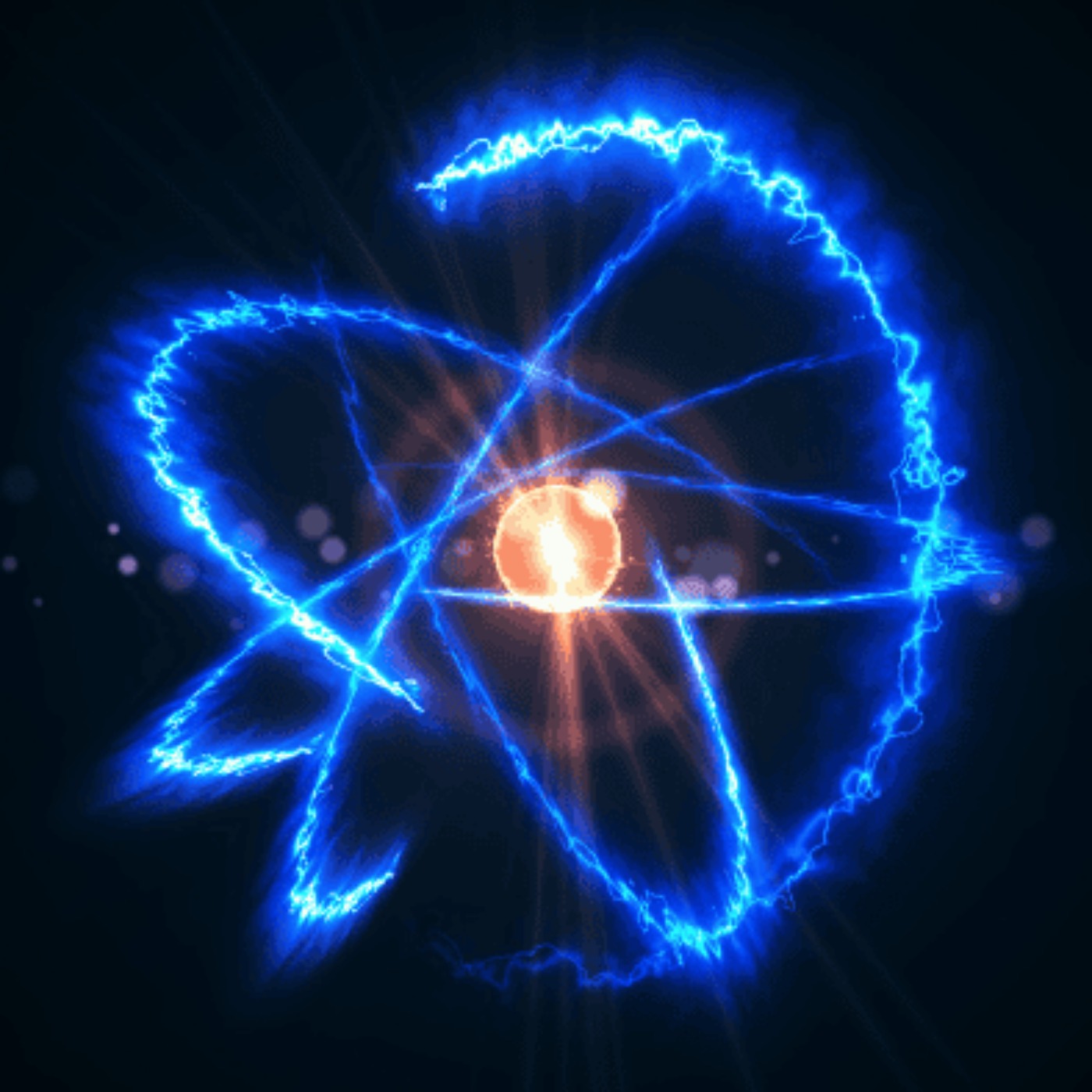 Bohr’s Atomic Playground | Atoms should be unstable. According to classical physics, electrons should spiral into the nucleus in a fraction of a second. Yet, atoms persist, and the universe exists. How? Danish physicist Niels Bohr had an idea: electrons don’t move freely—they stay in specific energy levels, jumping between them in sudden quantum leaps. His model finally explained why atoms are stable and why elements emit light at specific colors. But Bohr’s atomic model had its flaws—it only worked for hydrogen and still couldn’t explain why electrons don’t just drift between energy levels. This episode takes us through the bold, bizarre, and sometimes flawed ideas that shaped the first quantum atomic model and set the stage for something even weirder. Hosted on Acast. See acast.com/privacy for more information. | — | ||||||
| 2/18/25 |  Planck’s Last Resort: The Birth of Quantum Mechanics | In 1900, Max Planck wasn’t trying to revolutionize physics—he was just trying to fix an equation. Instead, he stumbled upon one of the most shocking ideas in science: energy isn’t continuous—it comes in tiny, indivisible packets called quanta. This accidental discovery shattered classical physics and became the foundation of quantum mechanics. But even Planck himself didn’t believe it at first! Why did he resist his own idea? How did it solve the “ultraviolet catastrophe” that had physicists scratching their heads? And why does this discovery still shape everything from modern technology to the nature of reality? Welcome to the moment that started it all. Hosted on Acast. See acast.com/privacy for more information. | — | ||||||
Showing 25 of 26
Sponsor Intelligence
Sign in to see which brands sponsor this podcast, their ad offers, and promo codes.
Similar Audience Demographics
Podcasts that attract a similar listener profile

Why This Universe?
Dan Hooper, Shalma Wegsman

The Quanta Podcast
Quanta Magazine

The Supermassive Podcast
The Royal Astronomical Society

Crash Course Pods: The Universe
Crash Course Pods, Complexly

Theories of Everything with Curt Jaimungal
Theories of Everything
The Astrophysics Podcast
Paul Duffell

The Rest Is Science
Goalhanger
Chart Positions
33 placements across 30 markets.
Chart Positions
33 placements across 30 markets.