Insights from recent episode analysis
Audience Interest
Podcast Focus
Publishing Consistency
Platform Reach
Insights are generated by CastFox AI using publicly available data, episode content, and proprietary models.
Most discussed topics
Brands & references
Total monthly reach
Estimated from 1 chart position in 1 market.
By chart position
- 🇷🇴RO · Technology#623K to 10K
- Per-Episode Audience
Est. listeners per new episode within ~30 days
1.5K to 5K🎙 Weekly cadence·111 episodes·Last published 3d ago - Monthly Reach
Unique listeners across all episodes (30 days)
3K to 10K🇷🇴100% - Active Followers
Loyal subscribers who consistently listen
900 to 3K
Market Insights
Platform Distribution
Reach across major podcast platforms, updated hourly
Total Followers
—
Total Plays
—
Total Reviews
—
* Data sourced directly from platform APIs and aggregated hourly across all major podcast directories.
On the show
From 1 epsHost
Recent guests
Recent episodes
N°104 - Marina Zurkow & Sarah Rothberg
Jun 25, 2026
Unknown duration
N°062 - Structure vs. Imagination with Andy Polaine
Mar 11, 2026
1h 03m 20s
N°103 - Tom Guarriello The Meaning of Branded Objects
Dec 22, 2025
Unknown duration
N°101 - Kirby Ferguson Infinite Remix
Aug 25, 2025
Unknown duration
N°100 - N O R M A L S Futures Are Boring
Aug 3, 2025
Unknown duration
Social Links & Contact
Official channels & resources
Official Website
Login
RSS Feed
Login
| Date | Episode | Topics | Guests | Brands | Places | Keywords | Sponsor | Length | |
|---|---|---|---|---|---|---|---|---|---|
| 6/25/26 | ![]() N°104 - Marina Zurkow & Sarah Rothberg | The podcast is back from hiatus with a fun one!Episode 104 is a conversation with Sarah Rothberg and my dear old friend and collaborator Marina Zurkow about More&More, their speculative card-deck and worldbuilding framework for making strange, useful futures with other people.We talk about why constraints are better than blank canvases, how a handful of absurd cards can quickly open up a whole social world, and why the point is not to invent dystopias but to imagine worlds you might actually want to live in. Along the way: the Whitney Museum, Hudson River speculation, public kitchens and bathrooms, communication by scent, abolitionist futures, AI ethics, material responsibility, and the impossibility of being perfectly virtuous while living inside messy technologies.It’s rangy, playful, and serious in the way good speculative work tends to be.Love these guys. | — | ||||||
| 3/11/26 | ![]() N°062 - Structure vs. Imagination with Andy Polaine✨ | designeducation+3 | Andy Polaine | Power of TenApple Podcasts+1 | — | designservice design+4 | — | 1h 03m 20s | |
| 12/22/25 | ![]() N°103 - Tom Guarriello The Meaning of Branded Objects | Please support the podcast on Patreon!Thank you to all of my paid subscribers!My friend Tom Guarriello joins me to unpack a deceptively simple question—why do some things matter more than others?How is it that “brands” are rarely just products. Tom describes how they’re meaning-machines: coffee cups, clothes, grocery aisles, and the everyday objects we carry through life are the things that quietly scaffold identity, aspiration, and sense of belonging.Choice arrives instantly; explanation comes later. Tom’s “meaning stack” helps us understand the rise of culture brands those brands that don’t just sell products, but stage worlds: concerts, exhibitions, lifestyles, and point-of-view. Tom's new book gets into all of this and more. Check out his "The Meaning of Branded Objects".https://tomguarriello.com | — | ||||||
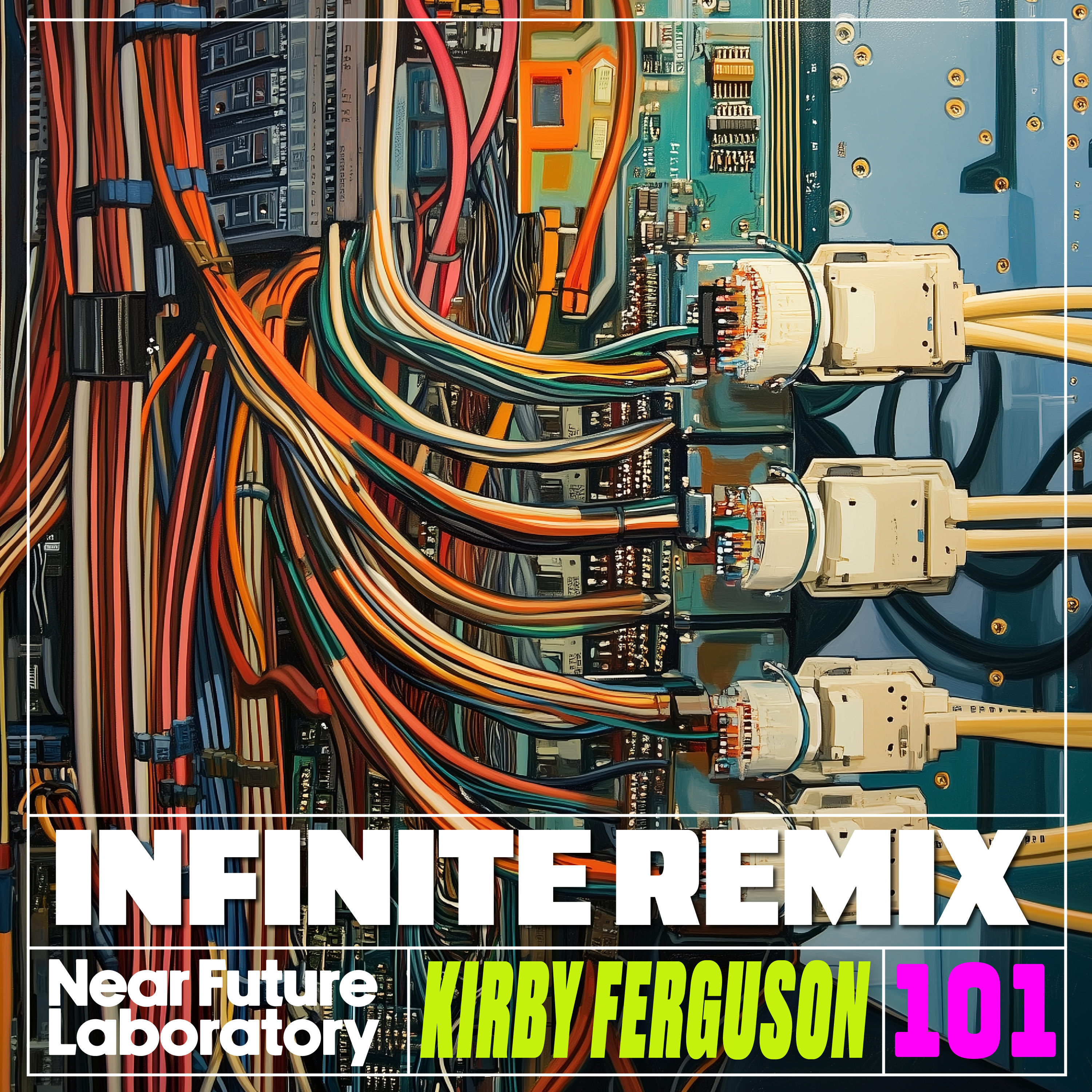
| 8/25/25 | ![]() N°101 - Kirby Ferguson Infinite Remix | Here is the link to the video we discuss: https://youtu.be/9pLCIoBZzd4 You'll want to watch that first — I mistakenly said I would include it but I don't want to rug Kirby's Youtube channel!This is a special an curious episode of the podcast — a broadcast from my weekly Office Hours where people join to share and discuss their various “side projects”.Last Friday Kirby Ferguson joined to share his latest video project, “Infinite Remix”.So, you'll want to watch the video here: https://youtu.be/9pLCIoBZzd4 as I won't be playing it here so as to respect Kirby's work on his Youtube channel.As a filmmaker, educator, and writer, Kirby Ferguson has been on the pulse of creativity and its evolution for decades. "Infinite Remix," is a visually enthralling an engaging exploration of artificial intelligence's role in creativity today. One is taken on an Adam Curtis-esque journey through the AI landscape, pondering how machines interact with human creativity and, ultimately, transform it.I hope you enjoy this special edition of the podcast!Don't forget — please support this work over on Patreon: https://patreon.com/nearfuturelaboratoryThe value I am assuming you get from this work is more than "0". It's only $10 a month, an it really helps make it easier to spend the time and cover the costs of production and platforms this content lives on would be a great way of showing me that the work matters more than "0".Thank you!(p.s. Join Office Hours by joining the Patreon!) | — | ||||||
| 8/3/25 | ![]() N°100 - N O R M A L S Futures Are Boring | Please support the podcast over on Patreon.https://patreon.com/nearfuturelaboratoryWe don’t suffer from a lack of imagination about the future. We suffer from too much of the same imagination.Every deck, every keynote, every speculative prototype—still echoing the same tropes: chrome cities, self-driving pods, dystopian biotech. A future flattened by repetition. Familiar. Market-tested. Boring.In episode 100 of the podcast, I caught up (again) with the gang at N O R M A L S.We found ourselves circling this question: Why do so many futures feel interchangeable? And what would it take to build ones that aren’t?Their proposal: Near future archetypes—modular, remixable worlds that aren’t just provocations but tools. Not just imagined futures, but working assets for innovation, policy, and design. Think less “trend report,” more “playable terrain.”It’s a shift from one-off spectacle to living systems. Instead of discarding scenarios each year, why not iterate them? Build them out like open-source lore. Let them gain rules, friction, culture. Let them become strange enough to surprise us.Because here’s the quiet truth: people don’t just adopt futures because they’re rationally compelling. They adopt them because they feel like home — familiar, evocative of something deeper, some feeling they have been chasing after, some vision of a world that probably goes back to the worlds they imagined when they were kids, or visions they integrated into their imagination that felt ‘cool’. So maybe the work is not only to critique the dominant tropes, but to seed alternatives that others want to live in—and then give them tools to help build those places themselves.Maybe the job isn’t just to map what comes next. Maybe it’s to make futures that feel like a place worth going.What’s one overused future trope you’d like to retire—and what would you like to imagine instead?https://normalfutu.re/nfa/nfa-essay-pt1/ | — | ||||||
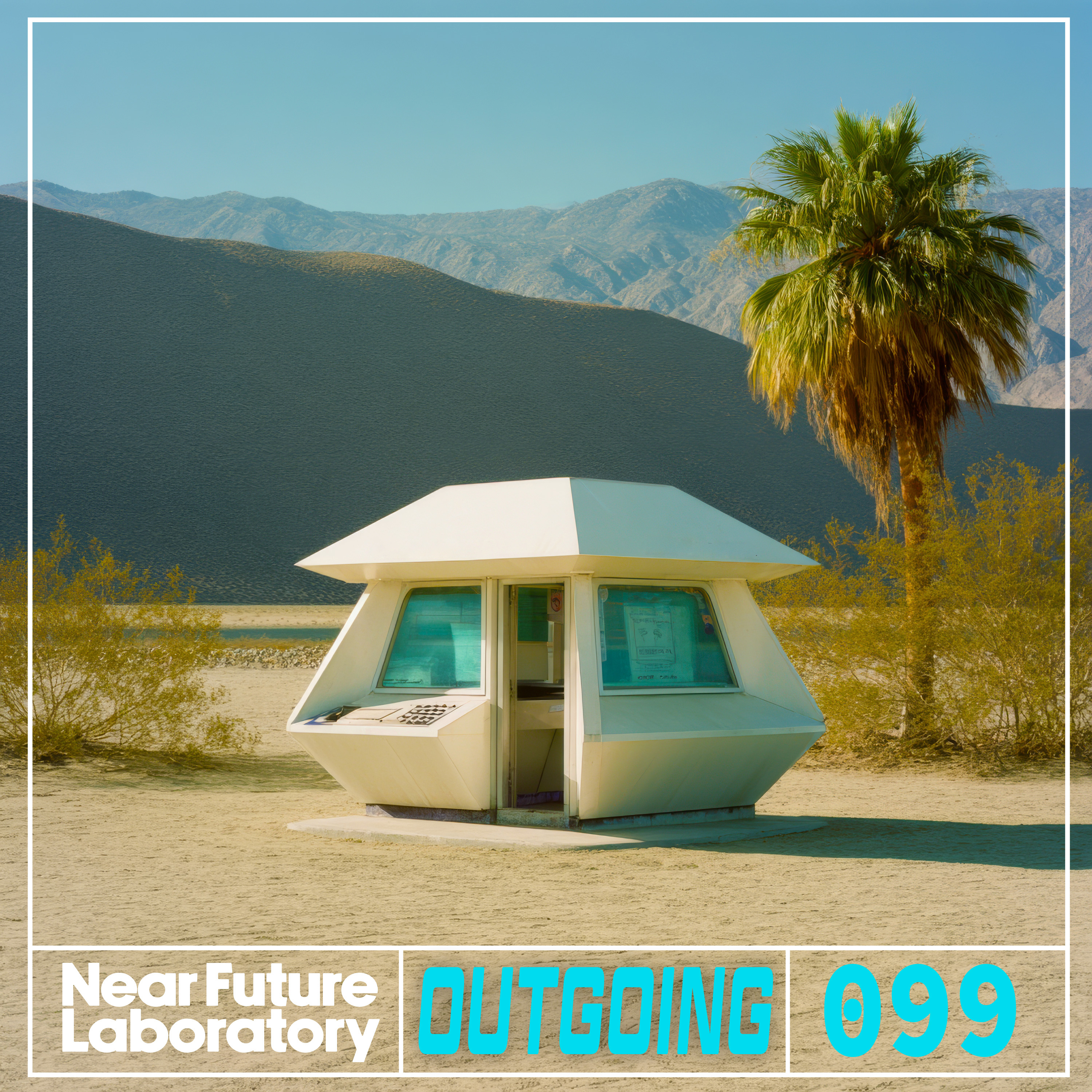
| 7/4/25 | ![]() N°099 - Outgoing | Outgoing is Brett Gui Xin and Del Hardin Hoyle, they are a creative design team based in Brooklyn. In this chat we discuss their participation in some recent design fairs which gave them a chance to take a break and reflect back on a busy stretch of work. Their media are various: sculptural furniture, music, performance, found materials. We got into their creative processes, the uniqueness of their collaborative practice, and their defiance against the dominant corporate culture in design. They emphasize the importance of maintaining creative independence, the emotional aspects of their work, and the joy found in creative exploration. Good stories, great lessons.Please consider supporting the podcast by becoming a Patron: https://patreon.com/nearfuturelaboratoryhttps://www.wallpaper.com/design-interiors/one-to-watch-brooklyn-studio-outgoinghttps://www.instagram.com/outgoinghqhttps://outgoing.website/https://www.wallpaper.com/design-interiors/one-to-watch-brooklyn-studio-outgoing https://www.instagram.com/delhardinhoyle/https://www.instagram.com/brettguixin/ | — | ||||||
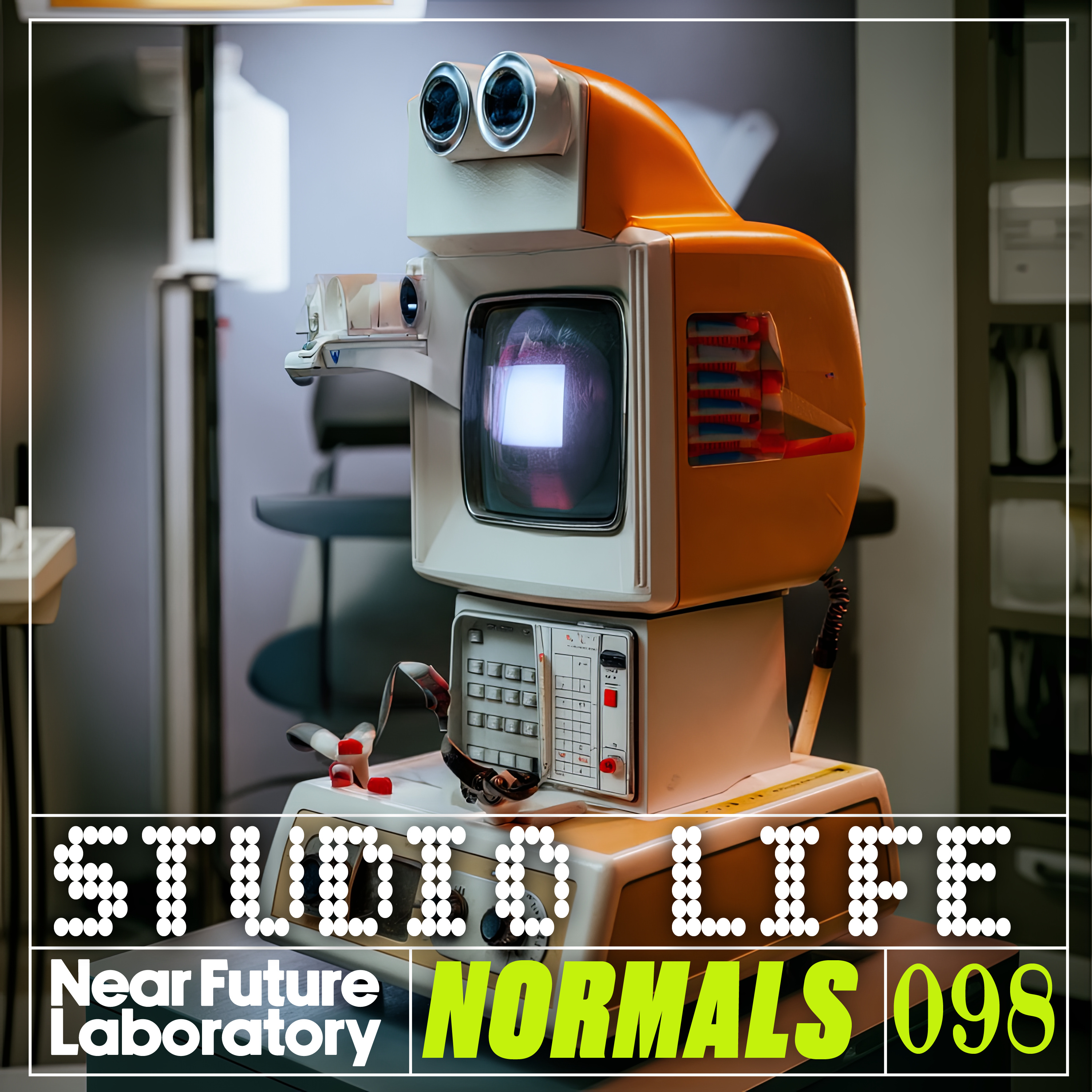
| 6/8/25 | ![]() N°098 - NORMALS | Visit NormalsIn my book ‘It’s time to imagine harder’, my hypothesis was that bringing the creative consciousness back to work is a clear path to unlocking the unexpected and unanticipated. A way to sense into and feel for the unseen. The creative consciousness - which has a proclivity or impulse to operate comfortably even enthusiastically with the unknown — can dream of the undreamt as if were soaking in a warm bath of ambiguity.The creative consciousness ambles around in the new territories and terrains for which the old ways of knowing and being do not fit — they are not big enough to make sense of the territory. They are The Old. The new is The New.The creative consciousness is the thing that fosters the accidental discoveries, and that fosters unintended breakthroughs that challenge conventional boundaries. The creative consciousness is a catalyst for organic evolution within any effort for which uncertainty looms large.When we embrace uncertainty, we open that new terrain, providing avenues for originality that rigid ideation frameworks often obscure.This episode of the podcast gets into the sometimes painful but always fascinating struggle by which we try to maintain the creative spirit in an increasingly optimized world.When the denizens of efficiency and productivity are the ones who set the rules, it can feel like a losing battle to keep the spark of innovation alive. But what if we flipped the script? What if we embraced the chaos, the messiness, and the unexpected as essential ingredients for creativity?In this episode, I chat with the guys at ‘Normals,’ a creative studio that thrives on the unexpected, the illogical, and the beautifully tangentially inflected. They argue that true innovation isn’t about relentlessly pursuing efficiency, but about deliberately disrupting it – a vital conversation for anyone wrestling with the pressures of modern work.This episode is a vital discussion for anyone who believes that the creative spirit is worth preserving, even in the face of relentless optimization. It’s a call to arms for those who feel that the relentless march of efficiency is stifling their creativity and and ultimately that thing we loosely call ‘innovation’ — the space where sense can be made out of chaos and confusion.So have a listen as we have a coffee and chat. Come along and see how ‘Normals’ cultivates a creative environment built on embracing ambiguity, challenging assumptions, and ultimately, celebrating the power of human imagination to create something truly new.I hope this episode serves as a reminder that sometimes the best solutions are found not in perfectly polished plans, but in delightfully messy explorations.Very much like the editing of this podcast.Oh, one last thing to say: this podcast, the newsletter, everything that goes on here is not free. It takes time and costs money.If the podcast and the community have value to you, please consider supporting it.There are three ways you can do that: first, is to become a professional tier supporter on Patreon. That’s easy. Just go over to Patreon and become a supporter.The second way is to buy the books and zines over at the shop.The third way is to hire me to work with you, your team or your organization. There are a multitude of shapes that can take, from workshops to commissioned projects to engaging me as a consultant.You can find more about that over on the website in the services section or simply book a call with me. | — | ||||||
| 5/4/25 | ![]() N°097 - Jarrett Fuller Going Home | The Intersection of Imagination, Science Fiction, Strategy and Creativity.we wandered into something I keep circling back to: the idea that strategy is a kind of science fiction. Not in the “space battles and robots” sense, but in the deeper way that science fiction gives us permission to imagine futures—plausible or not—and then build toward them. Jarrett and I talked about design not just as a tool for solving problems, but as a mode of inquiry, a way of asking better questions and shaping new cultural narratives.We both share this instinct that branding, design, and strategy aren’t just reactive—they’re speculative. They make bets on the kind of world a product or company wants to inhabit. They tell stories about futures that don’t exist yet, and then use those stories as scaffolding for action. That’s what excites me about this work: it's not just about “making things,” it's about materializing possibilities.There's also this important undercurrent about imagination as a form of intelligence. We don’t talk enough about that. Creativity isn’t some whimsical add-on—it’s central to how organizations find direction, how they differentiate, how they respond to change. And good strategy? It needs to evoke, not just calculate.This episode was a reminder that strategy and design, at their best, operate in the realm of the imaginary. They’re speculative tools. And maybe the real work is helping people see that imagination is infrastructure.Jarrett Fuller is a designer, writer, educator, editor, and podcaster. He is an assistant professor of graphic design at North Carolina State University and hosts the design podcast Scratching the Surface.https://jarrettfuller.com/http://scratchingthesurface.fm/ | — | ||||||
| 4/28/25 | ![]() N°096 - Tobias Revell Stories To Imagine Alternate Futures | In which Tobias and I converse about the release of the book 'Practices of Future Casting', the importance of events that gather thought leaders to spur creativity and career development in design and futures thinking, the compilation and production of the book, the value of speculative writing as a legitimate form of future making, the significance of in-person events for fostering impactful professional and creative relationships, the concept that imagination, like a muscle, must be exercised and integrated into both creative and professional contexts to drive meaningful change. We also ponder the challenge of replicating the studio environment digitally and stress that the embodied experience of shared physical spaces is vital for deep creative engagement.Check out the book 'Practices of Future Casting': https://nearfuturelaboratory.com/library/2024/11/practices-of-futurecasting/Check out our essay: https://nearfuturelaboratory.com/essays/2024/11/stories-to-imagine-alternate-futures/Follow Tobias: https://tobiasrevell.com/Support the podcast, join the community: https://patreon.com/nearfuturelaboratory | — | ||||||
| 3/13/25 | ![]() N°095 - Phil Balagtas Is Making Futures Work | Phil Balagtas' book "Making Futures Work" is a comprehensive map of the work of futuring.https://www.philbalagtas.com/Learn how to get started with Futures Thinking. With this practical guide, Phil Balagtas, founder of the Design Futures Initiative and the global Speculative Futures network, shows you how designers and futurists have made futures work at companies such as Atari, IBM, Apple, Disney, Autodesk, Lufthansa, and McKinsey & Company.This book demystifies the process of Futures Thinking into a language that's practical and useful for both designers and strategists. You'll learn about Strategic Foresight for using ideas about the future to anticipate and prepare for change; explore Speculative Design to deal with the relationship between science, technology, and humans; and Design Fiction to explore and critique possible futures.Balagtas also shares stories from his journey to build a global community and describes how he works with clients to reshape the futures vocabulary. With this guide, you'll learn how to:We discuss the challenges and triumphs of writing an all-encompassing book on futures practice, exploring the evolution of speculative design and the importance of imagination as a critical element in futures work. Phil shares his experiences from initial concept to publication, the personal and professional obstacles, and the intricate process of curating a methodologically rich and visually engaging text. We discuss the collaborative nature of futures work, the delicate balance of practicality and creativity, and the potential of immersive experiences to enhance learning and engagement in futures studies. Imagination, much like a muscle, needs to be exercised and nurtured through diverse techniques and collaborative efforts.Please support the podcast by becoming a Patron over on https://patreon.com/nearfuturelaboratory which also gets you access to the Near Future Laboratory Discord server, a vibrant hub of engaged, thoughtful, creative generalists oriented towards creating more habitable near future worlds. | — | ||||||
Want analysis for the episodes below?Free for Pro Submit a request, we'll have your selected episodes analyzed within an hour. Free, at no cost to you, for Pro users. | |||||||||
| 12/14/24 | ![]() N°094 - Troy Campbell Scientific Mind, Artistic Heart | Please become a paid supporter over on Patreon. Your support helps keep the Podcast going and gets you membership in the Near Future Laboratory community on Discord. A conversation with Troy Campbell who describes his journey from graduate school to becoming a professor and the Chief Scientist at On Your Feet, where he became passionate about the power of behavioral science.We talk about concepts like identity, memory, and mindset activation, and how they can be utilized across consumer, organizational, and personal contexts. Troy talks about how he fuses behavioral science with artistic practices like storytelling and applied improvisation. We also get into specific methods, such as using portals for easing transitions when imagining into possible futures, the kinds of warm-up activities that help foster creativity, and the importance of grounding ideas, understanding imperfections, and leveraging narrative to communicate effectively. Throughout we wonder about the interlinks between structured approaches and expansive creative exploration and how these in the right proportions can achieve meaningful, impactful, and wonderfully unexpected (innovative) outcomes. https://www.linkedin.com/in/troy-hiduke-campbell/ https://www.hidukehouse.com/ | — | ||||||
| 12/6/24 | ![]() N°093 - Gary Hustwit Why Does A Film Have To Be The Same Everytime | This is Episode N°093 of the Near Future Laboratory Podcast , a conversation with filmmaker/director Gary Hustwit, the creative punk mind behind documentaries Rams, Helvetica and Objectified. We dive into his journey in independent filmmaking, his DIY ethos, and his bold ideas about storytelling in a digital world. Gary shares his approach to creating generative cinema—films that evolve and change with each viewing. We explore what it means to push against the boundaries of trad filmmaking, trad distribution, and the creative process. A deep and inspiring conversation about art, risk, and ways of imagining harder. | — | ||||||
| 9/24/24 | ![]() N°092 - The Future of Work Is Not ‘Work from Home’ | Read More 👉🏽 https://detroit.imaginesharder.com Can you imagine your idea of the future of work, beyond Zoom calls from the beach? What is the Onboarding Guide for the Future of Work? What is the Resumé from the Future of Work? What does the equivalent of the ‘org chart’ look like? Want to help create a reinvigorated future imaginary of what work could be? Want to try your hand at Design Fiction Worldbuilding? Join me for Detroit Imagines Harder: Futures of Work, a 3-day Design Fiction Summit & Workshop held in real life in real Detroit. Just a few spots left! October 16-18, 2024. Read More 👉🏽 https://detroit.imaginesharder.com | — | ||||||
| 7/26/24 | ![]() N°091 - Imagine As Hard As Philip K. Dick with Tobias Revell | Tobias and I have a tidy morning/evening conversation that revolves around the impact of Philip K. Dick's science fiction, particularly how his imaginative devices influence modern technological narratives. We talk about the ways he refers to and anticipates AI and other artifacts, of course there's a deep dive into the significance of the Minority Report's gestural interface created for the 2001 film adaptation, and how it has influenced real-world technological advancements. What prompted this discussion was the recent release of the book Towards the Realm of Materiality: Designing Philip K. Dick's Non-Existing Technologies and Androids Dream of Electric Sheep, the PKD book from an "adjacent now." The question I have is this: what methods can be adopted in order to operationalize these science fiction themes into practical realities, with the aim of constructing a more habitable world using advanced design and speculative concepts. Please consider supporting the podcast and joining the Near Future Laboratory community over on Patreon! Exploring AI Imaginaries and Future Speculations In this episode, we discuss the continuation of the AI magazine project and the upcoming season of the Super Seminar series. And then we jump into discussing the book in which Tobias has an essay about the philosophy and conceptualization of technology in Philip K. Dick's works, particularly focusing on the adaptive nature of everyday technology. We get into the production design and cultural impact of the 2001 film "Minority Report", based on the 1956 (!) PKD novella of the same name, emphasizing how media can shape and influence technological advancements. 00:00 Introduction and Recap 01:53 Discussion on AI and Philip K. Dick 05:17 Minority Report and Technological Vernacular 11:25 Speculative Design and Future Technologies 16:44 Cultural Impact and Future Visions 25:03 Breeze Punk and Green Transition | — | ||||||
| 7/22/24 | ![]() N°090 - Kyle Ng / Brain Dead / Fashion For Futuring | Near Future Laboratory Podcast Episode 90: Exploring Creative Worlds with Kyle Ng Support the podcast on Patreon: https://patreon.com/nearfuturelaboratory Join us at Detroit Imagines Harder: https://detroit.imaginesharder.com $55 Gets You 4 Design Fiction Books (Plus Electronic Sheep Training Cards): https://shop.nearfuturelaboratory.com/products/the-manual-of-design-fiction-paperback In Episode 90 of the Near Future Laboratory podcast, Julian Bleecker, founder of the Near Future Laboratory, sits down with Kyle Ng, creative director and founder of Braindead, to discuss his journey through creativity and innovation. Kyle shares his experiences from a young age, detailing his diverse creative influences, from sports and punk rock to film and new media. He speaks about his brand evolution, beginning with Farm Tactics, and how he navigated the fashion world with a unique DIY ethos. We get into the importance of storytelling, building immersive worlds, and staying true to one's creative instincts. 00:00 Introduction 02:33 Upcoming Event: Detroit Imagines Harder 03:22 Design Fiction Books and Merchandise 04:03 Conversation with Kyle Ng Begins 04:10 Kyle Ng on Curiosity and Inspiration 08:25 Exploring Technology and Identity 16:44 Kyle Ng's Journey and Influences 22:43 Early Career and Creative Exploration 31:27 The Birth of Farm Tactics 32:54 From Biking to Business: Early Hustles 35:33 Scaling Up: From Local to Major Collaborations 37:41 The DIY Ethos and Business Growth 39:33 The Philosophy of Success and Failure 42:34 Brain Dead: Evolution and Expansion 48:03 Building Cultural Experiences 55:05 The Future Vision and Personal Anecdotes 57:55 Conclusion and Final Thoughts | — | ||||||
| 6/23/24 | ![]() N°089 - Silvio Lorusso Design & Disillusion | In Episode 089 I get into an in-depth conversation with guest Silvio Lorusso, a designer, artist, and writer based in Lisbon. Our discussion centers around the complex relationship between design, disillusionment, and the evolving role of design in society, as Silvio has articulated in his recent book 'What Design Can't Do', a critique of the rhetorical expectations placed upon design. We consider the future and past inspirations relevant to the field of Design and cover various facets of design culture, including the loss of material practices, the socio-economic impacts of design evolution, and the melancholic nostalgia among designers today. We bet into the cultural significance of memes, the backlash against crypto art, and the generational gap in the perception of technological advancements. We also get to share personal anecdotes from our professional experiences, and come to share a kind of hopeful aspiration mixed with skepticism towards the promises of modern design and technology. A fun conversation! Please rate and write a review on whatever platform you're listening right now, and support this work over on Patreon! Your support is meaningful and gratefully received. To get in touch, contact me over at Near Future Laboratory Thanks for listening! _Julian | — | ||||||
| 5/8/24 | ![]() N°088 - Dave Gray School of the Possible | A discussion with Dave Gray about our experiences creating communities that foster human connection, imagination, and possibility. We share our own approaches to building new kinds of ways of organizing human potential where people can explore ideas and practice creatively. "What if school was a place where we could test our theories by creating prototypes, proposals, and provocations; where experiments were encouraged, where people could play, practice, and prepare for life and work?" https://schoolofthepossible.com See all of my podcasts over on https://nearfuturelaboratory.com/ Also, please support the podcast over on patreon.com/nearfuturelaboratory. Becoming a patron gets you access to the Near Future Laboratory Discord, and discounts on SuperSeminar. Please also rate the podcast and write a review! Thank you! Julian | — | ||||||
| 3/24/24 | ![]() N°087 - Taryn O'Neil & Tamara Krinsky | Taryn O'Neil and Tamara Krinsky are the creative force behind Scirens, a creative team working at the intersection of science & storytelling, creative entertainment that encourages curiosity and imaginative thinking to shape a new vision for a rapidly changing world. They recently produced the trailer for Arizona State University's Center for Science and the Imagination's Climate Action Almanac. You can see the trailer, called The Assignment over on Youtube. Thank you to all my patrons who support this podcast and the work amongst the Near Future Laboratory's Discord community. Please consider supporting this work by becoming a Patron over at patreon.com/nearfuturelaboratory. If you're interested in the work we do and how we do it, you will find some useful references and tools over at https://shop.nearfuturelaboratory.com https://scirens.com/ https://www.climatealmanac.org/ https://csi.asu.edu/ | — | ||||||
| 3/24/24 | ![]() N°086 - What's for Breakfast In An AI Future Part 2 | This is a digest of the 3PM session of General Seminar Season 05 Episode 01 where we discuss possible futures in which AI is as normal, ordinary, and everyday as wheels on luggage and televisions we talk to. General Seminar is Near Future Laboratory's platform for sense-making in which we excavate artifacts from possible futures rather than make predictions and prognostications. This is the Design Fiction approach to imagining into possible futures. To learn more about General Seminar sign up for the Near Future Laboratory's newsletter at https://nearfuturelaboratory.com and see past General Seminars at https://generalseminar.com | — | ||||||
| 3/24/24 | ![]() N°085 - What's for Breakfast In An AI Future Part 1 | This is a digest of the 10AM session of General Seminar Season 05 Episode 01 where we discuss possible futures in which AI is as normal, ordinary, and everyday as wheels on luggage and televisions we talk to. General Seminar is Near Future Laboratory's platform for sense-making in which we excavate artifacts from possible futures rather than make predictions and prognostications. This is the Design Fiction approach to imagining into possible futures. To learn more about General Seminar sign up for the Near Future Laboratory's newsletter at https://nearfuturelaboratory.com and see past General Seminars at https://generalseminar.com | — | ||||||
| 2/17/24 | ![]() N°084 - EMERGENCY BROADCAST! THRILLING WONDER STORIES | Ladies and gentlemen, boys and girls, gather 'round for an electrifying journey through the cerebral and speculative realm of "Thrilling Wonder Stories." Listen as we regale you with a tale of imagination, innovation, and intellectual wonder. Our narrative unfolds through a dazzling array of discussions, exploring the intersection of technology, science, and the arts. From the organic to the artificial, from the accidental to the meticulously planned, our speakers weave a tapestry of ideas that challenge the boundaries of reality and fiction. Venture with us into discussions that span the history of consciousness, the marvels of special effects in film, the complexities of artificial intelligence, and the speculative frontiers of science fiction. This transcript is not just a record; it's a gateway to exploring the future's potential, the mysteries of the universe, and the uncharted territories of human creativity. Dive into a world where the wonders of tomorrow are discussed today, where imagination is the currency, and the possibilities are as boundless as the stars. Welcome to "Thrilling Wonder Stories," where every word is a step into the future! With Liam Young, Matt Jones, Julian Bleecker, Bruce Sterling, and Kevin Slavin https://patreon.com/nearfuturelaboratory https://shop.nearfuturelaboratory.com | — | ||||||
| 1/12/24 | ![]() Last Week from the Near Future N°009 - Weeks 51-52/2023 | Some things that happened at the Near Future Laboratory the last weeks of 2023 including a day trip to SFO using a travel voucher that was going to expire at the end of the year, meeting with the NFL gang for an awesome lunch and chat, hanging with Will Carey from https://formation.eco to continue working on the meaning, purpose, and offering of this reinvigorated evolution of Near Future Laboratory. There were also a bunch of (other people's) podcasts that dropped (links below). And it was the 9 year anniversary of OMATA which had me go back and reflect on how I used Design Fiction to help me create a future vision of the company and share that vision with investors who were so enthralled with this vision that they ended up buying the whole company.Linkshttps://formation.ecohttps://medium.com/design-fictions/why-did-i-write-an-annual-report-from-the-future-849cf12b0687Reality Plushttps://podcasts.apple.com/us/podcast/realitypl-us/id1722133066?i=1000639248112https://youtu.be/ld6FLoCH3Vw?si=NYJEXdD3jLDIybdgExpedition Works' Journey with Purposehttps://podcasts.apple.com/us/podcast/julian-bleecker-a-little-bit-more-curious/id1697389263?i=1000638677720In Clear Focus / Design Fictionhttps://bigeyeagency.com/design-fiction-with-julian-bleecker/ | — | ||||||
| 12/24/23 | ![]() N°082 - Shashwath Santosh and The Innovation Crisis | Episode 082 of the Near Future Laboratory Podcast with Julian Bleecker in conversation with Shashwatch Santosh. Home Page Instagram Please support this work and join the Near Future Laboratory Discord through Patreon: https://patreon.com/nearfuturelaboratory You can also support the work by buying something from the Near Future Laboratory Shop of Futures Artifacts: https://shop.nearfuturelaboratory.com In Episode 082, Shash and I dance around the world of design education from Shash’s experiences at Parsons School of Design. He describes the challenging norms and his explorations around the boundaries of speculative design and Design Fiction. Shash reveals that he is a proponent of creative confusion, and shares his journey through design school, emphasizing the importance of breaking away from traditional labels and constraints. We get a candid discussion of the struggle to define his work, moving beyond conventional roles like industrial designer or object maker, and embracing the ambiguous realm of speculative design. Shashwatch's insights are insightful and profound, particularly useful for those in or considering design education. I was especially intrigued by his critique of how the term 'speculative design' can inadvertently create aesthetic stereotypes and limit the scope of design projects. He advocates for a design approach that transcends labels, allowing work to speak for itself without being confined by preconceived notions of discipline. This approach, he believes, fosters creativity and opens up a world of possibilities beyond the conventional boundaries of design. I somewhat echo Shashwatch’s sentiments, and we wonder together and probe the practical aspects of translating expansive and imaginative thinking into viable career paths — where viable means an exchange of value (insight/imagination/creativity for $$$). Shashwatch responds with examples from his own life, discussing the challenges of job hunting and the importance of presenting work effectively to various audiences. He highlights the significance of maintaining technical rigor in projects, which helps in navigating the murky waters of creative industries. Shashwatch also shares his experience of struggling with familial expectations and the pressures of justifying his unconventional career path. He stresses the importance of finding a balance between creative freedom and economic viability, a dilemma faced by many in creative fields. His journey underscores the need for designers to possess not just creative skills but also the ability to articulate and market their ideas effectively in a commercial context. You can find Shash’s thesis project 'The Public Library of Usables', a concept born from his exploration of object-oriented ontology. This project challenges traditional object functions, inviting a re-imagination of how objects are used and interact with each other, reflecting his deep engagement with speculative design principles. Hopefully this Episode provides a compelling narrative on the complexities of design education and practice, highlighting the importance of breaking conventions, embracing ambiguity, and balancing creative aspirations with practical realities. I’d say that Shash's journey and optimism is a testament to the transformative power of speculative design and the value of creative exploration in shaping a unique design identity. | — | ||||||
| 12/24/23 | ![]() Last Week from the Near Future N°008 - Week 50/2023 | 1. Postcards from some possible futures, sent to me by Elliot P. Montgomery 2. A Magazine from the Future in which autonomous vehicles are about as normal, ordinary, and everyday as television remote controls, wheels on luggage, and laptop sleeves. 3. Androids Dream of Electric Sheep, our pulp pop-psychology paperback from some future in which Sony's Aibo became as popular as the Sony Walkman and now, well — they're just here, and about as ferocious as a cuddly cute robot dog. https://magazinefromthefuture.comhttps://shop.nearfuturelaboratory.com... * Exploration of Possible Futures through Artifacts: The use of creative artifacts like postcards, magazines, and books to explore and represent possible futures. These artifacts are designed to augment traditional, analytical approaches to future studies with imagination and sensory experiences. * Design Fiction as a Tool: The value of design fiction is that it’s a method that translates ideas and scenarios about the future into tangible, visual forms. You can think of Design Fiction’s translation of research analysis into something engaging as an analog to the way a screenplay becomes an immersive, engaging visual story when it is made into a film. Design fiction serves to make future concepts more relatable and understandable. * Some Examples of Artifacts I've Created * Magazine from a Future with Autonomous Vehicles: Created for a client, this magazine represents a world where autonomous vehicles are commonplace. It was developed through workshops with various researchers and designers, capturing collective hopes, fears, and expectations. * Book from a Future with Ho-Hum Androids: Imagine a world where androids are as common and non-threatening as a Sony Walkman. I created a book from that world — a pop-psychology analysis of the Android psyche. * Imagination and Speculation: It’s important to imagine and speculate about different futures, considering the wide-ranging implications of technological advancements. Design Fiction presents the useful challenge to think beyond the immediate and apparent effects of new technologies. * Cognitive and Sensory Engagement: Design Fiction is a way to create more immersive and sensory engagement with future scenarios, moving beyond traditional, data-driven methods. Design Fiction emphasizes the role of imagination and creativity - the making of artifacts from these futures — in making future studies more accessible and emotionally resonant. | — | ||||||
| 12/16/23 | ![]() N°081 - Randy Plemel is Expedition Works | Randy Plemel is a design and innovation consultant specializing in solving hard and complex problems for people in elegant, and hopefully simpler ways. Randy has worked with a wide range of organizations in the public sector on democracy promotion, and the private sector on who their customer might be, including the Knight Foundation to reimagine the civic commons across eight cities, Bloomberg Philanthropies to cultivate city-based innovation in the U.S. and India, AARP to evolve their role in creating livable communities for all, and the City of Los Angeles and NYCHA to make cities better through design. He’s also completed a range of new products and services with a diverse set of clients—including State Farm, Steelcase, the Consumer Financial Protection Bureau, Tata, Citibank, Dr. Reddy's Laboratories, and Walgreens—on a variety of design challenges, from new digital communication tools, to blended digital and physical experiences, to entirely new retail strategy and concepts. Randy holds a BS in Architecture and Masters of Architecture from the University of Cincinnati. https://www.linkedin.com/in/randyplemel/ Expedition Works: https://expedition.works/ Journey With Purpose: https://jwp.news/founding/ Avery’s Journey, Randy’s Design Fiction exercise gives purpose to Generative AI tools rather than freaking out or fetishizing and drooling all over them. https://expedition.works/project/averys-journey Journey With Purpose Podcast https://podcasts.apple.com/us/podcast/journey-with-purpose/id1697389263 (p.s. This ‘Better Bin’ episode with Colin Kelly discussing how his ad-hoc, let’s-see-what-happens submission to get the contract to design the new New York City public trash bin is awesomely inspiring. https://podcasts.apple.com/us/podcast/colin-kelly-better-bin/id1697389263?i=1000633101486) | — | ||||||
Showing 25 of 94
Pitch Fit is a Pro feature
See how bookable this show is for guests, which brands already advertise, the per-episode ad value, and the best-fit guest and sponsor profile. The numbers are blurred on the free plan.
How readily this show books outside guests like you.
How proven this show is for host-read sponsorships.
For Guests
ProFor Advertisers
ProUpgrade to Pro to unlock guest cadence, sponsor categories, fit scores, and per-episode ad value for this show.
Chart Positions
1 placement across 1 market.
Chart Positions
1 placement across 1 market.