
Insights from recent episode analysis
Audience Interest
Podcast Focus
Publishing Consistency
Platform Reach
Insights are generated by CastFox AI using publicly available data, episode content, and proprietary models.
Most discussed topics
Brands & references
Est. Listeners
Insufficient chart data. Estimates will improve as the show charts.
- Per-Episode Audience
Est. listeners per new episode within ~30 days
N/A🎙 ~2x weekly·86 episodes·Last published 1mo ago - Monthly Reach
Unique listeners across all episodes (30 days)
N/A - Active Followers
Loyal subscribers who consistently listen
N/A
Market Insights
Platform Distribution
Reach across major podcast platforms, updated hourly
Total Followers
—
Total Plays
—
Total Reviews
—
* Data sourced directly from platform APIs and aggregated hourly across all major podcast directories.
On the show
From 11 epsHost
Recent guests
Recent episodes
Kevin Delaney & Jim Friedlich: How The San Francisco Standard is Reinventing the News App
May 30, 2026
58m 03s
Kati Erwert & Tristan Loper: How The Seattle Times uses AI to drive revenue in local news
Apr 12, 2026
57m 39s
Kat Downs Mulder: Inside Yahoo’s AI Strategy for the Future of News
Mar 13, 2026
46m 01s
CNN, The New York Times, Reuters, and Hacks/Hackers on AI in the Newsroom: In Conversation with Arlyn Gajilan, Burt Herman, Ryan Struyk and Rubina Madan Fillion
Mar 2, 2026
42m 54s
Uli Köppen: How Bavarian Broadcasting is preparing for an AI-mediated future where trusted content wins
Mar 2, 2026
46m 46s
Social Links & Contact
Official channels & resources
Official Website
Login
RSS Feed
Login
| Date | Episode | Topics | Guests | Brands | Places | Keywords | Sponsor | Length | |
|---|---|---|---|---|---|---|---|---|---|
| 5/30/26 |  Kevin Delaney & Jim Friedlich: How The San Francisco Standard is Reinventing the News App✨ | AI in journalismpersonalized news+4 | Jim FriedlichKevin Delaney | The San Francisco StandardThe Lenfest Institute for Journalism+2 | — | AI-native newspersonalized obsessions+3 | — | 58m 03s | |
| 4/12/26 | 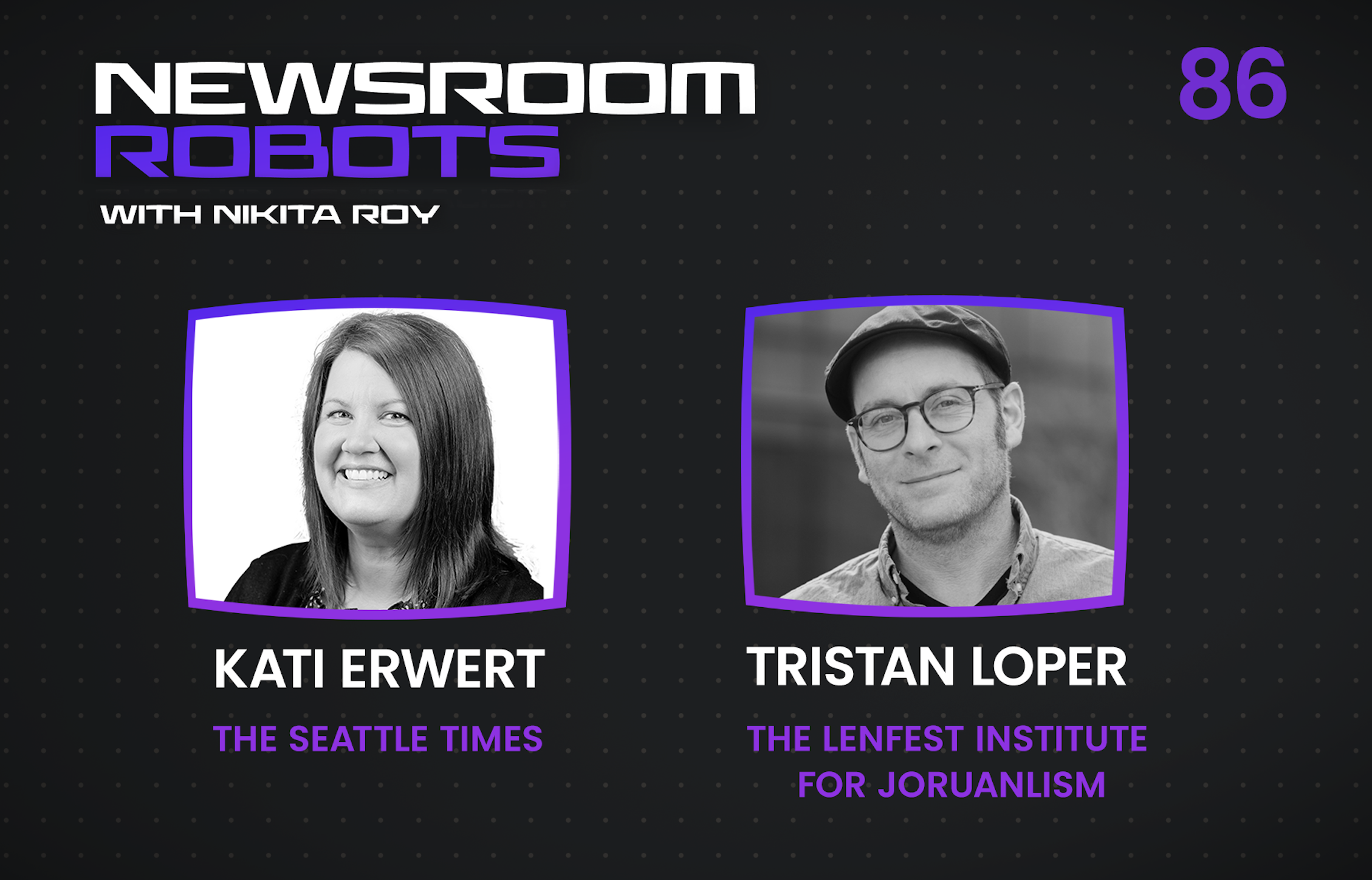 Kati Erwert & Tristan Loper: How The Seattle Times uses AI to drive revenue in local news✨ | AI in journalismlocal news revenue+4 | Kati ErwertTristan Loper | The Seattle TimesLenfest Institute+3 | — | AIadvertising+7 | — | 57m 39s | |
| 3/13/26 | 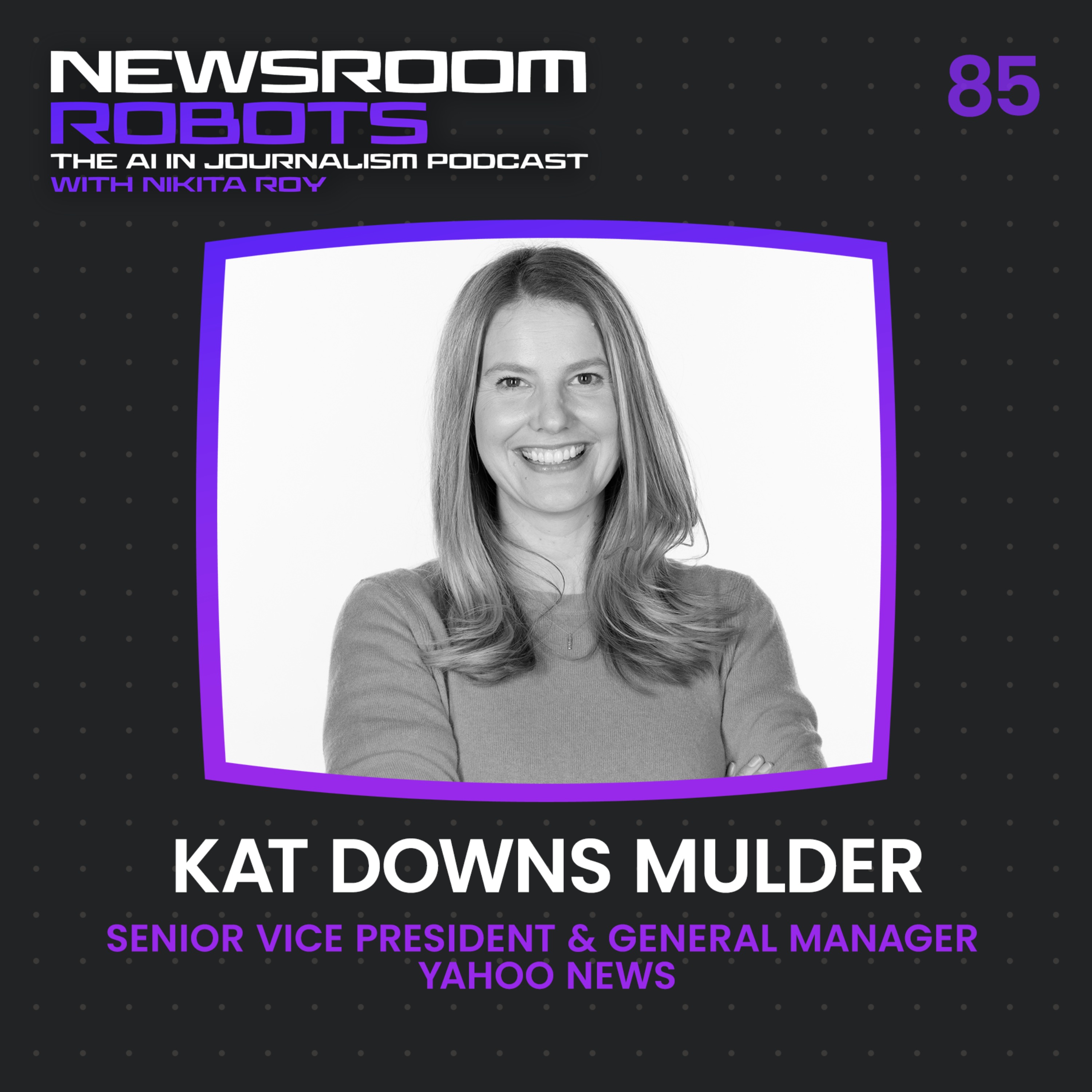 Kat Downs Mulder: Inside Yahoo’s AI Strategy for the Future of News✨ | AI in newsYahoo News strategy+3 | Kat Downs Mulder | Yahoo NewsThe Washington Post+2 | — | Yahoo NewsAI strategy+5 | — | 46m 01s | |
| 3/2/26 | 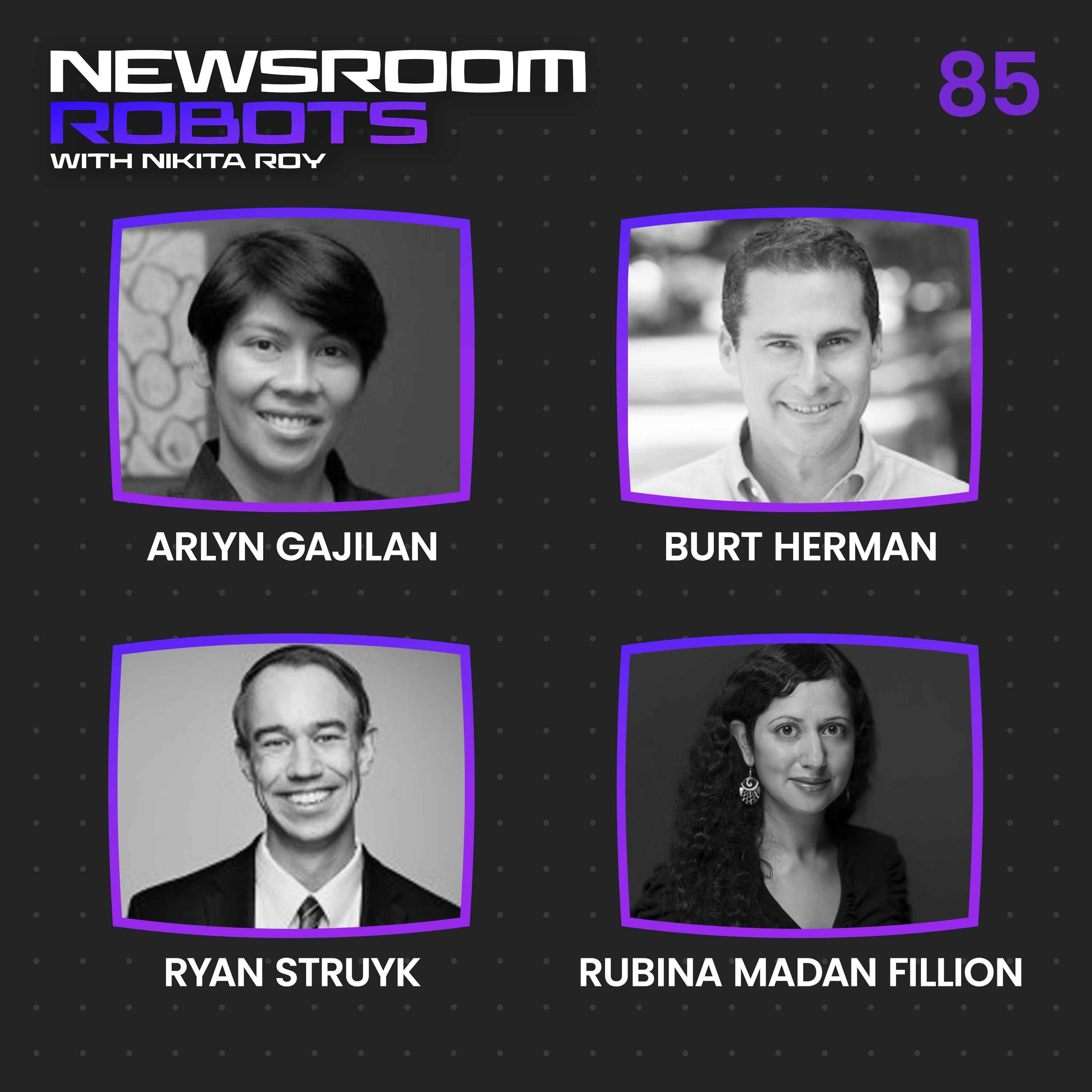 CNN, The New York Times, Reuters, and Hacks/Hackers on AI in the Newsroom: In Conversation with Arlyn Gajilan, Burt Herman, Ryan Struyk and Rubina Madan Fillion✨ | AI in newsroomsjournalism+4 | Ryan StruykRubina Madan Fillion+2 | CNNThe New York Times+2 | New York City | AInewsroom+7 | — | 42m 54s | |
| 3/2/26 |  Uli Köppen: How Bavarian Broadcasting is preparing for an AI-mediated future where trusted content wins✨ | AI strategypublic broadcasting+3 | Uli Köppen | Bavarian Broadcasting | — | AInewsroom+5 | — | 46m 46s | |
| 1/27/26 |  Melissa Bell, Aron Pilhofer, Mark Chonofsky & David Chivers: Chicago Public Media on Building AI Tools That Serve the Audience✨ | AI in journalismlocal news+4 | Melissa BellAron Pilhofer+2 | Chicago Public MediaWBEZ+2 | — | AI toolsChicago Public Media+6 | — | 48m 13s | |
| 1/10/26 | Alessandro Alviani & Fabian Heckenberger: How Germany’s Süddeutsche Zeitung is building AI products that audience can trust✨ | AI in newsroomssustainable AI product strategy+4 | Alessandro AlvianiFabian Heckenberger | Süddeutsche Zeitung | Germany | AI productsnewsroom strategy+5 | — | 59m 31s | |
| 1/1/26 | Francesco Marconi & Scott Austin: 2025 Year in Review, What Actually Changed in AI and Media✨ | AI in mediajournalism+4 | Francesco MarconiScott Austin | AppliedXLThe Wall Street Journal+3 | — | AImedia+7 | — | 1h 12m 23s | |
| 12/19/25 |  Jim Friedlich, David Chivers & Matt Boggie: How the Lenfest AI Collaborative placed AI engineers in 10 newsrooms✨ | AI in newsroomsLenfest AI Collaborative+4 | Jim FriedlichDavid Chivers+1 | DeweyLenfest Institute+3 | — | AI engineersnewsroom problems+6 | — | 47m 29s | |
| 12/15/25 |  Tav Klitgaard: How Zetland turned a newsroom problem into a global AI business✨ | AI in journalismtranscription technology+3 | Tav Klitgaard | GoodTapeZetland+1 | Denmark | AI transcriptionGoodTape+6 | — | 38m 13s | |
Want analysis for the episodes below?Free for Pro Submit a request, we'll have your selected episodes analyzed within an hour. Free, at no cost to you, for Pro users. | |||||||||
| 11/26/25 |  Markus Franz: How Germany's Ippen Digital Is Prototyping the AI-Powered Newsroom of the Future✨ | AI in journalismnewsroom workflow+4 | Markus Franz | Ippen Digital | GermanyStuttgart | AI-powered newsroomjournalism+4 | — | 51m 44s | |
| 11/15/25 |  Olle Zacharison: How BBC News is Shaping its AI Strategy for the Next Era of Journalism | How do you bring AI into a newsroom as big and globally distributed as the BBC, an editorial network that stretches across 42 languages and more than 5,000 journalists?This week on Newsroom Robots, host Nikita Roy talks to Olle Zachrison, Head of News AI at BBC News, where he leads the BBC’s efforts to advance AI use and strengthen its journalism and audience experiences. Previously, the Head of AI at Swedish Radio, Olle has spent the past few years implementing practical newsroom AI workflows while upholding public-service values.In this conversation, Olle breaks down BBC’s four-part AI strategy, covering large-scale translation and transcription, content reformatting, investigative tools, and early experiments with synthetic audio and conversational news. He shares what’s working inside one of the world’s largest news organizations, what routinely stalls AI projects, and why the most challenging part of AI transformation isn’t the technology but the collaboration required across editorial, product, and engineering. Olle also reflects on what it means to innovate as a public broadcaster in an AI-driven ecosystem, and why archives, credibility, and direct audience relationships will determine which journalism remains indispensable in the years ahead.This episode covers:03:39 – The BBC’s four-part AI strategy: Boosting productivity, reformatting content, augmenting journalism, and innovating user experience as the core themes05:10 – Using AI for large-scale transcription, tagging, live pages, alt text, newsletter production, and translation to save time and make content more searchable.08:17 – Reformatting content across platforms and formats20:59 – Innovating user experiences with synthetic audio and conversational formats31:59 – How the BBC uses strategic themes, clear metrics, and fast pilots to decide what’s worth building and scaling46:59 – Inside the BBC’s fine-tuned LLM and Style Assist52:01 – What it means to be a public broadcaster in an AI-driven ecosystem01:02:58 – Olle’s personal AI stackSign up for the Newsroom Robots newsletter for episode summaries and insights from host Nikita Roy. Hosted on Acast. See acast.com/privacy for more information. | — | ||||||
| 10/8/25 |  Vilas Dhar: Why the Future of Journalism Is Still Human | This week on Newsroom Robots, host Nikita Roy sits down with Vilas Dhar, President of the Patrick J. McGovern Foundation, one of the world's foremost philanthropies advancing AI for public good. Dhar leads a $1.5 billion endowment that has committed over $500 million to projects spanning climate action, public health, education, and democratic governance. He has served on the UN Secretary-General's High-Level Advisory Body on AI, is the U.S. government's nominated expert to the Global Partnership on AI, and was named a World Economic Forum Young Global Leader in 2022.Across philanthropy, policy, and technology, Dhar carries one central conviction: technology may accelerate, but the future of journalism and society must remain human-centered. Dhar introduces a three-part framework for ethical AI deployment (responsible data, clear boundaries, and transparency) and explains how to translate abstract principles into concrete newsroom decisions. He unpacks his LISA framework (Listen, Involve, Share, Assess) for audience-centered AI design, and tackles the hardest questions facing newsroom leaders: Should we buy or build AI tools? How do we balance innovation with environmental sustainability? What happens to human creativity when machines can create?But perhaps most powerfully, Dhar challenges a deeply held belief in journalism: that media organizations can remain ‘just’ media companies in an AI-driven world. There is no way to be a media organization today without also being a technology organization, he argues, and that shift requires not just new tools, but a fundamental reckoning with organizational identity and purpose. This epiosde covers:00:31 – Introducing Vilas Dhar and his human-centered AI vision: Why technology should serve dignity, equity, and democracy—not just profit02:17 – The three-part framework for ethical AI: Responsible data, clear boundaries, and transparency as actionable principles07:08 – Questions leaders must ask before deploying AI: Who's involved? Who's accountable? Who has editorial control over AI use?10:16 – The LISA framework: Listen, Involve, Share, Assess to turn AI experimentation into behind-the-scenes reporting that builds public trust13:30 – Navigating ethical dilemmas around AI-generated content13:51 – The three phases of newsroom AI adoption18:54 – Why "we're not a tech company" no longer works23:12 – Organizational reckoning in an 18-month transformation cycle25:23 – Why smaller, targeted models and collective action matter more than massive systems29:14 – Fighting misinformation with AI34:13 – What journalism is missing compared to other industries37:01 – The evolving role of human creativity and agency39:33 – The McGovern Foundation's North Star44:23 – How Vilas uses AI personallySign up for the Newsroom Robots newsletter for episode summaries and insights from host Nikita Roy. Hosted on Acast. See acast.com/privacy for more information. | — | ||||||
| 9/23/25 |  Ludwig Siegele: Inside The Economist’s AI Playbook | How does a 182-year-old global magazine stay ahead in the age of generative AI? This week on Newsroom Robots, host Nikita Roy is joined by Ludwig Siegele, Senior Editor for AI Initiatives at The Economist. After more than 25 years reporting from San Francisco, Berlin, and London, Siegele now leads the publication’s AI strategy. He discusses how The Economist launched its AI Lab—a startup-style group within the organization with the freedom to test bold ideas and move quickly. The lab is charged with looking years ahead, preparing for a future where much of journalism’s supply chain may be automated, and ensuring The Economist maintains its identity in an AI-driven media ecosystem.From practical newsroom wins like AI-powered translation and research pipelines to more experimental projects such as TikTok video dubbing and the SCOTUS bot, Siegele explains how The Economist is testing, iterating, and learning in real time. He also reflects on what hasn’t worked, the challenges of newsroom adoption, and why the next phase of journalism may require redefining the role of the journalist itself.In this episode:00:00 – Introducing Ludwig Siegele & The Economist’s AI journey01:31 – How AI experimentation began at The Economist03:26 – Overcoming newsroom fear of ChatGPT04:53 – Building AI infrastructure and upskilling staff07:10 – The tools and vendor partnerships powering experiments08:29 – Why adoption is harder than building tools12:10 – Translation, research, and NotebookLM as newsroom game changers16:06 – How automation could reshape the journalist’s role18:41 – Launching The Economist AI Lab24:11 – Audience-facing AI experiments (TikTok dubbing, Espresso app, SCOTUS bot)26:05 – Partnering with Google NotebookLM while protecting the brand30:02 – Scraping, monetization, and the future of publisher revenue33:41 – Measuring ROI on AI initiatives37:40 – The biggest barriers to newsroom AI adoption39:14 – How Ludwig uses AI personally in art and culture40:40 – Closing reflectionsSign up for the Newsroom Robots newsletter for episode summaries and insights from host Nikita Roy. Hosted on Acast. See acast.com/privacy for more information. | — | ||||||
| 9/8/25 |  Ivar Krustok: How Estonia’s Media Giant Builds AI That Actually Works | In Estonia, Delfi Meedia has built one of the strongest foundations for AI in journalism. With one of the highest digital subscription rates in the world, Delfi has moved beyond the buzz around AI to put it into everyday practice, supporting both its journalism and business.In this episode, host Nikita Roy is joined by Ivar Krustok, Chief AI & Innovation Officer at Delfi Meedia. Ivar breaks down how a small-market publisher is shipping AI that actually helps journalists: from live cross-language translation and newsroom bots to an in-house “company ChatGPT” toolkit wired into 25 years of archives and public records.Key topics include:•Delfi’s three-bucket AI strategy: everyday newsroom tools, experimental long-term projects, and company-wide literacy.•Why Delfi built its own “company ChatGPT” toolkit to search 25 years of archives.•How bots and agents are transforming dashboards into conversational tools for subscriptions, ads, and editorial performance.•Lessons from AI experiments, from court-case monitoring that surfaces hidden stories to audience-facing image generators.•The ongoing challenge of scaling AI literacy across hundreds of staff while keeping adoption practical and trust-centered.Sign up for the Newsroom Robots newsletter for episode summaries and insights from host Nikita Roy. Hosted on Acast. See acast.com/privacy for more information. | — | ||||||
| 9/8/25 |  Djordje Padejski: Why AI Literacy Belongs at the Core of Journalism Education | As a new academic year begins, journalism schools face a defining challenge: how to prepare students for a profession being reshaped by AI.At Stanford University, Djordje Padejski is leading the way. A veteran investigative journalist and now associate director of the John S. Knight Journalism Fellowships at Stanford, he created one of the earliest AI-focused journalism courses at Arizona State University before bringing it to Stanford last year. His classroom is less lecture hall and more lab, where students test AI tools and also learn to examine them.On Newsroom Robots, Djordje shared how he structures his course and what journalism schools must do to prepare the next generation of journalists.Key topics include:Why journalism education must move beyond teaching AI as just a tool and instead frame it as a socio-technical phenomenon.How to embed AI literacy in classrooms by separating hype from reality, contextualizing the history of AI, and examining its cultural and ethical limits.Practical strategies Djordje uses to structure his Stanford course, from lab-style experimentation to peer-led discussions that uncover both opportunities and pitfalls of tools like ChatGPT, Perplexity, and NotebookLM.The importance of teaching students not just how to use AI but how to critically assess its strengths, biases, and limitations.What a future journalism curriculum or degree built around AI might look like, and how educators across disciplines can prepare the next generation of reporters.Sign up for the Newsroom Robots newsletter for episode summaries and insights from host Nikita Roy. Hosted on Acast. See acast.com/privacy for more information. | — | ||||||
| 8/14/25 |  Sara Beykpour: The Next Chapter in News Aggregation | In this episode, host Nikita Roy is joined by Sara Beykpour, co-founder and CEO of Particle News — the AI-powered news aggregator. Launched in November 2024, Particle blends multi-perspective coverage, concise AI-generated summaries, and a bias meter that makes framing visible, giving readers both speed and trust in the same experience.Key topics include:How Particle’s “Reality Check” process works using multi-source input and verification passes to minimize hallucinations and produce more accurate summaries.Strategies Particle uses to maintain reader trust in an era when AI-generated summaries can quickly erode it.How Particle surfaces bias with a meter that shows how coverage leans left, right, or center and updates as stories develop.The role of topic-based personalization in avoiding filter bubbles while still giving readers tailored news feeds.Sign up for the Newsroom Robots newsletter for episode summaries and insights from host Nikita Roy. Hosted on Acast. See acast.com/privacy for more information. | — | ||||||
| 7/15/25 |  Florent Daudens: How Open-Source AI Puts Newsrooms Back in the Driver’s Seat | What if the future of journalism isn’t locked behind the paywalls of big tech companies, but freely available to every newsroom willing to embrace it?Too often, the conversation around AI in newsrooms centers on big tech, like OpenAI’s ChatGPT or Google’s Gemini. These are powerful tools, no doubt but they come with caveats: mainly cost, limited transparency, and little to no control over where your data ends up.But there’s another world of AI rapidly evolving in parallel and it might be journalism’s best path forward: open-source AI.In this episode of Newsroom Robots, host Nikita Roy reconnects with returning guest Florent Daudens, now the Press Lead at Hugging Face, one of the leading platforms powering open source AI. Formerly a newsroom leader driving AI integration at Canada’s Radio-Canada, Florent now sits at the heart of the open source AI movement.Key topics include:Why open source AI matters for journalism and how it compares to proprietary modelsThe rise of AI agents and what they mean for editorial control and user experienceHow compressed, privacy-first models running on laptops and phones could change the gameThe environmental cost of AI and how newsrooms can make more sustainable tech choicesWhat news apps might look like in an agent-powered futureHow newsrooms can start experimenting with open source AI (no dev team required)Plus, Florent shares 20 must-know open source AI tools for journalists, explains how writing is building in the age of AI, and discusses why owning the experience, not just the content, will be key to journalism’s survivalSign up for the Newsroom Robots newsletter for episode summaries and insights from host Nikita Roy. Hosted on Acast. See acast.com/privacy for more information. | — | ||||||
| 7/9/25 | Fabian Heckenberg, Naja Nielsen & Gard Steiro: The Hard Truths About AI Every Newsroom Leader Can’t Ignore (Recorded Live at Nordic AI in Media Summit 2025) | In this live episode of Newsroom Robots, host Nikita Roy moderates a panel discussion recorded at the Nordic AI and Media Summit in Copenhagen. The conversation features Gard Steiro (Editor-in-Chief and CEO of VG in Norway), Fabian Heckenberger (Managing Editor and Senior Editor for AI at Süddeutsche Zeitung in Germany), and Naja Nielsen (Media Director at SVT in Sweden and former Digital Director at BBC News).They discuss how news organizations are approaching the complexities of integrating AI into editorial workflows, organizational strategy, and audience experiences. The conversation focuses on the tensions, trade-offs, and open questions that newsroom leaders are wrestling with. Key topics include:How AI is shifting from isolated projects to infrastructure across newsroom operations, and the implications for leadership and cross-functional teams.Why VG uses a fixed one-year runway model to evaluate AI experiments, and what happens when projects don’t deliver measurable outcomes.The role of transparency and relevance in building trust with audiences, particularly for younger and emerging user groups.SVT’s approach to organizational learning, including how leadership can empower experimentation without centralizing all decision-making.What interdisciplinary teams look like in practice—drawing on SZ’s experience embedding editorial staff into product and tech teams.Challenges with prioritization: choosing between maintaining legacy systems, launching new GenAI tools, or refining user experience.Why personalization can’t rely on a human-in-the-loop model, and how AI agents may soon take on quality assurance roles within content pipelines.Emerging revenue considerations: from small-scale funding streams and philanthropic support to fundamental questions about what people are actually willing to pay for.The episode wraps with a candid exchange about whether the article format has outlived its usefulness in an era of personalized, multimodal news delivery and what that means for the future of storytelling and journalistic impact.Subscribe to the Newsroom Robots newsletter for more insights and updates from host Nikita Roy. Hosted on Acast. See acast.com/privacy for more information. | — | ||||||
| 6/24/25 |  Gina Chua: Where Journalism’s Value Lives When AI Tells the Story | In this live episode, host Nikita Roy sits down with Gina Chua, Executive Editor of Semafor, recorded at an event at New York University hosted in collaboration with the AI networking group, Humans in the Loop. Gina brings a uniquely expansive lens to the AI conversation, grounded in her leadership across global newsrooms—from Reuters and The Wall Street Journal to the South China Morning Post. Now at Semafor, she continues to be a leading voice rethinking the information ecosystem for an AI-driven world.In this wide-ranging and candid conversation, Gina explores how generative AI is reshaping the fundamental architecture of journalism—from editorial workflows and business models to the core definition of a story. She discusses her team’s experiments with building custom AI tools like Miso, a multilingual aggregation system powering Semafor’s Signals format. Key topics include:How Semafor is using AI for multilingual search, editorial summarization, and style guide enforcement built directly into Google Suite workflows using App Scripts and Claude.The challenges of building durable AI products in newsrooms including unstable models, integration hurdles, and evolving use cases.Rethinking the role of journalists in an AI world: where value lies in asking the right questions, building audience understanding, and creating narratives only humans can shape.The importance of reframing journalism’s mission not as saving “journalists” or “journalism,” but as delivering information in the public interest.Behind-the-scenes on JESS (Journalist Expert Safety Support), a chatbot Gina prototyped and co-developed to democratize access to field safety guidance for reporters worldwide.Why the future of news depends on tight, authentic relationships with audiences and how startups like Semafor are designing for trust, voice, and community from the ground up.The episode closes with reflections on Gina’s personal coding journey with AI including her work building an assistive tool for a friend with ALS.Sign up for the Newsroom Robots newsletter for episode insights and updates from host Nikita Roy. Hosted on Acast. See acast.com/privacy for more information. | — | ||||||
| 5/30/25 | 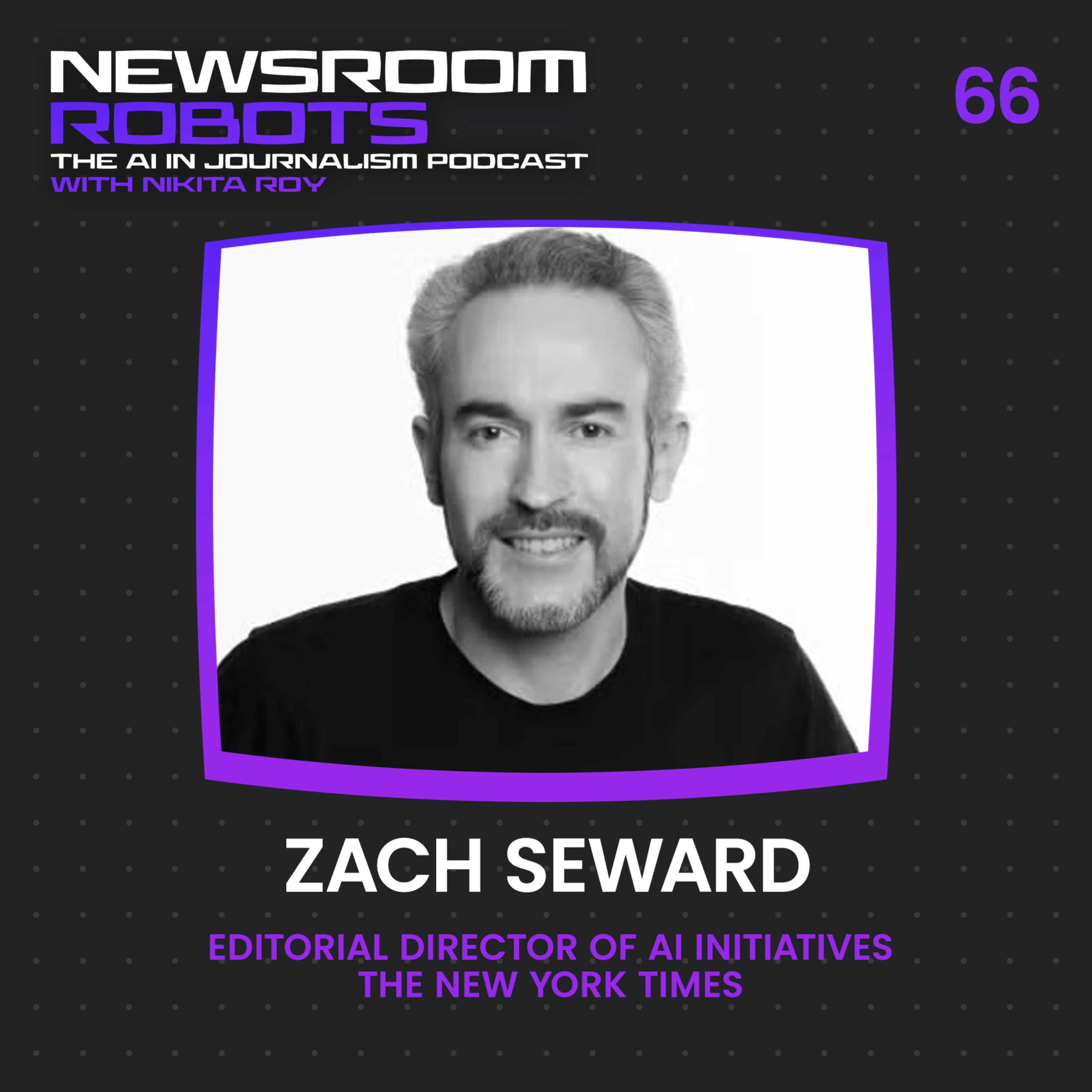 Zach Seward: How a Five-Person AI Team Is Powering Innovation at The New York Times | In this live episode, host Nikita Roy sits down with Zach Seward, Editorial Director of AI Initiatives at The New York Times, recorded at the ONA x Newsroom Robots AI Leadership Summit in Detroit. With a background that spans journalism, product, and executive leadership, Zach brings a rare blend of newsroom insight and entrepreneurial thinking to the challenges of this AI era. Before joining the Times, he co-founded Quartz, where he served as editor-in-chief, CEO, and chief product officer, helping to pioneer digital-native journalism.Now at The Times, he’s built a new editorial AI team from the ground up, experimenting with tooling, guiding newsroom adoption, and thinking through what comes next in how journalism is produced, distributed, and consumed.Key topics include:How the Times is using AI to support investigations, including analyzing hundreds of hours of leaked video and massive public data sets using custom LLM workflows.Echo, the in-house summarization tool that’s helping reporters transform articles, headlines, and tags across a range of newsroom needs.Lessons from building a five-person AI team inside a 2,000-person newsroom and why newsroom trust and individual agency are central to successful adoption.Why Zach’s team sees itself as an “AI enablement” group and how their newsroom-wide roadshow has sparked experimentation.The role of AI in reader experiences, from improving internal search to exploring voice interfaces that reimagine how audiences interact with journalism.What it means to build durable, future-ready news products in a media environment increasingly shaped by AI distribution and personalization systems.Sign up for the Newsroom Robots newsletter for episode summaries and insights from host Nikita Roy. Hosted on Acast. See acast.com/privacy for more information. | — | ||||||
| 5/30/25 |  Cheryl Phillips: How AI Is Uncovering Hidden Stories in Local Government | When officials in Santa Clara County (home to Silicon Valley) publicly proclaimed they were not sharing data with U.S. Immigration and Customs Enforcement, they likely did not expect to be caught in a contradiction. Yet behind the scenes, those same officials had recently signed new contracts with the federal agency — a fact that might have remained hidden if not for a new generation of AI tools developed at Stanford University.This breakthrough was made possible by Big Local News, a Stanford-based initiative using AI to help local journalists uncover stories hidden deep within public records. As local newsrooms grapple with shrinking resources and overwhelming amounts of data, tools like these are helping restore investigative capacity where it’s needed most.In this episode of Newsroom Robots, Cheryl Phillips, founder and co-director of Big Local News at Stanford University, joins host Nikita Roy to share how her team is building AI-powered tools that support watchdog journalism and make complex data more accessible to reporters across the country.Key topics include:Agenda Watch, a tool that scrapes and indexes public meeting agendas to surface early signals of newsworthy developments across thousands of local agencies.DataTalk, an AI assistant that turns natural language questions into campaign finance data queries, simplifying analysis for journalists without coding expertise.The use of generative AI and large-scale scraping systems to analyze police misconduct records and create public-facing accountability databases.How Big Local News uses Slack-integrated bots to deliver real-time alerts on layoffs and problematic fiscal audits to local newsrooms across the U.S.Sign up for the Newsroom Robots newsletter for episode summaries and insights from host Nikita Roy. Hosted on Acast. See acast.com/privacy for more information. | — | ||||||
| 3/18/25 | 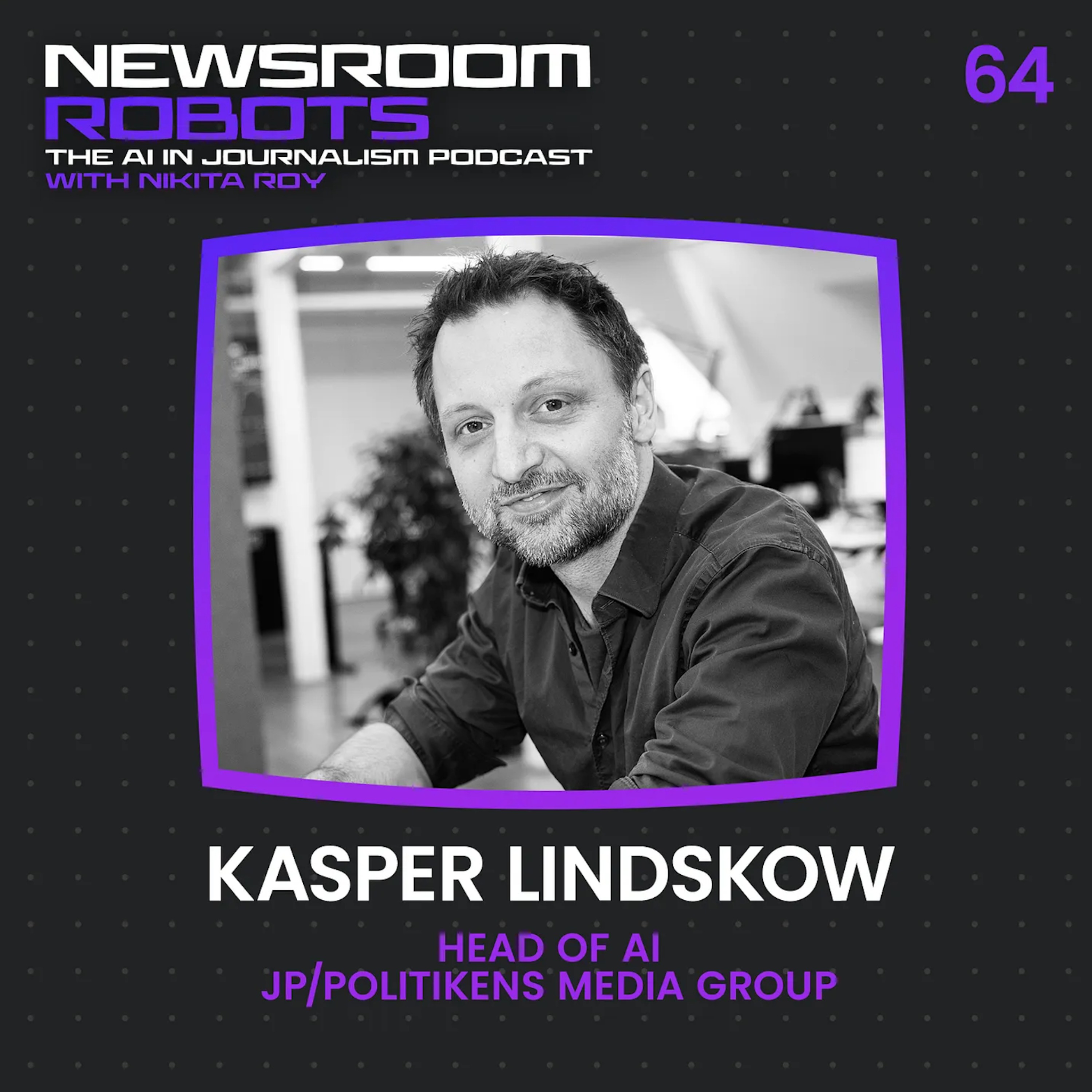 Kasper Lindskow: Building a Scalable AI Infrastructure at Denmark's JP/Politikens Media Group | When it comes to AI adoption, experimentation is easy—scaling is hard. So, what is the difference between AI projects that fade out and those that transform newsrooms? A strong infrastructure.In this episode of Newsroom Robots, Kasper Lindskow, the head of AI at JP/Politikens Media Group joins host Nikita Roy. Kasper shares how as one of Denmark's largest media groups they are building a scalable AI infrastructure across multiple news brands, balancing technical innovation with editorial values.Key topics include:The Platform Intelligence in News (PIN) Project — their comprehensive research initiative that brought together technical universities and social science departmentsMagna — their flagship AI suite that adapts to each publication's unique voice and offers tools from basic writing assistance to complex research capabilitiesHow JP/Politikens evolved from a single-newsroom AI team to a centralized unit with "local AI hubs" at each publicationThe "Values Compass" framework that ensures AI systems align with journalistic integrityHow they customized AI tools for different publications and integrated them into daily newsroom workflowsSign up for the Newsroom Robots newsletter for episode summaries and insights from host Nikita Roy. Hosted on Acast. See acast.com/privacy for more information. | — | ||||||
| 3/3/25 | Rune Ytreberg and Lars Adrian Giske: How iTromsø is Building an AI-Ready Foundation for News | Imagine a newsroom where AI agents assist with reporting, actively surface leads, analyze government data, and help journalists navigate complex investigations in real time. Norway’s iTromsø is laying the groundwork for exactly that.In the second part of this episode with Rune Ytreberg, head of data journalism at iTromsø, and Lars Adrian Giske, head of AI join host Nikita Roy to share how their small but ambitious newsroom is systematically building an infrastructure for AI-powered journalism. This isn’t just about isolated tools—it’s about creating a cohesive ecosystem where AI enhances reporting at every level.Rather than simply bolting AI onto existing workflows, iTromsø is focused on building a structured data infrastructure that supports AI agents across multiple newsroom functions.Their vision includes:A centralized AI-powered data interface that allows journalists to filter, analyze, and cross-reference government records, public documents, and municipal archives.Automated news alerts that notify reporters when AI detects important patterns or anomalies in the data.A structured repository of historical data, ensuring journalists have context-rich information at their fingertips, allowing for deeper investigative work.This structured approach isn’t just about efficiency—it’s about creating a foundation where AI can play an active role in surfacing critical stories.iTromsø is designing an AI-ready newsroom—one where structured data, automated insights, and AI-assisted research come together to elevate investigative journalism.Sign up for the Newsroom Robots newsletter for episode summaries and insights from host Nikita Roy. Hosted on Acast. See acast.com/privacy for more information. | — | ||||||
| 2/18/25 | Rune Ytreberg & Lars Adrian Giske: Building AI Tools for Investigative Journalism in Local News | Translating a journalist's gut instinct into code—is it possible? In Norway, iTromsø—a long-standing regional newspaper known for its investigative journalism and deep local coverage—has found a way.Their AI system, DJINN (Data Journalism Interface for News Gathering and Notification), acts like an experienced beat reporter, scanning hundreds of municipal documents and surfacing the most newsworthy leads. The impact? In their first week using DJINN, summer interns fresh out of journalism school produced five front-page stories—on a beat that usually takes years to master.In this episode of Newsroom Robots, Rune Ytreberg and Lars Adrian Giske join host Nikita Roy to talk about iTromsø’s structured approach to AI-driven reporting and how they built tools that strengthen their local journalism.Rune leads iTromsø’s data journalism lab, where he has been developing AI-driven editorial solutions for 70 local newspapers within the Polaris Media Group since 2020. And Lars is the Head of AI at iTromsø and led the development of DJINN. Since its launch in 2023, 36 newspapers across Norway have adopted DJINN, sourcing documents from nearly half of all Norwegian municipalities.Key topics include:•How a small newsroom built AI tools to strengthen investigative journalism•Why their AI systems are designed for specific beats like urban planning and fisheries, reducing hallucinations and increasing precision.•Embedding editorial expertise in AI development•How their fisheries database flagged irregularities and how their urban planning system transformed local accountability coverage.This is just Part 1 of our deep dive into how iTromsø is using AI to power investigative reporting. In Part 2, Rune and Lars will discuss their latest project: AI-powered research assistants that will proactively surface investigative leads for their journalists.Sign up for the Newsroom Robots newsletter for episode summaries and insights from host Nikita Roy. Hosted on Acast. See acast.com/privacy for more information. | — | ||||||
Showing 25 of 87
Pitch Fit is a Pro feature
See how bookable this show is for guests, which brands already advertise, the per-episode ad value, and the best-fit guest and sponsor profile. The numbers are blurred on the free plan.
How readily this show books outside guests like you.
How proven this show is for host-read sponsorships.
For Guests
ProFor Advertisers
ProUpgrade to Pro to unlock guest cadence, sponsor categories, fit scores, and per-episode ad value for this show.