
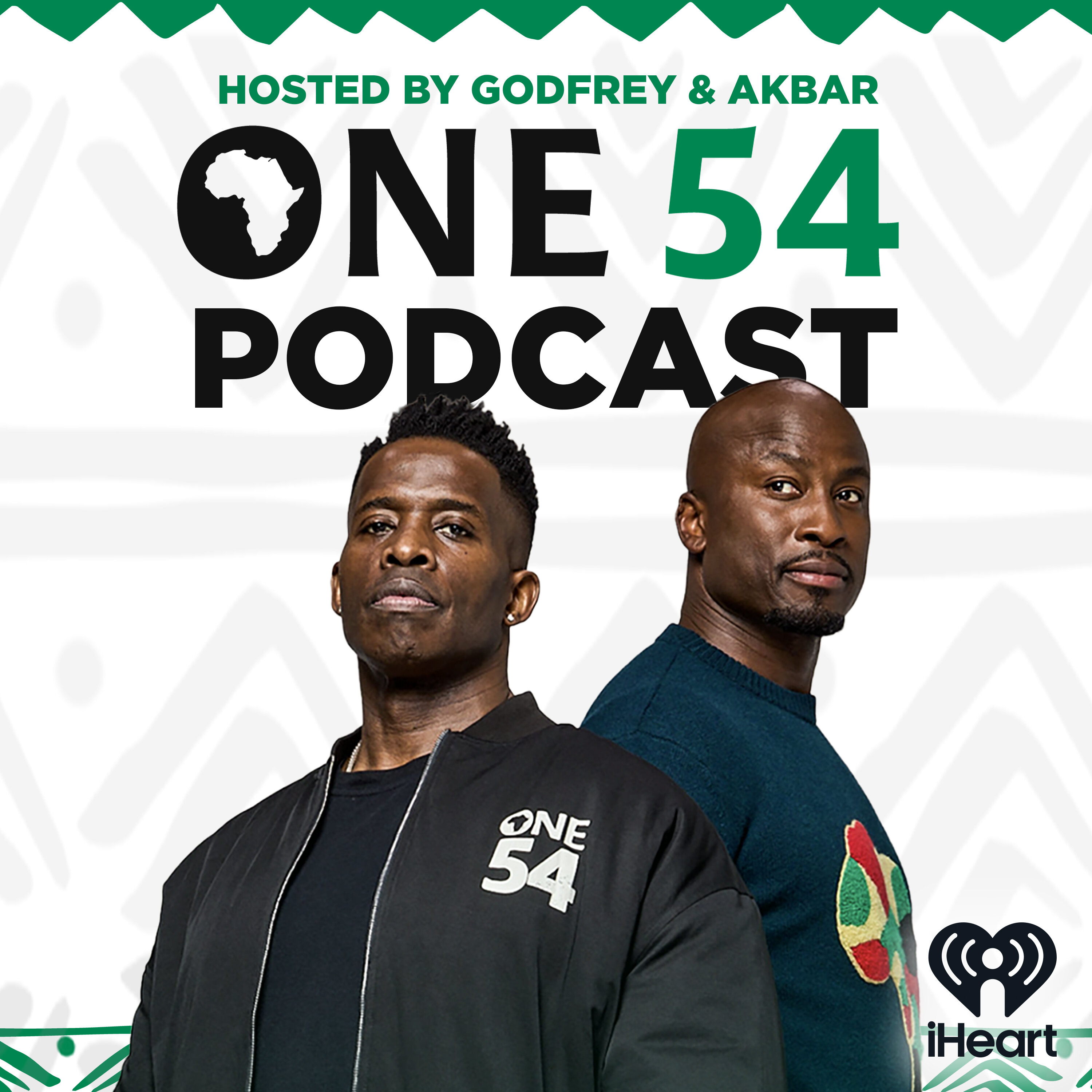
One 54 Podcast
by iHeartPodcasts
Is this your podcast?On the show
From 10 epsHost
Recent guests
Recent episodes
Masai Ujiri Part 2: The Dallas Mavericks, Luka Dončić, Kyrie Irving, LeBron James & NBA Legends - One54 Africa
Oct 14, 2026
36m 53s
Masai Ujiri Part 1: Kenyan-Nigerian Identity, Barack Obama & Building Basketball in Africa - One54 Africa
Oct 14, 2026
38m 17s
Dr. Eddie Glaude Jr. Part 2: Black Wealth, AI, Donald Trump, Kamala Harris & Jay-Z Vs Colin Kaepernick - One54 Africa
Oct 7, 2026
1h 04m 41s
Dr. Eddie Glaude Jr. Part 1: African Americans vs Africans, Diaspora Wars, Immigrants & Blacks - One54 Africa
Oct 7, 2026
1h 00m 57s
Themba Gorimbo Part 2: The UFC, The Rock, Daniel Cormier, Israel Adesanya & Life After Fighting - One54 Africa
Sep 30, 2026
1h 10m 33s
Insights from recent episode analysis
Audience Interest
Podcast Focus
Publishing Consistency
Platform Reach
Insights are generated by CastFox AI using publicly available data, episode content, and proprietary models.
Most discussed topics
Brands & references
Total monthly reach
No chart positions, follower counts or reviews yet. We will not guess.
Built from
By chart position
- 🇿🇦ZA · Society & Culture#47N/A
- 🇨🇱CL · Society & Culture#117N/A
- Per-Episode Audience
Est. listeners per new episode within ~30 days
N/A🎙 Daily cadence·58 episodes·Last published 5d ago - Monthly Reach
Unique listeners across all episodes (30 days)
N/A - Active Followers
Loyal subscribers who consistently listen
N/A
Market Insights
Platform Distribution
Reach across major podcast platforms, updated hourly
Total Followers
—
Total Plays
—
Total Reviews
—
* Data sourced directly from platform APIs and aggregated hourly across all major podcast directories.
Social Links & Contact
Official channels & resources
Official Website
Login
RSS Feed
Login
| Date | Episode | Topics | Guests | Brands | Places | Keywords | Sponsor | Length | |
|---|---|---|---|---|---|---|---|---|---|
| 10/14/26 |  Masai Ujiri Part 2: The Dallas Mavericks, Luka Dončić, Kyrie Irving, LeBron James & NBA Legends - One54 Africa | Tickets are on sale NOW for One54 LIVE! Join us January 28, 2027, in Santa Monica for a special live podcast featuring huge guests, a fashion show, music, food, culture, and unforgettable moments. Get your tickets now at https://www.tix.com/ticket-sales/tix/8000/event/1484907 Reconnect with your African ancestry for National Family History Month. African Ancestry helps you discover the African country and ethnic group connected to your lineage. Visit https://africanancestry.com/one54 and use code ONE54 to start your journey. Masai Ujiri discusses his Kenyan-Nigerian identity, growing up in Zaria, northern Nigeria, and his journey to becoming one of the most influential executives in the NBA. The former Toronto Raptors president who led the franchise to its first NBA championship in 2019 shares his experiences breaking barriers in professional basketball, his new role with the Dallas Mavericks, and the blockbuster Kawhi Leonard trade that helped Toronto win an NBA title. Ujiri opens up about founding Giants of Africa. He explains his mission to develop basketball talent across the continent. He also discusses the challenges facing Nigerian sports, the importance of investing in African athletes, and why sports should be recognized as a business that creates jobs and economic opportunities. They explore Ujiri's relationship with former U.S. President Barack Obama, their work building a basketball court in Kenya, and Obama's mentorship during Ujiri's early NBA career. He also shares his vision for unifying Africa through basketball, Afrobeats, and entertainment. Ujiri discusses Rwanda's growing sports and entertainment industry, President Paul Kagame's vision, and the importance of African investment and leadership, including the impact of Nigerian billionaire Aliko Dangote. The discussion turns to African identity, the African diaspora, representation in media, and changing negative stereotypes about Africa. Ujiri emphasizes the importance of focusing on opportunities, supporting African businesses, and encouraging the diaspora to become more involved in the continent's future. Ujiri also reflects on his next chapter with the Dallas Mavericks, the Luka Dončić trade to the Los Angeles Lakers, and the future of young star Cooper Flagg. He shares his excitement about working with Kyrie Irving, LeBron James' longevity and work ethic, and weighs in on basketball legends Michael Jordan and Kobe Bryant, as well as Stephen Curry and Jaylen Brown. From NBA championships and basketball scouting to African development, cultural pride and global representation, Masai Ujiri explains why investing in Africa's people, talent and infrastructure is essential to building the continent's future. | 36m 53s | ||||||
| 10/14/26 |  Masai Ujiri Part 1: Kenyan-Nigerian Identity, Barack Obama & Building Basketball in Africa - One54 Africa | Tickets are on sale NOW for One54 LIVE! Join us January 28, 2027, in Santa Monica for a special live podcast featuring huge guests, a fashion show, music, food, culture, and unforgettable moments. Get your tickets now at https://www.tix.com/ticket-sales/tix/8000/event/1484907 Masai Ujiri discusses his Kenyan-Nigerian identity, growing up in Zaria, northern Nigeria, and his journey to becoming one of the most influential executives in the NBA. The former Toronto Raptors president who led the franchise to its first NBA championship in 2019 shares his experiences breaking barriers in professional basketball, his new role with the Dallas Mavericks, and the blockbuster Kawhi Leonard trade that helped Toronto win an NBA title. Ujiri opens up about founding Giants of Africa. He explains his mission to develop basketball talent across the continent. He also discusses the challenges facing Nigerian sports, the importance of investing in African athletes, and why sports should be recognized as a business that creates jobs and economic opportunities. They explore Ujiri's relationship with former U.S. President Barack Obama, their work building a basketball court in Kenya, and Obama's mentorship during Ujiri's early NBA career. He also shares his vision for unifying Africa through basketball, Afrobeats, and entertainment. Ujiri discusses Rwanda's growing sports and entertainment industry, President Paul Kagame's vision, and the importance of African investment and leadership, including the impact of Nigerian billionaire Aliko Dangote. The discussion turns to African identity, the African diaspora, representation in media, and changing negative stereotypes about Africa. Ujiri emphasizes the importance of focusing on opportunities, supporting African businesses, and encouraging the diaspora to become more involved in the continent's future. Ujiri also reflects on his next chapter with the Dallas Mavericks, the Luka Dončić trade to the Los Angeles Lakers, and the future of young star Cooper Flagg. He shares his excitement about working with Kyrie Irving, LeBron James' longevity and work ethic, and weighs in on basketball legends Michael Jordan and Kobe Bryant, as well as Stephen Curry and Jaylen Brown. From NBA championships and basketball scouting to African development, cultural pride and global representation, Masai Ujiri explains why investing in Africa's people, talent and infrastructure is essential to building the continent's future. | 38m 17s | ||||||
| 10/7/26 |  Dr. Eddie Glaude Jr. Part 2: Black Wealth, AI, Donald Trump, Kamala Harris & Jay-Z Vs Colin Kaepernick - One54 Africa | This National Family History Month, reconnect with your African ancestry. African Ancestry helps you discover the African country and ethnic group connected to your lineage. Visit https://www.africanancestry.com and use code ONE54 to start your journey. Tickets are on sale NOW for One54 LIVE! Join us January 28, 2027, in Santa Monica for a special live podcast featuring huge guests, a fashion show, music, food, culture, and unforgettable moments. Get your tickets now at https://www.tix.com/ticket-sales/tix/8000/event/1484907 Dr. Eddie Glaude Jr. joins One54 for a conversation about Black history, race, identity, politics, wealth, education, and the future of democracy. The Princeton University professor, New York Times bestselling author, and prominent political commentator breaks down the complicated relationship between African Americans and Black immigrants, including how race, ethnicity, class, and the Black diaspora shape different experiences in America. Glaude examines the history of the Black freedom struggle and explains why important chapters of Black history are often overlooked, from the 1930s and 1940s to the work of W.E.B. Du Bois, Marcus Garvey, Paul Robeson, the Harlem Renaissance, Black Power, and the global connections between Black Americans and struggles across Africa and the diaspora. He also discusses Martin Luther King Jr., Malcolm X, Ghana, Ethiopia, and the international dimensions of the Civil Rights Movement. The conversation explores tensions between African immigrants and Black Americans, the meaning of Foundational Black American identity, differences in immigrant experiences, colonization, Jim Crow, and class. Glaude discuss racism, stereotypes, cultural differences, and the importance of recognizing the complexity within Black communities rather than treating Black people as a monolith. Glaude also shares his personal story growing up in Moss Point, Mississippi, his complicated relationship with his father, and how he entered Morehouse College at just 16 years old. He reflects on his HBCU experience, African American Studies, the importance of Black institutions, and the growing interest in HBCUs. The conversation then turns to Black wealth and economic inequality. He challenges the idea that having more Black millionaires and billionaires automatically closes the racial wealth gap. Glaude also tackles artificial intelligence, social media algorithms, corporate platforms, doomscrolling, and the threat these technologies can pose to democracy. He explains how AI could transform the workplace and why society needs a larger conversation about the future of work. The discussion ultimately moves into American politics, and whether Black Americans can identify as Republican. Glaude explains how Black political identity has changed throughout American history and why political labels can oversimplify the complexity of people's beliefs. | 1h 04m 41s | ||||||
| 10/7/26 |  Dr. Eddie Glaude Jr. Part 1: African Americans vs Africans, Diaspora Wars, Immigrants & Blacks - One54 Africa | This National Family History Month, reconnect with your African ancestry. African Ancestry helps you discover the African country and ethnic group connected to your lineage. Visit https://www.africanancestry.com and use code ONE54 to start your journey. Tickets are on sale NOW for One54 LIVE! Join us January 28, 2027, in Santa Monica for a special live podcast featuring huge guests, a fashion show, music, food, culture, and unforgettable moments. Get your tickets now at https://www.tix.com/ticket-sales/tix/8000/event/1484907 Dr. Eddie Glaude Jr. joins One54 for a conversation about Black history, race, identity, politics, wealth, education, and the future of democracy. The Princeton University professor, New York Times bestselling author, and prominent political commentator breaks down the complicated relationship between African Americans and Black immigrants, including how race, ethnicity, class, and the Black diaspora shape different experiences in America. Glaude examines the history of the Black freedom struggle and explains why important chapters of Black history are often overlooked, from the 1930s and 1940s to the work of W.E.B. Du Bois, Marcus Garvey, Paul Robeson, the Harlem Renaissance, Black Power, and the global connections between Black Americans and struggles across Africa and the diaspora. He also discusses Martin Luther King Jr., Malcolm X, Ghana, Ethiopia, and the international dimensions of the Civil Rights Movement. The conversation explores tensions between African immigrants and Black Americans, the meaning of Foundational Black American identity, differences in immigrant experiences, colonization, Jim Crow, and class. Glaude discuss racism, stereotypes, cultural differences, and the importance of recognizing the complexity within Black communities rather than treating Black people as a monolith. Glaude also shares his personal story growing up in Moss Point, Mississippi, his complicated relationship with his father, and how he entered Morehouse College at just 16 years old. He reflects on his HBCU experience, African American Studies, the importance of Black institutions, and the growing interest in HBCUs. The conversation then turns to Black wealth and economic inequality. He challenges the idea that having more Black millionaires and billionaires automatically closes the racial wealth gap. Glaude also tackles artificial intelligence, social media algorithms, corporate platforms, doomscrolling, and the threat these technologies can pose to democracy. He explains how AI could transform the workplace and why society needs a larger conversation about the future of work. The discussion ultimately moves into American politics, and whether Black Americans can identify as Republican. Glaude explains how Black political identity has changed throughout American history and why political labels can oversimplify the complexity of people's beliefs. | 1h 00m 57s | ||||||
| 9/30/26 |  Themba Gorimbo Part 2: The UFC, The Rock, Daniel Cormier, Israel Adesanya & Life After Fighting - One54 Africa | Themba Gorimbo shares his story of growing up in Zimbabwe, losing both of his parents at a young age, surviving poverty, and eventually finding his way into professional MMA and the UFC. Gorimbo opens up about his childhood in Zimbabwe, the impact of the country’s economic struggles, drought, land reform, and food shortages, and how those experiences shaped his outlook on life. He also reflects on his father’s influence, his mother’s death when he was nine, and the trauma of losing his father just a few years later. He discusses growing up around violence and family fights before discovering MMA through the movie Never Back Down, starring Djimon Hounsou. What started as a way to defend himself against his cousins eventually became a professional fighting career. Gorimbo also talks about leaving Zimbabwe for South Africa as a teenager, being arrested and deported, crossing back into South Africa, working to survive, and the dangers and challenges faced by Zimbabwean immigrants. He discusses xenophobia, the complicated relationship between Zimbabwe and South Africa, and why so many Zimbabweans leave home in search of opportunity. The conversation turns to Gorimbo’s UFC journey, the challenges he faced as an African fighter, sponsorships, fighting politics, and his release from the UFC. He opens up about his relationship with Dwayne “The Rock” Johnson, how The Rock helped bring him to America, and why being viewed as a “charity case” created complicated expectations. Gorimbo also discusses support from other fighters, including Daniel Cormier and Israel Adesanya, his experiences with UFC leadership and Dana White, and the realities of trying to build a career in professional MMA. He shares his thoughts on Zimbabwe’s gold industry, economic inequality, corruption, and the money flowing out of the country while many people continue to struggle. He also reflects on his experiences in the diamond fields and the realities of Zimbabweans trying to build better lives abroad. From Zimbabwe to South Africa, from poverty and loss to the UFC and global recognition, Themba Gorimbo tells an honest story about family, resilience, fighting, Africa, immigration, and the journey to creating a better life. | 1h 10m 33s | ||||||
| 9/30/26 |  Themba Gorimbo Part 1: Growing Up in Zimbabwe, Family Loss, Blood Diamonds & South Africa - One54 Africa | Themba Gorimbo shares his story of growing up in Zimbabwe, losing both of his parents at a young age, surviving poverty, and eventually finding his way into professional MMA and the UFC. Gorimbo opens up about his childhood in Zimbabwe, the impact of the country’s economic struggles, drought, land reform, and food shortages, and how those experiences shaped his outlook on life. He also reflects on his father’s influence, his mother’s death when he was nine, and the trauma of losing his father just a few years later. He discusses growing up around violence and family fights before discovering MMA through the movie Never Back Down, starring Djimon Hounsou. What started as a way to defend himself against his cousins eventually became a professional fighting career. Gorimbo also talks about leaving Zimbabwe for South Africa as a teenager, being arrested and deported, crossing back into South Africa, working to survive, and the dangers and challenges faced by Zimbabwean immigrants. He discusses xenophobia, the complicated relationship between Zimbabwe and South Africa, and why so many Zimbabweans leave home in search of opportunity. The conversation turns to Gorimbo’s UFC journey, the challenges he faced as an African fighter, sponsorships, fighting politics, and his release from the UFC. He opens up about his relationship with Dwayne “The Rock” Johnson, how The Rock helped bring him to America, and why being viewed as a “charity case” created complicated expectations. Gorimbo also discusses support from other fighters, including Daniel Cormier and Israel Adesanya, his experiences with UFC leadership and Dana White, and the realities of trying to build a career in professional MMA. He shares his thoughts on Zimbabwe’s gold industry, economic inequality, corruption, and the money flowing out of the country while many people continue to struggle. He also reflects on his experiences in the diamond fields and the realities of Zimbabweans trying to build better lives abroad. From Zimbabwe to South Africa, from poverty and loss to the UFC and global recognition, Themba Gorimbo tells an honest story about family, resilience, fighting, Africa, immigration, and the journey to creating a better life. | 1h 21m 55s | ||||||
| 9/23/26 |  Kwame Onwuachi Part 1: Growing Up in Nigeria, His Street Hustle & Becoming a Chef - One54 Africa | Kwame Onwuachi joins One54 for a conversation about his Nigerian-American and Afro-Caribbean roots, his journey from the Bronx to becoming one of the most celebrated chefs in the world, and the experiences that shaped his approach to food and culture. The James Beard Award-winning chef, New York Times bestselling author, TIME100 honoree, and star of Top Chef and Chopped discusses his childhood in Nigeria, where he was sent at age 10 to learn discipline and respect, and how that experience gave him a deeper connection to his heritage. Onwuachi opens up about Nigerian food and culture, and his thoughts on the Nigerian, Ghanaian, and Senegalese jollof rice debate. He also shares how growing up around Nigerian, Jamaican, Caribbean, Mexican, Chinese, Jewish, and other cultures in New York influenced his cooking and ultimately shaped his culinary identity. He reflects on his early years working in restaurants, attending the Culinary Institute of America, cooking on an oil cleanup boat during the Deepwater Horizon disaster, and selling candy on the New York City subway to fund his first catering company. Onwuachi also details the difficult period of his life when he became involved in selling drugs, the moment he decided to change direction, and how seeing Barack Obama become president inspired him to believe he could accomplish anything. The conversation then moves into his restaurant career, including Kith and Kin in Washington, D.C., Tatiana at Lincoln Center in New York, Dōgon in D.C., and his Las Vegas restaurant Maroon. Onwuachi explains the meaning and history behind his restaurant names and how African and Black history, ancestry, and culture are incorporated into his food. He also discusses restaurant ownership, building the right team, the challenges of the restaurant business, Michelin stars, fine dining, and why owning his intellectual property is so important to him. Onwuachi shares stories about cooking for Barack and Michelle Obama at the White House Easter Egg Roll, Beyoncé and Jay-Z, Drake, Megan Thee Stallion, and other major celebrities, including his experience cooking at the Met Gala. He also talks about his upcoming cookbook, his investment in new businesses and packaged goods, and his continued plans to expand his restaurant empire. Kwame Onwuachi closes out the conversation by reflecting on his Nigerian heritage, his relationship with his father, fatherhood, perseverance, and the importance of continuing to evolve. | 1h 02m 48s | ||||||
| 9/23/26 |  Kwame Onwuachi Part 2: Cooking For The Obamas, Drake & Beyoncé & Jay-Z, Michelin Stars & Restaurant Ownership - One54 Africa | Kwame Onwuachi joins One54 for a conversation about his Nigerian-American and Afro-Caribbean roots, his journey from the Bronx to becoming one of the most celebrated chefs in the world, and the experiences that shaped his approach to food and culture. The James Beard Award-winning chef, New York Times bestselling author, TIME100 honoree, and star of Top Chef and Chopped discusses his childhood in Nigeria, where he was sent at age 10 to learn discipline and respect, and how that experience gave him a deeper connection to his heritage. Onwuachi opens up about Nigerian food and culture, and his thoughts on the Nigerian, Ghanaian, and Senegalese jollof rice debate. He also shares how growing up around Nigerian, Jamaican, Caribbean, Mexican, Chinese, Jewish, and other cultures in New York influenced his cooking and ultimately shaped his culinary identity. He reflects on his early years working in restaurants, attending the Culinary Institute of America, cooking on an oil cleanup boat during the Deepwater Horizon disaster, and selling candy on the New York City subway to fund his first catering company. Onwuachi also details the difficult period of his life when he became involved in selling drugs, the moment he decided to change direction, and how seeing Barack Obama become president inspired him to believe he could accomplish anything. The conversation then moves into his restaurant career, including Kith and Kin in Washington, D.C., Tatiana at Lincoln Center in New York, Dōgon in D.C., and his Las Vegas restaurant Maroon. Onwuachi explains the meaning and history behind his restaurant names and how African and Black history, ancestry, and culture are incorporated into his food. He also discusses restaurant ownership, building the right team, the challenges of the restaurant business, Michelin stars, fine dining, and why owning his intellectual property is so important to him. Onwuachi shares stories about cooking for Barack and Michelle Obama at the White House Easter Egg Roll, Beyoncé and Jay-Z, Drake, Megan Thee Stallion, and other major celebrities, including his experience cooking at the Met Gala. He also talks about his upcoming cookbook, his investment in new businesses and packaged goods, and his continued plans to expand his restaurant empire. Kwame Onwuachi closes out the conversation by reflecting on his Nigerian heritage, his relationship with his father, fatherhood, perseverance, and the importance of continuing to evolve. | 1h 06m 14s | ||||||
| 9/16/26 |  Mena Massoud Part 1: Egyptian Roots, Aladdin, Will Smith & Hollywood - One54 Africa | Mena Massoud joins One54 Africa for a conversation about his Egyptian roots, growing up in Canada, and his journey from studying neuroscience at the University of Toronto to becoming the star of Disney’s Aladdin alongside Will Smith. The Egyptian-Canadian actor opens up about creating Dharma Gin with his wife, blending Egyptian and Indian cultural influences into their spirit, and sharing his favorite Egyptian foods. Mena shares what it was like growing up in a predominantly white Canadian community, learning English through ESL, and navigating the cultural expectations of an immigrant family. He and Godfrey discuss the pressure to become a doctor, the shame associated with pursuing acting, and the difficult conversation with his parents after choosing theater school over neuroscience. He reflects on childhood trauma, self-doubt, people-pleasing, and the pressure to always be better, while exploring how those experiences shaped his career and personal growth. Mena takes us behind the scenes of his breakout role as Aladdin, from booking Jack Ryan with John Krasinski to landing the Disney film after months of auditions. He reveals how theater school prepared him for singing, dancing, camel riding, and the underwater drowning scene, which helped save the production $200,000. He also discusses working with Will Smith, the reality of Aladdin grossing over $1 billion at the box office, and why that massive success did not translate into a massive payday. The actor opens up about the dark place he experienced after Aladdin and how reconnecting with his love for acting helped him regain his confidence. He shares what it was like living in a closet in West Hollywood before booking Jack Ryan and Aladdin, navigating Hollywood as an Egyptian actor. Mena also discusses his new biblical film, Daniel: The Fiery Furnace, his Coptic Christian upbringing, and the importance of standing up for your faith and identity. They explore Egyptian history, the pyramids, the diversity of Africa, and what it means to experience Egypt beyond the tourist attractions. | 48m 14s | ||||||
| 9/16/26 |  Mena Massoud Part 2: Faith, Egypt, Daniel: The Fiery Furnace & Mental Health - One54 Africa | Mena Massoud joins One54 Africa for a conversation about his Egyptian roots, growing up in Canada, and his journey from studying neuroscience at the University of Toronto to becoming the star of Disney’s Aladdin alongside Will Smith. The Egyptian-Canadian actor opens up about creating Dharma Gin with his wife, blending Egyptian and Indian cultural influences into their spirit, and sharing his favorite Egyptian foods. Mena shares what it was like growing up in a predominantly white Canadian community, learning English through ESL, and navigating the cultural expectations of an immigrant family. He and Godfrey discuss the pressure to become a doctor, the shame associated with pursuing acting, and the difficult conversation with his parents after choosing theater school over neuroscience. He reflects on childhood trauma, self-doubt, people-pleasing, and the pressure to always be better, while exploring how those experiences shaped his career and personal growth. Mena takes us behind the scenes of his breakout role as Aladdin, from booking Jack Ryan with John Krasinski to landing the Disney film after months of auditions. He reveals how theater school prepared him for singing, dancing, camel riding, and the underwater drowning scene, which helped save the production $200,000. He also discusses working with Will Smith, the reality of Aladdin grossing over $1 billion at the box office, and why that massive success did not translate into a massive payday. The actor opens up about the dark place he experienced after Aladdin and how reconnecting with his love for acting helped him regain his confidence. He shares what it was like living in a closet in West Hollywood before booking Jack Ryan and Aladdin, navigating Hollywood as an Egyptian actor. Mena also discusses his new biblical film, Daniel: The Fiery Furnace, his Coptic Christian upbringing, and the importance of standing up for your faith and identity. They explore Egyptian history, the pyramids, the diversity of Africa, and what it means to experience Egypt beyond the tourist attractions. | 47m 50s | ||||||
Want analysis for the episodes below?Free for Pro Submit a request, we'll have your selected episodes analyzed within an hour. Free, at no cost to you, for Pro users. | |||||||||
| 9/9/26 | Nigerian rootsmusic career+4 | Adekunle Gold | MTN Project FameOne Direction+2 | LagosNigeria+6 | Adekunle GoldAfrobeats+6 | — | 54m 12s | ||
| 9/9/26 | Nigerian rootsAfrobeats+4 | Adekunle GoldAG Baby | MTN Project FameOne54 Africa | — | Adekunle GoldAfrobeats+6 | — | 50m 47s | ||
| 9/2/26 | Nigerian cultureNBA journey+4 | Josh Okogie | Utah Jazz | NigeriaUnited States+4 | Josh OkogieNBA+6 | — | 1h 10m 06s | ||
| 9/2/26 | foodNigerian culture+5 | Josh Okogie | Utah JazzGeorgia Tech | NigeriaLagos+2 | Josh OkogieNigerian culture+6 | — | 1h 10m 55s | ||
| 8/26/26 | identityfamily+5 | Selema Masekela | ESPNAmerican Ninja Warrior+1 | South AfricaStaten Island | Selema MasekelaHugh Masekela+5 | — | 1h 14m 46s | ||
| 8/26/26 | identityfamily+5 | Selema Masekela | ESPNX Games+1 | South AfricaStaten Island | Selema MasekelaHugh Masekela+7 | — | 1h 21m 55s | ||
| 8/19/26 | modelingstreaming+4 | Jeremiah Brown | AdidasCoca-Cola+6 | Fiji | modelingstreaming+6 | — | 53m 51s | ||
| 8/19/26 | modelingreality TV+4 | Jeremiah Brown | AdidasCoca-Cola+5 | Fiji | modelingLove Island+5 | — | 56m 26s | ||
| 8/12/26 | identityculture+5 | Van Lathan | TMZAncestryDNA | LouisianaNigeria+1 | Black AmericanAmerican Black+6 | — | 1h 47m 11s | ||
| 8/12/26 | identityculture+5 | Van Lathan | TMZ | LouisianaAfrica | Black AmericanAmerican Black+7 | — | 1h 39m 54s | ||
| 8/5/26 |  Wyclef Jean Part 2: Haiti's Revolution, Politics, Poverty & The Future of Haiti - One54 Africa | Wyclef Jean joins the One54 podcast for a conversation about music, identity, Haiti, Africa, and the power of unity. The three-time Grammy Award winner and Fugees co-founder opens the episode by sharing his excitement over discovering through DNA testing that he is more than 50% Nigerian, sparking a discussion about the African diaspora, Haitian heritage, and the deep cultural connections between Haiti and West Africa through food, music, and tradition. Wyclef Jean reflects on his legendary career, from helping create The Fugees' iconic album The Score to collaborating with global superstars including Beyoncé, Whitney Houston, Shakira, and Lauryn Hill. He also shares the story behind his name, his father's journey from Haiti to America as a minister, and the importance of embracing his Haitian identity. The conversation then dives into Haitian history, with Wyclef breaking down the legacy of Toussaint Louverture, Jean-Jacques Dessalines, the Haitian Revolution, and Haiti becoming the world's first Black republic. He explains how Haiti's victory over France influenced the Louisiana Purchase, discusses misconceptions surrounding Vodou, and examines the lasting economic effects of French reparations, foreign intervention, corruption, and the country's untapped natural resources. Wyclef also opens up about his childhood in Haiti, recalling growing up in extreme poverty, eating mud pies to survive, immigrating to Brooklyn at eight years old, and the culture shock of arriving in America. He shares how those experiences shaped his resilience, fueled his determination, and ultimately inspired his music. He reflects on life in Brooklyn's projects, choosing music over street life, writing socially conscious records with The Fugees, and why storytelling, community, and perseverance remain at the heart of his legacy. Throughout the conversation, Wyclef Jean delivers unforgettable insights on leadership, history, politics, faith, and the future of Haiti while celebrating the shared bonds connecting Africa and its global diaspora. | 1h 12m 38s | ||||||
| 8/5/26 |  Wyclef Jean Part 1: His Nigerian DNA, The Fugees, Music Career & Haitian Heritage - One54 Africa | Wyclef Jean joins the One54 podcast for a conversation about music, identity, Haiti, Africa, and the power of unity. The three-time Grammy Award winner and Fugees co-founder opens the episode by sharing his excitement over discovering through DNA testing that he is more than 50% Nigerian, sparking a discussion about the African diaspora, Haitian heritage, and the deep cultural connections between Haiti and West Africa through food, music, and tradition. Wyclef Jean reflects on his legendary career, from helping create The Fugees' iconic album The Score to collaborating with global superstars including Beyoncé, Whitney Houston, Shakira, and Lauryn Hill. He also shares the story behind his name, his father's journey from Haiti to America as a minister, and the importance of embracing his Haitian identity. The conversation then dives into Haitian history, with Wyclef breaking down the legacy of Toussaint Louverture, Jean-Jacques Dessalines, the Haitian Revolution, and Haiti becoming the world's first Black republic. He explains how Haiti's victory over France influenced the Louisiana Purchase, discusses misconceptions surrounding Vodou, and examines the lasting economic effects of French reparations, foreign intervention, corruption, and the country's untapped natural resources. Wyclef also opens up about his childhood in Haiti, recalling growing up in extreme poverty, eating mud pies to survive, immigrating to Brooklyn at eight years old, and the culture shock of arriving in America. He shares how those experiences shaped his resilience, fueled his determination, and ultimately inspired his music. He reflects on life in Brooklyn's projects, choosing music over street life, writing socially conscious records with The Fugees, and why storytelling, community, and perseverance remain at the heart of his legacy. Throughout the conversation, Wyclef Jean delivers unforgettable insights on leadership, history, politics, faith, and the future of Haiti while celebrating the shared bonds connecting Africa and its global diaspora. | 1h 11m 54s | ||||||
| 7/29/26 |  Chinedu Unaka Part 2: Building Comedy Career & Getting On Abbott Elementary - One54 Africa | Chinedu Unaka joins One54 for a hilarious and heartfelt conversation about growing up as the child of Nigerian immigrants, embracing his Igbo identity, and building a successful career in comedy and Hollywood. Known for his roles on Abbott Elementary and Insecure, Chinedu shares how his Nigerian upbringing shaped his perspective, from family traditions and learning the meaning behind Igbo names to the struggles of having teachers, baristas, and comedy hosts constantly mispronounce his name. Chinedu reflects on navigating life between Nigerian and American cultures, dealing with stereotypes, performing for Nigerian audiences, and the unique pressures placed on first-generation children. The trio swaps unforgettable stories about school roll calls, Starbucks aliases, Nigerian weddings, immigrant parents, language barriers, and the realities of chasing comedy while balancing family expectations of becoming a doctor or lawyer. The conversation dives into childhood memories of growing up in Los Angeles, the sacrifices their parents made after immigrating to America, and how those experiences influenced Chinedu's career. He opens up about starting stand-up comedy on a dare during college, earning his parents' support over time, and developing his style through Nigerian community events before breaking into television. They debate classic Nigerian dishes while comparing traditional home cooking to growing up without much fast food. They also discuss Nigerian pride, preserving culture, speaking Igbo and Yoruba, and why Nigerian names and identity have become more widely recognized through sports, entertainment, and pop culture. | 1h 03m 28s | ||||||
| 7/29/26 |  Chinedu Unaka Part 1: Growing Up Nigerian in America, Igbo Names & Family - One54 Africa | Chinedu Unaka joins One54 for a hilarious and heartfelt conversation about growing up as the child of Nigerian immigrants, embracing his Igbo identity, and building a successful career in comedy and Hollywood. Known for his roles on Abbott Elementary and Insecure, Chinedu shares how his Nigerian upbringing shaped his perspective, from family traditions and learning the meaning behind Igbo names to the struggles of having teachers, baristas, and comedy hosts constantly mispronounce his name. Chinedu reflects on navigating life between Nigerian and American cultures, dealing with stereotypes, performing for Nigerian audiences, and the unique pressures placed on first-generation children. The trio swaps unforgettable stories about school roll calls, Starbucks aliases, Nigerian weddings, immigrant parents, language barriers, and the realities of chasing comedy while balancing family expectations of becoming a doctor or lawyer. The conversation dives into childhood memories of growing up in Los Angeles, the sacrifices their parents made after immigrating to America, and how those experiences influenced Chinedu's career. He opens up about starting stand-up comedy on a dare during college, earning his parents' support over time, and developing his style through Nigerian community events before breaking into television. They debate classic Nigerian dishes while comparing traditional home cooking to growing up without much fast food. They also discuss Nigerian pride, preserving culture, speaking Igbo and Yoruba, and why Nigerian names and identity have become more widely recognized through sports, entertainment, and pop culture. | 1h 04m 11s | ||||||
| 7/22/26 |  Beverly Naya Part 2: Becoming a Nollywood Star, Acting, Filmmaking & Building Her Legacy - One54 Africa | Award-winning Beverly Naya joins the One54 Podcast for an inspiring conversation about her remarkable journey from London to Lagos to New York, building one of the most successful careers in Nollywood. Beverly Naya reflects on becoming a Forbes 30 Under 30 Africa honoree, creating her groundbreaking Netflix documentary Skin, and how she continues to evolve as an actress, filmmaker, producer, and storyteller. Beverly shares the fascinating story behind her Nigerian name, why she adopted "Naya" professionally, and how moving between the UK, Nigeria, and the United States shaped her identity, accent, and worldview. She also opens up about Nigerian customs and traditions, culture shock, and the lessons she's learned from living across three continents. The conversation dives into London vs. New York vs. Lagos, comparing fashion, food, lifestyle, and the entertainment industries. Beverly Naya explains why she chose New York over Los Angeles, discusses protecting her mental health while pursuing success, and shares her perspective on authenticity, comparison culture, and finding balance in the spotlight. Beverly also breaks down the differences between British and American education, why the UK produces so many world-class actors, and how Shakespeare training develops stronger performers. She reveals how her parents encouraged her creative ambitions while ensuring she had a practical backup plan, leading her to study filmmaking before launching her acting career in Nollywood. From growing up as an only child in a Nigerian household to landing her first major acting opportunities, Beverly shares the defining moments that changed her life, including the stage performance that convinced her mother she was destined to become an actress. She also discusses why she's now focusing more on filmmaking, scriptwriting, and producing meaningful stories. | 59m 44s | ||||||
Showing 25 of 58
Pitch Fit is a Pro feature
See how bookable this show is for guests, which brands already advertise, the per-episode ad value, and the best-fit guest and sponsor profile. The numbers are blurred on the free plan.
How readily this show books outside guests like you.
How proven this show is for host-read sponsorships.
For Guests
ProFor Advertisers
ProUpgrade to Pro to unlock guest cadence, sponsor categories, fit scores, and per-episode ad value for this show.
Similar Audience Demographics
Podcasts that attract a similar listener profile

In Godfrey We Trust
Witz Comedy Network

Grits and Eggs Podcast
Deante’ Kyle

Native Land Pod
iHeartPodcasts and Reasoned Choice

Not My Best Moment with KevOnStage
iHeartPodcasts

The Vic Mensa Show
Mass Appeal & ORANJ

Shawn Stockman's On That Note
Shawn Stockman

Flagrant and Funny with Cari Champion and Jemele Hill
iHeartPodcasts
Chart history for One 54 Podcast
Peaked at #47 in South Africa, currently #47 in South Africa.
| Market | Genre | Peak | Current | Trend |
|---|---|---|---|---|
| South Africa | — | #47 | #47 | — |
| CL | — | #117 | #117 | — |
Chart Positions
2 placements across 2 markets.
Chart Positions
2 placements across 2 markets.