Insights from recent episode analysis
Audience Interest
Podcast Focus
Publishing Consistency
Platform Reach
Insights are generated by CastFox AI using publicly available data, episode content, and proprietary models.
Most discussed topics
Brands & references
Total monthly reach
Estimated from 1 chart position in 1 market.
By chart position
- 🇵🇱PL · Religion & Spirituality#763K to 10K
- Per-Episode Audience
Est. listeners per new episode within ~30 days
1.5K to 5K🎙 ~2x weekly·161 episodes·Last published 1w ago - Monthly Reach
Unique listeners across all episodes (30 days)
3K to 10K🇵🇱100% - Active Followers
Loyal subscribers who consistently listen
1.2K to 4K
Market Insights
Platform Distribution
Reach across major podcast platforms, updated hourly
Total Followers
—
Total Plays
—
Total Reviews
—
* Data sourced directly from platform APIs and aggregated hourly across all major podcast directories.
On the show
From 10 epsHosts
Recent guests
Recent episodes
168) Dwelt in Us, or Dwelt Among Us?
Jun 19, 2026
Unknown duration
167) Does the Bible TEACH the Trinity, but Luke Jones
Jun 5, 2026
20m 43s
166) What about John 1? (What John 1:1-4 Means)
May 22, 2026
18m 46s
165) The Nephilim and Sons of God are Human Beings in Genesis 6:1-4
May 10, 2026
34m 23s
164) The Angel-Messenger מַלְאַ֙ךְ in the Bible
Apr 24, 2026
20m 58s
Social Links & Contact
Official channels & resources
Official Website
Login
RSS Feed
Login
| Date | Episode | Topics | Guests | Brands | Places | Keywords | Sponsor | Length | |
|---|---|---|---|---|---|---|---|---|---|
| 6/19/26 | ![]() 168) Dwelt in Us, or Dwelt Among Us? | In this podcast I focus on a few additional interpretive issues of specific words in John 1:14 that mainstream Christians interpret as evidence that God became man.The verb σκηνόω (dwell, tabernacle) is not used of God elsewhere in the Septuagint, while its New Testament occurrences do not naturally support the idea of God incarnating himself in a human body. The traditional translation "dwelt among us" is possible, but it is not the only way to interpret and translate John 1:14. The Greek preposition ἐν ordinarily means "in," and John's Gospel repeatedly uses “in” to describe relationship rather than spatial proximity. John's own usage of "in us," "in me," and "in you" consistently points toward personal relationship, not spatial proximity. John 1:14 can be understood as the Word dwelt “in us”, describing the human person Jesus, the Word, becoming life giving provision and sustenance for others. Such an interpretation fits naturally within John's broader theology of indwelling as a relationship with the Messiah that brings about life.The evidence from John's Gospel, the Septuagint, and the wider New Testament suggests that "the Word dwelt in us" deserves serious consideration as an alternative to the traditional rendering "the Word dwelt among us."An essential doctrinal teaching, something like the incarnation of God into man, should not hang on the interpretation of a single preposition in one verse. Big doctrinal claims require big, consistent, repeated, clear textual evidence. John simply does not say that God, or one person who is God, became man. Resources:Full Text: https://landandbible.blogspot.com/2026/06/dwelt-in-us-or-dwelt-among-us-john-114.htmlThe Word BECAME Flesh? Why John 1:14 does NOT say "God became man"https://youtu.be/z4HepHkyujkThe Word Became Flesh (Sustenance): A Metaphorical Interpretation of “Flesh”https://youtu.be/A87VcXKCWBM"The Word became flesh and dwelt IN us"? Dialog with Sam Tideman on John 1:14https://youtu.be/P4b9xZ0gX6g#gospelofjohn #biblicalunitarian | — | ||||||
| 6/5/26 | ![]() 167) Does the Bible TEACH the Trinity, but Luke Jones✨ | TrinityBible+3 | Luke Jones | — | — | TrinityBible+3 | — | 20m 43s | |
| 5/22/26 | ![]() 166) What about John 1? (What John 1:1-4 Means)✨ | non-Trinitarian interpretationJohn 1+4 | — | John 1:1-4the gospel message+1 | — | John 1non-Trinitarian+6 | — | 18m 46s | |
| 5/10/26 | ![]() 165) The Nephilim and Sons of God are Human Beings in Genesis 6:1-4✨ | NephilimSons of God+4 | — | One God ReportCommentary on Genesis 6:1-13+1 | GenesisNumbers | NephilimSons of God+6 | — | 34m 23s | |
| 4/24/26 | ![]() 164) The Angel-Messenger מַלְאַ֙ךְ in the Bible✨ | angel-messengerHebrew Bible+3 | — | Zondervan Illustrated Bible Backgrounds CommentaryAgency in the Bible: The Human Person Jesus “was” the Father | — | angelmessenger+5 | — | 20m 58s | |
| 4/4/26 | ![]() 162) Jesus Given Authority to Give Eternal Life✨ | authorityeternal life+4 | — | John’s Gospel | — | Jesuseternal life+5 | — | 13m 37s | |
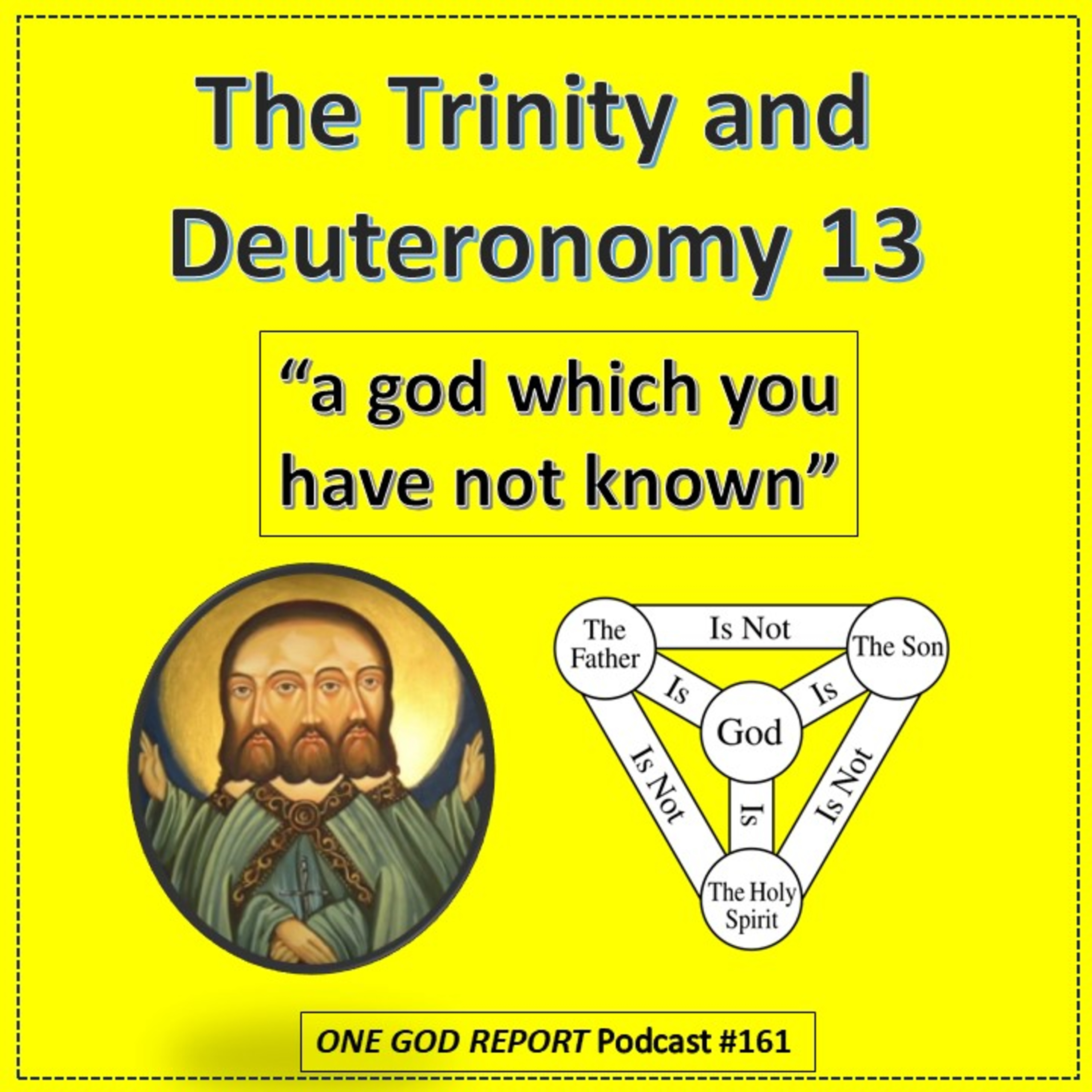
| 3/20/26 | ![]() 161) The Trinity and Deuteronomy 13, "a god which you have not known"✨ | TrinityDeuteronomy+3 | — | Deuteronomy 13Is the Trinity in the Bible and If So, Where?+3 | — | TrinityDeuteronomy 13+3 | — | 15m 47s | |
| 3/14/26 | ![]() 160) Israel Tour Announcement (in April 2027)✨ | Israel tourspiritual journey+3 | John Schoenheit | Spirit & Truth Fellowship International | IsraelJerusalem | Israel tourJohn Schoenheit+3 | — | 5m 17s | |
| 3/4/26 | ![]() 159) Israel, Gaza, Iran & Purim✨ | Middle East conflictIsrael+5 | — | HamasHizbollah+2 | — | IsraelGaza+7 | — | 7m 28s | |
| 2/27/26 | ![]() 158) "Jesus Claimed to be God, and the Jews Knew It!" (John 10:33)✨ | Jesus claiming to be GodJohn 10:30-33+4 | Troy Salinger | Let the Truth Come OutI and the Father are one+2 | — | JesusGod+5 | — | 27m 36s | |
Want analysis for the episodes below?Free for Pro Submit a request, we'll have your selected episodes analyzed within an hour. Free, at no cost to you, for Pro users. | |||||||||
| 2/13/26 | ![]() 157) Christianity's Identity Crisis: Who is God?✨ | ChristianityTrinity+4 | — | The Trinity | — | TrinityGod+5 | — | 25m 24s | |
| 1/15/26 | ![]() 155) Husband and Dad Seeks our God and Father: Interview with Luke Jones | Through studying early church history, Luke Jones came to understand that Christians of the 1st three centuries after Jesus were not Trinitarians. That fact set him on a search to discover who the true God of the Bible is.Resources: “TheCost of Truth”:Podcast:https://youtu.be/rGJR3OJB9vYBook: https://www.amazon.com/Cost-Truth-Biblical-Unitarian-Christians/dp/1736918052 ForestMaready, “Why Some Christians Don’t Believe in the Trinity”Podcast:https://youtu.be/myq7MPkzLKIBook: https://www.amazon.com/Some-Christians-Dont-Believe-Trinity/dp/B0CMKB1KY6 LukeJones debate on Deity of Christ: https://www.youtube.com/live/8vXdxZZtsEcLukeJones YouTube: https://www.youtube.com/@lukejones5272 BillSchlegel blog: https://landandbible.blogspot.com/YouTube:https://www.youtube.com/@billschlegel1 | — | ||||||
| 1/9/26 | ![]() 154) Psalm 110: the Human King-Priest at the Right hand of God (Part 2) | Part 2 of an exposition of Psalm 110.Psalm 110shows that the one “at the right hand” of God not only has been given the authority to rule as YHVH’s designated King Messiah, but is also appointed by YHVH as Priest Messiah. The high priest mediates between humans and God. The author of Hebrews emphasizes the mediatorial role of Yeshua the Messiah who as our high priest has gone into the presence of God, being at the righthand of God, as our mediator (Heb. 1:3, 1:13, 8:1, 10:12, 12:2). The author of Hebrews hardly mentions that Jesus is the designated King Messiah, but emphasizes that Jesus is the Priest Messiah who mediates for us in the presence ofGod. Paul agrees. The one mediator between God and man is the man Christ Jesus, not a God or a god-man (1 Tim. 2:4-6). In this way,Jesus is David’s Lord not only because Jesus is David’s king, but also becauseJesus is David’s mediating priest who enables David, eventually, to come beforeGod (cf. John 14:6).Psalm 110:1 (Part 1) https://youtu.be/GLEEV9emNT0 | — | ||||||
| 12/21/25 | ![]() 153) The King-Priest at the Right hand of God, Psalm 110:1 | “The Priest-King at the Right Hand of Yahweh (Psalm 110:1)” examines Psalm 110:1 by focusing on the Hebrew text and how it has been understood in both Jewish and Christian interpretations. The author explains that Yahweh (God) speaks to “my Lord,” whom he identifies as the Messiah—a figure greater than David though his descendant—and critiques interpretations that use the verse to argue for Christ’s deity. Instead, the article emphasizes that the passage highlights the Messiah’s superiority to David through his resurrection and exaltation to God’s right hand, not that he is another divine being equal to Yahweh. The author distinguishes between the Hebrew names/titles for God and “my Lord”, arguing the latter refers to a human superior whom God has elevated, and supports this with New Testament citations showing Jesus’ resurrection and exaltation as fulfillment of the promise in Psalm 110.Full text here:https://landandbible.blogspot.com/2025/12/the-priest-king-at-right-hand-of-yahweh.html | — | ||||||
| 11/21/25 | ![]() 152) Raised on the 3rd Day, According to the Scriptures Answering Rabbi Tovia Singer, with Troy Salinger | Raised on the 3rd Day, According to theScripturesAnsweringRabbi Tovia Singer, with Troy Salinger TroySalinger explains, using Jewish/Rabbinic principals of interpretation, howJesus and Paul could claim that the Jesus resurrection from the dead on the 3rdday was “according to the scriptures. Previousepisode:AnsweringRabbi Tovia Singer: Jewish Hermeneutics, with Troy Salinger (Audio, firstinstallment)https://youtu.be/wjtC-OMXuUU Fullarticle:AnsweringRabbi Tovia Singer: Jewish Hermeneutics/The Resurrection Of The Messiah On TheThird Dayhttps://letthetruthcomeoutblog.wordpress.com/2025/10/29/answering-rabbi-tovia-singer-jewish-hermeneutics-the-resurrection-of-the-messiah-on-the-third-day/ AnsweringRabbi Singer, and Introduction to a Serieshttps://letthetruthcomeoutblog.wordpress.com/2025/10/20/answering-rabbi-tovia-singer-an-introduction-to-a-series/ | — | ||||||
| 11/15/25 | ![]() 151) Answering Rabbi Tovia Singer: Jewish Hermeneutics, with Troy Salinger | In this episode we hear Troy Salingers article called “AnsweringRabbi Tovia Singer: Jewish Hermeneutics/The Resurrection of The Messiah on 3rdDay”. The article appears on Salinger’s “Let the Truth Come Out” website.Salinger begins by outlining the interpretive methods usedby ancient Jewish rabbis, contrasting them with the typical modern Christianemphasis on literal, historical–grammatical interpretation (peshat). In Jewishtradition, while the plain sense of a text was recognized, it was oftensecondary to deeper interpretive layers such as midrash—an approach of“mining” the scriptures for hidden meanings beneath the surface.To illustrate, Salinger cites an example from the Talmud inwhich a rabbi derives a messianic era of four hundred years from two unrelatedpassages simply because they used the same word afflict. Another exampleis from Midrash Rabbah, where a single ordinary verse is applied to sixdifferent people or events in Jewish tradition—including the Messiah—ratherthan simply to the plain meaningSalinger then shows how New Testament authors employ similarmethods: for instance, in the Gospel of Matthew the event of Jesus’ flight intoEgypt and return is linked to Hosea 11:1 (“Out of Egypt I called My son”), eventhough the plain context of Hosea addresses Israel’s historical situation inEgypt. These midrashic methods were normative in ancient Jewish hermeneutics.Turning to the work of Tovia Singer, Salinger contends that RabbiSinger criticizes New Testament writers for misusing the Tanakh (HebrewScriptures) but fails to apply the same standard to the rabbinic interpretershe otherwise praises. Specifically, Rabbi Singer is accused of ignoring orminimizing how the rabbis themselves freely used midrashic interpretation,while insisting that the New Testament authors are being deceptive when they dothe same. Salinger calls this approach “disingenuous,” suggesting that Rabbi Singercapitalizes on Christian ignorance of Jewish interpretive traditions in orderto undermine Christian claims about Scripture and fulfillment.Hebrew Vocabulary:Tanach:the Hebrew Scriptures, “Old Testament”Pashat:plain or “simple” meaning of the textmidrash:“enquiry”, commentary or interpretation of the Hebrew Bible usually findingdeeper meaningsResources:Answering Rabbi Tovia Singer:Jewish Hermeneutics/The Resurrection of The Messiah on 3rd Dayhttps://letthetruthcomeoutblog.wordpress.com/2025/10/29/answering-rabbi-tovia-singer-jewish-hermeneutics-the-resurrection-of-the-messiah-on-the-third-day/#d500256e-a368-4a8a-8cf0-a0ff46f15f5a-linkOne God Report Podcasts with author Troy SalingerPre-IncarnateAppearances of Jesus in the OT: Truth or Mythhttps://www.youtube.com/playlist?list=PLUqWXumvcp5p1klRmE6uAaU7uGSOMDuCX Is the "Memra" the Pre-incarnateSon of God?https://www.youtube.com/playlist?list=PLUqWXumvcp5rvmD5Q9dO68RFlfeg_cc8C | — | ||||||
| 11/5/25 | ![]() 150) "The Word became flesh and dwelt IN us" John 1:14 Dialog with Sam Tideman | In this episode I dialog with Sam Tideman’s “Transfigured” Podcaston John 1:14. Sam reviewed the previous One God Report podcast (#148) called“The Word became Flesh (Sustenance): A Metaphorical Interpretation of"Flesh". In this current podcast I dialog with Sam about two of hismain points:1. Is the “became flesh” language of John 1:14 to be associated with mainstreamChristianity’s “Eucharist”and2. Should or could John 1:14 be understood and translated as“the Word became flesh and dwelt IN us”, that is, not “among us”. Resources:The Word became Flesh(Sustenance): A Metaphorical Interpretation of "Flesh" https://youtu.be/A87VcXKCWBMTransfigured Podcast, "TheWord became flesh" - A eucharistic interpretation of John 1:14 https://www.youtube.com/watch?v=PfQKfthc2wA&t=2847s | — | ||||||
| 10/18/25 | ![]() 149 The Word became Flesh (Sustenance). A Metaphorical Interpretation of Flesh | The short statement in John 1:14 that“the Word became flesh” is understood by mainstream Christianity to be adeclaration that the difference between who God is and who man is was breached,that God became man. Anyone interested in considering the many and variousproblems with the “G/god became man” interpretations of this verse can see thearticle/podcast #39 “The Word became Flesh? Why John 1:14 does NOT say that God becameman”.[1]This present podcast presents my developing understanding about what “the Wordbecame flesh” does mean. Let me first state that when I say that “became flesh”in John 1:14 most likely should be interpreted metaphorically, I don’t meanthat Jesus was not a real flesh and blood human being. The New Testamentpresents Jesus as a real human being of flesh, blood and bone, a man who toldthe truth that he heard from God. [1] https://landandbible.blogspot.com/2021/01/the-word-became-flesh-why-john-114-does.htmlor, audiohttps://youtu.be/z4HepHkyujk | — | ||||||
| 10/4/25 | ![]() 148) Is Jesus a God-Man (in the Bible)? | Does the Bible Declare that “Jesus a God-Man”?We compare mainstream Christian belief with the biblical declarations and find a big difference.Some Scriptures from this episode:John8:40: “I am a man who told you the truth that I heard from God…” Acts2:22: "Men of Israel, hear these words: Jesus of Nazareth, a man attestedto you by God with mighty works and wonders and signs that God did through himin your midst, as you yourselves know- Acts17:31: “because He (God) has fixed a day on which he will judge the world inrighteousness by a man whom He has appointed; and of this He has givenassurance to all by raising him from the dead. Romans5:15: "For if many died through the trespass of one man, much more havethe grace of God and the free gift by the grace of that one man Jesus Christabounded for many." Romans5:19: "For as by one man's disobedience many were made sinners, so by oneman's obedience many will be made righteous." 1 Corinthians 15:21: “Forsince death came through a man, the resurrection of the dead also came througha man” 1 Cor.15:21: “For as by a man came death, by a man has come also the resurrection ofthe dead.”1Timothy 2:4-6: God "…desires all men to be saved and to come to aknowledge of the truth. For there is one God, and there is one mediator betweenGod and men, the man Christ Jesus who gave himself" | — | ||||||
| 9/12/25 | ![]() 147) The Prologue of John - - in the Body of the Gospel of John | The straight-line connectionsbetween statements in the Prologue to the body of the Gospel of John show thatthe Prologue is introducing the human person Jesus of Nazareth. The man Jesusand his ministry are described with the same terms in the body of the Gospelthat are introduced in the Prologue. These parallels between the Prologue and the lifeof the human person Jesus as described in the body of the Gospel are evidencethat John 1 is not describing Genesis 1 but is introducing a new beginning inthe man Jesus Christ.Full text: https://landandbible.blogspot.com/2025/09/the-prologue-of-john-in-body-of-gospel.html | — | ||||||
| 8/25/25 | ![]() 146) John 1 is NOT Genesis 1: Totally Different Contexts | By comparing Genesis 1:1-18 with John 1:1-18 we can understand that the two chapters are describing different events.There are a few words that are common to both Genesis 1 and John 1, like "in, beginning, light, and darkness", but the words have a different meaning than in Genesis.Many key words which are in Genesis 1:1-5 which are not in John 1:1-5: created, heavens, earth, waters, face of the deep, spirit of God, hovering, evening, morning, day, night, first day Many key words in John 1:1-5 which are not in Genesis 1:1-5: word, with God, he (that one) was in the beginning with God, all (things), through him, life, light of men, overcome/comprehend. Then, in verses 6-18, everything is different.John 1 has a different context, describes different events, than Genesis 1. https://www.youtube.com/@billschlegel1"In the beginning was..." Or, John 1:1 is not about the Genesis Creation. https://youtu.be/b8sKQC63ESYA Non-Genesis Creation Interpretation of John 1:3-4https://youtu.be/N3rcP42KWhc | — | ||||||
| 8/15/25 | ![]() 145) In a World Filled with Lies - UNDERSTAND and KNOW Me | The world is full of lies. Political and religious lies abound.The Bible cuts through all those lies and declares that our heavenly Father (יהוה) is the only true God and that the human person Jesus is the Lord Christ. The Bible declares that there is no mystery about how many God is. There is no identity confusion about who or how many God is. Humans can know that the Father is the only God, that there is no other besides Him. But people refuse to believe. But a remnant does believe. Believers in One God, the Father, take courage. The Mystery of the Trinity: Solved! https://www.youtube.com/playlist?list=PLUqWXumvcp5ooVFOM6INeL0_D1tw-R4p4 “Jesus Can’tBe a Mere Human” https://www.youtube.com/playlist?list=PLUqWXumvcp5rLIOHUtJWBc6Sg8HQf4sfL One GodReport, Bill Schlegel https://www.youtube.com/@billschlegel1 | — | ||||||
| 7/18/25 | ![]() 144) Philippians 2: God, God-Man, or Man? | Does Philippians 2:5-11 describe an eternal pre-incarnate God the Son humbling himself to become man?No.Philippians 2:5-11 is about the decisions, actions and attitude of the man Christ Jesus, and his eventual exaltation by his God.Philippians 2: Did God become Man?https://youtu.be/ntg8KvZ2pSQDeity of Christ Interpretations Dishonor the Man Jesus Christhttps://youtu.be/R2VOKEvGqAwFull text here:https://landandbible.blogspot.com/2020/03/did-god-become-man-philippians-25-11.html | — | ||||||
| 6/27/25 | ![]() 143) A Cult! You Don't Believe in a Tri-persons god and a god-man! | Ever since I’ve come to believe that God is the Father, and that Jesus is the Christ, the Son of God, and that the spirit is the Spirit of God, people have said – actually Christian people have said - that I’m part of a cult. They mean it, of course, in a derogatory, pejorative sense. If the belief in the Trinity, three divine persons in one essence, and the belief in a fully-god-fully-man-Christ, a Christ who is a divine person with two natures – if these beliefs are developments made after the New Testament was written, made in places like Alexandria Egypt, Athens Greece, Constantinople and Cappadocia Turkey, and Rome Italy -- then these beliefs are aberrations, “cultish” if you will, not the real God nor the real Christ of the Bible. Is the Trinity in the Bible? If So, Where? https://youtu.be/POVaZX3urdcIf the Bible is Right, God is NOT a Trinityhttps://youtu.be/S1-qBYVrkdUHIGH Costs of Deity of Christ Interpretationshttps://www.youtube.com/playlist?list=PLUqWXumvcp5o5e2TeBnpzLE7XLJgwh_tpDr. Kegan Chandler, Cult Rhetoric and Unitarian Christologyhttps://www.youtube.com/watch?v=EwQFRabqSqE&t=2s | — | ||||||
| 6/14/25 | ![]() 142) I Share my Glory with No Other. "See, Jesus is God!" | Isaiah 42:8 I am YHVH (Yahweh, Yehovah), that ismy name; my glory (cavod, כָבוֹד) I give to no other,nor my praise to graven images. Deityof Christ theologians claim that since Jesus has (God’s) glory, or was given glory by God, he must be God, because God doesn’t give His glory to anyone else. That claim is a philosophical, rationalistic kind of claim that no one in the Bible makes. It’s kind of an end around claim that runs into dead ends. For instance, if Jesus is God, why did God have to give him glory? Can God lose his glory and than someone else who is God give it back to him. This kind of claim really reveals a certain kind of biblical ignorance, or a willing ignorance. It’s the kind of claim that reveals a desperate search for some evidence to make Christ into God. It’s contrived “evidence”. To understand what Isaiah 42:8 and 48:11 are really saying, all we have to do is look a bit at the context of the statements. There are two parts to that context that shows that deity of Christ claims about these passages completely miss the point. The statement in Isaiah 42:8 “I give my glory to no other” are in the context of Israel’s idolatry.1. God DOES NOT give His glory AS GOD to anyoneelse. Specifically, God does not share His glory with other gods or idols. God will not allow Israel to believe that someone or something else is their god.God warned: “I the LORD your God am a jealous God” (Exo 20:5).2. God DOES give glory to others the nation of Israel, notto show that these others are God, but to show that the God who gives the glory is their God, the only God. Deity of Christ interpreters totally miss the meaning of these passages in the Book of Isaiah.Note to listeners: After I publishing the podcast, I see that the quote, translation and interpretation of Romans 5:2 is not as clear-cut as the translation I quoted (RSV). The Greek is more ambiguous. The Greek does not have the word "sharing". The Greek is more literally "we boast(glory) in(with) hope of the glory of God". Because of the ambiguity, the RSV supplied "sharing". But it should be italicized that "sharing" is not in the text. I see another translation (CJB) supplies "experiencing the glory of God". Most translations, which is probably better, just render "we rejoice in the glory of God".I feel I over-stated the case after seeing that word "sharing" is not in the Greek. I would edit that section, but YouTube won’t allow editing since it apparently has already made the video available in other languages (?). So, I’d just encourage people to think about what Paul meant by writing “we rejoice with hope of the glory of God”.The other famous verse in Romans about us having something to do with God's glory is Rom. 3:23, "we all fall short of the glory of God". This verse suggests some human participation or expectation of believers in/with God's glory. Romans 2:7 says we "seek for glory and honor and immortality". 2 Cor. 4:6 describes the "knowledge of God's glory".Unfortunately, most translations are inconsistent (probably with theological bias) on Psalm 84:11. Instead of translating "the LORD (YHVH) God gives grace and glory", English translations make it "favor and honor". But the second word is the same word cavod כָבוֹד as Isaiah 42:6.Another point I would make about “giving glory”: In the Bible to give glory is often an idiom for giving recognition where recognition is due. This is why God won’t give glory to idols in His work of creation or with Israel. | — | ||||||
Showing 25 of 160
Pitch Fit is a Pro feature
See how bookable this show is for guests, which brands already advertise, the per-episode ad value, and the best-fit guest and sponsor profile. The numbers are blurred on the free plan.
How readily this show books outside guests like you.
How proven this show is for host-read sponsorships.
For Guests
ProFor Advertisers
ProUpgrade to Pro to unlock guest cadence, sponsor categories, fit scores, and per-episode ad value for this show.
Chart Positions
1 placement across 1 market.
Chart Positions
1 placement across 1 market.