Insights from recent episode analysis
Audience Interest
Podcast Focus
Publishing Consistency
Platform Reach
Insights are generated by CastFox AI using publicly available data, episode content, and proprietary models.
Most discussed topics
Brands & references
Total monthly reach
Estimated from 10 chart positions in 10 markets.
By chart position
- 🇬🇧GB · Society & Culture#6730K to 100K
- 🇦🇺AU · Society & Culture#1265K to 30K
- 🇻🇳VN · Society & Culture#3710K to 30K
- 🇳🇬NG · Society & Culture#773K to 10K
- 🇵🇪PE · Society & Culture#863K to 10K
- Per-Episode Audience
Est. listeners per new episode within ~30 days
27K to 98K🎙 ~2x weekly·109 episodes·Last published yesterday - Monthly Reach
Unique listeners across all episodes (30 days)
54K to 195K🇬🇧51%🇦🇺15%🇻🇳15%+7 more - Active Followers
Loyal subscribers who consistently listen
21K to 78K
Market Insights
Platform Distribution
Reach across major podcast platforms, updated hourly
Total Followers
—
Total Plays
—
Total Reviews
—
* Data sourced directly from platform APIs and aggregated hourly across all major podcast directories.
On the show
From 17 epsHosts
Recent guests
Recent episodes
Think Tanks – Part Two – The Room Where It Happens
Jun 24, 2026
1h 21m 52s
Think Tanks – Part One – What’s the Big Idea?
Jun 17, 2026
1h 19m 54s
Evangelicals – Part Two – Good News, Bad News
Jun 9, 2026
1h 24m 30s
Evangelicals – Part One – Altared States
Jun 3, 2026
1h 33m 07s
J.K. Rowling – Part Two – Transparent
May 27, 2026
1h 27m 31s
Social Links & Contact
Official channels & resources
RSS Feed
Login
| Date | Episode | Topics | Guests | Brands | Places | Keywords | Sponsor | Length | |
|---|---|---|---|---|---|---|---|---|---|
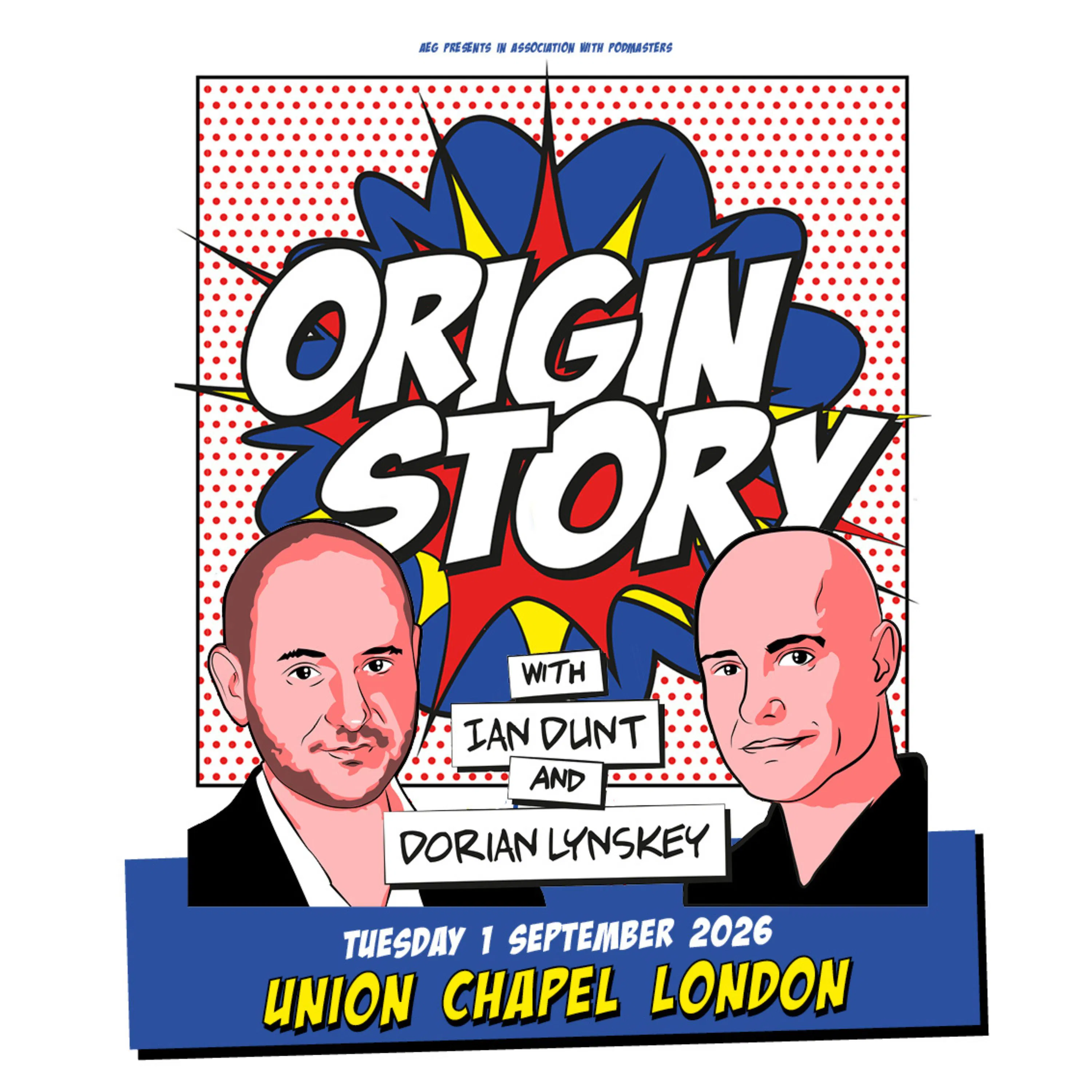
| 6/24/26 | ![]() Think Tanks – Part Two – The Room Where It Happens | Welcome to Origin Story and part two of the story of think tanks. Last time we traced the history of two very different varieties: the non-partisan centre for research and policy development and the handsomely-funded vehicle for a political ideology. Now we explain how they shape politics today. In the first half of the show we follow the partisan think tanks into the 21st century with the Koch network’s war on Obama, the Heritage Foundation’s MAGA makeover, the IEA’s role in the Liz Truss catastrophe and the depressing devolution of centre-right think tanks. At the centre of the British story is 55 Tufton Street, the notorious building where climate change deniers cross paths with Eurosceptics and the distinction between think tanks and lobby groups all but collapses. Nice work if you can get it. Then we explain how the more independent-minded think tanks make an essential contribution to developing and analysing policies, keeping alive the original ideal of politically neutral expertise. So what do we talk about when we talk about think tanks? What’s the deal with Tufton Street and why are its denizens always on TV? Where is the money coming from? How has Trump transformed the balance of power among US think tanks? What role have these groups played in the radicalisation of conservatism over the past decade? How do the independent think tanks — more important but far less discussed — try to make politicians better informed and more effective? Ultimately, how influential are think tanks really? • Special offer! Get 20% off any vehicle history check at carVertical.com/OriginStory • See Origin Story live at the Union Chapel, London on September the 1st • Support Origin Story on Patreon Reading list Books • Richard Cockett – Thinking the Unthinkable: Think-Tanks and the Economic Counter- Revolution 1931-1983 (1994) • Paul Dickson – Think Tanks (1972) • Sharon Ghamari-Tabrizi – The Worlds of Herman Kahn: The Intuitive Science of Thermonuclear War (2005) • F.A. Hayek – The Road to Serfdom (Reader’s Digest abridged version) (1945) • Jane Mayer – Dark Money: How a Secretive Group of Billionaires Is Trying to Buy Political Control in the US (2016) • Thomas Medvetz – Think Tanks in America (2014) • Madsen Pirie – Think Tank: The Story of the Adam Smith Institute (2012) • James A. Smith – The Idea Brokers: Think Tanks and the Rise of the New Policy Elite (1991) Articles • Dr James Barham – ‘Top Influential Think Tanks Ranked for 2024’, Academic Influence (16 October 2023) • Tom Bawden – ‘The address where Eurosceptics and climate change sceptics rub shoulders’, Independent (10 February 2016) • Chloe Farand – ‘Mapped: Whistleblower Accuses Nine Organisations of Colluding Over Hard Brexit’, DeSmog (23 July 2018) • Richard Fink – ‘Structure of Social Change’, Philanthropy Magazine (Winter 1996) • F. A. Hayek – ‘The Intellectuals and Socialism’, University of Chicago Law Review (Spring 1949) • Richard Kostelanetz – ‘One-Man Think Tank’, New York Times (1 December 1968) • Jane Mayer – ‘Covert Operations’, New Yorker (23 August 2010) • Jane Mayer – ‘Is IKEA the New Model for the Conservative Movement?’, New Yorker (15 November 2013) • James G. McGann, ‘2020 Global Go To Think Tank Index Report’, University of Pennsylvania, Think Tanks and Civil Societies Program (28 January 2021) • Louis Menand – ‘Fat Man’, New Yorker (20 June 2005) • George Monbiot – ‘Number 10 and the secretly funded lobby groups intent on undermining democracy’, Guardian (1 September 2020) • New York Times staff – ‘49 Scholars Hold Man Up to Mirror’, New York Times (21 September 1958) • David Perlman – ‘Man’s Actions Challenge a Braintrust’, San Francisco Chronicle (23 March 1958) Written and presented by Ian Dunt and Dorian Lynskey. Producer: Simon Williams. Music by Jade Bailey. Art by Jim Parrett. Logo by Mischa Welsh. Group Editor: Andrew Harrison. Origin Story is a Podmasters production www.podmasters.co.uk Learn more about your ad choices. Visit podcastchoices.com/adchoices | 1h 21m 52s | ||||||
| 6/17/26 | ![]() Think Tanks – Part One – What’s the Big Idea? | Welcome to Origin Story. This week we explore the world of think tanks, a term that has developed two very different meanings. To many people, it suggests deceptively named and opaquely funded vehicles for the political agendas of right-wing billionaires — think Tufton Street. Yet most of the world’s leading think tanks still cleave to the original intention of producing conscientious research and bold new ideas, independent of political parties. How and when did these paths diverge? The first think tank, the Carnegie Endowment for International Peace, was born in 1910 during a period when governments were increasingly interested in using data and expertise to generate more rational policy-making. Accelerated by the calamitous irrationality of the First World War, this mission produced such influential bodies as Chatham House and the Brookings Institution. The so-called eggheads proved their worth in a crisis, from the New Deal to the Second World War. As the Cold War began, the quintessential think tank (a term coined in 1958) was the RAND Corporation and the industry’s first celebrity was nuclear strategist Herman Kahn, a charismatic provocateur who boasted about “thinking about the unthinkable”. In the UK, however, a new kind of think tank was being born. In 1955, chicken farmer Antony Fisher founded the Institute of Economic Affairs as a power base from which the pioneers of neoliberalism could wage their long war against the Keynesian consensus, following Friedrich Hayek’s theory of political change. Their patience paid off. Along with the Centre for Policy Studies and the Adam Smith Institute, the IEA built the framework for Thatcherism in the 1970s. Likewise in the US, the Heritage Foundation and the American Enterprise Institute furnished Ronald Reagan with an armada of policies and advisers. The neoliberal revolution was incubated in these new-model think tanks. The centre-left was losing this war of ideas. By the 1980s, then, think tanks had acquired a more controversial reputation, using their charitable tax status to funnel money from billionaires like Richard Mellon Scaife and the Koch brothers into a vast network of organisations, books, journals, university programs and media operators, serving not just their ideological agendas but their financial interests. It was very far from the original notion of think tanks as a non-partisan “bridge between knowledge and power”. What do the first think tanks tell us about the dream of government based on facts and expertise? Who were the tycoons and intellectuals who joined forces to launch a new wave of think tanks? How did Hayek’s followers build from scratch an infrastructure that made Thatcherism and Reaganism possible? How is that nakedly ideological projects can present themselves as philanthropy and anonymous, tax-free donations can shape our politics so profoundly? And why are the names of think tanks so interchangeably boring? • See Origin Story live at the Union Chapel, London on 1st Sept 2026. Tickets selling fast! • Support Origin Story on Patreon • Buy the Origin Stories books on Centrism, Fascism and Conspiracy Theory • Subscribe to Origin Story on YouTube Reading list Books • Richard Cockett – Thinking the Unthinkable: Think-Tanks and the Economic Counter- Revolution 1931-1983 (1994) • Paul Dickson – Think Tanks (1972) • Sharon Ghamari-Tabrizi – The Worlds of Herman Kahn: The Intuitive Science of Thermonuclear War (2005) • F.A. Hayek – The Road to Serfdom (Reader’s Digest abridged version) (1945) • Jane Mayer – Dark Money: How a Secretive Group of Billionaires Is Trying to Buy Political Control in the US (2016) • Thomas Medvetz – Think Tanks in America (2014) • Madsen Pirie – Think Tank: The Story of the Adam Smith Institute (2012) • James A. Smith – The Idea Brokers: Think Tanks and the Rise of the New Policy Elite (1991) Articles • Dr James Barham – ‘Top Influential Think Tanks Ranked for 2024’, Academic Influence (16 October 2023) • Tom Bawden – ‘The address where Eurosceptics and climate change sceptics rub shoulders’, Independent (10 February 2016) • Chloe Farand – ‘Mapped: Whistleblower Accuses Nine Organisations of Colluding Over Hard Brexit’, DeSmog (23 July 2018) • Richard Fink – ‘Structure of Social Change’, Philanthropy Magazine (Winter 1996) • F. A. Hayek – ‘The Intellectuals and Socialism’, University of Chicago Law Review (Spring 1949) • Richard Kostelanetz – ‘One-Man Think Tank’, New York Times (1 December 1968) • Jane Mayer – ‘Covert Operations’, New Yorker (23 August 2010) • Jane Mayer – ‘Is IKEA the New Model for the Conservative Movement?’, New Yorker (15 November 2013) • James G. McGann, ‘2020 Global Go To Think Tank Index Report’, University of Pennsylvania, Think Tanks and Civil Societies Program (28 January 2021) • Louis Menand – ‘Fat Man’, New Yorker (20 June 2005) • George Monbiot – ‘Number 10 and the secretly funded lobby groups intent on undermining democracy’, Guardian (1 September 2020) • New York Times staff – ‘49 Scholars Hold Man Up to Mirror’, New York Times (21 September 1958) • David Perlman – ‘Man’s Actions Challenge a Braintrust’, San Francisco Chronicle (23 March 1958) Written and presented by Ian Dunt and Dorian Lynskey. Producer: Simon Williams. Music by Jade Bailey. Art by Jim Parrett. Logo by Mischa Welsh. Group Editor: Andrew Harrison. Origin Story is a Podmasters production www.podmasters.co.uk Learn more about your ad choices. Visit podcastchoices.com/adchoices | 1h 19m 54s | ||||||
| 6/9/26 | ![]() Evangelicals – Part Two – Good News, Bad News✨ | evangelical Christianitypolitical activism+5 | — | Moral MajorityChristian Coalition+2 | — | evangelicalsJerry Falwell+7 | — | 1h 24m 30s | |
| 6/3/26 | ![]() Evangelicals – Part One – Altared States✨ | evangelical Christianitypolitics+4 | — | PuritansSouthern church+1 | — | evangelicalismrevivalism+6 | — | 1h 33m 07s | |
| 5/27/26 | ![]() J.K. Rowling – Part Two – Transparent✨ | J.K. Rowlinggender-critical beliefs+5 | — | HBOUK Supreme Court+1 | — | J.K. Rowlingtrans rights+7 | — | 1h 27m 31s | |
| 5/20/26 | ![]() J.K. Rowling – Part One – Transformation✨ | J.K. Rowling's transformationtrans rights+4 | — | Harry Potterreligious right+3 | — | J.K. Rowlingtrans rights+5 | — | 1h 09m 45s | |
| 5/13/26 | ![]() European Union – Part Three – The Expanse✨ | European Unionhistory+5 | — | European UnionEEC | GermanyFrance+1 | European UnionJacques Delors+8 | — | 1h 23m 23s | |
| 5/6/26 | ![]() European Union – Part Two – Reality Bites✨ | European Unionhistory+4 | — | European Economic CommunityEEC | — | European UnionEEC+7 | — | 1h 09m 18s | |
| 4/29/26 | ![]() European Union – Part One – Come Together✨ | European Unionhistory+5 | — | European UnionPax Romana+1 | UK | European UnionCount Richard von Coudenhove-Kalergi+6 | — | 1h 23m 49s | |
| 4/22/26 | ![]() Origin Story – Live at Bloomsbury Theatre, 15th April 2026✨ | politicsimmigration+4 | Matt Goodwin | GB NewsReform UK+3 | LondonBloomsbury Theatre | Matt Goodwinpolitics+4 | — | 1h 46m 35s | |
Want analysis for the episodes below?Free for Pro Submit a request, we'll have your selected episodes analyzed within an hour. Free, at no cost to you, for Pro users. | |||||||||
| 4/8/26 | ![]() The General Strike – The Revolution That Wasn’t✨ | General StrikeBritish history+4 | — | Trades Union CongressBBC | — | General StrikeMay 1926+5 | — | 1h 25m 13s | |
| 3/25/26 | ![]() Introvert / Extrovert – In Two Minds✨ | personality typespsychoanalysis+4 | — | Origin Story | — | introvertextrovert+5 | — | 58m 36s | |
| 3/11/26 | ![]() Stephen Miller – American Fascist✨ | politicsnativism+4 | Stephen Miller | White HouseTolkien’s Grima Wormtongue | CaliforniaSanta Monica+1 | Stephen MillerTrump+6 | — | 1h 18m 21s | |
| 2/25/26 | ![]() 15-Minute Cities – How Urban Design Entered the Culture War✨ | urban design15-minute cities+4 | — | 15-minute citiesRobert Moses+1 | — | urban planning15-minute city+5 | — | 1h 06m 09s | |
| 2/4/26 | ![]() Blue Labour: We Need to Talk About Maurice✨ | Blue LabourMaurice Glasman+3 | — | Labour PartyReform UK+2 | — | Blue LabourMaurice Glasman+5 | — | 1h 30m 11s | |
| 12/20/25 | ![]() Socialism: The Finale – What’s Left?✨ | socialismhistory+4 | — | USSRChina+3 | — | socialismUSSR+7 | — | 1h 39m 48s | |
| 12/17/25 | ![]() The Fall of the USSR – End Game✨ | Soviet communismMikhail Gorbachev+5 | — | Communist PartySoviet Union | — | USSRGorbachev+8 | — | 1h 34m 46s | |
| 12/10/25 | ![]() Che Guevara – Guerrilla in the Mist✨ | Che Guevarasocialism+4 | — | Che photograph | — | Che Guevarasocialism+6 | IncogniORIGINSTORY | 1h 32m 20s | |
| 12/6/25 | ![]() The New Left – Part Two – Children of the Revolution✨ | New Left1968 protests+4 | — | New Left | ParisLondon+4 | New Left1968+5 | — | 1h 12m 46s | |
| 12/3/25 | ![]() The New Left – Part One – Generation Next | Welcome back to Origin Story season eight: The Story of Socialism. This time, we’re explaining the New Left, the messy constellation of ideas and movements that came out of the discrediting of Soviet communism 70 years ago and made the left what it is today. The big bang was 1956. Nikita Khrushchev’s secret speech made Stalin’s crimes undeniable while the invasion of Hungary disgraced the new regime too. The first New Left was an intellectual effort by disillusioned British ex-communists to develop a new “socialist humanism”: neither Washington nor Moscow nor mainstream social democracy but a revival of socialism’s highest ideals in the post-war world. The New Left was reborn as an international youth movement in the 1960s as the baby boomers came of age and rallied around new issues: the civil rights movement, the Vietnam war, the end of imperialism and the hollow conformity of the affluent society. From London to Paris and Berkeley to Berlin, students were in the vanguard. “We don’t trust anybody over 30,” they joked, but we take a look at three older thinkers whose ideas shaped the movement. The Frankfurt School philosopher Herbert Marcuse diagnosed the West as rotten and called for a new alliance of outsiders — students, minorities, Third World revolutionaries — to redeem it. The radical French psychiatrist Frantz Fanon sought the decolonisation of not just countries but minds, by any means necessary. And China’s Mao Zedong, the pioneer of guerrilla warfare, positioned himself at the epicentre of the movement for global revolution, even as his own crimes at home rivalled Stalin’s. By the end of 1967, the student movement was turning from protest to resistance, with a view to overturning the whole system, but it was also beginning to splinter. The upheavals of 1968 would be the making, and the breaking, of the New Left. Was the New Left ever a coherent socialist project or just a fragile dissident coalition? How did the first New Left pave the way for the movement that swept the world? What fuelled its accelerating radicalism in the mid-60s? How did students who loathed Stalin end up venerating dictators like Mao and Ho Chi Minh? And in rejecting the fatal errors of the Old Left, did the New Left create their own? For scheduling reasons we’re releasing both parts this week — part two will be with you on Saturday. • Head to nakedwines.co.uk/origin to get a £30 voucher and 6 top-rated wines from our sponsor Naked Wines for £39.99, delivery included. • Use code ORIGINSTORY at the link below to get an exclusive 60% off an annual Incogni plan: https://incogni.com/originstory • Get 25% off our highest tier annual Patreon subscription at https://www.patreon.com/originstorypod/membership • New Origin Story merch! https://podmarket.co.uk/collections/origin-story • Subscribe to Origin Story on YouTube • See Origin Story live at the Bloomsbury Theatre on 15th April 2026. Reading list Histories • David Aaronovitch – Party Animals: My Family and Other Communists (2016) • Bryan Burrough – Days of Rage: America’s Radical Underground, the FBI, and the Forgotten Age of Revolutionary Violence (2015) • David Caute – Fanon (1970) • Max Elbaum – Revolution in the Air: Sixties Radicals Turn to Lenin, Mao and Che (2002) • Todd Gitlin – The Sixties: Years of Hope, Days of Rage: Revised Edition (1993) • Vivian Gornick – The Romance of American Communism (1977) • Joachim C. Häberlen – Beauty Is in the Street: Protest and Counter-Culture in Post-War Europe (2023) • Stuart Jeffries – Grand Hotel Abyss: The Lives of the Frankfurt School (2016) • Michael Kazin – American Dreamers: How the Left Changed a Nation (2011) ... reading list continues on Patreon Written and presented by Ian Dunt and Dorian Lynskey. Producer: Simon Williams. Music by Jade Bailey. Art by Jim Parrett. Logo by Mischa Welsh. Group Editor: Andrew Harrison. Origin Story is a Podmasters production Learn more about your ad choices. Visit podcastchoices.com/adchoices | 1h 05m 04s | ||||||
| 11/26/25 | ![]() Origin Story – Live at the Tabernacle, 13th Nov 2025 | This week’s episode is an edited version of Origin Story Live at the Tabernacle in London on Thursday 13 November. The theme is political insurgents: the politicians and thinkers who are reshaping politics in 2025. In part one we profile two of the most significant intellectuals on the radical right. The Cambridge academic James Orr is senior adviser to Reform UK, friend to JD Vance and networker extraordinaire. Curtis Yarvin is a far-right blogger whose extreme views on race, democracy and “techno-monarchy” are required reading in the Trump administration. Who are they? How did they become so influential? And — yikes! — what do they actually think? In part two we take a look at two young socialist politicians who have shaken up the left this year: the next mayor of New York City, Zohran Mamdani, and the new “eco-populist” leader of the UK Green Party, Zack Polanski. How have they risen so fast? What are they proposing? And could they be the future of socialism? We also take an axe to some of the buzzphrases that are making political discourse dumber, from “optics” to the “woke right”. And we answer some questions from the audience. If you missed the show and the livestream, or if you just want to relive the “magic”, dive in. • Use code ORIGINSTORY at the link below to get an exclusive 60% off an annual Incogni plan: https://incogni.com/originstory • Head to nakedwines.co.uk/origin to get a £30 voucher and 6 top-rated wines from our sponsor Naked Wines for £39.99, delivery included. • Get 25% off our highest tier annual Patreon subscription at https://www.patreon.com/originstorypod/membership • New Origin Story merch! https://podmarket.co.uk/collections/origin-story • Subscribe to Origin Story on YouTube • See Origin Story live at the Bloomsbury Theatre on 15th April 2026. Reading list James Orr • Nafeez Ahmed – ‘Cambridge Faculty of Divinity Ignores Demands for Inquiry Into Peter Thiel’s Far-Right Influence’, Byline Times (23 December 2021) • Robert Crampton – ‘James Orr: JD Vance is just a normal guy who likes his beers’, The Times (15 August 2025) • Zoltán Kottász – ‘“No civilisation has invited invaders in and put them up in four-star hotels”: James Orr’, European Conservative (13 August 2025) • Marie Le Conte – ‘James Orr: Reform’s polished extremist’, The New World (27 October 2025) • Charles Moore – ‘Perverted liberalism has left to neo-Marxism, perverted patriotism may yet lead to neo-fascism’, Daily Telegraph (15 August 2025) • James Orr – ‘Faith, Family, Flag, Freedom’ (2023) • Radical with Amol Rajan, Britain’s New Right: Could Reform Replace the Tories? (Dr James Orr), BBC (2 August 2025) • Noah Vickers – ‘James Orr: “This New Nation That’s Emerging Is Really No Nation At All’, The House (4 September 2025) Curtis Yarvin • Sam Adler-Bell – ‘The Radical Young Intellectuals Who Want to Take Over the American Right’, The New Republic (2 December 2021) • David Brooks – ‘The Terrifying Future of the American Right’, The Atlantic (18 November 2021) • Ava Kafman – ‘Curtis Yarvin’s Plot Against America’, The New Yorker (2 June 2025) • Jemima Kelly – ‘Sunday at the garden party for Curtis Yarvin and the new, new right’, Financial Times (8 August 2025) • Matt McManus – ‘Yarvin’s Case Against Democracy’, Commonweal (27 January 2023) • David Marchese – ‘The Interview: Curtis Yarvin Says Democracy Is Done. Powerful Conservatives Are Listening’, The New York Times (18 January 2025) • Corey Pein – ‘The Moldbug Variations’, The Baffler (9 October 2017) ... reading list continues on Patreon Written and presented by Ian Dunt and Dorian Lynskey. Producer: Simon Williams. Music by Jade Bailey. Art by Jim Parrett. Logo by Mischa Welsh. Group Editor: Andrew Harrison. Origin Story is a Podmasters production Learn more about your ad choices. Visit podcastchoices.com/adchoices | 2h 02m 46s | ||||||
| 11/19/25 | ![]() The Labour Party – Part Three – One Battle After Another | Welcome to the third and final part of the story of the Labour Party, from Keir Hardie to Keir Starmer. Margaret Thatcher’s first election victory in 1979 initiates Labour’s longest period in opposition and its deepest identity crisis: Bennites to the left, SDP defectors to the right. After Michael Foot leads Labour to its worst vote share since 1918, Neil Kinnock takes on the long and painful job of rebuilding the party in the face of Thatcherism. Following another two defeats, the task of modernisation passes to John Smith but his sudden death enables Tony Blair and Gordon Brown to go even further, determined to transform the party and erase the trauma of 1983. Labour’s spectacular 1997 landslide seems to confirm the agenda of New Labour and the nebulous political project known as the Third Way. But its many achievements are limited by its caution, duelling egos and ideological vagueness. Is Labour still a socialist party in any meaningful way or has it disowned too much of its heritage? By the time Brown becomes PM in 2007, New Labour is exhausted and rudderless. History repeats itself: another heavy defeat, another pivot to the left. When Jeremy Corbyn replaces Ed Miliband, the left is in charge for the first time in 80 years — the revenge of the Bennites — but Labour’s fortunes are hostage to the chaos of Brexit. An impressive advance in 2017 turns into a crushing humiliation in 2019. New leader Keir Starmer mounts a speedy recovery but soon finds himself desperately unpopular: accused of squandering a remarkable comeback by lacking vision and waging an unprecedented war against the left. With new challengers to the left and Nigel Farage’s Reform UK threatening to form the most right-wing government in British history, the stakes are once again existentially high. How did Thatcherism cast Labour into the wilderness? How did Neil Kinnock make the party viable again? Did Tony Blair ever develop a coherent theory of progressive politics? Could Jeremy Corbyn ever have succeeded? Why do Labour’s left and right keep making the same mistakes? What can Labour’s history tell us about Keir Starmer’s current problems? And is it still a party of democratic socialism? • Use code ORIGINSTORY at the link below to get an exclusive 60% off an annual Incogni plan: https://incogni.com/originstory • Head to nakedwines.co.uk/origin to get a £30 voucher and 6 top-rated wines from our sponsor Naked Wines for £39.99, delivery included. • Get 25% off our highest tier annual Patreon subscription at https://www.patreon.com/originstorypod/membership • New Origin Story merch! https://podmarket.co.uk/collections/origin-story • Subscribe to Origin Story on YouTube • See Origin Story live at the Bloomsbury Theatre on 15th April 2026. Reading list Histories • Andy Beckett – The Searchers: Five Rebels, Their Dream of a Different Britain, and Their Many Enemies (2024) • Jon Cruddas – A Century of Labour (2024) • Ian Dunt and Dorian Lynskey – Centrism: The Story of an Idea (2024) • Simon Hannah – A Party with Socialists in It: A History of the Labour Left: Second Edition (2022) • Owen Jones – This Land: The Struggle for the Left (2020) • David Marquand – The Progressive Dilemma: From Lloyd George to Blair: Second Edition (1999) • John O’Farrell – Things Can Only Get Better: Eighteen Miserable Years in the Life of a Labour Supporter (1998) • Gabriel Pogrund and Patrick Maguire - Left Out: The Inside Story of Labour Under Corbyn (2020) • Martin Pugh – Speak for Britain! A New History of the Labour Party (2010) • Andrew Rawnsley – Servants of the People: The Inside Story of New Labour (2001) ... Reading list continues on Patreon Written and presented by Ian Dunt and Dorian Lynskey. Producer: Simon Williams. Music by Jade Bailey. Art by Jim Parrett. Logo by Mischa Welsh. Group Editor: Andrew Harrison. Origin Story is a Podmasters production Learn more about your ad choices. Visit podcastchoices.com/adchoices | 1h 34m 05s | ||||||
| 11/12/25 | ![]() The Labour Party – Part Two – War and Peace | Welcome back to Origin Story season eight: The Story of Socialism. This week, we continue the tale of the UK Labour Party, from Keir Hardie to Keir Starmer. It’s 1940 and Clement Attlee’s Labour has joined the wartime coalition with Winston Churchill’s Tories, making it seem for the first time like a natural party of government and paving the way for its surprise 1945 landslide. Despite enormous obstacles at home and abroad, Attlee’s ageing all-stars lay the foundations of post-war Britain, from the NHS to NATO. How did they pull it off? Losing office in 1951 kicks off the wilderness years. Civil war rages between followers of the left-wing titan Nye Bevan and the revisionist Hugh Gaitskell as Labour struggles to find a purpose in a decade of growing affluence and relative consensus. A new socialism of liberty and equality battles with the old socialism of nationalisation while fresh divisions open up over Europe and the Cold War. After 13 years, the shrewd unifier Harold Wilson leads Labour back to power and Home Secretary Roy Jenkins leads a liberalising revolution in British life. But is social democracy still socialism? If 1970 is an unexpected defeat, then 1974 is an unexpected victory —and a very mixed blessing. Wilson and his successor James Callaghan preside over five years of crisis and precarity as the post-war consensus cracks and crumbles. The born-again socialist Tony Benn and the liberal Europhile Roy Jenkins represent two poles of an increasingly fractious party. When Margaret Thatcher sweeps to power in 1979, Labour returns to the wilderness and faces its worst identity crisis yet. Why was the Second World War the making of the Labour Party? Who, or what, killed the post-war consensus? How did Labour governments navigate one crisis after another? How did its theory of socialism evolve to meet a changing electorate? And why does every Labour government leave the left disappointed? • Use code ORIGINSTORY at the link below to get an exclusive 60% off an annual Incogni plan: https://incogni.com/originstory • Head to nakedwines.co.uk/origin to get a £30 voucher and 6 top-rated wines from our sponsor Naked Wines for £39.99, delivery included. • Get 25% off our highest tier annual Patreon subscription at https://www.patreon.com/originstorypod/membership • New Origin Story merch! https://podmarket.co.uk/collections/origin-story • Subscribe to Origin Story on YouTube • See Origin Story live at the Bloomsbury Theatre on 15th April 2026. Reading list Histories and Biographies • Andy Beckett – When the Lights Went Out: Britain in the Seventies (2009) • Andy Beckett – The Searchers: Five Rebels, Their Dream of a Different Britain, and Their Many Enemies (2024) • John Bew – Citizen Clem: A Biography of Attlee (2016) • John Campbell – Roy Jenkins: A Well-Rounded Life (2015) • Jon Cruddas – A Century of Labour (2024) • Ian Dunt and Dorian Lynskey – Centrism: The Story of an Idea (2024) • Michael Foot – Aneurin Bevan: A Biography: Volume Two: 1945-1960 (1966) • Simon Hannah – A Party with Socialists in It: A History of the Labour Left: Second Edition (2022) • Jam Tomorrow podcast, written and presented by Ros Taylor (2023-24) • Roy Jenkins – A Life at the Centre (1992) • David Marquand – The Progressive Dilemma: From Lloyd George to Blair: Second Edition (1999) • Ben Pimlott – Harold Wilson (1993) • Martin Pugh – Speak for Britain! A New History of the Labour Party (2010) • Steve Richards – The Prime Ministers: Reflections on Leadership from Wilson to Johnson (2019) • Steve Richards – The Prime Ministers We Never Had: Success and Failure from Butler to Corbyn (2021) ... reading list continues on Patreon Written and presented by Ian Dunt and Dorian Lynskey. Producer: Simon Williams. Music by Jade Bailey. Art by Jim Parrett. Logo by Mischa Welsh. Group Editor: Andrew Harrison. Origin Story is a Podmasters production Learn more about your ad choices. Visit podcastchoices.com/adchoices | 1h 36m 23s | ||||||
| 11/5/25 | ![]() The Labour Party – Part One – A Very British Socialism | Welcome back to Origin Story season eight: The Story of Socialism. This week, in the year of its 125th anniversary, we begin the tale of the UK Labour Party, from Keir Hardie to Keir Starmer. “The British Labour Party is an expression of the Socialist movement adapted to British conditions,” wrote Clement Attlee. But British socialism meant different things to different people. When the Labour Representation Committee was formed in 1900, its socialism was a tense alliance of Marxists and liberals, hard-nosed trade unionists and Fabian intellectuals, puritans and hedonists, pragmatists and romantics. From the start, they were arguing about everything from alcohol to war. It was the job of two remarkable Scotsmen to keep it united: the eccentric idealist Keir Hardie and the canny, charismatic Ramsay MacDonald. The social upheaval of the First World War turned Labour into a mass party which supplanted the Liberals as the main opposition to the Tories and took office for the first time in 1924. MacDonald’s minority government lasted for just over eight months but it proved that Labour could be a respectable party of government and not reckless “wild men” under the spell of Moscow. MacDonald returned to Number 10 in 1929 but his second government was capsized by the Wall Street Crash and ended two years later in rupture, betrayal and trauma. While some Labour MPs joined MacDonald’s National Government, most lost their seats, leaving the surviving leadership troika of George Lansbury, Clement Attlee and Stafford Cripps to rebuild the party amid the turmoil of the Great Depression and rising fascism. The challenge was existential. In 1935, Lansbury was felled by his untimely pacifism and Attlee took the job that nobody predicted he would hold for the next 20 years. We conclude, as tradition dictates, on the eve of the Second World War: the cataclysm that will be the making of the Labour Party. Why did British socialism break from Marx? What different traditions did Labour pull together and how did Hardie and MacDonald make them cohere? How did MacDonald go from hero to villain? Has the Labour Party always been at war with itself? And — pub quiz! — which four Labour leaders had the first name James? • Use code ORIGINSTORY at the link below to get an exclusive 60% off an annual Incogni plan: https://incogni.com/originstory • Head to nakedwines.co.uk/origin to get a £30 voucher and 6 top-rated wines from our sponsor Naked Wines for £39.99, delivery included. • Get 25% off our highest tier annual Patreon subscription at https://www.patreon.com/originstorypod/membership • New Origin Story merch! https://podmarket.co.uk/collections/origin-story • Subscribe to Origin Story on YouTube • See Origin Story live at the Bloomsbury Theatre on 15th April 2026. Reading list Histories and Biographies • John Bew – Citizen Clem: A Biography of Attlee (2016) • Jon Cruddas – A Century of Labour (2024) • Simon Hannah – A Party with Socialists in It: A History of the Labour Left: Second Edition (2022) • Bob Holman – Keir Hardie: Labour’s Greatest Hero? (2010) • David Marquand – The Progressive Dilemma: From Lloyd George to Blair: Second Edition (1999) • Henry Pelling – The Origins of the Labour Party 1880-1900: Second Edition (1965) • Martin Pugh – Speak for Britain! A New History of the Labour Party (2010) • Donald Sassoon – One Hundred Years of Socialism: The West European Left in the Twentieth Century (1996) • Andrew Thorpe – A History of the British Labour Party: Fourth Edition (2015) • David Torrance – The Wild Men: The Remarkable Story of Britain’s First Labour Government (2024) ... reading list continues on Patreon Written and presented by Ian Dunt and Dorian Lynskey. Producer: Simon Williams. Music by Jade Bailey. Art by Jim Parrett. Logo by Mischa Welsh. Group Editor: Andrew Harrison. Origin Story is a Podmasters production Learn more about your ad choices. Visit podcastchoices.com/adchoices | 1h 31m 57s | ||||||
| 10/29/25 | ![]() Lenin, Trotsky, Stalin – Part Three – Terror | • See Origin Story LIVE at The Tabernacle on Thur Nov 13. Buy tickets here. Welcome to the third and final part of the story of Lenin, Trotsky and Stalin: Terror. It’s 1929 and the age of Stalin has begun. His mission to revolutionise the Soviet economy succeeds at the price of millions of lives: kulaks are murdered en masse while Ukrainians starve in the man-made famine known as the Holodomor. In 1936 he commences the purge known as the Great Terror, which radiates out from the highest levels of the Communist Party to ravage the entire country. Nobody is safe in Stalin’s nightmare state. While communists abroad excuse or actively endorse Stalin’s atrocities, some socialists and ex-communists recognise that this is the antithesis of what socialism should be and sound the alarm. Stalin has no fiercer critic than Trotsky, but his former rival flounders in exile and meets a sticky end. The USSR’s international reputation is complicated by the rise of Nazi Germany and the Spanish Civil War. Is Stalin Hitler’s worst enemy, his gullible enabler or his unlikely friend? Turns out it’s all three. Stalin’s murderous paranoia fails him just once: he ignores warnings that Hitler will break the Nazi-Soviet Pact and launch an invasion in 1941. The war claims as many as 27 million Soviet lives. Victorious, Stalin sets about strangling hopes of post-war liberalisation and taking control of Eastern Europe — the Cold War begins. Trapped in his cult of personality and endless suspicions, he seems set to launch a new, antisemitic purge in 1953 until death mercifully intervenes. He leaves behind a powerful but traumatised country, a very long way from the hopes of 1917. How much of what the USSR became can be pinned on Stalin’s disastrous personality? What was it like to live and die under his regime? What was the relationship between economics and mass murder? How did the Second World War transform Stalin? How similar were Stalinism and Nazism, the two faces of totalitarianism? And why did so many western communists become accomplices to terror? • Use code ORIGINSTORY at the link below to get an exclusive 60% off an annual Incogni plan: https://incogni.com/originstory • Get 25% off our highest tier annual Patreon subscription at https://www.patreon.com/originstorypod/membership • New Origin Story merch! https://podmarket.co.uk/collections/origin-story • Subscribe to Origin Story on YouTube • See Origin Story live at the Bloomsbury Theatre on 15th April 2026. Reading list • Martin Amis, Koba the Dread: Laughter and the Twenty Million (2002) • Anne Applebaum, Gulag: A History (2003) • Anne Applebaum, Iron Curtain: The Crushing of Eastern Europe 1944-1956 (2012) • Anne Applebaum, Red Famine: Stalin’s War on Ukraine (2017) • Franz Borkenau, The Communist International (1938) • Robert Conquest, The Great Terror: A Reassessment: Fortieth Anniversary Edition (2008, first published 1968) • The Death of Stalin, co-written and directed by Armando Iannucci (2017) • Ian Dunt, How to Be a Liberal: The Story of Freedom and the Fight for Its Survival (2020) • Max Eastman, Reflections on the Failure of Socialism (1955) • Orlando Figes, The Whisperers: Private Life in Stalin’s Russia (2007) • Vivian Gornick, The Romance of American Communism (1977) • Christopher Hitchens, Arguably: Essays (2011) • Clive James, Cultural Amnesia: Notes in the Margin of My Time (2008) • Oleg V. Khlevniuk, Stalin: New Biography of a Dictator (2017) • Arthur Koestler, Darkness at Noon (1940) • Dorian Lynskey, The Ministry of Truth: A Biography of George Orwell’s • Nineteen Eighty-Four (2019) • Eugene Lyons, Assignment in Utopia (1938) • Mr Jones, written by Andrea Chalupa and directed by Agnieszka Holland (2019) ... Reading list continues on Patreon Written and presented by Ian Dunt and Dorian Lynskey. Producer: Simon Williams. Music by Jade Bailey. Art by Jim Parrett. Logo by Mischa Welsh. Group Editor: Andrew Harrison. Origin Story is a Podmasters production Learn more about your ad choices. Visit podcastchoices.com/adchoices | 1h 36m 07s | ||||||
Showing 25 of 119
Sponsor Intelligence
Sign in to see which brands sponsor this podcast, their ad offers, and promo codes.
Chart Positions
10 placements across 10 markets.
Chart Positions
10 placements across 10 markets.