
Insights from recent episode analysis
Audience Interest
Podcast Focus
Publishing Consistency
Platform Reach
Insights are generated by CastFox AI using publicly available data, episode content, and proprietary models.
Total monthly reach
Estimated from 2 chart positions in 2 markets.
By chart position
- 🇺🇸US · Design#1265K to 30K
- 🇵🇹PT · Design#141500 to 3K
- Per-Episode Audience
Est. listeners per new episode within ~30 days
2.8K to 17K🎙 Weekly cadence·5 episodes·Last published 2mo ago - Monthly Reach
Unique listeners across all episodes (30 days)
5.5K to 33K🇺🇸91%🇵🇹9% - Active Followers
Loyal subscribers who consistently listen
2.2K to 13K
Market Insights
Platform Distribution
Reach across major podcast platforms, updated hourly
Total Followers
—
Total Plays
—
Total Reviews
—
* Data sourced directly from platform APIs and aggregated hourly across all major podcast directories.
On the show
Recent episodes
Our Buildings, Our Selves, with guest James Wines
Mar 6, 2026
43m 43s
Our Buildings, Our Selves, with guests Gerhard Mayer and Lindsey Stirman
Feb 27, 2026
40m 58s
Our Buildings, Our Selves, with guests Paul Goldberger and Zach Mortice
Apr 22, 2025
52m 35s
The Age of the Starchitect is Over, What’s Next?
Mar 17, 2025
1h 13m 11s
Witold Rybczynski & Kurt Andersen
Feb 11, 2025
1h 04m 42s
Social Links & Contact
Official channels & resources
RSS Feed
Login
| Date | Episode | Description | Length | |
|---|---|---|---|---|
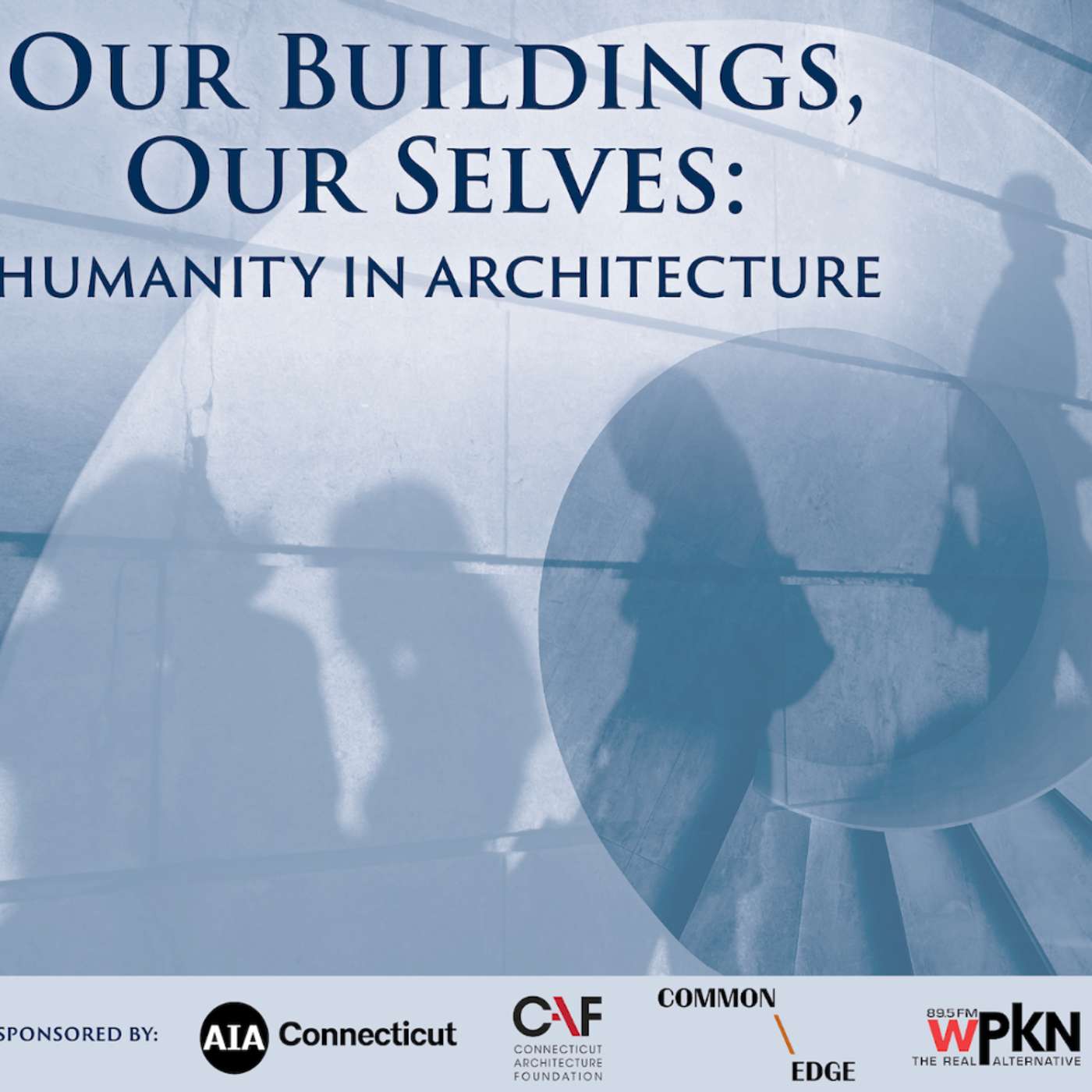
| 3/6/26 | Our Buildings, Our Selves, with guest James Wines | Hosted by Duo Dickinson and Martin C. PedersenWelcome to Our Buildings, Our Selves: Humanity in Architecture, a monthly podcast produced by Common Edge, the Connecticut Architecture Foundation, the Connecticut AIA, and Bridgeport community radio station WPKN 89.5 FM. In a fantastic conversation, James Wines talks about his 70 years in creation. More than architecture, Wines designed SITE as a studio that addressed the culture as the context for our common values. THrough scores of buildings, exhibits, writings and lectures, James Wines defined how humanity interacts with design, and in his conversation with Dio Dickinson and Martin Pederson, he describes how environmental realities became a centerpoint in our future, and how our common future meant that design had to lead the way to understanding and hope. A remarkable podcast that touches on an incredible career. | 43m 43s | |
| 2/27/26 | Our Buildings, Our Selves, with guests Gerhard Mayer and Lindsey Stirman | Hosted by Duo Dickinson and Martin C. PedersenWelcome to Our Buildings, Our Selves: Humanity in Architecture, a monthly podcast produced by Common Edge, the Connecticut Architecture Foundation, the Connecticut AIA, and Bridgeport community radio station WPKN 89.5 FM. We’re in a housing crisis. Duo Dickinson and Martin C. Pedersen talk with Gerhard Mayer and Lindsey Stirman, co-founders of the Living Communities Initiative, a Los Angeles-based organization dedicated to creating a new paradigm for housing development. They reject both NIMBY-ism (not in my backyard) and its knee jerk opposite, YIMBY (yes to any sort of housing, regardless of its quality). And argue instead for a different mode: QIMBY (quality in my backyard). When projects include elements like walkability and gentle density, opposition to new development disappears. | 40m 58s | |
| 4/22/25 | Our Buildings, Our Selves, with guests Paul Goldberger and Zach Mortice | The State of Design Journalism in the Internet Age Hosted by Duo Dickinson and Martin C. PedersenWelcome to Our Buildings, Our Selves: Humanity in Architecture, a monthly podcast produced by Common Edge, the Connecticut Architecture Foundation, the Connecticut AIA, and Bridgeport community radio station WPKN 89.5 FM. In many ways, design journalism in the 21st century is in uncharted territory. Digital technology has changed everything, eroding the business models of the previous century and catapulting everyone onto the infinitely fractured world of the internet. Architectural exposure—who’s covered, what’s covered, how its covered—is an entirely different beast today. Our guests this month, Pulitzer Prize–winning architecture critic Paul Goldberger and Chicago-based design writer and critic Zach Mortice, have unique perspectives on this media transformation, both past and present. Paul Goldberger is a contributing editor at Vanity Fair. He began his career at the New York Times, where in 1984 his work was awarded the Pulitzer Prize for Distinguished Criticism. He later served as architecture critic for the New Yorker. He lectures widely around the country on the subject of architecture, design, historic preservation, and cities. He has also served as a special consultant and advisor on architecture and planning matters to several major cultural and educational institutions.Zach Mortice is a Chicago-based design journalist and critic that focuses on how architecture and landscape architecture intersect with public policy. His work has appeared in Architect, Architectural Record, Metropolis, Landscape Architecture Magazine, Curbed, Dezeen, The Atlantic’s CityLab, and Places Journal. He’s currently a contributing writer at Bloomberg CityLab. His social media handles can be found at @zachmortice. | 52m 35s | |
| 3/17/25 | The Age of the Starchitect is Over, What’s Next? | Join our guests New York Times architecture critic, Michael Kimmelman, and critic and creator of McMansion Hell, Kate Wagner. All specializations create their own language, rules, and personalities that reinforce the values of those engaged in it. Architecture is no different. For a century "Modernism" was the base clef of frozen music, defining what was, in fact music, and not noise. Now that orthodoxy, that Canon, is completely destabilized by the Internet. So architecture's "Great Chef's" are no longer evident: like music there seem to be few standards of approval: fewer cults. So fewer Cults of Personality. Frank Lloyd Wright, Michael Graves, Zaha Hadid all personified architecture: What changed? | 1h 13m 11s | |
| 2/11/25 | Witold Rybczynski & Kurt Andersen | "What Is Ugly?" Author, architect and educator Witold Rybczynski, and writer and founder of Studio 360, Kurt Andersen, address the exquisite diversity in our universality without the obsession with "style." | 1h 04m 42s |
Showing 5 of 5
Sponsor Intelligence
Sign in to see which brands sponsor this podcast, their ad offers, and promo codes.
Chart Positions
2 placements across 2 markets.
Chart Positions
2 placements across 2 markets.