
Insights from recent episode analysis
Audience Interest
Podcast Focus
Publishing Consistency
Platform Reach
Insights are generated by CastFox AI using publicly available data, episode content, and proprietary models.
Total monthly reach
Estimated from 1 chart position in 1 market.
By chart position
- 🇦🇺AU · Life Sciences#7130K to 100K
- Per-Episode Audience
Est. listeners per new episode within ~30 days
15K to 50K🎙 Weekly cadence·6 episodes·Last published 3mo ago - Monthly Reach
Unique listeners across all episodes (30 days)
30K to 100K🇦🇺100% - Active Followers
Loyal subscribers who consistently listen
9K to 30K
Market Insights
Platform Distribution
Reach across major podcast platforms, updated hourly
Total Followers
—
Total Plays
—
Total Reviews
—
* Data sourced directly from platform APIs and aggregated hourly across all major podcast directories.
On the show
Recent episodes
Lemur Discoveries, Fossils, and Conservation – Patricia Wright
Mar 1, 2026
42m 29s
Origins of the Genus Homo – Brian Villmoare
Feb 2, 2026
26m 29s
Loris Evolution, Venom, and Conservation – Anna Nekaris
Jan 26, 2026
31m 13s
Hominin Evolution and Taxonomy – Bernard Wood
Jan 26, 2026
28m 01s
Spinal Evolution and the Origins of Bipedalism – Catalina Villamil
Jan 26, 2026
19m 39s
Social Links & Contact
Official channels & resources
Official Website
Login
RSS Feed
Login
| Date | Episode | Description | Length | |
|---|---|---|---|---|
| 3/1/26 | 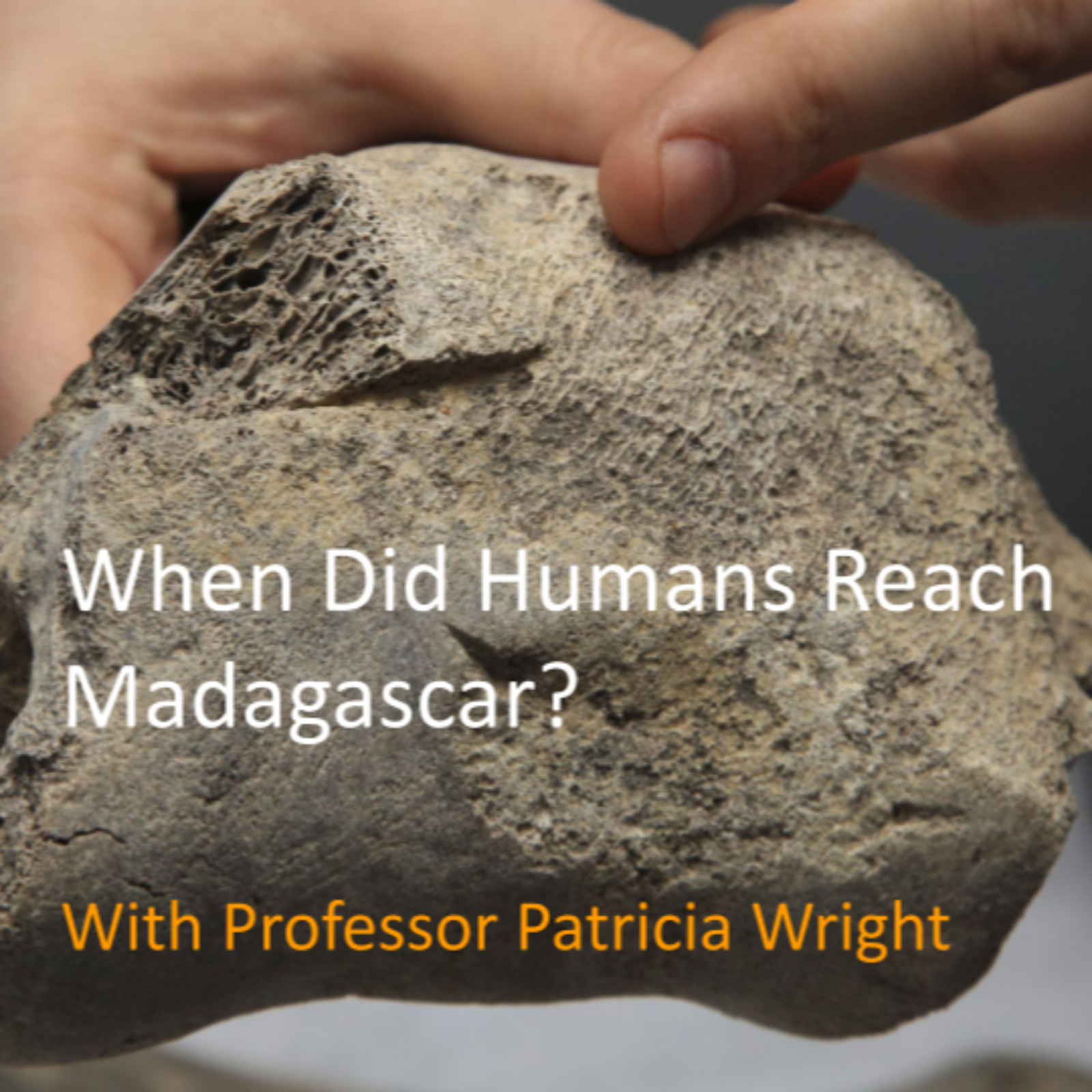 Lemur Discoveries, Fossils, and Conservation – Patricia Wright | How do you rediscover a species thought to be extinct, and help protect an entire rainforest at the same time?In this episode, we explore the remarkable career of Professor Patricia Wright, one of the most influential figures in lemur research and conservation.Professor Wright is a primatologist, anthropologist, and conservationist best known for her groundbreaking work in Madagascar. She rediscovered the greater bamboo lemur (Hapalemur simus), once believed extinct, and discovered a new species, the golden bamboo lemur (Hapalemur aureus). Her efforts were central to the creation of Ranomafana National Park, now a UNESCO World Heritage Site.She also founded Centre ValBio, a leading research and education center focused on biodiversity conservation, scientific research, and community engagement in Madagascar.In this interview, Professor Wright discusses her career path and major discoveries, including fossil and subfossil lemurs, extinct Malagasy hippos, and Milne-Edwards’s sifakas. She explains what these finds reveal about lemur evolution and extinction, explores how and when humans first arrived on Madagascar, and reflects on the conservation challenges facing lemurs today. Another theme of the conversation is one of the great evolutionary puzzles, how did lemurs first reach Madagascar?Whether you’re interested in primate evolution, fieldwork in Madagascar, or the role of science in conservation, this episode offers a rare insight into both the biology of lemurs and the human stories behind their discovery and protection. | 42m 29s | |
| 2/2/26 | 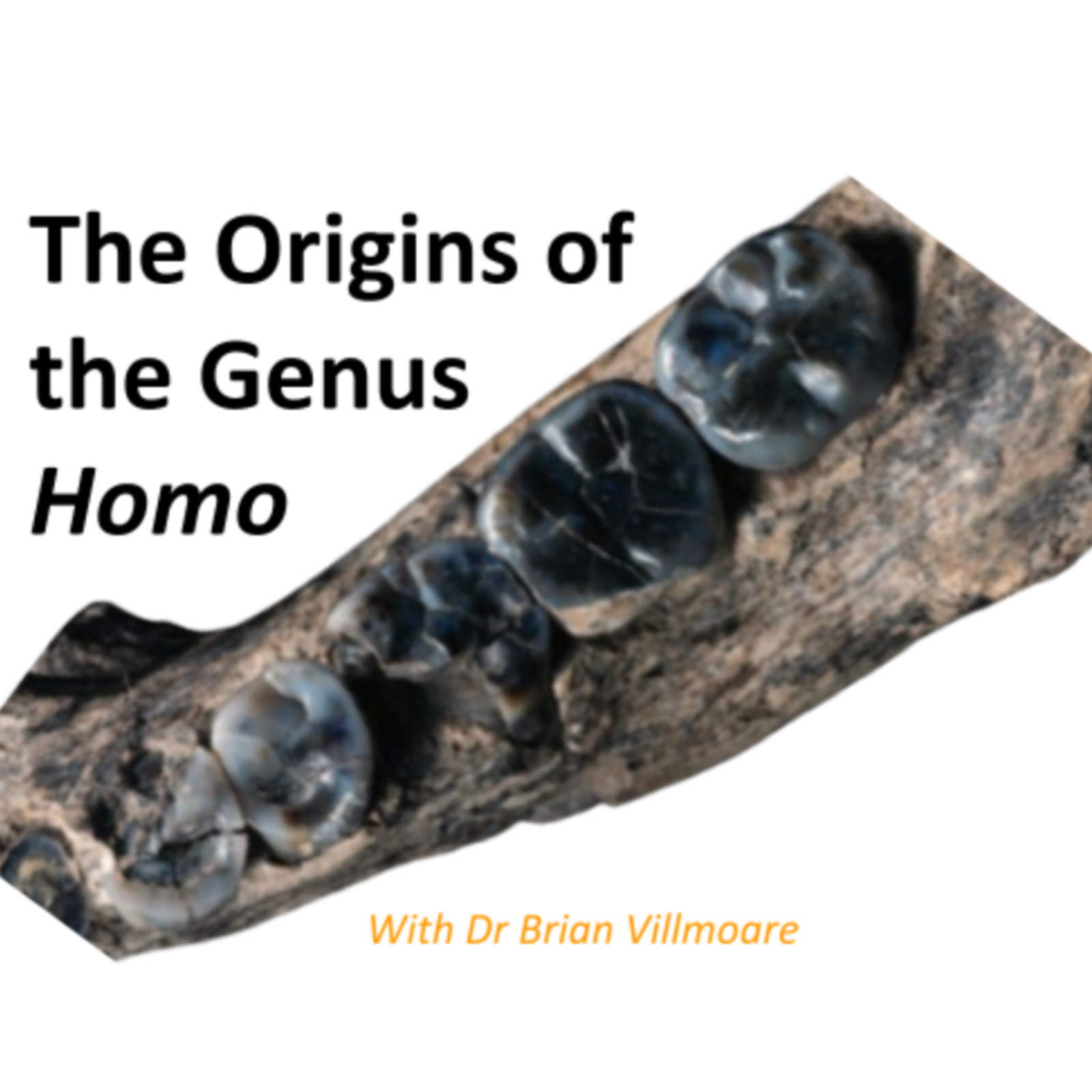 Origins of the Genus Homo – Brian Villmoare | Where did our genus Homo come from, and how confident are we about its earliest members? In this episode, we explore the fossil evidence for human origins with one of the researchers reshaping how we define our own genus.Dr Brian Villmoare is a paleoanthropologist at the University of Nevada, Las Vegas, whose research focuses on the origins of Homo, hominin craniofacial evolution, and the African fossil record. He is best known for his work at Ledi-Geraru in Ethiopia, which has played a key role in redefining what the earliest members of our genus looked like and how, and when, they evolved.In this interview, Dr Villmoare shares his career journey and reflects on major figures who shaped paleoanthropology. He discusses what his research has found out about the emergence of Homo, how species boundaries are drawn in the fossil record, and how advances in biomechanics and analytical methods are improving our understanding of hominin cranial evolution.The conversation also covers fieldwork across eastern and southern Africa, the evolutionary relationships of Homo naledi and Homo floresiensis, debates over Neanderthal taxonomy, and the most underrated fossil sites for understanding human evolution. Dr Villmoare also talks about his book The Evolution of Everything and reflects on challenges surrounding fossil access, digital data, and resource sharing in paleoanthropology. | 26m 29s | |
| 1/26/26 | 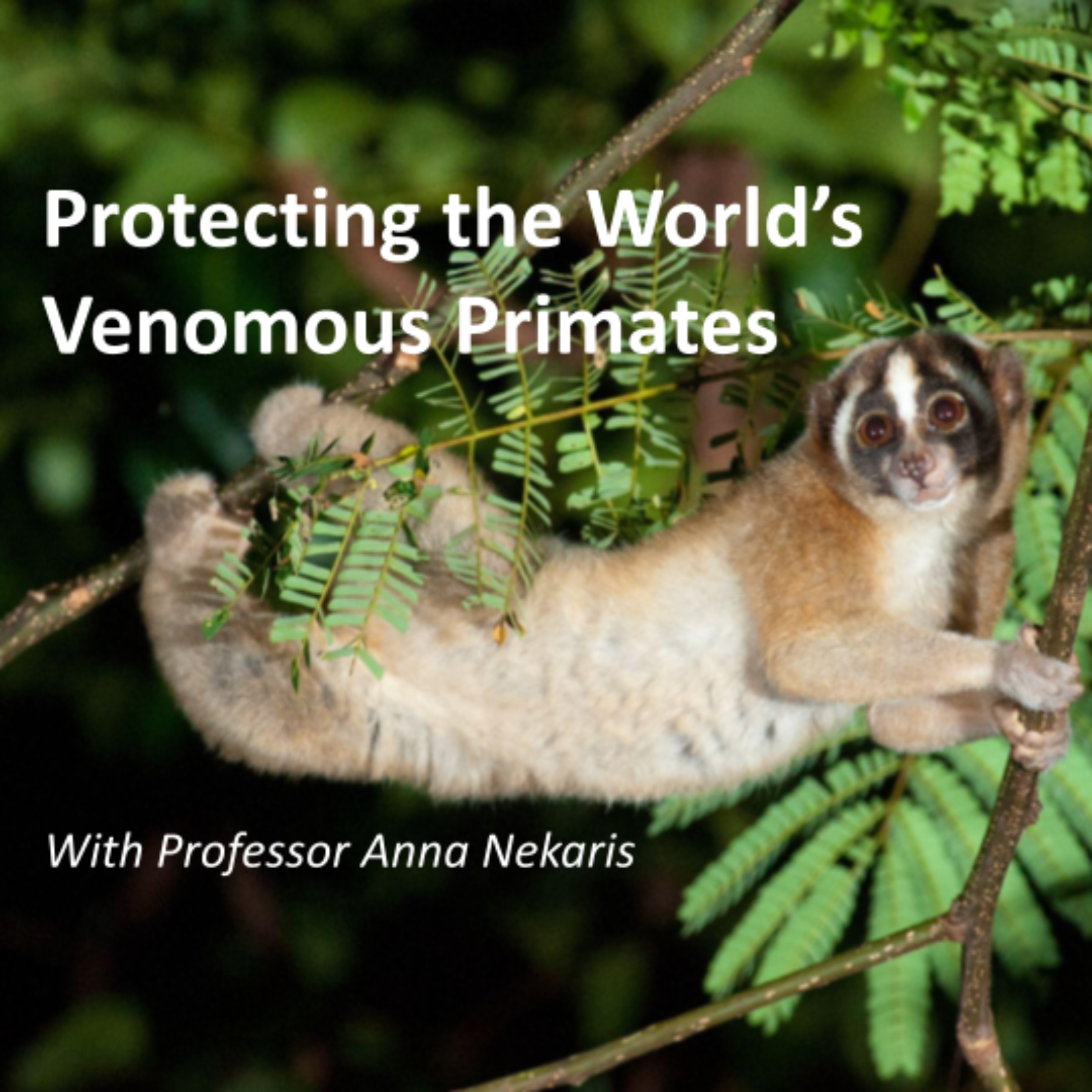 Loris Evolution, Venom, and Conservation – Anna Nekaris | How do slow lorises use venom, and what can these elusive primates tell us about evolution and conservation? In this episode of Our Primate Past, Anna Nekaris takes us inside the world of nocturnal primates, sharing her groundbreaking research and conservation work.Professor Anna Nekaris OBE is a leading primatologist and conservationist whose pioneering research focuses on lorises and other nocturnal primates. She is particularly renowned for her work on slow loris venom, its ecological and evolutionary significance, as well as her studies of loris behavior and sociality, naming new taxa, and dedication to conservation and public outreach.In this interview, Professor Nekaris shares her career journey, key research contributions, and perspectives on lorisoid evolution. She discusses the challenges of fieldwork on nocturnal species, the evolution of venom and the toothcomb, and how initiatives like the Little Fireface Project are helping protect these elusive primates. Conservation challenges, including the pet trade and the impact of social media on loris welfare, are also explored. | 31m 13s | |
| 1/26/26 | 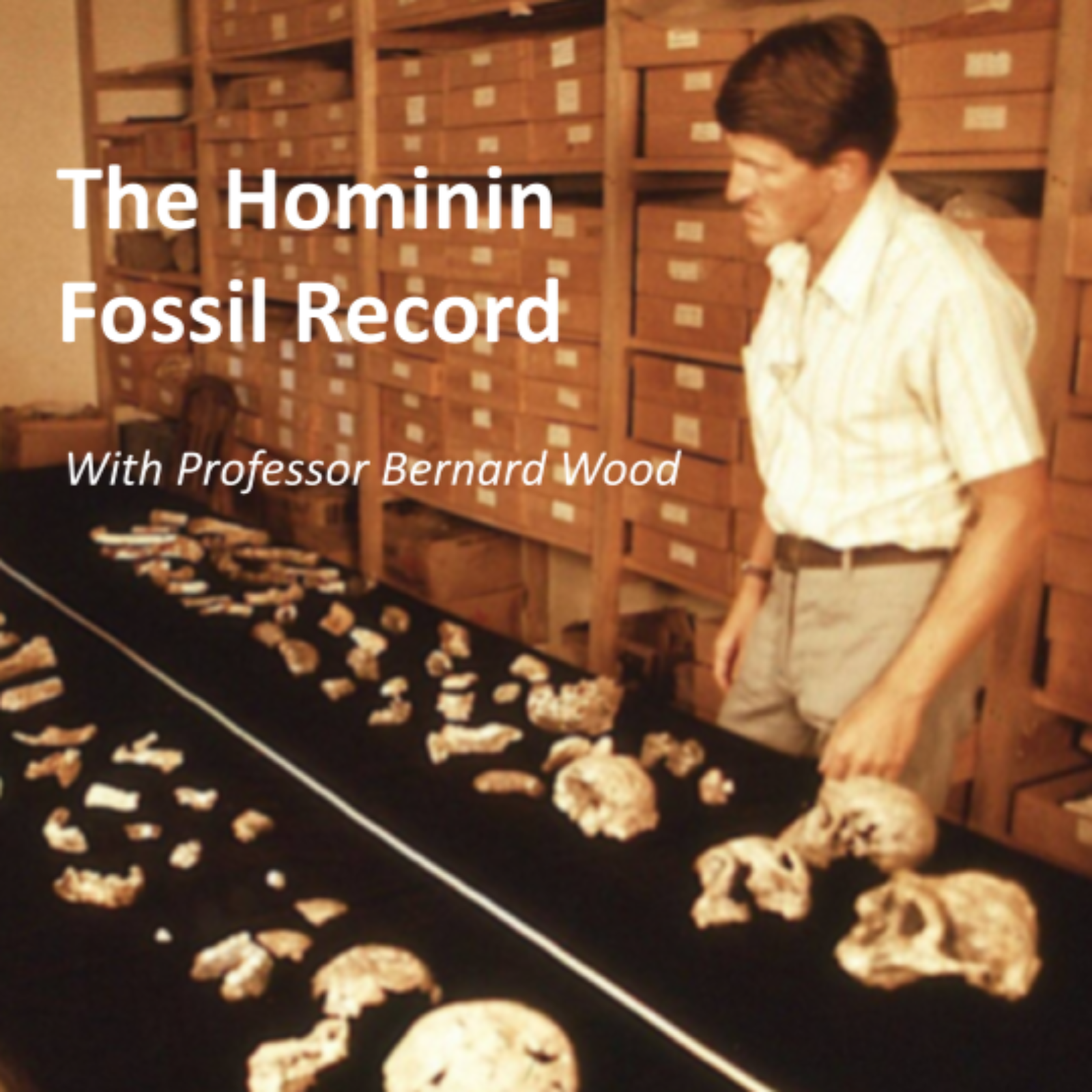 Hominin Evolution and Taxonomy – Bernard Wood | How do scientists decide what counts as a species in the fossil record? And how certain can we really be about our evolutionary family tree? In this episode of Our Primate Past, paleoanthropologist Bernard Wood explores the evidence behind some of the most debated questions in human evolution.Professor Bernard Wood is a globally renowned paleoanthropologist whose work has reshaped how researchers classify hominin fossils and interpret evolutionary relationships. Over his career, he has redefined the boundaries of the genus Homo, made major contributions to our understanding of Paranthropus, and helped introduce rigorous phylogenetic methods into paleoanthropology.In this interview, Professor Wood reflects on his career and most influential research contributions. He discusses the challenges of defining species in the fossil record, the evolutionary significance of Paranthropus and its extreme dental adaptations, and how advances in morphology and phylogenetic analysis have transformed the study of human origins. Topics also include the controversial Sahelanthropus femur, what Homo naledi and Homo floresiensis suggest about hominin diversity, and ongoing debates about fossil access.Whether you are interested in human evolution, fossil interpretation, or how scientific classifications are built and revised, this episode offers a clear and thoughtful look inside one of paleoanthropology’s most influential careers. | 28m 01s | |
| 1/26/26 | 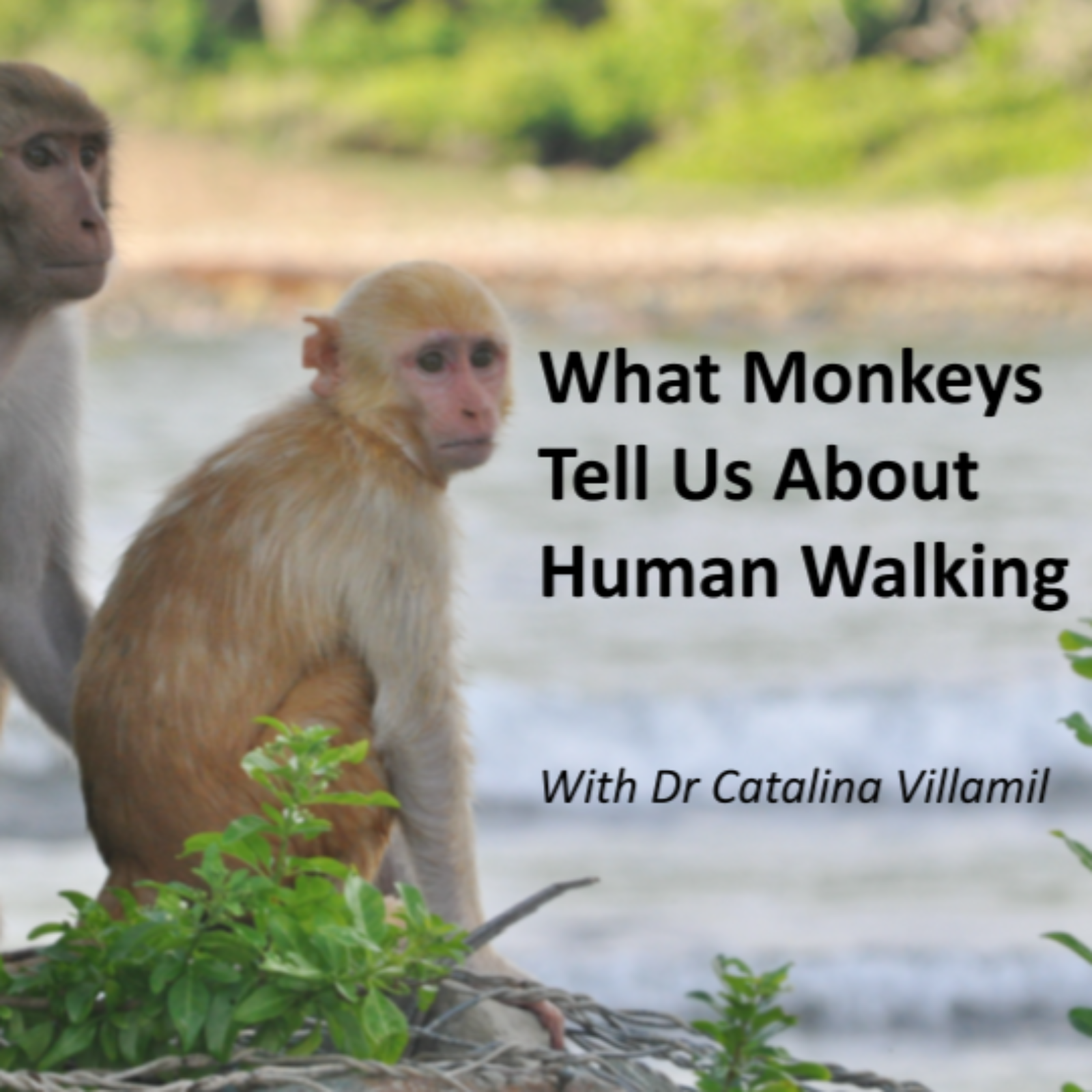 Spinal Evolution and the Origins of Bipedalism – Catalina Villamil | Dr Catalina I. Villamil is a biological anthropologist whose research explores how the primate spine evolves and what it can tell us about the origins of bipedalism in humans. From living monkeys to fossil hominins, her work bridges genetics, anatomy, and evolution to explain how our backbone came to be.Dr Villamil is Associate Director of the Laboratory of Primate Morphology at the Caribbean Primate Research Center, where she studies the heritability and phenotypic integration of the primate vertebral column. Her research uses one of the world’s most important long-term primate populations, the Cayo Santiago rhesus macaques, to investigate how vertebral traits are inherited and constrained through evolution.In this interview, Dr Villamil shares her career path and key research contributions, including why Cayo Santiago is so valuable for evolutionary and biomedical research. She explains how vertebral morphology is measured and analysed, discusses insights from her work on gibbons and fossil hominins, and explores what hybridization can tell us about primate evolution. The conversation also turns to the evolution of upright walking, the anatomical foundations of bipedalism, and how vertebral variation shapes locomotion.She also reflects on her role as Associate Editor at the Journal of Human Evolution, the future of academic publishing, and the challenges and opportunities facing researchers today. | 19m 39s | |
| 1/25/26 | 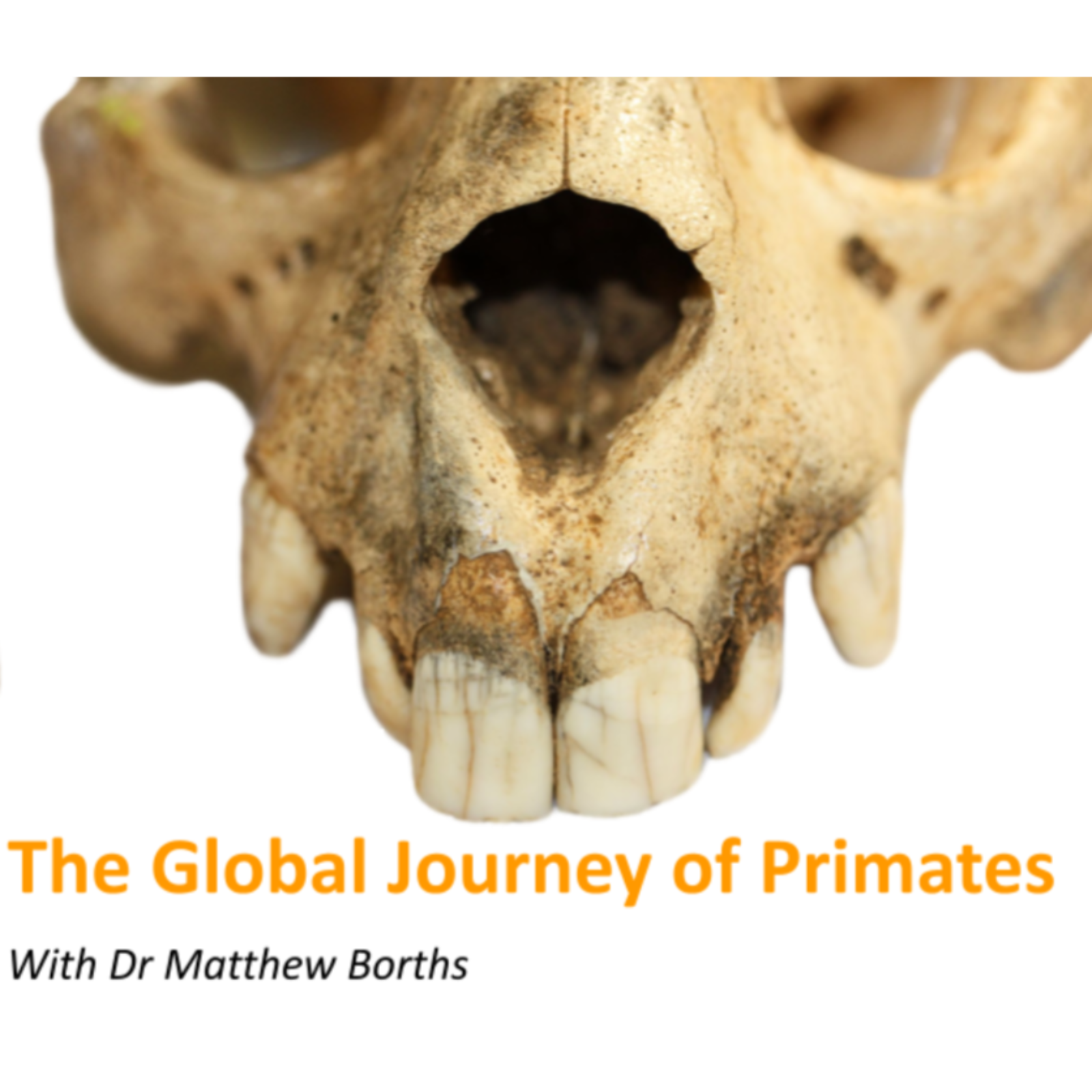 How Primates Spread Across the Globe – Matthew Borths | How did primates first evolve, and how did they spread across the globe? In this episode, Dr Matthew Borths takes us on a journey through the fossil record of Africa, Madagascar, and North America, explaining what ancient primates can tell us about our own evolutionary history.Dr Borths, paleontologist and curator at the Duke Lemur Center Museum of Natural History, shares his career path and what first inspired his passion for paleontology. He reflects on the historical figures who shaped the field and discusses major fossil discoveries from Wyoming, the Fayum Depression in Egypt, and subfossil sites in Madagascar. Topics include early primate evolution, the first monkeys, recently extinct giant lemurs, aye-aye evolution, and what these finds reveal about lost ecosystems. He also highlights the importance of public engagement, science communication, and connecting the past to modern conservation. | 52m 31s |
Showing 6 of 6
Sponsor Intelligence
Sign in to see which brands sponsor this podcast, their ad offers, and promo codes.
Chart Positions
1 placement across 1 market.
Chart Positions
1 placement across 1 market.