
Oxford Policy Pod
by Students at the Blavatnik School of Government, Oxford University
Insights from recent episode analysis
Audience Interest
Podcast Focus
Publishing Consistency
Platform Reach
Insights are generated by CastFox AI using publicly available data, episode content, and proprietary models.
Est. Listeners
Based on iTunes & Spotify (publisher stats).
- Per-Episode Audience
Est. listeners per new episode within ~30 days
10,001 - 25,000 - Monthly Reach
Unique listeners across all episodes (30 days)
25,001 - 75,000 - Active Followers
Loyal subscribers who consistently listen
15,001 - 40,000
Market Insights
Platform Distribution
Reach across major podcast platforms, updated hourly
Total Followers
—
Total Plays
—
Total Reviews
—
* Data sourced directly from platform APIs and aggregated hourly across all major podcast directories.
On the show
Recent episodes
A Children-Focused Approach to Climate Policy | A Discussion with Alan Stein
May 3, 2026
Unknown duration
Between Giants: How Small Caribbean States Can Respond to Global Shocks | Hon. Mark Brantley
May 1, 2026
Unknown duration
A Discussion with Renato Godihno: Can Multilateralism end Global Hunger and Poverty
Apr 28, 2026
Unknown duration
Can International Law Deliver Justice for Ukraine? with Judge Mykola Gnatovskyy (ECHR)
Apr 13, 2026
Unknown duration
Politics, Platforms and Public Engagement | A discussion with Hannah Ferguson
Apr 7, 2026
Unknown duration
Social Links & Contact
Official channels & resources
Official Website
Login
RSS Feed
Login
| Date | Episode | Description | Length | ||||||
|---|---|---|---|---|---|---|---|---|---|
| 5/3/26 | 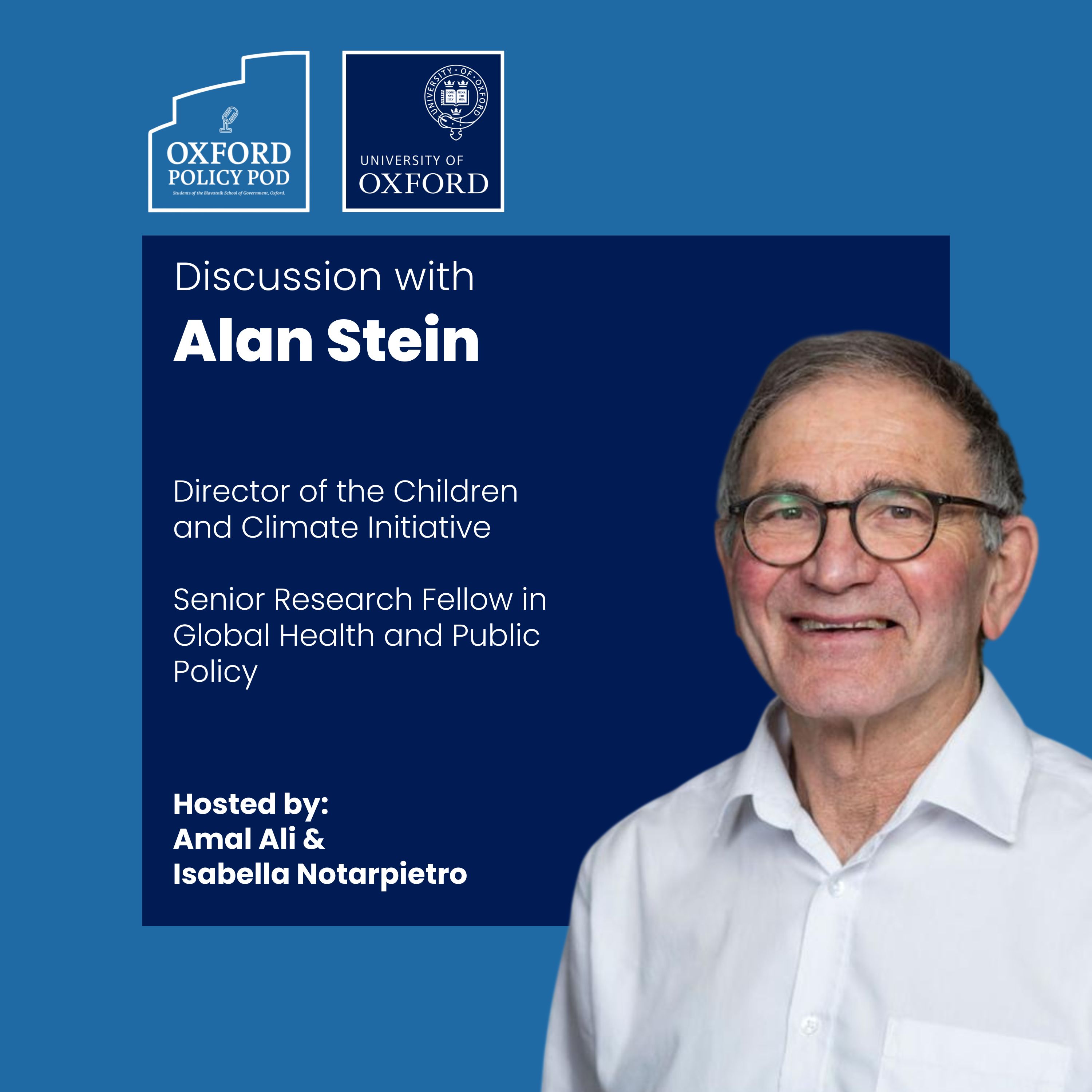 A Children-Focused Approach to Climate Policy | A Discussion with Alan Stein A Children-Focused Approach to Climate Policy | A Discussion with Alan Stein | In this episode of the Oxford Policy Pod, MPP students Amal Ali and Isabella Notarpietro speak with Professor Alan Stein, Director of the Children and Climate Initiative and Senior Research Fellow in Global Health and Public Policy at the Blavatnik School of Government. An expert in early childhood development with over 300 scientific journal publications, Alan has worked throughout his career with children and families facing adversity. He has made major contributions from both scientific and clinical perspectives to understanding the relationship between parents in adversity and their babies. This episode explores the intersections between climate change and children’s health. Starting with a discussion of the unique ways in which climate change impacts children, both globally and across different regions, it then examines approaches to policymaking that foreground their experiences and incorporate their voices. The conversation also explores the Children and Climate Initiative, a groundbreaking new research and policy development collaboration led by Alan. The Initiative aims to show how climate change negatively impacts children’s health outcomes, anticipate where these effects will be most severe in the future and work with policymakers to translate these insights into policy responses. We discuss how the Initiative is contributing to increasing attention to the health impacts of climate change, particularly for children, on the global stage. | — | ||||||
| 5/1/26 | 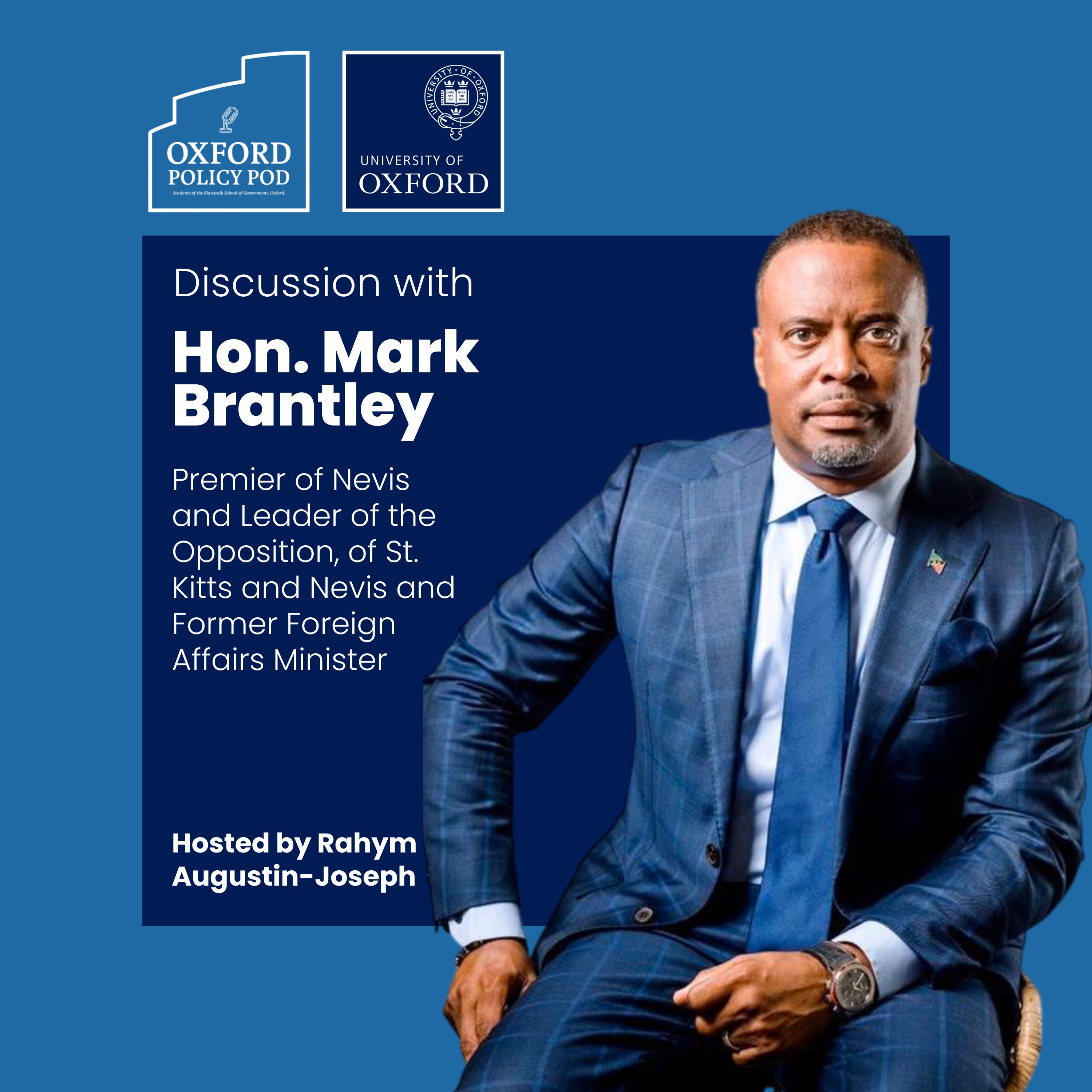 Between Giants: How Small Caribbean States Can Respond to Global Shocks | Hon. Mark Brantley Between Giants: How Small Caribbean States Can Respond to Global Shocks | Hon. Mark Brantley | In this episode of the Oxford Policy Pod, MPP Student from Saint Lucia in the Caribbean, Rahym R. Augustin-Joseph, sits with Hon. Mark Brantley, Premier of Nevis, and Leader of the Opposition in the Federation of St. Kitts and Nevis, in the Eastern Caribbean. Premier Brantley serves as Premier of Nevis and Leader of the Opposition in the National Assembly of Saint Kitts and Nevis. Brantley previously held the post of Minister of Foreign Affairs from 2015 to 2022. Before entering politics, he built a career as an attorney engaged in international litigation. In this episode, we address the known fact, which is that the Caribbean and Small States, are deleteriously affected by global shocks between world powers, not of their making, such as climate change, wars, geopolitical tensions, policy shifts, and a growing rightward trend among states that affects migration, international multilateral assistance and the rules based order that have protected their sovereignty. However, one cannot as said in the Caribbean, ‘lay down and play dead’, but instead, the Caribbean must employ a suite of policy and diplomatic measures that can insulate them from these global shocks, while using these windows to transform their societies. This episode addresses some of these measures that Premier Brantley believes can be done, while still focusing on what he has attempted to do in Nevis to transform. | — | ||||||
| 4/28/26 | 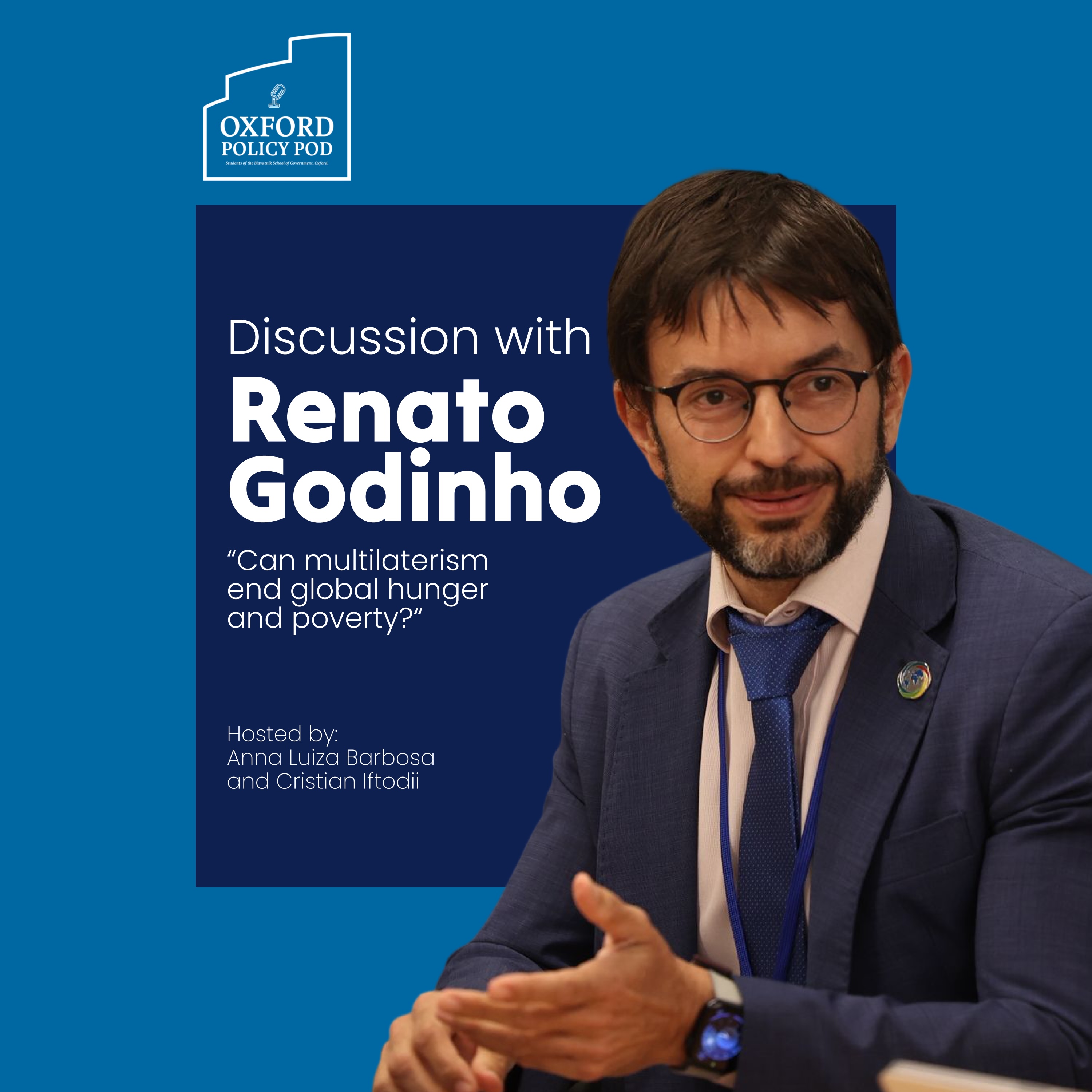 A Discussion with Renato Godihno: Can Multilateralism end Global Hunger and Poverty A Discussion with Renato Godihno: Can Multilateralism end Global Hunger and Poverty | In this episode of the Oxford Policy Pod, MPP students Cristian Iftodii and Ana Luiza Barbosa speak with Renato Domith Godinho, Director of the Support Mechanism of the Global Alliance Against Hunger and Poverty. A Brazilian diplomat with over twenty years of experience in multilateral governance, Renato has played a leading role in shaping international development cooperation, including in the reform of the UN Committee on World Food Security and the establishment of the Biofuture Platform. He now leads the Alliance's secretariat, based at FAO headquarters in Rome, coordinating the work of more than 200 members across 103 countries.The conversation explores whether multilateralism is still capable of solving the world's most persistent problems, and what it would take to move from political commitments to real outcomes for the hundreds of millions still living in hunger and extreme poverty. We discuss the design of the Alliance, the role of Brazil and the Global South in reshaping the development agenda, and the gap between what governments promise and what they deliver.Renato also reflects on the politics of hunger as a structural choice rather than an inevitability, the strengths and limits of the current multilateral architecture, and what an Alliance built around country leadership rather than donor priorities can achieve. The discussion closes with his thoughts on what the next decade of development cooperation should prioritise, and what role rising middle powers can play in shaping it. | — | ||||||
| 4/13/26 | 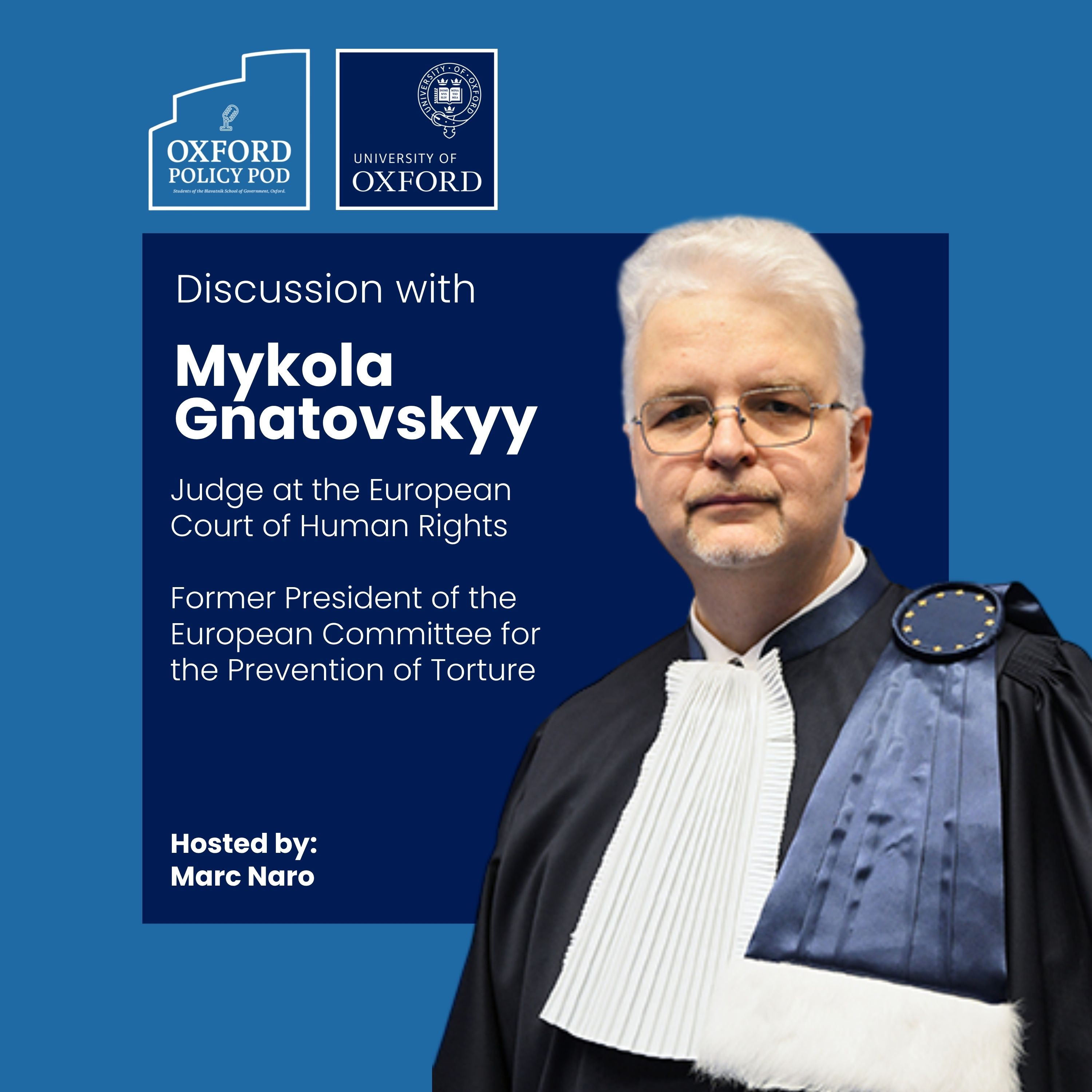 Can International Law Deliver Justice for Ukraine? with Judge Mykola Gnatovskyy (ECHR) Can International Law Deliver Justice for Ukraine? with Judge Mykola Gnatovskyy (ECHR) | In this episode of the Oxford Policy Pod, MPP student Marc Naro sits with Judge Mykola Gnatovskyy, Ukrainian Judge at the European Court of Human Rights.Judge Gnatovskyy was elected to the European Court of Human Rights in June 2022. He previously served as President of the Council of Europe's Committee for the Prevention of Torture, as an academic partner of the International Committee of the Red Cross, and as Associate Professor of International Law at the Taras Shevchenko National University of Kyiv.The conversation addresses the functioning of the European Court of Human Rights and the role of a judge within it, the evolving case law on Russia's accountability following the judgment in Ukraine and the Netherlands v. Russia of July 2025, and the legal implications of Russia's expulsion from the Council of Europe in 2022. It also examines the Special Tribunal for the Crime of Aggression established within the Council of Europe framework, the independence of international judges and the pressures they currently face, and the prospects for justice and reparation for the Ukrainian people. | — | ||||||
| 4/7/26 |  Politics, Platforms and Public Engagement | A discussion with Hannah Ferguson Politics, Platforms and Public Engagement | A discussion with Hannah Ferguson | In this episode of the Oxford Policy Pod, MPP students Thenu Herath and Florence Guyomar speak with Hannah Ferguson, co-founder and CEO of Cheek Media Co, an Australian independent news commentary platform reshaping how people engage with politics and culture. Hannah is also the co-host of Big Small Talk and the bestselling author of Bite Back and Taboo. Her work spans journalism, law and media, with writing featured in outlets including The New York Times and The Guardian.The conversation explores how platforms are transforming political engagement and how Cheek Media bridges politics and pop culture to make public discourse more accessible. We explore the role of algorithms in shaping political engagement, the tension between engagement and quality, and the extent to which creators can push back against platform incentives. Hannah discusses the need for greater transparency and accountability in digital platforms, what effective regulation might look like, and her vision for the future of political media.Finally, the discussion turns to Hannah’s decision to run as an independent in the next federal election, including what it means to move from commenting on politics to participating in it. | — | ||||||
| 4/3/26 | 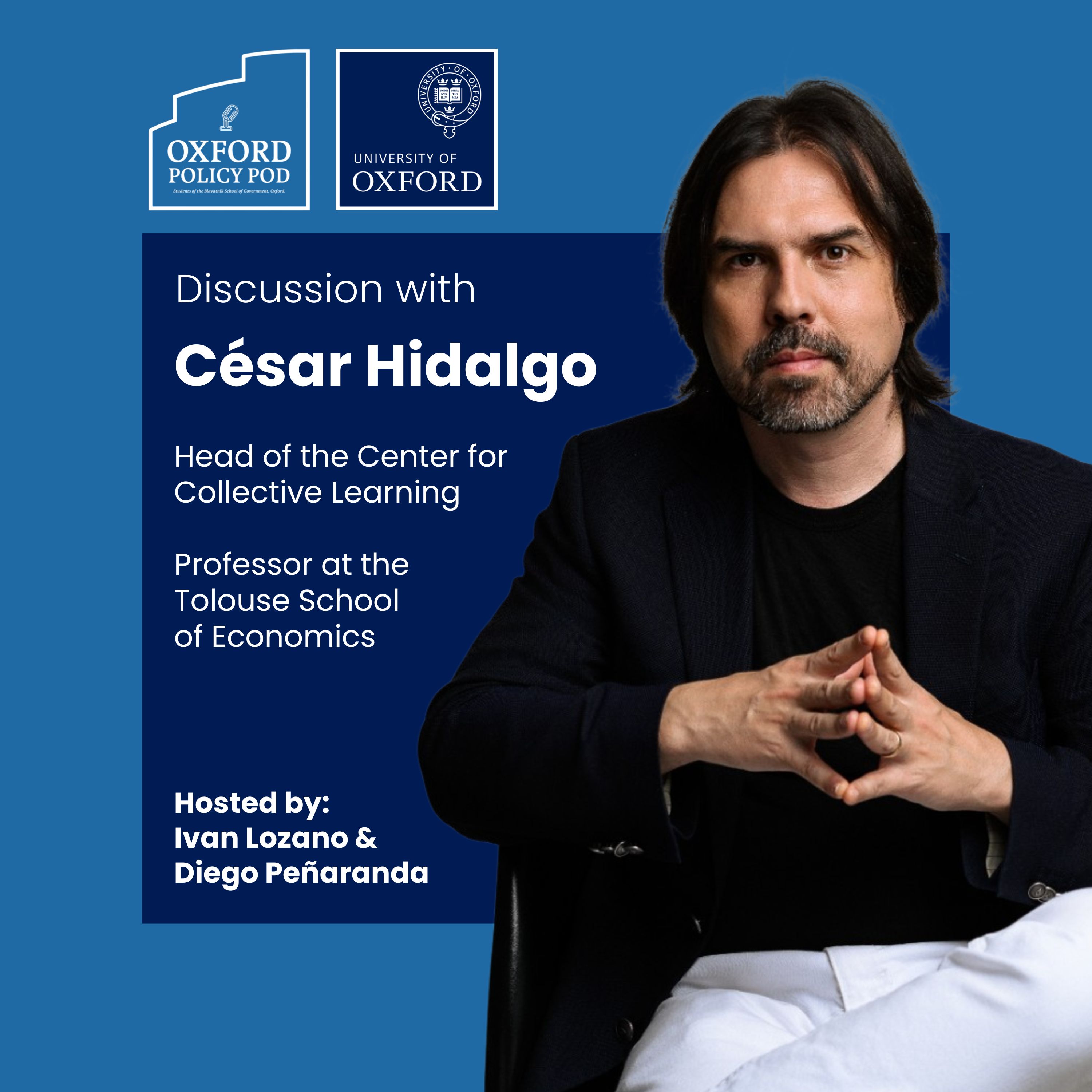 How Knowledge Drives Economic Growth | César Hidalgo How Knowledge Drives Economic Growth | César Hidalgo | In this episode of the Oxford Policy Pod, MPP students Diego Peñaranda and Iván Lozano speak with Professor César Hidalgo, a physicist, complexity scientist, and one of the leading thinkers on knowledge and development.Professor Hidalgo is a tenured professor at the Toulouse School of Economics and leads the Center for Collective Learning. He is widely recognized for co-developing the Economic Complexity Index and for his research on how knowledge shapes growth.The conversation explores his intellectual journey from physics to economics, and his central idea that development depends on expanding what societies know how to do. Drawing on his latest book, The Infinite Alphabet, Hidalgo explains how knowledge grows, spreads, and is sometimes lost, and what this means for public policy.The episode also discusses how countries can build capabilities, the role of talent and networks, and the potential impact of artificial intelligence on knowledge and decision-making. | — | ||||||
| 3/25/26 | 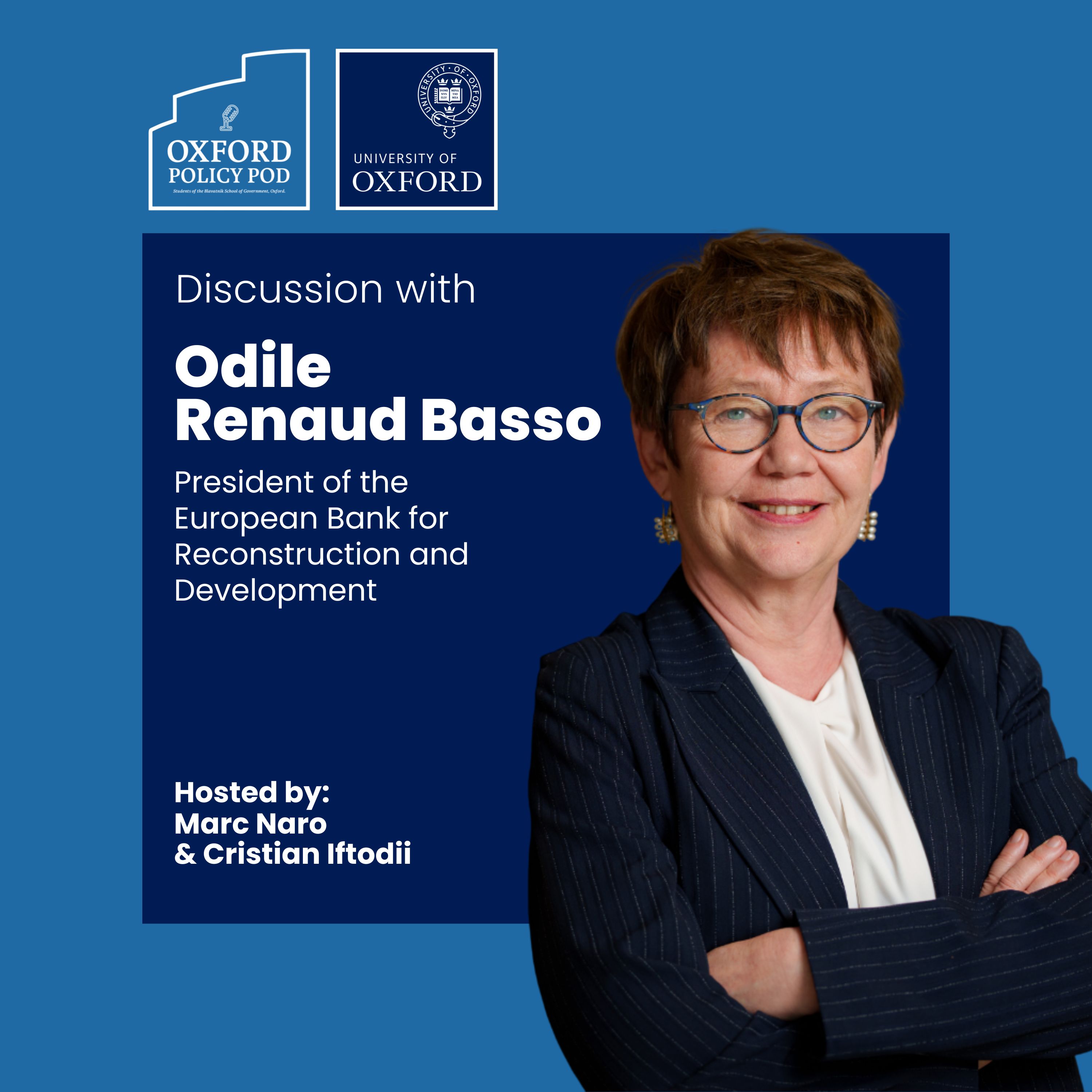 Leading a Multilateral Development Bank in Times of Crisis | Inside EBRD with President Renaud-Basso Leading a Multilateral Development Bank in Times of Crisis | Inside EBRD with President Renaud-Basso | 🎙️ How to Finance Development and Reconstruction in Times of Crisis?In this new episode of the Oxford Policy Pod, MPP students Marc Naro and Cristian Iftodii sat down with Odile Renaud-Basso at the EBRD headquarters. As the first woman to lead the European Bank for Reconstruction and Development, and a central figure in Europe’s economic response to the war in Ukraine, she brings a unique perspective at the intersection of finance, geopolitics, and reconstruction.In this episode, we explore the EBRD’s role in supporting Ukraine during wartime and preparing for long-term reconstruction, the Bank’s expansion into new regions, and how development finance adapts in times of crisis. We also discuss her vision for the EBRD’s future.A candid conversation on what it means to lead a multilateral bank in a world shaped by conflict and economic uncertainty. Many thanks to the EBRD team for hosting us.🎧 The episode is out now on YouTube and all major platforms! | — | ||||||
| 3/12/26 | 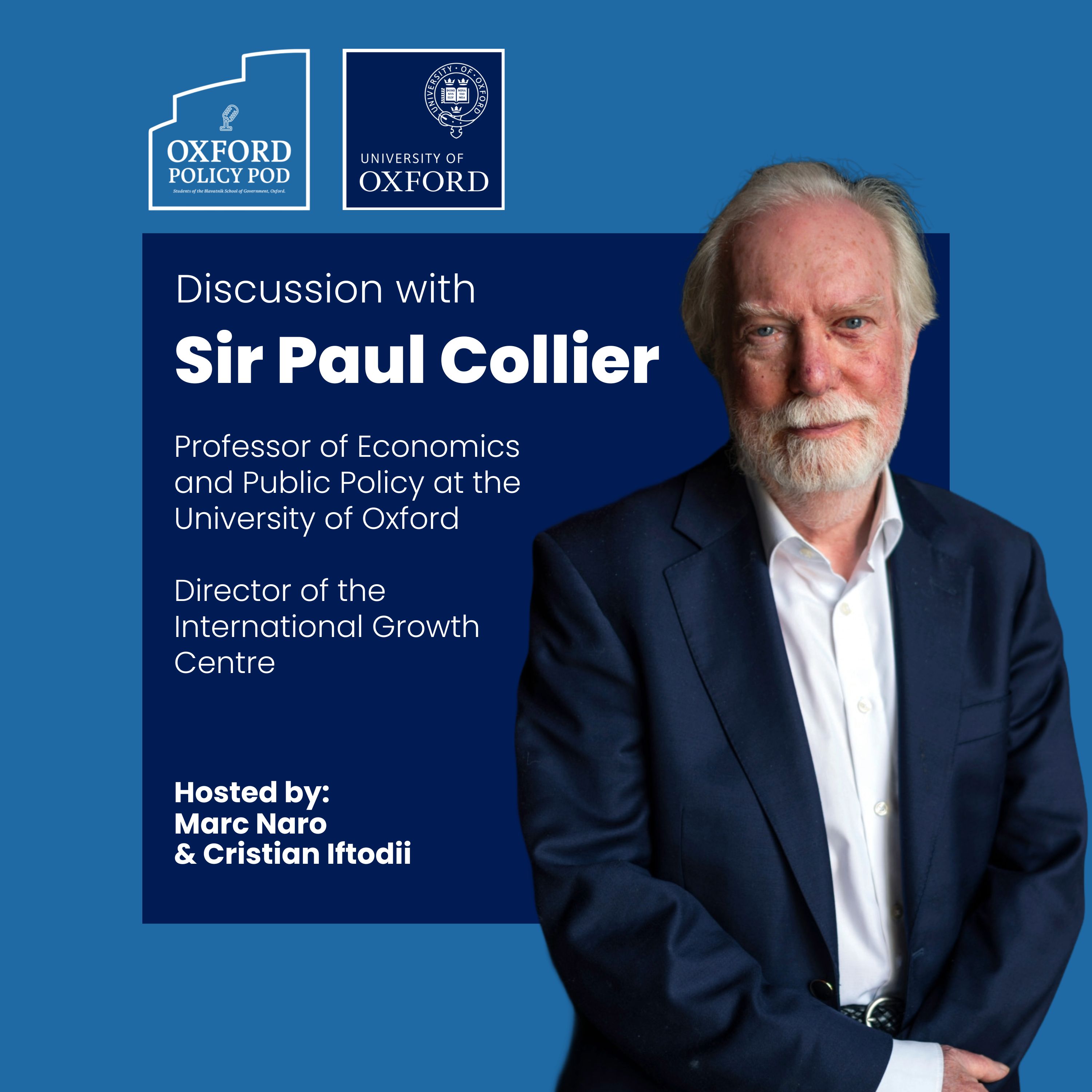 A Career in Service of the Left Behind | A Discussion with Paul Collier A Career in Service of the Left Behind | A Discussion with Paul Collier | In this episode of the Oxford Policy Pod, students Marc Naro and Cristian Iftodii sit down with Paul Collier — one of the world's most influential development economists. The conversation traces his journey from studying the poorest countries on earth to asking why communities in wealthy nations are falling behind, and what policymakers can do about it.Paul Collier is Professor of Economics and Public Policy at the Blavatnik School of Government, University of Oxford, and co-director of the International Growth Centre. He previously served as Director of the Development Research Group at the World Bank, and is the author of several landmark books including The Bottom Billion, Exodus, and most recently Left Behind, which won a 2025 Axiom Business Book Award. | — | ||||||
| 3/3/26 | 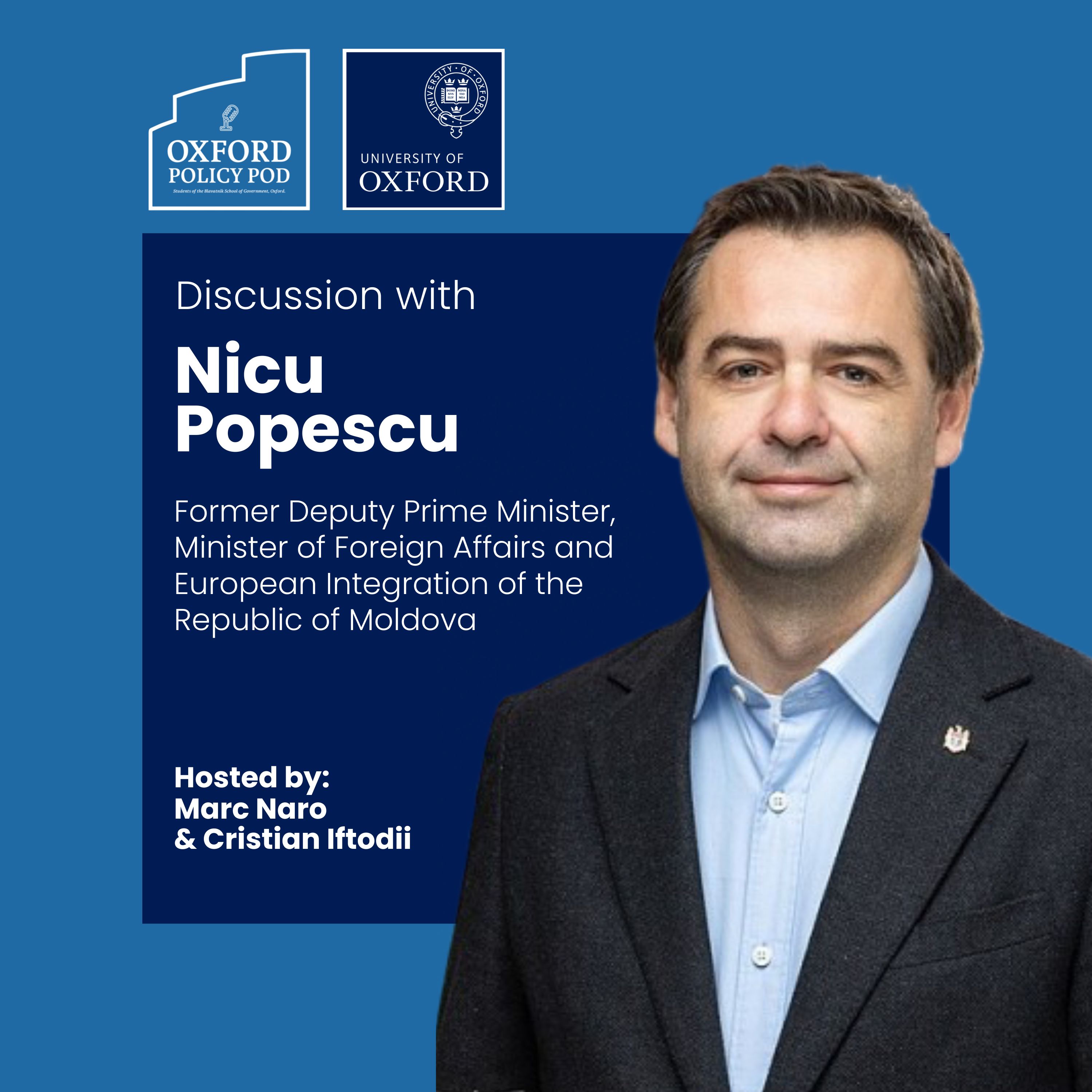 The Future of Europe | A Discussion with Nicu Popescu The Future of Europe | A Discussion with Nicu Popescu | In this episode of the Oxford Policy Pod, students Marc Naro and Cristian Iftodii have a wide-ranging discussion with Nicu Popescu — one of Europe's most influential foreign policy thinkers. The conversation explores Europe's future, its place in a shifting global order, and the big strategic questions facing the continent.Nicu Popescu is a political scientist and diplomat who served as Moldova's Minister of Foreign Affairs and European Integration. He previously held senior roles at the European Union Institute for Security Studies and the European Council on Foreign Relations, and is the author of several widely cited works on European neighbourhood policy and conflict resolution. | — | ||||||
| 2/27/26 | 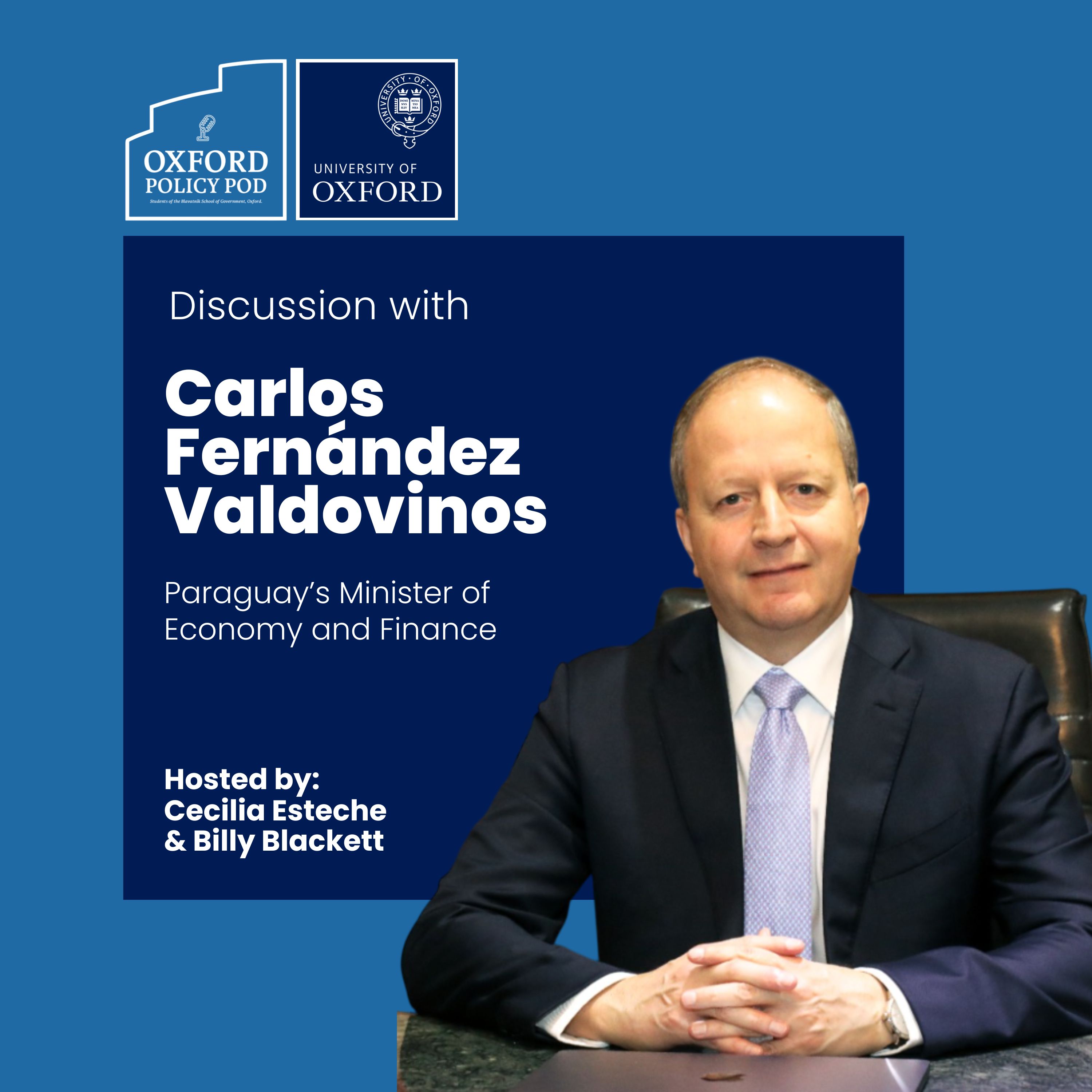 Paraguay's Path to Stability and Reform with Minister Carlos Fernandez Valdovinos 🇵🇾 Paraguay's Path to Stability and Reform with Minister Carlos Fernandez Valdovinos 🇵🇾 | 🎙️How does a small open economy build credibility, stability, and sustained growth in a volatile global environment?In this episode, Paraguay’s Minister of Economy and Finance, Carlos Fernández Valdovinos, joins Cecilia Esteche and Billy Blackett to unpack Paraguay’s reform agenda, fiscal consolidation efforts, and investment strategy. He shares insights on institutional reform, crisis resilience, and the leadership required to steer economic transformation.Recorded at the Blavatnik School of Government, University of OxfordFollow us on: @OxfordPolicyPod | — | ||||||
Want analysis for the episodes below?Free for Pro Submit a request, we'll have your selected episodes analyzed within an hour. Free, at no cost to you, for Pro users. | |||||||||
| 2/20/26 | 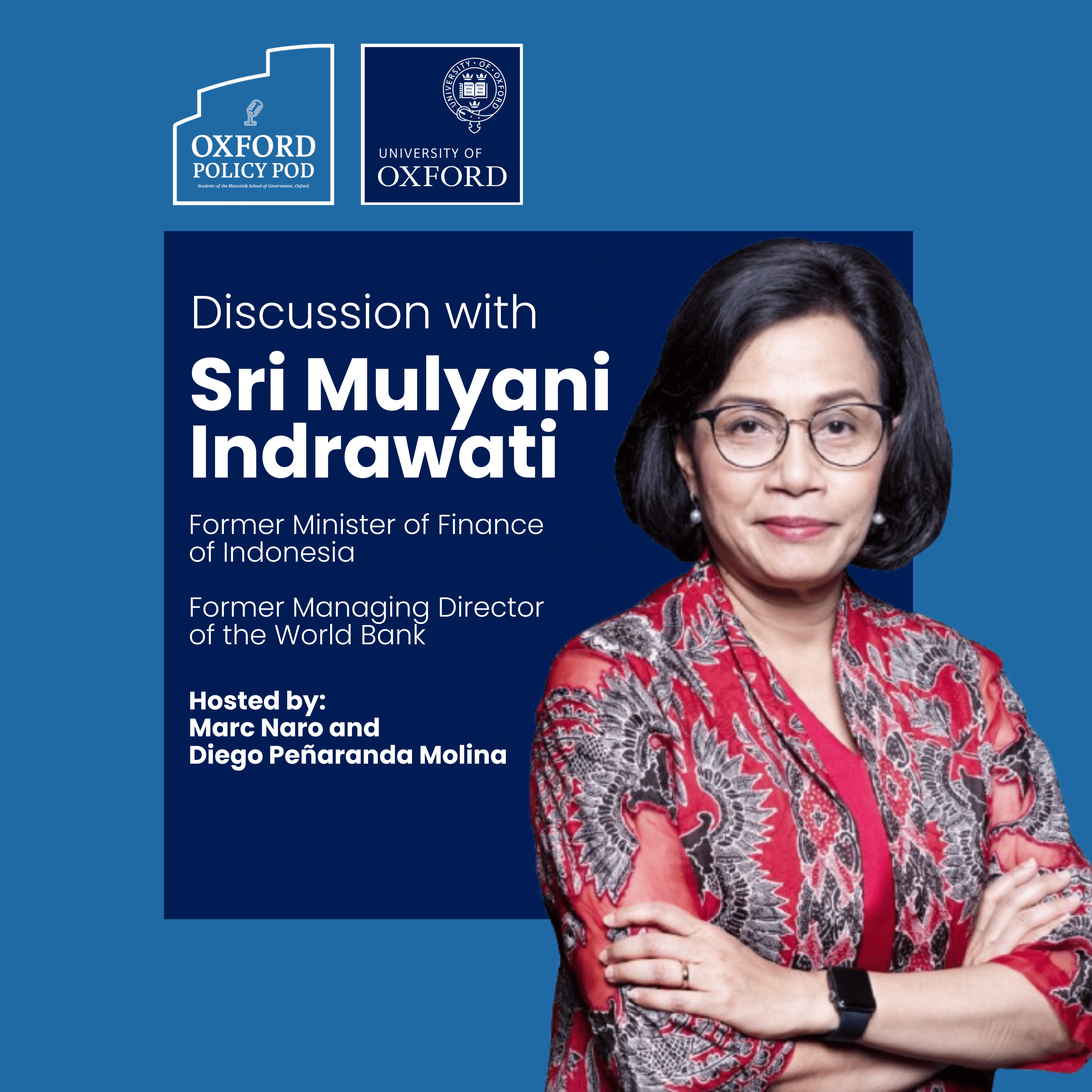 Building Southeast Asia’s Strongest Economy with Sri Mulyani Building Southeast Asia’s Strongest Economy with Sri Mulyani | In this episode, Sri Mulyani Indrawati, Indonesia’s former Minister of Finance, joins Oxford Master’s students Marc Naro and Diego Peñaranda for a conversation on leadership, crisis management, and the strategy behind Indonesia’s economic rise.From navigating global financial shocks to strengthening fiscal discipline and driving long-term growth, she reflects on the hard decisions that shape a nation’s future.Recorded at the Blavatnik School of Government, University of Oxford. | — | ||||||
| 2/13/26 | 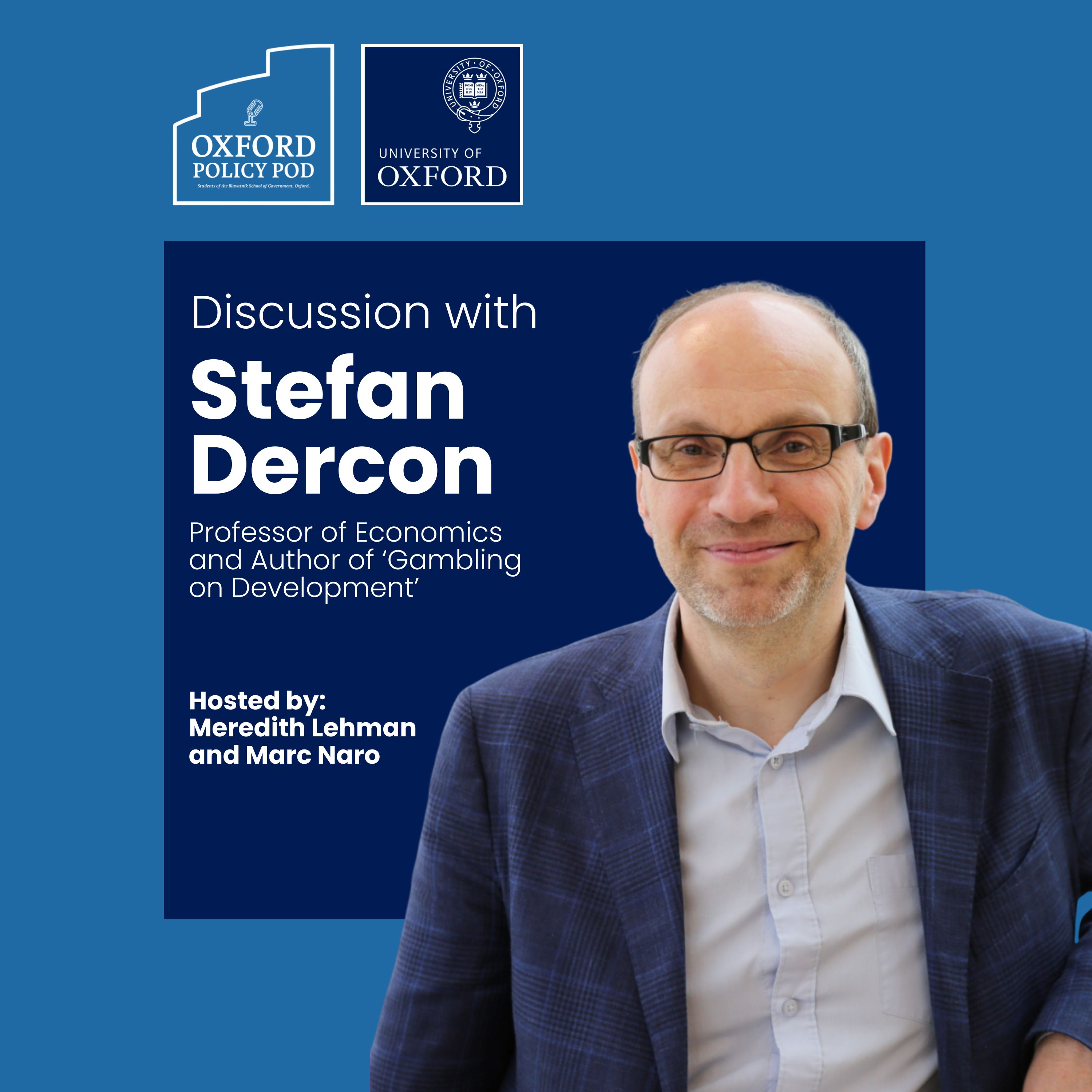 Gambling on Development with Stefan Dercon Gambling on Development with Stefan Dercon | On the Oxford Policy Pod, Blavatnik School of Government students Marc Naro and Meredith Lehman sit down with Stefan Dercon, Professor of Economic Policy at the University of Oxford. Dercon is also the author of Gambling on Development: Why Some Countries Win and Others Lose. Drawing on insights from his last book, Gambling on Development: Why Some Countries Win and Others Lose, the discussion explores how countries mobilise resources for growth, the political foundations of successful development strategies, the evolving role of multilateral institutions, and the challenges facing international economic cooperation in an increasingly fragmented world. Recorded at the Blavatnik School of Government, University of Oxford. | — | ||||||
| 1/27/26 | 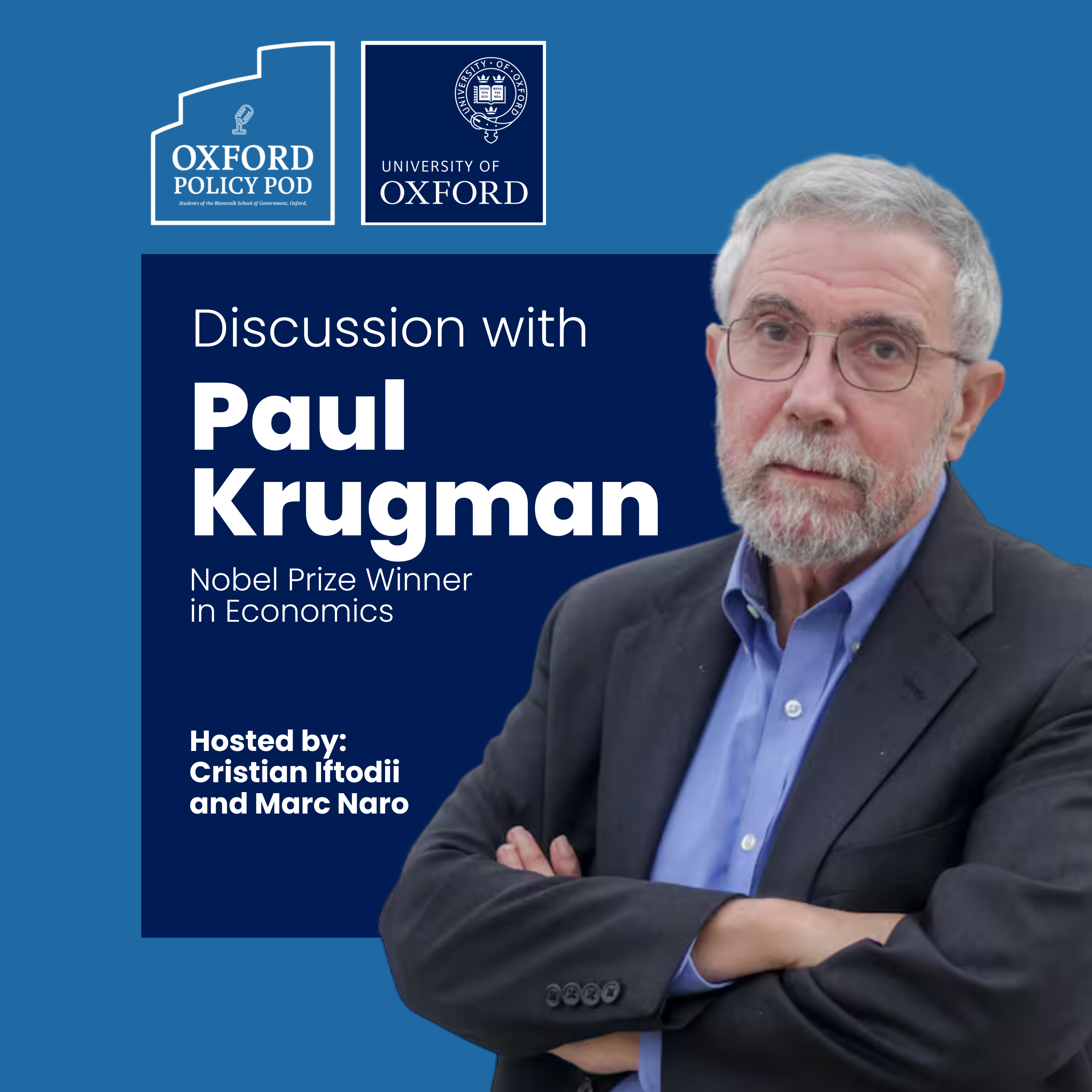 Paul Krugman on the future of Europe and American politics Paul Krugman on the future of Europe and American politics | In this episode, Marc Naro and Cristian Iftodii host Professor Paul Krugman about the future of Europe, American politics, and China's growth. Paul Krugman is an economist and college professor. In 2008, he won the Nobel Prize for his research on international trade and economic geography. Paul was a New York Times opinion writer from 2000 to 2024 and is now active on Substack. | — | ||||||
| 12/25/25 |  From Safety to Impact: India’s AI Mission as a Blueprint for the Global Majority with Abhishek Singh From Safety to Impact: India’s AI Mission as a Blueprint for the Global Majority with Abhishek Singh | Abhishek Singh is the CEO of the IndiaAI Mission and Additional Secretary at the Ministry of Electronics and Information Technology (MeitY), Government of India. A veteran of the 1995 Indian Administrative Services (IAS) batch and an alumnus of IIT Kanpur and Harvard Kennedy School, he has spearheaded some of the world’s largest digital transformations, including DigiLocker, the COVID-19 vaccination platform (CoWIN), and the Bhashini language interface.In this episode, Mr Singh speaks with Avinash Kothuri about India’s unique approach to AI, contrasting it with the regulatory models of the EU and the innovation-led model of the US. He details why India is moving the global AI discourse beyond the "Safety" focus of early summits toward an agenda of "Impact", focusing on the three pillars of People, Planet, and Progress ahead of the landmark 2026 AI Impact Summit.The conversation dives into the importance of infrastructure for all and shared compute, India’s green energy advantage for data centres, and the risks of becoming solely dependent on Western models. Mr Singh also argues for a global governance framework that prioritises responsible use over restrictive development.Grounded in 30 years of experience as a problem solver in the civil service, Mr Singh offers a roadmap for how the Global Majority countries can leverage AI for social empowerment—from agriculture advisories to healthcare access—while ensuring the benefits are democratised across diverse communities. | — | ||||||
| 10/1/25 | 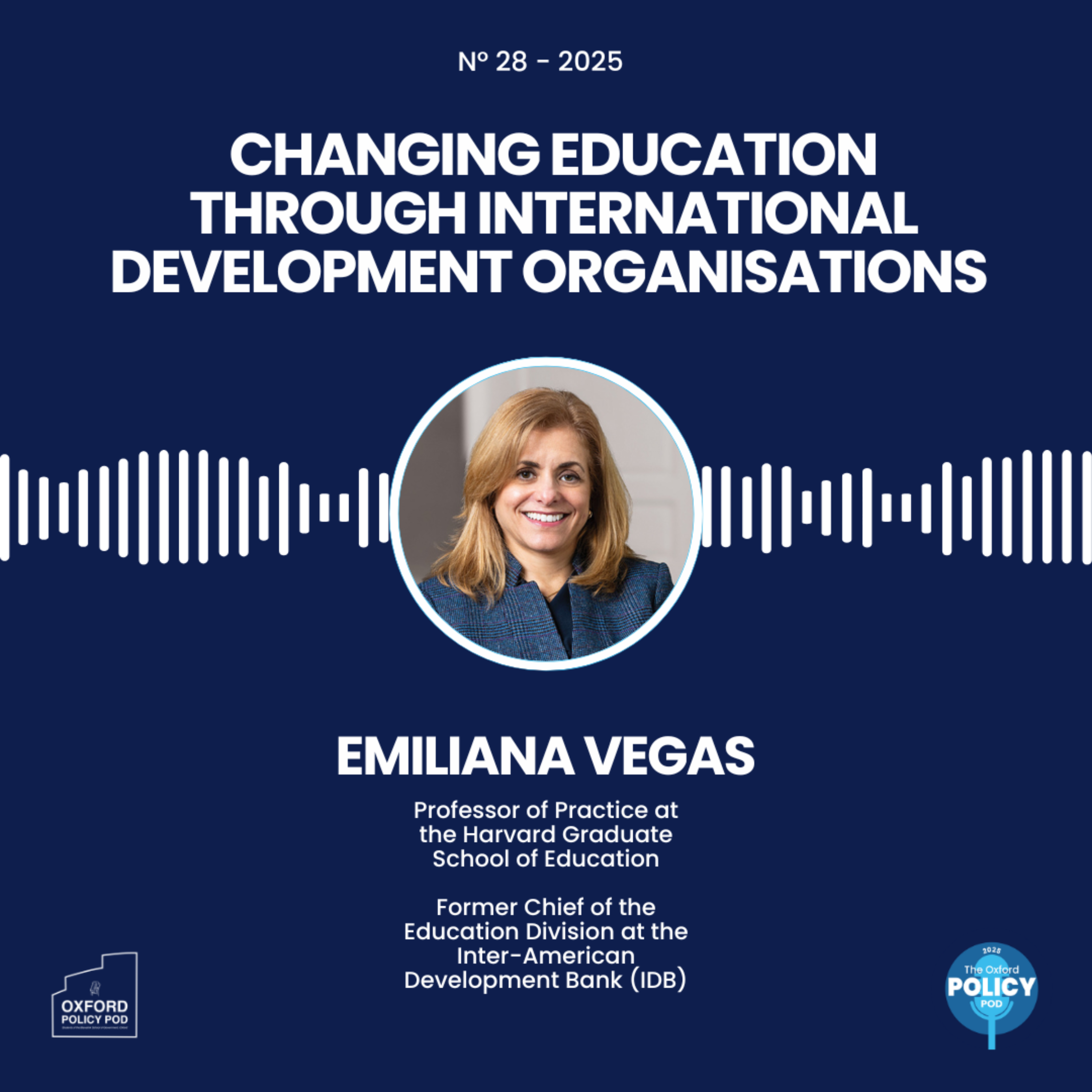 Changing Education Through International Development Organisations with Emiliana Vegas Changing Education Through International Development Organisations with Emiliana Vegas | Emiliana Vegas is one of Latin America’s leading voices in education policy. Originally from Venezuela, she studied at Harvard and went on to senior roles at the World Bank and the Inter-American Development Bank, where—as Division Chief of Education—she managed a portfolio of over $3B a year in grants and loans. In this conversation, she reflects on what it really takes to move from evidence to systems change inside international development organisations. In this episode, Bautista Fazio discusses her new book, Let’s Change the World, and the practical lessons she draws for people working in or with multilaterals: why evidence must travel with values; how autonomy and judgment at the task-team level shape outcomes; the cultural and governance differences between the World Bank and the IDB; and what “cross-regional learning” looks like in practice. Emiliana walks through the Chile reform episode on quality assurance, the importance of co-creation with governments, and her personal “70/30 rule” for knowing when it’s time to seek a new challenge. We also reflected upon Latin America’s education journey in recent years — from the expansion of access to the enduring challenge of learning — and the opportunities that lie ahead. | — | ||||||
| 9/22/25 | 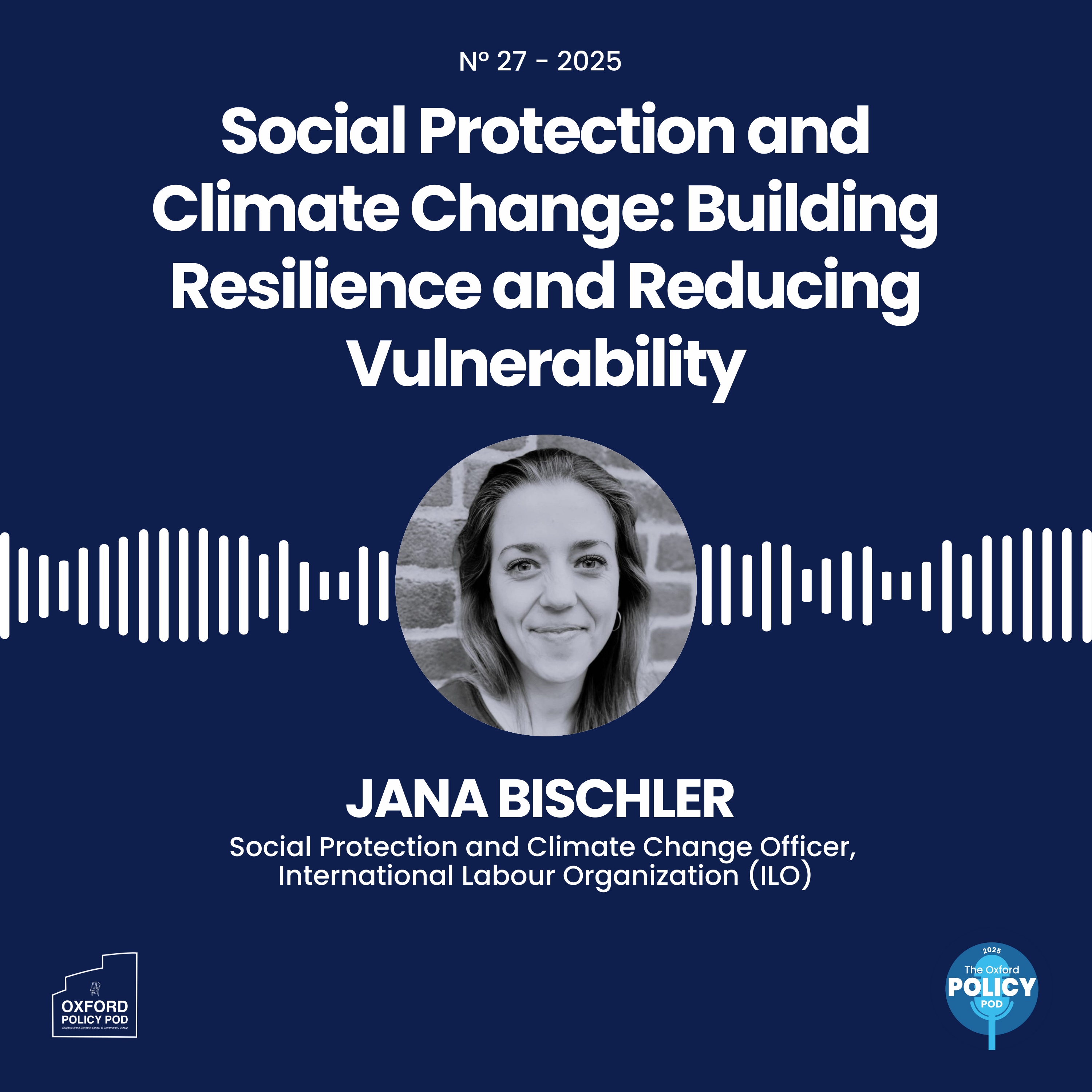 Social Protection and Climate Change: Building Resilience and Reducing Vulnerability with Jana Bischler Social Protection and Climate Change: Building Resilience and Reducing Vulnerability with Jana Bischler | Jana Bischler is the focal point for social protection and climate change at the International Labour Organization (ILO), where she works with governments worldwide to design systems that protect people from climate shocks and support long-term resilience. From a career in development consulting to shaping global social protection policy, Jana brings both on-the-ground insight and international perspective. In this episode, Jana explains how cash transfers, pensions, health insurance, and adaptive social protection programs can break the cycle of climate-driven vulnerability, protecting children, older people, informal workers, and whole communities before, during, and after disasters. Drawing on examples from Kenya, Brazil, the Philippines, China, Côte d’Ivoire, and the United States, she shows how countries with different systems can prepare, expand coverage, and respond quickly to floods, droughts, and heatwaves. The conversation also tackles financing and governance challenges from coverage gaps and debt burdens to the role of the new loss-and-damage fund while exploring how national adaptation plans and COP negotiations can bring social protection to the centre of climate action. Jana highlights why stronger coordination between environment and social ministries is key, and how growing public demand for climate action opens a window for universal, climate-ready social protection. Grounded in global evidence and practical country cases, this episode offers a clear roadmap for building resilient, inclusive social protection systems that safeguard lives and livelihoods in an era of worsening climate change. | — | ||||||
| 9/19/25 | 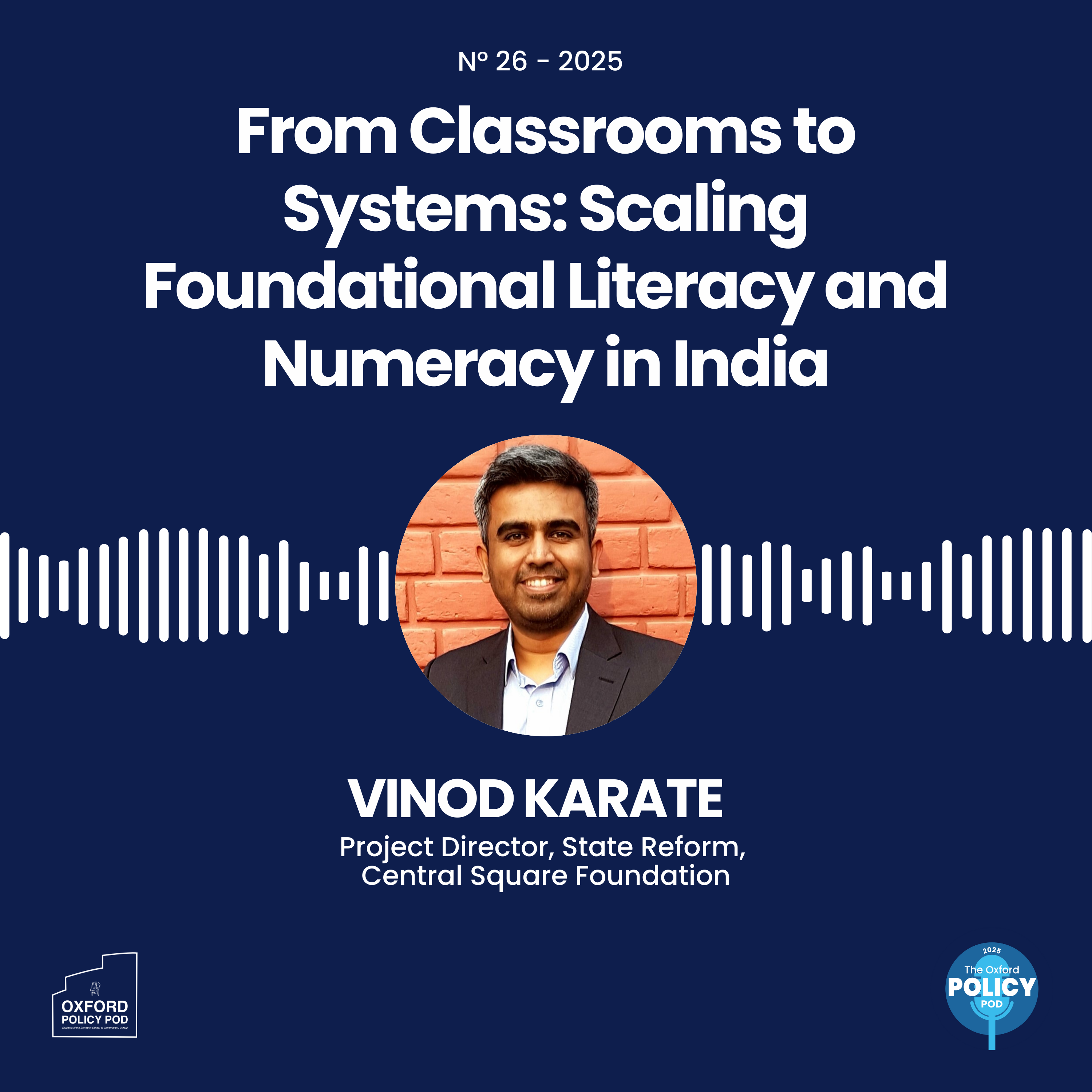 From Classrooms to Systems: Scaling Foundational Literacy and Numeracy in India with Vinod Karate From Classrooms to Systems: Scaling Foundational Literacy and Numeracy in India with Vinod Karate | Vinod Karate is Project Director for State Reform at the Central Square Foundation where he helps drive India’s landmark NIPUN Bharat Mission to ensure every child can read, write, and count by age ten. From an early career in investment banking to shaping one of the world’s largest foundational learning reforms, Vinod’s journey bridges sharp strategy with deep community engagement. In this episode, Vinod shares how India is rethinking the very foundations of schooling and how CSF partners with states to design and scale reforms that align with India’s NIPUN Bharat goals. He unpacks CSF’s three-phase approach to state reform: strengthening teacher capacity, redesigning governance around learning outcomes, and building political and administrative coalitions, which helps make large-scale change possible. Drawing on his experience in Uttar Pradesh, Madhya Pradesh, and Haryana, Vinod illustrates how reform really takes root on the ground. He explains how structured pedagogy, sustained teacher mentoring, and real-time data and assessment can translate policy into daily classroom practice, and how seizing windows of political alignment, unlocking budgets, and shifting decision-making from state capitals to districts ensures that change is owned and sustained at the local level. Grounded in evidence, this episode offers a clear, actionable roadmap for strengthening foundational learning and creating education systems that sustain reform and deliver lasting results for every child. | — | ||||||
| 9/15/25 | 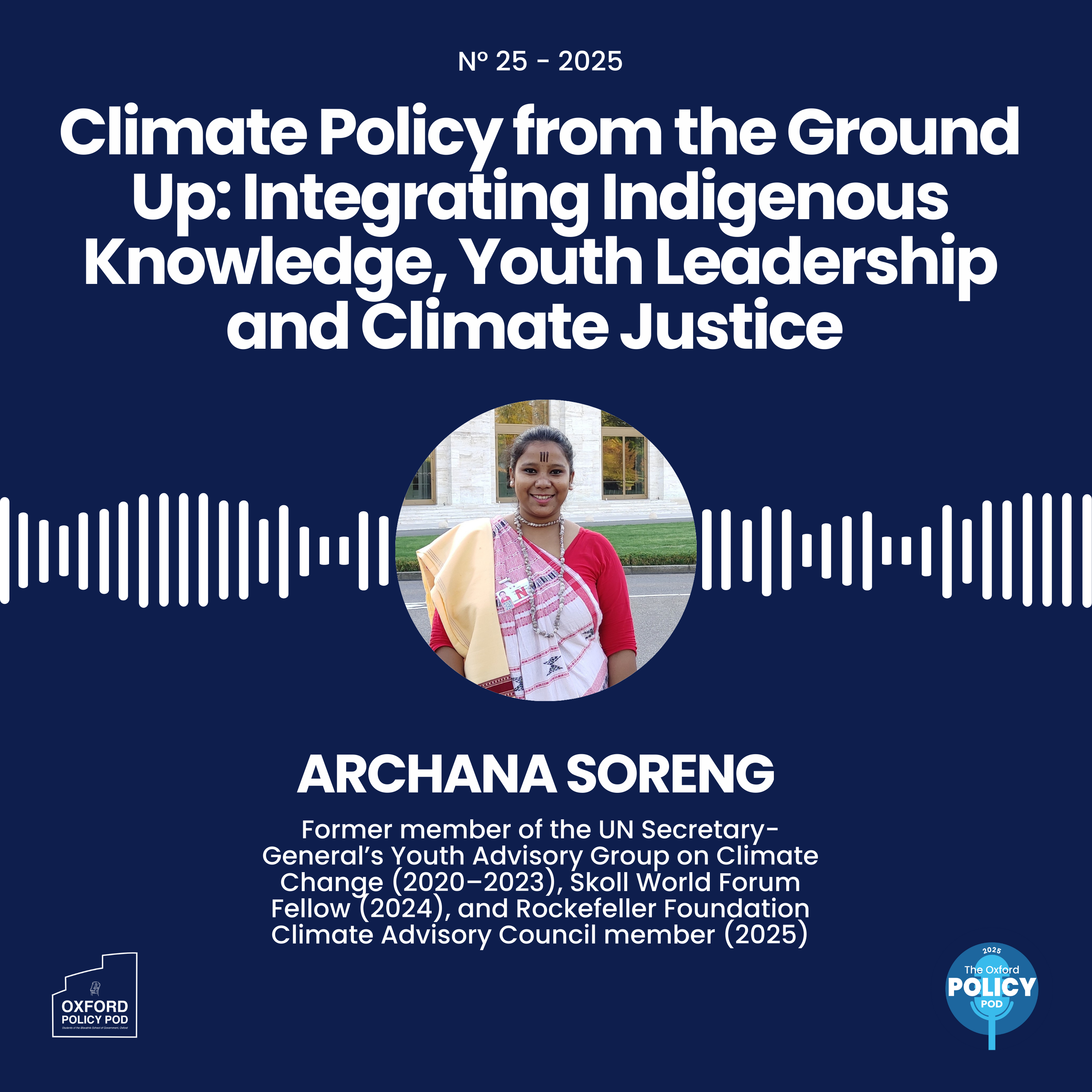 Climate Policy from the Ground Up: Integrating Indigenous Knowledge, Youth Leadership and Climate Justice with Archana Soreng Climate Policy from the Ground Up: Integrating Indigenous Knowledge, Youth Leadership and Climate Justice with Archana Soreng | From community-led forest conservation in Odisha to negotiating at the United Nations, Archana Soreng embodies how lived experience can reshape global climate policy. An Indigenous climate leader from India’s Kharia tribe, Archana served on the UN Secretary-General’s Youth Advisory Group on Climate Change (2020–2023), is a Skoll World Forum Fellow (2024), and sits on The Rockefeller Foundation’s Climate Advisory Council. She works at the intersection of Indigenous knowledge, youth leadership, and climate governance, advocating for policies that honour land rights, protect biodiversity, and include those most affected in decision-making. In this episode, Archana shares how her community’s traditions of forest conservation and sustainable living shaped her vision for climate justice. She explains why free, prior and informed consent and genuine participation are essential, and how poorly designed mitigation like ill-planned plantations or large solar projects can harm adaptation and livelihoods. Drawing on her experience from village gatherings to UN climate negotiations, she reflects on overcoming tokenistic representation, breaking barriers to climate finance for youth and Indigenous groups, and the importance of mental well-being in long struggles for environmental justice. From safeguarding culture and language to influencing national climate commitments, Archana offers a grounded, hopeful blueprint for policymakers, funders, and young leaders working toward an inclusive and sustainable climate future. | — | ||||||
| 9/5/25 | 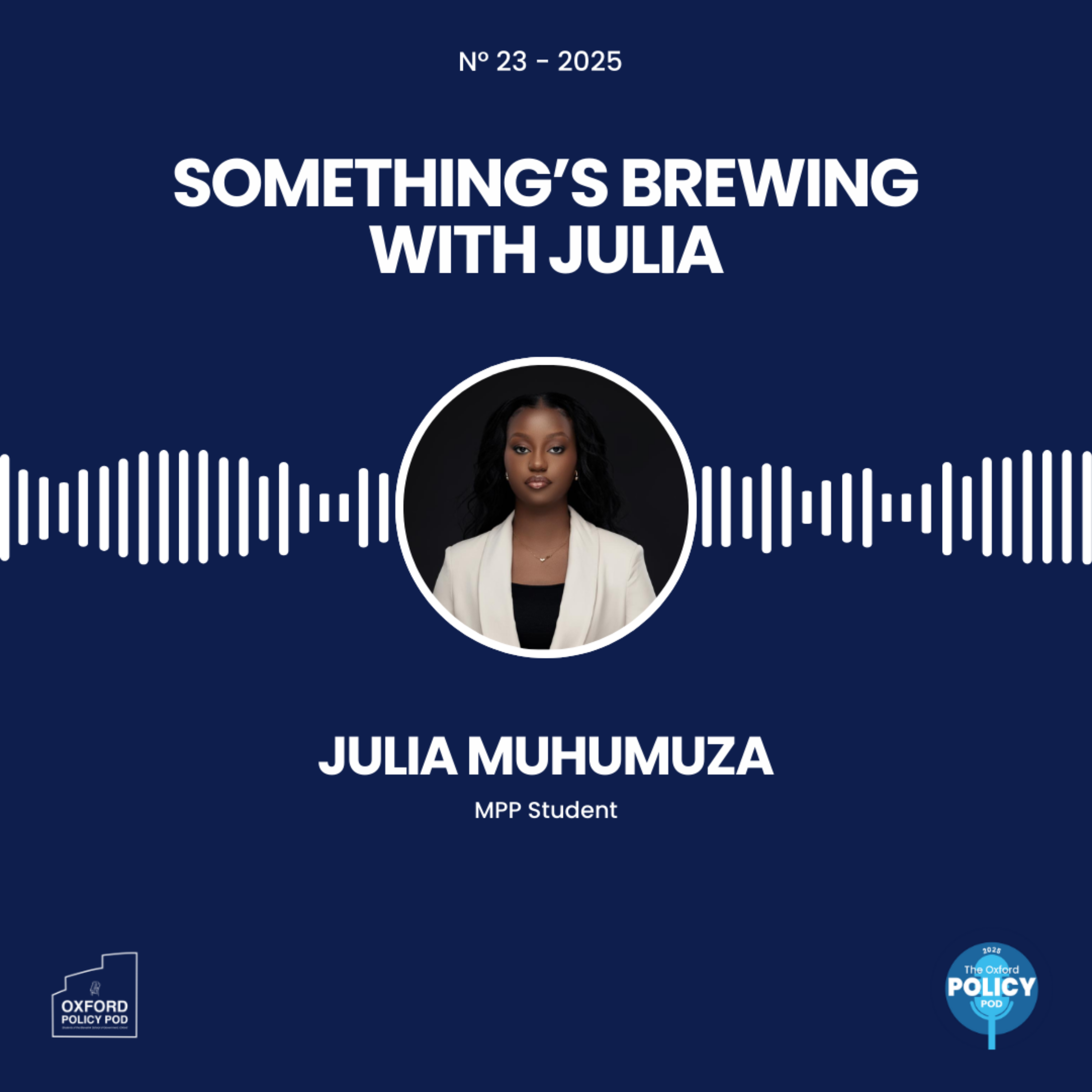 Something's Brewing with Julia Something's Brewing with Julia | "Something's Brewing" is a laid-back podcast hosted by MPP student Wynsey, where conversations flow freely-just like the drinks. In each episode, a member of the Blavatnik School community joins over a favourite beverage from home to share personal stories, career reflections, and the life that happens beyond policy. In this episode, Wynsey chats with Julia, an MPP student from Uganda, about the “why” that drives her. From overcoming challenges in accessing education to finding her voice as a young advocate, Julia speaks candidly about the experiences that shaped her journey. With honesty and heart, she reflects on her childhood, her path into advocacy, and the making of the strong woman she is today. | — | ||||||
| 8/25/25 | 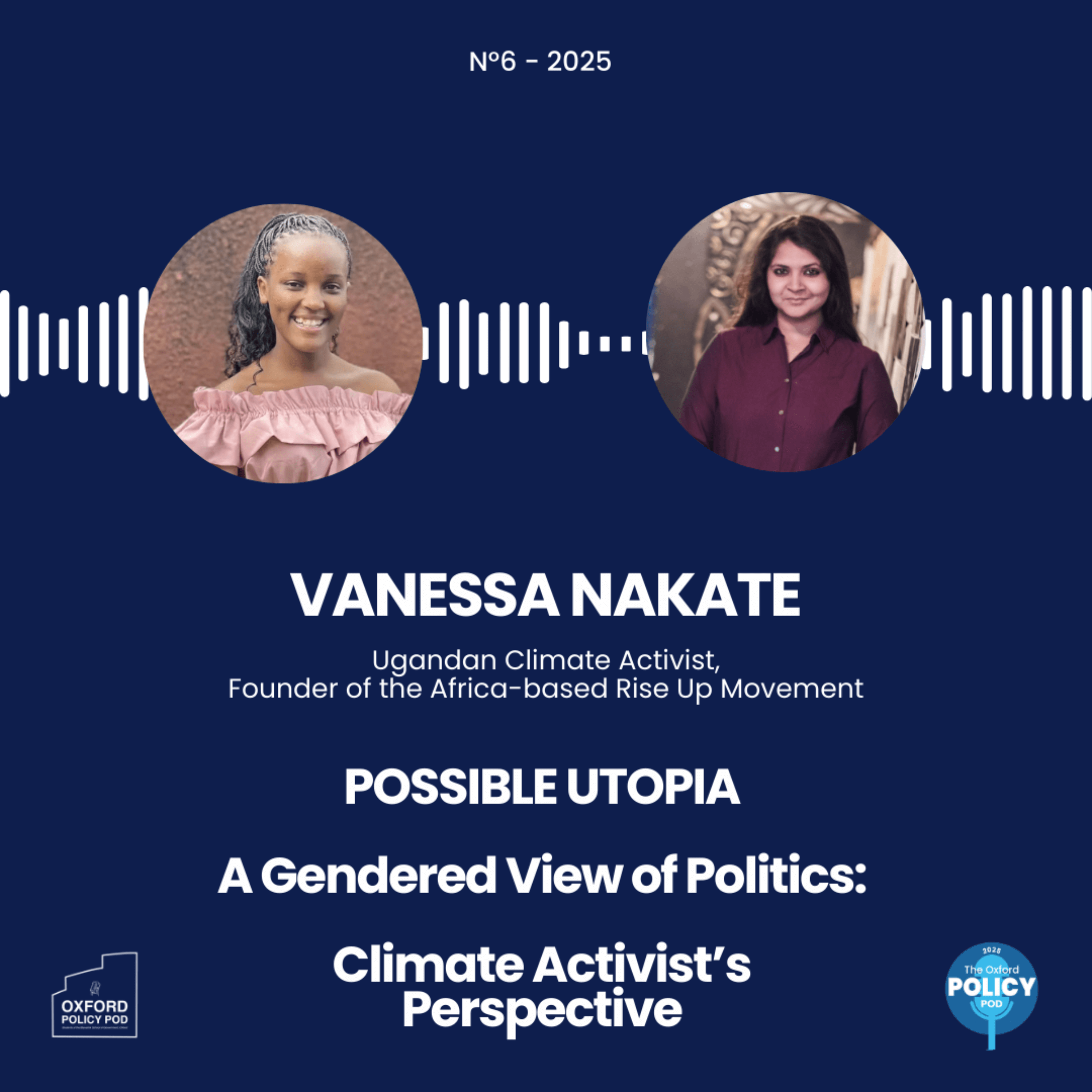 Politics of Climate Activism - A Possible Utopia Politics of Climate Activism - A Possible Utopia | Possible Utopia is the podcast exploring the intersection of politics, gender, and leadership to imagine a more inclusive future.In this episode, we speak with Vanessa Nakate, Ugandan climate activist, founder of the Rise Up movement, and author of A Bigger Picture. She shares her journey from launching Fridays for Future in Uganda to amplifying African voices in the fight for climate justice.We discuss her leadership, the challenges of being a young woman in the public eye, how she addresses online trolling, and her vision for the future of climate action.🎧 Tune in to hear what drives her, how she keeps community at the centre of her work, and whether politics might be part of her path ahead. | — | ||||||
| 8/25/25 |  Financing for Gender and Climate Impact Financing for Gender and Climate Impact | Possible Utopia is the podcast where we explore the intersection of politics, gender, and leadership to imagine a better world. From addressing challenges of safety and well-being in public life to uncovering the motivations that drive individuals, we look at the stories behind those shaping our societies. Together, we take on difficult questions, confront systemic barriers, and reimagine a more inclusive and just political landscape.This is not just a conversation about policy and gender; it is a journey toward possibility, a utopia we can begin building today. Let’s explore it togetherMeet our host of Possible Utopia, Kanksshi Agarwal, Founder of NETRI Foundation, India’s first incubator for women in politics, featured in LiveMint’s 100 Women Shaping India, TEDx speaker, and Cyril Shroff Scholar at University of Oxford.About the Episode with Kartik DesaiIn this episode, we welcome Kartikeya N. Desai, an investing and development finance expert and Founder of Desai & Associates.Kartik Desai, an impact investor at leading Indian funds and advisor to foundations and policymakers on blended and outcome finance, explains how capital can advance gender and climate goals.💡 The conversation includes examples from his work in gender-lens investing and outcome funding for women’s skilling, employment, and entrepreneurship, as well as blended finance facilities for women-led SMEs and efforts to overcome regulatory barriers driving systemic change in India.🎧 Listen now and discover how finance can be a force for good when applied the right way. | — | ||||||
| 8/24/25 |  The Future of Care The Future of Care | In this episode, MPP students Helen Orjuela and Ana Osorio explore one of the most pressing yet often overlooked public policy issues: careThey are joined by Diana Rodríguez Franco, Special Advisor on Gender and Diversity to the Inter-American Development Bank and former Secretary for Women in Bogotá, where she led the creation of the city’s internationally recognised Care System - Manzanas del Cuidado.Together, they unpack why care work, largely carried out by women, remains undervalued despite being essential to economic and social well-being. Drawing on Diana’s experience, the conversation explores how innovative public policies can address time poverty, redistribute unpaid care, and create more equitable societiesThis episode is a must-listen for anyone interested in gender equality, social protection, and the design of transformative policies.🎧 Tune in to understand why care is not just a private matter—it’s a public good, and a cornerstone for inclusive development. | — | ||||||
| 8/9/25 | 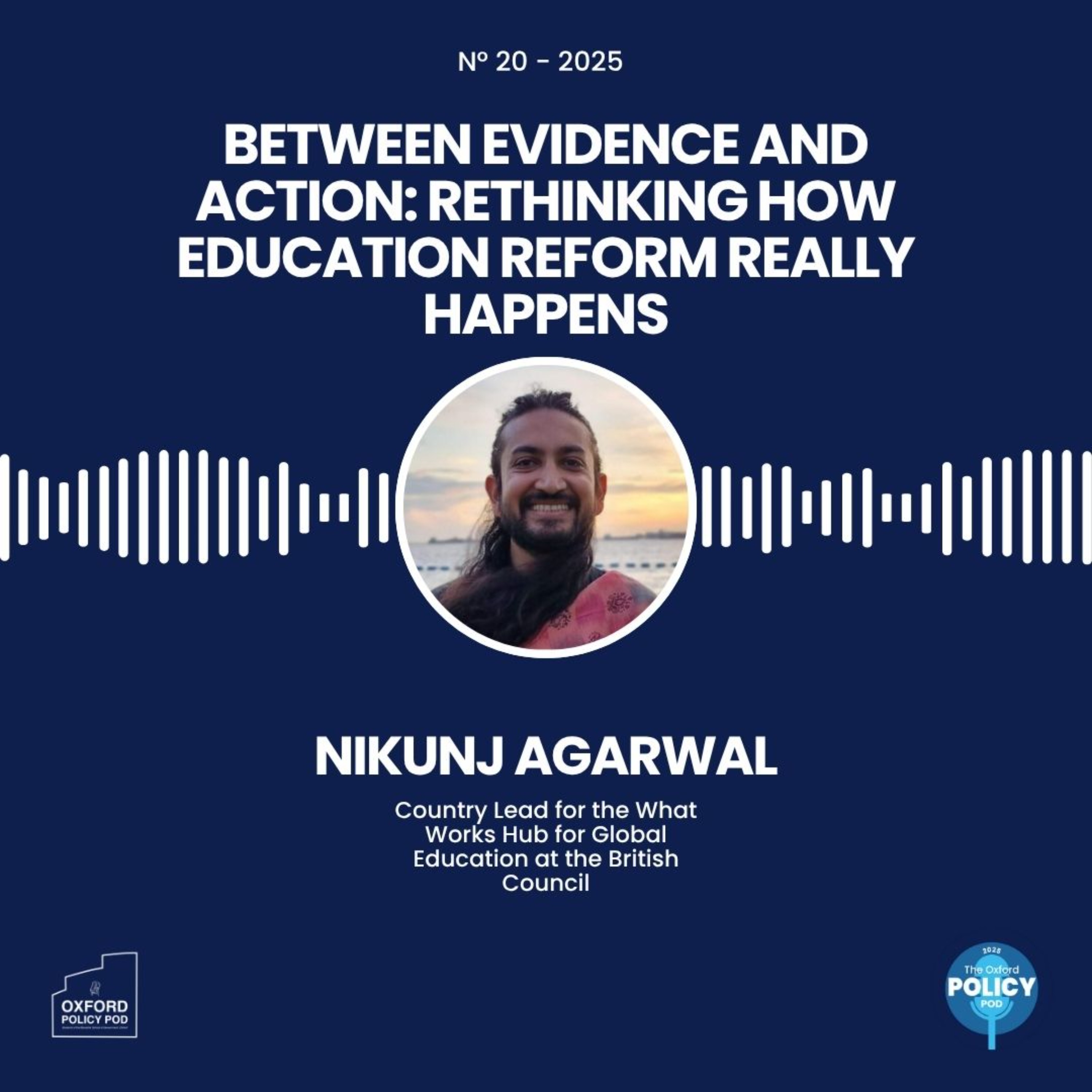 Between Evidence and Action: Rethinking How Education Reforms Really Happen Between Evidence and Action: Rethinking How Education Reforms Really Happen | Nikunj Agarwal is a public policy practitioner, an Oxford MPP alumna, and currently the Strategic Stakeholder Country Lead for the What Works Hub for Global Education at the British CouncilIn this episode, he reflects on bridging the gap between evidence and policymaking, the power of listening over telling, and what it takes to make education reform work in the real world.From cost-effective solutions to collaborative system change, Nikunj shares insights from classrooms, coalitions, and policy spaces across India.He also offers a simple, thoughtful framework for anyone exploring a career in public policy. | — | ||||||
| 7/30/25 | 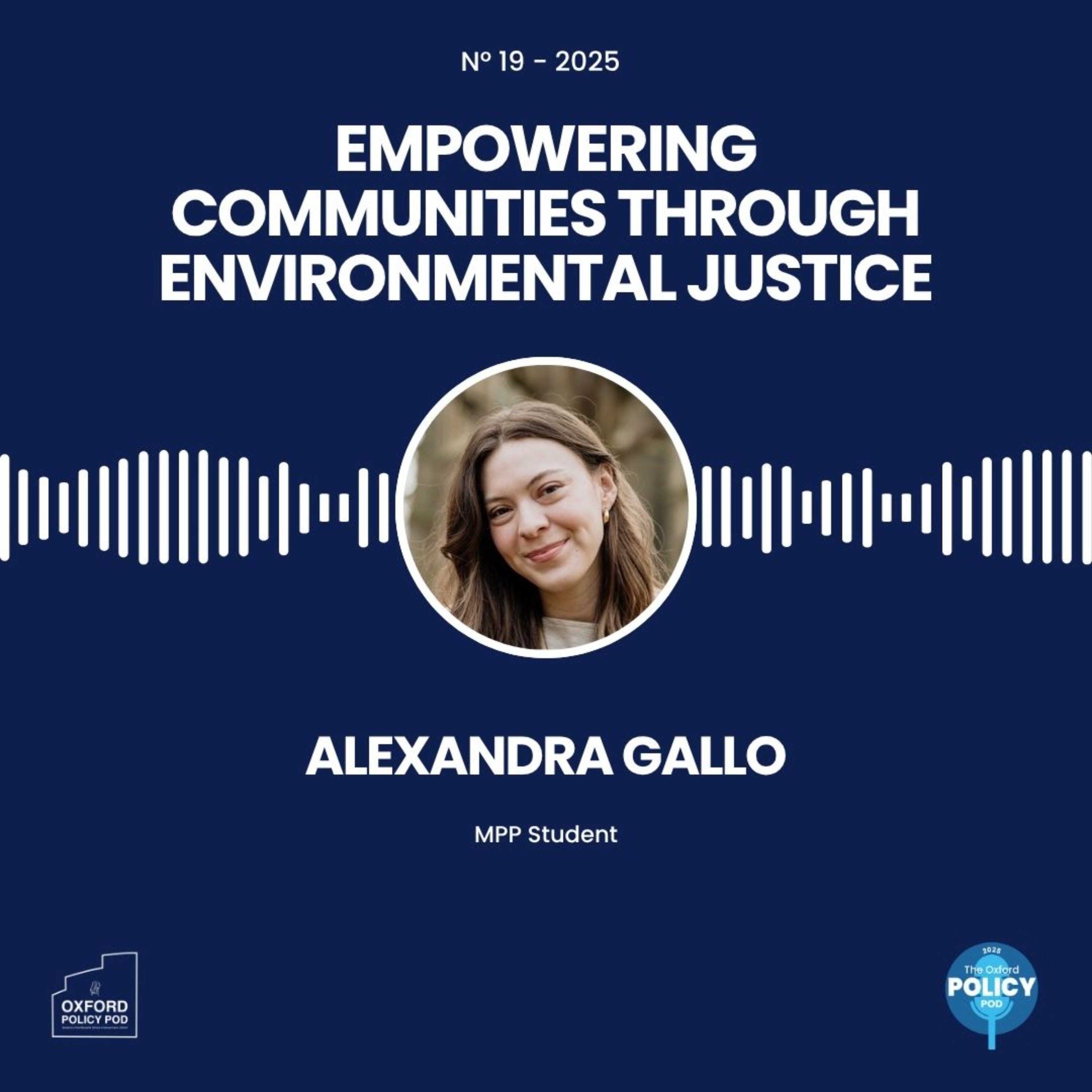 Empowering Communities Through Environmental Justice Empowering Communities Through Environmental Justice | 🌱Empowering Communities through Climate Justice🎙️In this episode, we are joined by Alexandra Gallo, a policymaker specialised in environmental justice and climate resilience. From working on California's Transformative Climate Communities programme to implementing the largest environmental justice grant in US history under the Inflation Reduction Act, Alexandra shares her journey and challenges. We unpack how truly community-driven governance can transform climate action, why representation matters, and what's at stake in the current political landscape💪🏽🌍🎧Listen now if you're interested in equity, climate policy, and the future of environmental justice. | — | ||||||
| 7/25/25 | 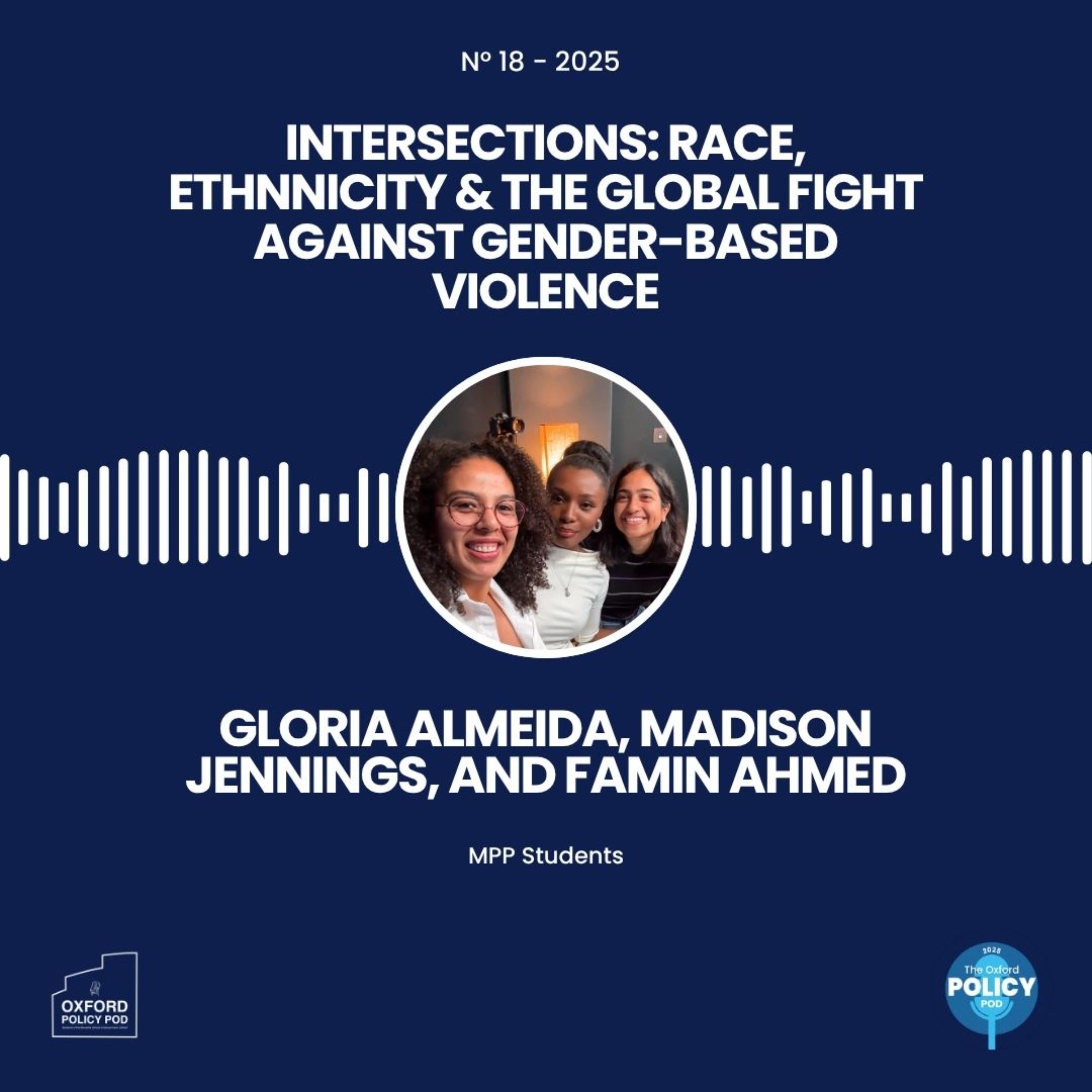 Intersections: Race, Ethnicity & the Global Fight Against Gender-Based Violence Intersections: Race, Ethnicity & the Global Fight Against Gender-Based Violence | In this episode, Madison Jennings, Glória Almeida da Silva and Famin Ahmed explore how race and ethnicity shape the experience of gender-based violence around the world.Together, they discuss the legal and systemic barriers women of color face, the narratives that silence survivors, and the grassroots and policy efforts pushing for justice. Drawing on their work in Australia, Brazil, and the U.S., the guests share personal reflections, policy insights, and bold visions for an anti-racist, decolonial approach to GBV prevention.🎧 Tune in for a powerful conversation on justice, resilience, and intersectional policymaking. | — | ||||||
Showing 25 of 126
Sponsor Intelligence
Sign in to see which brands sponsor this podcast, their ad offers, and promo codes.
Chart Positions
7 placements across 7 markets.
Chart Positions
7 placements across 7 markets.