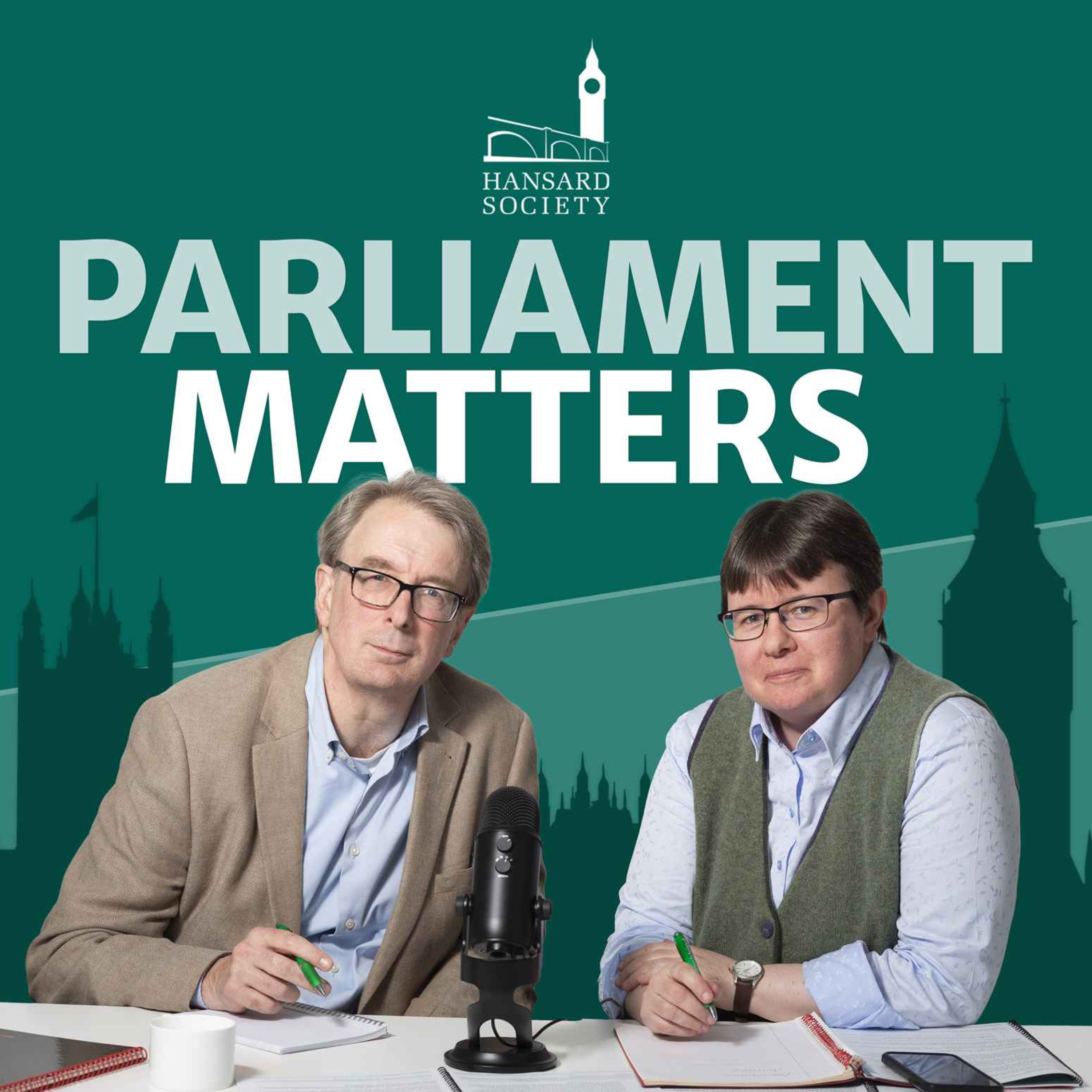
Insights from recent episode analysis
Audience Interest
Podcast Focus
Publishing Consistency
Platform Reach
Insights are generated by CastFox AI using publicly available data, episode content, and proprietary models.
Most discussed topics
Brands & references
Total monthly reach
Estimated from 15 chart positions in 15 markets.
By chart position
- 🇬🇧GB · Government#10300K to 1M
- 🇦🇺AU · Government#1255K to 30K
- 🇳🇱NL · Government#7010K to 30K
- 🇸🇪SE · Government#1151K to 10K
- 🇯🇵JP · Government#1711K to 10K
- Per-Episode Audience
Est. listeners per new episode within ~30 days
175K to 596K🎙 ~2x weekly·142 episodes·Last published yesterday - Monthly Reach
Unique listeners across all episodes (30 days)
349K to 1.2M🇬🇧84%🇦🇺3%🇳🇱3%+12 more - Active Followers
Loyal subscribers who consistently listen
140K to 477K
Market Insights
Platform Distribution
Reach across major podcast platforms, updated hourly
Total Followers
—
Total Plays
—
Total Reviews
—
* Data sourced directly from platform APIs and aggregated hourly across all major podcast directories.
On the show
From 16 epsHosts
Recent guests
Recent episodes
The Burnham question: A new approach to whipping Westminster?
Jun 25, 2026
Unknown duration
Andy Burnham’s March on Westminster: How Could He Become Prime Minister?
Jun 19, 2026
Unknown duration
Brexit, 10 years on: Parliament and the democratic crisis
Jun 11, 2026
52m 11s
The Cabinet Manual: Why Britain's constitutional "highway code" needs updating
Jun 4, 2026
1h 03m 43s
The £5m question: Who funds our politicians?
May 28, 2026
21m 43s
Social Links & Contact
Official channels & resources
Official Website
Login
RSS Feed
Login
| Date | Episode | Topics | Guests | Brands | Places | Keywords | Sponsor | Length | |
|---|---|---|---|---|---|---|---|---|---|
| 6/25/26 | ![]() The Burnham question: A new approach to whipping Westminster? | What would an Andy Burnham government actually look and feel like? This week we explore how Andy Burnham might govern, drawing on his experience as a Cabinet minister, his time as Mayor of Greater Manchester, and his own writings on constitutional reform. We ask whether a Burnham government would take a fundamentally different approach to Parliament – particularly the use of the party whip – and what that could mean for MPs and the balance of power at Westminster. We also explore why dozens of Presentation Bills were introduced this week, how this legislative procedure works, and whether any of these bills have a realistic chance of becoming law. _________ Andy Burnham has long been a critic of the parliamentary whipping system, arguing that it concentrates power in too few hands and weakens the role of elected MPs. Could a Burnham government take a more relaxed approach to party discipline? Might MPs be given greater freedom to represent their constituents, or would the realities of governing quickly outweigh the case for reform? Drawing on newly published research by parliamentary rebellions expert Professor Philip Cowley, we explore what parliamentary management might look like under a Burnham premiership.The parliamentary whip is about far more than securing votes in the division lobbies. Might it allow greater scope for MPs with relevant expertise or constituency interests to serve on legislative committees, invest more in the pastoral management and wellbeing of Labour MPs, and place greater emphasis on career development and job satisfaction within the Parliamentary Labour Party? Could a Burnham government take a more collegiate approach to these responsibilities? Or would the practical demands of governing mean that traditional methods of party management prevail?We also turn our attention to one of Westminster’s lesser-known legislative procedures: Presentation Bills. These are bills that are often never debated and, in some cases, are never even drafted. While they rarely become law, they provide MPs with a valuable opportunity to raise the profile of an issue, signal political intent, and build support for future reform. We discuss how MPs use Presentation Bills strategically, what they can – and cannot – achieve, how many have become law in recent years, and why they remain an important part of an MP’s parliamentary toolkit.____ 🎓 Learn more using our resources for the issues mentioned in this episode. ❓ Send us your questions about Parliament: ✅ Subscribe to our newsletter. 📱 Follow us across social media @HansardSociety / @hansardsociety.bsky.social £ - Support the Hansard Society and this podcast by making a donation today. Parliament Matters is a Hansard Society production supported by the Joseph Rowntree Charitable Trust. Presenters: Mark D’Arcy and Ruth FoxProducer: Richard Townsend Hosted on Acast. See acast.com/privacy for more information. | — | ||||||
| 6/19/26 | ![]() Andy Burnham’s March on Westminster: How Could He Become Prime Minister? | Three by-elections delivered three very different results this week. To discuss the implications, we are joined by Professor Philip Cowley, a leading expert on MPs, party discipline and the realities of parliamentary power. The Conservatives secured their first Scottish by-election victory since 1967, taking Aberdeen South from the SNP. Meanwhile, the SNP held on in Arbroath and Broughty Ferry, limiting the damage from what could have been a bruising night. But it is Andy Burnham’s Labour victory in Makerfield that could have the biggest long-term consequences for British politics. We examine the political and parliamentary choreography required as Burnham begins his march back to Westminster, and we assess whether a carefully managed transition from Keir Starmer is possible, or even desirable. Are we witnessing the opening moves in a political dance of death between a sitting Prime Minister and the man many now see as his likely successor? And if Labour’s leadership question is approaching a decisive moment, which historical precedent is most relevant? Will it resemble the swift but dignified end of Margaret Thatcher’s premiership; the chaotic collapse of Boris Johnson’s government; or the slower, more managed departure of Theresa May? We explore the strategic arguments for and against a full Labour leadership contest. Would a competitive election strengthen Burnham’s authority and legitimacy, or expose divisions within the party at precisely the wrong moment? How much influence will Labour’s members, affiliates, and MPs have over the process? And would Burnham be better served by assuming the leadership quickly, or by using a managed transition to develop a governing programme and build a team around him? We also discuss the challenges Burnham could face if he does reach Number 10. Despite his prominence, relatively little is known about how he would govern nationally. What difficulties might he encounter in managing the parliamentary party? And what would a change in leadership mean for the wider workings of Parliament, from ministerial reshuffles to the balance of power across the select committee corridor? Finally, attention turns to Parliament’s agenda. The priority order for Private Members’ Bills in both the Commons and Lords is now clear. MPs will return to the assisted dying bill on 11 September, but it enters the new session only second in the queue rather than first. What difference could that make to the parliamentary tactics surrounding the legislation? And which other Private Members’ Bills deserve close attention in the months ahead?_______________ 🎓 Learn more using our resources for the issues mentioned in this episode. ❓ Send us your questions about Parliament: ✅ Subscribe to our newsletter. 📱 Follow us across social media @HansardSociety / @hansardsociety.bsky.social £ - Support the Hansard Society and this podcast by making a donation today. Parliament Matters is a Hansard Society production supported by the Joseph Rowntree Charitable Trust. Presenters: Mark D’Arcy and Ruth FoxProducer: Richard Townsend Hosted on Acast. See acast.com/privacy for more information. | — | ||||||
| 6/11/26 | ![]() Brexit, 10 years on: Parliament and the democratic crisis✨ | Brexitdemocratic crisis+5 | Dr Robert Saunders | Queen Mary University of London | — | Brexitdemocratic crisis+8 | — | 52m 11s | |
| 6/4/26 | ![]() The Cabinet Manual: Why Britain's constitutional "highway code" needs updating✨ | Cabinet ManualUK constitution+4 | — | UKHouse of Commons Administration+2 | — | Cabinet ManualUK constitution+5 | — | 1h 03m 43s | |
| 5/28/26 | ![]() The £5m question: Who funds our politicians?✨ | political donationstransparency+3 | Duncan Hames | Reform UKTransparency International+1 | — | political donationstransparency+5 | — | 21m 43s | |
| 5/21/26 | ![]() Is the Government censoring the Mandelson Papers?✨ | government censorshipMandelson Papers+4 | Sir Jeremy Wright MP | Intelligence and Security CommitteeGovernment | BritainUK | Mandelson Papersgovernment censorship+4 | — | 1h 10m 12s | |
| 5/15/26 | ![]() Labour’s leadership tangle: What does it mean for Parliament?✨ | Labour leadershippolitical environment+5 | Professor Meg Russell | Labour PartyNHS+2 | — | Labour leadershippolitics+7 | — | 1h 13m 33s | |
| 5/9/26 | ![]() What now? The local election fallout hits Westminster✨ | local electionsLabour Party+4 | — | LabourReform+6 | WalesScotland+4 | local electionsLabour Party+5 | — | 41m 31s | |
| 4/24/26 | ![]() Keir Starmer’s week of parliamentary torture over Mandelson appointment✨ | parliamentary procedurepolitical crisis+3 | Tony Grew | Foreign Affairs CommitteeLabour+1 | — | Keir StarmerPeter Mandelson+5 | — | 1h 11m 52s | |
| 4/17/26 | ![]() Dynamic alignment and Henry VIII powers: What will the Government’s EU reset mean for Parliament?✨ | EU resetdynamic alignment+5 | Professor Catherine Barnard | University of CambridgeChurch of England | UKWestminster+1 | EU resetdynamic alignment+5 | — | 1h 00m 20s | |
Want analysis for the episodes below?Free for Pro Submit a request, we'll have your selected episodes analyzed within an hour. Free, at no cost to you, for Pro users. | |||||||||
| 3/27/26 | ![]() Will key Government bills pass by the end of the parliamentary Session?✨ | legislationgovernment bills+4 | Matthew England | Hansard Society | UKMauritius+1 | Government billsparliamentary session+7 | — | 1h 07m 18s | |
| 3/20/26 | ![]() Who really decides Immigration Rules: Parliament or the Home Secretary?✨ | immigration lawrefugees' rights+4 | Jonathan Featonby | Refugee CouncilLabour+4 | — | immigrationHome Secretary+5 | — | 52m 30s | |
| 3/13/26 | ![]() Jury trials under threat? The Courts and Tribunals Bill explained✨ | jury trialsCourts and Tribunals Bill+5 | Lord Macdonald of River Glaven | LabourGovernment+4 | — | jury trialCourts and Tribunals Bill+8 | — | 56m 56s | |
| 3/10/26 | ![]() Is the assisted dying bill being filibustered?✨ | assisted dyinglegislation+4 | Lord Harper | House of LordsNHS+4 | EnglandWales | assisted dyingTerminally Ill Adults Bill+7 | — | 38m 55s | |
| 3/6/26 | ![]() Starmer, Iran, and Parliament’s role in war powers✨ | parliamentary war powersmilitary action+4 | — | House of LordsConservative Peer+4 | — | war powersmilitary action+6 | — | 53m 21s | |
| 2/28/26 | ![]() Mandelson, Andrew and Epstein: Should there be parliamentary committee of inquiry?✨ | parliamentary inquiryby-election implications+5 | Tom Tugendhat | GreensConservative Party+2 | — | by-electionparliamentary committee+7 | — | 1h 00m 51s | |
| 2/20/26 | ![]() The forgotten pioneer: Who was Margaret Bondfield, Britain’s first female Cabinet Minister?✨ | women in politicshistorical figures+3 | Nan Sloane | Hansard Society | BritainSomerset | Margaret Bondfieldfemale Cabinet Minister+5 | — | 1h 10m 30s | |
| 2/13/26 | ![]() What happens when you lose the party whip?✨ | party whippolitical rebellion+5 | Neil Duncan-Jordan | Parliamentary Labour PartyHouse of Lords+2 | — | party whipNeil Duncan-Jordan+8 | — | 1h 08m 36s | |
| 2/6/26 | ![]() A Humble Address: How MPs confronted the Mandelson scandal | It has been a bruising week for the Prime Minister after the House of Commons backed a Conservative “Humble Address” demanding documents on Sir Keir Starmer’s vetting of Lord Mandelson for the Washington Ambassadorship. We explain how the procedure works, what role the Intelligence and Security Committee may play in decisions on disclosure, and how legislation to strip a peerage could be introduced. Plus, the latest on the Restoration and Renewal of Parliament as yet another report lands with a new set of costings.______🎓 Learn more using our resources for the issues mentioned in this episode. ❓ Send us your questions about Parliament: ✅ Subscribe to our newsletter. 📱 Follow us across social media @HansardSociety / @hansardsociety.bsky.social £ - Support the Hansard Society and this podcast by making a donation today. Parliament Matters is a Hansard Society production supported by the Joseph Rowntree Charitable Trust. Presenters: Mark D’Arcy and Ruth FoxProducer: Richard Townsend Hosted on Acast. See acast.com/privacy for more information. | — | ||||||
| 2/1/26 | ![]() Why MPs can’t just quit: The curious case of the Chiltern Hundreds | This week we explore one of Westminster’s strangest constitutional hangovers: why MPs can’t simply resign. With the Gorton and Denton by-election triggered by Andrew Gwynne’s departure, listeners asked the obvious question – why the medieval-sounding detour via the Chiltern Hundreds (or its less glamorous cousin, the Manor of Northstead)? We trace the rule back to 1623, when the Commons barred resignations, and to later fears about MPs being bought off by “offices of profit” from the Crown. The workaround – appointing an MP to a Crown office that disqualifies them – still survives, complete with modern legal “fudges”. Along the way, we revisit colourful resignations and near-resignations, from mass Ulster Unionist walkouts to John Stonehouse’s attempted disappearance and Gerry Adams’s objection to being handed a Crown role he didn’t want.In this episode we also check the Government’s legislative scorecard as the Session edges toward its expected May close, with several dozen bills already on the statute book and many more still in play. We explain “carry-over” motions – how some bills can leap across prorogation – and why the Government has produced surprisingly few bills for pre-legislative scrutiny compared with the first Session in recent previous parliaments.Finally, the focus shifts to the Armed Forces Bill, the five-yearly legislation rooted in the Bill of Rights that renews the legal basis for military discipline and Parliament’s consent for a standing army. Labour MP Jayne Kirkham joins us to discuss how her Ten Minute Rule proposal secured Royal Fleet Auxiliary access to the new Armed Forces Commissioner, and what it’s like learning the ropes on bill committees as a new MP._____ 🎓 Learn more using our resources for the issues mentioned in this episode. ❓ Send us your questions about Parliament: ✅ Subscribe to our newsletter. 📱 Follow us across social media @HansardSociety / @hansardsociety.bsky.social £ - Support the Hansard Society and this podcast by making a donation today. Parliament Matters is a Hansard Society production supported by the Joseph Rowntree Charitable Trust. Presenters: Mark D’Arcy and Ruth FoxProducer: Richard Townsend Hosted on Acast. See acast.com/privacy for more information. | — | ||||||
| 1/30/26 | ![]() Assisted dying bill: How could the Parliament Act be used? | The assisted dying bill – properly known as the Terminally Ill Adults (End of Life) Bill – is facing an extraordinary procedural logjam in the House of Lords. More than 1,170 amendments remain to be debated, organised into 89 groups for debate, yet only 20 of those groups have been reached after seven days in Committee. With just a handful of sitting Fridays left before the end of the Session, Lord Falconer has warned that the Bill is very unlikely to complete its Lords stages in time. In a letter to Peers, he has floated a list of possible compromise amendments but has also, for the first time, strongly indicated that the Parliament Act may need to be invoked to override the opposition of a small group of Peers and secure the Bill’s passage in the next Session.Although rarely used, and never in relation to a Private Members Bill, the Parliament Act has been deployed before on highly contentious measures, most recently the Hunting Bill in 2004. Using it to force through the assisted dying bill would require intricate choreography in both the Commons and the Lords, as well as major political decisions about whether the government formally takes ownership of the Bill or whether it continues as a Private Member’s Bill. It would also raise difficult questions about how amendments are handled, and how far MPs and ministers are prepared to go to assert the primacy of the elected House in the face of sustained resistance from a small but determined group of Peers.In this episode, we explore how the Parliament Act works, how it could be used in this case, and the political and constitutional trade-offs involved in relying on it to deliver this legislation.____ 🎓 Learn more using our resources for the issues mentioned in this episode. ❓ Send us your questions about Parliament: ✅ Subscribe to our newsletter. 📱 Follow us across social media @HansardSociety / @hansardsociety.bsky.social £ - Support the Hansard Society and this podcast by making a donation today. Parliament Matters is a Hansard Society production supported by the Joseph Rowntree Charitable Trust. Presenters: Mark D’Arcy and Ruth FoxProducer: Richard Townsend Hosted on Acast. See acast.com/privacy for more information. | — | ||||||
| 1/23/26 | ![]() Should MPs Who Switch Parties Be Forced to Face a By-Election? | In this episode, we ask whether MPs who switch parties should be forced to face a by-election – and what this month’s spate of defections says about representation, party power and voter consent. We also unpick a dizzying week in British and global politics as “hurricane Trump” batters the post-war order, testing the UK-US alliance and raising awkward questions about NATO, defence spending and procurement. Plus: the Lords’ push for an under-16s social media ban, Chagos ping-pong, and why is the bill to remove hereditary Peers from the House of Lords stalled?____ With Westminster watching Washington’s every swerve, we explore why Keir Starmer’s most outspoken pushback on tariffs and Greenland matters – and why making big foreign-policy statements outside the Commons still rankles. In the Lords, a proposed ban on social media for under-16s forces the government into damage-limitation. Is the government’s promised consultation a serious route to action, or simply a way of kicking a difficult issue into the long grass? We look at how enforceable such a ban would be, how it fits with the existing Online Safety Act, and the political and constitutional tension of tightening access at 16 while simultaneously debating votes at 16. We then turn to a growing list of legislative headaches: the Hillsborough Law stalling again amid disputes over national security carve-outs; renewed procedural drama over the Chagos Islands Bill, how the financial privilege of the House of Commons blocks Lords amendments, and what options Peers have left. We also ask why the bill to remove he remaining hereditary peers appears to be stuck in a curious parliamentary holding pattern. Finally, we focus on party switching, the e-petition calling for automatic by-elections for defecting MPs, and whether such a rule would enhance democratic accountability or simply hand party machines a powerful new weapon against dissent. As we were recording, news broke of an actual by-election, with Andrew Gwynne MP announcing his resignation on health grounds – a vacancy that could trigger a contest with significant implications for Labour’s internal politics and Sir Keir Starmer’s leadership.____🎓 Learn more using our resources for the issues mentioned in this episode. ❓ Send us your questions about Parliament: ✅ Subscribe to our newsletter. 📱 Follow us across social media @HansardSociety / @hansardsociety.bsky.social £ - Support the Hansard Society and this podcast by making a donation today. Parliament Matters is a Hansard Society production supported by the Joseph Rowntree Charitable Trust. Presenters: Mark D’Arcy and Ruth FoxProducer: Richard Townsend Hosted on Acast. See acast.com/privacy for more information. | — | ||||||
| 1/21/26 | ![]() Who really sets MPs’ pay – And why you might be wrong about it | What are MPs actually paid and what does the public fund to help them do their job? In this conversation with Richard Lloyd, chair of the Independent Parliamentary Standards Authority (IPSA) we explore the delicate balance between supporting MPs to do their jobs effectively and enforcing strict standards on the use of public money. We discuss how IPSA has shifted from a rule-heavy “traffic cop” to a principles-based regulator, why compliance is now very high, and the security risks and pressures facing MPs‘ offices as workloads rise and abuse becomes more common._____Sixteen years after the expenses scandal that reshaped British politics, Richard Lloyd offers a rare insider’s account of how Parliament is now regulated from the outside. Drawing on his experience in government, regulation and civil society, he explains why MPs’ pay and expenses were taken out of politicians’ hands, how IPSA evolved from a body widely seen as hostile and bureaucratic into a more service-focused regulator, and why independence remains essential even when it attracts controversy.Richard explains the basic package of salary and pension, and how this compares with those of parliamentarians in other countries, but also the less well-understood support that sits behind an MP’s work: travel between Westminster and constituency, accommodation for those far from London, and – most of all – the funding that pays for staff, offices and equipment.We revisit how the 2008–09 expenses scandal changed everything, and how IPSA’s early reforms tightened the rules on housing costs, ending practices like mortgage interest claims and “flipping” second homes. Richard also addresses more recent controversies, including MPs renting to other MPs, and why IPSA has moved to stop new arrangements where public confidence and perceived conflicts of interest are at stake.Richard argues that today’s system is delivering: spending is now close to 100% compliant, serious wrongdoing is rare, and IPSA’s approach is evolving from dense rulebooks to clearer principles – parliamentary purpose, integrity, value for money and accountability – backed by enforcement when needed. We also explore the strain on MPs’ offices, the separation between parliamentary and party-political activity, the rising security threat, and the growing impact of AI on constituent correspondence.Finally, Richard discusses the politically charged question of MPs’ pay, the Citizens’ Panel work that shifted views once the reality of the job was understood, and the wider role independent regulators can play in rebuilding trust in our democratic institutions._____🎓 Learn more using our resources for the issues mentioned in this episode. ❓ Send us your questions about Parliament: ✅ Subscribe to our newsletter. 📱 Follow us across social media @HansardSociety / @hansardsociety.bsky.social £ - Support the Hansard Society and this podcast by making a donation today. Parliament Matters is a Hansard Society production supported by the Joseph Rowntree Charitable Trust. Presenters: Mark D’Arcy and Ruth FoxProducer: Richard Townsend Hosted on Acast. See acast.com/privacy for more information. | — | ||||||
| 1/16/26 | ![]() Kemi’s pre-emptive strike on Robert Jenrick | In a dramatic day at Westminster, Kemi Badenoch launched a pre-emptive strike against Robert Jenrick, sacking him from the Shadow Cabinet, suspending the Conservative Party whip, and moving before his headline-grabbing jump to Reform UK. We unpack what the defection tells us about party discipline, Reform’s “fishing operation” for Tory MPs, and whether anyone else might follow.We then turn to government difficulties over the Public Office (Accountability) Bill, better known as the Hillsborough Law. With its proposed “duty of candour” for public officials, campaigners fear national security carve-outs (especially around MI5/MI6 evidence) could fatally water it down, with MPs particularly from Merseyside and Manchester pushing back hard as the Bill heads toward key Commons stages.In our interview, Backbench Business Committee chair Bob Blackman MP sets out his committee’s “manifesto” for Commons reform: spreading backbench time beyond Thursdays, fixing the committee’s stop-start elections, and even replacing the Private Members’ Bill lottery with a more rational selection process.Finally, we assess whether the assisted dying bill is being talked out in the Lords, what rescue routes might exist - including invoking the Parliament Act - and we note the arrival of a new Lord Speaker, Lord Forsyth, as wider Lords reform looms.____ 🎓 Learn more using our resources for the issues mentioned in this episode. ❓ Send us your questions about Parliament: ✅ Subscribe to our newsletter. 📱 Follow us across social media @HansardSociety / @hansardsociety.bsky.social £ - Support the Hansard Society and this podcast by making a donation today. Parliament Matters is a Hansard Society production supported by the Joseph Rowntree Charitable Trust. Presenters: Mark D’Arcy and Ruth FoxProducer: Richard Townsend Hosted on Acast. See acast.com/privacy for more information. | — | ||||||
| 1/14/26 | ![]() Growing the Greens: Parliament, polling and Zack Polanski | What is it like to be part of a small but growing parliamentary party? We talk with the leader of the Green Party group at Westminster, Ellie Chowns, about the challenges of operating with limited numbers, the practical realities of parliamentary life, and how institutional structures shape the influence of smaller parties. We discuss our political culture, the Greens’ approach to leadership, internal decision-making, and the Green’s longer-term ambitions for electoral and parliamentary reform and a more representative system.With only four MPs, the Green Party covers a wide range of policy areas with a small parliamentary footprint. We explore how this affects visibility, workload, and the ability to intervene in debates and committees, within a system largely structured around the governing party and the official opposition and how smaller parties have to work strategically, pooling resources and coordinating closely to make the most of limited opportunities.Those structural constraints are set alongside the everyday realities of parliamentary work and the gap between Westminster’s formal traditions and the practical demands of representing constituents. Our discussion reflects on how much of an MP’s role is shaped by operational pressures: setting up offices, handling large volumes of casework, and mastering complex procedures while immediately taking on full responsibility for constituency representation.We explore how the Commons operates in practice and what this means for reform. Chowns raises issues around speaking rights, voting processes, and the allocation of time and space, linking them to wider questions of efficiency, accessibility and accountability, and to longer-standing debates about whether existing procedures are suited to a more diverse and multi-party political landscape.We also look at how the Green Party functions internally, both within its small parliamentary group and in its relationship with the wider party leadership. We consider how approaches to policy development, legislative coordination and party discipline shape representation, particularly in the absence of the tightly enforced whipping systems used by larger parties.Finally, we talk about electoral reform and the case for a more proportional system. The experience of operating as a small party within a majoritarian parliament is connected to broader arguments about structural change, the future direction of UK politics, and how rising public support for the Greens could translate into greater influence.____ 🎓 Learn more using our resources for the issues mentioned in this episode. ❓ Send us your questions about Parliament: ✅ Subscribe to our newsletter. 📱 Follow us across social media @HansardSociety / @hansardsociety.bsky.social £ - Support the Hansard Society and this podcast by making a donation today. Parliament Matters is a Hansard Society production supported by the Joseph Rowntree Charitable Trust. Presenters: Mark D’Arcy and Ruth FoxProducer: Richard Townsend Hosted on Acast. See acast.com/privacy for more information. | — | ||||||
Showing 25 of 151
Pitch Fit is a Pro feature
See how bookable this show is for guests, which brands already advertise, the per-episode ad value, and the best-fit guest and sponsor profile. The numbers are blurred on the free plan.
How readily this show books outside guests like you.
How proven this show is for host-read sponsorships.
For Guests
ProFor Advertisers
ProUpgrade to Pro to unlock guest cadence, sponsor categories, fit scores, and per-episode ad value for this show.
Chart Positions
15 placements across 15 markets.
Chart Positions
15 placements across 15 markets.
