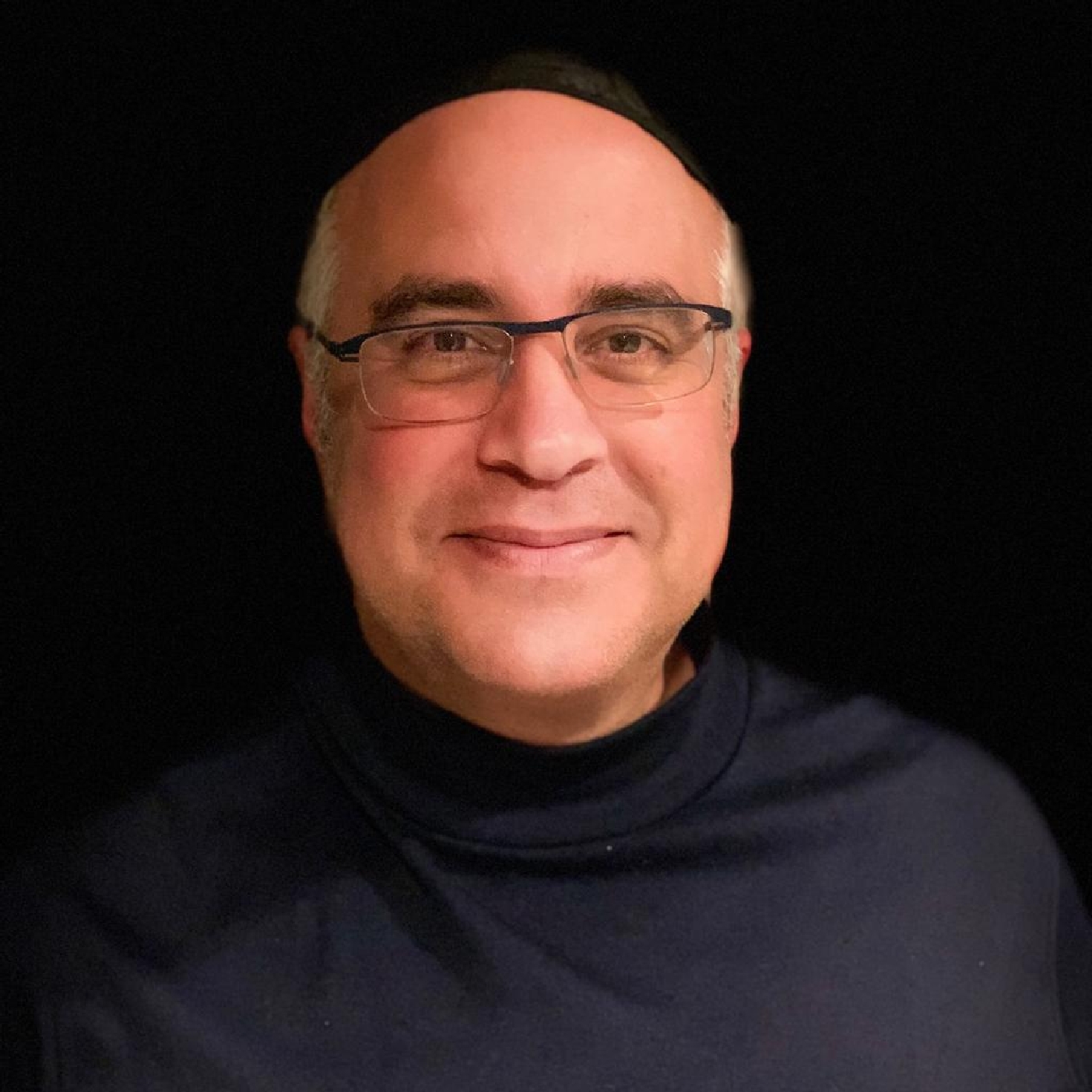
Parsha with Rabbi David Bibi
by JewishPodcasts.fm
Is this your podcast?Insights from recent episode analysis
Audience Interest
Podcast Focus
Publishing Consistency
Platform Reach
Insights are generated by CastFox AI using publicly available data, episode content, and proprietary models.
Most discussed topics
Brands & references
Total monthly reach
Estimated from 2 chart positions in 2 markets.
By chart position
- 🇩🇪DE · Judaism#1795K to 30K
- 🇪🇸ES · Judaism#6610K to 30K
- Per-Episode Audience
Est. listeners per new episode within ~30 days
4.5K to 18K🎙 Daily cadence·607 episodes·Last published yesterday - Monthly Reach
Unique listeners across all episodes (30 days)
15K to 60K🇩🇪50%🇪🇸50% - Active Followers
Loyal subscribers who consistently listen
4.5K to 18K
Market Insights
Platform Distribution
Reach across major podcast platforms, updated hourly
Total Followers
—
Total Plays
—
Total Reviews
—
* Data sourced directly from platform APIs and aggregated hourly across all major podcast directories.
On the show
From 20 epsHost
Recent guests
No guests detected in recent episodes.
Recent episodes
Open the Gates — The Secret of the Tehilim of Parnassah And Finacial Success
Sep 1, 2026
Unknown duration
When the Rebel Says Amen - Can the Yetzer Hara Become the Yetzer Tov?
Aug 31, 2026
Unknown duration
When You Can’t See the Runway
Aug 26, 2026
Unknown duration
Why Does Amalek Never Go Away?
Aug 26, 2026
Unknown duration
The Sound of Emunah - Ki Tavo
Aug 23, 2026
Unknown duration
Social Links & Contact
Official channels & resources
Official Website
Login
RSS Feed
Login
| Date | Episode | Topics | Guests | Brands | Places | Keywords | Sponsor | Length | |
|---|---|---|---|---|---|---|---|---|---|
| 9/1/26 | Open the Gates — The Secret of the Tehilim of Parnassah And Finacial Success | Open the Gates — The Secret of thePsalm of Parnassah Whydid לְדָוִדמִזְמוֹר, לַה׳ הָאָרֶץ וּמְלוֹאָהּ become one of ourgreat prayers for parnassah?We say it every Sunday as we begin a new week. In Moroccan communities it isrecited as Shabbat departs and we return to the working world. And on RoshHashanah, in the Syrian community, people will bid extraordinary sums for theprivilege of opening the Heikhal as we recite this Psalm and pray for financialblessing for the coming year. But there is something strange: the Psalm never actually asks for money. Inthis morning’s Breakfast & Class,Openthe Gates — The Secret of the Psalm of Parnassah,we discover that perhaps this is precisely the point. David HaMelekh begins byreminding us Who owns everything, asks whether ourhands are clean enough to receive His blessing, and finally calls upon thegates to open. But when those gates open, it isn’t money that comes through: וְיָבֹא מֶלֶךְ הַכָּבוֹד — “Let theKing of Glory enter.” Perhaps thegreatest secret of parnassahis not simply asking HaShem to send us more, but inviting Him into the way weearn, spend, give—and live. | — | ||||||
| 8/31/26 | When the Rebel Says Amen - Can the Yetzer Hara Become the Yetzer Tov? | When the Rebel Says Amen Can the Yetzer Hara Become the Yetzer Tov? Every morning, we wrap the tefillin shel-yad around our arm and then place the tefillin shel-rosh upon our head. We have done it thousands of times. But what if hidden inside that simple order is an entire philosophy of how we are supposed to fight—and ultimately transform—the yetzer hara? In this morning’s Breakfast & Class, based on a beautiful teaching of Rabbi Pinḥas Friedman, we discover the Ḥatam Sofer’s remarkable image: before we can crown the King, we first have to bind the rebel. But Judaism asks us to go even further. The ultimate goal is not simply to defeat the yetzer hara, but to harness its fire and teach it to serve HaShem—until, like the “bad angel” who accompanies us home on Friday night, even the rebel learns to say Amen. | — | ||||||
| 8/26/26 | When You Can’t See the Runway | When You Can’t See the Runway What happens when we find ourselves flying through the clouds — unable to see what lies ahead, frightened by the turbulence, and unsure whether we are even heading in the right direction? A remarkable story told by Rabbi Shlomo Landau about two young men trapped in a small airplane with an unconscious pilot gives us a powerful way to understand one of the great challenges of life: learning to listen to the Voice that knows exactly where we are and exactly where we need to go. The Torah never promises that there won’t be a war. It never promises that there won’t be clouds. And it never promises that we won’t be frightened. But as we enter Elul and read כִּי תֵצֵא לַמִּלְחָמָה, perhaps we are being reminded that even when we cannot see the runway, Hashem can. Our task is to keep fighting, keep moving forward — and above all, keep listening. | — | ||||||
| 8/26/26 | Why Does Amalek Never Go Away? | Inthis morning’s Breakfast & Class,we confront one of the Torah’s most difficult questions: Why does Amalek never go away?Why does the Torah command us not simply to remember what Amalek did, but לֹא תִּשְׁכָּח — never to forget?And why, after thousands of years, does the hatred represented by Amalekcontinue to reappear in different countries, different generations, and underentirely different disguises? Drawing on the insights of Rabbi Yoseph Geisinsky, Rabbi Jonathan Sacks z”l, and RabbiAdin Steinsaltz z”l, we explore threeremarkable approaches to Amalek: the danger of misplaced compassion, thedifference between hatred that has a reason and hatred that has none, and thedeeper idea that Amalek’s battle is ultimately not only against the Jewishpeople, but against what the Jewish people represent. And as antisemitism onceagain finds a comfortable home on opposite ends of the political spectrum, theTorah’s ancient command feels frighteningly contemporary: זָכוֹר — Remember.Not so that we live with hatred, but so that we recognize it, confront it, andnever allow it to change who we are. | — | ||||||
| 8/23/26 | The Sound of Emunah - Ki Tavo | This morning’s Breakfast & Class begins with a few simple words from Parashat Ki Tavo: וְהָיָה אִם־שָׁמוֹעַ תִּשְׁמַע בְּקוֹל ה׳ אֱלֹהֶיךָ — “If we will surely listen to the voice of HaShem.” Before the Torah promises all of its extraordinary blessings, it gives us a strategy for everything that follows: begin with emunah. There is a God. He is our God. There is no other. And perhaps every time we answer one small word — אָמֵן — we are practicing that faith all over again. From a remarkable story about Rav Yeḥezkel Levenstein and the difference between seeing and hearing, to the mesorah we receive from our parents and grandparents, to simply making the effort to come to synagogue on a stormy morning, we explore what it means to walk toward HaShem even when we cannot see everything clearly. And ultimately we arrive at the sound we are preparing to hear on Rosh Hashanah: לִשְׁמֹעַ קוֹל שׁוֹפָר. We cannot see what the Shofar accomplishes. We hear — and we believe. The Sound of Emunah: the faith that allows us to hear. | — | ||||||
| 8/20/26 | Two Wars — And Who Is Left Behind? Ki Tesse | This morning’s Breakfast & Class on Parashat Ki Tetze began with a curious question: Why does the Torah introduce two different sections, almost back-to-back, with virtually the identical words — “Ki tetze la-milchamah al oyevekha”,“When you go out to war against your enemies”? And why does the mysteriousepisode of Eglah Arufah, the unidentified murdered traveler, stand between them? We discovered that the Torah may actually be describing two wars and one great responsibility: the war against the enemy outside us, the far more personal war against the enemy within us, and the obligation never to forget the person struggling behind us. And that brings us to the final words of the parashah — Zakhor et asher asah lekha Amalek. Amalek specifically attacks the tired, the weak and those left at the rear of the camp. As Elul begins, perhaps one of the most important questions we can ask is not only, “What do I need to change?”but also, “Who have we left behind?” | — | ||||||
| 8/19/26 | Can Something Small Really Make a Difference? | What can one small mitzvah possibly accomplish? We say Tehillim for a refuah, give tzedakah in someone’s zechut, dedicate Torah learning to someone who is ill—and yet the question remains: how can something so small affect something so large? This class begins with the Zera Shimshon on Shiluach HaKen, who teaches that the problem may be in the question itself. What looks small to us may carry enormous weight in Shamayim. From the mother bird of Parashat Ki Tetzei, we move to the metzora, Rachel Imeinu, Mashiach, the hidden storehouse of neshamos, and the mystery of how mitzvot create zechut. The central message is simple and powerful: never measure a mitzvah by how small it looks from here. We see the bird; HaShem sees the worlds it moves. May this Torah be a zechut for לְכָל חוֹלֵי עַמּוֹ יִשְׂרָאֵל. | — | ||||||
| 8/18/26 | The Sin Was the Strategy - Ki Tesse | The Sin Was the Strategy This morning’s Breakfast & Class begins with a troubling question in Parashat KiTetze. Why does the Torah judge Ammon and Moav so harshly? Their crime was not simply that they failed to offer bread and water, nor even that they hiredBilaam. Rabbi Yissocher Frand, drawing on the Dubno Maggid, the Kli Yakar andthe Tolner Rebbe, points us toward something deeper: they strategized.They studied our vulnerabilities, created the circumstances in which we mightfall, and deliberately planned a spiritual trap. But in Elul, that frightening idea can become an extraordinarily hopeful one. If somuch evil can come from planning how someone might fall, imagine the power of sitting down and planning how we might rise. Together with an insight fromRabbi Yehonasan Gefen, and the remarkable Talmudic story of Rav Amram Ḥasida shouting “Fire!” before temptation could overcome him, we ask a very practical Elul question: Instead of simply promising ourselves that this year will bedifferent, what can we actually change in the architecture of our lives to make it easier to become the people we want to be? | — | ||||||
| 8/16/26 | Bringing the Captive Home - Ki Tetzeh | This Sundaymorning’s Breakfast & Classbegins with the opening words of Parashat Ki Tetzeh: “Ki tetze la-milḥamah al oyevecha”— when we go out to war against our enemies. The Zohar and the Or HaḤaim revealthat the Torah may also be describing a much more personal battle: the waragainst the yetzer hara, and the beautiful captive as our own neshamah. Elulis not only about discovering what is wrong with us. It is about rescuing whatis still beautiful within us. In this morning’s class, we follow the versesstep by step and discover how Ki Tetzeh becomes a map for Elul — going out tobattle, taking back what was captured, and finally bringing the neshamah home. | — | ||||||
| 8/14/26 | The Measure of a Person Is His Sense of Gratitude Shoftim | There is something strange about human nature. The first time someone does something for us, we notice it. The second time, we appreciate it. But when someone takes care of us day after day, somehow the extraordinary becomes ordinary. In this morning’s Breakfast & a Class, based on insight of Rabbi Frand, we look at a remarkable Gemara in Ketubot and Rav Pam’s powerful insight into three seemingly insignificant favors — a hand offered on a bridge, a feather brushed away, and a little unpleasantness quietly covered over. The great Amoraim teach us that hakarat hatov begins long before we say “thank you.” It begins with learning to notice. From there, we bring the lesson home — quite literally. What happens when thekindnesses of a husband or wife become so constant that we begin treating them as part of the job description? Through the unforgettable words of Rabbi Akiva about his wife — “Sheli ve-shelakhem, shelah hu,” “What is mine and what isyours is hers” — and a very personal reflection on my own gratitude to Chantelle, we ask what Elul might look like if, alongside examining what we need to change, we also learned to see again everything — and everyone — HaShem has already given us. | — | ||||||
Want analysis for the episodes below?Free for Pro Submit a request, we'll have your selected episodes analyzed within an hour. Free, at no cost to you, for Pro users. | |||||||||
| 8/12/26 | You Don’t Need to Know How the Book Ends Shoftim Elul Birthdays | You Don’t Need to Know How the Book Ends — A Birthday, RoshHodesh Elul & Parashat Shoftim Yesterdaywas my secular birthday. Today is my Hebrew birthday. And tonight is RoshHodesh Elul. In this morning’s Breakfast & a Class,we used that unusual convergence to ask a question that becomes more meaningfulwith every passing year: What are we supposed to do with the time HaShem givesus? We remembered my dear friend David Golden, who passed away last year theday after his 110th birthday, and the remarkable way he continued to appreciateevery additional day of life. Hazal teach that there is something special aboutthe day of one’s birth—but perhaps the real question is not what blessing can Ireceive today, but what am I supposed to do with another year that HaShem hasgiven me? Fromthere, this morning’s Breakfast & a Classturned to an extraordinary cassette tape I received when I was eighteen—anastrological reading of my future that I refused to listen to until decadeslater, when Rabbi Abittan, z”l, suggested we hear it together. Its astonishingaccuracy led to an unforgettable lesson from the Rabbi and directly into thisweek’s Parashat Shoftim: תָּמִים תִּהְיֶה עִם ה׳ אֱלֹקֶיךָ — walk wholeheartedly withHaShem. Elul asks us tolook honestly at yesterday, but the Torah warns us not to become obsessed withknowing tomorrow. We don’t need to know how the book ends. We need the wisdomto learn from the pages already written, the faith to leave the unopened pageswith HaShem, and the strength to make today’s page worth reading. | — | ||||||
| 8/11/26 | The Rules Apply to Me Too - Shoftim | “I know the rule—but my situation is different.” It may be one of the most dangerous sentences we tell ourselves. In this morning’s Breakfast & a Class, webegin with Shlomo HaMelech, the wisest of all men, who believed he couldmultiply wives without allowing them to turn his heart. From there we meetRabbi Yishmael ben Elisha, who was certain he could read by candlelight onShabbat without adjusting the flame, and even Ulysses, who understood that theonly way to resist the Sirens was to tie himself to the mast before he heardtheir song. We then turn to the Torah’s remarkable warning that שֹׁחַד — a bribe — “blinds the eyes of the wise.” Through a powerful Gemara and a memorable story attributed to Rav Chaim Soloveitchik, we discover something uncomfortable about ourselves: bias rarely feels like bias. We usually feel perfectly objective. Perhaps that is the deeper lesson of the Torah’s boundaries and the safeguards of our Ḥakhamim. They are not there because we are foolish or weak. They are there because the Torah understands the human heart better than we understand ourselves. Sometimes the beginning of wisdom is simply admitting: the rules apply to me too. | — | ||||||
| 8/9/26 | Elul: A Refuge in Time What Are We Doing With the Time Hashem Has Given Us? | Elul: A Refuge in Time — What Are We Doing With the TimeHashem Has Given Us? What is one hour of our life really worth? Parashat Shoftim brings us back to the Ir Miklat,the city of refuge—a place designed not simply for exile, but for reflection,rehabilitation, and ultimately return. Rabbi Yissocher Frand points to aremarkable allusion from the Arizal: the words אִנָּה לְיָדוֹ וְשַׂמְתִּי לְךָform the initials אֱלוּל. An Ir Miklat isa refuge in space; Elul is a refuge in time.It is Hashem’s gift of a place in the calendar to stop and ask ourselves whatwe are doing with the precious life He has given us. This week we enter Rosh Hodesh Elul, and next Sunday we Sepharadim beginSelihot—giving up an extra hour of sleep each morning to wake up in more waysthan one. Through the unforgettable story of Rabbi Ḥanina ben Teradyon, MosheRabbeinu’s forty days, and the Rambam’s call of עוּרוּ יְשֵׁנִים מִשְּׁנַתְכֶם — “Wakeup, sleepers, from your sleep,” we explore the extraordinary value of a single hour. Perhaps the challenge of Selihot is not merely to give Hashem that extra hour, but to allow that hour to change the other twenty-three. | — | ||||||
| 8/6/26 | What It Means to Be a Child of HaShem Re’eh | This morning at Breakfast & a Class,we explored one of the most remarkable verses in the Torah: “בָּנִים אַתֶּם לַה׳ אֱלֹקֵיכֶם” — “Youare children of HaShem your G-d.” Why does theTorah introduce this extraordinary declaration specifically before the laws ofmourning? Drawing upon the insights of Rashi, Sforno, the Or HaChaim, RabbeinuBaḥya, and the Nesivot Shalom, we discovered that this verse is not merelyteaching us how to mourn—it is teaching us how to live. Even in moments ofloss, disappointment, failure, and uncertainty, we are never abandoned, neverorphaned, and never beyond the embrace of our Heavenly Father. Alongthe way, we explored what it truly means to be “children of theKing”—maintaining our dignity in times of pain, recognizing that our worthcomes from HaShem and not from our circumstances, and remembering that no Jewever loses the privilege of returning home through teshuvah. This timelessmessage from Parashat Re’eh reminds us that our greatest identity is not foundin our successes or failures, but in the enduring relationship expressed inthose two unforgettable words: בָּנִים אַתֶּם. | — | ||||||
| 8/6/26 | Not by Bread Alone | This morning atBreakfast and a Class, we explored one of the most familiar verses in theTorah: “Man does not live by bread alone.”But what does that really mean? After all, HaShem did sustain the Jewish peoplein the desert with the manna—a miraculous form of bread. The lesson is not thatwe do not need physical sustenance. We do. The lesson is that the bread isnever the true source. The food, the doctor, the paycheck, the customer and theopportunity are all vessels through which HaShem sends His blessing. Webegan with a lighthearted insight from my friend Rabbi Mordechai Kamenetzkyabout the difference between what we need and what we want, and from there wefollowed the manna into the desert, entered the cave with Rabbi Shimon bar Yoḥai,and returned to our own breakfast table. The question is not whether we enjoythe physical world. The question is whether we remember Who placed the blessingwithin it. Listen to this morning’s class, “Not by Bread Alone: What We Need, WhatWe Want, and Who Sustains Us.” | — | ||||||
| 8/4/26 | Why Hashem Never Gives Up on Us – The DNA of the Jewish Soul | At this morning's Breakfast & a Class, we explored one of the most surprising openings in the Torah. As the Jewish people stood ready to enter Eretz Yisrael after forty years in the wilderness, Moshe Rabbeinu told them not to think they were inheriting the Land because of their righteousness. If not because they were perfect, then why did Hashem continue to believe in them? More importantly, what does that teach us about the way Hashem looks at each of us? Using memorable stories—from a humorous fortieth wedding anniversary, to a struggling violin student, to Sir Edmund Hillary's climb of Mount Everest—we discovered that the DNA of the Jewish soul is not perfection, but growth. We concluded with two timeless teachings: the Kotzker Rebbe's insight that more light allows us to see more dust, and Rabbi Asher Abittan זצ'ל's unforgettable lesson: 'Where you are on the ladder is far less important than the direction in which you are climbing.' If Hashem has never given up on the Jewish people through thousands of years of triumphs and failures, then none of us should ever give up on ourselves. We hope you'll join us for this inspiring class. | — | ||||||
| 8/2/26 | An Open Hand - An Open Heart Re'eh | This morning at Breakfast & a Class, we explored one of the Torah’s most challenging mitzvot—not simply giving tzedakah, but learning how to give with an open heart. Beginning with the powerful verses in Parashat Re’eh, we examined the Torah’s remarkable order: first, “Do not harden your heart,” and only afterward, “Do not close your hand.” Through the teachings of Chazal and the wisdom of Rabbi Asher Abittan זצ״ל, we discovered that Judaism asks not only what we give, but who we are while we are giving. The class centers around a very personal experience that took place immediately after a Sunday morning shiur, when a chance encounter outside the synagogue became the continuation of the lesson itself. Together we explore what Rabbi Yisrael Salanter, the Brisker Rav, and the Gemara in Bava Batra teach us about restoring dignity, offering encouragement, and recognizing the image of HaShem in every person we meet. Sometimes the greatest act of kindness is not opening our wallet—it is opening our heart. | — | ||||||
| 7/31/26 | The Blessing Beyond the Bread - Ekev | Why does the Torah tell us to thank HaShem not for the food,but for the Land? In this week’s Breakfast & a Class, inspired by last nights discussion with Rav Yosef Zvi Rimon, we explore one of the mostoverlooked questions in Parashat Ekev.The Torah commands us, “וְאָכַלְתָּ וְשָׂבָעְתָּ… וּבֵרַכְתָּ… עַלהָאָרֶץ הַטּוֹבָה”—“You shall eat, be satisfied, and bless HaShem… for the good Land.” Why isn’t the blessing simply for the meal? What is the connection between a piece of bread on our table and the Land of Israel? Together we discover that Birkat HaMazon is far more than a blessing after eating. It is the Torah’s daily safeguard against the illusion of self-sufficiency. Hunger naturally turns us toward HaShem, but prosperity can quietly convince us that “my strength and the power of my hand” created our success. Every time we bench, we remind ourselves that behind our efforts stands the One Who gave us the strength to succeed, the Land that sustains us, and the covenant that has carried the Jewish people through every generation. | — | ||||||
| 7/31/26 | When Stubbornness Becomes Holy - Ekeb | This morningsBreakfast & a Class, explored one of the great paradoxes of the Torah. Howcould the generation that stood at Har Sinai, heard the voice of HaShem, andaccepted the Torah with the words Na’aseh veNishmadescend only forty days later to the sin of the Golden Calf? More importantly,what does that ancient failure teach us about our own struggles withcommitment, responsibility, and spiritual growth? Drawing upon the insights ofRabbi Mordechai Kamenetzky, Rabbanit Dena Rock, and other Torah sources, wediscovered that the real issue may not have been idolatry alone, but the humantendency to desire inspiration without obligation—a relationship with God thatcomforts us but asks nothing of us. Yetthe Torah’s message does not end with failure. The very trait that led to theGolden Calf—our stubbornness—is transformed by Moshe Rabbeinu into one of theJewish people’s greatest strengths. Through moving stories of Rabbi EliezerSilver, Rabbi Aryeh Levin, and Rabbi Yisrael Salanter, we explored howdetermination, when directed toward Heaven, becomes perseverance, loyalty, andhope. The question is not whether we are stubborn; we all are. The question is:Whatare we stubborn for? May thisdiscussion inspire all of us to use our strength not to resist HaShem, but tohold fast to Him, to one another, and to the belief that, as long as the candleis still burning, it is never too late to repair. | — | ||||||
| 7/29/26 | Borrowed Dresses, Borrowed Hearts – The Hidden Greatness of Tu B’Av | Most people knowthat Tu B’Av is considered the Jewish “holiday of love.” Fewer know that theMishnah calls it one of the happiest days of the entire year—even placing italongside Yom Kippur. Why? What could possibly make this almost-forgotten dayso extraordinary? Inthis class, we set aside the familiar historical events of Tu B’Av and focusinstead on one seemingly insignificant detail: the daughters of Jerusalemborrowed white dresses from one another before going out to the vineyards. Whydid the Mishnah preserve that image? What does a borrowed dress teach us aboutdignity, generosity, marriage, community, and ultimately the rebuilding of theBeit HaMikdash? Morethan a lesson about shidduchim, this is a lesson about becoming people whocreate connections. In a world where we often remain safely within our own“dalet amot”—our personal space—Tu B’Av challenges us to step beyond ourselves,to invite others in, and to replace the divisions of Tisha B’Av with acts ofahavat chinam. Sometimes rebuilding the Jewish people doesn’t begin with grandgestures. Sometimes it begins with one borrowed dress, one open heart, and onecourageous step toward another person. | — | ||||||
| 7/27/26 | From the Flames of Tishah Be’Av to the Joy of Tu Be’Av | This past Shabbatwe entered Shabbat Naḥamu, the Shabbat ofComfort, and with it began the seven weeks that lead us from the ashes ofTishah Be’Av toward the hope of Rosh HaShanah. Then, on Tuesday night andWednesday, we celebrate Tu Be’Av, the fifteenthday of the Hebrew month of Av, a day that our Sages describe as one of thehappiest days of the Jewish year. How can the Jewish calendar move so quicklyfrom the deepest national mourning to one of its greatest celebrations? Whatchanged in just a few days? In thismorning’s class we explore a profound answer. Tu Be’Av is not a departure fromTishah Be’Av—it is its completion. The destruction of the Beit HaMikdash wasnot only our tragedy; it was, so to speak, HaShem’s. When our mourning maturesfrom grieving what we lost torecognizing the pain caused to Avinu ShebaShamayim, consolationcan begin. Drawing upon the Gemara, Midrash, and the timeless teachings passeddown by my rabbis, we discover why Tu Be’Av stands alongside Yom Kippur as aday of joy, how true teshuvah is rooted in empathy for HaShem, and why thefirst steps toward rebuilding the Beit HaMikdash begin not with stones, butwith repaired relationships—with HaShem and with one another. | — | ||||||
| 7/26/26 | The Test Hidden Inside the Blessing - Ekev | This morning , we explore one of the Torah’s greatestparadoxes. The generation that ate the manna never worried about planting,harvesting, or earning a livelihood. Every morning, their sustenance descendeddirectly from Heaven. Yet the Torah repeatedly calls the manna a test. How cana daily miracle be considered a test? Drawing on the teachings of RabbiYissocher Frand, the Sforno, and the Lubavitcher Rebbe, we discover that thegreatest spiritual challenges are not always found in hardship. Sometimes theyare hidden inside our greatest blessings. Through the remarkable stories of Hillel and Rabbi Elazarben Ḥarsom, together with the timeless lessons of Parashat Eikev, we will seethat both poverty and prosperity demand emunah. An empty basket teaches us totrust HaShem for tomorrow, while a full basket challenges us never to forgetthe true Source of our success. The circumstances of the test may change, butour mission remains the same: to recognize every blessing as a gift from HaShemand to use it to build a life of Torah, mitzvot, gratitude, and purpose. | — | ||||||
| 7/24/26 | The Whisper Before the Shout VaEtchanan | Parashat VaEtḥanan – The Whisper Before the Shout Why does HaShem sometimes whisper before He shouts? Drawing upon the profound teachings of Rav Eliyahu Eliezer Dessler, the revered teacher of Rabbi Asher Abittan, this week’s podcast explores one of Judaism’s most difficultquestions: not why suffering exists, but how we are meant to respond when life is disrupted. Through the words of Moshe Rabbeinu in Parashat VaEtḥanan, we discover the remarkable promise of “u’vikashtem misham”—thateven “from there,” from places of pain, confusion, and exile, we can still seekand find HaShem. As we journey from Tish’a Be’Av toward Shabbat Naḥamu, Rav Dessler reminds us that Judaism does not ask us to explain every wound. Instead, it invites us tolisten for HaShem’s gentle whisper before life forces us to hear the shout.This episode is a thoughtful reflection on suffering, teshuvah, hope, and thequiet courage to keep searching for HaShem—even when we do not yet understand the road before us. | — | ||||||
| 7/24/26 | The Idol Within Va’Etḥanan | Parashat Va’Etḥanan is filled with warnings against idolatry, even though few of us feel tempted to bow before a statue. Rabbi Frand explains that the ancient idol may have disappeared, but another form of worship remains very much alive: “I-dolatry.”When our need for control, honor, and recognition becomes so strong that wecannot tolerate frustration or disagreement, the ego quietly takes the placethat belongs to HaShem. In this morning's class, we explore the Gemara’s comparison between anger and avodah zarah, the deeper meaning of performing a mitzvah because it was commanded, and the Ḥasidic distinction between unhealthy self-erasure and genuine humility. The goal is not to disappear, but to place our talents, needs, and personalities in the service of something higher—and to remember, especially when life refuses to follow our plans, that there is a G-d, and it is not us. | — | ||||||
| 7/23/26 | From Ayekka to Eichah: The Hidden Journey from Revelation to Redemption | Although this class was delivered on the night of Tish’ah BeAb, its message extends far beyond the fast day. It is a timeless exploration of exile, faith, the hidden presence of the Shekhinah, and the enduring hope that what has been broken can once again be made whole. From Ayekka to Eichah: The Hidden Journey from Revelation toRedemption What is the connection between the very first question HaShem asked Adam in Gan Eden—“Ayekka, Where are you?”—and the opening cry of Megillat Eichah? Why did Moshe Rabbenu, Yeshayahu HaNavi, and Yirmiyahu HaNavi all use the same haunting word, “Eichah”?And what is the deeper meaning behind the Kabbalistic teaching of the “fallenlower heh” and the concealed Shekhinah? In this Tish’ah BeAb lecture, delivered at the Edmond J. Safra Synagogue inManhattan, we explore the first chapter of Megillat Eichah through the lens ofMidrash, Zohar, and Kabbalah. Along the way, we discover how the words Ayekka, Anochi, and Eichah trace the spiritual journey of the Jewish people—from Gan Eden to Har Sinai, from the destruction of Yerushalayim to the hope of redemption. The class concludes with a beautiful insight into the unique Syrian custom of beginning the night of Tish’ah BeAb with Parashat Ha’azinu, revealing how our liturgy itself carries the message that even in the depths of exile, thecovenant endures and redemption is already waiting to emerge. | — | ||||||
Showing 25 of 691
Pitch Fit is a Pro feature
See how bookable this show is for guests, which brands already advertise, the per-episode ad value, and the best-fit guest and sponsor profile. The numbers are blurred on the free plan.
How readily this show books outside guests like you.
How proven this show is for host-read sponsorships.
For Guests
ProFor Advertisers
ProUpgrade to Pro to unlock guest cadence, sponsor categories, fit scores, and per-episode ad value for this show.
Chart history for Parsha with Rabbi David Bibi
Peaked at #66 in Spain, currently #66 in Spain.
| Market | Genre | Peak | Current | Trend |
|---|---|---|---|---|
| Spain | — | #66 | #66 | — |
| Germany | — | #179 | #179 | — |
Chart Positions
2 placements across 2 markets.
Chart Positions
2 placements across 2 markets.