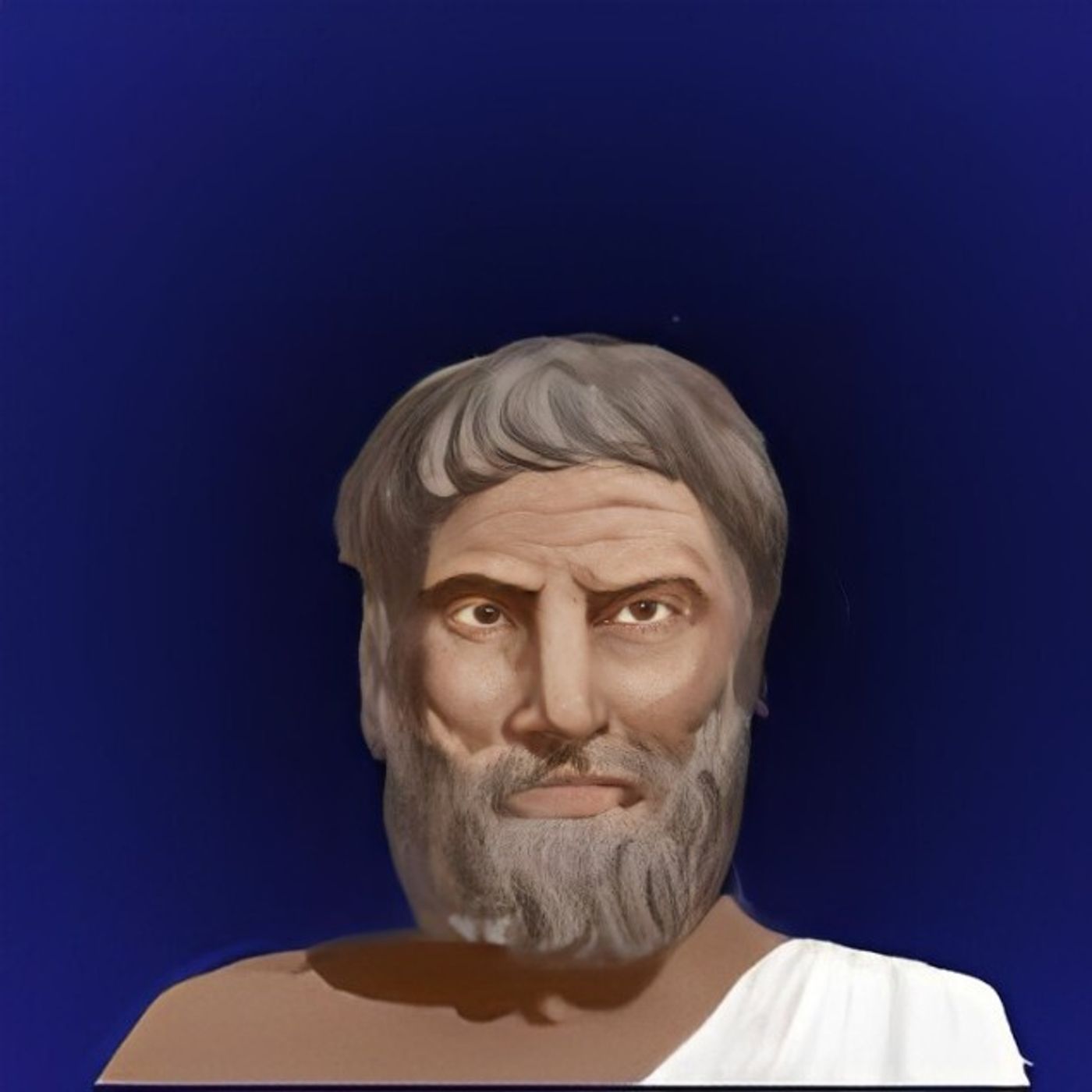
Philosophies for Life
by Philosophies for Life
Is this your podcast?Insights from recent episode analysis
Audience Interest
Podcast Focus
Publishing Consistency
Platform Reach
Insights are generated by CastFox AI using publicly available data, episode content, and proprietary models.
Most discussed topics
Brands & references
Total monthly reach
Estimated from 26 chart positions in 26 markets.
By chart position
- 🇨🇦CA · Philosophy#1935K to 30K
- 🇮🇹IT · Philosophy#8010K to 30K
- 🇯🇵JP · Philosophy#1081K to 10K
- 🇮🇳IN · Philosophy#1161K to 10K
- 🇸🇪SE · Philosophy#1251K to 10K
- Per-Episode Audience
Est. listeners per new episode within ~30 days
74K to 246K🎙 Daily cadence·168 episodes·Last published yesterday - Monthly Reach
Unique listeners across all episodes (30 days)
246K to 821K🇳🇬37%🇵🇭12%🇸🇦12%+23 more - Active Followers
Loyal subscribers who consistently listen
74K to 246K
Market Insights
Platform Distribution
Reach across major podcast platforms, updated hourly
Total Followers
—
Total Plays
—
Total Reviews
—
* Data sourced directly from platform APIs and aggregated hourly across all major podcast directories.
On the show
From 24 epsHost
Recent guests
No guests detected in recent episodes.
Recent episodes
188: Baruch Spinoza - Stop Comparing Yourself To People Who Have More (Rationalism)
Sep 2, 2026
19m 13s
187: How To Live A Rich Life At Home (Works On Any Income) - Henry David Thoreau (Transcendentalism)
Aug 26, 2026
20m 25s
186: 7 Ways To Be In Flow And Enjoy Your Life - Rumi (Sufism)
Aug 19, 2026
20m 19s
185: Montaigne - Simplify Your Life (Works On Any Income)
Aug 12, 2026
21m 15s
184: 6 Ways To Stop Worrying About Anything (Works On Any Income) - Plato (Platonic Idealism)
Aug 5, 2026
19m 09s
Social Links & Contact
Official channels & resources
Official Website
Login
RSS Feed
Login
| Date | Episode | Topics | Guests | Brands | Places | Keywords | Sponsor | Length | |
|---|---|---|---|---|---|---|---|---|---|
| 9/2/26 | 188: Baruch Spinoza - Stop Comparing Yourself To People Who Have More (Rationalism) | In this podcast we will be talking about 6 Ways To Stop Comparing Yourself To People Who Have More from the philosophy of Baruch Spinoza . Baruch Spinoza was a 17th-century Dutch philosopher who approached human emotions as if they were a mathematical problem. This philosophical approach is known as rationalism.So here are 6 Ways To Stop Comparing Yourself To People Who Have More from the philosophy of Baruch Spinoza - 01. There Are No Alternate What Ifs02. Ignore the Scoreboard03. Understanding the "One Substance"04. Find Your Conatus05. Focus on active emotions06. Redefining True WealthWe hope you enjoyed listening to this podcast and hope this podcast, from the philosophy of Baruch Spinoza, helps you stop comparing yourself to others who have more.. Baruch Spinoza was a 17th-century Dutch philosopher who approached human emotions as if they were a mathematical problem. He didn’t believe our feelings were random or mysterious. Instead, he argued that they followed the same natural laws as everything else in the universe. He wrote his most famous work, Ethics, in the style of a geometry textbook in which he analyzed emotions like anger, fear, and love with logical definitions, propositions, and proofs. Because of this, Spinoza didn’t see happiness as a matter of luck, a fleeting emotion, or a reward from the universe. No. To him, happiness is the experience of increasing mental clarity. It’s the freedom that comes from no longer being confused by life, understanding how reality works, and gaining control over your own mind. This way of thinking is called Rationalism. It is the idea that reason and logic are the best tools for understanding the world. Instead of reacting to events or hoping things will get better, a Rationalist tries to understand why things happen. Spinoza believed that the more clearly we think about our experiences, the better we can understand our problems, learn from them, and avoid unnecessary suffering. | 19m 13s | ||||||
| 8/26/26 | 187: How To Live A Rich Life At Home (Works On Any Income) - Henry David Thoreau (Transcendentalism) | In this podcast we will be talking about 8 Ways To Live A Rich Life At Home from the philosophy ofHenry David Thoreau . Henry David Thoreau was a 19th-century American philosopher who was a key figure in the Transcendentalist movement.So here are 8 Ways To Live A Rich Life At Home from the philosophy of Henry David Thoreau- 01. Calculate the Real Cost of Your Purchases02. Practice Voluntary Simplicity03. Bring the "Wild" Indoors04. Rely on Yourself05. Find joy in the ordinary06. Stop Trying to Keep Up07. Enjoy Solitude08. Invest in Intellectual PursuitsWe hope you enjoyed listening to this podcast and hope this video, from the philosophy of Henry David Thoreau, helps you in living a rich life at home.Henry David Thoreau was a 19th-century American philosopher who lived when the Industrial Revolution was in full swing, and the fast-paced modern economy as we know it was getting started. As he watched society speed up, Thoreau noticed that people were getting good at making a living, but they were forgetting how to actually live. He wrote that most people lead "lives of quiet desperation." They were stuck in a loop of working and buying, mistakenly thinking that getting more stuff would eventually cure their inner emptiness. Thoreau was a key figure in the Transcendentalist movement, which taught that people are at their best when they trust their own intuition, connect with nature, and rely on themselves rather than conforming to society's expectations. To Thoreau, true wealth was about letting go of unnecessary distractions, finding inner peace, and living by your own values instead of trying to impress other people. To find out what people really need to be happy, Thoreau stepped away from society and moved to a small cabin by Walden Pond. He wanted to live with only the basics and see what was left when he cut out the noise and distractions of everyday life. While he was there, he spent his days observing nature and reflecting on his own thoughts. He wrote about human nature, the dangers of following the crowd, and the peace that comes from living a simple life. These writings later became his famous book, Walden. | 20m 25s | ||||||
| 8/19/26 | 186: 7 Ways To Be In Flow And Enjoy Your Life - Rumi (Sufism) | In this podcast we will be talking about 7 Ways To Enjoy the Flow of Your Life from the philosophy of Rumi. Rumi lived from 1207 to 1273 and he was not only an amazing poet, but also a theologian, a philosopher, an Islamic scholar, and one of the most prominent figures in Sufism. So here are 7 Ways To Enjoy the Flow of Your Life from the philosophy of Rumi- 01. Let Go of the False Ego02. Trust the Divine03. Chase the Essence, Not the Form04. Become the "Child of the Moment"05. Welcome every Guest 06. Act With Devotion07. Get Into the Flow StateWe hope you enjoyed listening to this podcast and hope this podcast, from the philosophy of Rumi, helps you to enjoy the flow of your life.Sufism began some 9 centuries ago and is focused on reaching the divine - the power that created the skies, the earth, us and life as a whole, through love. It means that in Sufism, we human beings are lovers, the divine is beloved and to love the divine, we need to connect back to the essence of life and understand that we and the world are one. Sufism has given the world some of its brightest minds and poets and one of those people is known as Maulana, Jalāl al-Dīn Muḥammad Rūmī, arguably the best Sufi poet in history. Rumi, a Persian scholar at first, then a Mystic, has written many illustrious poems depicting love and its central role as the bridge to reach the divine; poems that are engraved in the literature books for eternity. His brilliance caught the eyes of people since his childhood. His father, a famous scholar back then, had personally taken the responsibility of teaching him. He deepened his knowledge at a very young age and after the death of his father, he was destined to succeed him as a scholar. But Rumi wanted to learn more, so he connected with another brilliant teacher named Al Tarmithi and a few years later, his teacher left him because he considered that he had nothing left to teach his student, Rumi was now a complete scholar. Rumi was adored by his followers and when he held assemblies, he had a large crowd as attendees. However, life and the divine had other plans for him. In 1244, Rumi encountered Shams Tabrizi, a traveling Sufi dervish who changed his core understanding of life. Rumi became so fond of Shams that he neglected his students and his family and spent days and nights with him, all to grasp the essence of pure love and how to express it to reach the divine. Rumi turned from a Scholar to a Sufi poet who sang for love, danced in circles, which is now called Sufi whirling or the whirling dervish, and wrote poems that are still relevant today continuing to have a deep influence. | 20m 19s | ||||||
| 8/12/26 | 185: Montaigne - Simplify Your Life (Works On Any Income) | In this video we will be talking about 8 Ways To Simplify Your Life from the philosophy of Michel de Montaigne. Michel de Montaigne was a 16th-century French philosopher.So here are 8 Ways To Simplify Your Life from the philosophy of Michel de Montaigne- 01. Reject Artificial Desires02. Stop worrying about Public Opinion03. Shrink Your Inner Circle04. Be Authentic05. Establish Your "Arrière-Boutique" 06. Stop Having an Opinion on Everything07. Communicate Plainly and Honestly08. Accept the Natural Rhythm of RealityWe hope you enjoyed watching the video and hope this video, from the philosophy of Montaigne, helps you to simplify your life.Michel de Montaigne was a 16th-century French philosopher who defined ambition not as a virtue but as an unnatural "disease of the soul" because it makes people sacrifice the life they have right now for a future that might never even happen. In 1571, right on his 38th birthday, he walked into his office and permanently resigned from his position as a judge in the Bordeaux parliament. It was exactly the kind of role Renaissance men spent their whole lives networking, scheming, and stressing out to get. He quit, moved back to his family's estate in the French countryside, and set himself up in a stone tower on the property. He built a massive library there and had 54 quotes from ancient philosophers carved into the wooden beams of his ceiling. From that point on, he spent his time studying the only subject he actually wanted to understand: himself. He observed his own habits, flaws, and everyday routines, and wrote down his thoughts about them and he called these writings Essais—which comes from the French word meaning "to try" or "to attempt" and is of course where we get the English word ‘essay’. | 21m 15s | ||||||
| 8/5/26 | 184: 6 Ways To Stop Worrying About Anything (Works On Any Income) - Plato (Platonic Idealism) | In this podacst we will be talking about 6 Ways To Stop Worrying About Anything from the philosophy of Plato . Plato was an ancient Greek philosopher who, along with his teacher Socrates and his student Aristotle, built the foundation for almost all Western philosophy. So here are 6 Ways To Stop Worrying About Anything from the philosophy of Plato - 01. Act as the Charioteer of Your Soul02. Apply the "Dice" Method 03. Step out of your cave04. Look at a bigger picture05. Value Your Character06. Practice "Philosophical Preparation"We hope you enjoyed listening to this podcast and hope this video, from the philosophy of Plato, helps you to stop worrying. Plato is one of the most famous philosophers of all time. He represented the philosophy of ancient Greece, belonging to its Classical Period. He was born into an aristocratic and influential family in Athens, where he founded the Academy, the first institution of higher learning in the entire Western world. Along with his mentor Socrates, and his student Aristotle, Plato is one of the most influential individuals in the entire history of humankind. It can even be said that he is one of the pillars of Western civilisation. His philosophy is often referenced as Platonic idealism and his biggest contribution is the Theory of Forms or Doctrine of Ideas, which asserts that the physical world is not the real world. Instead, ultimate reality exists beyond our physical world, in the world of ideas. Plato was not only a prominent figure of philosophy, but also of religion and spirituality; so-called Neo-platonism deeply influenced Christian theology. Plato invented the written dialogue and dialectic form of philosophy. Some of his most famous books are The Republic, The Symposium, The Apology of Socrates, Allegory of the Cave and The Dialogues of Plato, in which the main character is Socrates, who influenced Plato’s philosophy to a great extent. His entire work has survived for more than 2,400 years and has remained very popular the entire time. Like his mentor, Plato was a practical philosopher and there are many life lessons to learn from his philosophy. | 19m 09s | ||||||
| 7/28/26 | 183: Baruch Spinoza - How To Be Happy (Even If You Have Nothing)(Rationalism) | In this podcast we will be talking about 6 Ways To Be Happy from the philosophy of Baruch Spinoza . Baruch Spinoza was a 17th-century Dutch philosopher who approached human emotions as if they were a mathematical problem. This philosophical approach is known as rationalism.So here are 6 Ways To Be Happy from the philosophy of Baruch Spinoza - 01. Equate 'God' with Nature02. Acknowledge Your Core Drive03. Shift from 'Inadequate' to 'Adequate' Ideas04. Cultivate Active Joy05. View Life 'Under the Aspect of Eternity'06. Achieve the Intellectual Love of NatureWe hope you listening to this podcast, and hope this video, from the philosophy of Baruch Spinoza, helps you find happiness. Baruch Spinoza was a 17th-century Dutch philosopher who approached human emotions as if they were a mathematical problem. He didn’t believe our feelings were random or mysterious. Instead, he argued that they followed the same natural laws as everything else in the universe. He wrote his most famous work, Ethics, in the style of a geometry textbook in which he analyzed emotions like anger, fear, and love with logical definitions, propositions, and proofs. Because of this, Spinoza didn’t see happiness as a matter of luck, a fleeting emotion, or a reward from the universe. No. To him, happiness is the experience of increasing mental clarity. It’s the freedom that comes from no longer being confused by life, understanding how reality works, and gaining control over your own mind. This way of thinking is called Rationalism. It is the idea that reason and logic are the best tools for understanding the world. Instead of reacting to events or hoping things will get better, a Rationalist tries to understand why things happen. Spinoza believed that the more clearly we think about our experiences, the better we can understand our problems, learn from them, and avoid unnecessary suffering. | 19m 40s | ||||||
| 7/22/26 | 182: Sartre - Be Authentic (And Stop Caring What Others Think) (Existentialism) | In this podcast we will be talking about 6 Ways To Live Authentically from the philosophy of Jean-Paul Sartre. Jean-Paul Sartre. Jean-Paul Sartre was a 20th-century French philosopher who defined authenticity as the terrifying realization that you are completely free and responsible for your own choices. So here are 6 Ways To Live Authentically from the philosophy of Jean-Paul Sartre - 01. Existence Precedes Essence02. Stop Playing a Character03. Accept Your Reality 04. Stop Trying to Control How People See You05. Embrace the Vertigo of Total Freedom06. ActWe hope you enjoyed listening to this podcast and hope this podcast, from the philosophy of Jean-Paul Sartre, helps you live authentically. Jean-Paul Sartre was a French playwright, screenwriter, political activist, literary critic, and one of the leading philosophers who followed the philosophy of Existentialism: the philosophy that says that humans are born a blank slate and are free to determine their own identity, behavior and goals. Sartre was born in Paris at the beginning of the twentieth century and when he was around sixty years old, he was awarded the1964 Nobel Prize in Literature. He however refused the prize, claiming that “a writer should never allow himself to become an institution.” Sartre wrote many fictional and non-fictional books, essays and gave lectures on Existentialism. Some of his noted works are: Nausea, Being and Nothingness, Existentialism is a Humanism, and No Exit. | 18m 49s | ||||||
| 7/15/26 | Stoicismphilosophy+5 | — | StoicismZeno of Citium+1 | — | Marcus AureliusStoicism+5 | — | 19m 02s | ||
| 7/8/26 | existentialismstatus+3 | — | — | — | Dostoevskyexistentialism+3 | — | 19m 37s | ||
| 7/1/26 | skill masteryMiyamoto Musashi+3 | — | — | — | Miyamoto Musashiskill mastery+5 | — | 20m 32s | ||
| 6/24/26 | philosophyself-improvement+3 | — | Arrière-Boutique | BordeauxFrench countryside | Michel de Montaignerat race+7 | — | 19m 25s | ||
| 6/17/26 | absurdismphilosophy+4 | — | The StrangerThe Plague+3 | — | Albert Camusabsurdism+7 | — | 18m 15s | ||
| 6/10/26 | Nietzscheexistentialism+3 | — | — | — | Nietzscheexistentialism+3 | — | 21m 19s | ||
| 6/3/26 | Taoismphilosophy+4 | — | Philosophies for Life | — | ZhuangziTaoism+5 | — | 18m 36s | ||
| 5/27/26 | Stoicismmoney management+3 | — | Philosophies for LifeDe Ira | — | SenecaStoicism+5 | — | 19m 10s | ||
| 5/20/26 | Cynicismphilosophy+3 | — | Cynicism | — | DiogenesCynicism+3 | — | 19m 28s | ||
| 5/13/26 | fearswealth+3 | — | Think and Grow Rich | — | Napoleon Hillfears+5 | — | 19m 02s | ||
| 5/9/26 | Stoicismmoney management+4 | — | Philosophies for Life | — | EpictetusStoicism+5 | — | 17m 58s | ||
| 5/6/26 | EpicureanismHedonism+3 | — | Epicureanism | — | EpicurusEpicureanism+7 | — | 17m 14s | ||
| 5/2/26 | absurdismphilosophy+4 | — | The StrangerThe Plague+3 | — | Albert Camusabsurdism+8 | — | 22m 25s | ||
| 4/29/26 | absurdismmeaning of life+4 | — | The StrangerThe Plague+3 | — | meaning in lifeabsurdism+7 | — | 21m 25s | ||
| 4/25/26 | absurdismfreedom+4 | — | — | — | Albert Camusabsurdism+5 | — | 24m 46s | ||
| 4/22/26 | absurdismliving in the present+4 | — | The StrangerThe Plague+3 | — | absurdismAlbert Camus+8 | — | 23m 42s | ||
| 4/18/26 | moneypsychology+3 | — | — | — | toxic relationship with moneyCarl Jung+5 | — | 20m 22s | ||
| 4/15/26 | absurdismlife lessons+3 | — | The StrangerThe Plague+3 | — | Albert Camusabsurdism+5 | — | 20m 56s | ||
Showing 25 of 191
Pitch Fit is a Pro feature
See how bookable this show is for guests, which brands already advertise, the per-episode ad value, and the best-fit guest and sponsor profile. The numbers are blurred on the free plan.
How readily this show books outside guests like you.
How proven this show is for host-read sponsorships.
For Guests
ProFor Advertisers
ProUpgrade to Pro to unlock guest cadence, sponsor categories, fit scores, and per-episode ad value for this show.
Chart history for Philosophies for Life
Peaked at #2 in NG, top 10 in 1 of 29 tracked markets, currently #2 in NG.
| Market | Genre | Peak | Current | Trend |
|---|---|---|---|---|
| NG | — | #2 | #2 | — |
| PH | — | #15 | #15 | — |
| SA | — | #19 | #19 | — |
| NG | — | #21 | #21 | — |
| VN | — | #23 | #23 | — |
| South Africa | — | #27 | #27 | — |
| Ireland | — | #34 | #34 | — |
| MY | — | #36 | #36 | — |
| HK | — | #42 | #42 | — |
| KE | — | #61 | #61 | — |
| AT | — | #74 | #74 | — |
| Italy | — | #80 | #80 | — |
| SG | — | #94 | #94 | — |
| TR | — | #98 | #98 | — |
| Japan | — | #108 | #108 | — |
| CO | — | #108 | #108 | — |
| India | — | #116 | #116 | — |
| Sweden | — | #125 | #125 | — |
| AE | — | #125 | #125 | — |
| Finland | — | #137 | #137 | — |
Chart Positions
29 placements across 26 markets.
Chart Positions
29 placements across 26 markets.