
Insights from recent episode analysis
Audience Interest
Podcast Focus
Publishing Consistency
Platform Reach
Insights are generated by CastFox AI using publicly available data, episode content, and proprietary models.
Total monthly reach
Estimated from 5 chart positions in 5 markets.
By chart position
- 🇰🇷KR · Marketing#1791K to 10K
- 🇦🇪AE · Marketing#513K to 10K
- 🇳🇿NZ · Marketing#693K to 10K
- 🇮🇩ID · Marketing#148500 to 3K
- 🇷🇴RO · Marketing#168500 to 3K
- Per-Episode Audience
Est. listeners per new episode within ~30 days
4K to 18K🎙 ~2x weekly·152 episodes·Last published 1mo ago - Monthly Reach
Unique listeners across all episodes (30 days)
8K to 36K🇰🇷28%🇦🇪28%🇳🇿28%+2 more - Active Followers
Loyal subscribers who consistently listen
3.2K to 14K
Market Insights
Platform Distribution
Reach across major podcast platforms, updated hourly
Total Followers
—
Total Plays
—
Total Reviews
—
* Data sourced directly from platform APIs and aggregated hourly across all major podcast directories.
On the show
Recent episodes
See You After Easter!
Mar 27, 2026
Unknown duration
Yapping as a Service: How Founders Turn Opinions Into Pipeline | Sonia Baschez, Fraction CMO at Yapping as a Service
Mar 26, 2026
Unknown duration
The "Trojan Horse" Podcast Tactic: Genius Move or Ethical Fail?| Jason Bradwell, Founder of B2B Better and Host of Pipe Dream Podcast
Mar 25, 2026
Unknown duration
Why B2B Podcasts Stall on Spotify (and What TikTok Does Better) | Jason Bradwell, Founder of B2B Better and Host of Pipe Dream Podcast
Mar 24, 2026
Unknown duration
How to Turn a Tiny Podcast Audience Into Your Biggest Sales Asset | Jason Bradwell, Founder of B2B Better and Host of Pipe Dream Podcast
Mar 23, 2026
Unknown duration
Social Links & Contact
Official channels & resources
Official Website
Login
RSS Feed
Login
| Date | Episode | Description | Length | ||||||
|---|---|---|---|---|---|---|---|---|---|
| 3/27/26 |  See You After Easter! | We help B2B brands launch shows that turn their point of view into pipeline. If you're launching a podcast (or have one already) and are not sure how it can hit your bottom line, book a meeting with Jason: https://meetings-eu1.hubspot.com/jason-bradwell/youtube-meeting-link We’re almost half way! The challenge is real, the pace is relentless, and the second half is going to be even bigger. At the start of this year, the team at B2B Better set themselves one of the most ambitious owned media challenges in B2B podcasting: publish 100 episodes of Pipe Dream in 100 working days. Being almost at the halfway point, Jason takes a moment to reflect on what that commitment has meant in practice — the production effort, the editorial coordination, and the incredible roster of guests who have given their time to share what it truly takes to build an audience-led marketing strategy. This is a short but significant milestone episode. If you have been following along since Episode 1, this is the moment to catch your breath alongside the team. If you are just discovering Pipe Dream, there is no better time to dive into the back catalogue and get up to speed before the next 50 land. Key Takeaways ◼️ How to commit to a high-cadence content strategy — B2B Better set a target of 100 podcast episodes in 100 working days and have maintained that pace, proving that ambitious owned media goals are achievable with the right team. ◼️ Why consistency is the foundation of audience-led marketing — Publishing at this volume is not just a numbers game; it builds trust, authority, and a compounding content asset that drives long-term pipeline. ◼️ How to plan a content series that delivers value across every episode — Bringing in a diverse range of expert guests ensures each episode contributes genuine insight for B2B marketers investing in owned media. ◼️ Why strategic pauses can improve long-term content quality — Taking a short hiatus to prepare the second half of the series reflects a commitment to quality alongside quantity. ◼️ How milestone moments can strengthen your audience relationship Chapter Markers 00:00 Intro 00:10 The 100 Episodes in 100 Days Challenge Explained 00:45 Hitting the Halfway Mark (almost) 01:05 Thank You to Guests and the Production Team 01:25 What to Expect in the Second Half of the Series 01:45 Announcing the Five-Day Hiatus Relevant Links and Resources Connect with Jason Bradwell on LinkedIn: https://www.linkedin.com/in/jasonbradwell/Learn more about B2B Better: https://www.b2b-better.comListen to Pipe Dream on Podbean: https://www.podbean.com/podcast-detail/bac4p-2a0121/Pipe-Dream-Podcast What's Next We are back on Monday with the second half of the 100-episode run — do not miss it. Subscribe now so you do not lose your place in one of B2B's most ambitious owned media experiments. | — | ||||||
| 3/26/26 | 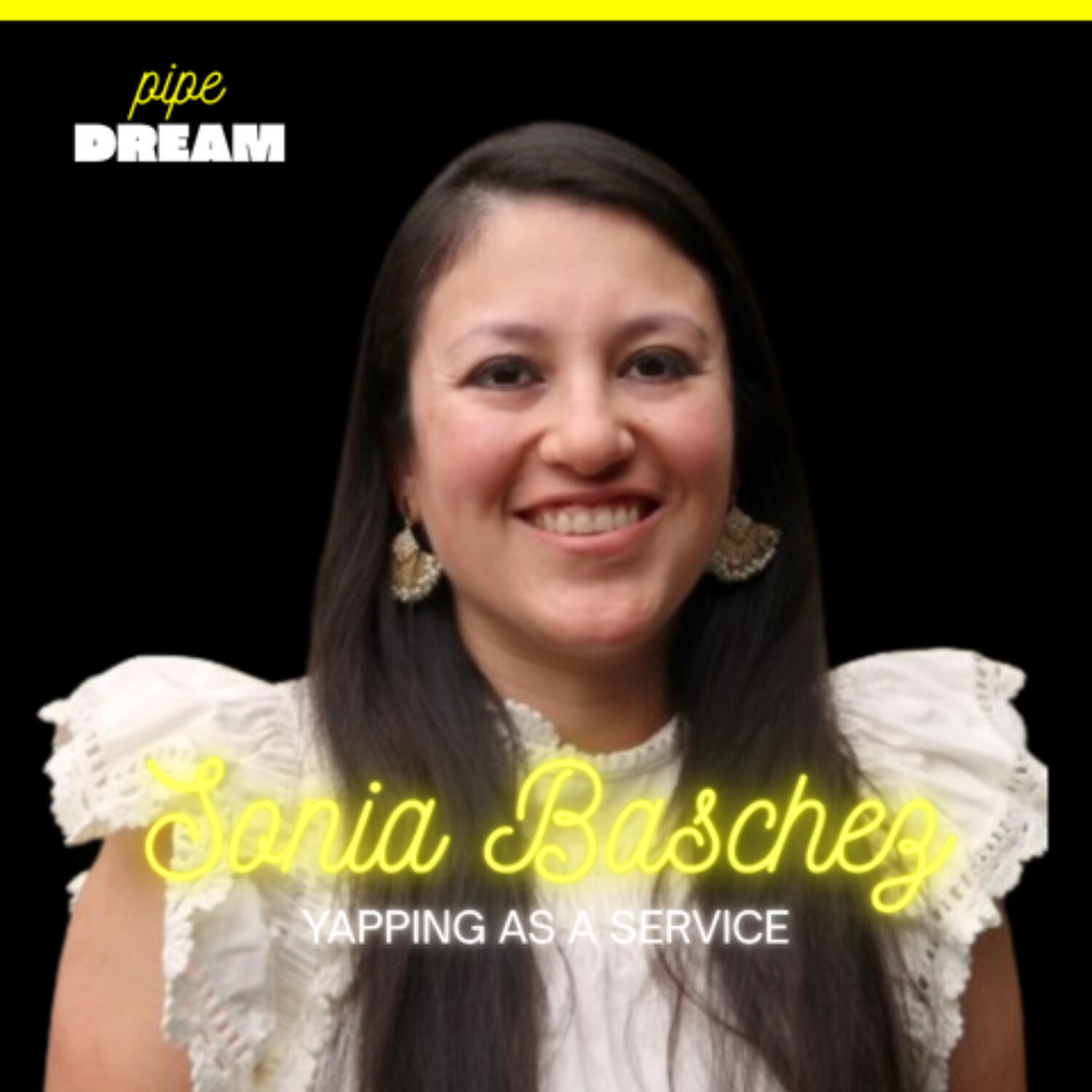 Yapping as a Service: How Founders Turn Opinions Into Pipeline | Sonia Baschez, Fraction CMO at Yapping as a Service | We help B2B brands launch shows that turn their point of view into pipeline. If you're launching a podcast (or have one already) and are not sure how it can hit your bottom line, book a meeting with Jason: https://meetings-eu1.hubspot.com/jason-bradwell/youtube-meeting-link Most B2B brands are pouring budget into events, SEO, and paid ads whilst their single most powerful marketing asset sits completely untapped: the founder's voice. In this episode of Pipe Dream, Jason sits down with Sonia Baschez, founder of Yapping as a Service (YaaS), a consultancy that helps early-stage B2B founders build thought leadership programmes that generate real pipeline. Sonia has worked with founders across industries including legal tech, manufacturing software, and online safety to help them translate deep domain expertise into content that builds trust, attracts press coverage, and shortens sales cycles. The conversation covers why founder-led communications have become a commercial necessity in the age of AI, how Sonia structures her engagements to extract authentic insight in as little as 20 minutes per fortnight, and how to measure whether any of it is actually working. Key Takeaways ◼️ How to position your founder as the most cost-effective marketing channel in your stack, requiring as little as 15 to 20 minutes per fortnight ◼️ Why domain-expert founders (lawyers building legal AI, manufacturers building manufacturing software) have a structural trust advantage they should be exploiting publicly ◼️ How to structure a biweekly thought leadership programme that pairs industry commentary with product updates for both acquisition and retention ◼️ Why authentic, even imperfect content consistently outperforms polished AI-generated posts, particularly with Gen Z audiences ◼️ How to use social media as a low-cost messaging testing ground before committing to longer-form content formats ◼️ Why posting from a founder account will almost always outperform the same content posted from a company account, and what to do about it Chapter Markers 00:00 Intro 02:10 What "Yapping as a Service" actually means 05:00 Why domain-expert founders have a built-in trust advantage 06:30 Why thought leadership beats every other B2B marketing channel 09:00 Translating jargon into content regular people actually care about 11:30 Why being "cringe" and authentic works better than polished AI content 14:00 Inside a typical YaaS client engagement 17:00 How thought leadership opens doors to podcasts, press, and media 18:00 Measuring ROI: what success actually looks like 21:00 Founder accounts vs company accounts: which one to prioritise 23:00 Getting employees involved organically 26:00 Cross-departmental content: sales meets design 27:00 Where to find Sonia and The Meme Team podcast Relevant Links Sonia Baschez on LinkedIn, Twitter/X, and Instagram: @SoniaBaschez (handle: B-A-S-C-H-E-Z across platforms) Sonia's podcast on viral marketing and pop culture: The Meme Team (link in comments) Bens Growth: search "Bens Growth" across social platforms Yapping as a Service: reach Sonia via her social profiles above What's Next If this episode got you thinking about how your founder's voice could be doing more commercial work, take 15 minutes this week and map out two or three industry topics only your team is genuinely qualified to speak on. That is your content strategy. Useful Links Connect with Jason Bradwell on LinkedIn: https://www.linkedin.com/in/jasonbradwell/ Listen to Pipe Dream on Podbean: https://www.podbean.com/podcast-detail/bac4p-2a0121/Pipe-Dream-Podcast Learn more about B2B Better: https://www.b2b-better.com | — | ||||||
| 3/25/26 |  The "Trojan Horse" Podcast Tactic: Genius Move or Ethical Fail?| Jason Bradwell, Founder of B2B Better and Host of Pipe Dream Podcast | We help B2B brands launch shows that turn their point of view into pipeline. If you're launching a podcast (or have one already) and are not sure how it can hit your bottom line, book a meeting with Jason: https://meetings-eu1.hubspot.com/jason-bradwell/youtube-meeting-link What if the fastest route to your next client is already sitting in your podcast guest queue? In this episode, Jason Bradwell reveals why most B2B brands are leaving serious pipeline on the table by mishandling one of the most powerful relationship-building tactics in owned media. In this solo episode of Pipe Dream, Jason breaks down the concept of "Trojan Horsing", the practice of inviting prospective customers onto your podcast as a means of building commercial relationships. With 95% of B2B brands considering this approach, Jason sets the record straight on where the strategy works, where it fails, and how to execute it with integrity. The episode opens with a direct challenge to the ethics of bringing guests in under the pretence of content creation only to pivot into a sales pitch. Jason argues that this approach is not only ineffective, it actively destroys trust and sabotages any chance of a future commercial relationship. Instead, he outlines a value-first framework that respects the guest's time and expertise, delivers on the promise of co-creating genuinely useful content, and builds a relationship roadmap that makes the eventual sales conversation feel natural rather than forced. Jason also shares a series of practical follow-up touchpoints that B2B marketers can use to maintain momentum after an episode goes live, from sharing download metrics to extending invitations to exclusive events, all designed to nurture the relationship across a 3 to 12-month window before any sales message is introduced. Key Takeaways ◼️ How to use your podcast as a legitimate relationship-building tool with prospective clients without compromising on ethics or content quality ◼️ Why pitch-slapping guests the moment they sit down will destroy any chance of a commercial outcome, and what to do instead ◼️ How to deliver on the promise of co-creating valuable content that genuinely benefits both your audience and your guest ◼️ Why the follow-up is where most B2B brands leave pipeline on the table and the simple changes that fix it ◼️ How to build a 3-to-12-month milestone roadmap that nurtures guest relationships towards a natural sales conversation ◼️ Why leading with value over time makes your eventual sales ask feel genuine rather than transactional Chapter Markers 00:00 Intro 00:01 What Is Trojan Horsing and Why 95% of Brands Use It 00:02 The Ethics Question: Is It Okay to Pitch Your Podcast Guests? 00:03 The Value-First Framework for Interviewing Prospective Clients 00:04 How to Introduce Your Business Without Crossing Into Pitch Territory 00:05 Building Milestone Moments: Your Post-Episode Follow-Up Roadmap 00:06 When and How to Drop the Sales Message 00:07 Recap and Key Principles of Ethical Trojan Horsing Relevant Links and Resources Connect with Jason Bradwell on LinkedIn: https://www.linkedin.com/in/jasonbradwell/Email Jason directly: jason@b2bbetter.comB2B Better website: https://www.b2b-better.com What's Next If you are using your podcast to build relationships with prospective clients and want to make sure you are doing it in a way that actually drives pipeline, connect with Jason on LinkedIn or drop him a message at jason@b2bbetter.com -- he would love to hear from you. Useful Links Connect with Jason Bradwell on LinkedIn: https://www.linkedin.com/in/jasonbradwell/Listen to Pipe Dream on Podbean: https://www.podbean.com/podcast-detai...Learn more about B2B Better: https://www.b2b-better.com | — | ||||||
| 3/24/26 |  Why B2B Podcasts Stall on Spotify (and What TikTok Does Better) | Jason Bradwell, Founder of B2B Better and Host of Pipe Dream Podcast | We help B2B brands launch shows that turn their point of view into pipeline. If you're launching a podcast (or have one already) and are not sure how it can hit your bottom line, book a meeting with Jason: https://meetings-eu1.hubspot.com/jason-bradwell/youtube-meeting-link Short-form video isn't just changing how audiences consume content; it's quietly deciding which B2B podcasts grow and which ones flatline. If you're still treating your podcast as an audio-only asset, you're working ten times harder for a fraction of the results. In this solo episode, Jason Bradwell tackles a listener question at the heart of modern B2B content strategy: do B2B podcasts need to be built with short-form platforms like YouTube Shorts, TikTok, and Instagram Reels in mind? The short answer is yes. But the how matters enormously. Jason unpacks how the definition of "podcast" has shifted. Where it once meant long-form, audio-only, top-of-funnel content, today's podcast is better understood as editorialised, serialised, rich-media thought leadership: video-first, repurposed across formats, and no longer expected to be consumed in its entirety. For B2B brands, TikTok and YouTube Shorts offer organic discovery that Apple and Spotify simply cannot match. Jason draws a compelling parallel: these platforms are the Facebook of 10 to 15 years ago, where brands with no following could still generate tens of thousands of views from a single clip. But the real insight centres on clip creation. Relying on AI to cherry-pick moments from an unstructured conversation is not a strategy. Short-form content must be planned in the scripting phase; producers need to identify soundbites in advance, engineer questions to elicit them, and if necessary, pause the interview to have guests deliver a tighter, more usable take. The brands winning at owned media in B2B are not leaving great content to chance. They are engineering it from the start. Key Takeaways ◼️ How to identify the short-form clips you need before you ever hit record ◼️ Why TikTok and YouTube Shorts offer the organic discovery that Apple and Spotify simply cannot match ◼️ How to script interview questions that are engineered to produce compelling, usable soundbites ◼️ Why relying on AI to generate clips from unstructured recordings is a fundamentally flawed approach ◼️ How to brief guests and hosts to deliver the concise, punchy answers short-form platforms demand ◼️ Why the shifting definition of "podcast" should change everything about how you plan your B2B show Chapter Markers 00:00 Intro 01:00 The Listener Question on Short-Form Media and B2B Podcasts 02:00 How the Definition of "Podcast" Has Fundamentally Changed 03:00 Why TikTok and YouTube Shorts Outperform Spotify for Discovery 04:30 The Organic Reach Advantage Most B2B Brands Are Missing 05:00 Why AI Clip Selection Alone Is Not a Strategy 05:30 How to Script Short-Form Clips Before You Record 06:30 Briefing Guests and Re-Recording for Cleaner Soundbites 07:00 Summary and Listener Call to Action Relevant Links and Resources Connect with Jason Bradwell on LinkedIn: https://www.linkedin.com/in/jasonbradwell/Email Jason directly: jason@b2b-better.comB2B Better website: https://www.b2b-better.com What's Next If this episode sparked ideas about how to build a B2B podcast that actually drives pipeline, take the next step and book a strategy call with Jason. Don't let another quarter pass producing content that doesn't move the needle. Useful Links Connect with Jason Bradwell on LinkedIn:https://www.linkedin.com/in/jasonbradwell/ Listen to Pipe Dream on Podbean: https://www.podbean.com/podcast-detai... Learn more about B2B Better: https://www.b2b-better.com | — | ||||||
| 3/23/26 |  How to Turn a Tiny Podcast Audience Into Your Biggest Sales Asset | Jason Bradwell, Founder of B2B Better and Host of Pipe Dream Podcast | How to Turn a Tiny Podcast Audience Into Your Biggest Sales Asset | Jason Bradwell, Founder of B2B Better and Host of Pipe Dream Podcast We help B2B brands launch shows that turn their point of view into pipeline. If you're launching a podcast (or have one already) and are not sure how it can hit your bottom line, book a meeting with Jason: https://meetings-eu1.hubspot.com/jason-bradwell/youtube-meeting-link What if a hundred highly targeted listeners outperforms a million passive ones? In this episode, Jason makes the case that the most specialised B2B brands are not too niche for podcasting — they are the ones who need it most. In episode 43 of Pipe Dream, Jason Bradwell goes solo to tackle a question submitted directly by the audience: is podcasting the right channel for every B2B brand, including those selling highly specialised products like ball bearings? It is a question that gets to the heart of owned media strategy, and the answer will likely challenge a few assumptions. Drawing on real examples from B2B Better's own portfolio — including Data and Biotech, a show focused on the intersection of data science and biotechnology — Jason reframes how B2B marketers should think about podcast audiences. Rather than measuring success by raw download numbers, he argues that the right metric is resonance: reaching the precise buyers who are most likely to make a purchasing decision. Jason introduces a familiar business framework, TAM, SAM and SOM (Total Addressable Market, Serviceable Addressable Market and Serviceable Obtainable Market), and applies it directly to podcast strategy. If your target market is finite and highly defined, that is not a weakness. It is a competitive advantage. You can deploy your budget and resources with far greater precision than a podcast chasing mass appeal ever could. The episode closes with a clear verdict: niche B2B companies — the ones selling specialist products and services to tightly defined markets — are actually the brands that stand to gain the most from a well-executed podcast strategy. Key Takeaways ◼️ Why niche B2B brands are actually the best candidates for podcasting — a focused subject matter means every listener is a potential buyer. ◼️ How to apply TAM, SAM and SOM thinking to your podcast launch — understand your ceiling before you set your goals. ◼️ Why optimising for resonance beats chasing download numbers — a hundred of the right listeners is worth more than a million passive ones. ◼️ How to align your podcast strategy with real commercial outcomes — shortening sales cycles, improving reply rates and influencing pipeline. ◼️ Why a highly targeted audience is a competitive advantage, not a limitation — precision in B2B owned media compounds over time. Chapter Markers 00:00 Intro 00:30 The audience Question: Is Podcasting Right for Every B2B Brand? 01:20 Why Niche Shows Outperform Broad Ones 02:00 Applying TAM, SAM and SOM to Your Podcast Strategy 03:00 Why a Small, Targeted Audience Beats Mass Downloads 03:45 Optimising for Resonance, Not Reach 04:20 Final Verdict and How to Submit Your Question Useful Links Relevant Links and Resources Connect with Jason Bradwell on LinkedIn: https://www.linkedin.com/in/jasonbradwell/ Submit your question to Jason directly: jason@b2b-better.com Data and Biotech Podcast (referenced in episode): search "Data and Biotech" on your preferred podcast platform What's Next Got a question about building an audience-led marketing strategy? Send it to Jason on LinkedIn or email jason@b2b-better.com and it could feature on a future episode of Pipe Dream. Useful Links Connect with Jason Bradwell on LinkedIn: https://www.linkedin.com/in/jasonbradwell/ Listen to Pipe Dream on Podbean: https://www.podbean.com/podcast-detai... Learn more about B2B Better: https://www.b2b-better.com | — | ||||||
| 3/19/26 |  Why Your SEO Budget Is Bleeding You Dry (Build for Audiences, Not for Clicks) | We help B2B brands launch shows that turn their point of view into pipeline. If you're launching a podcast (or have one already) and are not sure how it can hit your bottom line, book a meeting with Jason: https://meetings-eu1.hubspot.com/jason-bradwell/youtube-meeting-link Most B2B marketing budgets are chasing 5% of buyers whilst the other 95% quietly form opinions about who they'll call when they're ready to buy. This is a reaction episode unpacking a critical shift happening right now in B2B marketing: the rising cost of rented attention and why owned media is no longer a "nice to have" but a structural necessity. With the cost of paid search rising sharply and algorithm updates continuing to reshape organic visibility, the businesses that will win are those building audiences they actually own. The episode draws on a landmark study from the LinkedIn B2B Institute showing that at any given moment, 95% of your target customers are out of market. They are not looking for your solution today, but they could be tomorrow. Yet the vast majority of marketing and sales spend, from you and your competitors alike, is directed at the 5% actively in-market. Owned media, whether that is a podcast, newsletter, or community, is the only scalable strategy to remain present and build trust with the 95% between now and when they are ready to buy. The episode stems from an Ahrefs study showing the cost of paid search has risen 58%, prompting the central question: if Google disappeared tomorrow, would you still have an audience? Timestamps 00:00 Intro 01:15 Owned vs rented media: the structural difference 03:40 Why podcast subscribers are different from search traffic 05:10 The LinkedIn B2B Institute 95% study explained 07:30 Where marketing and sales budgets are actually going 09:45 The Ahrefs data: paid search costs up 58% 11:20 The honest question every B2B marketer needs to answer Key Takeaways ◼️ Why renting attention from platforms is structurally riskier than building an owned audience that persists through algorithm changes ◼️ How the 95/5 rule should reshape where you direct your marketing budget and content strategy ◼️ Why a podcast subscriber represents a fundamentally different relationship to a search visitor: they are seeking a perspective, not just an answer ◼️ How owned media compounds over time as an asset, whilst paid channels reset the moment spend stops ◼️ Why the rising cost of paid search makes the case for owned audience building more urgent than ever Relevant Links and Resources LinkedIn B2B Institute 95% study: https://www.linkedin.com/business/marketing/b2b-institute Ahrefs paid search cost data: https://ahrefs.com/blog/ai-overviews-reduce-clicks-update/ Connect with Jason Bradwell on LinkedIn: https://www.linkedin.com/in/jasonbradwell/ What's Next If this episode sparked a question about whether your current marketing mix is building something durable or just renting visibility, let us know in the comments and we will keep making more reaction episodes like this one. Useful Links Connect with Jason Bradwell on LinkedIn: https://www.linkedin.com/in/jasonbradwell/ Learn more about B2B Better: https://www.b2b-better.com | — | ||||||
| 3/18/26 |  How a Strong B2B Brand Cuts Sales Cycles and Wins More Deals | Ben Jackson, Founder & CEO of Momentum Studio | We help B2B brands launch shows that turn their point of view into pipeline. If you're launching a podcast (or have one already) and are not sure how it can hit your bottom line, book a meeting with Jason: https://meetings-eu1.hubspot.com/jason-bradwell/youtube-meeting-link Most B2B companies already have a brand. They just have not invested in it. And every day they delay, they are handing their competitors a head start in the sales conversation. In this episode, Jason sits down with Ben Jackson, Founder and CEO of Momentum Studio, for an unplanned but unmissable conversation recorded straight after a peer agency cohort session on the South Coast of England. Ben is one of the sharpest minds in B2B branding, and this episode is packed with clarity on a topic that most marketing and revenue teams struggle to connect to real commercial outcomes. Ben breaks down why brand is not a logo, not a one-off capital expense, and certainly not a vanity exercise. It is your reputation, and it is either accelerating or actively braking your sales process. He explains how the best B2B brands reduce sales friction, establish credibility before the first call, and make conversion feel inevitable rather than effortful. If your sales team is still having to explain what you do, why you are different, and why you are worth the price, your brand has not done its job yet. This episode gives you the framework to change that. Key Takeaways ◼️ Why brand is reputation, not design. How to shift from thinking about logos to thinking about every touchpoint a customer has with your business. ◼️ How to stop competing on price. Why companies that neglect brand end up in a race to the bottom and how a strong brand breaks that cycle. ◼️ Why brand is an accelerator for your sales team. How investing in brand means sales conversations shift from "what do you do?" to "which package is right for you?" ◼️ How to avoid the vanity mindset. Why building a brand around what looks good to you, rather than what matters to your customer, is one of the most common and costly mistakes in B2B. ◼️ Why brand is never done. How to treat brand as a living, iterating asset rather than a one-off capital expense. ◼️ How to take the first practical step today. Why the best starting point is customer research, not a new logo, and how to find the highest-impact move for your current stage. Chapter Markers 00:00 Intro 01:45 What B2B brand actually means (and why it is not your logo) 03:30 How to build a brand centred on your customer, not your ego 05:00 Brand vs. demand: why the best companies invest in both 07:00 The vanity mindset trap and the race to the bottom 11:00 How brand lubricates the sales process and shortens cycles 15:00 Where to start if you have never invested in brand before Relevant Links and Resources Ben Jackson Website: https://www.momentumstudio.co.ukLinkedIn: https://www.linkedin.com/in/benjaminjackson/ Resources Mentioned HockeyStack: https://www.hockeystack.comGrowth Leaders (peer agency cohort, South Coast of England): (add link if available) What's Next If this episode got you thinking about your own B2B brand, do not wait for a better moment. Start the conversation today by reaching out to a branding expert and asking one simple question: "What is the most impactful next step for my business right now?" Useful Links Connect with Jason Bradwell on LinkedIn: https://www.linkedin.com/in/jasonbradwell/ Listen to Pipe Dream on Podbean: https://www.podbean.com/podcast-detail/bac4p-2a0121/Pipe-Dream-%7C-A-B2B-Marketing-Podcast Learn more about B2B Better: https://www.b2b-better.com | — | ||||||
| 3/16/26 |  The Briefing Call Secret Top Podcasters Use Before Every Episode | Jason Bradwell, Founder of B2B Better and Host of Pipe Dream Podcast | We help B2B brands launch shows that turn their point of view into pipeline. If you're launching a podcast (or have one already) and are not sure how it can hit your bottom line, book a meeting with Jason: https://meetings-eu1.hubspot.com/jason-bradwell/youtube-meeting-link Most podcast hosts are making a costly mistake before a single word is recorded, and it's costing them great guests, great stories, and great content. In this solo episode, Jason Bradwell reveals why the pre-interview briefing call is the single most underrated tool in B2B podcast production. Drawing on hundreds of guest briefings at B2B Better, Jason walks through exactly how to structure the call, what to cover, and why skipping it is a guaranteed path to a flat, forgettable episode. Whether you're running a B2B podcast to generate pipeline, build brand authority, or support your owned media strategy, the briefing call is the foundation that makes everything else work. From establishing genuine chemistry between host and guest, to uncovering the story behind the story, to protecting yourself from wasting time on the wrong interviewee, this episode is a masterclass in podcast operations done right. Jason also covers how to put nervous guests at ease by clearly setting expectations around question reviews, editorial sign-off, and recording flexibility, which is critical when working with senior B2B decision-makers who may never have been on a podcast before. Key Takeaways ◼️ How to structure a briefing call that covers chemistry, content, and logistics in one focused conversation before any recording begins. ◼️ Why cold guest bookings fail and how skipping the pre-interview step forces you to build the plane while it's already in the air. ◼️ How to uncover the real story behind a guest's LinkedIn profile and find the differentiated angle that makes your episode stand out. ◼️ Why giving guests editorial control over questions and sign-off is the key to landing high-quality B2B guests who feel confident promoting the episode. ◼️ How to use the briefing call as a filter to identify guests who are not the right fit before you've committed to a full recording session. ◼️ Why the briefing call is central to a B2B owned media strategy that produces content sales teams can actually use to move prospects through the pipeline. Chapter Markers 00:00 Intro 01:00 Why Cold Guest Bookings Produce Flat Podcasts 02:00 The Three Goals Every Briefing Call Must Hit 03:00 How to Structure Your Briefing Call Step by Step 05:00 Reassuring Guests and Reducing Their Risk 06:00 Why Briefing Calls Turn Strangers Into Collaborators 07:00 How to Find the Story Behind the Story 07:45 Using the Briefing Call as a Quality Filter Relevant Links and Resources Riverside (recording platform referenced in episode): https://www.riverside.fm What's Next If this episode made you rethink how you're booking and briefing podcast guests, share it with someone running a B2B show who needs to hear it. More solo episodes on practical podcast operations are coming soon, including how to exit a guest gracefully when things do not work out. Useful Links Connect with Jason Bradwell on LinkedIn: https://www.linkedin.com/in/jasonbradwell/Listen to Pipe Dream on Podbean: https://www.podbean.com/podcast-detail/bac4p-2a0121/Pipe-Dream-PodcastLearn more about B2B Better: https://www.b2b-better.com | — | ||||||
| 3/13/26 |  4 Proven Podcast Segments That Drive B2B Pipeline at Every Stage | Jason Bradwell, Founder of B2B Better and Host of Pipe Dream Podcast | We help B2B brands launch shows that turn their point of view into pipeline. If you're launching a podcast (or have one already) and are not sure how it can hit your bottom line, book a meeting with Jason: https://meetings-eu1.hubspot.com/jason-bradwell/youtube-meeting-link Most B2B podcasts are quietly failing their businesses, and the owners don't even know it. If your show is only driving downloads and impressions, you're leaving pipeline, revenue, and serious commercial momentum on the table. In this solo episode of Pipe Dream, Jason Bradwell breaks down four powerful podcast segment types that the vast majority of B2B companies are completely ignoring. Whether your show runs fortnightly or monthly, these segments are designed to stretch your content further, fill your feed more consistently, and move prospects through every stage of the buyer journey, from totally unaware all the way through to product aware. Jason explains how to think like a media company, why the standard guest interview format is holding your show back, and how a few simple structural additions can transform your podcast into a genuine revenue engine. Key Takeaways ◼️ How to use a Recap Segment to share your point of view without overshadowing your guest ◼️ Why the Hidden Segment helps you publish more frequently without recording extra episodes ◼️ How to use a Trending News Segment to tag companies and individuals and dramatically increase content visibility ◼️ Why a Company Updates segment is one of the most underrated tools for bottom-of-funnel nurture ◼️ How to map your podcast content across all four stages of buyer awareness ◼️ Why thinking like a media company is no longer optional for B2B brands serious about owned media Chapter Markers 00:00 Intro 01:00 Why Most B2B Podcasts Get Stuck at Top-of-Funnel 02:00 Using Segments to Drive Mid and Bottom-of-Funnel Results 02:45 Segment 1: The Recap Segment 04:00 Segment 2: The Hidden Segment 06:00 Segment 3: The Trending News Segment 07:45 Segment 4: Company Updates What's Next If any of these segments sparked an idea for your show, don't let it sit, book a call with Jason and turn that idea into a content system that actually drives pipeline. Useful Links Connect with Jason Bradwell on LinkedIn: https://www.linkedin.com/in/jasonbradwell/Listen to Pipe Dream on Podbean: https://www.podbean.com/podcast-detail/bac4p-2a0121/Pipe-Dream-%7C-A-B2B-Marketing-PodcastLearn more about B2B Better: https://www.b2b-better.com | — | ||||||
| 3/12/26 |  We Published 34 Podcasts in 34 Days – Here's What the Numbers Say | Jason Bradwell, Founder of B2B Better and Host of Pipe Dream Podcast | We help B2B brands launch shows that turn their point of view into pipeline. If you're launching a podcast (or have one already) and are not sure how it can hit your bottom line, book a meeting with Jason: https://meetings-eu1.hubspot.com/jason-bradwell/youtube-meeting-link 56,000 YouTube views, 4,500 podcast downloads, and 2,500 subscribers built from scratch — all in 34 working days. Here is exactly how Pipe Dream got there and what still needs fixing. Around day 40 of the Pipe Dream 100-episode daily publishing challenge, Jason Bradwell pulls back the curtain on the real performance data — the wins, the gaps, and the specific changes the team is making to close them. This is an honest, unfiltered look at what it takes to run a high-frequency owned media programme as a B2B agency while simultaneously delivering that same service for clients. Jason breaks down the full content distribution stack: daily publishing on YouTube, Apple Podcasts, Spotify, personal LinkedIn, and brand LinkedIn, supported by a modest five-pound-per-episode advertising budget on YouTube. He shares why that paid push was necessary to escape a cold start on a brand new channel and what the experiment of pulling it back will reveal about organic content resonance. On LinkedIn, an important early finding is emerging: long-form video cuts of seven to eight minutes are generating 20 to 30% more engagement than 60-second short clips. That insight is shifting the team's distribution strategy significantly, with native LinkedIn publishing of longer episodes now taking priority over driving audiences off-platform. Jason also addresses where the programme needs work: tighter episode structure using a four-act case study format, more consistent personal LinkedIn promotion across all 12,000 followers, and better packaging through stronger thumbnail design and more compelling opening hooks. Key Takeaways ◼️ How to build a YouTube audience from zero using modest per-episode ad spend to break through cold-start friction ◼️ Why publishing long-form native video on LinkedIn outperforms short clips by 20 to 30% in B2B engagement ◼️ How to use a four-act case study structure to keep every guest episode tight, tactical and under 20 minutes ◼️ Why consistent personal LinkedIn distribution matters more than production volume if you want owned media to drive pipeline ◼️ How to use a daily publishing programme as a test bed for packaging, promotion and format experiments you can apply to client work ◼️ Why thumbnail quality and the first 60 seconds of every episode are the highest-leverage production investments on YouTube Chapter Markers 00:00 Intro 00:30 Why Pipe Dream exists and what it replaced 01:45 The goals (and non-goals) behind 100 daily episodes 02:30 The numbers: downloads, views, subscribers and followers 04:00 How the content is being promoted and distributed 05:10 Why the YouTube ad spend makes sense at this stage 06:00 LinkedIn strategy: why long-form is winning over shorts 07:30 Episode structure and the four-act guest format 08:45 New content formats: industry reaction and news commentary 09:15 Thumbnail and hook quality: practising what we preach 11:00 The bottom line after 35 episodes Relevant Links and Resources Pipe Dream Listen on Podbean: https://www.podbean.com/podcast-detail/bac4p-2a0121/Pipe-Dream-%7C-A-B2B-Marketing-PodcastWatch on YouTube: https://www.youtube.com/@b2bbetter What's Next If this episode gave you a clearer picture of what a high-frequency owned media programme actually looks like in practice, subscribe and leave a review wherever you are listening — it genuinely helps the show reach more B2B marketers who need to hear this. Useful Links Connect with Jason Bradwell on LinkedIn: https://www.linkedin.com/in/jasonbradwell/Listen to Pipe Dream on Podbean: https://www.podbean.com/podcast-detail/bac4p-2a0121/Pipe-Dream-%7C-A-B2B-Marketing-PodcastLearn more about B2B Better: https://www.b2b-better.com | — | ||||||
Want analysis for the episodes below?Free for Pro Submit a request, we'll have your selected episodes analyzed within an hour. Free, at no cost to you, for Pro users. | |||||||||
| 3/11/26 |  3 Podcast Tactics That Turn Trade Shows Into Pipeline Machines | Jason Bradwell, Founder of B2B Better and Host of Pipe Dream Podcast | We help B2B brands launch shows that turn their point of view into pipeline. If you're launching a podcast (or have one already) and are not sure how it can hit your bottom line, book a meeting with Jason: https://meetings-eu1.hubspot.com/jason-bradwell/youtube-meeting-link Most B2B marketers are leaving serious pipeline on the table at trade shows. In this episode, Jason reveals the three-stage podcast playbook that transforms your event strategy from an expensive gamble into a measurable revenue driver. Trade show season is a fixture in almost every B2B marketing calendar, yet most brands treat their podcast and their event strategy as completely separate initiatives. In this solo episode, Jason Bradwell breaks down the tactical framework B2B Better uses to help clients integrate podcast content across every phase of a trade show: pre-event, during the event, and post-event. Jason opens by addressing a frustration felt by B2B marketers everywhere: watching leadership commit hundreds of thousands of pounds to trade show presence while content budgets remain paper-thin. The good news is that with the right approach, a podcast can justify that investment and amplify it significantly. The pre-event phase focuses on a simple but powerful shift in cold outreach. Rather than asking prospects to visit your booth, inviting them to be featured on your podcast from the show floor lifts response rates from the industry-standard 2% up to 15-20%. During the event, Jason explains how to set up a mini broadcast studio within your booth, drawing on a real example from a client activation in Amsterdam. A well-executed editorial plan at a single trade show can generate 3 to 12 months of high-quality content. The post-event phase covers how to package that content into sales follow-up sequences that keep accounts warm long after the event ends. Key Takeaways ◼️ How to shift your cold outreach from a sales pitch to a value-first podcast invite that lifts response rates from 2% to 15-20% ◼️ Why treating your podcast and trade show strategy as separate silos is costing you pipeline ◼️ How to carve out a dedicated recording space at your booth and turn it into a micro-event within the wider trade show ◼️ Why a single trade show can generate up to 12 months of relevant B2B content when you plan your editorial calendar in advance ◼️ How to use post-event content packages to give your sales team warm, relevant touchpoints for prospect follow-up ◼️ Why owned media gives B2B brands a structural advantage over competitors relying purely on paid event presence Chapter Markers 00:00 Intro 00:01 The Trade Show Budget Problem Every B2B Marketer Knows 00:02 Pre-Event: Using Podcast Invites to Book More Meetings 00:04 Why Shifting the Ask Changes Your Response Rate Completely 00:05 During the Event: Building a Live Content Engine on the Show Floor 00:07 Post-Event: Turning Content Into Sales Follow-Up Sequences 00:08 Key Takeaways and How to Get in Touch Relevant Links and Resources RODE Wireless GO II (compact field mic referenced in episode): https://rode.com/en/microphones/wireless/wirelessgoii What's Next If you are heading into trade show season, now is the time to build your podcast editorial plan around it. Reach out to Jason on LinkedIn or drop him an email via the link in the show notes to talk through how B2B Better can help you turn your next event into a content and pipeline engine. Useful Links Connect with Jason Bradwell on LinkedIn: https://www.linkedin.com/in/jasonbradwell/ Listen to Pipe Dream on Podbean: https://www.podbean.com/podcast-detail/bac4p-2a0121/Pipe-Dream-Podcast Learn more about B2B Better: https://www.b2b-better.com | — | ||||||
| 3/10/26 |  Production Agency vs Marketing Agency: Which Do You Need? | Jason Bradwell, Founder of B2B Better and Host of Pipe Dream Podcast | We help B2B brands launch shows that turn their point of view into pipeline. If you're launching a podcast (or have one already) and are not sure how it can hit your bottom line, book a meeting with Jason: https://meetings-eu1.hubspot.com/jason-bradwell/youtube-meeting-link Most B2B podcasts look polished, sound great, and go absolutely nowhere. The uncomfortable truth? It's not a production problem. It's a strategy problem. In this solo episode of Pipe Dream, Jason Bradwell breaks down one of the most misunderstood distinctions in B2B content marketing: the difference between a podcast production agency and a podcast marketing agency. Drawing on his experience leading marketing teams with multi-million-dollar budgets at enterprise B2B organisations, Jason explains why production quality alone will never move the needle on pipeline. A podcast production agency delivers great audio and visuals, then hands the content back to the client. A podcast marketing agency works across the entire process, from editorial and promotional strategy through to distribution, sales enablement, and ongoing optimisation. The difference is between content that looks good on a slide deck and content that actually closes deals. Jason shares three questions that any podcast marketing agency worth working with will ask from day one, covering how success is defined within the wider go-to-market strategy, how the buyer journey informs content decisions, and why a distinct point of view is the foundation of any show that stands out in a sea of commodity B2B content. Key Takeaways ◼️ How to identify whether you are speaking to a podcast production agency or a podcast marketing agency before you sign a contract ◼️ Why defining success at the outset, whether that is pipeline, brand awareness, or sales enablement, shapes every creative and strategic decision that follows ◼️ How to use the buyer journey to develop podcast content that moves prospects from unaware to converted, rather than creating content in a vacuum ◼️ Why a strong point of view is the single biggest differentiator for B2B thought leadership content, and how a marketing agency helps you develop one ◼️ How to prevent your podcast from becoming a siloed marketing vanity project by aligning sales and marketing from the very beginning ◼️ Why production quality matters but will never compensate for a weak narrative or an unclear commercial objective Chapter Markers 00:00 Intro 00:30 Why Jason Uses the Word "Marketing" Deliberately 02:00 What Separates a Production Agency from a Marketing Agency 03:00 The Full-Service Approach Explained 04:00 Question 1: What Does Success Look Like? 05:30 Question 2: What Does the Buyer Journey Look Like? 07:00 Question 3: What Makes You Different from Your Competitors? 08:00 Wrap-Up and How to Get in Touch What's Next If this episode made you rethink how your podcast fits into your wider marketing strategy, the next step is a conversation. Reach out to Jason on LinkedIn or book a meeting directly using the link at the top of these notes. Useful Links Connect with Jason Bradwell on LinkedIn: https://www.linkedin.com/in/jasonbradwell/Listen to Pipe Dream on Podbean: https://www.podbean.com/podcast-detail/bac4p-2a0121/Pipe-Dream-PodcastLearn more about B2B Better: https://www.b2b-better.com | — | ||||||
| 3/9/26 |  How to Prove Your Podcast ROI With One Sleeper Metric Nobody Talks About | Jason Bradwell, Founder of B2B Better and Host of Pipe Dream Podcast | We help B2B brands launch shows that turn their point of view into pipeline. If you're launching a podcast (or have one already) and are not sure how it can hit your bottom line, book a meeting with Jason: https://meetings-eu1.hubspot.com/jason-bradwell/youtube-meeting-link Your download count is flattering you. And if you're pitching your podcast to a board on the back of it, you're building on sand. In this solo episode, Jason Bradwell calls out the most common measurement mistake in B2B podcasting and reveals the one metric that actually tells you whether your show is working. If you're running a podcast to drive pipeline rather than ego, this episode is essential listening. For most B2B businesses, downloads are a red herring. If your total addressable market is a few hundred or a few thousand companies, benchmarking your show against Joe Rogan or Diary of a CEO is not just meaningless -- it's actively misleading. The metric you should be tracking instead is Consumption Rate (on podcast platforms) or Watch Time (on YouTube). These tell you something far more important: how resonant your content actually is with the people who matter. Jason breaks down exactly where to find these figures in Apple, Spotify, and YouTube analytics, and makes the case that 100 listeners consuming 80% of your episode is worth considerably more than 10,000 who drop off after 60 seconds. For anyone building a business case internally to launch or continue a B2B show, this is the argument you need. Key Takeaways ◼️ Why downloads are a misleading success metric for the vast majority of B2B podcasts ◼️ How to use Consumption Rate to measure whether your show is actually resonating with buyers ◼️ Why 100 highly engaged listeners outperforms 10,000 passive ones in a B2B context ◼️ How to find Watch Time and Consumption Rate inside Apple, Spotify, and YouTube analytics ◼️ Why resonance over reach is the right frame when your total addressable market is finite ◼️ How to build a credible, data-backed business case for your podcast using a single metric Chapter Markers 00:00 Intro 00:30 Why downloads are the default metric for podcasts 01:30 The problem with downloads as a B2B success metric 02:20 Introducing Consumption Rate and Watch Time 03:00 Resonance vs. reach: which actually matters for B2B? 03:30 Where to find Consumption Rate in Apple, Spotify, and YouTube 04:00 The one metric to bring to your board What's Next If this episode made you question how you're currently measuring your show, it's time to dig into your analytics and find your Consumption Rate today. Share this episode with any founder or marketer who's still leading with download numbers in their next board update. Useful Links Connect with Jason Bradwell on LinkedIn: https://www.linkedin.com/in/jasonbradwell/Listen to Pipe Dream on Podbean: https://www.podbean.com/podcast-detai...Learn more about B2B Better: https://www.b2b-better.com | — | ||||||
| 3/6/26 |  The Agency Gossip Podcast Blowing Up LinkedIn Right Now | Becky Willis, Chief Commercial Officer, Hewitt Matthews Group | We help B2B brands launch shows that turn their point of view into pipeline. If you're launching a podcast (or have one already) and are not sure how it can hit your bottom line, book a meeting with Jason: https://meetings-eu1.hubspot.com/jason-bradwell/youtube-meeting-link Most B2B podcasts sound exactly the same. Becky Willis is doing something about it. Becky Willis, Group Chief Commercial Officer of the Hewitt Matthews Group and co-host of the relaunched Agency Hackers podcast, joins Jason to pull back the curtain on a show built differently from the ground up. Forget evergreen guest interviews and generic marketing frameworks. Agency Hackers is a gossip column for agency land, produced in a full broadcast studio, with live phone-ins from the community and a co-hosting dynamic built on genuine chemistry and deliberate spontaneity. In this episode, Becky shares the origin story of the relaunch alongside Agency Hackers founder Ian, explains why they chose high-end studio production over a DIY recording setup, and reveals the "freedom within a framework" philosophy that keeps the show lively and authentic. She also digs into how they source stories, why LinkedIn and private WhatsApp communities are their most fertile hunting grounds, and what nearly killed a previous attempt at producing the show before it ever saw the light of day. Whether you are building an owned media strategy for a B2B brand or simply trying to create content that actually gets listened to, this conversation is packed with honest, practical insight. Key Takeaways ◼️ How to stand out by building a show around your genuine personality and knowledge rather than copying the dominant interview format ◼️ Why "freedom within a framework" is the sweet spot between over-scripted episodes and unstructured waffle ◼️ How to involve your audience through community phone-ins that build loyalty beyond passive listenership ◼️ Why production environment matters more than most hosts realise, and how the right studio setup fuels on-camera energy ◼️ How to source timely content by treating LinkedIn and private community channels as your editorial newsroom ◼️ Why outsourcing end-to-end production is the difference between a show that gets published and one that never sees the light of day Chapter Markers 00:00 Intro 01:45 What Agency Hackers Is and Who It's For 04:10 Why They Chose a Gossip Column Format Over Another Marketing Podcast 06:30 The Studio Decision and Why Production Environment Matters 08:00 How They Find and Source Stories Each Week 11:20 The Live Phone-In Segment and Why It Builds Listener Loyalty 14:00 Early Reception and Signals From Episode One 16:45 The Three Big Lessons From the Relaunch So Far 20:10 Where to Find Becky and the Agency Hackers Podcast Relevant Links and Resources Listen to Agency Hackers Podcast on Apple Podcasts: https://podcasts.apple.com/us/podcast/the-agency-hackers-podcast/id1755540477Listen to Agency Hackers Podcast on Spotify: https://open.spotify.com/show/2Y2IHPCBJGmlGNNmQD4l8dConnect with Becky Willis on LinkedIn: https://www.linkedin.com/in/becky-willis-07999519/Learn more about Agency Hackers Community: agencyhackers.comFollow Ian Harris (Agency Hackers founder) on LinkedIn: https://www.linkedin.com/in/ianharrisuk/ What's Next Go and subscribe to the Agency Hackers podcast on Spotify or your preferred platform, then come back here and tell us what format you think is missing from the B2B podcast landscape. Useful Links Connect with Jason Bradwell on LinkedIn: https://www.linkedin.com/in/jasonbradwell/ Listen to Pipe Dream on Podbean: https://www.podbean.com/podcast-detail/bac4p-2a0121/Pipe-Dream-Podcast Learn more about B2B Better: https://www.b2b-better.com | — | ||||||
| 3/5/26 |  Stop Booking Famous Guests: The B2B Podcast Mistake Costing You Deals | Jason Bradwell, Founder of B2B Better and Host of Pipe Dream Podcast | We help B2B brands launch shows that turn their point of view into pipeline. If you're launching a podcast (or have one already) and are not sure how it can hit your bottom line, book a meeting with Jason: https://meetings-eu1.hubspot.com/jason-bradwell/youtube-meeting-link They hit the top 10 in their category. They landed Fortune 500 CEOs. They racked up downloads month after month. And they closed precisely zero deals. In this solo episode, Jason Bradwell unpacks one of the most common and costly mistakes in B2B podcasting: building a show for your ego instead of your pipeline. If your guest list reads like a networking wish list, this episode is for you. Most B2B podcasters start in the same place: chasing the biggest, most recognisable names in their industry. The logic feels sound. Credibility by association. Impressive LinkedIn posts. A logo wall of guests. But those guests are rarely in your ICP; their audiences are not your audience, and the conversations you have with them rarely address the specific, real-world problems your prospects are wrestling with right now. Jason walks through the practical alternative: the editorial-led approach. Instead of starting with the guest, you start with the question. What keeps your prospects up at night? What objections come up on every sales call? What decisions are they struggling to make? Those questions become your episode topics, and the guests you find to answer them do not need to be famous. They need to be credible, relevant, and close enough to the work that your prospects genuinely recognise themselves. He also outlines a five-step framework for building an editorial roadmap rooted in sales intelligence and explains the only metrics that actually matter when measuring a podcast's commercial impact. Key Takeaways ◼️ How to audit your sales calls to build a content-driven editorial roadmap ◼️ Why booking recognisable guests optimises for vanity metrics rather than pipeline ◼️ How to structure an episode around a prospect's problem instead of a guest's agenda ◼️ Why the best podcast guests are often practitioners and customers rather than celebrities ◼️ How to give your sales team content they can actually use to move deals forward ◼️ Why download counts are the wrong success metric and what to track instead Chapter Markers 00:00 Intro 00:45 The top 10 podcast that closed zero deals 01:30 Why chasing big-name guests hurts your pipeline 02:45 Start with the question, not the guest 03:30 Ego approach vs. editorial approach: a direct comparison 05:00 When big-name guests do make sense 05:30 Five steps to build an editorial-led podcast strategy 06:45 The only metrics worth measuring What's Next If this episode made you rethink your guest strategy, the next step is simple: pull up your last five sales calls and write down the questions that came up most. That is your editorial roadmap. Share this episode with anyone on your team who is involved in your podcast or content strategy. Useful Links Connect with Jason Bradwell on LinkedIn: https://www.linkedin.com/in/jasonbradwell/Listen to Pipe Dream on Podbean: https://www.podbean.com/podcast-detail/bac4p-2a0121/Pipe-Dream-PodcastLearn more about B2B Better: https://www.b2b-better.com | — | ||||||
| 3/4/26 |  Is Your Marketing Funnel Destroying Your Brand? A CMO's Honest Take | Yiannaki Loizou — Communication Marketing Director, Miratech | We help B2B brands launch shows that turn their point of view into pipeline. If you're launching a podcast (or have one already) and are not sure how it can hit your bottom line, book a meeting with Jason: https://meetings-eu1.hubspot.com/jason-bradwell/youtube-meeting-link Most B2B marketing teams are building on sand, and the funnel is the reason why. In this episode, we pull apart one of marketing's most sacred frameworks and ask whether it's quietly costing you your best work. Jason is joined by Yiannaki Loizou, Communications Marketing Director at Miratech, for a masterclass in brand-led B2B marketing strategy. Yiannaki brings decades of experience scaling international tech businesses and leading significant rebrands, and he makes a compelling case for why brand is not a luxury in B2B; it is the foundation everything else is built upon. Together, Jason and Yiannaki explore why the marketing funnel was originally a reporting tool for group behaviour, not a prescription for how individual buyers make decisions. They discuss how the pursuit of measurable, repeatable results has slowly eroded the creativity, experimentation, and distinctiveness that make marketing truly effective. From gaming attribution models to underfunding brand, the conversation covers the real costs of funnel worship in the modern B2B environment. The episode also tackles the emotional reality of B2B buying, the concept of H2H (human to human) marketing, and what it actually looks like to advocate for brand investment inside organisations that are laser-focused on pipeline. Key Takeaways ◼️ Why the funnel misleads leadership -- it was designed to report on group behaviour, not predict how individual buyers make decisions, and over-relying on it encourages oversimplification ◼️ How to make the business case for brand -- ask executives what truly drives their own purchasing decisions, and watch the conversation shift from slide decks to honest human reality ◼️ Why B2B buying is never purely rational -- committing millions in tech spend over multiple years is an emotional decision, and brands that build trust and credibility long before the buying window opens will win ◼️ How to position marketing as more than a lead-gen machine -- own the narrative internally, educate stakeholders on what marketing can add beyond pipeline attribution, and resist becoming a pure execution department ◼️ Why starting with brand always pays off -- running demand campaigns without a solid brand foundation means fighting with a permanent handicap; the earlier you invest in brand clarity, the better every campaign performs ◼️ How to drive change without a full reset -- find allies outside of marketing who believe in the brand vision, start with a pilot, and build confidence through small, well-evidenced wins before asking for a wholesale shift in strategy Relevant Links and Resources Connect with Yiannaki Loizou on LinkedIn: https://www.linkedin.com/in/yiannaki-loizouTrainual: https://www.trainual.comVolvo "Epic Split" campaign featuring Jean-Claude Van Damme: search "Volvo Trucks Epic Split" on YouTube What's Next If this episode resonated with you, share it with a B2B marketing leader in your network who is fighting to make the case for brand investment. And if you are ready to turn your own podcast into a genuine pipeline asset, the link below is a great place to start. Useful Links Connect with Jason Bradwell on LinkedIn: https://www.linkedin.com/in/jasonbradwell/Listen to Pipe Dream on Podbean: https://www.podbean.com/podcast-detail/bac4p-2a0121/Pipe-Dream-PodcastLearn more about B2B Better: https://www.b2b-better.com | — | ||||||
| 3/3/26 |  Is the Corporate Podcast Bubble Bursting? Here's the Truth | Jason Bradwell, Founder of B2B Better and Host of Pipe Dream Podcast | We help B2B brands launch shows that turn their point of view into pipeline. If you're launching a podcast (or have one already) and are not sure how it can hit your bottom line, book a meeting with Jason: https://meetings-eu1.hubspot.com/jason-bradwell/youtube-meeting-link One article claimed the corporate podcast bubble is about to burst. Jason isn't letting that go without a fight. A piece published on Inc.com arguing that corporate podcasting is inefficient, hard to justify, and on borrowed time landed in Jason's feed, and rather than scroll past it, he decided to take it apart, argument by argument. In this solo episode, Jason gives credit where it's due, challenges where the thinking falls short, and makes the case for why B2B podcasting represents a bigger commercial opportunity than ever. The article in question, written by digital communications leader Paul Rei, raises four core arguments: audio is slower than text (the so-called "60% efficiency gap"), comprehension suffers in audio format, listeners lose the ability to search and skim, and ROI is nearly impossible to measure. Jason takes each one seriously and then explains precisely why the framing misses the point entirely. The real issue, as Jason sees it, is that the article evaluates podcasting as a content format competing directly with text. But that is not the right question. The person listening to your podcast is on a commute or at the gym, they are not about to open a white paper. A piece of content consumed at 150 words per minute beats one that never gets read at all. Jason also pushes back on the comprehension argument, noting the study cited compares students processing dense academic material in audio against text, a category error when applied to well-produced B2B thought leadership content. And on the loss of agency point, he highlights that tools like Descript have effectively solved the transcript problem already. Key Takeaways ◼️ Why the "efficiency gap" argument misunderstands how people actually consume podcasts, and why a 150 wpm listen beats a white paper that never gets opened ◼️ How to evaluate B2B podcasting as a full-funnel platform rather than a content format competing with text ◼️ Why the comprehension study cited against audio is a category error when applied to conversational, editorial thought leadership content ◼️ How to use transcripts and companion content to solve the "loss of agency" problem with tools like Descript ◼️ How B2B organisations have attributed over £250,000 in closed-won revenue to a single podcast, tracked directly in HubSpot ◼️ Why the corporate podcast bubble will only burst for brands with no strategy and what separates them from those generating real commercial returns Chapter Markers 00:00 Intro 01:05 The "60% Efficiency Gap" and What It Actually Means 02:00 The Comprehension Study: Why the Research Doesn't Apply 02:45 Loss of Agency: Has the Argument Kept Pace With the Industry? 03:20 The Vanity Project Problem 04:30 Why the Article Is Asking the Wrong Question 05:20 How B2B Brands Are Attributing Real Pipeline to Podcasting 06:15 Is the Corporate Podcast Bubble About to Burst? Relevant Links and Resources Original article by Paul Rei on Inc.com: "The Corporate Podcast Bubble Is About to Burst"Descript (transcript and editing tool mentioned): https://www.descript.comLenny's Podcast: https://www.lennysnewsletter.com/podcast20VC Podcast: https://www.thetwentyminutevc.comConnect with Jason Bradwell on LinkedIn: https://www.linkedin.com/in/jasonbradwell/ What's Next Got a take on whether the corporate podcast bubble is real? Jason wants to hear it. Drop him a message on LinkedIn or leave a comment below. Useful Links Connect with Jason Bradwell on LinkedIn: https://www.linkedin.com/in/jasonbradwell/ Listen to Pipe Dream on Podbean: https://www.podbean.com/podcast-detail/bac4p-2a0121/Pipe-Dream-Podcast Learn more about B2B Better: https://www.b2b-better.com | — | ||||||
| 3/2/26 |  Why "No Case Studies" Clients Say Yes to Podcasts (Every Time) | We help B2B brands launch shows that turn their point of view into pipeline. If you're launching a podcast (or have one already) and are not sure how it can hit your bottom line, book a meeting with Jason: https://meetings-eu1.hubspot.com/jason-bradwell/youtube-meeting-link A client with a legal ban on case studies spent 45 minutes on a podcast telling the exact story you needed, and then shared it on their LinkedIn. The packaging was the only thing that changed. In this solo episode, Jason Bradwell breaks down one of the most practical and underused strategies in B2B owned media: using your podcast to unlock social proof from clients who will never, under any circumstances, agree to a case study. If your sales team is fumbling through anonymous wins while your competitors flaunt a case study library, this episode is the playbook you have been missing. Jason draws on real examples, including a multi-year engagement with the NFL, to explain the psychology behind why podcast invitations succeed where case study requests fail. It comes down to three forces: personal brand versus corporate policy, a collaborative ask versus an extractive one, and the ripple effect that makes every future request easier once the first "yes" has been secured. He then walks through a precise five-step framework any revenue team can implement immediately, from identifying your no-case-study clients to using the resulting episode as a trust wedge throughout the sales cycle. This is a short episode, but the insight is one that changes how you think about your podcast's role in the revenue process entirely. Key Takeaways ◼️ How to reframe a case study request as a podcast invitation to bypass legal, procurement, and policy objections entirely ◼️ Why personal brand motivation is one of the most powerful unlocks in B2B social proof strategy ◼️ How to write interview questions that surface the client story you need without ever asking directly ◼️ Why the first podcast "yes" makes every subsequent ask, including quotes, proposals, and sales clips, significantly easier ◼️ How to identify which clients in your CRM are the highest-priority targets for this approach ◼️ Why owned media is not just a content play but a trust infrastructure for your entire revenue team Chapter Markers 00:00 Intro 00:45 The client who banned case studies then spent 45 minutes on the podcast 02:00 Why your sales team is stuck without proof 02:45 Why it's a packaging problem, not an information problem 03:00 Personal brand beats corporate policy 03:30 How flipping the ask changes everything 04:00 Letting the story come out naturally through smart questions 04:20 The ripple effect: how the NFL said yes 05:00 The five-step framework to unlock no-case-study clients 06:30 Closing thoughts and who to share this with Relevant Links and Resources Connect with Jason Bradwell on LinkedIn: https://www.linkedin.com/in/jasonbradwell/ B2B Better: https://www.b2b-better.com Book a strategy call with Jason: https://meetings-eu1.hubspot.com/jason-bradwell/youtube-meeting-link What's Next If someone on your revenue team has been hitting the "we don't do case studies" wall, forward them this episode. It might be the most useful 7 minutes they spend this week. Useful Links Connect with Jason Bradwell on LinkedIn: https://www.linkedin.com/in/jasonbradwell/ Listen to Pipe Dream on Podbean: https://www.podbean.com/podcast-detail/bac4p-2a0121/Pipe-Dream-Podcast Learn more about B2B Better: https://www.b2b-better.com | — | ||||||
| 2/27/26 |  Why B2B Marketing Still Fails at Trust (And How to Fix It) | Joel Harrison — Founder & Director, B2B Marketing | Podcaster, Speaker & Advisor | We help B2B brands launch shows that turn their point of view into pipeline. If you're launching a podcast (or have one already) and are not sure how it can hit your bottom line, book a meeting with Jason: https://meetings-eu1.hubspot.com/jason-bradwell/youtube-meeting-link Most B2B marketers are drowning in content and starving for pipeline. Joel Harrison has spent 23 years building media empires in B2B – and he's finally putting his cards on the table. In this episode of Pipe Dream, Jason Bradwell sits down with Joel Harrison, founder of the B2B Marketing publication and host of the Trust and Influence in B2B podcast. Joel brings a rare perspective to owned media: he has built a media company from scratch, exited the operational role he created, and then rebuilt his personal brand through podcasting and thought leadership content. The result is a frank, practical conversation about what it actually takes for B2B organisations to communicate with authority in an AI-saturated world. Joel shares why he launched his podcast after abandoning plans for a book, how he has evolved from audio-only to a full content flywheel spanning YouTube, LinkedIn newsletter, and LinkedIn Live, and why trust – not technology – is the defining challenge for B2B marketers right now. He also makes a compelling case for humanisation as the antidote to AI-generated commodity content, arguing that brands which put real people and genuine points of view at the centre of their marketing will win long-term. The conversation turns candid when Joel addresses why marketing still struggles to earn a seat at the board table, and what it will take to change that dynamic. Key Takeaways ◼️ How to build a content flywheel from a single podcast – why launching with audio alone limits your reach and how adding video, newsletter, and live formats accelerates audience growth. ◼️ Why trust is the defining issue in B2B marketing right now – and how AI-generated content is making the problem worse, not better. ◼️ How to use AI as an enabler of thought leadership, not a replacement for it – the distinction between repurposing genuine perspectives and using AI as a crutch for a missing point of view. ◼️ Why B2B marketing still struggles to earn board-level credibility – and what marketers must do to speak the commercial language that CEOs and CFOs actually respond to. ◼️ How to hook your audience in the first 30 seconds – the simple structural shift Joel made after a year of podcasting that reduced early listener drop-off. ◼️ Why incremental improvements beat big production budgets – and why your point of view matters far more than your studio setup. Chapter Markers 00:00 Intro 02:15 Joel's journey: from founding B2B Marketing magazine to podcasting 07:40 Building a content flywheel across audio, video, and LinkedIn 13:05 The biggest lessons from year one of running a podcast 18:30 What "thinking like a media company" actually means in B2B 23:10 Why marketing still fails to prove its value to the board 28:45 How AI enables thought leadership without replacing it Relevant Links and Resources Joel Harrison on LinkedIn: https://www.linkedin.com/in/joel-harrison/Trust and Influence in B2B Podcast: [search on Spotify / Apple Podcasts]B2B Marketing (publication Joel founded): https://www.b2bmarketing.netTools mentioned by Joel: Riverside, Claude, ChatGPT, Fireflies What's Next If this episode got you thinking about how your organisation can build content that actually earns trust and drives pipeline, don't sit on it – take the first step and book a conversation with the B2B Better team today. Useful Links Connect with Jason Bradwell on LinkedIn: https://www.linkedin.com/in/jasonbradwell/Listen to Pipe Dream on Podbean: https://www.podbean.com/podcast-detail/bac4p-2a0121/Pipe-Dream-PodcastLearn more about B2B Better: https://www.b2b-better.com | — | ||||||
| 2/27/26 |  What Building a 13 Year-old Community Actually Looks Like | We help B2B brands launch shows that turn their point of view into a pipeline. If you're launching a podcast (or have one already) and are not sure how it can hit your bottom line, book a meeting with Jason: https://meetings-eu1.hubspot.com/jason-bradwell/youtube-meeting-link Most people want a community. Mark Masters actually built one, and it took 13 years, one Thursday newsletter, and the quiet conviction that belonging matters more than scale. Mark Masters, founder of You Are the Media (YATM), joins Jason Bradwell on Pipe Dream to tell the full story of how a scrappy newsletter started in October 2013 grew into one of the most distinctive professional learning communities in the UK. Based on the south coast of England, YATM is a community built around a simple but powerful idea: all of us are better than one of us. Mark shares how YATM evolved from a zero-budget newsletter into a multi-layered owned media ecosystem spanning regular Lunch Club events across the country, an online membership space, and the flagship Creator Day conference in Poole. He is candid about the mistakes made along the way, the temptation to chase scale, and why the format of his events involves breaking world records with Post-it notes and chocolate oranges. This episode is essential listening for any B2B marketer or founder thinking about building a content-led community. Mark's journey is a masterclass in patience, consistency, and leading with genuine values rather than vanity metrics. Key Takeaways ◼️ How to build a community without a budget -- start with a consistent piece of content, as Mark did with a free weekly newsletter, and let trust compound over time before layering in events or membership. ◼️ Why jumping straight to a Slack group will destroy your community -- an empty playground repels new members; build audience first, then create spaces for them to gather. ◼️ How to define your community's values in a way that creates real association -- lead with emotive, human ideas like self-sufficiency, creativity or belonging rather than industry jargon or tactics. ◼️ Why scale is the wrong north star for community-led growth -- Mark deliberately caps Creator Day at 300 attendees so he can deliver a meaningful experience rather than a diluted one. ◼️ How to separate your personal brand from your community brand -- trust and format are the keys; document what works, then find community members who embody your values to carry it forward. ◼️ Why consistency over 13 years beats any campaign -- not one newsletter repurposed or copy-pasted since 2013; showing up reliably is the single biggest differentiator in owned media. Chapter Markers 00:00 Intro 02:00 What Is You Are the Media and Who Is It For? 04:00 How a 2013 Newsletter Became the Foundation for Everything 07:00 The Chain Effect: How Community Grows Slowly But Compounds 09:30 The Core Promise of YATM: Confidence and Friendship 12:30 The Owned Media Flywheel: Content, Community and Events 14:00 What to Do (and Avoid) When Building a B2B Community 19:00 Scaling YATM: Lunch Clubs, Creator Day and What Comes Next Relevant Links and Resources You Are the Media website: https://youarethemedia.co.uk Creator Day 2026 (Poole, May): https://youarethemedia.co.uk Mark Masters on LinkedIn: https://www.linkedin.com/in/markmasters/ YATM Newsletter: Sign up at youarethemedia.co.uk What's Next If this episode has you thinking differently about how you build audience and community around your brand, take the first step today. Subscribe to Mark's Thursday newsletter at youarethemedia.co.uk and see 13 years of consistency in action. Useful Links Connect with Jason Bradwell on LinkedIn: https://www.linkedin.com/in/jasonbradwell/ Listen to Pipe Dream on Podbean: https://www.podbean.com/podcast-detai... Learn more about B2B Better: https://www.b2b-better.com | — | ||||||
| 2/25/26 |  What B2B Marketers Get Wrong About Differentiation | Richard Dedor, Senior Client Strategist at Vericast | This episode is brought to you by B2B Better. Richard cut CAC by 27% by ditching billboards and investing in owned content — podcasts, videos, and customer interviews that actually moved the needle. That's exactly the kind of content engine we help B2B service businesses build. If you want a podcast that drives pipeline, not just downloads, visit b2bbetter.com. If you think B2B buying is purely rational, this episode is your wake-up call. In this episode of Pipe Dream, host Jason Bradwell sits down with Richard Dedor, Financial Services Marketing Executive, to unpack what a decade of B2C financial services marketing can teach B2B marketers about differentiation, storytelling, and cutting through a commoditised market. Richard's core point is clear: stop overthinking your product and start understanding the emotion behind the buying decision. Every purchase — whether it's a checking account or a six-figure SaaS contract — starts with a pain point. The businesses that win are the ones that lean into that pain and make the buyer the hero. The cheeseburger analogy says it all. McDonald's, In-N-Out, Wendy's — they're all selling the same thing but winning different customers by knowing exactly who they're for. B2B is no different. You don't need a revolutionary product. You need a sharper story built around the right ingredients for the right target market. The conversation gets tactical on CAC reduction. Richard's team cut acquisition costs by 27% by reallocating budget away from vanity spend — billboards chief among them — and investing in owned content instead. Podcasts, videos, webinar series, and customer interviews that spoke directly to real pain points. A billboard reaches everyone and no one. A customer interview that mirrors exactly what a prospect is feeling reaches the right person at the right moment. For B2B marketers dealing with long sales cycles and buying committees, hold the macro message steady and pivot the micro-messaging for each stakeholder in the room. And when compliance is standing between you and a good idea, make them your second-best friend — walk them through the concept one friction point at a time and help them get themselves to yes. People buy with emotion. Even in B2B. Especially in B2B. That's what you should be tapping into. Chapter Markers 00:00 - Introduction: Richard Dedor and a decade in B2C financial services 02:00 - The cheeseburger analogy: differentiation in commoditised markets 04:00 - Growing brand awareness by 50% and bridging it to conversion 06:00 - In-market moments and rare switching windows in financial services 08:00 - What B2B marketers should steal from the consumer playbook 09:00 - Micro-messaging pivots within a stable macro message 10:00 - Cutting CAC by 27%: stop spending on billboards 11:00 - Investing in owned content: podcasts, videos, and customer interviews 13:00 - Testing, killing, and doubling down on what works 14:00 - Working in regulated environments: making compliance your ally 16:00 - How to present ideas to legal and compliance teams 18:00 - Walking compliance through friction points one step at a time 20:00 - The one thing B2B companies get wrong about differentiation 22:00 - People buy with emotion — even in B2B Useful Links Connect with Jason Bradwell on LinkedIn Connect with Richard Dedor on LinkedIn Visit Richard Dedor's website Read Richard's writing on HubSpot and Medium Explore B2B Better and the Pipe Dream Podcast | — | ||||||
| 2/24/26 |  Your Thought Leadership Is Working. Now Prove It | Ross Breckenridge | Managing Director, Breckenridge (The Growth Agency) | HubSpot Solutions Partner | Revenue Operations Specialist | This episode is brought to you by B2B Better. Ross helps businesses prove that their marketing is driving revenue — and that's exactly the problem we help B2B service businesses solve with video-first podcasts. We build content systems that don't just generate attention, they generate pipeline your sales team can actually point to. Visit b2bbetter.com to see how we do it differently. Your thought leadership campaign is running. People are watching, listening, and engaging — but when your CFO asks if it's actually driving revenue, you've got nothing to say. In this episode of Pipe Dream, host Jason Bradwell sits down with Ross Breckenridge, Managing Director of Breckenridge and HubSpot Platinum Partner, to tackle the attribution problem that almost every B2B marketing team has but nobody wants to admit. Ross's core point is clear: this isn't a marketing problem. It's a business problem. Until your marketing, sales, and customer success teams are operating from a single unified strategy and a single tech stack, you'll never get the visibility you need. The conversation starts where Ross always starts with clients: customer journey mapping. Before you touch an attribution model, you need to understand where each content asset sits in the buying process — lead gen, nurture, sales enablement, or renewals. Most companies skip this step and end up measuring the wrong things entirely. From there, Ross unpacks the dark funnel and explains why the HubSpot Campaigns tool is the home of the marketer's attribution reporting. Bundle your content assets into one campaign, track who was created as a new contact and who was simply influenced along the way, and map that all the way through to closed-won revenue — including renewals that happen two years after someone first engaged. But none of it works if sales is living in a different system. The connection between content and revenue only becomes visible when marketing, sales, and customer success are using the same tools and held to the same SLAs. One client found that leaving a lead for more than 48 hours dropped their conversation rate from 70% to 20%. That kind of clarity only exists when everyone is looking at the same data. If you're tired of defending your content budget with correlation and vibes, this episode gives you the framework to fix it for good. Chapter Markers 00:00 - Introduction: Ross Breckenridge and Breckenridge Agency 02:00 - HubSpot onboarding, integrations, and the RevOps focus 04:00 - Is attribution a tools problem, a strategy problem, or the wrong metrics? 05:00 - Customer journey mapping as the foundation of all attribution 06:00 - Picking one attribution model and staying consistent 08:00 - The dark funnel: what it is and how HubSpot brings it to light 10:00 - Content-sourced vs content-influenced pipeline: the key difference 11:00 - The HubSpot Campaigns tool as the marketer's attribution home 13:00 - Connecting content consumption to leads, deals, and closed revenue 15:00 - Why attribution is a business problem, not a marketing problem 16:00 - Building the business case to get sales and CS on the same page 17:00 - SLAs, shared accountability, and the 48-hour lead follow-up rule 19:00 - Working in silos vs being more than the sum of your parts 21:00 - AI, buyer research, and why being genuinely helpful never changes 23:00 - Where to find Ross and learn more about Breckenridge Useful Links Connect with Jason Bradwell on LinkedIn Connect with Ross Breckenridge on LinkedIn Visit Breckenridge — HubSpot Platinum Partner and RevOps specialists Email Ross directly at ross@breckenridgeagency.com Explore the HubSpot Campaigns tool for attribution reporting Explore B2B Better website and the Pipe Dream podcast | — | ||||||
| 2/23/26 |  How One Founder Got 50 Customers in 60 Days Using LinkedIn Organic | Adam Holmgren, CEO and Co-Founder at Fibbler | We help B2B brands launch shows that turn their point of view into pipeline. If you're launching a podcast (or have one already) and are not sure how it can hit your bottom line, book a meeting with Jason: https://meetings-eu1.hubspot.com/jason-bradwell/youtube-meeting-link -- Adam Holmgren turned three years of consistent LinkedIn posting into a $700K ARR SaaS business—without cold outbound, without a sales team, and with 80% of growth coming from organic content amplified by thought leader ads. In this episode of Pipe Dream, Adam Holmgren, co-founder and CEO of Fibbler, breaks down exactly how he built an attribution platform for SMBs by first building an audience of 25,000 marketers. Before launching Fibbler in May 2024, Adam spent years developing his point of view on demand generation, paid advertising, and attribution whilst at GetAccept—publishing consistently, giving value, and never asking for anything in return. When he finally launched his product, his audience was ready. Within two months, he had 50 paying customers purely from his network. But Adam didn't stop there. He shares the pivot that changed everything: shifting from organic-only to investing 50% of revenue into thought leader ads, specifically targeting the US market where LinkedIn ad spend is highest. The result? 400-500 signups per month, with 80% directly attributed to organic content plus paid amplification. Adam also reveals his weekend content system, his four content pillars (paid ads, brand building, founder-led growth, and personal), and why he believes distribution and brand are now the only real moats in a world where AI makes product features commoditised. Key Takeaways How to validate demand before launching: Build an audience first by giving value for years without asking for anything—then when you finally ask, conversion rates skyrocket. Why thought leader ads outperform traditional LinkedIn ads: Organic posts that already resonate are "battle-tested"—amplifying them with paid reach to new audiences dramatically improves ROI compared to brand account ads with CTAs. How to structure a sustainable content system: Plan content on weekends around 3-4 clear content pillars, schedule posts for the week, then stay active in comments during weekdays instead of writing on the fly. Why founder-led brands win in crowded markets: With 250,000-300,000 martech solutions available, distribution and brand are the only defensible moats—features alone won't differentiate you. How to convince sceptical executives to invest in brand: Start small, prove early signals (engagement from ICP, content mentioned in sales calls), then scale once you demonstrate pipeline impact over 3-6 months. The perfect LinkedIn post formula: Strong hook that creates curiosity or promises value + tactical insight or lesson learnt + no product pitch (let people discover you organically). Relevant Links and Resources Connect with Adam Holmgren on LinkedIn: https://www.linkedin.com/in/adam-holmgren/Learn more about Fibbler: https://fibbler.co What's Next If you're building a B2B brand and struggling to justify investment in owned media, start by building one person's audience consistently for 90 days—then amplify what works. The compounding effect is real. Useful Links Connect with Jason Bradwell on LinkedIn: https://www.linkedin.com/in/jasonbradwell/Listen to Pipe Dream on Podbean: https://www.podbean.com/podcast-detail/pipe-dreamLearn more about B2B Better: https://www.b2b-better.com | — | ||||||
| 2/20/26 |  If You Can Do Everything You Are Nothing for Nobody | Jason Bradwell, Founder of B2B Better and Host of Pipe Dream Podcast | This episode is brought to you by B2B Better. We turned down SaaS clients and e-commerce brands to become the only video-first podcast agency for service-based B2B businesses. Specificity is the strategy. If you've ever said "we can do that" to every client who walks in, this episode is your wake-up call. Host Jason Bradwell breaks down why niching down is the fastest path to becoming the obvious choice, and why being a bit of everything for everyone means you're actually nothing for nobody. Jason's core point is clear: when he set out to build B2B Better, he committed to being specific on two levels - who they serve and what they do. Not just B2B, because B2B is a hemisphere. They went one layer deeper: service-based businesses. Consulting firms, agencies, system integrators, compliance specialists. Companies that sell expertise, not products. People, not software. Trust and relationships, not features and pricing. That's what lends itself to their service: video-first podcasts that turn your point of view into pipeline. Nothing else. The same principle applies to podcasts. When a client says they want to launch a show, Jason's first question is: what's your superpower? Here's the formula. "This is a podcast about X, and unlike other podcasts about X, only we do Y." Most B2B podcasts fail this test. They say "we're a podcast about technology" or "leadership" or "AI." So are thousands of others. There's no "and." There's no reason to choose you. Add the "and" and everything changes. One show in the B2B Better portfolio is Data and Biotech: "a podcast about data science, and unlike other data science podcasts, only we explore it through the lens of biotech manufacturing." Suddenly if you're a data scientist in biotech, there's only one show for you. That specificity drives 75% to 80% episode completion rates, nearly double the industry average because every listener is exactly the right person. The fear of niching down is real. Every founder worries about leaving money on the table. But saying yes to everyone dilutes your positioning, creates operational inefficiency, and kills pricing power. What actually happens when you niche properly: the funnel gets narrower at first, but the people who raise their hand are perfect fits. They convert faster, pay more, stay longer, and refer others in the same niche. Year one it feels limiting. Year three it feels like leverage. Year five it feels like a moat. The framework to choose your niche: look at your best clients, not biggest. Validate the economics. Test your thesis before announcing publicly. Then commit hard and communicate clearly—change the website, the LinkedIn, the pitch deck. Say who you serve and who you don't. Resonance over reach. Always. Chapter Markers 00:00 - The "we can do anything" agency problem 01:00 - Why B2B isn't a niche, it's a hemisphere 02:00 - Choosing service-based businesses as the core niche 03:00 - Selling expertise, not products: why podcasts fit perfectly 04:00 - Video-first podcasts and the full service offering 05:00 - The superpower formula for podcast positioning 06:00 - Data and Biotech: the power of the "and" 07:00 - 75 to 80% completion rates and what resonance looks like 08:00 - Deeply engaged beats loosely interested every time 09:00 - Addressing the fear of leaving money on the table 10:00 - How niching compounds: pricing, referrals, close rates 11:00 - Four-step framework to choose your niche 12:00 - Specialists compound, generalists reset to zero 13:00 - Resonance is a revenue metric, reach is vanity 14:00 - Direct, systematic, results-driven: the B2B Better approach 15:00 - Write your "and" statement this week Useful Links Connect with Jason Bradwell on LinkedIn Listen to Pipe Dream on Podbean Explore B2B Better website and the Pipe Dream podcast | — | ||||||
| 2/19/26 |  Four Questions That Will Tell You If Your Podcast Is Dead | Jason Bradwell, Founder of B2B Better and Host of Pipe Dream Podcast | This episode is brought to you by B2B Better. Most owned media audits produce 50-page reports with vague recommendations and zero next steps. We give you four questions, 90 minutes, and a clear decision: kill, fix, or scale. If your podcast has downloads but no pipeline, this episode shows you how to audit your entire owned media strategy in 90 minutes and walk away knowing what's broken and how to fix it. Host Jason Bradwell breaks down the Four R Framework — Reach, Resonance, Revenue, and Repeatability — plus a decision tree to kill, fix, or scale. Jason's core point is clear: most owned media audits are useless. They take weeks and produce reports filled with vanity metrics. Today you get four questions that reveal everything in 90 minutes. Reach is the least important. It can be bought. If you turn off ads tomorrow, what happens? That tells you whether you have real distribution or rented attention. Resonance is where it gets interesting. Jason would rather have 100 views at 85% consumption than 10,000 views at 20%. The 100 who watch the whole thing are deeply engaged. The 10,000 who clicked away were never going to buy. For video, 50% consumption is good, 70% is excellent. For podcasts, 50% is good, 75% is excellent. Revenue asks: is your strategy generating commercial results? The benchmark: 30 to 50% of closed deals should have at least one content touch. Content-influenced deals should close 20 to 30% faster. If attribution is weak, you have an activation problem, not a content problem. Repeatability determines if your strategy works long term. You should produce content four to six weeks in advance without overtime. If you're in hero mode with one person holding everything together, you need systems, not heroics. The decision tree is simple. High reach but low resonance? Fix the content. Low reach but high resonance? Scale distribution. Low everything? Kill it. High everything but low repeatability? Fix operations first. Chapter Markers 00:00 - Why most owned media audits are useless 01:00 - The Four R Framework and why reach matters least 02:00 - Resonance and consumption rate benchmarks 03:00 - 100 views at 85% beats 10,000 at 20% 04:00 - Revenue attribution and pipeline influence 05:00 - Direct vs influenced vs self-reported attribution 06:00 - Repeatability and sustainability benchmarks 07:00 - Hero mode vs documented processes 08:00 - The decision tree: kill, fix, or scale 09:00 - High reach but low resonance means fix content 10:00 - What to do on Monday morning based on your audit 11:00 - Fix activation by emailing sales directly 12:00 - Four questions, 90 minutes, one action 13:00 - Get the full audit template with benchmarks Useful Links Connect with Jason Bradwell on LinkedIn Listen to Pipe Dream on Podbean Explore ABM reporting in HubSpot for tracking accounts touched Explore B2B Better website and the Pipe Dream podcast | — | ||||||
Showing 25 of 152
Sponsor Intelligence
Sign in to see which brands sponsor this podcast, their ad offers, and promo codes.
Chart Positions
5 placements across 5 markets.
Chart Positions
5 placements across 5 markets.