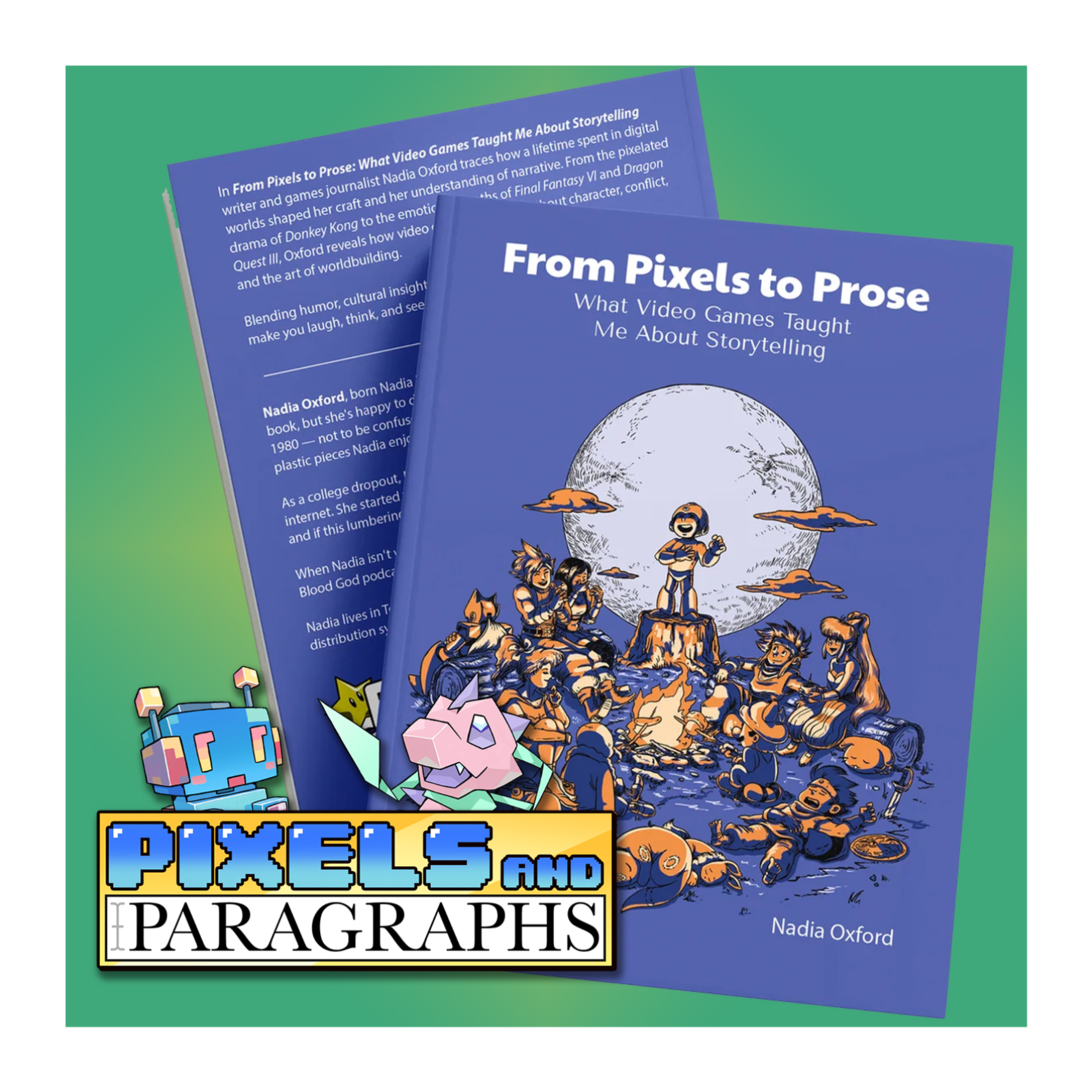
Nadia Oxford, From Pixels to Prose
From Pixels and Polygons by Darren Hupke
April 13, 2026 · 29 min · Season 3 · Episode 108
About this episode
Darren Hupke interviews Nadia Oxford about her book on how video games influenced her storytelling.
Welcome to Pixels and Paragraphs, part of the Sound Stone Network. This is the bonus show, where you get to hear me, Darren Hupke, interview some of the raddest writers behind the greatest gaming books. Each episode, you’ll get to hear from a new guest as they discuss their book, talk about their process, share some details from behind the keys, and more! Whether you’re a fan of the book already or want to find something new to read, I hope you’ll find something to enjoy about what we discuss today! This week’s guest is… Nadia Oxford, co-host of the Axe of the Blood God RPG podcast and writer of the upcoming From Pixels to Prose: What Video Games Taught Me About Storytelling. In From Pixels to Prose: What Video Games Taught Me About Storytelling, writer and games journalist Nadia Oxford traces how a lifetime spent in digital worlds shaped her craft and her understanding of narrative. From the pixelated drama of Donkey Kong to the emotional depths of Final Fantasy VI and Dragon Quest III, Oxford reveals how video games taught her about character, conflict, and the art of worldbuilding. Blending humor, cultural insight, and personal history, From Pixels to Prose is a love letter to…
People in this episode
Host: Darren Hupke
Guest: Nadia Oxford
Topics covered
- video game storytelling
- writing process
- gaming culture
- character development
- worldbuilding
Keywords
- video games
- storytelling
- Nadia Oxford
- gaming books
- character
- conflict
- worldbuilding
Mentioned in this episode
Organizations: Axe of the Blood God RPG podcast
Books & works: From Pixels to Prose: What Video Games Taught Me About Storytelling
More episodes of Pixels and Polygons
- CONSOLE STORY XII w/ Mikolai (Forgotten Worlds) · June 5, 2026 · 33 min
- CREATOR I w/ Brian (Retro Game Books) · May 29, 2026 · 32 min
- CONSOLE STORY XI w/ Matt aka Stormageddon · May 22, 2026 · 38 min
- WOW VII w/ Audi (DF Retro Super Show) · May 15, 2026 · 36 min
- ORIGINS IV w/ Kate (No Small Games) · May 8, 2026 · 39 min
- ORIGINS III w/ Ian (Yokoi Kids) · May 1, 2026 · 40 min
Explore listener stats, chart rankings, contacts and more on the Pixels and Polygons podcast page.