Insights from recent episode analysis
Audience Interest
Podcast Focus
Publishing Consistency
Platform Reach
Insights are generated by CastFox AI using publicly available data, episode content, and proprietary models.
Most discussed topics
Brands & references
Est. Listeners
Insufficient chart data. Estimates will improve as the show charts.
- Per-Episode Audience
Est. listeners per new episode within ~30 days
N/A🎙 Daily cadence·869 episodes·Last published today - Monthly Reach
Unique listeners across all episodes (30 days)
N/A - Active Followers
Loyal subscribers who consistently listen
N/A
Market Insights
Platform Distribution
Reach across major podcast platforms, updated hourly
Total Followers
—
Total Plays
—
Total Reviews
—
* Data sourced directly from platform APIs and aggregated hourly across all major podcast directories.
On the show
From 10 epsHosts
Recent guests
Recent episodes
715: 'I'm going after any vote that's out there'
Jun 24, 2026
Unknown duration
714: Capstone Academy challenges North Dakota teacher licensing
Jun 19, 2026
Unknown duration
713: 'Glutton for punishment'
Jun 17, 2026
Unknown duration
712: 'North Dakotans want people who are going to get to work'
Jun 12, 2026
Unknown duration
711: 'Quit making excuses, quit being a victim'
Jun 10, 2026
Unknown duration
Social Links & Contact
Official channels & resources
Official Website
Login
RSS Feed
Login
| Date | Episode | Topics | Guests | Brands | Places | Keywords | Sponsor | Length | |
|---|---|---|---|---|---|---|---|---|---|
| 6/24/26 | ![]() 715: 'I'm going after any vote that's out there' | Vern Thompson began this political cycle running for the U.S. House, but when delegates to the Democratic-NPL convention gave their endorsement to Trygve Hammer instead, he shifted his focus to a race for Agriculture Commissioner. It also marked a shift in Thompson's strategy. Of late he, and Hammer, have been courting votes from the far-right populist wing of the North Dakota Republican Party, which is feeling disaffected after their candidates were trounced by more moderate Republicans in the state's recent primary. "I'm going after any vote that's out there," Thompson said of the strategy on this episode of Plain Talk. Thompson also took questions on his very vocal opposition to data centers. He's calling for the state to implement a one-year moratorium on the projects "so we can give communities the time they need to make informed decisions and weigh the benefits and the impacts." Though Thompson, who referred to the decision by some North Dakotans to support data centers as "greed" and a desire to "go take all the money they can get," claims he's not necessarily against the projects. "I'm not against industrial development. I'm all for it. We own a business. But the fact is, this is being pushed down our throats so fast by a lot of out-of-state multi-billionaire corporations and I just think we have to slow down." He also accused his opponent, Republican incumbent Doug Goehring, of being more loyal to those interests than North Dakota voters. "He's just going along with whatever the the big money out of state multi-billionaires want," Thompson said. "He's he's kind of gotten to be a corporate shill." Also on this episode, we discuss the controversy around long-time state lawmaker Rep. Jim Kasper, who suffered a brain bleed more than a year ago and still hasn't fully returned to work. Is it time for him to step aside so that someone more capable can represent the voters of District 46? If you want to participate in Plain Talk, just give us a call or text at 701-587-3141. It's super easy — leave your message, tell us your name and where you're from, and we might feature it on an upcoming episode. To subscribe to Plain Talk, search for the show wherever you get your podcasts or use one of the links below. Apple Podcasts | Spotify | YouTube | Pocket Casts | Episode Archive | — | ||||||
| 6/19/26 | ![]() 714: Capstone Academy challenges North Dakota teacher licensing | "The public schools are state-run schools, and the state can certainly impose licensing requirements on the schools that it runs. It can have hiring qualifications for the teachers that it deems fit to teach in the public schools," Michael Bindas said on this episode of Plain Talk. "But private schools are meant to provide an alternative to the public school system. Something different. And this licensing regime makes it very difficult for private schools to do that." Bindas is a senior attorney for the Institute for Justice, which is representing the Capstone Academy, a Fargo-based private school, in a lawsuit challenging the constitutionality of North dakota's teacher licensing. Though the plaintiff's filings in the case do reference a cost burden, Bindas said that's not the primary argument. The larger issue, he claims, is that state licensing requirements for teachers ultimately restricts how they teach, and even what courses can be taught. As an example of the latter issue, Bindas alleged that a private school in the state couldn't offer a course in logic because the state didn't offer something like that as a subject matter choice teachers seeking a license. "They couldn't do it because the state didn't have a box for logic to be taught. And so therefore, the state says no teacher in the in the school was eligible to teach that course. That is absurd," he said. Also on this episode, me and co-host Chad Oban talk about that survey released by the Ethics Commission purporting to show that a strong majority of North Dakotans think their elected officials are unethical, something that clashes with the results of polls conducted with scientific rigor, not to mention the outcomes of recent elections. If you want to participate in Plain Talk, just give us a call or text at 701-587-3141. It's super easy — leave your message, tell us your name and where you're from, and we might feature it on an upcoming episode. To subscribe to Plain Talk, search for the show wherever you get your podcasts or use one of the links below. Apple Podcasts | Spotify | YouTube | Pocket Casts | Episode Archive | — | ||||||
| 6/17/26 | ![]() 713: 'Glutton for punishment' | When we asked Mike Thiesen why he's seeking a state Senate seat in Minot-area District 3, he told us that it stems back to being a "glutton for punishment." Thiesen is an electrician by trade -- he did his interview with us from a work trailer on a job site -- and currently serves as the mayor of Surrey, a community on the periphery of Minot. He's a candidate for the Democrat-NPL (he stressed the NPL part when I mentioned his partisan affiliation) and like most Democrats in North Dakota he's campaigning in a heavily Republican area. He says he can overcome that by bringing issues home. "I feel in Bismarck they get caught up in the national politics thing," he said. "I want to bring it closer to home and just make sure everything works." "I thoroughly enjoy being part of a community and I got this weird thing where I think I can help people," he said in another part of the interview. "I work really good as a team and I just think I can help. That's the gist of it." Thiesen is young, by political standards, and he thinks the perspective of someone who has school-age children, and is in the prime of their career, is missing in the legislature. If elected, he said school issues are one thing he'd like to take on. "We currently have $180 million worth of deferred maintenance in our schools across the state," he said. "That is an issue that's kind of near and dear to my heart, because living in Surrey, we're having issues with our school right now with some maintenance issues." Also on this episode, co-host Chad Oban and I respond to reader feedback, and talk about whether Matthew Simon, current chair of the North Dakota Republican Party, should resign after the populist faction that gave him that just got wiped out in the June primary. If you want to participate in Plain Talk, just give us a call or text at 701-587-3141. It's super easy — leave your message, tell us your name and where you're from, and we might feature it on an upcoming episode. To subscribe to Plain Talk, search for the show wherever you get your podcasts or use one of the links below. Apple Podcasts | Spotify | YouTube | Pocket Casts | Episode Archive | — | ||||||
| 6/12/26 | ![]() 712: 'North Dakotans want people who are going to get to work' | If there were a throughline for North Dakota's recent primary vote that ran from the top-of-the-ticket statewide races to local competitions like the Fargo mayoral race, it would be the rejection of belligerent ideologues in favor of pragmatic public servants. That's the argument Fargo's mayor-elect Josh Boschee made on this episode of Plain Talk. "North Dakotans want people who are going to get to work," Boschee said, as opposed to candidates who are "hung up on ideology." Voters want public servants, not talk radio hosts and influencers, it seems. Boschee, a long-time Democratic state Senator, won the nonpartisan race over City Commissioner Michelle Turnberg, a self-described "conservative" who has adopted a belligerent approach to elected office and remains in her current office. How will the new mayor contend with that sort of friction, which, in recent years, has become routine in Fargo's city government? He says he's ready for it. "I think some people want to frame it as, because we were two opponents, and we'll be working together, that there might be a lot of conflict, and that certainly may end up being true. But as you guys have seen me in the legislature, I mean, there are plenty of legislators that use a similar leadership style as Commissioner Turnberg, and I've been able to work with them, especially when we focus on the issues that we share." Boschee says he's focused on being a mayor for everyone in Fargo, including those who voted against him. "I've been in a lot of elections, and what I've learned, for one thing, is elections are about addition and not subtraction," he said. "And when you only focus on your base, you only focus on the people who are cheerleading you or pat you on the back every time you say something or comment on Facebook, you're not going to grow your coalition." In his victory speech after the election, Boschee made reference to a recent Facebook post made by Fargo-area Rep. Desiree Morton, objecting to volunteers of Somali heritage volunteering to help the campaigns of Republican U.S. Rep. Julie Fedorchak and local legislative candidates. He told us he thought it was something important to highlight. "20% of Fargo are people of color. A good number of them are folks who come from other parts of the world," he said. "I've stood up to my legislative colleagues when they've said inappropriate things about other North Dotans, and that's not going to change in the mayor's office." Also on this episode, co-host Chad Oban and I discussed the similarities between Boschee and Gov. Kelly Armstrong, despite their obvious ideological differences, as well as the decline of North Dakota's populist movement. If you want to participate in Plain Talk, just give us a call or text at 701-587-3141. It's super easy — leave your message, tell us your name and where you're from, and we might feature it on an upcoming episode. To subscribe to Plain Talk, search for the show wherever you get your podcasts or use one of the links below. Apple Podcasts | Spotify | YouTube | Pocket Casts | Episode Archive | — | ||||||
| 6/10/26 | ![]() 711: 'Quit making excuses, quit being a victim' | Gov. Kelly Armstrong, by his own admission, went out on a limb when he backed a slate of traditional Republican candidates this primary season against a populist faction that has captured control of the NDGOP and censured him, twice. The gamble paid off. Armstrong-backed candidates made nearly a clean sweep in the primaries, but if you ask the governor about it, all the credit goes to the candidates. "They knocked doors. They handed out palm cards. They didn't cut Facebook videos. They didn't complain," he said. "They went out there. They did the hard work it takes to win an election and they talked about moving North Dakota forward, not how bad they hated North Dakota. That's not what North Dotans want to hear." Armstrong was also critical of the excuses coming from the populist faction about why they lost the election. "Three things I've learned today. One is it's pretty hard to complain about turnout when you think a group of 30 people should decide who your candidate is," he said. "Two, anybody who disagrees with the opposing side is an uneducated voter. And three, anybody who disagrees with them is a is a special interest." "How about quit making excuses, quit being a victim, go win elections," he added. "Go out there and do the work." Armstrong also addressed populists -- particularly activist Brandon Prichard, whose group Citizens Alliance of North Dakota was very active in the primary -- trying to align with him in the last days of the election. "It's too cute by half by somebody who thinks he's smarter than everybody else," the governor said. Also on this episode, me and co-host Chad Oban analyze the primary results from around the state, as well as the mayoral and city commission races in Fargo. If you want to participate in Plain Talk, just give us a call or text at 701-587-3141. It's super easy — leave your message, tell us your name and where you're from, and we might feature it on an upcoming episode. To subscribe to Plain Talk, search for the show wherever you get your podcasts or use one of the links below. Apple Podcasts | Spotify | YouTube | Pocket Casts | Episode Archive | — | ||||||
| 6/5/26 | ![]() 710: Primary election predictions and technology in schools | North Dakota is in the midst of a heated, divisive primary between traditional Republicans and populists. Who will win in key legislative races around the state? Who will advance to the general election in some of the competitive statewide races? Who will be the next mayor of Fargo, and will that ballot measure implementing a single-subject rule for proposed constitutional amendments pass? Me and co-host Chad Oban make our predictions. Also on this episode, Sen. Michelle Axtman, who is in the midst of one of those heated primaries in Bismarck-area District 7, talks about a new survey about technology in schools. Lawmakers passed legislation to ban cell phone use in schools by students, but what about technology that's provided by the schools? Are students on Chromebooks and tablets too much? Axtman and a coalition of other state leaders -- including Superintendent Levi Bachmeier, Lt. Gov. Michelle Strinden, and First Lady Kjersti Armstrong -- have commissioned a study asking for input from educators, administrators, parents, and the public. "I'm a STEM person as a pilot. Technology is a big part of learning that industry as well," she said. "None of us want to get rid of technology, wipe it out of the classrooms." But they are trying to find out what the right balance is. As for her primary race, Axtman admitted to being "nervous" about it, but added that nobody running for elected office should take it for granted. She says she's happy with the race she's running. "I'm really proud of the fact that we've focused on what things we are going to do if elected rather than slamming our opponents or doing anything like that," she said. If you want to participate in Plain Talk, just give us a call or text at 701-587-3141. It's super easy — leave your message, tell us your name and where you're from, and we might feature it on an upcoming episode. To subscribe to Plain Talk, search for the show wherever you get your podcasts or use one of the links below. Apple Podcasts | Spotify | YouTube | Pocket Casts | Episode Archive | — | ||||||
| 6/3/26 | ![]() 709: 'We've already declined 400,000 barrels a day' | How does Sen. John Hoeven defined sucess? Before he recorded this interview with us at the Blue Rider Bar in downtown Minot, he'd been touring projects in the city, including what he described as a nearly culminated, decades-long effort to turn a former landfill and Superfund site into something useful for the community. "We're up here today talking about how we basically, this summer now, are going to get approval after 30 years for that landfill and we're going to turn it into a recreation site and it's going to start this summer,"He said. "But that was 30 years in the making and it didn't just happen on its own." "To me, that's that's what this business is all about," he continued. He sees the "Crack the Code 2.0" effort similarly. The original "crack the code" initiative began back when he was governor, and it was aimed at fostering horizontal drilling and fracking technology to unlock North Dakota's oil reserves. That preciptated the Bakken oil boom. The 2.0 initiative is about enhanced oil recovery, to unlock the 80 to 85% of oil in a typical well in North Dakota that's left behind. This is vital, because currently North Dakota's oil fields are in their decline phase. "We've already declined 400,000 barrels a day," Hoeven said. "And we can't punch enough holes anymore to stay at that level. We're going to continue to decline unless we use enhanced oil recovery techniques." But that's going to require carbon, and carbon pipelines, and right now those things are deeply unpopular with many landowners who need to sign on to make them possible. The opposition been so fierce, that a long-planned carbon pipeline from Summit Carbon Solutions that was to bring carbon to North Dakota is now going to Wyoming. "You got to win the hearts and minds, guys," Hoeven said of the Summit project, "and that's what didn't happen there." Speaking of which, Hoeven, a former governor, also weighed in on the accusations against current Gov. Kelly Armstrong which suggest he's doing something illegal by supporting his preferred legislative candidates. Hoeven says Armstrong is "doing what he's entitled to do." Sen. Hoeven also discussed the ongoing war in Iran, his efforts to stablize the agriculture economy amid trade wars and soaring input costs, and his reaction to President Donald Trump essentially ending Texas Sen. John Cornyn's career in Congress by endorsing his opponent Ken Paxton (Hoeven had been backing Cornyn). Also on this episode, co-host Chad Oban and I talk about next week's June primary. If you want to participate in Plain Talk, just give us a call or text at 701-587-3141. It's super easy — leave your message, tell us your name and where you're from, and we might feature it on an upcoming episode. To subscribe to Plain Talk, search for the show wherever you get your podcasts or use one of the links below. Apple Podcasts | Spotify | YouTube | Pocket Casts | Episode Archive | — | ||||||
| 5/29/26 | ![]() 708: 'We have different views on politics and that's okay' | Public Service Commissioner Jill Kringstad didn't attend the North Dakota Republican Party's state convention, alongside every other statewide Republican incumbent. Thus, she doesn't have the party's endorsement, but neither does her opponent, Chris Olson. She was appointed to her job by Gov. Kelly Armstrong, and has his backing, and told us, during a live recording of Plain Talk at the Blue Rider bar in Minot, that beingon the campaign trail for the first time, she's enjoying talking to the voters. "Just to meet them and hear them and hear them talk about how they're saying, you know, we're telling our friends, we're telling our families." Data centers have been a hot topic this election cycle. Kringstad said the PSC is already involved in ensuring that those power-hungry developments don't drive up rates when they pull electricity from utilities regulated by the PSC, but that ultimately she's a regulator. The state probably needs some new laws for data centers, and the PSC doesn't make laws. "We're not here setting policy. What we're doing is we're operating within the confines of the laws and the rules that are passed by the legislature," she said, noting that there's an ongoing interim study about the issue, and that she expects a lot of debate over data centers during legislative session next year. We live in very polarized time, but Kringstad also acknowledged during the interview that she has some bipartisanship in her family. The candidate said she's been involved in Republican politics since she was nine years old, when her parents were helping out with then-Gov. John Hoeven's campaign, but her sister is a district chair for the North Dakota Democratic-NPL. "We have different views on politics and that's ok," Kringstad said. "We don't discuss everything, but the things that we do discuss, we have very substantive back and forth discussions that are respectful and we always walk away and say, 'Okay, you have your opinion. I have mine. I just see things differently and I love you anyway.'" Also on this episode, Minot Mayor Mark Jantzer talked with me and co-host Chad Oban about how his community is handling a new budgeting reality after the legislature imposed a 3% cap on spending growth as a part of sweeping property tax reform. He explained that to manage the budget under these constraints, the city of Minot has primarily relied on utilizing its reserves to reduce property taxes over the last two budgets, but he warned that this is "not sustainable," and said that by 2027 the city would have to make cuts and find new revenues. If you want to participate in Plain Talk, just give us a call or text at 701-587-3141. It's super easy — leave your message, tell us your name and where you're from, and we might feature it on an upcoming episode. To subscribe to Plain Talk, search for the show wherever you get your podcasts or use one of the links below. Apple Podcasts | Spotify | YouTube | Pocket Casts | Episode Archive | — | ||||||
| 5/27/26 | ![]() 707: 'Affordability is hurting everyone' | Rep. Dawson Holle, a Republican from District 31, is involved in a four-way race for two House seats. He, along with fellow House incumbent Rep. Karen Rohr, didn't receive the NDGOP's convention endorsement. Many of the NDGOP's incumbents haven't been endorsed amid a rift in the party between traditionally conservative Republicans and a populist faction that wants to take Nort Dakota in a different direction. Holle says his losing the endorsement had as much to do with gamesmanship and geography as the intent of voters. "I think that there's a lot of things that go on behind the scene that often time people don't see see when it comes to a district as big as mine," Holle told us on this episode of Plain Talk (District 31 encompasses all or parts of four counties). "Our district meeting was on a Wednesday at 7:00 at night," he continued. "The weather was okay, but it was an hour and a half drive from my house, and trying to get supporters there is a hard time." Still Holle, who was, at 18 years old, the youngest person elected to the Legislature in state history, says he's not changing how he approaches the race amid intra party turbulence. "Affordability is hurting everyone," he said. "No matter what aspect or what industry you're in -- from farming where we've seen a lot of the costs have risen astronomically across the board, to it's just a single mom with three kids that just is trying to pay your bills -- affordability is really the breadandbut issue." Also on this episode, Josh Askvig, state director for the AARP, talked with me and guest co-host Megan Indvik about the prevelance of older voters in North Dakota's primary elections, as well as some of the generational friction between so-called "boomers" and younger generations, and the common ground these voters can find with one another. If you want to participate in Plain Talk, just give us a call or text at 701-587-3141. It's super easy — leave your message, tell us your name and where you're from, and we might feature it on an upcoming episode. To subscribe to Plain Talk, search for the show wherever you get your podcasts or use one of the links below. Apple Podcasts | Spotify | YouTube | Pocket Casts | Episode Archive | — | ||||||
| 5/22/26 | ![]() 706: North Dakota needs 'hundreds of billions of tons' of carbon | "It's hard to do enhanced oil recovery," Charles Gorecki said during a Plain Talk podcast interview from the Williston Basin Petroleum Conference. Gorecki is the head of the Energy & Environmental Research Center at the Univeresity of North Dakota. That organization conducts exploratory research explicitly driven by North Dakota's industrial and environmental needs. Stuff like how to reduce flaring, how to build safer pipelines and how to enhance oil recovery. The theme of the conference, which brings together all the major players in North Dakota's oil and gas industry, was "cracking the code," which is a reference to on-going efforts for enhanced oil recovery. Something that could perhaps set off a second oil boom, and prolong the oil and gas industry's prodigious contributions to North Dakota's economic prosperity and tax revenues. Gorecki said there are many promising paths to enhanced oil recovery, but using captured carbon emissions to unlock more oil from wells is one of the most promising. The problem? We don't have enough of it. "I've talked about CO2 being the thing that we need in massive quantities, hundreds of billions of tons to really unlock the Bakken," he told us. "For context, our coal fire power plants in the state of North Dakota produce annually about 30 million tons of CO2," he continued. "So it would take all the coal fire power plant CO2 emissions captured times three or more to really enhance that recovery to have what we would consider basically volumetrically a second boom in the Bakken." But getting that carbon to North Dakota has proven politically fraught. Opposition to a carbon pipeline proposed by Summit Carbon Solutions has caused that project to be rerouted to Wyoming, and while some of that outcome had to do with Summit's aggressive and ham-handed approach to landowners, there's no question that there's a noisy and organized movement against carbon pipelines in general. Gorecki told us "there's a lot of misinformation" about the issue. "We transport things in a number of different ways in this country. We transport them by truck, by train, by pipeline," he said. "And by far the safest way to transport large amounts of of liquids and gases is in pipelines." Also on this episode, me and guest co-host Alison Ritter talked about the controversies around data centers, and carbon pipelines, and whether too many in the public are taking North Dakota's economic prosperity for granted. If you want to participate in Plain Talk, just give us a call or text at 701-587-3141. It's super easy — leave your message, tell us your name and where you're from, and we might feature it on an upcoming episode. To subscribe to Plain Talk, search for the show wherever you get your podcasts or use one of the links below. Apple Podcasts | Spotify | YouTube | Pocket Casts | Episode Archive | — | ||||||
Want analysis for the episodes below?Free for Pro Submit a request, we'll have your selected episodes analyzed within an hour. Free, at no cost to you, for Pro users. | |||||||||
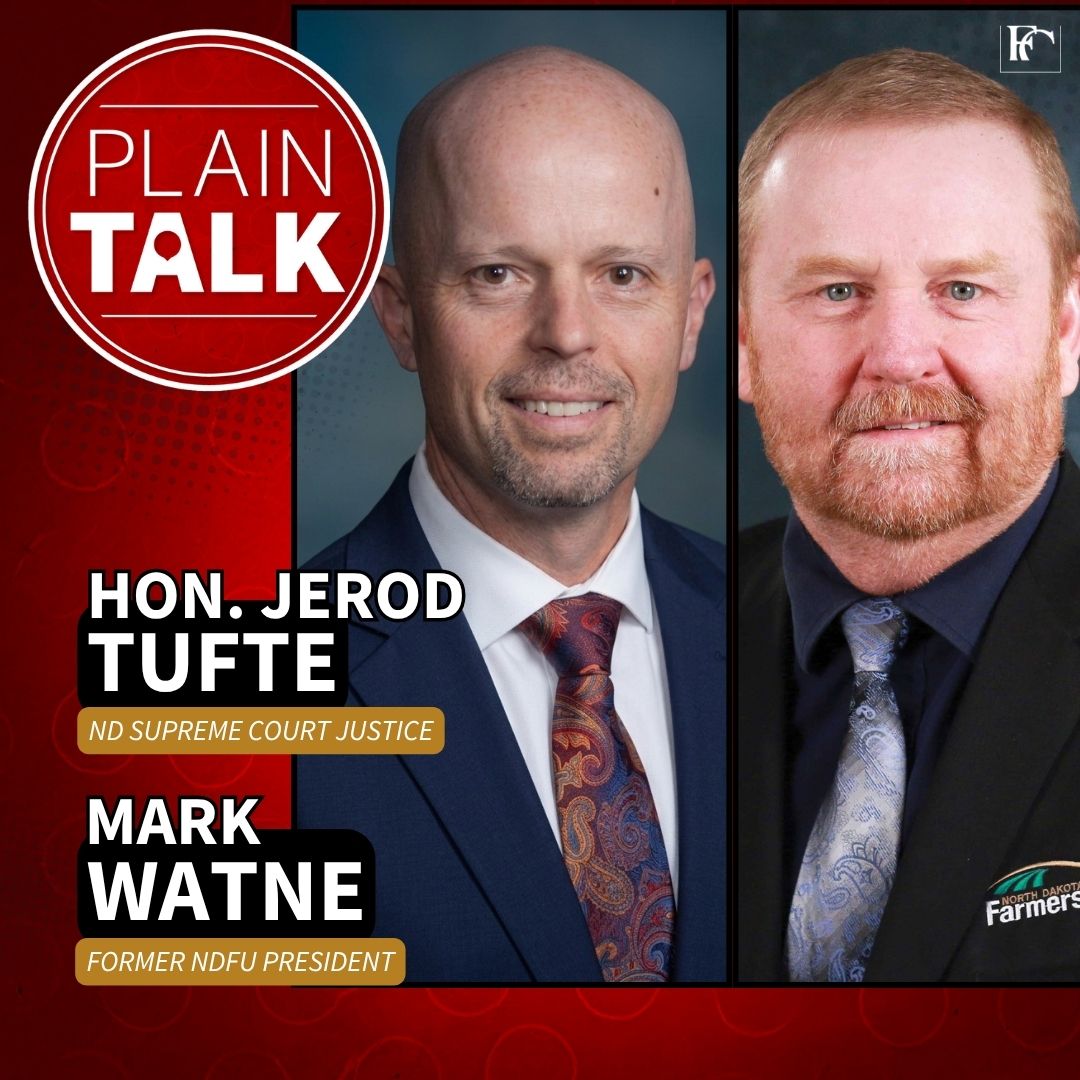
| 5/20/26 | ![]() 705: 'We've never transitioned from any fuel source in the world in the history of mankind' | Recently-appointed Department of Energy Undersecretary Kyle Haustveit says that when people talk about transitioning on energy sources, they aren't talking about reality. "We've never transitioned from any fuel source in the world in the history of mankind," he said on this episode of Plain Talk, recording with us from the Williston Basin Petroleum Conference in Bismarck. "We consume more wood and dung or biomass today than we ever have before. Same with coal, oil, natural gas, nuclear, wind, solar, geothermal." "The charts are all up and to the right," he added. Going forward, we need to start by asking what we need from our energy? Is it low prices? Low carbon intensity? "What do you have available in your region? How do we prioritize responsible development to maintain affordable, reliable, secure energy for the people that need it most?" he said we should be asking. Also, he says we need to grow to meet new demands for power. "For years, it's been far too easy to stop things and far too hard to start building things," he said, crediting President Donald Trump's administration with changing some of that. Also on this episode, Supreme Court Justice Jerod Tufte and Cass County State's Attorney Kim Hegvik join to celebrate North Dakota's drug courts or, to use the new terminology, treatment courts. These are specialized proceedings in the criminal justice system that still prioritize accountability for crimes, but also focus on helping people solve problems. They were called drug courts because they started out focusing on addiction, though these days there are lots of different types, including some specializing in the specific issues veterans might face. "Right now we run most of these at close to capacity, and so we have a pretty good population of people that have shown that they are high-risk, high need," Justice Tufte said. "So these aren't the lowest level, first-time offenders. These are people that by and large would be incarcerated if they weren't in a drug drug court or a treatment court program." Hegvik and Tufte said the treatment courts save the state money by keeping offenders out of jail, and they also reduce recidivism. If you want to participate in Plain Talk, just give us a call or text at 701-587-3141. It's super easy — leave your message, tell us your name and where you're from, and we might feature it on an upcoming episode. To subscribe to Plain Talk, search for the show wherever you get your podcasts or use one of the links below. Apple Podcasts | Spotify | YouTube | Pocket Casts | Episode Archive | — | ||||||
| 5/15/26 | ![]() 704: 'Where is our home if America is not our home?' (REPLAY) | In this replay episode of Plain Talk, Rob and Chad speak with former North Dakota lawmaker Hamida Dakane about comments from President Donald Trump targeting the Somali community and the impact those remarks had across North Dakota and Minnesota. Dakane shares why the comments felt deeply personal, how children in immigrant families responded, and why she believes her community will continue moving forward despite the rhetoric surrounding immigration and identity. A former Fargo-area legislator and the first Black woman and first Muslim elected to the North Dakota Legislature, Dakane also reflects on her journey to North Dakota, the support she's found here, and why she still believes strongly in the region and its people. If you want to participate in Plain Talk, call or text 701-587-3141. Leave your name, where you're from, and your message — we may feature it on an upcoming episode. | — | ||||||
| 5/13/26 | ![]() 703: 'The best case scenario for the Fargo PD is a nightmare' (REPLAY) | While Rob and Chad are out this week, we're revisiting one of the most talked-about interviews from the show — Fargo attorney Jay Greenwood's deep dive into the shocking wrongful arrest of Tennessee grandmother Angela Lipps. Lipps was arrested at gunpoint and jailed for months after Fargo Police used AI facial recognition technology to identify her as a suspect in a North Dakota bank fraud case. The problem? Evidence later showed she was in Tennessee at the time the crimes were committed. In this replay, Greenwood walks through how the case unfolded, why he believes law enforcement failed at multiple stages of the investigation, and what this incident says about the growing use of artificial intelligence in policing and criminal investigations. "It's just the best-case scenario for the Fargo PD is a nightmare," Greenwood says, describing the fallout from the case and the legal questions that remain unanswered. The episode also includes discussion on North Dakota's ongoing debate over data centers in coal country, plus listener feedback and commentary from guest co-host Jessica Bell. | — | ||||||
| 5/8/26 | ![]() 702: 'We need to show the receipts'✨ | election integritycampaign finance transparency+4 | Ryan BraunbergerErin Oban | North Dakota Secretary of StateNorth Dakota+1 | — | electionscampaign finance+5 | — | 1h 05m 34s | |
| 5/6/26 | ![]() 701: 'We've got a a major decline in our educational system'✨ | education declineCommon Core+3 | Charles Tuttle | Common CorePlain Talk | North Dakota | educationCommon Core+5 | — | 1h 08m 22s | |
| 5/1/26 | ![]() 700: 'I don't bring my politics to work and I would not bring them to the Supreme Court' (Video)✨ | Supreme Court electionsjudicial independence+3 | Ariston Johnson | Gov. Doug Burgum | North DakotaWisconsin | Supreme CourtAriston Johnson+6 | — | 57m 13s | |
| 5/1/26 | ![]() 700: 'I don't bring my politics to work and I would not bring them to the Supreme Court'✨ | judiciarypolitics+3 | Ariston Johnson | Gov. Doug Burgum | North DakotaWisconsin | Supreme CourtAriston Johnson+5 | — | 57m 13s | |
| 4/29/26 | ![]() 699: 'We have to have a thick skin' (Video)✨ | judicial racesNorth Dakota+3 | Jerod Tufte | North Dakota Supreme CourtPlain Talk+1 | — | judicial candidatescampaigning+3 | — | 56m 27s | |
| 4/29/26 | ![]() 699: 'We have to have a thick skin'✨ | judicial racesNorth Dakota+3 | Jerod Tufte | North DakotaPlain Talk+1 | — | judicial ethicsSupreme Court+3 | — | 56m 27s | |
| 4/24/26 | ![]() 698: 'Constitutional' mayoral candidate alleges election fraud and police corruption (Video)✨ | election fraudmayoral election+3 | Josiah Roise | Minot Police DepartmentCity of Minot+1 | — | election fraudJosiah Roise+3 | — | 1h 00m 23s | |
| 4/24/26 | ![]() 698: 'Constitutional' mayoral candidate alleges election fraud and police corruption✨ | election fraudpolice corruption+3 | Josiah Roise | Minot Police Department2000 Mules | City of Minot | election fraudJosiah Roise+5 | — | 1h 00m 24s | |
| 4/22/26 | ![]() 697: 'I think my resignation, that woke up a lot of people' | When Oliver County Commissioner Dave Berger -- a veteran of more than 50 years of local public service -- stepped down amid what he describes as an abusive and slanderous backlash over a data center proposed by Applied Digital, it illustrated the dark side of two debates. One is the debate over data centers. There are good arguments to be made on both sides of the debate, but some elements involved in it have become incapable of acknowledging that it's possible to disagree in good faith. The other is the debate over public service itself, and how difficult its become in an era where social media has made it possible for an angry and overwrought minority to hound those in public service. "The slander, the judgment of my character, my integrity. They just call it into question like I never existed before," Berger told us on this episode of Plain Talk, say he's been accused of taking bribes on the data center issue. "Then the calls with the swearing at me, you know, the f-word, the a-word. "If you want to have a conversation, I'll just lay [the phone] on the counter, they can cuss at the counter." "I've got nothing to hide," Berger added, noting that there have been open records requests filed for his communications and financial information. The ironic thing is that Berger says he hasn't actually made up his mind on whether Applied Digital should build a data center in Oliver County. "I have never told anyone but my wife how I feel about it because I'm not sure how I feel," Berger said. "And Dave with Applied Digital, when he first called...I just told him, I'm not sold on it. What you got to sell it to is the public. And that's that's how I got to base my opinions, right? You've got to listen to both sides." Berger is no longer in office -- he's said that he plans on spending more time with his family in retirement -- but he did have some advice for people who see stories like his and are afraid of serving in office: "Keep going forward," he said. Also on this episode, guest co-host Rep. Zac Ista and I talk about whether U.S. House candidate Trygve Hammer is trying to peel some populist voters away from incumbent U.S. Rep. Julie Fedorchak as well as the controversy of the U.S. Supreme Court's so-called "shadow docket." If you want to participate in Plain Talk, just give us a call or text at 701-587-3141. It's super easy — leave your message, tell us your name and where you're from, and we might feature it on an upcoming episode. To subscribe to Plain Talk, search for the show wherever you get your podcasts or use one of the links below. Apple Podcasts | Spotify | YouTube | Pocket Casts | Episode Archive | — | ||||||
| 4/17/26 | ![]() 696: 'Hopefully we can regain the public trust in what we do' | If you get into a scrape involving local government in North Dakota -- say a garbage truck side swipes your car, or you get hurt on park district property -- the organization you'd likely seek relief through is the North Dakota Insurance Reserve Fund. This is an entity created by local governments, and funded by local tax dollars, which acts essentially like an insurance company. But the organization has come under fire, with critics saying NDIRF can be ruthless when it comes to claims filed by the public, even as the organization passes along millions in conferments to its members. On this episode of Plain Talk, NDIRF CEO Keith Pic said the organization serves North Dakota by keeping costs down for local governments. "I think the important part here is that the coverages that we provide are unique to North Dakota," he said. "We can be responsive to North Dakota. We don't have the entire United States impacting the rates that would be charged for the risk that our political subdivisions have." I recently wrote an article critical of NDIRF over the organization's handling of the Northwood school bus crash, where dozens of students were injured. That happened back in 2023, but the litigation around it is still lingering, with some families and legal representatives blaming NDIRF for bogging the process down. "The easy thing for NDIRF in that situation would have been to just pay the $300,000 and just be done with it," Pic said, referring to the underinsured motorist coverage for the school district that is at issue. "But I think there would have been some major inequities that would happen or would have happened from that global settlement if we had participated in it. And here you had kids that were still treating well into 2025. Well, we don't know the extent of those injuries in 2024 when that global mediation happened." Pic also argued that the millions in conferments the organization has made back to local governments have nothing to do with claims decisions. "There's no thought as to how is this going to affect our financials. Our claims adjusters are very much examining, what is the legal liability? What's a legal standard as to what can make up this claim and is it an allowable claim to be paid?" he said. "Ultimately, the claims decisions are made afterwards after the year's over. We have an actuarial analysis that's completed to make sure that our our liabilities are set. So I think it's a misconception that there's this incentive uh to make that happen." Pic says he's an "open book" for critics. "I'm certainly hopeful that I can help resolve some of the issues that have come up. Every day is a day of improvement, little by little, and hopefully we can regain the public trust in what we do." Also on this episode, we talk about political troll Brandon Prichard directing inquiries about his organizations campaign finance disclosures to Saul Goodman, and the reality of North Dakota's three political parties. If you want to participate in Plain Talk, just give us a call or text at 701-587-3141. It's super easy — leave your message, tell us your name and where you're from, and we might feature it on an upcoming episode. To subscribe to Plain Talk, search for the show wherever you get your podcasts or use one of the links below. Apple Podcasts | Spotify | YouTube | Pocket Casts | Episode Archive | — | ||||||
| 4/15/26 | ![]() 695: 'This is not a place where you can burn a lot of bridges' | Sen. Kevin Cramer and I have had a running dispute over President Donald Trump and his approach to politics. Cramer says media critics like me are too focused on Trump's antics. I say people like Cramer are too muted in their own criticism. "I'm a United States senator from North Dakota who has a really good personal relationship with the president of the United States," Cramer said in defense of his stance on this episode of Plain Talk, "and there is a long list of advantages for the people of North Dakota because of that relationship." "This is not a place where you can burn a lot of bridges," he added. Cramer also accused the news media of not being focused enough on the accomplishments of the Trump era, including tax reform. "My complaint is not just that they aren't covering the tax cuts enough. It's that certain media outlets are so fascinated by the rants and raves of people about the evils of Donald Trump and Republicans, but they don't write about the accomplishments with the samem," he said. "In fact, they almost don't publish any of it." He also talked about the war President Donald Trump has launched against Iran, and whether it needs congressional approval. "In the case of the War Powers Act, there's a pretty strong argument -- it's never been tested, mind you, but pretty strong argument -- that the War Powers Act as a piece of legislation as a power that Congress has passed in law is not even constitutional," he said. "But having said that, as it stands, the War Powers Act is what requires the president to, when he does enact a kinetic conflict like we're in with Iran right now, he has 60 days in which to either get out of it or inform Congress or he can extension." Cramer says he believes Trump should want congressional approval. Also on this episode, Cramer talks about his efforts to improve U.S. relations with Canada, and co-host Chad Oban and I discuss the out of state money funding Together for School Meals, the ballot measure campaign to have the state cover the cost of school meals for parents. If you want to participate in Plain Talk, just give us a call or text at 701-587-3141. It's super easy — leave your message, tell us your name and where you're from, and we might feature it on an upcoming episode. | — | ||||||
| 4/10/26 | ![]() 694: 'Represent us for who we actually are' | Corey Johnson is the chief of the Williston Fire Department and a candidate for the state House in District 23. Unlike one of the incumbents in District 23, state Rep. Nico Rios, who has made headlines with an ugly arrest for DUI and erratic behavior on social media, Johnson says he wants to cast his community and his region in a positive light. "I want a representative down in Bismarck that's going to be good on the policy and work to represent Williston and the northwest region, but also somebody that's going to represent us for who we actually are and not give us that negative image that comes back on our community from time to time. That is not what Williston is," he said on this episode of Plain Talk. Johnson is also the chair of the District 23 Republicans, and has received pushback on his candidacy from the populist faction of Republicans that has captured control of the state party, in part because he's opted to run in the June primary despite losing the endorsement at his local convention. He said that he brought his kids to that convention, even knowing he might lose, because "I want them to see failure." "I want them to see defeat and how you react to that and how you move forward," he continued. "But also, that is one step in the process and it didn't go the right way. It was a defeat, but it wasn't the end of the process. So, we moved on to round two and now we're going to the primary election. So, on principle, I think it's the right thing to do." Johnson says his experience as a first responder will bring an important perspective to the Legislature. As the state is coming in to a time when revenues may be dropping, Johnson says he's for trimming budgets, but not in an across-the-board way. He also said he'd like to work on the 3% cap on property tax increases passed during the last legislative session, particularly focusing on how it impacts smaller government entities like ambulance districts. Also on this episode, me and guest co-host Megan Indvik of Americans for Prosperity talk about the need for North Dakota to hit the reset button on its budget, how the state advances its tax code after property tax reform, and the controversy around the North Dakota Insurance Reserve Fund. If you want to participate in Plain Talk, just give us a call or text at 701-587-3141. It's super easy — leave your message, tell us your name and where you're from, and we might feature it on an upcoming episode. To subscribe to Plain Talk, search for the show wherever you get your podcasts or use one of the links below. Apple Podcasts | Spotify | YouTube | Pocket Casts | Episode Archive | — | ||||||
Showing 25 of 821
Pitch Fit is a Pro feature
See how bookable this show is for guests, which brands already advertise, the per-episode ad value, and the best-fit guest and sponsor profile. The numbers are blurred on the free plan.
How readily this show books outside guests like you.
How proven this show is for host-read sponsorships.
For Guests
ProFor Advertisers
ProUpgrade to Pro to unlock guest cadence, sponsor categories, fit scores, and per-episode ad value for this show.