

Insights from recent episode analysis
Audience Interest
Podcast Focus
Publishing Consistency
Platform Reach
Insights are generated by CastFox AI using publicly available data, episode content, and proprietary models.
Total monthly reach
Estimated from 2 chart positions in 2 markets.
By chart position
- 🇯🇵JP · Technology#1961K to 10K
- 🇭🇰HK · Technology#107500 to 3K
- Per-Episode Audience
Est. listeners per new episode within ~30 days
750 to 6.5K🎙 Weekly cadence·62 episodes·Last published 4d ago - Monthly Reach
Unique listeners across all episodes (30 days)
1.5K to 13K🇯🇵77%🇭🇰23% - Active Followers
Loyal subscribers who consistently listen
450 to 3.9K
Market Insights
Platform Distribution
Reach across major podcast platforms, updated hourly
Total Followers
—
Total Plays
—
Total Reviews
—
* Data sourced directly from platform APIs and aggregated hourly across all major podcast directories.
On the show
Recent episodes
Powering the gigawatt era: The shift to DC grids and solid-state infrastructure in AI data centers
Jun 2, 2026
Unknown duration
Powering AI at scale: grids, HVDC, and what comes next
May 12, 2026
Unknown duration
Meeting increasing energy demands with solid-state transformers
Apr 30, 2026
Unknown duration
IPOSIM SPICE: power simulation with real-world accuracy
Jan 27, 2026
Unknown duration
WBG trends in photovoltaic technology
Jan 9, 2026
Unknown duration
Social Links & Contact
Official channels & resources
Official Website
Login
RSS Feed
Login
| Date | Episode | Description | Length | ||||||
|---|---|---|---|---|---|---|---|---|---|
| 6/2/26 | 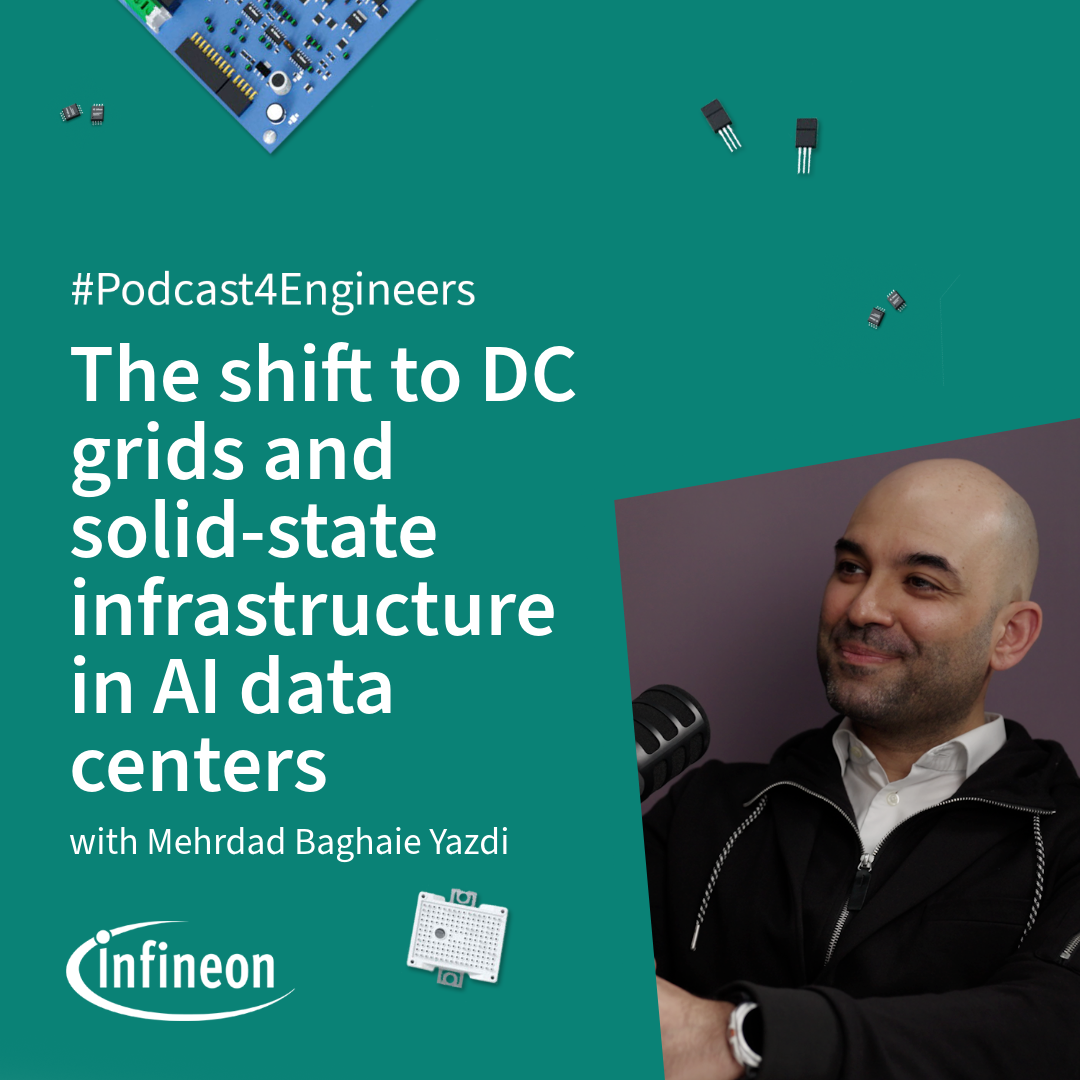 Powering the gigawatt era: The shift to DC grids and solid-state infrastructure in AI data centers | In this episode, host Kelsey Markl welcomes Head of Systems at Infineon’s Green Industrial Power Division Mehrdad Baghaie Yazdi back to the show, where they discuss the massive power demands of gigawatt-scale AI data centers and the necessary shift toward efficient DC grid architectures. They explore how solid-state transformers and advanced semiconductors are replacing traditional infrastructure to reduce energy losses and improve grid resilience. | — | ||||||
| 5/12/26 | 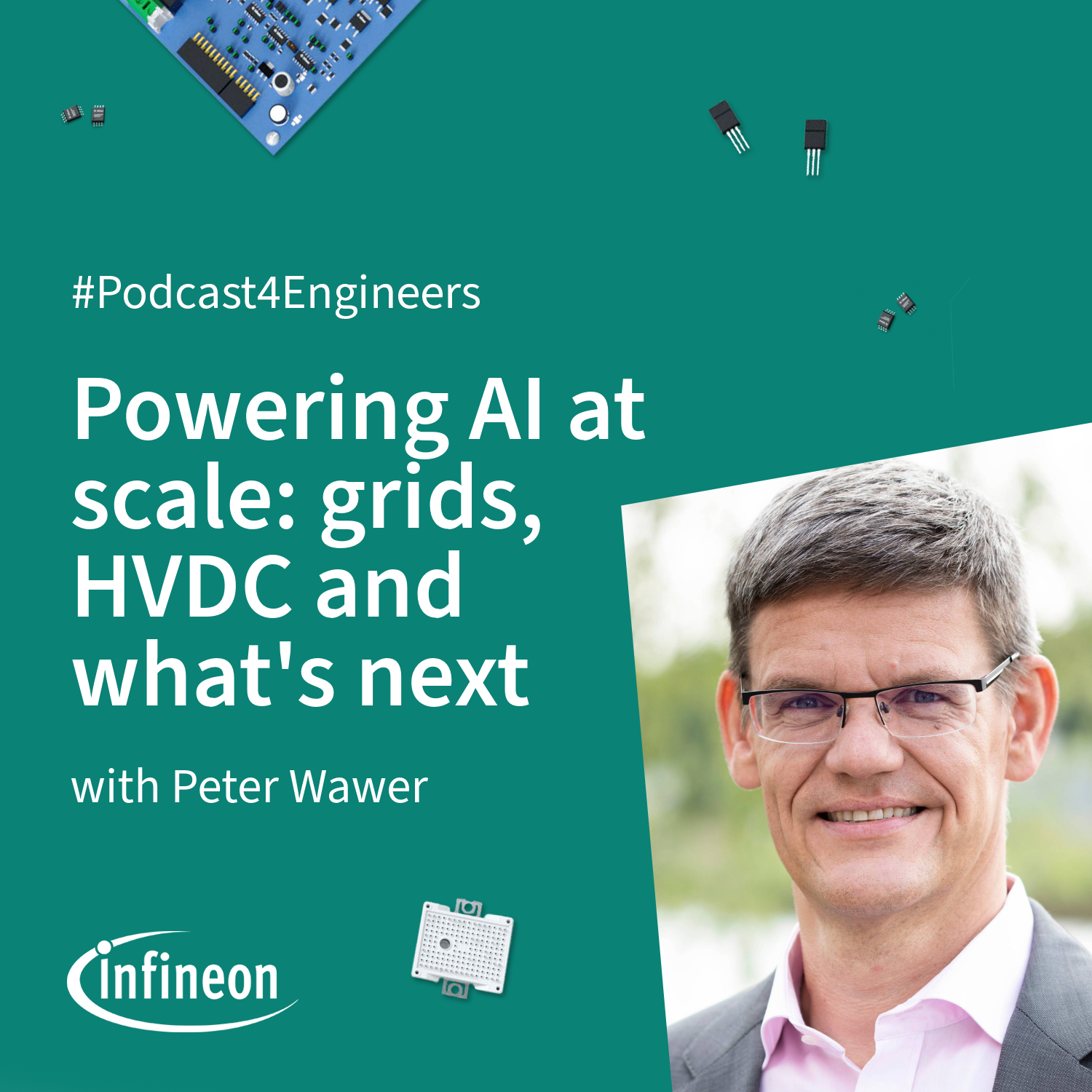 Powering AI at scale: grids, HVDC, and what comes next | AI is pushing our energy grid to its limits, but keeping up requires a sustainable approach, backed by the latest advancements in semiconductor technology. In this episode of our We Power AI series, Kelsey talks with Peter Wawer, Division President of the Green Industrial Power Division at Infineon, about what it really means to power AI sustainably, from the grid down to the server rack. They cover why battery energy storage, HVDC, and DC-powered data centers matter, and look ahead to what “physical AI” could mean for industry, robotics, and society. Learn more about how Infineon is powering AI. | — | ||||||
| 4/30/26 | 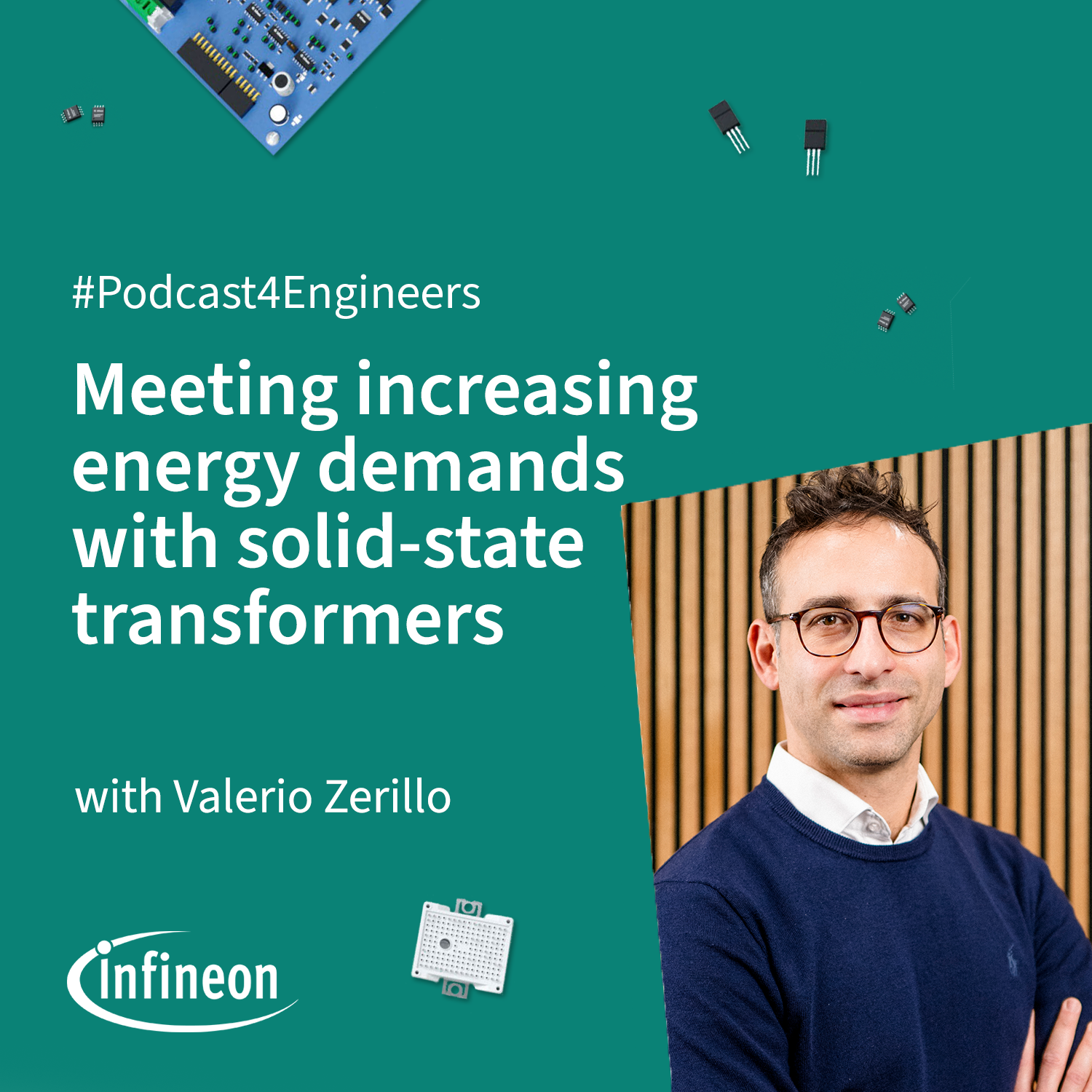 Meeting increasing energy demands with solid-state transformers | In this episode of the Podcast4Engineers, host Kelsey Markl sits down with Valerio Zerillo, Global Application Manager for Solid-State Transformers at Infineon Technologies, to explore how SST technology is revolutionizing modern power infrastructure and enabling smarter, more efficient, and more compact power distribution for AI data centers, modern factories, Megawatt EV charging, and renewable energy integration. Tune in to discover how SST is going to help us meet the energy demands of tomorrow’s technologies! | — | ||||||
| 1/27/26 | 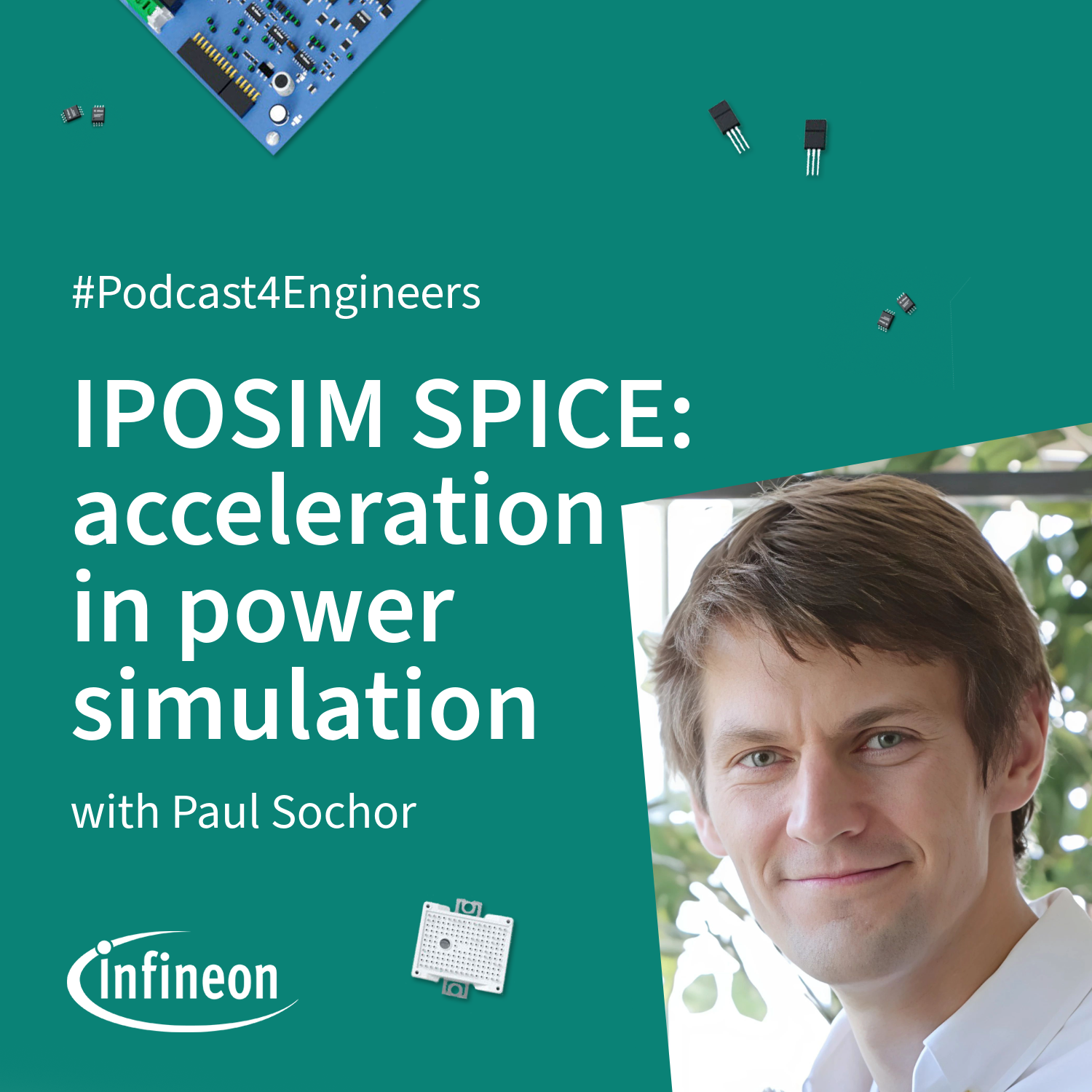 IPOSIM SPICE: power simulation with real-world accuracy | In this episode, host Kelsey Markl welcomes Principal Engineer for Power Electronics Paul Sochor to the show, where they discuss the latest developments in simulation technology, including the new IPOSIM SPICE tool, and how it's accelerating the design process for power electronics engineers. Paul shares his expertise on how simulation is transforming the industry, enabling faster and more accurate design while reducing the need for physical prototypes. How will the increased use of simulation tools like IPOSIM SPICE change the face of power electronics design in the future? | — | ||||||
| 1/9/26 |  WBG trends in photovoltaic technology | In this episode, host Kelsey Markl welcomes Global Application Manager Jonathan Schmitt to the show, where they discuss the latest trends and innovations in photovoltaic technology, including the adoption of wide bandgap technologies such as silicon carbide and gallium nitride. As the industry continues to evolve, what role will these emerging technologies play in shaping the future of the solar energy market? | — | ||||||
| 12/18/25 |  Deep dive into power conversion systems for battery energy storage systems | In this episode, host Kelsey Markl welcomes Global System Architect Dr. Manuel Strugholtz to explore the differences between grid-forming and grid-following technologies in stabilizing renewable energy grids. They discuss the challenges of transitioning to distributed energy systems, the technical demands of grid-forming inverters, and how semiconductor innovations like silicon carbide play a crucial role. Will grid-forming become the new standard for future energy grids? Tune in to find out! | — | ||||||
| 11/25/25 |  Intro to power conversion systems for battery energy storage systems | In this episode, host Kelsey Markl welcomes Global Application Manager Marco Werr back to discuss the evolving energy landscape and its impact on semiconductors. They explore the transition from fossil fuels to renewables, the rise of battery energy storage systems, and the challenges of ensuring grid stability. Marco highlights key topics like grid-forming vs. grid-following inverters, the role of silicon carbide technology, and innovations in power density and efficiency. How can semiconductor advancements help address the demands of an increasingly renewable and unstable grid? Find it out in this episode! | — | ||||||
| 10/7/25 |  Megawatt EV charging | In this episode, host Kelsey Markl welcomes Global Application Manager Rodrigo Marquina to the show, where they discuss the fundamentals and future of EV charging with a focus on megawatt charging. They delve into the use cases for high-power megawatt systems, and how these advancements are shaping the electrification of transportation, from passenger vehicles to long-haul trucks. | — | ||||||
| 9/2/25 |  New opportunities in HVAC with wide bandgap technologies | In this episode, host Kelsey Markl welcomes Global Application Marketer Giovanni Parrino to the show, where they discuss new opportunities in HVAC with wide bandgap technologies. What challenges are driving HVAC trends, how to counter cost pressure and grid challenges, and what role do topology design changes play? For more, attend the Giovanni’s webinar, visit our HVAC application page, or discover our evaluation board EVAL-2EDGAN-INV-1KW mentioned in the episode. | — | ||||||
| 8/12/25 |  Semiconductors and Al in home appliances: Focus on induction cooktops | In this episode of Podcast4Engineers, host Peter Balint is joined by Walter Bell, Director of Application Marketing for Home Appliances at Infineon, to discuss the latest trends and innovations in induction cooktops. They explore the benefits of induction cooking, including its energy efficiency and flexibility, and how semiconductors are playing a crucial role in improving the technology. Read the whitepaper. | — | ||||||
Want analysis for the episodes below?Free for Pro Submit a request, we'll have your selected episodes analyzed within an hour. Free, at no cost to you, for Pro users. | |||||||||
| 7/29/25 |  Semiconductors and AI in Home appliances: Critical and future relevant use cases | Join host Peter Balint on this episode of Podcast4Engineers as he delves into the fascinating world of home appliances, where the boundaries of innovation are constantly being pushed. Alongside guest expert, Walter Bell, they take a journey through the evolution of automation in home appliances, from humble beginnings to the cutting-edge technologies of today. Discover how the convergence of AI and semiconductors has revolutionized the way we live, making our daily lives more convenient, efficient, and connected. Tune in to find out how the perfect blend of human ingenuity and technological prowess is transforming the home appliance market, and what it means for the world of tomorrow. | — | ||||||
| 6/26/25 |  Silicon carbide adoption in industrial drives | In this episode, host Kelsey Markl welcomes Global Director of Application Management Wolf-Dieter Baehre back to the show, where they discuss the adoption of silicon carbide (SiC) in industrial drives applications. What factors still make IGBT an interesting choice today, and when should engineers start designing the future-ready systems of tomorrow with SiC? Find out more about industrial drives solutions here. Download our latest whitepaper "SiC technology - A cost-effective enabler of highly efficient power drive systems" here. Or watch our webinar "Quantifying the benefits of SiC technology in Electric Motor Drive Systems" here. | — | ||||||
| 5/20/25 | 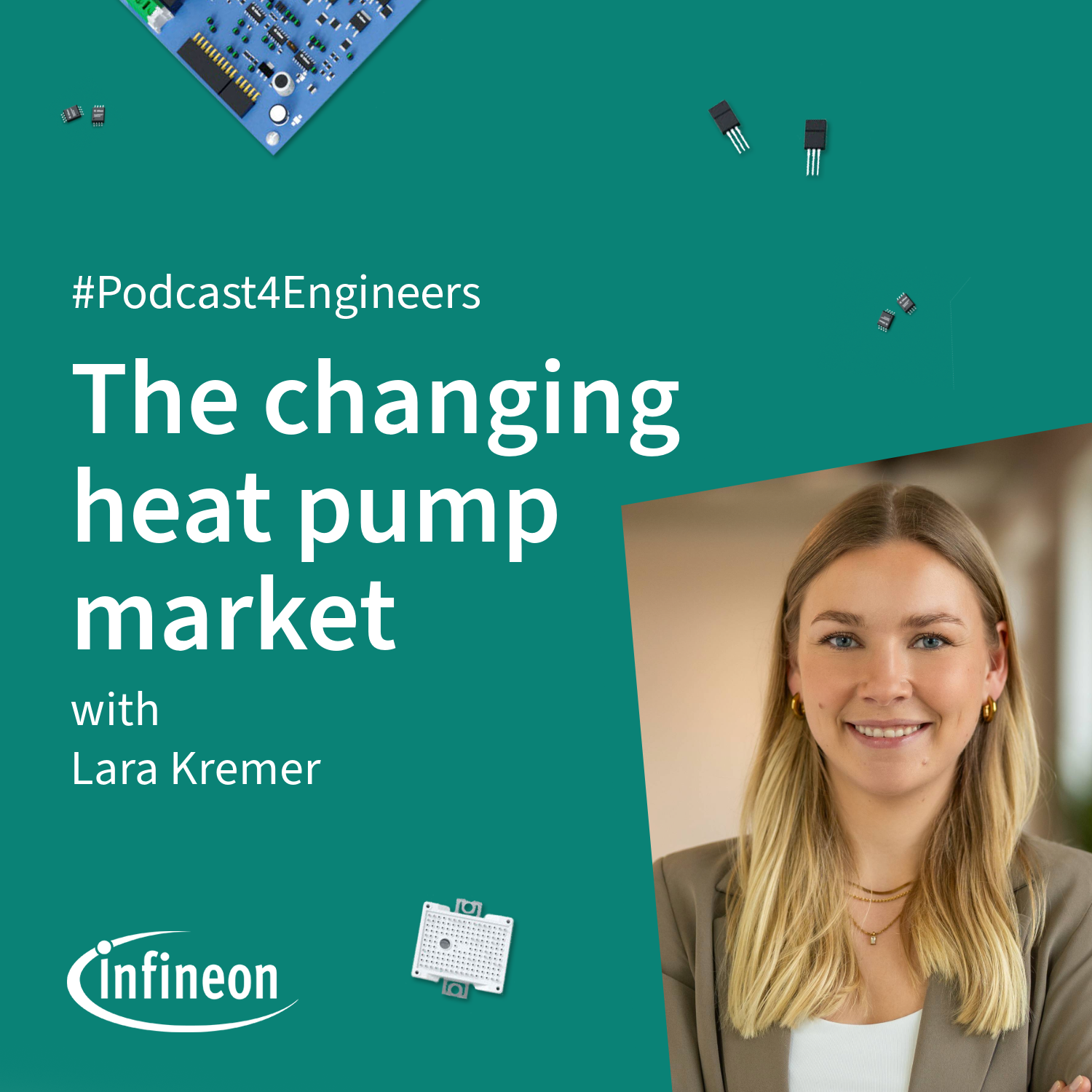 The changing heat pump market | In this episode of Podcast4Engineers, the host Kelsey Markl welcomes Global Application Manager Lara Kremer, who explains the factors influencing the heat pump market, including cost efficiency, environmental concerns, and policy impacts. Tune in as they discuss recent technological advancements in heat pumps, such as improved inverters, smart features, and the shift toward eco-friendly refrigerants to reduce environmental impact. | — | ||||||
| 4/15/25 | 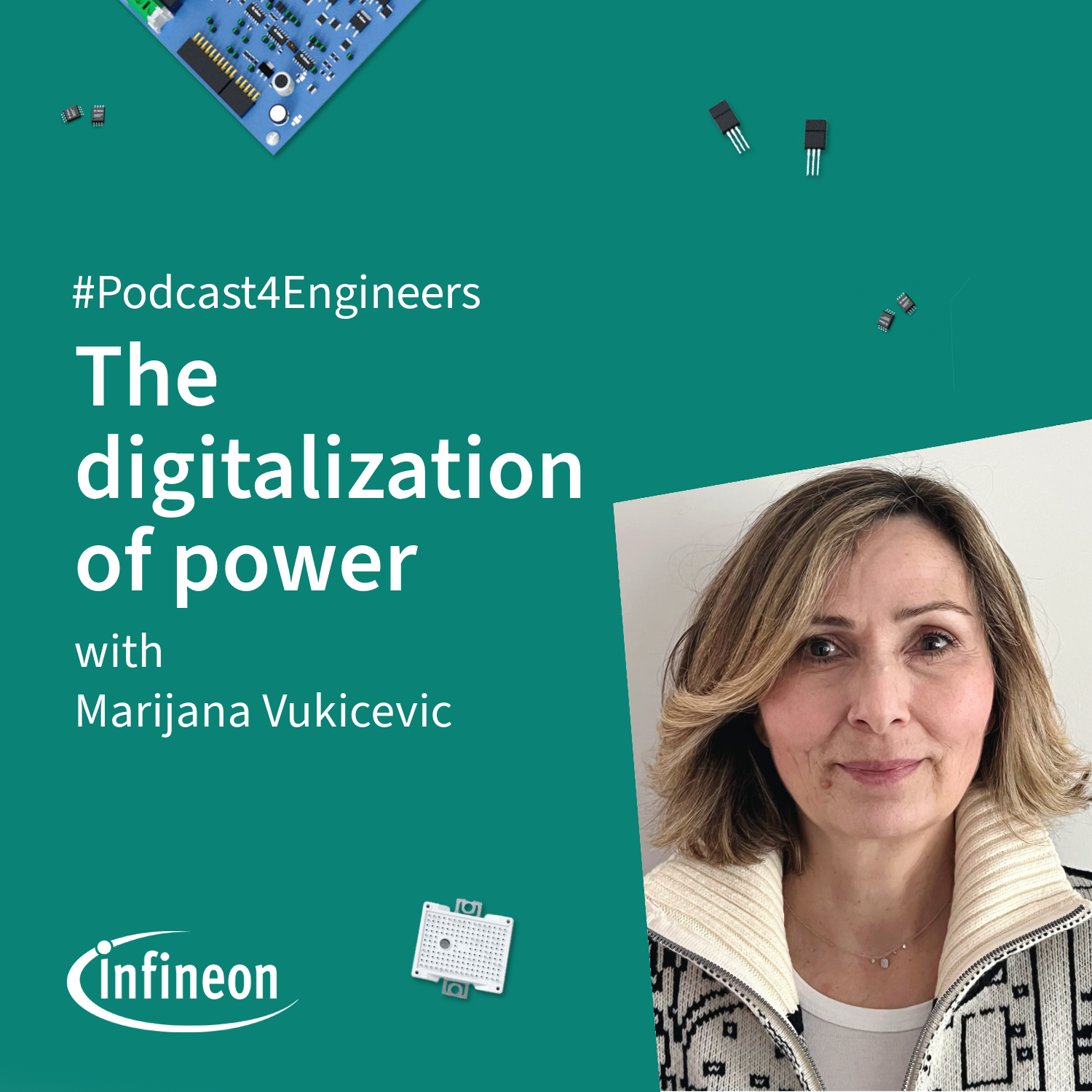 The digitalization of power | In this episode of the Podcast4Engineers, host Kelsey Markl invites Marijana Vukicevic, MCU Product Marketing Director at Infineon, to explore how microcontrollers are transitioning power from analog to digital. They discuss the benefits of digital scalability, faster processing, and how digital MCUs like the PSOC™ Control family are ideal for GaN-based systems, enabling smaller designs and groundbreaking energy efficiency in data centers. | — | ||||||
| 3/25/25 | 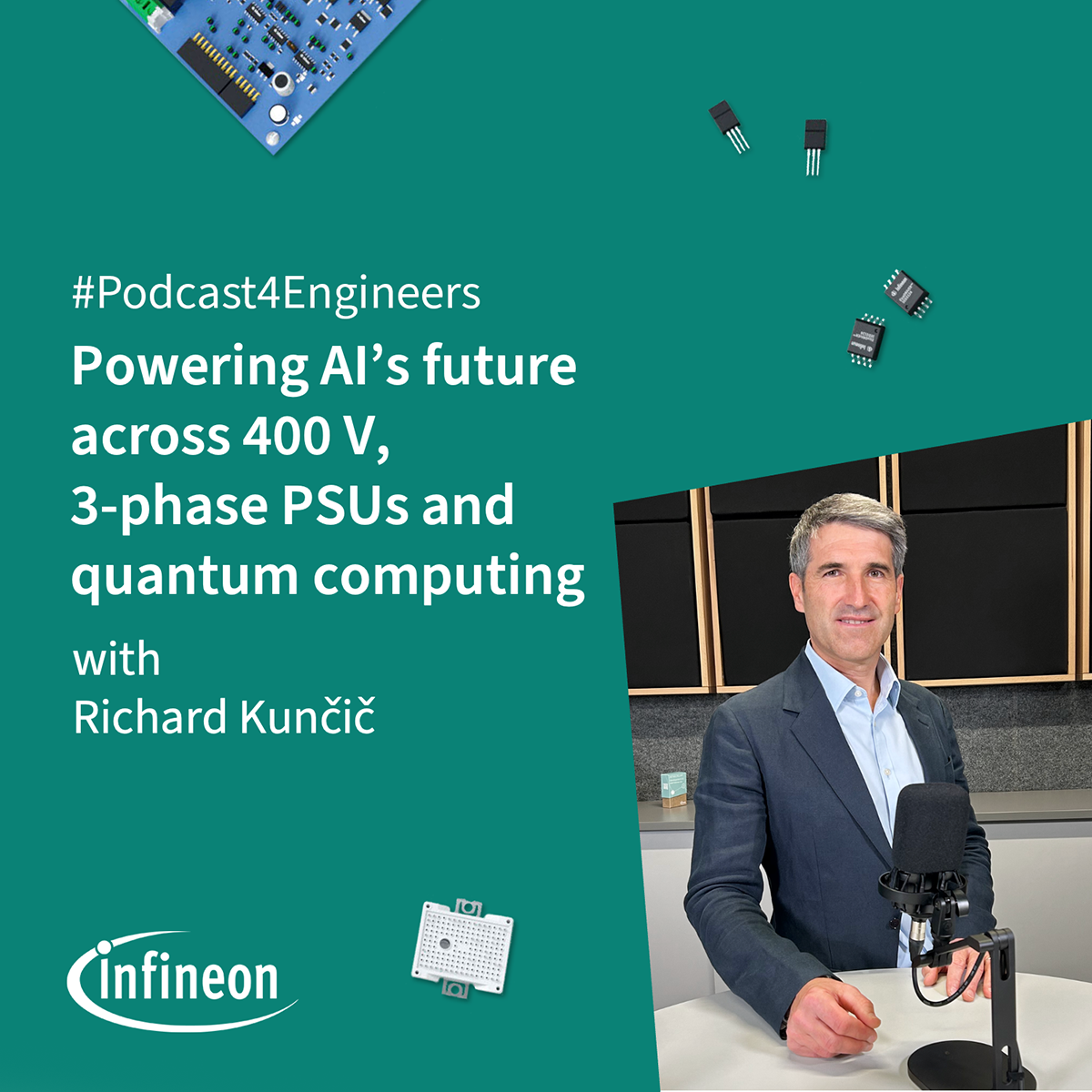 Powering AI’s future across 400 V, 3-phase PSUs and quantum computing | In this episode of Podcast4Engineers, our guest, Richard Kunčič, Senior Vice President and General Manager of Power System division, discusses how AI’s increasing power requirements will drive a substantial change in rack power distribution architecture. He will dive into the pros and cons of transitioning to a 400 V architecture, and the evolution of the server power supply. Lastly, he will give an overview of Infineon’s investment in quantum computing; a technology which has the potential to unlock new possibilities in the AI space and boost efficiency to unprecedented levels, especially for specific types of AI model training. Learn more about Infineon's data center solutions. | — | ||||||
| 3/11/25 | 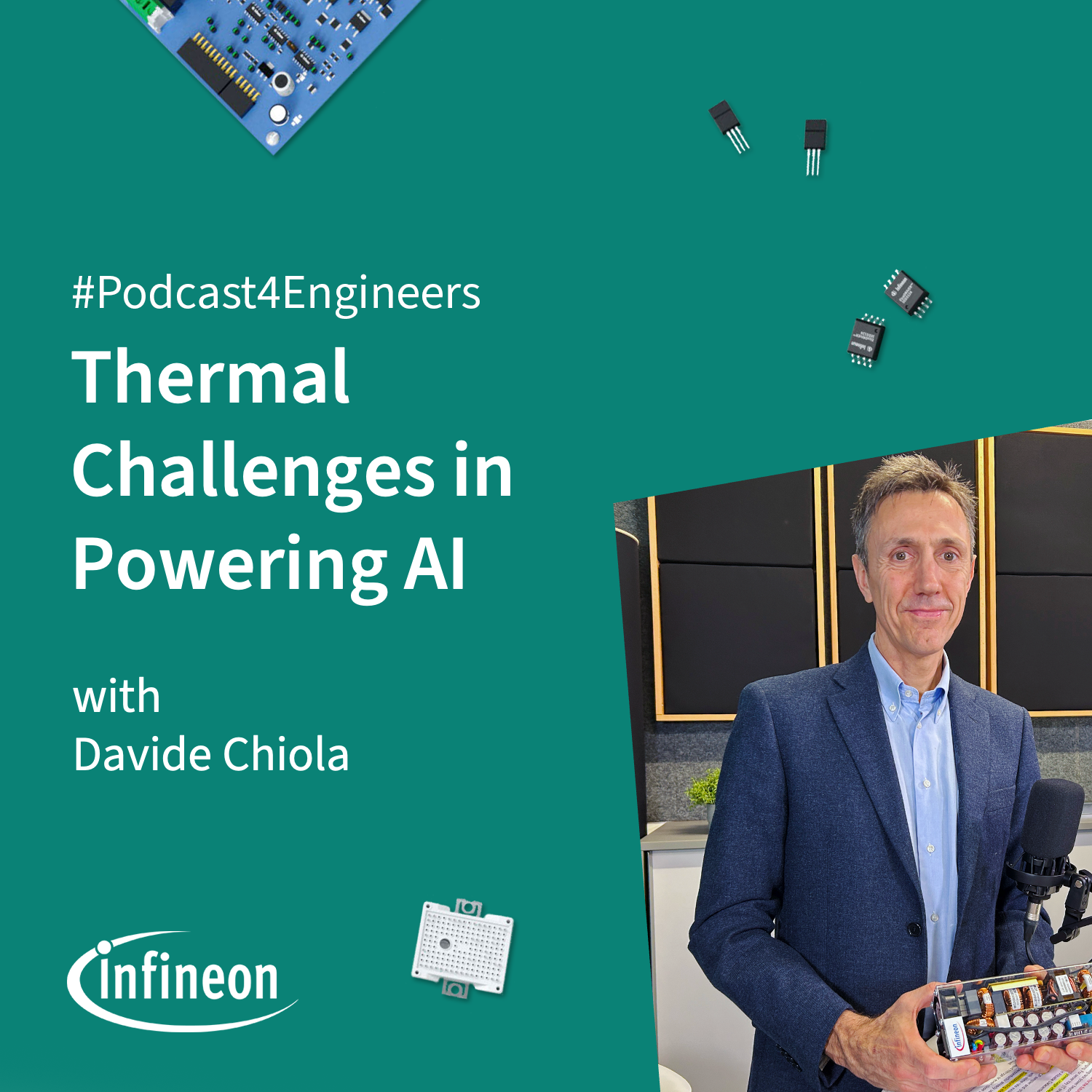 Thermal challenges in Powering AI | In this episode of Podcast4Engineers, host Peter Balint sits down with Davide Chiola, VP of Systems Solutions at Infineon, to explore the critical role of thermal management in AI data centers. They discuss innovative cooling techniques, design challenges, and emerging trends like liquid cooling and superconductivity, shaping the future of high-performance computing. Learn more about Infineon's data center solutions here. Have a question or topic suggestion for our next episode? Email us at wepowerai@infineon.com. | — | ||||||
| 2/25/25 |  Protection ICs in AI data centers | Advancements in GPUs and the transition to higher voltage architectures in AI servers are driving the need for robust protection integrated circuits (ICs). In this episode of Podcast4Engineers, our application expert, Nitish Agarwal, explores the critical role of hot swap controllers in managing inrush currents and ensuring the reliability and efficiency of AI data centers. Additionally, he will address future trends and challenges within the semiconductor industry. Have a question or topic suggestion for our next episode? Email us at wepowerai@infineon.com | — | ||||||
| 2/18/25 |  Supporting AI power demands sustainably: the role of renewables | In this episode of Podcast4Engineers, host Peter Balint explores the intricate demands of powering AI with guest, Fanny Bjoerk, Director Global Application Marketing for Datacenter Power Distribution. They discuss the exponential rise in power requirements of hyperscale data centers driven by the AI revolution, and the critical role of renewable energy in meeting these demands sustainably. The episode delves into the challenges and solutions for integrating renewable energy sources, such as solar and wind, and the importance of energy efficiency and reliable power delivery for the future of AI infrastructure. Learn more about Infineon's solutions for renewable energy. Do you have a question or topic suggestion for our next episode? Email us at wepowerai@infineon.com | — | ||||||
| 1/28/25 |  Safeguarding AI operations against downtime: battery backup unit solutions | Today, we will examine the critical role played by battery backup units in keeping AI servers running smoothly, even in the event of power outages. Our guest, Filippo Rosetti, Application Marketing Manager at Infineon, shares his expertise on effective battery backup hardware strategies that ensure uninterrupted power supply to AI systems. From process continuity to seamless power switchover, we'll explore the importance of reliable battery systems in powering AI. Learn more about Infineon's battery management systems. Do you have a question or topic suggestion for our next episode? Email us at wepowerai@infineon.com | — | ||||||
| 1/14/25 |  Health monitoring for reliable AI power distribution | In this episode of Podcast4Engineers, we look at the role of predictive failure in the AI data center arena. How can we accurately predict which components will fail and when? Our conversation with Infineon System Architect, Christian Bernhardt will shed some new light on trimming the costs of ownership for hyperscale data centers. Learn more about Infineon's power system reliability solutions or email us with your questions or topic suggestions for our next episodes at wepowerai@infineon.com | — | ||||||
| 12/10/24 |  SiC reliability testing for making chips that last | How can we make sure our chips work reliably for decades without having decades to test them? In this episode, we dive deep into the topic of silicon carbide (SiC) reliability testing with our expert guest Paul Salmen. Be sure to check out the training Paul mentions to learn more about gate oxide reliability for CoolSiC™ devices. | — | ||||||
| 11/18/24 |  Designing the future of rail and renewables with SiC modules | In this episode, we talk to Konrad Schraml and Caspar Leendertz again about their nomination for the Deutsche Zukunftspreis. Listen to learn about the technical challenges the team from Infineon and TU Chemnitz overcame to create the world's first 3.3 kV SiC MOSFET with a vertical channel and innovative copper contacting. | — | ||||||
| 11/5/24 |  Future-ready rail solutions for the Deutsche Zukunftspreis | We’ve been nominated for the prestigious Deutsche Zukunftspreis, the German Federal President‘s Award for Technology and Innovation! In this episode, we talk to Konrad Schraml and Caspar Leendertz about their submission: the world's first 3.3 kV SiC MOSFET with a vertical channel and innovative copper contacting. Listen in to learn how it can cut losses by 90%, saving energy in rail, solar, and wind applications, and is already making an impact worthy of the Deutsche Zukunftspreis. | — | ||||||
| 10/17/24 |  The right batteries and chips for renewable energy | The sun doesn’t always shine, and the wind doesn’t always blow. So how can we save our green energy for the times we can’t produce it? In this episode, our expert Marco Werr explains how battery energy storage systems (BESS) help harness the energy from renewables, so it is there when we need it. | — | ||||||
| 10/1/24 | 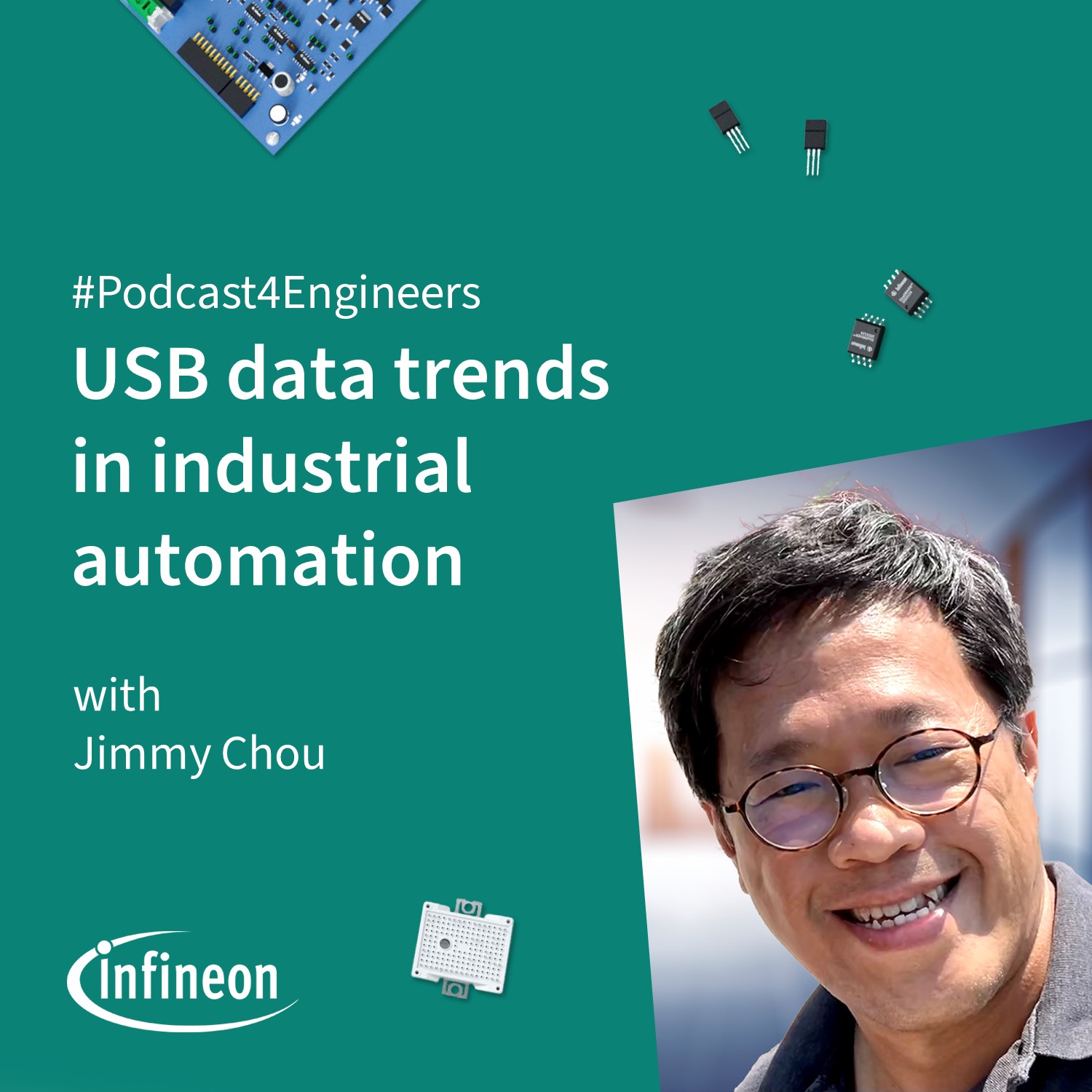 USB data trends in industrial automation | How do USB connectors help machines 'see' and work smarter? In industrial automation, machine vision plays a crucial role in enabling machines to 'see' and interact with their environment. High-speed USB data transfer is the backbone of this technology, facilitating the rapid transmission of image data from cameras to processing units and allowing real-time analysis, precise quality control, and efficient decision-making. In this episode, our expert Jimmy will guide you through the advantages of USB as a connector and give you a first look into the future of USB data transfer, introducing peripheral controllers for USB 10 and 20Gbps. | — | ||||||
Showing 25 of 65
Sponsor Intelligence
Sign in to see which brands sponsor this podcast, their ad offers, and promo codes.
Chart Positions
2 placements across 2 markets.
Chart Positions
2 placements across 2 markets.