
Political Reality
Our daily lives seem increasingly overwhelmed by polarization, misinformation, and dubious culture wars, while we face countless serious problems that require thoughtful and evidence-based solutions. To move forward, we ...
Insights from recent episode analysis
On the show
- Dr. Melissa Deckman1 ep
- Derek Kilmer1 ep
- Prof. Lindsey Cormack1 ep
Audience Interest
Podcast Focus
Publishing Consistency
Insights are generated by CastFox AI using publicly available data, episode content, and proprietary models.
Most discussed topics
Brands & references
Total monthly reach
Based on 1 signal.
Built from
By chart position
- 🇺🇸United States · PoliticsHOME#1427.8K to 41K
- 🇨🇦Canada · Politics#86987 to 5.2K
- 🇬🇧United Kingdom · Politics#135610 to 3.2K
- 🇦🇺Australia · Politics#106511 to 2.7K
- 🇳🇿New Zealand · Politics#83141 to 745
- Per-Episode Audience
Est. listeners per new episode within ~30 days
10K to 54K🎙 ~2x weekly·27 episodes·Last published 1w ago - Monthly Reach
Unique listeners across all episodes (30 days)
21K to 109K🇺🇸76%🇨🇦10%🇬🇧6%+4 more - Active Followers
Loyal subscribers who consistently listen
11K to 60K
Market Insights
Platform Distribution
Reach across major podcast platforms, updated hourly
Total Followers
—
Total Plays
—
Total Reviews
—
* Data sourced directly from platform APIs and aggregated hourly across all major podcast directories.
| Date | Episode | Topics | Guests | Brands | Places | Keywords | Sponsor | Length | |
|---|---|---|---|---|---|---|---|---|---|
| 10/14/26 |  The most important election of our lives (until the next one, and the next one and the next) | S02E09 | Political Reality | No description provided. | 51m 43s | ||||||
| 10/8/26 |  PREVIEW: What Americans can learn from Australians about politics with Chas Licciardello | S02E08 | https://www.patreon.com/politicalreality/posts/what-americans-171733279 | 11m 03s | ||||||
| 9/30/26 |  PR ABROAD: Australian Political Primer + Panda Diplomacy | S02E07 | Political Reality | https://www.patreon.com/c/politicalreality | 1h 02m 41s | ||||||
| 9/23/26 |  PREVIEW: WAR: why don't we stop having them? | S02E06 | Political Reality | FULL EPISODE https://www.patreon.com/politicalreality/posts/war-why-dont-we-170386581 1. ⚔️ Sun Tzu (circa 500 BCE), The Art of Warhttps://classics.mit.edu/Tzu/artwar.html 2. 🏛️ Thucydides (circa 400 BCE), History of the Peloponnesian War (brief overview here)https://www.gutenberg.org/files/7142/7142-h/7142-h.htmhttps://www.ebsco.com/research-starters/history/thucydides 3. 🌐 Morgenthau (1949), Politics Among Nations: The Struggle for Power and Peace (overview here)http://slantchev.ucsd.edu/courses/ps240/04%20Conflict%20with%20States%20as%20Unitary%20Actors/Morgenthau%20-%20Politics%20among%20nations%20(selected%20chapters).pdfhttps://www.ebsco.com/research-starters/social-sciences-and-humanities/morgenthau-advances-realist-school-power-politics 4. 🎓 By the way, many of these classic texts are currently available as PDFs on Branislav Sanchez’s course page for an international relations course he teaches at UCSD. Happy reading, and thanks, Prof. Sanchez for making these available! The syllabus on this page also offers a fantastic rundown of many of the themes we covered in this episode (plus many more, and deeper divers – enjoy!).https://polisci.ucsd.edu/people/faculty/faculty-directory/currently-active-faculty/slantchev-profile.htmlhttp://slantchev.ucsd.edu/courses/ps240/ 5. 📘 Waltz (1959), Man, the State, and War: A Theoretical Analysishttps://pages.ucsd.edu/~bslantchev/courses/ps240/02%20Levels%20of%20Analysis%20and%20Strategic%20Choice/Waltz%20-%20Man,%20The%20State,%20and%20War.pdf 6. ♟️ Schelling (1960), The Strategy of Conflicthttps://www.sackett.net/Strategy-of-Conflict.pdf 7. 💥 Blainey (1973), The Causes of Warhttps://archive.org/details/causesofwar0000blai/page/n5/mode/2up 8. 🔗 Keohane & Nye (1977), Power and Interdependencehttp://slantchev.ucsd.edu/courses/ps240/05%20Cooperation%20with%20States%20as%20Unitary%20Actors/Keohane%20&%20Nye%20-%20Power%20and%20interdependence%20%5BCh%201-3%5D.pdf 9. 🌎 Waltz (1979), Theory of International Politicshttp://slantchev.ucsd.edu/courses/ps240/03%20Anarchy,%20Hierarchy,%20and%20Sovereignty/Waltz%20-%20Theory%20of%20International%20Politics%20(Ch%205-8).pdf 10. 🤝 Keohane (1984), After Hegemonyhttp://slantchev.ucsd.edu/courses/ps240/05%20Cooperation%20with%20States%20as%20Unitary%20Actors/Keohane%20-%20After%20Hegemony%20%5BCh%204-6%5D.pdf 11. 🔄 Axelrod (1984), The Evolution of Cooperationhttps://bert.stuy.edu/pbrooks/spring2015/materials/HumanReasoning-2/Axelrod_Robert_The_Evolution_of_Cooperation.pdf 12. 🗳️ Fearon (1994), “Domestic Political Audiences and the Escalation of International Disputes”https://web.stanford.edu/group/fearon-research/cgi-bin/wordpress/wp-content/uploads/2013/10/Domestic-Political-Audiences-and-the-Escalation-of-International-Disputes.pdf 13. ⚖️ Fearon (1995), “Rationalist Explanations for War”https://web.stanford.edu/group/fearon-research/cgi-bin/wordpress/wp-content/uploads/2013/10/Rationalist-Explanations-for-War.pdf 14. 🕊️ B. Bueno de Mesquita et al. (1999), “An Institutional Explanation of the Democratic Peace”https://www.jstor.org/stable/2586113 15. 🌍 Mearsheimer (2001), The Tragedy of Great Power Politicshttps://wwnorton.com/books/9780393349276 16. 📜 Fortna (2003), “Scraps of Paper? Agreements and the Durability of Peace”https://www.cambridge.org/core/journals/international-organization/article/scraps-of-paper-agreements-and-the-durability-of-peace/70A924CC6B4785C30BADF415244FFA1F 17. 🏢 Koremenos et al. (2003), “The Rational Design of International Institutions”https://www.cambridge.org/core/journals/international-organization/article/abs/rational-design-of-international-institutions/29B784E99033C7B3FC0564B96A64FE21 18. 🧩 Ruggie (2005), “What Makes the World Hang Together? Neo-utilitarianism and the Social Constructivist Challenge.”https://www.cambridge.org/core/journals/international-organization/article/abs/what-makes-the-world-hang-together-neoutilitarianism-and-the-social-constructivist-challenge/0160858E3E6D4D6468C926BCD6654FE9 19. 🔎 E. Bueno de Mesquita (2005), “The Quality of Terror”https://www.jstor.org/stable/3647729 20. 🧠 Wendt (2009), “Anarchy is What States Make of It: The Social Construction of Power Politics”https://www.cambridge.org/core/journals/international-organization/article/abs/anarchy-is-what-states-make-of-it-the-social-construction-of-power-politics/B03BC7C9AAC5211B6DC319C077C1A854 21. 🤝 Walter (2009), “Bargaining Failures and Civil War”https://www.annualreviews.org/content/journals/10.1146/annurev.polisci.10.101405.135301 22. ❓ Ramsay (2017), “Information, Uncertainty, and War”https://www.annualreviews.org/content/journals/10.1146/annurev-polisci-051215-022729 23. 📚 Chenoweth et al. (eds.) (2019), The Oxford Handbook of Terrorismhttps://academic.oup.com/edited-volume/28267 24. 🤖 Murphy, et al. (2024), “The Promise of Machine Learning in Violent Conflict Forecasting”https://www.cambridge.org/core/journals/data-and-policy/article/promise-of-machine-learning-in-violent-conflict-forecasting/40D559ADA18FF7308915B08956B4E8F3 25. 📊 Some datasets we mentioned: Correlates of War, Uppsala conflict data program, Fragile states index Correlates of War:https://correlatesofwar.org/ Uppsala conflict data program:https://ucdp.uu.se/ Fragile states index:https://fragilestatesindex.org/ | 10m 26s | ||||||
| 9/16/26 |  How climate change got politicized | S02E05 | Political Reality | No description provided. | 1h 00m 26s | ||||||
| 9/10/26 | diversity of thoughtpolitical parties+5 | — | Pew ResearchCambridge University Press+3 | — | diversitypolitics+6 | — | 10m 26s | ||
| 9/2/26 | religionAmerican values+3 | Dr. Melissa Deckman | Public Religion Research InstituteThe politics of Gen Z: How the youngest voters will shape our democracy | — | religionAmerican religion+3 | — | 59m 05s | ||
| 8/27/26 | gender gappolitical participation+3 | — | Burns et al.Lawless & Fox+5 | — | women presidentgender gap+3 | — | 10m 26s | ||
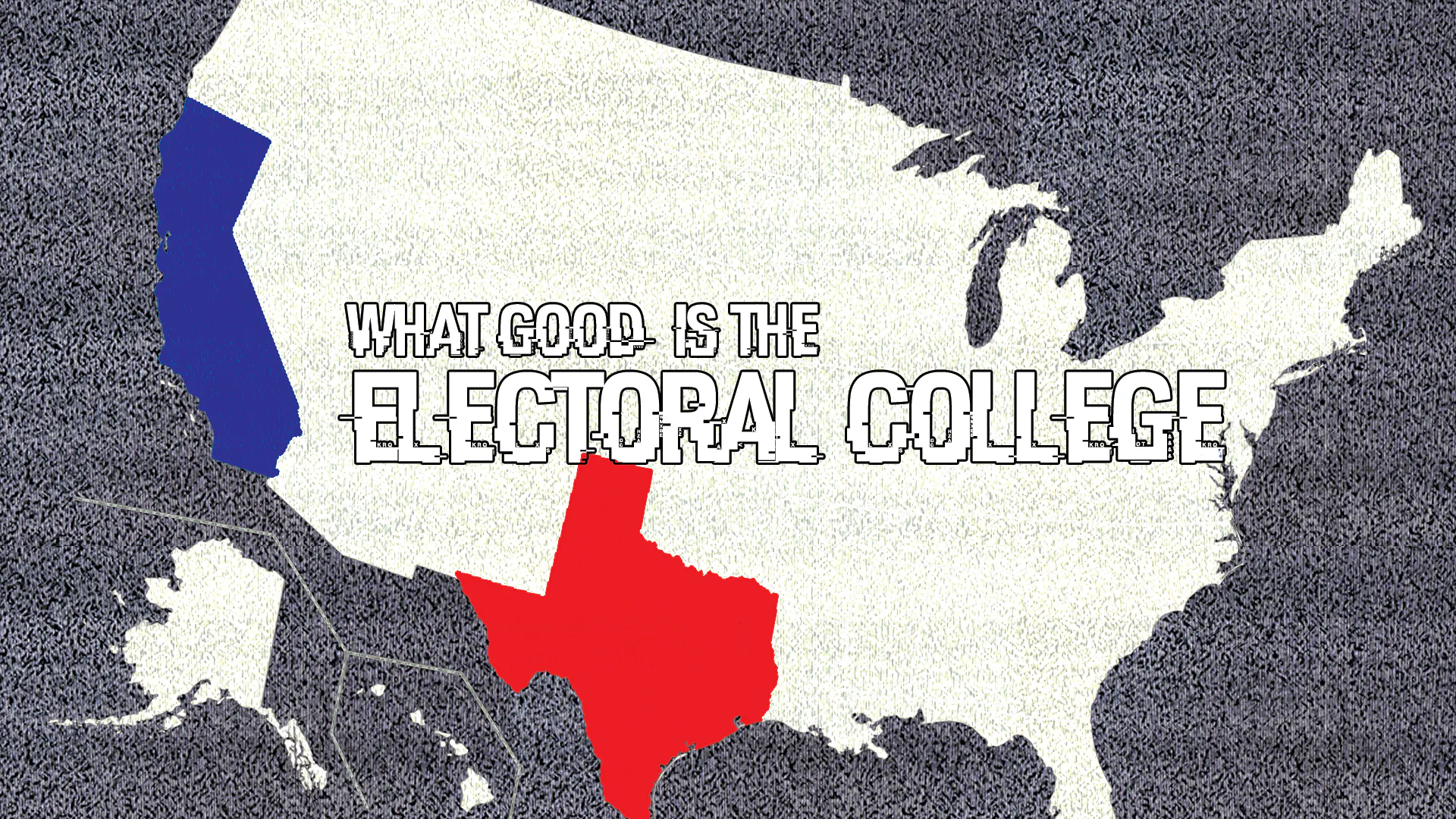
| 8/19/26 | electoral collegepolitics+4 | — | Political RealityElectoral College | Virginia | electoral collegetyranny of the majority+3 | — | 54m 13s | ||
| 6/17/26 | season finaleshow recap+2 | — | — | — | season 1Political Reality+3 | — | 42m 34s | ||
Want analysis for the episodes below?Free for Pro Submit a request, we'll have your selected episodes analyzed within an hour. Free, at no cost to you, for Pro users. | |||||||||
| 6/11/26 | recaplearning+3 | — | — | — | season recappolitical reality+3 | — | 54m 33s | ||
| 6/3/26 | democracypolitics+3 | — | — | — | democracypolitics+3 | — | 1h 01m 42s | ||
| 5/27/26 | Congresspolitics+3 | Derek Kilmer | — | — | CongressDerek Kilmer+3 | — | 10m 26s | ||
| 5/20/26 | politicscitizenship+3 | Prof. Lindsey Cormack | DC Inboxlindseycormack.com+2 | — | politicscitizenship+3 | — | 59m 26s | ||
| 5/14/26 | affective polarizationEuropean politics+3 | — | European Political Science ReviewThe Review of Economics and Statistics+4 | — | affective polarizationEurope+3 | — | 10m 07s | ||
| 5/7/26 |  Damage to Science Under Trump | S01E18 | Political Reality | https://www.npr.org/2025/12/22/nx-s1-5642965/what-cuts-to-research-under-trump-have-meant-for-science-in-2025 https://www.nature.com/immersive/d41586-026-00088-9/index.html https://www.science.org/content/article/how-trump-administration-dismantling-science-u-s https://www.nytimes.com/2026/02/23/opinion/doge-hiv-funding.html https://scienceimpacts.org https://www.cgdev.org/blog/update-lives-lost-usaid-cuts | 1h 05m 40s | ||||||
| 4/29/26 |  PREVIEW: Politicization of Science | S01E17 | Political Reality | https://www.patreon.com/posts/politicization-156907450 | 10m 07s | ||||||
| 4/22/26 |  What would it take to solve homelessness in America? with Andrew Heaton! | S01E16 | Political Reality | 1. 🎙️ Check out Andrew Heaton’s podcast and Substack, The Political Orphanagehttps://www.thepoliticalorphanage.com 2. ▶️ You can also find his podcast and other videos on YouTubehttps://www.youtube.com/@AndrewHeatonTPO 3. 📚 Here’s one of his many books: Tribalism is Dumbhttps://www.amazon.com/Tribalism-Dumb-Where-Came-about/dp/B0DJKSZP6J 4. 🎧 Here are some of his Political Orphanage episodes that are about homelessness: 🏚️ Homelessness, and our stupid solutions https://podcasts.apple.com/us/podcast/homelessness-and-our-stupid-solutions/id1439837349?i=1000548447580 🦖 How Godzilla beat the housing crisis https://podcasts.apple.com/us/podcast/how-godzilla-beat-the-housing-crisis/id1439837349?i=1000710268550&l=fr-FR 🏘️ The best tiny house village in America (an interview with Alan Graham, the founder of Community First! Village, an organization we discussed in the episode) https://podcasts.apple.com/us/podcast/the-best-tiny-house-village-in-america/id1439837349?i=1000549032659 🐶 We’ll watch your dog while you’re in rehab (an interview with Evan Taylor and Cindy Webb, who lead Pause for Paws, one of the organizations we talked about in the episode) https://podcasts.apple.com/us/podcast/well-watch-your-dog-while-youre-in-rehab/id1439837349?i=1000685060836 5. 🏡 More information about Community First! Villagehttps://mlf.org/community-first/ 6. 🐾 More information about Pause for Pawshttps://www.pause4pawsok.org 7. 🌐 Check out all of Andrew Heaton’s goings on:https://mightyheaton.com/ 8. 😂 You can also watch him in comedy videos about politics, like this one!https://www.youtube.com/watch?v=g1z_xtOmgek | 1h 04m 40s | ||||||
| 4/15/26 |  PREVIEW: Urban Rural Bias | S01E15 | Political Reality | Full Episode: https://www.patreon.com/posts/155715368 1. 📚 Katherine J. Cramer, The Politics of Resentmenthttps://press.uchicago.edu/ucp/books/book/chicago/P/bo22879533.html 📝 a. Non-paywalled, non-scientific, but nevertheless helpful and short(!) student summary of a talk by Kathy about this work https://civic.mit.edu/index.html?p=1891.html 2. 📄 Katherine J. Cramer, “Putting inequality in its place: Rural consciousness and the power of perspective.”https://www.jstor.org/stable/23275431 🔬 a. Somewhat unrelated, and we didn’t actually mention this in the episode, but Katherine Cramer is also involved in a project at the MIT Center for Constructive Communication that might be of interest to our audience :) https://www.ccc.mit.edu 3. 📄 Nelson & Petsko, “Race and white rural consciousness”https://www.christopherpetsko.com/uploads/1/2/5/8/125868532/race-and-white-rural-consciousness.pdf 4. 📄 Trujillo & Crowley, “Symbolic versus material concerns of rural consciousness in the United States”https://www.sciencedirect.com/science/article/abs/pii/S0962629822000725 5. 📄 Brown & Mettler, “Rural politics in the United States”https://www.annualreviews.org/content/journals/10.1146/annurev-polisci-040623-114017 6. 📄 Brown & Mettler, “Sequential polarization: The development of the rural-urban political divide, 1976–2020”https://www.cambridge.org/core/journals/perspectives-on-politics/article/sequential-polarization-the-development-of-the-ruralurban-political-divide-19762020/ED2077E0263BC149FED8538CD9B27109 7. 🌐 Quick article summarizing some empirical trends between population density and vote sharehttps://stanfordmag.org/contents/the-urban-rural-divide 8. 📄 Kaufman, “Where are the values voters? Ideological constraint and stability among rural, suburban, and urban populations in the United States”https://www.sciencedirect.com/science/article/abs/pii/S0743016721003259 📊 a. Relatedly, here’s a research report that underscores that urban, suburban, and rural areas are by no means monoliths https://globalaffairs.org/sites/default/files/2021-08/report_urban-rural-divide-us-foreign-policy_170524.pdf 📈 b. And here’s a Pew survey with similar findings https://www.pewresearch.org/social-trends/2018/05/22/what-unites-and-divides-urban-suburban-and-rural-communities/ 9. 🤝 Braver Angels is an example of an organization working to increase conversations across political differences, including between urban and rural Americanshttps://braverangels.org 10. 📚 Lorrie Frasure-Yokley, Racial and ethnic politics in American suburbs (we touched on these themes a bit in our discussion of the suburbs, but certainly much more to cover in future episodes about racial and ethnic politics!)https://www.cambridge.org/core/books/racial-and-ethnic-politics-in-american-suburbs/8E23703D5C1E6DDA8D7AB7609C6C0E9F 🎤 a. Separately, here’s an interesting interview with Lorrie about the need for more high-quality data for research on this topic! https://politicalsciencenow.com/ucla-associate-professor-of-political-science-lorrie-frasure-yokley-shares-her-experiences-as-a-political-scientist-and-apsa-member/ 🏙️ b. For more on suburbs if you’re interested: Thomas Vicino is another political scientist whose body of research on the suburbs may be of interest, particularly his recent, “In what sense a post-suburban era?” in The Routledge Companion to the Suburbs https://thomasjvicino.com/research https://d1wqtxts1xzle7.cloudfront.net/89019656/9781315266442-4-libre.pdf | 10m 10s | ||||||
| 4/8/26 |  Alliances with Prof Paul Poast | S01E14 | Political Reality | 1. 📄 Downs et al. (2009), “Is the good news about compliance good news about cooperation?”https://www.cambridge.org/core/journals/international-organization/article/abs/is-the-good-news-about-compliance-good-news-about-cooperation/636DE333F8E1EC944825DDBFD81BE294 2. 📄 Von Stein (2005), “Do treaties constrain or screen? Selection bias and treaty compliance”https://www.cambridge.org/core/journals/american-political-science-review/article/abs/do-treaties-constrain-or-screen-selection-bias-and-treaty-compliance/99619F321DE63766D626E19155D69C35 3. 📄 Morrow (2000), “Alliances: Why write them down?”https://www.annualreviews.org/content/journals/10.1146/annurev.polisci.3.1.63 4. 🌍 Wendt (1992), “Anarchy is what states make of it: the social construction of power politics”https://www.jstor.org/stable/2706858 🧠 a. Brief description of constructivism https://www.e-ir.info/2020/05/19/a-brief-overview-of-alexander-wendts-constructivism/ 🤓 b. What’s that? You wanted even more on constructivism? https://institutes.abu.edu.ng/idr/public/assets/docs/Constructivism%20and%20International%20Relations%20%20Alexander%20Wendt%20and%20his%20Critics%20(The%20New%20International%20Relations)%20(%20PDFDrive%20).pdf 5. 📊 Major dataset on military alliances by Prof. Brett Ashley Leeds (whose work we also discussed)http://www.atopdata.orghttps://leeds.rice.edu/research/ 6. 📰 Paul’s weekly columns for the World Politics Reviewhttps://www.worldpoliticsreview.com/author/paul-poast-2920/ 7. 📚 One of Paul’s (several, excellent) books, Arguing about Allianceshttps://www.paulpoast.com/arguing-about-alliances 8. 🌐 Recent-ish article in the Atlantic by Paul, “Not a world war but a world at war” (we didn’t talk about this specifically in the episode, but it’s a great writeup)https://www.theatlantic.com/international/archive/2023/11/conflicts-around-the-world-peak/676029/ 9. 🔗 Paul’s websitehttps://www.paulpoast.com/ 10. 💼 Follow Paul on LinkedIn – he posts regular commentary on international relations events as they unfoldhttps://www.linkedin.com/in/paul-poast-83550b79/https://www.linkedin.com/feed/update/urn:li:activity:7446569050081710080/?originTrackingId=bnCSJxFBZsvkuC7Xqvk9nw%3D%3D | 54m 33s | ||||||
| 4/2/26 |  PREVIEW: What does it take to change a mind | Political Reality | S01E13 | 1. 🚪 Broockman and Kalla, “Durably reducing transphobia: A field experiment on door-to-door canvassing” (the excellent paper that’s a great model for field experiments on this topic)https://www.science.org/doi/10.1126/science.aad9713 🧠 a. In general, Joshua Kalla and David Broockman’s work (joint and separate) is worth checking out, both on political persuasion and other topics (mostly connected to political attitudes one way or another). https://joshuakalla.com/research/ https://polisci.berkeley.edu/people/person/david-edward-broockman 🧪 b. I particularly recommend their work as great examples of using experiments in political science 👂 c. Some of the remaining open questions about the role of listening in political persuasion conversations are discussed thoughtfully here. https://www.pnas.org/doi/10.1073/pnas.2421982122 2. ⚠️ The retracted paper we mentioned and a brief article about the retraction. Even more gory details about the retraction. 📄 Paper: https://www.science.org/doi/10.1126/science.1256151 📰 Article: https://www.science.org/content/article/science-retracts-gay-marriage-paper-without-agreement-lead-author-lacour 🔍 More details: https://retractionwatch.com/2025/06/06/same-sex-marriage-retraction-political-science-study-lacour-green-broockman-kalla/ 📚 a. The more senior coauthor on the retracted paper is quite prolific on persuasion specifically in the context of political campaigns and also recently in the context of AI; his other work has not been retracted as far as we know! https://donaldgreen.com 3. 📊 A comprehensive recent overview of the state of the research on persuasion, including what we don’t know and why some of the pieces don’t quite fit together stillhttps://www.annualreviews.org/content/journals/10.1146/annurev-polisci-051120-110428 4. 🌱 Broader, more background review paper on where political preferences come from in the first place and what affects them. (We didn’t talk about this specifically, I just think it’s interesting and helpful — and reflects earlier thinking that shaped much of the more recent research.)https://www.annualreviews.org/content/journals/10.1146/annurev.polisci.3.1.1 5. 💻 Experiment on reducing antisemitism, measured in terms of online browsing behavior after an interventionhttps://www.cambridge.org/core/journals/journal-of-experimental-political-science/article/combating-hateful-attitudes-and-online-browsing-behavior-the-case-of-antisemitism/05E860416F9D0B7EFEFA0AABDB88C33D 6. 📰 We may have cited him in other episodes, but Adam Berinsky’s work on combatting misinformation is always in the background whenever we talk about media, misinformation, social media, changing minds – anything along that theme – and is always worth a look.https://berinsky.mit.edu/published-papers/#overlay-context=research | 10m 10s | ||||||
| 3/25/26 | 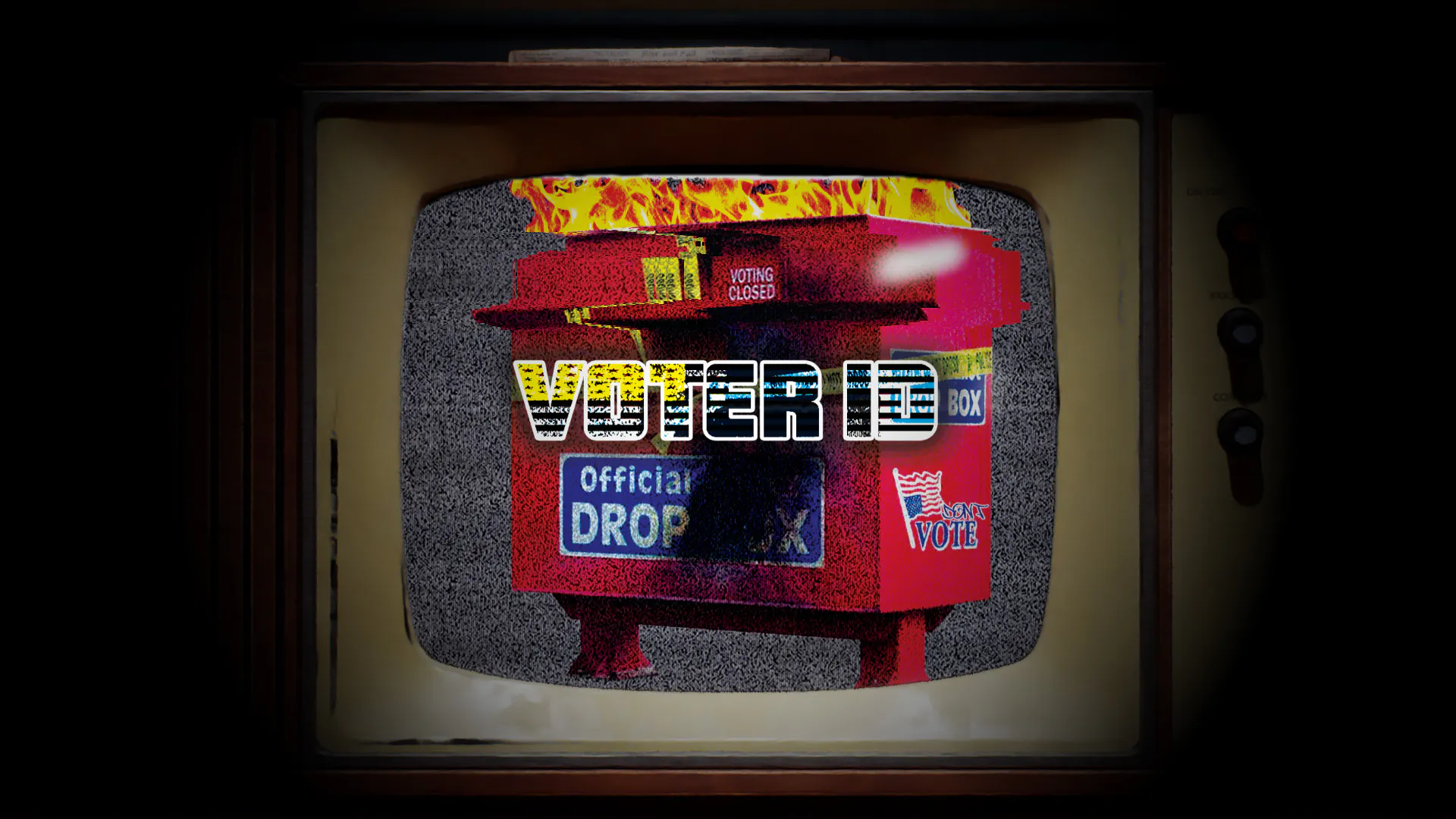 The SAVE act, Voter ID laws, and turnout in America | Political Reality | S01E12 | https://politicalrealitypodcast.com Show Notes for Voter ID Ep. 📄 Riker and Ordeshook, “A Theory of the Calculus of Voting” (paper where the key equation came from):https://www.jstor.org/stable/1953324 ⚡ World’s briefest summary of the above:https://adambrown.info/p/notes/riker_and_ordeshook_a_theory_of_the_calculus_of_voting 📊 Meta-study of papers that built from this earlier work (alas, it’s behind a paywall, I’m sorry):https://www.sciencedirect.com/science/article/abs/pii/S0261379412001527 📚 “Classic” (2008 lol cry) review of research on convenience voting:https://www.annualreviews.org/docserver/fulltext/pl/11/1/annurev.polisci.11.053006.190912.pdf?expires=1774472398&id=id&accname=guest&checksum=4CCCEB2034EED20DCF150C7F87AD6286 ➕ plus some specific papers (there are lots more out there but this is a decent start): 🧠 People with greater political knowledge are more likely to use convenience voting: https://www.tandfonline.com/doi/abs/10.1080/17457289.2020.1814308 ⚖️ Convenience voting can exacerbate socioeconomic biases in composition of voters: https://bpb-us-e1.wpmucdn.com/sites.mit.edu/dist/9/583/files/2026/01/perverseconsequences_2005.pdf 📬 Voting by mail increases turnout but does so differently across groups: https://bpb-us-e1.wpmucdn.com/sites.mit.edu/dist/9/583/files/2026/01/whovotesbymail_2001.pdf 🏛️ Background on the SAVE act: 🔎 https://bipartisanpolicy.org/article/five-things-to-know-about-the-save-act/ 📰 https://www.ncsl.org/state-legislatures-news/details/9-things-to-know-about-the-proposed-save-america-act ⚠️ https://www.brennancenter.org/our-work/analysis-opinion/new-save-act-bills-would-still-block-millions-americans-voting 📜 The SAVE act itself:https://www.congress.gov/bill/119th-congress/house-bill/22/text 🗺️ Voter ID laws by state:https://ballotpedia.org/Voter_identification_laws_by_state ⚖️ Discussion of the constitutionality and legality of the SAVE act:https://www.scotusblog.com/2026/03/the-supreme-court-and-voting-identification/ 💸 Discussion of the poll tax issue regarding the SAVE act:https://thehill.com/opinion/campaign/5757040-save-act-voter-id-debate/ | 36m 21s | ||||||
| 3/18/26 | 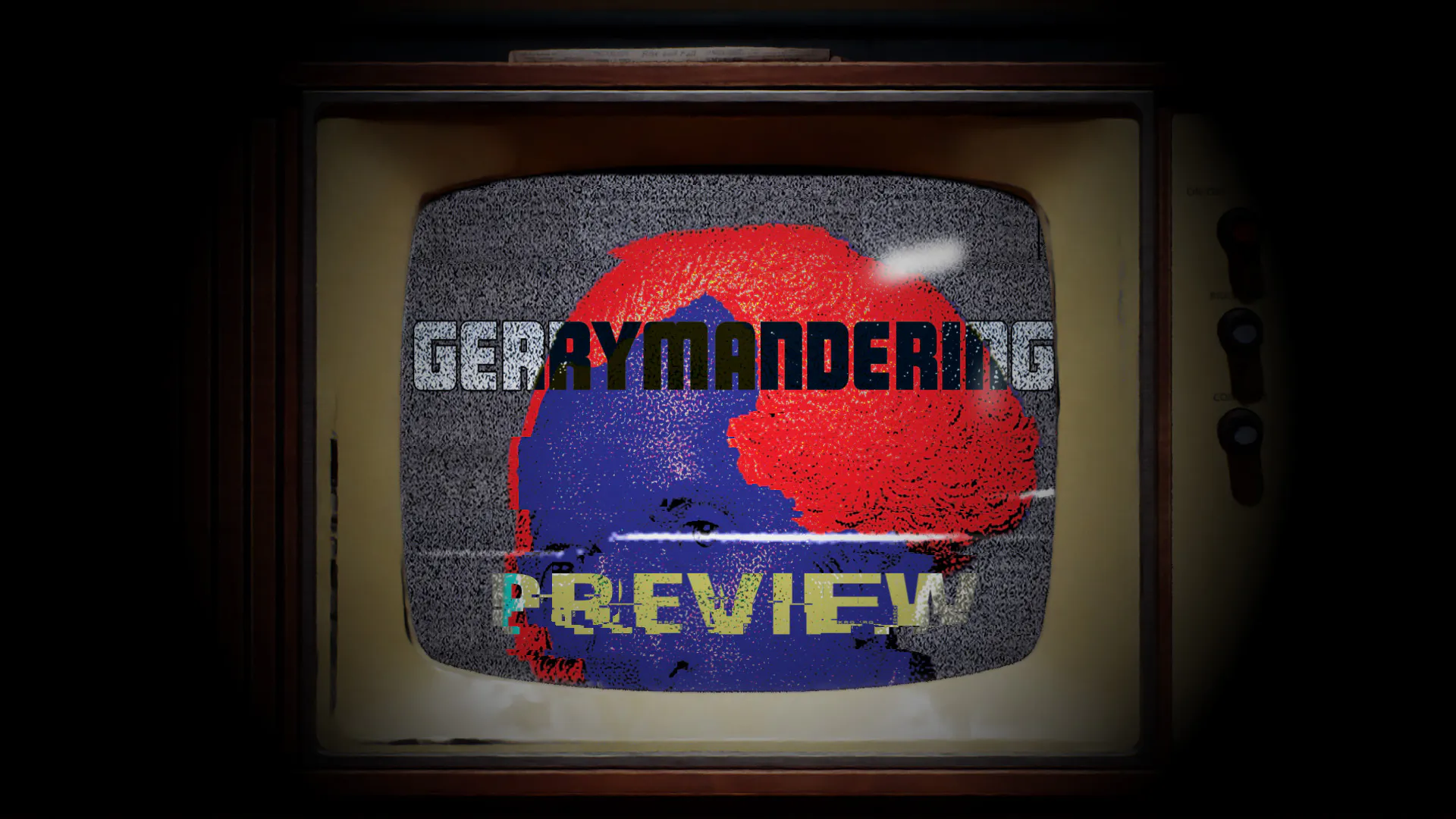 PREVIEW: Gerrymandering: Mutually Artificial Democracy | Political Reality | S01E11 | Show Notes Coming Soon | 10m 10s | ||||||
| 3/12/26 |  Cutting through the fog of war in Iran | Political Reality | S01E10 | 📰 Reporting on extent to which 2025 US strikes “obliterated” Iran’s nuclear capabilities: https://www.bbc.com/news/articles/ckglxwp5x03o ⚛️ Details about Iran’s uranium enriched to 60%: https://www.armscontrol.org/issue-briefs/2026-03/us-war-iran-new-and-lingering-nuclear-risks 📄 March 2026 Congressional report about Iran’s nuclear capabilities: https://www.congress.gov/crs-product/IN12665 ☢️ International Atomic Energy Agency (IAEA) reporting on Iran’s nuclear activities and uranium stockpiles: https://www.iaea.org/newscenter/focus/iran/iaea-and-iran-iaea-board-reports 🛰️ Satellite imagery of the Feb. 28, 2026, school strike in Iran: https://www.nytimes.com/2026/03/05/world/middleeast/iran-school-us-strikes-naval-base.html 🚀 Evidence that the school was struck by a US Tomahawk cruise missile: https://www.nytimes.com/2026/03/08/world/middleeast/iran-minab-school-strike.html 📺 Reporter Jeremy Vine correcting himself about the dancing video: https://www.dailymail.co.uk/tv/article-15616555/jeremy-vine-alan-partridge-iran-blunder-channel-5.html 🤖 Examples of AI-generated war videos and photos: https://www.bbc.com/news/articles/ckg8wvz427vo 🐦 Example of a “shallowfake” posted on X: https://x.com/TehranTimes79/status/2027766149862117731? 🎬 Examples of “hype” videos shared by the US government: https://www.theguardian.com/us-news/2026/mar/07/trump-iran-hype-videos 🔍 BBC verify: https://www.bbc.com/news/bbcverify | 52m 55s | ||||||
| 3/4/26 | 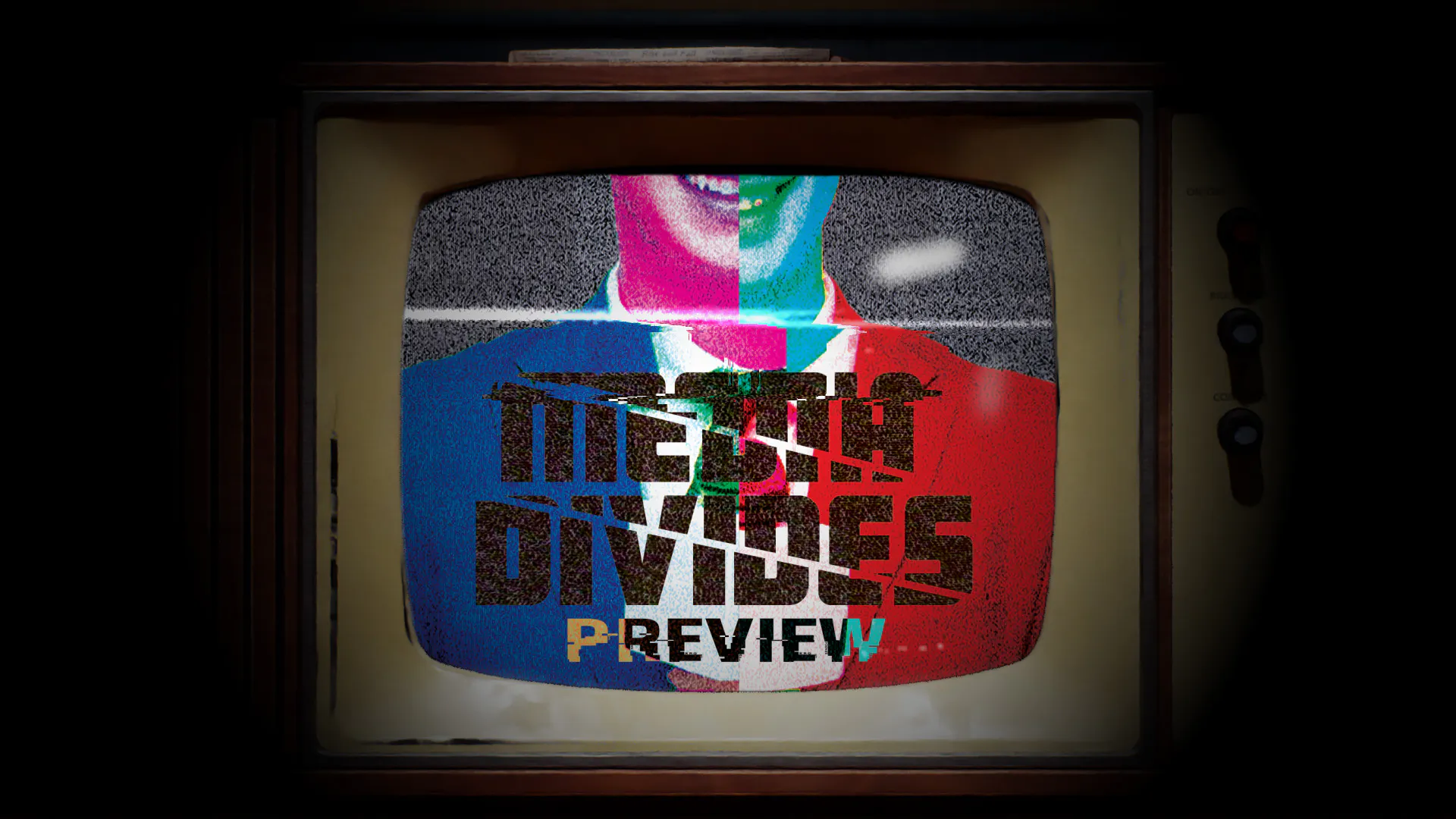 PREVIEW: Which came first? The Media or The Message | Media Divides | S01E09 | Full info on https://www.patreon.com/posts/152180612 | 9m 48s | ||||||




Showing 25 of 27
Pitch Fit is a Pro feature
See how bookable this show is for guests, which brands already advertise, the per-episode ad value, and the best-fit guest and sponsor profile. The numbers are blurred on the free plan.
How readily this show books outside guests like you.
How proven this show is for host-read sponsorships.
For Guests
ProFor Advertisers
ProUpgrade to Pro to unlock guest cadence, sponsor categories, fit scores, and per-episode ad value for this show.
Similar Audience Demographics
Podcasts that attract a similar listener profile




Chart history for Political Reality
Peaked at #83 in New Zealand, currently #83 in New Zealand.
| Market | Genre | Peak | Current | Trend |
|---|---|---|---|---|
| New Zealand | — | #83 | #83 | — |
| Canada | — | #86 | #86 | — |
| Australia | — | #106 | #106 | — |
| United Kingdom | — | #135 | #135 | — |
| United States | — | #142 | #142 | — |
| Mexico | — | #191 | #191 | — |
| Sweden | — | #194 | #194 | — |
| Japan | — | #199 | #199 | — |
Chart Positions
8 placements across 8 markets.
Chart Positions
8 placements across 8 markets.