ProductLed Podcast
The ProductLed Podcast is a weekly interview series with both product-led growth leaders and practitioners who have real knowledge to share on what it takes to use their product to grow a business.
Insights from recent episode analysis
On the show
- Edith Harbaugh1 ep
- Nick Franklin1 ep
- Travis Cannell1 ep
Also: Nathan Barry, Chris Bach, Jason Fried, Wen Sang, Melissa Kwan, Yasser Elsaid, Jeff Wang, Esben Friis-Jensen, Jeremy Clarke, Roeland Delrue, Jaleh Rezaei, Tibo Louis-Lucas
Audience Interest
Podcast Focus
Publishing Consistency
Insights are generated by CastFox AI using publicly available data, episode content, and proprietary models.
Most discussed topics
Brands & references
Total monthly reach
Based on the show's feed history.
Built from
By chart position
- 🇻🇳VN · Marketing#6215K to 178K
- 🇳🇿New Zealand · Marketing#956.5K to 80K
- 🇭🇰HK · Marketing#1292.3K to 28K
- 🇵🇪PE · Marketing#1332.1K to 26K
- 🇧🇪BE · Marketing#1831.8K to 22K
- Per-Episode Audience
Est. listeners per new episode within ~30 days
29K to 353K🎙 Monthly cadence·313 episodes·Last published 2w ago - Monthly Reach
Unique listeners across all episodes (30 days)
32K to 392K🇺🇸71%🇻🇳14%🇳🇿6%+4 more - Active Followers
Loyal subscribers who consistently listen
13K to 157K
Market Insights
Platform Distribution
Reach across major podcast platforms, updated hourly
Total Followers
—
Total Plays
—
Total Reviews
—
* Data sourced directly from platform APIs and aggregated hourly across all major podcast directories.
| Date | Episode | Topics | Guests | Brands | Places | Keywords | Sponsor | Length | |
|---|---|---|---|---|---|---|---|---|---|
| 10/5/26 | Day 55 of 100: Halfway Through Building an AI Product | Day 55, and I'm past the halfway point of building an AI product in 100 days. This one looks back at the first 50 days and lays out the plan for the last 45. The biggest lesson so far: I thought building the app would be the hard part. It isn't. Figuring out what to build, how it fits into the business, and what the next offer should be is still way harder. The PLG analyzer now gets about 8 out of 10 recommendations right. I'm not willing to trade quality for cost or speed, so getting that to 99% comes first. The money side hasn't worked yet. The analyzer was meant to lead to working with a ProductLed operator, but most of the people using it run small companies, and they're hard to serve at that price point. Meanwhile the free product costs about $1,300 a month to run, developer included. So the plan for the next 45 days is one new enterprise client, won through blind calls: analyses of companies I already want to work with. Every one of them also trains the analyzer to give you better recommendations. IN THIS EPISODE 00:00 Day 55, and what I'm building 02:09 Your feedback, from "about as good as ChatGPT" to three scans in a row 03:05 Building the app was never the hard part 04:01 Highlights: shipping, Matt Pocock's skills, new friends 05:20 Lowlights: why 8 out of 10 isn't good enough 06:58 Building an app has no training plan 08:33 The game plan for the last 45 days 09:36 Why the operator offer hasn't worked 10:45 A free product that costs $1,300 a month 11:22 Pay for itself, fit the business, fix quality 13:08 How my advisory work actually runs 14:24 Blind calls: account-based marketing that trains the AI 15:29 One enterprise client and 99% good outputs 16:36 Next: turning internal workflows into products 17:54 What's your take? MENTIONED Run the free PLG analyzer: https://productled.com Matt Pocock's skills: https://github.com/mattpocock/skills Wes Bush on LinkedIn: https://www.linkedin.com/in/wesbush/ What's the biggest challenge you've hit building an AI product? | 18m 52s | ||||||
| 9/19/26 | Day 39 of 100: I Said Ship It and Nothing Shipped | In the last episode I told you I'd hit a wall building an AI product in 100 days. This is what happened after I asked for help. So many of you replied, and a handful of those replies changed how I build. One pointed me to Matt Pocock's skills on GitHub, which exposed an embarrassing habit: session after session I'd been telling Claude "ship it" and assuming the change went live. It didn't. Others told me I was trying to boil the ocean. So the PLG analyzer now finds one opportunity worth your week instead of three, and a judge agent decides what matters most rather than a formula weighing everything the same. My own rating went from a 4 out of 10 to a 6. Next up is cost and speed. A free assessment still costs 40 to 60 cents and takes about two minutes, and I want it under 60 seconds. I close on something that has little to do with the build: using AI to write without ending up sounding 80% like yourself. IN THIS EPISODE 00:00 Day 39, and why updates are now every two weeks 00:47 Stuck, and what happened when I asked for help 02:01 Matt Pocock's skills, and the 11 I use all the time 02:37 I said ship it, and nothing shipped 03:41 Stop trying to boil the ocean 04:16 Why a formula misses the biggest problem on your site 04:57 From three opportunities to one worth your week 05:46 Why an LLM product needs a judge agent 06:58 Eric's idea: a playbook behind every recommendation 08:14 The next two weeks: cost and speed 09:20 From a 4 out of 10 to a 6 10:08 What I learned 10:42 Sound like yourself when AI writes for you MENTIONED Run the free assessment: https://productled.com Matt Pocock's skills: https://github.com/mattpocock/skills Wes Bush on LinkedIn: https://www.linkedin.com/in/wesbush/ What's one skill or tool someone recommended that changed how you build? | 13m 11s | ||||||
| 9/8/26 | AI product developmentbuilding in public+3 | — | AI productGitHub+3 | — | AI productrecommendations+3 | — | 8m 16s | ||
| 8/14/26 | AI product developmentIronman training+3 | — | AI-first product | — | AI productIronman mode+3 | — | 27m 15s | ||
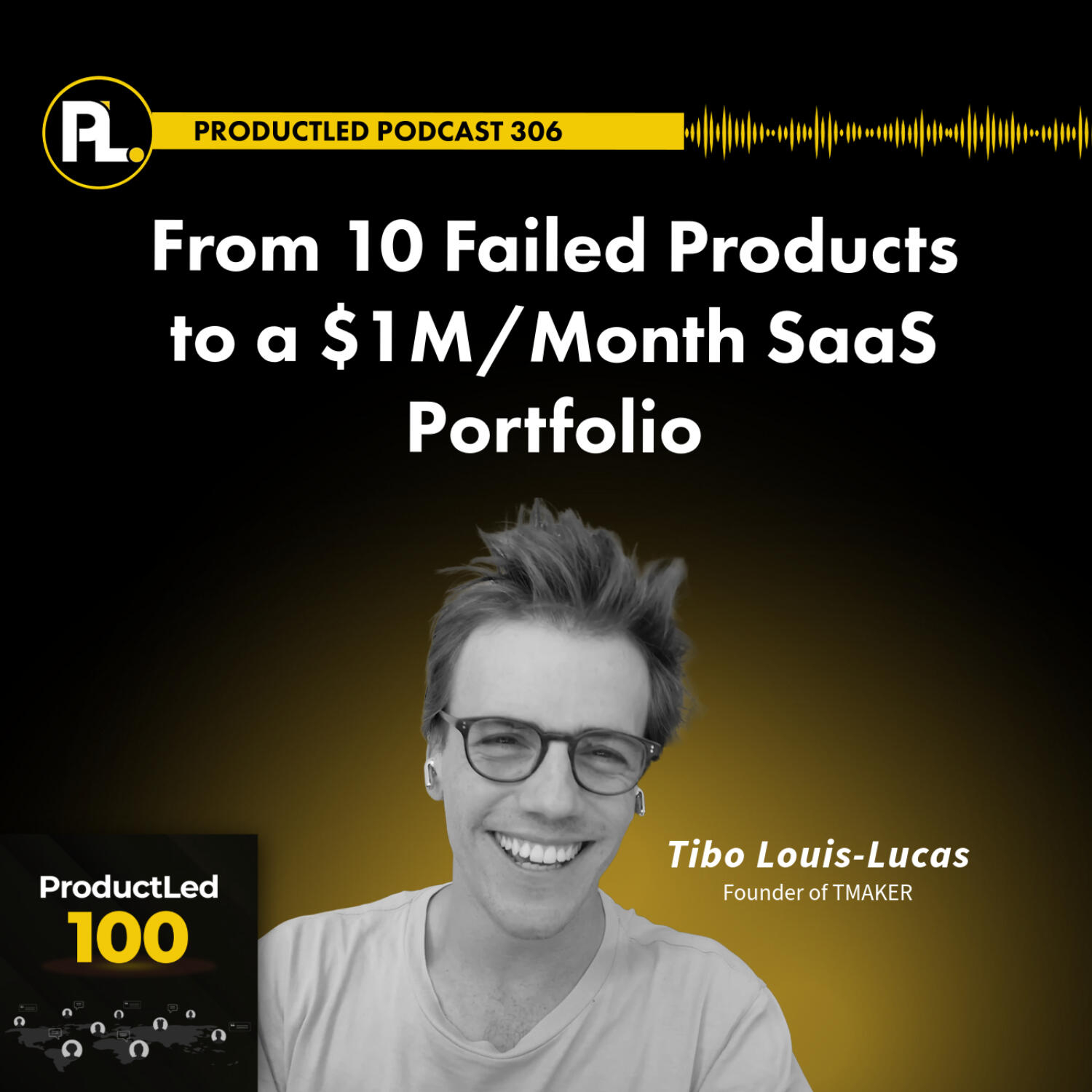
| 6/16/26 | product developmentSaaS+4 | Tibo Louis-Lucas | Tweet HunterTaplio+1 | — | failed productsSaaS portfolio+5 | — | 52m 33s | ||
| 5/26/26 | cybersecurityproduct-led growth+4 | Roeland Delrue | Aikido SecuritySOC 2 | — | Aikido Securitycybersecurity+5 | — | 53m 01s | ||
| 5/15/26 | AISaaS+4 | Jaleh Rezaei | MutinyAI | — | SaaSAI+4 | — | 49m 57s | ||
| 5/8/26 | lean SaaS companiesfounder mindset+4 | Esben Friis-JensenJeremy Clarke | WebMergeQuin+1 | — | SaaSbusiness growth+6 | — | 54m 50s | ||
| 4/24/26 | enterprise AIleadership+4 | Jeff Wang | WindsurfOpenAI+2 | — | AI codingWindsurf+6 | — | 36m 17s | ||
| 4/9/26 | feature managementsoftware delivery+2 | Edith Harbaugh | LaunchDarklythe ProductLed Podcast+3 | — | LaunchDarklyenterprise sales+2 | — | 34m 08s | ||
Want analysis for the episodes below?Free for Pro Submit a request, we'll have your selected episodes analyzed within an hour. Free, at no cost to you, for Pro users. | |||||||||
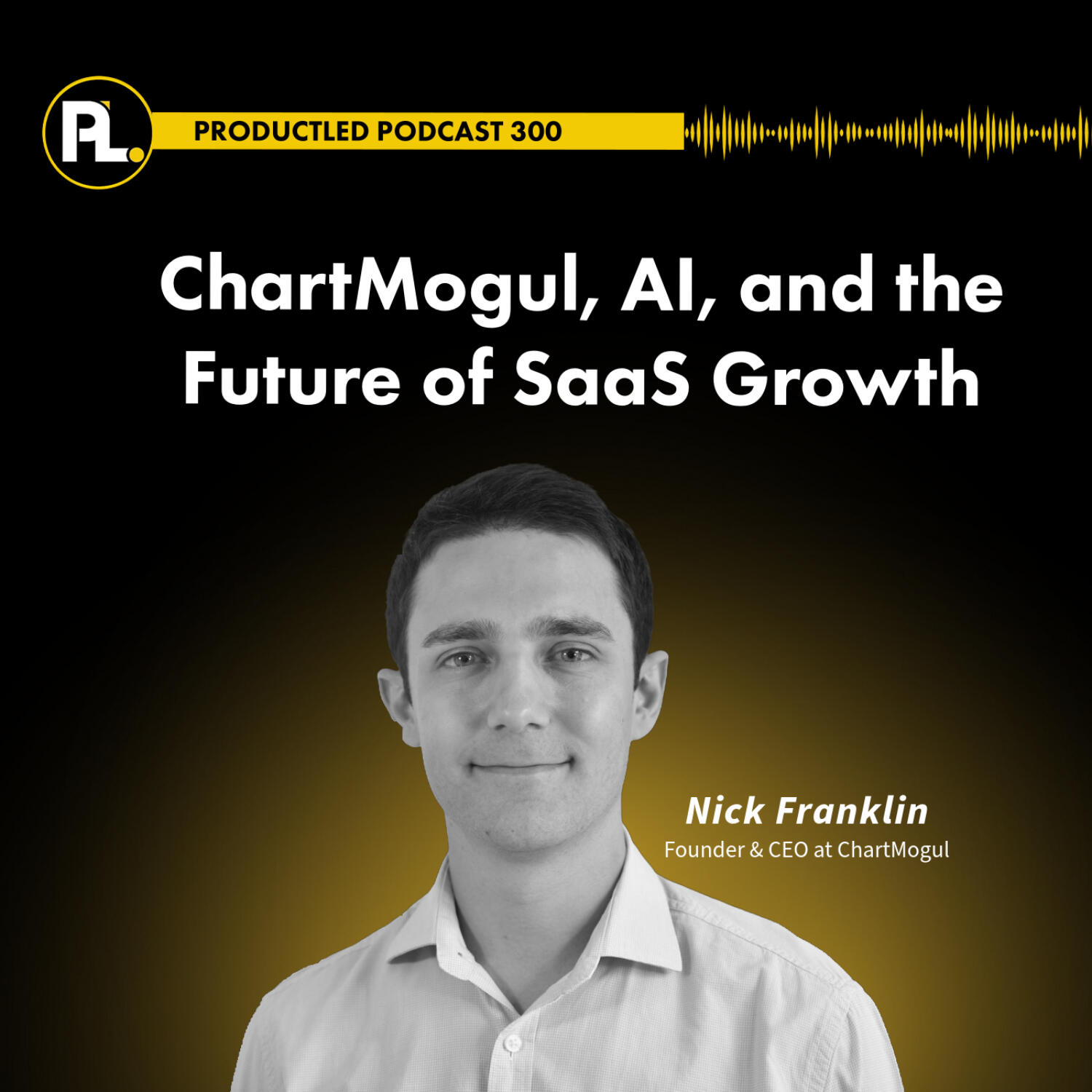
| 4/3/26 | SaaSAI+3 | Nick Franklin | SlackNotion+7 | — | ChartMogulCRM+3 | — | 49m 30s | ||
| 3/27/26 | AIGPU+3 | Travis Cannell | Vast.aithe ProductLed Podcast+2 | — | Vast.aiAI infrastructure+3 | — | 41m 57s | ||
| 3/21/26 | Product-Led GrowthAI+2 | — | CursorWestlaw+10 | — | PLGAI-native products+7 | — | 15m 39s | ||
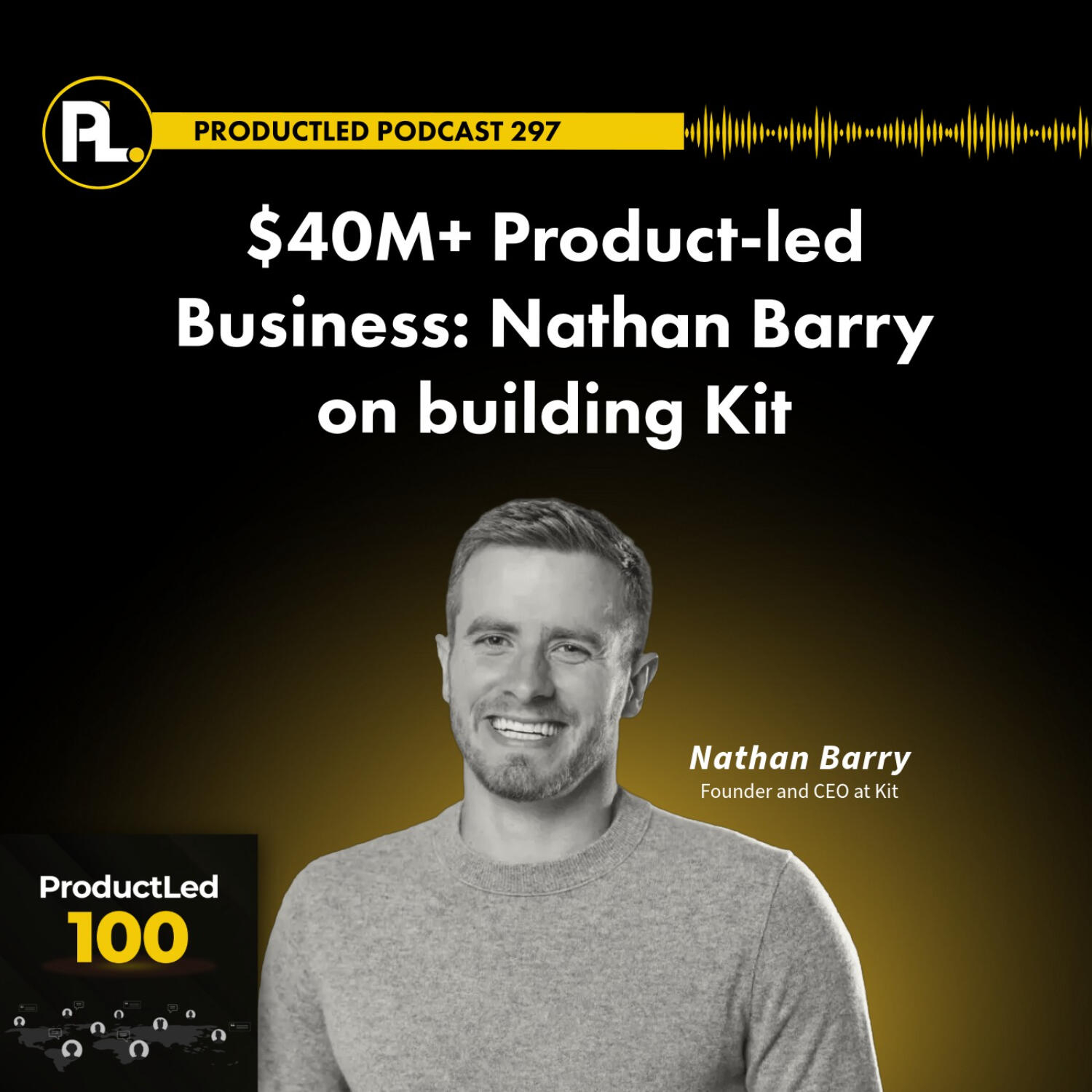
| 3/13/26 | product-led businesscustomer understanding+3 | Nathan Barry | KitLinkedIn | — | transparencyproduct flywheel+3 | — | 51m 25s | ||
| 3/6/26 | web developmentproduct-led growth+2 | Chris Bach | JamstackNetlify+2 | — | Netlifyfounder+4 | — | 57m 49s | ||
| 2/27/26 | product philosophysoftware development+3 | Jason Fried | BasecampHEY+2 | — | underdog mindsetvalidation theater+3 | — | 41m 12s | ||
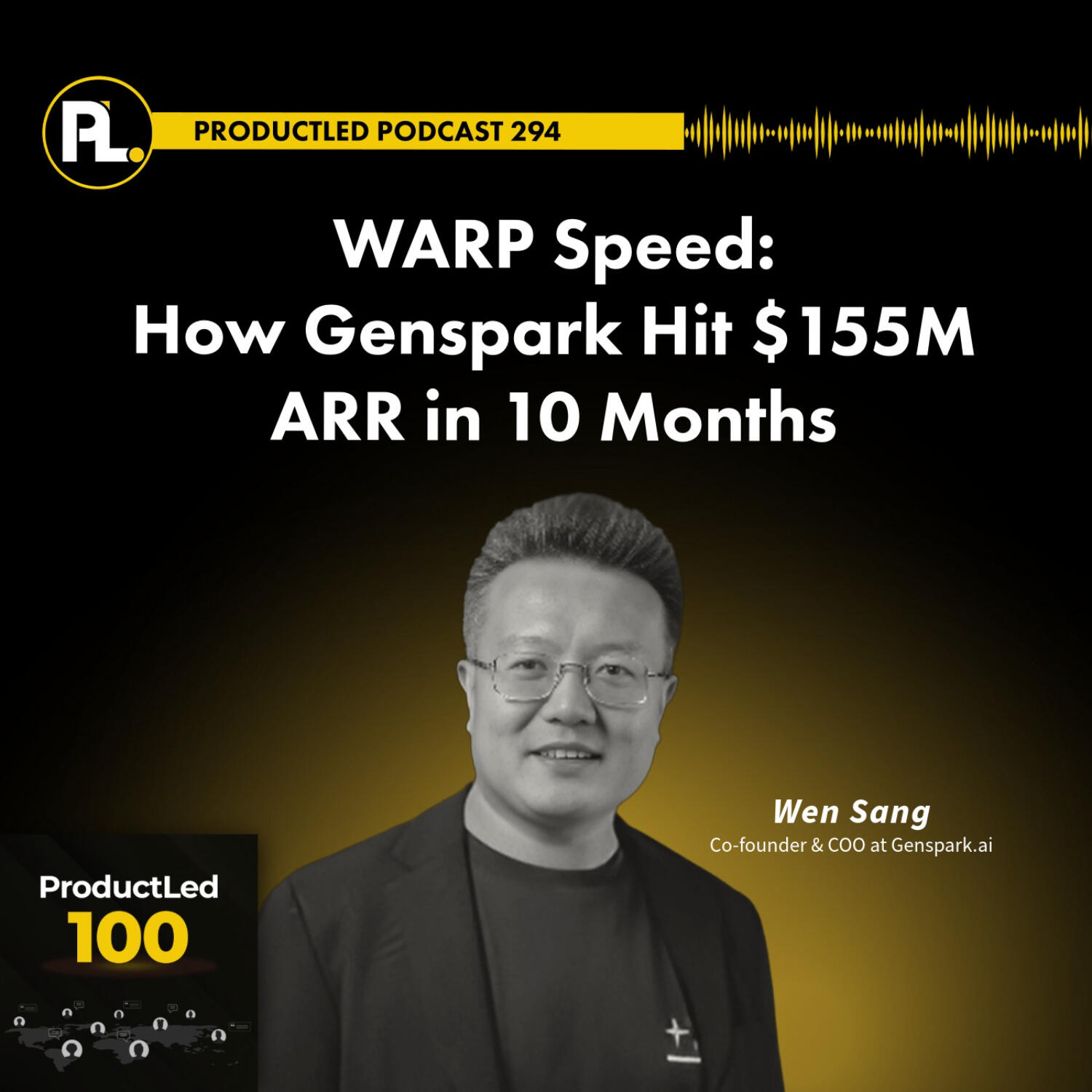
| 2/19/26 | AIgrowth strategy+2 | Wen Sang | Gensparkthe ProductLed Podcast+2 | Silicon Valley's | GensparkARR+2 | — | 55m 33s | ||
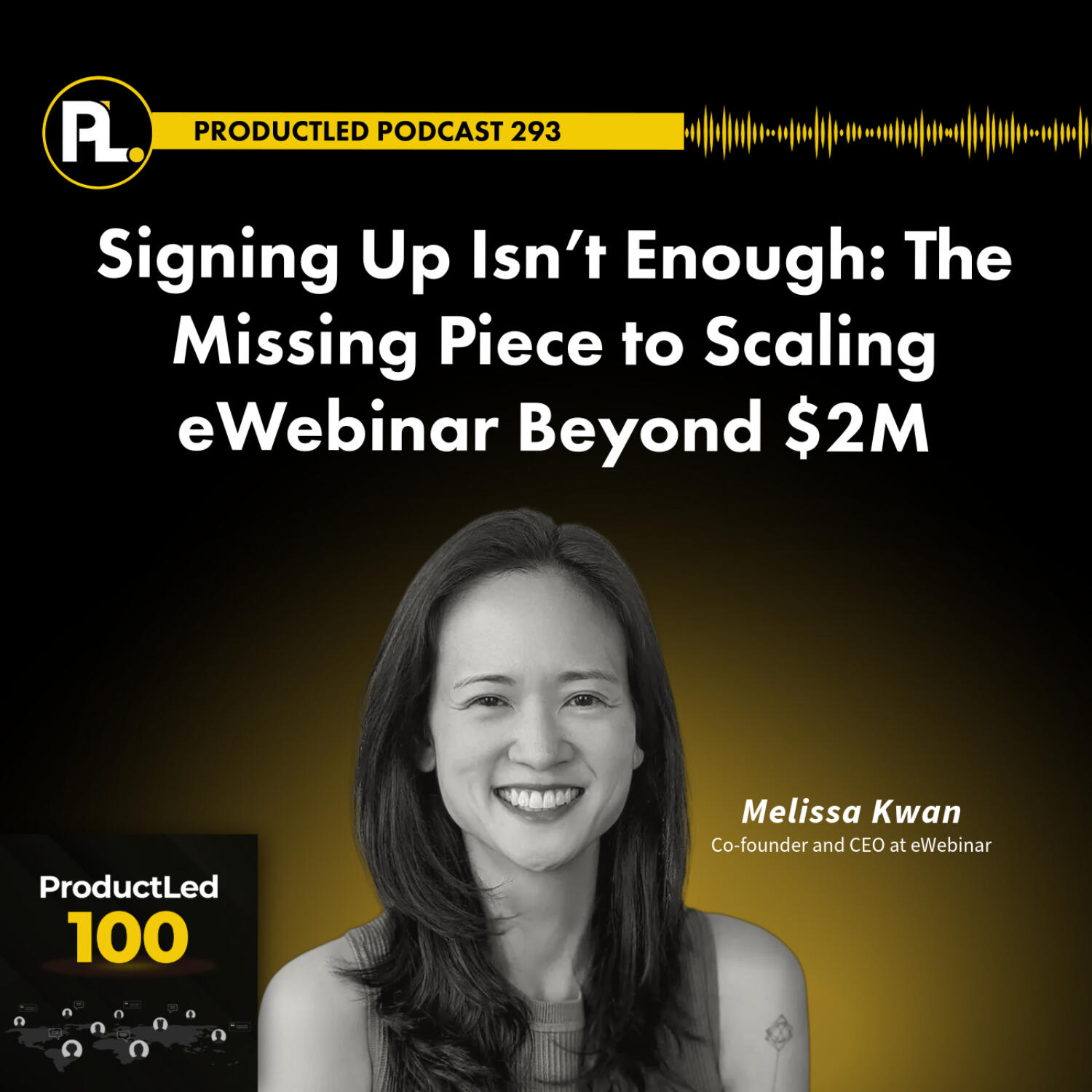
| 2/13/26 | product-led growthcustomer success+3 | Melissa Kwan | eWebinarLinkedIn | — | eWebinarARR+3 | — | 50m 06s | ||
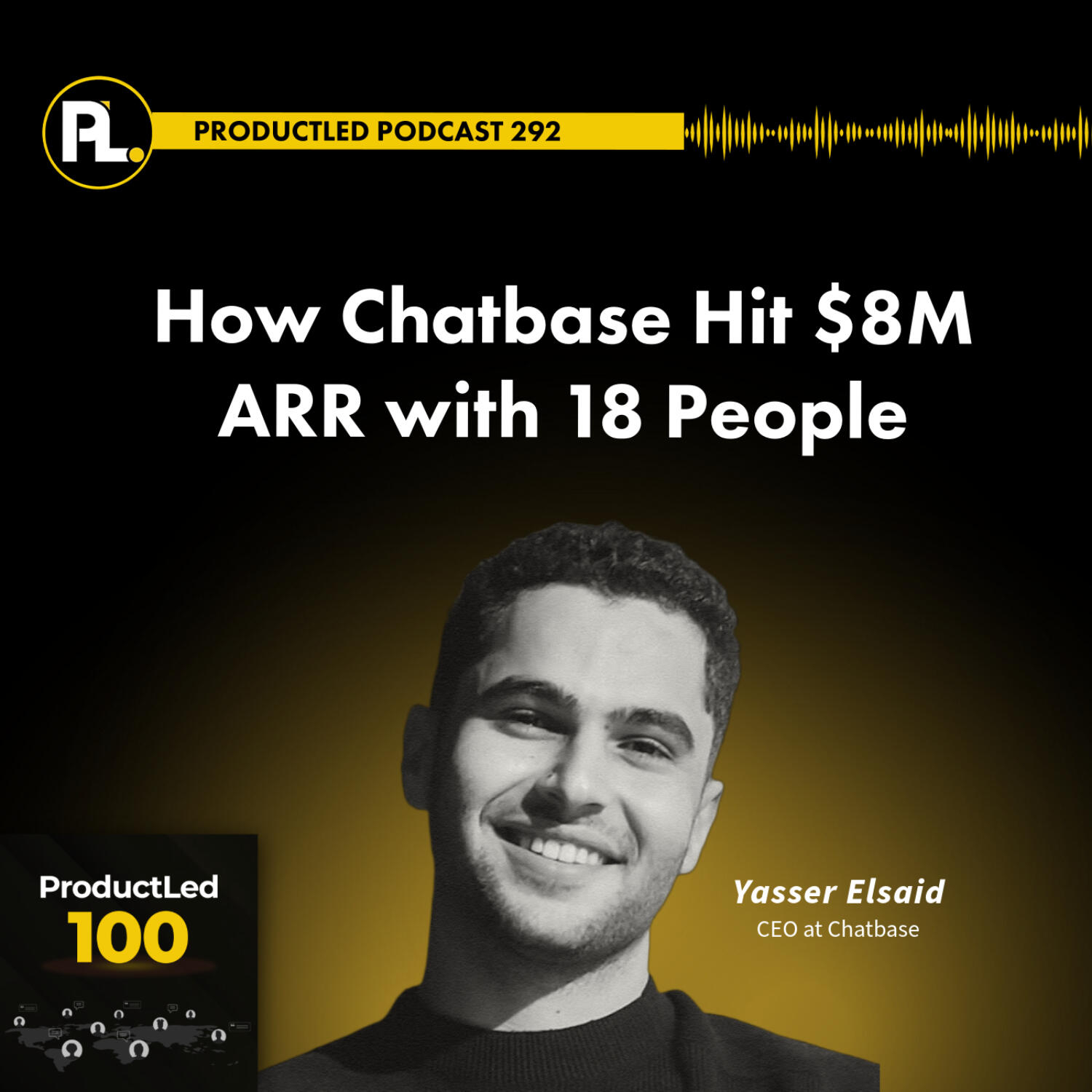
| 2/5/26 | SaaSAI+3 | Yasser Elsaid | ChatbaseDaVinci+2 | New York | ChatbaseARR+4 | — | 42m 47s | ||
| 2/4/26 |  Taste is the New Moat: Building in the Age of AI with Typeform’s Founder | For decades, the biggest barrier to building a SaaS company was technical talent. You needed a team of engineers to ship a world-class product. David Okuniev, Co-Founder of Typeform, believes that era is over. In this episode of the ProductLed 100 series, Wes Bush sits down with David Okuniev (Founder of Float) and Esben Friis-Jensen (Co-Founder of Userflow) to discuss why "Taste" is the only defensible moat left in the age of AI. David reveals how he is building his new venture, Supercut, by literally talking to Claude Code through a microphone - building full iOS apps in days without knowing Swift. He argues that since AI has commoditized the "How" of building software, the "What" and "Why" (Design and Taste) matter more than ever. They also explore why this shift allows for a "Minimum Viable Team" of just three people, why David regrets scaling Typeform into a large organization, and how to survive as a "Pioneer" founder without getting bogged down by professional management. Key Highlights: 01:21: The "Accidental" Origin: How a client project for a toilet showroom in Barcelona turned into Typeform.03:51: The Viral Launch: Generating 8,000 pre-signups and achieving immediate viral growth without traditional validation.09:53: The Taste Differentiator: Why design is the only way to distinguish yourself 13:00: The "Impulsive" Archetype: David’s approach to building products based on intuition rather than validation.21:41: The "Professional CEO" Trap: Why David regrets stepping down and why founders should stay in the driver's seat.37:42: The Float Labs Model: How David runs a product lab to spin out new companies (like Supercut).42:09: The Minimum Viable Team: Why the modern startup only needs a Designer, a Tech Lead, and a Marketer.44:53: The "Tastemaker" Advice: You don't need to be a designer; you just need to be opinionated. Resources: 🎥 Supercut: The AI-powered screen recorder - https://float.build💼 Connect with David Okuniev on Twitter/X - @DavidOkuniev💼 Connect with Wes Bush on LinkedIn - https://www.linkedin.com/in/wesbush/💼 Connect with Esben Friis-Jensen on LinkedIn - https://www.linkedin.com/in/esbenfriisjensen/🧠 Sign up for the ProductLed Newsletter - https://www.productled.com/newsletter | 47m 37s | ||||||
| 1/14/26 |  The Solo-Founder Playbook: How to Run a $1M ARR SaaS with 1 person | ProductLed 100 - The Solo-Founder Playbook: How to Run a $1M ARR SaaS with 1 person Most founders believe scaling requires a massive headcount, co-founders, and VC funding. They think success is measured by the size of the team, not the efficiency of the revenue. In this episode of the ProductLed 100 series, Wes Bush sits down with Vincent Jong (Founder of Poolside Ventures) and Esben Friis-Jensen (Co-Founder of Userflow) to discuss the emerging era of the "One-Person Company" - businesses designed to generate millions in revenue with just a single operator. Vincent reveals his strategy for building a portfolio of lean, highly profitable SaaS companies like MeetBot. Together with Esben, they break down how AI tools like Lovable and Cursor have removed the technical barrier to entry, why "speed" is the new competitive moat against incumbents like Calendly, and the exact skill sets required to thrive as a solo builder. Whether you are a developer looking to launch your own venture or a founder trying to maximize efficiency, this episode offers a blueprint for building high-revenue, low-headcount businesses that are built to last forever. Key Highlights: 01:36: Why Vincent stopped looking for co-founders and started building alone03:09: The AI Tech Stack: How tools like Lovable and Cursor replace engineering teams06:07: Why building the product is the easy part (and selling is the hard part)13:17: Disrupting a Red Ocean: Why MeetBot entered the crowded scheduling market16:53: The Economics of Infinite Runway: Operating a SaaS for a few hundred dollars a month20:31: Speed vs. Scale: How one-person teams outmaneuver incumbents27:21: The "Launch Early" myth vs. the new bar for MVP quality37:44: Vincent’s advice: Don’t quit your job. Build on weekends Resources: 📅 MeetBot: The API-first scheduling solution 💼 Connect with Vincent Jong on LinkedIn 💼 Connect with Wes Bush on LinkedIn 💼 Connect with Esben Friis-Jensen on LinkedIn 🧠 Sign up for the ProductLed Newsletter | 42m 24s | ||||||
| 1/6/26 |  Disrupting a Red Ocean: Clarify.ai’s Strategy to Beat Salesforce and HubSpot | Most founders are terrified of "Red Oceans" or markets saturated with massive competitors. They think the only way to win is to find a completely untapped "Blue Ocean." In this episode of the ProductLed 100 series, Wes Bush sits down with Patrick Thompson (CEO of Clarify.ai) and Esben Friis-Jensen (Co-Founder of Userflow) to discuss why entering a crowded market is actually the smartest move a founder can make if you have the right strategy. Patrick reveals how he spent six months interviewing potential customers before writing a single line of code for Clarify, an autonomous CRM designed to disrupt the industry giants. Together with Esben, they break down the exact framework for validating problems, the power of business model disruption through pricing wars, and why "feature parity" is not the goal. Whether you are building a new startup or trying to carve out space in a competitive category, this episode offers a masterclass in customer discovery, positioning, and Go-To-Market execution. Key Highlights: 02:15 : Why Patrick spent 6 months on discovery before writing a line of code 06:53 : The "Red Ocean" Advantage: Why crowded markets are easier than Blue Oceans 10:10 : How to differentiate when features are commoditized 12:34 : Using price and ease of use as a wedge against incumbents 18:31 : The 3-Step Framework for building what people want: ICP, Channels, and Business Model 23:12 : Which acquisition channels actually work (Product Hunt vs. Founder-led Marketing) 30:04 : Why complex products still need human onboarding, even in PLG 36:49 : How to operationalize customer feedback for engineering teams Resources: 📧 Clarify.ai : The Autonomous CRM 💼 Connect with Patrick Thompson on LinkedIn 💼 Connect with Wes Bush on LinkedIn 📝 Founder Therapy : Patrick's Substack 💼 Connect with Esben Friis-Jensen on LinkedIn 🧠 Sign up for the ProductLed Newsletter | 39m 23s | ||||||
| 10/31/25 |  Become a 10x PLG Practitioner Using AI (7 Real Workflow Examples) | AI and PLG are two of the most transformative forces in SaaS today and when combined, they can multiply growth faster than any traditional go-to-market model. In this episode, Wes Bush sits down with Aakash Gupta, one of the leading voices in product and growth (and the creator of the largest newsletter in the space with 200,000+ subscribers), to explore how AI is revolutionizing every layer of product-led growth - from activation and onboarding to pricing and expansion. They break down exactly how top SaaS companies are using AI to reduce time-to-value by 10x, build smarter pricing models, and even automate their internal processes using agents like Claude, NotebookLM, and Relay. Whether you’re a founder, product manager, or growth operator, this episode is packed with real use cases, tools, and frameworks that will help you stay ahead of the curve in the AI + PLG era. Key Highlights 02:15 – Top LLMs for product and growth teams 05:07 – Why every PLG practitioner should create a “copilot” inside Claude 07:29 – How AI projects can act as your chief of staff or people ops assistant 11:46 – Building AI executive assistants that replace (or supercharge) your EA 14:26 – Why marketers need to rethink their jobs in the age of AI automation 26:47 – The 10x practitioner mindset: how to become exponentially more effective 27:35 – AI-driven activation: how to reduce time-to-value by 90% 28:56 – Using AI evals and profiling questions to personalize onboarding 31:22 – Rethinking SaaS pricing for AI products 36:01 – How to design sustainable AI free tiers and reverse trials 41:08 – AI-assisted expansion and PQLs Resources 🚀 Follow Aakash on LinkedIn - https://www.linkedin.com/in/aagupta/ 📘 Get the ProductLed Playbook for free 🧠 Sign up for the ProductLed Newsletter | 1h 09m 16s | ||||||
| 10/16/25 |  How One Image Change Increased Signups by 8% (The Promised Land Effect) | Most signup pages try to convince users with emotional imagery and persuasive copy. But what if the secret to higher conversions is actually showing people less—not more? In this episode clip, Will Royal, founder and CEO of Promo Tix, reveals how one counterintuitive design change led to an 8% increase in signups. He shares the psychology behind "The Promised Land Effect" and explains why a blurred screenshot of your dashboard can outperform your best marketing copy. This is just one tactic from the full conversation where Will shares three low-effort, high-impact strategies that helped grow Promo Tix to $25,000 in monthly recurring revenue. Key Highlights: 01:19: What is the Promised Land Effect - showing a blurred dashboard beats emotional imagery02:17: Testing 29,000 users led to an 8% conversion increase with just an image swap02:53: Why conversion math matters (4% to 6% = 50% more revenue, not just 2%)03:42: The psychology behind it - creating a curiosity gap that makes users feel "almost there"06:27: Bonus win: Changing "Next" to "Finished" added another 1-2% conversion07:17: Why micro-copy and small details often get overlooked but drive results Resources 🎙️ Full Episode: Episode 266 - 3 Low-Effort, High-Impact Tactics That Took PromoTix to $25K MRR 📖 Read The Product-Led Playbook for free! 🧠 Sign up for the ProductLed Newsletter | 8m 29s | ||||||
| 10/10/25 |  Why We're Giving Away Our $150K Playbook for Free | Most businesses guard their intellectual property like it's Fort Knox. They lock their frameworks behind paywalls, gate their methodologies, and keep their best insights for paying clients only. We're doing the exact opposite - and it's actually better for business. In this episode, Wes reveals why ProductLed invested $150,000 to create The Product-Led Playbook and then decided to give it away completely free. He breaks down the counterintuitive business strategy behind democratizing product-led growth knowledge and why sharing your best IP actually attracts better clients. Key Highlights: 01:04: Why all ProductLed books are free (and always have been)02:09: Turning down publishers 02:50: The $150,000 investment and 16 iterations it took03:10: Why guarding knowledge is actually stupid for business03:53: Democratizing PLG - it's a skill anyone can learn04:39: How free content attracts doers who've already made hundreds of thousands05:28: Using free books to align entire teams on PLG strategy06:37: Why sharing makes onboarding company-wide adoption effortless06:56: The long-term mission - making ProductLed the de facto SaaS scaling system07:40: Why product-led companies can out-give anyone in their market08:29: What's inside - the same frameworks clients pay $30K+/month for08:51: The three core outcomes you'll unlock with the system09:19: Testimonials from Nathan Barry, Esben (Userflow), and G (Empire) Resources: 📖 Free ProductLed Playbook - https://productled.com/playbook?utm_source=podcast 🎯 Free Gameplan Session - productLed.com 📚 Other Free Books Product-Led Growth - https://productled.com/book/product-led-growth?utm_source=podcast Product-Led Onboarding - https://productled.com/book/onboarding?utm_source=podcast | 12m 01s | ||||||








Showing 25 of 313
Pitch Fit is a Pro feature
See how bookable this show is for guests, which brands already advertise, the per-episode ad value, and the best-fit guest and sponsor profile. The numbers are blurred on the free plan.
How readily this show books outside guests like you.
How proven this show is for host-read sponsorships.
For Guests
ProFor Advertisers
ProUpgrade to Pro to unlock guest cadence, sponsor categories, fit scores, and per-episode ad value for this show.
Chart history for ProductLed Podcast
Peaked at #62 in VN, currently #62 in VN.
| Market | Genre | Peak | Current | Trend |
|---|---|---|---|---|
| VN | — | #62 | #62 | — |
| New Zealand | — | #95 | #95 | — |
| HK | — | #129 | #129 | — |
| PE | — | #133 | #133 | — |
| RO | — | #152 | #152 | — |
| BE | — | #183 | #183 | — |
Chart Positions
6 placements across 6 markets.
Chart Positions
6 placements across 6 markets.