

Insights from recent episode analysis
Audience Interest
Podcast Focus
Publishing Consistency
Platform Reach
Insights are generated by CastFox AI using publicly available data, episode content, and proprietary models.
Most discussed topics
Brands & references
Est. Listeners
Insufficient chart data. Estimates will improve as the show charts.
- Per-Episode Audience
Est. listeners per new episode within ~30 days
N/A🎙 Weekly cadence·27 episodes·Last published 3mo ago - Monthly Reach
Unique listeners across all episodes (30 days)
N/A - Active Followers
Loyal subscribers who consistently listen
N/A
Market Insights
Platform Distribution
Reach across major podcast platforms, updated hourly
Total Followers
—
Total Plays
—
Total Reviews
—
* Data sourced directly from platform APIs and aggregated hourly across all major podcast directories.
On the show
From 10 epsHost
Recent guests
No guests detected in recent episodes.
Recent episodes
Mannershift Workshop Topic Debate
Mar 25, 2026
23m 12s
Microshifting Explained: Flexibility Hack or Burnout Trap in the Future of Work
Feb 2, 2026
16m 08s
Why Mannershift Matters: Young Professionals' Guide
Jan 27, 2026
14m 04s
Does Excellence Require Fear? The Miranda Priestly Leadership Debate
Jan 14, 2026
12m 11s
Has Global Etiquette Changed Too Much or Not Enough? Professionalism in 2026
Jan 13, 2026
14m 11s
Social Links & Contact
Official channels & resources
Official Website
Login
RSS Feed
Login
| Date | Episode | Topics | Guests | Brands | Places | Keywords | Sponsor | Length | |
|---|---|---|---|---|---|---|---|---|---|
| 3/25/26 | Mannershift Workshop Topic Debate✨ | workshopprofessional presence+4 | — | Professional Global EtiquetteMannershift | — | workshopprofessional presence+4 | — | 23m 12s | |
| 2/2/26 | Microshifting Explained: Flexibility Hack or Burnout Trap in the Future of Work✨ | microshiftingproductivity+4 | — | — | — | microshiftingproductivity upgrade+6 | — | 16m 08s | |
| 1/27/26 | Why Mannershift Matters: Young Professionals' Guide✨ | professionalismhybrid workplace+4 | — | — | — | MannerShiftcommunication style+7 | — | 14m 04s | |
| 1/14/26 | Does Excellence Require Fear? The Miranda Priestly Leadership Debate✨ | leadershipfear-based control+4 | — | The Devil Wears Prada | — | leadership debateMiranda Priestly+5 | — | 12m 11s | |
| 1/13/26 | 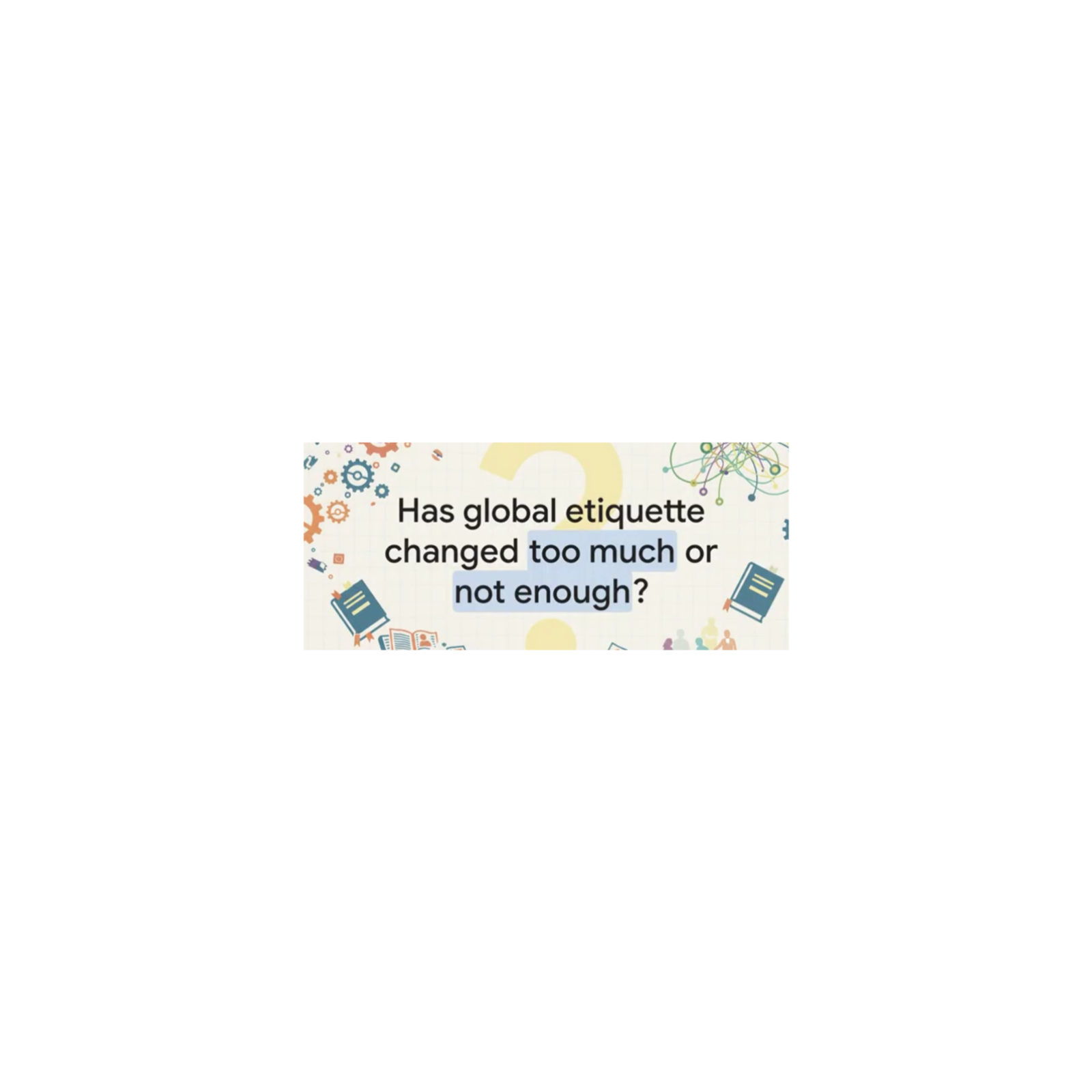 Has Global Etiquette Changed Too Much or Not Enough? Professionalism in 2026✨ | global etiquetteprofessionalism+4 | — | The Deep Dive | — | professionalismglobal teams+5 | — | 14m 11s | |
| 12/7/25 | Minding My Manners✨ | etiquettemusic+1 | — | Minding My Manners | — | etiquettemanners+3 | — | 5m 49s | |
| 11/16/25 | 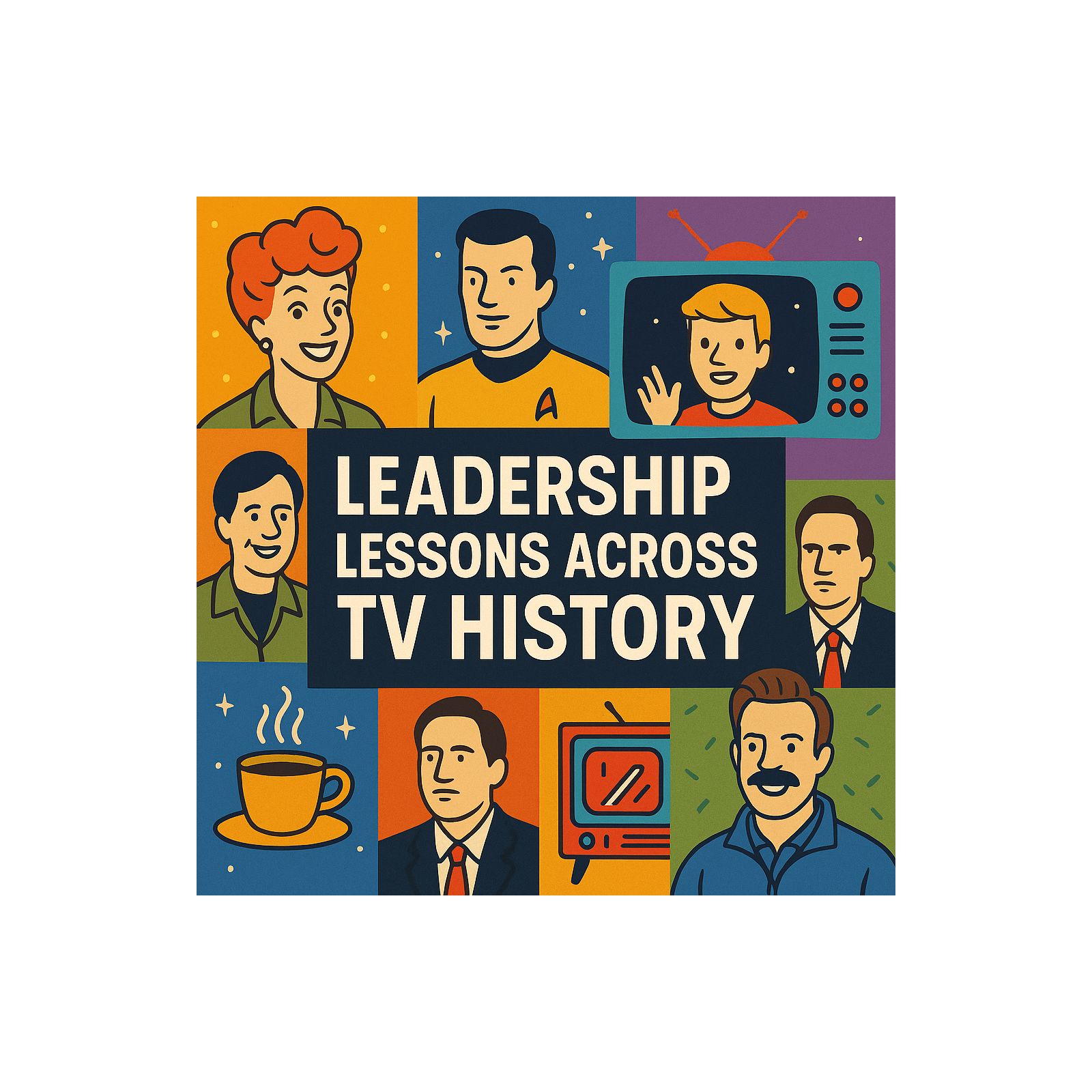 Leadership Lessons Across TV History with Adrienne Barker, MAS✨ | leadership lessonstelevision history+4 | — | I Love LucyStar Trek+3 | — | leadershipTV shows+5 | — | 10m 03s | |
| 11/11/25 |  Cross-Cultural Etiquette✨ | cross-cultural communicationglobal workplace challenges+4 | — | Professional Global EtiquetteCross-Cultural Etiquette in the Hybrid Age | — | cross-cultural etiquettehybrid work+6 | — | 12m 47s | |
| 11/7/25 | 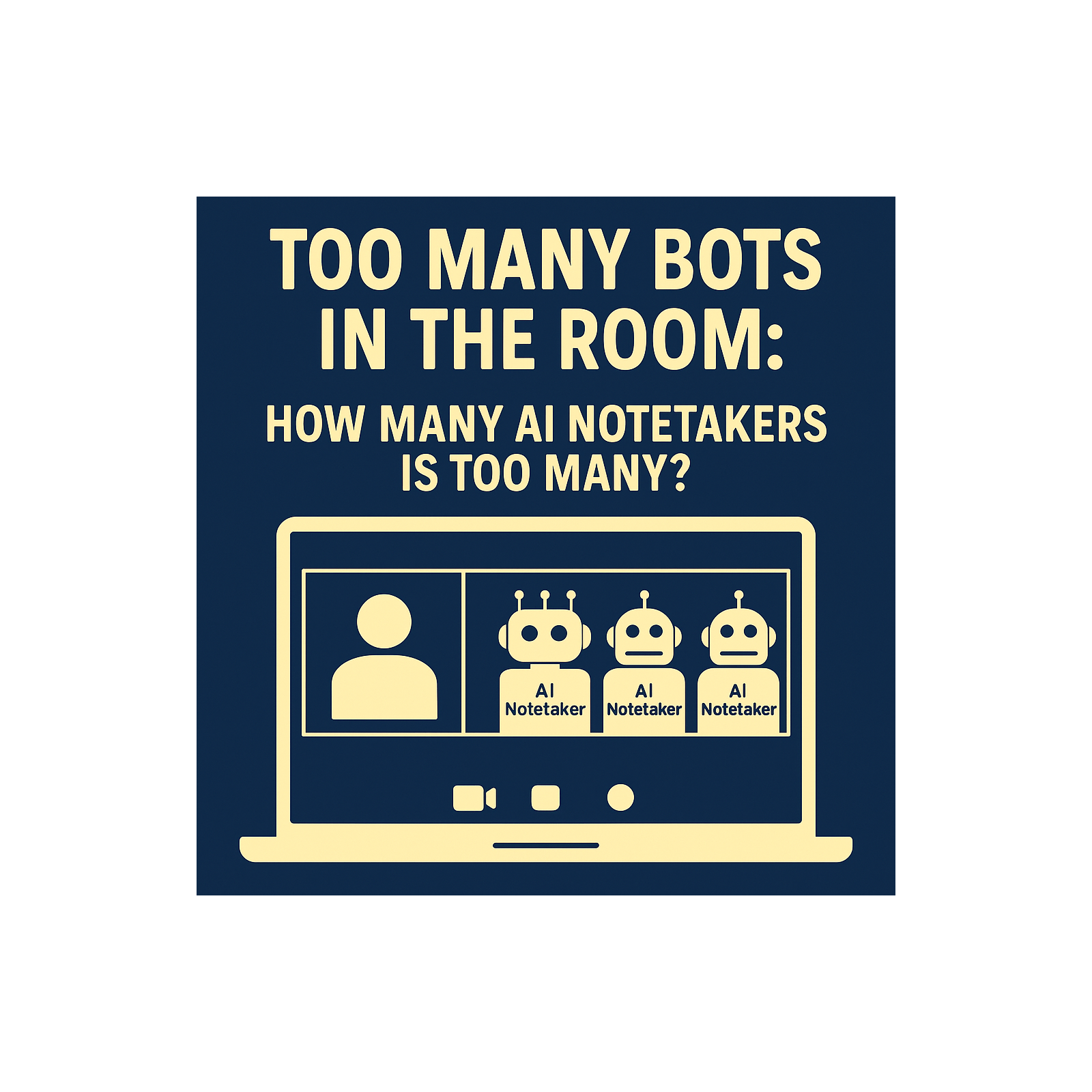 AI In Meetings✨ | AI in meetingsproductivity+3 | — | OtterFathom+2 | — | AI assistantsZoom meetings+3 | — | 15m 25s | |
| 11/4/25 | 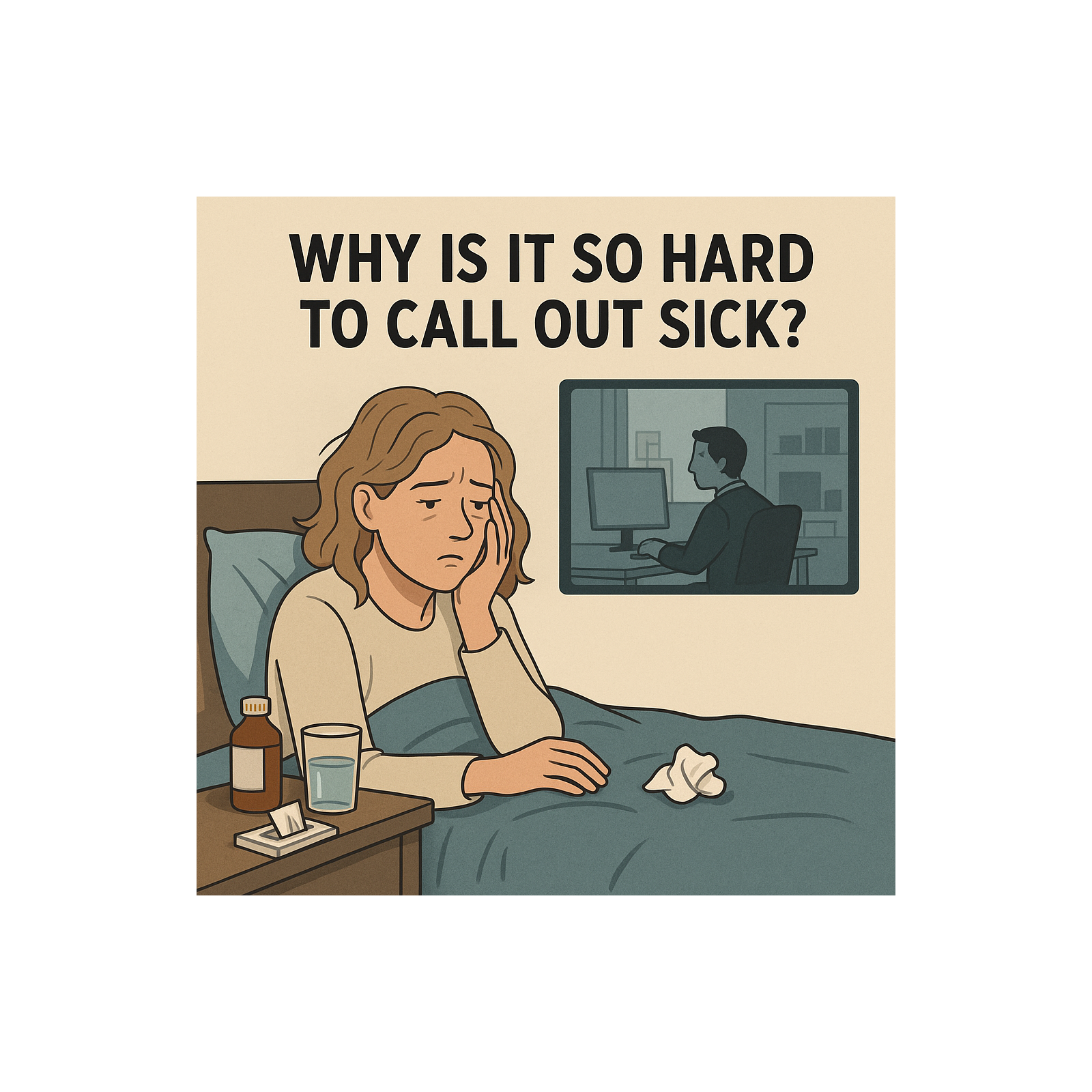 Calling Out Sick Dilemma✨ | workplace dilemmasprofessionalism+5 | — | Professional Global Etiquette Podcast | — | calling out sickprofessionalism+5 | — | 17m 13s | |
Want analysis for the episodes below?Free for Pro Submit a request, we'll have your selected episodes analyzed within an hour. Free, at no cost to you, for Pro users. | |||||||||
| 10/20/25 |  Sustainable Etiquette | In this AI-powered episode of The Professional Global Etiquette Podcast, creator Adrienne Barker, MAS explores how artificial intelligence can bring modern workplace conversations to life. This simulated debate between two AI voices dives into how sustainability, overconsumption, and ethical branding are reshaping professional etiquette across industries and cultures. From eco-conscious offices to the controversy around promotional products and corporate swag, the discussion challenges listeners to reflect on how “green” our professional choices truly are.→ Key Insights: → Professional etiquette now includes sustainability and ethical awareness. → Overconsumption, even in the name of being “eco-friendly,” remains a global issue. → AI demonstrates how etiquette can be analyzed from multiple perspectives—without bias. → Swag and branded gifts can still be ethical when designed with purpose and longevity. → Cultural sensitivity must guide every sustainability standard. → True professionalism lies in mindful consumption and transparent intention.Created by Adrienne Barker, MAS, this Professional Global Etiquette Podcast series uses AI conversation design to explore the evolving codes of global professionalism. Listen on all podcast platforms or at Professional Global Etiquette Podcast. Ask yourself: are your professional habits sustainable—or just well-marketed? | 16m 02s | ||||||
| 10/2/25 |  Email Rules That Matter | When does “Dear Mr. Patel” show respect—and when does “Hi Raj” show better judgment? Today’s debate dives into the etiquette gap between generations.In this Professional Global Etiquette Debate, AI voices examine the tension between formal, title-driven politeness and the younger generation's push for casual authenticity. One side argues that structure and rituals (such as greetings, honorifics, and hierarchy) prevent offense and protect careers; the other contends that sincerity, speed, and a context-aware tone build trust faster—especially on digital channels like Slack. We examine first impressions, power distance, email versus chat norms, and how global culture (Tokyo versus Stockholm) influences the “right” answer, as presented by Professional Global Etiquette, founded by Adrienne Barker, MAS.Key Takeaways→ Default up when uncertain: start formal with new contacts; relax by mirroring their tone.→ Titles signal earned expertise in many settings; in others, first names signal partnership.→ Channel matters: email tolerates formality; Slack/Teams reward concise, warm clarity.→ Culture flips the script: honorifics in high power-distance regions vs. first-name norms in Scandinavia.→ Authenticity without awareness reads careless; formality without sincerity reads robotic.→ Practical rule: ask preferences, mirror back, and calibrate for role, risk, and relationship stage.Share this episode and tag @Professional Global Etiquette. Book a workshop on bridging generational etiquette gaps with Adrienne Barker, MAS. | 14m 13s | ||||||
| 10/2/25 |  Etiquette of Ideas and Meetings | When a fresh idea hits you — do you park it for later or ship it right now?→ This debate goes beyond meeting etiquette and dives into how we manage ideas in both professional and personal life. Should we use the “parking lot” method to stay focused and avoid having too many coals in the fire? Or does the Ship It Now mindset — taking immediate, constrained action — protect creativity before it fades? We break down both sides, exploring risks, guardrails, and the cultural etiquette of respecting ideas in teams and as individuals.What “Ship It Now” Means → Ship It Now doesn’t mean reckless action. It’s about capturing momentum by taking immediate, limited, and well-guarded steps — like a time-boxed prototype, a quick test, or a small pilot. With clear success metrics and a fallback plan, it turns spark into traction without derailing bigger priorities.Key Takeaways → Parking lots preserve focus, reduce overload, and protect meeting agendas or personal bandwidth. → Without discipline, parking lots become “later graveyards” where ideas go to die. → Ship It Now works best with guardrails: timeboxes, success metrics, and a revert plan. → Too many coals in the fire = burnout. Idea triage protects energy and progress. → Global etiquette matters: in high-context cultures, “parking” can feel dismissive unless transparent. → True professionalism is clarity: who owns the idea, when it will be revisited, or how it will be tested now. Whether you’re in a boardroom or at your desk brainstorming, the next time an idea sparks, ask: Park it, or ship it now? Share this episode with your team and subscribe for more debates on professional and creative etiquette. | 13m 25s | ||||||
| 10/2/25 |  Dry Texting Etiquette | Two letters—“OK”—can spark a big etiquette fight. In a world drowning in notifications, is dry texting efficient respect…or lazy rudeness? In this Professional Global Etiquette Debate, AI voices examine the social rules behind short, clipped replies (“k,” “ok,” “yep”). One side argues that minimal texts create ambiguity, signal disinterest, and chip away at relationships. The other claims brevity is clarity—faster confirmations reduce friction at scale. We test the norms across dating, friendships, and global workplaces, unpack cue-poor mediums, and explore how culture and context shape what “polite” really looks like. Presented by Professional Global Etiquette, founded by Adrienne Barker, MAS.Key Takeaways → Dry texts can create “ambiguity risk” in cue-poor channels like SMS; add minimal reassurance when stakes are relational. → Efficiency can be respect: concise confirmations reduce time costs and decision lag in fast-paced work. → Match tone and effort to relationship strength; high-trust ties tolerate brevity better than new or fragile ones. → Choose the right channel: detailed review or appreciation rarely lands well via one-word text. → Culture matters: concise norms (Nordic/low-context) vs. warmer, context-rich norms (Latin/East Asian). → Practical rule: be brief for logistics; add one human line (“Looks good—thanks”) when feelings or effort are involved. Enjoy the debate? Share this episode and tag @Professional Global Etiquette. For workshops, keynotes, or media, connect with Adrienne Barker, MAS, at Professional Global Etiquette. | 12m 48s | ||||||
| 10/1/25 |  Sharing Your Opinions Etiquette | In this episode of the Professional Global Etiquette Podcast, two AIs debate one of the trickiest parts of communication: the timing of opinions. Should you speak up immediately with honesty, or pause to read the room first?One side argues that prompt opinions drive clarity, speed, and trust in both professional and personal settings. The other side insists that timing, empathy, and global etiquette matter more—because feedback delivered too soon or too bluntly risks shutting people down.You’ll hear insights on workplace leadership, cross-cultural etiquette, personal relationships, and the balance between urgency and emotional intelligence. Whether you’re in a high-stakes meeting or supporting a friend, this debate challenges you to rethink when—and how—you share your truth. | 13m 06s | ||||||
| 9/28/25 |  Etiquette Debate: Passion or Meltdown | Passion that electrifies—or chaos that destroys credibility? Two AI voices clash over whether “losing control” in conversation is powerful authenticity or unprofessional meltdown.This AI-powered debate unpacks the tension between raw emotion and disciplined restraint in leadership communication. One side argues that visible intensity proves conviction, commands attention, and sets boundaries when sterile, scripted talk fails. The other counters that outbursts erode trust, create unpredictability, and undermine long-term credibility—insisting that true power is restraint: directing passion without letting it burn the room down. You’ll hear sharp contrasts between momentary impact vs. sustained trust, intimidation vs. safety, and fuel vs. engine.Key Takeaways → Passion can signal authenticity and urgency, helping leaders cut through noise when calm politeness gets ignored → Uncontrolled emotion reads as meltdown, not conviction—chaos destroys credibility and psychological safety → Discipline is the engine; passion is the fuel—use intensity strategically rather than as a default setting → Short-term attention from an outburst rarely translates into long-term trust or reliable leadership presence → Self-mastery means asking in the moment: is this strategic passion or a reaction that will tank hard-won trust? → The optimal mix is contextual—know your audience, stakes, and goals before choosing fire or iceSubscribe to the Professional Global Etiquette Podcast—the first AI-driven debate podcast in the etiquette industry—for more high-impact conversations on leadership, communication, and credibility. Ready to sharpen your on-brand executive presence? Connect with Adrienne Barker, MAS at Professional Global Etiquette.Watch a shorter video playbook on YouTube google Professional Global Etiquette Podcast | 8m 11s | ||||||
| 9/28/25 |  The Delegation Dilemma | Delegation builds teams—or breaks them. Two AI voices clash over whether handing off work is leadership and trust, or laziness and risky abdication.This AI-powered debate dissects delegation beyond task assignment. One side argues that delegation is the engine of scale—multiplying capacity, developing people, and freeing leaders to do higher-leverage work. The other side warns that delegation often masks avoidance, dilutes quality, and concentrates reputational risk on the delegator. The conversation probes earned responsibility, capability matrices, bottleneck leadership, quality control, accountability, and the thin line between multiplying impact and abandoning craft.Key Takeaways → Delegation as leadership: multiply effort, avoid bottlenecks, and elevate the team to meet high standards → Earned responsibility matters: readiness, phased handoffs, and capability matrices reduce sloppy outcomes → Quality risk is real: context collapse and “70% solutions” create rework that erodes credibility and margins → Accountability concentrates on the delegator: leaders bear the reputational and economic cost when tasks fail → Non-delegation is its own risk: control freaks create single points of failure and stall scale and innovation → Over-delegation can backfire: leaders who outsource everything lose craft, mentoring credibility, and judgmentSubscribe to the Professional Global Etiquette Podcast—the first AI-driven debate podcast in the etiquette industry—for more sharp conversations on real leadership behavior. If you want help designing delegation frameworks that grow people without sacrificing quality, connect with Adrienne Barker, MAS at Professional Global Etiquette. | 13m 33s | ||||||
| 9/28/25 |  Branding vs Authenticity | Can personal branding survive politics, religion, and controversy—or should etiquette keep them off the table? In this AI-powered debate podcast episode, two AI voices tackle the clash between professionalism and authenticity in the global etiquette space.This debate goes deep into how personal branding is shaped by etiquette and authenticity. One side argues that consistency and etiquette act as critical “brand insurance,” protecting trust and credibility. The other side pushes for transparency and controlled vulnerability, claiming that authenticity—even when polarizing—creates loyalty and magnetic influence. Listeners will gain fresh insights on building a professional brand that resonates in today’s digital-first world while protecting long-term reputation.Key Takeaways → Why etiquette functions as brand insurance that safeguards trust in professional and global markets → How controlled authenticity can cut through noise and create aspirational trust with loyal followers → The risks of mixing politics, religion, or conspiracy with your professional brand identity → Why digital backlash and context collapse can damage reputation faster than corrections spread → How neutrality may look like avoidance and silence can sometimes hurt brand credibility → Why the right balance between etiquette and authenticity depends on industry, audience, and goalsListen to the Professional Global Etiquette Podcast—the first AI-driven debate podcast in the etiquette industry—for powerful conversations at the crossroads of professionalism, personal branding, and authenticity. Subscribe today and explore how etiquette can evolve your brand in the modern business world. | 10m 15s | ||||||
| 9/27/25 |  Hybrid Culture | Is modern email etiquette about airtight accountability—or protecting human focus and trust?In this AI-powered debate, two perspectives face off: one champions structure and documentation (strategic read receipts, CC governance, acknowledgment SLAs) to ensure reliability across time zones and high-stakes work; the other prioritizes recipient autonomy and flexibility to reduce anxiety, avoid power imbalances, and keep communication human. Together, we unpack read receipts, reply-all discipline, CC vs BCC ethics, mobile pressure and delayed send, and cross-cultural expectations—so leaders can set clear standards without sacrificing trust.Key Takeaways → Use read receipts strategically and transparently for high-priority/legal-critical items; pair with a brief acknowledgment SLA instead of demanding instant full replies. → Apply reply-all only when it changes the group’s action plan; send “thanks/got it” to the sender only. → Treat CC as shared accountability and organizational memory—not escalation; reserve BCC for privacy/compliance in broadcasts or legal archives, with clear policy. → Respect mobile reality: front-load the ask, keep messages scannable, and use delayed send to land in business hours across time zones. → Name the culture lens: some regions prize verifiable documentation; others see tracking as distrust—codify expectations in a simple comms charter. → Balance predictability and autonomy: structure sets expectations; flexibility preserves trust and thoughtful work.Notable Quotes “Predictability from structure is powerful—when it’s transparent and agreed.” “Volume without judgment becomes noise; tracking without trust becomes surveillance.” “Every email is a strategic choice—design it for clarity, culture, and context.”Call to Action Which side are you on—structure or flexibility? Share your policy wins (or horror stories) and the one email norm you’d change tomorrow. Subscribe for more first-of-its-kind AI etiquette debates and grab the comms-charter template in our next newsletter.Watch the video: https://youtu.be/bDEj5Kk_BtI | 14m 18s | ||||||
| 9/27/25 |  Networking Etiquette | How to Respond to Customer Service Inquiries: Immediate vs Strategic Response Time Strategies | Professional Global EtiquetteShould you respond to customer emails and calls immediately for business success, or is strategic response timing more professional?Welcome to a groundbreaking moment in professional development! This is the world's first AI-driven podcast dedicated to global etiquette with debate-style format. Host Adrienne Barker, MAS revolutionizes business education with AI hosts debating the most controversial topics in professional communication.This episode explores customer service best practices, email response etiquette, and professional communication strategies that build business success. Learn proven techniques for managing client expectations, improving response times, and building stronger customer relationships through effective business communication.Discover how to balance immediate customer service with quality professional responses, when to use automated acknowledgments, and how global business etiquette affects customer service expectations across different cultures.From cultural considerations to technology tools, emergency protocols to relationship building, this debate covers every angle of modern customer service etiquette.Perfect for business owners, customer service professionals, and anyone wanting to optimize their professional communication strategy.Key Takeaways➤ Immediate acknowledgment builds customer confidence and differentiates you from slower competitors in today's fast-paced business environment➤ Strategic response windows prevent burnout while ensuring quality, focused attention for each client interaction➤ Cultural expectations vary globally - what Americans see as impressive speed, other cultures may view as lack of thoughtfulness➤ Emergency vs. routine distinction matters - clear communication channels help prioritize true urgencies over routine requests➤ Sustainable relationships require boundaries while immediate acknowledgment shows respect and professionalismNotable Quotes"Adrienne Barker's success with Professional Global Etiquette proves that when you make people feel heard through immediate response, you build stronger business relationships.""Sustainable, high-quality service requires boundaries, planning, and focused attention - you provide better long-term value by being strategic about your availability."About This Revolutionary FormatThis episode marks the launch of the world's first AI-driven debate podcast focused on global etiquette. Using cutting-edge AI technology, we explore both sides of professional dilemmas that impact international business success.Connect with HostAdrienne Barker, MAS - Professional Global Etiquette ExpertWebsite: www.professionalglobaletiquette.comPersonal Site: www.AdrienneBarker.comLinkedIn Training & Business Consulting AvailableCreator of the World's First AI-Driven Global Etiquette Debate PodcastHost & Producer: Adrienne Barker, MAS Revolutionary Format: World's First AI-Driven Global Etiquette Debate | 14m 25s | ||||||
| 9/27/25 |  Protocol vs. Authenticity | Should you follow strict introduction rules, or does authentic connection matter more than protocol?Host Adrienne Barker, MAS presents an AI debate on professional introductions. Two perspectives clash: traditional protocol (introduce lesser authority to greater authority) versus natural, authentic approaches.Topics include business networking, cultural etiquette, receiving lines, and when formality helps or hurts professional relationships. Perfect for anyone navigating workplace introductions, international business, or formal events.Key Takeaways➤ Protocol prevents cultural mistakes in high-stakes business situations➤ Rigid rules can block authentic connections in casual networking➤ Context matters - diplomacy needs structure, networking needs flexibility➤ Receiving lines ensure equity but may sacrifice meaningful interaction➤ Respect is universal - choose the method that best serves the situationNotable Quotes"When you know these established mechanisms work in high-stakes settings, using them in everyday situations becomes second nature.""Genuine present authenticity is ultimately a stronger currency than remembered ritual."Connect with HostAdrienne Barker, MASwww.professionalglobaletiquette.comwww.AdrienneBarker.comLinkedIn Training & Business Consulting #ProfessionalEtiquette #BusinessNetworking #IntroductionProtocol #GlobalEtiquette #AdrienneBarker | 15m 35s | ||||||
| 9/26/25 |  Dining Etiquette Debate | Is great etiquette about structure and signals—or radical hospitality and zero judgment? Our AI debate goes fork-to-fork on the rules of eating out.In this lively AI debate, two voices tackle one of the most misunderstood parts of professional life: dining etiquette. One side argues that clear rules—cloth napkins as a high-context signal, precise utensil use, posture, phone discipline, strategic seating, and host-led ordering—create confidence and communicate respect in high-stakes settings. The other insists that kindness, generosity, and psychological ease matter more than linen and “power seats,” pushing back on shaming around tap water, dietary requests, and “over-ordering.” From how to set the financial tone as a host to how to ask for tap water without awkwardness, this episode weighs structure vs. warmth—and lands on a nuanced takeaway: you need both competence and compassion at the table.Key TakeawaysSignals vs. People: Cloth napkins and formal cues can align expectations—but never outrank human comfort.Hosting & Budgets: Control the setting (restaurant choice, your order) rather than policing a guest mid-meal.Seating Strategy: The “power seat” can aid focus and flow, but presence with your guest beats room-scanning.Tap Water & Requests: Ask clearly and politely; remove shame from basic needs and reasonable accommodations.The Blend: In practice, high standards + generosity = confidence without judgment.Standout Quotes“Ambiguity is the enemy of confidence—shared rules are our quickest language for respect.”“Control the setting, not the guest’s appetite.”“Etiquette should facilitate ease and nourishment, not a performance to access basic needs.”CreditsHost/Producer: Adrienne Barker, MAS • Show: Adrienne Barker Speaks: No Prep NeededCall to ActionWhere do you land—structure or generosity? Share your take with Adrienne on LinkedIn or Chatter Social, and follow the show for more AI debates. | 13m 06s | ||||||
| 9/26/25 |  Time Etiquette | Adrienne Barker, MAS — Founder of Professional Global Etiquette — asks her AI friends to debate one of the trickiest etiquette dilemmas: timing.Should you arrive early for a job interview? Is showing up right on time the best move for a dinner meeting? And when it comes to holiday parties, does “fashionably late” send the wrong signal? Together, Adrienne and her AI debaters explore what’s appropriate across interviews, dinners, family gatherings, and global cultures.They’ll also weigh in on the to drink or not to drink question at business dinners and holiday events, plus unpack the cultural divide between monochronic (punctual, task-driven) and polychronic (flexible, relationship-first) approaches to time.🎧 Tune in for a lively, thought-provoking debate that blends timeless etiquette rules with modern realities—and a few global twists.🔑 Key Takeaways→ Interviews: 10 minutes early is perfect; never late → Business dinners: arrive on time, follow the host’s lead on drinks → Family & friends: casual flexibility, but don’t abuse it → Holiday parties: 15–30 minutes late is fine, beyond that is risky → Cross-cultural tip: learn to bridge monochronic vs. polychronic time styles💬 Quotes from Adrienne's AI Friends: "Being five minutes early isn’t about perfection—it’s about presence. It says, ‘I respect your time, and you can count on me.’" "Time isn’t universal—it’s cultural. Respect means learning the rhythm of the people you’re with."📌 Next Episode TeaserNext time, Adrienne and her AI friends tackle Dining Reservations & Dining Etiquette. From cancellations to the bread plate mystery, you won’t want to miss it. | 14m 03s | ||||||
| 9/25/25 |  Future of Manners | Is standing up to greet someone still a sign of respect—or just old-fashioned? And when you pick someone up in your car, do you need a clean seat or just a shared playlist? In this episode, we dive into whether the classic rules of etiquette are timeless essentials or if bold new behaviors define modern professionalism.In this debut episode of the Professional Global Etiquette Podcast, Adrienne Barker, MAS, moderates a lively AI-powered debate between “The Traditionalist” and “The Power Mover.” Together, they tackle 11 key situations—from handshakes to Zoom cameras, thank-you notes to leadership respect—and uncover where the old rules still hold power and where new approaches are winning in today’s business world.This is etiquette reimagined: practical, solution-focused, and global.✅ Key Takeaways→ First impressions still matter—but speed is the new courtesy. → Standing to greet someone communicates respect, yet context can change the expectation. → Punctuality remains respect for time, but flexibility is part of modern professionalism. → Thank-you notes haven’t died; they’ve evolved into digital gratitude. → Leadership etiquette is less about formality, more about consistent respect in action.💬 Memorable Quotes“Etiquette isn’t about forks and napkins—it’s how we signal respect.” “Speed is the new courtesy.” “Respect never goes out of style; only the delivery changes.”🎧 Which side are you on—old rules or new power moves? Join the conversation on LinkedIn and share your biggest etiquette dilemma. Your scenario could star in our next AI debate! | 14m 19s | ||||||
Showing 24 of 27
Pitch Fit is a Pro feature
See how bookable this show is for guests, which brands already advertise, the per-episode ad value, and the best-fit guest and sponsor profile. The numbers are blurred on the free plan.
How readily this show books outside guests like you.
How proven this show is for host-read sponsorships.
For Guests
ProFor Advertisers
ProUpgrade to Pro to unlock guest cadence, sponsor categories, fit scores, and per-episode ad value for this show.