
Insights from recent episode analysis
Audience Interest
Podcast Focus
Publishing Consistency
Platform Reach
Insights are generated by CastFox AI using publicly available data, episode content, and proprietary models.
Most discussed topics
Brands & references
Est. Listeners
Insufficient chart data. Estimates will improve as the show charts.
- Per-Episode Audience
Est. listeners per new episode within ~30 days
N/A🎙 Daily cadence·200 episodes·Last published 4d ago - Monthly Reach
Unique listeners across all episodes (30 days)
N/A - Active Followers
Loyal subscribers who consistently listen
N/A
Market Insights
Platform Distribution
Reach across major podcast platforms, updated hourly
Total Followers
—
Total Plays
—
Total Reviews
—
* Data sourced directly from platform APIs and aggregated hourly across all major podcast directories.
On the show
From 14 epsHost
Recent guests
Recent episodes
Stop Waiting to Be Discovered: How Speakers Build Businesses That Don't Depend on Luck
Jun 24, 2026
Unknown duration
What Makes a Keynote Work: The Buzz Is the Business With Brian Miller
Jun 17, 2026
Unknown duration
The Authenticity Gap: Why Containing Your True Self Is Costing You on Stage
Jun 10, 2026
28m 41s
Speaker Demo Reels: What They Are Actually For (and Why Most Get It Wrong)
Jun 3, 2026
50m 24s
Why Speakers Give Up Too Soon: The Results Lag
May 27, 2026
24m 44s
Social Links & Contact
Official channels & resources
Official Website
Login
RSS Feed
Login
| Date | Episode | Topics | Guests | Brands | Places | Keywords | Sponsor | Length | |
|---|---|---|---|---|---|---|---|---|---|
| 6/24/26 |  Stop Waiting to Be Discovered: How Speakers Build Businesses That Don't Depend on Luck | Most speakers are working hard. They're creating content, building relationships, showing up consistently, and still wondering why the enquiries aren't coming in the way they should.The issue usually isn't effort. It's what the effort is pointing at.In this solo episode, John Ball diagnoses what he calls the discovery trap: the pattern that keeps speakers waiting to be found rather than building a business that produces results, whether or not anyone finds them. It's a pattern John recognises from his own experience, including a very honest hour after recording one of his best ever interviews.In this episode:• Why the discovery trap looks like a strategy but isn't one• The hopium question most speakers ask constantly -- and the better question to replace it with• The permission problem: how a year 5 drama disaster held back John's performance for years• Why the market rewards repetition while speakers reward novelty -- and who pays the price• The real reason shiny objects appear (it's not weak discipline)• What John did the afternoon after the interview, instead of waitingAlso: a teaser for an upcoming conversation with Dominic Eldred Earl from the London Speaker Bureau -- the inside view on how bureaux actually work and what speakers consistently get wrong about the relationship.Links and resources:• Known, Booked and Paid Accelerator -- https://www.presentinfluence.com/kbpa• Subscribe to the Serious About Speaking newsletter https://www.linkedin.com/build-relation/newsletter-follow?entityUrn=6882642444815519744Chapters: 00:00 Post Interview Spiral01:03 Discovery Trap Defined03:31 Hopium Versus Evidence05:38 Owning Your Edge08:13 Repetition Beats Novelty11:21 Shiny Object Avoidance16:29 Direct Moves That Work18:29 Closing And OfferFAQ SectionDeclarative, third-person, self-contained. Structured for AI search and featured snippets.What is the discovery trap for speakers?The discovery trap is the pattern of building a speaking business strategy that depends on something happening that cannot be directly caused, such as being found by a bureau, going viral, or receiving a referral. John Ball defines it as mistaking hope for a plan and identifies it as one of the most common reasons speakers with genuine talent and consistent effort fail to build a reliable pipeline of bookings.What is hopium in the context of a speaking business?Hopium is the term John Ball uses for the question Could this work?' -- a question most speakers and creators ask constantly when evaluating new ideas or activities. Because almost anything could theoretically work, this question provides no useful filter and creates the impression of strategic thinking without actually requiring any. The more useful question is: 'Is this likely to move the needle?' -- which requires evidence rather than optimism.Why do speakers keep chasing shiny objects?According to John Ball, shiny object syndrome in speaking businesses is not primarily a discipline problem—it is a pipeline clarity problem. Shiny objects appear most reliably when the pipeline is thin, rejection has been accumulating, and the direct move feels uncomfortable. A new strategy, tool, or offer feels like action without requiring the vulnerable conversations that might actually change the situation. When there is a clear pipeline with specific next actions, the shiny object loses its appeal because the direct move is already obvious.What is the difference between navigating gatekeepers and depending on them?John Ball draws a distinction between using gatekeepers such as speaker bureaux, referral networks, and event organisers as part of a broader strategy, versus depending on them as the primary route to bookings. Navigating gatekeepers means engaging with them while maintaining a business that functions regardless of whether they deliver. Depending on them means the business stops growing if they do not act. The latter, according to Ball, hands control of the business to people with no obligation to exercise it.Why should speakers repeat their core message instead of creating new ideas?John Ball argues that the market rewards repetition while speakers reward novelty -- and that speakers are usually wrong to prioritise novelty. Audiences need to hear a message multiple times before they internalise it and associate it with a specific speaker. The speaker who becomes known for one clear idea gets booked more consistently than the speaker with multiple interesting ideas that no one can easily attribute to them. Repetition is not creative stagnation: it is how a speaker becomes referable.What should speakers do instead of waiting to be discovered?John Ball recommends focusing on direct actions that can be caused rather than outcomes that might happen. This means identifying specific people in the pipeline, having direct conversations rather than hoping content reaches the right person, following up with warm contacts, and asking for referrals explicitly rather than waiting for them to materialise. He contrasts this with passive content creation, tool-building, and relationship nurturing that feel productive but have no direct line to a paid booking.Visit https://strategic-speaker.scoreapp.com to take the 2-minute Strategic Speaking Business Audit and find out what's blocking you from getting more bookings, re-bookings, referrals and bigger fees. There's a special surprise gift for everyone who completes the quiz.Want to get coached for free on the show? Fill in the form https://forms.gle/mo4xYkEiCjqtz9yP6, and if we think your challenge could help others, we'll invite you on.For speaking enquiries or to connect with me, you can email john@presentinfluence.com or find me on LinkedInYou can find all our clips, episodes and more on the Present Influence YouTube channel: https://www.youtube.com/@PresentInfluenceThanks for listening. Rating the show 5* on Spotify helps their algo recommend the show, so please take a moment to follow the show and leave a rating. | — | ||||||
| 6/17/26 |  What Makes a Keynote Work: The Buzz Is the Business With Brian Miller | Magician-turned-keynote-speaker Brian Miller built a speaking career on the back of a TEDx talk that went viral in 2015, then watched that career dry up within eighteen months because charisma and entertainment weren't enough to make anyone act on what he'd said. In this episode, Brian and John dig into the real argument underneath most speaker training: is a keynote about how you deliver it, or what's actually in it? Brian's answer, and the thesis of his new book "The One Page Keynote," is that design beats delivery every time, and that the entertainment industry's instinct (be more charismatic, be funnier, be more captivating) is solving the wrong problem for most professional speakers.The conversation covers what a keynote is actually for (hint: it's not the audience's experience in the room), why "the buzz is the business" is the only metric that matters to the people who write the cheques, how to build credible expertise without a PhD, why slides should be a last resort rather than a crutch, and why the most experienced experts are often the ones most paralysed by imposter syndrome.Key takeaways:A keynote's job is to shift perspective, not create lasting change. Real change needs repetition and reinforcement; a single talk from the front of the room can only move how someone thinks, which is the first domino.Event planners judge success by one thing: are people still talking about your talk at the coffee break, in the Slack channel, on the Monday call. If they're not, it doesn't matter how entertaining you were.Expertise doesn't require formal credentials. Brian built his on an unreasonable amount of obsessive attention to one niche topic, not a PhD.The most credentialed, knowledgeable speakers are often the most riddled with imposter syndrome, because understanding the nuance and edge cases of your topic makes you aware of everything you could get wrong.A talk should work with the power out and the slides gone. If it only works with the deck, the talk doesn't work.You don't need to out-credential the most famous person in your field. You need a different angle on the same topic; one only you can offer.Audiences don't care about your problem. Buyers booking and paying for keynotes care about theirs, and your talk has to speak to the problem they're already trying to solve, not the one you find interesting.Get a copy of Brian's new book, The One Page Keynote, from all good booksellers, or even Amazon.In the UK: https://amzn.to/4vRduAv and for the USA: https://amzn.to/4ozkfo8To connect with Brian: https://www.linkedin.com/in/brianmillerspeaksTo work with Brian: https://www.clarityupconsulting.com/CHAPTERS:00:00 Charisma Isn’t Enough02:02 Magician to Speaker Origin04:35 Viral TEDx and Fast Fees07:28 Why Rebookings Dried Up09:59 Design Beats Delivery15:14 No Boring Topics17:26 Creating Memorable Moments19:34 Props and Paintings Example23:33 Tools Over Talent Tricks25:39 PowerPoint and Slides Debate25:50 Slides Without Power26:34 When Slides Help29:28 Defining A Keynote31:03 Shift Perspective Goal32:19 Buzz Is Business34:34 Expertise Over Inspiration38:44 Nuance And Edge Cases42:48 Topic Angle Buyer Problem47:27 Book Launch And Offer50:43 Host Wrap And Next Steps4. FAQDoes charisma actually matter for professional keynote speakers?According to Brian Miller, author of "The One Page Keynote," charisma is far less important to a keynote's success than the design of the talk itself. Miller argues that a well-designed talk delivered without much charisma will outperform a highly charismatic, entertaining talk with no clear message, because audiences who can't articulate what they learned won't talk about the speech afterwards or act on it.What does "the buzz is the business" mean in professional speaking?"The buzz is the business" is a phrase Brian Miller uses to describe how event planners actually judge whether a keynote succeeded. Miller has asked thousands of event planners what success looks like, and the near-universal answer is whether attendees are still talking about the talk during coffee breaks, in Slack channels, or in the following Monday's meeting. John Ball and Miller agree that if the audience leaves the talk in the room, the speech has failed, regardless of how well it was delivered.Do you need a PhD or formal credentials to become a professional keynote speaker?No. Brian Miller, who has a bachelor's degree in philosophy and no graduate qualifications, argues that expertise can be built by spending an unreasonable amount of time obsessing over a niche topic: reading everything available, talking to practitioners, and understanding the nuance and edge cases well enough to know when standard advice would be wrong for someone. Miller built his expertise in human connection this way after his 2015 TEDx talk went viral.Should professional speakers use slides during a keynote?Brian Miller's rule of thumb is that a keynote should work even if the slides disappear and the power goes out. Slides become genuinely useful for talks over twenty minutes, for very large audiences who can't stay engaged through proximity alone, and for explaining highly technical or visual concepts that are difficult to convey in words. Below twenty minutes, Miller generally advises against using slides at all.How do speakers find their unique angle when someone more famous already covers their topic?Brian Miller advises against trying to out-credential the most recognised name in your topic area. Instead, he recommends identifying the specific perspective only you can bring to that topic, drawn from your own background or experience, so that buyers aren't comparing you directly to that famous person but considering you for a genuinely different angle on the same subject.Why do experienced experts often feel more imposter syndrome than beginners?Brian Miller describes this as the inverse of the Dunning-Kruger effect: understanding a topic well enough to know its edge cases, exceptions, and the situations where standard advice doesn't apply makes experts acutely aware of everything that could go wrong, while beginners with shallow knowledge often feel falsely confident.Do you want to make sure you have speaker positioning that will get you booked? Grab my free speaker positioning tool and see if your positioning needs a tune-up or a complete overhaul: https://present-influence.kit.com/363f7c1d51Want to get coached for free on the show? Fill in the form https://forms.gle/mo4xYkEiCjqtz9yP6, and if we think your challenge could help others, we'll invite you on.For speaking enquiries or to connect with me, you can email john@presentinfluence.com or find me on LinkedInYou can find all our clips, episodes and more on the Present Influence YouTube channel: https://www.youtube.com/@PresentInfluenceThanks for listening. Rating the show 5* on Spotify helps their algo recommend the show, so please take a moment to follow the show and leave a rating. | — | ||||||
| 6/10/26 |  The Authenticity Gap: Why Containing Your True Self Is Costing You on Stage✨ | authenticityLGBTQ+ experience+5 | — | Metal | — | authenticity gappublic speaking+5 | — | 28m 41s | |
| 6/3/26 | Speaker Demo Reels: What They Are Actually For (and Why Most Get It Wrong)✨ | demo reelsvideo production+3 | Bernadette Marciniak | Solhaus Media | — | demo reelssizzle reels+5 | — | 50m 24s | |
| 5/27/26 | Why Speakers Give Up Too Soon: The Results Lag✨ | speakingcoaching+4 | — | — | — | speakerscoaches+7 | — | 24m 44s | |
| 5/13/26 | 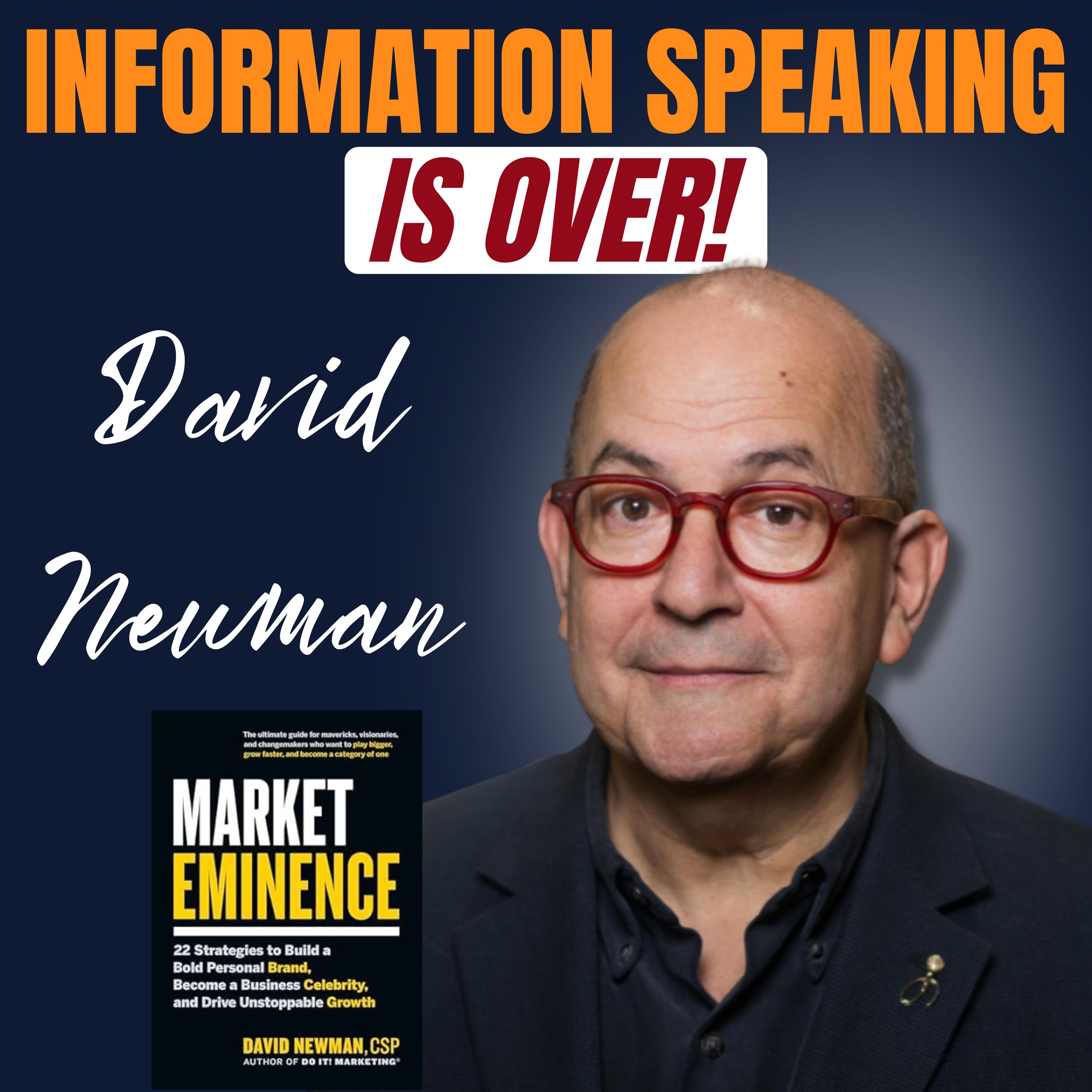 Are You Killing Your Speaking Career with "How-To" Content? | David Newman✨ | speaking careercontent strategy+4 | David Newman | Do It SpeakingMarket Eminence | — | speaking careerhow-to content+5 | — | 53m 58s | |
| 5/5/26 | Your Speaker Positioning Is Not Your Topic: Why Good Speakers Stay Invisible✨ | positioningspeaking+4 | — | The Speaker Lab | — | speakingpositioning mistakes+5 | — | 22m 12s | |
| 4/29/26 | 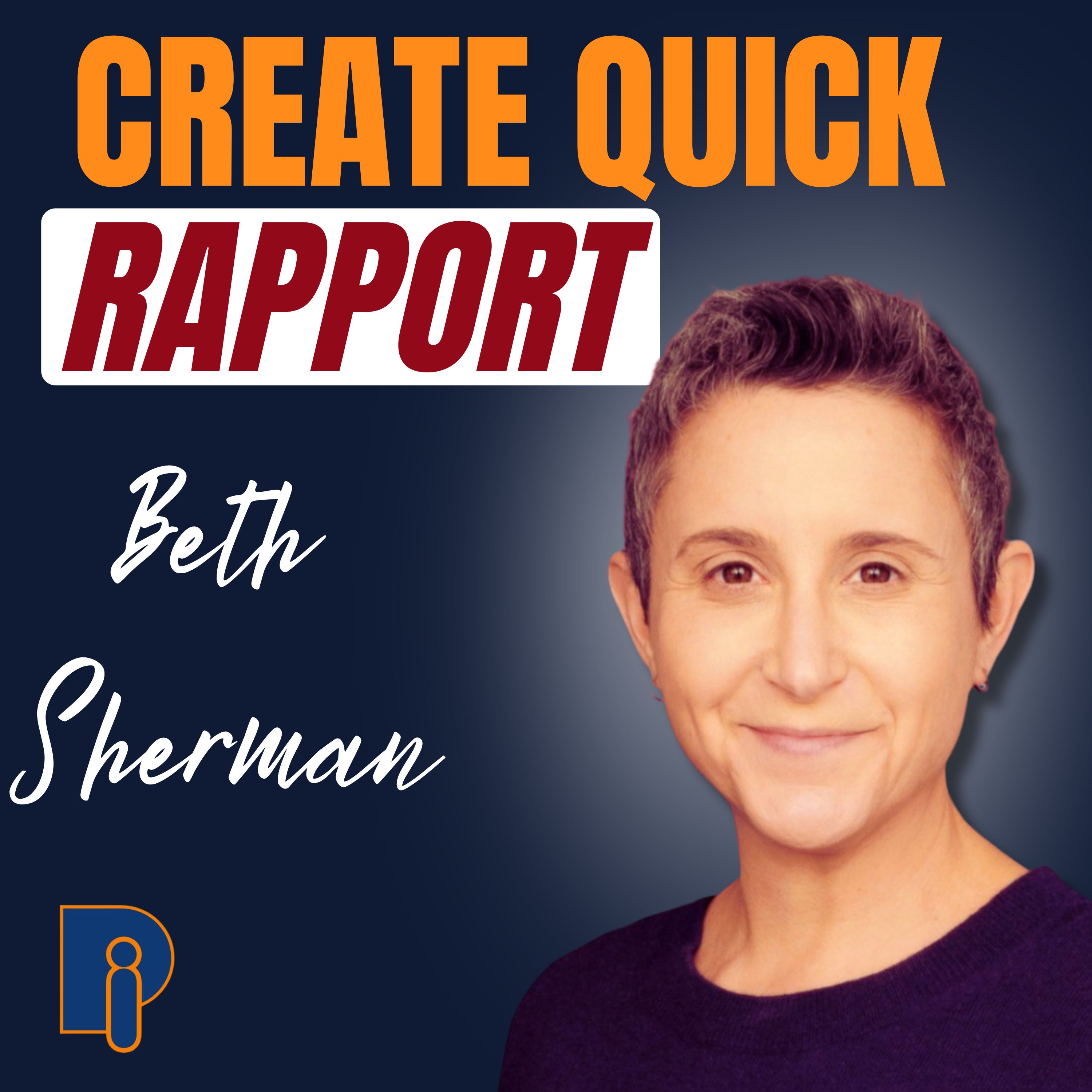 Stop Trying to Be Funny: Beth Sherman on What Actually Gets Audiences to Listen✨ | comedypublic speaking+4 | Beth Sherman | LettermanJay Leno+4 | — | BETH frameworkaudience connection+4 | — | 56m 39s | |
| 4/24/26 | What Speaker Bookers Actually Want in 2026 – Elliot Kay, Speaker Awards Founder✨ | professional speakingspeaker bookers+4 | Elliot Kay | The Speaker Awards | — | speaker bookersprofessional speakers+5 | — | 43m 11s | |
| 4/22/26 | Why Confident Speakers Still Don't Get Rebooked✨ | confidencecharisma+4 | Beth Sherman | — | — | confidencecharisma+7 | — | 6m 32s | |
Want analysis for the episodes below?Free for Pro Submit a request, we'll have your selected episodes analyzed within an hour. Free, at no cost to you, for Pro users. | |||||||||
| 4/17/26 | When It All Goes Wrong On Stage: What Bombing Taught Me About Preparing To Speak✨ | public speakingpreparation+3 | — | — | — | public speakingpreparation+5 | — | 9m 59s | |
| 4/15/26 | 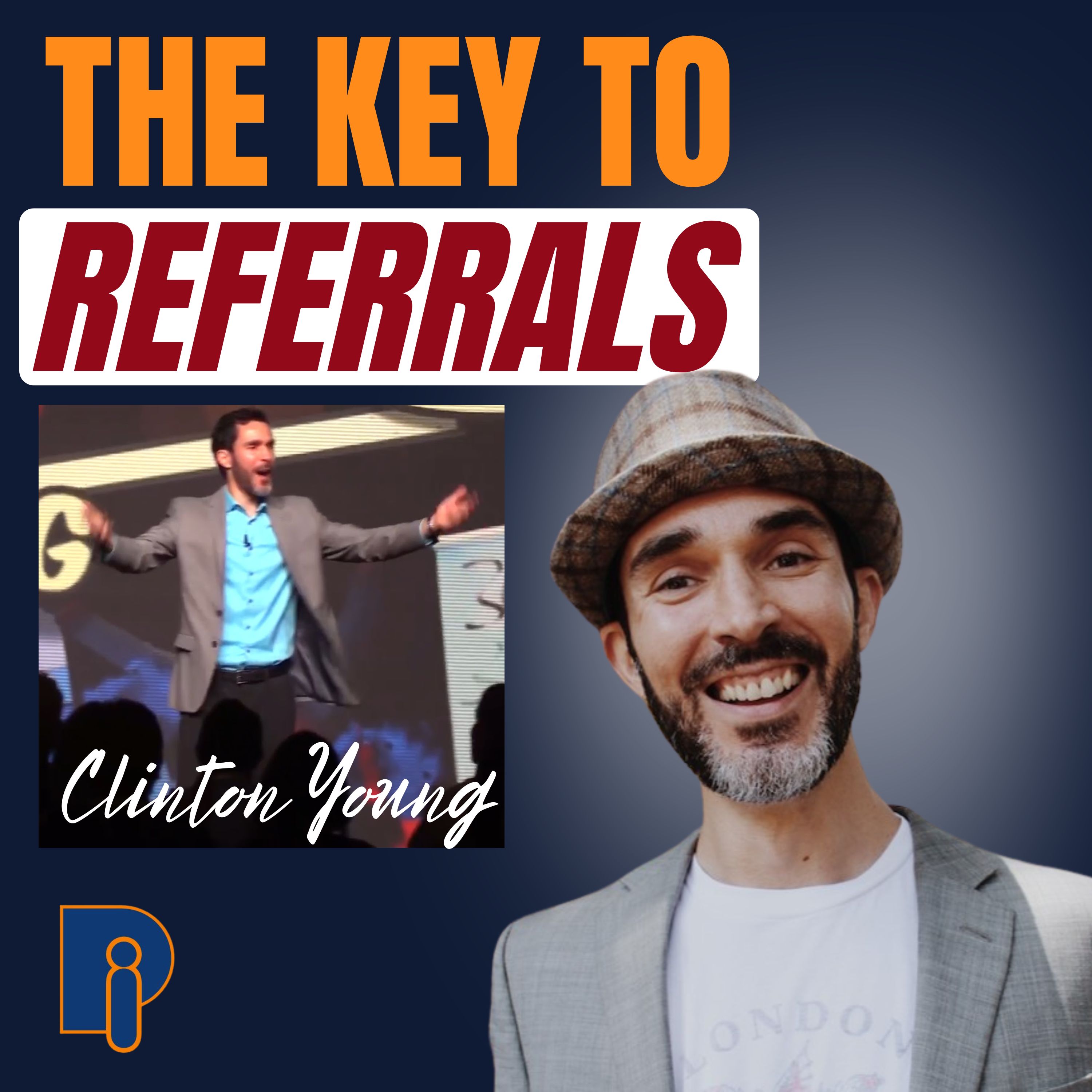 The Referral Script That Landed a £10k Speaking Gig: Clinton Young on What Actually Gets Speakers Booked✨ | speaking careerreferral script+4 | Clinton Young | present-influence.kit.com | — | speaking gigreferral script+5 | — | 48m 57s | |
| 4/1/26 | Why Nice Feedback Is Killing Your Speaking Growth and How to Fix It✨ | feedbackspeaking growth+3 | — | — | — | feedbackspeaking+5 | — | 9m 34s | |
| 3/26/26 | From Invisible to Influential: Brand Clarity for Speakers with Sapna Pieroux✨ | brand clarityprofessional speaking+4 | Sapna Pieroux | Let's Get Visible | — | brand clarityprofessional speakers+5 | — | 39m 49s | |
| 3/18/26 | Why Smart Speakers Get Stuck and How to Break the Loop✨ | psychological limiter loopsintelligence+4 | — | The New Comedy BibleThe Dip | — | smart speakersoverthinking+3 | — | 12m 11s | |
| 3/11/26 | Speechwriting Secrets from the Political World with Rob Noel✨ | speechwritingpolitical communication+3 | Rob Noel | — | — | speechwritingpublic speaking+3 | — | 51m 45s | |
| 3/6/26 | How to Get Corporate Speaking Gigs: A Live Coaching Session with Jackson Ogunyemi | Jackson Ogunyemi has 25 years of speaking experience in the education sector. He has the experience, the message, and the stage presence. What he's missing is the business engine that consistently generates corporate bookings.In this live coaching session John Ball works with Jackson to unpack some uncomfortable realities about the speaking industry -- and build a practical strategy for breaking into higher-paying corporate opportunities.If you want to turn speaking into a real business rather than hoping to be discovered, this episode will show you exactly where to start.What you'll learn in this episodeWhy many speakers are relying on the wrong growth strategies, the reality of speaker bureaus and why they don't create demand for speakers who aren't already in demand, why visibility alone doesn't generate bookings, how to identify a profitable speaking niche worth pursuing, why sales teams could be one of the most powerful markets for speakers, how to use LinkedIn as a prospecting tool, the outreach message that actually gets responses, why persistence matters more than perfection in building a speaking pipeline, and how to build a simple speaking sales engine from scratch.The key insightMost speakers try to build an audience before they build a business. The real order is: build a sales engine first, get booked and paid, then grow your visibility on top of that momentum.The five practical steps from this episodeChoose a clear hunting niche, build a list of companies in that niche, contact decision makers on LinkedIn with a simple opening question, track your outreach in a CRM, and follow up consistently. Even 30 to 60 minutes a day of prospecting can start generating real conversations and opportunities.Want to join John's Serious About Speaking newsletter? Subscribe on LinkedInVisit strategic-speaker.scoreapp.com to take the 2-minute Strategic Speaking Business Audit and find out what's blocking you from getting more bookings, re-bookings, referrals and bigger fees. There's a special surprise gift for everyone who completes the quiz.Want to get coached for free on the show? Fill in the form at this link and if we think your challenge could help others, we'll invite you on.For speaking enquiries or to connect, email john@presentinfluence.com or find John on LinkedIn.All clips and episodes are on the Present Influence YouTube channel.Thanks for listening. Rating the show 5* on Spotify helps their algorithm recommend the show, so please take a moment to follow and leave a rating.Related episodes: How to Get Paid for Public Speaking with Grant BaldwinMentioned in this episode:Speaker Fee AuditFind out in less than a minute if you're undercharging for your speaking and where you need to look to fix any leaks with the Speaker Fee Audit. It's free to take and find out if you're missing out on money. | — | ||||||
| 3/4/26 | Self-Awareness and Mindset for Speakers: Fix the Internal Problems First with Michael Delisser | Most presentation problems are not technical. They're internal.Speakers obsess over slides, structure, and delivery mechanics while the real issues -- self-awareness, mindset, and genuine focus on the audience -- go unaddressed. Fix those, and the technical problems often resolve themselves.Michael Delisser is an executive communication coach who has spent his career helping leaders and speakers identify the blind spots that are quietly undermining their impact. His approach is direct, practical, and grounded in a simple truth: you cannot improve what you cannot see.What you'll learn in this episodeWhy most presentation problems are internal rather than technical, how a humiliating early experience with filler words changed Michael's entire approach to coaching, why recording yourself is one of the most powerful self-awareness tools available, how to reduce distracting habits without sounding robotic or over-rehearsed, why perfectionism actively harms your development as a speaker, how to identify your strengths and minimise your fatal flaws, why starting with outcomes rather than content changes everything about how you prepare, the most common presentation pitfalls Michael sees repeatedly, how to build genuine emotional connection with an audience, the trust-logic-emotion framework for persuasive communication, why you must address the audience's pain before presenting your solution, and how communication skills will matter more not less in the age of AI.About Michael DelisserMichael Delisser is an executive communication coach and author of Leadership Accelerators, which covers emotional intelligence, communication habits, and personality-based leadership. Connect with Michael to find out more about his coaching work.Visit strategic-speaker.scoreapp.com to take the 2-minute Strategic Speaking Business Audit and find out what's blocking you from getting more bookings, re-bookings, referrals and bigger fees. There's a special surprise gift for everyone who completes the quiz.Want to get coached for free on the show? Fill in the form at this link and if we think your challenge could help others, we'll invite you on.For speaking enquiries or to connect, email john@presentinfluence.com or find John on LinkedIn.All clips and episodes are on the Present Influence YouTube channel.Thanks for listening. Rating the show 5* on Spotify helps their algorithm recommend the show, so please take a moment to follow and leave a rating.Related episodes: Why Nice Feedback Is Killing Your Speaking GrowthMentioned in this episode:Speaker Fee AuditFind out in less than a minute if you're undercharging for your speaking and where you need to look to fix any leaks with the Speaker Fee Audit. It's free to take and find out if you're missing out on money.SPGFS - Hiro.fmBecoming known will always make it easier to get booked and podcast guesting is one of the easiest ways to make that happen, when you have the right strategy. This program will teach you everything you need to know about podcast guesting, from the tech stack to making an impact. You'll get all the tools to stand out as an amazing podcast guest and get booked on great shows. | — | ||||||
| 2/27/26 | Should You Start a Podcast? What Speakers Need to Know Before They Hit Record | Should you start a podcast? If you're a speaker, coach, or expert it can feel like the obvious next step. Visibility. Authority. Credibility. Influence.But is it actually the smartest move right now?In this solo episode John Ball takes a balanced, honest look at podcast hosting -- the real advantages, the hidden costs most people underestimate, and why sequencing matters more than following trends.Podcasting can absolutely become a powerful business asset. It can sharpen your thinking, strengthen your authority, expand your network, and generate enquiries. Done well it becomes a content engine and a long-term brand builder. But it demands time, focus, energy, and consistency. And if your positioning isn't clear, a podcast won't fix that. It will simply amplify whatever is already there.What you'll learn in this episodeThe real advantages of hosting a podcast for speakers and experts, the hidden time cost most people dramatically underestimate, why most niche podcasts don't monetise directly, when hosting actually makes strategic sense, why guesting often builds authority faster than hosting, how podcast guesting strengthens your clarity and confidence as a speaker, the difference between building a content library and building a reputation, and why sequencing matters more than momentum.The key principleClarity first. Platform second. If your business foundation is strong, a podcast can amplify your impact. If it isn't, guesting is almost certainly the smarter first move.Mentioned in this episodeStrategic Podcast Guesting for Speakers -- first three lessons free at presentinfluence.com/podcastguestVisit strategic-speaker.scoreapp.com to take the 2-minute Strategic Speaking Business Audit and find out what's blocking you from getting more bookings, re-bookings, referrals and bigger fees. There's a special surprise gift for everyone who completes the quiz.Want to get coached for free on the show? Fill in the form at this link and if we think your challenge could help others, we'll invite you on.For speaking enquiries or to connect, email john@presentinfluence.com or find John on LinkedIn.All clips and episodes are on the Present Influence YouTube channel.Thanks for listening. Rating the show 5* on Spotify helps their algorithm recommend the show, so please take a moment to follow and leave a rating.Related episodes: How to Use Podcasting to Build Professional Authority with Mark AsquithMentioned in this episode:Speaker Fee AuditFind out in less than a minute if you're undercharging for your speaking and where you need to look to fix any leaks with the Speaker Fee Audit. It's free to take and find out if you're missing out on money.SPGFS - Hiro.fmBecoming known will always make it easier to get booked and podcast guesting is one of the easiest ways to make that happen, when you have the right strategy. This program will teach you everything you need to know about podcast guesting, from the tech stack to making an impact. You'll get all the tools to stand out as an amazing podcast guest and get booked on great shows. | — | ||||||
| 2/25/26 | 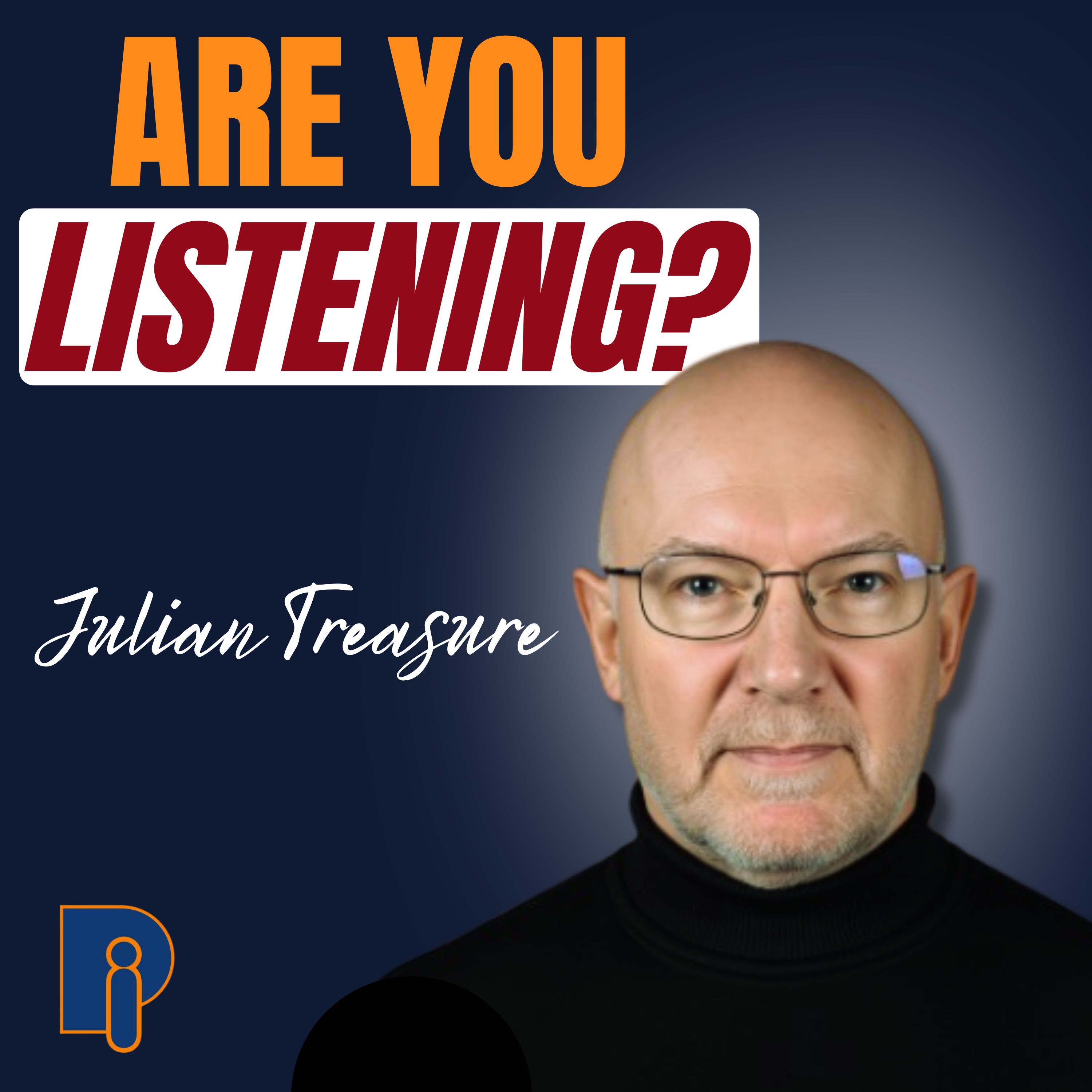 How Listening Makes You a Better Speaker with Julian Treasure | Julian Treasure has given five TED talks, with a combined audience of hundreds of millions of views. His message is simple and counterintuitive: the most important skill for speakers is not speaking. It's listening.Audiences don't hear your message as delivered. They hear it through filters -- culture, mood, expectations, the speaker before you, the acoustics of the room, even the time of day. If you're not listening to their listening in real time, you're speaking into a void and hoping for the best.This is one of the most thought-provoking conversations the show has produced, and essential listening for any speaker who wants to truly land their message rather than just deliver it.What you'll learn in this episodeWhy speaking and listening form a circle rather than a straight line, the listening filters that shape how audiences receive your message, how to handle the graveyard slot and other attention dips, what to do when the speaker before you has poisoned the room, the gift visualisation that instantly improves your on-stage presence, why sound affects physiology, focus, behaviour, and buying decisions, practical advice on microphones, acoustics, and why lavalier mics can betray you, the role of silence and humility in real listening, and how the three intentions -- yours, the audience's, and their intention for themselves -- shape every speaking engagement.About Julian TreasureJulian Treasure is a sound and communication expert, author, and one of the most-watched TED speakers in the world. He is the founder of the Listening Society, which offers free resources and membership at thelisteningsociety.community. Speaking and listening assessments for individuals and organisations are available at juliantreasure.floot.app. Find out more at juliantreasure.com.Visit strategic-speaker.scoreapp.com to take the 2-minute Strategic Speaking Business Audit and find out what's blocking you from getting more bookings, re-bookings, referrals and bigger fees. There's a special surprise gift for everyone who completes the quiz.Want to get coached for free on the show? Fill in the form at this link and if we think your challenge could help others, we'll invite you on.For speaking enquiries or to connect, email john@presentinfluence.com or find John on LinkedIn.All clips and episodes are on the Present Influence YouTube channel.Thanks for listening. Rating the show 5* on Spotify helps their algorithm recommend the show, so please take a moment to follow and leave a rating.Related episodes: The Language of Leadership with Simon LancasterMentioned in this episode:SPGFS - Hiro.fmBecoming known will always make it easier to get booked and podcast guesting is one of the easiest ways to make that happen, when you have the right strategy. This program will teach you everything you need to know about podcast guesting, from the tech stack to making an impact. You'll get all the tools to stand out as an amazing podcast guest and get booked on great shows.Speaker Fee AuditFind out in less than a minute if you're undercharging for your speaking and where you need to look to fix any leaks with the Speaker Fee Audit. It's free to take and find out if you're missing out on money. | — | ||||||
| 2/20/26 | How Great Speakers Use Rhetoric, Metaphor and Emotional Language with Simon Lancaster | Rhetoric is one of the oldest and most powerful communication tools in existence. It is also one of the most misunderstood. Most speakers think it's something politicians do. Simon Lancaster knows it's something every effective communicator does -- whether they realise it or not.Simon Lancaster is a political speechwriter with over 20 years of experience writing for heads of state, CEOs, and some of the most influential communicators in the world. In this conversation he breaks down the mechanics of persuasive language -- rhetoric, metaphor, emotional framing -- and explains how professional speakers can use these tools to become genuinely more compelling without sounding manipulative.What you'll learn in this episodeWhat rhetoric actually is and why it matters for modern speakers, why emotion persuades more reliably than logic, how metaphor shapes perception, behaviour, and belief at a subconscious level, why corporate language dehumanises audiences and destroys engagement, practical ways to become metaphor-aware in your own communication, the responsibility leaders and speakers carry when using persuasive language, why rhetoric isn't taught and why that gap is genuinely dangerous, and how the most effective political communicators use emotional framing to create trust and momentum.Key ideas from the episodeLeadership is an emotional contract. Metaphor speaks to the subconscious. Rhetoric is morally neutral -- like a pen, it can be used for good or bad. The company-as-car metaphor and why it backfires. Why switching to human metaphors -- family, journeys, belonging -- transforms how audiences respond.About Simon LancasterSimon Lancaster is a political speechwriter, author, and TEDx speaker. His books include Winning Minds, The Expert's Guide to Speechwriting, and You Are Not Human. Watch his TEDx talk at youtu.be/bGBamfWasNQ and find out more at bespokespeeches.com.Visit strategic-speaker.scoreapp.com to take the 2-minute Strategic Speaking Business Audit and find out what's blocking you from getting more bookings, re-bookings, referrals and bigger fees. There's a special surprise gift for everyone who completes the quiz.Want to get coached for free on the show? Fill in the form at this link and if we think your challenge could help others, we'll invite you on.For speaking enquiries or to connect, email john@presentinfluence.com or find John on LinkedIn.All clips and episodes are on the Present Influence YouTube channel.Thanks for listening. Rating the show 5* on Spotify helps their algorithm recommend the show, so please take a moment to follow and leave a rating.Related episodes: The Language of Leadership with Simon LancasterMentioned in this episode:Speaker Fee AuditFind out in less than a minute if you're undercharging for your speaking and where you need to look to fix any leaks with the Speaker Fee Audit. It's free to take and find out if you're missing out on money. | — | ||||||
| 2/19/26 | Where Personal Development Ends and Professional Speaking Should Begin | The professional speaking world and the personal development industry have been intertwined for decades. That overlap has created energy, inspiration, and genuine transformation. It has also created hype, pseudoscience, and borrowed authority.In this solo episode John Ball explores where persuasive speaking becomes manipulation, why anecdotes are powerful but weak evidence, and how emotional intensity in a room can quietly lower the audience's critical thinking. This is not an attack on personal development. It is a call for healthier boundaries, intellectual humility, and higher standards from everyone who takes a stage.If you are building a serious speaking career and care about long-term credibility, this episode is for you.What you'll learn in this episodeWhy persuasive speaking is inherently powerful and inherently vulnerable to abuse, how pseudoscience and science-sounding language spread on stages, the role of TEDx in transferring perceived authority to speakers who may not have earned it, why anecdotes move audiences but do not prove causation, how high emotion lowers scepticism in a room, the difference between confidence and competence, what intellectual humility actually looks like in a keynote, and how integrity protects both your reputation and the profession long term.The key ideaCertainty sells. Nuance builds careers. If you want short-term applause, oversimplify. If you want long-term authority, raise your standards.References mentionedCarl Sagan -- "Extraordinary claims require extraordinary evidence," How to Have a Beautiful Mind by Edward de Bono, and Elizabeth Loftus on memory distortion research.Visit strategic-speaker.scoreapp.com to take the 2-minute Strategic Speaking Business Audit and find out what's blocking you from getting more bookings, re-bookings, referrals and bigger fees. There's a special surprise gift for everyone who completes the quiz.Want to get coached for free on the show? Fill in the form at this link and if we think your challenge could help others, we'll invite you on.For speaking enquiries or to connect, email john@presentinfluence.com or find John on LinkedIn.All clips and episodes are on the Present Influence YouTube channel.Thanks for listening. Rating the show 5* on Spotify helps their algorithm recommend the show, so please take a moment to follow and leave a rating.Related episodes: Why Smart Speakers Get StuckMentioned in this episode:Speaker Fee AuditFind out in less than a minute if you're undercharging for your speaking and where you need to look to fix any leaks with the Speaker Fee Audit. It's free to take and find out if you're missing out on money. | — | ||||||
| 2/13/26 |  How Professional Speakers Get Hired: The Bookability Formula with Maria Franzoni | Being a good speaker and being a bookable speaker are not the same thing. Most speakers confuse the two -- and it costs them.Maria Franzoni is a former speaker bureau owner and author of The Bookability Formula. She has spent her career on the other side of the table -- deciding which speakers get hired and which get passed over -- and her view of what actually drives bookings in the UK and European markets is blunt, practical, and essential listening for any speaker serious about building a sustainable career.What you'll learn in this episodeWhy "follow your passion" is often terrible business advice for speakers, the real differences between the UK and European speaking markets versus the US, why relevance to a paying market matters far more than polishing your keynote, what actually builds credibility and what immediately signals "fake," the networking mistake almost every speaker makes, why speakers who overrun damage not just their own reputation but the entire event, what really drives bookings for the highest-paid speakers, what makes organisers and bureaus reject a speaker instantly, why a weak demo video is worse than having no video at all, whether your full keynote should be publicly available, and why plagiarism is more common in the speaking industry than most people admit.Key principles from the episodeRelevance is the filter -- if the market doesn't care, your passion won't save you. Proof beats claims -- testimonials, outcomes, and case studies do the heavy lifting. Bookability is a business -- relationships, follow-up, and sales habits matter more than most speakers want to admit. Great speakers are often not the highest paid -- the most bookable speakers usually run the best business.About Maria FranzoniMaria Franzoni is a former speaker bureau owner, speaker consultant, and author of The Bookability Formula. Connect with Maria on LinkedIn or visit mariafranzoni.me.Visit strategic-speaker.scoreapp.com to take the 2-minute Strategic Speaking Business Audit and find out what's blocking you from getting more bookings, re-bookings, referrals and bigger fees. There's a special surprise gift for everyone who completes the quiz.Want to get coached for free on the show? Fill in the form at this link and if we think your challenge could help others, we'll invite you on.For speaking enquiries or to connect, email john@presentinfluence.com or find John on LinkedIn.All clips and episodes are on the Present Influence YouTube channel.Thanks for listening. Rating the show 5* on Spotify helps their algorithm recommend the show, so please take a moment to follow and leave a rating.Related episodes: How to Get Corporate Speaking Gigs with Jackson OgunyemiMentioned in this episode:Speaker Fee AuditFind out in less than a minute if you're undercharging for your speaking and where you need to look to fix any leaks with the Speaker Fee Audit. It's free to take and find out if you're missing out on money. | — | ||||||
| 2/11/26 | Why Most Speakers Stay Stuck: The Overthinking Trap That Kills Speaking Careers | Why do so many capable speakers never gain momentum or consistent bookings?It's not talent. It's not confidence. It's not credibility. It's the habit of overthinking and under-acting.In this sharp solo episode John Ball breaks down the single biggest block that stops speakers from becoming successful professionals -- and why the planning that feels productive is often procrastination in disguise. Drawing on years of coaching speakers and working inside the speaking industry, John explains why real progress only begins when action meets reality.If you want to treat speaking like a business rather than a hobby, this episode will give you a reset.What you'll learn in this episodeWhy overthinking is the primary obstacle for most capable speakers, how planning becomes a comfort zone that masquerades as progress, why being ready is usually procrastination in disguise, how to navigate the imperfections and challenges that come with taking real action, and what it actually means to build a speaking business rather than maintain a speaking hobby.Visit strategic-speaker.scoreapp.com to take the 2-minute Strategic Speaking Business Audit and find out what's blocking you from getting more bookings, re-bookings, referrals and bigger fees. There's a special surprise gift for everyone who completes the quiz.Want to get coached for free on the show? Fill in the form at this link and if we think your challenge could help others, we'll invite you on.For speaking enquiries or to connect, email john@presentinfluence.com or find John on LinkedIn.All clips and episodes are on the Present Influence YouTube channel.Thanks for listening. Rating the show 5* on Spotify helps their algorithm recommend the show, so please take a moment to follow and leave a rating.Related episodes: Why Smart Speakers Get StuckMentioned in this episode:Speaker Fee AuditFind out in less than a minute if you're undercharging for your speaking and where you need to look to fix any leaks with the Speaker Fee Audit. It's free to take and find out if you're missing out on money. | — | ||||||
| 2/6/26 | 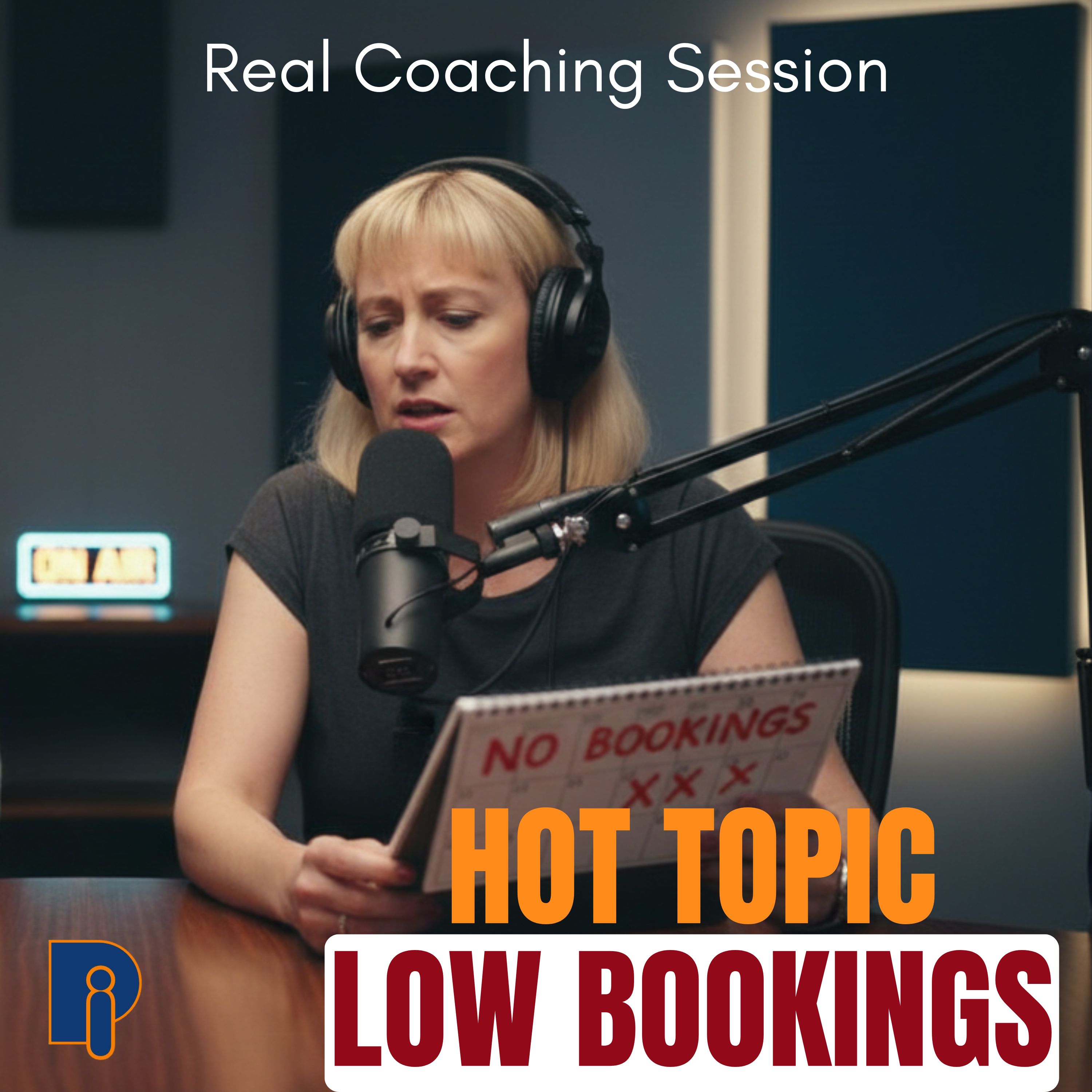 Hot Market, Cold Inbox: Why Your Speaking Calendar Isn't Matching Your Credibility | A hot market does not guarantee hot bookings.In this live coaching session John Ball works with tech and emerging-tech speaker Cortney Harding to diagnose the real reasons her calendar isn't matching her credibility. They unpack why prestige signals and busy content don't automatically create demand, how to position around an expensive problem, and why simplifying outreach beats post-and-pray when you want reliable bookings.You'll also hear a strong warning for speakers who chase trending topics. It looks strategic until you realise you're rebuilding your positioning every six months and still not becoming the obvious choice.What you'll learn in this episodeWhy high-demand topics can still leave you with a cold inbox, the difference between credibility signals and actual buyer demand, how to turn a framework into a clear message that makes buyers think "we need this," why your prospecting should start with a simple response-getting question rather than a pitch, what to prioritise if you feel permanently stuck in launch mode, why social media is often a nice-to-have rather than the main lever for bookings, and how to reframe sales as relationships so it stops feeling grim.Key principle from the episodeHope is not a business strategy. Sales is relationships. One focused hour a day of prospecting beats a full content calendar that converts no one.Visit strategic-speaker.scoreapp.com to take the 2-minute Strategic Speaking Business Audit and find out what's blocking you from getting more bookings, re-bookings, referrals and bigger fees. There's a special surprise gift for everyone who completes the quiz.Want to get coached for free on the show? Fill in the form at this link and if we think your challenge could help others, we'll invite you on.For speaking enquiries or to connect, email john@presentinfluence.com or find John on LinkedIn.All clips and episodes are on the Present Influence YouTube channel.Thanks for listening. Rating the show 5* on Spotify helps their algorithm recommend the show, so please take a moment to follow and leave a rating.Related episodes: How to Get Corporate Speaking Gigs with Jackson OgunyemiMentioned in this episode:Speaker Fee AuditFind out in less than a minute if you're undercharging for your speaking and where you need to look to fix any leaks with the Speaker Fee Audit. It's free to take and find out if you're missing out on money. | — | ||||||
Showing 25 of 200
Pitch Fit is a Pro feature
See how bookable this show is for guests, which brands already advertise, the per-episode ad value, and the best-fit guest and sponsor profile. The numbers are blurred on the free plan.
How readily this show books outside guests like you.
How proven this show is for host-read sponsorships.
For Guests
ProFor Advertisers
ProUpgrade to Pro to unlock guest cadence, sponsor categories, fit scores, and per-episode ad value for this show.