

Insights from recent episode analysis
Audience Interest
Podcast Focus
Publishing Consistency
Platform Reach
Insights are generated by CastFox AI using publicly available data, episode content, and proprietary models.
Most discussed topics
Brands & references
Total monthly reach
Estimated from 1 chart position in 1 market.
By chart position
- 🇸🇪SE · Education#6910K to 30K
- Per-Episode Audience
Est. listeners per new episode within ~30 days
3K to 9K🎙 Daily cadence·585 episodes·Last published today - Monthly Reach
Unique listeners across all episodes (30 days)
10K to 30K🇸🇪100% - Active Followers
Loyal subscribers who consistently listen
4K to 12K
Market Insights
Platform Distribution
Reach across major podcast platforms, updated hourly
Total Followers
—
Total Plays
—
Total Reviews
—
* Data sourced directly from platform APIs and aggregated hourly across all major podcast directories.
On the show
From 23 epsHost
Recent guests
Recent episodes
PFC Podcast: Silent Brain Killer - SpO2 Goals, Airway Triggers & Saving Lives When Oxygen Is Scarce
Jun 25, 2026
Unknown duration
PFC Podcast 284: Pediatric Trauma in Denied Environments
Jun 22, 2026
Unknown duration
PFC Podcast: TXA - 2g Slam and other myths busted
Jun 18, 2026
Unknown duration
PFC Podcast 283: Underground Manufacturing - Ukraine’s Shadow Factories Saving Lives
Jun 15, 2026
Unknown duration
PFC Podcast: Velocity Kills - Wound Ballistics, Shotguns & Unpredictable Trauma in Prolonged Field Care
Jun 11, 2026
57m 38s
Social Links & Contact
Official channels & resources
Official Website
Login
RSS Feed
Login
| Date | Episode | Topics | Guests | Brands | Places | Keywords | Sponsor | Length | |
|---|---|---|---|---|---|---|---|---|---|
| 6/25/26 |  PFC Podcast: Silent Brain Killer - SpO2 Goals, Airway Triggers & Saving Lives When Oxygen Is Scarce | In this episode of the Prolonged Field Care Podcast, Dennis sits down with Jeff to tackle one of the most time-sensitive and under-appreciated threats in tactical and austere medicine: anoxic brain injury. They break down exactly what it is, how fast it can progress from unnoticed hypoxia to devastating outcomes, and why the MARCH algorithm plus aggressive prevention of secondary injury are your most powerful tools when oxygen and resources are limited.Key Takeaways:Anoxic brain injury exists on a spectrum — brief drops in SpO2 can cause real damage, and recovery (when it happens) can take days, weeks, months, or even years of rehab.The landmark Arizona pre-post TBI study showed hypoxia and hypotension each increase mortality 2–3×; combined they increase it 5–6×. Updated analysis reveals harm begins at SpO2 <96–97%. In the field resuscitation phase, the goal is 100% whenever possible.Prevention starts with MARCH: control hemorrhage first (no blood = no oxygen delivery), then airway and breathing. Give whatever oxygen you have — even 1 L/min is better than nothing. Keep patients warm to avoid coagulopathy.Airway escalation trigger: consistent SpO2 <94% despite maximal non-invasive oxygen → move to supraglottic or definitive airway based on your proficiency, scenario, and time to definitive care. In tactical environments, the fastest reliable airway often beats the “gold standard.”Once anoxic injury is suspected, focus shifts entirely to preventing secondary and tertiary brain injury: avoid re-hypoxia, hypotension, hyperthermia, hypoglycemia, pain/agitation (which raises ICP and oxygen demand), and seizures.Resuscitation targets: SBP 120–140 mmHg (or MAP 65–85) — avoid the U-shaped mortality curve on both ends. ETCO2/PaCO2 35–45 mmHg. Normoglycemia and normothermia (avoid fever). Consider higher sodium for cerebral edema under neurocritical care guidance.Basics win: Even non-medics can save brains by controlling bleeding, positioning airways, and keeping patients warm. Time will tell on recovery — keep working at it.Whether you’re a combat medic, flight medic, wilderness provider, or anyone operating in resource-limited environments, this episode delivers practical, evidence-based strategies to protect the brain when every molecule of oxygen counts.Check out free resources and downloads at www.prolongedfieldcare.org. Grab a bag of fresh-roasted PFC coffee (link in the description) and stay on the bleeding edge of combat and austere medicine.Podcast Chapters (approximate timestamps)00:00 — Introduction & What Is Anoxic Brain Injury?03:15 — The Spectrum of Anoxic Injury & Recovery Potential07:00 — Prevention: MARCH Algorithm & Limited Resource Strategies11:45 — The Arizona TBI Study: Why Hypoxia & Hypotension Are So Deadly16:30 — SpO2 Targets: 100% Goal & When Harm Really Begins21:00 — Airway Decision-Making: Triggers, Escalation & Skill-Based Choices26:30 — When Anoxia Has Occurred: Shifting to Secondary Injury Prevention31:15 — Resuscitation Targets: BP, MAP, ETCO2 & Avoiding the U-Shaped Curve35:45 — Neuroprotection Extras: Pain, Agitation, Seizures, Glucose & Temperature40:00 — Key Takeaways: Basics Save Brains (Even for Non-Medics)For more content, go to www.prolongedfieldcare.orgConsider supporting us: patreon.com/ProlongedFieldCareCollective or www.lobocoffeeco.com/product-page/prolonged-field-care | — | ||||||
| 6/22/26 |  PFC Podcast 284: Pediatric Trauma in Denied Environments | In this episode of the Prolonged Field Care Podcast, Dennis sits down with Dr. Mike Falk — pediatric ICU physician with multiple deployments to Iraq, Gaza, and Ukraine — for a raw, practical, deep dive into pediatric care when you’re the only asset and evacuation is denied.Most combat medics carry 99% adult gear. Kids still show up. Dr. Falk breaks down the absolute minimalist kit that actually works in austere and combat environments: canine tourniquets for toddlers, the single blue IO you really need, simplified airway choices, push-pull resuscitation with a syringe and stopcock, and a field-expedient needle cric setup.Then he walks through three real cases that expose the brutal decision-making required in prolonged field care:A 4-year-old pulled from rubble with a head injury who decompensates from rising ICPAn 8-year-old with a penetrating chest wound and tension pneumothorax at the thoracoabdominal junctionA 4-year-old with an infected blast wound fracture who develops septic shock days later in a denied environmentYou’ll learn weight-based dosing that actually works in the field, why kids decompensate differently, how to mix and run an epinephrine drip with limited supplies, the realities of black-tagging children in mass casualty events, and why these cases stay with providers long after the mission.Key Takeaways:The truly minimalist pediatric kit that won’t break your weight limitPractical field management of rising ICP when you have no CT or neurosurgeryPush-pull volume resuscitation and epinephrine drip mixing for pediatric shockWhy penetrating trauma at the 6th–7th rib level is often thoracoabdominalThe emotional and ethical weight of black-tagging kids — and why you must train itMalnutrition’s hidden impact on wound healing and sepsis in prolonged scenariosChapters00:00 - Welcome & Why Most Medics Are Unprepared for Pediatric Patients00:57 - The Bare Essential Pediatric Combat Medic Bag02:25 - Canine Tourniquet for Under-2s & Minimalist Hemorrhage Control02:25 - Vascular Access: Why the Blue IO is Usually All You Need03:22 - Simplified Airway: OPAs, NPAs & i-gel Sizes That Actually Matter03:22 - ET Tubes: Why Only 4.0, 5.0 & 6.0 Cuffed Are Necessary04:24 - Push-Pull Resuscitation Technique (Syringe + Stopcock)04:56 - Needle Cricothyrotomy Setup & Critical I:E Ratio Warning07:09 - Case 1 Begins: 4-Year-Old Blast Victim Pulled from Rubble08:47 - Initial Assessment, C-Spine Considerations in Kids & Access12:16 - GCS 11, Pain Control & Why Fluids Make Sense Early14:17 - Hours Later: Decompensation & Rising ICP18:17 - Positioning, Hypertonic Saline Dosing (5 mL/kg) & Decision to Intubate23:13 - Ketamine-Only Intubation, Permissive Hyperventilation & Realities27:51 - The Emotional Toll: Black Tagging Kids in MCI29:44 - Case 2: 8-Year-Old with Right Chest GSW & Tension Pneumothorax31:36 - Chest Seal + Needle Decompression (Anterior Approach Preference)34:23 - Blood Resuscitation (10 mL/kg) & Why Location Matters (Diaphragm Level)40:20 - Case 3: 4-Year-Old with Infected Blast Wound Fracture – Septic Shock42:51 - Broad-Spectrum Antibiotics & Source Control in Denied Environments45:26 - Push-Pull Boluses, Epinephrine Drip Mixing & Permissive Hypotension51:09 - Malnutrition’s Impact on Healing & Infection in Prolonged Care56:49 - Final Lessons: Training Black Tags, Calling for Help & Provider PTSD57:32 - Outro & Where to Find More PFC ContentFor more content, go to www.prolongedfieldcare.orgConsider supporting us: patreon.com/ProlongedFieldCareCollective or www.lobocoffeeco.com/product-page/prolonged-field-care | — | ||||||
| 6/18/26 |  PFC Podcast: TXA - 2g Slam and other myths busted | In this deep-dive episode of the Prolonged Field Care Podcast, Dennis sits down with trauma and critical care surgeon Dr. John McClellan ( University of North Carolina) to cut through the noise on tranexamic acid (TXA) in trauma.They cover the mechanism, who actually needs it, why the dosing shifted from 1g + drip to 2g upfront, pre-hospital decision-making when bleeding is controlled, redosing in ongoing hemorrhage, IM/IO options, seizure and hypotension concerns, the critical 3-hour window, and practical advice for the medic who is truly alone and afraid.Whether you’re a combat medic, flight medic, or trauma provider, this conversation delivers actionable clarity on one of the most studied — and sometimes misunderstood — tools in hemorrhagic shock resuscitation.Key Takeaways:TXA is a lysine analog that reversibly (and at higher doses irreversibly) binds plasminogen, preventing its conversion to plasmin and stabilizing clots. It is one of the most evidence-backed hemorrhage adjuncts available.The ideal candidate is any patient you suspect will trigger (or has triggered) a massive transfusion protocol — not just obvious amputations. Err on the side of giving it early in pre-hospital/austere settings to avoid missing occult bleeding.Modern trauma practice favors 2g IV push upfront over the older CRASH-2 regimen of 1g bolus + 8-hour drip because traumatic bleeding is an acute event that needs rapid high plasma levels. The 8-hour drip was designed for elective surgical cases with ongoing bleeding over hours.Overall safety is excellent. Large meta-analyses have not shown a clear increase in thrombotic events attributable to TXA. The bigger practical risks are seizures with doses significantly above 2g and accidental double-dosing due to poor handoff between pre-hospital and hospital teams.Transient hypotension can occur with rapid push, but causality is murky — it is often impossible to separate from the patient’s underlying shock state.Redosing is reasonable (another 1–2g) if significant re-bleeding causes hemodynamic instability. Roughly 25% of active TXA can be lost in major hemorrhage/transfusion models.Give TXA within 3 hours of injury for maximum benefit. After 3 hours efficacy drops sharply and some data suggest potential increased bleeding risk.For the solo medic: Preload if your protocol allows. Make TXA automatic once you have access (alongside calcium and blood products). Prioritize rapid transport. TCCC supports IM if no IV/IO is possible, though delivering the full 2g volume can be challenging.Documentation and clear handoff are non-negotiable when pre-hospital TXA is given.Chapters:00:00 – Welcome & Podcast Disclaimer00:25 – Guest Introduction: Dr. John McClellan, Trauma Surgeon01:52 – What is TXA and How Does It Actually Work?03:28 – Who Should Get TXA? The Massive Transfusion Patient04:16 – Pre-Hospital TXA: Bleed Control First or TXA First?07:06 – Safety Concerns: Thrombosis, Seizures & Double Dosing Risks09:54 – Dosing Evolution: CRASH-2, 1g + Drip vs 2g Push in Trauma13:33 – Does TXA Cause Hypotension? Unpacking the Evidence19:12 – IO & IM TXA: Practical Routes When IV Access Is Tough21:46 – Redosing TXA in Ongoing Bleeding or Transport29:37 – Advice for the Medic Who Is Truly “Alone and Afraid”32:21 – The 3-Hour Rule: Why Timing Matters and What Happens After34:14 – Final Thoughts & Practical Takeaways from Dr. McClellanFor more content, go to www.prolongedfieldcare.orgConsider supporting us: patreon.com/ProlongedFieldCareCollective or www.lobocoffeeco.com/product-page/prolonged-field-care | — | ||||||
| 6/15/26 |  PFC Podcast 283: Underground Manufacturing - Ukraine’s Shadow Factories Saving Lives | In this episode of the PFC Podcast, Dennis sits down with David Plaster — former U.S. Army combat nurse, medic, and 68 Delta who has lived and worked in Ukraine since 2012, long before the full-scale invasion. David pulls back the curtain on one of the most remarkable stories in modern tactical medicine: how Ukraine built resilient, dispersed, underground manufacturing networks for hemostatic gauze and tourniquets when conventional supply chains collapsed or became targets.From the very first improvised IFACs in 2014 (duct-tape chest seals and all) to scaling production of Krovin Goss / Hemostat gauze at roughly $1 per meter and developing a functional “cat-style” tourniquet that Ukrainian and U.S. SOF tested and trusted, David shares the real mechanics of wartime medical logistics. He explains pre-planned basement factories, compartmentalized production across multiple hidden sites, the shift from volunteers to paid war widows and veterans’ families, rigorous quality control, and the constant fight against opportunists, “carpet baggers,” and adversarial intelligence collection.This is far more than a war story — it’s a masterclass in austere medical manufacturing, supply-chain resilience, and why training and knowledge will always outperform gear alone.Key Takeaways:Pre-war planning and deep personal networks (built years earlier) are the real force multipliers when supply chains get bombed or corrupted.Highly motivated local workforces — especially people with direct skin in the game (war widows, veterans’ families) — can deliver exceptional quality and output even in dispersed, low-tech underground conditions.Dramatic cost advantages ($1/m hemostatic gauze vs. $10+ imported) free up resources to buy more of everything else and keep production sustainable.Dispersed, multi-site manufacturing with compartmentalized components dramatically increases survivability and operational security.Functional analogs that are properly tested (double-blind SOF trials included) can serve as effective bridges when premium Western gear is unavailable or too expensive.The biggest failure point in tactical medicine is almost never the gear — it’s implementation and mastery of the basics by everyone, not just medics. Tourniquet application, conversion/repositioning, and preventive medicine thinking belong at the squad-leader level.Medics must operate as advisors and educators. Command emphasis on these skills across the force (not just in the aid bag) is what actually moves the needle on survival.Chapters:00:00 – Introduction & David Plaster’s Background (U.S. Army combat nurse in Ukraine since 2012)02:30 – Early Days: 2014 Improvisation, First IFACs, and the Complete Absence of Western TCCC06:00 – The Krovin Goss / Hemostat Gauze Story: Chemistry, Corruption, and the Pivot Underground11:30 – Going Underground: Pre-Planned Basements, Plan B/C/D, and Dispersed Manufacturing Strategy16:00 – Why the Tourniquet Project Started: Fake Chinese Gear, Expensive CATs, and Local Demand23:30 – The Manufacturing Model: Volunteers to Paid Staff, War-Affected Workers, and Quality Control27:00 – Security Realities: Protecting Sites from “Carpet Baggers,” Visitors, and Adversarial Interest30:00 – Bigger Lessons: Training Failures, ASM/Tourniquet Conversion Changes, and Why Knowledge > Gear36:00 – Preventive Medicine Mindset, Medics as Advisors, and Building Systems That Actually WorkFor more content, go to www.prolongedfieldcare.orgConsider supporting us: patreon.com/ProlongedFieldCareCollective or www.lobocoffeeco.com/product-page/prolonged-field-care | — | ||||||
| 6/11/26 |  PFC Podcast: Velocity Kills - Wound Ballistics, Shotguns & Unpredictable Trauma in Prolonged Field Care✨ | wound ballisticstrauma care+4 | Mark Shapiro | Prolonged Field Care PodcastLevel I trauma centers+2 | — | wound ballisticstrauma surgery+6 | — | 57m 38s | |
| 6/8/26 |  PFC Podcast 282: Blast Lung - Expert Tactics for Blast Lung Injury in Prolonged Field Care✨ | blast lung injuryprolonged field care+4 | Dr. John Wightman | 24th Special Operations WingPFC Podcast | — | blast injuriespathophysiology+4 | — | 1h 05m 50s | |
| 6/4/26 |  PFC Podcast: Guerrilla Hospitals - How to Actually Build Medical Systems When Evacuation & Resupply Are Gone✨ | military medicineguerrilla hospitals+5 | Reagan Lyon | Naval Postgraduate SchoolSpecial Operations Surgical Teams+1 | YugoslavUkraine+1 | military medicineguerrilla hospitals+6 | — | 1h 01m 46s | |
| 6/1/26 |  PFC Podcast 281: Crisis Standards of Care: The Hardest Conversations Medics and Teams Must Have✨ | Crisis Standards of CareCombat Medicine+4 | Thad Snyder | Prolonged Field Care PodcastCOVID+1 | — | Crisis CareCombat Medicine+5 | — | 58m 41s | |
| 5/28/26 | 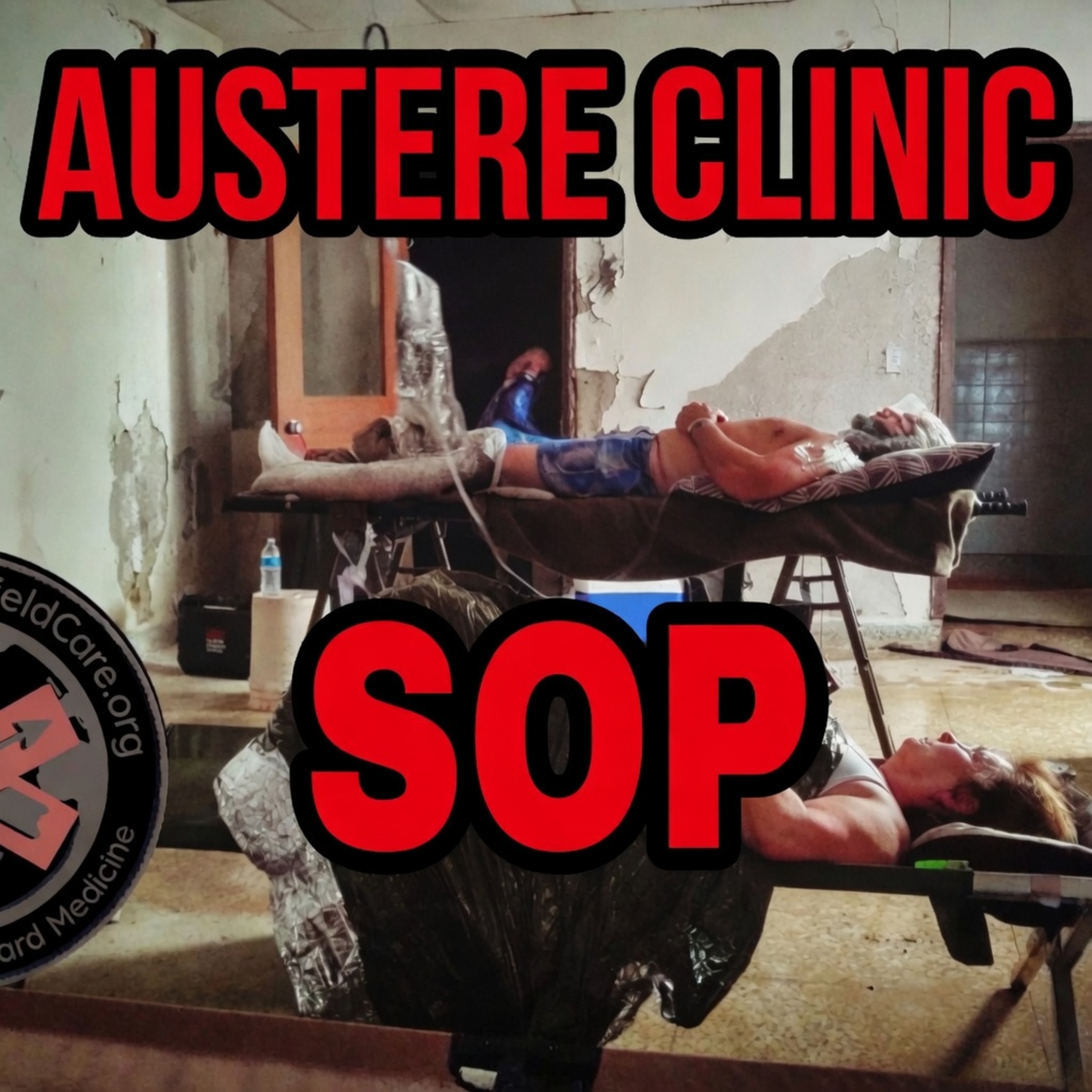 PFC Podcast: Building the Ideal SOF Clinic - Setting Up a World-Class Austere SOF Clinic✨ | SOF clinic setupprolonged field care+3 | Nate | Prolonged Field Care PodcastSpecial Forces+1 | — | SOF clinicmedical readiness+3 | — | 25m 05s | |
| 5/26/26 |  PFC Podcast 280: Hantavirus in the Field: Cruise Ship Outbreak, Deadly Clues & Field-Ready Lessons Every Medic Must Know✨ | hantavirusinfectious disease+4 | Dr. Ryan Maves | Prolonged Field Care Podcast | — | hantavirusAndes virus+5 | — | 33m 01s | |
| 5/21/26 |  PFC Podcast: Traumatic Cardiac Arrest - Real-World ACLS for Austere & Combat Medicine✨ | Traumatic Cardiac ArrestACLS+4 | Doug | ACLSBLS+2 | — | Traumatic Cardiac ArrestACLS+8 | — | 37m 00s | |
| 5/18/26 |  PFC Podcast 279: Mastering Abdominal Trauma in Prolonged Field Care✨ | abdominal traumaprolonged field care+4 | Patrick Liebel | PFC PodcastPFC Podcast 279 | — | abdominal traumapenetrating injury+5 | — | 1h 00m 10s | |
| 5/14/26 | PFC Podcast: The Moment Prolonged Field Care Actually Begins✨ | Prolonged Field Carenursing care+3 | Kevin | Role III | Baghdad | Prolonged Field Carenursing+7 | — | 1h 05m 37s | |
| 5/11/26 |  PFC Podcast 278: Pediatric Airway Nightmares in Prolonged Field Care✨ | pediatric airway managementprolonged field care+4 | Dr. Michael Falk | — | HaitiMosul+2 | pediatric airwaysBVM+4 | — | 53m 07s | |
| 5/7/26 |  PFC Podcast: Fentanyl Masterclass✨ | fentanylcombat medicine+4 | Brad | fentanylmorphine+6 | Belgium | fentanylopioids+6 | — | 48m 30s | |
| 5/4/26 |  PFC Podcast 277: Multimodal Analgesia - Making Your Limited Narcotics Last Longer in Prolonged Field Care✨ | multimodal analgesiaprolonged field care+3 | Dr. Jon Andrews | Duke5th Group Special Forces+1 | — | multimodal analgesiaopioids+6 | — | 44m 58s | |
| 4/30/26 |  SOMSA 2025: Former Ranger Medic's Lessons Learned✨ | humanitarian missionmass casualty event+4 | Victor | — | BurmaWorld War II | Ranger medicmass casualty+5 | — | 30m 12s | |
| 4/27/26 |  PFC Podcast 276: Critical Strategies For Subterranean Rescue✨ | subterranean rescuecritical trauma assessment+3 | Sean McKay | SOF | — | subterraneanrescue+5 | — | 53m 07s | |
| 4/23/26 |  PFC Podcast: Setting Up a Walking Blood Bank: From Talking to Transfusion✨ | walking blood bankmass casualty+3 | Andrew Fisher | — | — | walking blood banktransfusion+3 | — | 45m 15s | |
| 4/20/26 |  PFC Podcast 275: Mastering Pelvic Fracture Management✨ | pelvic fracturestrauma management+3 | Dr. Brigham Au | Florida Orthopaedic InstituteParkland | — | pelvic fracturestrauma surgeon+5 | — | 30m 16s | |
| 4/16/26 |  PFC Podcast: EVACUATION MASTERY – Secrets for Handovers & Critical Care Transport✨ | evacuationcritical care transport+3 | Rich | SOF | — | evacuation masterycritical care+3 | — | 50m 24s | |
| 4/13/26 |  PFC Podcast 274: Rapid Innovation And Reshaping Battlefield Medicine✨ | battlefield medicinemedic training+4 | Aryna | Leleka Foundation | UkraineAmerican+1 | tactical medicUkraine conflict+4 | — | 43m 11s | |
| 4/9/26 |  SOMSA'25 - Consideration For Maritime IW Medicine✨ | maritime medicineoperational flexibility+4 | Noel | SOMSAPFC Podcast | — | maritime medicineoperational challenges+5 | — | 22m 44s | |
| 4/6/26 |  PFC Podcast 273: Coming Home – The Real Transition After Deployment✨ | military mental healthtransition after deployment+3 | Justin Ball | Homer’s OdysseyAchilles in Vietnam | — | militarydeployment+5 | — | 1h 13m 30s | |
| 4/2/26 |  SOMSA '25 - Medic Vignette✨ | combat medicineteamwork+4 | — | specialoperationsmedicine.org | — | combat medicsmedical response+6 | — | 30m 25s | |
Showing 25 of 605
Sponsor Intelligence
Sign in to see which brands sponsor this podcast, their ad offers, and promo codes.
Chart Positions
1 placement across 1 market.
Chart Positions
1 placement across 1 market.