
Insights from recent episode analysis
Audience Interest
Podcast Focus
Publishing Consistency
Platform Reach
Insights are generated by CastFox AI using publicly available data, episode content, and proprietary models.
Most discussed topics
Brands & references
Total monthly reach
Estimated from 1 chart position in 1 market.
By chart position
- 🇸🇬SG · Social Sciences#198500 to 3K
- Per-Episode Audience
Est. listeners per new episode within ~30 days
250 to 1.5K🎙 Weekly cadence·58 episodes·Last published 3mo ago - Monthly Reach
Unique listeners across all episodes (30 days)
500 to 3K🇸🇬100% - Active Followers
Loyal subscribers who consistently listen
150 to 900
Market Insights
Platform Distribution
Reach across major podcast platforms, updated hourly
Total Followers
—
Total Plays
—
Total Reviews
—
* Data sourced directly from platform APIs and aggregated hourly across all major podcast directories.
On the show
From 10 epsHost
Recent guests
Recent episodes
Episode 058 - Addiction at Work: What It Really Looks Like (And How to Help)
Mar 5, 2026
40m 04s
Episode 057 - Are People Feeling Lonely in the Workplace?
Feb 26, 2026
40m 15s
Episode 056 - Why Your Work Feels Meaningless (And What Actually Makes Organisations Matter)
Dec 3, 2025
28m 41s
Episode 055 - Why the Best Leaders Know When to Crack a Joke (and When Not To)
Oct 24, 2025
21m 58s
Episode 054 -"The Humble CEO Paradox: Why the Best Leaders Don't Act Like They're the Best"
Sep 19, 2025
19m 26s
Social Links & Contact
Official channels & resources
Official Website
Login
RSS Feed
Login
| Date | Episode | Topics | Guests | Brands | Places | Keywords | Sponsor | Length | |
|---|---|---|---|---|---|---|---|---|---|
| 3/5/26 |  Episode 058 - Addiction at Work: What It Really Looks Like (And How to Help)✨ | addictionworkplace+3 | Karen Mills | HSENHS+3 | UKEngland | substance addictionbehavioral addiction+3 | — | 40m 04s | |
| 2/26/26 |  Episode 057 - Are People Feeling Lonely in the Workplace?✨ | lonelinessworkplace wellness+2 | Dr Hodar Lam | Chicken SoupLingnan University+4 | Hong Kong | workplaceresearch+2 | — | 40m 15s | |
| 12/3/25 |  Episode 056 - Why Your Work Feels Meaningless (And What Actually Makes Organisations Matter)✨ | meaning at workorganisational purpose+3 | — | Research FlorisCasulli, L.+4 | — | purpose crisisfive-characteristic framework+1 | — | 28m 41s | |
| 10/24/25 |  Episode 055 - Why the Best Leaders Know When to Crack a Joke (and When Not To)✨ | humour in leadershipworkplace dynamics+2 | — | Journal of Leadership & Organisational StudiesZeitschrift für Angewandte Organisationspsychologie+13 | — | leadershiphumour styles+4 | — | 21m 58s | |
| 9/19/25 |  Episode 054 -"The Humble CEO Paradox: Why the Best Leaders Don't Act Like They're the Best"✨ | leadershiphumility+1 | — | — | — | CEOsemployee loyalty+1 | — | 19m 26s | |
| 4/4/25 |  Episode 053 - Can Positivity Transform Your Workplace? The Revolution of Positive Organisational Psychology✨ | Positive Organizational PsychologyWorkplace Positivity+1 | — | Human Resource Development QuarterlyJournal of Occupational Health Psychology+14 | — | Positive WorkplaceOrganizational Psychology+1 | — | 26m 04s | |
| 2/28/25 |  Episode 052 - Are we making better workplace decisions? Understanding the Science Behind Our Choices✨ | bounded rationalitydecision-making+1 | — | MacmillanThe Quarterly Journal of Economics+5 | — | decision-making processstrategies+2 | — | 23m 46s | |
| 1/16/25 |  Episode 051 - Virtual Reality In the Workplace✨ | virtual realityworkplace+2 | — | virtual reality technologyMacchi, G.+3 | — | fatiguecreativity+3 | — | 13m 32s | |
| 12/20/24 |  Episode 050 - Conversation with Harleen Grover, Leadership and Menopause in the Workplace Coach✨ | leadershipmenopause+2 | Harleen Grover | Leadership and Menopause in the Workplace Coach | — | corporate worldacting+1 | — | 23m 43s | |
| 12/6/24 |  Episode 049 - The Green Eyed Monster At Work : Understanding and Managing Workplace Envy✨ | workplace envyemotional intelligence+1 | — | González-NavarroLlinares-Insa, L. I.+4 | — | envyworkplace dynamics+2 | — | 29m 10s | |
Want analysis for the episodes below?Free for Pro Submit a request, we'll have your selected episodes analyzed within an hour. Free, at no cost to you, for Pro users. | |||||||||
| 11/22/24 | Episode 048 - Understanding and Managing Depression in The Workplace | In today's episode, I will address an important issue impacting workplaces worldwide: workplace depression. This topic affects everyone directly or indirectly through colleagues, friends, or family members. I will discuss how depression manifests in the workplace, the risk factors, warning signs, and strategies for managing depression at work. I will also share how our mindset about stress can significantly influence our mental health outcomes.ReferencesDeady, M., Collins, D. A. J., Johnston, D. A., Glozier, N., Calvo, R. A., Christensen, H., & Harvey, S. B. (2022). A pilot evaluation of a smartphone application for workplace depression. International Journal of Environmental Research and Public Health, 17(6753), 1-14. https://doi.org/10.3390/ijerph17186753Greiner, B. A., & Arensman, E. (2022). The role of work in suicidal behavior - uncovering priorities for research and prevention. Scandinavian Journal of Work, Environment & Health, 48(6), 419–424. https://doi.org/10.5271/sjweh.4051 Huebschmann, N. A., & Sheets, E. S. (2020). The right mindset: Stress mindset moderates the association between perceived stress and depressive symptoms. Anxiety, Stress, & Coping, 1-8. https://doi.org/10.1080/10615806.2020.1736900LaMontagne, A. D., Åberg, M., Blomqvist, S., Glozier, N., Greiner, B. A., Gullestrup, J., Harvey, S. B., Kyron, M. J., Madsen, I. E. H., Hanson, L. M., Maheen, H., Mustard, C., Niedhammer, I., Rugulies, R., Smith, P. M., Taouk, Y., Waters, S., Witt, K., & King, T. L. (2024). Work-related suicide: Evolving understandings of etiology & intervention. American Journal of Industrial medicine, 67(8), 679–695. https://doi.org/10.1002/ajim.23624 Moon, J. Y., Choi, T. Y., Won, E. S., Won, G. H., Kim, S. Y., Lee, H. J., & Yoon, S. (2022). The relationship between workplace burnout and male depression symptom assessed by the Korean version of the Gotland Male Depression Scale. American Journal of Men's Health, 16(5), 1-13. https://doi.org/10.1177/15579883221123930Zadow, A. J., Dollard, M. F., Dormann, C., & Landsbergis, P. (2021). Predicting new major depression symptoms from long working hours, psychosocial safety climate and work engagement: A population‐based cohort study. BMJ Open, 11(6), e044133. https://doi.org/10.1136/bmjopen-2020-044133https://www.virtual-college.co.uk/resources/uk-suicides-could-be-work-related-research-suggestshttps://ahc.leeds.ac.uk/download/downloads/id/678/work-related_suicide_a_qualitative_analysis_of_recent_cases_with_recommendations_for_reform.pdfhttps://www.ons.gov.uk/peoplepopulationandcommunity/birthsdeathsandmarriages/deaths/articles/suicidebyoccupation/england2011to2015 | 36m 31s | ||||||
| 11/8/24 |  Episode 047 - Surviving the Narcissist at Work: Understanding and Managing Difficult Personalities | In this episode, I delve into the narcissistic personalities in the workplace. Who are they? How do they impact organizations and individuals? What can you do to survive such personalities in the workplace? #narcissisticpersonalities #workplace ReferencesDåderman, A. M., & Kajonius, P. J. (2024). Linking grandiose and vulnerable narcissism to managerial work performance, through the lens of core personality traits and social desirability. Scientific Reports, 14, 12213. https://doi.org/10.1038/s41598-024-60202-7Day, N. J. S., Townsend, M. L., & Grenyer, B. F. S. (2020). Living with pathological narcissism: a qualitative study. Borderline Personality Disorder and Emotion Dysregulation, 7(1), 1-14. https://doi.org/10.1186/s40479-020-00132-8Gui, W., Bai, Q., & Wang, L. (2022). Workplace incivility and employees' personal initiative: A moderated mediation model of emotional exhaustion and meaningful work. SAGE Open, 12(1), 1-13. https://doi.org/10.1177/21582440221079899Jauk, E., Ulbrich, L., Jorschick, P., Höfler, M., & Kaufman, S. B. (2021). The non‐linear association between grandiose and vulnerable narcissism: An individual data meta‐analysis. Journal of Personality, 90(4), 553-566. https://doi.org/10.1111/jopy.12692Liu, P., Xiao, C., He, J., Wang, X., & Li, A. (2020). Experienced workplace incivility, anger, guilt, and family satisfaction: The double-edged effect of narcissism. Personality and Individual Differences, 154, 109642. https://doi.org/10.1016/j.paid.2019.109642Moon, C., & Morais, C. (2022). The effect of covert narcissism on workplace incivility: The mediating role of self-esteem and norms for respect. Current Psychology, 1-15. https://doi.org/10.1007/s12144-022-02968-5Ramsey-Haynes, S. (2021). Emotional intelligence and workplace incivility among oncology RNs. Nursing Management, 52(5), 10-14. https://doi.org/10.1097/01.NUMA.0000792060.00298.03Wang, B., Fiaz, M., Mughal, Y. H., Kiran, A., Ullah, I., & Wisetsri, W. (2022). Gazing the dusty mirror: Joint effect of narcissism and sadism on workplace incivility via indirect effect of paranoia, antagonism, and emotional intelligence. Frontiers in Psychology, 13, 944174. https://doi.org/10.3389/fpsyg.2022.944174Weinberg, I., & Ronningstam, E. (2022). Narcissistic personality disorder: Progress in understanding and treatment. Focus, 20(4), 368-377. https://doi.org/10.1176/appi.focus.20220052 | 14m 54s | ||||||
| 10/11/24 |  Episode 046 - Technostress in the Workplace | What is technostress in the workplace? How does this type of stress impact individuals and organizations? Join me in this episode of Psychchat, where I will share strategies to mitigate technostress.ReferencesAyyagari, R., Grover, V., & Purvis, R. (2011). Technostress: Technological antecedents and implications. MIS Quarterly, 35(4), 831-858. https://doi.org/10.2307/41409963Barber, L. K., & Santuzzi, A. M. (2015). Please respond ASAP: Workplace telepressure and employee recovery. Journal of Occupational Health Psychology, 20(2), 172-189. https://doi.org/10.1037/a0038278Brod, C. (1984). Technostress: The human cost of the computer revolution. Addison-Wesley.Hauk, N., Göritz, A. S., & Krumm, S. (2019). The mediating role of coping behavior on the age-technostress relationship: A longitudinal multilevel mediation model. PLoS ONE, 14(3), e0213349. https://doi.org/10.1371/journal.pone.0213349Maier, C., Laumer, S., Weinert, C., & Weitzel, T. (2015). The effects of technostress and switching stress on discontinued use of social networking services: A study of Facebook use. Information Systems Journal, 25(3), 275-308. https://doi.org/10.1111/isj.12068Pirkkalainen, H., Salo, M., Tarafdar, M., & Makkonen, M. (2019). Deliberate or instinctive? Proactive and reactive coping for technostress. Journal of Management Information Systems, 36(4), 1179-1212. https://doi.org/10.1080/07421222.2019.1661092Ragu-Nathan, T. S., Tarafdar, M., Ragu-Nathan, B. S., & Tu, Q. (2008). The consequences of technostress for end users in organizations: Conceptual development and empirical validation. Information Systems Research, 19(4), 417-433. https://doi.org/10.1287/isre.1070.0165Riedl, R., Kindermann, H., Auinger, A., & Javor, A. (2012). Technostress from a neurobiological perspective. Business & Information Systems Engineering, 4(2), 61-69. https://doi.org/10.1007/s12599-012-0207-7Salanova, M., Llorens, S., & Cifre, E. (2013). The dark side of technologies: Technostress among users of information and communication technologies. International Journal of Psychology, 48(3), 422-436. https://doi.org/10.1080/00207594.2012.680460Tams, S., Legoux, R., & Leger, P. M. (2018). Smartphone withdrawal creates stress: A moderated mediation model of nomophobia, social threat, and phone withdrawal context. Computers in Human Behavior, 81, 1-9. https://doi.org/10.1016/j.chb.2017.11.026Tarafdar, M., Cooper, C. L., & Stich, J. F. (2019). The technostress trifecta‐techno eustress, techno distress and design: Theoretical directions and an agenda for research. Information Systems Journal, 29(1), 6-42. https://doi.org/10.1111/isj.12169Tarafdar, M., Pullins, E. B., & Ragu‐Nathan, T. S. (2015). Technostress: negative effect on performance and possible mitigations. Information Systems Journal, 25(2), 103-132. https://doi.org/10.1111/isj.12042Tarafdar, M., Tu, Q., Ragu-Nathan, T. S., & Ragu-Nathan, B. S. (2011). Crossing to the dark side: Examining creators, outcomes, and inhibitors of technostress. Communications of the Association for Computing Machinery, 54(9), 113-120. https://doi.org/10.1145/1995376.1995403Vischer, J. C. (2007). The effects of the physical environment on job performance: Towards a theoretical model of workspace stress. Stress and Health: Journal of the International Society for the Investigation of Stress, 23(3), 175-184. https://doi.org/10.1002/smi.1134 | 20m 26s | ||||||
| 9/6/24 |  Episode 045 - Defensive Decision-Making - Impact on Organizations | In this episode of PsychChat, I discuss the pervasive behaviour of defensive decision-making in the workplace. Listen to this episode, where I share tips to mitigate such behaviour in the workplace.ReferencesArtinger, F., Petersen, M., Gigerenzer, G., & Weibler, J. (2015). Heuristics as adaptive decision strategies in management. Journal of Organizational Behavior, 36(S1), S33-S52.Brockner, J., & Higgins, E. T. (2001). Regulatory focus theory: Implications for the study of emotions at work. Organizational Behavior and Human Decision Processes, 86(1), 35-66.Edmondson, A. C. (1999). Psychological safety and learning behavior in work teams. Administrative Science Quarterly, 44(2), 350-383.Gigerenzer, G. (2014). Risk savvy: How to make good decisions. Penguin.Greenhalgh, L., & Rosenblatt, Z. (1984). Job insecurity: Toward conceptual clarity. Academy of Management Review, 9(3), 438-448.Higgins, E. T. (1998). Promotion and prevention: Regulatory focus as a motivational principle. Advances in Experimental Social Psychology, 30, 1-46.Hobfoll, S. E. (1989). Conservation of resources: A new attempt at conceptualizing stress. American Psychologist, 44(3), 513-524.Hobfoll, S. E., Halbesleben, J., Neveu, J. P., & Westman, M. (2018). Conservation of resources in the organizational context: The reality of resources and their consequences. Annual Review of Organizational Psychology and Organizational Behavior, 5, 103-128.Marx-Fleck, S., Junker, N. M., Artinger, F., & van Dick, R. (2021). Defensive decision making: Operationalization and the relevance of psychological safety and job insecurity from a conservation of resources perspective. Journal of Occupational and Organizational Psychology, Vol 94 (3), 485-788.Mello, M. M., Chandra, A., Gawande, A. A., & Studdert, D. M. (2010). National costs of the medical liability system. Health Affairs, 29(9), 1569-1577. | 16m 16s | ||||||
| 8/5/24 |  Episode 044 - How to deal with Social Loafing in the Workplace | Social loafing is a phenomenon that is becoming more prevalent in today's workplace. In this episode, I discuss social loafing and provide mitigating tips.ReferencesAggarwal, P., & O'Brien, C. L. (2008). Social loafing on group projects: Structural antecedents and effect on student satisfaction. Journal of Marketing Education, 30(3), 255-264.Alnuaimi, O. A., Robert, L. P., & Maruping, L. M. (2010). Team size, dispersion, and social loafing in technology-supported teams: A perspective on the theory of moral disengagement. Journal of Management Information Systems, 27(1), 203-230.Bennett, N., & Naumann, S. E. (2005). Understanding and preventing shirking, job neglect, social loafing, and free riding. In R. E. Kidwell& C. L. Martin (Eds.), Managing Organizational Deviance (Vol. 1, pp. 113–130). Sage. Chidambaram, L., & Tung, L. L. (2015). Is out of sight, out of mind? An empirical study of social loafing in technology-supported groups. Information Systems Research, 16(2), 149-168.George, J. M. (1992). Extrinsic and intrinsic origins of perceived social loafing in organizations. Academy of Management Journal, 35(1), 191–202. Jia, H., Jia, R., & Karau, S. (2019). Cyberloafing and personality: The impact of the Big Five traits and workplace situational factors. Journal of Leadership & Organizational Studies, 20(3), 258-279.Karau, S. J., & Williams, K. D. (2021). Social loafing: A meta-analytic review and theoretical integration. Journal of Personality and Social Psychology, 65(4), 681-706.Liden, R. C., Wayne, S. J., Jaworski, R. A., & Bennett, N. (2014). Social loafing: A field investigation. Journal of Management, 30(2), 285-304.Monzani, L., Ripoll, P., Peir., J. M., & Van Dick, R. (2014). Loafing in the digital age: The role of computer mediated communication in the relation between perceived loafing and group affective outcomes. Computers in Human Behavior, 33, 279–285. Mulvey, P. W., & Klein, H. J. (1998). The impact of perceived loafing and collective efficacy on group goal processes and group performance. Organizational Behavior and Human Decision Processes, 74(1), 62–87.Pearsall, M. J., Christian, M. S., & Ellis, A. P. J. (2010). Motivating interdependent teams: Individual rewards, shared rewards, or something in between? Journal of Applied Psychology, 95(1), 183–191. Price, K. H., Harrison, D. A., & Gavin, J. H. (2006). Withholding inputs in team contexts: Member composition, interaction processes, evaluation structure, and social loafing. Journal of Applied Psychology, 91(6), 1375–1384. | 14m 24s | ||||||
| 4/12/24 |  Episode 043 - Happiness at Work | Join Dr. Austin Tay in Episode 43 of PsychChat to learn about "Happiness at Work." Discover the latest research findings on how employee happiness impacts productivity, engagement, and well-being. Explore key factors like meaningful work, autonomy, and positive relationships, and learn practical strategies for enhancing workplace happiness. Tune in to gain valuable insights on how investing in employee happiness can lead to organizational success.ReferencesAllan, B. A., Dexter, C., Kinsey, R., & Parker, S. (2021). Meaningful work and mental health: Job satisfaction as a mediator. Journal of Career Assessment, 29(1), 82-95.Bakker, A. B., & Demerouti, E. (2017). Job demands–resources theory: Taking stock and looking forward. Journal of Occupational Health Psychology, 22(3), 273-285.Diener, E., Oishi, S., & Tay, L. (2022). Advances in subjective well-being research. Nature Human Behaviour, 6(2), 253-260.Deci, E. L., & Ryan, R. M. (2000). The "what" and "why" of goal pursuits: Human needs and the self-determination of behavior. Psychological Inquiry, 11(4), 227-268.Dutton, J. E., & Ragins, B. R. (2007). Exploring positive relationships at work: Building a theoretical and research foundation. Mahwah, NJ: Lawrence Erlbaum Associates.Dysvik, A., & Kuvaas, B. (2020). Exploring the relative and combined influence of mastery-approach goals and work intrinsic motivation on employee turnover intention. Personnel Review, 49(2), 483-501.Erdogan, B., Bauer, T. N., Truxillo, D. M., & Mansfield, L. R. (2020). Whistle while you work: A review of the life satisfaction literature. Journal of Management, 38(4), 1038-1083.Frijters, P., Clark, A., Krekel, C., & Layard, R. (2019). Happy Choice: Wellbeing as the Goal of Government. IZA Discussion Paper No. 12720.Haar, J. M., Sune, A., Russo, M., & Ollier-Malaterre, A. (2021). A cross-national study on the antecedents of work-life balance from the fit and balance perspective. The International Journal of Human Resource Management, 32(3), 502-527.Happy Research Institute: https://www.happinessresearchinstitute.com/waly-reportHarter, J. K., Schmidt, F. L., & Hayes, T. L. (2002). Business-unit-level relationship between employee satisfaction, employee engagement, and business outcomes: A meta-analysis. Journal of Applied Psychology, 87(2), 268-279.Jiang, L., & Lavaysse, L. M. (2022). Perceived control and employee well-being: A meta-analysis. Journal of Occupational Health Psychology, 27(1), 1-18.Kong, F., & You, X. (2013). Loneliness and self-esteem as mediators between social support and life satisfaction in late adolescence. Social Indicators Research, 110 (1), 271-279.OECD (2019). Better Life Index. Organisation for Economic Co-operation and Development.Retrieved from: http://www.oecdbetterlifeindex.org/Oswald, A. J., Proto, E., & Sgroi, D. (2015). Happiness and productivity. Journal of Labor Economics, 33(4), 789-822.Seligman, M. (2018). PERMA and the building blocks of well-being. The Journal of Positive Psychology, 13 (4), 333-335.Schneider, B., Yost, A. B., Kropp, A., Kind, C., & Lam, H. (2021). Workforce engagement: What it is, what drives it, and why it matters for organizational performance. Journal of Organizational Behavior, 42(2), 188-206.Siu, O. L., Cheung, F., & Lui, S. (2021). Enhancing work-related well-being among Chinese employees: A comparison between perceived organizational support and psychological capital. Applied Psychology, 63(1), 97-136.Steger, M. F., Dik, B. J., & Duffy, R. D. (2012). Measuring meaningful work: The Work and Meaning Inventory (WAMI). Journal of Career Assessment, 20(3), 322-337. | 20m 19s | ||||||
| 2/16/24 | Episode 042 - Psycho-Social Climate | In this episode, I discuss the importance of Psycho-Social Climate (PSC) in the workplace. I share some research explaining its impact and encourage organizations to take steps to address it.ReferencesDollard, M. F., & Bakker, A.B., (2010). Psychosocial safety climate as a precursor to conducive work environments, psychological health problems, and employee engagement. Journal of Occupational and Organizational Psychology, 83, 579–599. Harnois G, Gabriel P. Mental health and work: impact, issues and good practice. Geneva: World Health. Organization, 2000. Dollard MF, Jain A. A corruption of public values at work; psychosocial safety climate, work conditions, and worker health across 31 European countries. In Dollard, M, Dormann, C and Idris, MA (eds). Psychosocial safety climate: a new work stress theory (pp. 77-106). Cham: Springer, 2019. Mansour S, Tremblay DC. Psychosocial safety climate as resource passageways to alleviate work family conflict: a study in the health sector in Quebec. Personnel Review 2018, 47(2): 474-93. Idris, M.A., Dollard, M.F., Tuckey, M.R. (2015). Psychosocial Safety Climate as a Management Tool for Employee Engagement and Performance: A Multilevel Analysis. International Journal of Stress Management, Vol 22, No 2, 183-206. Biron, C., Karanika-Murray, M., Ivers, H., Salvoni, S., & Fernet, C. (2021). Teleworking while sick: A three-wave study of psychological safety climate, psychological demands and presenteeism. Frontiers in Psychology, 12, 734245. Idris, M. A., & Dollard, M. F. (2011). Psychosocial safety climate, work conditions, and emotions in the workplace: A Malaysian population-based work stress study. International Journal of Stress Management, 18(4), 324–347. https://doi.org/10.1037/a0024849 | 14m 37s | ||||||
| 1/5/24 |  Episode 041 - Conversation with Jens Petter Skaug CEO of TeamCoachr | In this episode, I spoke with Jens Petter Skaug, CEO of TeamCoachr. He shares with us how TeamCoachr, a self-facilitated AI-driven platform, helps foster psychological safety, creating better teams in the organization. To learn more about the platform, please go to www.teamcoachr.ai | 25m 49s | ||||||
| 11/10/23 | Episode 040 - Workplace Spirituality | In this last episode of the year, I decided to talk about workplace spirituality. What is workplace spirituality? Should we incorporate it into the workplace? Listen to the episode and let me know your thoughts.For suggestions or comments, please send them to psychchat@omnipsi.com or tweet to psych_chat. Please find below references to the studies cited in the podcast episode.References: Hassan, M., Bin Nadeem, A., & Akhter, A. (2016). Impact of workplace spirituality on job satisfaction: Mediating effect of trust. Cogent Business & Management, 3(1), 1189808. Jurkiewicz, C. L., & Giacalone, R. A. (2004). A values framework for measuring the impact of workplace spirituality on organizational performance. Journal of business ethics, 49(2), 129-142. Karakas, F. (2010). Spirituality and performance in organizations: A literature review. Journal of business ethics, 94(1), 89-106. Milliman, J., Gatling, A., & Kim, J. S. (2018). The effect of workplace spirituality on hospitality employee engagement, intention to stay, and service delivery. Journal of Hospitality and Tourism Management, 35, 56-65. Mousa, M., & Alas, R. (2016). Workplace spirituality and organizational commitment: A study on the public schools teachers in Menoufia (Egypt). African Journal of Business Management, 10(10), 247-255. Osman-Gani, A. M., Hashim, J., & Ismail, Y. (2013). Establishing linkages between religiosity and spirituality on employee performance. Employee Relations. Pawar, B. S. (2009). Individual spirituality, workplace spirituality and work attitudes: An empirical test of direct and interaction effects. Leadership & Organization Development Journal. Rastgar, A. A., Pourebrahimi, N., & Sultanzadeh, S. (2012). The linkage between spirituality in the workplace and organizational citizenship behaviour. International journal of business and social science, 3(18). Rego, A., & Cunha, M. P. (2008). Workplace spirituality and organizational commitment: an empirical study. Journal of Organizational Change Management. | 22m 41s | ||||||
| 9/29/23 |  Episode 039 - Rethinking Leaveism | In this episode, I discuss a prevalent phenomenon Leaveism. What is it and how can we prevent it?References:Acker, J. (1990). Hierarchies, jobs, bodies: A theory of gendered organizations. Gender & Society, 4(2), 139-158. Albrecht, S. L. (2012). The influence of job, team and organizational level resources on employee well-being, engagement, commitment and extra-role performance: Test of a model. International Journal of Manpower, 33(7), 840-853.Atkinson, C., & Hall, L. (2011). Flexible working and happiness in the NHS. Employee Relations, 33(2), 88-105.Bloom, P., & Śliwa, M. (2021). Hacking work: Critically examining the implications of the new discourse and practices of hacking for work intensification and organisational control. Human Relations. Borgkvist, A., Moore, V., Crabb, S., & Eliott, J. (2021). Critical considerations of workplace flexibility “for all” and gendered outcomes: Men being flexible about their flexibility. Gender, Work and Organization, 28(6), 2076-2090. Chesley, N. (2014). Information and communication technology use, work intensification and employee strain and distress. Work, Employment and Society, 28(4), 589-610.CIPD. (2021). Health and well-being at work report.D’Abate, C. P., & Eddy, E. R. (2007). Engaging in personal business on the job: Extending the presenteeism construct. Human Resource Development Quarterly, 18(3), 361-383.Ďuranová, L., & Ohly, S. (2016). Persistent work-related technology use, recovery and well-being processes. Springer International Publishing. Facer, R. L., Jr., & Wadsworth, L. (2008). Alternative work schedules and work-family balance: A research note. Review of Public Personnel Administration, 28(2), 166-177.Green, F. (2001). It’s been a hard day’s night: The concentration and intensification of work in late twentieth-century Britain. British Journal of Industrial Relations, 39(1), 53-80.Hesketh, I., & Cooper, C. L. (2014). Leaveism at work. Occupational Medicine, 64(3), 146-147.Hochschild, A. (1997). The time bind. WorkingUSA, 1(2), 21-29. Houdmont, J., Elliott-Davies, M., & Donnelly, J. (2018). Leaveism in English and Welsh police forces: Baseline reference values. Occupational Medicine, 68(9), 593–599.Kelliher, C., & Anderson, D. (2010). Doing more with less? Flexible working practices and the intensification of work. Human Relations, 63(1), 83-106.Le Fevre, M., Matheny, J., & Kolt, G. S. (2003). Eustress, distress, and interpretation in occupational stress. Journal of Managerial Psychology, 18(7), 726-744.Mazmanian, M. (2013). Avoiding the trap of constant connectivity: When congruent frames allow for heterogeneous practices. Academy of Management Journal, 56(5), 1225-1250.Robertson, I., & Cooper, C. L. (2011). Well-being: Productivity and happiness at work. Palgrave Macmillan.Rosa, H. (2003). Social acceleration: Ethical and political consequences of a desynchronized high-speed society. Constellations, 10(1), 3-33.Toppinen-Tanner, S., Ojajärvi, A., Väänänen, A., Kalimo, R., & Jäppinen, P. (2005). Burnout as a predictor of medically certified sick-leave absences and their diagnosed causes. Behavioral Medicine, 31(1), 18-27.Zeytinoglu, I. U., Cooke, G. B., & Mann, S. L. (2004). Flexibility: Whose choice is it anyway? Relations Industrielles/Industrial Relations, 59(4), 555-574. | 10m 36s | ||||||
| 9/22/23 | 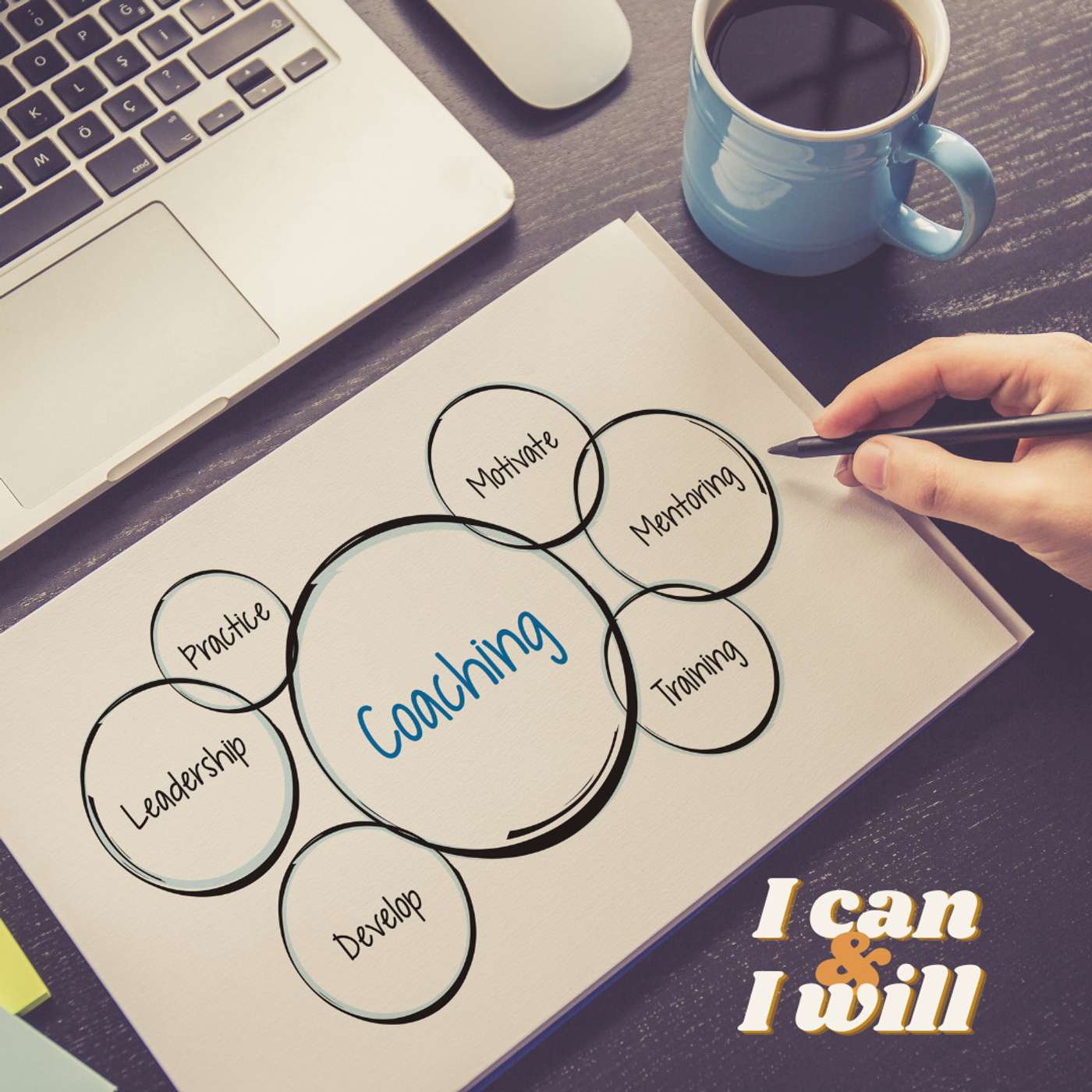 Episode 038 - Self Awareness in Coaching | In this episode, I talked about how coaching can bring out self-awareness. When we see things with different possibilities, we allow ourselves to achieve beyond what we can imagine. | 15m 07s | ||||||
| 8/28/23 |  Episode 037 - Smells Like Team Spirit | In this episode, I will discuss what a leader needs to do to improve team spirit or morale. Self-assessment, re-engage, re-align and re-commit.References:Ishaq, E., Bashir, S. and Khan, A.K. (2021), Paradoxical Leader Behaviors: Leader Personality and Follower Outcomes. Applied Psychology, 70: 342-357. https://doi.org/10.1111/apps.12233Zhang, Y., & Liu, S.M. (2021). Balancing employees’ extrinsic requirements and intrinsic motivation: A paradoxical leader behaviour perspective. European Management Journal, Vol 40 (1), 127-136Thuan, L.C. and Thanh, B.T. (2020), "Leader knowledge sharing behavior and follower creativity: the role of follower acquired knowledge and prosocial motivation", Journal of Workplace Learning, Vol. 32 No. 6, pp. 457-471.Jiang, J., Gao, A., & Yang, B. (2018, January 1). Employees’ Critical Thinking, Leaders’ Inspirational Motivation, and Voice Behavior: The Mediating Role of Voice Efficacy. Journal of Personnel Psychology, 17(1), 33–41. | 12m 17s | ||||||
| 7/17/23 |  Episode 036 - Self-Awareness | In this episode, I discussed self-awareness. We hear this frequently in the workplace, but what should we be mindful of when it comes to self-awareness? I share some strategies to become more self-aware of yourself, your thoughts, perceptions, and how to work and create relationships with others effectively. | 14m 51s | ||||||
| 1/26/23 |  Episode 035 - Assumptions | We all assume, and often we take our assumptions as truths. When we do so, we start to overthink and refuse to look at other alternative explanations which are evidence-based. In this podcast, I share four tips to help you to deal with your assumptions. | 9m 06s | ||||||
| 12/28/22 |  Episode 034 - Productivity at Work Series (How To Deal With Conflicts at Work) | This is the last episode of the Productivity at Work Series. In this episode, I talk about how we can deal with conflicts at work. | 11m 05s | ||||||
Showing 25 of 58
Pitch Fit is a Pro feature
See how bookable this show is for guests, which brands already advertise, the per-episode ad value, and the best-fit guest and sponsor profile. The numbers are blurred on the free plan.
How readily this show books outside guests like you.
How proven this show is for host-read sponsorships.
For Guests
ProFor Advertisers
ProUpgrade to Pro to unlock guest cadence, sponsor categories, fit scores, and per-episode ad value for this show.
Chart Positions
1 placement across 1 market.
Chart Positions
1 placement across 1 market.