
Psychology in the Classroom
by Lucinda Powell
Is this your podcast?Insights from recent episode analysis
Audience Interest
Podcast Focus
Publishing Consistency
Platform Reach
Insights are generated by CastFox AI using publicly available data, episode content, and proprietary models.
Most discussed topics
Brands & references
Total monthly reach
Estimated from 1 chart position in 1 market.
By chart position
- 🇮🇪IE · Education#134500 to 3K
- Per-Episode Audience
Est. listeners per new episode within ~30 days
250 to 1.5K🎙 Weekly cadence·225 episodes·Last published yesterday - Monthly Reach
Unique listeners across all episodes (30 days)
500 to 3K🇮🇪100% - Active Followers
Loyal subscribers who consistently listen
150 to 900
Market Insights
Platform Distribution
Reach across major podcast platforms, updated hourly
Total Followers
—
Total Plays
—
Total Reviews
—
* Data sourced directly from platform APIs and aggregated hourly across all major podcast directories.
On the show
From 14 epsHost
Recent guests
Recent episodes
What Is Test Anxiety and How Can We Help Students Overcome It?
Sep 1, 2026
Unknown duration
Why school exams don't prepare you for University (and that's Okay!)
Aug 28, 2026
Unknown duration
The Power of Professional Dialogue: Turning Lesson Observations into Meaningful Conversations for Growth
Jun 16, 2026
38m 11s
Gender Identity Decoded: How Biology and Society Shape Who We Are
Jun 2, 2026
48m 15s
Changing the Narrative Around Neurodivergence in Schools
May 19, 2026
37m 02s
Social Links & Contact
Official channels & resources
Official Website
Login
RSS Feed
Login
| Date | Episode | Topics | Guests | Brands | Places | Keywords | Sponsor | Length | |
|---|---|---|---|---|---|---|---|---|---|
| 9/1/26 |  What Is Test Anxiety and How Can We Help Students Overcome It? | ...with Professor David Putwain In this episode, Professor David Putwain, from Liverpool John Moores University, shares his expertise and insights into test anxiety. Drawing on over 23 years of research, David explains the distinction between stress and anxiety, debunks the myth that moderate anxiety improves performance, and estimates that up to 20% of secondary students are significantly affected. He discusses how the UK's high-stakes exam culture amplifies pressure and outlines practical, evidence-based strategies to support students, including breathing techniques and cognitive-behavioural approaches. David also highlights available resources for teachers, parents, and students. Links mentioned: David's Book: Understanding and Helping to Overcome Exam Anxiety: What Is It, Why Is It Important and Where Does It Come From? https://www.amazon.co.uk/Understanding-Helping-Overcome-Exam-Anxiety/dp/103271638X BPS Toolkit: https://cms.bps.org.uk/sites/default/files/2025-04/Teachers%20Toolkit%20-%20Effective%20Coping%20With%20Exam%20Pressure.pdf Ofqual Guidance: Coping with exam pressure - a guide for students: https://www.gov.uk/government/publications/coping-with-exam-pressure-a-guide-for-students/coping-with-exam-pressure-a-guide-for-students Lucinda's Book Overcoming exam anxiety and stress: https://www.hachette.co.uk/titles/lucinda-powell/overcoming-exam-anxiety-and-stress/9781408783450/ Episode in Bullet points: Definition and prevalence of test anxiety among students. Differences between stress and anxiety, particularly in the context of exams. The impact of the education system on exam anxiety, including high-stakes testing. Recognition of test anxiety by teachers and the cultural shift towards discussing mental health. The distinction between moderate stress and harmful anxiety in academic performance. Cognitive-behavioral strategies for managing exam anxiety. The role of sports psychology in understanding stress and anxiety. Practical interventions for students experiencing high levels of anxiety. Resources available for teachers, parents, and students to address exam anxiety. The need for systemic changes in education to reduce pressure and support student well-being. | — | ||||||
| 8/28/26 |  Why school exams don't prepare you for University (and that's Okay!) | ...with Dr Jonathan Firth In this episode Jonathon Firth, a Principal Teaching Fellow at the University of Strathclyde and former secondary psychology teacher, discusses the major academic transition students face when moving from secondary school to higher education. Jonathon shares critical insights into why top-performing school students often experience an academic "shock" at university, the shift from exam-focused criteria to self-directed, original analysis, and the unique disadvantages faced by first-generation students lacking "cultural capital" . The conversation explores practical, research-backed strategies for developing essential study habits, including effective note-taking, active reading, and structured writing reflection . Jonathon also addresses modern learning hurdles—such as digital distractions, declining reading habits, and the rise of AI—while advocating for cross-curricular creativity and sustained metacognition . Rather than treating study skills as a one-time orientation activity, Jonathon emphasises embedding metacognitive awareness continuously throughout a student's schooling to foster independent, future-ready learners . Links to Jonathan's Books and to sign up for his newsletter can found here: https://jonathanfirth.co.uk/ Jonathan's previous interview on metacognition can be found here: https://changingstatesofmind.libsyn.com/learning-to-learn Please do sign up for the Psychology in the Classroom newsletter here: https://changingstatesofmind.com/contact-me Key Takeaways: Bridging the Assessment Gap: Secondary education often rewards compliance and specific exam marking criteria, whereas university success hinges on holistic grading, original thesis generation, and self-directed research . Moving Beyond Verbatim Notes & Skimming: Effective note-taking requires deep cognitive processing and concept extraction rather than transcription . Active reading and scheduled reviews combat the natural "forgetting curve" . Building Knowledge & Cultural Capital: True creativity and critical thinking are not isolated, transferable skills; they rely on deep foundational knowledge, interdisciplinary connections, and broad reading . Metacognition as a Continuous Habit: Understanding how learning works—recognizing forgetting, self-evaluating strategies, and managing cognitive load—should be built iteratively into teaching across all key stages . The Episode in Bullet points: Transition challenges from secondary school to university for students. Differences in academic expectations and assessment styles between secondary education and higher education. The importance of developing independent study skills for university success. The role of cultural capital and broad general knowledge in academic performance. Strategies to prepare students for university learning, including effective note-taking and reading skills. The disconnect between school-focused exam preparation and university-level learning requirements. The impact of first-generation university students lacking familial guidance on academic skills. The significance of fostering curiosity and interconnected understanding across subjects in schools. The challenges students face due to varying levels of general knowledge upon entering university. The need for metacognitive strategies to help students manage feelings of being overwhelmed in a new academic environment. Effective study skills and strategies for student success Importance of note-taking techniques and their impact on learning Challenges of digital distractions in educational settings Transition from structured school environments to independent university learning Strategies for improving reading comprehension and engagement The role of creativity in education across various subjects The significance of metacognition in self-regulated learning Declining reading habits and their effects on academic performance The influence of AI on student learning and skill development Integrating metacognitive and creative strategies into existing teaching practices | — | ||||||
| 6/16/26 | lesson observationsprofessional dialogue+3 | Angela Myers | Solihull College | — | lesson observationprofessional growth+3 | — | 38m 11s | ||
| 6/2/26 | gender identityneurobiology+4 | Dr Diana Sorrentino | WPATHParadoxes of Gender | — | gender identitytransgender+5 | — | 48m 15s | ||
| 5/19/26 | neurodivergenceADHD+5 | Prof Edmund Sonuga BarkeDr. Susie Chandler | RE-STAR projectPlace Positive+1 | — | neurodivergent adolescentsADHD+5 | — | 37m 02s | ||
| 5/5/26 | habits in learningeffective learning strategies+3 | Ann-Kathrin Krause | Leibniz Institute for Research and Information in EducationHabit formation and behavior change+1 | — | learning strategieshabits+4 | — | 30m 14s | ||
| 4/21/26 | positive psychologywellbeing in schools+4 | Hannah Brownhill | Churchill FellowshipUniversity of Pennsylvania+1 | — | positive psychologywellbeing+5 | — | 38m 33s | ||
| 4/14/26 | multi-store model of memoryAI in psychotherapy+3 | EstelleCharlie | AIpsychotherapy+1 | — | memoryattention+5 | — | 14m 49s | ||
| 3/4/26 | inclusioneducation+4 | Dr Tracy Edwards | Leeds Beckett UniversityBBC+1 | — | inclusioneducation+5 | — | 47m 01s | ||
| 2/11/26 | mental healtheducation+5 | Andre Tomlin | The Mental ElfChildren and Young People's Mental Health Coalition+4 | — | mental health researchteachers+5 | — | 39m 21s | ||
Want analysis for the episodes below?Free for Pro Submit a request, we'll have your selected episodes analyzed within an hour. Free, at no cost to you, for Pro users. | |||||||||
| 1/28/26 | vocal tonestudent autonomy+3 | Professor Silke Paulmann | Tone4You | — | voiceteaching+5 | — | 30m 49s | ||
| 1/14/26 | cyber aggressionparenting styles+4 | Protyasha Bhattacharyya | How Can We Combat Cyber Aggression in Schools Today | — | cyber aggressionparenting styles+5 | — | 41m 08s | ||
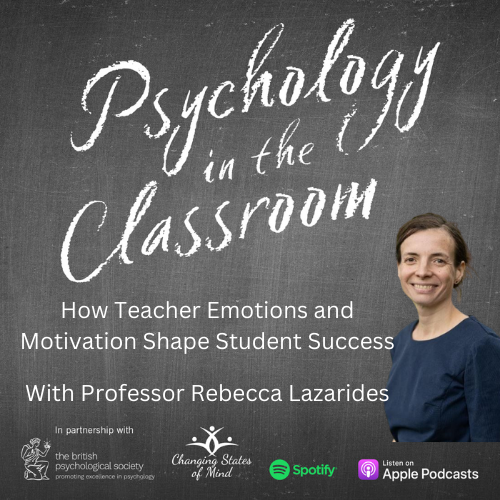
| 12/10/25 | teacher motivationstudent success+4 | Rebecca Lazarides | University of Potsdam | — | teacher emotionsmotivation strategies+4 | — | 29m 23s | ||
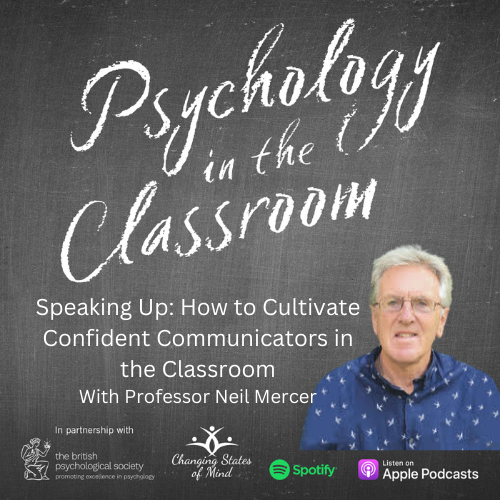
| 12/3/25 | spoken languageoracy+4 | Neil Mercer | University of CambridgeOracy Cambridge | — | communication skillsclassroom culture+5 | — | 38m 26s | ||
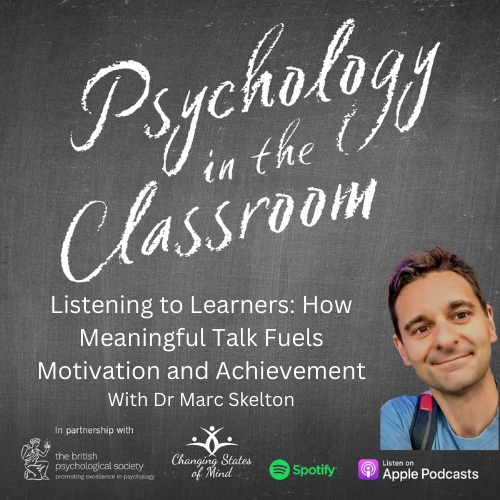
| 11/26/25 | student engagementself-regulated learning+3 | Dr. Marc Skelton | University of Warwick | — | motivationachievement+5 | — | 48m 38s | ||
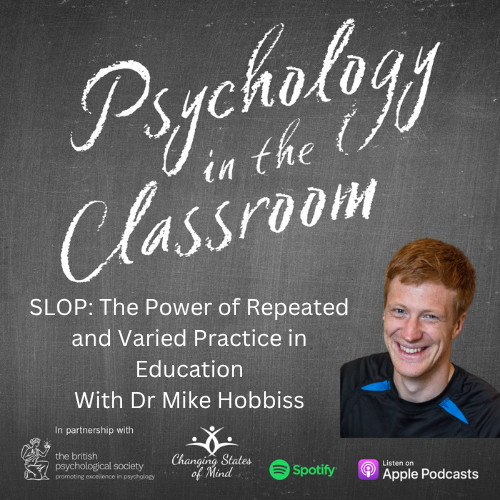
| 11/19/25 | educationpsychology+3 | Dr Mike Hobbiss | hobbolog.wordpress.comamazon.co.uk+1 | — | SLOPrepeated practice+3 | — | 42m 27s | ||
| 11/5/25 | 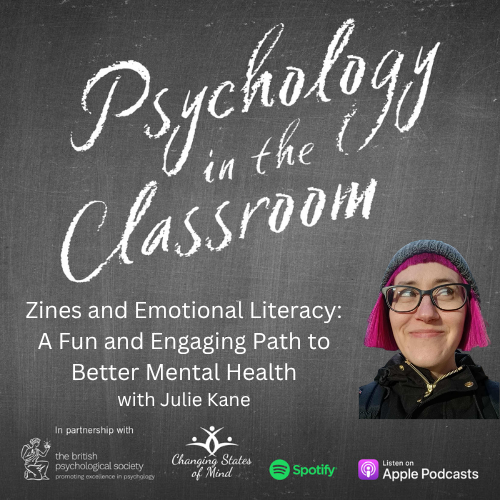 Zines and Emotional Literacy: A Fun and Engaging Path to Better Mental Health | …with Julie Kane In today's educational landscape, supporting young people's mental health and emotional literacy is more important than ever. We know that many young people are struggling with managing their emotions and this impacts their education in a range of ways. Julie is a third-year PhD student at Aston University, and discusses her innovative research using zines to support emotional literacy and mental health in young people. Julie shares how her background in psychology and art inspired her to develop creative workshops for primary and secondary students. We discuss the benefits of arts-based approaches, the flexibility and community-building power of zines, and the positive feedback from schools. Julie also highlights practical resources for teachers and her ongoing efforts to adapt and expand this project. "It's like reading literacy—you can read words but not comprehend them. Emotional literacy involves both naming emotions and truly understanding them." – Julie Kane Zelp on Breath Education: https://breathe-edu.co.uk/zelp/ Key points of the discussion: Research on zines as a tool for improving emotional literacy and mental health in young people. Julie's background in psychology and child development, combined with interests in art and creative expression led to this research. Definition and importance of emotional literacy in understanding and expressing emotions. The role of arts-based projects in enhancing mental health and providing alternative forms of expression. Description and characteristics of zines as self-published materials for personal expression. The collaborative and solitary aspects of zine-making and its impact on community building. Implementation of zine workshops in primary schools and their structure, including psychoeducation lessons. Positive feedback from children participating in zine workshops and its effects on their emotional literacy. Adaptation of zine workshop materials for secondary school students and the challenges faced. Resources and support for teachers to implement zine-making in educational settings, including animated videos and lesson plans. Sign up to the newsletter: https://changingstatesofmind.com/contact-me | — | ||||||
| 10/14/25 | 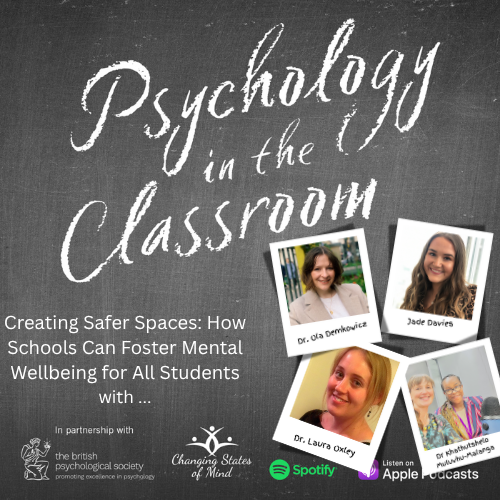 Creating Safer Spaces: How Schools Can Foster Mental Wellbeing for All Students | With Jade Davies, Dr Ola Demkowicz, Dr Khathustshelo Muluvhu-Malanga and Dr Laura Oxley In this final episode from the BPS Psychology of Education Setion's conference we hear from four experts on different elements of mental health in schools. We explore how social media impacts teenagers' wellbeing, the unique mental health challenges faced by adolescent girls, effective counseling models for supporting students towards academic excellence, and the importance of teacher wellbeing. The guests share research insights and practical advice, emphasising the need for open conversations, systemic change, and collaborative support. Together, they highlight the complexities of mental health in education and the importance of empathetic, evidence-based approaches for both students and teachers. Key points from the episode: Mental health in schools Impact of social media on young people's mental health Adolescent girls' mental health challenges Gender mental health gap and contributing factors Counseling models to support student wellbeing Teacher wellbeing and its relationship to student behavior Systemic changes needed to improve mental health support in schools Importance of open conversations between adults and young people regarding social media Strategies for teachers to manage student conduct and support mental health Collaboration among educators, parents, and institutions to enhance student support systems Time stamps Jade Davies: 2mins 6secs Ola Demkowicz: 14mins 28 secs Khathustshelo Muluvhu-Malanga: 25mins 16 secs Laura Oxley: 32mins 34secs | — | ||||||
| 10/7/25 | 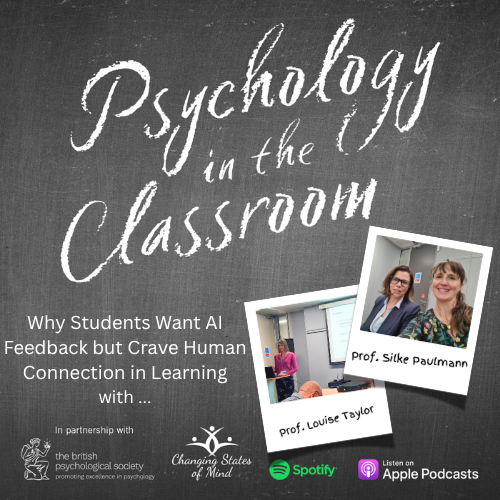 Why Students Want AI Feedback but Crave Human Connection in Learning | ...with Professor Louise Taylor and Professor Silke Paulmann In this episode of Psychology in the Classroom, Professor Louise Taylor discusses students' perceptions of using generative AI for assessment feedback, highlighting its benefits and the continued need for human connection in the marking and feedback process. In part two Professor Silke Pohlmann shares research on how a teacher's tone of voice shapes students' classroom experiences. Both conversations, recorded at the British Psychological Society's conference, offer practical insights for educators on integrating AI thoughtfully and using voice effectively to support student wellbeing and engagement. Subscribe to my newsletter: https://changingstatesofmind.com/contact-me Key discussion points: Students' perceptions of generative AI in formative assessment feedback. Benefits and limitations of AI-generated feedback compared to human feedback. The role of human interaction in the feedback process and its impact on student wellbeing. Potential applications of AI in secondary education for developing writing and critical thinking skills. The influence of a teacher's tone of voice on student emotions and engagement. The relationship between voice tone and student behavior in the classroom. Strategies for teachers to manage their voice tone effectively. The use of AI tools to analyse and provide feedback on teachers' voice tones. The impact of emotional susceptibility on how students perceive voice tones. Practical tips for teachers to enhance communication and support student engagement through voice modulation. | — | ||||||
| 9/30/25 | 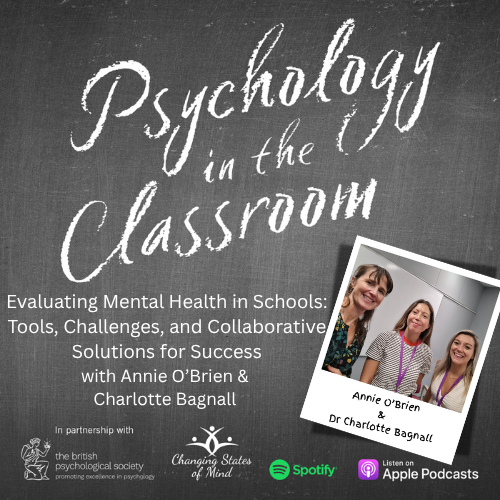 Evaluating Mental Health in Schools: Tools, Challenges, and Collaborative Solutions for Success | …with Dr Charlotte Bagnall and Annie O'Brien In this episode, Charlotte and Annie discuss the complexities of mental health and wellbeing interventions in schools with me. We explored the challenges of evaluating these programs in real-world settings, the development of child-centered measurement tools, and the decision-making processes schools use when selecting interventions. Our conversation highlighted the importance of stakeholder collaboration, context-sensitive evaluation, and balancing evidence with practical realities. We agreed that while there are no easy answers, ongoing research and co-production with educators and students are essential for creating effective, sustainable mental health support in schools. Key discussion points: Discussion on mental health and wellbeing programs in schools. Evaluation and measurement of school-based interventions. Challenges in implementing mental health interventions in real school settings. Development of new measurement tools for children's emotional wellbeing. Importance of context in evaluating the effectiveness of interventions. Decision-making processes for selecting mental health interventions in schools. Role of stakeholder collaboration in designing relevant programs. Consideration of opportunity costs in intervention implementation. Recognition of gradual and long-term benefits of social-emotional learning. Need for qualitative feedback to inform intervention adaptations and improvements. To hear Prof Neil Humphrey's interview here is the link: https://changingstatesofmind.libsyn.com/beyond-social-media-and-smartphones-factors-affecting-youth-mental-health-with-prof-neil-humphrey | — | ||||||
| 9/23/25 | 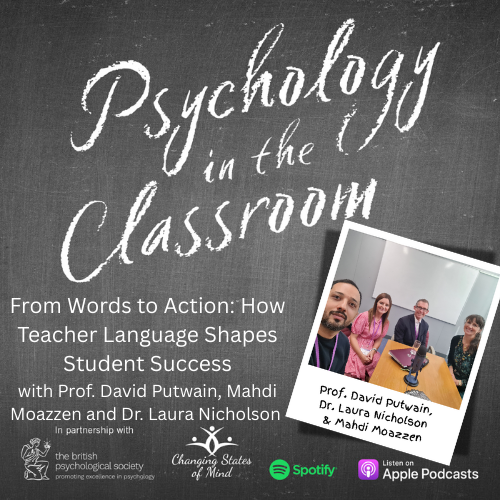 From words to action: how teacher language shapes student success | ...with Prof David Putwain, Dr Laura Nicholson and Mahdi Moazzen This episode is a lively discussion with educational researchers Prof. David Putwain, Dr. Laura Nicholson, and Mahdi Moazzen. We explored how teachers' language and message framing influence student motivation, engagement, and resilience. The conversation covered research on positive messaging in science classes, the impact of gain- versus loss-framed messages, and the role of coping strategies in academic buoyancy. We also discussed practical implications for teachers in the classroom and the potential of technology to support personal reflection and positive communication. The episode offered valuable insights into fostering student success through thoughtful, adaptive teacher messaging and support. For David's previous interview you can listen here: https://changingstatesofmind.libsyn.com/where-education-and-psychology-meet Key points: Impact of teacher messaging on student motivation and engagement Importance of positive, value-laden language in science education Relationship between teacher messaging and students' academic resilience Differences in student responses to positive versus negative messaging Role of individual differences in student sensitivity to messaging Coping strategies and academic buoyancy in upper secondary students Distinction between positive and negative coping strategies Influence of socioeconomic status and cultural factors on student perceptions Need for teacher training to promote positive messaging Practical implications for supporting students through academic challenges and transitions | — | ||||||
| 9/16/25 | 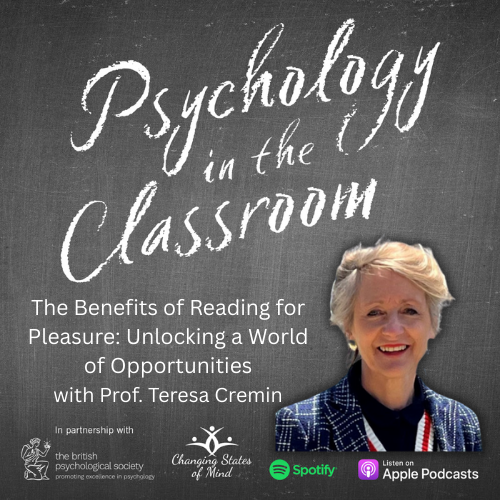 The Benefits of Reading for Pleasure: Unlocking a World of Opportunities | ...with Prof. Teresa Cremin. In this episode, Professor Teresa Cremin from the Open University, an expert on reading for pleasure, talks about why encouraging children to read voluntarily is so important. We explored the academic, social, and emotional benefits of reading, discussed the challenges posed by technology and changing family habits, and highlighted the crucial roles teachers, schools, and libraries play in fostering a love of reading. Teresa shared research insights and practical strategies for building positive reader identities and creating supportive, social reading environments that inspire lifelong engagement with books. In summary: Importance of voluntary reading for children and its benefits Academic, social, and emotional advantages of reading Consequences of not developing reading habits on cognitive and emotional growth Challenges in encouraging reading among young people Role of educators and schools in promoting reading habits Impact of technology and societal factors on reading preferences Significance of libraries in fostering a reading culture Misconceptions about reading as an individual activity versus a social practice Need for diverse reading materials that reflect student interests Importance of creating supportive environments for reading discussion Find out more: Teresa Cremin: https://profiles.open.ac.uk/teresa-cremin Reading for Pleasure: https://ourfp.org/ | — | ||||||
| 9/9/25 | 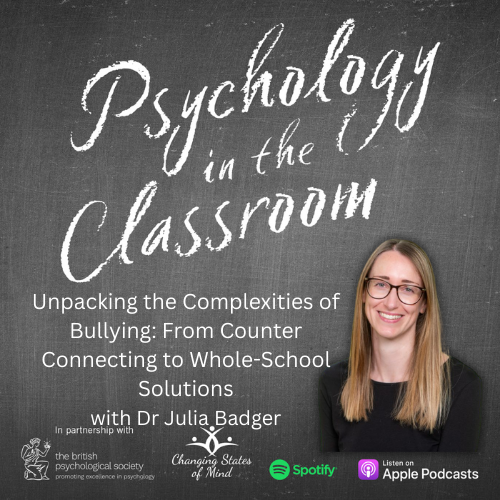 Unpacking the Complexities of Bullying: From Counter Connecting to Whole-School Solutions | ...with Dr Julia Badger In this episode of #Psychologyintheclassroom bullying expert Dr Julia Badger, from Oxford University discusses her conference talk, "Peer Power: Understanding and Changing Bullying Dynamics in Mainstream and Specialist Special Schools." Bullying is a public health priority. As teachers we need to know about bullying involvement and its impact. In this conversation Julia explores the challenges of defining bullying, introduces the concept of "counter connecting," and highlights the unique experiences of children with SEND. She shares evidence-based strategies, including the KIVA program and its SEND adaptation, emphasizing whole-school approaches and community involvement. Definition and complexity of bullying in educational settings. Proposal of a new inclusive definition of bullying, particularly for children with special educational needs and disabilities (SEND). Introduction of the concept of "counter connecting" and its implications in bullying dynamics. Differences in bullying experiences between mainstream and special schools. The disproportionate impact of bullying on children with SEND. Variations in bullying types (verbal, physical, relational, cyberbullying) across different school environments. The psychological and emotional effects of bullying on victims, perpetrators, and bully-victims. Importance of whole-school anti-bullying programs and community involvement. Evidence-based interventions for bullying prevention, such as the KIVA program. The need for clear policies and shared understanding of bullying among educators, parents, and students. Links: Dr Julia Badger: https://www.education.ox.ac.uk/person/julia-badger/ KIVA: https://www.kivaprogram.net/ WISDOM Network: https://wisdom.mhid.org.uk/ Podcast with Lucy Bowes: https://changingstatesofmind.libsyn.com/bullying-its-everybodys-problem Podcast with Chris Tayloe: https://changingstatesofmind.libsyn.com/constructive-deviance-with-chris-taylor | — | ||||||
| 9/2/25 | 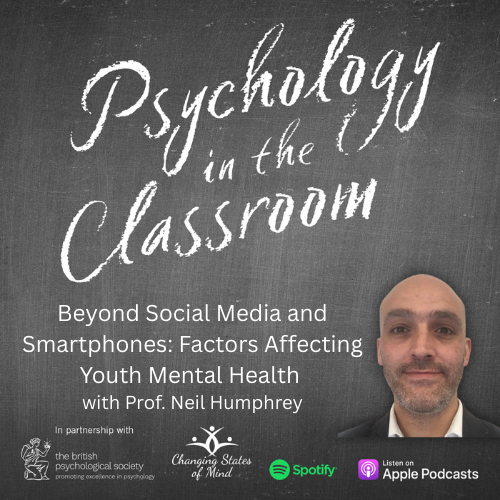 Beyond Social Media and Smartphones: Factors Affecting Youth Mental Health | ...with Prof. Neil Humphrey In this episode Professor Neil Humphrey from the University of Manchester, discusses trends in youth mental health, the rise in internalising issues like anxiety, and the impact of societal changes such as sleep hygiene and service cuts. He critiques current research methods, advocates for evidence-based, cost-effective school interventions, and emphasizes the importance of promoting well-being through arts, physical activity, and sleep. The episode offers practical insights for teachers and highlights the need for nuanced, whole-community approaches. Key points: Current state of child and adolescent mental health Decline in young people's mental health over the past 30 years Distinction between internalising (anxiety, depression) and externalising (behavioural issues) problems Societal factors influencing mental health, including sleep hygiene and funding cuts to services Critique of current mental health measurement tools and the need for updated assessments Discussion on the effectiveness of universal mental health interventions in schools Importance of promoting overall well-being and positive mental health, not just addressing difficulties Role of creative arts and physical activity in enhancing mental health Need for evidence-based approaches in school mental health support Challenges faced by teachers in addressing mental health within the educational system Useful links: Prof Neil Humphrey:https://research.manchester.ac.uk/en/persons/neil.humphrey Education for Wellbeing In conjunction with Anna Freud: https://www.annafreud.org/research/current-research-projects/education-for-wellbeing/ Youth Futures Foundation: Understanding Drivers of recent trends in young people's mental health: https://youthfuturesfoundation.org/publication/report-understanding-drivers-of-recent-trends-in-young-peoples-mental-health/ Podcast with Prof Jess Deighton: https://changingstatesofmind.libsyn.com/navigating-mental-health-issues-in-schools-strategies-for-teachers-and-students-with-prof-jess-deighton | — | ||||||
| 8/26/25 | 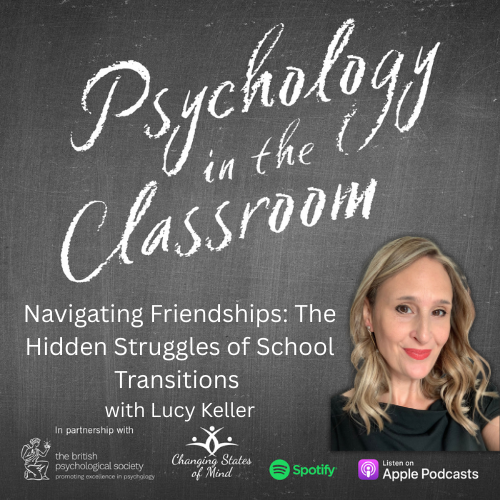 Navigating Friendships: The Hidden Struggles of School Transitions | In this episode Lucy Keller, a PhD researcher in psychology, discusses her work on improving friendship and social connectedness among young people during the critical transition from primary to secondary school. Lucy shares insights on the impact of social connectedness on mental health, In addition she touches on the unique challenges faced by neurodivergent and gender-questioning students. She advocates for inclusive school environments, student-led clubs, and systemic education reform. Lucy highlights the importance of extracurricular activities amongst other practical tips and resources for supporting students are discussed. Useful Links: World Health Organisation on social connection: https://www.who.int/groups/commission-on-social-connection NSPCC building Connections website: https://learning.nspcc.org.uk/services/building-connections Red Cross Social Connection: https://www.redcross.org.uk/get-involved/connected-communities In summary: Research on improving friendship experiences and social connectedness among young people. The significance of social connectedness and its impact on mental health. Challenges faced by young people during the transition from primary to secondary school. The emotional and social complexities of moving to a larger school environment. The importance of maintaining friendships during school transitions. Practical strategies for schools to support students, including listening to their perspectives. The specific difficulties faced by neurodivergent students during this transition. The role of extracurricular activities in fostering social connections. The need for systemic changes in the education system to better support young people's social and emotional needs. Resources and support systems available for young people struggling with social connections. | — | ||||||


Showing 25 of 231
Pitch Fit is a Pro feature
See how bookable this show is for guests, which brands already advertise, the per-episode ad value, and the best-fit guest and sponsor profile. The numbers are blurred on the free plan.
How readily this show books outside guests like you.
How proven this show is for host-read sponsorships.
For Guests
ProFor Advertisers
ProUpgrade to Pro to unlock guest cadence, sponsor categories, fit scores, and per-episode ad value for this show.
Chart history for Psychology in the Classroom
Peaked at #134 in Ireland, currently #134 in Ireland.
| Market | Genre | Peak | Current | Trend |
|---|---|---|---|---|
| Ireland | — | #134 | #134 | — |
Chart Positions
1 placement across 1 market.
Chart Positions
1 placement across 1 market.