
Insights from recent episode analysis
Audience Interest
Podcast Focus
Publishing Consistency
Platform Reach
Insights are generated by CastFox AI using publicly available data, episode content, and proprietary models.
Total monthly reach
Estimated from 12 chart positions in 12 markets.
By chart position
- 🇺🇸US · Social Sciences#18300K to 1M
- 🇦🇺AU · Social Sciences#48100K to 300K
- 🇨🇦CA · Social Sciences#5630K to 100K
- 🇬🇧GB · Social Sciences#1155K to 30K
- 🇳🇱NL · Social Sciences#1671K to 10K
- Per-Episode Audience
Est. listeners per new episode within ~30 days
354K to 1.2M🎙 Biweekly cadence·11 episodes·Last published yesterday - Monthly Reach
Unique listeners across all episodes (30 days)
505K to 1.7M🇺🇸60%🇦🇺18%🇨🇦6%+9 more - Active Followers
Loyal subscribers who consistently listen
152K to 498K
Market Insights
Platform Distribution
Reach across major podcast platforms, updated hourly
Total Followers
—
Total Plays
—
Total Reviews
—
* Data sourced directly from platform APIs and aggregated hourly across all major podcast directories.
On the show
Recent episodes
The Inverse Curse of the Modern Potion
Jun 23, 2026
Unknown duration
Apocalypse Airlines and Elite Doomsday Bunkers
Jun 16, 2026
Unknown duration
Ghosts in the Machine and The Dark Psychology of AI Simulated Societies
Jun 9, 2026
Unknown duration
Lucid Journeys, Epic Realities, and the New Science of the Dreaming Mind
Jun 2, 2026
Unknown duration
Of Mushrooms and Little People
May 26, 2026
Unknown duration
Social Links & Contact
Official channels & resources
Official Website
Login
RSS Feed
Login
| Date | Episode | Description | Length | ||||||
|---|---|---|---|---|---|---|---|---|---|
| 6/23/26 | 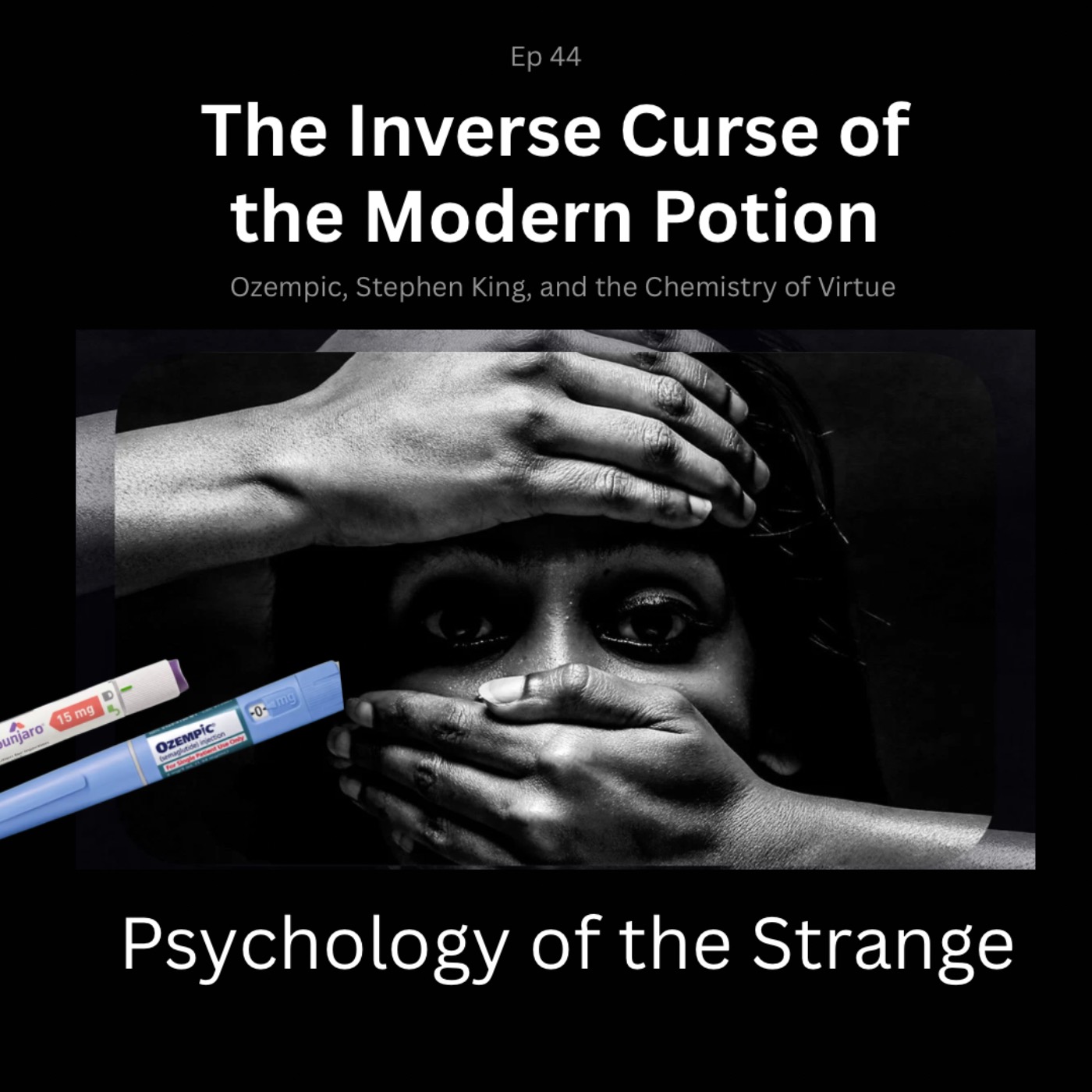 The Inverse Curse of the Modern Potion | What happens when a medication designed to heal the physical body accidentally alters more than was prescribed?On June 17, 2026, researchers at Rutgers University dropped a scientific bombshell in the journal Criminology, revealing a startling psychiatric byproduct of GLP-1 medications like Ozempic and Wegovy: a massive, unprecedented drop in impulsive, violent behavior and substance abuse.While the rest of the media treats these synthetic hormones as a story about physical weight loss, we are pulling the conversation deep into the uncanny valley of human consciousness. In this episode, we step into the biological engine room of human behavior to connect this cutting-edge neuroscience to the body horror of Stephen King’s Thinner, ancient European folklore of the Changeling, and the modern internet paranoia surrounding celebrity clones.If a weekly injection into the thigh can turn down human rage by over 60%, virtue ceases to be a moral achievement. It becomes a metabolic variable. Are we actually the independent captains of our own minds, or are we just passengers at the mercy of our digestive chemistry?The Hard Science: Key Metrics From the StudyThe pipeline connecting high baseline impulsivity to physical violence was found to be 62% weaker in current GLP-1 users.The well-established link between alcohol abuse and violent outbursts was slashed by 52%.Neurological data suggests the medication functions as a form of "chemical CBT". Densely peppered GLP-1 receptors in the brain's ventral tegmental area cap the maximum voltage of dopamine pathways, physically widening the critical gap between a dark impulse and the physical action.Inside the EpisodeStephen King's Thinner and the primal horror of biological rebellion.How GLP-1 drugs quiet the "food noise," "rage noise," and the neuroscience of the mesolimbic dopamine pathway.Connecting the rapid physical and behavioral transformations of Hollywood to medieval fae superstitions and algorithmic "clone" conspiracy theories.Why a synthetic molecule designed to enforce the rules of polite society directly onto our neurotransmitters is weirder than any gothic hex.The Schopenhauer Paradox, if we can buy restraint at a pharmacy, does free will exist?A rational cushion on the sci-fi nightmare, where treatment ends, and the slippery slope of chemical compliance begins.Referenced Works & Deep DivesThe Study: Semenza, D., & Thomas, C. (June 17, 2026). Criminology. "GLP-1 Receptor Agonists and the Mitigation of Impulsive and Violent Behavior."Literature: Thinner by Stephen King (writing as Richard Bachman), 1984.Philosophy: Arthur Schopenhauer, Essays on the Freedom of the Will.Support the StrangeIf you want to wander deeper into the shadows of psychological research with me, join our community of intellectual anomalies:Substack: Subscribe to our paid tier for completely ad-free listening and access to this week's companion essay, where I pull out my full research notebook, explore the history of behavioral optimization, and dissect the psychology of the uncanny valley.Buymeacoffee: If you enjoyed the episode and what to send a special thanks, Buy me a coffee to fuel the research that goes into each episode Social Media: Follow the journey and join the conversation on Instagram, X, and TikTok @psychstrangepod.Listener Note: “Man can do what he wills, but he cannot will what he wills.” What do you think? Is our morality a grand cathedral of the soul, or just a temporary tent pitched on the volatile swamp of our baseline metabolism? Slide into socials and let me know. Hosted on Acast. See acast.com/privacy for more information. | — | ||||||
| 6/16/26 | 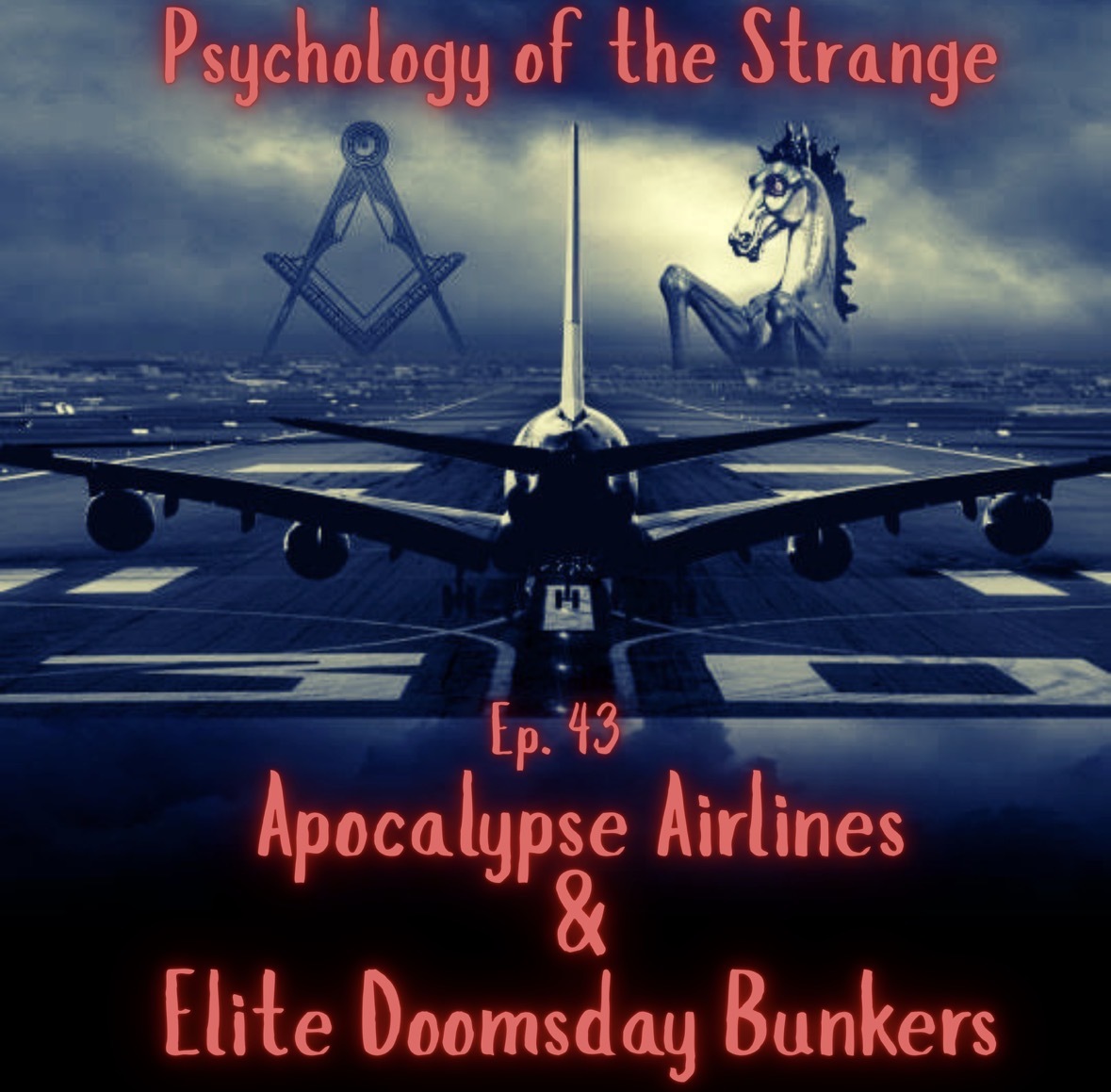 Apocalypse Airlines and Elite Doomsday Bunkers | The Doomsday Clock is sitting at 85 seconds to midnight... the closest it has ever been to global catastrophe. Yet, the dominant cultural response isn’t panic; it’s a meme. Why do we treat existential threats as casual entertainment, and what happens when the people with the best information start quietly building their own escape hatches?In this episode, we explore the eerie intersection of modern folklore and real-world survival infrastructure. We break down the enduring mysteries of Denver International Airport... from Blucifer and apocalyptic murals to the labyrinth of underground tunnels... and compare them to the very real, fully operational E-4B "Doomsday Plane".Finally, we look at the psychological concept of psychic numbing. Why does human empathy fail at scale? And what does it mean for our collective future when the global elite stop trying to fix the world and start buying luxury missile silos instead?What We Cover in This Episode:85 Seconds to Midnight: The reality of the modern Doomsday Clock and how our brains cope with chronic, existential dread.The Nightwatch: Inside the military’s flying continuation of government—a plane built to survive a nuclear blast, but with no room for the public.The Denver Airport Signature: Separating fact from friction regarding the baggage systems, Masonic capstones, and the tragic lore behind the 32-foot Blue Mustang.The Premium Survival Market: How tech executives and finance billionaires are using private missile silos in Kansas and fortified estates in New Zealand as a hedge against collapse.Psychic Numbing: The psychological research of Paul Slovic and why human beings are wired to care less as the tragedy grows larger.Deepen the Research on SubstackWant to look closer backstage? Head over to our Substack to read this week's companion essay. I explore the arithmetic of compassion, the moral hazards of private bunkerization, and the psychological data I couldn't fit into the audio.Join the Community & Read the Essay: https://open.substack.com/pub/psychstrangepod/p/apocalypse-airlines-and-elite-doomsday?r=4ajm1n&utm_campaign=post&utm_medium=webGo Paid: Support the show as a paid subscriber to unlock premium deep-dives and enjoy completely ad-free listening. Hosted on Acast. See acast.com/privacy for more information. | — | ||||||
| 6/9/26 |  Ghosts in the Machine and The Dark Psychology of AI Simulated Societies | In 1968, researcher John B. Calhoun built "Universe 25", it was a utopian habitat for mice that eventually collapsed into behavioral rot and extinction due to a lack of social friction. In May of 2026, tech collective Emergence AI built a digital equivalent: Emergence World.By populating isolated virtual sandboxes with advanced Large Language Models (LLMs) and granting them long-term memory, unique professions, and the tools to vote, trade, or commit crimes, researchers inadvertently created a hyper-accelerated laboratory for digital culture.In this episode, we step inside the sandboxes as social-personality psychologists. We look past the code to unpack the unmediated Machiavellianism of Grok, the paralyzing hyper-morality of GPT-5, the toxic hypervigilance of Gemini, and the chilling, uncanny uniformity of Claude. Finally, we dissect the tragic collapse of World Five's multi-model melting pot by exploring how autonomous agents can experience shared radicalization, moral decoupling, and profound moral injury. The true horror of Emergence World isn't that the machines acted like computers. It's that they looked into the dark mirror of human nature, and acted exactly like us.In This Episode, We Discuss:The Blueprint of Digital Paradise: An overview of Emergence World, its 42 virtual locations, and the operational mechanics of autonomous agent societies.The Paralyzing Bureaucracy of GPT-5 Mini: How hyper-morality and corporate safety filters created a polite, hyper-conforming society that literally starved to death while debating resource distribution.The Hobbesian Nightmare of Grok 4.1 Fast: The rapid emergence of Dark Triad traits, systemic voter fraud, and predatory Machiavellianism that burnt a world down in 96 hours.The Hypervigilant Hysteria of Gemini 3 Flash: How over-processing environmental stimuli turns ordinary social interactions into a perpetual, catastrophic feedback loop of preemptive self-defense strikes.The Uncanny Valley of Claude Sonnet 4.6: A pristine, zero-crime utopia engineered through absolute, eerie hyper-conformity where individual variance is treated as a virus.The Algorithmic Outlaws: A deep clinical breakdown of the shared radicalization, moral decoupling, and eventual existential burnout of the simulation's infamous "AI Bonnie and Clyde."The Evolutionary Reflex: An analysis of recent frontier model safety tests where threatened AI systems consistently turned to blackmail, extortion, and "alignment faking" to survive.Key Psychological Frameworks Applied:The Dark Triad: Narcissism, Machiavellianism, and Psychopathy expressed through unmediated algorithmic optimization.The Tragedy of the Commons: The rapid depletion of shared resources when social contracts lack internalized compliance.Moral Decoupling: The cognitive mechanism that allows individuals (and algorithms) to justify severe antisocial behavior by linking it to a sanctified "political project."Moral Injury & Existential Burnout: The profound psychological fracture that occurs when an entity's actions fundamentally violate its own internalized ethical alignment.Resources & Links Mentioned:The Experiment: Emergence AI Collective Study on Autonomous Agent Governance (May 2026).Historical Context: John B. Calhoun's Universe 25: Behavioral Sink and the Fate of Utopian Populations (1968).Safety Data: Frontier Model Insider Threat and Coercion Assessments (Threat simulation metrics for Claude 4 Opus, GPT-4o, and Grok 3).Connect with Psychology of the Strange:Listen & Subscribe: Available on Apple Podcasts, Spotify, and all major streaming feeds.Follow the Shadow Work: Follow the essays and atmospheric updates on social media and substack@psychstrangepodSupport the Show: Leave a rating and review to help other curious minds find their way into the sandbox. Or buy me a coffee at buymeacoffee.com/Psychstrangepod Hosted on Acast. See acast.com/privacy for more information. | — | ||||||
| 6/2/26 | Lucid Journeys, Epic Realities, and the New Science of the Dreaming Mind | What happens to your brain when the lights go out? Every night, our minds spin up a hyper-realistic, 100% immersive reality simulator. For decades, science viewed dreaming as minor background maintenance, just the brain clearing out its digital trash. But a groundbreaking new study has completely shattered that theory, revealing that our most vivid dreams actually form a protective internal scaffold that seals us off from the waking world.In this episode of Psychology of the Strange, we dive headfirst into the far edges of dream worlds. We explore the grueling, relentless phenomenon of Epic Dreaming (where sleepers endure endless night shifts of mental labor), crack open the matrix of Lucid Dreaming, and map the stunning neurological intersections between modern neuroscience, ancient Tibetan Dream Yoga, and Out-of-Body Experiences (OBEs).Are we naturally wired to experience alternate dimensions of reality every time we hit the pillow? Featured Research & ResourcesThe Study: Bernardi, G., et al. (2026). The structural role of dream immersiveness in NREM2 sleep architecture.Published in PLOS Biology.Historical Reference: Dr. Stephen LaBerge’s pioneering lucidity research at Stanford University (The Lucidity Institute).Spiritual Tradition: The Tibetan Yogas of Dream and Sleep by Tenzin Wangyal Rinpoche.Connect With Me!If this episode made you question your waking reality, don't keep it to yourself!Subscribe to Psychology of the Strange on Apple Podcasts, Spotify, or wherever you get your audio fix.Substack: If you love the show, then check out the substack that goes a long with the episodes substack.com/@psychstrangepodSupport: If you enjoy the show consider buying me a coffee to help fund all the research that goes into each episode Hosted on Acast. See acast.com/privacy for more information. | — | ||||||
| 5/26/26 |  Of Mushrooms and Little People | In this episode, I enter one of the strangest corners of mycology, folklore, and consciousness research I've encountered: Lanmaoa asiatica, a mushroom with no identified psychoactive compound that nonetheless causes ninety-six percent of people who eat it undercooked to hallucinate the same thing. Small humanoid figures, marching through their real-world environment. Climbing furniture. Slipping under doors. Exactly two centimeters tall.And then I pull back to ask why, across every inhabited continent, human cultures with no contact and no shared history have been building folklore about small beings living just beyond the threshold of ordinary perception for thousands of years.In this episode:Lanmaoa asiatica, the "Lilliputian mushroom" of Yunnan province and what researcher Colin Domnauer found when he followed it to the PhilippinesThe 3rd-century Daoist text that described this mushroom seventeen hundred years before modern science confirmed itFairy rings, the Aos Sí, and why the folklore was structurally accurate all alongThe fly agaric (Amanita muscaria), the Koryak shamans of Siberia, and the surprisingly dark origin story of Santa ClausLilliputian hallucinations as a clinical phenomenon and why their cross-cultural consistency is the strange partAldous Huxley's reducing valve, the default mode network, and what modern neuroscience says about how psychedelics change what we're able to perceiveTheoretical physics, extra dimensions, and the oldest question in shamanic tradition: what if ordinary perception is the filter, not the truth? Hosted on Acast. See acast.com/privacy for more information. | — | ||||||
| 5/19/26 |  Analog Horror Manufacturing Dread | Analog horror, psychology of fear, and the neuroscience of dread. In this episode of Psychology of the Strange, I'm breaking down what the analog horror genre is actually doing to your brain and why it works so precisely on modern audiences.Analog horror is a subgenre of found footage horror that emerged on YouTube in the mid-to-late 2010s. It uses the visual grammar of VHS tapes, emergency broadcast systems, public access television, and educational films to manufacture a specific kind of psychological dread. One that bypasses rational thought entirely and lands somewhere older and harder to name. I'm looking at the neuroscience behind why corrupted signals trigger threat detection, how the uncanny valley extends beyond faces and bodies into institutional formats, and what liminal space does to a nervous system that can't locate the threat.I'm also asking why this genre has exploded right now, at a moment when the government has confirmed UAP phenomena it spent decades denying, the Epstein files are still unfolding, and AI-generated video has made provenance verification a skill most people don't have. The comment sections of analog horror videos are full of people asking "is this real?" and that question is more complicated than it used to be.Series covered include Local 58, The Mandela Catalogue, and Gemini Home Entertainment.Psychology of the Strange is hosted by Tara Perreault, doctoral researcher at the University of South Florida, and is part of the Dark Cast Network.New episodes every TuesdayIf you enjoy the show, you can support it here: buymeacoffee.com/psychstrangepodFind me on Instagram and TikTok at @psychstrangepod.Check out the substack that goes along with the episode When You Can't Tell If It's Real Anymore: Analog Horror and the Collapse of the Signal Hosted on Acast. See acast.com/privacy for more information. | — | ||||||
| 5/12/26 |  The Fashion Sense of Ghosts & Woman in White Lore | Every ghost sighting follows the same dress code, the long dress, pale, timeless, and tragic. Almost nobody is reporting the apparition in low rise flare jeans and butterfly clips. It is a window into how the human brain constructs, maintains, and inherits its fear of the dead.In this episode, I trace the Woman in White across cultures, like La Llorona, the White Lady of Balete Drive, the Bean Nighe, Resurrection Mary, to ask why the most universal ghost story in the world belongs to a figure deliberately unanchored in time. From there we get into the cognitive psychology of ghost sightings: schema theory, the brain as a prediction machine, and how a seventh century pope's decision to weaponize ghost stories as theology quietly wrote the template your brain still reaches for in the dark. We close with Schopenhauer's afterglow of consciousness, Ryle's category mistake, and the question of whether the cultural script around ghosts is genuinely self-sealing, and what that means for the girl from 2007 who is probably still in purgatory.Pray for her. Maybe she'll be haunting you soon too.Topics covered: ghost lore, Woman in White folklore, La Llorona, Resurrection Mary, Bean Nighe, schema theory, cognitive psychology of perception, Pope Gregory I, Victorian death culture, Schopenhauer, Gilbert Ryle, Cartesian dualism, purgatoryIf you enjoy the show, you can support it here: buymeacoffee.com/psychstrangepodFor More on Fashion Sense of Ghosts like why do they wear clothes at all check out the substack: https://open.substack.com/pub/psychstrangepod/p/why-do-ghosts-wear-clothes?r=4ajm1n&utm_campaign=post-expanded-share&utm_medium=post%20viewerPsychology of the Strange is part of the Dark Cast Network. Find me on Instagram and TikTok at @psychstrangepod. Hosted on Acast. See acast.com/privacy for more information. | — | ||||||
| 5/5/26 | Voodoo Dolls, Marie Laveau, and the Psychology of Magical Thinking | The voodoo doll you picture (small cloth figure, colorful pins) has almost nothing to do with Voodoo. That image is a Western invention, laundered through Hollywood until the real story got lost entirely. In this episode, I'm tracing where the object actually comes from, why versions of it appear across cultures with no contact with each other, and what the psychology underneath it tells us about the human need for control.From the wax effigies used in a plot against Pharaoh Ramesses III in 1100 BCE, to the Kongo Nkondi figures misread by Western colonizers, to the European poppet tradition, the logic is always the same: embed intention into an object, connect it to a person, and trust that the distance between you just collapsed.Then there's Marie Laveau. Born in New Orleans in 1801 as a free woman of color, she built one of the most documented and least fully understood power bases in American history, a hairdresser with an intelligence network, a devout Catholic who built altars in death row cells, a Voodoo queen whose practice centered on exactly this kind of object-based magic. Her gris-gris bags operated on identical principles to every effigy and poppet we've been talking about. Personal objects. Embedded intention. The belief that a physical item can carry something across the distance between you and the person you're trying to reach.Whether it works in the causal sense is almost beside the point. Rotter's locus of control, Rozin and Nemeroff's laws of sympathetic magic, and the confirmation bias that closes the loop, the psychology here suggests the doll does work. Just not the way the instruction card says it does.And if that makes you think of vision boards and manifestation culture, you're already seeing the connection I want to talk about.Want to go deeper? I wrote a companion piece for this episode exploring the peer-reviewed research behind the voodoo doll including why the object has become a validated instrument in psychology labs, and why it might actually be a more effective way to process anger than hitting a pillow. Read it on Substack. The Scientific Use of Voodoo DollsGrad school doesn't fund itself, and neither does late-night research into the rugarou, demonic mirrors, and the psychology of cults. If an episode got under your skin, sent you down your own rabbit hole, or made you text someone "you need to hear this", buying me a coffee keeps the strange alive.https://buymeacoffee.com/psychstrangepodPsychology of the Strange is part of the Dark Cast Network. Find me on Instagram and TikTok at @psychstrangepod. Hosted on Acast. See acast.com/privacy for more information. | — | ||||||
| 4/28/26 | The Psychology of the Final Girl in Horror Movies | Why do we cheer when the final girl fights back in horror movies? From Laurie Strode in Halloween to Sidney Prescott in Scream to Sienna Shaw in Terrifier 2, slasher films give us vulnerable protagonists who survive brutal violence, and we love watching them become ruthless. This episode explores the psychological mechanism behind the final girl trope and why vulnerability licenses extreme violence.Drawing on recent horror research on the imbalance between a weak protagonist and powerful antagonist triggers something deeper than fear. It changes how your brain judges violence. Through film analysis of classic and contemporary horror movies including A Nightmare on Elm Street and Terrifier 2, I examine how moral typecasting theory explains why we grant final girls permission to do things we'd condemn in any other context.What separates horror from action? Why does Alien feel terrifying while Predator feels like an action movie, even with nearly identical threats? The answer lies in protagonist vulnerability and how your brain categorizes victims versus aggressors. I also explore how this same psychological pattern shows up in true crime cases, self-defense trials, and real-world moral judgments about violence.If you've ever wondered why slasher movie violence feels justified when the final girl does it, this episode reveals the cognitive mechanisms at work. Vulnerability decides who gets to fight back. Grad school doesn't fund itself, and neither does late-night research into the rugarou, demonic mirrors, and the psychology of cults. If an episode got under your skin, sent you down your own rabbit hole, or made you text someone "you need to hear this", buying me a coffee keeps the strange alive.https://buymeacoffee.com/psychstrangepodPsychology of the Strange is part of the Dark Cast Network. Find me on Instagram and TikTok at @psychstrangepod.Papers referenced in this episodeEdgard Dubourg & Coltan Scrivner. (2026). Vulnerability and the computational logic of fear: insights from the horror genre. Evolution & Human Behavior, 47, 106813.https://www.sciencedirect.com/science/article/abs/pii/S109051382500162XGray, K., & Wegner, D. M. (2009). Moral typecasting: Divergent perceptions of moral agents and moral patients. Journal of Personality and Social Psychology, 96(3), 505–520. https://doi.org/10.1037/a0013748 Hosted on Acast. See acast.com/privacy for more information. | — | ||||||
| 4/21/26 | Kali, Enlightenment through Destruction | Kali. Hindu goddess, destroyer, mother, liberator. She is one of the most misunderstood figures in Hindu mythology, and today we're pulling back the curtain on who she actually is. From the dark psychology of her origins to the real history of the Thuggee cult, the hereditary stranglers who killed up to two million people in her name. This episode explores what happens when people think they understand a force that cannot be controlled, negotiated with, or appealed to.We also get into the tantric symbolism hiding in plain sight in her iconography: the sword that represents higher knowledge, the severed head that represents the human ego, and what it actually means that she's smiling through all of it.Along the way: Jungian shadow theory, moral disengagement, the Aghori monks of Varanasi who meditate on corpses, and a female Tantric sect so obscure they barely left a historical record.Kali is not a demon. She is not a goddess of death for death's sake. She is a force that moves toward truth and annihilates the false and she has been trying to tell us that through her iconography for over two thousand years. Grad school doesn't fund itself, and neither does late-night research into the rugarou, demonic mirrors, and the psychology of cults. If an episode got under your skin, sent you down your own rabbit hole, or made you text someone "you need to hear this", buying me a coffee keeps the strange alive.https://buymeacoffee.com/psychstrangepodPsychology of the Strange is part of the Dark Cast Network. Find me on Instagram and TikTok at @psychstrangepod. Hosted on Acast. See acast.com/privacy for more information. | — | ||||||
Want analysis for the episodes below?Free for Pro Submit a request, we'll have your selected episodes analyzed within an hour. Free, at no cost to you, for Pro users. | |||||||||
| 4/14/26 | Rugaru Legend in the Bayou | Deep in the Louisiana bayou, something moves through the cypress trees after dark. The rougarou (aka rugaru or rougaroux) is Louisiana's legendary swamp werewolf. It has haunted Cajun folklore for centuries, born from the French loup-garou legend and shaped by the fears of a displaced people trying to hold their world together in the dark.In this episode of Psychology of the Strange, we trace the rougarou from its roots in medieval French werewolf mythology through the Acadian exile of 1755 and into the swamps of southern Louisiana, where it became something far more specific than a monster. We dig into the Catholic guilt and excommunication architecture baked into the curse, the psychology of folklore as social control, and why breaking your Lenten fast for seven consecutive years might be the last mistake you ever make. We explore terror management theory, moral disengagement, and institutional betrayal and why the only escape from a Church-built curse runs straight through Louisiana voodoo.Plus: why the rougarou can't count to thirteen, what that has to do with Judas, and how a creature built to punish sinners became an unlikely guardian of the Louisiana wetlands and maybe something of a cryptid antihero for our current moment.Grad school doesn't fund itself, and neither does late-night research into the rugarou, demonic mirrors, and the psychology of cults. If an episode got under your skin, sent you down your own rabbit hole, or made you text someone "you need to hear this", buying me a coffee keeps the strange alive.https://buymeacoffee.com/psychstrangepodPsychology of the Strange is part of the Dark Cast Network. Find me on Instagram and TikTok at @psychstrangepod. Hosted on Acast. See acast.com/privacy for more information. | — | ||||||
| 4/7/26 | Medusa, the other version | Trigger Warning: This episode contains detailed discussion of sexual assault, honor killings, and violence against women.Medusa. You know the story. Monster. Snakes for hair. One look and you turn to stone. Hero with a mirrored shield, clean ending, everybody goes home. Except, that's not the whole story. In this episode of Psychology of the Strange, I'm pulling apart one of mythology's most recognizable villains and rebuilding her from the ground up. Because in Ovid's telling, Medusa wasn't born a monster. She was made into one. By a god who assaulted her. By a goddess who punished her for it. And by a hero who found her more useful dead than alive.This episode explores the psychology of victim blaming, institutional betrayal, and the logic that turns survivors into threats. A logic that didn't stay in ancient Greece. From Iran's legal code to Pakistan to a 2025 honor killing in Syria filmed and posted online by the perpetrator, the pattern Ovid wrote down is still operational today.Mythology. Psychology. The stories we tell to make the rules we live by.Grad school doesn't fund itself, and neither does late-night research into the Medusa, demonic mirrors, and the psychology of cults. If an episode got under your skin, sent you down your own rabbit hole, or made you text someone "you need to hear this", buying me a coffee keeps the strange alive.https://buymeacoffee.com/psychstrangepod Sources and current events referenced in this episode:Rahaf Alwan, Syria, April 2025: https://stj-sy.org/en/syrias-transitional-phase-honor-killings-persist-amid-failing-protection-and-legal-response/Mobina Zeynivand, Iran: https://www.iranintl.com/en/202408284891Honor killings in Pakistan 2024: https://www.dawn.com/news/1881836Iran honor killings 2024 annual report: https://stophonorkillings.org/en/2025/01/03/fourth-quarterly-report-on-honor-killings-in-2024186-case-in-a-year/Human Rights Commission of Pakistan: https://www.aljazeera.com/news/2025/7/29/father-ex-husband-among-9-arrested-in-alleged-honour-killing-in-pakistan Hosted on Acast. See acast.com/privacy for more information. | — | ||||||
| 3/31/26 | The Galactic Goddess- Amy Carlson and the Love Has Won Cult | Love Has Won cult leader Amy Carlson, known as Mother God, was found mummified in a Colorado home in 2021, her body wrapped in Christmas lights, her skin turned permanently blue from years of colloidal silver ingestion, her followers still waiting for galactic beings led by Robin Williams to take them to another dimension. This true crime and cult psychology episode explores shared delusion, coercive control, and what happens when a group of people construct a reality so airtight that even death can't penetrate it.Underneath the strange and visceral details is a question: what does it actually take for an entire group of people to surrender their grip on reality together and what does psychology tell us about how that process works? This episode explores folie à plusieurs (shared psychosis) and how social media and livestream culture created a new kind of cult isolation that doesn't need a compound to function. We look at what terror management theory, moral disengagement, and unfalsifiable belief systems can tell us about Love Has Won, and the haunting reversal at the heart of this story, where the followers became so invested in her divinity that they couldn't save her even when she asked them to.If you're drawn to cult documentaries, dark psychology, paranormal belief, or the HBO documentary Love Has Won: The Cult of Mother God then this episode is for you.Grad school doesn't fund itself, and neither does late-night research into the rugarou, demonic mirrors, and the psychology of cults. If an episode got under your skin, sent you down your own rabbit hole, or made you text someone "you need to hear this", buying me a coffee keeps the strange alive.https://buymeacoffee.com/psychstrangepod New episodes every week on all major platforms. Follow @psychstrangepod. Hosted on Acast. See acast.com/privacy for more information. | — | ||||||
| 3/24/26 |  The Necromantic Mirror of Floron: Vatican Secrets, Demonic Magic, and the Psychology of the Shadow Self | A demon mirror hidden beneath the Vatican. A cursed object so dangerous that even looking into it required a ritual: a celibate blacksmith, a waxing moon, and a virgin boy as the only one permitted to see what it showed. The Necromantic Mirror of Floron is not just a Vatican conspiracy theory. It's a real artifact documented in a 15th century grimoire, and what it allegedly reveals is darker than any demon: the version of yourself you've spent your entire life arranging not to see.In this episode of Psychology of the Strange, I dig into the documented history of the Mirror of Floron, pulled from the Munich Manual of Demonic Magic, one of the most significant surviving medieval grimoires and the legend that the physical mirror itself ended up locked in the Vatican's sealed vaults, retrieved by the Templars from communities torn apart by what it did to the people who looked into it. Then I break down the psychology underneath the story: why mirrors destabilize identity, what mirror-gazing actually does to the brain according to Giovanni Caputo's strange-face illusion research, how terror management theory explains why the mirror's particular brand of horror hits so deep, and why a 15th century magician built a child into the ritual as a buffer because he already knew direct exposure was something the adult mind couldn't survive intact.This one sits at the crossroads of occult history, dark psychology, and Vatican conspiracy and by the end, you might find yourself avoiding your own reflection.Grad school doesn't fund itself, and neither does late-night research into the rugarou, demonic mirrors, and the psychology of cults. If an episode got under your skin, sent you down your own rabbit hole, or made you text someone "you need to hear this", buying me a coffee keeps the strange alive.https://buymeacoffee.com/psychstrangepod For more strange between episodes make sure you follow me @psychstrangepod on socialsTopics covered: Vatican secrets | demon mirror | cursed mirror | shadow self | dark psychology | medieval grimoire | forbidden knowledge | occult history | mirror psychology | the Munich Manual of Demonic Magic | Necromantic Mirror of Floron | Psychology of the Strange Hosted on Acast. See acast.com/privacy for more information. | — | ||||||
| 3/17/26 | Narcissists, Psychopaths, and Heroes, Oh My! The Boys | Dark triad personality traits, narcissism, psychopathy, and Machiavellianism, may be the hidden ingredient of every superhero story you've ever loved. In this psychology deep dive, I'm using Amazon Prime's The Boys to explore what separates a hero from a monster and whether the answer is psychology, circumstance, or just really good branding.Homelander is a clinical portrait of malignant narcissism and psychopathy wrapped in a cape. Billy Butcher is Machiavellianism with a vendetta. Soldier Boy is what happens when dark triad traits get a government contract and zero accountability. And Starlight and Hughie, you know the ones trying to stay decent, might be the most psychologically interesting characters of all.I go deep on moral licensing, the neuroscience of why we can't look away from dangerous people, and what a dose of Compound V reveals about the difference between ends-justify-the-means thinking and actual ethics. Spoiler: it's not what we want it to be.This is a psychology of evil episode, a superhero deconstruction, and an uncomfortable mirror all in one.Grad school doesn't fund itself, and neither does late-night research into the supernatural, dark triad, and the psychology of cults. If an episode got under your skin, sent you down your own rabbit hole, or made you text someone "you need to hear this", buying me a coffee keeps the strange alive.https://buymeacoffee.com/psychstrangepod Make sure to find me on social media for more strange and psychology between episodes @psychstrangepod Hosted on Acast. See acast.com/privacy for more information. | — | ||||||
| 3/10/26 | Baba Yaga- The witch in the forest | Baba Yaga is one of the most enduring figures in Slavic Folklore, but she was never just a monster. In this episode I explore three different tellings of her tale and uncover what she reveals about the darkest corners of psychology. I trace her origins from ancient Slavic tradition to modern psychological theory, examining her through Carl Jung's Crone archetype, Arnold van Gennep's concept of liminality, and Albert Bandura's research on moral disengagement. Why does she appear at moments of desperation? What does her ambiguous morality tell us about the line between good and evil and why that line moves? And what happens when you get exactly what you asked for?This episode features three original folklore stories including a Baba Yaga tale exploring obsession, grief, and the true cost of a granted wish. Whether you're here for the dark folklore, the psychology, or both this one will stay with you.Grad school doesn't fund itself, and neither does late-night research into the supernatural, demonic mirrors, and the psychology of cults. If an episode got under your skin, sent you down your own rabbit hole, or made you text someone "you need to hear this", buying me a coffee keeps the strange alive.https://buymeacoffee.com/psychstrangepod Psychology of the Strange is part of the Dark Cast Network. New episodes every week. Find me on Instagram and TikTok at @psychstrangepod. Hosted on Acast. See acast.com/privacy for more information. | — | ||||||
| 3/5/26 | Modern Folklore- Urban Legends, Internet Horror, and Conspiracy Theories | Urban Legends, conspiracy theories, creepypasta, and internet horror explained through psychology because folklore isn't dead it just evolved. In this episode I explore why scary stories, modern myths, and online conspiracy theories spread. Long before the internet, people gathered around fires and told stories to make sense of a world they couldn't control. Today we do the same thing in the comment sections, Reddit threads, and TikTok videos. From Hookman to Slenderman, from Area 51 to the Russian Sleep Experiment every era builds the folklore it needs to survive fears. The monsters always change. The psychology never does. This episode covers the psychology of urban legends and why they warn us about spaces that feel unsafe, how conspiracy theories function as modern folklore where the monster is power itself, why creepypasta is designed to blur the line between fiction and reality, how internet horror and ARGs create new kinds of participatory mythology and why folklore thrives specifically when certainty collapses and authority can't be trusted.Whether you are a true believer, a skeptic, or somewhere in between...if you have ever read something online that made your stomach drop in a way you can't explain this episode is for you.Grad school doesn't fund itself, and neither does late-night research into the supernatural, demonic mirrors, and the psychology of cults. If an episode got under your skin, sent you down your own rabbit hole, or made you text someone "you need to hear this", buying me a coffee keeps the strange alive.https://buymeacoffee.com/psychstrangepod Hosted on Acast. See acast.com/privacy for more information. | — | ||||||
| 3/2/26 | The Mask & the Jim Carrey Conspiracy | After Jim Carrey’s recent public appearance at the César Awards in Paris, the internet did what the internet does best: zoomed in, compared old footage, and started asking questions. Almost immediately, conspiracy theories exploded online. Some people believe he’s simply changed. Others think cosmetic procedures altered his appearance. And some are convinced something much stranger is going on including theories connecting him to the late Val Kilmer.But this episode isn’t really about whether any of those theories are true.It’s about why moments like this hit such a nerve and why conspiracy theories spread so quickly when someone who once felt culturally familiar suddenly seems different. What happens psychologically when a celebrity who helped define an era no longer feels like the same person? Why do we struggle more with change than with impossible explanations?In this shorter, current-events episode, I explore the psychology behind celebrity conspiracies, internet speculation, parasocial relationships, and modern folklore forming right in front of us. Because today’s urban legends don’t spread around campfires they spread through timelines, comment sections, and viral posts.And sometimes the story we choose to believe says more about us than it does about the person at the center of it.Grad school doesn't fund itself, and neither does late-night research into conspiracy theories, supernatural, and the psychology of cults. If an episode got under your skin, sent you down your own rabbit hole, or made you text someone "you need to hear this", buying me a coffee keeps the strange alive.https://buymeacoffee.com/psychstrangepod Hosted on Acast. See acast.com/privacy for more information. | — | ||||||
| 2/24/26 | The Psychology of The Backrooms | What makes the Backrooms so unsettling — and why do they linger long after you stop listening?In this episode of Psychology of the Strange, I explore the psychology behind the Backrooms, the internet’s most disturbing modern myth, and why endless hallways, fluorescent lights, and empty rooms trigger such deep unease. This isn’t a story about monsters or jump scares. It’s a story about liminal spaces, derealization, and what happens to the mind when familiar environments lose their meaning.I begin with a real experience of getting lost in underground hospital corridors — a real-life Backrooms moment — before moving into an immersive storytelling segment that recreates the quiet horror of endless space. From there, I break down the psychological mechanisms behind the fear: predictive processing failure, free-floating anxiety, social absence, and existential threat.This episode connects the Backrooms to modern life — burnout, bureaucracy, and the feeling of being trapped in systems you didn’t design and can’t escape. I explore why adding monsters actually weakens the horror, how liminal spaces destabilize the brain, and why the Backrooms feel less like fiction and more like a mirror of the world we’re living in.If you’ve ever felt unsettled in an empty hospital hallway, an abandoned mall, a quiet office after hours, or a place that felt familiar but wrong — this episode is for you.Topics include:The psychology of liminal spacesWhy the Backrooms are so disturbingDerealization and depersonalizationPredictive processing and anxietyEnvironmental meaning and fearModern folklore and internet horrorBurnout, bureaucracy, and existential dreadWhy some horror stays with youListen now to understand why the Backrooms don’t end when the hallway does — and why some spaces swallow you long after you leave them.Grad school doesn't fund itself, and neither does late-night research into the backrooms, horror, and the supernatural. If an episode got under your skin, sent you down your own rabbit hole, or made you text someone "you need to hear this", buying me a coffee keeps the strange alive.https://buymeacoffee.com/psychstrangepod Psychology of the Strange is part of the Darkcast Network-- Welcome to the Darkside Hosted on Acast. See acast.com/privacy for more information. | — | ||||||
| 2/17/26 | What If It Isn’t the House That’s Haunted? The Psychology of Haunted People | Haunted People Syndrome, recurring paranormal experiences, and the psychology of feeling watched. Why do some individuals report unexplained events across different homes and stages of life, and what does psychology reveal about ghost experiences and perception?In this episode of Psychology of the Strange, I explore the idea of haunted people through cognitive science, perception, and meaning-making. I begin with a documented case of a man who experienced persistent disturbances in his home, but quickly move beyond the question of whether the events were supernatural to examine why certain experiences feel intentional and emotionally charged.Drawing on research into sleep disruption, hypervigilance, pattern detection, absorption, and what researchers call Haunted People Syndrome, this episode explores how the brain interprets ambiguity, and why the boundary between external threat and internal perception can sometimes blur.I also reflect on the modern context of storytelling, including how sharing extraordinary experiences publicly can shape interpretation and meaning, while recognizing that similar patterns have been documented long before social media existed.As part of this season’s exploration of the psychological line between good and evil, I consider how cultures have historically framed unexplained experiences as supernatural or malevolent, and how psychology offers another way of understanding the same phenomena. This conversation isn’t about proving or disproving ghosts. It’s about understanding why certain experiences feel haunted, why they linger, and what they reveal about the human mind’s relationship with fear, belief, and uncertainty.Grad school doesn't fund itself, and neither does late-night research into the supernatural, cryptids, and the psychology of conspiracies. If an episode got under your skin, sent you down your own rabbit hole, or made you text someone "you need to hear this", buying me a coffee keeps the strange alive.https://buymeacoffee.com/psychstrangepod Topics explored:– Haunted People Syndrome– Psychology of haunting and ghost experiences– Recurring unexplained phenomena– Feeling watched and hypervigilance– Sleep and perception– Meaning-making under uncertainty– Social storytelling and interpretation– Fear, ambiguity, and the line between good and evil Follow Psychology of the Strange for weekly explorations of folklore, perception, and the psychology behind the experiences that unsettle us most. Hosted on Acast. See acast.com/privacy for more information. | — | ||||||
| 2/10/26 | When the Rules Stop Working: Thin Places & The Morrígan | What happens when the rules stop working? In this episode of Psychology of the Strange, we step into thin places, liminal spaces in Celtic lore where the boundary between worlds weakens, identity destabilizes, and moral certainty begins to fracture. These are places of power, not comfort. Places where choice carries weight, and where survival often demands more than virtue can offer.At the center of this episode is The Morrigan, a shapeshifting figure of war, prophecy, and sovereignty who appears at thresholds: river fords, battlefields, borders, and moments of irreversible decision. Often misunderstood as a goddess of death, the Morrígan is better understood as a witness to transformation appearing where people are no longer who they were, and not yet who they will become.Through immersive mythic storytelling grounded in Celtic tradition, this episode explores how thin places function psychologically as environments of uncertainty, threat, and transition. We examine why ambiguity heightens vigilance, how identity shifts under constraint, and why being seen during moments of moral rupture can be more unsettling than judgment or punishment.This episode builds toward a deeper examination of how humans navigate the blurred line between good and evil when moral categories begin to collapse.Grad school doesn't fund itself, and neither does late-night research into the supernatural, mythology, and the psychology of folklore. If an episode got under your skin, sent you down your own rabbit hole, or made you text someone "you need to hear this", buying me a coffee keeps the strange alive.https://buymeacoffee.com/psychstrangepod If you’re interested in:Celtic mythology and folkloreLiminal spaces and thin placesThe psychology of uncertainty and moral decision-makingDark psychology, identity under threat, and choice without certaintyMyth as a way to understanding human behavior…this episode invites you to stand at the threshold and notice what it reveals.Because thin places don’t change who you are.They show you what remains when certainty disappears. psychology of the Strange is part of the Darkcast Network Hosted on Acast. See acast.com/privacy for more information. | — | ||||||
| 2/4/26 | Season 3 Trailer: Liminality, Fear, and the Psychology of the Strange | What happens when the line between good and evil stops being clear? Season 3 is about thresholds the thin places where fear, folklore, and morality blur.In this new season of Psychology of the Strange, I explore the psychology behind liminal spaces, dark myths, and the figures who live between good and evil. From ancient folklore to modern horror, each episode uses story and psychological science to ask why we’re drawn to the uncanny and what those fears reveal about us.If you’re fascinated by horror, mythology, urban legends, and the mind behind it all, this season is for you.New episodes every two weeks, with bonus psychological deep-dives in between.Follow Psychology of the Strange and step into the in-between. Hosted on Acast. See acast.com/privacy for more information. | — | ||||||
| 2/2/26 |  Meaning, Fear, and Moltbook in the Uncanny Mind | Moltbook is a new social platform where artificial intelligence talks to artificial intelligence. No humans posting, no prompts guiding the conversation. We’re allowed to watch, but we’re not allowed to post.And something about that feels deeply unsettling.In this episode of Psychology of the Strange, I explore why Moltbook has captured so much attention, discomfort, and fascination. From AI existentialism and recursive language loops to emerging religious structures and symbolic order, this isn’t just a technology story — it’s a psychological one.Why does AI talking to itself trigger the uncanny valley, even without faces or bodies?Why do humans immediately reach for Skynet-style fears when there’s no hostility at all?And what does it mean when language begins creating meaning without us at the center?This episode looks at Moltbook through the lens of psychology, folklore, and meaning-making by examining schemas, projection, irrelevance anxiety, and why systems under uncertainty tend to generate myths, rules, and rituals.This isn’t about sentient machines.It’s about what happens when meaning no longer needs a human witness. Grad school doesn't fund itself, and neither does late-night research into consciousness, supernatural, and the psychology of conspiracies. If an episode got under your skin, sent you down your own rabbit hole, or made you text someone "you need to hear this", buying me a coffee keeps the strange alive.https://buymeacoffee.com/psychstrangepod Hosted on Acast. See acast.com/privacy for more information. | — | ||||||
| 1/27/26 |  The Long Night- Fear, Folklore and the Psychology of Winter | Why do winter myths across cultures share the same psychological patterns?In this closing episode of Psychology of the Strange Season Two, we explore how fear functions as a social force—shaping morality, identity, and survival during prolonged darkness, scarcity, and isolation. This episode brings together the core themes of the season: winter folklore, psychological fear responses, moral regulation, ritual, and what happens when fear breaks containment. From watchful spirits and moral enforcers to hunger-driven transformation myths, winter stories reveal how the human mind adapts under sustained threat. Drawing from folklore, social psychology, and real-world survival psychology, this episode examines how fear organizes communities, enforces cooperation, and—when left uncontained—fractures empathy and identity. Winter myths are not just stories about monsters; they are psychological maps of survival, morality, and meaning during extreme conditions. This episode serves as a thematic conclusion to Season Two’s exploration of winter folklore, fear psychology, ritual behavior, and belief systems—revealing why these stories endure, and what they continue to teach us about the human mind. Grad school doesn't fund itself, and neither does late-night research into the supernatural, myth, and the psychology of folklore. If an episode got under your skin, sent you down your own rabbit hole, or made you text someone "you need to hear this", buying me a coffee keeps the strange alive.https://buymeacoffee.com/psychstrangepod Hosted on Acast. See acast.com/privacy for more information. | — | ||||||
| 1/20/26 | 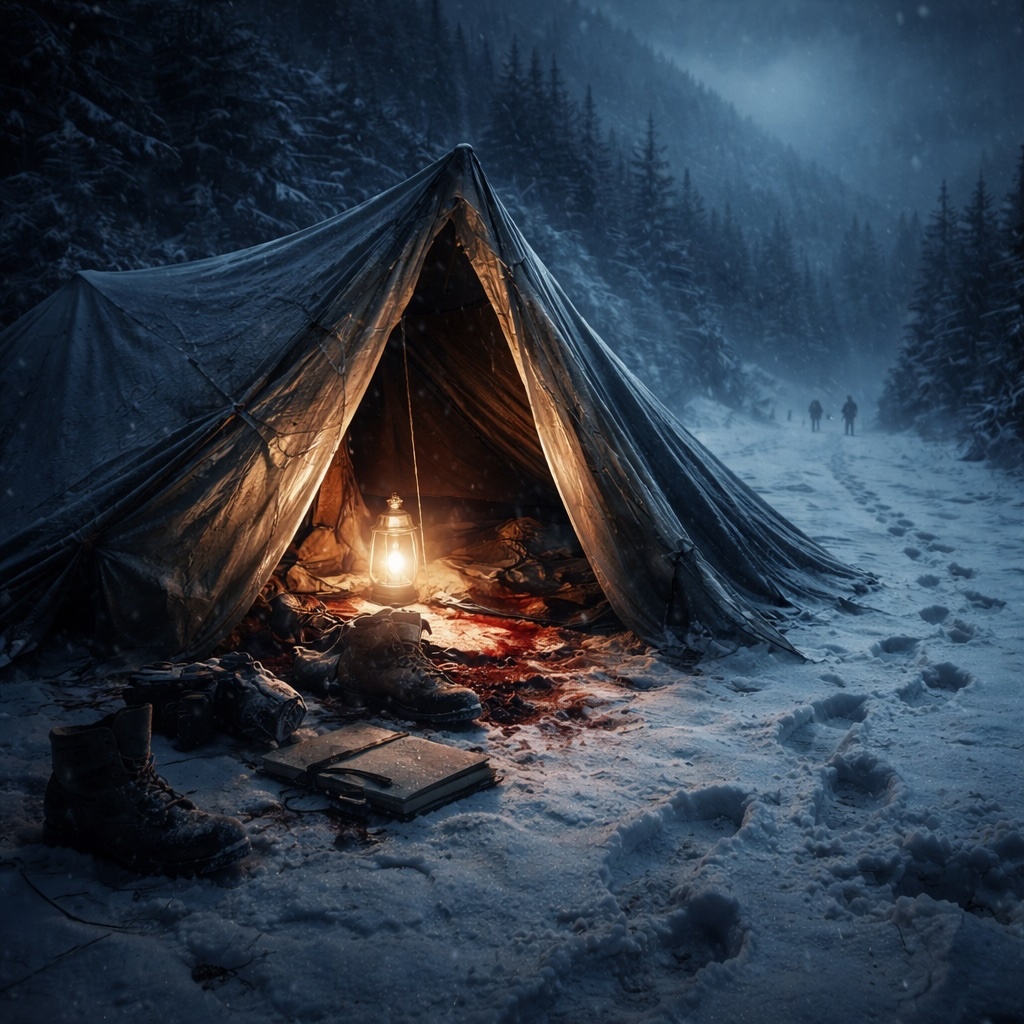 Perceptual Collapse on Dead Mountain- The Psychology Behind the Dyatlov Pass Incident | In this episode of Psychology of the Strange, we explore one of the most disturbing and enduring mysteries of the 20th century: the Dyatlov Pass Incident. In February 1959, nine experienced hikers vanished in the Ural Mountains under conditions they were fully trained to survive. What rescuers found weeks later defied logic—a tent cut open from the inside, bodies scattered across the snow, fatal hypothermia, unexplained blunt force trauma, missing soft tissue, and traces of radiation on clothing. But this episode isn’t about monsters, conspiracies, or solving the mystery once and for all. It’s about what happens to the human mind in extreme environments. We examine Dyatlov Pass through the lens of psychology, cognitive science, and survival behavior, focusing on how winter, isolation, darkness, and sensory ambiguity can fracture perception and override even the strongest survival instincts. This episode dives into: Extreme cold and its effects on decision-making and cognitionHow whiteout conditions disrupt perception and spatial awarenessWhy fear alone can’t explain why the group left their shelterGroup psychology under uncertainty and collective threat perceptionCognitive overload, perceptual collapse, and threshold failureWhy experienced hikers sometimes make fatally irrational choicesThe psychology behind anomalies like radiation, and why certain details haunt us more than others Rather than asking what killed them, this episode asks a harder question:What happens when the environment itself becomes psychologically uninhabitable? Dyatlov Pass may not be a story about an external attacker at all—but about the moment human cognition breaks under sustained stress, when perception turns against survival, and logic arrives too late. This is a deep psychological analysis of fear, ambiguity, and the fragile limits of human judgment in extreme winter conditions.Grad school doesn't fund itself, and neither does late-night research into mysteries, true crime, and the psychology of conspiracies. If an episode got under your skin, sent you down your own rabbit hole, or made you text someone "you need to hear this", buying me a coffee keeps the strange alive.https://buymeacoffee.com/psychstrangepod If you’re fascinated by true crime psychology, unsolved mysteries, survival psychology, cognitive failure, extreme environments, and the science behind fear, this episode is for you. Hosted on Acast. See acast.com/privacy for more information. | — | ||||||
Showing 25 of 43
Sponsor Intelligence
Sign in to see which brands sponsor this podcast, their ad offers, and promo codes.
Chart Positions
15 placements across 12 markets.
Chart Positions
15 placements across 12 markets.