

Insights from recent episode analysis
Audience Interest
Podcast Focus
Publishing Consistency
Platform Reach
Insights are generated by CastFox AI using publicly available data, episode content, and proprietary models.
Total monthly reach
Estimated from 3 chart positions in 3 markets.
By chart position
- 🇬🇧GB · Business News#1885K to 30K
- 🇦🇺AU · Business News#1985K to 30K
- 🇮🇪IE · Business News#134500 to 3K
- Per-Episode Audience
Est. listeners per new episode within ~30 days
5.3K to 32K🎙 Weekly cadence·84 episodes·Last published 2d ago - Monthly Reach
Unique listeners across all episodes (30 days)
11K to 63K🇬🇧48%🇦🇺48%🇮🇪5% - Active Followers
Loyal subscribers who consistently listen
4.2K to 25K
Market Insights
Platform Distribution
Reach across major podcast platforms, updated hourly
Total Followers
—
Total Plays
—
Total Reviews
—
* Data sourced directly from platform APIs and aggregated hourly across all major podcast directories.
On the show
Recent episodes
Ep 79. Social Care at Capacity
May 18, 2026
Unknown duration
Ep 78. Mental Health and Youth Services
Apr 16, 2026
Unknown duration
Ep 77. Libraries, Leisure and Loss
Mar 16, 2026
Unknown duration
Ep 76. AI and Machine Learning
Feb 18, 2026
Unknown duration
Ep 75. EV Infrastructure
Jan 22, 2026
Unknown duration
Social Links & Contact
Official channels & resources
Official Website
Login
RSS Feed
Login
| Date | Episode | Description | Length | ||||||
|---|---|---|---|---|---|---|---|---|---|
| 5/18/26 |  Ep 79. Social Care at Capacity | In episode 79 of the Public Sector Executive podcast, we tackled the critical challenges facing social care services in the UK, a sector grappling with rising demand, tightening budgets, and a workforce crisis. Experts including Ian Turner, OBE, Hulya Mustafa, Lee Rickles, and Jane Brightman, shed light on the structural and financial pressures that are impacting service delivery and the well-being of service users.As Ian Turner highlights, the landscape of social care has evolved dramatically over the past few decades, shifting from a focus on physical disabilities to a predominant need for support for individuals with complex conditions such as dementia. This shift necessitates a new approach to care that integrates prevention and innovation, particularly through digital technology.Jane Brightman discusses the workforce challenges that have emerged, especially with international recruitment becoming increasingly difficult. The social care workforce, largely comprised of women aged 45 and over, faces unique challenges that must be addressed to ensure they are supported and adequately compensated for their vital work.The conversation also delves into the role of digital innovation in transforming social care. Hulya Mustafa emphasises that while technology is not a panacea, it offers substantial opportunities to enhance service delivery and improve user outcomes. The integration of digital records and the use of technology for proactive care, such as falls prevention systems, are just a few examples of how the sector can evolve.However, the panel acknowledges that financial pressures are significant, with social care often receiving less funding compared to the NHS. Lee Rickles points out that this disparity creates a challenging environment for providers who are expected to implement new technologies and deliver quality care without adequate resources.As the discussion progresses, the panel underscores the importance of collaboration between health and social care sectors. By working together, they can create a more cohesive system that focuses on the needs of individuals, rather than operating in silos. This holistic approach is essential for addressing the complexities of care and ensuring that service users receive the support they need.In conclusion, this episode offers invaluable insights into the current state of social care in the UK and the urgent need for reform. The panel's collective expertise provides a roadmap for moving from survival to sustainability, highlighting the crucial role of government support, workforce development, and digital innovation in shaping the future of social care. Hosted on Acast. See acast.com/privacy for more information. | — | ||||||
| 4/16/26 |  Ep 78. Mental Health and Youth Services | Young people are increasingly facing unprecedented pressures. Thanks to this, the conversation around mental health and youth services has never been more crucial. From the cost of living crisis to the pervasive influence of social media, today’s youth are navigating challenges that can severely impact their mental well-being. In the latest episode of the Public Sector Executive podcast, we delve into these pressing issues, exploring how public sector support can be reformed to better cater to the needs of young minds.One of the key topics discussed is the potential ban on social media for under-16s, inspired by recent initiatives in Australia. While some argue that such a ban could mitigate the negative effects of social media, others highlight the importance of teaching children to navigate the online world responsibly. The panelists emphasise that a complete ban may not be the solution, as it could lead to children finding alternative ways to access these platforms, thus creating a false sense of security.The role of parents in guiding their children through the complexities of the digital landscape is another focal point of the discussion. With many parents feeling overwhelmed by technology, it’s essential to foster an environment where open conversations about online safety can take place. Educating parents about the potential dangers and how to monitor their children's online activity is vital in ensuring a safer experience for young users.Cyberbullying remains a significant concern, with the panel agreeing that banning social media won’t eliminate the issue. Instead, a more holistic approach is needed—one that recognises the blurred lines between online and offline interactions. Schools, families, and communities must work together to create a supportive environment where young people feel safe to discuss their experiences and seek help.Early intervention strategies are highlighted as crucial in addressing mental health issues before they escalate. The panel argues for a more integrated approach to youth services, advocating for a system that prioritises long-term support over short-term fixes. By investing in early help services and fostering trusted relationships between young people and adults, we can create a foundation for healthier futures.As we conclude this episode, it becomes clear that addressing youth mental health requires a collective effort. By rethinking our approach to mental health services, prioritising education, and fostering open dialogue, we can better support our young people in navigating the complexities of their lives. Tune in to hear more insights from our expert panel and join the conversation around this vital topic. Hosted on Acast. See acast.com/privacy for more information. | — | ||||||
| 3/16/26 |  Ep 77. Libraries, Leisure and Loss | In an age where digital services are becoming the norm, the importance of civic infrastructure has never been more pronounced. In the latest episode of the PSE Podcast, guests delved into the critical role that libraries and other public spaces play in fostering community health, education, and social cohesion.The expert panel, featuring Sharon Sanders from the City of Bradford Metropolitan District Council, Ian Moore from Libraries Connected, and Ian Varra from Vision Redbridge Culture and Leisure, discusses how these spaces have evolved to meet the needs of diverse populations.One of the key themes of the episode is the concept of libraries as trusted spaces within communities. As more services move online, many residents still rely on physical locations to access essential services. Sharon Sanders emphasises that libraries are crucial for digital inclusion, providing a safe environment where individuals can seek support without feeling judged. This is especially vital for those who may not have access to technology or the internet at home.The discussion also highlights the innovative models that councils are adopting to sustain and reimagine public spaces. Ian Moore points out that libraries are transforming into inclusive community hubs, focusing on literacy, digital access, and wellbeing. By integrating various services, libraries can serve as a one-stop shop for residents, offering everything from employment support to cultural activities.Moreover, the panel addresses the importance of collaboration between local authorities and community organisations. Ian Varra shares insights on how his organisation has worked to break down silos, creating a more integrated approach to service delivery. This collaboration is essential for ensuring that resources are allocated effectively, particularly in times of financial pressure.As the conversation unfolds, the panellists explore the concept of social value in procurement. They argue that understanding the broader impact of libraries and community services is crucial for securing funding and support. By articulating the value these spaces bring to the community, stakeholders can advocate for sustainable investment in civic infrastructure.Ultimately, this episode serves as a reminder that libraries and public spaces are not just about books; they are vital community resources that promote social inclusion, digital access, and overall wellbeing. As we navigate the challenges of modern society, it is essential to recognise and support the evolving role of these spaces in our communities. Hosted on Acast. See acast.com/privacy for more information. | — | ||||||
| 2/18/26 |  Ep 76. AI and Machine Learning | In an era where technology is rapidly evolving, public services in the UK are not left behind. The latest podcast episode delves into the transformative power of artificial intelligence and how it is redefining service delivery across local councils. With the potential to save up to £45 billion annually, AI is emerging as a critical tool for enhancing efficiency and effectiveness in public services.Our expert panel, comprising leaders from various councils and organisations, discusses the myriad benefits that AI brings to the table. From smart chatbots that streamline customer interactions to automated administrative processes that reduce the burden on social workers, the applications of AI are vast and varied. Vic Pool, Executive Portfolio Holder for Transformation at West Berkshire Council, shares a compelling example of how AI has improved the efficiency of social care by automating the retrieval of legislative updates. This innovation allows social workers to focus more on client care rather than administrative tasks, ultimately enhancing service delivery.However, the discussion does not shy away from the challenges associated with AI adoption. Risks such as data security, bias, and the ethical implications of using AI in decision-making are critically examined. Tim Spiers from Cambridge County Council highlights the importance of managing these risks while embracing the opportunities that AI presents. The panel stresses the need for transparency and proper training to ensure that staff are equipped to use AI responsibly.Moreover, the conversation touches on the need for local governments to invest wisely in technology. With budgets often stretched thin, identifying the right tools that can deliver quick wins is essential. David Terrar of the Tech Industry Forum emphasises the importance of foundational technologies and processes over flashy new tools. This pragmatic approach is crucial for councils looking to maximise their investments in AI.As the episode unfolds, listeners are encouraged to consider the broader implications of AI in public services. The discussion highlights the potential for AI to not only improve efficiency but also to enhance the human element of service delivery. By freeing up staff from mundane tasks, AI can enable a shift from administration to care, ultimately benefiting the communities served.In conclusion, this episode is a must-listen for anyone interested in the intersection of technology and public service. It offers valuable insights into how AI can be harnessed to create a more efficient, effective, and responsive public sector. Hosted on Acast. See acast.com/privacy for more information. | — | ||||||
| 1/22/26 |  Ep 75. EV Infrastructure | In the latest episode of the Public Sector Executive Podcast, experts delve into the world of electric vehicles.If you want to learn more about how EV infrastructure can be rolled out more successfully across the country, listen to episode 75 of the PSE Podcast now! Hosted on Acast. See acast.com/privacy for more information. | — | ||||||
| 11/27/25 |  Ep 74. Kate Hand - London Councils | In the latest episode, we explore the critical topic of climate financing with Kate Hand, Head of Climate Change at London Councils, who delivered an inspiring keynote at the Greening the Public Sector event. With a staggering £35 billion pipeline of projects, London is leading the way in developing innovative strategies to tackle climate change at the local level.Kate highlights the evolution of local climate financing over the past five years, detailing how boroughs have come together to create a robust framework for attracting investment. By understanding the assets under their control and identifying essential projects, councils are now in a position to tell a compelling story about their ambitions for a sustainable future.One of the key takeaways from Kate's insights is the importance of collaboration among boroughs. For the first time, councils can see all the projects in their neighbouring boroughs, fostering a spirit of shared learning and cooperation. This collaborative approach is vital for accelerating progress and ensuring that resources are used efficiently.Kate also discusses the need for long-term delivery models that can adapt to the evolving climate landscape. The shift from a net zero projects pipeline to a green growth pipeline exemplifies this approach, as it integrates climate initiatives into broader growth strategies. By focusing on delivering tangible benefits for communities, councils can garner the support and buy-in needed for successful climate action.Moreover, the episode addresses the financial realities that boroughs face, with many struggling to balance their budgets while investing in climate action. Kate emphasises the need for innovative financing solutions, such as aggregating smaller projects into larger portfolios that can attract investment. This strategy not only secures funding but also generates returns that can be reinvested into essential services.As we move forward, the conversation around climate financing must include diverse stakeholders, from climate officers to finance directors. By clarifying responsibilities and fostering collaboration, London can create a cohesive strategy that addresses both immediate needs and long-term sustainability goals.Tune in to this episode to hear more about how London Councils is navigating the complexities of climate financing and leading the charge towards a greener future. Hosted on Acast. See acast.com/privacy for more information. | — | ||||||
| 10/3/25 |  Ep 73. AI and Machine Learning | In this enlightening episode, we explore the transformative impact of AI and Machine Learning on public services in the UK. Hosted by Tanya Arnold, we explore how these technologies are transforming service delivery, improving efficiency, and generating substantial savings for local councils. Join our expert panel as they discuss the benefits, risks, and ethical considerations surrounding the adoption of AI in public sector operations. Hosted on Acast. See acast.com/privacy for more information. | — | ||||||
| 9/3/25 |  Ep 72. Educate to Deliver | In the fast-paced world of technology, the question arises: are we keeping our workforce equipped with the necessary digital skills? In the latest episode of the Public Sector Executive Podcast, a panel of experts tackled this pressing issue, discussing the importance of digital transformation in public services and the strategies needed to ensure staff are not left behind.The conversation featured prominent voices including Hillary Reid from Ayrshire College, Sarah Chamberlain from BCP Council, Laura Cooper from Norfolk County Council, and Penny Syddall from Dorset Council. Together, they explored how digital skills are crucial for successful transformation and how organisations can foster a culture of empowerment and inclusion.One of the key takeaways from the discussion was the role of 'digital champions' – individuals within organisations who possess the knowledge and experience to support their colleagues in navigating technology. Sarah Chamberlain highlighted the significance of these champions in demystifying technology, stating, 'Tech can be frightening to people. What we're really trying to do is make it a thing that belongs to all of us.' This approach aims to alleviate the anxiety often associated with digital tools and encourages a more collaborative atmosphere.The episode also addressed the importance of leadership in driving cultural change. Leaders must foster an environment where innovation and digital literacy are prioritised. As Penny Siddle pointed out, 'When we launched this project, we wondered if we would get pushback from services, but it helps frontline services do their role better.' By integrating digital skills training into everyday practices, organisations can enhance efficiency and improve service delivery.Moreover, the discussion touched upon the necessity of tailored training programmes that cater to the unique needs of staff. Laura Cooper emphasised the value of one-on-one support, stating, 'We take a very human first and empathetic approach to how we're working with our tech-terrified colleagues.' This personalised approach not only boosts confidence but also encourages employees to embrace new technologies rather than shy away from them.As we look to the future, the guests agreed that critical thinking will be an essential skill in navigating the digital landscape. With the rise of AI and automation, the ability to discern and question information will become increasingly important. This forward-thinking perspective is vital for ensuring that the workforce is not only skilled but also adaptable to the evolving demands of the digital age. Hosted on Acast. See acast.com/privacy for more information. | — | ||||||
| 8/4/25 | 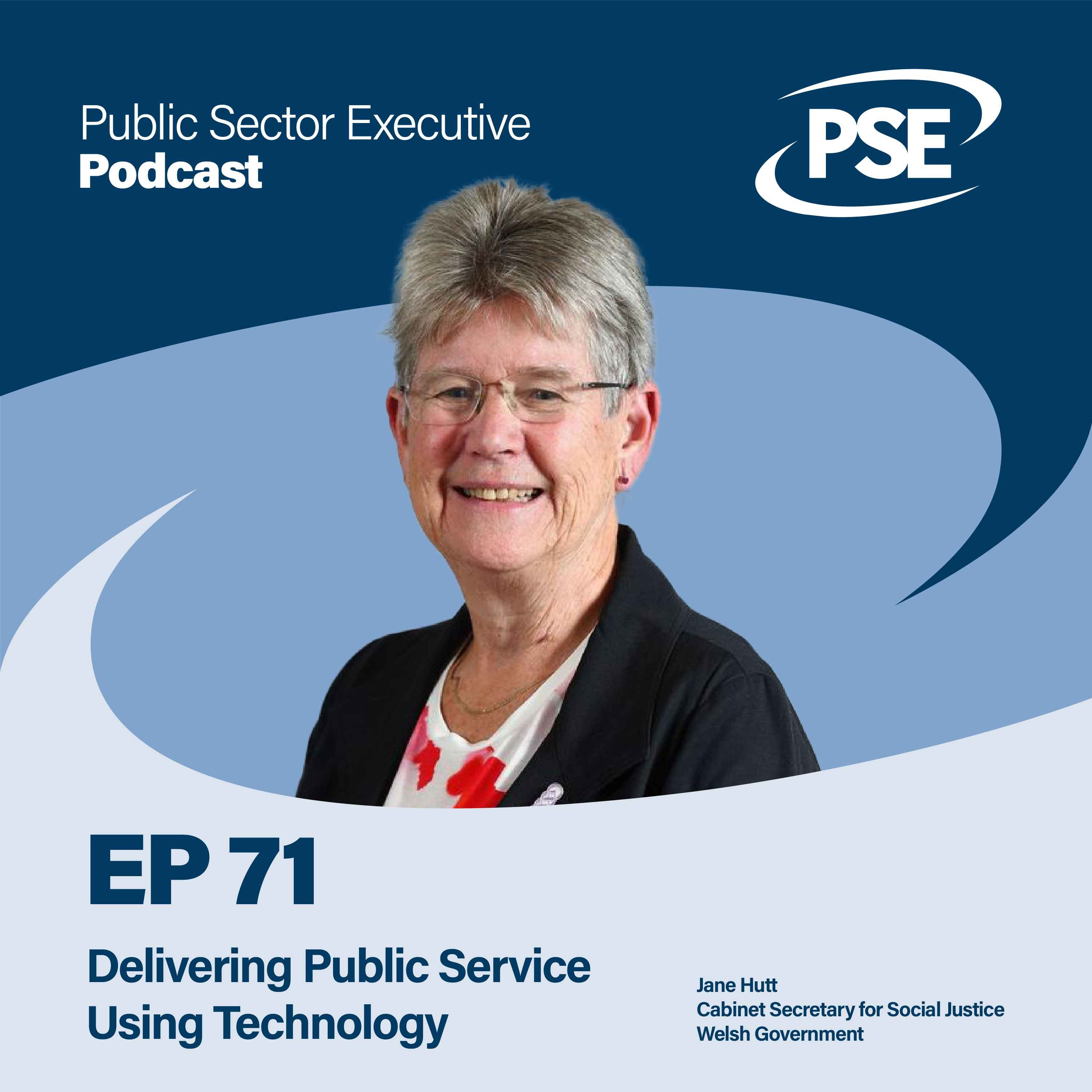 Ep 71. Delivering Public Service Using Technology | In the latest episode, we address a pressing issue that affects many in Wales: the digital divide. This term refers to the gap between those who have access to digital technology and those who do not, whether due to choice or barriers. It’s a critical social justice and economic issue that has far-reaching implications for individuals and communities alike.The Welsh government has recognised the importance of tackling this divide, launching the Digital Strategy for Wales in March 2021. This strategy aims to create an inclusive digital society where everyone can benefit from the advantages that digital technology offers. Mission two of this strategy focuses on equipping individuals with the motivation, confidence, and basic digital skills necessary to navigate our increasingly digital world.Despite these efforts, a significant portion of the population remains digitally excluded. Recent data from the National Survey for Wales revealed that approximately 170,000 individuals aged 16 and over do not personally use the Internet. The reasons behind this exclusion are varied, ranging from lack of motivation and trust in online security to affordability issues related to devices and connectivity.We explore the concept of a minimum digital living standard, which serves as a benchmark for the essential digital goods, services, and skills required for individuals to fully engage in modern life. This standard is not merely about having Internet access; it encompasses a broader understanding of what it means to be digitally included in today’s society.One of the key takeaways from this episode is the necessity of a cross-sectoral approach to address the digital divide. It is not solely the responsibility of the government; collaboration among public, private, and third sectors is crucial. By working together, we can co-produce interventions that meet the diverse needs of the community. We also highlight pilot projects being undertaken in Wales to support residents in engaging with digital technology. These initiatives aim to align resources and training with the specific needs of individuals and households, ultimately enhancing their ability to participate in the digital world.As we conclude this episode, we invite listeners to reflect on the importance of inclusivity in our digital society. It is vital that we design services that cater to the wants and needs of individuals, ensuring that everyone has the opportunity to access and engage with essential services. Join us in embracing this challenge and striving towards a future where no one is left behind in the digital age. Hosted on Acast. See acast.com/privacy for more information. | — | ||||||
| 7/4/25 |  Ep 70. Public Sector Estates | In the face of climate change, the urgency for decarbonisation in public sector estates has never been more critical. With public sector estates producing over 9 million tonnes of CO2 annually, the journey towards achieving net zero by 2050 is a shared responsibility that demands immediate action and innovative solutions.In this panel discussion, experts from the NHS, local councils, and housing groups gathered to explore how local authorities can future-proof their estates through low carbon heating, energy efficiency retrofits, and the deployment of smart technologies. The conversation highlighted the vital role of funding, particularly through the public sector decarbonisation scheme, which has committed over £2 billion to support these initiatives.One of the standout projects discussed was the retrofitting of homes on the Dudley Fields Estate in Bloxwich. Adrian Andrew from Walsall Council shared insights into the comprehensive range of structural and environmental improvements being made to 85 units in collaboration with Walsall Housing Group. This project not only aims to bring older homes, some dating back to 1937, up to net zero standards but also serves as a model for future retrofitting efforts across the region.The challenges of retrofitting historic buildings were also a focal point of the discussion. Tricia Ayrton from Rochdale Borough Council proudly shared her experience with the renovation of Rochdale Town Hall, the first grade one listed building in the UK to install air source heat pumps. These efforts demonstrate that while technical challenges exist, ambitious projects can indeed be accomplished with the right planning and partnerships.As the conversation unfolded, the panellists emphasised the importance of communication and public engagement. Ensuring that residents understand the benefits of decarbonisation is crucial for garnering support and participation. The messaging around these initiatives must resonate with the community, highlighting not just environmental benefits but also the potential for reduced energy bills and improved living conditions.The panel concluded with key takeaways, stressing the need for a pragmatic approach to transitioning facilities into net zero. Janet Smith from the Royal Wolverhampton NHS Trust encapsulated this sentiment, advocating for a strategic plan that prioritises core facilities while considering the long-term sustainability of new builds.As we move forward in this critical journey towards decarbonisation, the insights shared by our panellists provide a roadmap for local authorities and organisations to follow. By embracing innovation, fostering partnerships, and engaging with the community, we can collectively work towards a more sustainable future for public sector estates. Hosted on Acast. See acast.com/privacy for more information. | — | ||||||
Want analysis for the episodes below?Free for Pro Submit a request, we'll have your selected episodes analyzed within an hour. Free, at no cost to you, for Pro users. | |||||||||
| 5/14/25 |  Ep 69. AI Innovation | Discover how artificial intelligence is revolutionising the public sector in our latest episode! Join a panel of experts as they discuss the challenges and opportunities AI presents for government services. Learn about the importance of data management, building trust, and ethical considerations in deploying AI solutions. Hosted on Acast. See acast.com/privacy for more information. | — | ||||||
| 4/14/25 |  Ep 68. Digital Inclusion | In our latest episode, we tackle the critical issue of digital inclusion and the urgent need for equal access to technology in the UK. With over 11 million people digitally excluded, our expert panel discusses the challenges and innovative solutions being implemented to bridge this gap. Discover how local authorities and communities are working together to foster a more inclusive digital future. Hosted on Acast. See acast.com/privacy for more information. | — | ||||||
| 3/13/25 |  Ep 67. Navigating possession and eviction | In the latest episode of the Public Sector Executive podcast, Nadeem Khan, a team leader at the housing charity Shelter joined host Dan Benn to discuss the critical issue of possession and eviction notices.With over a decade of experience, Nadeem shed light on the alarming rise in homelessness due to increasing housing costs and a shortage of affordable homes.Nadeem explained that possession and eviction are often the primary reasons people seek help from Shelter. He emphasised the emotional turmoil that accompanies these situations, with many clients feeling anxious, overwhelmed, and even angry as they face the prospect of losing their homes. Understanding the emotional impact is crucial for housing professionals, as it allows them to provide not just practical advice but also emotional support to clients.Throughout the discussion, Nadeem explored typical scenarios clients might face, such as receiving a notice from a landlord or dealing with rent arrears. Nadeem highlighted the importance of knowing one's rights and options in these situations. He provided insights into the steps professionals should take when advising clients, including fact-finding to assess the individual's circumstances and rights to emergency housing.A significant part of the conversation focuses on the distinction between possession and eviction. Nadeem clarified that while possession is a court ruling requiring a tenant to vacate their home, eviction occurs when the tenant does not leave by the specified date. This distinction is crucial, as it opens up avenues for negotiation and potential delays in the eviction process, allowing clients more time to find solutions.Emergency housing is another key topic discussed. Nadeem explained that local authorities provide emergency accommodation for those who are legally homeless, but the reality of this housing can often be stark. Many clients find themselves in cramped conditions, far from their support networks, which can exacerbate their already difficult situations. Hosted on Acast. See acast.com/privacy for more information. | — | ||||||
| 2/24/25 |  Ep 66. The secrets to successful negotiation | In today's fast-paced world, the ability to negotiate effectively is more crucial than ever. Whether you're in the public sector, private industry, or simply trying to strike a deal at home, the principles of negotiation remain the same. In our latest podcast episode, we have the privilege of hosting Andy Archibald, a senior consultant at Scotwork, who sheds light on the art and science of negotiation.Andy brings a wealth of experience, having worked across the energy and utility sectors, as well as at the City of Edinburgh Council. His insights into negotiation are not only practical but also transformative. One of the key highlights of our discussion is Scotwork's eight-step negotiation process, a tried-and-tested framework that can be applied across various negotiation contexts.Preparation, as Andy points out, is the cornerstone of effective negotiation. Without thorough preparation, negotiators risk entering discussions without a clear strategy, leading to unsatisfactory outcomes. Andy shares a compelling story of a group that focused too heavily on numbers during preparation, neglecting other crucial aspects of negotiation. His advice? Move beyond spreadsheets and consider all elements that could impact the negotiation process.As we look ahead to the implementation of the Procurement Act 2023, Andy highlights the significant changes it will bring to public sector negotiations. With increased flexibility and freedom, public sector negotiators must be equipped with the right skills and knowledge to maximise value in their deals. Andy's experience in the public sector and with public sector clients underscores the importance of investing in negotiation training to navigate these changes effectively.Throughout the episode, Andy provides invaluable tips on avoiding common pitfalls in negotiation, such as getting stuck in circular debates or making non-specific proposals. By focusing on constructive dialogue and clear, specific proposals, negotiators can steer discussions towards successful outcomes. Hosted on Acast. See acast.com/privacy for more information. | — | ||||||
| 11/25/24 | Ep 65. How to be secure in a hostile world | The world is becoming an increasingly hostile place. With foreign nations often entering the headlines as they breach the cyber security of organisations, it is imperative that government continues to develop its cyber security capabilities.One of the best ways to go about doing this is by ensuring that systems are secure by design, and in order to learn more about this process, host Dan Benn spoke to cyber security expert George Bathurst. Over the course of more than thirty years, George’s career has taken him to some of the world’s biggest and most famous companies, and has recently seen him heading up Ministry of Defence’s transition to secure by design.George commented on the importance of following the secure by design model, saying:“For many years, we’ve seen projects that have just been getting started and they’ve already been hacked. The development servers and things like that have been breached and… whereas three months ago you had a month to respond to a new zero day bug being discovered, with AI now you’ve got just a few hours.”Moving on to what leaders can do to support secure by design development, George explained:“Everybody is responsible, but there’s a danger of that becoming meaningless because if everybody’s responsible, nobody’s responsible. Therefore, what management can do is identify the right people across the organisation – not just in the IT silo – who are responsible for certain types of security or making sure a project is delivered, and make sure that they understand and have the training to do that.”To learn more about the importance of secure by design in the modern world, listen to the latest episode of the Public Sector Executive podcast. Hosted on Acast. See acast.com/privacy for more information. | — | ||||||
| 11/4/24 | Ep 64. The future of Nottingham | Episode 64 of the PSE Podcast sees Sajeeda Rose, Chief Executive of Nottingham City Council, joining host Dan Benn to talk about her local government background, what the future holds for the city of Nottingham, and the importance of collaboration with the rest of the East Midlands.Playing a core role in the establishment of the East Midlands Combined County Authority, Sajeeda told Dan about the opportunity that is on offer for the region, saying:“I believe that the establishment of a combined authority for the East Midlands is a hugely exciting opportunity for the whole region. As a region, we’ve had significant underinvestment for many years and the establishment of a combined authority is to level that playing field in terms of bringing in significant investment for growing the regional economy.”Looking at Nottingham more specifically, Sajeeda also spoke about the opportunities there are for regeneration and growth for the city:“We’re one of the few cities that are already starting to rethink how we repurpose our city centres to become spaces that are used for multiple reasons, for living, for retail, for leisure and for jobs so it’s hugely exciting. It’s game-changing in the sense that it’s the start of what I would imagine lots of other places will go through in terms of change for the future.”You can hear more about Sajeeda's experiences by listening to the full episode. Hosted on Acast. See acast.com/privacy for more information. | — | ||||||
| 10/14/24 |  Ep 63. Can we make public–private collaboration work this time? | It would be naïve to say that major infrastructure projects in the UK have a successful history of being delivered on time and on budget. Whilst there are many good examples of projects that have been successful in this way, the UK is still underperforming when it comes to delivery, with one of the most notable examples – the High Speed 2 rail link – still causing controversy seven years on from its commencement. In order to explore why major infrastructure projects are failing, and how the issue can be resolved, MIGSO-PCUBED’s David Whitmore joined us on the latest episode of the PSE Podcast. David outlined the evidence that exists to support claims that the nation is underperforming when it comes to infrastructure, saying:“There’s quite a bit of evidence, unfortunately. Probably the main piece of evidence is that the Infrastructure and Projects Authority carries out an annual review of the performance of public sector projects in the public interest, and we’ve seen consistently over the 10-12 years that they’ve been doing that review, more red in the performance of the projects and less green.“It’s not just that our baseline performance is worse than it was 25 years ago, it would appear to be getting worse every year.”David was also asked about the UK’s place in the world, and whether an inability to deliver major infrastructure projects was a UK-specific issue. Bringing in the example of the far-east, David said:“For me, it’s very much a UK issue – you might argue it’s a western world issue.“If you take the example of the civil nuclear programme, that – for me- is probably the starkest example… About 2007 we embarked on a new nuclear programme to build 16 gigawatts of additional capacity; around the same time, the UAE started a programme to build four nuclear reactors. No contest, we’ve got 100,000 engineers and we’ve built loads of nuclear reactors, clearly we’re going to win that race.“But here we stand today, we’ve built zero gigawatts out of that 16, two of the three projects that started have failed and are no longer in existence… yet in the UAE – using Far East partners and forming relationships with South Korean companies – they’ve built their four reactors.”To learn more about how major infrastructure projects can be delivered successfully, listen to the latest episode of the PSE Podcast now. Hosted on Acast. See acast.com/privacy for more information. | — | ||||||
| 9/27/24 |  Ep 62. Changing mindsets | Whilst not necessarily one of the ‘big ticket’ items that councils are responsible for, the importance of highways cannot be understated. Providing a vital way of getting people to their jobs, their appointments, and their families, roads are integral to most aspects of everyday life in 2024.Despite this, there continue to be issues with roads that should not be happening. When was the last time you saw a pothole? It was probably recently.This is because many councils are without the adequate resources, expertise, or partner to ensure that they can make long-term improvements to their highways. On the latest episode of the Public Sector Executive Podcast, host Dan Benn was joined by Wrekin Product’s Dave Sanders and IKO Road’s Alistair Puddick, to discuss how local authorities can make sure that pesky pothole problems can be solved and highways improved in the long-term.Talking about the challenges that councils face when they’re going about making road improvements and fixing potholes, Alistair said:“We’ve seen that, from 2021, we were looking at £10 billion just to get the roads back up to a maintainable standard. That’s sitting in April 2024 at £16.3 billion. So the situation is only going one way and will probably, in the next couple of years, exceed the £20 billion mark if there isn’t a change in what authorities are doing.”Dave also explained why it is important for authorities to change the way they think about highway and maintenance, saying:“For us, certainly, our message to LCRIG members – and any local authority that’s willing to listen – is that it's changing that mindset from looking at the cost today, to looking at the cost over ten years…… It’s about education for the guys in the local authorities to understand what products are good, what good looks like, and understand the dynamics to products when they get trafficked in the highway.”To hear more from Dave and Alistair on how local authorities can make the right decisions when it comes to highways and maintenance, listen to the full episode now. Hosted on Acast. See acast.com/privacy for more information. | — | ||||||
| 9/13/24 |  Ep 61. Futureproofing the North | There have been countless conversations about how to improve transport in the north of England in recent times, with the cancellation of HS2 removing an important potential transport link to the south, and subsequent discussions about improved road and rail connections between the north’s most important cities.Discussing some of the most important aspects relating to the futureproofing of transport in the north of England, some of the challenges involved, and how Transport for the North are supporting this drive, TfN’s Head of Major Roads Owen Wilson joined host Dan Benn on the Public Sector Executive Podcast.When looking into the future of transport, Owen was asked the introduction of new technology, and how it can support transport improvement. Answering by touching on the future of tech, Owens said:“No-one can predict the future can they? That brings me onto the need actually not to be fixated on a particular future, or how that’s going to pan out… We need to be adaptable and flexible and plan for different scenarios in terms of the uptake of technology, but also how that impacts people’s behaviours.“It’s a bit of a cliché, but the smartphone has really changed the way people behave in the last two decades. Thirty years ago could that have been predicted?“So, we need to be adaptable and flexible to changing technologies.”Transport systems around the UK, especially in the north, have seen their fair share of challenges in recent years. Owen expanded on some of challenges faced by authorities, and what can be done to help organisations overcome them, saying:“Policy certainty is critical. We’ve seen a bit of chopping and changing over recent years in terms of policy and investment in transport, so it’s really important to have greater certainty in terms of what the ambitions and outcomes we’re aiming for are.“I think the critical challenge is reshaping how we appraise investment in transport in the future.” Hosted on Acast. See acast.com/privacy for more information. | — | ||||||
| 8/30/24 | 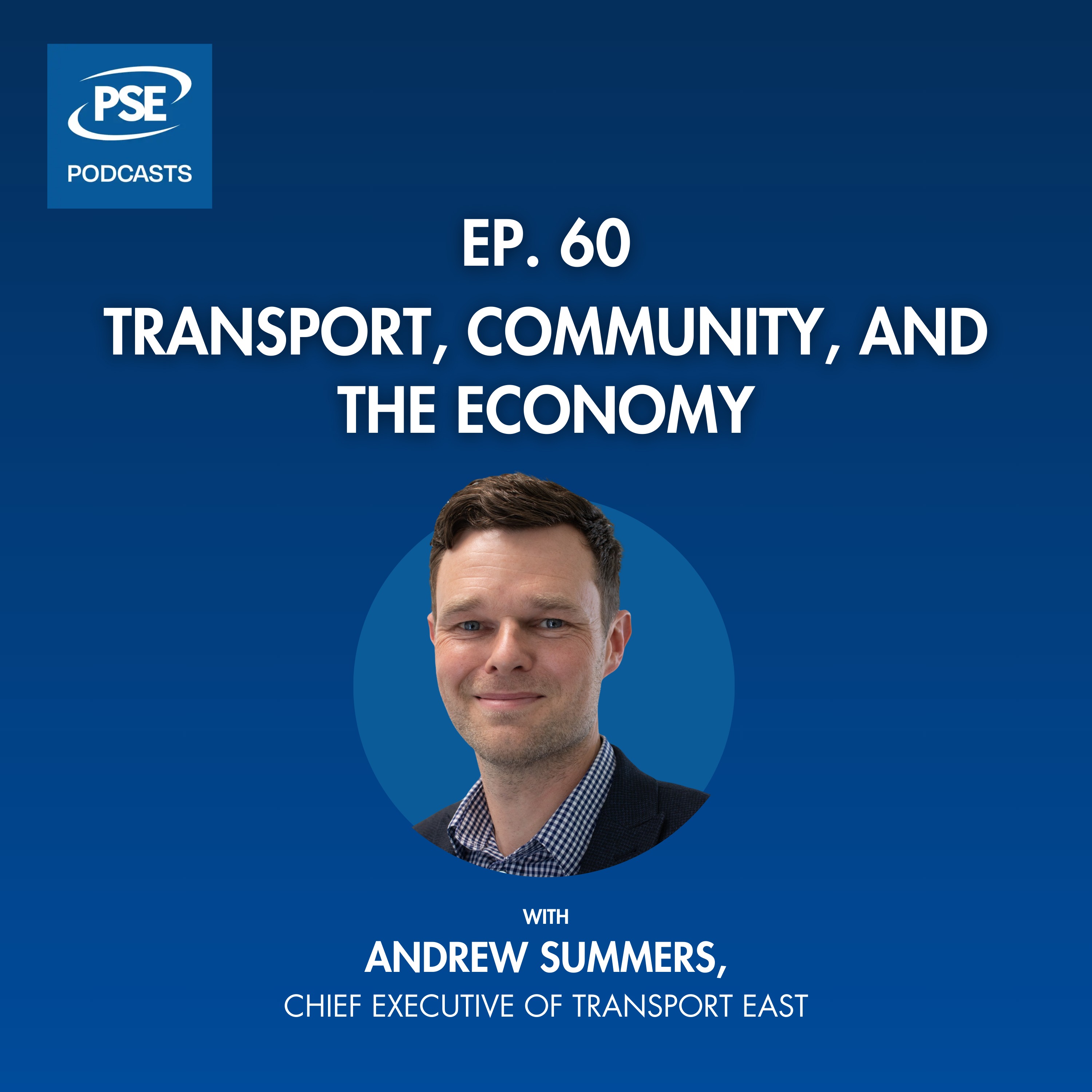 Ep 60. Transport, Community, and the Economy | Transport, as an enabler, can play an integral role in many of the priorities that government of all levels are trying to achieve. Whether it is connecting communities to the services that their lives revolve around, or bringing trade into economic centres, the transport network is an important place to start.Chief Executive of Transport East, Andrew Summers, spoke to host Dan Benn about the organisations Annual Review for 2023-2024, commenting on achievements, goals, and some stumbling blocks that have been encountered in the region.Expanding on the importance of transport in driving improvement around the country, Andrew said:“Transport is ultimately one of a number of enablers that support economic growth, a better environment and better outcomes for society, and indeed, part of our transport strategy was to try to articulate what those priorities were for us, and to then determine how we went about our work.”Considering the makeup of the East as a region, Andrew also touched upon the importance of keeping rural communities connected to both each other, and to the economic hubs nearby, saying:“One in three people in the East live in a rural community, and for us that’s about 1.2 million people. So that’s a significant amount of our population.“We’ve done a lot of analysis about their accessibility and it’s pretty concerning. Two thirds of those live in what we class as a transport desert – that is, they have no access to education, training, skills, work by any means apart from the private car – and we have explored this a bit further. This creates significant transport-related social exclusion.”To hear more from Andrew on the successes and challenges of being responsible for transport developments in one of the most rural regions of the country, as well as what the future holds for transport in the East, listen to the latest episode of the PSE Podcast now. Hosted on Acast. See acast.com/privacy for more information. | — | ||||||
| 7/19/24 |  Ep 59. Sensible conversations needed | At the beginning of July, it was announced that we would be getting a Labour government for the first time since the Conservatives won the 2010 General Election. This saw Sir Keir Starmer become Prime Minister, replacing Rishi Sunak – who subsequently announced his intention to step down as Leader of the Conservative Party.In the short space of time since they came into power, the new government has been getting to work to deliver on some of its key priorities, including furthering devolution, prioritising clean energy, and nationalising our railways. But what does this mean for local government?On hand to answer that question, and reflect on the results of the general election was Cllr Sam Chapman-Allen, Chair of the District Council Network, who joined host Dan Benn on the 59th episode of the Public Sector Executive Podcast.When discussing what would be on his wishlist for the new government, and its relationship with local government, Chapman-Allen said:“We’ve had a good relationship with government, but actually we’ve seen external pressures outside of the UK Government’s control – which has either slowed programmes and activities, or caused activities to be paused because other programmes have taken that attention. Actually, we need a grown-up conversation around certain areas, such as asylum and immigration so we will ensure that that those individuals who comes to England are provided safe, appropriate homes and housing….“I think the second part is around our finances and making sure we actually have a robust conversation, understanding where their appetite is to support local government on the day-to-day expenditure, but also where is our appetite to support some of those big intervention pieces around regeneration, levelling up…?”To hear more from Sam on how the new government can work alongside councils, and how this changing of the guard can bring benefits to communities, listen to the latest episode of the PSE Podcast now. Hosted on Acast. See acast.com/privacy for more information. | — | ||||||
| 6/27/24 | 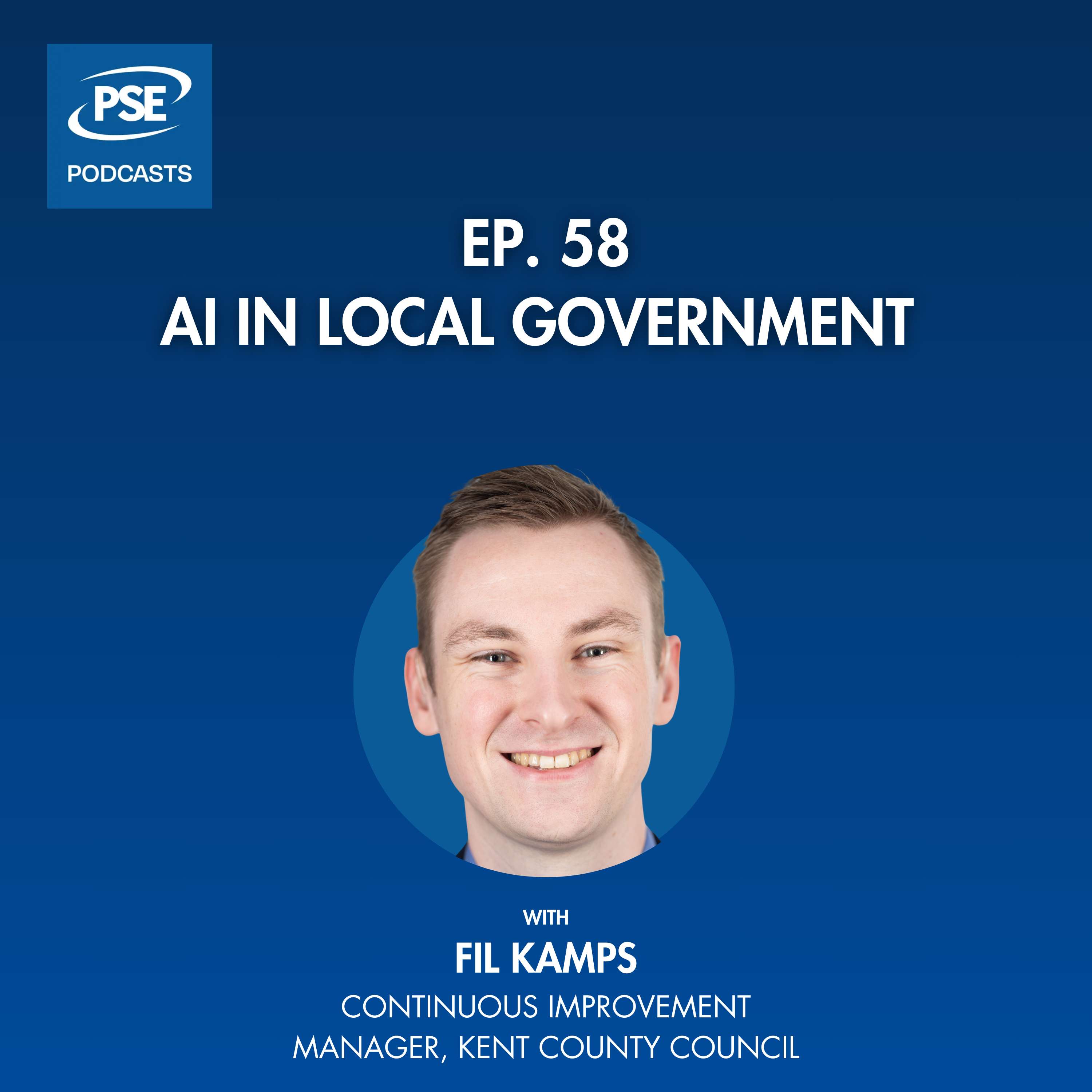 Ep 58. AI in Local Government | Artificial intelligence is one of the most exciting technology developments in recent times.Whilst it has seemingly endless possible uses across a number of sectors, AI can also bring major improvements for local authorities. To discuss the potential benefits, risks and challenges of authorities utilising artificial intelligence, Kent County Council’s Fil Kamps joined host Dan Benn for the latest episode of the PSE Podcast.Discussing some of the benefits of AI for the public sector, especially when it comes to productivity and efficiency which has been a hot topic in recent months, Fil said:“There’s a number of benefits to the customers and residents of these organisations… the end users will benefit. I think the primary way they’ll feel it is actually not the most obvious; it’s the changes to backend processes that will improve delivery times against services, the processing of requests that come in.“AI is helping to improve and streamline a lot of those processes in the backend whilst keeping human decision making at its core.”Fil also touched upon the skills that the public sector workforce might need as it embraces AI, saying:“I think we started to see this shift in public sector workforces when Covid hit and everything went from being in person in the office, to being online and digital… That change in working practices really placed an emphasis on people’s ability to pick up technology and to have a decent level of digital literacy to be able to work in a public sector organisation.” To hear more from Fil about how organisations across the sector can use AI to drive major improvement, as well as some of challenges that may be faced along the AI journey, listen to the latest episode of the Public Sector Executive Podcast now. Hosted on Acast. See acast.com/privacy for more information. | — | ||||||
| 6/7/24 |  Ep 57. Maximising Digital Inclusion | Digitalisation is a big part of the future of the public sector, however organisations need to make sure that their digital ambitions don’t leave communities lagging behind, or unable to access the services they need.Discussing how organisations across the sector can transform digitally, bring communities with them, and his career in digital inclusion, Cambridgeshire County Council’s Will Plant joined host Dan Benn on the latest episode of the Public Sector Executive Podcast. Hosted on Acast. See acast.com/privacy for more information. | — | ||||||
| 5/24/24 |  Ep 56. Decisions Under Pressure - Mark Smyth | Decision making is a crucial part of leading in any industry, never mind the public sector. With decisions being made that can have life changing consequences for entire communities it is vital that leaders are accountable, able to make decisions under pressure, and able to foresee the challenges that they might face in the future.To talk about making decisions under pressure, the journey that the organisation has been on, and his personal career, Northern Ireland Fire and Rescue Service’s Mark Smyth joined host Dan Benn on the latest episode of the Public Sector Executive Podcast.Talking about some of the challenges that the fire and rescue service faces over the course of the next year, Mark said: “There’s many major threats when you start to look at the national risk registers and you look at dealing with climate change. We’re getting more flooding, we’re getting longer periods of wetness. You’re starting to see the large wildfires and gorse fires that hit the Southeast of England last year.”Challenges don’t stop with climate change, however, as Mark expanded: “There’s challenges in and around the operational side of our culture and changing, that’s major for us. You’ll know that financially and under budget restraints that we have in the world we’re in now, there’s really big challenges around that, and providing the service that the public want with the limited financial resources we have.”To learn more about the type of training that is available for councillors, why it is so important, and the role that central government can play, listen to the newest episode of the Public Sector Executive Podcast. Hosted on Acast. See acast.com/privacy for more information. | — | ||||||
| 5/2/24 |  Ep 55. Why we mustn’t neglect councillor training - Cllr Liz Green | Ensuring that councillors are equipped with the proper skills is essential to making sure that council services run smoothly, and communities benefit from the best value for money. Whilst this may seem like a simple concept, some councils don’t train their councillors take councillor training as serious as they perhaps should.To explore more about the kinds of skills that councillors should be developing, why some councils don’t offer the right training, and how this impacts councils themselves, Cllr Liz Green joined host Dan Benn on the latest episode of the Public Sector Executive Podcast.Speaking about the kind of training that councillors require, Liz said:“Being a counsellor is very different to anything anybody’s ever done before in their life. So, even if you’ve been highly successful in business, you’re still going to need to learn some new skills; things like negotiating and conflict resolution…“Councils can’t do anything by themselves because they need to work with the public sector, the private sector, and with the voluntary sector and you need to be able to influence those in a different way because you are not the direct boss – you can’t tell them what to do.”Liz also touched on the issue of productivity within the public sector, and how this relates to skills and funding. She said:“I was a counsellor before we started austerity in 2010 – it never felt like we had a lot of money to start with so I think we did some improvements in councils. We looked more at our budgets and we scrutinised them more…“We also did more transformation, which is a buzzword at the moment, but improving services, looking at how we used it, how we used our resources of people and assets and builds etc. So I think there was some really good work that went on.“It’s gone way too far now. We just simply cannot afford as councils to keep operating.”To learn more about the type of training that is available for councillors, why it is so important, and the role that central government can play, listen to the newest episode of the Public Sector Executive Podcast. Hosted on Acast. See acast.com/privacy for more information. | — | ||||||
Showing 25 of 86
Sponsor Intelligence
Sign in to see which brands sponsor this podcast, their ad offers, and promo codes.
Chart Positions
3 placements across 3 markets.
Chart Positions
3 placements across 3 markets.