
Insights from recent episode analysis
Audience Interest
Podcast Focus
Publishing Consistency
Platform Reach
Insights are generated by CastFox AI using publicly available data, episode content, and proprietary models.
Total monthly reach
Estimated from 1 chart position in 1 market.
By chart position
- 🇦🇺AU · Places & Travel#1555K to 30K
- Per-Episode Audience
Est. listeners per new episode within ~30 days
1.5K to 9K🎙 Daily cadence·31 episodes·Last published 3d ago - Monthly Reach
Unique listeners across all episodes (30 days)
5K to 30K🇦🇺100% - Active Followers
Loyal subscribers who consistently listen
2K to 12K
Market Insights
Platform Distribution
Reach across major podcast platforms, updated hourly
Total Followers
—
Total Plays
—
Total Reviews
—
* Data sourced directly from platform APIs and aggregated hourly across all major podcast directories.
On the show
Recent episodes
The Loneliness Paradox of Modern Travel
Jun 9, 2026
23m 18s
Why We Romanticize Escape Through Travel
Jun 2, 2026
27m 53s
Why We Keep Traveling But Feel Less Changed
May 26, 2026
19m 49s
Your Passport Shapes Your World More Than You Think
May 19, 2026
14m 45s
What Happens When Politics Cuts Off Travel?
May 12, 2026
19m 31s
Social Links & Contact
Official channels & resources
Official Website
Login
RSS Feed
Login
| Date | Episode | Description | Length | ||||||
|---|---|---|---|---|---|---|---|---|---|
| 6/9/26 |  The Loneliness Paradox of Modern Travel | The Loneliness Paradox of Modern Travel | Why Connection and Solitude MatterIn this episode, Kiara explores the surprising realities behind travel, connection, and loneliness. She challenges the myth that traveling automatically fosters meaningful relationships and offers practical insights into how to truly find belonging abroad. Whether you're a seasoned traveler or planning your first self-guided adventure, this episode helps reframe what it means to travel authentically.Key Topics:The difference between meeting people and truly knowing themHow surface-level connections can lead to deeper lonelinessThe impact of social media and technology on travel experiencesStrategies to build genuine relationships and find belongingEmbracing solitude as a tool for growth and self-discoveryThe importance of slow travel, routines, and deeper engagementRecognizing loneliness as part of the travel learning processTimestamps:00:00 - The loneliness paradox: why being surrounded by people doesn’t mean feeling connected01:00 - Myths about travel creating automatic connection and the realities behind social media portrayals02:00 - Emotional challenges faced by travelers: homesickness, culture shock, and feeling alone abroad03:00 - Surface-level meetings vs deep connections: how to cultivate meaningful relationships in travel04:00 - Why frequent meetups often don’t lead to lasting bonds05:00 - The impact of Western European travel culture on feelings of loneliness06:00 - Social media’s role in increasing loneliness despite connectivity07:00 - The danger of replacing presence with digital communication08:00 - Are we truly arriving in a place or just leaving parts of ourselves behind?09:00 - Modern travel setups: hostels, tours, co-working spaces fostering short-term connections10:00 - The importance of investing in quality over quantity in relationships while traveling11:00 - Making an effort to deepen connections and avoiding superficial encounters12:00 - Reflecting on whether travel relationships are truly friendships or just fleeting companionships13:00 - Defining belonging across cultures and individual perspectives14:00 - Active participation in local communities as a way to foster deeper belonging15:00 - How loneliness can be a valuable experience for self-discovery and reflection16:00 - The influence of social validation and the need for external approval17:00 - Learning to be okay alone and the growth that comes from solitude18:00 - Practical tips for lessening loneliness: routines, language skills, and slow travel19:00 - Prioritizing depth over volume in meeting new people20:00 - Embracing longer stays and immersive experiences for meaningful connections21:00 - The role of comfort with solitude in personal growth22:00 - Travel as a mirror for understanding ourselves and the importance of intentional connection23:00 - Reflective question: What's the loneliest moment you’ve experienced while traveling, and what did it teach you?Resources & Links:Learn Basic Local Phrases - DuolingoCommunity & Cultural Travel - LocalParticipateUnderstanding Belonging in Different CulturesReflect & Connect:What’s the loneliest moment you've experienced while traveling, and what did it teach you? Share your story and insights in the comments. This is a public episode. If you would like to discuss this with other subscribers or get access to bonus episodes, visit kulturatravel.substack.com | 23m 18s | ||||||
| 6/2/26 |  Why We Romanticize Escape Through Travel | Travel and Escape: Unpacking Myth and RealityHave you ever dreamed of starting fresh abroad? This episode dives into the truths behind travel as a form of emotional escape and personal transformation. We explore how social media, societal pressures, and our own expectations shape our travel fantasies and what really happens when we chase these ideals.Key topics:The romanticization of travel as a means of reinvention and escapeHow social media amplifies the desire for a transformative lifestyleThe psychological effects of travel: loneliness, culture shock, and identity shiftsThe importance of intentional travel vs. escapismPractical tips for traveling mindfully and avoiding toxic idealizationsThe deeper value of self-discovery and authenticity in travel experiencesThe role of patience and presence in fostering genuine transformationWhy travel alone can't heal unresolved emotional baggageTimestamps:00:00 - Are we really exploring or just escaping through travel?02:00 - The impact of social media on perceptions of transformation04:00 - Romanticizing life abroad: the digital nomad illusion07:00 - The challenges of living abroad: loneliness, culture shock, and reverse culture shock09:30 - Comparing curated social media lives with real experiences11:00 - Personal story: the loneliness of studying abroad during the pandemic14:00 - Culture shock and self-discovery in new environments16:00 - Can relocating truly heal inner wounds?17:00 - The importance of emotional work alongside physical movement19:00 - Final reflections: relief, exhaustion, and authentic transformationResources & Links:Put the Guidebook Down PodcastKristin Neff - Self-CompassionDigital Nomad Lifestyle & ChallengesCultural Adjustment & Overcoming Culture Shock This is a public episode. If you would like to discuss this with other subscribers or get access to bonus episodes, visit kulturatravel.substack.com | 27m 53s | ||||||
| 5/26/26 | 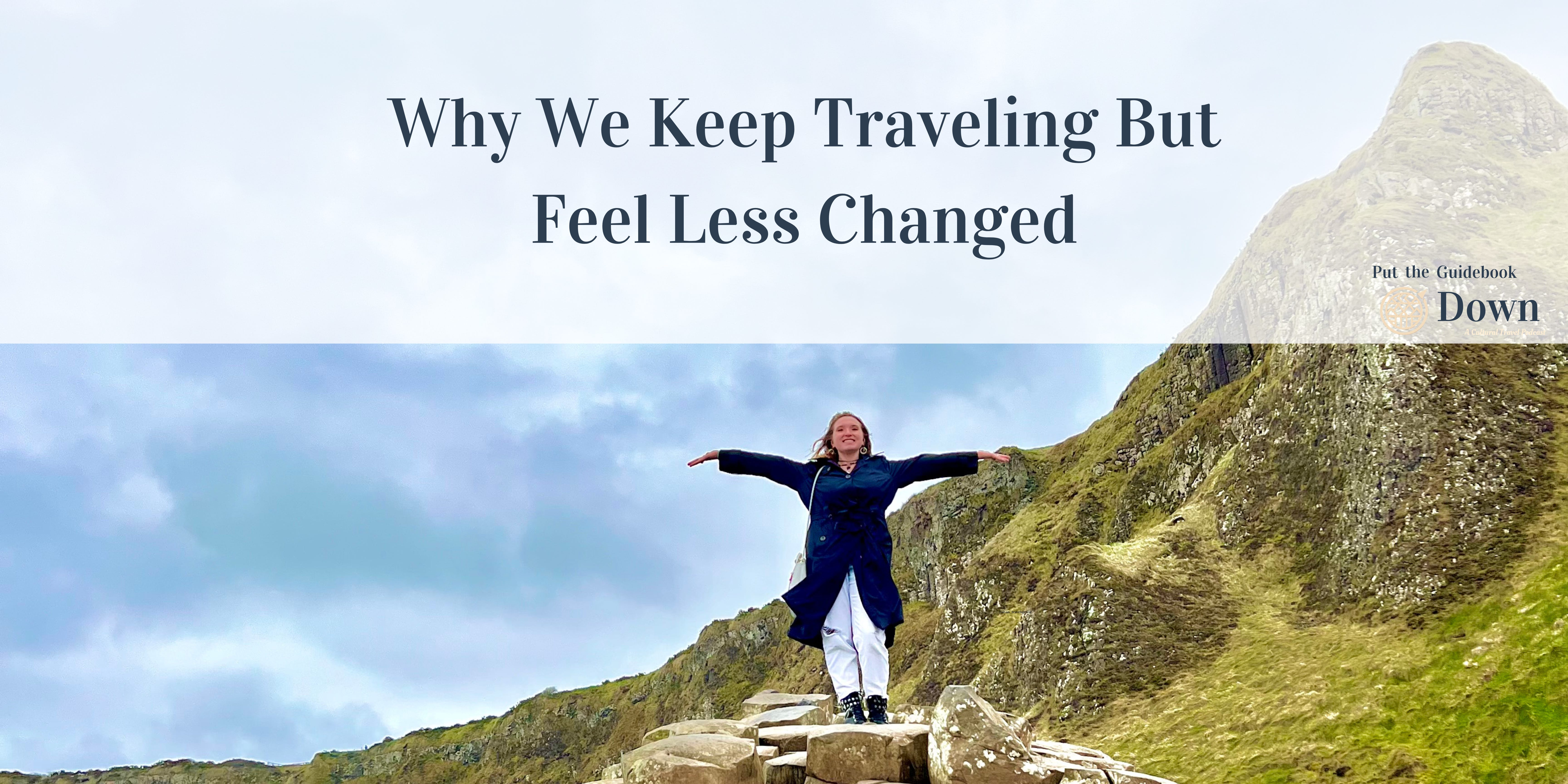 Why We Keep Traveling But Feel Less Changed | Why Modern Travel Feels Emotionally Flat & How to Reclaim Its Transformative PowerIn this episode, Kiara explores how the abundance of travel technology and social media has altered our emotional experience of travel. She discusses the ways we can reconnect with the true essence of journeys—presence, curiosity, and authentic discovery—despite the fast-paced, documentation-driven culture we’re living in.Key Topics Covered:How travel used to require more presence and reliance on local knowledgeThe impact of social media, AI, and hyper-documentation on emotional engagementThe neuroscience of novelty and how overexposure dulls emotional memoryHow tools like Google Maps and constant photo-taking reduce spatial memory and presenceThe emotional consequences of curated travel and recognition versus discoveryThe phenomenon of travel burnout and how to slow downPractical tips for more mindful, meaningful travel experiencesThe importance of private moments and personal connection over online validationTimestamps:00:00 - The changing emotional landscape of modern travel00:15 - From reliance on local wisdom to digital documentation01:00 - The role of social media and AI in shaping travel choices01:56 - Overexposure and its effects on emotional memory02:33 - Removing friction in travel and its emotional costs03:00 - Social media’s influence on destination recognition and exploration03:43 - The neuroscience behind novelty, familiarity, and emotional impact04:12 - The Google Maps effect and reduced spatial engagement05:05 - The loss of the act of getting lost and immersive exploration05:55 - How optimized, checklist travel is diluting emotional depth06:25 - The recognition versus discovery dilemma in the age of content06:57 - How pre-exposure to content lessens the wonder of landmarks07:44 - The impact of repeated exposure and anticipated disappointment08:27 - The emotional disconnection from well-known tourist sites09:05 - The case of Egypt and the feeling of déjà vu in famous destinations09:58 - Visiting places emotionally "pre-visited" through media10:27 - Returning to the basics: embracing uncertainty and presence11:16 - The performance aspect of documenting travel and its impact on memory11:53 - The psychological cost of constant photo-taking and AI reliance12:37 - Emphasizing mindfulness: experiencing before capturing13:41 - The risks of living life through a lens, losing emotional depth14:14 - The industry shift towards consumption, not transformation15:29 - Challenging societal expectations and living your own travel story16:06 - Practical tips: delayed documentation and savoring moments17:08 - The importance of slow travel, deeper connections, and local engagement18:15 - Creating private moments and keeping some experiences personal18:54 - Reflecting on the true purpose of travel beyond social media19:12 - Embracing uncertainty and the unpredictable moments that define meaningful travelResources & Links:Put the Guidebook DownAdditional articles on neuroscience of novelty and travel psychologyResearch on Google Maps effect on spatial memoryRemember:The essence of travel is in the surprises, discomforts, and unplanned moments. The experiences that algorithms and checklists can’t predict. Slow down, be present, and let your journeys transform you. This is a public episode. If you would like to discuss this with other subscribers or get access to bonus episodes, visit kulturatravel.substack.com | 19m 49s | ||||||
| 5/19/26 | 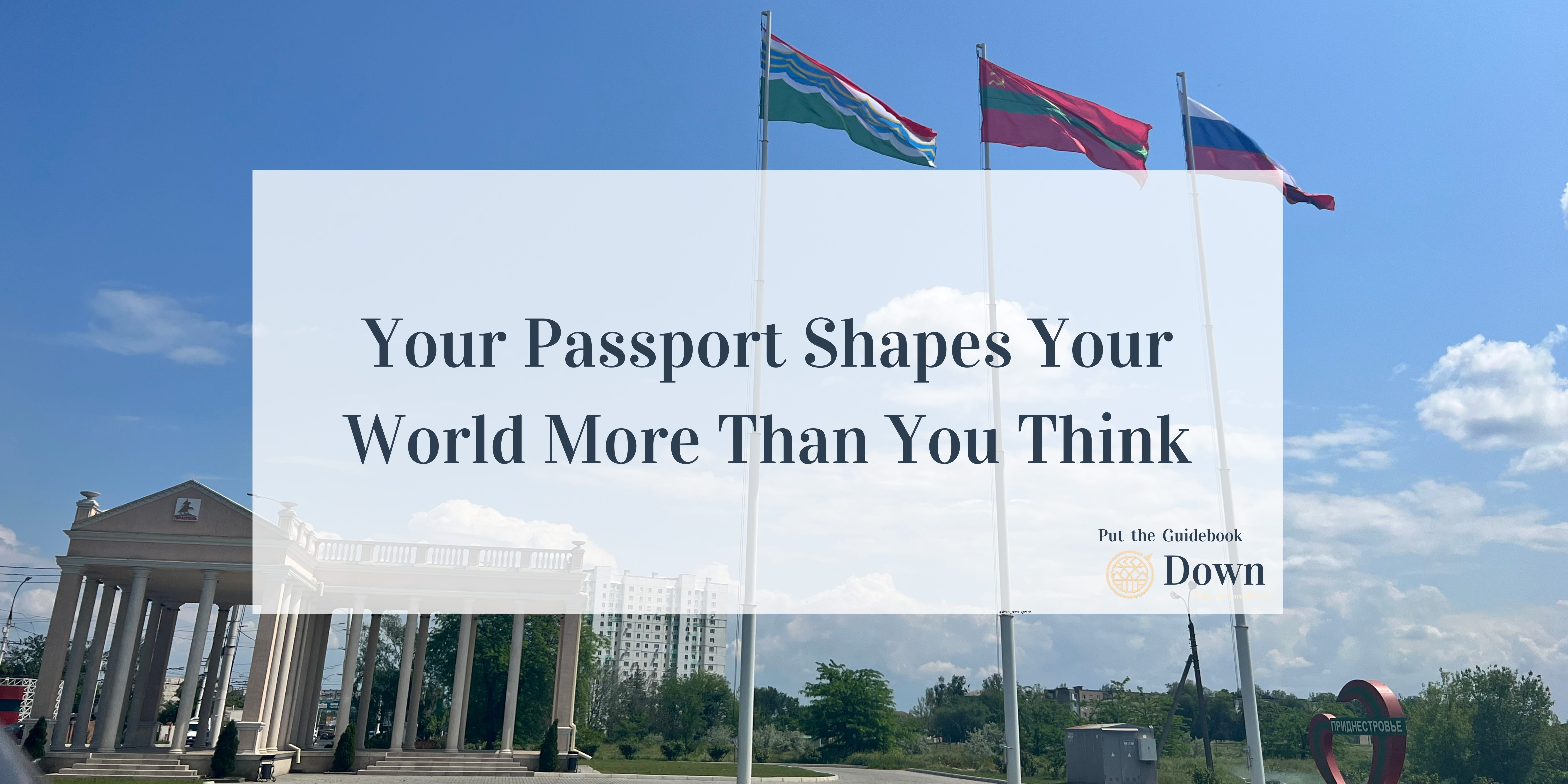 Your Passport Shapes Your World More Than You Think | The Hidden Inequities of Travel: Passport Privilege and Visa InequalityHave you ever considered how your nationality influences your ability to travel freely? In this episode, Kiara explores the unspoken disparities in global mobility, revealing how passport privilege and visa restrictions shape our travel experiences and access to the world.Key Topics:The illusion of equal travel freedom and the reality behind the Henley Passport IndexEmotional and psychological impacts of border crossings based on nationalityHow visa requirements and border scrutiny create structural inequalitiesDigital nomadism and the uneven benefits of globalizationPractical steps to acknowledge and address mobility privilegeThe influence of politics and systemic bias on travel experiencesThe importance of supporting diverse local voices and perspectives in travel contentReflective questions for travelers about mobility, confidence, and inherited privilegeTimestamps:00:00 - How passport control defines your travel life02:05 - The impact of the Henley Passport Index on global mobility03:14 - Personal stories illustrating visa and border experiences04:33 - The emotional realities of crossing borders for different populations05:26 - Mobility inequality as a core aspect of globalization06:23 - The emotional and psychological toll of border scrutiny07:27 - The influence of politics and systemic bias on travel08:47 - The challenges faced by non-native speakers and visa errors09:38 - Travel as a reflection of structural privilege10:15 - The contradictions in digital nomad culture11:05 - How globalization favors the privileged and sidelines locals12:10 - Practical steps: Recognize, research, diversify, and act13:46 - Reflections: How your passport influences your worldview and confidenceResources & LinksHenley Passport IndexETIAS System ExplainedInstitute of International EducationMigration Policy InstituteConnect with Put the Guidebook Downhttps://www.puttheguidebookdown.comhttps://www.kulturatravel.comInstagram:@Puttheguidebookdown & @kultura.travel @ramblingadventuristaRememberTravel is not just about personal adventure but also about understanding the structural inequalities that shape our global mobility. Awareness is the first step toward more equitable and empathetic travel experiences. This is a public episode. If you would like to discuss this with other subscribers or get access to bonus episodes, visit kulturatravel.substack.com | 14m 45s | ||||||
| 5/12/26 |  What Happens When Politics Cuts Off Travel? | How Political Instability Affects Travel and Cultural ExchangeExplore the profound impact of political tensions, conflicts, and government decisions on global travel, local economies, and cultural connections. Discover practical insights on how travelers can navigate these challenges responsibly and ethically.Key Topics:How travel borders and accessibility are influenced by politics, conflicts, and media narrativesThe role of government advisories and their effect on tourism demandThe human impact: local communities and economies during conflictsCultural exchange and understanding in politically unstable regionsEthical considerations and strategies for responsible travel during times of instabilityHow perceptions, stereotypes, and media shape travel behavior and community perceptionsPractical tips for supporting local economies and avoiding disaster tourismThe importance of open-mindedness and local voices in travel decisionsTimestamps:00:00 - When borders are political, travel becomes unpredictable00:24 - Conflict's immediate effect on travel access and local livelihoods01:05 - Media narratives and government advisories shape travel choices01:39 - How politics influence perceptions of safety and destination reputation02:22 - Can travelers circumvent political biases with independent experiences?03:05 - Personal story: Moldova during the Russia-Ukraine conflict and its impacts03:38 - Political scandals and their effect on perception versus reality04:50 - The broader influence of government advisories on global tourism05:19 - When destinations become politically inconvenient for tourists06:09 - Cultural exchange as a casualty of political conflicts07:12 - The local communities hardest hit when borders close07:35 - The risk of growing suspicion and closed communities through travel restrictions08:32 - Language preservation, cultural identity, and foreign interaction09:10 - Curiosity notwithstanding fear: overcoming stereotypes09:39 - Papua New Guinea: transforming perceptions through increased exposure10:15 - The value of intercultural connections for human understanding11:17 - The role of travel in reducing prejudice and increasing empathy12:01 - Ethical travel during instability: supporting local economies and avoiding exploitative tourism13:04 - Reframing boycotts: travel ethics amid conflict and political tension13:23 - Practicing open-mindedness and safety awareness in travel planning14:48 - Strategies for responsible travel, including local engagement and research15:50 - How local voices and journalists provide vital perspectives17:03 - Questions to ask before traveling to politically sensitive destinations18:28 - The importance of grace and open-mindedness in challenging times19:00 - Travel as a movement of understanding, not just a movement of peopleResources & Links:Put the Guidebook DownUN World Tourism OrganizationTravel Advisories and Safety TipsLanguage Preservation efforts This is a public episode. If you would like to discuss this with other subscribers or get access to bonus episodes, visit kulturatravel.substack.com | 19m 31s | ||||||
| 5/5/26 |  Are You Traveling… or Just Performing Travel? | If your phone disappeared mid-trip… would the experience still feel meaningful?In this episode of Put the Guidebook Down, we unpack the rise of performative travel, where experiences are shaped more by how they look online than how they actually feel in real life.From Instagram-driven itineraries to algorithm-designed travel plans, we explore how social media, AI, and content culture are quietly transforming the way we experience the world.This is your invitation to pause, reflect, and ask:Are you traveling to experience… or to be seen experiencing?What You’ll Hear in This Episode* What performative travel actually means (and why it’s growing)* How social media and AI are shaping your travel decisions before you even arrive* Why documenting everything can disconnect you from the experience itself* The psychology behind memory loss when you over-document moments* How destinations are changing to match what performs online* The fine line between meaningful sharing vs. content-driven travel* Practical ways to travel more intentionally and reclaim presenceKey Takeaways* If it’s not documented ≠ it didn’t happen, but that mindset is reshaping travel* Algorithms prioritize repeatable experiences, not original ones* Over-documentation can reduce memory retention and emotional connection* Many destinations are adapting to aesthetics over authenticity* Travel becomes less meaningful when sharing becomes the main goal* Presence > performance is the shift that creates deeper experiencesQuestions to Reflect On* Would you still take this trip if you couldn’t post it?* Are you remembering your experiences or just your content?* Is your itinerary truly yours… or algorithm-generated?* What would your travels look like without an audience?Performative travel doesn’t just impact you. It reshapes destinations, cultures, and what gets preserved or forgotten.When enough people chase the same content, places stop being experienced… and start being staged.Engage with Kultura TravelIf this episode resonated with you:* Share your thoughts in the comments or DMs* Subscribe to the Kultura Travel Substack for deeper cultural travel insights* Follow Put the Guidebook Down for more conversations on meaningful travel* Share this episode with someone who needs to rethink how they travelFinal ThoughtTravel isn’t meant to be performed.It’s meant to change you, quietly, personally, and sometimes invisibly.So ask yourself:Are you traveling to experience… or to be seen? This is a public episode. If you would like to discuss this with other subscribers or get access to bonus episodes, visit kulturatravel.substack.com | 27m 04s | ||||||
| 4/28/26 | 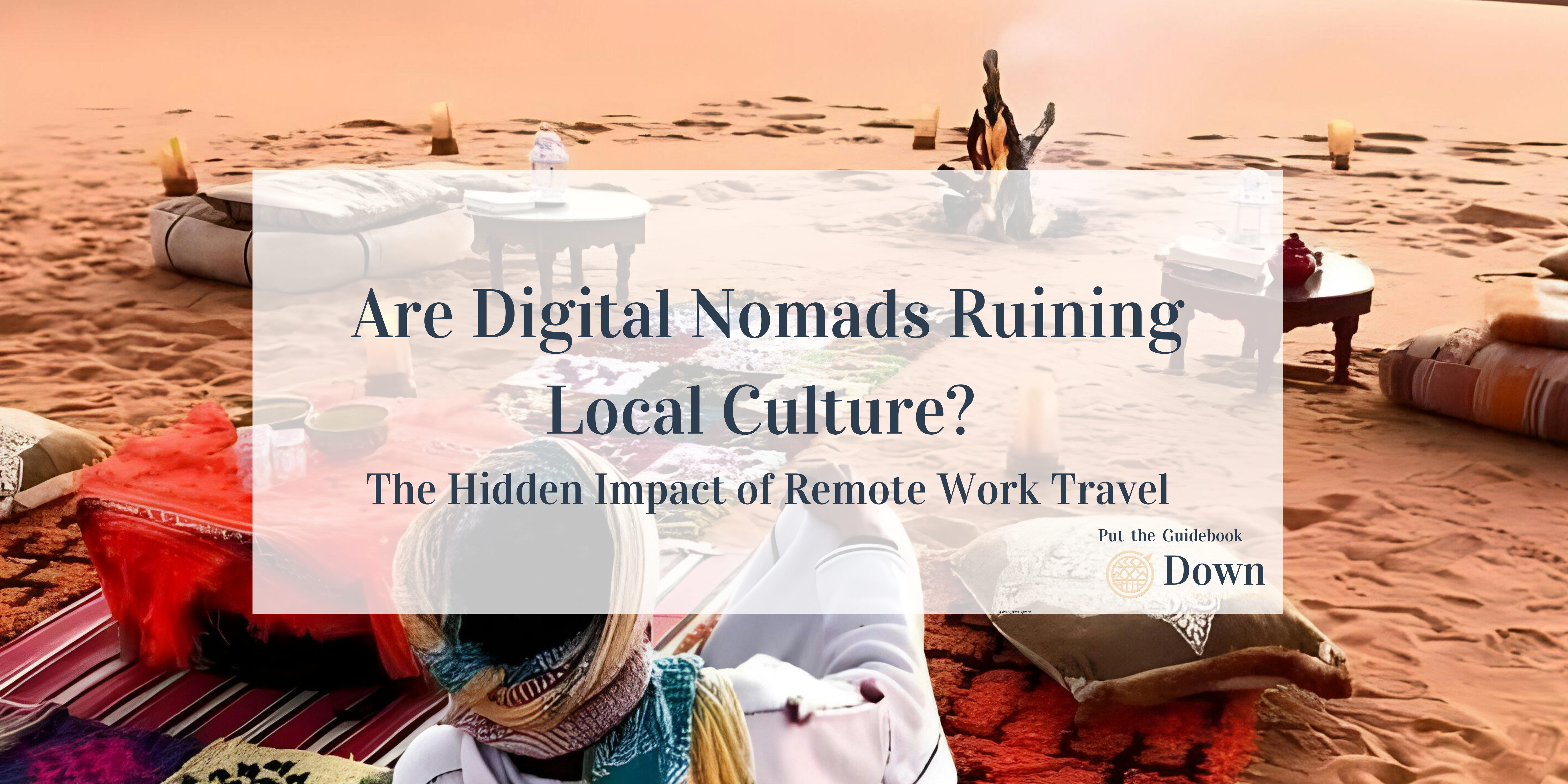 Are Digital Nomads Ruining Local Culture? The Hidden Impact of Remote Work Travel | The Rise of Digital Nomadism Remote work has enabled millions to live and work abroad Governments now offer digital nomad visas to attract foreign income Nomads are positioned as: Economic contributors Cultural explorers Global citizensCore Question:Are they actually integrating or recreating their own world abroad?The Digital Nomad ParadoxThe people searching for authentic culture are often the ones making places less authentic.Key Tensions: Cultural curiosity vs. cultural impact Exploration vs. extraction Presence vs. performanceHidden Impacts on Local Communities1. Gentrification & Cost of Living Rising rents in cities like Lisbon, Mexico City, and Bali Housing shifts toward short-term foreign tenants Locals priced out of their own neighborhoods2. Cultural Bubbles Nomads cluster in: Co-working spaces Expat communities “Nomad hubs”Result:Limited interaction with local culture, language, and communities3. Lifestyle Exporting Destinations adapt to nomads instead of the reverse Growth of: English-first environments Western-style cafes Globalized experiencesKey Insight:Travel becomes familiar instead of transformativeThe Social Media Feedback Loop Digital nomads act as unintentional marketers Content shapes: Destination demand Local business offerings Tourism narrativesCycle: Nomads post content Audience follows Destinations adapt Authenticity becomes standardizedThe Benefits (Yes, They Exist) Economic stimulation Local job creation Business innovation Rural revitalizationBut:The issue isn’t nomads. It’s unregulated, extractive behavior.Reframing the ProblemStaying longer doesn’t mean connecting deeper.Ask Yourself: Are you contributing or just consuming more slowly? Who benefits from your presence? Would your experience look the same anywhere else?How to Travel Without Becoming the Problem1. Break the Bubble Go beyond expat communities Engage with locals intentionally2. Stay Where Locals Live Avoid displacement-heavy areas Research housing impact3. Learn the Language Even basic effort builds connection and respect4. Spend Intentionally Support local businesses over global chains5. Engage Deeper, Not Just Longer Prioritize participation over passive presenceFinal ReflectionDigital nomadism isn’t inherently harmful, but it sits at the intersection of: Privilege Global inequality Cultural transformationClosing Question:Are you adapting to the place… or is the place adapting to you? This is a public episode. If you would like to discuss this with other subscribers or get access to bonus episodes, visit kulturatravel.substack.com | 18m 24s | ||||||
| 4/21/26 |  Why Everyone’s Trips Are Starting to Look the Same (And It’s Not Your Fault) | Why Everyone’s Trips Are Starting to Look the Same (And What To Do About It)📍 Episode DescriptionBe honest—how many times have you seen the exact same travel itinerary online?From TikTok to AI-generated plans, travel is starting to feel less like discovery and more like repetition. In this episode of Put the Guidebook Down, we unpack how social media algorithms and AI tools are quietly shaping where you go, what you do, and how you experience the world.This isn’t just about travel trends—it’s about what happens when curiosity gets replaced by convenience.🔍 What You’ll Hear in This Episode Why travel planning has shifted from discovery → validation How TikTok, Instagram, and AI tools are standardizing global travel The truth about “personalized” itineraries (and why they’re not actually unique) The hidden feedback loop between content → behavior → tourism trends What gets lost when destinations become trends Practical ways to break out of algorithm-driven travel💡 Key Takeaways “Personalized” travel isn’t always original—it’s often pattern-based Social media doesn’t just inspire trips—it controls visibility and demand AI removes friction, but it can also kill curiosity The more we follow trends, the fewer new discoveries exist The best travel experiences often come from unplanned, offline moments⚠️ Big Questions This Episode Explores Are you actually choosing your trip—or is the algorithm choosing for you? If you removed social media, would your itinerary look the same? Are you discovering places… or just repeating what’s already been done? What does “authentic travel” even mean in the age of AI?🧭 How to Travel Differently (Actionable Tips) Use AI for logistics, not discovery Ask better, deeper questions when planning Go at least one layer deeper than the first result Cross-check sources beyond social media Leave space for spontaneity and local recommendations🌍 Why This MattersWhen everything becomes visible, nothing feels discovered.This episode challenges you to rethink how you plan travel—and whether efficiency is quietly replacing the curiosity that makes travel meaningful in the first place.💬 Join the ConversationWhat do you think—are trips becoming too similar?👉 Share your thoughts in the comments👉 DM us your experiences on Instagram👉 Tag us in your travels @KulturaTravel✈️ Explore More with Kultura TravelLooking for travel that goes beyond the algorithm? 🌐 Subscribe to our Substack for deeper cultural insights 🎧 Listen to more episodes of Put the Guidebook Down 📲 Follow along for weekly conversations on cultural travel, language, and identity This is a public episode. If you would like to discuss this with other subscribers or get access to bonus episodes, visit kulturatravel.substack.com | 19m 40s | ||||||
| 4/14/26 |  The Rise of Skillcations | The Rise of SkillcationsSkillcations = travel experiences centered around learning (language, cooking, photography, conservation, etc.)Driven by the experience economy and a shift from passive sightseeing → active participationRemote work (post-pandemic) enables longer stays and deeper engagementReferenced Insights:McKinsey: Remote work enabling longer, blended travel lifestylesLinkedIn Learning: Gen Z & Millennials prioritize continuous skill developmentThe Social Media Effect: “I Learned This” > “I Went Here”Content showcasing learning performs better than passive travel content Travel becomes part of personal branding Skills = social currencyKey Tension:Are we learning for ourselves or for visibility?When Skillcations Deepen Cultural ConnectionSkill-based travel can be meaningful when it includes:Language immersion → faster retention + cultural understandingLocal economic impact → supporting artisans and small businessesSlow travel → deeper relationships and reduced tourism burnoutReferenced Concepts:Intercultural education research: immersion builds empathyTourism research: slow travel increases satisfaction + reduces burnout Community-based tourism = stronger local impactThe Dark Side of Skill-Based Travel1. Hustle Culture in Disguise Travel becomes productivity Pressure to “maximize” every moment2. Credentializing Experiences Certificates, badges, résumé-building Experiences framed as assets, not connections3. Inequality of Access Time + money gate immersive experiences Locals may be priced out of their own cultureReferenced Insight:Sociological research: experiences increasingly framed as self-optimization assetsThe Core QuestionAre we consuming culture as a curriculum? Who benefits from skillcations? The traveler? The business? The algorithm? What happens when growth becomes packaged?A Framework for Ethical Skill-Based Travel1. Learn with, not from Prioritize reciprocity and cultural humility2. Choose Depth Over Efficiency Fewer places, deeper experiences3. Support Community-Led Experiences Ensure local ownership and authentic representationReferenced Concepts:Sustainable tourism frameworks → community-led decision makingCultural preservation through local participationFinal Reflection Are you traveling to grow or to prove growth? What would learning look like without an audience? This is a public episode. If you would like to discuss this with other subscribers or get access to bonus episodes, visit kulturatravel.substack.com | 17m 39s | ||||||
| 4/7/26 | 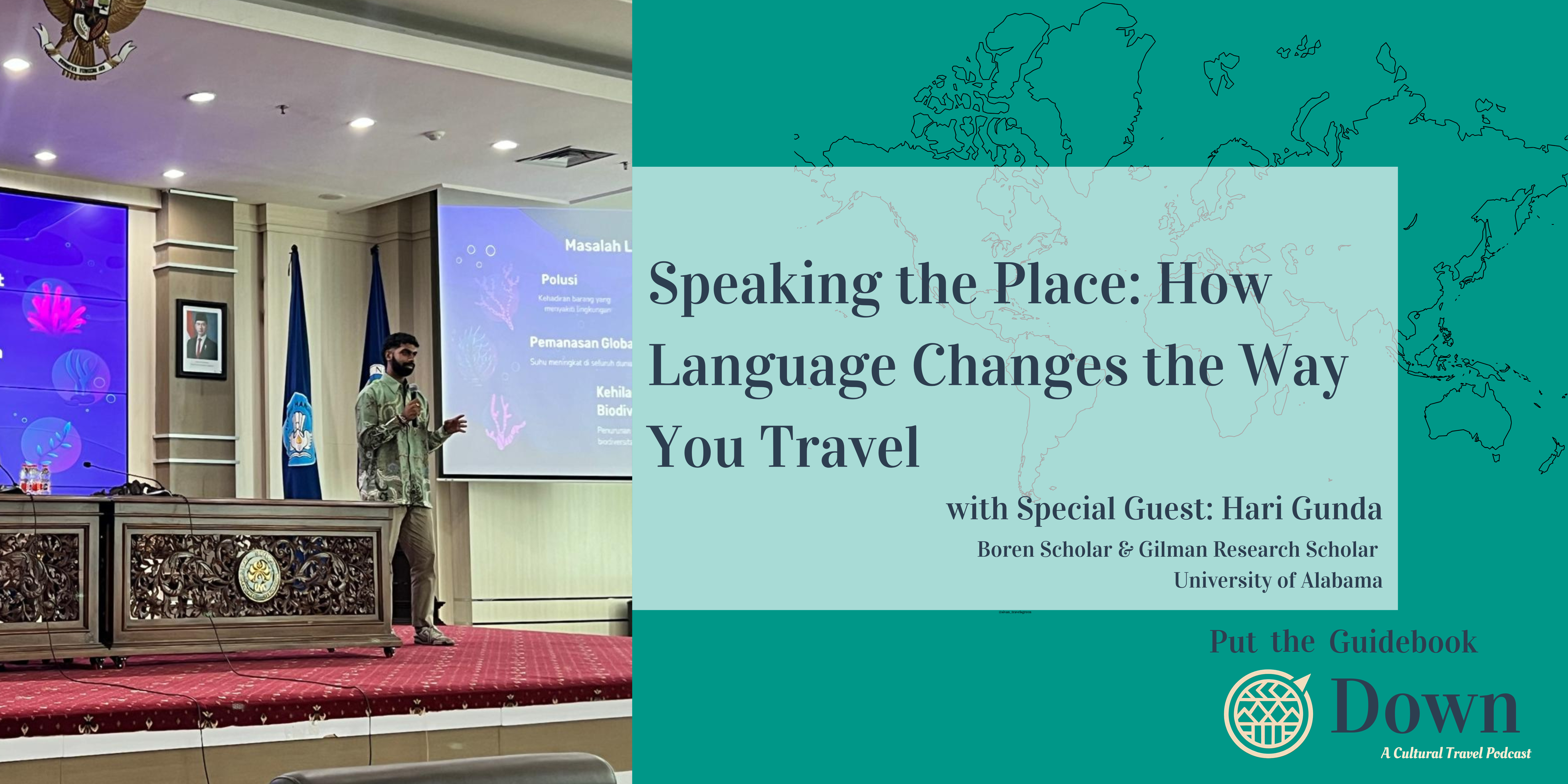 Speaking the Place: How Language Changes the Way You Travel | Episode: Speaking the Place: How Language Changes the Way You TravelGuest: Hari GundaA Boren Scholar and Gilman Research Scholar at the University of Alabama with a dual degree in Data Science and Foreign Languages & Literature.Study and work experience in the U.S., Indonesia, and GermanyFocused on sustainable development and conservation researchIndonesia Beyond BaliWhile many travellers immediately associate Indonesia with Bali, this episode challenges that narrow lens. Hari shares how his interest stemmed from:Indonesia’s linguistic diversity (700+ regional languages)Its role in climate diplomacyThe capital relocation projectIts global importance in mangrove conservationMarine biodiversity and conservation researchIndonesia emerges not as a backdrop for tourism, but as a complex, globally significant nation.Why Bahasa Indonesia?Written in the Latin scriptNo grammatical genderNo noun casesNo tonal system (unlike Vietnamese or Thai)Straightforward verb structuresFor English speakers interested in Southeast Asia, Bahasa Indonesia offers accessibility without sacrificing depth.The Power of ImmersionHari compares:German Immersion in the U.S. (Portland State University)German-only dormTight-knit language communityB1 certification achieved in under two monthsIndonesian Immersion via the Boren ScholarshipHost family livingCultural electives (dance, music, singing)Daily intensive language classesReal-world application beyond the classroom structureThe takeaway: immersion is about ecosystem design, not just location.When Language ClicksLanguage fluency doesn’t arrive in one dramatic moment.It builds through:Difficult conversationsExplaining abstract ideas (like the U.S. Electoral College in Indonesian)Teaching peersGossiping at the dinner tableMaking mistakesMistakes, like confusing teman (friend) and taman (park), become bonding points rather than failures.Language and ReciprocitySpeaking Bahasa Indonesia enabled:Deep conversations with conservation workersInvitations inside a marine national park officeMeaningful dialogue about sustainabilityStronger personal relationshipsLanguage shifts travel from consumption to reciprocity.Career ImpactHari’s experience at Planet Indonesia in West Kalimantan opened doors to:Conservation data scienceFieldwork in villages along the Kapuas RiverMarine ecosystem researchEnvironmental economics in GermanyOngoing research proposals related to Indonesian conservation conflictTravel didn’t dictate his path; it expanded it.Cultural Lessons Brought HomeTake greetings seriously.Ask better questions.Listen intentionally.Replace “no” with “not yet.”Language shapes mindset.Final ReflectionTravel becomes transformative when we:Speak with people, not just about placesMove beyond influencer itinerariesChoose curiosity over comfortAccept imperfection in languagePrioritise attention over fluencyIf you enjoyed this episode: Subscribe to Put the Guidebook Down Join Kultura Travel on SubstackShare your language story with usBecause language isn’t just vocabulary.It’s how we learn to live inside a place. This is a public episode. If you would like to discuss this with other subscribers or get access to bonus episodes, visit kulturatravel.substack.com | 28m 49s | ||||||
Want analysis for the episodes below?Free for Pro Submit a request, we'll have your selected episodes analyzed within an hour. Free, at no cost to you, for Pro users. | |||||||||
| 3/31/26 |  Has AI Made Travel Less Original? | Exploring whether generative AI is enhancing personalization in travel or reinforcing sameness through algorithmic patterns.Research & Context ReferencedMcKinsey & Company (2024):Over 40% of travelers are using generative AI in some stage of travel planning, with even higher adoption among Gen Z.Skift Research (2024):Reports increasing integration of AI-powered concierge features and chatbot systems across travel brands.Expedia Group Travel Trends Reports (2024–2025):Identifies rising consumer reliance on tech tools for inspiration and trip organization.Harvard Business Review (2023):Generative AI reinforces dominant patterns in training data, contributing to homogenization and algorithmic bias.Stanford University Research:Consumers overestimate uniqueness in algorithmic recommendations due to psychological bias and perceived personalization.UN Tourism Reports:Digital tools reduce travel friction and increase accessibility, particularly through AI-driven customer support and language tools.Concepts Discussed* The “Algorithm of Sameness”* Popularity loops in recommender systems* The IKEA effect in AI co-creation* AI as social proof* Agentic AI in travel* Passive vs intentional AI usage* Cultural visibility & digital marginalization* Serendipity in travel designFramework: Staying Original in an AI World1. Use AI for logistics, not just discovery.Flights, visas, routing, and budget optimization.2. Ask contrarian prompts.Example:“Which cultural experiences in Paris are rarely mentioned in English-language travel media?”3. Cross-reference outside the LLM.Regional publications, museum calendars, YouTube creators, and local forums.4. Leave space for unplanned time.Serendipity cannot be optimized.Reflection Questions for ListenersWhen was the last time you discovered something without a screen?Do you value originality or reassurance?Would your itinerary look different without AI?Is AI just the next layer of social proof in tourism?Closing ThoughtAI hasn’t killed originality in travel.But it has made sameness easier.The real question isn’t whether we use AI.It’s whether we’re still willing to wander. This is a public episode. If you would like to discuss this with other subscribers or get access to bonus episodes, visit kulturatravel.substack.com | 27m 36s | ||||||
| 3/24/26 |  Living Abroad vs Visiting: What Tourists Never See in Abu Dhabi | Guest: Remiah from Remiah TravelsSolo traveler and educator living in Abu Dhabi, focused on authentic travel, cultural awareness, and intentional movement through the world.Episode BreakdownArrival vs BelongingRemiah shares what surprised her most about moving to Abu Dhabi, particularly navigating a country where 90% of the population is expatriate. She reflects on finding her place within a multicultural teaching community and what it means to feel “local” after six years.Routine as the Real Cultural ImmersionTourists experience highlights. Residents experience routine. From knowing her gym and café spots to participating in local life administration, Remiah explains how daily structure builds belonging more than sightseeing ever could.Ramadan & CommunityOne of the biggest cultural shifts was experiencing Ramadan, not as a visitor, but as part of a school community, adjusting work hours and participating in iftar gatherings. This segment explores how shared rituals create connection across faiths and backgrounds.Identity, Safety & Representation AbroadRemiah discusses navigating life in the UAE as a Black woman and how modesty, cultural awareness, and intentional movement through space shape her experience. The conversation expands to how safety and belonging evolve when you stay somewhere long-term.Language as RespectKiara reflects on her own experience in Moldova and how choosing to learn the local language dramatically impacted relationship-building and access to community life. Language learning becomes framed as an act of cultural respect.Authentic Travel vs Surface-Level TourismRemiah defines authentic travel as immersion through food, faith, traditions, history tours, and local events, not just chasing aesthetic “hidden gems.” The conversation critiques buzzwords in travel culture while acknowledging the reality that we are all tourists at some point.The Hidden Gem IllusionThe term “hidden gems” is unpacked as a social media buzzword. Both reflect on travel moments that fell flat and discuss how social media often prioritizes novelty over nuance.How to Travel BetterPractical takeaways include:Taking walking tours for local orientationSupporting sustainability efforts (including recycling initiatives in places where they’re not obvious)Bringing reusable water bottlesLeaving destinations better than you found themRespect & Modesty in Abu DhabiRemiah explains that visitors “get what they put into” the experience. While dress codes are flexible for foreigners, choosing modesty can open doors to deeper local interaction and cultural access.Redefining a Successful TripAfter years abroad, Remiah now defines a successful trip as slow, immersive, and detail-oriented, favoring wandering and local life over checklist tourism. This is a public episode. If you would like to discuss this with other subscribers or get access to bonus episodes, visit kulturatravel.substack.com | 31m 12s | ||||||
| 3/17/26 |  What ETIAS Means for Travel in 2026: Access, Tech, and Tourism | ETIAS: More Than a CheckboxETIAS (European Travel Information and Authorisation System) will impact travelers entering Europe beginning in 2026. At the same time, the system may initially feel like a dramatic change; early disruptions are expected during the first phase of rollout.As Kiara notes, there may be confusion among travelers, including those who forget to complete the authorization before arrivalThese early-stage bumps are common whenever new travel systems are introduced.Expect Growing PainsTransitions in travel infrastructure often come with friction. The first round of travelers navigating ETIAS may experience:- Delays due to incomplete authorization- Uncertainty at border crossings- Confusion about requirementsHowever, history shows that travelers adapt to new processes over timeTravel Is Now Shaped by Tech and DataETIAS is part of a broader shift in global tourism:“Mobility isn’t just about passports and planes. It’s about platforms, permissions, and pre-travel decision-making.”Travel is no longer defined solely by geography — it’s increasingly defined by digital systems and policy frameworks.Progress or Friction?The episode invites reflection:Are digital authorization systems necessary for safety?Or are they creating barriers to exploration?Whether seen as progress, friction, or adaptation, ETIAS signals a future where tourism and technology are deeply intertwined.Reflection PromptAs you plan your next trip, consider not just where you want to go, but what systems you’re navigating to get there.Share your perspective in the Substack comments or on YouTube. This is a public episode. If you would like to discuss this with other subscribers or get access to bonus episodes, visit kulturatravel.substack.com | 20m 00s | ||||||
| 3/10/26 | 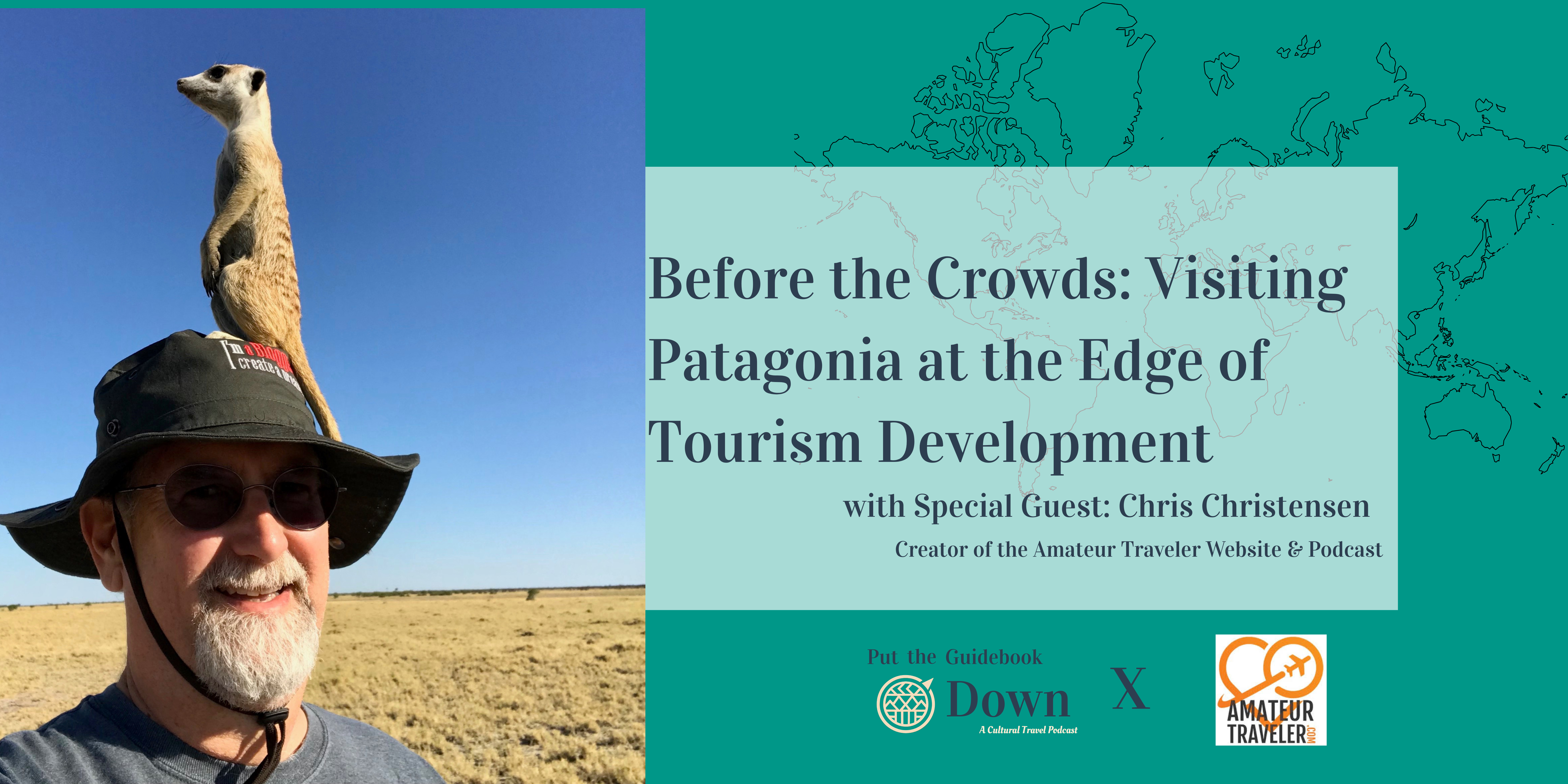 Before the Crowds: Visiting Patagonia at the Edge of Tourism Development | (0:00–0:47)Patagonia as we imagine it vs. Patagonia as it exists today — a destination still forming its tourism identity.(0:47–1:00)Introducing the episode’s core question: what does it mean to visit a place before it’s fully developed for tourism?(1:00–2:42)Meet Chris Christensen, founder of the Amateur Traveler podcast and early podcasting pioneer.(2:42–3:07)Setting the theme: Patagonia before mass tourism — and the pace of development.(3:07–5:22)Understanding Patagonia’s geography: Tierra del Fuego, Cape Horn, and why some regions remain rarely visited.(5:22–6:12)Who maintains trails and infrastructure when there are no park rangers — and what that says about tourism responsibility.(6:12–7:26)Tour guides trained in environmental research and specimen collection — tourism meeting science.(7:26–9:39)Penguins, Zodiacs, and respecting wildlife boundaries in fragile habitats.(9:39–11:18)Glaciers, climate change, and watching landscapes actively transform.(11:18–13:31)Why this kind of travel requires intellectual curiosity — not entertainment-driven tourism.(13:31–15:42)Indigenous history in Patagonia: the Yamana people and the importance of cultural context.(15:42–16:16)Ethical travel in destinations not yet overrun — how travelers can avoid accelerating harm.(16:16–18:24)Practical conservation measures: disinfecting boots, respecting landing rules, and minimizing impact.(18:24–19:57)The beaver introduction in Patagonia — a cautionary tale of environmental mismanagement.(19:57–21:51)How to evaluate whether an operator is practicing genuine ecotourism or greenwashing.(21:51–23:07)Small but meaningful sustainability signals: reusable bottles, waste systems, and hiring locally.(23:07–25:16)Why adventurous, small-group travel attracts more adaptable and respectful travelers.(25:16–26:50)Flexibility in ethical travel: weather, wildlife, and accepting what nature allows.(26:50–27:48)Final advice: expanding your comfort zone through intentional travel.(27:48–28:47)Closing reflection: when tourism is built alongside conservation and research, travel becomes a tool for protection — not overtourism. This is a public episode. If you would like to discuss this with other subscribers or get access to bonus episodes, visit kulturatravel.substack.com | 28m 55s | ||||||
| 3/3/26 |  Top 2026 Travel Industry Trends: Where Travel Is Headed Next | The Big Shift: Meaning Over MomentsTravel in 2026 is evolving from checklist tourism toward intentional, immersive experiences. With international arrivals increasing more than 4% beyond 2025 and industry revenue continuing to grow, demand is not declining — it’s deepening.Travelers are moving away from overcrowded tourist attractions and toward experiences that create connection, memory, and personal growth.Experiential Travel Is SurgingSearch interest in experiential travel has increased by over 2,600% in the past two years. Travelers are seeking:Local-led food classesGuided hiking routesAnimal watching experiencesCultural dance workshopsCommunity craft traditionsPlatforms like Airbnb Experiences and even Booking.com have adapted to highlight immersive, community-based offerings.Trend 1: Slow & Immersive TravelInstead of visiting five cities in seven days, travelers are booking longer stays in one place.Benefits include:Reduced travel fatigueDeeper cultural integrationStronger human connectionsBetter budget managementIncreased confidence for newer travelersSlow travel allows visitors to understand daily rhythms rather than just landmarks.Trend 2: Community-Centered TourismCommunity-focused travel is moving from niche to mainstream. This includes:Learning traditional crafts directly from artisansParticipating in agricultural harvestingSupporting locally owned guesthousesPurchasing locally produced souvenirsThis model keeps tourism revenue within local economies and supports cultural preservation.Trend 3: Skillcations & Growth TravelSkill-based vacations — or “skillcations” — reflect the broader cultural shift toward upskilling and self-development.Examples include:Falconry experiences in MongoliaHorseback trekking in Central AsiaLearning traditional cooking techniquesCraft and artisan workshopsTravel is becoming less about escape and more about growth.Trend 4: Technology & PersonalizationAI and digital tools are increasingly shaping travel planning. Beyond booking flights and hotels, travelers now use tech to:Personalize itinerariesDiscover niche community experiencesAlign travel with personal growth goalsHowever, algorithm-driven travel also risks pushing homogenized recommendations. Intentional research remains essential.Practical Ways to Travel IntentionallyEven short trips can be meaningful.Suggestions include:Seek out local community calendars and eventsAttend cultural festivalsChoose public transportation when possibleVenture beyond English-only menusPut your phone down and initiate conversationsResearch beyond AI-generated listsExample: Planning travel around Moldova’s National Wine Day — where over 100 wine producers gather annually in Chișinău — offers immersive cultural participation beyond sightseeing.Reflection PromptWhen was the first time you traveled intentionally?What mindset shift changed how you experience destinations?Join the discussion on Substack or YouTube. This is a public episode. If you would like to discuss this with other subscribers or get access to bonus episodes, visit kulturatravel.substack.com | 21m 41s | ||||||
| 2/24/26 |  When You’re Invited In: Traveling as a Guest to a Traditional Indian Wedding | Nicole shares how she was invited to attend a traditional Indian wedding in Goa.The importance of preparation, etiquette, and asking questions before arrival.Navigating uncertainty and culture shock through observation.Why relying solely on Google falls short for cultural understanding.Small moments, clothing advice, ceremonies, and dances made the experience meaningful.How this invitation reshaped Nicole’s approach to travel long-term.Reframing cultural travel as humility, gratitude, and awareness. This is a public episode. If you would like to discuss this with other subscribers or get access to bonus episodes, visit kulturatravel.substack.com | 25m 00s | ||||||
| 2/17/26 |  Hidden Gems Are Ruining Travel | (0:00–1:09)Why “hidden gems” are ruining travel from overcrowded destinations to places that don’t even exist anymore.(1:09–3:06)How the term evolved from genuine discovery into SEO-driven clickbait used to increase visibility and tourism demand.(3:06–4:50)Why travelers crave novelty over understanding, the psychology behind discovery, exclusivity, and feeling “in the know.”(4:50–6:37)Social media virality, algorithms, and how genuinely quiet places can go from zero to overwhelmed overnight.(6:37–8:11)What happens after a place is labeled a hidden gem: unsafe conditions, damaged sites, and unmanageable visitor volumes.(8:11–10:15)Infrastructure strain, environmental damage, and why destinations can’t scale overnight, no matter how beautiful they are.(10:15–12:04)Cultural impacts: displacement, loss of daily access for locals, and communities that never consented to virality.(12:04–14:12)What to say instead of “hidden gem”: community-recommended, culturally significant, under-visited with local stewardship.(14:12–16:32)Why context, education, and cultural understanding lead to more respectful and meaningful travel experiences.(16:32–18:10)How social media language, comments, and travel FOMO shape decision-making and destination popularity.(18:10–20:32)Rethinking travel success: slow tourism, long-term memory, emotional recall, and personal growth.(20:32–22:14)Final reflection: changing how we talk about travel and who that language truly serves. This is a public episode. If you would like to discuss this with other subscribers or get access to bonus episodes, visit kulturatravel.substack.com | 22m 20s | ||||||
| 2/10/26 | 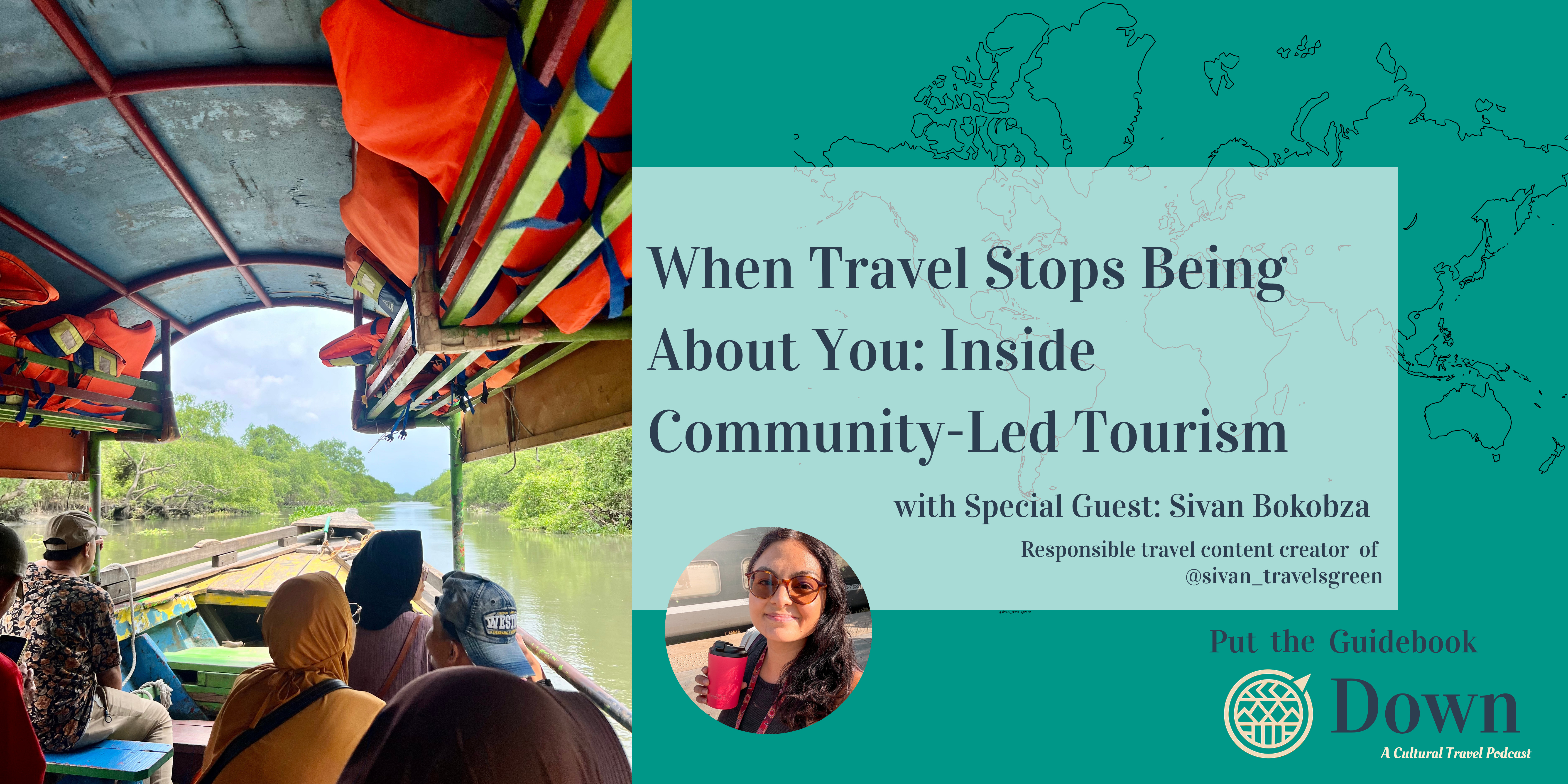 When Travel Stops Being About You: Inside Community-Led Tourism | We talk a lot about traveling differently on Put the Guidebook Down, but this episode asks a deeper question: what happens when travel stops centering the traveler at all? Kiara is joined by Sivan of Sivan Travels Green, a responsible travel content creator, where they unpack what community-led tourism actually means, how to spot greenwashing, and why intention matters more than perfection when it comes to ethical, culturally respectful travel.What You’ll Hear in This Episode* Why community-led tourism is more than a buzzword* The difference between eco-tourism and truly community-owned experiences* How to tell when “giving back” is real and when it’s performative* What slow, intentional travel teaches you about power, privilege, and presence* How content creators and travelers can center local voices instead of using culture as a backdropKey Takeaways* Community-led tourism prioritizes local ownership, decision-making, and long-term benefit, not traveler convenience* Ethical travel isn’t about being perfect. It’s about being intentional* If an experience feels performative, your intuition is often right* Slow travel creates deeper cultural understanding and a more positive local impact* Travelers are guests in someone else’s home, not the center of the storyLearn more about Sivan and her mission to show travelers how to travel more responsibly, focusing on community-led travel on Instagram @Sivan_TravelsGreen. How to Engage with Kultura TravelIf this episode shifted the way you think about travel, keep the conversation going.* Follow @kulturatravel and @puttheguidebookdown* Subscribe to the Put the Guidebook Down Substack for cultural travel essays, reflections, and behind-the-scenes conversations* Explore Kultura Travel’s growing network of community-led and culturally rooted travel partnersBecause the goal isn’t perfect travel. It’s conscious travel. This is a public episode. If you would like to discuss this with other subscribers or get access to bonus episodes, visit kulturatravel.substack.com | 28m 00s | ||||||
| 2/3/26 |  Why Fast Travel Feels Productive and Why It Leaves You Empty | We’ve turned travel into a productivity contest: counting countries, optimizing itineraries, and rushing from place to place as if vacation were another item on a to-do list. In this solo episode of Put the Guidebook Down, Kiara challenges the idea that “more” equals better. She unpacks how fast, checklist-style travel contributes to burnout, emotional numbness, and overtourism, and why slowing down leads to deeper memory, stronger connection, and more responsible travel. This episode is a call to rethink what successful travel really means.Why we started measuring travel success through productivity and country countHow social media rewards quantity over depth in travel contentThe connection between checklist itineraries and overtourismGuided tours and time-compressed travel: what gets lost along the wayPersonal reflections on fast travel across seven countriesWhat travelers lose when rushing: routines, nuance, and emotional processingResearch on slow tourism and its impact on memory, fulfillment, and stressThe power of unplanned moments and local recommendationsWhy longer stays lead to better cultural understanding and recallLiving abroad as a form of slow travel and immersionHow habits and identity shift through deeper cultural engagementRedefining successful travel beyond destinations and accomplishmentsThe environmental and economic benefits of slower, more distributed tourismA final reflection: what would you gain if you planned fewer destinations? This is a public episode. If you would like to discuss this with other subscribers or get access to bonus episodes, visit kulturatravel.substack.com | 21m 51s | ||||||
| 1/27/26 |  From Zero to Taiwan: Visiting Your Partner’s Home Country & Learning to Travel Differently | What happens when your first international trip isn’t Europe, but to Taiwan during Chinese New Year, to meet your partner’s family for the first time? In this episode of Put the Guidebook Down, Kiara talks with Taylor about traveling to her fiancé’s home country, navigating language barriers, meeting family across cultures, and how cultural immersion reshapes not just how you travel, but how you see yourself.Listen on: Spotify | Apple Podcasts | Substack | YouTubeWhat You’ll Hear in This Episode* Navigating meeting your partner’s family internationally for the first time* What it’s really like going “zero to 100” with international travel* Experiencing Taiwan through family dinners, holidays, and daily life* How visiting a partner’s culture deepens empathy, confidence, and connection* The moment travel stops feeling scary and starts feeling expansiveKey Takeaways* Cultural immersion doesn’t require fluency, just openness and observation* Staying with locals reveals daily rhythms you’ll never find in a guidebook* Being the outsider can teach patience, humility, and deeper listening* Travel can quietly transform your confidence far beyond the trip itself* Visiting a partner’s home country is both personal and profoundly culturalHow to Engage with Kultura TravelIf this episode resonated with you:* Subscribe to the Kultura Travel Substack for cultural travel essays, reflections, and behind-the-scenes podcast insights* Share this episode with someone navigating cross-cultural relationships or first-time international travel* Comment on Substack or DM us with your own experience visiting a partner’s home country* Explore more episodes of Put the Guidebook Down wherever you listen to podcasts This is a public episode. If you would like to discuss this with other subscribers or get access to bonus episodes, visit kulturatravel.substack.com | 27m 06s | ||||||
| 1/20/26 | 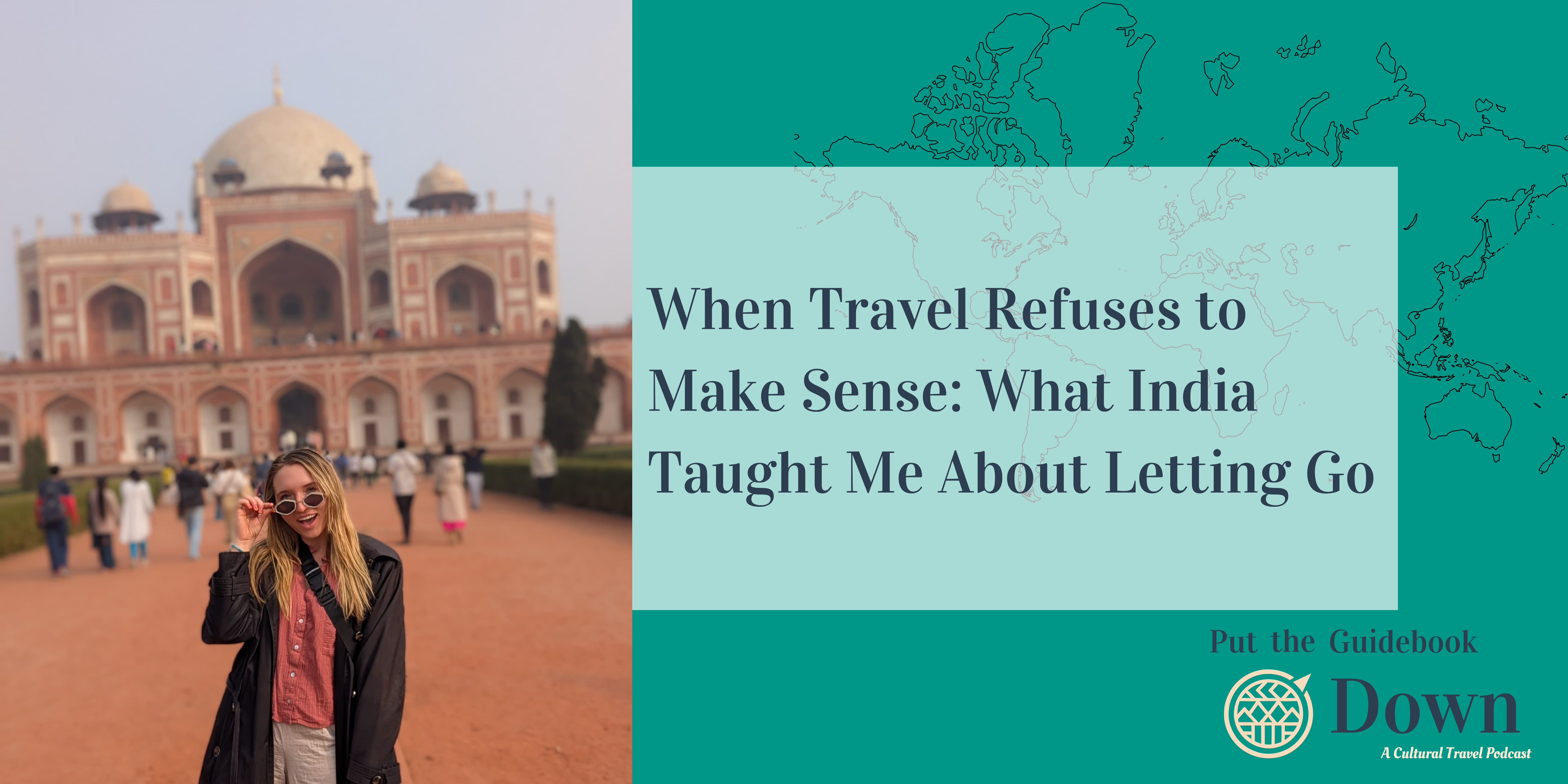 When Travel Refuses to Make Sense: What India Taught Me About Letting Go | This is not a guide to India. It’s a reflection on what happens when travel resists explanation. In this solo episode, Kiara unpacks how her trip to India challenged her need for control, disrupted familiar travel frameworks, and forced her to sit with discomfort, humility, and curiosity rather than translation or optimization. Through chaos, overstimulation, privilege awareness, and moments of deep presence, this episode explores what cultural travel looks like when you stop trying to explain everything and start learning how to observe.What You’ll Hear in This Episode* Why some destinations can’t, and shouldn’t, be “digestible.”* How India disrupted Western ideas of order, efficiency, and control* The danger of over-explaining places that you don’t fully understand* How privilege quietly shapes every travel experience* Why responsible cultural travel sometimes means observing without consuming* When to put the phone down and let moments remain undocumented* Why repeat visits and partial understanding are part of ethical travelKey Takeaways* Travel isn’t meant to feel legible. Discomfort often signals growth, not failure.* Trying to translate everything can become a form of control. Observation creates space for humility.* Local voices matter more than outsider explanations. Cultural travel requires listening, not narrating.* Privilege doesn’t disappear when you’re aware of it, but responsibility begins there.* Some places demand repeat visits, patience, and lifelong learning.Listen on Spotify | Apple Music | YouTubeHow to Engage With Kultura TravelIf this episode resonated, continue the conversation with us on Substack, where we unpack cultural travel beyond highlights and hot takes. Follow along on social media for reflections, questions, and community discussions, and explore Kultura Travel to learn how we’re building tools that support ethical, immersive, and locally grounded travel experiences. This is a public episode. If you would like to discuss this with other subscribers or get access to bonus episodes, visit kulturatravel.substack.com | 22m 09s | ||||||
| 1/13/26 |  Global Nomadism & Entrepreneurship: Building a Life on the Move | What does it actually mean to build a business while living across borders? In this episode of Put the Guidebook Down, Kiara is joined by Niv from Niv Travels, founder of Supercharged Studio, and Nomad Wildheart, to unpack the realities of global nomadism, ethical travel, and entrepreneurship beyond the Instagram highlight reel. From creative inspiration drawn from culture to the responsibilities that come with mobility, this conversation explores what it means to live and work intentionally across the world.What You’ll Hear in This Episode→What “global nomadism” looks like beyond the influencer stereotype→How Niv structures work, creativity, and travel in real life→The ethics of digital nomadism in lower-cost-of-living countries→How culture directly shapes creative and business decisions→Why spontaneity, public transportation, and curiosity still matterKey TakeawaysBeing a global nomad is less about constant movement and more about intentional designEthical travel requires awareness of local economies, housing, and cultural strainCreativity deepens when you pay attention to how culture functions, not just how it looksTravel challenges your assumptions about safety, productivity, and communityYou can build meaningful work and a grounded identity across bordersAvailable on Spotify | YouTube | Apple MusicEngage with Kultura TravelIf this episode resonated with you, subscribe to Put the Guidebook Down on Substack for behind-the-scenes reflections, cultural travel essays, and conversations that go deeper than itineraries.👉 Join the community at Kultura Travel on Substack and be part of a movement that travels with intention, curiosity, and care.You can learn more about Kultura Travel at www.kulturatravel.com, and Put the Guidebook Down at www.puttheguidebookdown.com. Engage and follow along Niv's adventures and his work at www.niv.travel, www.nomadwildheart.com, www.supercharged.studio, or onInstagram / TikTok: @nivtravels @nomadwildheart This is a public episode. If you would like to discuss this with other subscribers or get access to bonus episodes, visit kulturatravel.substack.com | 31m 49s | ||||||
| 1/6/26 |  What Do We Owe the Places We Visit? Rethinking Cultural Travel Beyond the Aesthetic | Cultural travel is becoming more prevalent, but accountability is often lacking. In this solo episode, Kiara breaks down what responsible cultural travel actually demands of us, unpacking the difference between consuming culture and genuinely participating in it through preparation, presence, and participation.What You’ll Hear in This Episode* Why “cultural” and “authentic” travel have become performative buzzwords* The hidden cost of treating places and people as content backdrops* The three pillars of responsible cultural travel: Preparation, Presence, Participation* Why discomfort isn’t a failure of travel, but the point of it* How to move through the world as a guest, not the center of attentionKey Takeaways* Cultural travel isn’t about aesthetics. It’s about responsibility* Preparation before a trip is a form of respect, not homework* Being present means putting the phone down and engaging your senses* Participation doesn’t always mean involvement; sometimes observation is more respectful* Discomfort, unpredictability, and not being “special” are essential parts of meaningful travel* Travel should expand curiosity and understanding, not just produce contentListen on Spotify | Apple Music | YouTubeHow to Engage with Kultura TravelIf this episode made you pause or rethink how you travel, continue the conversation on Kultura Travel’s Substack, where we unpack cultural travel beyond highlights and aesthetics. You can also connect with us on social media or explore our work at Kultura Travel because intentional travel doesn’t end when the trip does. This is a public episode. If you would like to discuss this with other subscribers or get access to bonus episodes, visit kulturatravel.substack.com | 24m 09s | ||||||
| 12/9/25 |  The Power of a Gap Year: Breaking Out of the Linear Life Path | In this episode of Put the Guidebook Down, Kiara sits down with her friend and colleague Hari, a Boren Scholar, Gilman Research Scholar, and a student at the University of Alabama, to unpack what really happens when you step outside the traditional university-career pipeline and choose intentional time abroad instead.From navigating skepticism at home to building new identities across Indonesia and Germany, Hari shares how immersive experiences can challenge who you think you are, expand your worldview, and reshape your professional direction. This is a conversation for anyone who has ever wondered what could happen if they said “yes” to a study abroad offer.Listen on:Spotify | Apple Podcasts | Substack | YouTubeWhat You’ll Hear in This Episode* What inspires someone to choose a gap year or full-immersion study abroad experience* How peers and family react when you leave a traditional academic path* The difference between living abroad as a scholar vs. traveling as a tourist* The reality of intensive immersive programs like the Boren Flagship* How cultural immersion sparks unexpected personal and professional growth* The moment you realize you’re no longer “just a visitor.”* Indonesian café culture and the quirks of language immersion (like overly formal Indonesian!)Key Takeaways* Immersion is transformative; mentally, culturally, and professionally in ways no syllabus can prepare you for.* Non-linear paths are valid paths. They often lead to richer careers, more resilience, and deeper global awareness.* Being a “scholar abroad” is radically different from being a tourist. You gain depth, not just memories.* Community and day-to-day life matter more than itineraries. That’s where identity shifts happen.* Programs like Boren allow you to design your own experience, leading to more intentional cultural and field-specific growth.How to Engage with Kultura TravelIf you love conversations about cultural immersion, slow travel, and rediscovering the world through learning, here’s how to stay connected:* Subscribe to the Kultura Travel Substack for deep-dive essays, immersive travel guides, and new podcast episodes.* Join the Kultura Travel community! We’re building tools and spaces for travelers who want more than algorithms and tourist traps.* Share the episode with a friend who’s thinking about studying or working abroad.* Leave a comment on Substack: What’s one moment when you realized you weren’t just a tourist anymore? This is a public episode. If you would like to discuss this with other subscribers or get access to bonus episodes, visit kulturatravel.substack.com | 28m 57s | ||||||
| 12/3/25 |  Learning to See: How Cultural Travel Teaches You to Pay Attention | In this solo episode of Put The Guidebook Down, Kiara dives into one of the most underrated skills that meaningful travel teaches us: the ability to pay attention. Beyond photo ops and bucket lists, cultural travel sharpens your awareness, expands your emotional intelligence, and trains you to notice the stories happening all around you. From a grandmother bargaining at a market to a stranger showing you how to pronounce a word you keep butchering. This episode explores how slowing down and truly observing can shift your entire travel experience, reshape how you understand people, and ultimately change the way you move through the world. It’s part reflection, part travel pep talk, and part cultural mindset guide… all wrapped in that honest, a little sassy Kultura Travel tone.What You’ll Hear in This Episode* Why most people “see” but don’t actually notice when they travel* How cultural immersion forces you to observe the small things* The surprising ways living abroad sharpens your awareness* How attention changes your relationships with local people* Stories from Kiara’s time in Moldova, Indonesia, and beyond* Tips to build your “cultural attention muscle” on your next tripKey TakeawaysTravel isn’t about where you go. It’s about how you pay attention. Learning to notice cultural cues, gestures, habits, and social rhythms is the real gateway to meaningful experiences. Observation slows you down. And slowing down opens you up to kindness, discomfort, connection, and growth. Cultural travel rewires your internal compass. You start noticing things at home you would’ve ignored before. You don’t need a guidebook to learn. You need curiosity, humility, and a willingness to watch and listen more than you speak. Attention is respect. When you observe with intention, you show genuine care for the people and places hosting you.How to Engage with Kultura TravelKultura Travel is here to help you deepen your cultural curiosity, not just plan your next trip. Check out cultural travel experiences at www.kulturatravel.com! Follow us on Instagram and TikTok for travel insights, language tips, and deep-dive cultural content. Share this episode with a friend who’s ready to travel with more intention. Leave a comment on Substack: What’s a moment in travel where paying attention changed everything? This is a public episode. If you would like to discuss this with other subscribers or get access to bonus episodes, visit kulturatravel.substack.com | 25m 04s | ||||||
Showing 25 of 39
Sponsor Intelligence
Sign in to see which brands sponsor this podcast, their ad offers, and promo codes.
Chart Positions
1 placement across 1 market.
Chart Positions
1 placement across 1 market.