Quantum Accelerators: Why Your Next AI Breakthrough Needs a Cryostat and a GPU Farm
From Quantum Computing 101 by Inception Point Ai
June 7, 2026 · 3 min
About this episode
The episode discusses the rise of quantum-classical hybrids and their implications for AI breakthroughs.
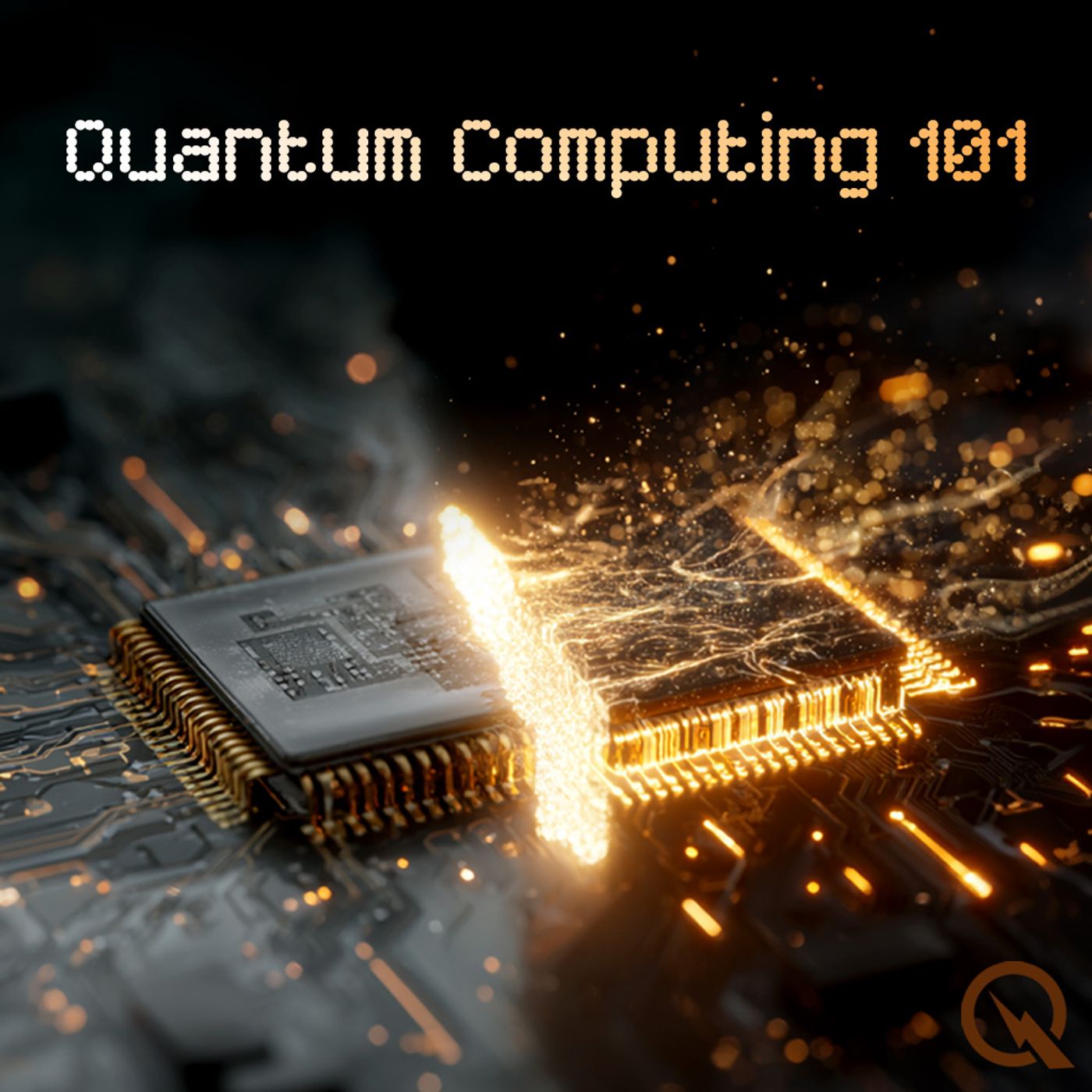
This is your Quantum Computing 101 podcast. Picture this: I’m standing in a humming data hall, fluorescent lights glinting off racks of GPUs, and at the far end, behind a thick glass pane, sits a cryostat — a gleaming silver cylinder dropping a tiny quantum chip to near absolute zero. That’s the stage where today’s most interesting story plays out: the rise of the quantum‑classical hybrid. I’m Leo — Learning Enhanced Operator — and what fascinates me this week is how fast hybrid solutions are moving from theory to infrastructure. Dell’s quantum infrastructure team has been very clear recently: forget the sci‑fi image of a standalone “quantum computer.” Think “quantum accelerator” wired into a high‑performance classical cluster, just like a GPU but weirder, colder, and much pickier about noise. In parallel, Quantinuum just went public on the Nasdaq, signaling that this hybrid future is not just a research dream, it’s a market bet measured in billions. So what makes a quantum‑classical hybrid so powerful? Classical machines are like elite marathon runners: they go long, they’re reliable, they crunch vast datasets, and they execute control logic with ruthless consistency. Quantum…
People in this episode
Host: Leo
Topics covered
- quantum computing
- AI breakthroughs
- hybrid solutions
- GPU farms
- cryostats
- quantum-classical hybrid
Keywords
- quantum accelerators
- AI
- cryostat
- GPU
- hybrid solutions
- quantum computing
- Dell
- Quantinuum
Mentioned in this episode
Organizations: Dell, Quantinuum, Nasdaq
More episodes of Quantum Computing 101
- Google's Quantum-Classical Hybrid Loop: When Qubits and GPUs Dance Together to Solve the Impossible · June 12, 2026 · 4 min
- Leo's Quantum Accelerator: Why Hybrid Computing Beats Pure Quantum Every Time · June 10, 2026 · 3 min
- Quantum Accelerators Inside Classical Supercomputers: Why Hybrid Computing Is the Real Revolution · June 8, 2026 · 3 min
- Quantum-Classical Hybrids: How Gentle Error Checking and Smart Teamwork Beat the Measurement Problem · June 5, 2026 · 4 min
- Quantum-Classical Hybrid Systems: Why 2 Billion Dollars Says the Future of Computing is a Duet · June 3, 2026 · 3 min
- Hybrid Quantum-Classical Systems: The Bridge Technology Turning Impossible Problems Tractable · May 20, 2026 · 3 min
Explore listener stats, chart rankings, contacts and more on the Quantum Computing 101 podcast page.