
Radical Candor: Communication at Work
Ready to love your job, crush your career goals, and become the kind of leader everyone actually wants to work with?Welcome to the Radical Candor podcast, where you'll learn how to kick ass at work without losing your hu...
Insights from recent episode analysis
On the show
- Tom Rath1 ep
- Rob Copeland1 ep
- John Witt1 ep
Also: David Gibbs, Guy Kawasaki, Lisa Conn, Anne Wootton, Dr. Tomas Chamorro-Premuzic, Nir Eyal, Adam Becker, Muriel Wilkins, Eric Ries, Daniel Coyle, Oliver Bullough, Gary Gerstle, Steven Johnson, Luke Burgis, Liz Wiseman, Dr. Becky Kennedy, Heather McGhee
Audience Interest
Podcast Focus
Publishing Consistency
Insights are generated by CastFox AI using publicly available data, episode content, and proprietary models.
Most discussed topics
Brands & references
Total monthly reach
Based on 1 signal.
Built from
By chart position
- 🇺🇸United States · CareersHOME#29130K to 686K
- 🇬🇧United Kingdom · Careers#851K to 268K
- 🇨🇦Canada · Careers#1613K to 70K
- 🇧🇪BE · Careers#76.3K to 33K
- 🇮🇳India · Careers#96892 to 4.7K
- Per-Episode Audience
Est. listeners per new episode within ~30 days
206K to 1.1M🎙 Weekly cadence·228 episodes·Last published 2w ago - Monthly Reach
Unique listeners across all episodes (30 days)
412K to 2.2M🇺🇸63%🇬🇧25%🇨🇦6%+1 more - Active Followers
Loyal subscribers who consistently listen
227K to 1.2M
Market Insights
Platform Distribution
Reach across major podcast platforms, updated hourly
Total Followers
—
Total Plays
—
Total Reviews
—
* Data sourced directly from platform APIs and aggregated hourly across all major podcast directories.
| Date | Episode | Topics | Guests | Brands | Places | Keywords | Sponsor | Length | |
|---|---|---|---|---|---|---|---|---|---|
| 10/6/26 |  How Microaggressions can have significant negative impacts (with Dr. Kecia Thomas ) | While the podcast team is taking a Radical Sabbatical, Kim is interviewing authors of the books that have had a big impact on her in the past two years. In this episode, Kim Scott speaks with Dr. Kecia Thomas, an organizational psychologist renowned for her research on workplace dynamics. Kim discusses Dr. Thomas’ research on the 'Pet to Threat' framework, which explores the experiences of women, particularly women of color, in organizational settings. They discuss the transition from being seen as a 'pet' to a 'threat' in the workplace, the impact of gender and leadership dynamics, and the resistance to diversity within organizations. Dr. Thomas emphasizes the importance of recognizing covert forms of discrimination and the need for organizations to embrace discomfort to foster inclusivity. They also explore the complexities of race, advertising, microaggressions, and the challenges faced by marginalized groups in leadership roles. They discuss the impact of colorblind messaging in organizations, the emotional labor involved in diversity work, and the intersectionality of class and race in higher education. The dialogue emphasizes the importance of understanding and addressing these issues to create more inclusive environments. Both Kim and Dr. Thomas agree that embracing discomfort is crucial for organizations to evolve. They discuss how rejecting these feelings only exacerbates issues within workplace cultures. Instead, recognizing and addressing this discomfort can create pathways for growth and improvement. Guest Background: Dr. Kecia Thomas is an industrial-organizational psychologist, diversity scientist, keynote speaker, board advisor, and leadership coach. She helps leaders align culture, trust, belonging, and performance to build healthier, higher-performing organizations. Dr. Thomas is the lead psychologist behind Pet to Threat™, a groundbreaking framework examining how high-potential marginalized employees can experience celebration and exploitation, followed by promotion and alienation, at work. Her expertise has been sought by major corporations, national institutions, universities, school districts, and healthcare organizations. CHAPTERS (00:21) Introduction to Pet to Threat Framework (03:16) Experiences of Women in Leadership (06:10) Understanding the Pet to Threat Transition (09:01) The Impact of Gender and Leadership (11:45) Diversity Resistance in Organizations (14:39) The Role of Organizational Culture (17:12) The Importance of Naming Experiences (19:26) The Covert Forms of Resistance (22:27) The Consequences of Exclusion (24:56) Good Intentions Gone Awry (27:22) The Impact of Advertising on Racial Perceptions (29:31) Microaggressions and Their Consequences (32:54) Colorblindness in Organizational Messaging (36:57) Navigating Unintended Offenses in Communication (39:33) The Emotional Labor of Diversity Work (40:51) Leadership Challenges for Marginalized Groups (48:43) Class Bias in Higher Education (52:13) Intersectionality and Social Distance Connect with the Radical Candor team: Website LinkedIn YouTube Keywords Pet to Threat, organizational psychology, diversity, inclusion, women in leadership, gender bias, workplace culture, resistance, covert discrimination, leadership dynamics advertising, racial perceptions, microaggressions, colorblindness, diversity, emotional labor, leadership, class bias, intersectionality Learn more about your ad choices. Visit megaphone.fm/adchoices | 54m 26s | ||||||
| 9/22/26 | 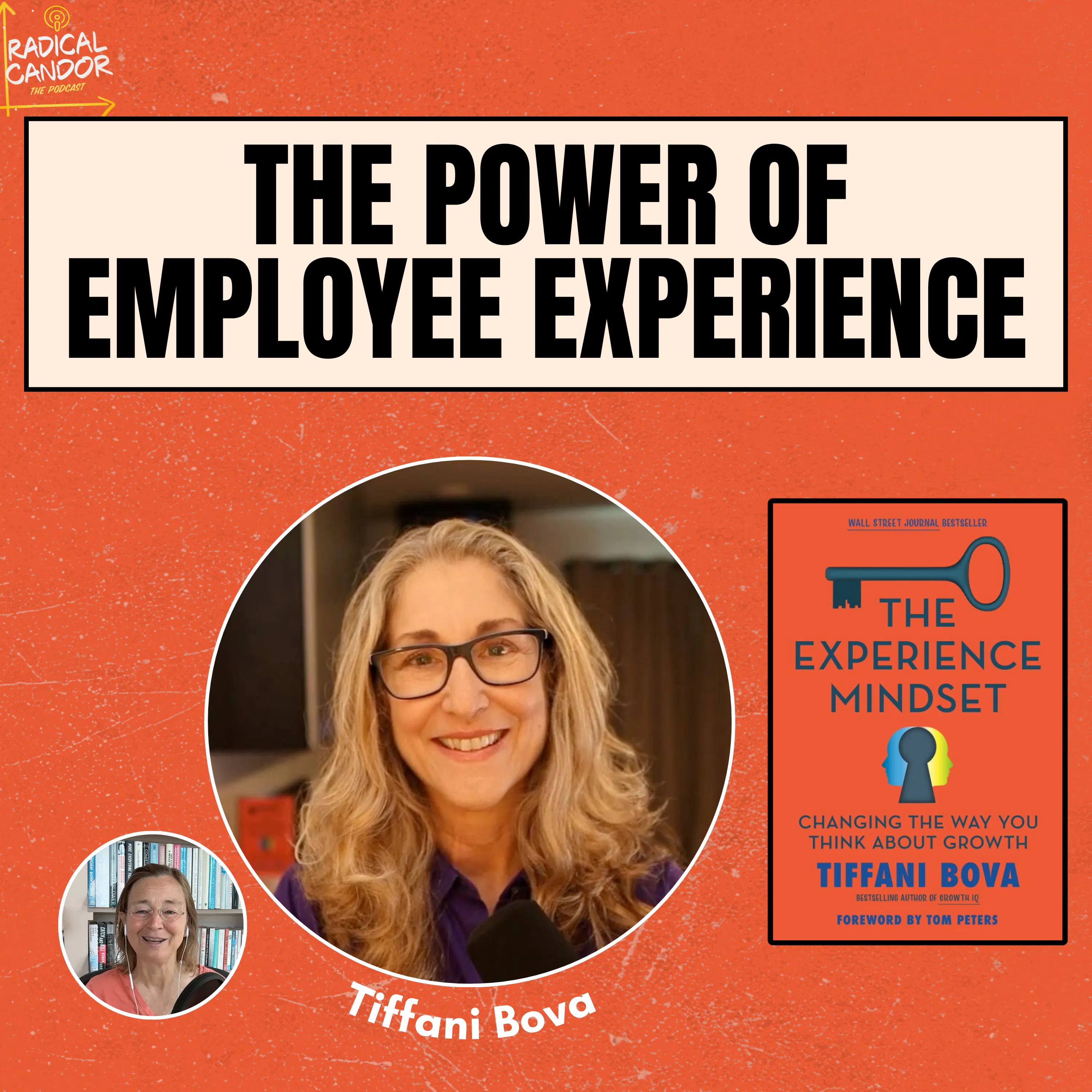 Fixing the Employee Experience (with Tiffani Bova) | While the podcast team is taking a Radical Sabbatical, Kim is interviewing authors of the books that have had a big impact on her in the past two years. Today, employees working in organizations both large and small are faced with incredible pressure to integrate AI into their workflows both to save costs and to do more. But many of those same employees express fears, “am I just training robots to put me out of a job?!” While it can be tempting for leaders in the C-suites to use AI to “finally get the upper hand on these whiny/needy/entitled employees!”, they risk damaging their core mission, specifically providing value to their customers. In fairness, those same leaders in the C-suite are rightly under pressure to integrate these new tools or risk getting wiped out by more nimble competition. So, what’s the best way to go about this? In this episode, Kim Scott speaks with Tiffani Bova about her latest book The Experience Mindset. In this conversation, they explore the critical relationship between employee experience and customer experience, emphasizing the importance of self-reflection, effective feedback mechanisms, and the necessity of training employees. The discussion also highlights the disconnect between executives and employees regarding training and feedback, illustrated through real-world examples like the 'Undercover Boss' show. Ultimately, the conversation underscores the need for organizations to prioritize employee engagement and actionable feedback to foster a positive workplace culture and drive business success. They discuss specifics such as the importance of addressing workplace irritations, the need for effective management training, and the significance of streamlining processes to enhance productivity. Tiffani especially stresses the critical role of office culture in fostering open communication and the necessity of training managers to improve employee satisfaction. The discussion also highlights the impact of automation and technology in optimizing processes and the importance of aligning incentives to encourage growth and innovation. They explore the intersection of technology and human experience, particularly focusing on the role of AI in the workplace. They discuss the importance of understanding the human element in technology adoption, the balance between tech and human interaction, and the critical role of company culture in driving business success. The conversation highlights real-world examples of AI implementation, the challenges of technology overload, and the necessity of fostering a cohesive culture that aligns with organizational values. Guest Background: As both a practitioner and academic Tiffani Bova offers a unique perspective and has helped lead the tech industry through several evolutions over her nearly 30-year career as Salesforce’s former Growth and Innovation Evangelist, and previously as a Research Fellow at Gartner and a sales, marketing and customer service executive for start-ups and Fortune 500 companies. She is the author of two Wall Street Journal bestsellers: GrowthIQ and The Experience Mindset. At The Futurum Group, she runs the research and strategy organization, while working closely with the entire leadership team to develop and scale its data and intelligence platform and insights for its clients. She also leads the team’s efforts within the technology and telecom channels, demonstrating the power and performance of connected go-to-market strategies and alliances. While at Gartner, her forward-looking insights and guidance helped some of the largest technology companies in the world including Microsoft, Cisco, Salesforce, Hewlett-Packard, IBM, Oracle, SAP, AT&T, Dell, Amazon-AWS, expand their market share and grow their revenues. She was a trusted advisor to multiple senior executives who were responsible for shifting from on-premise to as-a-service business models resulting in new billion-dollar divisions. In the late 90’s and early 2000s she was a pioneer of cloud computing, she previously led direct and indirect sales, marketing and customer service for two of the largest web-based start-ups in the US and spearheaded a newly formed division of a Fortune 500 company to $300 million in revenue over two and a half years. Tiffani has been featured in Harvard Business Review, Fortune, Fast Company, Bloomberg, MSNBC-TV, Yahoo Finance, INC and Forbes. She is also the host of the podcast What’s Next! with Tiffani Bova. More info here: https://www.tiffanibova.com/ [links for YouTube description] (Bio) https://www.tiffanibova.com/biography/ (book: The Experience Mindset) https://www.tiffanibova.com/the-experience-mindset/ (how to contact) https://www.tiffanibova.com CHAPTERS (00:44) Introduction to the Experience Mindset (02:19) Self-Reflection and Critical Feedback (04:56) The Importance of Employee Experience (05:39) Understanding Employee Feedback (07:23) The Undercover Boss Example (11:25) The Value of Training Employees (15:29) Disconnect Between Executives and Employees (17:30) Real-World Application of Employee Feedback (20:05) Identifying and Fixing Workplace Irritations (24:31) The Importance of Management Training (27:58) Understanding Processes and Their Impact (36:36) Streamlining Processes for Productivity (41:51) Understanding the Human Element in Technology (44:33) AI: Triumphs and Disasters in Implementation (47:32) The Balance of Technology and Human Experience (50:17) Creating a Cohesive Company Culture (55:20) The Impact of Culture on Business Success Connect with the Radical Candor team: Website LinkedIn YouTube Learn more about your ad choices. Visit megaphone.fm/adchoices | 59m 35s | ||||||
| 9/16/26 |  The Science Behind High-Performing Teams (with Ron Friedman) | While the podcast team is taking a Radical Sabbatical, Kim is interviewing authors whose books have had a big impact on her over the past two years. In this episode, Kim Scott speaks with Ron Friedman, PhD. Ron has written extensively about the sciences of building high-performing teams. Ron’s latest book is Superteams: The Science and Secrets of High-Performing Teams. They discuss the importance of the creative process, the role of restoration in productivity, and the key strengths that distinguish super teams from average teams. The conversation delves into effective meeting strategies, communication norms, and the significance of laughter in fostering team cohesion. Ultimately, they emphasize the need for customized approaches to team dynamics and the value of building supportive relationships within teams. They also explore the dynamics of effective teamwork, the importance of maintaining focus in a distracted world, and the role of hobbies in enhancing productivity. They discuss the attributes of great teammates, the significance of productive disagreement, and the necessity of effective feedback for continuous improvement. The dialogue emphasizes that super teams thrive on collaboration, shared goals, and a culture of open communication. Guest Background: Ron Friedman, PhD, is an award-winning psychologist who helps leaders build high-performing teams. He is the bestselling author of The Best Place to Work and Decoding Greatness, and the founder of Superteams, Inc., where he delivers keynotes, workshops, and executive advisory to senior leaders around the world. An expert on human motivation, Friedman has served on the faculties of the University of Rochester, Nazareth College, and Hobart and William Smith Colleges. He contributes regularly to Harvard Business Review, and his work has been featured in The New York Times, Financial Times, Bloomberg, NPR, CBS, FOX, NBC, Fast Company, The Washington Post, Forbes, and Inc. To learn more about his work, visit SuperteamsInc.com. CHAPTERS (00:41) Introduction to Super Teams (01:45) The Creative Process and Incubation (04:12) Restoration and Productivity (06:27) Research Behind Super Teams (07:50) Key Strengths of Super Teams (09:00) Meetings: The Double-Edged Sword (11:24) Effective Meeting Strategies (12:51) Customizing Team Dynamics (15:06) Communication Norms and Email Management (18:05) The Role of Laughter in Teams (20:57) Building Relationships Through Support (23:00) Navigating Humor and Inclusivity (26:52) Time Affluence and Productivity Strategies (30:08) Staying Focused in a Distracted World (32:51) The Power of Hobbies and Side Hustles (36:10) Attributes of Great Teammates (39:10) Building Effective Teams (41:40) The Importance of Productive Disagreement (45:02) Mastering Feedback for Improvement Connect with the Radical Candor team: Website LinkedIn YouTube Keywords Super Teams, productivity, creative process, meetings, team dynamics, communication, laughter, leadership, time management, workplace culture focus, hobbies, teamwork, feedback, productivity, super teams, attributes, disagreement, communication, leadership Learn more about your ad choices. Visit megaphone.fm/adchoices | 54m 17s | ||||||
| 9/9/26 | leadershipcognitive load+4 | Caroline Webb | Leadership IntelligenceHow To Have A Good Day | — | leadershipcognitive load+5 | — | 52m 52s | ||
| 9/1/26 | environmentfeedback+4 | Angela Duckworth | University of PennsylvaniaPenn-Wharton Behavior Change for Good Initiative+2 | — | Angela DuckworthSituated+7 | — | 52m 11s | ||
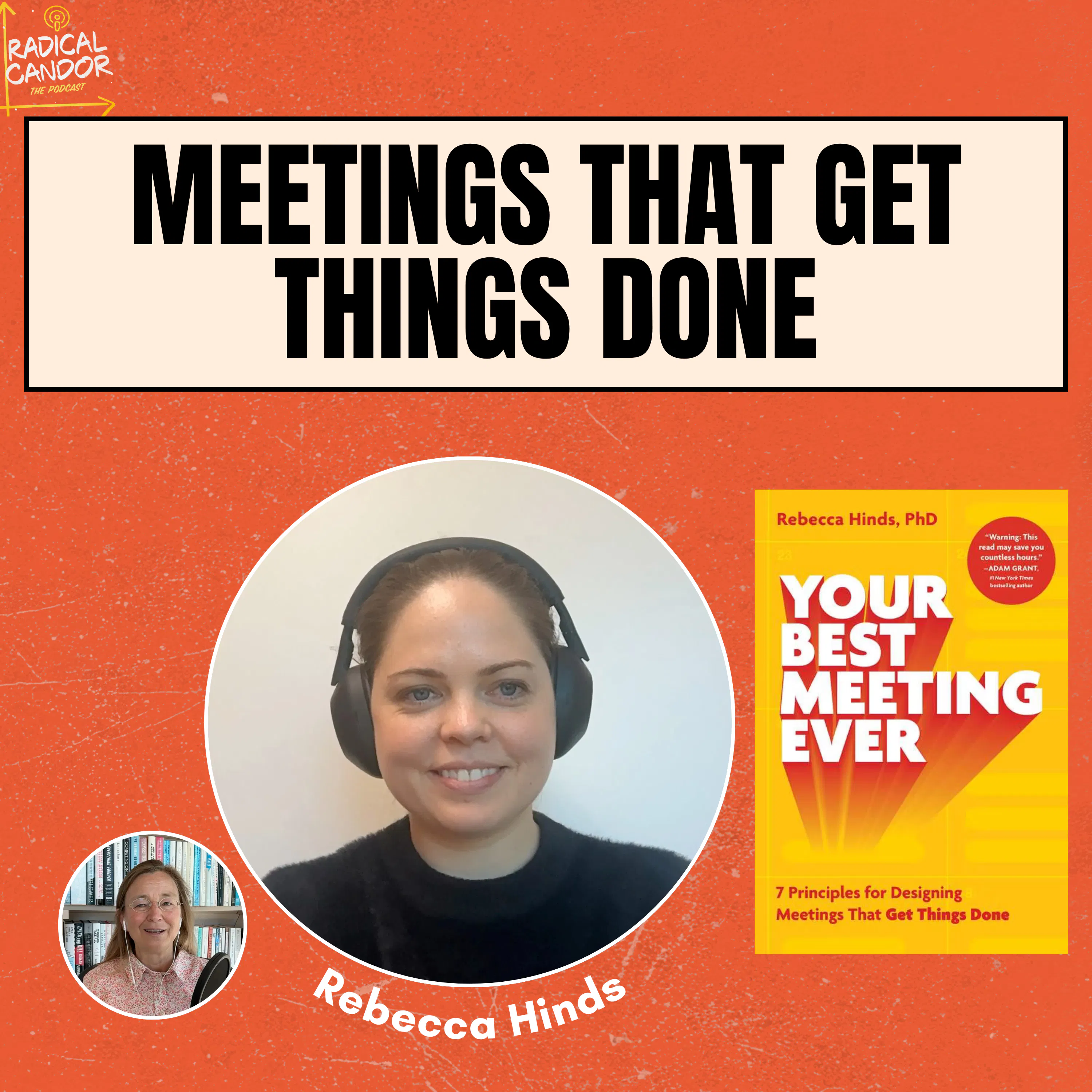
| 8/18/26 | meetingsorganizational behavior+4 | Rebecca Hinds | Your Best Meeting Ever: 7 Principles for Designing Meetings That Get Things Done | — | meetingsproductivity+5 | — | 48m 55s | ||
| 8/4/26 | leadershipcorruption+4 | Rob Lalka | FacebookGoogle+3 | — | leadershipcorruption+6 | — | 45m 26s | ||
| 7/15/26 | leadershiphigh-performance teams+4 | Liz Wiseman | MultipliersThe Multiplier Effect | — | leadershiphigh-performance teams+5 | — | 1h 05m 17s | ||
| 7/7/26 | parenting skillsteam dynamics+4 | Dr. Becky Kennedy | New York TimesGood Inside | — | parentingleadership+6 | — | 56m 03s | ||
| 6/10/26 | racismpublic goods+4 | Heather McGhee | New York TimesThe Sum of Us | United StatesPennsylvania | racismpublic swimming pools+5 | — | 49m 10s | ||
| 6/3/26 | money launderingfinancial crime+4 | Oliver Bullough | Butler to the World: How Britain Helps the World's Worst People Launder Money, Commit Crimes, and Get Away with AnythingMoneyland: Why Thieves and Crooks Now Rule the World and How To Take It Back+1 | UkraineLondon | money launderingfinancial crime+5 | — | 1h 00m 10s | ||
| 5/27/26 | neoliberalismeconomic policy+3 | Gary Gerstle | The Rise and Fall of the Neoliberal Order | — | neoliberal ordereconomic policy+3 | — | 1h 02m 30s | ||
| 5/20/26 | anarchismself-organization+5 | Steven Johnson | Notebook LMThe Infernal Machine: A True Story of Dynamite, Terror, and the Rise of the Modern Detective | SwitzerlandJura mountains | anarchismself-organization+6 | — | 45m 42s | ||
| 5/13/26 | identitycommunity+4 | Luke Burgis | The One and the Ninety-NineWanting: The Power of Mimetic Desire in Everyday Life | Washington, D.C.Michigan | identitycommunity+6 | — | 56m 33s | ||
| 5/6/26 | team buildingleadership+4 | Daniel Coyle | Navy SEALsMicrosoft+4 | Anchorage, AlaskaCleveland Heights, Ohio+1 | team dynamicsleadership styles+3 | — | 46m 26s | ||
| 4/29/26 | company cultureleadership+3 | Eric Ries | Lean StartupNew York Times+1 | — | Eric RiesIncorruptible+5 | — | 1h 00m 08s | ||
| 4/22/26 | career adviceAI anxiety+3 | Tom Rath | What’s The Point | — | careerpassion+5 | — | 46m 41s | ||
| 4/15/26 | office culturetoxic work environments+4 | Rob Copeland | New York TimesBridgewater Associates+1 | — | office culturetoxic leadership+6 | — | 43m 14s | ||
| 4/8/26 | wealth inequalitypolitical power+3 | John Witt | Yale Law SchoolThe Garland Fund+2 | Connecticut | wealth inequalitypolitical power+3 | — | 45m 14s | ||
| 4/1/26 | wealth concentrationAmerican politics+4 | David Gibbs | University of ArizonaRevolt of the Rich | United StatesIran | wealth concentrationclass divide+6 | — | 48m 22s | ||
| 3/25/26 | digital privacycommunication tools+3 | Guy Kawasaki | SignalEverybody Has Something to Hide | — | privacySignal+5 | — | 23m 17s | ||
| 3/18/26 | tech industryemployee advocacy+3 | Lisa ConnAnne Wootton | MetaApple+3 | — | tech employeesorganize for change+5 | — | 40m 59s | ||
| 3/11/26 | authenticityworkplace communication+4 | Dr. Tomas Chamorro-Premuzic | Russell Reynolds AssociatesUniversity College London+2 | — | authenticity trapsworkplace+5 | — | 1h 03m 53s | ||
| 3/4/26 | motivationbeliefs+4 | Nir Eyal | HookedIndistractable+1 | — | feedbackhabits+5 | — | 48m 06s | ||
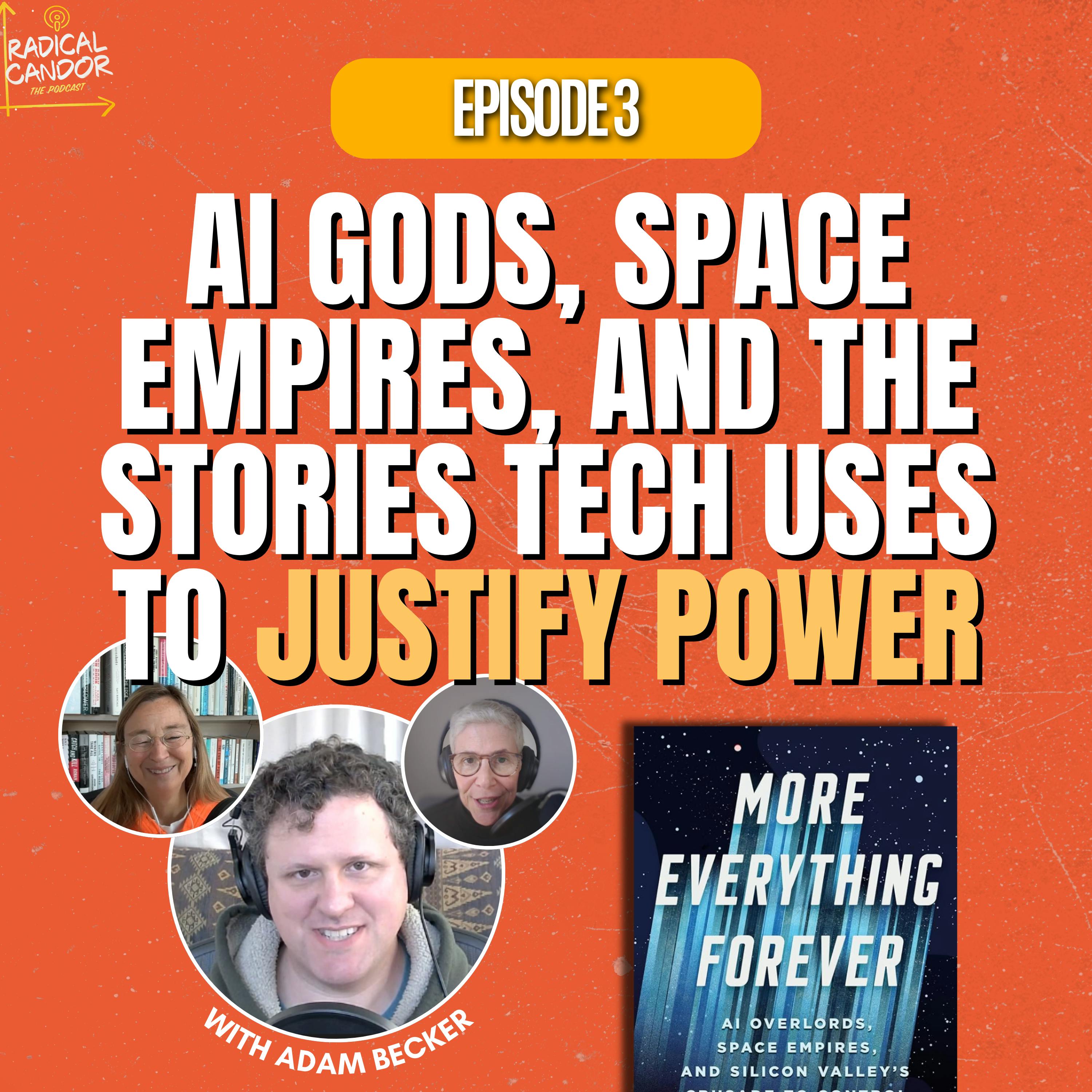
| 2/18/26 | AIscience fiction+4 | Adam Becker | More Everything Forever | — | AI godsspace colonization+5 | — | 1h 05m 21s | ||
| 2/11/26 | leadershipcoaching+3 | Muriel Wilkins | Harvard Business ReviewLeadership Unblocked+1 | — | leadershiphidden beliefs+3 | — | 54m 58s | ||











Showing 26 of 228
Pitch Fit is a Pro feature
See how bookable this show is for guests, which brands already advertise, the per-episode ad value, and the best-fit guest and sponsor profile. The numbers are blurred on the free plan.
How readily this show books outside guests like you.
How proven this show is for host-read sponsorships.
For Guests
ProFor Advertisers
ProUpgrade to Pro to unlock guest cadence, sponsor categories, fit scores, and per-episode ad value for this show.
Similar Audience Demographics
Podcasts that attract a similar listener profile




Chart history for Radical Candor: Communication at Work
Peaked at #7 in BE, top 10 in 2 of 34 tracked markets, currently #7 in BE.
| Market | Genre | Peak | Current | Trend |
|---|---|---|---|---|
| BE | — | #7 | #7 | — |
| United Kingdom | — | #8 | #8 | — |
| Canada | — | #16 | #16 | — |
| United States | — | #29 | #29 | — |
| IS | — | #29 | #29 | — |
| CO | — | #32 | #32 | — |
| MY | — | #37 | #37 | — |
| AE | — | #50 | #50 | — |
| PH | — | #63 | #63 | — |
| AR | — | #65 | #65 | — |
| South Africa | — | #70 | #70 | — |
| New Zealand | — | #72 | #72 | — |
| Sweden | — | #76 | #76 | — |
| HU | — | #77 | #77 | — |
| PE | — | #78 | #78 | — |
| BE | — | #86 | #86 | — |
| CL | — | #87 | #87 | — |
| India | — | #96 | #96 | — |
| Spain | — | #115 | #115 | — |
| United Kingdom | — | #123 | #123 | — |
Chart Positions
34 placements across 32 markets.
Chart Positions
34 placements across 32 markets.