Insights from recent episode analysis
Audience Interest
Podcast Focus
Publishing Consistency
Platform Reach
Insights are generated by CastFox AI using publicly available data, episode content, and proprietary models.
Most discussed topics
Brands & references
Est. Listeners
Insufficient chart data. Estimates will improve as the show charts.
- Per-Episode Audience
Est. listeners per new episode within ~30 days
N/A🎙 ~2x weekly·167 episodes·Last published 3d ago - Monthly Reach
Unique listeners across all episodes (30 days)
N/A - Active Followers
Loyal subscribers who consistently listen
N/A
Market Insights
Platform Distribution
Reach across major podcast platforms, updated hourly
Total Followers
—
Total Plays
—
Total Reviews
—
* Data sourced directly from platform APIs and aggregated hourly across all major podcast directories.
On the show
From 17 epsHost
Recent guests
Recent episodes
Joseph Robertson: bringing Reform UK to the top of British politics
Jun 22, 2026
20m 01s
Zineb Riboua: Rising Tides of the Third World
Jun 12, 2026
20m 03s
Dan Hess: the end of Asians and humanity going to the retirement home
Jun 6, 2026
20m 03s
Brianna Wu: the case for liberalism
May 30, 2026
20m 01s
Leonidas-Romanos Davranoglou: the last Hellenes and the children of the Yamnaya
May 23, 2026
19m 58s
Social Links & Contact
Official channels & resources
Official Website
Login
RSS Feed
Login
Resolving iTunes ID\u2026 if this persists, the podcast may not be indexed on Apple Podcasts.
| Date | Episode | Topics | Guests | Brands | Places | Keywords | Sponsor | Length | |
|---|---|---|---|---|---|---|---|---|---|
| 6/22/26 | ![]() Joseph Robertson: bringing Reform UK to the top of British politics | This is a free preview of a paid episode. To hear more, visit www.razibkhan.comThe UK is now in political turmoil, as Keir Starmer has announced his resignation. The next British election is still three years away, but it is hotly anticipated because Labour is going to faceoff against three parties of the Right: the Tories (also known as the Conservaties), Reform UK and Restore Britain. Reform, led by Nigel Farage and stocked with defections from the Tories, has a good chance to win in 2029. On today’s episode, Razib talks to Joseph Robertson about the British politican scene. Robertson is Director at Touchpoint Strategy and CPAC Britain, wrote for Epoch Times and has been a long-time conservative political consultant in the UK. Currently, he is aligned with Reform UK.Razib and Robertson discuss the political and economic challenges facing the UK, particularly since the 2019 election and Brexit. Robertson highlights the shift in political allegiances, with the working class moving from Labour to the Tories, and the subsequent rise of Nigel Farage’s Reform UK party. They address issues like economic stagnation, high energy costs, and the impact of net-zero policies. Robertson criticizes the inherited socialist Fabian agenda of Labour and the lack of integration among new immigrants. They also touch on the rise of radical Islam and the need for stronger national identity and sovereignty. The conversation concludes with the announcement of CPAC UK, aiming to unite conservative movements globally. | 20m 01s | ||||||
| 6/12/26 | ![]() Zineb Riboua: Rising Tides of the Third World✨ | Third Worldismdecolonization+4 | Zineb Riboua | Hudson InstituteWall Street Journal+5 | Middle EastSahel+4 | Third Worldismdecolonization+6 | — | 20m 03s | |
| 6/6/26 | ![]() Dan Hess: the end of Asians and humanity going to the retirement home✨ | fertility crisisurban density+3 | Dan Hess | More Births | East AsiaDC | fertility crisisurban density+3 | — | 20m 03s | |
| 5/30/26 | ![]() Brianna Wu: the case for liberalism✨ | politicsliberalism+3 | Brianna Wu | Giant SpacekatRebellion PAC+1 | Hattiesburg, MississippiMassachusetts | Brianna Wuliberalism+5 | — | 20m 01s | |
| 5/23/26 | ![]() Leonidas-Romanos Davranoglou: the last Hellenes and the children of the Yamnaya✨ | geneticshistory+4 | Leonidas-Romanos Davranoglou | Imperial College LondonUniversity of Oxford+5 | GreeceMani peninsula+2 | geneticsHellenes+6 | — | 19m 58s | |
| 5/15/26 | ![]() Nikolai Yakovenko: 4 years into the age of AI✨ | AI advancementslarge-language models+4 | Nikolai Yakovenko | GoogleTwitter+7 | China | AIlarge-language models+7 | — | 1h 20m 00s | |
| 5/8/26 | ![]() Chris Rufo: the California project✨ | California governancepolitical analysis+3 | Christopher Rufo | Manhattan Institute for Policy ResearchCity Journal+3 | CaliforniaTexas+1 | CaliforniaGavin Newsom+3 | — | 20m 02s | |
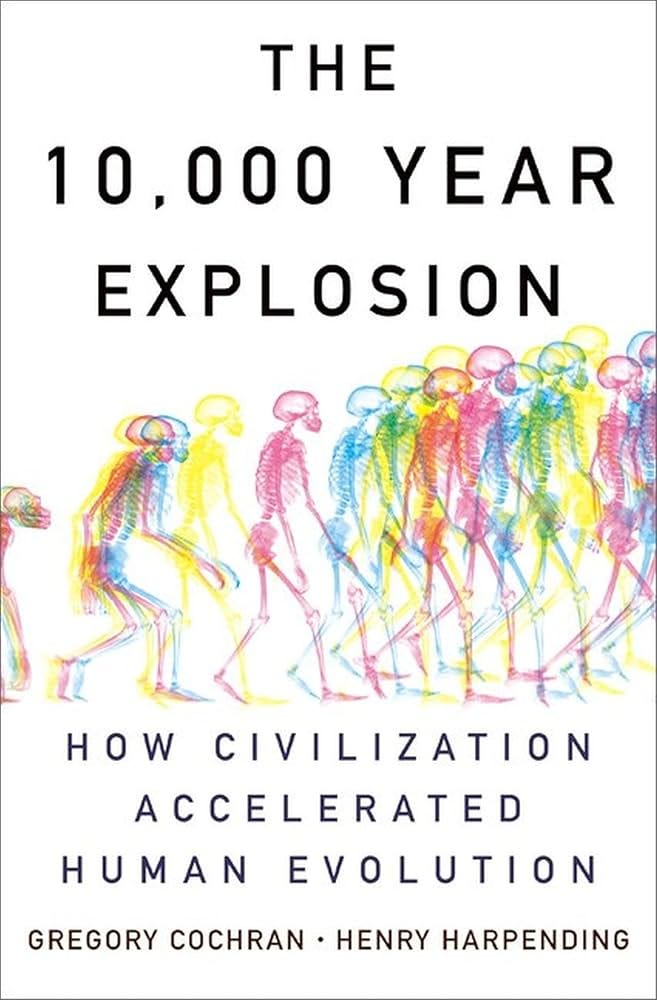
| 5/1/26 | ![]() Gregory Cochran: 15 years after The 10,000 Year Explosion✨ | human evolutionpopulation genetics+5 | Gregory Cochran | West HunterThe 10,000 Year Explosion | — | human evolutionpopulation genetics+6 | — | 30m 01s | |
| 4/25/26 | ![]() Russ Greene: the rise of Total Boomer Luxury Communism✨ | Total Boomer Luxury CommunismSocial Security+5 | Russ Greene | Prime Mover InstituteStand Together Trust+1 | United StatesGeorgetown University | Total Boomer Luxury CommunismRuss Greene+5 | — | 47m 25s | |
| 4/17/26 | ![]() 10,000 years of selection (in Western Eurasia)✨ | ancient DNAdirectional selection+3 | — | NatureAncient DNA reveals pervasive directional selection across West Eurasia | — | ancient DNAselection+3 | — | 29m 59s | |
Want analysis for the episodes below?Free for Pro Submit a request, we'll have your selected episodes analyzed within an hour. Free, at no cost to you, for Pro users. | |||||||||
| 4/10/26 | ![]() Matthew Schmitz: Christianity as identity, New Atheism and the Texas of Lord Hanuman✨ | Christian identity politicsNew Atheism+3 | Matthew Schmitz | First ThingsCompact+5 | O’Neill, Nebraska | Christianityidentity politics+5 | — | 15m 16s | |
| 4/2/26 | ![]() Megan McArdle: the follies of populism, impending fiscal crisis, and the whirlwind of AI✨ | populismfiscal crisis+4 | Megan McArdle | Washington PostThe Economist+5 | New York Cityblue states+2 | populismfiscal crisis+6 | — | 14m 56s | |
| 3/27/26 | ![]() Monologue: Race - genetics, history and sociology✨ | racegenetics+4 | — | A Genealogical Interpretation of Principal Components AnalysisHuman genetic diversity: Lewontin’s fallacy+1 | — | racegenetics+4 | — | 14m 59s | |
| 3/23/26 | ![]() Monologue: Out-of-Africa is not dead but hybridization lives✨ | Out-of-Africa theoryNeanderthal origins+4 | — | www.razibkhan.comLevallois tools | — | Out-of-AfricaNeanderthals+5 | — | 15m 01s | |
| 3/14/26 | ![]() Chris Bradley: better science for longevity✨ | genome integritylongevity+3 | Chris Bradley | Matter BioRutgers+1 | — | genome integritylongevity+5 | — | 29m 58s | |
| 3/6/26 | ![]() Chris Masterjohn: COVID-19 to mitochondrial health, communicating and applying "the science"✨ | COVID-19mitochondrial health+4 | Chris Masterjohn | MitomeUniversity of Connecticut+2 | — | mitochondrial biologynutritional sciences+4 | — | 29m 57s | |
| 3/1/26 | ![]() Mike White: academia and genomics in the 21st century✨ | genomicsacademia+4 | Mike White | Washington University in St. LouisSchool of Medicine+1 | — | geneticsbiochemistry+5 | — | 20m 03s | |
| 2/20/26 | ![]() Aaron Renn: Heartland urbanism and leaving Left Behind behind✨ | urbanismconsulting+3 | Aaron Renn | The American ReformerManhattan Institute+3 | — | urban policymanagement consulting+3 | — | 29m 59s | |
| 2/13/26 | ![]() Daniel Tabin: ancient DNA, the good, bad and ugly | This is a free preview of a paid episode. To hear more, visit www.razibkhan.comOn this episode of Unsupervised Learning Razib talks to Daniel Tabin, a 5th-year Ph.D. student in David Reich’s lab in the Department of Human Evolutionary Biology. His research focuses on using ancient and modern DNA to answer questions about human history. Tabin completed a degree in Computer Science and Math and Master’s in Computer Science from Rensselaer Polytechnic Institute. He Ph.D. project involves the population genetic history of Central and East Asia.First, Razib and Tabin discuss a recent paper he co-authored that looks at problematic results in the paleogenetic literature due to contamination and DNA damage. Tabin reviews all the processes and analyses that paleogeneticists go through to validate that the ancient DNA data they have is truly ancient, rather than recent contamination, from wet-lab precautions to downstream analysis. Then they dig into the empirical results over the last 15 years from the field of ancient DNA, from what we know (or don’t) of the out-of-Africa bottleneck, early modern humans in Asia and how we think about persistent mysteries like “Population Y” in the New World (Population Y is more closely related to Papuans and Andamanese than Northeast Asians). | 25m 02s | ||||||
| 2/4/26 | ![]() Joe Henrich and Cosimo Posth: the weirdest people in the world and the genetics of Ice Age Europe | Between 2017 and 2020 Razib co-hosted the podcast The Insight. A year ago it went offline, but now the archives are back! On this episode of Unsupervised Learning, Razib re-posts two important episodes from The Insight. First, a conversation with evolutionary anthropologist Joe Henrich about his 2020 book The WEIRDest People in the World: How the West Became Psychologically Peculiar and Particularly Prosperous. Second, starting at 51 minutes and 45 seconds, Razib interviews Cosimo Posth about a paper on which he was co-author, The genetic history of Ice Age Europe.With Henrich Razib initially discusses the emergent field of cultural evolution, and his earlier book The Secret of Our Success: How culture is driving human evolution, domesticating our species, and making us smart. Then, they discuss the confluence of history, anthropology and economics that led him to propose, along with his colleagues, the thesis that psychological peculiarities of medieval Europeans explains their dynamic success down into the modern period, leading to the emergence of “Western, Educated, Industrialized, Rich, and Democratic societies.”Changing tacks, Razib’s conversation with Posth surveys the field as it was in the late 2010s, and in particular focuses on what we had learned about the genetics of Upper Paleolithic Europeans. This refers particularly to the period between 45,000 and 11,700 years before the present, the end of the last Ice Age, when various big game hunting societies dominated the continent after the extinction of Neanderthals. This is a public episode. If you'd like to discuss this with other subscribers or get access to bonus episodes, visit www.razibkhan.com/subscribe | 1h 34m 18s | ||||||
| 1/30/26 | ![]() Peter Nimitz: the story of the Slavs | This is a free preview of a paid episode. To hear more, visit www.razibkhan.comOn this episode of Unsupervised Learning Razib talks to Peter Nimitz about the rise of the Slavs. His Substack, titled Nemets, explores world history through the lenses of archaeology, paleogenetics, and historical processes. His writing focuses on "deep history," such as the Bronze Age Collapse and the migration of Indo-European peoples, while connecting these ancient shifts to broader patterns of civilizational rise and fall. Nimitz often integrates technical data from genetics and climate science to challenge traditional narratives about nomadic tribes and early state formations across Eurasia. Beyond antiquity, the newsletter also touches on modern geopolitical developments and regional studies, ranging from the war in Ukraine to the cultural history of the Americas.Razib and Nimitz explore the thousands of years of Slavic history and prehistory, from their fragmentary mentions in antiquity, to their explosion in the Middle Ages. Nimitz discusses the many archaeological cultures in northeastern Europe that might be candidates for the proto-Slavs as they emerged from the Corded Ware Culture during the Bronze Age, as well as the historical, cultural and genetic effects of the Slavic migrations that impacted Christian Europe after 600 AD. He also addresses the role of Slavs as one of Europe’s preeminent ethnolinguistic configurations in early modern Europe. | 29m 59s | ||||||
| 1/23/26 | ![]() Jesse Arm: Gen Z Republicans and their views | This is a free preview of a paid episode. To hear more, visit www.razibkhan.comOn this episode Razib talks to Jesse Arm, VP of external affairs at the Manhattan Institute. His writing and commentary have appeared in the New York Times, Wall Street Journal, The Atlantic, New York Post, Fox News, City Journal and Jerusalem Post. Arm graduated with honors from the University of Michigan, where he majored in international political economy, and studied language and international affairs at Tel Aviv University. He has also worked for Senator Tom Cotton and Representative Dan Benishek, and the analytics arm of American Continental Group, a major lobbying firm.Razib and Arm discuss the perceptions and attitudes of Gen Z Republicans, focusing on a group of 18-29-year-olds in Nashville, TN. Arm notes that while Gen Z feels economic anxiety, they are also entrepreneurial and comfortable with the world of social media. Gen Z Republicans are religious, like previous generations, but less likely to be married or have long-term partners at the same age as earlier cohorts. They express a desire for politics to be entertaining, similar to reality TV. The conversation also touches on the influence of social media on their views, the power of influencers like Nick Fuentes, and the potential for future political figures to emerge from the creator class. Arm also addresses the impact of intergenerational wealth transfer on political attitudes. | 15m 02s | ||||||
| 1/16/26 | ![]() Davide Piffer: how Europeans became white | This is a free preview of a paid episode. To hear more, visit www.razibkhan.comOn this episode of Unsupervised Learning, Razib talks to Davide Piffer, whose Substack examines genetic differences between populations. Piffer has been publishing on human genetic variation for a decade, and recently started a Substack, Piffer Pilfer, exploring similar issues in detail over a series of posts.Razib asks Piffer about the difficulties in analyzing polygenic scores from quantitative traits in ancient DNA samples. How does he do in technical terms, from genome quality to imputation to ancient populations from modern ones? Then, they discuss some of Piffer’s findings, in particular, his work on pigmentation. Piffer talks about how he discovered that modern European pigmentation, and in particular, light complexion, is the product of both admixture from different populations with different characteristics and natural selection over the millennia. Piffer talks about how he discovered that selection for lighter pigmentation continued into the Iron Age. | 21m 11s | ||||||
| 1/9/26 | ![]() Aneil Mallavarapu: why machine intelligence will never be conscious | This is a free preview of a paid episode. To hear more, visit www.razibkhan.comToday Razib talks to Aneil Mallavarapu, a scientist and technology leader based in Austin, Texas, whose career bridges the fields of biochemistry, systems biology, and software engineering. He earned his doctorate in Biochemistry and Cell Biology from the University of California, and has held academic positions at Harvard Medical School, where he contributed to the Department of Systems Biology and developed the "Little b" programming language. Mallavarapu has transitioned from academic research into the tech and venture capital sectors, co-founding ventures such as Precise.ly and DeepDialog, and currently serving as a Managing Partner at Humain Ventures. He remains active in the scientific community through local initiatives like the Austin Science Network.Most of the conversation centers around Mallavarapu’s arguments outlined in his Substack The Case Against Conscious AI - Why AI consciousness is inconsistent with physics. The core of his argument rests on the "Simultaneity Problem" and the "Hard Problem of Physics,” which involve non-locality and the memorylessness of artificial intelligence phenomena. Though Mallavarapu believes that artificial intelligence holds great promise, and perhaps even “artificial general intelligence” (AGI) is feasible, he argues that this is a distinct issue from consciousness, which is a property of human minds. Razib also brings up the inverse case: could it be that many organisms that are not particular intelligence, also have consciousness? What does that imply for ethics of practices like eating meat? | 20m 02s | ||||||
| 1/4/26 | ![]() Richard Hanania: his break with the Right and the rise of kakistocracy | This is a free preview of a paid episode. To hear more, visit www.razibkhan.comOn this episode Razib, talks to Richard Hanania, a returning guest to the podcast. Hanania holds a Ph.D. from UCLA, a J.D. from the University of Chicago, and an undergraduate degree from CU Boulder in linguistics. He is a regular contributor to the Boston Globe and UnHerd, and has his own newsletter. Hanania is also the author of The Origins of Woke: Civil Rights Law, Corporate America, and the Triumph of Identity Politics.Razib and Hanania talk about his new book Kakistocracy: Why Populism Ends in Disaster, and his developing views on populism and immigration. They highlight the rise of populism on the Right, the rejection of cognitive elitism, and the impact of social media on political discourse. Hanania criticizes the far-right’s nativism, particularly against Indian immigrants, and the rise of anti-Semitism, both as a feature of low-IQ populism. They also touch on foreign policy, noting the failures of authoritarian regimes like Russia and China, and the potential for democratic systems to prevail. Hanania brings up cultural differences, particularly in Asia, and the impact of personality traits on success. They talk about the Big Five personality traits, and note that disagreeableness and low neuroticism are linked to professional success, especially in men. Razib also brings up the 2017 James Damore Google memo controversy, highlighting the cultural and political implications down to the present. Hanania reflects on his experiences with cancel culture and the evolving acceptance of diverse viewpoints. They also discuss the role of Substack in promoting free speech and the challenges faced by platforms in maintaining this principle. | 19m 59s | ||||||
Showing 25 of 177
Pitch Fit is a Pro feature
See how bookable this show is for guests, which brands already advertise, the per-episode ad value, and the best-fit guest and sponsor profile. The numbers are blurred on the free plan.
How readily this show books outside guests like you.
How proven this show is for host-read sponsorships.
For Guests
ProFor Advertisers
ProUpgrade to Pro to unlock guest cadence, sponsor categories, fit scores, and per-episode ad value for this show.