

Insights from recent episode analysis
Audience Interest
Podcast Focus
Publishing Consistency
Platform Reach
Insights are generated by CastFox AI using publicly available data, episode content, and proprietary models.
Most discussed topics
Brands & references
Est. Listeners
Insufficient chart data. Estimates will improve as the show charts.
- Per-Episode Audience
Est. listeners per new episode within ~30 days
N/A🎙 ~2x weekly·64 episodes·Last published 1w ago - Monthly Reach
Unique listeners across all episodes (30 days)
N/A - Active Followers
Loyal subscribers who consistently listen
N/A
Market Insights
Platform Distribution
Reach across major podcast platforms, updated hourly
Total Followers
—
Total Plays
—
Total Reviews
—
* Data sourced directly from platform APIs and aggregated hourly across all major podcast directories.
On the show
From 11 epsHost
Recent guests
Recent episodes
Building Trust as a School Leader: A Conversation with Dr. Jen Schwanke
Jun 12, 2026
30m 50s
Dr. Kelly Cartwright: Executive Skills and Reading Comprehension
Apr 3, 2026
41m 30s
What School Leaders Need to Know About the Science of Reading
Mar 20, 2026
44m 09s
Penny Kittle and Micro Mentor Texts
Jan 10, 2026
33m 22s
Video Archive: Penny Kittle and Micro Mentor Texts
Jan 10, 2026
8m 50s
Social Links & Contact
Official channels & resources
Official Website
Login
RSS Feed
Login
| Date | Episode | Topics | Guests | Brands | Places | Keywords | Sponsor | Length | |
|---|---|---|---|---|---|---|---|---|---|
| 6/12/26 |  Building Trust as a School Leader: A Conversation with Dr. Jen Schwanke✨ | trust in leadershipschool administration+3 | Dr. Jen Schwanke | ASCDPrincipal Matters Podcast+1 | — | trustschool leadership+4 | — | 30m 50s | |
| 4/3/26 | 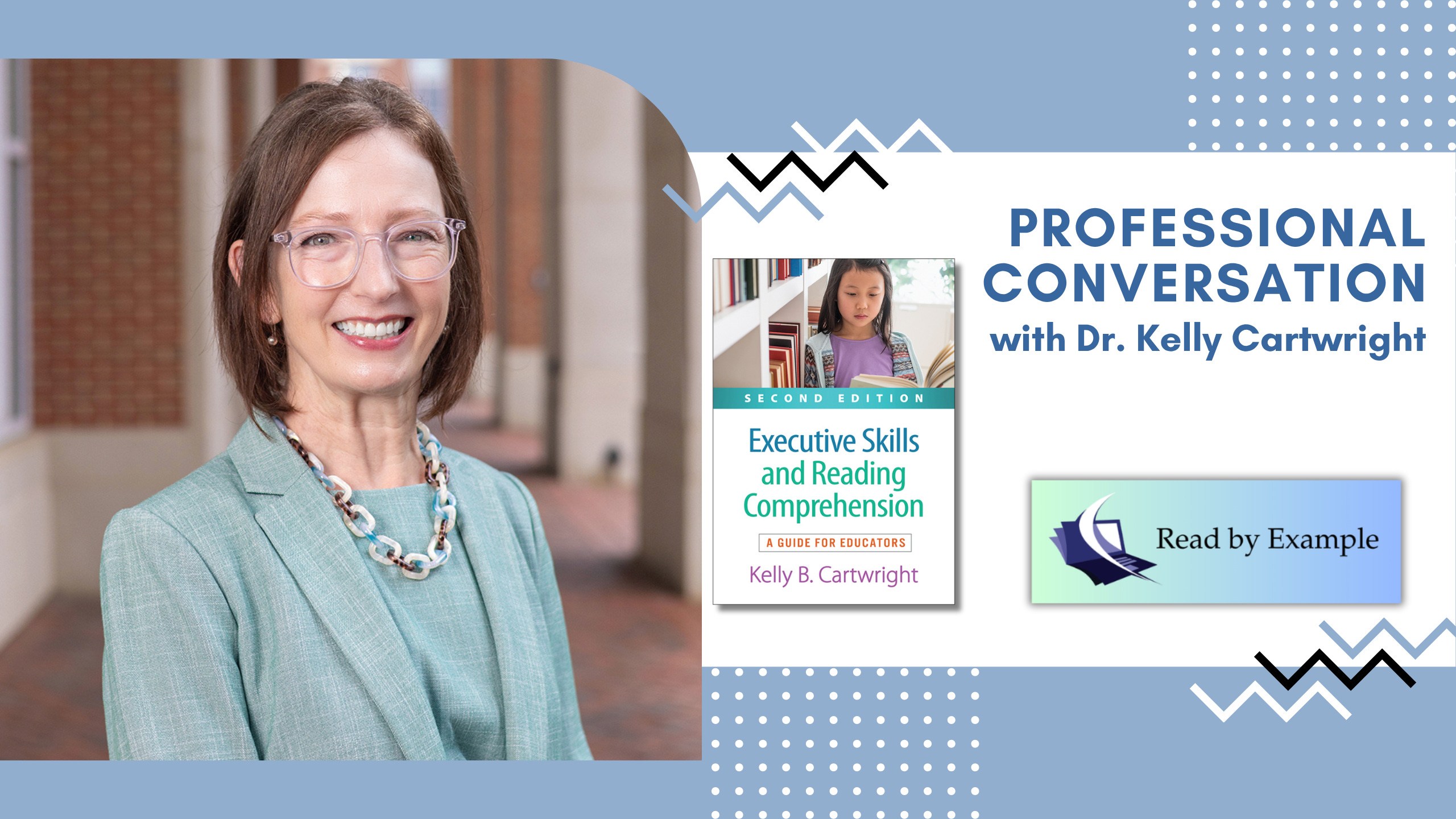 Dr. Kelly Cartwright: Executive Skills and Reading Comprehension✨ | executive functionsreading comprehension+3 | Dr. Kelly Cartwright | UNC CharlotteThe Science of Reading Progresses: Communicating Advances Beyond the Simple View of Reading+1 | — | executive functionsreading comprehension+6 | — | 41m 30s | |
| 3/20/26 |  What School Leaders Need to Know About the Science of Reading✨ | science of readingliteracy instruction+3 | Dr. Kelly Cartwright | What School Leaders Need to Know About the Science of ReadingExecutive Skills and Reading Comprehension: A Guide for Educators | — | science of readingliteracy+3 | — | 44m 09s | |
| 1/10/26 |  Penny Kittle and Micro Mentor Texts✨ | writing craftteacher strategies+3 | Penny Kittle | Book Love FoundationScholastic+1 | New Hampshire | Penny Kittlewriting strategies+4 | — | 33m 22s | |
| 1/10/26 |  Video Archive: Penny Kittle and Micro Mentor Texts✨ | micro mentor textseducation+3 | Penny Kittle | Read by Example | — | Penny Kittlemicro mentor texts+3 | — | 8m 50s | |
| 9/28/25 | 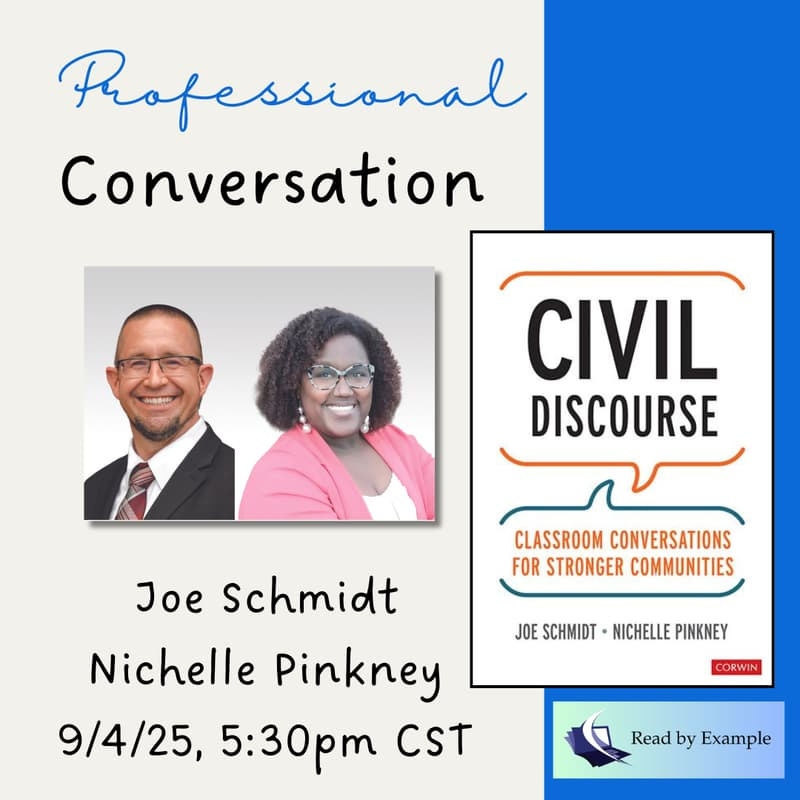 Beyond Debate: Fostering Civil Discourse in Classrooms for Stronger Communities✨ | civil discourseK-12 education+4 | Joe SchmidtNichelle Pinkney | CorwinCivil Discourse: Classroom Conversations for Stronger Communities | — | civil discourseclassroom conversations+5 | — | 38m 19s | |
| 9/12/25 | 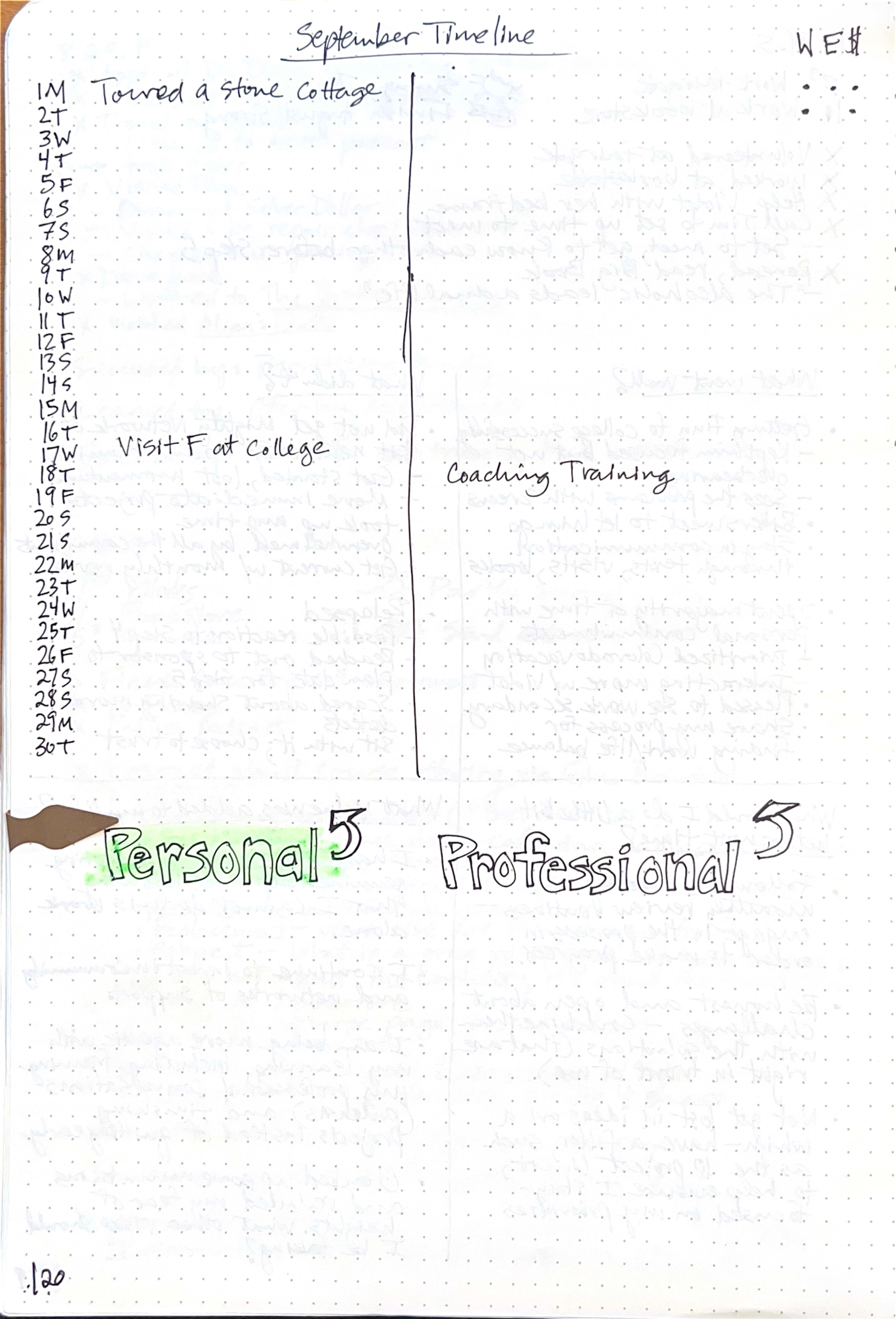 The Monthly Log: Timeline and Intentions✨ | journalingteacher well-being+3 | — | The Bullet Journal Method | — | journaling toolsmonthly timeline+3 | — | 11m 23s | |
| 8/30/25 | 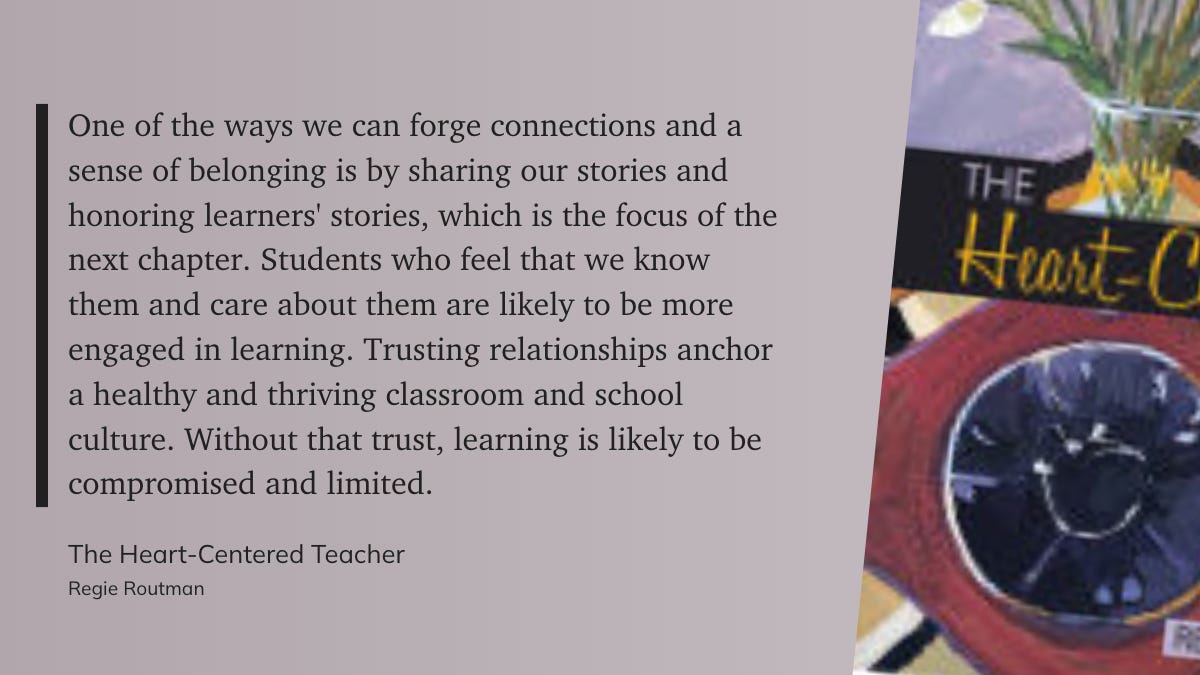 The Power of Belonging in Schools✨ | belonging in schoolsimpact of teachers+4 | Regie Routman | MiddleWebThe Heart-Centered Teacher | — | belongingeducation+5 | — | 31m 56s | |
| 7/10/25 |  Literacy Unscripted: Reclaiming Professional Wisdom in the Age of Mandates✨ | literacy educationprofessional wisdom+4 | — | Read by Example | — | literacyeducation+7 | — | 5m 43s | |
| 4/21/25 | 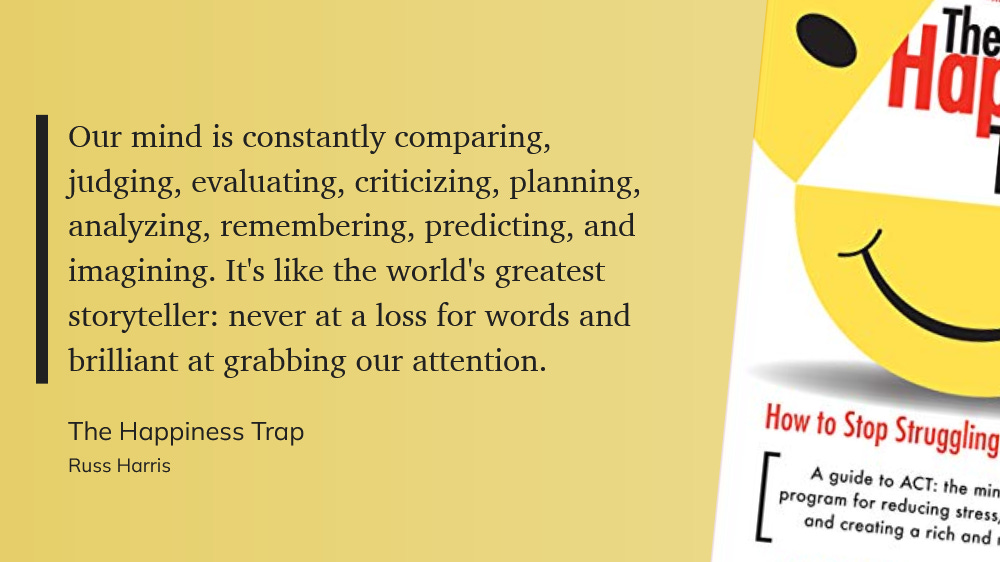 The Monday Morning Memo #4: Be a Noticer, Not a Judger✨ | classroom observationnoticing vs judging+3 | — | Choice LiteracyReader’s Digest+1 | — | classroom visitsnoticing+5 | — | 1m 47s | |
Want analysis for the episodes below?Free for Pro Submit a request, we'll have your selected episodes analyzed within an hour. Free, at no cost to you, for Pro users. | |||||||||
| 3/31/25 |  The Monday Morning Memo #1: Questions That Promote Reflection✨ | reflectionteacher coaching+3 | — | — | — | reflectionquestions+5 | — | 1m 55s | |
| 11/5/24 |  How to Ground Yourself in Unpredictable Times | In this video tutorial, I share how I use a notebook to keep myself grounded when things feel chaotic and unpredictable. It’s Election Day - this feels needed!I address the following aspects of my notebook system:* Keeping a weekly intentions list to come back to when considering next actions* Dating the daily log and setting up your productivity dashboard* Starting your daily log with critical tasks to accomplish that day* Documenting notes, events, and tasks as the day progresses* Brainstorming ideas with text and sketches* Reviewing the day, noting wins, insights, and gratitudesTake care,MattTranscriptHi, this is Matt. I'm sharing how I ground myself with a notebook, both as a coach and as an individual. It’s a space for personal and professional reflections, which is especially helpful during unpredictable times, like today—Election Day, 2024. I thought it’d be appropriate to share this process.This approach is adapted from the *Bullet Journal Method* by Ryder Carroll, with a few tweaks for my needs. Let’s start with my weekly intentions. I date the week, then list all I want to accomplish. There’s usually more than I can get done, but if something doesn’t get completed, I simply move it to the next week. This becomes my weekly log.My daily log captures each day’s priorities. Here’s yesterday’s log. First, I date it—November 4th, a Monday. Then I create a dashboard. This idea comes from the Bullet Journal community; I highlight boxes and draw icons representing productive actions. Not productivity in a “getting things done” sense, but actions aligned with the person I want to become.For example, my dashboard includes icons for writing, meditating, pet care, budgeting, and exercise. Exercise doesn’t have to mean lifting weights; yesterday, I did Tai Chi and went for a walk. There’s also an icon for a fun activity and another for “unhooking” from unproductive thoughts—using self-talk or breathing techniques to steer clear of unhealthy thinking. It’s a valuable habit, especially with the uncertainty around the election.Each day, I identify two or three critical tasks, such as drafting a newsletter or inviting a friend for an event. Throughout the day, I add tasks as they come up—like reserving rooms for next week or picking up cat food. I use different symbols: a dot for tasks and a circle for events. Yesterday, we had a staff meeting to discuss our strategic plan. I like using paper for brainstorming; it helps me play with ideas creatively. For example, I sketched a diagram that a colleague suggested I share on our Padlet.At the end of the day, I log any other thoughts or tasks. For instance, I agreed to be secretary for the Lions Club. I also like to reflect on something successful, an insight, and what I’m grateful for. Last night, I noted “saying yes to what I can,” sharing my drafty thinking, and appreciating the chance to contribute.Today, I’ll start with my productivity dashboard again. I use a Leuchtturm B5 notebook, but any notebook works fine, especially when you’re starting. You don’t need anything fancy. You can also replace icons with initials if you prefer.I’ve already voted, so I don’t need to worry about that. Throughout the day, when I feel stressed or tempted to check election news, I can return to my notebook. For instance, I need to finalize the writing workshop PD and plan for my kids’ birthdays. Writing these tasks down increases my commitment to them.Today is open-ended but grounded by this structure. I can even note it’s Election Day as an event. This notebook helps me stay focused on the day-to-day and acts as a place for journaling. My wife will vote before work, and I remind myself that we probably won’t know results right away.Putting my thoughts and worries on paper keeps me grounded. If I feel restless, I can take the dog for a walk to release energy, then return to my list. I aim to calm myself by being intentional and purposeful with my time.Best wishes, and stay calm in these unpredictable times. Take care. This is a public episode. If you'd like to discuss this with other subscribers or get access to bonus episodes, visit readbyexample.substack.com/subscribe | 10m 22s | ||||||
| 9/18/24 |  Organizing Your Coaching Practice with a Notebook | In this recorded webinar, we dove into how coaches and instructional leaders can use a notebook as a powerful tool to stay organized and focused in their practice. Drawing from personal experience and popular methodologies like Bullet Journaling and Getting Things Done, this episode explores the benefits of “notebooking” to boost productivity, reduce stress, and enhance our abilities. We discussed practical strategies for capturing key ideas, clarifying tasks, and facilitating reflection. Watch as we cover:• The concept of a coach’s notebook as a second brain• How to use symbols, lists, and timelines to organize events and tasks• The role of notebooks in reducing stress and fostering mindfulness• Real-world examples of how notebooking supports both personal and professional growthWhether you’re a veteran coach or new to the role, a “Big C” or “Little C” coach, this episode provides actionable tips to help you streamline your work and maintain clarity amidst the many demands of coaching.Thanks for reading Read by Example! Subscribe for free to receive new posts and grow as a literacy leader. This is a public episode. If you'd like to discuss this with other subscribers or get access to bonus episodes, visit readbyexample.substack.com/subscribe | 55m 54s | ||||||
| 7/16/24 |  How Vivian Chen Uses Notion in Her Instructional Practice | In this professional conversation, I speak with educational consultant Vivian Chen.Vivian is a former classroom teacher and coach, and now supports literacy educators independently. She organizes her work life using a free tool called Notion (notion.so) for a variety of tasks:* Building a database to plan her days and projects.* Organizing her business information.* Capturing her coaching conversations with clients.Vivian shares a number of ideas any educator could apply to their own practice. (To connect with Vivian, go to LearnWithVivian.com for more information.)Recommended Resources* Definitely check out the video archive of this conversation, as Vivian offers a peak into her Notion system.* I am halfway through my declutter! I’m writing a little bit every day about my experience in avoiding social technologies in this thread. I am also posting these daily reflections in this pop-up blog I created for easier readability.* While I am rereading the source of the digital declutter, Digital Minimalism by Cal Newport, I am pairing it with Saving Time: Discovering a Life Beyond Productivity Culture by Jenny Odell (affiliate links). I’ll be sharing the connections I am making between the two texts during the second half of my declutter.* This episode was recorded in June - no July conversation for full subscribers due to my digital declutter this month. Stay tuned for upcoming professional learning opportunities starting in August. Readers shared a variety of topics ripe for discussion:* Planning for effective professional development, including finding time to learn with colleagues* Responding to student behaviors* Authentic application of curriculum resources* Balancing external expectations while meeting students where they are* Navigating different philosophies of literacy instruction * Being a critical consumer of SoR-related informationWhat else is on your mind that you would like to discuss? Share your thoughts in the comments.Take care,MattP.S. Another topic that came up is getting into classrooms and supporting teaching and learning. You can start now on your learning journey with my latest book, the companion playbook, and my new course (playbook included). This is a public episode. If you'd like to discuss this with other subscribers or get access to bonus episodes, visit readbyexample.substack.com/subscribe | 25m 40s | ||||||
| 6/16/24 |  How to Become a Better Writing Teacher: A Conversation with Matt Glover | In this conversation, Matt Glover, former teacher and principal, now a full-time writer and consultant, and I discuss his book, How to Become a Better Writing Teacher, co-authored with Carl Anderson (Heinemann, 2024)Key Highlights from ConversationAuthor’s Background* Matt Glover's experience as a first-grade teacher, assistant principal, and principal of a large early childhood school.* Shifted interest towards teaching writing, influenced by colleagues and educational leaders like Carl Anderson and Katie Wood Ray.Importance of Teaching Writing* Glover’s interest in how children compose and think.* Emphasis on the importance of teaching writing from an early age.* Discussion on the role of equity in teaching writing, ensuring all students can express their thoughts regardless of language and transcription skills.Engagement and Choice in Writing* The impact of choice (topic and genre) on student engagement.* Strategies for supporting meaningful choice in the classroom to enhance engagement.* The correlation between engagement and achievement in writing.Building Confidence in Young Writers* The significance of building students' confidence as writers.* Techniques such as using children as mentors in writing conferences.* The positive effects of showcasing less confident writers as mentors.Effective Writing Instruction Practices* The role of teacher's own writing in the instructional process.* The power of peer partnerships and long-term student collaborations.* Practical strategies for conferring with students and asking empowering questions like "What are you making?" and "What have you done well as a writer?"Evolving Writing Units* Incorporating modern forms of writing like podcasts and TED Talks into the curriculum.* Glover’s perspective on the cautious use of AI in teaching writing.* The importance of maintaining authenticity in teacher-created writing samples.Advice for Teachers* Start with one action or strategy from the book and work on it incrementally.* Utilize the assessment tools provided in the book to personalize and guide instructional improvements.* Commit to long-term growth and incremental learning rather than trying to overhaul teaching practices all at once.Interested in learning more?* Check out the two-day online institute for the book, co-facilitated by Matt Glover and Carl Anderson in July. Register with Heinemann here.* Watch our conversation with Carl Anderson to kick of this book study here.* To integrate more authentic assessment in your writing instruction, I humbly recommend my book on digital portfolios. it is a powerful approach for engaging and empowering students as writers and learners. This is a public episode. If you'd like to discuss this with other subscribers or get access to bonus episodes, visit readbyexample.substack.com/subscribe | 37m 46s | ||||||
| 5/25/24 |  Enhancing Writing Instruction: Insights from "How to Become a Better Writing Teacher" | In this engaging conversation with educators Vivian Chen, Debra Crouch, and Jared Kubota, we discuss the second half of How to Become a Better Writing Teacher by Carl Anderson and Matt Glover. The conversation revolves around practical insights, challenges, and strategies from the book that can transform writing instruction in classrooms.Key Discussion PointsBook Selection and Initial Impressions* Matt shares why he selected this book for the discussion.* Guests discuss their initial reactions and the impact of the book on their teaching practices.Challenges of Implementing the Workshop Model* Discussion on the complexities and benefits of the workshop model in writing instruction.* Vivian Chen highlights the importance of organizational skills and tools to manage the workshop's moving parts.Effective Use of Mentor Texts* Debra Crouch talks about the importance of selecting relevant and effective mentor texts.* The value of immersing students in high-quality writing examples to enhance their understanding.Conferring with Students* Jared Kubota shares insights on the value of student conferences and the importance of personalized feedback.* Strategies for balancing conferences in dual-language classrooms.Building Trust through Partnerships* The significance of keeping writing partnerships stable over time to build trust and enhance feedback quality.* Matt and Debra discuss the balance between long-term partnerships and varied feedback sources.Integrating Social-Emotional Learning (SEL)* Jared emphasizes the integration of SEL within writing workshops.* Techniques for teaching students how to give and receive feedback constructively.Tips for Educators* Practical tips from the book that can be implemented immediately in the classroom.* Guests share their favorite strategies and how they plan to use them in their teaching.Reflections and Closing Thoughts* Guests reflect on their learning journey and the book's impact on their professional growth.* Final thoughts and appreciation for the collaborative discussion.This episode is a must-listen for educators seeking practical strategies to improve their writing instruction and create a more engaging and effective learning environment for their students.Thanks for reading Read by Example! Subscribe for free to receive new posts and support this space.For questions or feedback, share your thoughts in the comments. This is a public episode. If you'd like to discuss this with other subscribers or get access to bonus episodes, visit readbyexample.substack.com/subscribe | 33m 53s | ||||||
| 4/30/24 |  Better Newsletters: How to Use ChatGPT to Support and Scaffold Your Writing | As a literacy leader, writing is a critical skill.* We need to frequently communicate our organization’s beliefs and values.* We avoid misunderstandings when what we share and post is clear.* If we expect our students and teachers to be writers…So where does one start?Consider employing ChatGPT as your writing assistant. In this video, you will see how this large language model (LLM) can:* Give you general writing ideas as a starting point.* Provide feedback on a first draft you’ve developed.* Generate templates from favorite articles to use as models for your own writing.This brief demonstration will show you how to be more intentional with ChatGPT: using frames, following up on initial responses, and asking for options instead of specific answers.Would a mini-course on how to build and sustain a professional newsletter be of interest to you? Let me know your thoughts in the brief survey linked below.Subscribe for free to receive new posts and build your capacity as a literacy leader. This is a public episode. If you'd like to discuss this with other subscribers or get access to bonus episodes, visit readbyexample.substack.com/subscribe | 13m 05s | ||||||
| 3/23/24 |  How to Become a Better Writing Teacher #1 | In this podcast, we delve into the world of writing instruction with Carl Anderson, co-author with Matt Glover of How to Become a Better Writing Teacher. Carl is the author of several acclaimed books including A Teacher's Guide to Writing Conferences and A Teacher's Guide to Mentor Texts K-5. Carl shares insights from his extensive experience working with schools and districts, discussing the importance of writing instruction and providing practical strategies for educators at all levels.Key takeaways from the conversation include:* The journey of becoming a better writing teacher: Carl and his co-author Matt Glover emphasize that the work of teaching writing is ongoing and dynamic. Their book provides actionable steps and personalized guidance for teachers at different stages of their careers, from novices to seasoned veterans.* Collaboration and professional development: Carl and Matt's collaboration, born out of webinars during the pandemic, highlights the power of professional learning communities and ongoing support in refining writing instruction practices.* Advocating for writing: Amidst standardized testing and shifting curricular priorities, Carl emphasizes the importance of advocating for dedicated time and resources for writing instruction. He encourages educators to engage in conversations with administrators and colleagues to ensure that writing receives the attention it deserves in schools.With practical insights, personal anecdotes, and a commitment to empowering educators, this conversation and Carl’s and Matt’s book are a valuable resource for anyone passionate about nurturing young writers.Enjoyed this discussion? Share it with a colleague and continue the conversation. This is a public episode. If you'd like to discuss this with other subscribers or get access to bonus episodes, visit readbyexample.substack.com/subscribe | 37m 27s | ||||||
| 2/24/24 | 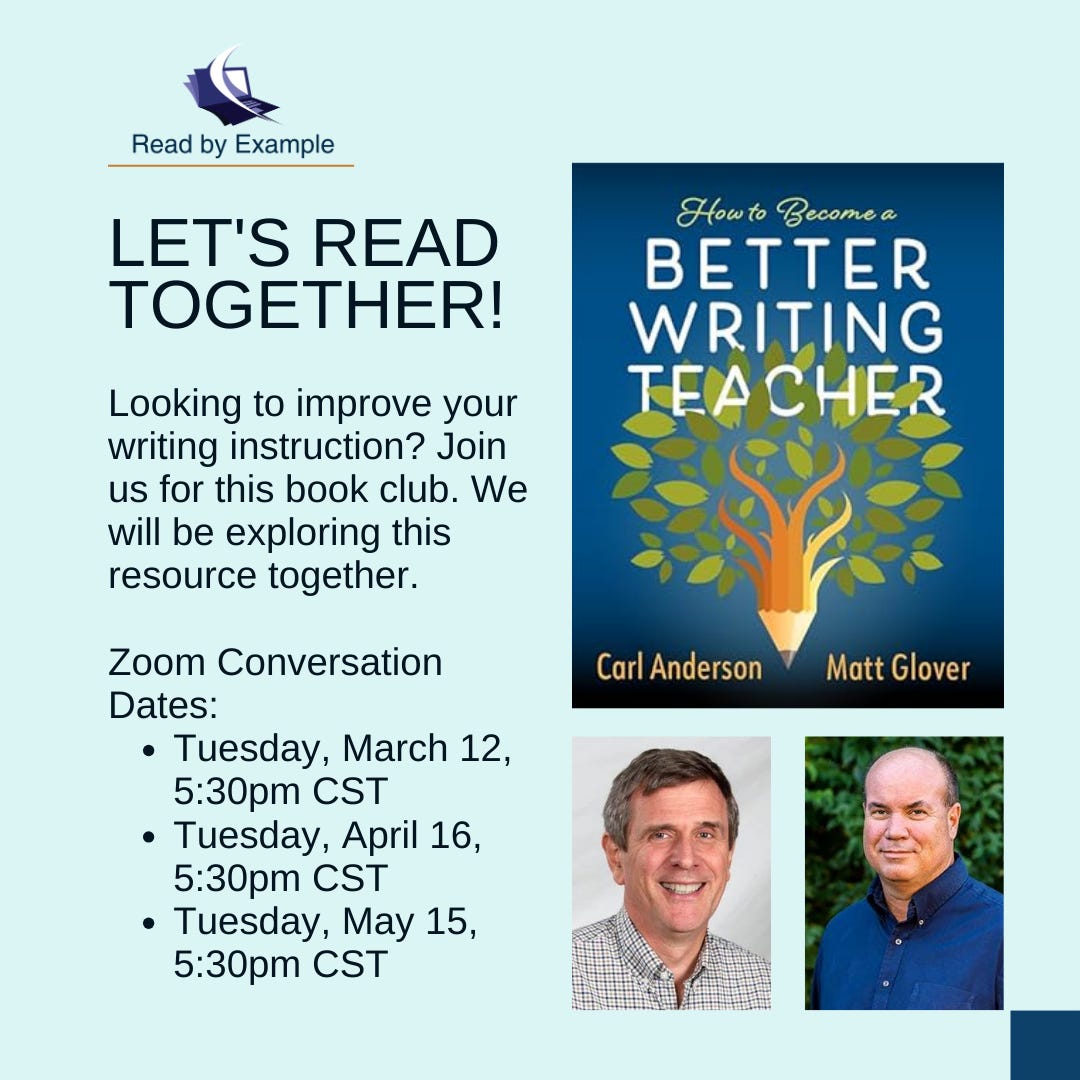 Bridging Literacy Leadership and Educational Justice: A Conversation with Michele Caracappa | Where does literacy leadership intersect with the quest for educational justice? In this thought-provoking conversation, I am joined by Michele Caracappa (Reading to Lead) and Debra Crouch (Made for Learning) as we delve into this vital topic.Michele, with her extensive background in education and leadership from New York City, shares insights from her journey of supporting literacy and educational justice. The conversation covers a range of subjects:* The impact of policies on literacy instruction* The importance of teacher empowerment* Rethinking literacy through a justice-oriented lensWhether you're an educator, leader, or simply passionate about educational equity, this episode offers valuable perspectives on creating conditions that foster success for all students. Dive into the discussion and discover actionable strategies to bridge the gap between literacy leadership and educational justice. Don't miss out on enriching your understanding and toolkit for change. Listen now and be part of the conversation towards a more equitable educational landscape.Subscribe for more episodes on transforming education through leadership and literacy.Beginning next month, we are reading How to Become a Better Writing Teacher by Carl Anderson and Matt Glover.Share this episode with your network to spread the word about the importance of literacy leadership.Continue the conversation here in the comments (full subscribers), or wait until the podcast version is posted. This is a public episode. If you'd like to discuss this with other subscribers or get access to bonus episodes, visit readbyexample.substack.com/subscribe | 28m 56s | ||||||
| 1/20/24 |  Intentional Learning: Beyond Resolutions in Education | As the new year begins, Debra Crouch, Vivian Chen and I avoided the usual focus on resolutions in this professional conversation. Instead, we emphasized good intentions in our professional practice. Our discussion begins with a sharing of our current to-read lists, a mix of fiction and non-fiction books relevant to education, personal development, and broader societal issues. We then delved into the concept of transforming lessons into recipes, exploring the nuances of teaching methods, the importance of adaptability in education, and the potential of professional development. The conversation concludes with reflections on how these insights can be applied in our immediate professional contexts in ways that support teaching and learning.Key Insights and Quotes:Debra Crouch* Insight: Emphasizes the balance between planning and responsiveness in teaching.* Quote: "You could never plan some of those moments that were happening based on what kids were saying."Vivian Chen:* Insight: Points out the significance of collaborative learning and observing the impact of teaching practices.* Quote: "I need somebody to be there to look for the kid's twinkle in their eyes, to see what it was (that led to student engagement and learning)."Matt Renwick:* Insight: Highlights the critical role of experience and reflection in developing teaching expertise.* Quote: "When you cook for 20 years, you just develop a ‘with-it-ness’, a ‘I know I can substitute this for that.’"Listeners will walk away with a greater understanding for the conditions that go into thoughtful and intentional education practices, as well as the importance of adaptability and continuous learning in our field.Full subscribers can participate in these professional conversations via Zoom, as well as watch the video recordings. Join us! This is a public episode. If you'd like to discuss this with other subscribers or get access to bonus episodes, visit readbyexample.substack.com/subscribe | 23m 45s | ||||||
| 12/23/23 |  Organizational Culture and Intelligent Failure: A Conversation with Isobel Stevenson | Read by Example is a reader-supported publication. To receive new posts and support this space, consider becoming a free or paid subscriber.On Monday, December 19, Debra Crouch and I spoke with Isobel Stevenson.Isobel is the author of The Coaching Letter, a newsletter that is about “organizational culture and intelligent failure”. She is also the author of multiple books, including Making Coaching Matter: Leading Continuous Improvement in Schools, with Sarah Woulfin and Kerry Lord (Teachers College Press, 2023).In our conversation we explored a number of questions around continuous school improvement, including:* You promote “intelligent failure” as an organizational disposition, where teachers and leaders are intentionally making mistakes. This feels counter to most school cultures. What conditions need to exist for this to be a reality?* Is a “culture of coaching” the answer to the problem of the status quo? If not, what else?* If you could wave a magic wand and change one thing about schools as they currently are, what would it be?Listeners will walk away with a better appreciation for the complexities of school improvement, along with clear action steps for engaging in this work.Take care,MattWhat we are reading* Isobel listed several favorite professional titles, including The Right Kind of Wrong by Amy Edmondson, Being Wrong by Kathryn Schultz, The Voltage Effect by John List, and Deep Survival by Laurence Gonzales.* Debra enjoyed The Covenant of Water by Abraham Verghese. She shared the following quote from this novel: “Fiction is the great lie that tells the truth about how the world lives.”* Matt is planning to start The Reformatory by Tananarive Due soon, a Goodreads Choice Award Nominee for Best Horror (2023). * Isobel just posted her December edition of her newsletter, in which she shares more about the instructional design practice of “co-developing recipes—which are NOT the same as checklists or scripts”.* For more information on continuous school improvement, check out my conversation with Isobel’s co-author Sarah Woulfin along with Rachael Gabriel. Take care, MattP.S. No post/newsletter next week - 🎁enjoy the holiday break!🎄P.P.S. In addition to live professional conversations with educational experts like Isobel, full subscribers also have access to the video archive of the Zoom chat plus the discussion guide. See below. You can use these resources to support professional learning in your context. 2023 Holiday Special: Become a paid subscriber today and take advantage of 15% off an annual plan (offer available until January 1, 2024).You can also refer this space to colleagues and get a complimentary subscription. This is a public episode. If you'd like to discuss this with other subscribers or get access to bonus episodes, visit readbyexample.substack.com/subscribe | 33m 10s | ||||||
| 11/24/23 | 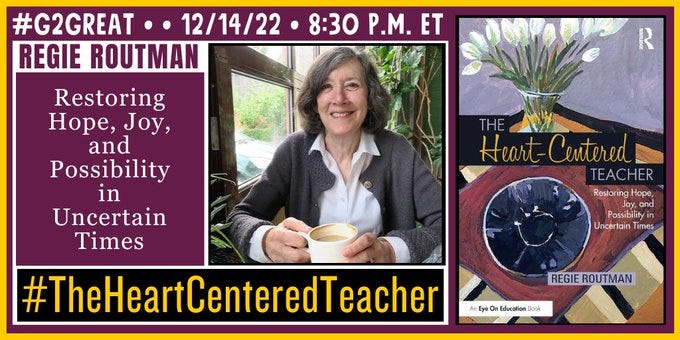 Twitter Chats and Educational Dialogues: Inside the World of #G2Great | Ever since the advent of the Internet, professional development for educators has become more prominent online. Teachers and school leaders found a home in Twitter. It’s been a source of knowledge and a facilitator of long-lasting connections, even friendships. How can educators use this platform today for professional learning, especially with its current challenges?In my conversation with Dr. Mary Howard, author of RtI From All Sides and Good to Great Teaching (affiliate links), we talk about this social media platform, including:* The upcoming #g2great discussion on Twitter around Regie Routman’s new book The Heart-Centered Teacher (affiliate link),* How to engage in a Twitter chat, and* What the future may hold for online professional learning.Listeners will walk away with a greater appreciation for continuous improvement as literacy leaders.Related #G2Great Resources* Our #G2Great Wakelet Collections (Regie’s will be posted after the chat)* 10-20-22 Blast From the Past: Literacy Essentials (Blog post)* 1/11/18 Literacy Essentials (Blog post)Looking for more learning?Check out the video archive of my conversation with Mary. You will find a brief guide for how to engage in a Twitter chat. In addition, I provided an original article on how to apply a modern framework for digital learning in classrooms and school for full subscribers. Sign up today! This is a public episode. If you'd like to discuss this with other subscribers or get access to bonus episodes, visit readbyexample.substack.com/subscribe | 21m 37s | ||||||
| 10/28/23 | 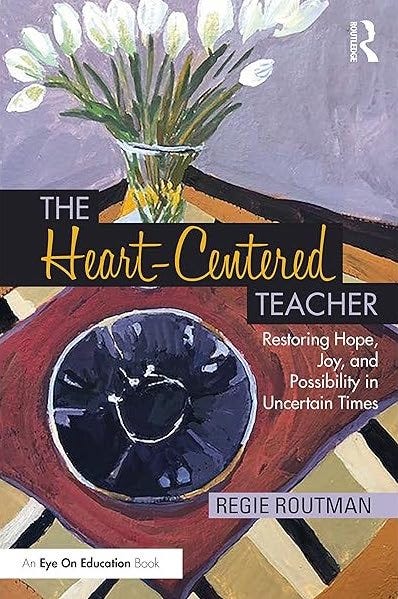 The Heart-Centered Teacher: A Conversation with Regie Routman | In this conversation with Regie Routman, we explore her writing process that led to her new book The Heart-Centered Teacher: Restoring Hope, Joy, and Possibility in Uncertain Times (Routledge, 2023).I was interested in learning more about her purpose and intentions around this important book. Below are three questions I asked Regie.* The cracked plate, beautifully depicted on your book cover in a painting by Toby Gordon, is a powerful metaphor for navigating uncertain times. What felt true to you as you connected this item to our lives?* In the conversation you had with Kelly Gallagher and Penny Kittle, they shared that your book is unlike any other professional learning resource they read. You appreciated that comment. Was it your intention from the start to make this book at least part memoir? * Another concept that you speak to often is the power of story. In schools, teachers and leaders are often having their stories told for them only through test scores and media reports, often incorrectly. What are some of your favorite, practical ways for educators and students to better control their narratives?Listeners will walk away with a greater understanding of the “why” behind this book. The ideas Regie shares with us can help any educator reclaim hope and joy in teaching and leading in uncertain times.In addition to this audio, full subscribers have access to the video recording archive, along with a downloadable three question reflection protocol Regie and I workshopped to help students “restory” their lives. This episode is also available on Apple and wherever else you listen to your podcasts. Let people know what you think with a rating and review. This is a public episode. If you'd like to discuss this with other subscribers or get access to bonus episodes, visit readbyexample.substack.com/subscribe | 25m 25s | ||||||
| 9/30/23 |  Professional Conversation: Should teachers be required to submit lesson plans to their principal? | Read by Example is a reader-supported publication. To receive new posts each week in your inbox, become a free or paid subscriber.For this article club, colleagues and I explored the following questions and more as we discussed Paul Emerich France’s article (ASCD Blog).* How can schools balance instructional transparency with teacher empowerment?* Is there a reasonable rationale for why principals can expect lesson plans to be submitted to them?* If teachers are expected to be leaders, what are the conditions in which they can thrive?The following guests joined me for this enlightening discussion:* Debra Crouch, Teaching Decisions* Mary Howard, Literacy Lenses (Twitter)* Don Marlett, Learning Focused (Twitter)Listeners will walk away with a more nuanced understanding of effective vs. ineffective lesson planning, the conditions for teacher agency, and how to build a school culture based on trust.(Go to the end of this post for the full transcript of our conversation.)Additional Benefits for Full SubscribersFull subscribers enjoy additional resources:* The ability to comment on all posts.* The opportunity to participate in these live conversations via Zoom.* Access to the video recording archive of professional conversations, as well as a copy of the discussion guide which can be used to support similar continuous improvement efforts in your context.Become a paid subscriber today to enjoy all of these community benefits.Coming Up:October & November Book Club, The Heart-Centered Teacher by Regie Routman“How do we find hope and possibility in challenging times?”In her latest book, Regie Routman offers all educators “a refreshing chance to pause, take a breath, and reflect on how you and your students can live more compassionate, generous, and authentic lives.” The Heart-Centered Teacher is about more than literacy; it’s about “developing, nurturing, and sustaining caring relationships - in our teaching lives, our home lives, and in the happy intersection of both.”You are invited to join us this fall in an eight-week book club around this text. You can purchase Regie’s book at one of the links below.Full subscribers can participate in two monthly conversations via Zoom around the book on the following dates:RSVP here.All subscribers will be able to post comments on discussion threads related to the book on the following dates:* October 10th: Chapters 1-2* October 24th: Chapters 3-5* November 7th: Chapters 5-7* November 21st: Chapters 8-10We will be using the study guide and additional chapter resources to help support the discussion, found at the book’s companion site.All of this is made possible through the generous support of full subscribers - thank you!Full Transcript (generated by Rev.com; the AI is to blame for all grammatical errors. :-)Matt Renwick (00:02):Welcome to Read by Example, where teachers are leaders and leaders know literacy. And I'm welcoming here again, Mary Howard, Debra Crouch, and Don Marlett. Mary, if you want to start, just share a little bit real quickly about yourself, what you do.Mary Howard (00:18):Sure. I'm a literacy consultant, still heavily engaged in education, living in Honolulu, Hawaii, and have been a teacher for 51 going on 52 years now.Matt Renwick (00:33):Deborah,Debra Crouch (00:35):I'm Debra Crouch. I, I'm also working as a literacy consultant these days and just was with second and fourth grade teachers today talking about the practices in their classrooms, and this was very applicable to some of the work that we were doing. So I'm excited about this conversation.Matt Renwick (00:55):Awesome. Yeah.Don Marlett (00:58):Hi, I am Don Marlett with Learning Focused. So I thought this would be a fun one to join. Alright. Specifically within an instructional framework is one of our focus areas,Matt Renwick (01:15):And I'm familiar with all of your work, either through reading or presenting. So this is a very knowledgeable group. I'm honored to be here. So today's topic, and again, the intention here is to just engage around a topic of interest that people are talking about. And this was something that was getting debated on Twitter, whether or not teachers should have to submit lesson plans and looking at the bigger topics of school-wide expectations, balancing that with teacher empowerment and the articles by Paul Emrich, France for ASCD blog. So the question I had just in mind was, should teachers be required to submit lesson plans or do we need to ask a better question? I get a sense there's more to the issue here at a deeper level than just lesson plans, but we can get into that. And the other purpose we record these conversations is just to demonstrate how to facilitate a professional conversation.(02:14):And this is the heart of professional learning. We don't talk about some of these big topics in schools because they could be too contentious. You're afraid it might spiral into an argument debate. And so hopefully through this process, through professionals such as ourselves that we can demonstrate that for our colleagues. So everyone gets this guide who is a full subscriber to the newsletter. So thank you to everyone who is a full subscriber, really important to have norms with some of these conversations. Working norms, agreements, I just use some from the Peloton group. A dialect should be a basic attitude. Create safe spaces, include all relevant parties in a dialogue. You listen, let everyone share their experiences, ask questions, talk about difficult topics and contribute to forgiveness and reconciliation. And one thing I've seen presenters do is to ask the audience each person to like, which one are you going to focus on to add during this time together? Which one do you want to really work on? So that's a strategy you might want to try. So just to kind kick things off, but what are you listening to right now? Just more of an inclusion activity. It doesn't have to be music, it could be a podcast, it could be anything nature.(03:36):I'll go first.Don Marlett (03:38):Go ahead Matt.Matt Renwick (03:41):I'll be the first to go here. I've been listening to a huberman Lab podcast. Andrew Huberman is a neurobiologist in California and he's a podcast and just talking to a psychiatrist in the East Coast, Paul Conti at Harvard Medical School about mental health and talks about the framework for mental health. So I found it very illuminating and I want to share it out at some point for all schools. I think the framework's very helpful in terms of how we can help kids and even adults. So that's what I'm listening to.Don Marlett (04:18):I just started listening to writing for Busy readers. I saw it, I follow Angela Duckworth and she posted it. And so it was a good book, but also because whenever we send emails from our company and all that stuff that everybody is busy. So how can we make it so that they can actually read them? Since we all know it's hard to read our own emails. It's very good so far.Matt Renwick (04:47):And it was a book or it was a podcast?Don Marlett (04:50):It's a book. So I'm just using reading the audible version, listening to the audible version of it. Cool.Mary Howard (05:01):Okay. Well, I'll go. I just finished listening to, I'm a big fan of Dr. Andy Johnson's the reading instruction show. What I love about Andy is how clear and strong he is in talking about some of the issues. And so I enjoy listening to that and I enjoy taking notes and just kind of thinking it through. He usually has a podcast maybe once every couple of weeks or so, and it's really very well done.Matt Renwick (05:37):Nice.Debra Crouch (05:38):Well, I'm going to fess up and be the one who says I am not good with podcasts because the podcasts that are professional, I want to be sitting and taking notes on. People will say, oh, listen to it while you walk. Doesn't work for me. I want to take notes. And I can't do that while I'm walking. So I haven't figured out really how to put podcasts. My life very well. I can listen to the Fluffy. I absolutely loved my brain. Just went absolutely did. On her name, Julia Louis Drive's podcast series. I don't know if you saw that, where she's talking to women older than her and she's like, what can I learn from you? So I listened to that podcast, but I was thinking about what am I listening to? And I was just listening in the car to this brilliant artist called Rianna Giddens. Do you know Rianna in her work?(06:32):How do you spell her name? Rianna? I don't know if I'm pronouncing it correctly. Nan like the Fleetwood Max song, Giddens, G I D D E N S. And saw Americana music. And I learned about her through a book that I was reading on creativity and they profiled her in this book. She's won a number of awards, but she decided that she didn't want to be on that I'm into the popular music and going on the tours and doing that sort of continuing to grow and be popular in that way. She decided to focus inward in her writing and in her songs and in her musical choices. She's one of the most glorious voices, I think. And that's the word I would use. It's a glorious voice. So that's who I've been listening to. But when you say that, I'm like, okay, I listen to music, not a podcast listener, really. So anyway, so that's what I've been listening to right now.Matt Renwick (07:38):Nice. I like Fluffy.Don Marlett (07:42):And Debra, I feel your pain. I never last very long. When I'm listening to audible books, my mind starts racing, so that's why it takes me. I go back and forth between that and Fluffy, so I'm like you, I can't just sit there and listen for the whole thing, which doesnt work when you're driving. So I can't listen to her for very long.Mary Howard (08:04):And sometimes when I'm walking and I'm starting to listen to a podcast, it's bad because I pull out a pen and I end up taking notes all the way down my arm and now sit at the, I try to just put a marker and then like you said, I need to write it down so I listen to the podcast at home and type out the important things. I like it, but yeah, it was bad on my skin.Matt Renwick (08:30):I heard that's the best way to do it, is to listen and then go home and then write down what you remember paraphrase. And that actually is the best way to synthesize, which I don't do. Of course I do it. I'll bring up Google keep notes and I will record myself and it will transcribe what I say. But yeah, I think that's the best way is just to listen and then write it later. Alright, so the article, thanks for sharing, I'll put those in the notes. The article again is why teachers shouldn't have to submit lesson plans. And this piqued my interest was posted on Twitter, and another pretty well-known educator, former principal had said, I just disagree with this whole thing. And I like that when there's disagreement, I think that's good. The principals, we can require to have lesson plans submitted to us, and I think that's important, and I think he would probably have some very good reasons.(09:32):But the reasons that Paul Emerich France listed were to not submit them is he started his first two weeks teaching and he's like, I wrote them all at length and after two weeks I was exhausted and I was constantly changing them because I was paying attention to my kids. I wasn't able to be responsive because my lesson plans were all planned out literally. So he just noted that first administrators don't have time, so they're not going to read hundreds of lessons every week, creates more paperwork. The second reason is traditional lesson planning is unsustainable. He likes five questions, which I thought were good, which is what should students know and be able to do by the end of the lesson? How will I know if they've learned? So it sounds like PLCs, how will I provoke curiosity and discussion? How will I orchestrate instruction? How will learners reflect on that lesson? So that's his framework he uses for lessons, a much abbreviated version. And the third reason is teachers feel micromanaged. So just thinking about those three reasons that France lists, what are just your initial thoughts on that?Mary Howard (10:44):Well, I'll just start by something that he said early on, and I thought it really kind of was a crux of the whole article. He said, plans change, they have to, teaching is unpredictable and uncertain, especially when 20 or more human beings are along or this ride we call learning, steering the ship with their questions, emotions and thoughts. Teaching cannot follow a script. And that's one of the problems that we're seeing right now with scripts and very controlled plans because it's in the moment teaching in my mind, there's nothing more important than that in the moment teaching. So having a plan is really important. I thought it would be very difficult to write plans with all five of those questions, but I was certainly really intrigued by them. But I think that really is the crux of the article for me, that if we don't leave room for that in the moment decision-making, that there's no way we could plan for it, then how are we really being responsive to children as opposed to being responsive to whatever it is that we're turning in.Debra Crouch (12:05):It was interesting because when I read this for the first time, I had a lot of different ways of thinking about this because I do a lot of this with teachers in my work where I'm planning with teachers and this work. And so one of the things that I wrote as a note was what does a lesson plan look like for this author? One of the questions that I had, because I've been in situations with teachers where I've gone in thinking, okay, we're going to do some planning, and I'm thinking bigger planning, like unit kind of planning or a series of lessons kind of planning, but the teachers think we're planning a lesson and that we're walking away with it. So we had to do a lot of clarifying of what we mean when we talk about planning. There's that the unit plan, the weekly plan, the daily plan.(12:59):And then one of the other layers that started popping in was the prep. What does it mean to prep a lesson, right? You have your lesson plan, but you still have preparation. You have to do kind of in that moment kind of thing. So I think that was a question that I had within this was like, okay, what exactly are you talking about when you talk about lesson plans and turning them in? Because I know when I was a teacher, we did turn in weekly lesson plans, and one of the things that I thought so much about was that as a new teacher, I didn't like doing it. So I could totally relate to his thing about teachers feeling controlled and micromanaged. But in hindsight now I can see that it forced me and pushed me to be prepared in a way that I probably would not have been had I not had to make sure at eight o'clock on Monday morning.(13:51):Those were in my box and I knew it was just more of they just wanted to make sure we were planned and they could come in at any moment. I may understood how they were working with it, but once I learned how to, in a way they didn't care how we turned it in, it didn't matter what it looked like, it was just that you had it in there. Everybody looked at different, everybody's looked different. But I felt like once I learned how to put it onto paper, then I felt like I actually knew what I was doing. It was more like a to-do list for myself, just with the notes and excel. Anyways, it was just an interesting, I'm talking too much, but it was an interesting way of looking because my first question was like, okay, what's he talking about when he talks about a lesson plan? What exactly would that look like?Matt Renwick (14:36):And Debra, you make a point here that France recommends in the end of the article that for new teachers, but I think any teachers would benefit from having their coach learn the art of planning and prepping and what's the difference in what you're talking about? I would just be really good practice for any teacher PLCs, but working with coaches like you, Deborah or Mary or Don, I think that would be just powerful professional learning for anyone. Don, what are your initial thoughts here?Don Marlett (15:06):Yeah, it's funny because that I follow a couple of Facebook principal groups and this always seems to be divided down the line. When a new administrator asked that question, I think I went back to what Mary and Debra were saying is depends on how you define the word plan. If you define it as a script, a hundred percent agree, scripts are not in my mind a plan. So one of the things that we do sometimes is just what do you define a plan? How do you define that? We do that in one of our trainings and the whole point of it is when we get to the end of that with teachers is that nobody ever says it's rigid or it's a script. It's always flexible, but having an outline, like writing an outline for an article or a book or anything like that without having an outline, it makes it harder to be more flexible in our view.(16:00):So that was one of my thoughts with that. And also the other half of that was the admin piece of it. And again, it depends on if you define admins, reviewing every single component of every single lesson plan versus pieces. This week I'm just going to look for how I'm going to launch my curiosity and discussion, and then next week or two weeks down the road, what does that look like? And the way that he defined it of every single teacher or every single week is not sustainable. Absolutely. It's not sustainable for admins to be able to do that. And if that's how you define it, then I could see why you would vote against it.Matt Renwick (16:42):And just coming out of 16 years as a building principal, I can vouch for there's zero time to viewing everyone's lessons. The only time where I would really find I would find the most valuable when I'm doing unannounced mini observations that were required to do, I would go when I would read the lesson and then observe just to see are their intentions, their actions aligned with their goals and what are the standards? And I always found that helpful to have the context, but oftentimes as many times it's not. I could figure that out just by observing the lesson. I didn't need to look at the lesson plan, especially if it was a very good lesson, it was very explicit. I would never even need to look. So good instruction.(17:30):The lesson plan is very visible, right? In the classroom, I guess I think of lessons kind of as a map. It's a set of directions. You don't necessarily have to go the route you necessarily plan for. You might go on a diversion. So I think France's ideas here of provoking curiosity, orchestrating instruction, like the term verb, orchestrate versus mandate or direct, I think you're orchestrating kids is learning, but you're trying to empower them at the same time. So the compass is the kids, right? And the learning that you're trying to accomplish and the lessons are more of the map. So Deborah kind of hinted at this, but the second question I was wondering, and feel free to pose your own questions, but just playing devil's advocate, what were some other reasons why you would require these and lessons?Debra Crouch (18:26):So I work in a school where the teacher teams plan certain parts of their days for each other, their dual language school. So someone's the planning, the s l A part, someone's planning the e l a part, someone's planning the science, the social studies, and they do a lot of sharing of that. And so one of the conversations that we're talking about is what would a teacher, how detailed do your plans need to be when you share them out with your team members, team members so that they're able to understand the focus of the work and what you're hoping to accomplish. So one of the things I'm planning to do is to share these five questions with them because I think that would be really a strong part of the conversation when you think about someone else taking your plan, which is always a little awkward for me, just that whole concept of trying to take someone's plan. So when he was talking about can you pull off a lesson plan? I was like, that whole in the moment, pull a lesson plan when you're in a pinch, you need a last minute lesson. And I was like, okay, what's that about?(19:42):But if you are sharing those things, that might be a reason why you're putting more information together on a plan. So that's not necessarily for an administrator, although administrators would maybe look at that, but if you're sharing with your colleagues on your grade teams and things, I was thinking about that in terms of when you might need to do more lesson planning inMatt Renwick (20:05):That way. We facilitate collaboration and communication, I think too, a grade level teachers, but also classroom and special education teachers, classroom and interventionists technically powerful. Yeah, that's a good point.Mary Howard (20:21):Yeah. And, you said at one point when you were talking earlier that teachers were encouraged to come up with lesson plans that work for them. And I think that's what gave me a little bit of pause when I looked at the five questions, which are perfect, but it's so easy to turn something into rigid by saying it has to look like this. The one that I've always used is just three columns, and the first one was what I know, meaning what do I know about these children? What do I know about this child? What do I know about this small group? So just what do I know? And that's the piece I think we often don't do. The second is what I think what I see is the lesson, but the third one for me was the most important at all. What did I change in the moment?(21:11):And I use different colors and I say to teachers, we have to understand that a really good lesson plan is going to change based on you can't anticipate what children say or do. And I think sometimes we dishonor that. So I always would have teachers put in a different color, these are the things that changed and that became the professional conversation. Why did I take more time here? Or why did I have children generate their own? What are you thinking about or what are you wondering? And it's really important to me not just to have, here's the plan, even though those are five great things. Here's the plan and here's five things. I want them to create their own structure. But I also want to, even if you don't have a column, say now go back at your lesson plan after the fact and just jot down in color, these are some things that I changed or I added a question, or children generated this question and we spent a little time there.Matt Renwick (22:21):Mary, is that resource you mentioned, is that available anywhere? Is it in one of your books or,Mary Howard (22:28):I feel like I talked about it in good to great teaching because good to Great teaching was a lot of different forms that teachers would teach and look at. And that probably would be the book where we talked about it the most. And one of the things I actually did in that book is that I would come in and observe a lesson of their whatever they wanted. We'd have a conversation about it. We talked about what might they have done differently, and then either with that group or another group, they redid that lesson with the changes based on our conversation. So it probably would come from good to great teaching.Matt Renwick (23:08):I think that'd be, if you find time, I think that'd be a powerful article somewhere with a template LinkedIn, like Paul has in his article, he has that link in the article. But I think that would be really helpful resource.Debra Crouch (23:22):I always try and think about that. The purpose of the plan is to help you envision, to me, I always say to teachers, the reason that I even craft this detailed plan is that I'm envisioning what happens or possibly could happen. Because when you think about sitting in front of kids and being responsive to kids and knowing your learners and how you put that into practice is I've got to think about, okay, we might go here, we might go here. I know this kid, I know we're probably going to go here and you're envisioning. And for me, it's thinking about, okay, what might I say in the moment? Because I think sometimes we think responsive means off the cuff, and to me, being responsive means I've anticipated some of the kinds of things that could happen based on the kids and based on the text and what I know.(24:14):So his question about facilitation I think is really an important piece, but it's like if you get to the place where you think that planning just means I'm envisioning it happening, and then I can reflect back on it afterwards and say, okay, well this part, ooh, didn't see that one coming. You always have those moments where you think this was going to happen or this is going to be the word that the kids are going to get stuck on. And then there's like, they didn't have that problem, but it was this problem and you didn't see that. I said, children always teach you about teaching. They'll always teach you about what the issues are in the book if you just are a good listener, what they talk about.Matt Renwick (24:51):I like that. Don, any thoughts here?Don Marlett (24:53):Yeah, I think in our experience, we work with a lot of schools that want to increase the use of specific high yield strategies, maybe collaborative pairs, something like that. And so a lot of times the teachers will be given the professional development. And what we all know now is that professional development doesn't really change necessarily behavior of teachers in a large quantity. So you have to of course monitor that in a couple of different ways. And so in our experience, the more that they've planned them and put them into their lesson plans, the more likely they are to incorporate them into their classrooms. So that would be something if I want a higher percentage of collaborative pairs and specific type of collaborative pairs within my school, and that's what my goal is for increasing student engagement, that would be something that I would monitor inside of a lesson plan that at least they're planning them out to see if when they're going to use them. And our experience is that similar to what you just said, Deborah, which is the higher level of collaboration, requires quite a bit of planning, a simple collaboration of just simply talk to somebody in your group doesn't really require any planning. And so that's why we see, at least in my experience, a large percentage of that version of collaboration, which is not necessarily the biggest impact. It just happens better than of course, no collaboration. But there's different levels that just seem to have require more planning with inside of that.Matt Renwick (26:28):Don. That's where my brain was going too, is to use that information in the lesson plans as an administrator or an instructional coach to see how our teacher's doing with, like you said, high yield strategies, or are they just go to page 1 29 and answer these questions, which isn't a lesson plan, it's just a to-do list, or are they more so to where Francis' questions are around is what do they want them to know, be able to learn? I appreciate Mary and Deborah's point of looking at the kids first and then thinking about the content. So think these all make sense. The third question I had is could we be asking a better question, not why teachers should or shouldn't have to submit lesson plans? What is this really about? And I'll just note that I circled the third reason why we shouldn't require lesson plans submitted is micromanaged and to the point of where teachers are feeling disempowered.(27:30):And what that leads to is a lack of agency in teachers feeling like they're not trusted, feeling like they can't be trusted to deliver the curriculum. And there might be situations where there's a teacher to where they aren't doing what they should be doing, they're not even writing lessons for not requiring, they're just flipping to the next page. And there's no reflection. There's no using a formative assessments to guide the day-to-day instruction. So I understand why it's much easier just to say everyone, you're doing lesson plans and then you can use that, like Don was saying, and you all were saying is really just looking at teachers thinking their decision making and from a day-to-day perspective. But yeah, what is this really about? Is power or what are your thoughts on that?Debra Crouch (28:23):Well, I always think if your teachers are asking or saying things like, am I doing this right? That's when you see you've created that. They're thinking about how do I please or how do I perform in a certain way in that micromanaged kind of way. So I always think those are signals for us as leaders, if we're relying too heavily on maybe templates or here's a lesson plan format we want you to follow things like that. But I hear what you're saying. It's at some point we do need to know as leaders, okay, where are you going with that? What were your intentions? So it's like how do you balance that out? So I don't know. I was thinking, I was jotting down, I think you actually said this a minute ago, how do we support our teachers to be planned and prepared? So it's kind of that question, how can we do that? And does it have to be the same for everybody?Matt Renwick (29:23):Yeah, you don't want it to be compliance. And I've fallen into that trap myself as a leader. I've required things just because it's easier for me, but not necessarily responsive for them. So guilty as charged for sure.Mary Howard (29:37):And I wonder if we make teachers a part of that discussion more at the end. He said, when kids have teachers who feel heard and valued, those teachers will be more likely to exercise their agency to reach as many kids as possible in creative and innovative ways, whether that's a coach like you all of you are doing, or whether that's coming together and talking about what that might look like, not what that will look like, but what that might look like and bringing yourself to the table. And I think that when teachers feel agency, they pass that agency along to their children and they recognize that none of us want to feel micromanaged. And hopefully that's going to be a trickle down effect to children.Don Marlett (30:29):And for me, I think the micromanaged gets into feedback, get our given to principal, I mean by principals on lesson plans with that. If I might give feedback on a specific activity that they've chosen and say, oh, I think here this is a better activity, I think that's where they get lost in the micromanaging pieces versus giving feedback on high strategy or even the standard levels because everyone in that same state has the same expectations. And if I'm not using those to develop my plan, then that might be an area where you have to address inside of feedback. And to me, that's good micromanaging because a fantastic level, that's a fantastic lesson that's not on grade level is great lesson, but it also is not going to get the kids where they need to be. So that's part of it. Again, the micromanage, I think goes into the communication and how lesson planning, turning in lesson plans is communicated to the purpose of what they're doing. If it's never communicated, then I'm just going to fill in my own story and just call it micromanage. Yeah,Mary Howard (31:39):That's fair. Good point. Yeah,Matt Renwick (31:43):It could be as simple as just a thoughtful question in your lesson, this was your objective. How do you feel like the students met that objective and why do you think that happened? And just be very open-ended and not judgmental or trying to control the situation, but really trying to be more reflective, which can then be an entry point to what you're saying, Don, we're all saying here is having a conversation around is this at a high expectation level or not? And well, this has been a great conversation and I appreciate everyone being here. Any key takeaways? Again, I think in professional conversations it's good too. If I had a, we were in person, I'd have some kind of anchor chart in the back, everyone's key takeaways, but I think we got it recorded here. So anything you wanted to pull, what value was added to your practice after today's conversation?Mary Howard (32:44):Well, I think you said it in the beginning, the importance of conversations. And we never seem to have time to do that in schools. I mean, to be able to sit with the three of you to, hard to say the four of you, but I'm one of them to be able to sit with the three of you and just no agenda, but just have a conversation about what we're thinking, a really good, respectful, important conversation. That's what we don't leave room for in school. And that's why coaches and all of the things that you're doing are so incrediblyMatt Renwick (33:19):Important. Thanks, Mary.Debra Crouch (33:21):I think for me, just thinking about how important those conversations are to help us clarify that what we mean by a lot of these terms that we use in education, like what we said, a lesson plan, because I think everybody sitting at the table will have a different vision of what that is. And as I was going into Coach with a Grade team, and it took me a couple times to really come back to that at the beginning of the year with them last year, and that I needed to make sure that we were all talking about the same thing of what we were going to walk away with. Because just as these questions can be used for lesson planning, they can also be used when you think about your professional development, what do I hope if I'm leading in professional development, what do I hope the teachers will leave knowing and being able to do? And how will I know if they're feeling confident and comfortable with that? And those same questions apply when we put that up to the adults that we support as well. So I think that's just a great way of thinking about that. This is not just about the kids, but it's also about our adults as well in the building.Don Marlett (34:39):I think my big takeaway is around the definition piece, even in when we're working with teachers of what those expectations are, but primarily because I do most of my individual work with principals and school leaders of making sure that they have clearly communicated what they define as a lesson plan and some of these questions that he's bringing up, and making sure that the leaders have an answer for those one way or the other of why they're not doing it or why they are doing it.Matt Renwick (35:16):I'll just say my takeaway is hopefully this is a model, especially for new leaders, whether principals, instructional coaches that are in charge of pd. You don't have to plan a lot. Mary said there wasn't much of an agenda, which is I think, a good thing. You can just come in with a provocative article or around a topic that's relevant to your school and provide a couple questions and just give teachers a safe space to talk and that's what they crave. And then just pulling a few outcomes out of it like we are now and thinking about maybe a few actions if we were a faculty in school, like, okay, we're going to have some intentions around some PD related to lesson planning, and we're not going to dictate one thing. We're going to include you. But that's all there is to this. I don't have to be a lesson plan expert as a new school leader to facilitate professional learning. That's powerful. So hopefully this is a model that can work you for anyone. Well, thanks again everyone for being here, and I enjoyed it. As always,Mary Howard (36:19):Thanks for hosting us, Matt. Yeah, thanksMatt Renwick (36:21):For hosting Matt. Yeah, my pleasure. Have a great night.Mary Howard (36:25):Okay, you too. Thank you. Good to meet you, Don. Nice to meet you too. Bye-bye. Bye. This is a public episode. If you'd like to discuss this with other subscribers or get access to bonus episodes, visit readbyexample.substack.com/subscribe | 36m 32s | ||||||
| 8/31/23 |  Recommended Reading for New Leaders | What book would you consider to be essential reading for new school leaders?In this episode, Mary Howard (@DrMaryHoward), Debra Crouch (teachingdecisions.com) and I share some of our favorite books for principals, literacy specialists, and any teacher leader in a position of authority.Debra’s Recommendations* Opening Minds by Peter Johnston (also Choice Words by the same author)* To Sell is Human by Daniel Pink* The Best Strangers in the World by Ari ShapiroMary’s Recommendations* How Education Policy Shapes Literacy Instruction by Rachael Gabriel* The Heart-Centered Teacher by Regie Routman (also Literacy Essentials by the same author)Matt’s Recommendations* Having Hard Conversations by Jennifer Abrams* Getting Things Done by David AllenIn the previous discussion thread, Ellie Olson (LinkedIn) recommended Leader Credibility: The Essential Traits of Those Who Engage, Inspire, and Transform by Douglas Fisher, Nancy Frey, Cathy Lassiter, and Dominique Smith.Know any new school leaders? You now have a short list of recommended resources to give them a head start on their new career!Take care,MattFull subscribers have access to all resources on this site, include video archives of our exclusive monthly conversations.Give the gift of becoming a literacy leader! This is a public episode. If you'd like to discuss this with other subscribers or get access to bonus episodes, visit readbyexample.substack.com/subscribe | 20m 25s | ||||||
Showing 25 of 65
Sponsor Intelligence
Sign in to see which brands sponsor this podcast, their ad offers, and promo codes.