

Insights from recent episode analysis
Audience Interest
Podcast Focus
Publishing Consistency
Platform Reach
Insights are generated by CastFox AI using publicly available data, episode content, and proprietary models.
Total monthly reach
Estimated from 1 chart position in 1 market.
By chart position
- 🇨🇦CA · Film Reviews#1355K to 30K
- Per-Episode Audience
Est. listeners per new episode within ~30 days
2.5K to 15K🎙 ~2x weekly·51 episodes·Last published 4d ago - Monthly Reach
Unique listeners across all episodes (30 days)
5K to 30K🇨🇦100% - Active Followers
Loyal subscribers who consistently listen
2K to 12K
Market Insights
Platform Distribution
Reach across major podcast platforms, updated hourly
Total Followers
—
Total Plays
—
Total Reviews
—
* Data sourced directly from platform APIs and aggregated hourly across all major podcast directories.
On the show
Recent episodes
The Place Beyond the Pines (2012)
Jun 30, 2026
Unknown duration
Master and Commander: The Far Side of the World (2003)
Jun 23, 2026
Unknown duration
Weird Science (1985)
Jun 15, 2026
Unknown duration
There Will Be Blood (2007)
Jun 8, 2026
Unknown duration
Episode #58: Chef (2014) — Jon Favreau's Passion Piece | Regular or Menthol Podcast
Jun 1, 2026
Unknown duration
Social Links & Contact
Official channels & resources
Official Website
Login
RSS Feed
Login
| Date | Episode | Description | Length | ||||||
|---|---|---|---|---|---|---|---|---|---|
| 6/30/26 | 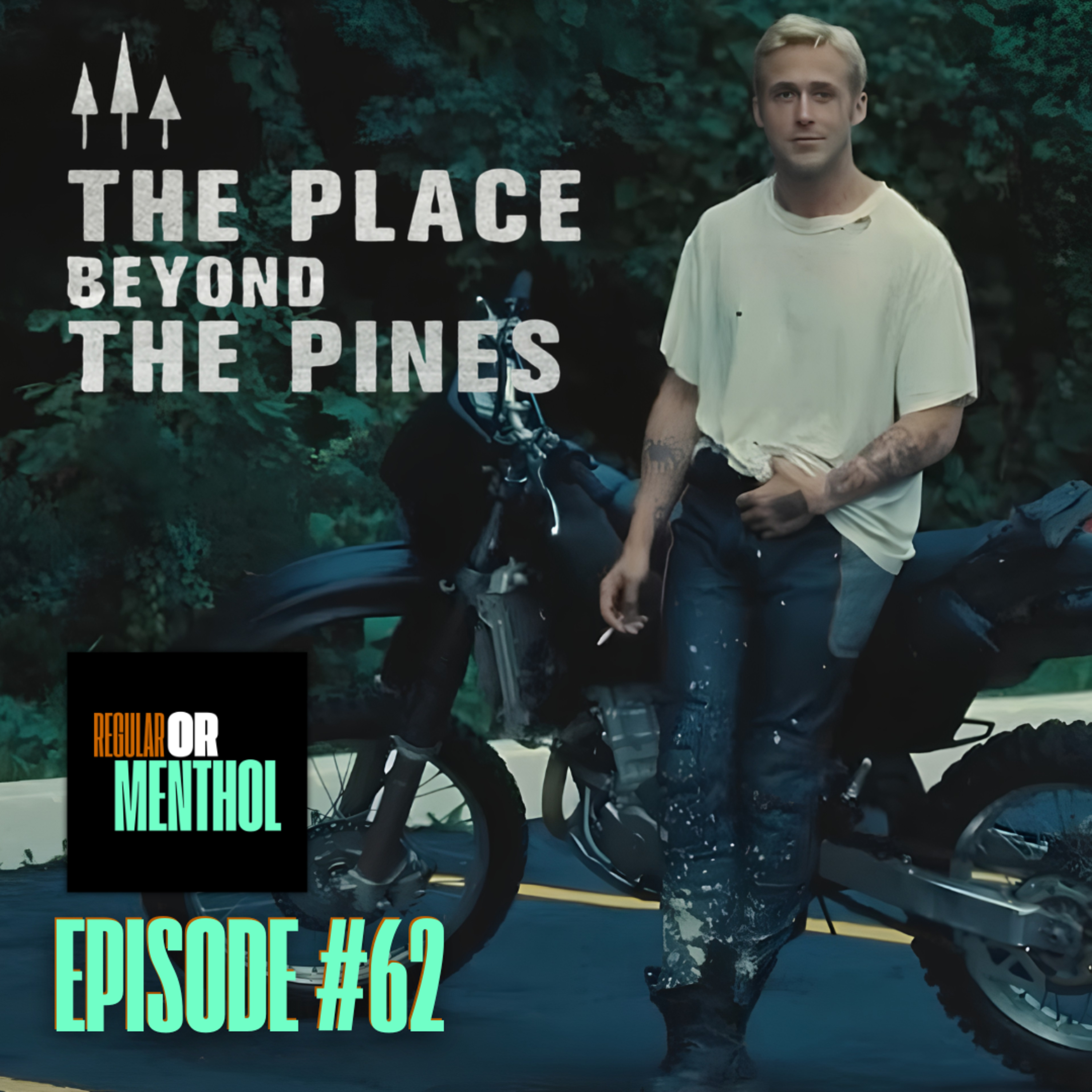 The Place Beyond the Pines (2012) | "If you ride like lightning, you're gonna crash like thunder.” This week, we dive into The Place Beyond the Pines (2012) — Derek Cianfrance’s powerful crime drama that explores fatherhood, fate, consequence, and the lasting impact of the choices we make. A haunting and emotionally layered film, The Place Beyond the Pines blends crime thriller, family drama, character study, and modern tragedy into a deeply human story about legacy, redemption, and the connections that shape our lives.Directed by Derek Cianfrance and featuring an unforgettable ensemble cast including Ryan Gosling, Bradley Cooper, Eva Mendes, Dane DeHaan, Rose Byrne, and Ray Liotta, the film follows the intersecting lives of a motorcycle stunt rider, a rookie police officer, and the families forever changed by their decisions. Ryan Gosling stars as Luke Glanton, a traveling motorcycle performer who discovers he has a son and decides to turn to a life of crime to provide for his family. His choices set off a chain of events that eventually collide with rookie officer Avery Cross (Bradley Cooper), creating consequences that ripple across generations.In this episode, we break down Derek Cianfrance’s ambitious storytelling structure, the film’s unforgettable performances, and the way The Place Beyond the Pines examines themes of masculinity, fatherhood, guilt, morality, and inherited trauma. We discuss Ryan Gosling’s intense and emotional portrayal of Luke, Bradley Cooper’s transformation as Avery, and how the film shifts perspectives to show that every action has consequences beyond what we can see.We also explore the movie’s stunning cinematography, atmospheric small-town setting, haunting score, and the powerful use of time jumps to tell a larger story about family, regret, and redemption. From its slow-burn crime elements to its emotional exploration of fathers and sons, The Place Beyond the Pines remains one of the most thought-provoking crime dramas of the 2010s.Why does The Place Beyond the Pines continue to resonate with audiences years after its release? How does Derek Cianfrance use one crime to explore the lives of multiple generations? And what does the film reveal about whether people can truly escape the mistakes of the past? We dive into all of it.Whether you're a fan of crime dramas, Ryan Gosling movies, Bradley Cooper films, Derek Cianfrance movies, emotional character studies, family dramas, modern tragedies, independent cinema, movie analysis, film reviews, storytelling breakdowns, or thought-provoking films — this episode is for you.Topics covered: The Place Beyond the Pines (2012) | Derek Cianfrance | Ryan Gosling | Bradley Cooper | Eva Mendes | Dane DeHaan | Ray Liotta | crime drama movies | family dramas | fatherhood in film | redemption stories | morality in movies | consequences of choices | generational trauma | character-driven films | independent cinema | modern classics | emotional storytelling | crime thrillers | film analysis | movie review podcast | cinematic storytelling | small-town dramas | legacy and identity | dramatic films | Hollywood performances | movie discussionSubscribe, rate, and leave us a review — and tell us: if you had the chance to change one decision from your past, would you?YouTube: http://www.youtube.com/@RegularorMentholContact us: Regularormenthol@gmail.comWebsite: www.regularormenthol.com | — | ||||||
| 6/23/26 | 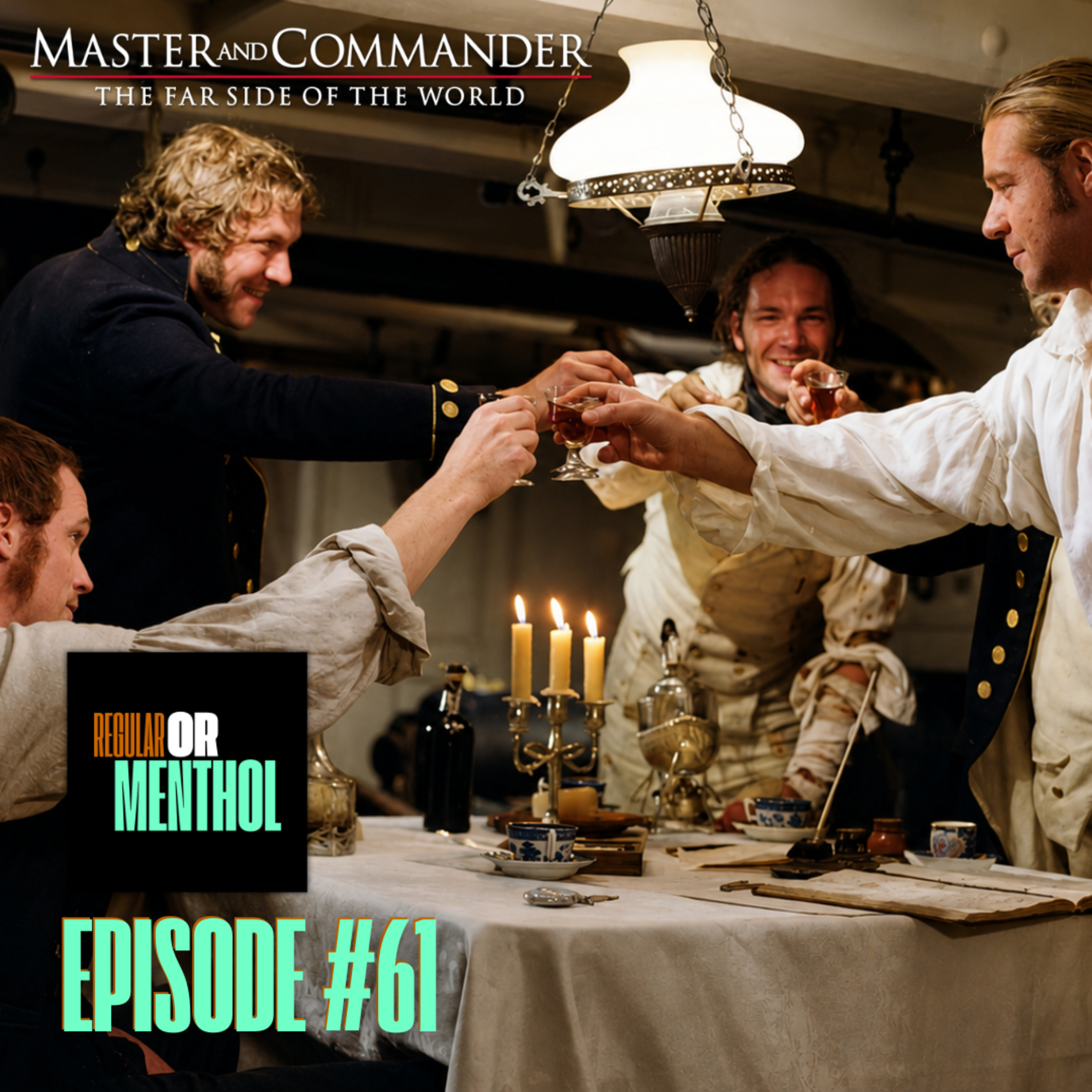 Master and Commander: The Far Side of the World (2003) | “Which would be worse — to lose your ship, or to lose your purpose?” This week, we set sail into the age of sail with Master and Commander: The Far Side of the World (2003) — Peter Weir’s sweeping historical adventure that combines naval warfare, character drama, survival, exploration, and leadership into one of the most acclaimed and immersive films of the 21st century. Equal parts war epic, seafaring adventure, and study of friendship, Master and Commander remains a masterclass in filmmaking, bringing the dangers and realities of life at sea during the Napoleonic Wars vividly to life.Directed by Peter Weir and based on the beloved Aubrey–Maturin novels by Patrick O’Brian, the film follows Captain Jack Aubrey (Russell Crowe) and ship’s surgeon, natural philosopher, and intelligence officer Stephen Maturin (Paul Bettany) aboard HMS Surprise as they pursue the powerful French privateer Acheron across the Atlantic and around Cape Horn. Facing brutal storms, impossible odds, battlefield injuries, and difficult moral decisions, Aubrey and his crew must balance duty, ambition, survival, and friendship while navigating one of the most dangerous missions of the era. Featuring outstanding performances from Russell Crowe, Paul Bettany, James D’Arcy, Billy Boyd, and Max Pirkis, Master and Commander has earned its reputation as one of the greatest historical adventure films ever made.In this episode, we break down the film’s remarkable historical authenticity, stunning practical effects, immersive sound design, and unforgettable naval combat sequences. We discuss Peter Weir’s direction, the chemistry between Crowe and Bettany, and how the film captures the realities of leadership, sacrifice, discipline, and life aboard a Royal Navy warship. We also explore the movie’s themes of duty, friendship, scientific discovery, courage, obsession, and the human cost of war.Why has Master and Commander continued to gain appreciation since its release? How did Peter Weir create one of the most realistic depictions of naval warfare ever put on screen? And why do audiences still connect with Captain Aubrey and Dr. Maturin more than two decades later? We dive into all of it.Whether you're a fan of historical epics, naval warfare movies, Russell Crowe films, Peter Weir movies, maritime adventures, war dramas, Patrick O’Brian novels, historical fiction, movie analysis, film reviews, military history, practical filmmaking, character-driven storytelling, or cinematic classics — this episode is for you.Topics covered: Master and Commander: The Far Side of the World (2003) | Peter Weir | Russell Crowe | Paul Bettany | Patrick O’Brian | HMS Surprise | Napoleonic Wars | historical adventure films | naval warfare movies | war drama | historical fiction | maritime history | age of sail | military leadership | friendship in film | practical effects | sound design | character study | survival at sea | Royal Navy history | classic adventure films | movie analysis | film review podcast | historical cinema | epic films | seafaring movies | military history in film | cinema discussionSubscribe, rate, and leave us a review — and tell us: if you were aboard HMS Surprise, would you choose adventure, duty, or the pursuit of discovery?YouTube: http://www.youtube.com/@RegularorMentholContact us: Regularormenthol@gmail.comWebsite: www.regularormenthol.com | — | ||||||
| 6/15/26 | 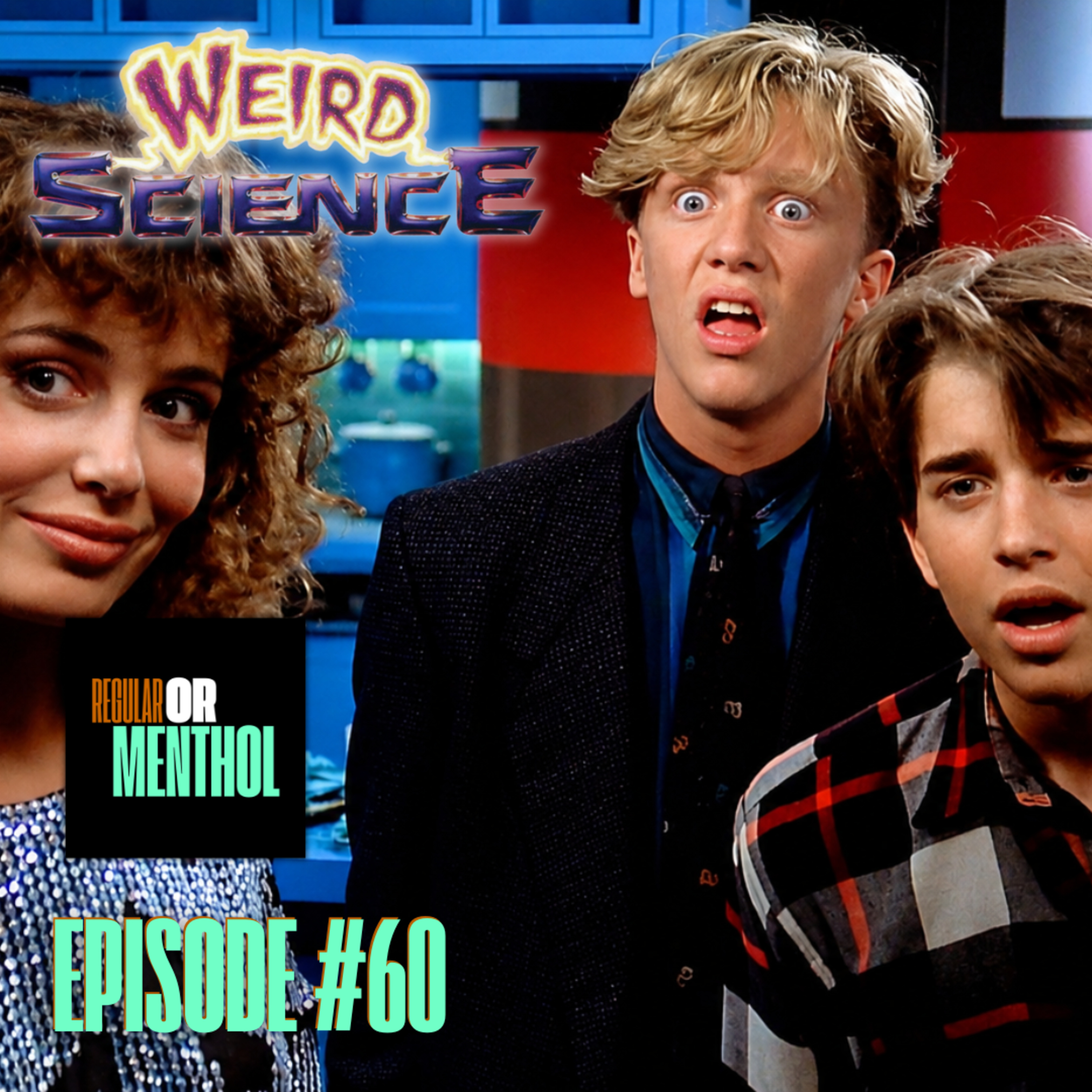 Weird Science (1985) | "Why are we wearing bras on our head?" This week, we fire up the 1980s time machine with Weird Science (1985) — John Hughes’ wildly inventive teen comedy that blends high school awkwardness, fantasy, science fiction, and pure adolescent wish fulfillment into one of the decade’s most memorable cult classics. Equal parts coming-of-age story and outrageous comedy, Weird Science remains a unique snapshot of 1980s pop culture, teenage insecurity, and the limitless possibilities of imagination.Written and directed by John Hughes, the film follows socially awkward best friends Gary Wallace (Anthony Michael Hall) and Wyatt Donnelly (Ilan Mitchell-Smith), who use a computer, a hacked electrical setup, and a healthy dose of teenage desperation to create Lisa (Kelly LeBrock), the perfect woman. What begins as an experiment quickly spirals into a series of bizarre adventures involving bullies, parties, mutant bikers, family chaos, and lessons in confidence, self-respect, and growing up. With unforgettable performances from Kelly LeBrock, Anthony Michael Hall, Bill Paxton, and Robert Downey Jr., Weird Science has earned its place as one of the most beloved teen comedies of the 1980s.In this episode, we break down the film’s unique blend of comedy and science fiction, John Hughes’ influence on teen cinema, and how Weird Science differs from his more grounded classics like The Breakfast Club, Ferris Bueller’s Day Off, and Sixteen Candles. We discuss the film’s memorable characters, iconic one-liners, practical effects, and enduring cult following, while also exploring its themes of confidence, friendship, adolescence, fantasy, and self-discovery.Why has Weird Science remained a fan favorite for more than four decades? How did John Hughes transform a simple teenage fantasy into a lasting comedy classic? And what does the film reveal about the hopes, fears, and insecurities of growing up in the 1980s? We dive into all of it.Whether you're a fan of John Hughes movies, 1980s comedies, cult classic films, science fiction comedies, teen movies, nostalgic cinema, Kelly LeBrock, Anthony Michael Hall, movie analysis, film reviews, comedy classics, or pop culture history — this episode is for you.Topics covered: Weird Science (1985) | John Hughes | Kelly LeBrock | Anthony Michael Hall | Ilan Mitchell-Smith | Bill Paxton | Robert Downey Jr. | 1980s teen movies | science fiction comedy | cult classic films | coming-of-age stories | teen comedy classics | movie analysis | film review podcast | 1980s nostalgia | practical effects | comedy films of the 1980s | John Hughes movies ranked | fantasy comedy movies | high school films | iconic movie quotes | cult movie discussion | classic comedy films | pop culture history | cinema discussionSubscribe, rate, and leave us a review — and tell us: if you could create anything with a computer, what would you make?YouTube: http://www.youtube.com/@RegularorMentholContact us: Regularormenthol@gmail.comWebsite: www.regularormenthol.com | — | ||||||
| 6/8/26 | 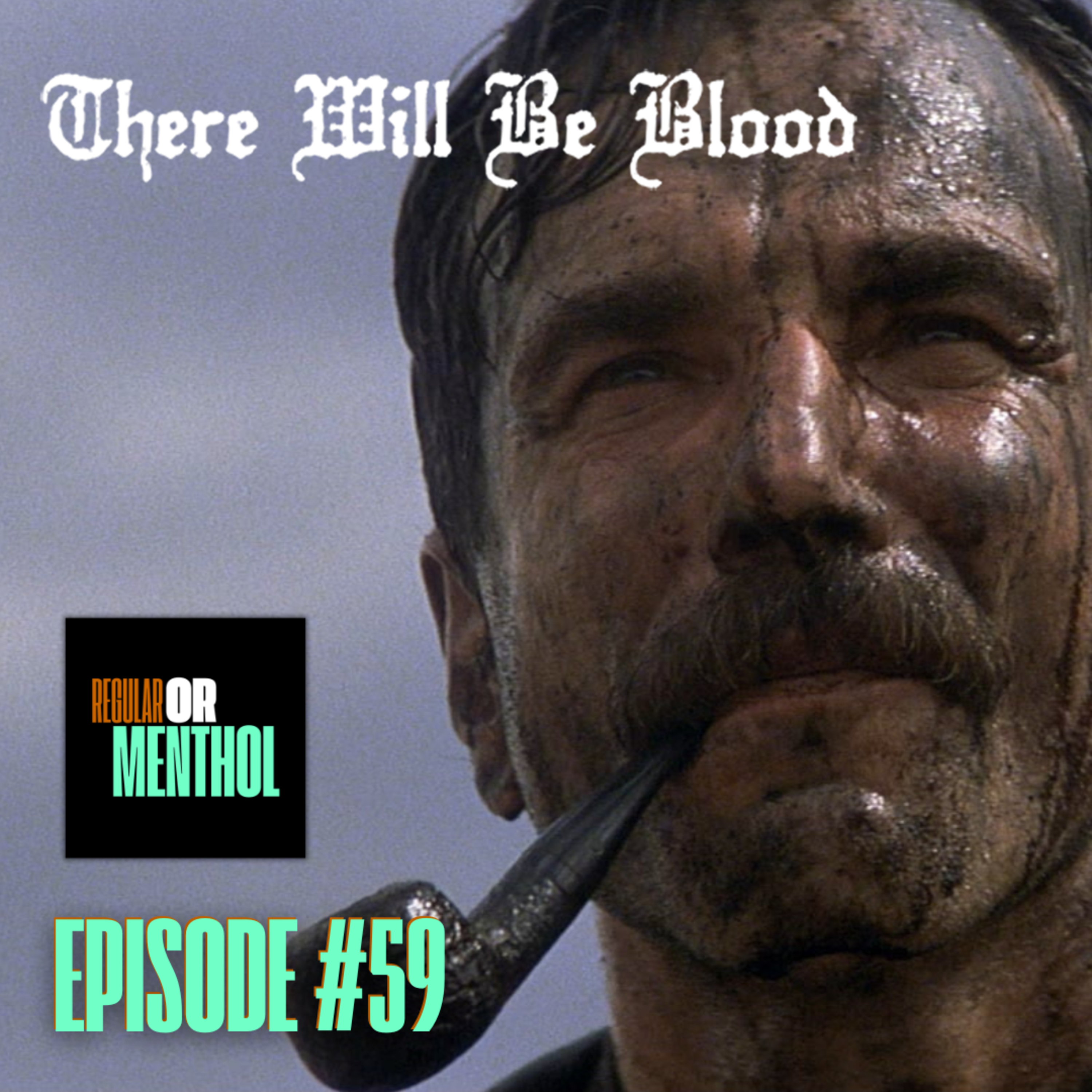 There Will Be Blood (2007) | "I drink your milkshake!" This week, we strike oil with There Will Be Blood (2007) — Paul Thomas Anderson’s towering American epic that explores ambition, greed, power, religion, and the relentless pursuit of success at any cost. Dark, mesmerizing, and unforgettable, There Will Be Blood is more than just a story about oil drilling — it’s a haunting examination of capitalism, isolation, and the corruption that can accompany the American Dream.Written and directed by Paul Thomas Anderson and loosely inspired by Upton Sinclair’s novel Oil!, the film follows Daniel Plainview, a ruthless prospector who transforms himself into one of California’s most powerful oilmen during the early 20th century. Anchored by Daniel Day-Lewis’s legendary Academy Award-winning performance, the film chronicles Plainview’s rise to wealth and influence while tracing his increasingly destructive rivalry with charismatic preacher Eli Sunday, played by Paul Dano. The result is a tense and deeply unsettling portrait of obsession, ego, and moral decay.In this episode, we break down the film’s masterful storytelling, stunning cinematography, and haunting score by Jonny Greenwood. We discuss Daniel Day-Lewis’s iconic portrayal of Daniel Plainview, Paul Dano’s unforgettable performance as Eli Sunday, and how their conflict drives one of the most compelling character studies ever put on screen. We also explore the film’s themes of capitalism, religion, family, loneliness, power, and the dark side of entrepreneurial ambition.Why is There Will Be Blood widely regarded as one of the greatest films of the 21st century? How does Paul Thomas Anderson transform a historical drama into a timeless exploration of human nature? And what makes Daniel Plainview one of cinema’s most fascinating and terrifying protagonists? We dig into all of it.Whether you're a fan of Paul Thomas Anderson films, Daniel Day-Lewis performances, psychological dramas, historical epics, character-driven storytelling, Oscar-winning movies, American cinema, film analysis, movie reviews, or modern masterpieces — this episode is for you.Topics covered: There Will Be Blood (2007) | Paul Thomas Anderson | Daniel Day-Lewis | Daniel Plainview | Eli Sunday | Paul Dano | Jonny Greenwood score | Upton Sinclair Oil | American capitalism in film | religion and power | psychological drama | character study movies | Oscar-winning performances | best films of the 2000s | American Dream movies | historical drama films | movie analysis | film review podcast | cinema discussion | modern masterpieces | oil industry history | entrepreneurship and greed | iconic movie quotes | prestige films | Academy Award winnersSubscribe, rate, and leave us a review — and tell us: do you think Daniel Plainview was driven more by ambition, competition, or pure hatred?YouTube: http://www.youtube.com/@RegularorMentholContact us: Regularormenthol@gmail.comWebsite: www.regularormenthol.com | — | ||||||
| 6/1/26 | 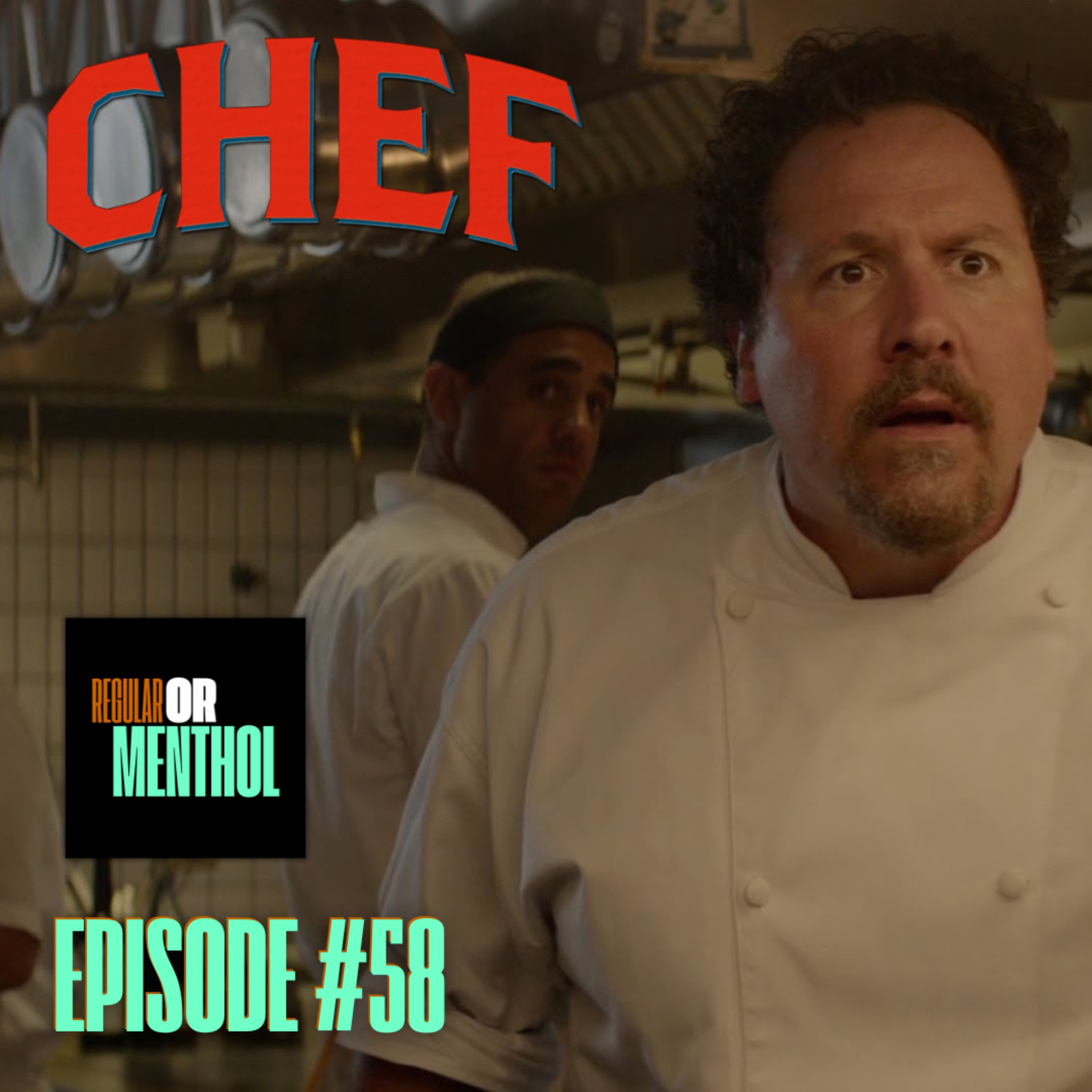 Episode #58: Chef (2014) — Jon Favreau's Passion Piece | Regular or Menthol Podcast | "If you're not the freshest, the food can be." This week, we’re hitting the road with Chef (2014) — Jon Favreau’s heartfelt culinary comedy-drama that serves up equal parts food, family, creativity, and self-discovery. Warm, funny, and surprisingly inspiring, Chef is more than just a movie about cooking — it’s a story about reclaiming your passion, embracing reinvention, and finding success on your own terms.Written, directed by, and starring Jon Favreau, the film follows Carl Casper, a talented chef whose career takes an unexpected turn after a public clash with a food critic goes viral. Determined to rediscover his love for cooking, Carl embarks on a cross-country food truck journey with his young son and close friend, serving up Cuban sandwiches while rebuilding his career, relationships, and sense of purpose. The film features an outstanding supporting cast including Scarlett Johansson, Sofia Vergara, John Leguizamo, Dustin Hoffman, Bobby Cannavale, and Robert Downey Jr.In this episode, we break down the film’s authentic portrayal of food culture, the rise of social media and online criticism, and why Chef became an instant comfort-movie classic. We discuss Jon Favreau’s passion project, the film’s incredible food cinematography, the father-son relationship at the heart of the story, and how Carl’s journey resonates with anyone who has ever felt stuck in a career or creative rut. We also explore the movie’s themes of entrepreneurship, second chances, work-life balance, and the courage it takes to start over.Why has Chef remained one of the most beloved feel-good films of the 2010s? How does it capture the spirit of creativity and personal fulfillment better than most modern comedies? And why do audiences leave the movie immediately craving a Cuban sandwich? We dig into all of it.Whether you're a fan of food movies, Jon Favreau films, culinary documentaries, family dramas, road trip movies, restaurant culture, entrepreneurship stories, or uplifting character-driven films — this episode is for you.Topics covered: Chef 2014 | Jon Favreau Chef | Carl Casper character | food truck movies | culinary films | cooking movies | restaurant culture | father son relationships in film | Sofia Vergara Chef | Scarlett Johansson Chef | John Leguizamo Chef | Robert Downey Jr Chef | best food movies | feel good movies | independent films | food truck business | social media and food criticism | entrepreneurship movies | movie analysis | film review podcast | comfort movies | creative burnout | career reinvention | Cuban sandwich movie | road trip films | family moviesSubscribe, rate, and leave us a review — and tell us: what meal from Chef would you most want to try?YouTube: http://www.youtube.com/@RegularorMentholContact us: Regularormenthol@gmail.comWebsite: www.regularormenthol.com | — | ||||||
| 5/26/26 | 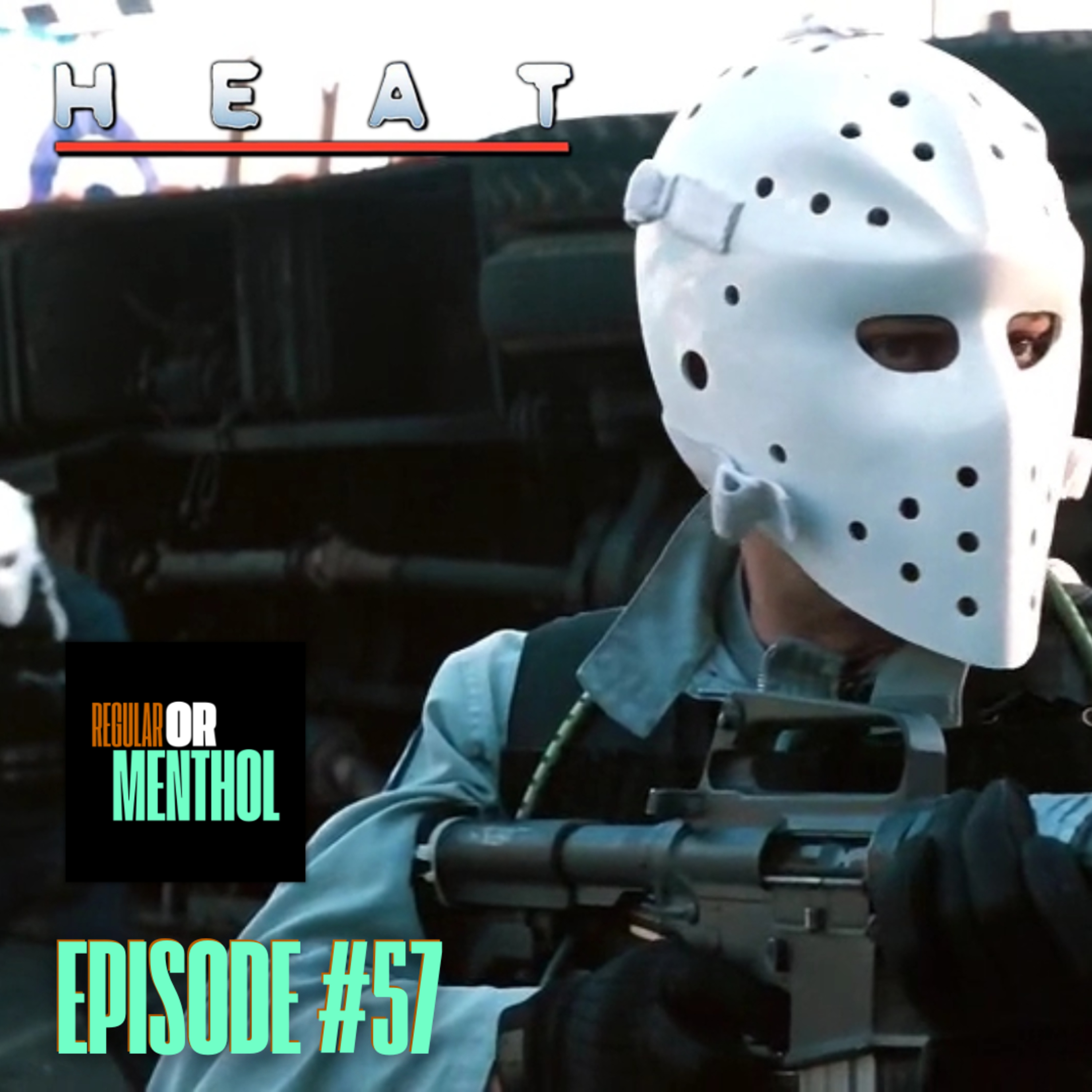 Episode #57: Heat (1995) — Michael Mann's Crime Masterpiece | Regular or Menthol Podcast | You can get killed walkin’ your doggie. This week, we’re heading deep into the streets of Los Angeles with Heat (1995) — Michael Mann’s iconic crime epic that redefined the modern heist thriller and gave us one of the greatest on-screen rivalries in film history. Stylish, intense, and emotionally layered, Heat isn’t just a cops-and-robbers movie — it’s a meditation on obsession, professionalism, loyalty, and the lonely cost of living by your own code.Directed and written by Michael Mann, the film follows master thief Neil McCauley (Robert De Niro), a disciplined career criminal planning one last score, and relentless LAPD detective Vincent Hanna (Al Pacino), whose personal life is unraveling as he becomes consumed by the chase. As both men close in on each other, Heat transforms into a gripping character study about two professionals on opposite sides of the law who may be more alike than they realize. The legendary ensemble cast also includes Val Kilmer, Tom Sizemore, Ashley Judd, Diane Venora, Natalie Portman, Jon Voight, and Dennis Haysbert.We’re diving into everything: the famous downtown Los Angeles shootout that changed action filmmaking forever, Michael Mann’s obsession with realism and procedural detail, and the unforgettable diner scene between Pacino and De Niro — the first time the two acting legends shared substantial screen time together on screen. We also break down the film’s themes of isolation, masculinity, sacrifice, and why Heat still feels more mature and emotionally grounded than most crime thrillers nearly three decades later.Is Heat the greatest crime film of the 1990s? Why has its influence been felt in everything from The Dark Knight to modern heist movies and prestige television? And what makes Neil McCauley and Vincent Hanna such endlessly compelling characters? We get into all of it.Whether you’re a fan of crime sagas, heist movies, Michael Mann films, Al Pacino performances, Robert De Niro classics, action thrillers, or character-driven dramas — this episode is for you.Topics covered: Heat 1995 | Michael Mann director | Robert De Niro Neil McCauley | Al Pacino Vincent Hanna | Val Kilmer Chris Shiherlis | crime thriller movies | heist films | Los Angeles crime movies | best crime movies of the 1990s | action thriller classics | diner scene Heat | downtown shootout Heat | neo-noir films | Michael Mann cinematography | film analysis | movie review podcast | bank robbery movies | cinematic realism | character study films | classic action movies | best Pacino performances | best De Niro moviesSubscribe, rate, and leave us a review — and tell us: are you more Neil McCauley or Vincent Hanna?YouTube: http://www.youtube.com/@RegularorMentholContact us: Regularormenthol@gmail.comWebsite: www.regularormenthol.com | — | ||||||
| 5/18/26 | 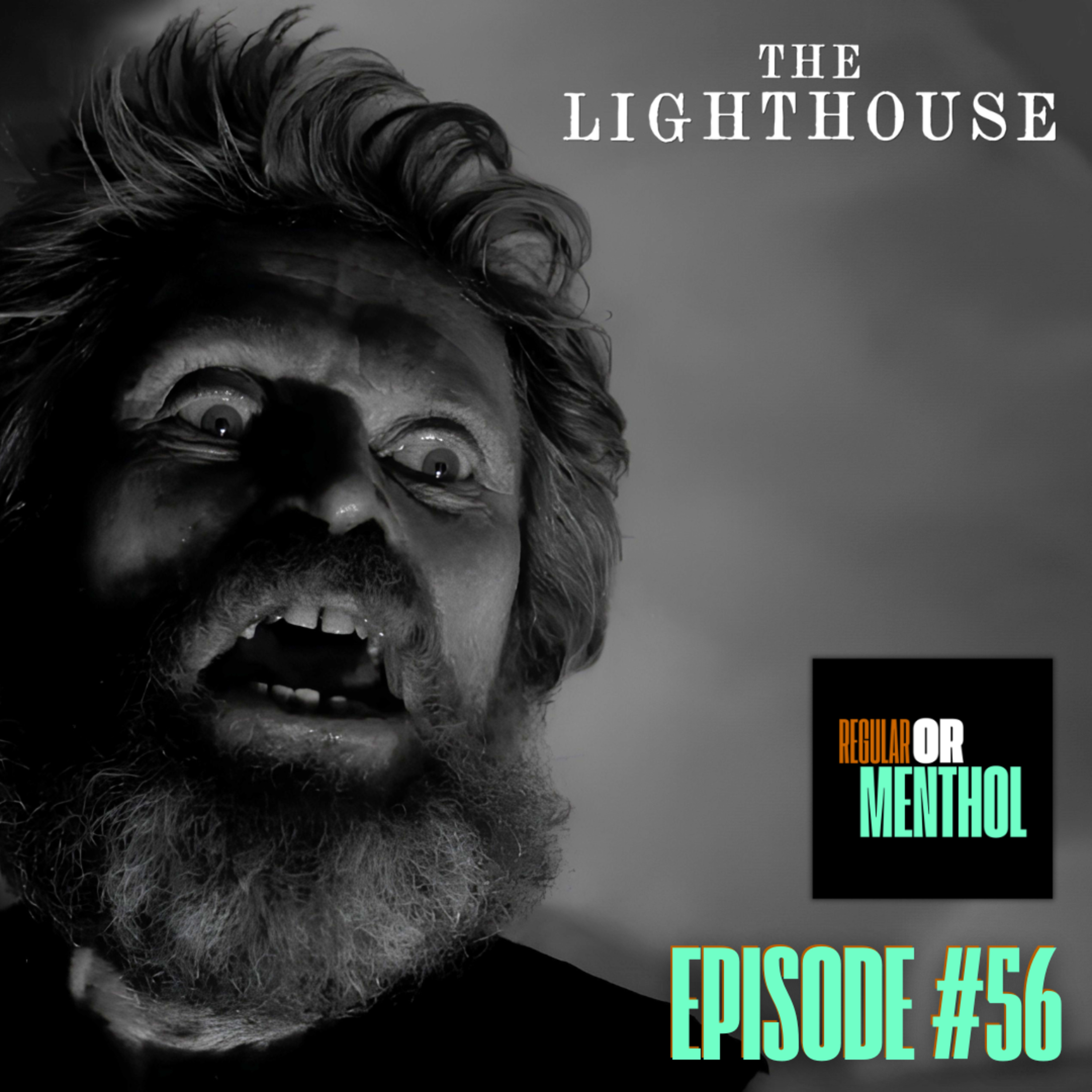 The Lighthouse (2019) | There’s something deeply wrong on this island — and by the time the fog rolls in, it may already be too late. This week, we’re descending into the madness of The Lighthouse — Robert Eggers’ hypnotic, black-and-white psychological horror film that blends maritime folklore, isolation-induced paranoia, dark comedy, and pure nightmare fuel into one of the most unsettling modern films of the last decade. Equal parts psychological thriller, surreal character study, and old-world sea legend, The Lighthouse is a movie that feels like a hallucination trapped inside a storm.Directed by Robert Eggers, the film stars Willem Dafoe and Robert Pattinson as two lighthouse keepers stranded on a remote New England island in the 1890s. As their isolation grows more intense and the weather becomes increasingly hostile, the line between reality and delusion begins to collapse. What starts as a miserable work assignment spirals into psychological warfare, drunken chaos, supernatural dread, and a descent into complete madness fueled by guilt, obsession, and the mysterious beacon at the top of the lighthouse itself.We break down everything that makes The Lighthouse such a singular cinematic experience: Robert Eggers’ obsessive historical accuracy, the film’s stunning black-and-white cinematography, and the claustrophobic 1.19:1 aspect ratio that makes every frame feel suffocating. We also dive into Willem Dafoe’s unforgettable monologues, Robert Pattinson’s physically demanding performance, the movie’s layered symbolism involving Prometheus, Greek mythology, masculinity, repression, and power, and why the film continues to inspire endless fan theories and interpretations years after its release.We also discuss how The Lighthouse balances psychological horror with absurdist comedy, why its sound design and foghorn-heavy atmosphere create such overwhelming tension, and how Eggers crafted a movie that feels simultaneously ancient and modern. Is The Lighthouse ultimately about guilt? Desire? Identity? Cosmic punishment? Or is it simply two men losing their minds in isolation? We explore all of it.Whether you’re a fan of psychological horror movies, A24 films, arthouse cinema, surreal filmmaking, slow-burn thrillers, Lovecraftian horror, Robert Eggers movies, or films packed with hidden symbolism and disturbing imagery — this episode is for you.Topics covered: The Lighthouse 2019 | Robert Eggers director | Willem Dafoe Thomas Wake | Robert Pattinson Ephraim Winslow | A24 horror movies | psychological horror films | black and white movies | surreal horror cinema | arthouse horror | Lovecraftian horror movies | Greek mythology in film | lighthouse symbolism | isolation horror movies | psychological thrillers | modern horror classics | cinematography analysis | movie symbolism explained | slow burn horror | film analysis podcast | atmospheric horror movies | best A24 movies | disturbing psychological movies | horror movie deep diveSubscribe, rate, and leave us a review — and tell us: would you have survived The Lighthouse?YouTube: http://www.youtube.com/@RegularorMentholContact us: Regularormenthol@gmail.com | — | ||||||
| 5/11/26 | 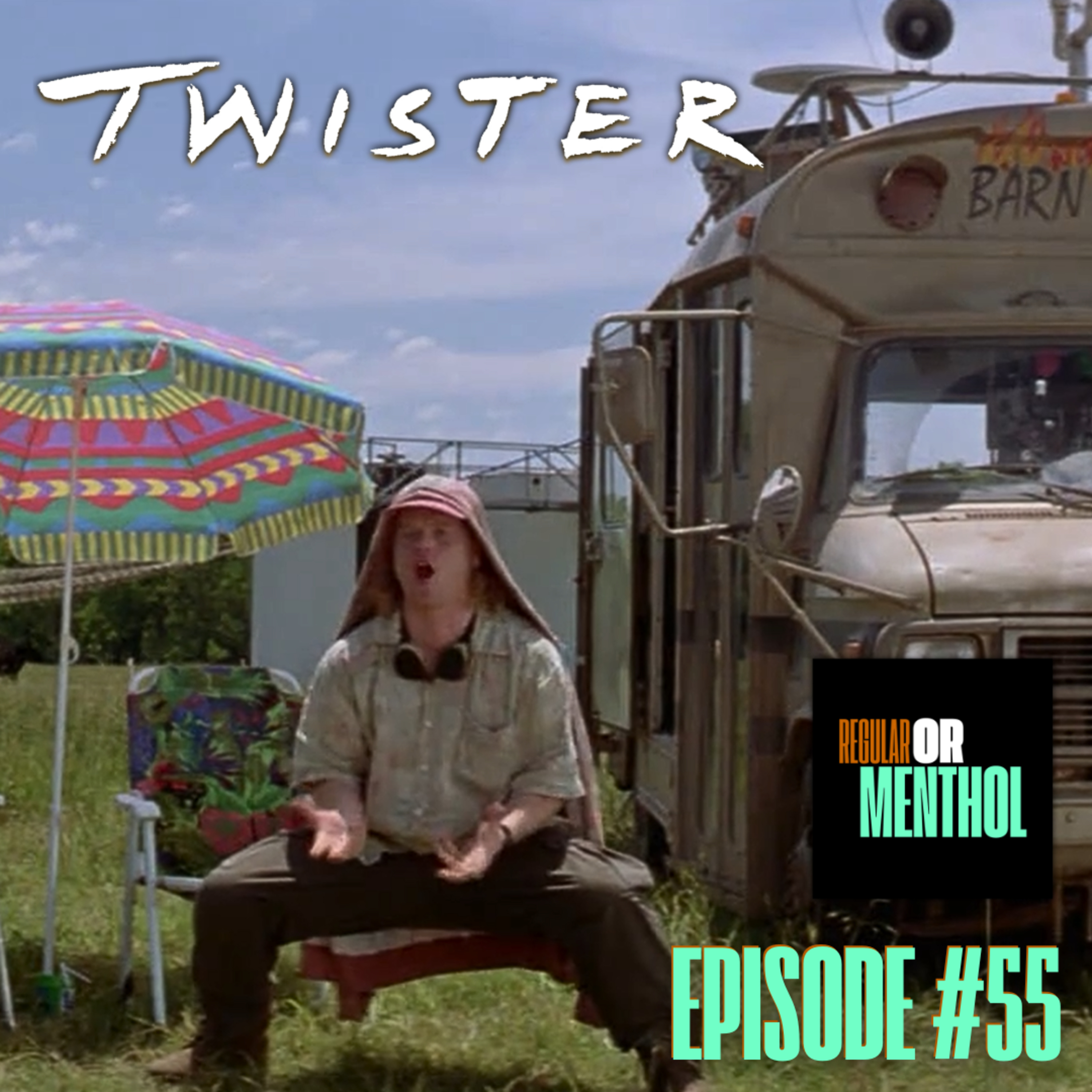 Twister (1996) | If the skies turn green, it’s already too late. This week, we’re diving headfirst into Twister — the adrenaline-fueled disaster blockbuster that turned storm chasing into one of the coolest jobs in cinema and helped redefine what a summer blockbuster could look and sound like in the 1990s. Equal parts spectacle, road movie, and relationship drama, Twister is pure big-screen chaos in the best way possible.Directed by Jan de Bont and written by Michael Crichton and Anne-Marie Martin, the film follows rival storm chasers Jo Harding (Helen Hunt) and Bill Harding (Bill Paxton) as they race across tornado-ravaged Oklahoma trying to deploy a revolutionary weather tracking device in the middle of increasingly deadly storms. Along the way, they battle massive tornadoes, flying debris, corporate rivals, and the unresolved tension of their collapsing marriage. Also starring Cary Elwes, Philip Seymour Hoffman, and Jami Gertz.We break down everything that made Twister a cultural phenomenon: the groundbreaking visual effects that pushed CGI into a new era, why the tornado sequences still hold up nearly 30 years later, and how the movie balances over-the-top disaster spectacle with surprisingly heartfelt character moments. We also get into the film’s iconic sound design, Van Halen-powered soundtrack, unforgettable practical effects work, and why Bill Paxton remains one of the most likable everyman leads in blockbuster history.Is Twister one of the greatest disaster movies ever made? How much did it influence modern blockbuster filmmaking and weather-disaster media? And why does the movie still feel wildly entertaining in an era dominated by CGI-heavy spectacle? We get into all of it.Whether you’re a fan of 90s action movies, disaster films, practical effects, weather thrillers, nostalgic summer blockbusters, or movies that were made to be watched loud — this episode is for you.Topics covered: Twister 1996 | Helen Hunt Jo Harding | Bill Paxton Bill Harding | Jan de Bont director | Michael Crichton movies | disaster movies | tornado movies | 90s blockbuster films | storm chasing movies | practical effects in film | CGI breakthrough movies | Philip Seymour Hoffman Dusty | weather thrillers | action thriller films | Universal Pictures movies | best disaster movies ever made | movie review podcast | film analysis | 1990s cinema | blockbuster filmmaking | tornado scenes in movies | nostalgic action movies | Van Halen Humans Being | classic summer moviesSubscribe, rate, and leave us a review — and tell us: would you chase the storm?YouTube: Regular or Menthol YouTube ChannelContact us: Regularormenthol@gmail.com | — | ||||||
| 5/4/26 | 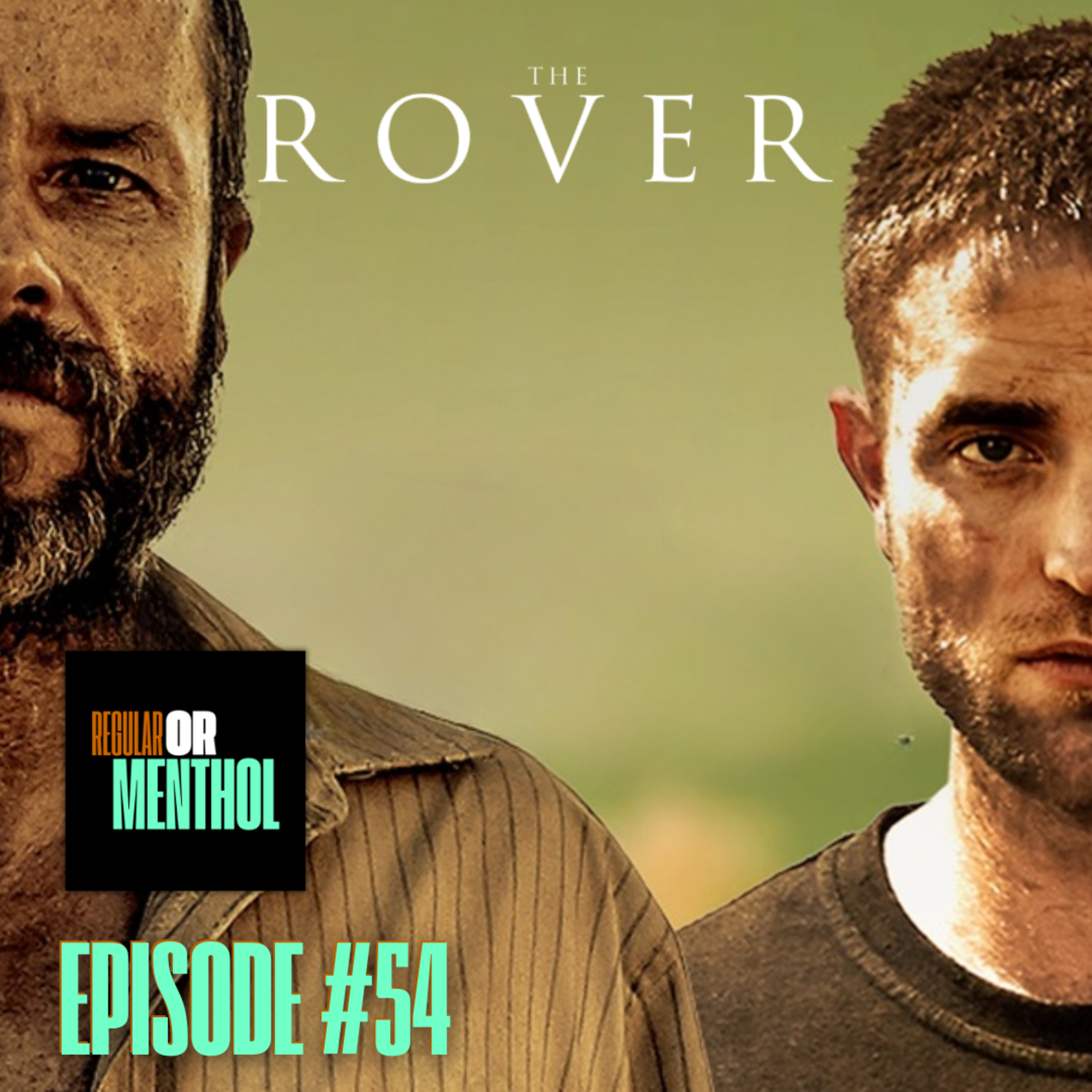 The Rover (2014) | Buckle up — this week we’re diving headfirst into the dusty, lawless wasteland of The Rover — the bleak, slow-burning Australian neo-western that pairs raw survival with haunting minimalism. Directed by David Michôd (of Animal Kingdom fame), this isn’t your typical post-apocalyptic thrill ride — it’s a stark, emotionally charged journey through a collapsed world where trust is scarce and morality is even scarcer.Set in a near-future Australia following economic collapse, the film follows Eric (Guy Pearce), a hardened drifter whose car is stolen by a gang of criminals. What unfolds is a relentless pursuit across barren landscapes, joined by the gang’s abandoned and wounded member Rey (Robert Pattinson), delivering a career-defining performance that strips away any lingering Twilight expectations. Together, they form an uneasy alliance in a world where survival often outweighs humanity.We’re breaking down everything: the film’s haunting atmosphere, its stripped-down storytelling, and how its quiet intensity sets it apart from traditional dystopian films. We also explore Pattinson’s transformative performance, Pearce’s cold, calculating presence, and the film’s deeper themes of loyalty, isolation, and moral ambiguity in a broken society.Is The Rover an underrated modern classic, or is its bleak tone too unforgiving for mainstream audiences? How does it compare to other post-apocalyptic films like Mad Max? And what makes its minimal dialogue and raw performances so impactful?Whether you’re a fan of gritty character studies, indie cinema, or unsettling dystopian worlds — this episode delivers a powerful, thought-provoking ride into one of the most overlooked films of the 2010s.Topics covered: The Rover 2014 | Robert Pattinson performance | Guy Pearce films | David Michôd | post-apocalyptic movies | Australian cinema | dystopian films | indie film analysis | slow burn movies | neo-western films | survival movies | A24 style films | minimalist storytelling | dark character studies | underrated films | movie review podcast | film breakdown | modern cult classicsSubscribe, rate, and leave us a review — and tell us: would you survive in The Rover’s world?YouTube: http://www.youtube.com/@RegularorMentholContact us: Regularormenthol@gmail.com | — | ||||||
| 4/27/26 | 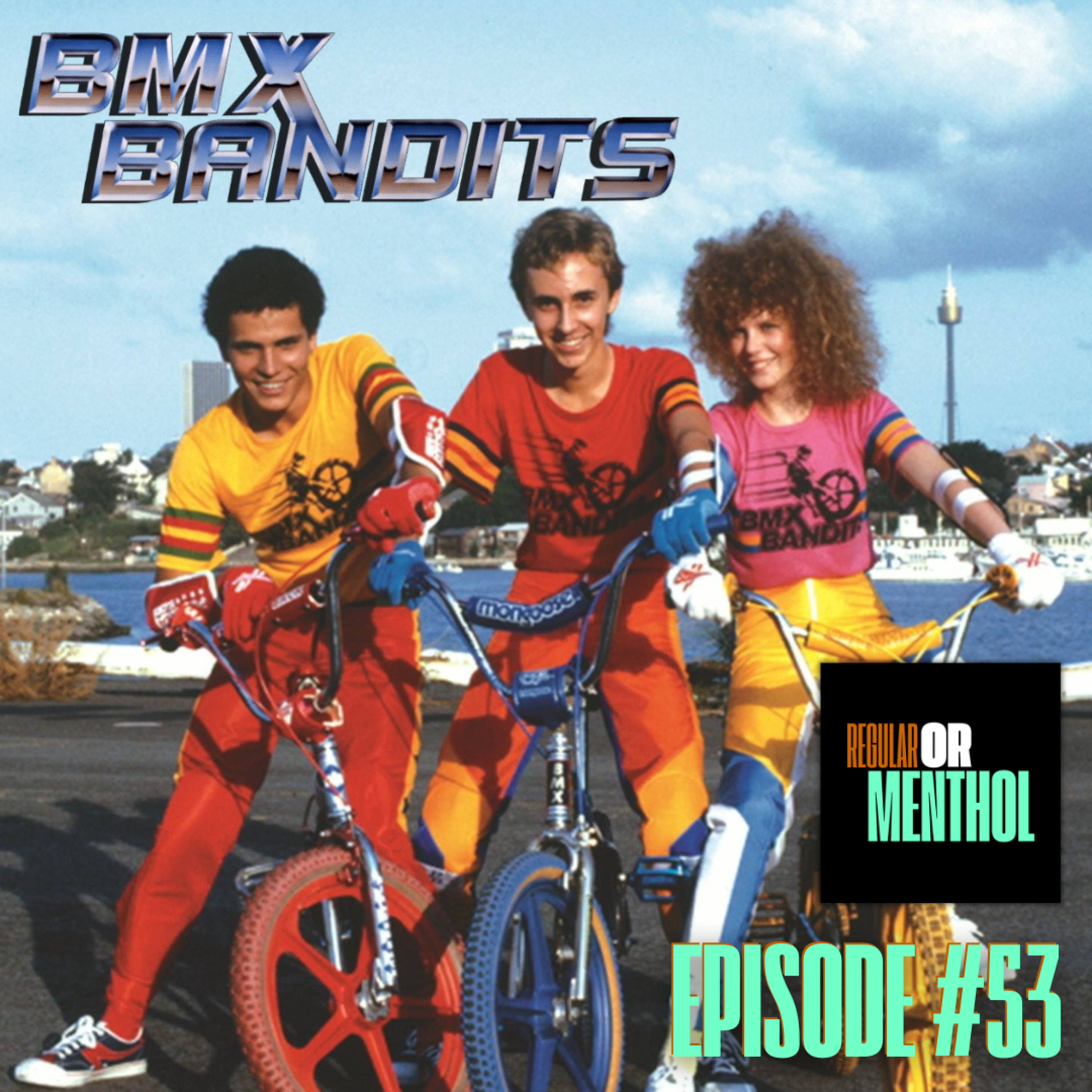 BMX Bandits (1983) | Hold onto your handlebars. This week we’re hitting the streets for BMX Bandits (1983) — the sun-soaked Australian cult classic that turned bike riding into a full-blown adventure and introduced the world to a young Nicole Kidman before Hollywood came calling. This isn’t just a kids’ movie — it’s a time capsule of 80s energy, DIY thrills, and pure, pedal-powered chaos.Directed by Brian Trenchard-Smith, the film follows three Sydney teens — P.J., Goose, and Judy — who stumble upon a stash of stolen police radios and quickly find themselves tangled in a cat-and-mouse game with bumbling bank robbers. What starts as a carefree day of riding turns into a high-speed chase across beaches, construction sites, and suburban streets, with BMX bikes as the ultimate getaway vehicles.We’re breaking down everything: the film’s scrappy charm, its inventive (and sometimes hilariously low-budget) action sequences, and how it captures a very specific moment in 80s youth culture when BMX wasn’t just a hobby — it was a lifestyle. We also dive into Nicole Kidman’s early performance, the movie’s unexpected legacy, and why it continues to resonate as a cult favorite decades later.Is BMX Bandits just nostalgic fun, or does it deserve more credit as a formative adventure film? How does it stack up against other 80s kid-led action movies? And what makes its blend of innocence and danger so rewatchable?Whether you grew up riding bikes until the streetlights came on, love discovering cult classics, or just want a dose of feel-good, high-energy filmmaking — this episode is worth the ride.Topics covered: BMX Bandits 1983 | Nicole Kidman early roles | 80s adventure movies | BMX culture | Australian cinema | cult classic films | kids action movies | coming of age films | Brian Trenchard-Smith | 1980s nostalgia | practical stunts | bike chase scenes | family adventure films | underrated 80s movies | movie review podcast | film analysis | childhood adventure movies | cult film discoveriesSubscribe, rate, and leave us a review — and tell us: are you more P.J., Goose, or Judy?YouTube: http://www.youtube.com/@RegularorMentholContact us: Regularormenthol@gmail.com | — | ||||||
Want analysis for the episodes below?Free for Pro Submit a request, we'll have your selected episodes analyzed within an hour. Free, at no cost to you, for Pro users. | |||||||||
| 4/20/26 | 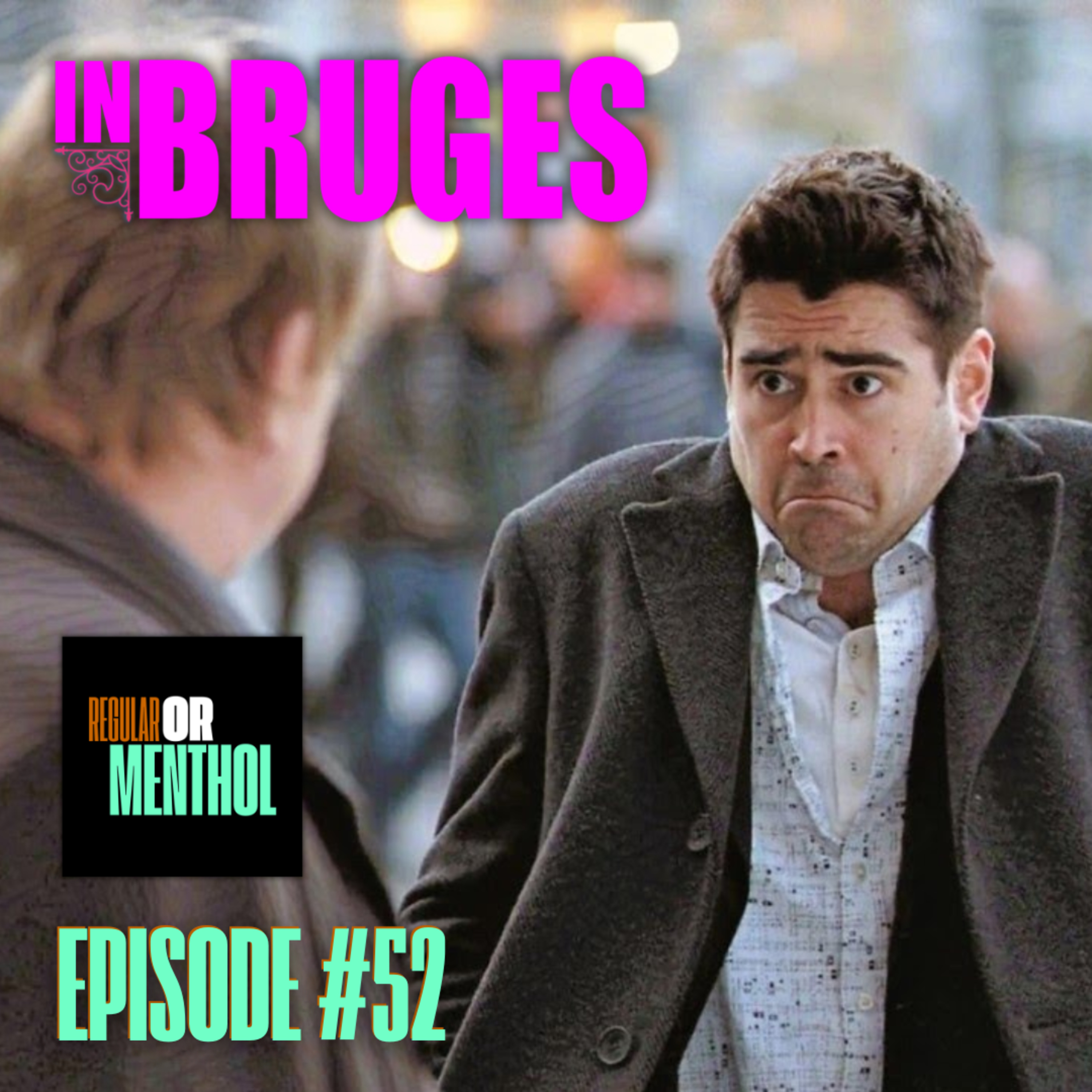 In Bruges (2008) | This week we’re heading to the cobblestone streets of In Bruges — Martin McDonagh’s darkly hilarious and unexpectedly heartfelt crime tale that blends sharp wit with existential dread. Equal parts comedy, tragedy, and character study, In Bruges turns a picturesque Belgian city into the backdrop for guilt, redemption, and some very bad decisions.In Bruges follows two Irish hitmen, Ray (Colin Farrell) and Ken (Brendan Gleeson), who are sent to lay low in the medieval city of Bruges after a job goes horribly wrong. While Ken embraces the city’s quiet beauty and history, Ray spirals into guilt and boredom—until their volatile boss Harry (Ralph Fiennes) arrives with orders that force both men to confront morality, loyalty, and their own sense of right and wrong.We’re diving into everything: McDonagh’s razor-sharp dialogue and pitch-perfect balance of humor and violence, the film’s use of Bruges as both a literal and symbolic setting, and how it shifts effortlessly between laugh-out-loud comedy and gut-punch drama. We’ll break down Farrell’s career-defining performance, Gleeson’s quiet emotional core, and Fiennes’ explosive, scene-stealing turn as one of cinema’s most unpredictable crime bosses.Plus, we explore the film’s deeper themes — guilt, redemption, morality, and the search for meaning in a world that often feels absurd.Was In Bruges an instant cult classic, or has its reputation grown over time? How does it compare to other dark comedies in the crime genre? And where does it rank among the best films of the 2000s?Whether you’re a fan of dark humor, character-driven storytelling, or films that make you laugh and reflect in equal measure, this episode is for you.Topics covered: Martin McDonagh direction | In Bruges analysis | Colin Farrell performance | Brendan Gleeson character study | Ralph Fiennes performance | dark comedy films | crime drama themes | guilt and redemption in film | Bruges setting symbolism | cult classic movies | hitman stories | dialogue-driven filmsSubscribe, rate, and leave us a review — and tell us: is In Bruges more comedy or tragedy?YouTube: http://www.youtube.com/@RegularorMentholContact us: Regularormenthol@gmail.com | — | ||||||
| 4/13/26 | 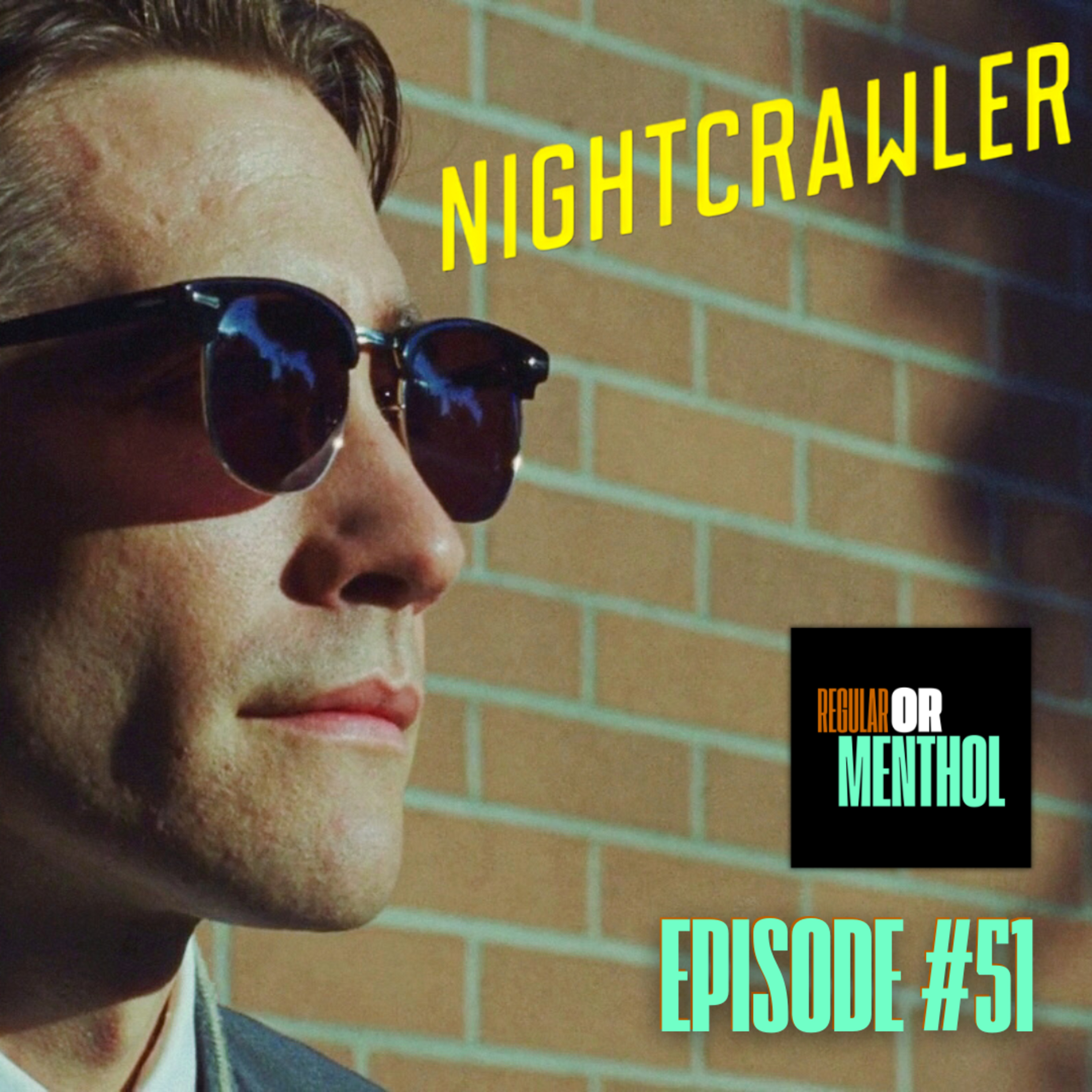 Nightcrawler (2014) | You gotta watch the city—and know what sells. This week, we’re chasing the story into the night with Nightcrawler (2014) — the slick, disturbing, neon-soaked thriller that turns ambition into something predatory. If you’ve ever wondered how far someone will go to get ahead, this is the movie that answers: all the way.Directed and written by Dan Gilroy, the film follows Lou Bloom (Jake Gyllenhaal), a driven but morally unmoored drifter who stumbles into the world of freelance crime journalism in Los Angeles. Armed with a police scanner, a camera, and an unsettling amount of determination, Lou reinvents himself as a “nightcrawler,” capturing graphic footage of accidents, crimes, and tragedies to sell to local news stations. As his ambition grows, so does his willingness to manipulate—and even manufacture—the stories he covers. Also starring Rene Russo, Riz Ahmed, and Bill Paxton.We’re diving deep into everything: Gyllenhaal’s career-best, skin-crawling performance and physical transformation, the film’s razor-sharp critique of media sensationalism and “if it bleeds, it leads” culture, and Rene Russo’s underrated turn as a desperate news director willing to blur every ethical line for ratings. We also break down how Nightcrawler captures the eerie emptiness of Los Angeles at night, and why its tension feels so real it’s almost documentary-like.Is Nightcrawler one of the best thrillers of the 2010s? How does it hold up as a commentary on capitalism, media exploitation, and the gig economy before those conversations went mainstream? And what makes Lou Bloom such a uniquely terrifying character—not because he’s chaotic, but because he’s calculated? We get into all of it.Whether you’re a fan of psychological thrillers, dark character studies, Jake Gyllenhaal performances, media critique films, or movies that leave you unsettled long after the credits roll—this episode is for you.Topics covered: Nightcrawler 2014 | Jake Gyllenhaal Lou Bloom | Rene Russo Nina Romina | Riz Ahmed Rick | Dan Gilroy director | crime thriller movies | psychological thrillers | media ethics films | journalism movies | Los Angeles films | neo-noir movies | best thrillers of the 2010s | dark character studies | independent films 2014 | movie review podcast | film analysis | capitalism in film | news media satire | investigative journalism movies | unsettling films | best Jake Gyllenhaal moviesSubscribe, rate, and leave us a review — and tell us: how far would you go for the perfect shot?YouTube: http://www.youtube.com/@RegularorMentholContact us: Regularormenthol@gmail.com | — | ||||||
| 4/6/26 | 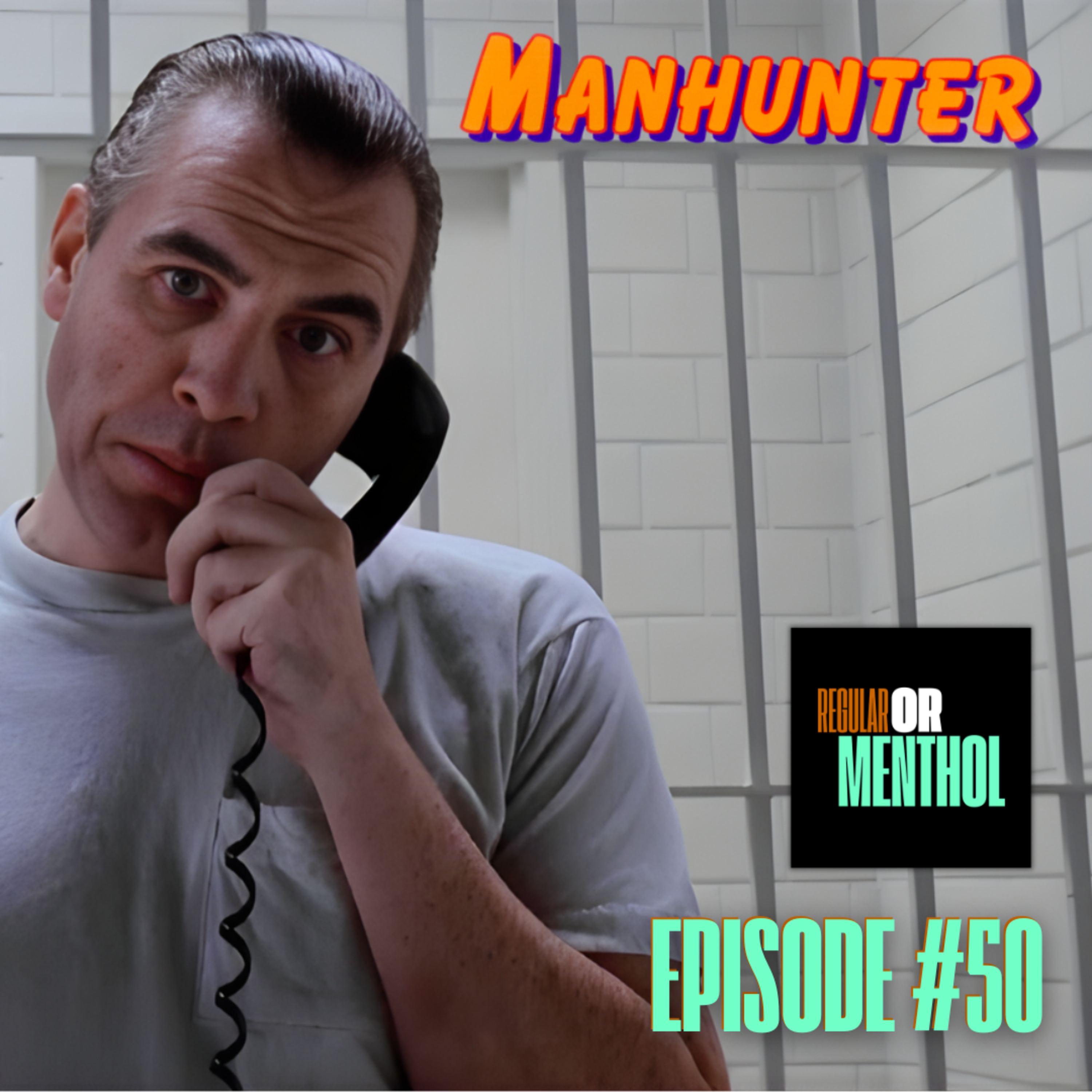 Manhunter (1986) | This week we’re stepping into the shadows and breaking down Manhunter (1986) — Michael Mann’s sleek, psychological thriller that introduced audiences to one of cinema’s most chilling villains long before The Silence of the Lambs. Stylish, haunting, and ahead of its time, Manhunter blends neon-soaked visuals with a deeply unsettling dive into the mind of a killer—and the man trying to stop him.Manhunter follows former FBI profiler Will Graham (played by William Petersen), who’s pulled out of retirement to track down a brutal serial killer known as “The Tooth Fairy.” To catch him, Graham must once again enter the psyche of another brilliant monster: Hannibal Lecktor (portrayed here by Brian Cox), setting off a dangerous psychological game that blurs the line between hunter and hunted.We’re diving into everything: Michael Mann’s signature visual style and use of color and music, the film’s eerie atmosphere, and how it laid the groundwork for modern crime thrillers. We’ll break down Tom Noonan’s deeply disturbing performance as Francis Dollarhyde, the evolution of the Hannibal Lecter character across films, and how Manhunter compares to later adaptations of Thomas Harris’s work.Plus, we explore the film’s deeper themes — obsession, empathy, psychological toll, and the cost of getting too close to darkness in pursuit of justice.Was Manhunter a misunderstood classic that deserved more recognition? How does it stack up against The Silence of the Lambs and Red Dragon? And where does it rank among the greatest crime thrillers of the 1980s?Whether you're a fan of psychological horror, crime procedurals, or stylish, character-driven filmmaking, this episode is for you.Topics covered: Michael Mann direction | Manhunter vs Red Dragon | Hannibal Lecter origins | Will Graham character analysis | 1980s crime thrillers | serial killer psychology | Thomas Harris adaptations | film aesthetics and soundtrack | FBI profiler storytelling | cult classic films | Brian Cox performance | Tom Noonan performanceSubscribe, rate, and leave us a review — and tell us who did it better: Brian Cox or Anthony Hopkins.YouTube: http://www.youtube.com/@RegularorMentholContact us: Regularormenthol@gmail.com | — | ||||||
| 3/30/26 | 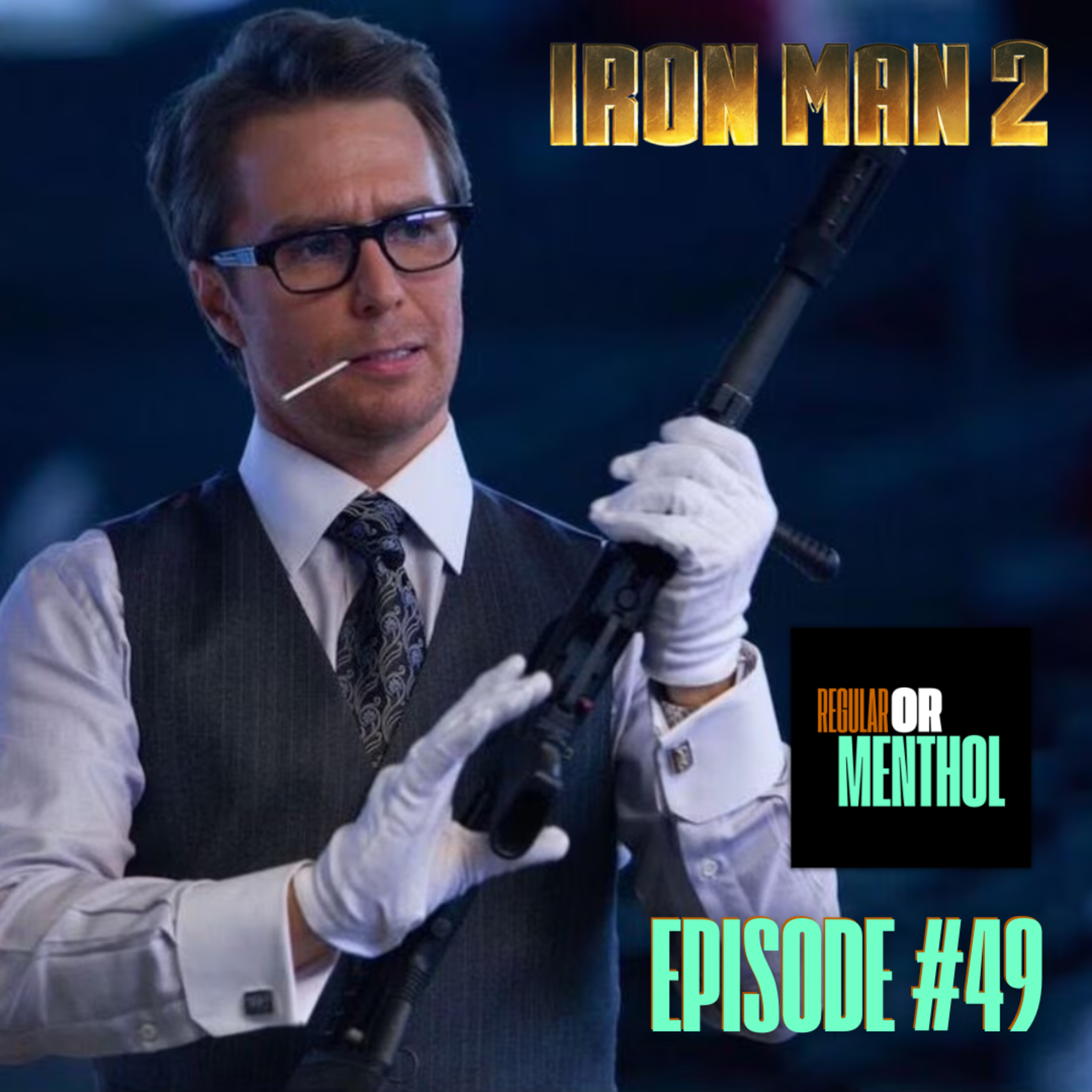 Iron Man 2 (2010) | This week we’re suiting up and breaking down Iron Man 2 (2010) — the high-octane, swagger-filled sequel that helped cement the foundation of the Marvel Cinematic Universe. Iron Man 2 brings Robert Downey Jr. back as Tony Stark, the genius billionaire grappling with his own mortality, the pressures of being Iron Man, and a growing list of enemies closing in from all sides.We’re diving into everything: Jon Favreau’s expansion of the Iron Man world, the introduction of Natasha Romanoff (played by Scarlett Johansson), Mickey Rourke’s electric turn as the vengeful Ivan Vanko, and Sam Rockwell stealing scenes as the wildly entertaining Justin Hammer. Plus, we’ll talk about the film’s deeper themes — legacy, ego, accountability, and what happens when a hero becomes the system he once challenged.Was Iron Man 2 an underrated sequel or an overstuffed stepping stone for the MCU? How does it hold up against the original Iron Man? And where does it rank among Phase One films as Marvel Studios began building toward something bigger?Whether you're a Marvel die-hard, a casual superhero fan, or just love character-driven action with sharp dialogue and big personality, this episode is for you.Topics covered: Marvel Cinematic Universe | Tony Stark character analysis | Iron Man trilogy ranking | superhero sequels | Phase One MCU | Black Widow introduction | villain analysis Ivan Vanko | Justin Hammer performance | comic book movies | 2010 action films | Jon Favreau direction | Robert Downey Jr. performance | superhero legacy themesYouTube: http://www.youtube.com/@RegularorMentholContact us: Regularormenthol@gmail.com | — | ||||||
| 3/23/26 | 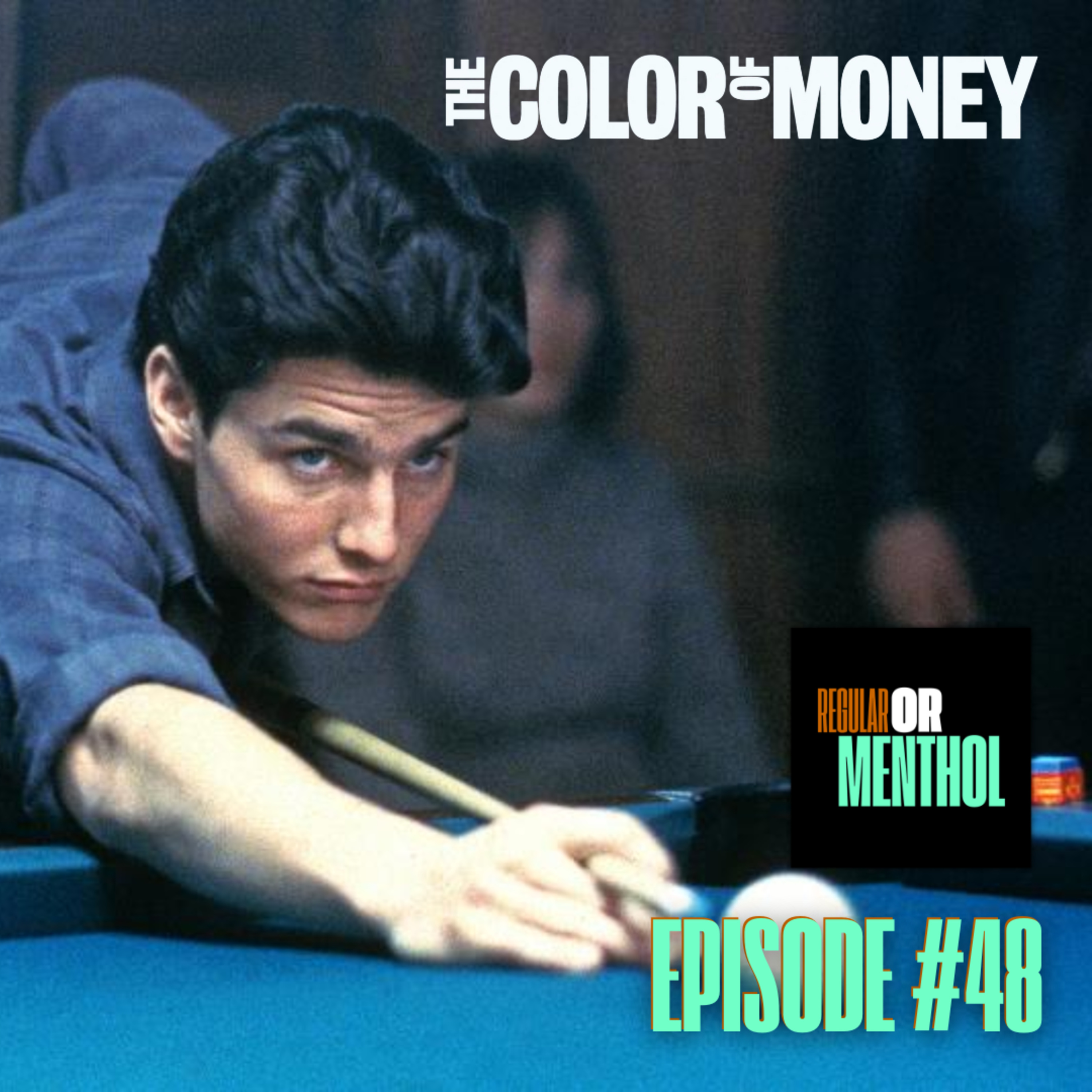 The Color of Money (1986) | This week we're racking up and breaking down The Color of Money (1986) — Martin Scorsese's gritty, stylish sequel to The Hustler and one of the most underrated sports dramas of the 1980s. Paul Newman returns as "Fast Eddie" Felson, the legendary pool shark turned liquor salesman who finds a new shot at glory when he crosses paths with Vincent Lauria — a raw, electric Tom Cruise at his most charismatic — and his sharp, scene-stealing girlfriend Carmen, played by Mary Elizabeth Mastrantonio.We're breaking down everything: Scorsese's signature direction, the film's iconic billiards sequences, that unforgettable 80s soundtrack featuring Eric Clapton and Warren Zevon, and why Paul Newman's Oscar-winning performance still holds up decades later. Was this a worthy sequel to The Hustler? How does it rank in Scorsese's filmography? And what does this film really say about ambition, ego, mentorship, and redemption?Whether you're a die-hard Scorsese fan, a classic Hollywood movie buff, a Tom Cruise completist, or just love a great underdog sports story, this episode is for you.Topics covered: Martin Scorsese films | Paul Newman Oscar win | Tom Cruise 1980s movies | pool hustling movies | classic 80s movies | sports drama films | sequel films | movie review podcast | film analysis | underrated movies | John Turturro early roles | Atlantic City films | coming-of-age drama | mentor-protégé stories | classic Hollywood cinemaSubscribe, rate, and leave a review — and let us know: who had the better game, Fast Eddie or Vincent?YouTube: http://www.youtube.com/@RegularorMentholContact us: Regularormenthol@gmail.com | — | ||||||
| 3/16/26 | 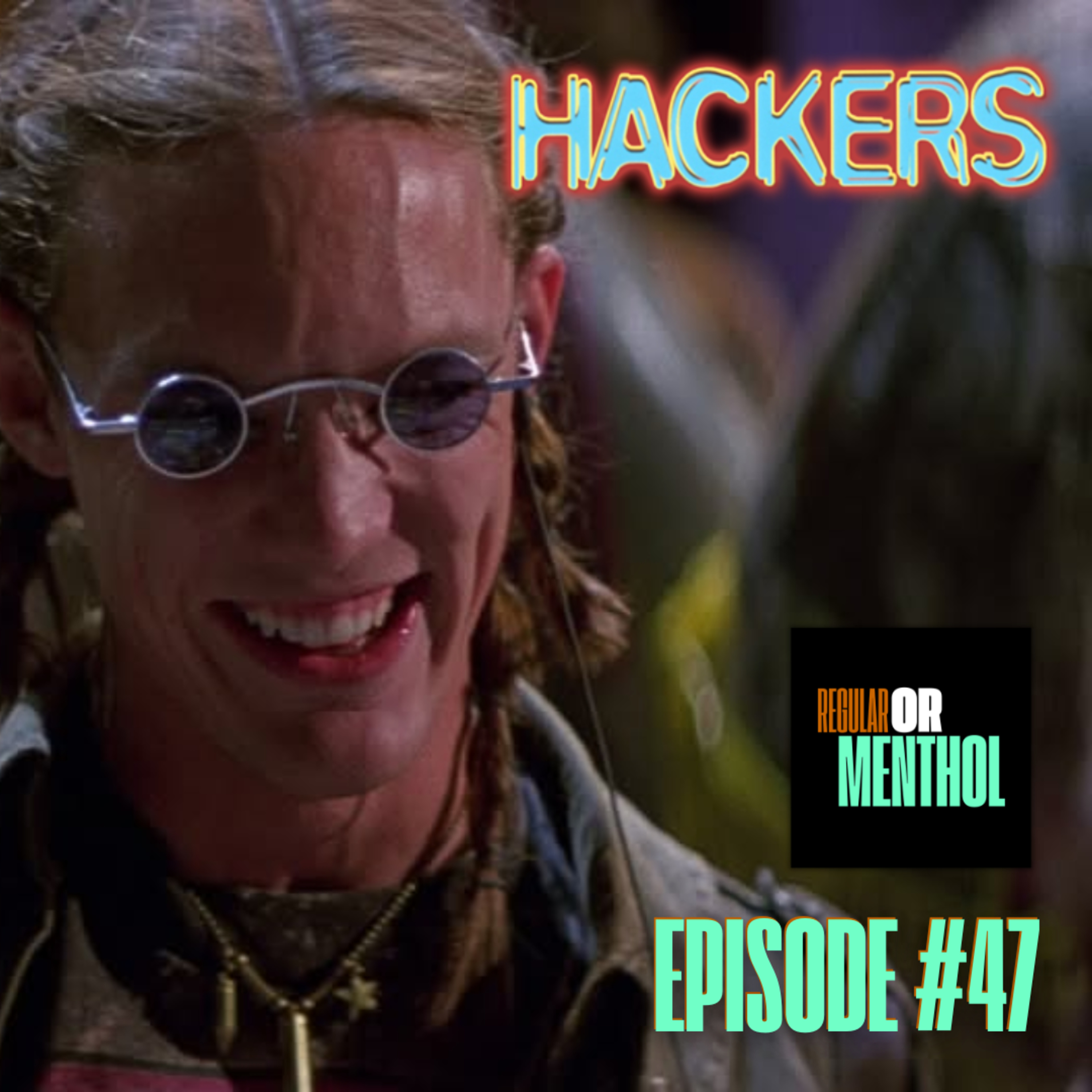 Hackers (1995) | Hack the planet! This week we're diving deep into Hackers (1995) — the wildly stylish, neon-soaked cult classic that somehow captured the rebellious spirit of early internet culture before most people even knew what the internet was. Directed by Iain Softley, the film follows a crew of teenage hackers led by Dade Murphy, aka "Zero Cool," aka "Crash Override" (Jonny Lee Miller), who uncover a massive corporate extortion conspiracy and find themselves hunted by the Secret Service and the villainous Eugene "The Plague" Belford (Fisher Stevens). Oh, and a little-known actress named Angelina Jolie shows up as "Acid Burn" .We're breaking it all down: the film's iconic 90s aesthetic, that legendary electronica and techno soundtrack featuring The Prodigy, Orbital, and Massive Attack, the over-the-top (and completely bonkers) depictions of hacking, and why this movie became a cult phenomenon despite mixed reviews on release. The cast actually met with real-life hackers — including Kevin Mitnick — and attended underground hacker conventions to prepare for their roles. Does that authenticity come through? We debate it all.Whether you're a 90s nostalgia junkie, a cyberpunk fan, a tech culture enthusiast, or just someone who wants to know why an entire generation of nerds considers this movie a sacred text — this episode is for you.Topics covered: Hackers 1995 movie | Angelina Jolie early career | Jonny Lee Miller | Matthew Lillard | cult classic films | 90s movies | cyberpunk films | internet culture history | hacker movies | tech thriller | cybercrime films | 90s nostalgia podcast | underrated 90s films | movie review podcast | film analysis | Iain Softley | Kevin Mitnick | hacker subculture | 90s fashion | electronica soundtrack | computer movies | Y2K aestheticSubscribe, rate, and leave us a review — and tell us: are you Zero Cool or Acid Burn?YouTube: http://www.youtube.com/@RegularorMentholContact us: Regularormenthol@gmail.com | — | ||||||
| 3/9/26 | 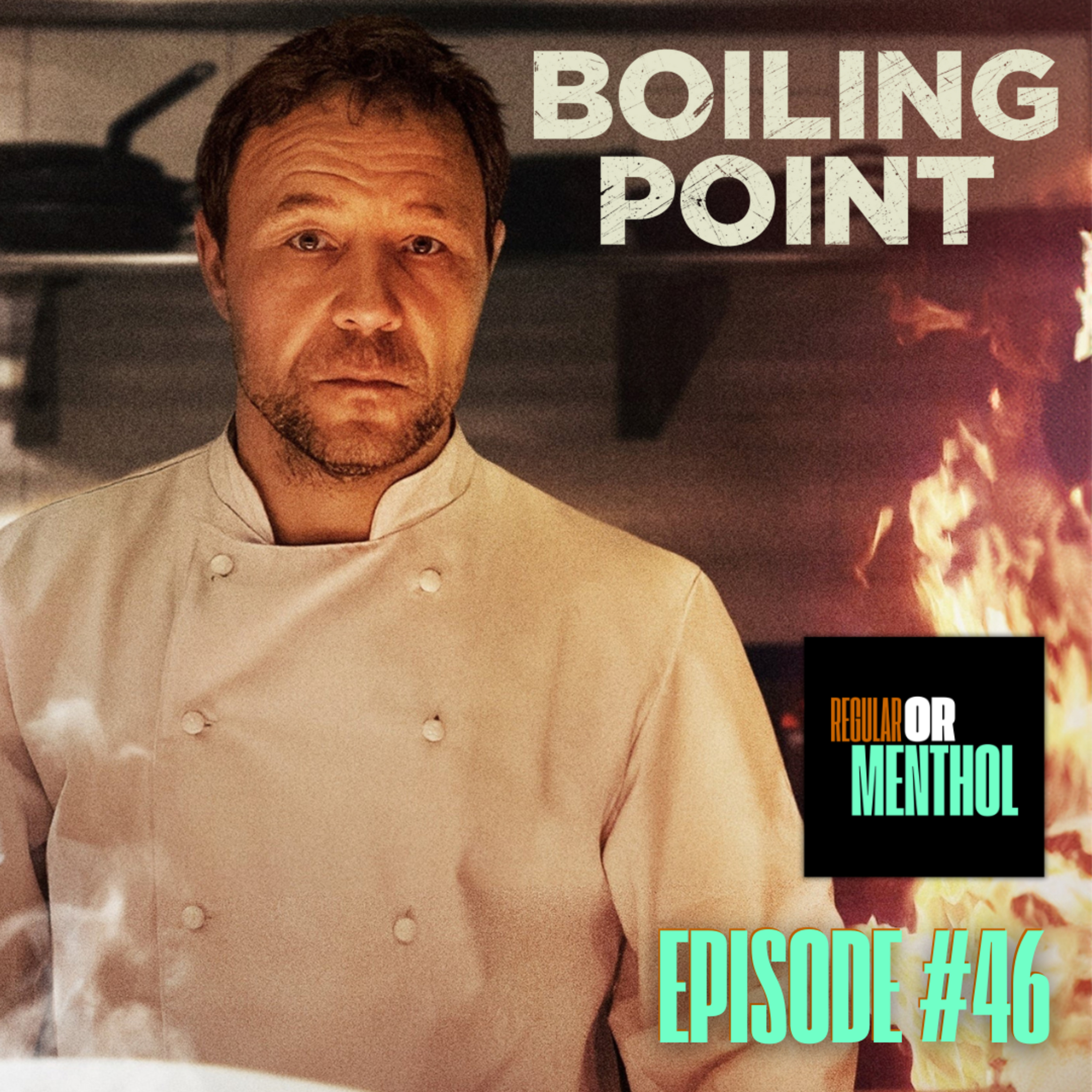 Boiling Point (2021) | This week we're stepping into the kitchen — and we are not coming out alive. Boiling Point (2021) is one of the most technically audacious and emotionally brutal British films of the decade, and we're breaking down every single nerve-shredding minute of it.Directed by Philip Barantini, this one-shot film — meaning the entire movie is filmed in a single, unbroken take — is set in a packed London restaurant on the busiest night of the year. Stephen Graham plays Andy Jones, a charismatic but crumbling head chef balancing a knife's edge of personal and professional crises as a surprise health and safety inspection, an overbooked dining room, and a staff on the verge of mutiny all converge at once.We're digging into everything: how Barantini and his cast pulled off this jaw-dropping technical feat in real time, why Stephen Graham delivers one of the greatest performances in recent British cinema, what the film gets so viscerally right about restaurant culture and the hospitality industry, and why this movie hits completely differently if you've ever worked a kitchen shift. Incredibly, the final film used just the third of four total takes — all filmed under real pressure with a real restaurant, real staff, and no safety net.Whether you're a film technique nerd, a foodie, a fan of intense character-driven drama, a Stephen Graham devotee, or just someone who loves hidden-gem British cinema — this episode is essential listening.Topics covered: Boiling Point 2021 | Stephen Graham | Philip Barantini | one-shot film | single take movie | British drama | best British films | restaurant movies | kitchen drama | chef movies | Vinette Robinson | Ray Panthaki | Hannah Walters | hidden gem films | indie British cinema | movie review podcast | film analysis | immersive filmmaking | long take cinematography | hospitality industry film | best films of 2021 | Netflix British movies | BBC dramaSubscribe, rate, and leave a review — and let us know: could you survive one shift in Andy Jones' kitchen?YouTube: http://www.youtube.com/@RegularorMentholContact us: Regularormenthol@gmail.com | — | ||||||
| 3/2/26 | 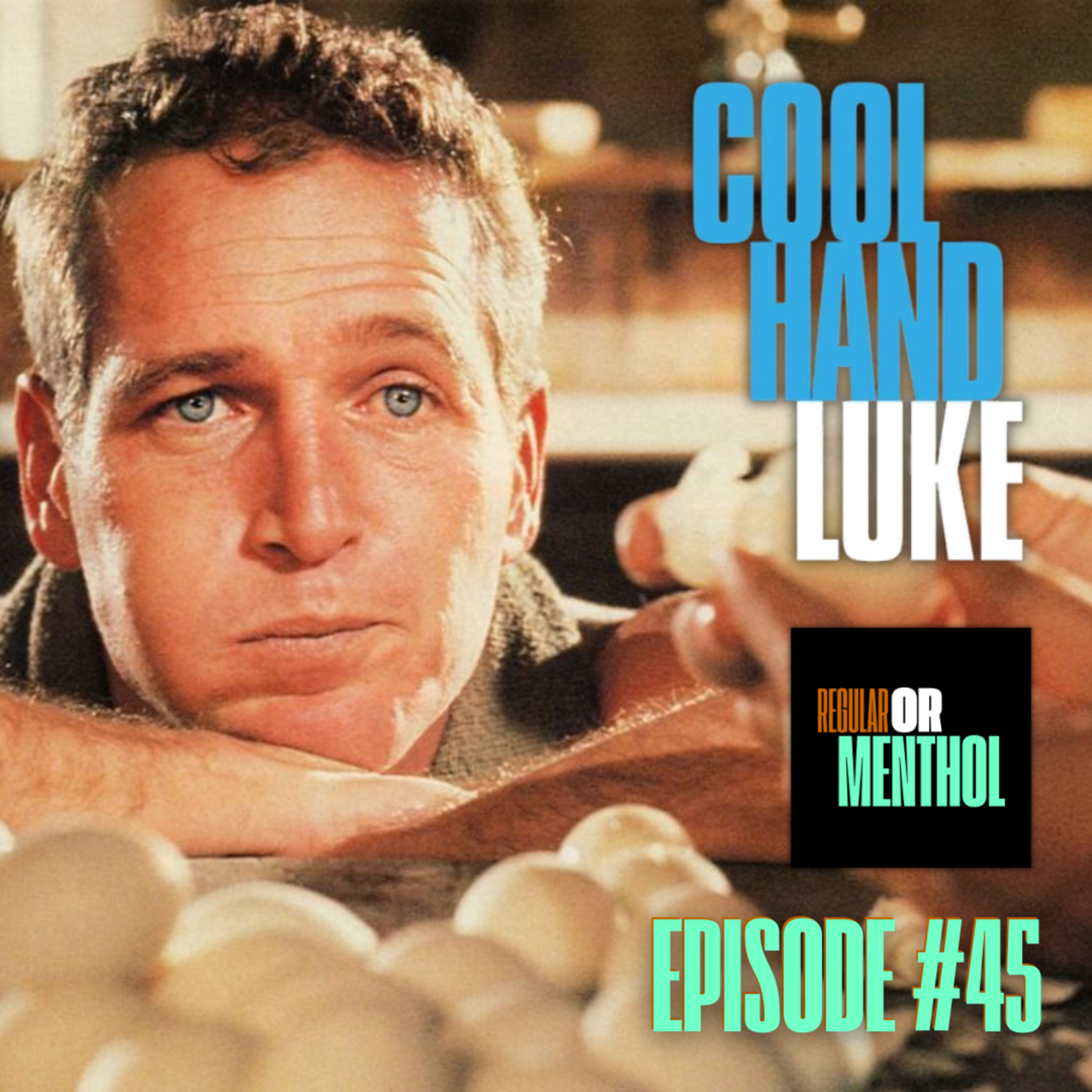 Cool Hand Luke (1967) | What we've got here is a failure to communicate — and this week, we're fixing that. We're going deep on Cool Hand Luke (1967), one of the greatest American films ever made and arguably the role that cemented Paul Newman as a cinematic legend for all time.Directed by Stuart Rosenberg and based on Donn Pearce's semi-autobiographical 1965 novel, the film follows Lucas "Luke" Jackson — a decorated war veteran and nonconformist convict in an early 1950s Florida prison camp who refuses, at every turn, to submit to the system. George Kennedy plays Dragline, the yard's resident heavy who ends up admiring Luke's unbreakable will — and won the Academy Award for Best Supporting Actor doing it.We're breaking it all down: the legendary egg-eating scene, that iconic "failure to communicate" line, Conrad Hall's breathtaking cinematography, Lalo Schifrin's Oscar-nominated score, and what makes Luke Jackson one of cinema's most enduring anti-heroes. We also dig into the film's incredible ensemble — Dennis Hopper, Harry Dean Stanton, Ralph Waite, Joe Don Baker, and Wayne Rogers — and its lasting influence on everything from The Shawshank Redemption to O Brother, Where Art Thou?Is this Paul Newman's greatest performance? Where does it rank among the all-time prison films? And what does this movie — made in 1967 at the height of the counterculture — still say about individualism, rebellion, and the crushing weight of authority in America?Whether you're a classic Hollywood buff, a Paul Newman fanatic, a fan of prison dramas, or someone who just loves movies that refuse to be broken — this episode is for you.Topics covered: Cool Hand Luke 1967 | Paul Newman best films | George Kennedy Oscar | classic Hollywood movies | prison drama films | anti-hero movies | 1960s cinema | chain gang movies | Stuart Rosenberg | Conrad Hall cinematography | Lalo Schifrin | failure to communicate | egg eating scene | counterculture films | American classics | movie review podcast | film analysis | best films of the 1960s | The Shawshank Redemption influence | rebel films | Dennis Hopper early career | Harry Dean Stanton | classic films ranked | most iconic movie quotes Subscribe, rate, and leave us a review — and tell us: could you eat 50 eggs?YouTube: http://www.youtube.com/@RegularorMentholContact us: Regularormenthol@gmail.com | — | ||||||
| 2/23/26 | 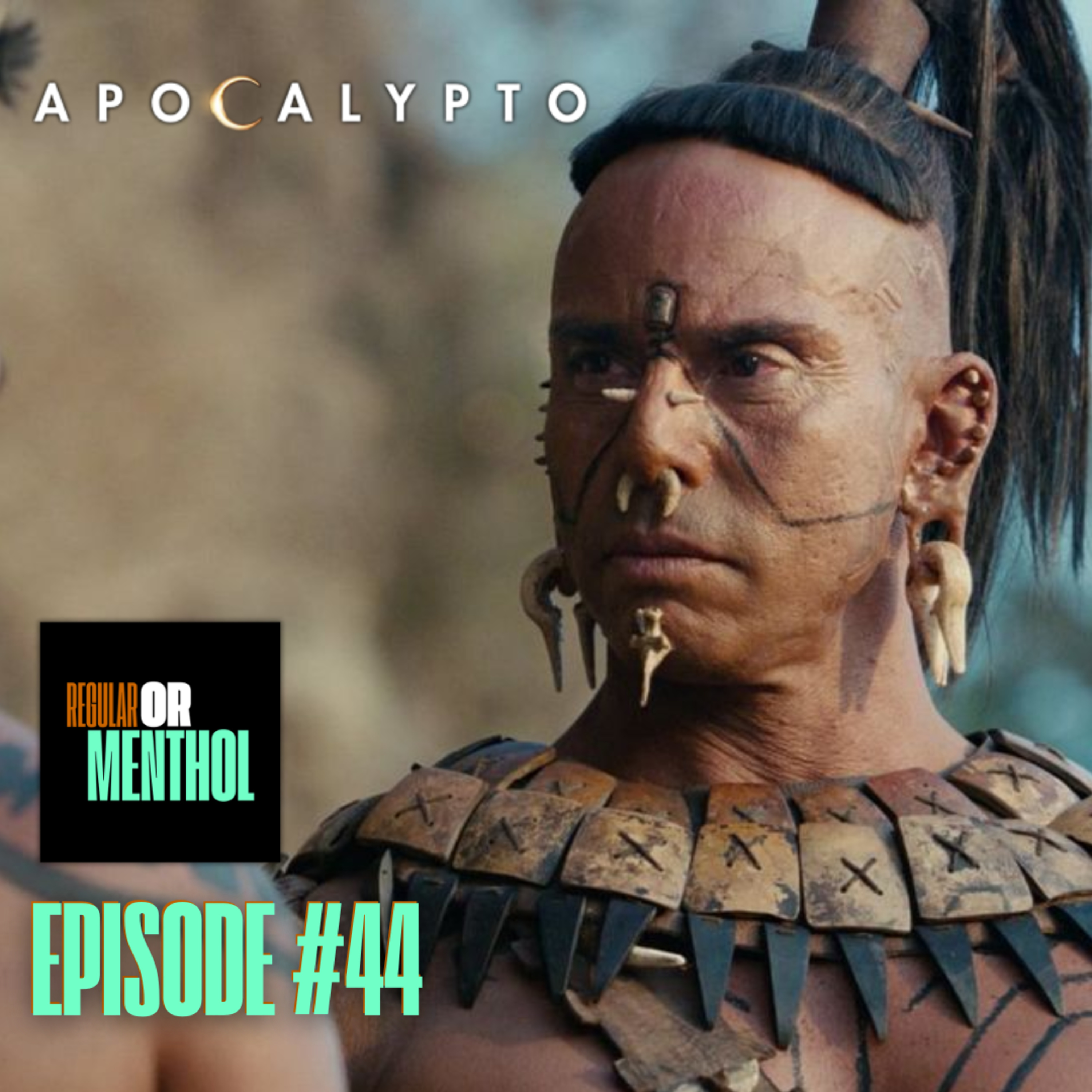 Apocalypto (2006) | A civilization in collapse. A man running for his life. And one of the most relentlessly intense survival thrillers ever committed to film. This week we're covering Apocalypto (2006) — Mel Gibson's audacious, visceral, and deeply controversial epic that somehow shouldn't work and yet absolutely, completely does.Directed and produced by Mel Gibson, the film follows Jaguar Paw, a young Mesoamerican hunter whose village is raided by an invading force. He and his fellow tribesmen are dragged on a harrowing journey to a Maya city for human sacrifice, at a time when the Maya civilization is already crumbling from within. The entire film features a cast of Indigenous and Mexican actors — led by Rudy Youngblood, Raoul Trujillo, and Dalia Hernández — performing entirely in a modern reconstruction of the Yucatec Maya language, with English subtitles. No major stars. No safety net. Just pure, primal cinema.We're digging into everything: how Gibson stripped the action-chase genre back to its most raw and elemental form, Dean Semler's jaw-dropping cinematography shot on location in the Mexican jungle, James Horner's thundering score, the film's controversial historical accuracy and its portrayal of Maya civilization, and why that final 45-minute chase sequence stands as one of the greatest ever put on screen. Gibson and co-writer Farhad Safinia deliberately wanted to reinvent the chase genre by stripping away all technology — no cars, no guns — to create the purest possible version of a man running for his life toward something that matters.Can you separate the art from the artist? Is Apocalypto a respectful portrait of an ancient civilization or an exploitation of it? We debate all of it.Whether you're an action movie fanatic, a world cinema enthusiast, a history buff, a fan of survival thrillers, or just someone who wants to watch a film that grabs you by the throat and never lets go — this episode is unmissable.Topics covered: Apocalypto 2006 | Mel Gibson director | Rudy Youngblood | Maya civilization film | Mayan history | survival thriller movies | best chase movies | epic action films | indigenous language films | foreign language films | subtitled movies | Dean Semler cinematography | James Horner score | best films of 2006 | historical epic films | jungle survival movies | Yucatan Mexico film | human sacrifice history | movie review podcast | film analysis | underrated action films | controversial films | Mel Gibson best films | Touchstone Pictures | best movie chase scenesSubscribe, rate, and leave us a review — and tell us: does Apocalypto deserve its place among the all-time action greats?YouTube: http://www.youtube.com/@RegularorMentholContact us: Regularormenthol@gmail.com | — | ||||||
| 2/16/26 | 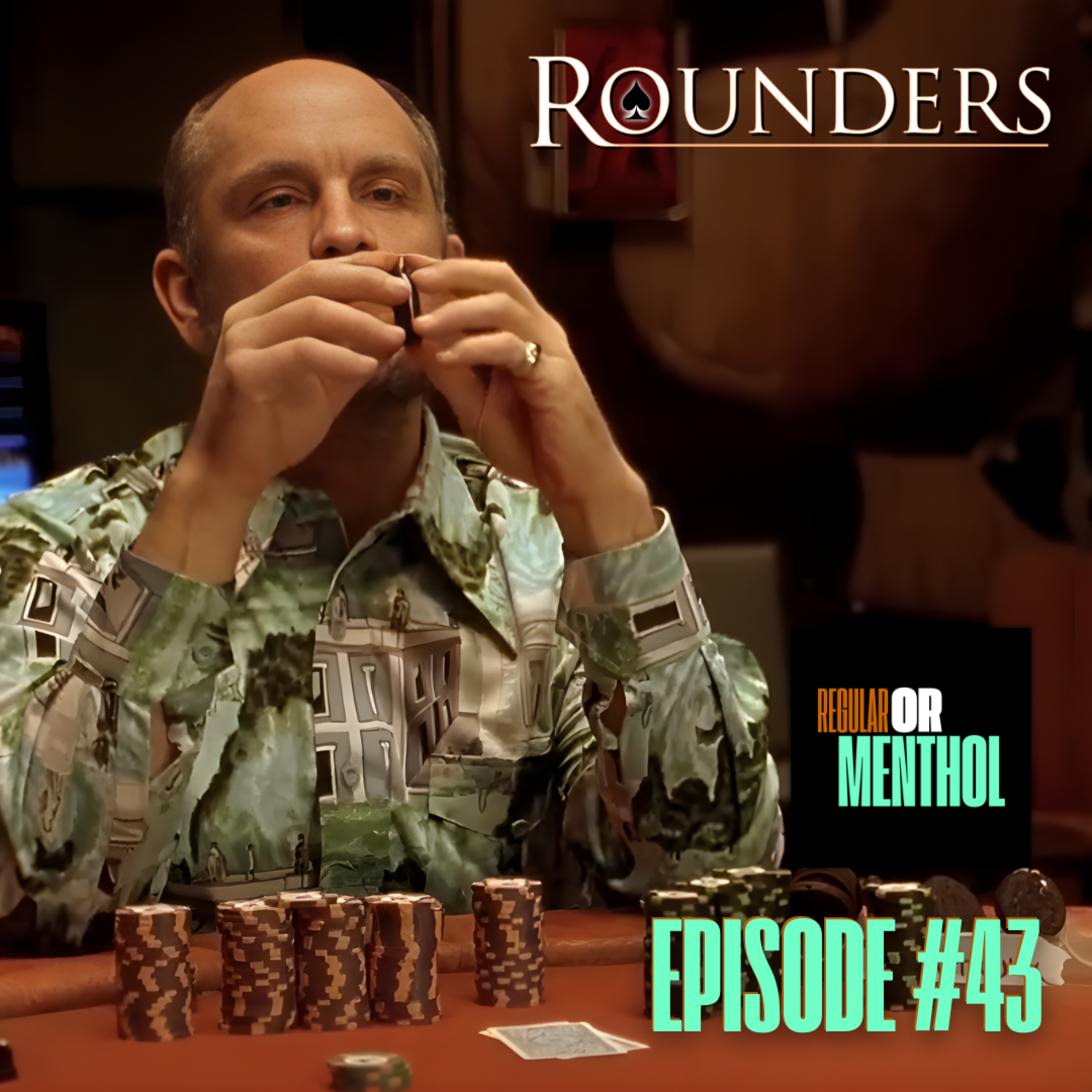 Rounders (1998) | Listen to your gut, Mike. This week we're sitting down at the table for Rounders (1998) — the underground poker cult classic that didn't just capture a world, it helped create one. This is the movie that launched a thousand poker careers, and we're dealing every single card.Directed by John Dahl and written by Brian Koppelman and David Levien, the film follows Mike McDermott (Matt Damon), a gifted New York law student and poker prodigy who loses his entire bankroll to Russian mobster and underground card room operator Teddy KGB (John Malkovich). He goes straight — until his fast-talking, self-destructive childhood friend Lester "Worm" Murphy (Edward Norton) walks out of prison and drags him back into the game, deeper and more dangerous than ever before. Also starring John Turturro, Gretchen Mol, Martin Landau, and Famke Janssen.We're going all in on everything: Malkovich's unhinged, Oreo-munching, accent-mangling performance as Teddy KGB (one of the great movie villains of the 90s), the film's eerily accurate portrait of underground poker culture, Edward Norton at his most slippery and electric, and why Rounders — a modest box office performer in 1998 — became the bible of the poker boom that exploded in the early 2000s. Pro players like Brian Rast, Hevad Khan, and Gavin Griffin have all credited the film with getting them into the game, and it's not hard to see why. This movie makes you want to shuffle up and deal.Is Rounders the greatest gambling movie ever made? How does it hold up as a film about obsession, loyalty, and following your calling against all common sense? And just how did Koppelman and Levien get the underground poker world so right? We answer all of it.Whether you're a poker fanatic, a Matt Damon completist, a fan of late-90s crime dramas, a cult movie devotee, or someone who just loves a film that completely immerses you in a world — this episode belongs in your stack.Topics covered: Rounders 1998 | Matt Damon | Edward Norton | John Malkovich Teddy KGB | best poker movies | underground poker | Texas Hold'em movies | gambling movies | John Dahl director | Brian Koppelman | David Levien | cult classic films | late 90s movies | crime drama films | best films of the 1990s | poker culture | World Series of Poker | movie review podcast | film analysis | Good Will Hunting Matt Damon | John Turturro | Martin Landau | Famke Janssen | underground gambling films | best gambling scenes in movies | poker boom 2000s Subscribe, rate, and leave us a review — and tell us: are you a Mike McDermott or a Worm?YouTube: http://www.youtube.com/@RegularorMentholContact us: Regularormenthol@gmail.com | — | ||||||
| 2/9/26 | 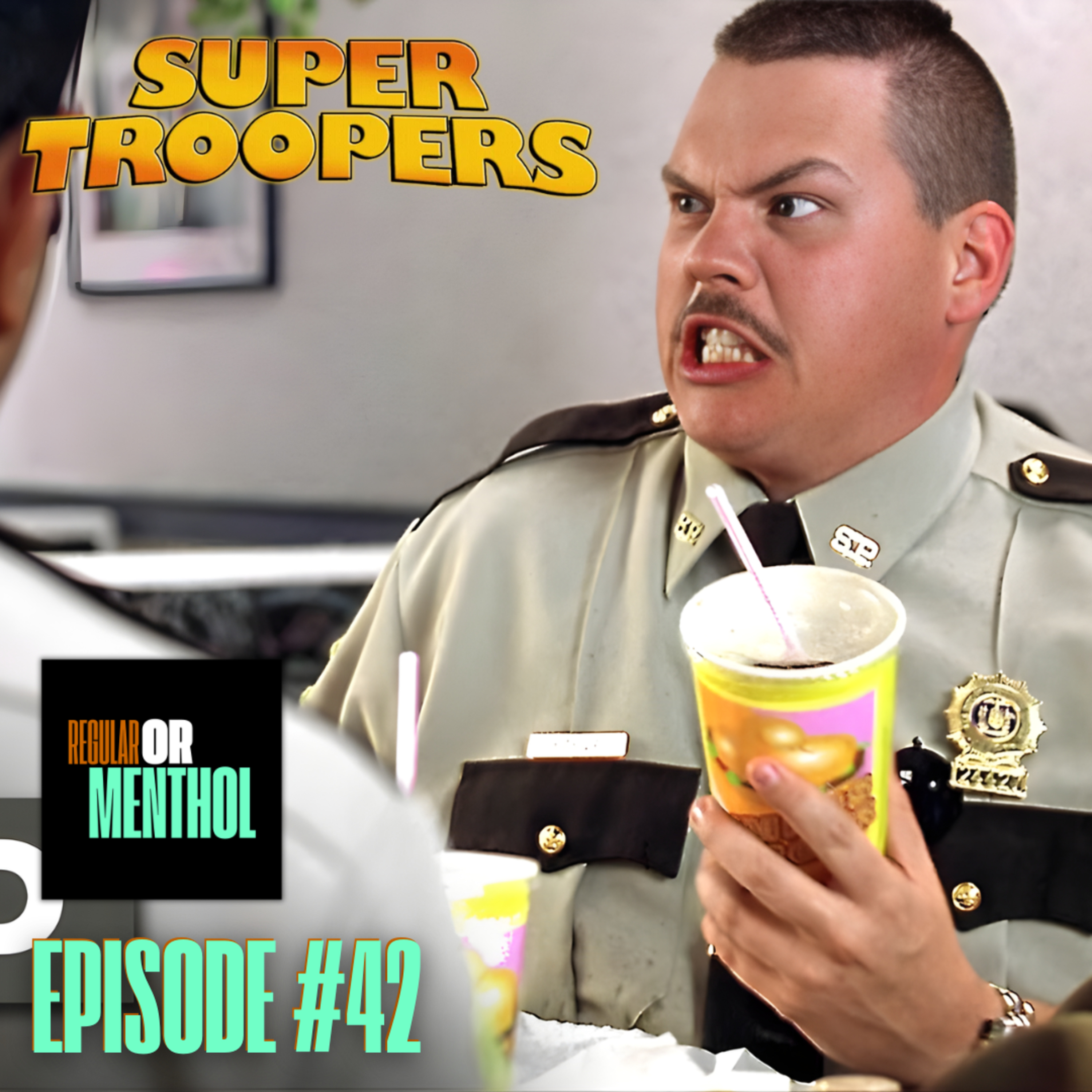 Super Troopers (2001) | The time is meow. This week we're pulling over Super Troopers (2001) — one of the greatest cult comedies ever made, a film that critics mostly dismissed, audiences absolutely devoured, and basically an entire generation still quotes on a daily basis. Litracola. Meow. Chicken fucker. You know the ones.Written, directed by, and starring the Broken Lizard comedy group — Jay Chandrasekhar, Kevin Heffernan, Steve Lemme, Paul Soter, and Erik Stolhanske — the film follows five bored, prank-obsessed Vermont state troopers who stumble onto a drug smuggling ring while fighting to keep their station from being shut down by budget cuts, all while waging an all-out turf war against the insufferable local Spurbury PD. Brian Cox plays their long-suffering captain, and Lynda Carter shows up as the Governor of Vermont because why not.We're breaking down everything: the meow scene, the syrup-chugging scene, Farva's liter of cola, the opening stoner cold open that is one of the greatest comedy setups in early 2000s cinema, and how a film made on a budget of just $1.2 million premiered at Sundance, got picked up by Fox Searchlight for $3.2 million, and went on to gross over $23 million worldwide before becoming one of the most endlessly rewatchable comedies in modern memory. We also dig into how Broken Lizard's model of pooling resources and maintaining creative control laid the groundwork for their later crowdfunding success — their Super Troopers 2 Indiegogo campaign raised over $4.5 million from fans in record time.Underrated masterpiece or gloriously dumb stoner comedy? The answer, obviously, is both — and that's exactly why we love it.Whether you're a die-hard Broken Lizard fan, a lover of early 2000s cult comedies, a stoner comedy enthusiast, someone who works in law enforcement and needs a laugh, or just a person who has ever demanded a liter of cola — this episode is for you.Topics covered: Super Troopers 2001 | Broken Lizard | Jay Chandrasekhar | Kevin Heffernan | Farva | meow scene | liter of cola | cult comedy films | best stoner comedies | early 2000s movies | police comedy films | Vermont movies | Fox Searchlight | Sundance Film Festival | cult classic movies | best comedy movies of the 2000s | Super Troopers 2 | Brian Cox | Lynda Carter | movie review podcast | film analysis | ensemble comedy films | indie comedy films | most quotable movies | crowdfunding movies | best comedy scenes everSubscribe, rate, and leave us a review — and tell us your favorite Super Troopers scene. And if you say anything other than the meow scene, we're putting you in the car.YouTube: http://www.youtube.com/@RegularorMentholContact us: Regularormenthol@gmail.com | — | ||||||
| 2/2/26 | 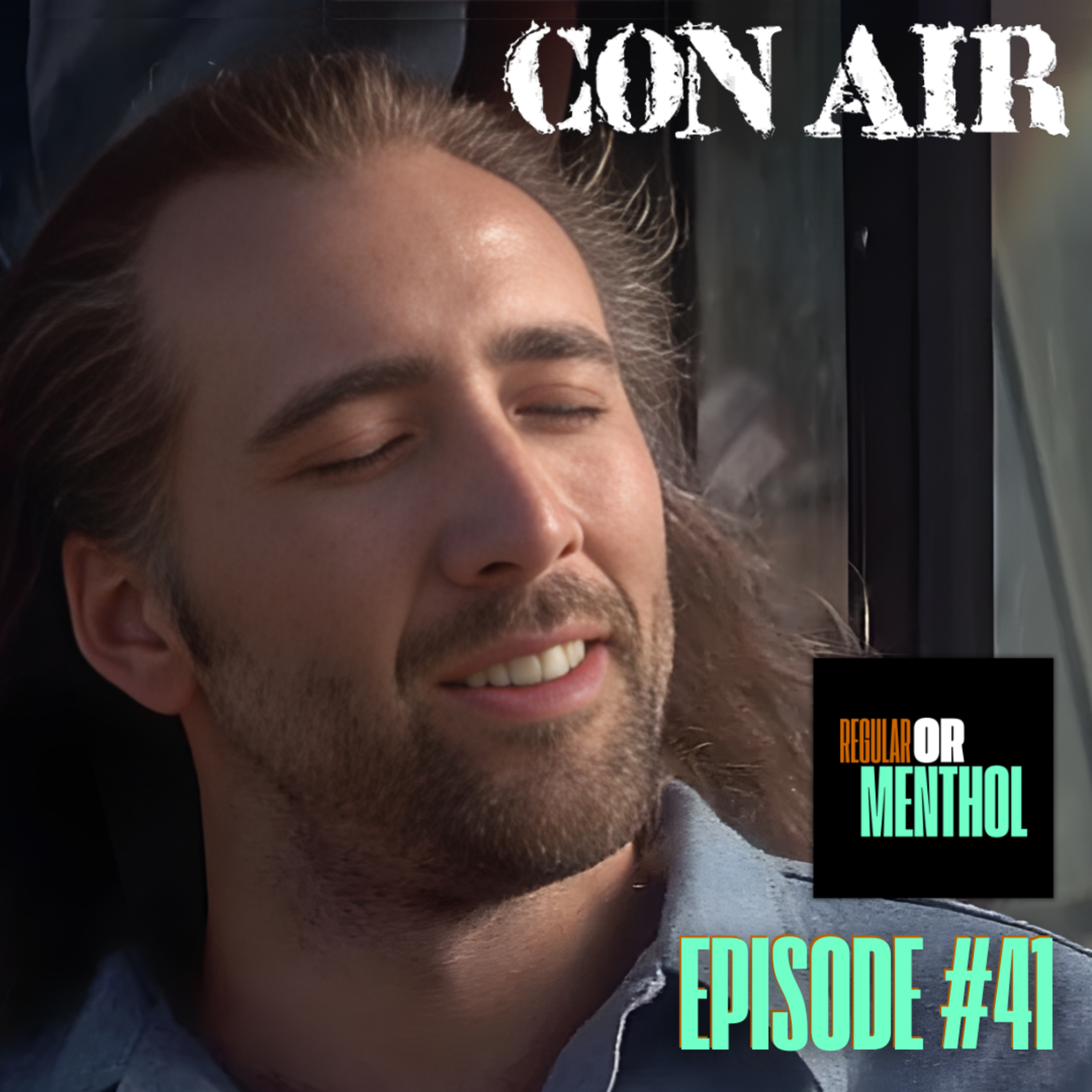 Con Air (1997) | Put the bunny back in the box. This week we're boarding the Jailbird for Con Air (1997) — the most gloriously unhinged, completely self-aware, and relentlessly entertaining action blockbuster of the entire 1990s. And yes, we are going to talk about the mullet.Directed by Simon West in his feature directorial debut and produced by the legendary Jerry Bruckheimer, Con Air follows Cameron Poe (Nicolas Cage), a former Army Ranger who — freshly paroled for manslaughter — finds himself trapped aboard a federal prison transport plane hijacked by the most dangerous criminals in America. Leading the chaos is John Malkovich as Cyrus "The Virus" Grissom, a highly intelligent career criminal and mastermind of the escape plot, backed up by Ving Rhames as Diamond Dog, and the incomparably creepy Steve Buscemi as Garland "The Marietta Mangler" Greene. John Cusack, Dave Chappelle, Danny Trejo, and Colm Meaney round out a cast so stacked it barely seems real.We're breaking down everything: Malkovich chewing every inch of scenery as one of the great 90s movie villains, Buscemi's Hannibal Lecter-esque turn that somehow ends with him sitting on a merry-go-round with a little girl, Nicolas Cage in full peak-mullet action hero mode, that Las Vegas runway crash sequence, and the Trisha Yearwood "How Do I Live" needle drop that absolutely nobody asked for and yet somehow became iconic. The film grossed over $224 million worldwide against a $75 million budget, cementing Bruckheimer's reign as the undisputed king of 90s blockbuster filmmaking — and landing right in the middle of Cage's extraordinary holy trinity alongside The Rock and Face/Off.Is Con Air a good movie? No. Is it one of the most entertaining films ever made? Absolutely, unequivocally, without question yes.Whether you're a Nicolas Cage devotee, a Jerry Bruckheimer action junkie, a 90s blockbuster fanatic, a lover of so-bad-it's-great cinema, or just someone who wants to spend an hour reliving the most ridiculous movie plane crash ever put on screen — this episode is mandatory listening.Topics covered: Con Air 1997 | Nicolas Cage | John Malkovich | Steve Buscemi | Jerry Bruckheimer | Simon West | Ving Rhames | John Cusack | Dave Chappelle | Danny Trejo | Cyrus the Virus | best 90s action movies | Nicolas Cage best films | peak Nicolas Cage | 90s blockbusters | prison movies | action thriller films | guilty pleasure movies | best movie villains | How Do I Live Trisha Yearwood | movie review podcast | film analysis | The Rock Face/Off Con Air trilogy | best ensemble casts | over the top action films | Jerry Bruckheimer films ranked | 90s nostalgia | best movie one-linersSubscribe, rate, and leave us a review — and settle this once and for all: Con Air, The Rock, or Face/Off — which is the greatest Nicolas Cage action film of 1997?Join us as we discuss Con Air and all of the interesting things about this movie.YouTube: http://www.youtube.com/@RegularorMentholContact us: Regularormenthol@gmail.com | — | ||||||
| 1/26/26 | 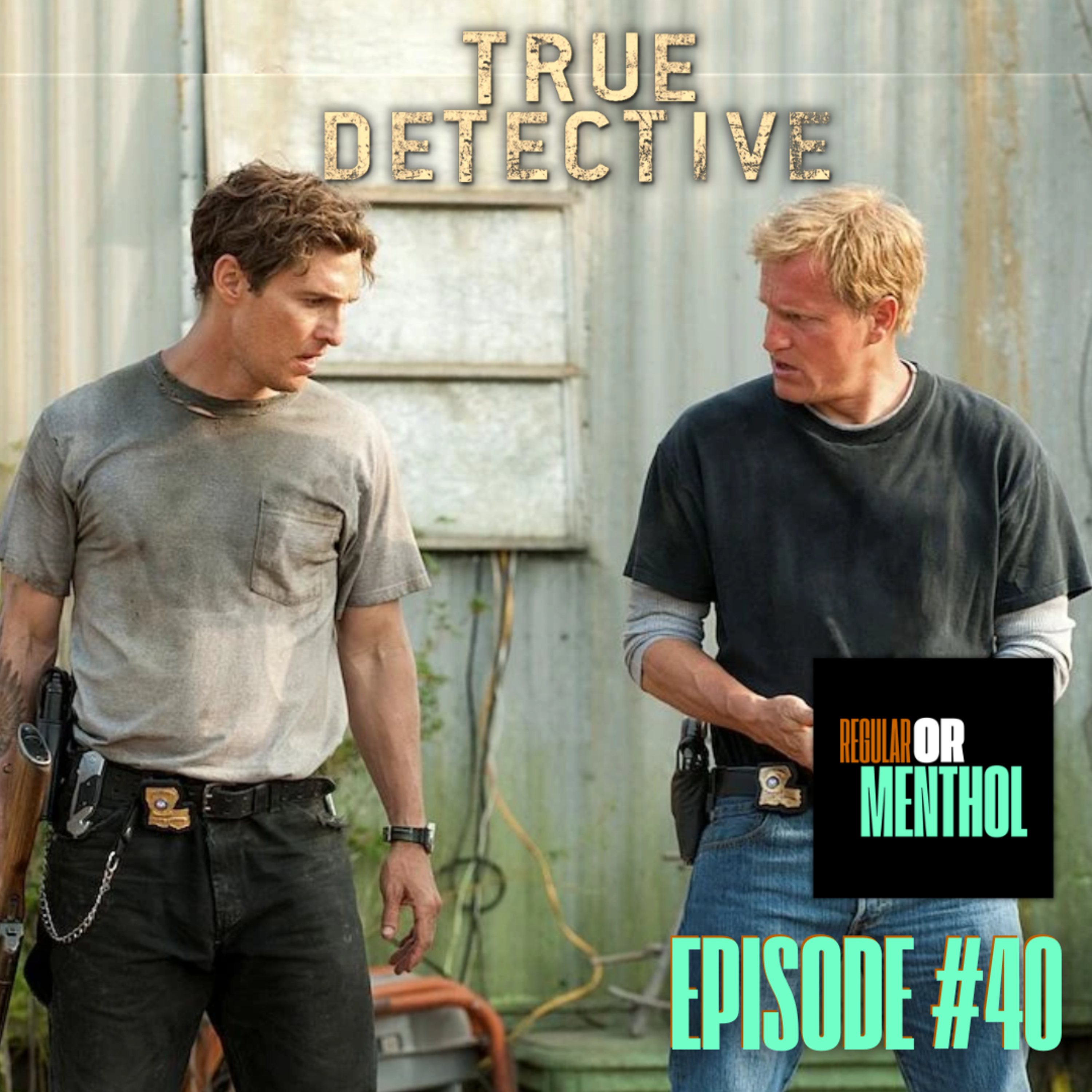 True Detective S1, Pt. 2 (2014) | Time is a flat circle. And this week, we're going back to Louisiana. We're covering True Detective Season 1 (2014) part 2 — covering the last four of the eight episodes of HBO television so dense, so atmospheric, and so staggeringly well-performed that nothing before or since has quite matched it. This is the one that redefined what prestige TV could be.Created by Nic Pizzolatto and directed in its entirety by Cary Joji Fukunaga, the season follows Louisiana State Police homicide detectives Rustin "Rust" Cohle (Matthew McConaughey) and Martin "Marty" Hart (Woody Harrelson) as they investigate the ritualistic murder of a woman named Dora Lange — a case that spans 17 years, told through a brilliant nonlinear structure that braids 1995, 2002, and 2012 together. Michelle Monaghan is devastating as Marty's wife Maggie, and Alexandra Daddario, Michael Potts, and Tory Kittles round out a flawless supporting cast.We're going deep on everything: Rust Cohle's nihilistic philosophy and why it hit so hard with an entire generation, the terrifying mythology of the Yellow King and Carcosa, that extraordinary six-minute single-take tracking shot in episode four, Fukunaga's breathtaking direction across the Louisiana bayou, T Bone Burnett's haunting score, and what McConaughey delivered here — arguably the greatest performance in the history of American television. The season won five Emmy Awards including Outstanding Directing and Outstanding Cinematography, and it turned what was already the peak of the McConaissance into something genuinely transcendent.We're also asking the big questions: Does the ending hold up? How does Season 1 compare to the seasons that followed? And is True Detective Season 1 the single greatest achievement in prestige television history — better than The Wire, better than The Sopranos, better than Breaking Bad?Whether you're a die-hard prestige TV fanatic, a crime drama obsessive, a McConaughey devotee, a Woody Harrelson fan, a lover of Southern Gothic atmosphere, or someone who just wants to relive one of the most electrifying viewing experiences of the last decade — this episode is essential.Topics covered: True Detective Season 1 | Matthew McConaughey | Woody Harrelson | Rust Cohle | Marty Hart | Yellow King | Carcosa | Nic Pizzolatto | Cary Joji Fukunaga | best HBO shows | best limited series ever | best TV of 2014 | prestige television | Southern Gothic | Louisiana noir | serial killer TV shows | nonlinear storytelling | McConaissance | best TV performances ever | T Bone Burnett | six minute tracking shot | best TV cinematography | crime drama podcast | TV review podcast | True Detective ending explained | True Detective vs The Wire | best anthology series | HBO drama ranked | best detective showsSubscribe, rate, and leave us a review — and settle the debate: is True Detective Season 1 the greatest limited series ever made, or does something else hold the crown?YouTube: http://www.youtube.com/@RegularorMentholContact us: Regularormenthol@gmail.com | — | ||||||
| 1/19/26 | 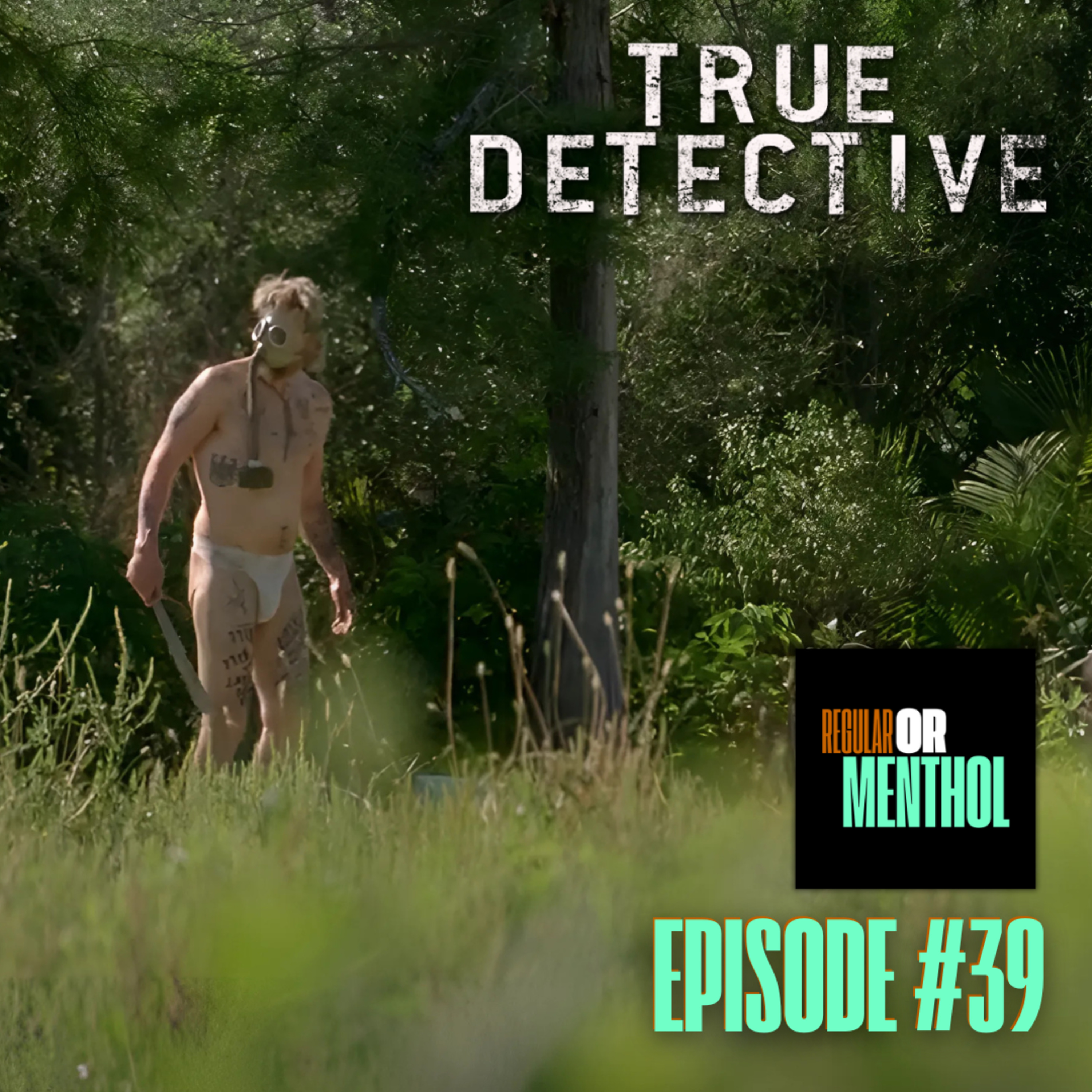 True Detective S1, Pt. 1 (2014) | Time is a flat circle. And this week, we're going back to Louisiana. We're covering True Detective Season 1 (2014) part 1 — covering the first four of the eight episodes of HBO television so dense, so atmospheric, and so staggeringly well-performed that nothing before or since has quite matched it. This is the one that redefined what prestige TV could be.Created by Nic Pizzolatto and directed in its entirety by Cary Joji Fukunaga, the season follows Louisiana State Police homicide detectives Rustin "Rust" Cohle (Matthew McConaughey) and Martin "Marty" Hart (Woody Harrelson) as they investigate the ritualistic murder of a woman named Dora Lange — a case that spans 17 years, told through a brilliant nonlinear structure that braids 1995, 2002, and 2012 together. Michelle Monaghan is devastating as Marty's wife Maggie, and Alexandra Daddario, Michael Potts, and Tory Kittles round out a flawless supporting cast.We're going deep on everything: Rust Cohle's nihilistic philosophy and why it hit so hard with an entire generation, the terrifying mythology of the Yellow King and Carcosa, that extraordinary six-minute single-take tracking shot in episode four, Fukunaga's breathtaking direction across the Louisiana bayou, T Bone Burnett's haunting score, and what McConaughey delivered here — arguably the greatest performance in the history of American television. The season won five Emmy Awards including Outstanding Directing and Outstanding Cinematography, and it turned what was already the peak of the McConaissance into something genuinely transcendent.We're also asking the big questions: Does the ending hold up? How does Season 1 compare to the seasons that followed? And is True Detective Season 1 the single greatest achievement in prestige television history — better than The Wire, better than The Sopranos, better than Breaking Bad?Whether you're a die-hard prestige TV fanatic, a crime drama obsessive, a McConaughey devotee, a Woody Harrelson fan, a lover of Southern Gothic atmosphere, or someone who just wants to relive one of the most electrifying viewing experiences of the last decade — this episode is essential.Topics covered: True Detective Season 1 | Matthew McConaughey | Woody Harrelson | Rust Cohle | Marty Hart | Yellow King | Carcosa | Nic Pizzolatto | Cary Joji Fukunaga | best HBO shows | best limited series ever | best TV of 2014 | prestige television | Southern Gothic | Louisiana noir | serial killer TV shows | nonlinear storytelling | McConaissance | best TV performances ever | T Bone Burnett | six minute tracking shot | best TV cinematography | crime drama podcast | TV review podcast | True Detective ending explained | True Detective vs The Wire | best anthology series | HBO drama ranked | best detective showsSubscribe, rate, and leave us a review — and settle the debate: is True Detective Season 1 the greatest limited series ever made, or does something else hold the crown?YouTube: http://www.youtube.com/@RegularorMentholContact us: Regularormenthol@gmail.com | — | ||||||
| 1/12/26 | 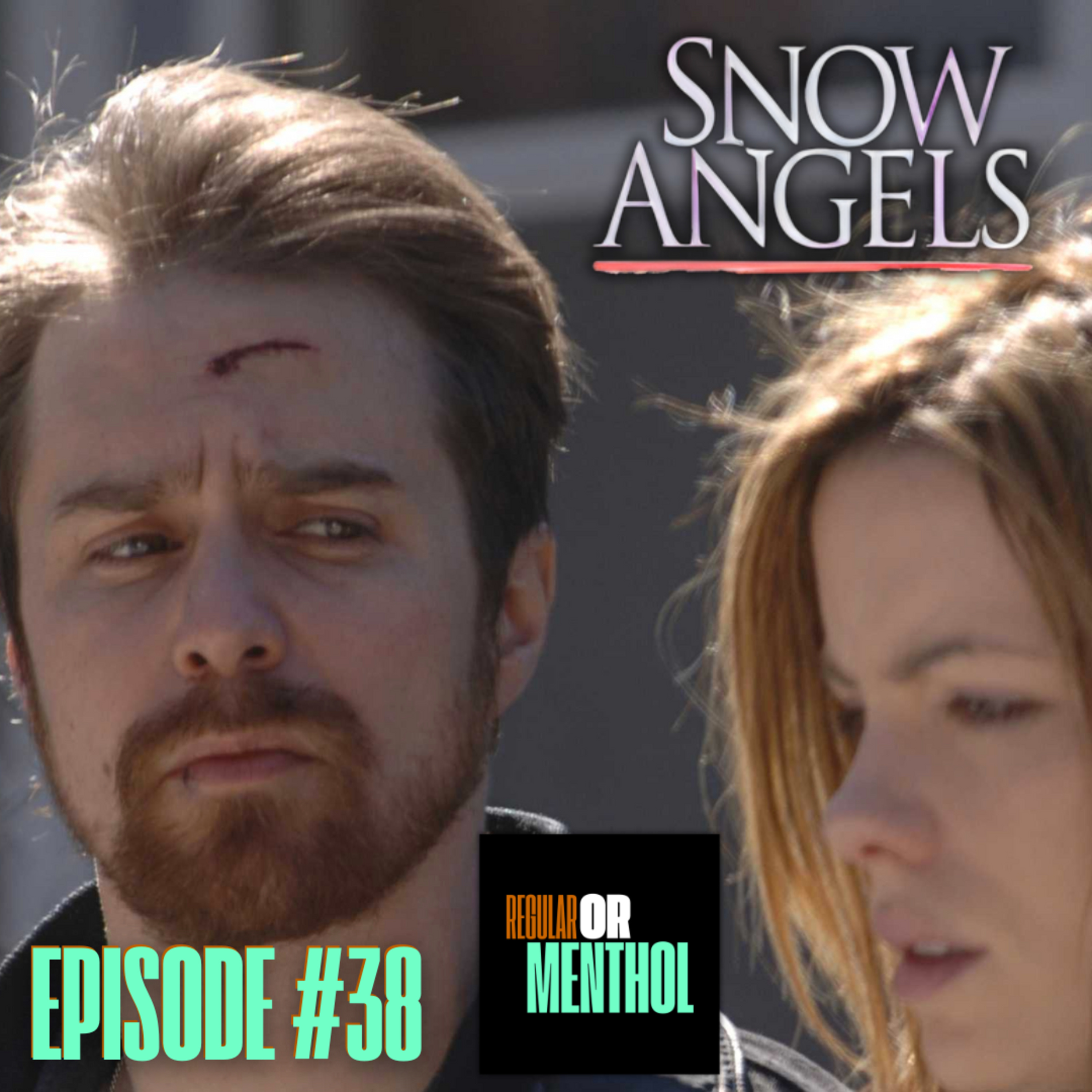 Snow Angels (2007) | This week we're shining a light on a film that almost nobody saw and almost everyone who did was completely shattered by. Snow Angels (2007) is one of the most devastating, achingly human, and woefully overlooked American dramas of the last 25 years — and it's time the world knew about it.Written and directed by David Gordon Green and based on Stewart O'Nan's 1994 novel, the film is set in a small Pennsylvania town in winter and weaves together two parallel stories: a shy, awkward teenager named Arthur (Michael Angarano) falling tentatively and sweetly into his first love with a new classmate named Lila (Olivia Thirlby), while his former babysitter Annie (Kate Beckinsale) watches her life unravel under the weight of a crumbling marriage, an affair, and an estranged husband named Glenn (Sam Rockwell) whose fragile grip on sobriety and faith is slipping toward something terrifying. Also starring Amy Sedaris, Griffin Dunne, and Tom Noonan in beautifully understated supporting roles.We're going deep on everything: Kate Beckinsale's career-best performance in a role that proved she was far more than a Hollywood action star, Sam Rockwell delivering one of the most heartbreaking and quietly unhinged turns of his career, David Gordon Green's extraordinary early indie period before Pineapple Express and the Halloween franchise, the film's stunning wintry cinematography, and what O'Nan's source novel brings to one of the most emotionally gutting third acts in modern American cinema. The film premiered in dramatic competition at the 2007 Sundance Film Festival and landed on multiple critics' top ten lists for the year — yet somehow it still barely registers in the wider conversation about great 2000s cinema.We're asking the big questions: Why did this film disappear? Is it the saddest movie of the decade? And where does it rank in the careers of Green, Rockwell, and Beckinsale?Whether you're a fan of quiet, devastating American indie drama, a David Gordon Green completist, a Sam Rockwell devotee, someone who loves the kind of small-town winter films that linger with you for weeks, or just a viewer who wants to be profoundly moved by something real — this episode is for you. Bring tissues.Topics covered: Snow Angels 2007 | David Gordon Green | Sam Rockwell | Kate Beckinsale | Michael Angarano | Olivia Thirlby | Stewart O'Nan novel | best indie films of the 2000s | underrated films | hidden gem movies | small town drama | American indie cinema | Sundance Film Festival | best Sam Rockwell performances | Kate Beckinsale dramatic roles | David Gordon Green early films | tragedy films | best forgotten films | grief and loss movies | winter films | Pennsylvania films | ensemble drama | movie review podcast | film analysis | most underrated films ever | best performances you've never seen | Warner Independent PicturesSubscribe, rate, and leave us a review — and tell us: what's the most devastating film you've ever seen that nobody talks about? Snow Angels is our answer.YouTube: http://www.youtube.com/@RegularorMentholContact us: Regularormenthol@gmail.com | — | ||||||
Showing 25 of 62
Pitch Fit is a Pro feature
See how bookable this show is for guests, which brands already advertise, the per-episode ad value, and the best-fit guest and sponsor profile. The numbers are blurred on the free plan.
How readily this show books outside guests like you.
How proven this show is for host-read sponsorships.
For Guests
ProFor Advertisers
ProUpgrade to Pro to unlock guest cadence, sponsor categories, fit scores, and per-episode ad value for this show.
Chart Positions
1 placement across 1 market.
Chart Positions
1 placement across 1 market.