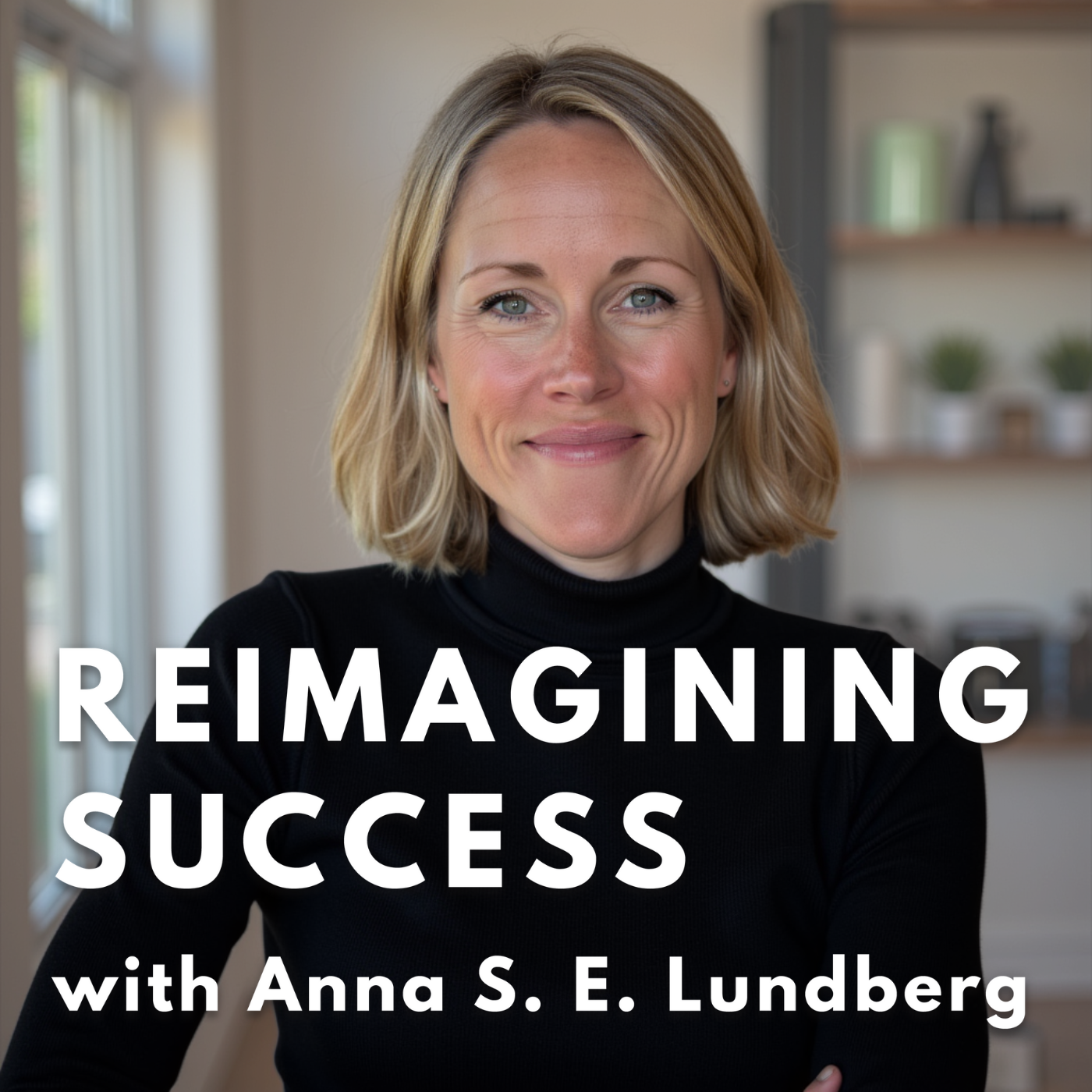
Insights from recent episode analysis
Audience Interest
Podcast Focus
Publishing Consistency
Platform Reach
Insights are generated by CastFox AI using publicly available data, episode content, and proprietary models.
Most discussed topics
Brands & references
Total monthly reach
Estimated from 1 chart position in 1 market.
By chart position
- 🇲🇾MY · Entrepreneurship#101500 to 3K
- Per-Episode Audience
Est. listeners per new episode within ~30 days
150 to 900🎙 Daily cadence·390 episodes·Last published 3d ago - Monthly Reach
Unique listeners across all episodes (30 days)
500 to 3K🇲🇾100% - Active Followers
Loyal subscribers who consistently listen
200 to 1.2K
Market Insights
Platform Distribution
Reach across major podcast platforms, updated hourly
Total Followers
—
Total Plays
—
Total Reviews
—
* Data sourced directly from platform APIs and aggregated hourly across all major podcast directories.
On the show
From 10 epsHost
Recent guests
Recent episodes
RS399 - Why hitting your goals never feels like enough
Jun 22, 2026
Unknown duration
RS398 - When solopreneurs compare themselves to everyone else on LinkedIn
Jun 15, 2026
Unknown duration
RS397 - Why solopreneurs procrastinate: the beliefs behind your to-do list
Jun 8, 2026
Unknown duration
RS396 - Peer Support for Solopreneurs: Why the Right Room Beats More Advice
Jun 1, 2026
Unknown duration
RS395 - Authentic business building with Nick Whitnell
May 25, 2026
Unknown duration
Social Links & Contact
Official channels & resources
Official Website
Login
RSS Feed
Login
| Date | Episode | Topics | Guests | Brands | Places | Keywords | Sponsor | Length | |
|---|---|---|---|---|---|---|---|---|---|
| 6/22/26 | ![]() RS399 - Why hitting your goals never feels like enough | You've hit milestones that once felt huge - and somehow, each time you got there, the feeling you were chasing had already moved on to the next thing. Anna Lundberg explores why hitting your goals never feels like enough, what's actually driving the pattern, and the slower work that changes it. Key takeaways: The milestone treadmill is real - and almost universal. This pattern runs through nearly every established independent Anna has worked with. The arrival keeps not quite arriving, across very different businesses and very different definitions of success. Milestones are solving for a feeling. The implicit deal - once I hit X, I'll feel Y - doesn't pay out, because the feeling doesn't come from the achievement. It comes from somewhere more internal, and slower. The goalpost moves because of a belief, not a lack of evidence. The question running underneath every milestone ("I'm legitimate, I belong here, I'm enough") predates the business. Stacking more proof doesn't resolve a belief. Plateaus are part of the pattern - and not what they feel like from inside. They're usually where the real integration work happens, not where everything stalls. The work that shifts the pattern is slow and usually needs outside support. Self-awareness helps you describe it. Getting outside of it is a different thing. Read more about Atelier, Anna's one-to-one coaching, at onestepoutside.com/atelier. | — | ||||||
| 6/15/26 | ![]() RS398 - When solopreneurs compare themselves to everyone else on LinkedIn | You scroll LinkedIn and wonder why everyone else seems to have it together. In this episode, Anna Lundberg pulls back the curtain on the gap between the polished public version and the private reality - and why finding a room where you don't have to perform changes everything. The performance habit is imported from corporate - We left the office politics behind, or so we thought. Anna explains how the habit of managing impressions follows solopreneurs out of corporate and simply finds a new audience. Everyone is editing, not lying - The sold-out workshop, the confident pricing post, the clear niche: Anna shares what people actually tell her behind the scenes, and why the gap between that and the public version is wider than you'd think. The real cost is loneliness - The exhaustion isn't from the performance itself. It's from having nowhere to put the real picture - not with clients, not with family, not with peers who are still in corporate. More strategy doesn't fix this - What actually helps is a room with a different agreement: you do not have to perform here. Anna explains what that looks and sounds like in practice. How to spot genuine peer spaces versus sophisticated performance - Small, trust-built, same-stage: the conditions that make honest conversation actually possible. Apply to join Offscript - the peer community for established independent experts where the real conversations happen - at offscript.club. | — | ||||||
| 6/8/26 | ![]() RS397 - Why solopreneurs procrastinate: the beliefs behind your to-do list | You know the email you should send. The price you should charge. The post you've been sitting on for two weeks. Anna Lundberg goes one layer underneath the to-do list to look at the beliefs - formed long before you started your business - that are quietly running the show. Success scripts aren't discipline failures. When you know exactly what to do and still don't do it, the problem almost certainly isn't a productivity system. It's a belief that's been running quietly in the background since school, a first job, or the corporate culture you came from. Selling feels icky because of the story, not the act. If you believe selling is pushy or sleazy, no script or sales training will help. The belief filters through everything - the energy you bring, the words you choose, whether you hit send at all. The imagined audience is mostly fictional. The old colleagues you're worried about judging your LinkedIn posts? Most of them aren't watching. And the ones who are, are probably curious - or a little envious. Naming the script is the first step. Once you can see the belief clearly - where it came from, whether it still serves you - you have a choice about it. Still not easy, but it is a choice. You probably can't spot your own scripts alone. You're too close to them. Which is exactly why the people around you matter - and why those people need to be willing to name what they see. Join the Offscript community for established independent experts building around real life - doors open for the July intake. Apply at offscript.club. | — | ||||||
| 6/1/26 | ![]() RS396 - Peer Support for Solopreneurs: Why the Right Room Beats More Advice | Plenty of advice. Plenty of experts. And still that nagging sense of figuring it all out alone. In this episode, Anna Lundberg unpacks the peer gap - why the advice you're getting often doesn't fit, and what to look for instead when you're building a business on your own terms. Key Takeaways Most advice is calibrated for someone else's model. Whether it comes from beginners, mega-influencers, or training company founders, well-meaning advice is shaped by their context, not yours. Old strategies don't always apply now. Facebook challenges, automated webinars - what worked five or 10 years ago has shifted, and AI is reshaping things again. Even good advice can be out of date. When you're building something deliberately different, the blueprint doesn't exist. That's the whole point of defining success on your own terms - but it means there's no one ahead of you on your exact path. You don't need someone who's done it identically. You need peers close enough that the advice maps, plus someone to help facilitate the conversation and ask the right questions. The right room is hard to find by accident. A small, consistent group of people who've chosen their own version of success will respect yours - and that's worth more than another course or mastermind. If today's episode resonated, Off Script is the community Anna built for established independents who want a small, consistent room of peers who've made the same kind of choice. Doors are open for the July intake. Apply at offscript.club. | — | ||||||
| 5/25/26 | ![]() RS395 - Authentic business building with Nick Whitnell | What if success meant living authentically rather than chasing the next milestone? Anna Lundberg sits down with Nick Whitnell - coach, writer, and host of nature-based gatherings - to explore how he re-engineered his work and life around values, self-compassion, and real human connection, all while still paying the bills and putting the bins out. Key Takeaways Success as authenticity, not achievement: Nick shares how he moved from measuring success by salary and status to defining it as living truthfully and treating himself and others with compassion. Re-engineering income and lifestyle: Instead of scaling up to match a growing salary, Nick worked backwards - asking what he actually needed to live well, and building his work around that. The fringe business model: Coaching, nature-based gatherings, monthly events at Patch in Bournemouth, and a weekly newsletter - Nick refuses to fit into a neat marketing box, and explains why that's a deliberate choice. Building trust through depth, not performance: Why consistency, credibility, and showing up as yourself beats algorithm-chasing every time, even if growth is slower. Working with the parts of you that hold you back: Drawing on Internal Family Systems, Nick explains how procrastination and people-pleasing often have good intentions - and what happens when you stop shaming those parts. If this conversation has you rethinking how your business is set up, let's talk. Book a free call to explore what a more authentic, sustainable model could look like for you - onestepoutside.com/call. | — | ||||||
| 5/18/26 | ![]() RS394 - The hunger for real connection: why community is a competitive advantage | Something is shifting for solopreneurs and independent experts: the hunger for genuine human connection is growing, and it's not being satisfied by another webinar or WhatsApp group. In this episode, Anna Lundberg explores what's driving this trend, why community is a genuine competitive advantage for independent workers, and what investing in real connection can actually look like in practice. Key takeaways: Independence is not the same as isolation. There's a version of solo working that romanticises going it alone - but the most sustainable independents build deliberate communities around themselves. A trusted peer, a mastermind, a room where you can say the things you can't say elsewhere: that's not a nice-to-have, it's infrastructure. Three forces are driving the hunger for real connection. AI-generated noise is making genuine thinking and real relationships stand out more than ever. Transactional networking fatigue is real and widespread. And community - the right kind - turns out to be a genuine strategic asset, not just an emotional comfort. What "real connection" actually looks like in practice. Not grand gestures or big commitments. Anna shares the concrete things she's doing: a small quarterly supper club, monthly founder gatherings locally, and a more deliberate openness to conversations and collaborations. Permission to change with the season. The protective, time-guarded approach may have been exactly right for a previous chapter. But it's worth pausing to ask whether it's still right now - because we often keep running the same patterns long after the context has shifted. Start small and specific. One gathering. One person you keep meaning to reconnect with. One peer relationship you could invest in more deliberately. Know whether you're energised by one-to-one depth or group energy - then go from there. If you're an established independent looking for exactly that kind of room - real accountability, genuine connection, people to think out loud with - Offscript is Anna's community built for that. Head to offscript.club to find out more. | — | ||||||
| 5/11/26 | ![]() RS393 - How I use AI as a solopreneur - and what I've learned so far | After two-plus years of experimenting with AI tools - switching platforms, building custom tools, and making plenty of mistakes along the way - Anna Lundberg shares what she's actually learned about using AI as a solopreneur: what it's genuinely good for, where it falls short, and why the most valuable thing you bring to your business can't be outsourced to any tool. Key takeaways Your tool choice matters - and so do the ethics behind it. Anna shares why she moved from ChatGPT to Claude, and what she considered beyond just the feature set. The thinking partner use case is the most underrated. For solopreneurs without a team to sanity-check ideas, having a daily outlet for half-formed thoughts and strategic questions is genuinely valuable - if you use it right. AI-generated content erodes the thing that makes you worth following. Your voice, your perspective, your experience - these can't be replicated, and outsourcing them is a strategic mistake, not a time-saver. There's a useful three-tier framework: use AI generously for thinking and sense-checking, carefully for drafting, and thoughtfully for research - and verify anything that matters. You don't need a strategy to start. One small experiment with a task you find tedious is enough to begin, and it puts you ahead of most people who are still sitting on the sidelines. Try the free solopreneur diagnostic at onestepoutside.com/diagnostic - it's AI-powered, takes about 10 minutes, and gives you something genuinely specific to work with. | — | ||||||
| 5/4/26 | ![]() RS392 - Why your social media strategy isn't working (and what to fix first) | Feeling guilty for not posting enough, anxious about your engagement dropping, or quietly relieved when you had an excuse to skip social media this week? This episode cuts through the noise around algorithms and reach to help you figure out what your content is actually supposed to do - and how to make it work for your business. The algorithm isn't the problem - Reach is down across platforms, but obsessing over impressions means optimising for the wrong metric. A post that reaches 200 people and prompts one DM is worth far more than one that reaches 10,000 people who will never buy from you. Passive consumption is costing you - If you're spending hours scrolling and comparing while barely posting, you're getting all the anxiety of social media with none of the benefit. The research is consistent: passive consumption damages well-being; active creation does the opposite. Tools don't fix clarity problems - No platform, AI tool or fancy CRM will compensate for fuzzy positioning. A tool amplifies what's already there - if what's there is unclear, you'll just produce unclear content faster and at greater expense. Content needs a job - Awareness, warm nurturing, direct inquiries and credibility-building all require different content. Most people try to do all four at once and do none of them well. Post less, think more - One post that takes a real position and says something you genuinely believe will outperform five filler posts. And the metric that matters isn't likes - it's the conversations that follow. Head to onestepoutside.com/diagnostic for a free 10-minute solopreneur diagnostic that gives you something specific and actionable to work with. | — | ||||||
| 4/27/26 | ![]() RS391 - Wild and Wiser: Kelly Keating on portfolio working and designing a life with intention | From a senior corporate career to coaching, festivals, and a master's degree - Kelly Keating's story is about what happens when you stop letting life happen to you and start designing it deliberately. Anna Lundberg talks with the founder of Wild and Wiser about building a portfolio life after 40, navigating the financial realities of leaving a stable career, and why "enough" looks very different when your values are finally doing the driving. Key takeaways: Success on your own terms takes time to define. Kelly's shift came not from burnout or crisis, but from a gradual deepening of self-awareness through coach training, parenthood, and a late ADHD diagnosis - all of which changed what she was willing to tolerate. The try-before-you-buy approach to leaving corporate. By building her coaching practice part-time over eight years while still employed, Kelly made the leap with far less financial and psychological risk than if she'd jumped cold. The financial case for leaving is often stronger than it looks. Most people never sit down and properly do the maths. Kelly found that stripping out the "emotional spending" that comes with an unfulfilling job made the numbers far more workable. Portfolio working is a season, not a system. Between coaching clients, associate work, a master's degree, and a festival she's launching, Kelly's week looks different to most - and that's entirely the point. Freedom and flexibility aren't the same thing. Kelly is arguably working more hours than ever, but the nature of those hours - the variety, the autonomy, the alignment with her values - is what makes the difference. If Kelly's story has you thinking about your own next chapter, a good first step is a conversation. Book a free clarity call with Anna at onestepoutside.com/call. | — | ||||||
| 4/20/26 | ![]() RS390 Why you're still taking on the wrong clients (and how to stop)✨ | client selectionbusiness strategy+2 | — | — | — | ideal clientbusiness growth+2 | — | 13m 34s | |
Want analysis for the episodes below?Free for Pro Submit a request, we'll have your selected episodes analyzed within an hour. Free, at no cost to you, for Pro users. | |||||||||
| 4/13/26 | ![]() RS389 - Is your business infrastructure running you?✨ | business infrastructureteam management+2 | — | — | — | reactive businesscontrol+2 | — | 13m 39s | |
| 4/6/26 | ![]() RS388 - Why redesigning an established business is harder than starting a new one✨ | business redesignentrepreneurship+2 | — | — | — | business modelconstraints+3 | — | 15m 06s | |
| 3/30/26 | ![]() RS387 - The FIRE movement and building a life by design with Jake Wysocki✨ | FIRE movementdesign thinking+2 | Jake Wysocki | FIREDie With Zero | — | life designIntentioncraft+3 | — | 45m 50s | |
| 3/23/26 | ![]() RS386 - "Is this it?" - Reframing success before your next chapter✨ | successpersonal growth+2 | — | — | — | reframing successhigh achievers+2 | — | 20m 05s | |
| 3/16/26 | ![]() RS385 - How to design a portfolio career that actually works for you✨ | portfolio careermultiple income streams+2 | — | — | UK | career designincome diversification+1 | — | 17m 29s | |
| 3/9/26 | ![]() RS384 - Beyond stay or go: the full menu of career options after corporate✨ | career optionscorporate transition+3 | — | corporateLeaving the Corporate 9 to 5 | — | independent expertscareer changers+2 | — | 20m 31s | |
| 3/2/26 | ![]() RS383 Why Women Are Leaving Corporate - and What They're Building Instead✨ | women in corporatecareer transition+2 | — | McKinseyAmazon+1 | — | ambition gapstructural reasons+3 | — | 12m 59s | |
| 2/23/26 | ![]() RS382 – How to turn a restructure at work into opportunity with Michelle Schafer✨ | restructureopportunity+4 | Michelle Schafer | — | — | resetconfidence+3 | — | 39m 27s | |
| 2/16/26 | ![]() RS381 – The minimum viable week to keep your business moving✨ | minimum viable weekbusiness stability+2 | — | four-hour workday workshop | — | protected blocksdemand+3 | — | 14m 36s | |
| 2/9/26 | ![]() RS380 – A demand rhythm for consistent leads in less time | If your pipeline swings between feast and famine, it's rarely because you're "bad at marketing" — it's because you don't have a demand rhythm. In this episode, Anna breaks down a simple weekly block that creates consistent demand without living on the content hamster wheel. Key takeaways A demand rhythm is a protected weekly block that keeps your pipeline warm — even when you have limited hours. Momentum moves (follow-ups, invites, proposals) are often the missing link between visibility and paid work. Authority amplifiers help you build trust faster than "more posting", especially in a noisy market. Visibility matters, but it's not the goal — the goal is conversations with the right decision makers. Join Anna's Four-Hour Workday workshop on Thursday 12th February to map your priorities and repeatable demand moves: Sign up at onestepoutside.com/4hourday >> | — | ||||||
| 2/2/26 | ![]() RS379 – The four-hour workday strategy to grow in less time | If your workdays are constrained by school hours, health, or simply how you want to live, a four-hour workday isn't indulgent — it's a smart business strategy. In this episode, Anna shares how to protect your best thinking time, simplify what doesn't matter, and design a business model that works inside real life. A four-hour workday forces clarity: you protect deep work and stop low-value tasks getting to hide in "busy". If your business only works when you overwork, it's a business model issue — not a discipline issue. Time caps reveal what's unviable fast: pricing, scope, and over-custom delivery need to change. The goal isn't rigidity — it's designing around your peak hours so the rest of the day is lower-stakes by choice. If this hit home, join the Four-hour Workday workshop on 12 February at onestepoutside.com/4hourday. | — | ||||||
| 1/19/26 | ![]() RS377 - A simpler business: clarity, coherence and capacity | If the start of the year is already showing you what feels easy — and what feels heavy or out of step — this episode will help you make sense of what you're seeing. Anna explores why the landscape feels noisier, why capacity matters more than ever, and how a simpler, more coherent business structure can create clarity, stronger boundaries, and easier demand. A noisy market and more discerning buyers make coherence more valuable than ever. Capacity is a key constraint — piling on productivity (or AI content) often adds complexity. The friction you feel is usually architectural, not personal. Simplicity and depth can be a stronger strategy than "bigger goals" and constant scaling. When design, demand and delivery align, work feels lighter and decisions get clearer. Explore next steps at intentionalexpert.com. | — | ||||||
| 1/12/26 | ![]() RS376 - Business redesign: when optimisation isn't enough | If you've been optimising for months but the day-to-day still feels heavy, this episode will help you spot when you need business redesign — not more effort. Anna unpacks optimisation vs redesign and shares how to step back and rethink the architecture of your business, with an invitation to her Solopreneur OS workshop on Tuesday 13 January 2026. Optimisation is useful — but only when the underlying business architecture still fits. Repeating the same problems (positioning, offers, capacity) is often a redesign signal, not a discipline problem. Redesign starts with deeper questions about identity, boundaries, capacity and the life you want now. You don't need to burn everything down — you need a thoughtful recalibration of the structure you're working within. Register for the Solopreneur OS workshop at intentionalexpert.com. | — | ||||||
| 1/5/26 | ![]() RS375 - Business model alignment: why success feels heavy | If your business looks successful on paper but feels heavier than it should, this episode is for you. Anna shares a high-level way to think about business model alignment so you can identify what's out of sync and rebuild for the next season. Friction in a "working" business is often structural misalignment, not a motivation problem. As you evolve, your offers, messaging and delivery can stay stuck in an earlier version of you. Values and capacity aren't nice-to-haves — they're practical design constraints that protect quality and wellbeing. A coherent structure reduces the need to overcompensate with effort and makes growth feel lighter. Join the live workshop on Tuesday 13 January and explore how to redesign your business structure at intentionalexpert.com. | — | ||||||
| 12/29/25 | ![]() RS374 - Outgrowing your business model: the 4Rs framework | If your business is working objectively but feels tighter or heavier on the inside, you may be operating inside a model that's past its natural life cycle. Anna unpacks why "optimising the old" won't solve deeper friction, and shares a practical 4Rs framework to recognise the signals, review the scripts keeping you stuck, redesign the blueprint, and rebuild in a way that fits who you are now. Key takeaways: Outgrowing your business model is a normal stage: business structures have life cycles, and misalignment is often a signal of growth. If the business only works when you overextend, the issue is structural resilience — not your motivation, discipline, or capability. Small tweaks can become a "Frankenstein model": complexity that patches today's problem while compounding tomorrow's. The shift is from optimising the old to redesigning the blueprint: who you are now, what you want to deliver, and what container fits. Rebuilding isn't starting over: it's evolving boundaries, offers, delivery, pricing, systems and visibility so the business supports your life. Join the waitlist at intentionalexpert.com if you're ready to explore a more intentional structure for your next chapter. | — | ||||||
Showing 25 of 400
Pitch Fit is a Pro feature
See how bookable this show is for guests, which brands already advertise, the per-episode ad value, and the best-fit guest and sponsor profile. The numbers are blurred on the free plan.
How readily this show books outside guests like you.
How proven this show is for host-read sponsorships.
For Guests
ProFor Advertisers
ProUpgrade to Pro to unlock guest cadence, sponsor categories, fit scores, and per-episode ad value for this show.
Chart Positions
1 placement across 1 market.
Chart Positions
1 placement across 1 market.
