Renaissance English History Podcast: A Show About the Tudors
by Heather Teysko
Is this your podcast?On the show
From 42 epsHost
Recent guests
Recent episodes
I Stayed in a 700-Year-Old Coaching Inn Where Dickens (Maybe) Wrote Pickwick
Oct 6, 2026
11m 54s
Henry VIII's Playbook for Taking Over the Church
Oct 5, 2026
29m 55s
Melancholy, Mutton Candles and Banned Bells: How the Tudors Faced the Dark
Oct 1, 2026
19m 15s
From Farm Servant to Queen: How Every Tudor Got Ready for Autumn
Sep 30, 2026
15m 25s
Thomas Tusser's Tudor To-Do List for Autumn (Written Entirely in Rhyme)
Sep 29, 2026
19m 41s
Insights from recent episode analysis
Audience Interest
Podcast Focus
Publishing Consistency
Platform Reach
Insights are generated by CastFox AI using publicly available data, episode content, and proprietary models.
Most discussed topics
Brands & references
Total monthly reach
Based on the show's feed history.
Built from
By chart position
- 🇮🇸Iceland · History#521.2K to 10K
- 🇦🇷AR · History#170990 to 8.9K
- 🇷🇴RO · History#140657 to 5.9K
- Per-Episode Audience
Est. listeners per new episode within ~30 days
2.8K to 25K🎙 Daily cadence·638 episodes·Last published 1w ago - Monthly Reach
Unique listeners across all episodes (30 days)
9.3K to 84K🇺🇸71%🇮🇸12%🇦🇷10%+1 more - Active Followers
Loyal subscribers who consistently listen
5.1K to 46K
Market Insights
Platform Distribution
Reach across major podcast platforms, updated hourly
Total Followers
—
Total Plays
—
Total Reviews
—
* Data sourced directly from platform APIs and aggregated hourly across all major podcast directories.
Social Links & Contact
Official channels & resources
Official Website
Login
RSS Feed
Login
| Date | Episode | Topics | Guests | Brands | Places | Keywords | Sponsor | Length | |
|---|---|---|---|---|---|---|---|---|---|
| 10/6/26 |  I Stayed in a 700-Year-Old Coaching Inn Where Dickens (Maybe) Wrote Pickwick | This summer I travelled around the south of England staying in historic inns, and stop number three was the White Horse in Dorking, Surrey. There's been a building on this spot since at least 1278, when it belonged to the Knights Hospitaller, and it later became one of the big coaching inns on the road from London to Horsham. We got there way too early to check in, so we played board games at Game N Play (a board game café AND a ukulele shop). Then I fell in love with St Martin's Church, spent far too long in Waterstones, and went for an evening walk toward Box Hill (Jane Austen's Emma picnic, Keats, and a major who was buried upside down on purpose). Along the way I found out about Dorking's five-toed chickens, its sandstone caves, and the Mayflower passenger who came from this very town. I also did a little Dickens myth-busting and had a very meta Lucy Worsley moment. Next up: the Royal Forest in Epping Forest, right next to Elizabeth I's hunting lodge, and the best room of the whole trip. Book your rooms with the White Horse here: https://whitehorsedorking.com/ 🎟 TudorCon 2026, October 23 to 25, Richmond VA (plus TudorCon From Home): https://tudorcon.englandcast.com 📬 Newsletter: https://www.englandcast.com/newsletter-sign-up/ 🏨 The White Horse: https://whitehorsedorking.com/ 🎲 Game N Play: https://game-n-play.co.uk/ Learn more about your ad choices. Visit megaphone.fm/adchoices | 11m 54s | ||||||
| 10/5/26 | Henry VIII's Playbook for Taking Over the Church | Henry VIII didn't dismantle the Church in England. He took it over, one step at a time, and the plan looks an awful lot like a hostile corporate takeover. Squeeze the leadership, take the board, cut off Rome, audit everything, find some dirt, close the small houses first, and then come for the big ones. In this episode I walk through the whole playbook, from the 1531 fine on the clergy to the abbot of Glastonbury being dragged up the Tor in 1539. And I make the case for the people it was run on, the monks, nuns and friars who lost their homes, and the towns that lost their hospital, almshouse and biggest employer. (Full disclosure, I'm an Episcopalian, so this is me looking hard at the other side.) TudorCon is October 23 to 25, and you can join from anywhere with TudorCon From Home. The main room is livestreamed and every talk is recorded: https://tudorcon.englandcast.com/tudorcon-from-home/ Get my weekly newsletter, with Tudor news, a vocab word and the stuff that doesn't fit in videos: https://www.englandcast.com/newsletter-sign-up/ What happened to the monks and nuns afterwards: https://www.englandcast.com/2025/04/dissolution-of-the-monasteries-2/ #HenryVIII #Tudors #DissolutionOfTheMonasteries #TudorHistory #ThomasCromwell Learn more about your ad choices. Visit megaphone.fm/adchoices | 29m 55s | ||||||
| 10/1/26 | Melancholy, Mutton Candles and Banned Bells: How the Tudors Faced the Dark | By All Saints' Day in Tudor London, the sun was down by quarter past four. In the final episode of our autumn series, we find out how the Tudors got ready for the long dark, in their bodies, in their homes, and in their hearts. We start with the health books. Sir Thomas Elyot warned that autumn was "dangerous to all ages, all natures, and all countries," and Andrew Boorde had a whole diet for melancholy people (no red wine, sorry!). Then we light the mutton-fat candles with Thomas Tusser, find out why one doctor thought the smell of apples was dangerous, and hang out the lanterns with London's mayor. And then we come to Hallowtide, when church bells rang all night for the souls of the dead. Henry VIII nearly banned it, Elizabeth's bishops tried for years to stop it, and ordinary people in places like Sandbach and Weaverham kept climbing the tower to ring for the people they'd lost. This is episode 4 of 4 in our series on how the Tudors got ready for autumn. Thank you so much for watching! 🎟 TudorCon From Home, October 23 to 25. We livestream the main room all weekend, and every talk is recorded with audio and slides so you can listen afterward. Every ticket comes with a digital swag bag worth over $100: https://tudorcon.englandcast.com/tudorcon-from-home/ 📬 Get the newsletter: https://www.englandcast.com/newsletter-sign-up/ IMAGE CREDITS Most images are public domain, via Wikimedia Commons and the Internet Archive. The following are used under Creative Commons licenses: Wellcome Collection (CC BY 4.0): Castel of Helth title page; physician with urine flask; Andrew Boorde portraits; Breviary of Helthe title page and woodcut St Mary's, Weaverham: Sue Adair (CC BY-SA 2.0) Church tower at night: Ben Harris (CC BY-SA 2.0) Bellringers' board, Fowey: Rob Farrow (CC BY-SA 2.0) Sunset over fields: Susanne Nilsson (CC BY-SA 2.0) Tallow Chandlers' crest: D M Wilmot (CC BY-SA 2.0) Tallow Chandlers' Hall: Dun.can (CC BY 2.0) Medieval candlestick: Museum of Antiquities, Newcastle (CC BY-SA 4.0) John Stow's monument: Michael Coppins (CC BY-SA 4.0) Office of the Dead: Chester Beatty Library, Dublin (CC BY-SA 4.0) Sanctus bell, Berkswell: Michael Garlick (CC BY-SA 2.0) Bassingbourn church: John Salmon (CC BY-SA 2.0) Sandbach Crosses: Mike Faherty (CC BY-SA 2.0) Bell tower, Pembridge: Sandy Gerrard (CC BY-SA 2.0) Licenses: creativecommons.org/licenses/by/2.0 | /by/4.0 | /by-sa/2.0 | /by-sa/4.0 #Tudor #TudorHistory #Halloween #AllSaints #ElizabethI #HenryVIII #EnglishHistory #History Learn more about your ad choices. Visit megaphone.fm/adchoices | 19m 15s | ||||||
| 9/30/26 | From Farm Servant to Queen: How Every Tudor Got Ready for Autumn | Every September, all of Tudor England was on the move. In episode 3 of our autumn series, we climb the social ladder one rung at a time, from a seventeen-year-old farm servant looking for next year's job all the way up to Queen Elizabeth watching sea gods row across a lake that was dug just for her. On the way, we find out why quitting your job without a written testimonial could land you in prison in 1563, wander through Stourbridge Fair (one of the biggest fairs in Europe, right outside Cambridge), peek into Sir William Petre's household accounts at Ingatestone, and follow the court to Elvetham in 1591, where the Earl of Hertford built a crescent-shaped lake with a ship-shaped island for a four-day visit. Plus the staggering cost of hosting Elizabeth on progress, and the nobles who tried very hard to get out of it, including one earl who simply wasn't home when she knocked. This is episode 3 of 4 in our series on how the Tudors got ready for autumn. 🎟 TudorCon From Home, October 23 to 25. We livestream the main room all weekend, and every talk is recorded with audio and slides so you can listen afterward. Every ticket comes with a digital swag bag worth over $100: https://tudorcon.englandcast.com/tudorcon-from-home/ 📬 Get the newsletter: https://www.englandcast.com/newsletter-sign-up/ Learn more about your ad choices. Visit megaphone.fm/adchoices | 15m 25s | ||||||
| 9/29/26 |  Thomas Tusser's Tudor To-Do List for Autumn (Written Entirely in Rhyme) | The harvest is in. Now what? In episode 2 of our autumn series, we head out into the Tudor village with the best guide I could possibly have found: Thomas Tusser, a former choirboy and court musician who walked away from court, became a Suffolk farmer, and wrote an entire farming manual in rhyme. We crash a harvest home celebration spotted near Windsor by a German traveller in 1598, follow the gleaners into the stubble and the pigs into the woods, and find out why "mast fats up swine, mast kills up kine." Then we spend time with the Tudor farmer's wife, who was winnowing corn, making malt, driving the plough, selling geese at market, and keeping the accounts. And there's a 1523 farming manual that tells husbands and wives to show each other their receipts! This is episode 2 of 4 in our series on how the Tudors got ready for autumn. If you missed Michaelmas, start there. There's a goose in it. 🎟 TudorCon From Home, October 23 to 25. We livestream the main room all weekend, and every talk is recorded with audio and slides so you can listen afterward. Every ticket comes with a digital swag bag worth over $100. Sign up by September 30th to join the Privy Council and get the bonuses, including the Spooky Halloween Walk through London: https://tudorcon.englandcast.com/tudorcon-from-home/ 📬 Get the newsletter: https://www.englandcast.com/newsletter-sign-up/ Learn more about your ad choices. Visit megaphone.fm/adchoices | 19m 41s | ||||||
| 9/28/26 | Why Tudor Tenants Brought Their Landlord a Goose (Michaelmas Explained) | September 29th was one of the biggest days of the Tudor year, and most of us have never heard of it. Michaelmas, the feast of St Michael and All Angels, was when rent came due, farm servants' contracts ran out, London chose its Lord Mayor, and the lawyers and students all headed back to town. It was also goose day, and the reason tenants turned up at the landlord's door with a goose under their arm is funnier (and a little sadder) than you'd think. This is episode 1 of a four-part series on how the Tudors got ready for autumn. In this one: 🪽 Who St Michael was, and why he's weighing souls in English church doom paintings🌧 The Wenhaston Doom, hidden under whitewash for 300 years until a rainstorm in 1892 🪿 George Gascoigne's poem about tenants buttering up their landlords "for fear their lease fly loose" 🏴☠️ Busting the myth that Elizabeth I started the Michaelmas goose after the Armada 📜 Why the British tax year still starts on April 6th, thanks to an old quarter day 🎟 TudorCon From Home, October 23 to 25. We livestream the main room all weekend, and every talk is recorded with audio and slides so you can catch up afterward. Every ticket comes with a digital swag bag worth over $100. Sign up by September 30th to join the Privy Council and get the bonuses, including the Spooky Halloween Walk through London: https://tudorcon.englandcast.com/tudorcon-from-home Learn more about your ad choices. Visit megaphone.fm/adchoices | 18m 15s | ||||||
| 9/25/26 |  The Peasants' Revolt Was Crushed. So Why Did England Never Tax Like That Again? | The rebellion is over in three weeks. Wat Tyler is dead, the charters are revoked, John Ball is executed, and by every measure that historians usually use, the Peasants' Revolt failed completely. Except that the tax that started it was never levied again in the same way for a hundred and thirty two years. The next general poll tax in England comes in 1513, under Henry VIII, and even then the government moved carefully. For four generations, the memory of 1381 sat in the room every time Parliament talked about taxing ordinary people. In this final part of the series we go to Smithfield on the 15th of June, 1381, and work out what actually happened between Wat Tyler and the fourteen year old king. Then we follow Richard II to Waltham, where the chronicler Thomas Walsingham puts a speech in his mouth that is quoted in almost every book on the revolt, and which one of the best modern historians of 1381 thinks was made up. We go through the reprisals in Essex, Hertfordshire and Norfolk, and then we ask the question the whole series has been building toward. They lost. Did they also win? Serfdom in England is not abolished by an act of Parliament. It drains away. And in 1574, Elizabeth I signs a commission to free the last serfs on the crown estates, which tells you both that villeinage had almost disappeared and that it had not quite. 📅 TudorCon From Home, October 23 to 25: join the Privy Council by September 30 for bonus game nights, early community access, the Spooky Halloween Walk through London audio tour, and 25% off with code PRIVYCOUNCIL. 👉 https://tudorcon.englandcast.com/tudorcon-from-home/ FREE WEEKLY NEWSLETTER Tudor and medieval history in your inbox every week, plus the three history stories that caught my eye. https://www.englandcast.com/newsletter-sign-up/ Learn more about your ad choices. Visit megaphone.fm/adchoices | 22m 50s | ||||||
| 9/23/26 | The Day the Rebels Walked Into the Tower of London | Peasants' Revolt Part 3 | In two weeks in June 1381, English peasants drove a Chief Justice out of Essex, took Rochester Castle, walked into Canterbury Cathedral, camped outside London, burned the richest palace in the country, and then walked into the Tower of London and beheaded the Archbishop of Canterbury. And a fourteen-year-old king rode out to meet them and said yes to everything they asked for. This is Part 3 of my series on the Peasants' Revolt, told day by day, from Brentwood on 30 May to the night of 14 June with the rebels holding London. We cover Wat Tyler, who has no history at all before that month, John Ball's sermon at Blackheath, the manor court rolls they burned everywhere they went, the Flemish weavers murdered in the streets, and Johanna Ferrour, the woman the court records name as a leader of the attack on the Tower. ▶️ Part 1: https://youtu.be/bl5z1blEY-Y | Part 2: https://youtu.be/AT5AWrkIBVE 🔔 Subscribe for Part 4, the aftermath, which is where this story really gets you. ✈️ This episode is sponsored by Context Travel, who run small group and private tours led by scholars and local experts. I took their Hampton Court tour this summer, and my video about it is here: https://youtu.be/V9iXh7Eask4. Book a tour: https://www.contexttravel.com/ 📬 My weekly newsletter: https://www.englandcast.com/newsletter-sign-up/ 📅 TudorCon From Home, October 23 to 25: join the Privy Council by September 30 for bonus game nights, early community access, the Spooky Halloween Walk through London audio tour, and 25% off with code PRIVYCOUNCIL. 👉 https://tudorcon.englandcast.com/tudorcon-from-home/ Learn more about your ad choices. Visit megaphone.fm/adchoices | 20m 11s | ||||||
| 9/22/26 | Where Did All the Women Go? The Tax That Started the Peasants' Revolt | Part 2 | In 1377, England counted about 1,355,000 adults for a new poll tax. In 1381 it counted again and found about 896,000. There was no great plague, no famine and no invasion. So where did a third of the country go? They were at home. Village after village sent in tax lists with far more men than women, because families had simply stopped telling the government their daughters, sisters and widowed mothers existed. In Part 2 of my series on the Peasants' Revolt, I look at the 30 years that pushed England to breaking point. We cover the labour laws that fined workers to lower their bosses' taxes, a law telling ploughmen what they could wear, villagers who paid for copies of the Domesday Book to prove they were free, a ten-year-old king, and a poll tax that charged the poorest family the same per head as the richest. It all ends at Brentwood on 30 May 1381, when the people of Fobbing threw the tax commissioner out of town. 📅 TudorCon From Home, October 23 to 25: join the Privy Council by September 30 for bonus game nights, early community access, the Spooky Halloween Walk through London audio tour, and 25% off with code PRIVYCOUNCIL. 👉 https://tudorcon.englandcast.com/tudorcon-from-home/ Learn more about your ad choices. Visit megaphone.fm/adchoices | 24m 23s | ||||||
| 9/21/26 | 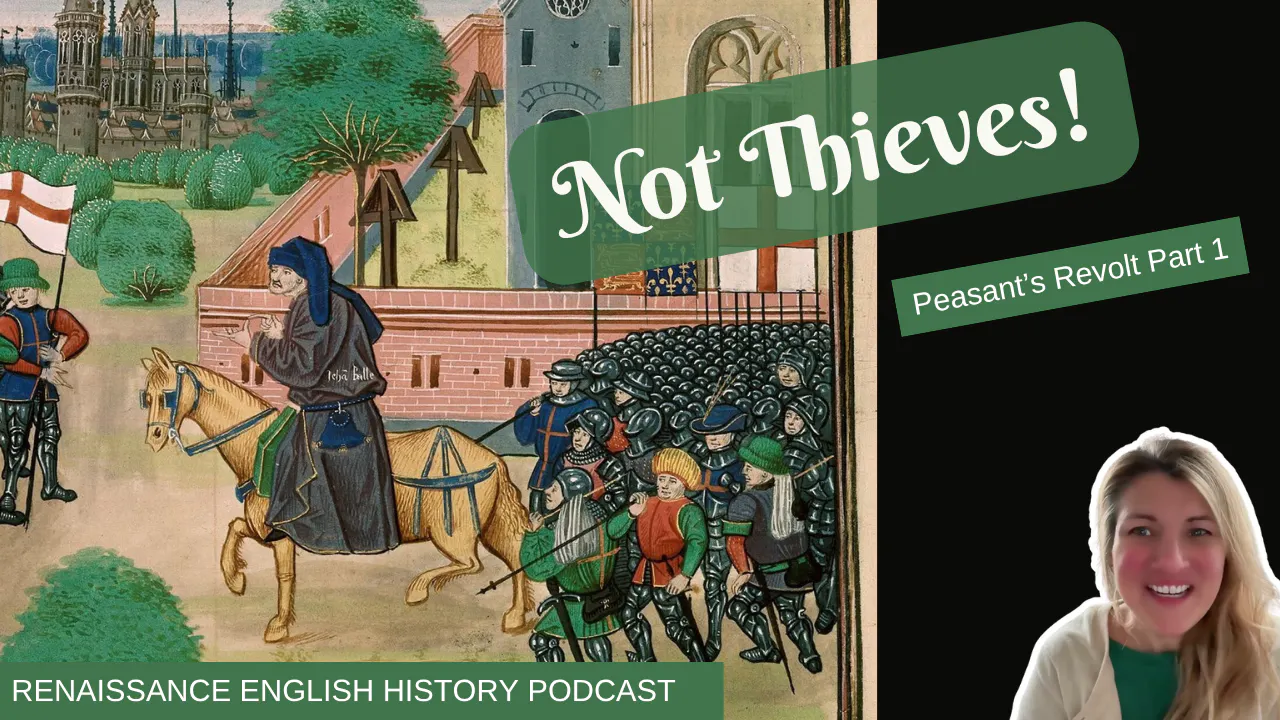 How Rain, Dead Cows and the Black Death Started the Peasants' Revolt | In June 1381, rebels broke into John of Gaunt's Savoy Palace, the wealthiest house in England. They smashed the gold plate, crushed the jewels with hammers and threw the silver in the Thames. According to one chronicler, when a man was caught stealing, his own side threw him into the fire.So how do ordinary villagers get to that point? In Part 1 of a four-part series on the Peasants' Revolt, I go back to the beginning. That means the rain of 1315, a famine so bad the king couldn't buy bread, a cattle plague that took the milk away from a whole generation of children, the Black Death, and a government that responded by making it illegal to ask for a raise. Learn more about your ad choices. Visit megaphone.fm/adchoices | 25m 22s | ||||||
Want analysis for the episodes below?Free for Pro Submit a request, we'll have your selected episodes analyzed within an hour. Free, at no cost to you, for Pro users. | |||||||||
| 9/18/26 |  What the Tudors Did When They Couldn't Control Anything | Every year in Tudor England, the weather warmed up and people wondered if this would be a plague year. On top of plague there was the sweating sickness, which could kill you between dinner and supper, plus a flu pandemic and years of failed harvests when bread prices tripled. So how did ordinary people live with that constant hum of "something terrible might happen"? In this episode we go outbreak by outbreak, from the first sweat in 1485 to the plague that greeted James I in 1603, and ask how people coped at every stop. We meet the Brandon boys, two teenage dukes of Suffolk who died of the sweat on the same morning in 1551, and their mother Katherine Willoughby, trying to make sense of it through her new Protestant faith. We look at what people lost when the Reformation took away purgatory, plague saints and prayers for the dead, right while the plague kept coming. And we meet Bartholomew Steer, who planned a rising in the hungry 1590s and had four men show up. I made this one because so many of us are feeling a low hum of dread about big things we can't control right now. The Tudors don't have all the answers, but they have some surprisingly useful ones, and a bit of plague comedy too. Also join the Privy Council for TudorCon From Home. Stream TudorCon, October 23 to 25, from your couch for $59, with a Digital Swag Bag worth over $100. Sign up by September 30 to join the Privy Council and get the brand new Spooky Halloween Walk through London immersive audio as a bonus, along with an extra game night, Tudor Zoom backgrounds and your Privy Council badge. Use code PRIVYCOUNCIL to save an additional 25%. Learn more about your ad choices. Visit megaphone.fm/adchoices | 28m 13s | ||||||
| 9/16/26 |  The Monks Henry VIII Left Behind, Told in 200 Sonnets | What happens to your whole world when the king decides your faith is wrong? Richard Smith's new book, Beyond Where Words Can Go, follows two young Benedictine monks, a lord's youngest son and a foundling left on the monastery doorstep, through Henry VIII's dissolution of the monasteries and all the back and forth of the English Reformation. And it's told entirely in sonnets. Two hundred of them! Richard is a clinical psychologist in Washington, DC who started writing sonnets for his dog (yes, really), and I loved talking with him about what it felt like to live inside the old faith, where the monks went when their homes were pulled down, and why the sonnet turned out to be the perfect way to tell this story. Our friend Gerry joined us live with some great questions about the manuscripts lost when the monasteries fell. Find Richard at richardsmithwriting.com and on Instagram @richardsmithwriting. Get Beyond Where Words Can Go:Bauhan Publishing: https://bauhanpublishing.com/shop/beyond-where-words/Bookshop: https://bookshop.org/p/books/beyond-where-words-can-go-a-novel-in-200-sonnets-richard-smith/7f97cae4082d4972Barnes & Noble: https://www.barnesandnoble.com/w/beyond-where-words-can-go-richard-smith/1148428273?ean=9780872334007Amazon: https://www.amazon.com/Beyond-Where-Words-Can-Go/dp/0872334007/ Learn more about your ad choices. Visit megaphone.fm/adchoices | 46m 31s | ||||||
| 9/14/26 | They Tried to Demolish Hampton Court. Then the Queen Died. | Learn more about your ad choices. Visit megaphone.fm/adchoices | 11m 22s | ||||||
| 9/11/26 |  Where Were You on 9/11? Walsingham in Paris, 1572 | Twenty-five years ago today, I was at my desk in Soho, emailing my friends about Thanksgiving plans, when one of them told me to open Yahoo because something big was happening in New York. For the anniversary, I wanted to tell you where I was that day. Then I want to take you back to another morning that started out completely normal: Paris, August 1572. The St. Bartholomew's Day Massacre began just days after a royal wedding that was supposed to bring peace. Francis Walsingham, Elizabeth's ambassador, was right in the middle of it. His pregnant wife and his little daughter were in the house, and a teenage Philip Sidney was sheltering with them while refugees came to his door. We'll also follow the news back to England, including the refugees who landed at Rye, and look at how quickly grief turned into a demand for safety, both in 1572 and in 2001. Take care of each other this week, and if you want to, tell me in the comments where you were. Learn more about your ad choices. Visit megaphone.fm/adchoices | 11m 40s | ||||||
| 9/11/26 |  Henry VIII Lost at Cards to Anne Boleyn. It's in His Own Accounts. | In 1540, a printer in Venice published a beautiful, enormous book that let you tell your fortune with a deck of cards. The same year Henry VIII married Anne of Cleves, annulled it, and married Catherine Howard on the day Thomas Cromwell was executed. So I went looking for the English version of that book. There isn't one. And working out why turned into a much better episode than the one I set out to make. The Tudors were obsessed with cards. Henry gambled at them constantly, and there's an entry in his own Privy Purse expenses recording him losing twenty crowns at a game called Pope Julius to "my lady Marques," which is Anne Boleyn, on the road home from Calais in November 1532. Possibly during their first week of marriage, if you believe Edward Hall. But nobody was reading cards. Not tarot, which was a card game in Italy and never really crossed the Channel, and not ordinary playing cards either, at least not in any way we can evidence before the middle of the seventeenth century. Tarot divination was invented in 1781 by a French pastor who decided the deck was secretly ancient Egyptian, at a time when nobody alive could read a hieroglyph. What Tudor England had instead was stranger and much more practical. Two acts of Parliament in the same session, one banning cards for labourers on the grounds that it was ruining English archery, the other making witchcraft a felony and naming as its chief targets treasure hunters and people who found your stolen property. A countrywide trade in divination using a sieve balanced on a pair of shears. And one Kentish gentleman who sat down to argue that witches weren't real and accidentally wrote the first book in English explaining how card tricks work. Sponsor This episode is sponsored by Context Travel, who took me round Hampton Court Palace this summer in a group of six with a guide who actually knows the historiography. The on-location video from that day is coming to the channel soon. contexttravel.com Learn more about your ad choices. Visit megaphone.fm/adchoices | 35m 17s | ||||||
| 9/3/26 | Tudor historycold case+3 | — | TudorFair.comMurder at Crowhurst: A Case Study in Early Tudor Law Enforcement | Surrey | Tudormurder+5 | — | 25m 28s | ||
| 8/31/26 | historical perfumesTudor history+4 | Jen Siems | A Closet for Ladies and Gentlewomen | — | Henry VIIIperfume recipe+7 | — | 47m 01s | ||
| 8/27/26 | rebellionTudor history+4 | — | — | NorfolkMousehold Heath | Kett's RebellionTudor history+5 | — | 18m 11s | ||
| 8/24/26 | Tudor Englandhistorical economy+4 | — | TudorConMegaphone | — | Tudor Englandsixpence+6 | — | 24m 55s | ||
| 8/19/26 | TudorsTrojan War+4 | — | CambridgeNolan's Odyssey+2 | England | TudorsTrojan War+6 | — | 20m 08s | ||
| 8/18/26 | Tudor historyLondon landmarks+4 | SeanCaroline | Context Travel | LondonBuckingham Palace+1 | Tudor Londonhistorical sites+5 | — | 48m 05s | ||
| 8/13/26 | historic innssmuggling history+3 | — | — | EnglandThe Mermaid Inn+1 | Mermaid InnRye+5 | — | 16m 03s | ||
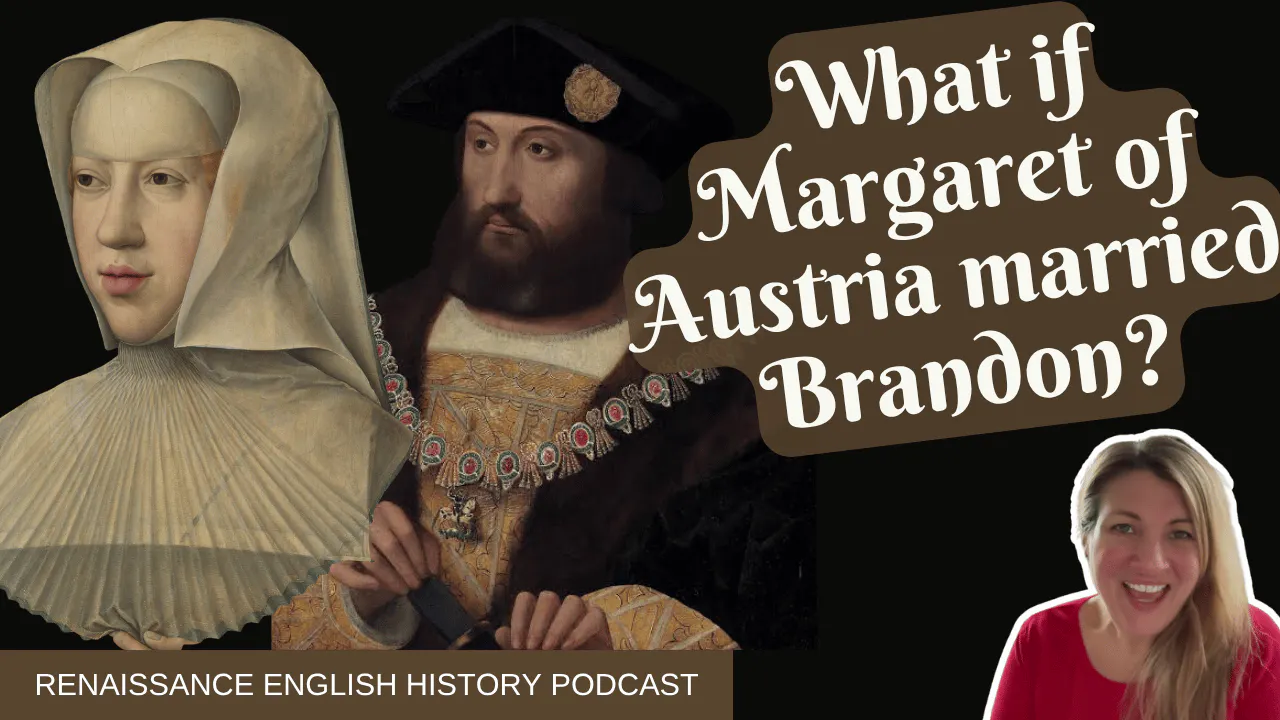
| 8/10/26 | Tudor historyLady Jane Grey+4 | — | Holy Roman Empire | NetherlandsEngland+2 | Charles BrandonMargaret of Austria+5 | — | 18m 37s | ||
| 8/6/26 | Boleyn familyhistorical research+3 | Tracy Borman | Historic Royal PalacesThe House of Boleyn | — | BoleynsTracy Borman+7 | — | 29m 30s | ||
| 8/4/26 | Henry VIIIBessie Blount+3 | James Bolton | Queens of England Podcast | — | Henry VIIIBessie Blount+5 | — | 43m 11s | ||
| 7/21/26 | Tudor historyElizabeth I+4 | — | Tudor ScrollTudor Times+1 | — | Elizabeth IRobert Dudley+6 | — | 26m 03s | ||
| 7/20/26 | CatholicismElizabethan England+5 | — | Julia Bangert | — | Nicholas OwenCatholic saint+7 | — | 22m 12s | ||
| 7/17/26 | Tudor historywomen in history+4 | — | Megaphone | — | Tudorpriests+5 | — | 25m 48s | ||
| 7/14/26 | Jesuit priestsElizabethan England+3 | — | Jesuit | Tower of London | John GerardJesuit+5 | — | 24m 25s | ||
| 7/8/26 | divorceTudor women+4 | — | ChurchPope+1 | — | Henry VIIITudor women+5 | — | 19m 07s | ||
| 7/7/26 | ProtestantismKnighthood+3 | — | Order of the Garter | — | Edward VISt. George+5 | — | 21m 13s | ||
| 7/6/26 | Eleanor de ClareTower of London+4 | — | Tudor Scrolls | Tower of LondonEngland | Eleanor de ClareTower of London+4 | — | 25m 04s | ||
| 7/2/26 | Dissolution of the Monasterieswelfare state+3 | — | Monasteries | England | Dissolution of the Monasterieswelfare+6 | — | 20m 06s | ||
| 7/2/26 | Mary Queen of ScotsTudor history+4 | — | — | — | Mary Queen of ScotsElizabeth I+5 | — | 20m 18s | ||
| 6/30/26 | Renaissanceself-discovery+3 | — | MegaphoneHamlet | — | Renaissanceself+5 | — | 21m 59s | ||
| 6/10/26 | Tudor historylaundresses+5 | — | Tudor England | Hampton CourtLondon+1 | Tudor laundressesHenry VIII+8 | — | 20m 43s | ||
| 6/9/26 | medieval womenpower+4 | — | Lacock AbbeyMagna Carta+1 | — | Nicholaa de la HayeEla of Salisbury+7 | — | 14m 10s | ||
| 6/8/26 | Thomas MoreOath of Supremacy+4 | — | Renaissance English History Podcast | — | Thomas MoreOath of Supremacy+8 | — | 17m 04s | ||
| 6/3/26 | women's laborTudor England+4 | — | Spinster: The Job Title That Became an Insult | Tudor England | spinsterTudor England+5 | — | 23m 17s | ||
| 6/2/26 | Tudor womenpolitical power+4 | — | Nicola Clark's The Waiting Game | — | Tudorwomen in power+7 | — | 18m 27s | ||
| 6/1/26 | Tudor historywomen's rights+3 | — | Renaissance English History Podcast | — | Tudor womenlegal loophole+4 | — | 21m 35s | ||
| 5/27/26 | Tudor Englandhousehold pharmacy+4 | — | — | Tudor England | Tudor womanhousehold pharmacy+5 | — | 22m 03s | ||
| 5/26/26 | medieval historyIsabella de Fortibus+4 | — | Medieval Horizons | — | Isabella de FortibusKing Edward I+5 | — | 19m 46s | ||
| 5/25/26 | patriotismTudor England+3 | — | — | England | patriotismTudor+5 | — | 10m 37s | ||
| 5/22/26 | Tudor Londonplague+3 | — | Tudor governmentplague doctors+1 | London | Tudorplague+5 | — | 30m 05s | ||
| 5/6/26 | Tudor medicinemental health+4 | — | Crisis LifelineHistoric England+3 | — | Tudor Englandmelancholy+6 | — | 20m 53s | ||
| 5/5/26 | Lady Jane GreyProtestantism+4 | — | Anne Boleyn Scavenger Huntmegaphone.fm | — | Lady Jane GreyMary+5 | — | 21m 33s | ||
| 5/4/26 | Tudor historydairymaids+3 | — | megaphone.fm | Tudor England | Tudordairymaid+5 | — | 14m 43s | ||
| 4/27/26 | Tudor historydrinking habits+4 | — | Trinity College DublinTudorFair.com | England | Tudorsale+5 | — | 27m 18s | ||
| 4/25/26 | Tudor LondonThames waterman+4 | — | MegaphoneShakespeare | Tudor LondonThames+1 | TudorLondon+6 | — | 14m 56s | ||
| 4/22/26 | Tudor Englandmidwives+4 | — | BishopThe Most Important Woman in Tudor England You've Never Heard Of | — | Tudor midwifehistorical women+5 | — | 23m 44s | ||
| 4/21/26 | Mary Queen of ScotsTudor history+4 | — | TudorCon | ScotlandFrance | Mary Queen of ScotsTudor history+5 | — | 22m 26s | ||
| 4/20/26 | medieval womenbusiness+4 | — | Edward II | Tudor LondonPort of Bristol+1 | medieval womenbusiness+5 | — | 36m 31s | ||
| 4/17/26 | Tudor Englandtomatoes+3 | — | Why Tudor England Refused to Eat Tomatoes For 200 Years | — | Tudor Englandtomatoes+5 | — | 20m 42s | ||
| 4/14/26 | Henry VIIIkitchen hierarchy+4 | — | — | Hampton Court | Henry VIIIHampton Court+6 | — | 22m 12s | ||
| 4/10/26 | Tudor Englanddream interpretation+3 | — | Megaphone | — | Tudor Englanddreams+5 | — | 19m 52s | ||
| 4/8/26 | Tudor royal nurseryhistory of childcare+3 | — | — | — | Tudorroyal nursery+5 | — | 15m 51s | ||








Showing 57 of 638
Pitch Fit is a Pro feature
See how bookable this show is for guests, which brands already advertise, the per-episode ad value, and the best-fit guest and sponsor profile. The numbers are blurred on the free plan.
How readily this show books outside guests like you.
How proven this show is for host-read sponsorships.
For Guests
ProFor Advertisers
ProUpgrade to Pro to unlock guest cadence, sponsor categories, fit scores, and per-episode ad value for this show.
Similar Audience Demographics
Podcasts that attract a similar listener profile