
Insights from recent episode analysis
Audience Interest
Podcast Focus
Publishing Consistency
Platform Reach
Insights are generated by CastFox AI using publicly available data, episode content, and proprietary models.
Est. Listeners
Based on iTunes & Spotify (publisher stats).
- Per-Episode Audience
Est. listeners per new episode within ~30 days
10,001 - 25,000 - Monthly Reach
Unique listeners across all episodes (30 days)
25,001 - 75,000 - Active Followers
Loyal subscribers who consistently listen
5,001 - 15,000
Market Insights
Platform Distribution
Reach across major podcast platforms, updated hourly
Total Followers
—
Total Plays
—
Total Reviews
—
* Data sourced directly from platform APIs and aggregated hourly across all major podcast directories.
On the show
Recent episodes
How to Stand Out as a Candidate When Everyone Uses AI
May 4, 2026
Unknown duration
From Facts to Impact: The Art of Storytelling in Interviews
Apr 30, 2026
Unknown duration
Empowering Your Job Search: Three Essential Questions
Apr 27, 2026
Unknown duration
The Three Edges You Already Have
Apr 20, 2026
Unknown duration
The Retail Manager is the Moment.
Apr 15, 2026
Unknown duration
Social Links & Contact
Official channels & resources
Official Website
Login
RSS Feed
Login
| Date | Episode | Description | Length | ||||||
|---|---|---|---|---|---|---|---|---|---|
| 5/4/26 |  How to Stand Out as a Candidate When Everyone Uses AI How to Stand Out as a Candidate When Everyone Uses AI | EPISODE 21 — How to Stand Out as a Candidate When Everyone Uses AISpecial Series: The Human Edge in the Job Market (Part 4 of 6)In 2024, Insight Global surveyed over a thousand U.S. hiring managers and found that 88% can tell when a candidate is using AI in their application. One in five recruiters say they would reject a fully AI-generated resume or cover letter outright. And industry estimates suggest that somewhere between 40 and 80% of applicants in 2026 are leaning on AI to draft their resumes, cover letters, and interview answers.The result: the rules of standing out have inverted. The thing that’s supposed to give you an edge — the AI polish, the optimization, the perfectly worded cover letter — is the same thing that’s tagging you as forgettable. Polish is the new generic.In Part 4 of The Human Edge in the Job Market, Ron Thurston walks through three specific moments in a job search where humanity beats polish — and names the edge that lives inside each one. Because these are advantages you already have, built into how you’ve been working your whole career.Place One: The Application — the edge is Specificity. The cover letter’s job is no longer to summarize a resume. It’s to prove a real human being lived this career. The exact stores. The exact week. The exact hours saved. Three sentences of that beats three paragraphs of optimized polish, every single time. Because no AI knew about the moment that actually mattered.Place Two: The Conversation — the edge is Presence. Hiring managers are exhausted by perfect answers. What they remember is the candidate who paused before answering, who admitted uncertainty, who told a real story instead of running a STAR-method script. Stop preparing answers. Start preparing stories. Pick three to five real moments from your career and memorize the feeling, not the words. Let yourself be a person, not a performance.Place Three: The Follow-Up — the edge is Generosity. The thank-you note is where almost no one stands out, which is exactly why it’s where you can. A real follow-up does three things: it references one specific thing the hiring manager said, it adds one thing you wished you’d said in the conversation, and it closes with a genuine offer to give more. Specific. Additive. Generous. In a market full of polish, that’s the rarest thing of all.“If your resume looks like everyone else’s — you don’t have a resume problem. You have a voice problem. If your interviews are blending together in your own memory — you don’t have an interview problem. You have a story problem. If your follow-ups are getting no response — you don’t have a follow-up problem. You have a connection problem. And the fix in every one of those cases is the same. Be a person. On purpose. Out loud. With specifics.”🎧 Subscribe: ronthurston.com📚 Ron’s Books:Retail Pride — amazon.com/dp/1544509456Human Pride — geni.us/humanpride (the first four chapters speak directly to the person in the job search right now — about the version of you that hasn’t been edited down to fit)🔗 Sources & Stats Referenced:Insight Global, 2025 AI in Hiring Survey Report — 88% of hiring managers say they can tell when a candidate is using AI in applications, cover letters, or resumes; 54% say they would care if they did. Conducted with Atomik Research, surveying 1,005 U.S. hiring managers in November 2024. insightglobal.com/2025-ai-in-hiring-reportTopResume, Where Employers Draw the Line on AI in Hiring — 19.6% of recruiters would reject a candidate with an AI-generated resume or cover letter; 33.5% can spot an AI-generated resume in under 20 seconds. Survey of 600 U.S. hiring managers, May 2025. topresume.com/career-advice/ai-in-hiring-surveySHRM, Recruitment Is Broken. Automation and Algorithms Can’t Fix It. — Industry estimate that 40% to 80% of job applicants use AI to write resumes, craft cover letters, and prepare for interviews. shrm.org/topics-tools/news/hr-trends/recruitment-is-brokenDisher Talent, AI in Recruiting 2026: What Actually Works (and What Doesn’t) — Industry analysis on AI-flooded application volume and the erosion of resumes as a reliable signal. dishertalent.com/blog/ai-in-recruiting-2026👤 Follow Ron:LinkedIn — linkedin.com/in/ron-thurstonInstagram — @retailprideWebsite — ronthurston.comEpisodes 18–23 are built for anyone in career transition — retail or otherwise. If you built something, lost a role, or you’re figuring out what’s next, this series is for you.Next up — Episode 22: Your Story Is the Strategy | — | ||||||
| 4/30/26 |  From Facts to Impact: The Art of Storytelling in Interviews From Facts to Impact: The Art of Storytelling in Interviews | EPISODE 20 — From Facts to Impact: The Art of Storytelling in InterviewsSpecial Series: The Human Edge in the Job Market (Part 3 of 6)The World Economic Forum’s Future of Jobs Report 2025 surveyed over a thousand companies and found that 39% of workers’ core skills will change by 2030. But the skills employers say are most essential right now — analytical thinking, resilience, leadership and social influence, creative thinking, empathy and active listening — aren’t the technical credentials on a resume. They’re the things you’ve been quietly building for twenty or thirty years and calling “just what I do.”In Part 3 of The Human Edge in the Job Market, Ron Thurston walks through four questions designed to turn a vague sense of “I did good work” into something you can actually say out loud.These four questions were built for interviews — but they work anywhere you need to articulate what you actually contributed: a performance review, a quarterly check-in, or a moment of self-doubt at the kitchen table at the end of a long week. This episode is for anyone in transition. And it’s also for the listener who is currently employed, currently questioning whether their work has been seen.Question #1 — Who is better at their job today because of time they spent with you? Not who you trained officially. Not who reported to you on an org chart. Who is genuinely more capable, more confident, more clear on who they are as a professional — because you were in their life? That’s leadership and social influence. It’s one of the skills the WEF identified as essential. And most people have been doing it for free, often without anyone noticing.Question #2 — What problem did you solve that nobody asked you to solve? The hardest one to claim, because by definition nobody assigned it to you. But you saw it. You acted. Something got better. An employer can hire someone to do what they’re told. What they cannot easily hire is someone who notices what nobody else is noticing — and does something about it.Question #3 — What did the team do differently because of the standard you set? Not the policy. Not the procedure. The standard. The way people showed up, talked to each other, treated the work. Somebody set that. In a lot of cases, that somebody was you.Question #4 — What would have been worse if you hadn’t been there? The hardest of the four — because it requires you to imagine your own absence. But it’s the most clarifying. When you can answer it honestly, you stop talking about a job title. You start talking about impact. And impact is what every hiring leader is trying to find.“The market is full of people who can fill a role. What it cannot find enough of are people who show up with the kind of presence, judgment, and genuine investment in other people that you have been bringing to every room you’ve ever walked into. That is not a soft skill. That is the whole thing.”🎧 Subscribe: ronthurston.com📚 Ron’s Books:Retail Pride — amazon.com/dp/1544509456Human Pride — geni.us/humanpride (the first four chapters are written for the person standing at this exact crossroads — trying to see their own work clearly enough to say it out loud)🔗 Sources & Stats Referenced:World Economic Forum, Future of Jobs Report 2025 — 39% of workers’ core skills will change by 2030; 7 in 10 employers say analytical thinking is essential to their business in 2025; top skills employers say are most essential through 2030 include analytical thinking, resilience/flexibility/agility, leadership and social influence, creative thinking, curiosity and lifelong learning, and empathy and active listening. weforum.org/publications/the-future-of-jobs-report-2025WEF Future of Jobs 2025 — Skills Outlook chapter, full data on rising and declining skills 2025–2030. weforum.org/publications/the-future-of-jobs-report-2025/in-full/3-skills-outlook👤 Follow Ron:LinkedIn — linkedin.com/in/ron-thurstonInstagram — @retailprideWebsite — ronthurston.comEpisodes 18–23 are built for anyone in career transition — retail or otherwise. If you built something, lost a role, or you’re figuring out what’s next, this series is for you.Next up — Episode 21: Polish Is the New Generic — How to Stand Out in an AI-Flooded Job Market | — | ||||||
| 4/27/26 |  Empowering Your Job Search: Three Essential Questions Empowering Your Job Search: Three Essential Questions | EPISODE 19 — Empowering Your Job Search: Three Essential QuestionsSpecial Series: The Human Edge in the Job Market (Part 2 of 6)Job applicants in 2025 were 12% less likely to reject a job offer than they were in 2023. People are taking jobs right now that — two years ago — they would have walked away from. Not because the jobs got better. Because the people got more scared.In Part 2 of The Human Edge in the Job Market, Ron Thurston speaks directly to the listener who doesn't have a stack of offers in front of them right now — and walks through three big questions that protect you from the wrong yes, even when the market is pressuring you to settle.This isn't a philosophy. It's protection. Three big questions for you. Five interview questions for them. And a 24-hour rule that stands between you and the wrong job.Big Question #1 — What are my three non-negotiables? Not five. Not ten. Three. Preferences are the things you'd like. Values are the things you won't live without. When the offers are scarce, your non-negotiables are the only thing standing between you and a wrong yes. Ron explains why three is the number — and why five or ten gives you permission to trade.Big Question #2 — What am I asking them? An interview is a two-way decision. The candidates who win offer after offer are the ones who walk in evaluating the company right back. Inside this question: five specific interview questions to carry into every interview from now on. Pick two or three. But know them. They shift the dynamic from candidate to peer.Big Question #3 — Have I given myself permission to say no? Permission to say no is not the same thing as planning to say no. Most of the offers you get, you're going to take — that's fine, that's often the right answer. But you cannot say the right yes if you haven't given yourself permission to say no. Plus the 24-hour rule that protects you from a yes-by-default, and the kind, warm, professional no that keeps the bridge intact."Your standards are not the problem. Your standards are what will protect you when the wrong offer comes in dressed up like the right one."🎧 Subscribe: ronthurston.com📚 Ron's Books:Retail Pride — amazon.com/dp/1544509456Human Pride — geni.us/humanpride (the first four chapters are written for the job seeker)🔗 Sources & Stats Referenced:Glassdoor Worklife Trends 2026 — Job applicants 12% less likely to reject an offer in 2025 vs. 2023; hiring rates at a 10-year low. glassdoor.com/blog/worklife-trends-2026Glassdoor Worklife Trends 2026 — Mentions of "misaligned" up 149% in employee reviews from 2024 to 2025; "disconnect" up 24%; "distrust" up 26%. glassdoor.com/blog/worklife-trends-2026Resume Now International Career Regrets Survey 2025 — 58% of workers regret staying in a bad job too long; only 38% regret quitting. Survey of 1,000 workers across the U.S., U.K., France, and Germany. resume-now.com/job-resources/careers/career-regrets👤 Follow Ron:LinkedIn — linkedin.com/in/ron-thurstonInstagram — @retailprideWebsite — ronthurston.comEpisodes 18–23 are built for anyone in career transition — retail or otherwise. If you built something, lost a role, or you're figuring out what's next, this series is for you. | — | ||||||
| 4/20/26 | 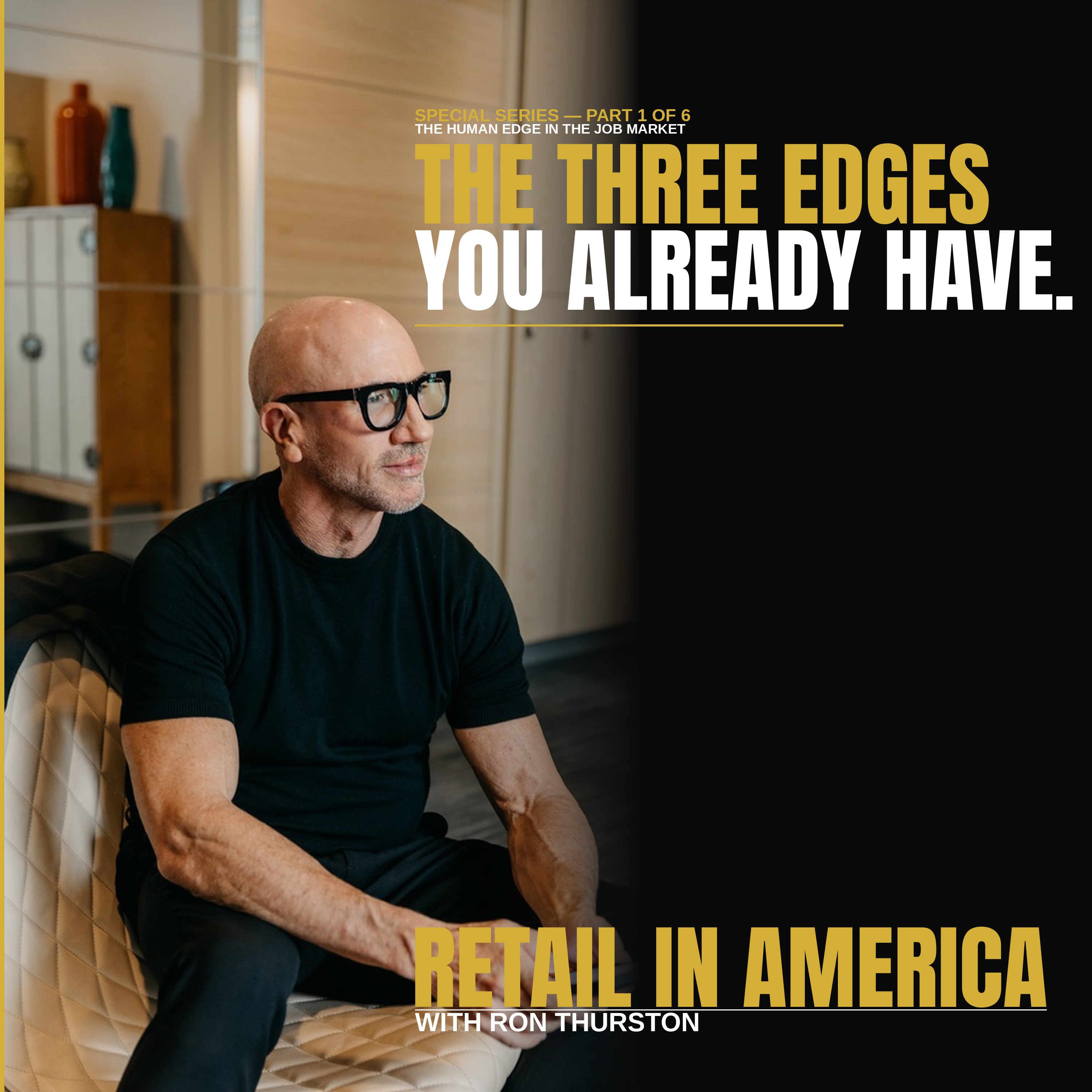 The Three Edges You Already Have The Three Edges You Already Have | EPISODE 18 — The Three Edges You Already HaveSpecial Series: The Human Edge in the Job Market (Part 1 of 6)Right now, more than 28 million people have the Open to Work banner on LinkedIn. If you're one of them — or you're thinking about turning it on — this episode is for you.Over the next six episodes, Ron walks through the edges you already have in a job market being rebuilt around technology. Not tactical job-search tips. Not resume hacks. The advantages that didn't end when the role did — the things no algorithm can see, no title can capture, and no restructure can take from you.In Part 1, the foundation: three Human Edges you already carry.Edge #1 — Your Judgment. The pattern-recognition you've earned from doing the work. Analytical thinking, adaptability, and problem-solving are the top skills employers are hiring for in 2026 — and the #1 reason hires fail isn't technical ability. It's judgment.Edge #2 — Your Relationships. Referred candidates are 4 to 10 times more likely to be hired than candidates who apply through job boards. Referrals make up only 7% of applicants — but 30–50% of hires. The job you get next is probably going to come from a conversation, not an application.Edge #3 — Your Story. The through-line that makes every chapter of your career make sense. The single most persuasive thing you own — and the thing most candidates leave out.Three edges. All yours. All already in you."The role ended. Your value didn't."🎧 Subscribe for new episodes weeklyhttps://www.ronthurston.com/📚 Ron's BooksRetail Pride: https://www.amazon.com/dp/1544509456 Human Pride: https://geni.us/humanpride🔗 Sources & Stats Referenced28 million+ Open to Work profiles on LinkedIn — LinkedIn member data, cited in LinkedIn stats roundups (2026): https://writefulcopy.com/blog/linkedin-stats-handy-reference-b2b-marketersApplications up 45.5% / job postings down 10.6% — LinkedIn Recruitment Trends Report, Q3 2024: https://copilot.recruitaisuite.com/blog/linkedin-recruiting-statistics-2026/85% of employers using skills-based hiring in 2026 — TestGorilla State of Skills-Based Hiring Report: https://www.testgorilla.com/skills-based-hiring/state-of-skills-based-hiring-2024/Two-thirds of hiring managers cite industry experience as the biggest gap — LinkedIn Future of Recruiting Report: https://business.linkedin.com/talent-solutions/resources/future-of-recruitingTop skills for 2026: analytical thinking, adaptability, problem-solving — LinkedIn Skills on the Rise 2026: https://www.linkedin.com/business/talent/blog/talent-acquisition/linkedin-skills-on-the-rise89% of bad hires lack critical soft skills — LinkedIn Global Talent Trends: https://business.linkedin.com/talent-solutions/global-talent-trendsReferrals = 7% of applicants, 30–50% of hires — Zippia Employee Referral Statistics: https://www.zippia.com/advice/employee-referral-statistics/Referred candidates 4x more likely to be hired — Boon / Jobvite data: https://www.goboon.co/post/referral-hiring-the-solution-to-high-turnover-ratesCompany career pages: 13% of applicants, 26% of hires — SilkRoad Sources of Hire Report: https://www.shrm.org/topics-tools/news/talent-acquisition/employee-referrals-remain-top-source-hiresLinkedIn profile photos: 21x more views, 36x more messages — LinkedIn profile optimization data: https://www.linkedin.com/business/sales/blog/profile-best-practices/17-steps-to-a-better-linkedin-profile-in-2017Follow RonLinkedIn: https://www.linkedin.com/in/ron-thurston/ Instagram: @retailpride Website: https://www.ronthurston.com/Listening to the whole series? Episodes 18–23 are built for anyone in career transition — retail or otherwise. If you built something, lost a role, and you're figuring out what's next, this series is for you.Next up — Episode 19: Know What You Won't Compromise. | — | ||||||
| 4/15/26 | 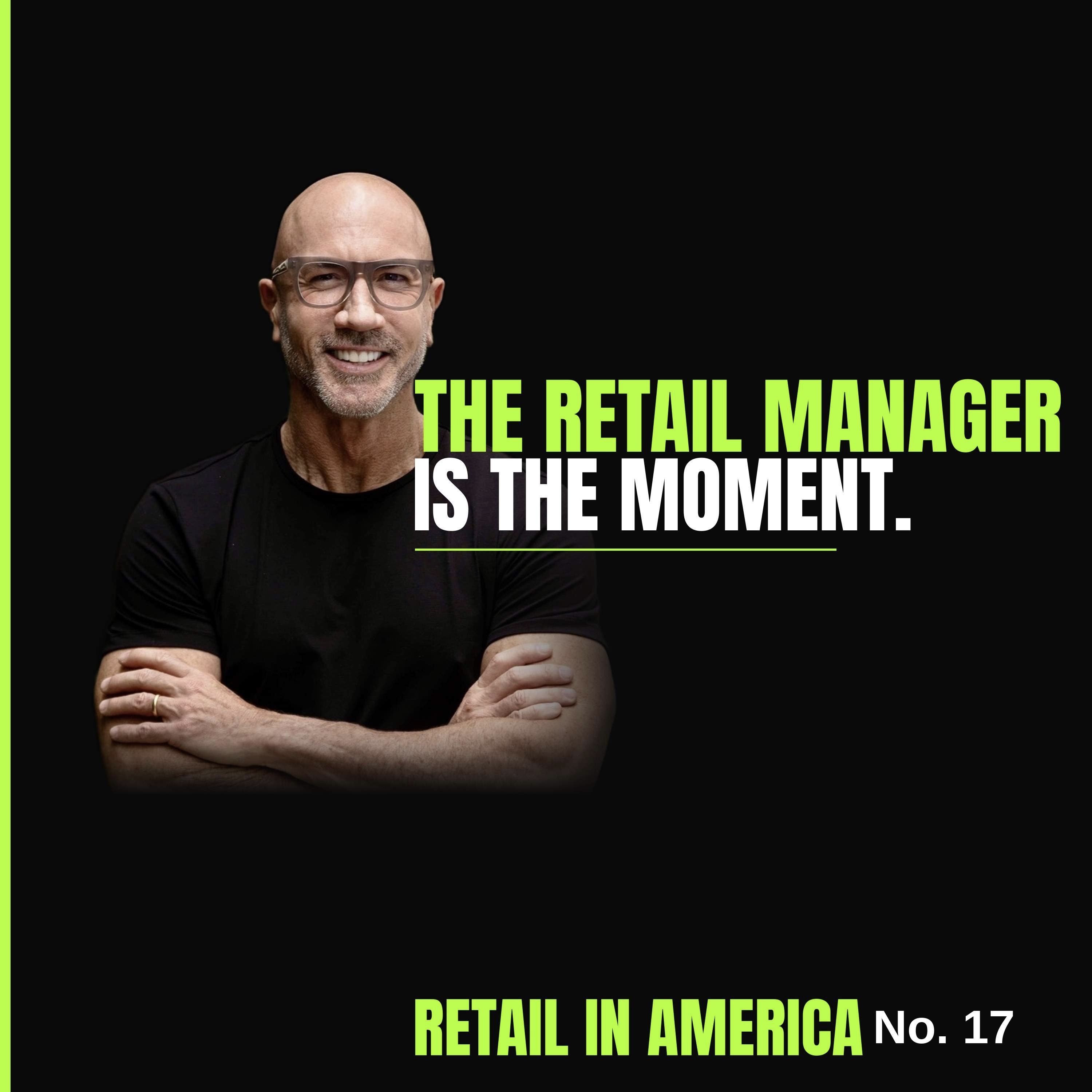 The Retail Manager is the Moment. The Retail Manager is the Moment. | Episode SummaryRetail didn't have a middle management problem. It had a leadership investment problem — and solved it the fastest and worst way possible. In this episode, Ron breaks down what actually happens when you eliminate the manager: the floor walks stop, the conversations stop, and the people who make your strategy real disappear. Three human truths about retail, technology, and the people caught in between.Three Human TruthsRetail: Flattening the org chart didn't create efficiency. It created silence. And silence doesn't mean alignment — it means something is breaking.Technology: We didn't replace managers with AI. We replaced judgment with dashboards — and hoped compliance would feel like leadership. It doesn't.People: Forty-four percent of retail workers are planning to leave. Not because of pay. Because of leadership. They're not asking for more money — they're asking to be known.Research & SourcesBloomberg / Live Data Technologies — Middle Manager LayoffsMiddle managers made up one-third of all layoffs in 2023 — up from 20% in 2018. This analysis was conducted by Live Data Technologies for Bloomberg.Bloomberg: Middle Manager Jobs Make Up 30% of White Collar LayoffsCNBC: Middle Managers Are Getting Laid Off — But Their Role Is 'More Important Than Ever'Korn Ferry — Workforce 2025: Power ShiftsKorn Ferry's annual survey of 15,000 professionals worldwide found that 41% of employees say their organization has slashed management layers. 40% of U.S. employees say they feel a lack of direction at work as a result. More than a third feel directionless without a manager.Korn Ferry Workforce 2025 ReportKorn Ferry Press Release: Workforce 2025 ResearchNote: The script references 'over 40% of companies had flattened management layers.' The Korn Ferry Workforce 2025 data shows 41% of employees globally report this, with 44% in the U.S. Both figures are consistent with the script's claim.Gartner — AI & Middle Management ProjectionGartner projects that through 2026, 20% of organizations will use AI to flatten their organizational structure, eliminating more than half of current middle management positions.Gartner Top Predictions for IT Organizations and Users in 2025 and BeyondMcKinsey — The Manager Relationship & Frontline SatisfactionRelationships with management account for 86% of workers' satisfaction with their interpersonal ties at work. Managers also spend nearly half their time on work that is not leadership — admin, scheduling, and reporting. That's from McKinsey's Power to the Middle research.McKinsey: Are You Stuck in the Middle? (Power to the Middle)McKinsey: The Boss Factor — Making the World a Better Place Through Workplace RelationshipsMcKinsey / Business of Fashion — Retail Worker AttritionLack of inspiring leadership is now among the top reasons retail workers leave — alongside lack of career development. McKinsey's frontline retail research documents this shift directly.McKinsey: How Retailers Can Build and Retain a Strong Frontline Workforce in 2024McKinsey: How Retailers Can Attract and Retain Frontline Talent Amid the Great AttritionNote: The script references '44% of retail workers are planning to leave' attributed to Business of Fashion and McKinsey. The McKinsey retail attrition research is the primary source for the leadership/manager-as-attrition-driver data. If you have a specific Business of Fashion report with the 44% figure, link it alongside these.Ron's BooksRetail Pride — Available at ronthurston.comHuman Pride — Available at ronthurston.comSubscribe & ConnectGet new episodes delivered twice a week: ronthurston.com | — | ||||||
| 4/9/26 | 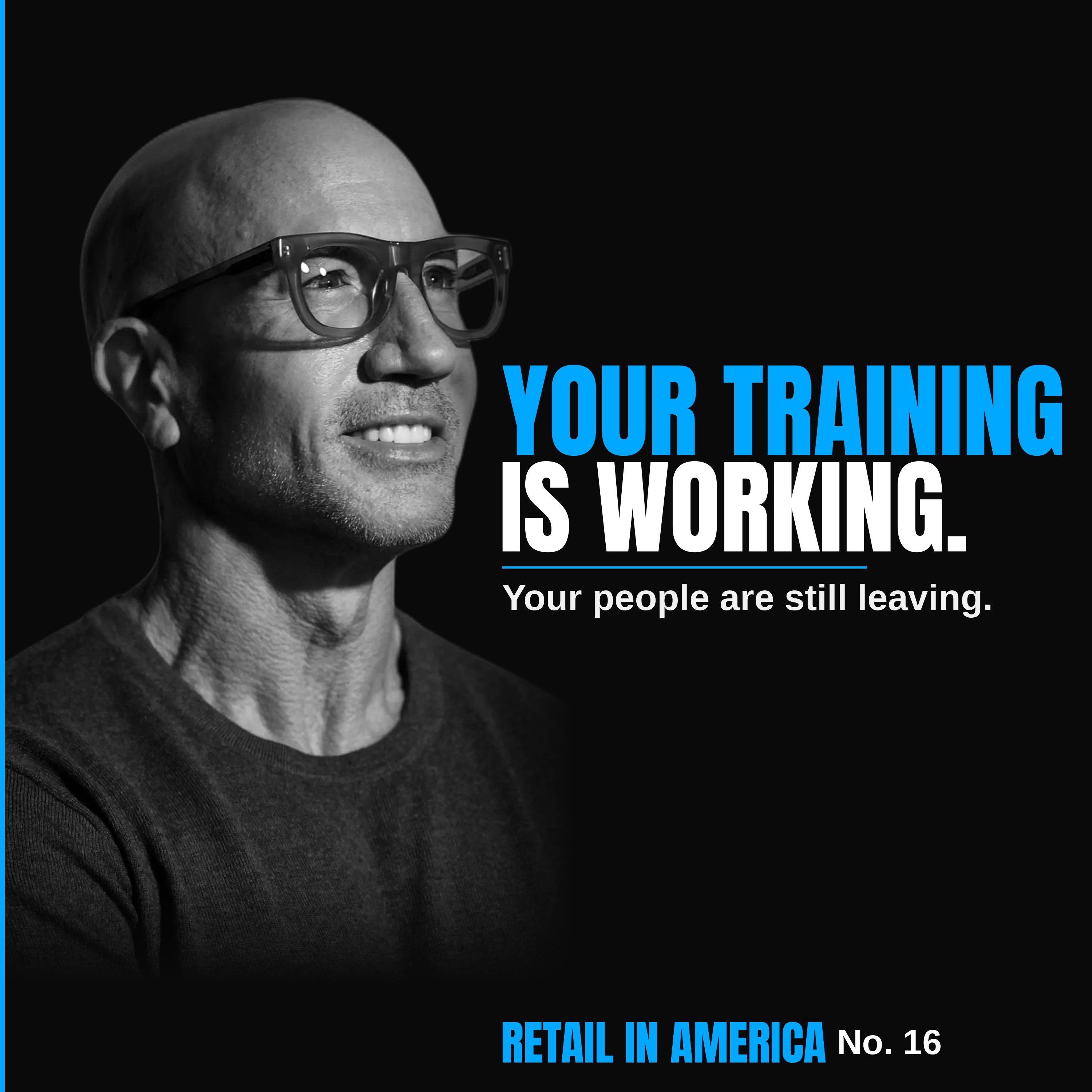 Your Training Is Working. Your People Are Leaving. Your Training Is Working. Your People Are Leaving. | Episode 16: Compliance Is Not DevelopmentYour training is working. Your people are still leaving.In this episode of Retail in America, Ron Thurston breaks down the critical difference between completing a training module and actually developing a frontline worker.Through the story of DeShawn — a high-performing associate who left for a two-dollar raise because he couldn't see a path forward — Ron contrasts two types of retailers. Company A measures compliance. Company B measures capability. One is losing its investment; the other is multiplying it.If your dashboard says training is at 90% but your stores are bleeding talent, this episode is for you.What you'll hear in this episode:Only 24% of frontline workers feel confident they have the right training to do their jobs — and 40% aren't even clear on what's expected of them. Yet most companies report completion rates above 90%. The dashboard and the frontline worker are living in two completely different realities.Harvard Business Review is clear: training embedded in daily workflow is what actually drives performance. And the Forgetting Curve shows that people forget up to 90% of what they learn within a month if it's not applied.The data on what's at stake: frontline workers who feel properly trained are 3x more likely to stay. 94% say they would stay longer if a company invested in their development. And 85% want another role inside their company — if they can see the path.The desire to grow is not the problem. The visibility of the path is.Connect with Ron:Subscribe for weekly insights: ronthurston.comRead RETAIL PRIDE: AmazonRead HUMAN PRIDE: AmazonRetail in America is the show about what's really happening inside retail — the space between the strategy and the person expected to execute it. | — | ||||||
| 4/7/26 | 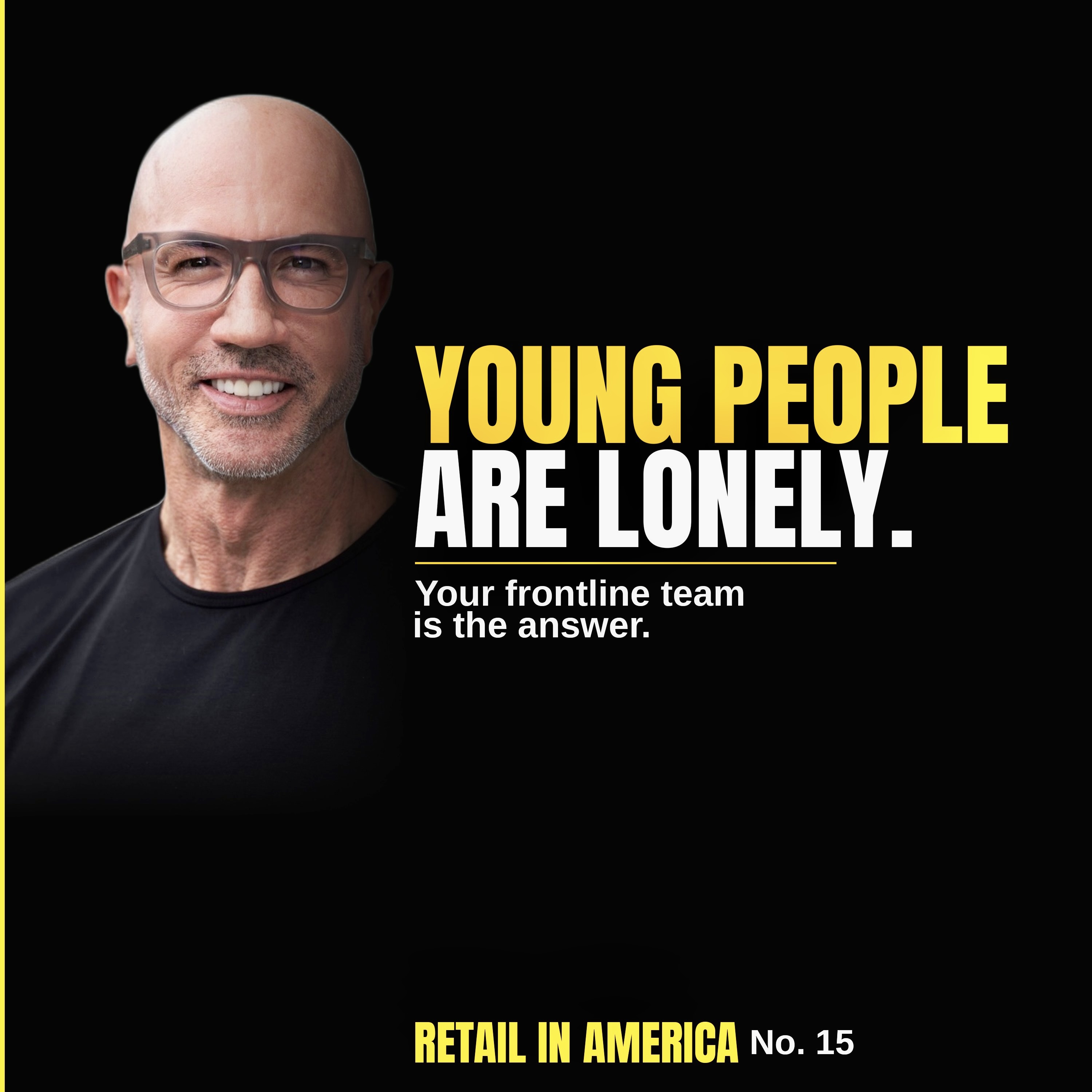 Young People Are Lonely. Your Frontline Team Is the Answer. Young People Are Lonely. Your Frontline Team Is the Answer. | Episode 15: The Happiness Report & RetailThe World Happiness Report 2026 was just published. 136 countries. Hundreds of thousands of respondents. Decades of data.And buried inside it is something every retail executive needs to sit with.In the United States, young people are dramatically less happy than they were fifteen years ago. The primary driver? The same platforms your customers used to find your store.In this episode, Ron explores three human truths — about retail, technology, and the people caught in between — and makes the case that your frontline team may be one of the most important forces in the wellbeing of a generation.Reports & Sources Referenced:📊 World Happiness Report 2026 — Wellbeing Research Centre, University of Oxford / Gallup / UN SDSN🛍️ Gen Z Purchases 62% In-Store — WSJ / Circana data, via PYMNTS🏬 42% of Mall Visits Are Social in Nature — Westfield / Advertising WeekBooks Mentioned:Retail Pride by Ron Thurston — ronthurston.comHuman Pride by Ron Thurston — ronthurston.comSubscribe at ronthurston.com to get every episode delivered to your inbox, twice a week. | — | ||||||
| 3/31/26 |  The Three Things Your Hiring Process Isn't Testing For. The Three Things Your Hiring Process Isn't Testing For. | Gen Z is walking into your stores on purpose. They came for connection, community, and a human experience they can’t get from a screen. The question is whether the people you hired are ready to meet them.Most retail job descriptions were written for a store that no longer exists. In this episode, Ron Thurston explores what the experience economy actually demands from your frontline — and what the retailers winning with Gen Z are doing differently.The Three Human Truths1. Retail — You’re Hiring for Transactions. Gen Z Needs an Experience.When Gen Z walks into a physical store, they’re not evaluating it on product selection or price. They’re evaluating it on atmosphere, energy, and the quality of human interaction. Most retail job descriptions are still built around transaction efficiency — POS operation, schedule flexibility, product folding. They were written for a store that no longer exists. The experience economy demands something different: empathy, curiosity, and focus. Those qualities don’t appear on a resume. But they determine every customer interaction.2. Technology — Onboarding for Compliance Is Failing the Experience Economy.McKinsey research shows it takes roughly six to eight weeks for a new frontline hire to reach full productivity. The question is what retailers are teaching during that time. UKG’s global frontline study found that 47% of frontline workers feel there are two separate cultures in their organization — one for the floor, one for everyone else. Nowhere is that gap more visible than in onboarding. Retailers give new associates the operational layer. They rarely give them the experiential layer: what does it actually feel like to work here, and what does it mean to make a customer’s day?3. People — The Retailers Winning With Gen Z Are Rewriting the Role.The best operators have changed three things: what they select for (emotional intelligence, genuine curiosity about people), how they define success on the floor (dwell time, return visit rate, social engagement — not just conversion rate), and how they invest in the manager who develops the frontline team. Because you can hire the right person and onboard them intentionally — and then put them under a manager who doesn’t have the time, training, or support to develop them. And everything you invested in the first two steps evaporates within 90 days.Research Sources — Full Links62% of Gen Z purchases happen in physical stores Deloitte 2025 US Retail Industry Outlook — https://www.deloitte.com/us/en/insights/industry/retail-distribution/retail-distribution-industry-outlook/2025.html52% of Gen Z shoppers share photos or videos during a mall visit Advertising Week — Gen Z and the Mall, 2025 — https://www.advertisingweek.com/gen-z-and-the-mall-202547% of frontline workers feel there are two separate cultures in their organization — one for frontline employees and one for everyone else UKG Global Frontline Study 2026 — More Perspectives from the Frontline Workforce (8,200 workers, 10 countries) — https://www.ukg.com/company/newsroom/global-study-reveals-flexibility-and-financial-wellness-are-top-2026-priorities-frontline-workers32% of all first jobs are in retail — one in four American teenagers works in this industry RETAIL PRIDE — Ron Thurston (referenced in episode) — https://a.co/d/0j4SaAbMGen Z is evaluating physical retail destinations on atmosphere, energy, and quality of human interaction — not product selection or price ICSC — The Rise of Third Places: Becoming Your Community’s Social Experience Hub, 2025 — https://www.icsc.com/news-and-views/icsc-exchange/the-rise-of-third-places-becoming-your-communitys-social-experience-hub-in-202597% of Gen Z shop at brick-and-mortar stores — driven by immediacy, touch, and social experience ICSC — Rise of the Gen Z Consumer Report, 2023 — https://www.icsc.com/news-and-views/icsc-exchange/the-rise-of-the-gen-z-consumerMcKinsey: ~6–8 weeks for a new frontline hire to reach full productivity McKinsey — How Retailers Can Build and Retain a Strong Frontline Workforce, 2024 — https://www.mckinsey.com/industries/retail/our-insights/how-retailers-can-build-and-retain-a-strong-frontline-workforce-in-2024Books ReferencedRETAIL PRIDE by Ron Thurston — #1 Bestseller https://a.co/d/0j4SaAbMHUMAN PRIDE by Ron Thurston https://geni.us/humanprideConnect With RonWebsite: ronthurston.com https://ronthurston.comLinkedIn (Ron): linkedin.com/in/rthurston/ https://linkedin.com/in/rthurston/LinkedIn (Retail in America): linkedin.com/company/retail-in-america/ https://linkedin.com/company/retail-in-america/Subscribe — Episodes to your inbox: ronthurston.com https://ronthurston.com | — | ||||||
| 3/27/26 |  You Don't Understand Why Gen Z Loves Physical Retail You Don't Understand Why Gen Z Loves Physical Retail | 62% of Gen Z shops in physical stores — more than any generation before them. They came for community, connection, and a human moment. And the industry’s response is to automate the experience that brought them there.This episode examines why Gen Z is choosing physical retail, what they actually need when they walk in, and what winning retailers are doing to meet them there.THE THREE HUMAN TRUTHS1. RETAIL — Gen Z didn’t come for the product. They came for the person.42% cite social activity as their primary reason for shopping in person. They’re seeking belonging, not just a transaction.2. TECHNOLOGY — AI is entering the store at exactly the wrong moment.Only 14% of consumers trust AI to purchase for them — yet 68% of retailers are deploying AI-powered customer interactions. That’s not a technology failure. That’s a strategy failure.3. PEOPLE — The associate who greets Gen Z isn’t just a frontline worker. They’re the brand.Retailers winning with Gen Z have invested in their associates as experience creators. They’ve given them time, training, and permission to build relationships.SOURCES•Advertising Week — Gen Z’s Surprising Love Affair with the Mall (2025)•ICSC — The Rise of Third Places: Becoming Your Community’s Social Experience Hub (2025)•Salesforce — State of the Connected Customer Report•McKinsey — The State of AI in 2025•Edelman — Trust Barometer Flash Poll: Trust and Artificial Intelligence at a Crossroads (2025)BOOKS BY RON THURSTONRETAIL PRIDE and HUMAN PRIDE — available at ronthurston.com and wherever books are sold.CLOSING PULL QUOTE“The brands winning with Gen Z are the brands that still believe in the human moment.” | — | ||||||
| 3/23/26 |  The Strategy Meeting is Over. Nobody Told the Store Manager. The Strategy Meeting is Over. Nobody Told the Store Manager. | Forrester Research is calling this moment ‘peak ambiguity.’ Rising bankruptcies. Falling consumer sentiment. Geopolitical uncertainty. And when strategy is unclear at the top — it’s the frontline that absorbs it first. Every time.In this episode, Ron Thurston breaks down three human truths about what retail’s peak ambiguity is really costing your people — and how the right investment right now creates a competitive advantage that’s very hard to close.Three Human Truths This EpisodeHUMAN TRUTH #1 — Uncertainty Is a Leadership Problem That Becomes a Frontline Crisis.When communication stops at the top, the floor fills the gap with rumors and disengagement. Consumer sentiment is falling. Customers are more demanding and less forgiving. Your frontline needs the most clarity at the exact moment they have the least.HUMAN TRUTH #2 — The Manager Crisis Is Retail’s Hidden Emergency.The store manager is your AI adoption lead, your retention strategy, and your customer experience all in one. 47% of frontline workers feel there are two separate cultures in their company. The manager is caught between them every single day — and most retailers are dramatically underinvesting in developing them.HUMAN TRUTH #3 — Ambiguity Is a Competitive Advantage If You Invest in the Right Layer.McKinsey documents a 3-point comp sales lift at the best frontline retail employers. When every competitor is pulling back on people investment, the company that leans in creates a gap that’s very hard to close. Uncertainty isn’t just a threat. It’s a window.Takeaways:Uncertainty has emerged as a pivotal concern in retail, overshadowing topics such as AI and automation.The prevalent atmosphere of ambiguity necessitates clear and honest communication from leadership to frontline employees.Store managers are critical stabilizing forces within organizations, deserving of investment and development amidst uncertainty.Consumer trust is fragile; therefore, investing in frontline personnel establishes a durable competitive advantage in retail.When leadership fails to communicate effectively, the frontline becomes disengaged, exacerbating the crisis of uncertainty.The current period of peak ambiguity can serve as an opportunity for organizations that choose to invest in their people.Data & SourcesForrester Research — Three Themes for Retail in 2026 (March 2026)https://www.forrester.comUKG — Global Study: Flexibility and Financial Wellness Are Top 2026 Priorities for Frontline Workers (January 2026)https://www.ukg.com/company/newsroom/global-study-reveals-flexibility-and-financial-wellness-are-top-2026-priorities-frontline-workersMcKinsey — How Retailers Can Build and Retain a Strong Frontline Workforce (2024)https://www.mckinsey.com/industries/retail/our-insights/how-retailers-can-build-and-retain-a-strong-frontline-workforce-in-2024U.S. Consumer Sentiment Index — University of Michigan (2026)https://data.sca.isr.umich.eduGet the Book📘 HUMAN PRIDE: Optimizing Your Human Potential in a Digital Job Market→ https://www.ronthurston.com | — | ||||||
Want analysis for the episodes below?Free for Pro Submit a request, we'll have your selected episodes analyzed within an hour. Free, at no cost to you, for Pro users. | |||||||||
| 3/19/26 |  You're Deploying AI Faster Than Your Customers Trust It You're Deploying AI Faster Than Your Customers Trust It | 65% of consumers trust AI to compare prices. Only 14% trust it to place an order on their behalf. We’re in the most aggressive AI deployment cycle in retail history — and most customers don’t trust it where it matters most.In this episode, Ron Thurston breaks down three human truths about the trust gap between AI technology and the frontline workers and customers caught in between.Three Human Truths This EpisodeHUMAN TRUTH #1 — Customers Trust AI for Transactions. Not for Relationships.65% trust AI for price comparison. 14% trust it to place an order. The line between utility and relationship is where your frontline earns its keep — and where AI has to earn its place. The frontline worker is the trust infrastructure that makes AI worth deploying.HUMAN TRUTH #2 — The Real Disruptor Isn’t AI. It’s the Trust Deficit Behind It.Forrester calls it ‘humanity vs tech.’ 53% of Americans believe AI will worsen their ability to think creatively. 50% say it will worsen their ability to form meaningful relationships. That’s the environment your frontline is navigating every shift.HUMAN TRUTH #3 — The Companies Winning With AI Are Building Trust First.Walmart trained 1.6 million employees before deploying AI — and 6,000+ associates are now building their own tools. Technology pulled by teams, not pushed by leadership. Three questions every retailer should ask before any AI deployment.Takeaways:The rapid deployment of AI in retail necessitates an examination of customer trust levels.While many consumers trust AI for transactional tasks, they prefer human interaction for nuanced decisions.A significant majority of consumers express skepticism regarding AI's impact on creativity and relationships.Companies must prioritize building trust with their frontline teams before implementing AI systems.Data & SourcesYouGov — Which Retail Tasks Do Americans Trust AI With (December 2025)https://yougov.co.ukForrester Research — Three Themes for Retail in 2026 (March 2026)https://www.forrester.comPew Research Center — How Americans View AI and Its Impact on People and Society (June 2025)https://www.pewresearch.orgFortune — Walmart Is Offering AI Training to 1.6 Million Workers (February 2026)https://fortune.com/2026/02/19/walmart-trillion-dollar-retail-gaint-artificial-intelligence-training-google-partnership-invest-in-workers-not-replace-tech-changing-jobs/Get the Book📘 HUMAN PRIDE: Optimizing Your Human Potential in a Digital Job Market→ https://www.ronthurston.com | — | ||||||
| 3/16/26 |  The Turnover Tax — What Retail Is Really Paying for Neglect The Turnover Tax — What Retail Is Really Paying for Neglect | Retail turnover is running at 81% annually. Everyone in the boardroom knows it. Nobody is treating it like the emergency it actually is.In this solo episode, Ron Thurston breaks down three human truths about what’s really driving frontline employee turnover in retail — and why solving it has nothing to do with pay.Three Human Truths This EpisodeHUMAN TRUTH #1 — Everyone Knows. Nobody’s Treating It Like an Emergency.Retail turnover has been above 60% for decades. Some subsectors are now hitting 81%. Yet boardrooms keep calling it a “known variable” instead of a burning platform.HUMAN TRUTH #2 — This Isn’t a Pay Problem. It’s a Neglect Problem.8 out of 10 reasons frontline workers leave are emotional, not operational. 42% of turnover is viewed by employees themselves as preventable.HUMAN TRUTH #3 — The Real Cost Never Shows Up on a Spreadsheet.A mid-sized retailer at 60% turnover spends roughly $600,000 annually in hard costs alone. At the best frontline retail employers, comparable store sales run 3 full percentage points higher than low performers.TakeawaysThe retail industry currently experiences an alarming annual turnover rate of 81%, indicating a significant challenge that requires urgent attention from leadership.New hires in retail typically require approximately two months to achieve full productivity, meaning that stores are often staffed by individuals still learning their roles.Research reveals that eight out of ten frontline workers leave their retail jobs for emotional reasons, emphasizing the importance of valuing employees and investing in their growth.The disconnect between executive perceptions and frontline realities leads to a neglect problem rather than a pay issue, necessitating a shift in organizational focus and accountability.Preventable turnover is a critical issue, with 42% of employees viewing their departure as avoidable, highlighting the need for proactive management practices.Investing in employee satisfaction and stability can lead to significant improvements in sales performance, demonstrating that human capital is the primary competitive advantage in retail.Data & SourcesFountain — Frontline Work 2025: 5 Trends Shaping the Futurehttps://www.fountain.com/posts/frontline-workforce-trends-2025Harvard Business Review — Why Your Frontline Employee Turnover Is High (April 2025)https://hbr.org/podcast/2025/04/why-your-frontline-employee-turnover-is-highTruRating — Employee Turnover in Retail (2025)https://trurating.com/blog/employee-turnover-in-retail/U.S. Employee Turnover Statistics 2024–2025https://high5test.com/employee-turnover-statistics/McKinsey — How Retailers Can Build and Retain a Strong Frontline Workforce (2024)https://www.mckinsey.com/industries/retail/our-insights/how-retailers-can-build-and-retain-a-strong-frontline-workforce-in-2024theEMPLOYEEapp — Frontline Workforce Trends and Predictions 2025https://theemployeeapp.com/blog/frontline-workforce-trends-and-predictions/Get the Book📘 HUMAN PRIDE: Optimizing Your Human Potential in a Digital Job Market→ https://www.ronthurston.com | — | ||||||
| 3/9/26 |  $9,100 on Software. $1,200 on People. Why AI Is Failing Retail’s Frontline $9,100 on Software. $1,200 on People. Why AI Is Failing Retail’s Frontline | American companies spent more than a trillion dollars on technology last year. More than 60% saw no meaningful impact on their bottom line. The reason isn’t the technology. It’s who we keep forgetting to invest in first.In this episode, Ron Thurston breaks down three human truths about AI, retail, and the frontline workers caught in between.Three Human Truths This EpisodeHUMAN TRUTH #1 — The Investment GapCompanies spend $9,100 per employee on software. $1,200 on training. McKinsey’s conclusion: build human capability before you deploy technology.HUMAN TRUTH #2 — Walmart Gets It Right1.6 million Walmart employees receive free AI training through Google. 6,000+ associates are already building their own AI tools. Real transformation happens when technology is pulled by teams — not pushed by leadership.HUMAN TRUTH #3 — The Burnout Signal Nobody’s Talking AboutUKG’s global study of 8,200 workers found 76% of frontline employees reported burnout in 2025. Nearly half feel there are two separate cultures inside their company. No AI investment closes that gap without addressing the human foundation first.Takeaways:The investment in technology significantly overshadows the investment in employee training and development.A profound disconnect exists between frontline workers and decision-makers within organizations, exacerbated by AI deployment.Walmart exemplifies a progressive approach by providing free AI training to all employees, fostering inclusion.Companies must prioritize investing in their workforce to achieve sustainable growth and improved engagement.A staggering 76% of frontline workers reported experiencing burnout, indicating a critical need for cultural change.To effectively implement AI, organizations must first ensure their workforce is adequately prepared and trained.Data & SourcesMcKinsey & Company — A US Productivity Unlock: Investing in Frontline Workers’ AI Skills (January 2026)https://www.mckinsey.com/capabilities/operations/our-insights/a-us-productivity-unlock-investing-in-frontline-workers-ai-skillsFortune — Walmart Is Offering AI Training to 1.6 Million Workers (February 2026)https://fortune.com/2026/02/19/walmart-trillion-dollar-retail-gaint-artificial-intelligence-training-google-partnership-invest-in-workers-not-replace-tech-changing-jobs/UKG — Global Study: Flexibility and Financial Wellness Are Top 2026 Priorities for Frontline Workers (January 2026)https://www.ukg.com/company/newsroom/global-study-reveals-flexibility-and-financial-wellness-are-top-2026-priorities-frontline-workers | — | ||||||
| 1/20/26 |  Inside Walmart’s AI Transformation: Empowering Work Across 1.5 Million Associates Inside Walmart’s AI Transformation: Empowering Work Across 1.5 Million Associates | What happens when AI isn’t built for people—but with them?In this episode of Retail Intelligence in Action, sponsored by Microsoft, Ron Thurston sits down with Dave Glick, Senior Vice President of Enterprise Business Services at Walmart, for a rare inside look at one of the most ambitious, people-led AI transformations happening anywhere in retail.Dave shares how Walmart is building AI capabilities at true enterprise scale—creating tools and platforms that empower campus associates today and ultimately support more than 1.5 million associates across the business. But this conversation isn’t about automation for efficiency’s sake. It’s about agency, ownership, and removing the friction that keeps people from doing their best work.You’ll hear how Walmart is deploying:Super agents that act as a single front door to work—routing tasks, knowledge, and workflows intelligentlyNano agents—small, purpose-built tools often created by associates themselves to solve real, everyday problemsAI-powered capabilities like real-time translation, intelligent prioritization, and workflow automationOne of the most powerful insights in this episode is how adoption actually happens. Instead of pushing new technology onto teams, Walmart created tools people pulled into their work—driving organic adoption, rapid iteration, and genuine enthusiasm. From late-night “vibe coding” sessions fueled by Diet Coke to hackathons where non-engineers build agents in minutes, Dave illustrates how culture—not code—determines success.The conversation also explores how Walmart balances speed with responsibility. Rather than slowing innovation through fear, the company leaned into clear guardrails, trusted governance, and a shared belief that the biggest risk is moving too slowly. This mindset allows teams to learn fast, improve fast, and scale what works.While Dave’s focus is enterprise operations, the impact reaches customers in a meaningful way. By reducing friction, eliminating root causes, and lowering operational costs, Walmart strengthens its Everyday Low Price promise—proving that associate empowerment and customer value are deeply connected.At its core, this episode is a case study in what’s possible when technology and HUMAN PRIDE move together—and why the future of retail will belong to leaders who build AI that elevates people, not replaces them.Key Takeaways: Walmart is scaling AI in a way that restores agency and ownership to associatesOver 6,000 associates have been trained to build and deploy AI-driven solutionsSuper agents and nano agents are transforming how work gets done—without overwhelming usersReal transformation happens when technology is pulled by teams, not pushed by leadershipHuman-centered AI can drive efficiency, engagement, and long-term customer value simultaneously | — | ||||||
| 1/8/26 |  Microsoft on the Frontline: Retail Intelligence in Action Part 2 Microsoft on the Frontline: Retail Intelligence in Action Part 2 | Voices from the Frontline: AI in Action: Episode 2, Part 2In this episode of Voices from the Frontline: AI in Action, host Ron Thurston takes listeners inside the Microsoft Experience Center in New York City, where frontline work, customer experience, and AI-powered tools come together in real time.Recorded on the retail floor at the Microsoft Experience Center, this conversation goes behind the counter to show how frontline teams are using technology not to replace human connection — but to strengthen it.You’ll hear directly from Jasmine, a frontline leader, as she walks through how tools like Microsoft Teams, Dynamics 365, and Copilot work together to remove friction from daily work. From live inventory requests and mobile POS to appointment scheduling and service support, this episode shows how AI helps associates stay present with customers — without breaking the conversation or leaving the floor.Key moments include:How real-time “live requests” keep associates connected while serving customersHow Copilot summarizes appointment history so customers never have to repeat their storyHow AI-generated notes save time and reduce administrative burdenHow intelligent agents support onboarding, training, and process consistencyWhy speed, clarity, and confidence matter most on the frontlineThis episode also explores the employee experience — showing how AI tools support new hires, enable multimodal learning, and help frontline teams stay organized during high-volume, high-pressure moments.The takeaway is clear:AI isn’t replacing frontline teams — it’s elevating them.When technology works quietly in the background, people can focus on what matters most: serving customers, solving problems, and creating meaningful human connection.This is what Retail Intelligence in Action really looks like — not in theory, but on the floor, in the moment, with real people.🎙️ Featuring frontline insights from Microsoft📍 Recorded at the Microsoft Experience Center, NYC | — | ||||||
| 1/6/26 |  Microsoft on the Frontline: Retail Intelligence in Action Part 1 Microsoft on the Frontline: Retail Intelligence in Action Part 1 | Retail Intelligence in Action — Microsoft | Episode 2, part 1A Limited Series with Ron ThurstonIn this episode of Retail Intelligence in Action, host Ron Thurston takes listeners inside the Microsoft Experience Center in New York City to explore what frontline work looks like when AI is applied with intention, empathy, and clarity.This conversation brings AI out of theory and onto the sales floor — where technology and humanity meet in real time.Ron is joined by frontline leaders and associates from Microsoft to show how tools like Microsoft Teams, Copilot, and Viva are transforming communication, simplifying operations, and reducing burnout for teams across retail, healthcare, and hospitality.Rather than focusing on “future promises,” this episode highlights what’s already happening today: AI helping frontline teams save time, reduce friction, and gain confidence — without complexity or disruption.You’ll hear powerful, human examples of how Copilot supports people of all skill levels, how one source of truth can serve multigenerational and multilingual teams, and why starting small is often the smartest path to adoption.This episode reinforces a simple but powerful idea:Technology alone doesn’t transform work — people do.And when the right tools are placed in the hands of the frontline, everything changes.Key themes include:How AI supports frontline teams without replacing themWhy clarity and simplicity matter more than perfectionHow Copilot gives time back to managers and associatesThe role of community, trust, and pride in frontline workWhy AI adoption must be human-centered to succeedThe future of frontline work isn’t coming.It’s already here — and it’s human-powered.🎙️ Featuring frontline insights from Microsoft📍 Recorded at the Microsoft Experience Center, NYC | — | ||||||
| 12/17/25 |  Microsoft Part 3: How AI Streamlines Scheduling and Onboarding for Frontline Teams Microsoft Part 3: How AI Streamlines Scheduling and Onboarding for Frontline Teams | Part 3 of Voices from the Frontline: AI in Action, a limited series sponsored by Microsoft, dives into two of the biggest, most stubborn challenges in frontline work: scheduling and onboarding — the things that have frustrated leaders and associates for decades.We open with a reminder that teams don’t need dozens of versions of content or training. You can create one source of truth, and AI helps every associate consume it in the way that works best for them — by voice, text, audio, images, and in the language they prefer. It’s a huge win for multigenerational and multilingual teams, and the example of using Copilot to help a nurse streamline her documentation makes the shift feel incredibly real and human.From there, we jump into one of the most painful realities of frontline work: scheduling. Whether you’re running a 5-person team or a store with hundreds of associates, scheduling has always been a massive burden — mentally, emotionally, and operationally. Irina breaks down how new intelligence layers in Microsoft 365 and Dynamics 365 can simplify everything: pulling in demand signals, skills, availability, benefits eligibility, and more to create a schedule that actually works for both managers and employees.It’s not about replacing systems — it’s about placing intelligence on top of them, giving managers clarity and giving employees control.The conversation also highlights how AI can make onboarding dramatically faster. Instead of ten-hour workshops or dense PDFs, new associates can ask an agent questions in the moment, learn as they go, and get exactly the information they need — which improves productivity, experience, and retention.What Part 3 makes undeniably clear is this:When you solve scheduling and modernize onboarding, you unlock an entirely new frontline experience.AI brings flexibility, predictability, fairness, and speed — so both managers and associates can spend less time wrestling with complexity and more time serving customers.This isn’t just an efficiency upgrade. It’s a transformation of how frontline teams work, learn, and thrive.Key Takeaways: AI personalizes learning for every worker, regardless of generation or language.Intelligent scheduling reduces friction, bias, and manual effort for managers and associates.AI layers in Microsoft 365 and Dynamics 365 unlock flexibility and predictability without rebuilding systems.Smarter scheduling improves staffing, productivity, and financial outcomes.AI-enabled onboarding speeds up training and supports seasonal or high-turnover teams.Agents create fairness by delivering consistent, logic-based scheduling decisions.Multimodal tools support diverse learning styles through voice, images, and audio.AI gives time back to teams, freeing them to focus on customers and meaningful work.The frontline experience becomes more human as AI removes complexity and elevates connection. | — | ||||||
| 12/15/25 |  Microsoft Part 2: How AI Agents Deliver Faster, Smarter Support for Frontline Teams Microsoft Part 2: How AI Agents Deliver Faster, Smarter Support for Frontline Teams | The expectation for instant answers has completely reshaped frontline work. Today’s customers are used to getting information in seconds on their phones or watches — and they now expect frontline teams to operate with that same speed and confidence.In part 2 of my limited series sponsored by Microsoft, Abbie Sweeney and Irina Parsina break down how tools like Microsoft Copilot and specialized AI agents are making that possible. These technologies give frontline employees the power to check inventory, translate on the spot, compare products, or solve customer problems without disappearing into a back office or wrestling with outdated systems.What really stands out is how AI is making work more accessible, intuitive, and personalized for every generation of workers. With multimodal learning — voice, images, audio, and text — teams can get support in the way they learn best. It’s not one-size-fits-all anymore.And ultimately, that’s what this episode shows so clearly: AI isn’t just about efficiency. It’s about redefining the frontline experience, giving employees more clarity and confidence, and allowing them to spend more time doing what matters most — connecting with customers.Key Takeaways: Customer expectations for instant information have permanently changed frontline service.Copilot gives employees fast access to what they need — without delays or back-office bottlenecks.AI agents provide role-specific guidance so employees get consistent, accurate answers every time.Multimodal tools support every kind of learner — visual, audio, hands-on — improving training and productivity.AI is redefining frontline work: faster answers, higher confidence, and more time for meaningful customer connection.Personalized, adaptive AI support leads to stronger employee retention and better customer experiences. | — | ||||||
| 12/12/25 |  IBM Part 2: What Their New Research Says About the Future of Shopping IBM Part 2: What Their New Research Says About the Future of Shopping | AI isn’t just enhancing the shopping journey anymore — it’s officially part of it. New research from the IBM Institute for Business Value shows a staggering 62% jump in consumer use of AI shopping tools in just two years, and the momentum isn’t slowing down.In this episode, a limited series sponsored by IBM, I sit down with Jane Cheung to explore what happens when AI shifts from “helpful assistant” to active participant in how people discover products, compare options, and make decisions. This isn’t the future — it’s already reshaping retail today.We discuss how consumers are blending physical and digital experiences with AI at the center, why economic pressure is accelerating this behavior, and what brands must do right now to stay visible and trusted. From product data accuracy to real-time transparency, AI is raising the stakes for every retailer.If you’re preparing your business for an AI-driven marketplace, this episode lays out exactly where to focus and what it takes to earn a place in the new shopping journey.Takeaways:Consumer use of AI shopping tools has surged 62% in two years.1 in 3 consumers now want AI-powered features built directly into their shopping experience.Economic pressure is pushing shoppers toward smarter comparisons and value-driven decisions powered by AI.“Converged commerce” is here — consumers are blending digital, physical, and AI-driven touchpoints seamlessly.AI is moving from assisting shoppers to participating in their decisions.Retailers must strengthen their data systems to meet rising expectations and stay competitive.Links referenced:Download the full report here: https://obvs.ly/Ron1Companies mentioned:IBM | — | ||||||
| 12/10/25 |  Microsoft Part 1: How Copilot Is Transforming Frontline Operations with AI Microsoft Part 1: How Copilot Is Transforming Frontline Operations with AI | Part 1 of Voices from the Frontline: AI in Action, a limited series sponsored by Microsoft, sets the foundation for everything that follows. In this episode, we cut through the noise and clear up some of the biggest misconceptions about AI on the frontline.With Abbie Sweeney and Irina Parsina from the Microsoft Copilot Acceleration team, we dive into what leaders everywhere need to hear: you don’t need a perfect system or a massive transformation plan to get started with AI. You can begin right where you are, take small steps, and build over time.We also explore why Microsoft’s responsible AI principles — trust, safety, and transparency — matter so much when you’re supporting the people who make your business work every day.Through practical examples, Abbie and Irina show how tools like Microsoft Copilot can take everyday tasks off the plates of managers and associates, giving them more time and energy to do what they do best: connect with customers, care for patients, and elevate the human experience.This episode is all about confidence and clarity. It reminds leaders that AI isn’t something to fear or avoid — it’s an accessible, manageable evolution that can make frontline work smarter, simpler, and more human.AI can be integrated into existing workflows, making it accessible no matter where an organization is on its tech journey.AI readiness is a moving target — perfection is not required to begin.The smartest approach is to start small, learn, and iterate, rather than aiming for a massive overhaul.Microsoft’s AI strategy is grounded in trust, safety, and transparency, helping organizations adopt AI responsibly.Copilot acts as the UI for AI, giving frontline teams one simple entry point for powerful intelligence.AI frees up valuable time for human connection, allowing employees to focus on customers, patients, and guests. | — | ||||||
| 12/8/25 |  IBM Part 1: What Their New Research Reveals About Loyalty IBM Part 1: What Their New Research Reveals About Loyalty | Welcome to Retail in America, Season 2, episode 1, with a special conversation sponsored by IBM. Brand loyalty isn’t what it used to be — and today’s consumers are proving just how quickly it can disappear. In this conversation, I sit down with IBM’s Jane Cheung to unpack the latest findings from the IBM Global Consumer Research study and explore why trust has become the true competitive advantage.Consumers are still willing to choose the brands they believe in, even when prices rise — but the margin for error is shrinking fast. With AI playing a growing role in how people research, validate, and discover products, the expectations for transparency and consistency have never been higher.We dig into what this shift means for retail leaders: how loyalty must evolve, what today’s “value equation” really looks like, and why advocacy is emerging as one of the most powerful signals in an AI-driven marketplace. This episode is a roadmap for any brand that wants to stay relevant — not just to people, but to the AI systems helping them shop.Takeaways:Loyalty is more fragile than ever — trust is now the differentiator.Data transparency matters: 83% of consumers have concerns about privacy and usage.25% of shoppers will still pay more for brands they truly trust.Advocacy is rising fast, with 47% of consumers recommending a new brand recently.AI is reshaping loyalty programs and how value is delivered.Strong data governance is essential for accurate, timely, and personalized engagement. Links referenced:Register to receive the full report here: https://obvs.ly/Ron1Companies mentioned:IBM | — | ||||||
| 2/21/23 | LIVE in Palm Springs, CA with Joe Lopardi from TRINA TURK | Welcome to RETAIL IN AMERICA!This podcast is part of The RETAIL IN AMERICA tour, my year-long journey to discover incredible retail heroes all across the country, celebrating our retail culture, community, and careers. Go to retailpride.com or IG @retail pride to see it all, including past podcast episodes, playlists, and future cities on tour.Today I am LIVE from the Airstream in Palm Springs, California, with Joe Lopardi, the Director of Retail for the iconic brand TRINA TURKJoe prides himself on building and retaining dynamic teams at all levels, being a company culture proponent, leveraging an elevated event strategy to benefit local charities and non-profits, and delivering positive results. He is a people-centric leader who values his relationships with internal and external clients.He has pioneered client development programs, led teams through the construction of mission, vision, and value statements, and is leading his present team to deliver the strongest net sales results in company history this year.When he is not making market visits with his teams and clients, he is working on restoring a 1930s bungalow he recently purchased with his fiancée in Los Angeles, CA.Contact me directly here to nominate a retail hero for this podcast, host a retail networking or book signing event in your city, or say hello.Keep your retail pride strong, and I will see you on the road!The RETAIL IN AMERICA podcast team includes:Producer Roi PeretsAudio Engineer Dean AlbakCover Image shot by Duke WinnA huge thank you to the three title sponsors fueling the RETAIL IN AMERICA tour and this podcast. Spotify Advertising Spotify is the #1 podcast platform in the US and has grown to over 420M monthly unique registered users around the globe, over half of which are supported on the ad platform. Spotify advertising will help you reach and target your audience across devices, locations, and formats. YOOBIC is a Frontline Employee Experience Platform. It’s an all-in-one mobile app that provides Retail leaders and their frontline teams with inclusive communications, mobile learning, and digitized task management - all in the flow of work.KWI is the industry's only true turnkey omni-channel platform for specialty retailers. With over 35 years of experience, let KWI help you execute flawlessly with the features that matter most, including endless aisle, clienteling, mobile checkout, inventory management, e-commerce, and more. | — | ||||||
| 2/7/23 | LIVE in Malibu, CA with Bree Jacoby; Reimagining Personal Shopping | Welcome to RETAIL IN AMERICA!This podcast is part of The RETAIL IN AMERICA tour, my year-long journey to discover incredible retail heroes all across the country, celebrating our retail culture, community, and careers. Go to retailpride.com or IG @retail pride to see it all, including past podcast episodes, playlists, and future cities on tour.Today I am LIVE from the Airstream in Malibu, California, with Bree Jacoby, the founder and CEO of BREE.Bree Jacoby is an LA-based entrepreneur, stylist, founder, and all-around powerhouse - and if you work in any capacity in sales or retail, you will want to experience this conversation!Bree and I go way back and have done several things together that we'll talk about, and as she says, "fashion and entrepreneurship are in my blood."As a Los Angeles native who grew up in a family of entrepreneurs, she is passionate about trailblazing the style space by making luxury more attainable and empowering people to be their best.Her company's mission is to transcend what to wear by revolutionizing how people get dressed and sparking a more personal, confident relationship with style for everyone.By streamlining what you already own, curating purposeful purchases, and digitizing polished looks, you reduce stress, wasted time, and guesswork to make dressing well a whole lot more fun and BREEzy for you!Please enjoy the episode, and a big thank you to the three title sponsors fueling the RETAIL IN AMERICA tour and this podcast.Spotify Advertising is the #1 podcast platform in the US and has grown to over 420M monthly unique registered users around the globe, over half of which are supported on the ad platform. Spotify advertising will help you reach and target your audience across devices, locations, and formats.YOOBIC is a Frontline Employee Experience Platform. It's an all-in-one mobile app that provides Retail leaders and their frontline teams with inclusive communications, mobile learning, and digitized task management - all in the flow of work.KWI is the industry's only true turnkey omnichannel platform for specialty retailers.With over 35 years of experience, let KWI help you execute flawlessly with the features that matter most, including endless aisle, clienteling, mobile checkout, inventory management, e-commerce, and more.Contact me directly here to nominate a retail hero for this podcast, host a retail networking or book signing event in your city, or say hello.Keep your retail pride strong, and I will see you on the road!The RETAIL IN AMERICA podcast team includes:Producer Roi PeretsAudio Engineer Dean AlbakCover Image shot by Duke Winn | — | ||||||
| 1/24/23 | LIVE in San Diego, CA with Kit Campoy; a voice for the frontlines of retail | Welcome to RETAIL IN AMERICA!This podcast is part of The RETAIL IN AMERICA tour, my year-long journey to discover incredible retail heroes all across the country, celebrating our retail culture, community, and careers. Go to retailpride.com or IG @retail pride to see it all, including past podcast episodes, playlists, and future cities on tour.Kit Campoy is a retail leader turned freelance writer and one of the most prominent voices for frontline retail teams on LinkedIn.After graduating with a Bachelor's degree in Merchandising, she wanted nothing to do with retail management and had aspirations of being a stylist on photo shoots. Then, a funny thing happened; she realized that she was good at leadership and liked it.A move to San Diego landed her at Old Navy. A two-story behemoth where she was hired to plan shipments/merchandise, then a transition to PacSun, where she learned retail leadership 101. She quickly moved to a Store Manager position and worked for the company for five years.A jump to Lucky Brand, then Anthropologie, and finally, Tilly's Store Manager, Carlsbad, at the Forum for nine years. Running that building with hundreds of people over the years and close partnerships with vendors and leaders at the home office was the honor & privilege of her career. She ultimately left retail in February 2022 and is now a solo entrepreneur who does freelance writing and ghostwriting and writes two weekly newsletters. You can find her on LinkedIn daily, advocating for retail leaders and frontline employees. You can connect with Kit on LinkedIn, DeSo, and Twitter. Give hustle-culture a break, and join her weekly newsletter Traveling Money and Kit writes personal essays on Medium. Thank you to the three title sponsors fueling the RETAIL IN AMERICA tour and this podcast. Spotify Advertising is the #1 podcast platform in the US and has grown to over 420M monthly unique registered users around the globe, over half of which are supported on the ad platform. Spotify advertising will help you reach and target your audience across devices, locations, and formats. YOOBIC is a Frontline Employee Experience Platform. It's an all-in-one mobile app that provides Retail leaders and their frontline teams with inclusive communications, mobile learning, and digitized task management - all in the flow of work.KWI is the industry's only true turnkey omnichannel platform for specialty retailers.With over 35 years of experience, let KWI help you execute flawlessly with the features that matter most, including endless aisle, clienteling, mobile checkout, inventory management, e-commerce, and more. Contact me directly here to nominate a retail hero for this podcast, host a retail networking or book signing event in your city, or say hello. Keep your retail pride strong, and I will see you on the road!The RETAIL IN AMERICA podcast team includes:Producer Roi PeretsAudio Engineer Dean AlbakCover Image shot by Duke Winn | — | ||||||
| 1/10/23 | LIVE in San Diego, CA with Tony Drockton, Founder of HAMMITT | Welcome to RETAIL IN AMERICA!This podcast is part of The RETAIL IN AMERICA tour, my year-long journey to discover incredible retail heroes all across the country, celebrating our retail culture, community, and careers. Go to retailpride.com or IG @retail pride to see it all, including past podcast episodes, playlists, and future cities on tour.This conversation was recorded live in our Airstream in San Diego, CA, with Tony Drockton, Founder and self-proclaimed Chief Cheerleader of Hammitt, a genuine American luxury brand based in Los Angeles.A lifelong entrepreneur, beginning with an MBA from Bowling Green in his home state of Ohio, Tony established his pattern of success early, through his start-ups in the construction and finance industries, before moving into this crazy fashion business.Tony took the reins at Hammitt in 2008, overseeing its transformation from a best-kept hometown secret to a digital and retail phenomenon.Tony is a philanthropist, speaker, mentor, and lifelong entrepreneur, but mostly, he loves experiencing the zest and wonder of life and brings all of that to this conversation. Enjoy! A huge thank you to the three title sponsors fueling the RETAIL IN AMERICA tour and this podcast. Spotify Advertising Spotify is the #1 podcast platform in the US and has grown to over 420M monthly unique registered users around the globe, over half of which are supported on the ad platform. Spotify advertising will help you reach and target your audience across devices, locations, and formats. YOOBIC is a Frontline Employee Experience Platform. It’s an all-in-one mobile app that provides Retail leaders and their frontline teams with inclusive communications, mobile learning, and digitized task management - all in the flow of work.KWI is the industry's only true turnkey omni-channel platform for specialty retailers. With over 35 years of experience, let KWI help you execute flawlessly with the features that matter most, including endless aisle, clienteling, mobile checkout, inventory management, e-commerce, and more. Contact me directly here to nominate a retail hero for this podcast, host a retail networking or book signing event in your city, or say hello. Keep your retail pride strong, and I will see you on the road!The RETAIL IN AMERICA podcast team includes:Producer Roi PeretsAudio Engineer Dean AlbakCover Image shot by Duke Winn | — | ||||||
Showing 25 of 47
Sponsor Intelligence
Sign in to see which brands sponsor this podcast, their ad offers, and promo codes.
Chart Positions
1 placement across 1 market.
Chart Positions
1 placement across 1 market.