
Retail Reckoning - Retail Stories from Retail Frontlines
by Clare Bailey (Retail Champion)
Is this your podcast?Insights from recent episode analysis
Audience Interest
Podcast Focus
Publishing Consistency
Platform Reach
Insights are generated by CastFox AI using publicly available data, episode content, and proprietary models.
Total monthly reach
Estimated from 4 chart positions in 4 markets.
By chart position
- 🇺🇸US · Entrepreneurship#5530K to 100K
- 🇩🇪DE · Entrepreneurship#7930K to 100K
- 🇨🇦CA · Entrepreneurship#1225K to 30K
- 🇸🇪SE · Entrepreneurship#1521K to 10K
- Per-Episode Audience
Est. listeners per new episode within ~30 days
20K to 72K🎙 Daily cadence·37 episodes·Last published 2d ago - Monthly Reach
Unique listeners across all episodes (30 days)
66K to 240K🇺🇸42%🇩🇪42%🇨🇦13%+1 more - Active Followers
Loyal subscribers who consistently listen
26K to 96K
Market Insights
Platform Distribution
Reach across major podcast platforms, updated hourly
Total Followers
—
Total Plays
—
Total Reviews
—
* Data sourced directly from platform APIs and aggregated hourly across all major podcast directories.
On the show
Recent episodes
Are You a Busy Fool? The Footfall Trap Every Retailer Falls Into
Jun 22, 2026
Unknown duration
Mastering Product Selection and Cash Flow: Retail's 'Stock Illusion' (Pt3)
Jun 15, 2026
Unknown duration
Does Your Retail Business Have Range Creep: Retail's 'Stock Illusion' (Pt2)
Jun 8, 2026
Unknown duration
More stock, more problems: Retail's 'Stock Illusion' (Pt1)
Jun 1, 2026
Unknown duration
Trust vs Reward: What Real Loyalty Actually Looks Like
May 25, 2026
Unknown duration
Social Links & Contact
Official channels & resources
Official Website
Login
RSS Feed
Login
| Date | Episode | Description | Length | ||||||
|---|---|---|---|---|---|---|---|---|---|
| 6/22/26 |  Are You a Busy Fool? The Footfall Trap Every Retailer Falls Into | Have you ever caught yourself being a bit of a busy fool? The high street's packed, the pavements are full, the events are pulling in the crowds — so your footfall figures are up. But footfall doesn't save a high street. If sales aren't growing in line with visitor numbers, profits certainly won't be.Hi, I'm Clare Bailey, founder of The Retail Champion.In this episode I reflect on a really strong discussion I hosted for Public Policy Exchange on the future of UK high streets, alongside experts in placemaking, digital visibility and retail crime. I unpack why a busy high street can still be a struggling one — and what actually separates the places that thrive from the ones that simply look busy.This isn't about whether footfall matters. Of course it does. It's about what happens once people are through the door — and everything that happens long before they ever leave home.What We CoverWhy footfall is an outcome, not a strategyThe 'busy fool' trap — confusing activity and noise with real resultsWhy the customer journey now starts long before anyone arrives in townDiscoverability: customers can't buy from a business they can't findWhy the digital and physical worlds are one journey, not twoExperience, personality and purpose — being less beige and more brilliantCollaboration, place management and why momentum needs leadershipWhy safety is infrastructure, not an optional extraKey TakeawaysA busy high street can still be a struggling high streetFootfall isn't a strategy — it's the result of getting lots of other things rightMost businesses don't have a footfall problem, they have a discoverability problemThe digital and physical worlds cannot be separated — they're one customer journeyThriving places are an ecosystem of commercial, social, digital and human activityHealth is measured by repeat footfall, happy customers, safety and cleanliness — not raw numbersResources & LinksThe Retail Champion: www.retailchampion.co.ukOther episodes: retailreckoningpodcast.co.ukSubscribe to Retail Reckoning wherever you get your podcastsConnect & ShareIf this episode made you think differently about your high street, I'd love to know. Leave a review, share with a fellow retailer, or come and find me on social media. Let's keep the conversation going. | — | ||||||
| 6/15/26 | Mastering Product Selection and Cash Flow: Retail's 'Stock Illusion' (Pt3) | Hi, I'm Clare Bailey, The Retail Champion - This is the 3rd and final part of our 'Stock Illusion' miniseries. In Part 1, we explored the customer-facing cost of over-ranging — the overwhelm, the choice paralysis, the damage to the shopping experience. Now it's time to go deeper.In Part 2 we looked at the operational reality of range creep — how it happens, why it feels like good management when it's actually slowly destroying your margins, and what data-driven decisions really look like when you're editing a range.In this episode, I focus on unravelling the persistent myths of retail stock management. A key theme is the misconception that more stock and greater choice automatically drives more sales and profitability. I explore the operational and commercial challenges that arise from bloated, poorly curated ranges—highlighting how years of incremental, unchallenged buying decisions often create complexity, cash flow issues, and diminished margins.What we cover:The Real Cost of Carrying MoreCommercial Clarity vs. Operational ChaosGood-Better-Best: Structuring for SuccessKey Takeaways:More choice doesn’t always mean more sales.A bloated range can erode margin, tie up cash, and confuse both customers and teams.The best retailers excel not just at launching new products, but at knowing when to let them go.Resources & Links• Free Stock Assessment & Mini Guide: retailchampion.co.uk/retail-playbooks• The Retail Champion: www.retailchampion.co.uk• Other episodes: retailreckoningpodcast.co.uk• Newsletter: retailreckoningpodcast.co.uk/newsletterSubscribe to Retail Reckoning wherever you get your podcasts.Connect & ShareIf this episode resonated — and if you recognised your own business in any of it — I'd love to hear from you. Leave a review, share it with a fellow retailer, or come and find me on social media. Let's keep the conversation going. | — | ||||||
| 6/8/26 | 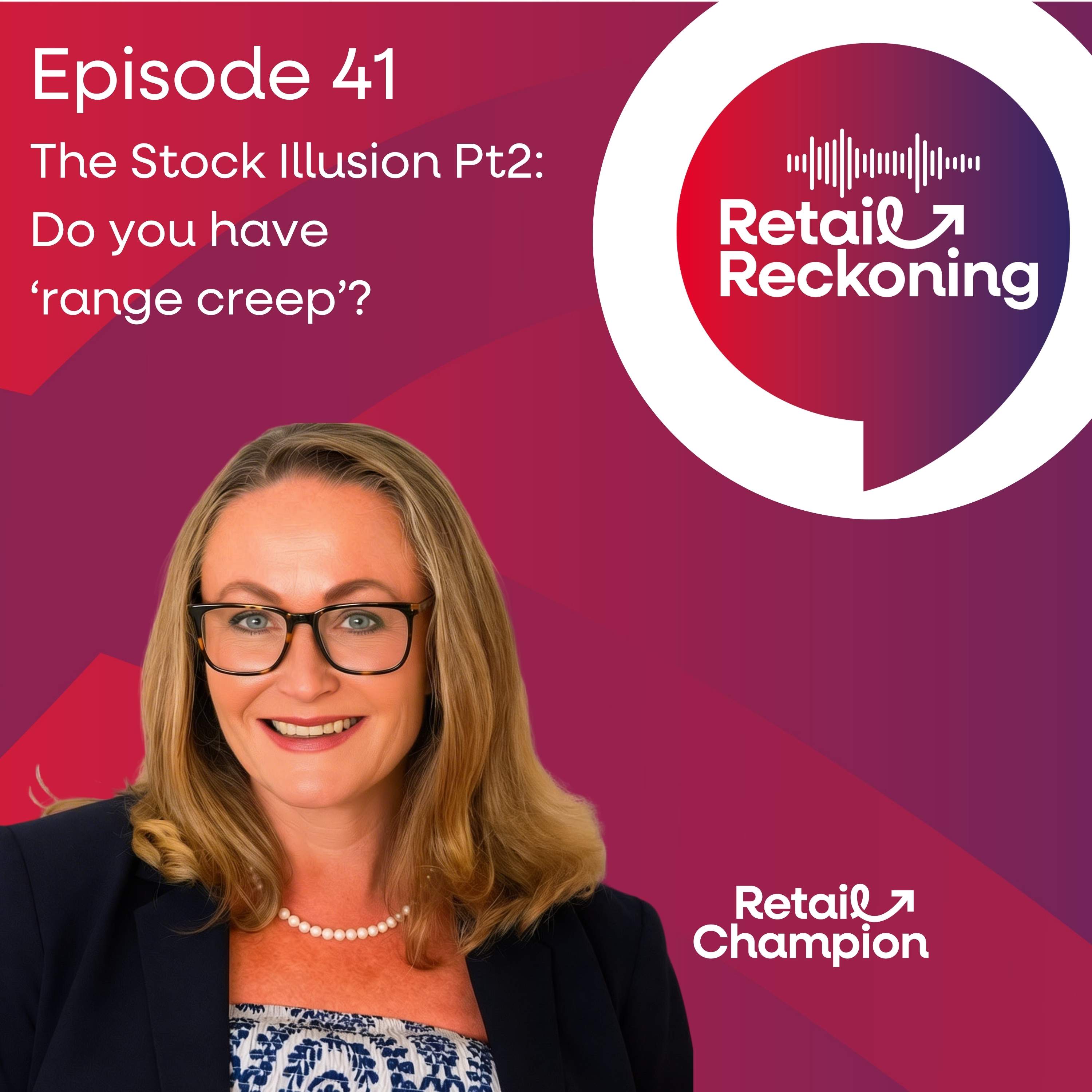 Does Your Retail Business Have Range Creep: Retail's 'Stock Illusion' (Pt2) | Hi, I'm Clare Bailey, The Retail Champion.In Part 1 of the Stock Illusion series, we explored the customer-facing cost of over-ranging — the overwhelm, the choice paralysis, the damage to the shopping experience. Now it's time to go deeper.In this episode, I'm looking at the operational reality of range creep — how it happens, why it feels like good management when it's actually slowly destroying your margins, and what data-driven decisions really look like when you're editing a range.Because here's the truth: most businesses don't suddenly wake up with bloated ranges. It creeps in. A new line because a category's doing well. Another colourway because the grey one sells. A supplier introducing something low-risk. And before long, the range is running the business — not the other way around.What We Cover• Why range creep feels like good management until it really doesn't• The difference between sales performance and margin performance — and why it matters• Why retailers develop emotional attachments to products that are quietly killing their profitability• Product lifecycle management: every product has a beginning and an end• How exception reporting helps you catch decline before it's too late• Why e-commerce has made range discipline harder, not easier• What the best retailers do differently — continuous curation, not annual reviews• Why clarity gives control: and how a curated range is better commercially and operationally• A sneak preview of what's coming in Part ThreeKey Takeaways• Adding is easy. Editing is where the hard — and most valuable — work happens• Your top seller by sales volume might not be your most profitable product• Products don't get culled because of emotion — and that's costing you money• Good retail doesn't run on nostalgia. It runs on relevancy• The strongest retailers make as many quality exit decisions as entry decisionsResources & Links• Free Stock Assessment & Mini Guide: retailchampion.co.uk/retail-playbooks• The Retail Champion: www.retailchampion.co.uk• Other episodes: retailreckoningpodcast.co.uk• Newsletter: retailreckoningpodcast.co.uk/newsletterSubscribe to Retail Reckoning wherever you get your podcasts.Connect & ShareIf this episode resonated — and if you recognised your own business in any of it — I'd love to hear from you. Leave a review, share it with a fellow retailer, or come and find me on social media. Let's keep the conversation going. | — | ||||||
| 6/1/26 |  More stock, more problems: Retail's 'Stock Illusion' (Pt1) | Hi, I’m Clare Bailey, The Retail Champion.This episode kicks off a brand new three-part miniseries called "The Stock Illusion" — and if you’ve ever felt like you’re drowning in stock but still struggling to grow your sales, this is the conversation you need to hear.I’m tackling one of the most dangerous assumptions in retail today: that more stock leads to more sales. Spoiler — it doesn’t. In fact, for many retailers, the opposite is true.From the CIPS insight that “safety stock replaces information in the supply chain,” to the very real psychological impact of too much choice on your customers, this episode unpacks why range bloat, just-in-case buying, and the obsession with availability are quietly eroding margins across retail — regardless of business size.What We CoverWhy availability and demand are not the same thingThe difference between a stock problem and a ranging problemHow safety stock creates a false sense of securityWhy customers are experiencing choice paralysis — and walking awayThe hidden costs of adding “just one more” SKU to your rangeWhy independent retailers often get this right when larger ones don’tThe one question every retailer should ask about every product on their shelfA preview of Parts 2 and 3 of The Stock IllusionKey TakeawaysMore products do not equal more sales — they often mean more confusionSafety stock doesn’t protect you; it replaces the data you should have been usingCurated ranges outperform bloated ones in both conversion and profitabilityClarity is a commercial advantage, not just an aesthetic oneThe retailers who will win are those with the clearest ranges — not the biggestResources & LinksFree Stock Audit Assessment & Mini Guide: www.retailchampion.co.uk/retail-playbooksThe Retail Champion: www.theretailchampion.co.ukAll episodes: retailreckoningpodcast.co.ukSubscribe to the newsletter: retailreckoningpodcast.co.uk/newsletterIf this episode made you look at your range differently, I’d love to know. Leave a review, share it with a fellow retailer, or come and find me on social media. Parts 2 and 3 are coming — don’t miss them. | — | ||||||
| 5/25/26 |  Trust vs Reward: What Real Loyalty Actually Looks Like | Let me ask you something that might make you uncomfortable. You probably have a loyalty programme. Maybe you've got an app, special offers, points, a rewards card. But if your customers are only coming back because of those incentives — is that actually loyalty?Hi, I'm Clare Bailey, founder of Retail Champion.In this third and final episode of the Loyalty Illusion mini-series, I get to the heart of the biggest question in retail retention right now: what's the difference between driving behaviour and earning trust? And why does it matter so much?If loyalty programmes were really working, we'd expect to see more loyal customers. But I'd argue we have more loyalty programmes than ever — and less true loyalty. That's the contradiction at the heart of modern retail.What We CoverThe loyalty illusion defined — and why it's a problem for your businessWhy rewards create action but trust creates commitmentThe critical distinction between a customer who 'shops with you' and one who 'chooses you'The three pillars of trust-building: Clarity, Consistency, and ExperienceWhy dynamic pricing can quietly destroy customer trustThe path forward: using behaviour-driving mechanics for acquisition, then converting to trust-based retentionWhy the retailers who will win are those who understand the differenceKey TakeawaysLoyalty hasn't disappeared — but it has been dilutedRewards can be copied; trust cannotClarity, consistency, and experience are your most durable competitive advantagesDriving behaviour is short-term — trust builds a business that lastsA customer who chooses you is worth far more than one who merely shops with youResources & LinksThe Retail Champion: www.theretailchampion.co.ukFree Download — The Loyalty Illusion Mini Guide: retailreckoningpodcast.co.uk/retail-playbooksRetail Reckoning Newsletter: retailreckoningpodcast.co.uk/newsletterAll Episodes: retailreckoningpodcast.co.ukConnect & ShareIf this episode — or this series — has made you think differently about loyalty in your business, I'd genuinely love to hear from you. Leave a review, share with a fellow retailer, or come and find me on social media. Let's keep this conversation going. | — | ||||||
| 5/18/26 | 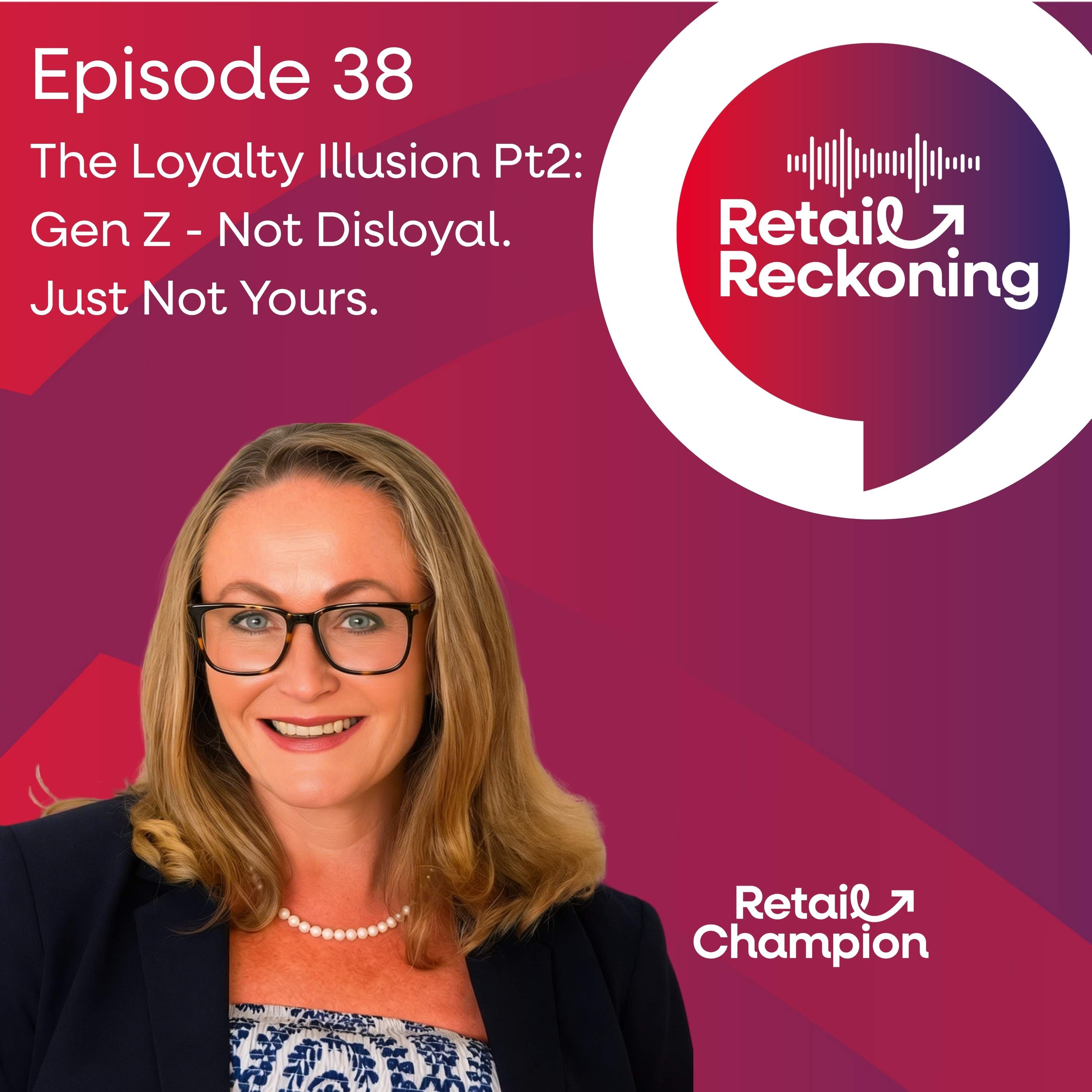 Gen Z: They're Not Disloyal. They're Just Not Yours | You've heard it said that Gen Z are disloyal. They switch brands constantly, they don't commit, they jump around. But what if that's the wrong lens entirely?Hi, I'm Clare Bailey, founder of Retail Champion.This is Part 2 of my three-part miniseries, "The Loyalty Illusion" — and in this episode I dig deep into what's really driving Gen Z behaviour. Spoiler: it's not disloyalty. What We CoverWhy 'disloyal' is the wrong word for Gen Z — and what's actually going onWhy gamification creates engagement but not attachment — the pseudo-loyalty trapWhy the new competitive battlefield is something you've perhaps not consideredWhat this means practically for your retail or eCommerce strategy right nowComing next week...Episode 3 will answer the big question: what actually builds real, lasting connection with this generation?Resources & LinksDownload the free Loyalty Illusion Guide: retailchampion.co.uk/retail-playbooksThe Retail Champion: www.retailchampion.co.ukAll episodes: retailreckoningpodcast.co.ukSubscribe to Retail Reckoning wherever you get your podcastsConnect & ShareIf this episode made you rethink your Gen Z strategy, leave a review, share with a fellow retailer, or find me on social media. The conversation is just getting started — and Episode 3 is where it all comes together. | — | ||||||
| 5/11/26 | 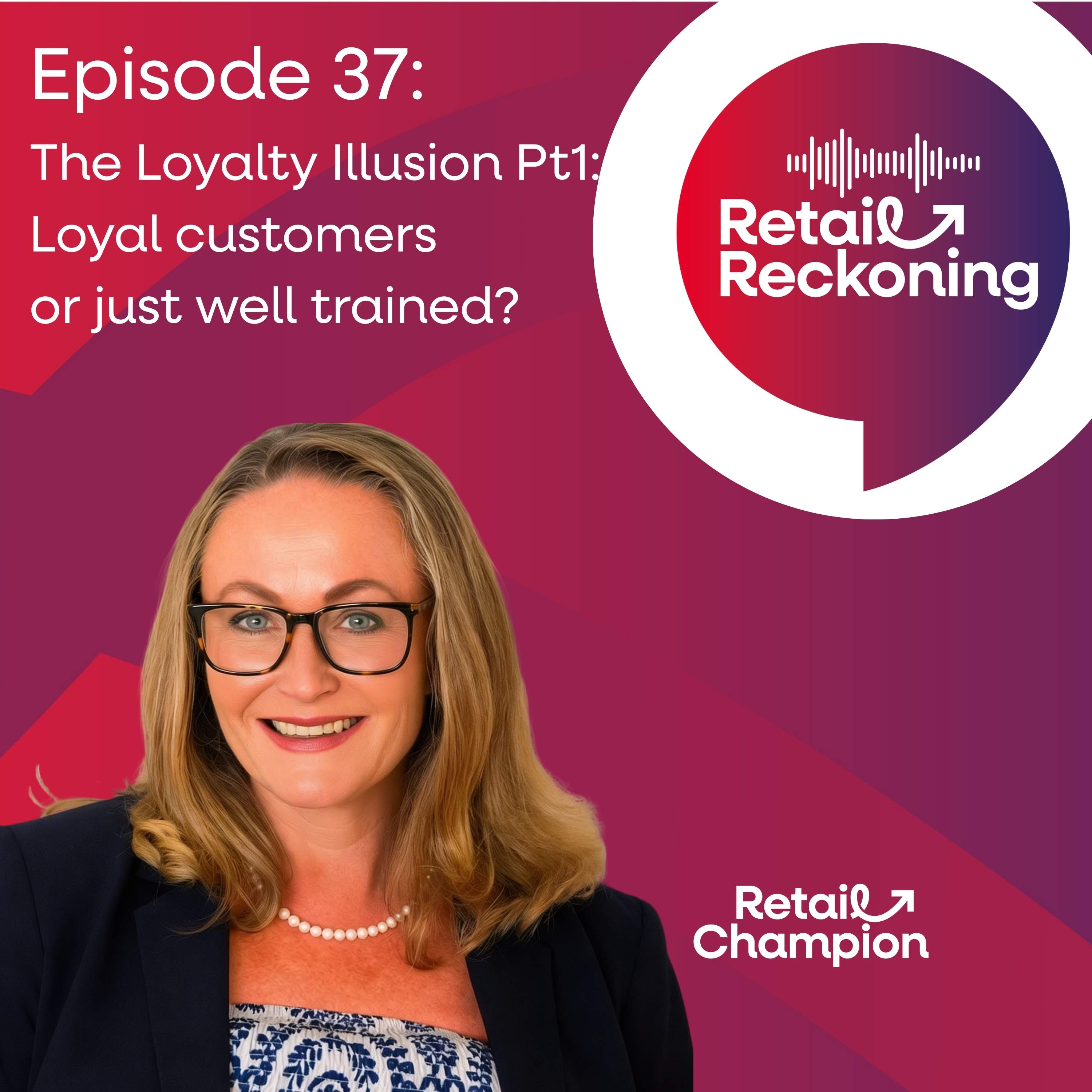 The Loyalty Illusion: Are Your Customers Actually Loyal — Or Just Trained? | Hi, I'm Clare Bailey, founder of The Retail Champion.Here's an uncomfortable truth I want to put on the table right at the start of this new series: most retailers think they've got loyal customers. But when you look more closely — at the apps, the points, the personalised offers, the data being harvested — you start to wonder: is that actually loyalty? Or is it just a very efficient system of behavioural compliance?This is episode one of a three-part series — The Loyalty Illusion — and in this episode, I'm challenging what loyalty has become. Not what it used to be. What it is now. And the uncomfortable truth is that for most retailers, what they're calling loyalty is actually something quite different.What We CoverWhy repeat purchases and loyalty scheme usage doesn't mean your customers are actually loyalHow the relationship between customer and retailer shifted from emotional to conditionalThe real reason supermarkets want you on their loyalty apps — hint: it's not about rewarding youWhy modern loyalty programmes may actually be training disloyaltyThe coffee card test — and what it reveals about how shoppers really behaveThe Pret exception: what genuine brand affinity actually looks likeTwo models of loyalty in retail today, and which one actually builds something lastingThe one question every retailer needs to answer about their own loyalty strategyKey TakeawaysMore loyalty schemes than ever doesn't mean more loyaltyCompliance and loyalty are not the same thingIf your programme disappeared tomorrow and customers left, you never had loyaltyTransactional programmes create dependency, not connectionReal loyalty is emotional — and most businesses have stopped building itResources & LinksThe Retail Champion: www.retailchampion.co.ukFree Loyalty Illusion Mini Guide: retailreckoningpodcast.co.uk/retail-playbooksAll episodes: retailreckoningpodcast.co.ukSubscribe to Retail Reckoning wherever you get your podcastsConnect & ShareIf this episode has made you question your own loyalty strategy, I'd love to know. Leave a review, share it with a fellow retailer, or come and find me on social media. And look out for episodes two and three — because this is just the beginning of a conversation that I think retail really needs to have. | — | ||||||
| 5/4/26 |  Is Your Retail Business Stuck in the Middle? Here's How to Fix That | Hi, I'm Clare Bailey, founder of The Retail Champion.This is the final episode of my three-part series on discounting, data, and escaping the middle market trap — and this one's all about the fix.If you've been following parts one and two, you'll recognise this: you're not the cheapest in your market, and you're not the most premium either. Your promotions don't always land. Your products are good, but customers don't always see the difference. Margin feels under constant pressure. And every now and then you find yourself thinking — why does all this still feel so hard?You're in the middle. And the uncomfortable truth is this: the middle is no longer a strategy.In this episode, I break down exactly why the middle has stopped working, what the Aldi effect means for your business, and — most importantly — what you can do to fix it. This isn't about more data or more panicky promotions. It's about clarity, confidence, and choosing your lane.What We CoverWhy being in the middle used to work — and why it no longer doesThe Aldi effect and how retail polarisation is reshaping every categoryWhy most mid-market businesses don't actually have a price problemHow to choose your lane: competing on price vs. experience and expertiseFixing your offer: editing your range and tightening your price architectureGiving customers a reason to choose you beyond priceMaking it easy to buy — and why friction kills conversionKey TakeawaysThe middle isn't a strategy — it's usually the result of a lack of strategyYou can't be everything to everyone anymore — but you can be everything to someoneCompeting on price is a race to the bottom that small businesses can't winClarity of positioning beats trying to do everythingWhen you can answer 'what do we want to be known for?' — everything else gets easierResources & LinksGet our playbooks: https://www.retailchampion.co.uk/retail-playbooks/Retail Clarity Scorecard Quiz: subscribe to the newsletter https://retailreckoningpodcast.co.uk/newsletterOther episodes: retailreckoningpodcast.co.ukSubscribe: retailreckoningpodcast.co.uk/newsletterContact Clare: clare.bailey@retailchampion.co.ukConnect & ShareIf this episode made you think differently about your positioning, I'd love to hear from you. Leave a review, share with a fellow retailer, or find me on social media. Let's keep the conversation going. | — | ||||||
| 4/28/26 |  The Own Brand Retail Revolution in British Supermarkets | In this bonus episode, Clare Bailey joins BBC Merseyside to discuss the shifting grocery shopping habits in the UK. Once considered second-rate or even a little embarrassing, own label groceries now account for 52% of all items in our baskets — a dramatic change driven by rising costs, wider choice, and a new sense of pride in savvy shopping. | — | ||||||
| 4/27/26 |  Retail Tech Can't Replace Retail Strategy | Hi, I'm Clare Bailey, founder of Retail Champion.Let me tell you about an email that made me lose trust in a brand overnight. I'd bought several pairs of shoes online. Two days later, a cheerful 50% off email landed in my inbox — for the exact pairs I'd just bought. No acknowledgement. No credit. No apology. Just a pricing algorithm doing its job, and a customer (me) quietly deciding I'd never shop there again.That's the quiet war playing out in retail right now — and it's what this episode is all about.This is Part Two of our three-part mini-series on discounting, data, and escaping the middle market trap. In this episode, I unpack what I'm calling the retail battleground: the tension between data-led pricing, automation and customer trust. Because tech is powerful. But the moment it starts overriding human judgement, it begins eroding the one thing retailers can't afford to lose — trust.What We Cover• Why pricing is no longer stable — and what that does to customer perception• The difference between logical discounting and "wobbly" pricing that feels unfair• How AI, dynamic pricing and electronic shelf-edge labelling can quietly cross the trust line• Why data is a tool, not a strategy — and the costly mistake of confusing the two• The three anchors every retailer needs right now: clarity, consistency and control• Why your brand is not a system outputKey Takeaways• Trust is slow to build and devastatingly fast to lose• Data should guide decisions, never replace experience, instinct and judgement• Fairness is quietly becoming one of retail's rarest — and most powerful — competitive advantages• Pricing logic matters as much as the price itself• Retail has never been about transactions. It's always been about relationshipsResources & Links• Free retail playbooks: www.theretailchampion.co.uk/retail-playbooks• Newsletter & Clarity Scorecard Quiz updates: www.retailreckoningpodcast.co.uk/newsletter• The Retail Champion: www.theretailchampion.co.uk• Other episodes: www.retailreckoningpodcast.co.uk• Subscribe to Retail Reckoning wherever you get your podcastsConnect & ShareIf this episode made you look differently at your pricing, data or tech stack, I'd love to know. Leave a review, share it with a fellow retailer, or come and find me on social. Let's keep the conversation going.Mentioned in this episode:Retail Reckoning Podcast Insights NewsletterGet Retail Reckoning Podcast Insights and Goodies - https://retailreckoningpodcast.co.uk/newsletterRetail Reckoning Podcast VIP newsletter | — | ||||||
Want analysis for the episodes below?Free for Pro Submit a request, we'll have your selected episodes analyzed within an hour. Free, at no cost to you, for Pro users. | |||||||||
| 4/20/26 |  Cheap Is Winning — But At What Cost to Retail? | Cheap is winning — but at what cost to retail?In Part 1 of this three-part Retail Reckoning Playbook miniseries, Clare Bailey (The Retail Champion) breaks down why discounting has become addictive for both customers and businesses, why the middle market is now the most fragile place to sit, and what smart retailers are doing differently to escape the discount trap without joining the race to the bottom.If you're stuck pulling the discount lever just to clear stock and pull customers in — this is the episode for you.Our mini guide is available via www.retailchampion.co.uk/retail-playbooks and is free to download!━━━━━━━━━━━━━━━━━━━━━━━━━━━━━━WHAT YOU'LL LEARN━━━━━━━━━━━━━━━━━━━━━━━━━━━━━━✓ Why cheap is winning — and why it isn't actually a pricing conversation✓ How shoppers have fundamentally changed (and why habits are no longer a reliable metric)✓ The discount trap: how full price stopped existing and why customers now wait you out✓ The middle market squeeze — why trying to do both cheap and special usually fails✓ What smart retailers do differently: clarity, curation, and disciplined ranging✓ Why independents should compete on service, not price✓ The one question that tells you whether you have a pricing problem or a clarity problem━━━━━━━━━━━━━━━━━━━━━━━━━━━━━━Cheap is winning - but at what cost to retail's episode chapters━━━━━━━━━━━━━━━━━━━━━━━━━━━━━━00:00 — Series kickoff and free Retail Clarity Scorecard00:58 — Cheap is winning — but at what cost?02:32 — Shoppers have fundamentally changed04:45 — The discount trap explained07:22 — The middle market squeeze11:44 — What smart retailers do differently14:56 — The one question every retailer must answer16:15 — What's next in the miniseries━━━━━━━━━━━━━━━━━━━━━━━━━━━━━━ABOUT RETAIL RECKONING━━━━━━━━━━━━━━━━━━━━━━━━━━━━━━Retail Reckoning is hosted by Clare Bailey, The Retail Champion — one of the UK's most respected retail experts. Every episode delivers the honest, practical thinking retailers need to navigate cost pressure, shifting consumer behaviour, and a high street that's being rewritten in real time.━━━━━━━━━━━━━━━━━━━━━━━━━━━━━━RESOURCES & LINKS━━━━━━━━━━━━━━━━━━━━━━━━━━━━━━🌐 The Retail Champion: https://www.theretailchampion.co.uk🎙 All episodes: https://retailreckoningpodcast.co.uk📬 Newsletter (get the free Retail Clarity Scorecard quiz): https://retailreckoningpodcast.co.uk/newsletter🎧 Follow/Subscribe to Retail Reckoning wherever you get your podcasts━━━━━━━━━━━━━━━━━━━━━━━━━━━━━━CONNECT━━━━━━━━━━━━━━━━━━━━━━━━━━━━━━If this episode made you rethink your pricing strategy, leave a review, share it with a fellow retailer, and come find Clare on social media. Parts 2 and 3 of this mini-series go deeper into data, decision-making and dynamic pricing — subscribe so you don't miss them. | — | ||||||
| 4/13/26 |  School Holidays as a Retail Growth Engine | I'm Clare Bailey, founder of The Retail Champion — and I want to change the way you see school holidays.Most retailers treat the holidays as a management challenge. Too many kids, too much noise, too much chaos. But here's the truth: Easter, May half term and the long summer stretch are some of the biggest commercial opportunities your business will see all year. Parents are actively looking for somewhere to go, something to do, and a reason to spend — and if you make it easy for them to choose you, they will.In this episode, I break down exactly how to turn the school holidays from a headache into a revenue strategy — with practical, low-cost ideas any retail, hospitality, or town centre business can act on right now.What We CoverWhy families are one of the most reliable, repeatable, high-frequency audiences in retailHow to create a child-friendly environment that actually makes parents spend moreSimple, low-budget ideas for Easter, May half term and summer that drive dwell time and salesWhy dwell time directly converts to revenue — and how to use that to your advantageThe power of town-wide trails and collaborative high street experiencesWhy your Google Business Profile and social media are your most powerful family marketing toolsThe real story of a £7,000 carpet sale that started with an Easter egg trailResources & LinksThe Retail Champion: www.theretailchampion.co.ukOther episodes: retailreckoningpodcast.co.ukGet occasional insights direct to your inbox: https://retailreckoningpodcast.co.uk/newsletterConnect & ShareIf this episode has changed how you think about school holidays, I'd love to know. Share it with a fellow retailePage_DownPage_DownPage_DownPage_DownPage_DownPage_DownPage_DownPage_DownPage_DownPage_DownPage_DownPage_DownPage_DownPage_DownPage_Downr, leave a review, or come and find me on social media. Let's make the high street somewhere families choose. | — | ||||||
| 4/6/26 |  Countdown to Christmas Stock (Yes, Seriously) and April Decisions | Hi, I'm Clare Bailey, founder of The Retail Champion.I know it sounds mad to be talking about Christmas in April. But in retail? This isn't early — this is the last window you have to make the right decisions before your options start to disappear.In this episode, I'm cutting straight to it: Christmas can deliver up to a third of annual profit for many retailers. And the choices you make — or don't make — in April will define how your business performs for the rest of the year. The supply chains are under pressure. Import costs are rising. And the old model of buying cheap from the Far East and hoping it turns up on time is no longer a safe bet.I share why nearshoring might be the smartest commercial decision you make this year, how to think about cost versus risk, and why on-shelf availability beats a bargain unit price every single time.What We Cover• Why Christmas planning in April isn't early — it's already late• How Christmas can account for up to a third of a retailer's annual profit• The real commercial risks of Far East sourcing in the current global climate• Why nearshoring — from places like Portugal, Turkey, and Morocco — could protect your margins• The myth of cheap buying: when low unit costs actually cost you more• What you should be doing right now: reviewing, deciding, and locking in ordersKey Takeaways• April is your last moment of real control in your Christmas buying cycle• Supply chain disruption is not background noise — it's your commercial reality• You can't sell what you don't have. On-shelf availability is everything• Near supply often means lower risk, faster reorders, and less cash tied up in buffer stock• Retailers who win Christmas aren't the ones who chased the lowest priceResources & LinksThe Retail Champion: www.theretailchampion.co.ukOther episodes: retailreckoningpodcast.co.ukSubscribe to Retail Reckoning wherever you get your podcastsConnect & ShareIf this episode made you rethink your Christmas buying plan, I'd love to hear from you. Leave a review, share it with a fellow retailer, or come and find me on social media. Let's keep the conversation going. | — | ||||||
| 3/30/26 |  Built by Retailers, FOR Retailers: SCAYLE & The Tech Revolution Fashion Can't Ignore | Hi, I'm Clare Bailey, founder of Retail Champion.I'll be honest — when I read the white paper that prompted this conversation, a couple of statistics genuinely stopped me in my tracks. Things I hadn't fully considered, even as someone who's worked across retail, consultancy, and software for decades.Disclosure: This episode is a paid speaking opportunity. Clare was compensated by SCAYLE to take part in this conversation.In this episode, I'm joined by Tarek Mueller, co-founder and CEO of SCAYLE — the eCommerce software company born from the fashion retailer About You, now part of the Zalando Group, Europe's largest online fashion business. Tarek brings a genuinely rare perspective: he built the technology as a retailer and now sells it to some of the world's biggest brands. We cover AI shopping behaviour, the virtual try-on opportunity, and the uncomfortable truth about why so many retailers are stuck.This one is packed with data, insight, and some very useful analogies involving Formula One engines and 15-year-old MacBooks.What We CoverWhy SCAYLE is different — built by a retailer, for retailers, not by developers for developersThe stat that surprised me: 51% of UK shoppers won't trust AI to complete a purchase for themWhy that's actually good news for brands — and how to capitalise on AI-led discovery right nowChatGPT as a traffic channel: a 10x increase in referral visits and what that means for your visibilityThe counter-trend to AI: why real-world experiences, live shopping, and human content are surgingVirtual try-on — why 44% of UK shoppers have never experienced it, and why 2027 could be the breakthrough yearLegacy tech as the real innovation blocker — why IT departments are stuck in maintenance modeThe Formula One analogy: why spending money on the wrong engine guarantees you'll lose the raceClick and collect, omnichannel, personalisation — why so many retailers still can't do the basicsChapter Titles & Timecodes00:00 — Introduction & context01:45 — Who is Tarek Mueller and what is SCAYLE?05:06 — Built by retailers, for retailers: the key difference11:49 — AI and UK shopping trends: the data from SCAYLE's global study16:06 — The counter-trend: why AI is making people crave real experiences17:12 — Visual commerce, virtual try-on, and what's coming in 202729:16 — Legacy tech: the hidden innovation blocker in retail IT34:27 — Retail Tea Time event and the UK Fashion Shopping GuideResources & LinksThe Retail Champion: www.theretailchampion.co.ukSCAYLE: scayle.comOther episodes: retailreckoningpodcast.co.ukSubscribe to Retail Reckoning wherever you get your podcastsThis episode was a paid speaking opportunity. Clare was compensated to speak with Tarek Mueller, co-founder of SCAYLE. Everything you hear reflects a genuine conversation.Connect & ShareIf this episode made you rethink your tech stack, your AI visibility strategy, or your omnichannel roadmap — I'd love to hear from you. Leave a review, share it with a fellow retailer or IT decision-maker, or come and find me on social media. Let's keep the conversation going. | — | ||||||
| 3/23/26 | Retail: Experience vs Convenience - The Leadership Test You're Probably Failing | Hi, I’m Clare Bailey, founder of Retail Champion.Let me say this upfront: this episode might make you uncomfortable. But if you’re serious about keeping your best people in your retail empire, where experience is genuinely irreplaceable — you need to hear it.Menopause affects more than half the workforce. According to the Office for National Statistics, menopausal women are actually the fastest-growing demographic in the UK workplace. And yet fewer than one in four employers has a formal policy in place. We’re not talking about a niche issue. We’re talking about the people who don’t panic in a crisis because they’ve been there and done that. The people who mentor your junior team without being asked. The people who carry decades of knowledge no onboarding slide deck will ever replace.In this episode, I’m joined by Zana Busby, consumer and business psychologist, and together we get into what menopause really does to the brain and body at work, why it’s routinely being misread as a performance issue, and — most importantly — what leaders and organisations need to do right now to stop quietly losing their most valuable people.What We CoverWhy menopause is a business-critical workforce issue, not a personal failingThe physical and psychological symptoms most managers don’t recognise — including brain fog, loss of confidence, and anxietyWhy masking leads to burnout, and what the real psychological cost is for your organisationThe role of psychological safety in whether experienced people stay — or quietly walk out the doorWhy flexible and hybrid working is a genuine retention strategy, not a sign someone is winding downWhy feeling valued is a performance multiplier — not just a kindnessWhat managers (men and women) need to be trained on — and why most of them aren’tPractical steps organisations can take right now to close the support gapKey TakeawaysMenopause doesn’t stop at the office door — and neither does the cost of ignoring itThe brain works harder during menopause, but capability doesn’t disappearMenopause symptoms are routinely confused with performance issues, with serious consequencesPeople can only manage what they understand — and they mismanage what they don’tPart-time and flexible working doesn’t mean part value or part commitmentExperienced staff are not a nice-to-have. They are essential.Resources & LinksThe Retail Champion: www.theretailchampion.co.ukOther episodes: retailreckoningpodcast.co.ukFollow Retail Reckoning in your favourite podcast player appConnect & ShareIf this episode made you think differently about how your organisation supports experienced women in the workplace, I’d love to hear from you. Leave a review, share with a fellow retailer or people leader, or come and find me on social media. Let’s keep the conversation going. | — | ||||||
| 3/16/26 |  Gen Z Wake Up Call: What Every Retailer Needs To Know | Hi, I’m Clare Bailey, founder of Retail Champion.I'll be honest — I've had to look this up myself. As the proud mum of two Gen Z kids (aged 20 and 22), I thought I understood this generation. But the more I dug in, the more I realised just how profoundly different their relationship with brands, spending, and loyalty really is — and what that means for every retailer and business owner selling to them right now.In this episode, I break down who Gen Z really are, why their ethical spending habits are reshaping the retail landscape, and — most importantly — what brands must do right now to stay relevant. This isn't a trend. This is the new normal.What We CoverWho Gen Z actually are — born 1997–2012, digital natives, pragmatic and socially consciousWhy loyalty with this generation has nothing to do with discountsThe role of authenticity, purpose, and ethics in their buying decisionsWhy greenwashing will destroy your brand with Gen Z — fastThe practical implications for your brand strategy, supply chain, and communicationsWhy employer brand matters just as much as consumer brandHow to build long-term advocacy with this generation without alienating your existing customersKey TakeawaysGen Z aren't just another customer segmentEthical alignment alone isn't enoughThey expect seamless, tech-enabled experiences that are also humanised Supply chain transparency is no longer optional Brands that ignore this risk irrelevance, not just in the future, but nowResources & LinksThe Retail Champion: www.theretailchampion.co.ukOther episodes: retailreckoningpodcast.co.ukSubscribe to Retail Reckoning wherever you get your podcastsConnect & ShareIf this episode made you think differently about your Gen Z strategy, I'd love to know. Leave a review, share with a fellow retailer, or come and find me on social media. Let's keep the conversation going. | — | ||||||
| 3/9/26 |  Brand Strategy: Why Every Business Needs One | If you think brand strategy is just for big companies with big budgets, this episode is going to change your mind — because I used to think exactly the same thing.For over two decades I ran my retail consultancy doing everything myself, building a reputation on referrals and results. And I genuinely believed that brand work was indulgent, expensive, and frankly unnecessary. Then I met Dani Nodwell.In this episode I'm joined by Dani, creative strategist and one of my associate consultants at The Retail Champion, to talk about what brand strategy actually is, why it matters far more than a logo refresh, and what a clear brand foundation can do for the quality of work you attract, the confidence you project, and the team around you.This is a conversation for any business owner — retail, hospitality, independent, or growing — who has ever thought: I know what I do, surely that's enough.Spoiler: it isn't. But the good news is, what you need is probably already there. You just need to uncover it.WHAT WE COVERWhy brand strategy isn't about a logo — it's about meaningDani's four-pillar methodology: Ambition, Audience, Advantage, AuthenticityThe difference between a brand refresh and a full strategic pivotWhy most businesses need realignment, not reinventionWhat brand strategy looks like on a day-to-day basisThree practical things you can do this week to get startedWhy trust can't be claimed — it has to be earnedKEY QUOTE"A product fixes something, but a brand makes you feel really understood." — Dani NodwellTIMESTAMPS[00:00:00]Clare on why she resisted brand strategy for 23 years[00:02:35]Introducing Dani Nodwell[00:02:44]How Dani diagnoses a brand: audience vs. reality[00:04:35]The four-stage methodology explained: Ambition, Audience, Advantage, Authenticity[00:08:55]Strategy vs. creativity — why you need both[00:11:16]When to pivot vs. when to evolve[00:12:12]Brand strategy on the day-to-day[00:15:02]Three practical things to do this week[00:18:04]Trust as retail gold — and why you can't just claim it[00:20:26]Dani's closing thoughts: brand strategy is not a luxuryGUESTDani Nodwell is a creative strategist and associate consultant at The Retail Champion. She works with businesses of all sizes to uncover and articulate their brand foundation — helping them attract the right customers, lead with confidence, and stop competing on price.LINKS & RESOURCESFind out more about working with The Retail Champion: retailchampion.co.ukEnquire about brand strategy support: contact@retailchampion.co.ukMentioned in this episode:Retail Reckoning Podcast Insights NewsletterGet Retail Reckoning Podcast Insights and Goodies - https://retailreckoningpodcast.co.uk/newsletterRetail Reckoning Podcast VIP newsletter | — | ||||||
| 3/2/26 |  Delivery, trust, and the post purchase experience | In this episode of Retail Reckoning, I'm making the case that delivery isn't a backend logistics process. It's the final and most emotionally charged touchpoint in your customer's journey. And if you're getting it wrong, you're undoing months of brand building in a single moment.Hi, I’m Clare Bailey, founder of Retail Champion.I was invited to speak as a panellist at the Delivery Conference on 3rd February, and it got me thinking. With a postgraduate diploma from the Chartered Institute of Purchasing & Supply, I've spent years in supply chain — and I still see retailers over-promising and under-delivering. In this episode, I share what needs to change.I'll explain why speed of delivery is irrelevant if it's unpredictable, why delivery is an emotional experience — not an operational one — and how the small touches like real-time tracking, empowered customer service teams, and sustainable packaging can turn logistics into loyalty.In this episode, I cover:Why customers can't separate your brand from their delivery experienceThe case for under-promising and over-communicatingSmall touches that make a lasting impressionHow poor delivery destroys trust and triggers negative social mediaA practical action plan for retailers to transform their delivery processWhy trust is the new currency of retail — and delivery is where it's earned or lostTimestamps00:00 — Delivery is the brand: the uncomfortable truth retailers ignore00:25 — Why setting expectations beats speed every time03:25 — Under-promise, over-communicate: my core philosophy06:59 — Small touches that create big impressions13:00 — Trust and action plan: practical steps for retailers15:50 — Why trust is the currency of retail — and delivery is where it's earned | — | ||||||
| 2/23/26 |  Getting Retail After Sales Care Right (so you can boost profits!) | After-sales care is the moment most retailers forget — and the one customers remember forever.Hi, I’m Clare Bailey, founder of Retail Champion.In this episode of Retail Reckoning, I explore why what happens after the sale is often the most powerful driver of loyalty, repeat purchases, and word-of-mouth.Whether you're in furniture, fashion, homewares, or gifting, the principles are the same: how you handle things when they go wrong defines your brand more than any marketing campaign ever could.What We CoverWhy after-sales is the real make-or-break moment — and why customers never forget itThe emotional reality of delivery delays, faulty products, and poor complaint handlingHow to empower front-line staff to resolve issues on the spot — without escalatingWhy human judgment beats 'computer says no' every single timeProactive post-purchase communication as a profit strategy (not just good manners)The commercial cost of getting after-sales wrong — and the upside of getting it rightTake a listen and let’s get your Retail Reckoning together.Useful links:Subscribe to the Retail Reckoning Newsletterhttps://retailreckoningpodcast.co.uk/newsletterRetail Championhttps://theretailchampion.co.ukMentioned in this episode:Retail Reckoning Podcast Insights NewsletterGet Retail Reckoning Podcast Insights and Goodies - https://retailreckoningpodcast.co.uk/newsletterRetail Reckoning Podcast VIP newsletter | — | ||||||
| 2/18/26 | Jeremy Vine and Retail Reckoning's Clare Bailey debate minimum wage | In this bonus episode, Radio 2's Jeremy Vine discusses whether the minimum wage for under 21s should be raised or if that is a disincentive for firms to hire them. I had things to say. | — | ||||||
| 2/16/26 |  Boutique retailers: think outside the box with your stock | If you're a boutique retailer limiting yourself to fashion, you're leaving money on the table. Hi, I’m Clare Bailey, founder of Retail Champion.In this episode of Retail Reckoning, I’m joined by Steph Briggs.She's a former boutique owner turned e-commerce expert—to reveal how carefully curated homewares and fragrances can elevate basket size and boost profits without diluting your brand. Discover: • Why homewares remove the friction that fashion creates (no size, no fit issues) • The "good, better, best" pricing strategy for impulse buys to premium treats • How scent creates powerful brand memory (Steph's customers could smell her shop from 100 yards away!) • Real case study: How stocking gin brought new customers through the door • The secret to translating in-store magic to online sales • Visual merchandising techniques that help customers imagine products in their homes Whether you run a fashion boutique, homeware shop, or gift store, this episode delivers honest, commercial insights on extending your range strategically—not randomly. Learn how to test small, scale deliberately, and create a cohesive brand experience that makes your business stronger, more profitable, and more memorable.Take a listen and let’s get your Retail Reckoning together.Useful links:Subscribe to the Retail Reckoning Newsletterhttps://retailreckoningpodcast.co.uk/newsletterRetail Championhttps://theretailchampion.co.ukMentioned in this episode:Retail Reckoning Podcast Insights NewsletterGet Retail Reckoning Podcast Insights and Goodies - https://retailreckoningpodcast.co.uk/newsletterRetail Reckoning Podcast VIP newsletter | — | ||||||
| 2/9/26 |  Making Tax Digital Is SCARY (If You Don't Understand This) | Making Tax Digital is scary.If you don’t understand it.And most people don’t.Hi, I’m Clare Bailey, founder of Retail Champion.In this episode of Retail Reckoning, I’m joined by accountant Rachel Parker, someone I trust with my own business finances.We’re talking about Making Tax Digital.What it actually means.Why so many small business owners are panicking unnecessarily.And what really matters if you want to stay compliant without losing sleep.This isn’t an episode about jargon, scare stories, or buying expensive software you don’t need.It’s about understanding how your business structure, reporting habits, and routines affect your tax, your cash flow, and your stress levels.We talk about why Making Tax Digital feels overwhelming, why spreadsheets aren’t the enemy, how business structure choices quietly shape your tax position, and why monthly financial routines are where calm actually lives.This episode isn’t about becoming an accountant.It’s about feeling more in control of your business.This episode breaks down:What Making Tax Digital really is (and what it isn’t)Why your business structure matters more than you thinkHow VAT and reporting decisions create knock-on effectsWhy people cost more than just salariesWhy businesses fail on cash flow, not profitHow monthly financial habits reduce panic and penaltiesIf you’ve been quietly stressing about tax, deadlines, or whether you’re doing things “right”, this episode will help you breathe a bit easier and see the bigger picture.Less panic.More clarity.Better decisions.Let’s get your Retail Reckoning together.Useful links:Subscribe to the Retail Reckoning Newsletterhttps://retailreckoningpodcast.co.uk/newsletterRetail Championhttps://theretailchampion.co.ukMentioned in this episode:Retail Reckoning Podcast Insights NewsletterGet Retail Reckoning Podcast Insights and Goodies - https://retailreckoningpodcast.co.uk/newsletterRetail Reckoning Podcast VIP newsletter | — | ||||||
| 2/2/26 |  Your Retail Sales Are Fine. Your Profits Aren't. Here's Why. | Your retail sales are fine.Your profits aren’t.Here’s why.Hi, I’m Clare Bailey, founder of Retail Champion.In this episode of Retail Reckoning, I’m joined by Graeme Sharp from Sharper Margins.We'll be unpacking where retail profits really disappear and why it’s rarely down to one big dramatic mistake.This isn’t an episode about paranoia, security theatre, or treating your team like suspects.It’s about the small, everyday losses that quietly erode margin and add up far faster than most retailers expect.We talk about why shoplifting is only part of the story, how mispricing, admin errors, poor stock control, and broken processes quietly drain profit, and why relying on instinct alone stops working as your business grows.This episode isn’t about complicated systems or expensive tech.It’s about awareness, consistency, and simple controls that actually protect your margin.This episode breaks down:Why retail profits leak even when sales look healthyThe hidden losses most retailers underestimateHow poor stock accuracy quietly destroys marginWhy trust and control aren’t oppositesWhat retailers should focus on in the next 90 days to protect profitIf your business looks busy but the money never quite stacks up, this episode will help you understand what’s really going on behind the scenes.Fewer leaks.More clarity.Healthier margins.Let’s get your Retail Reckoning together.Useful links:Subscribe to the Retail Reckoning Newsletterhttps://retailreckoningpodcast.co.uk/newsletterRetail Champion: https://theretailchampion.co.ukMentioned in this episode:Retail Reckoning Podcast Insights NewsletterGet Retail Reckoning Podcast Insights and Goodies - https://retailreckoningpodcast.co.uk/newsletterRetail Reckoning Podcast VIP newsletter | — | ||||||
| 1/26/26 |  Why Email Blasting Is Costing Retail Businesses Sales | Most retailers don’t lose sales because email doesn’t work.They lose sales because they send the same message to everyone.Hi, I’m Clare Bailey, founder of Retail Champion.In this episode of Retail Reckoning, I’m joined by email marketing, CRM, and paid ads specialist Sophie Walton to unpack why email blasting is quietly costing retail businesses sales.Email isn’t dead.But bad email habits are expensive.We talk about why blanket emails damage engagement, how poor segmentation wastes time and ad spend, and why your email list is often more valuable than chasing new customers through paid ads.This episode isn’t about complicated funnels or marketing jargon.It’s about making your marketing calmer, more human, and far more effective.This episode breaks down: Why emailing everyone backfires for retailers How simple segmentation improves sales and retention Where most retailers waste money with paid ads How email, CRM, and ads should actually work together What to focus on first when marketing feels overwhelmingIf your marketing feels noisy, exhausting, or expensive, this episode will help you simplify what you’re doing and focus on what genuinely moves sales forward.Less blasting.More relevance.Better results.Let’s get your Retail Reckoning together.Subscribe to the Retail Reckoning Newsletterhttps://retailreckoningpodcast.co.uk/newsletterUseful links:Retail Champion: https://theretailchampion.co.ukSophie Walton on LinkedIn: https://www.linkedin.com/in/sophie-walton-3877b221/Mentioned in this episode:Retail Reckoning Podcast Insights NewsletterGet Retail Reckoning Podcast Insights and Goodies - https://retailreckoningpodcast.co.uk/newsletterRetail Reckoning Podcast VIP newsletter | — | ||||||
| 1/19/26 |  Pinterest for Ecommerce: Why It Outperforms Instagram for Retail Traffic | Most retailers don’t need another social media platform.They need traffic that actually shows up ready to buy.Hi, I'm Clare Bailey, founder of Retail Champion.In this episode of Retail Reckoning, I’m joined by Pinterest and visual search specialist Frances Brown to unpack why Pinterest works so differently for ecommerce retailers, and why so many businesses overlook it.Pinterest isn’t social media.It’s a visual search engine built around intent, planning, and discovery.We talk about how shoppers use Pinterest when they already have a problem to solve or a purchase in mind. Not for doom-scrolling, but for ideas, inspiration, and decisions. And why that makes it such a powerful platform for independent retailers with visual products.This episode breaks down:Why Pinterest content lasts months, not minutesHow visual search changes buyer behaviourWhat boards and pins actually do behind the scenesHow Pinterest integrates with ecommerce and ShopifyWhy planners beat algorithms when it comes to long-term trafficIf you’re tired of posting constantly, watching content disappear, and feeling like visibility is getting harder instead of easier, this episode will help you rethink where your effort belongs.Less noise.More intent.Better quality traffic.Let’s get your Retail Reckoning together.Subscribe to the Retail Reckoning Newsletter –https://retailreckoningpodcast.co.uk/newsletterUseful links:Retail Champion: https://theretailchampion.co.ukPinterest Business: https://business.pinterest.com | — | ||||||
Showing 25 of 48
Sponsor Intelligence
Sign in to see which brands sponsor this podcast, their ad offers, and promo codes.
Chart Positions
5 placements across 4 markets.
Chart Positions
5 placements across 4 markets.