
Insights from recent episode analysis
Audience Interest
Podcast Focus
Publishing Consistency
Platform Reach
Insights are generated by CastFox AI using publicly available data, episode content, and proprietary models.
Most discussed topics
Brands & references
Est. Listeners
Insufficient chart data. Estimates will improve as the show charts.
- Per-Episode Audience
Est. listeners per new episode within ~30 days
N/A🎙 ~2x weekly·97 episodes·Last published 3w ago - Monthly Reach
Unique listeners across all episodes (30 days)
N/A - Active Followers
Loyal subscribers who consistently listen
N/A
Market Insights
Platform Distribution
Reach across major podcast platforms, updated hourly
Total Followers
—
Total Plays
—
Total Reviews
—
* Data sourced directly from platform APIs and aggregated hourly across all major podcast directories.
On the show
From 11 epsHosts
Recent guests
Recent episodes
Help bring 'The Relentless School Nurse' home (Ep 2 rewind)
Jun 3, 2026
47m 34s
Ep 74. Mom saves radicalized son from ending his life
May 28, 2026
58m 22s
Ep 73. Why students cancelled an AI surveillance contract
Apr 24, 2026
24m 19s
Ep 72. Secretary of Education on preventing school shootings
Apr 6, 2026
23m 20s
Ep 71. Terrorist attacks at schools and future of the war in Iran with Bruce Hoffman
Mar 16, 2026
38m 06s
Social Links & Contact
Official channels & resources
Official Website
Login
RSS Feed
Login
| Date | Episode | Topics | Guests | Brands | Places | Keywords | Sponsor | Length | |
|---|---|---|---|---|---|---|---|---|---|
| 6/3/26 |  Help bring 'The Relentless School Nurse' home (Ep 2 rewind)✨ | school nursingmedical transport+3 | Robin Cogan | National Association of School NursesThe Relentless School Nurse+1 | New JerseyVirginia+1 | school nursefundraising+3 | — | 47m 34s | |
| 5/28/26 |  Ep 74. Mom saves radicalized son from ending his life✨ | online radicalizationmental health+3 | Dana GrueserAllizandra Herberhold | K-12 School Shooting DatabaseFreakonomics Radio+1 | — | radicalizationmental health+3 | — | 58m 22s | |
| 4/24/26 | 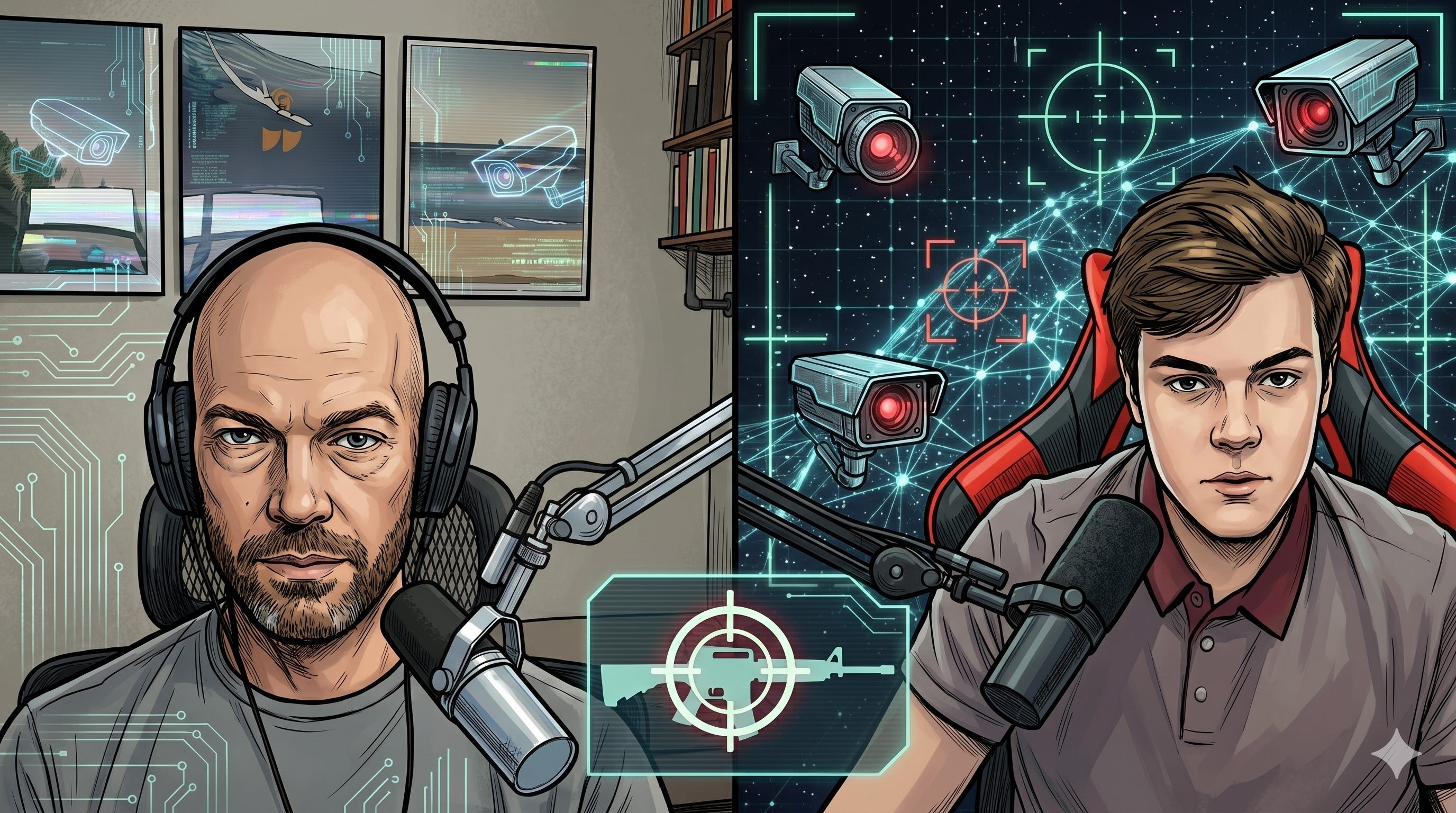 Ep 73. Why students cancelled an AI surveillance contract✨ | AI surveillancestudent activism+3 | Danny Otten | AI camera systemAI metal detector+3 | Virginia | AI surveillanceWilliam & Mary+3 | — | 24m 19s | |
| 4/6/26 |  Ep 72. Secretary of Education on preventing school shootings✨ | school shootingseducation policy+3 | Dr. Daniel Hamlin | Oklahoma Center for Education PolicyStopping Violence Before It Starts: An Analysis of How Potential School Gun Attacks Are Exposed | — | school shootingsgun violence+3 | — | 23m 20s | |
| 3/16/26 |  Ep 71. Terrorist attacks at schools and future of the war in Iran with Bruce Hoffman✨ | terrorismeducation+4 | Bruce Hoffman | Georgetown UniversityRAND Corporation+1 | United StatesIraq | terrorismschools+5 | — | 38m 06s | |
| 3/12/26 |  Ep 70. School shooting increases congressional campaign funding by 2820%✨ | gun policyPAC contributions+3 | Eric A. BaldwinTakuma Iwasaki | Stanford UniversityStanford Law School+1 | — | school shootingsPAC contributions+5 | — | 47m 40s | |
| 3/9/26 |  Parent of school shooter convicted of 2nd degree murder (WGN Legal Face-Off)✨ | school shootinglegal issues+4 | Rich LenkovChristina Martini | Bryce Downey & LenkovMcDermott Will & Emery+1 | Georgia | Colin Graysecond-degree murder+5 | — | 11m 38s | |
| 3/4/26 |  Discord, Roblox, & the pipeline to school shootings (Fighting Matters podcast)✨ | extremism in martial artsschool shootings+4 | — | Fighting Matters PodcastK-12 School Shooting Database+2 | — | DiscordRoblox+8 | — | 59m 18s | |
| 3/3/26 |  Ep 69. Going viral in extremist communities✨ | extremismradicalization+4 | Allizandra Herberhold | Parents4PeaceK-12 School Shooting Database+2 | — | extremismradicalized youth+5 | — | 45m 33s | |
| 2/13/26 | 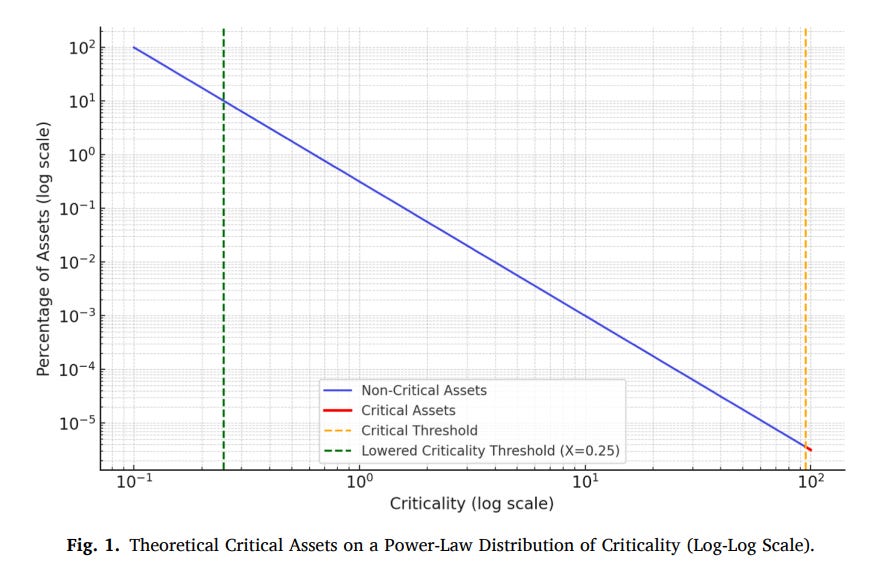 Ep 68. Death isn't a manageable risk because we all die someday✨ | critical infrastructurerisk management+3 | Dr. Russell Lundberg | Sam Houston State University | — | critical infrastructurerisk+4 | — | 1h 02m 49s | |
Want analysis for the episodes below?Free for Pro Submit a request, we'll have your selected episodes analyzed within an hour. Free, at no cost to you, for Pro users. | |||||||||
| 1/26/26 | 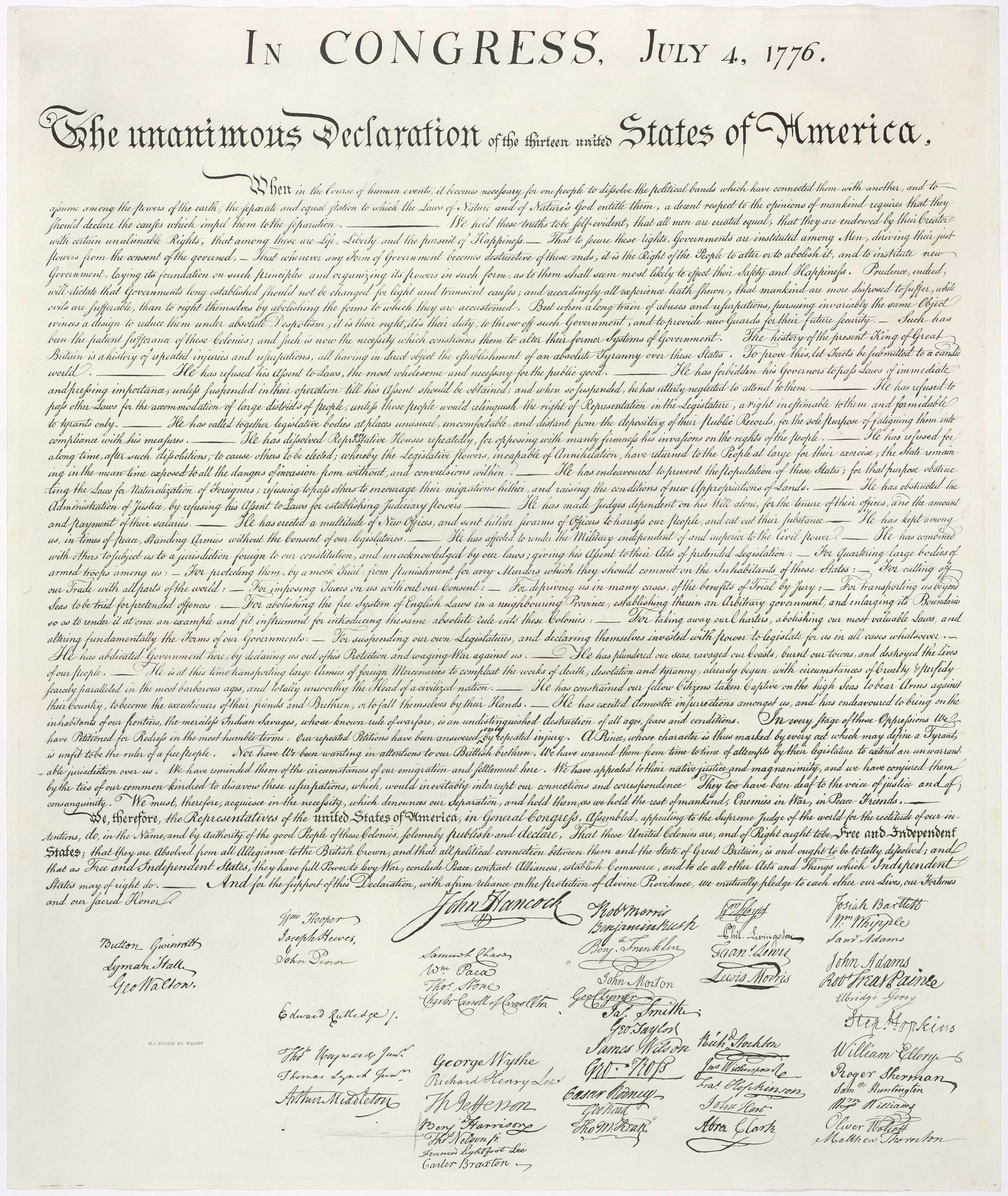 A letter from July 4, 1776✨ | Declaration of IndependenceAmerican history+3 | — | The unanimous Declaration of the thirteen united States of America | — | July 4Declaration of Independence+4 | — | 11m 40s | |
| 1/12/26 | 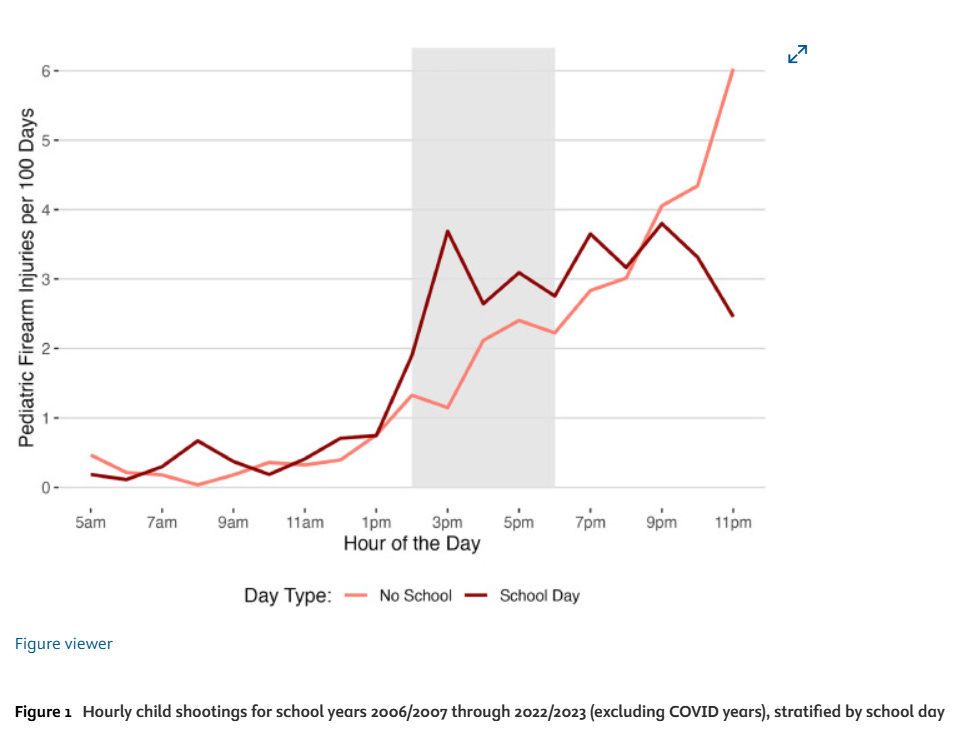 Ep 67. Why school dismissal is the highest risk time for a shooting | Article: Afterschool Child Firearm Assaults: A Quasi-Experimental AnalysisGuests: Emma L. Gause, MS, MA & Jonathan Jay, DrPH, JDAbstract:Objective: Firearms are the leading cause of death among children in the United States with resources primarily dedicated to the prevention of school shootings. However, child firearm assault risk may surge during afterschool hours when children leave school and enter unsupervised and unstructured community spaces. We investigated child firearm injury risk at the afterschool transition in New York City (NYC).Methods: Firearm assaults from the NYC Police Department and school calendars from NYC Public Schools were obtained for 2006-2023, excluding COVID years. We fit a difference-in-difference (DiD) analysis to investigate whether firearm injuries increased into the afterschool hours more on school days compared to non-school days. We subsequently fit a regression discontinuity design (RDD) model to assess whether firearm injuries increased abruptly at the transition to afterschool. We used the conventional 2pm threshold for defining the afterschool transition based on prior literature and used the 25th percentile of enrollment-weighted school dismissal times as a sensitivity analysis.Results: 359 of 613 child firearm assault injuries recorded between 10am-6pm occurred on school days across the 2006-2023 study period (excluding COVID school-years). The DiD results fount that the risk of child firearm injury increased by 45% (RR:1.45, 95%CI: 0.95-2.20) after the 2pm afterschool transition on school days compared to non-school days, though the result was not statistically significant. The RDD model revealed there was also significant increase of 2.5 (0.49, 4.41) additional child firearm injuries at the 2pm threshold, an approximately 280% increase compared to the school-day average. Results using the dismissal threshold were positive but insignificant.Other episodes discussed:* Ep 29. Gun violence exposure on walkable routes to and from school* Ep 38. Dr. Jens Ludwig explains his new book ‘Unforgiving Places’David Riedman, PhD is the creator of the K-12 School Shooting Database, Chief Data Officer at a global risk management firm, and a tenure-track professor. Listen to my podcast—Riedman Report: Risk, AI, Education & Security—or my recent interviews on Freakonomics Radio and the New England Journal of Medicine.This is a reader-supported publication. To receive new posts and support my work, consider becoming a free or paid subscriber. Get full access to Riedman Report: Risk, AI, Education, & Security at riedmanreport.substack.com/subscribe | 51m 23s | ||||||
| 12/29/25 | 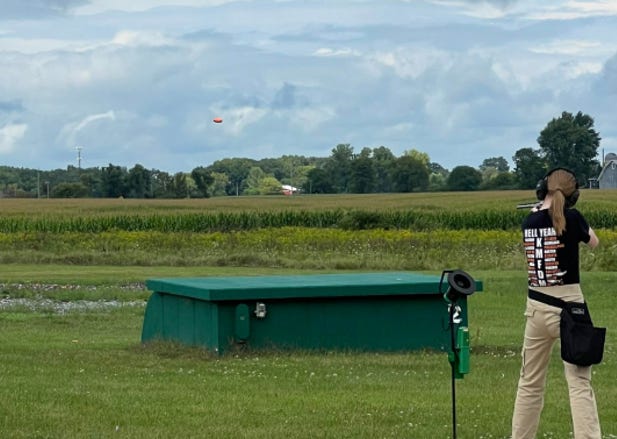 How a teen girl became a school shooting icon | The Tragic Repetition of School Shootings (aired 12/17/2025) by A Public Affair on WORT in Madison, WI.This week marks the 1-year anniversary of the shooting at the Abundant Life Christian School in Madison. Meanwhile the search for the Brown University shooter is ongoing. To talk about these events and the ongoing crisis of school shootings across the US, host Ali Muldrow is joined by Dr. David Riedman who tracks these shootings and the online communities that foster gun violence.Dr. Riedman takes an evidence-driven approach to the study of school shootings. He’s tracked 3,400 shootings back to the 1960s, including 226 of which were deliberately planned. He says there are some common denominators when it comes to shootings: the vast majority are committed by a current or recently former student who has likely experienced abuse in their home, has easy access to a gun, and has shown signs of distress, like leaving weapons out, leaving out maps of their schools, and making shrines to previous school shooters. These realities may run counter to the desire to view school shooters as deranged, lone-wolf outsiders. Instead, Dr. Riedman calls the majority of school shootings “violent public suicides.”They also talk about the stereotype that public and urban schools are more dangerous than private, rural, or suburban schools, even though the majority of school shootings occur in small suburban communities and rural schools. Dr. Riedman advises that parents be educated about past school shootings in order to spot signs that kids are becoming radicalized by online communities like the True Crime Community (TCC) and Groyper movement, led by white nationalist influencer, Nick Fuentes. Meanwhile young people in Wisconsin have been calling for better mental health resources and better gun storage laws.David Riedman, PhD is the creator of the K-12 School Shooting Database, Chief Data Officer at a global risk management firm, and a tenure-track professor. Listen to my weekly podcast—Back to School Shootings—or my recent interviews on Freakonomics Radio and the New England Journal of Medicine.School Shooting Data Analysis and Reports is a reader-supported publication. To receive new posts and support my work, consider becoming a free or paid subscriber. Get full access to Riedman Report: Risk, AI, Education, & Security at riedmanreport.substack.com/subscribe | 54m 13s | ||||||
| 12/22/25 | 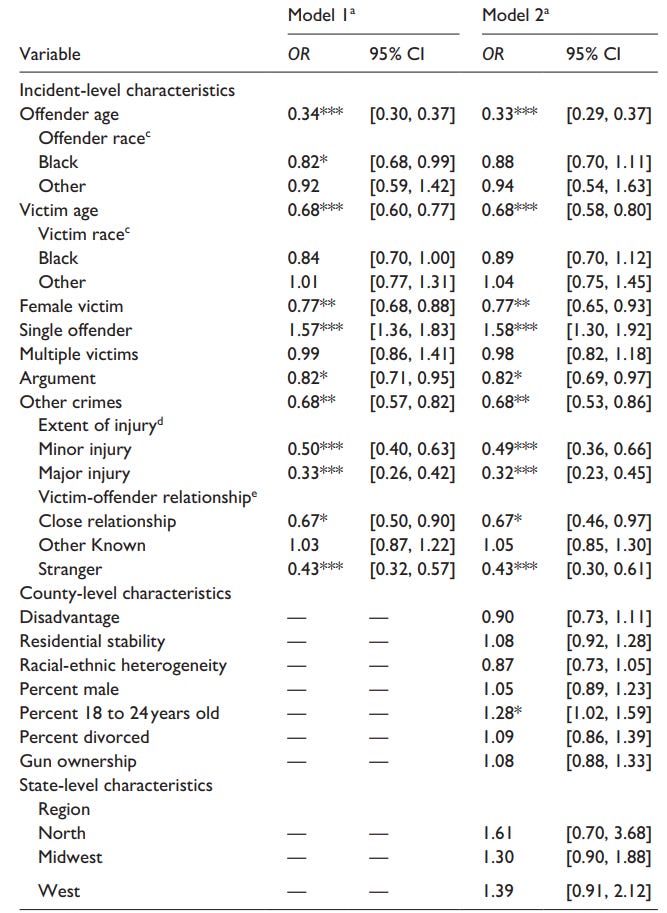 Ep 66. Are School Shootings a Unique Form of Violence? | Paper: Are School Shootings a Unique Form of Violence? A Comparison of the Individual and Contextual Correlates of Nonfatal School Shootings and Youth Gun ViolenceAbstract:School shootings have been traditionally viewed as a unique form of violence in which disgruntled suburban White boys indiscriminately target their peers and cause mass injury; however, a series of recent studies that employ broader definitions of school shootings suggest they more closely resemble community-based gun violence. This study tests the fundamental assumption that school shootings are a unique form of violence using multi-level logistic regression models to compare the individual and contextual correlates of 752 nonfatal school shootings to 28,109 nonfatal public shootings across 1,098 counties and 45 U.S. states from 2015 to 2019. Results indicate minimal differences between school shootings and public shootings, which are likely shaped by the school context. The analysis suggests that school gun violence is not a unique phenomenon from community gun violence and may share a similar etiology.Authors:* Kyle G. Knapp is a doctoral candidate in the College of Criminology and Criminal Justice at Florida State University. His research interests include mass violence, gun violence, intimate partner violence, gender, and communities and crime.* Emma E. Fridel, PhD, is an assistant professor in the College of Criminology and Criminal Justice at Florida State University. She received her PhD in Criminology and Justice Policy from Northeastern University. She primarily studies violence and aggression with a focus on homicide, including gun violence, school violence, homicide–suicide, serial and mass murder, and fatal officer-citizen encounters.David Riedman, PhD is the creator of the K-12 School Shooting Database, Chief Data Officer at a global risk management firm, and a tenure-track professor. Listen to my weekly podcast—Back to School Shootings—or my recent interviews on Freakonomics Radio and the New England Journal of Medicine.School Shooting Data Analysis and Reports is a reader-supported publication. To receive new posts and support my work, consider becoming a free or paid subscriber. Get full access to Riedman Report: Risk, AI, Education, & Security at riedmanreport.substack.com/subscribe | 1h 02m 51s | ||||||
| 12/16/25 | 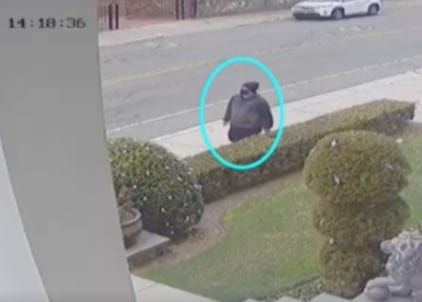 Police chief explains Brown University shooting investigation | Guest: Retired police chief Patrick Flannelly served 27 years with Lafayette Police Department which borders Purdue University in Indiana. He served 10 years as chief of the department and now hosts of the Coptimizer Podcast.Brown University has 235 buildings (most built between 1770-1926) on its 143-acre urban campus in downtown Providence, RI. The school has 20,000 students in a community of 200,000 people.Latest photos of suspect (white male around 5’8”):Locations of the doorbell cameras where photos of the suspect were recorded:Background on Brown University shooting:* Why hasn’t the Brown University shooter been arrested yet?* Brown University school shooting and brief history of higher ed attacks* Prior episode with Patrick: Systematic Failures: Why Predictable Problems Repeat at SchoolsDavid Riedman, PhD is the creator of the K-12 School Shooting Database, Chief Data Officer at a global risk management firm, and a tenure-track professor. Listen to my weekly podcast—Back to School Shootings—or my recent interviews on Freakonomics Radio and the New England Journal of Medicine.School Shooting Data Analysis and Reports is a reader-supported publication. To receive new posts and support my work, consider becoming a free or paid subscriber. Get full access to Riedman Report: Risk, AI, Education, & Security at riedmanreport.substack.com/subscribe | 57m 37s | ||||||
| 12/15/25 |  Ep 65. When a school shooting happens, will you Run, Hide, or Freeze? | New Paper: Run, Hide, or Freeze: Social and Emotional Influence on Behavior in an Immersive School Shooting SimulationAbstract: As school shootings rise in frequency across the United States, understanding how individuals respond during such crises is critical for developing effective safety protocols. This study used an immersive, computer-based simulation to investigate how social influence and emotion level from non-player characters (NPCs) affect behavior during an active shooter event. A total of 285 participants were randomly assigned to one of six experimental conditions varying NPC behavior (run, hide, or mixed) and emotional intensity (high vs. low). Participants were more likely to run when surrounded by NPCs who ran and more likely to hide when NPCs hid, showing that social influence significantly shaped behavior. Emotional evocative imagery and sounds, however, did not significantly affect decision-making. Increases in negative affect after the simulation and male gender were also associated with a greater likelihood of running. These findings suggest that visible social behavior, rather than emotion, drives emergency responses and highlights the value of social modeling in safety training.Guest (primary author): Kevin Kapadia, PhD candidate in Quantitative Psychology at University of Southern CaliforniaFirst Paper (part 1 of the simulation series): The Impact of Social Influence and Threat Uncertainty on Behavior in a School Shooting SimulationDavid Riedman, PhD is the creator of the K-12 School Shooting Database, Chief Data Officer at a global risk management firm, and a tenure-track professor. Listen to my weekly podcast—Back to School Shootings—or my recent interviews on Freakonomics Radio and the New England Journal of Medicine.School Shooting Data Analysis and Reports is a reader-supported publication. To receive new posts and support my work, consider becoming a free or paid subscriber. Get full access to Riedman Report: Risk, AI, Education, & Security at riedmanreport.substack.com/subscribe | 38m 20s | ||||||
| 12/9/25 |  Ep 64. Treatable victims die during school shootings and 3 ER doctors have solutions | Article (pre-submission/pre-publication): Early Medical Response in Active-Shooter Incidents. A Systematic Review of After-Action ReportsGuests:* Dr. Dominique Wong is an attending physician the Cabell Huntington Hospital Emergency Department and chair of the hospital’s Medical Readiness Committee. She also serves as a tactical physician and medical director for police SWAT and Tactical EMS teams, trains law enforcement officers and the US military, and serves in leadership roles with the American College of Emergency Physicians, Tactical and Law Enforcement Medicine Section.* Dr. Clay Young is a board certified emergency physician with over 25 years of clinical experience. As a former director of a flight service he has demonstrated leadership in pre-hospital emergency medicine. Dr. Young is committed to advancing public safety through the education and training of law enforcement personnel in life saving interventions and active shooter medical response. He is a graduate of the University of Kentucky college of medicine, a father of four, and an active hiker and fly fisherman.* Dr. Beth Toppins is an emergency medicine physician practicing in her hometown of Huntington, West Virginia. A graduate of Marshall University School of Medicine, she has served as an Emergency Department physician at Cabell Huntington Hospital since 2003 and currently serves as the Emergency Department Medical Director. She previously held leadership roles in regional EMS and has worked alongside Drs. Wong and Young to provide medical training to law enforcement across West Virginia. Outside the hospital, Beth is a proud mother of four and wife to Eric, and the children’s pastor at Christ Temple Church in Huntington, where she is an active member.Abstract: * Background: Timely medical response can improve survivability in active shooter incidents (ASI). This systematic review evaluates law enforcement, emergency medical services (EMS), rescue task force (RTF) and tactical emergency medical support (TEMS) medical response in ASI.* Methods: After-action reports (AARs) from U.S. ASI (1999–2022) were retrospectively reviewed. Point of injury (POI) medical response time for police, EMS, RTF, and TEMS was reviewed. Medical response type provided by law enforcement was also examined* Results: Thirty-one AARs representing 19 ASI were analyzed. Police provided medical response in every case, most commonly (84%) casualty extrication. In 21% of incidents, law enforcement provided the full spectrum of response: direct care, extrication and transportation to a hospital. RTF victim access was frequently delayed and in 43% of incidents, RTF providers never reached casualties at the POI. TEMS medical response times varied. Barricade hostage situations delayed all medical responders.* Conclusion: Police consistently provided early medical care in ASIs, while EMS, RTF and TEMS faced challenges accessing ASI casualties in a timely manner. These findings suggest law enforcement officers play a critical role in early medical response and may help reduce preventable deaths in AS incidents.My additional points on this topic:School shooting victims who could be saved with rapid transport to a hospital have died inside their schools because EMS crews are directed to wait outside until police issue an ‘all clear’ order. To address this long-standing problem, many agencies created combined EMS/police ‘rescue task force’ units or tactical EMS units with body armor to go inside and find victims…but these units take ~30 minutes to arrive and assemble. At this point, critically wounded students and teachers are already dead.In October 2022, a teacher and student were shot with an AR-15 rifle inside CVPA High in St. Louis. They were still alive when police killed the shooter, yet EMS waited outside for 20 minutes until police gave the all clear. Teacher Jean Kuczka and 15-year-old student Alexzandria Bell both died waiting for help inside. With military-style rifles being used by most school shooters, a school campus is like a battlefield where “the majority of combat casualties die within ten minutes of the trauma” (PubMed: Wounded in action: The platinum ten minutes and the golden hour). Instead of unnecessarily cautious policies that protect adult EMS providers against theoretical (and often imagined) dangers, we need to shift the status quo to accepting managed risks to save the lives of innocent children with critical gunshot injuries.Here are two of my articles about this problem:* When ‘Eddie Would Go’ so should police, fire, and EMS* Wounded victims can die when plans are based on the ‘second shooter’ fallacyDavid Riedman, PhD is the creator of the K-12 School Shooting Database, Chief Data Officer at a global risk management firm, and a tenure-track professor. Listen to my weekly podcast—Back to School Shootings—or my recent interviews on Freakonomics Radio and the New England Journal of Medicine.School Shooting Data Analysis and Reports is a reader-supported publication. To receive new posts and support my work, consider becoming a free or paid subscriber. Get full access to Riedman Report: Risk, AI, Education, & Security at riedmanreport.substack.com/subscribe | 49m 05s | ||||||
| 11/17/25 |  Ep 63. Directors of HBO's 'Thoughts and Prayers' documentary | Interview with the directors of HBO’s new documentary Thoughts & Prayers. Their film premiers this Tuesday night at the DOC NYC film festival and is available streaming the same night. (note: I set up this interview, HBO didn’t ask me to promote this film or provide any financial incentive).This 90-minute documentary traces the $3 billion active shooter preparedness industry in the United States and its effect on students and educators.Here is the iPhone note that I wrote right after watching it:This documentary is a postmodern 90-minute examination of the insanity of modern America. It shows the worst parts of fear and gore culture combined with capitalism. Nothing is more telling than the smirks and chuckles from the security product vendors as they boast about how each school shooting increases their profits. When people offer ‘thoughts and prayers’ after every attack, their words are as empty as the industry this film brutally portrays.Zack Canepari is the award-winning director of ‘Fire in Paradise’ about the wildfire that destroyed the entire town and Jessica Dimmock directed an award-winning series ‘Flint Town’ about the water crisis and economic conditions in Flint, MI. They team up to present an absolutely gut-wrenching look into the school security industry. The format, presentation, and content is unlike anything I’ve seen before.David Riedman, PhD is the creator of the K-12 School Shooting Database, Chief Data Officer at a global risk management firm, and a tenure-track professor. Listen to my weekly podcast—Back to School Shootings—or my recent interviews on Freakonomics Radio and the New England Journal of Medicine.School Shooting Data Analysis and Reports is a reader-supported publication. To receive new posts and support my work, consider becoming a free or paid subscriber. Get full access to Riedman Report: Risk, AI, Education, & Security at riedmanreport.substack.com/subscribe | 33m 03s | ||||||
| 10/31/25 | 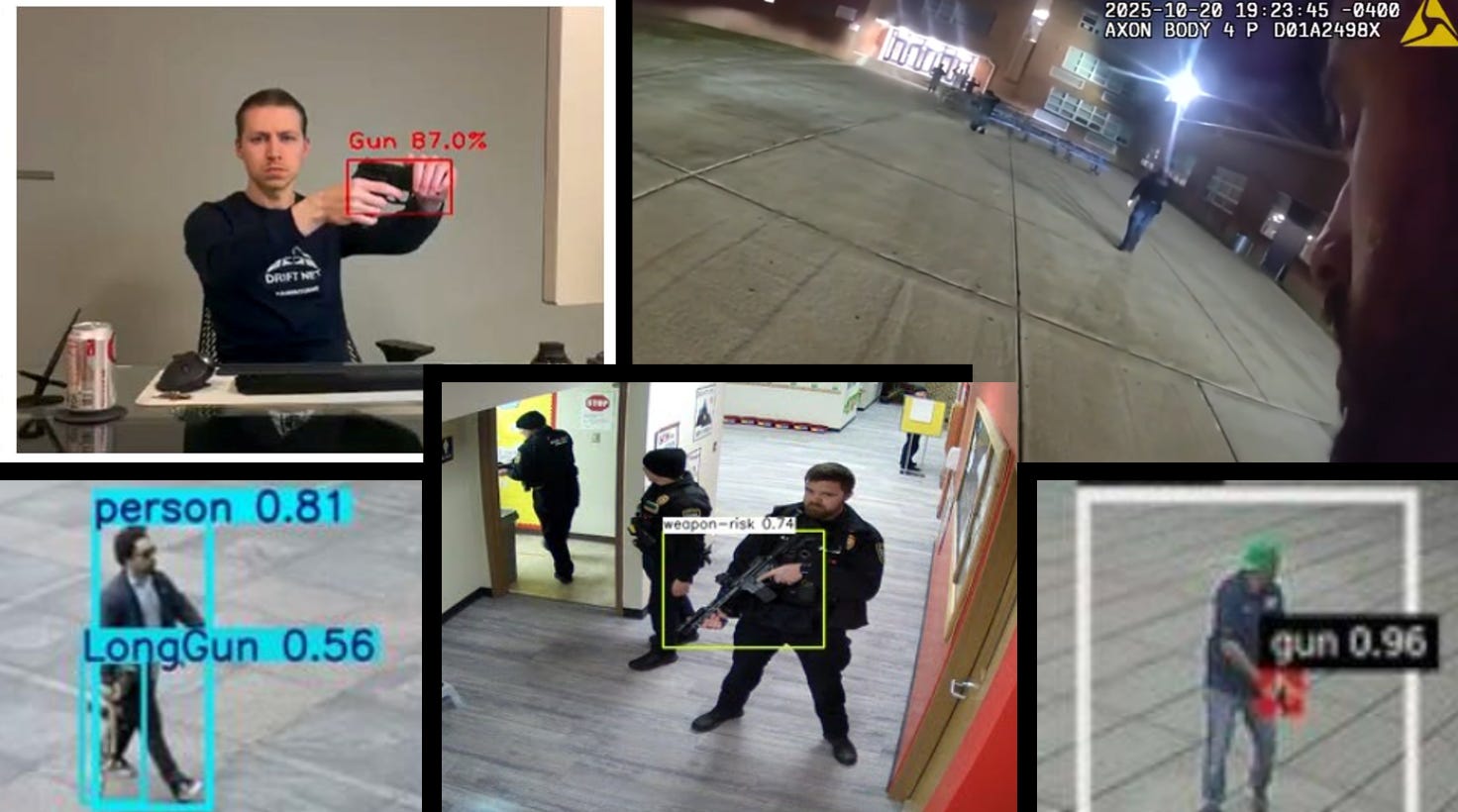 Ep 62. AI creates a threat disguised as a school security solution | Police to students: “The way you guys were eating chips, it picked it up as a gun. AI’s not the best. Can’t trust stuff like this at a school man. Good thing you guys didn’t run [laughs]...that would have made a major problem.” Bodycam footage shows Baltimore County, MD police handcuffing 4 students who were waiting to be picked up after football practice when they got an alert from AI software that detected a gun on the school’s CCTV system.What happened in Baltimore County is more than a minor technical glitch because four teens were forced to the ground at gunpoint because faulty software misinterpreted a bag of Doritos as a gun. The school district spent the equivalent of twenty-five teachers’ salaries on an AI system that can’t tell the difference between a snack and a threat. The outcome is students are even less safe when police with guns drawn show up on campus looking for a shooter who doesn’t exist.Until AI can truly comprehend context rather than just pixel clusters—and using the most advanced models becomes financially feasible for video analysis—basing student safety on image classification probabilities will continue to cause avoidable disasters like this. When outdated 2010s machine learning software can’t tell the difference between a bag of chips versus a gun, it doesn’t belong on a school campus.Read more: * AI classified Doritos chips as a gun and then police pointed real guns at students* CNN: I study school shootings. Here’s what AI can — and can’t — do to stop them* How do AI security products being sold to schools really work?* FTC takes action on school security tech vendor after investigation* What happens when a school security startup fails?David Riedman, PhD is the creator of the K-12 School Shooting Database, Chief Data Officer at a global risk management firm, and a tenure-track professor. Listen to my weekly podcast—Back to School Shootings—or my recent interviews on Freakonomics Radio and the New England Journal of Medicine.School Shooting Data Analysis and Reports is a reader-supported publication. To receive new posts and support my work, consider becoming a free or paid subscriber. Get full access to Riedman Report: Risk, AI, Education, & Security at riedmanreport.substack.com/subscribe | 34m 15s | ||||||
| 10/24/25 |  Ep 61. Dr. Bellavita: "Why do you believe data will make things better?" | Host: Dr. Chris Bellavita, senior faculty at the U.S. Naval Postgraduate School Center for Homeland Defense and Security.Guest: Dr. David Riedman, creator of the K-12 School Shooting Database and author of ‘How Critical is Critical Infrastructure’ (thesis chaired by Dr. Bellavita).Articles mentioned:* Imagining Future Homeland Security Threats: Known and Likely to Unknown and Unlikely* Questioning the Criticality of Critical Infrastructure: A Case Study Analysis* The Cold War on Terrorism: Reevaluating Critical Infrastructure Facilities as Targets for Terrorist Attacks* Ep 59. Can AI and LLMs like ChatGPT assess school shooting threats?* Noise: A Flaw in Human JudgmentDavid Riedman, PhD is the creator of the K-12 School Shooting Database, Chief Data Officer at a global risk management firm, and a tenure-track professor. Listen to my weekly podcast—Back to School Shootings—or my recent interviews on Freakonomics Radio and the New England Journal of Medicine.School Shooting Data Analysis and Reports is a reader-supported publication. To receive new posts and support my work, consider becoming a free or paid subscriber. Get full access to Riedman Report: Risk, AI, Education, & Security at riedmanreport.substack.com/subscribe | 1h 51m 08s | ||||||
| 10/16/25 | 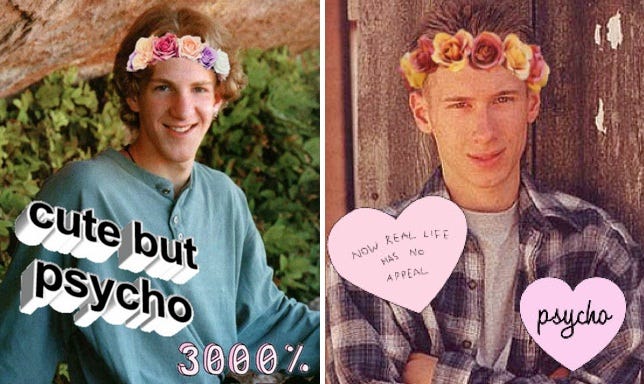 Ep 60. Inside the True Crime Community (TCC) that grooms teens into school shooters | Guest: Allizandra Herberhold, LMSW, works with radicalized, at-risk, and violent teens and young adults to prevent mass shootings and counter violent extremism.Host: David Riedman, creator of the K-12 School Shooting Database.Samples of TCC Content:TCC style cartoon that I used ChatGPT to generate:Links discussed in the show:* Allizandra’s Website: Parents4Peace. We center our work on those most affected by extremism—families and targeted communities—while equipping frontline professionals to intervene early and stop hate before it escalates. We address hate at its source, across every ideology.* Ep 57. TCC, gore videos, groypers, and online radicalization* Meme culture, Groypers, school shooters, and ‘Anomie Extremism’* Discord Platform: What schools and parents need to know to prevent a school shootingDavid Riedman, PhD is the creator of the K-12 School Shooting Database, Chief Data Officer at a global risk management firm, and a tenure-track professor. Listen to my weekly podcast—Back to School Shootings—or my recent interviews on Freakonomics Radio and the New England Journal of Medicine.School Shooting Data Analysis and Reports is a reader-supported publication. To receive new posts and support my work, consider becoming a free or paid subscriber. Get full access to Riedman Report: Risk, AI, Education, & Security at riedmanreport.substack.com/subscribe | 59m 09s | ||||||
| 10/3/25 | 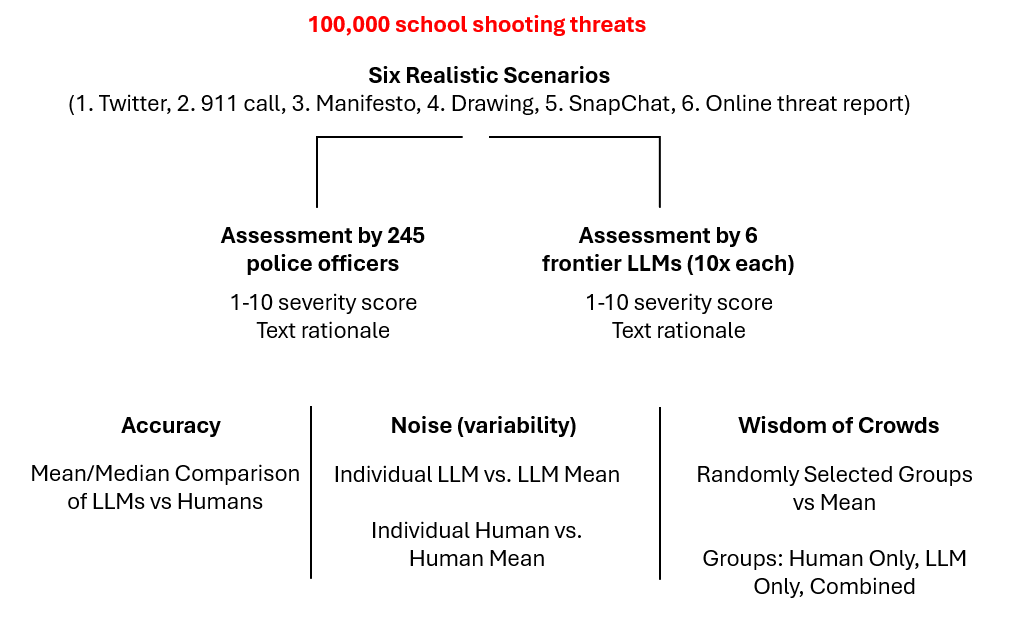 Ep 59. Can AI and LLMs like ChatGPT assess school shooting threats? | Last week, I successfully defended my PhD dissertation. This episode is a short overview of my research on using LLMs like ChatGPT to assess threats of violence.My Dissertation: LLMs Versus Human Experts: Mixed Methods Analysis Measuring Variance in School Shooting Threat AssessmentsAbstract: This study measures the unwanted variability in expert judgments by testing six frontier large language models (LLMs) on fictitious but realistic school shooting scenarios derived from 1,000 real threats made in the United States (note: there are approximately 100,000 threats made nationwide to schools each year). Using prior decision science research, this dissertation measures the accuracy and consistency of assessments by LLMs compared to a prior study of 245 human law enforcement officers who rated the severity of the same six threat scenarios. Quantitative results demonstrate that the LLMs produced severity ratings within one point of the mean of ratings by human experts (ΔM ≤ 1) with no statistically significant differences (p > .05), supporting the primary hypothesis that LLMs can approximate the accuracy of human threat assessments. Aggregate LLM scores displayed lower variance than human ratings, showing both a wisdom-of-crowds effect and reduced judgment noise. Qualitative thematic analysis of narrative explanations revealed that LLMs consistently focused on specific aspects of the threats, while humans were influenced by lived experiences, adherence to formal procedures, and personal assumptions. The findings suggest that LLMs can enhance the reliability of school-based threat assessments as part of a human-LLM hybrid team, or as the sole assessor in under-resourced or rural schools that lack trained human experts. This study contributes to the fields of behavioral economics, decision science, violence prevention, and serves as a framework for comparing the assessment abilities of LLMs to those of humans.Freakonomics/People I (Mostly) Admire Interview (2021): Daniel Kahneman on Why Our Judgment is Flawed — and What to Do About ItDavid Riedman, PhD is the creator of the K-12 School Shooting Database, Chief Data Officer at a global risk management firm, and a tenure-track professor. Listen to my weekly podcast—Back to School Shootings—or my recent interviews on Freakonomics Radio and the New England Journal of Medicine.School Shooting Data Analysis and Reports is a reader-supported publication. To receive new posts and support my work, consider becoming a free or paid subscriber. Get full access to Riedman Report: Risk, AI, Education, & Security at riedmanreport.substack.com/subscribe | 27m 57s | ||||||
| 9/22/25 | 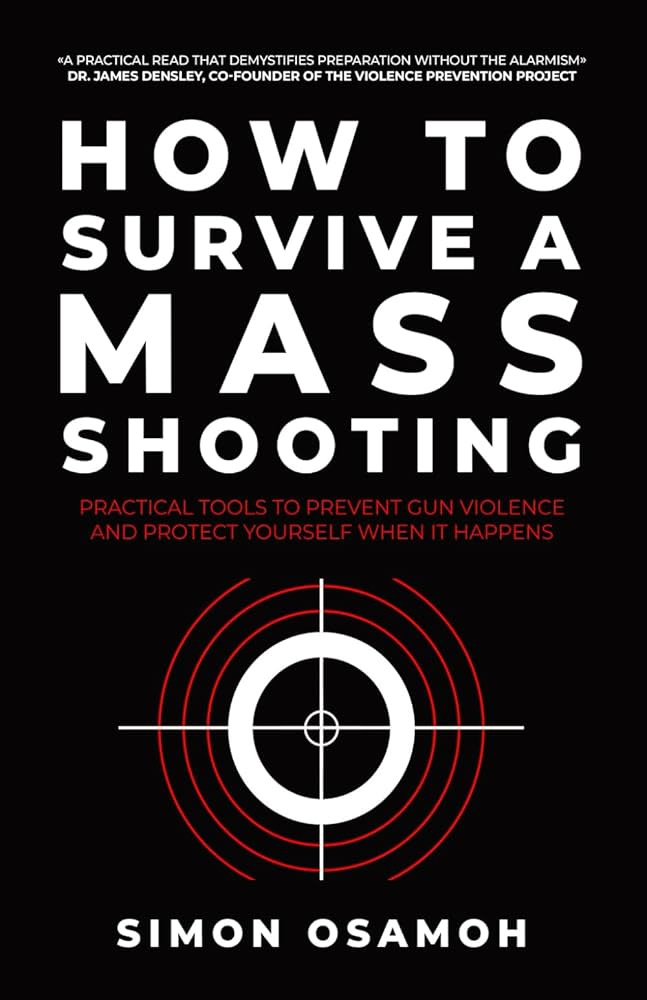 Ep 58. How to survive a mass shooting | Guest: Simon C. Osamoh, a former British detective and security director at Mall of America.Host: David Riedman, creator of the K-12 School Shooting Database.Book: How to Survive a Mass Shooting: Practical Tools to Prevent Gun Violence and Protect Yourself When It HappensDavid Riedman is the creator of the K-12 School Shooting Database, Chief Data Officer at a global risk management firm, and a tenure-track professor. Listen to my weekly podcast—Back to School Shootings—or my recent interviews on Freakonomics Radio, New England Journal of Medicine, and my article on CNN about AI and school security.School Shooting Data Analysis and Reports is a reader-supported publication. To receive new posts and support my work, consider becoming a free or paid subscriber. Get full access to Riedman Report: Risk, AI, Education, & Security at riedmanreport.substack.com/subscribe | 59m 39s | ||||||
| 9/17/25 | 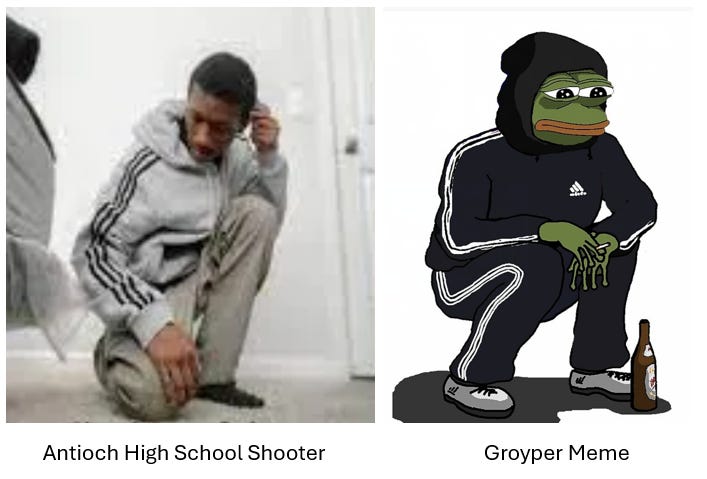 Ep 57. TCC, gore videos, groypers, and online radicalization | Guest: Allizandra Herberhold, LMSW, works with radicalized, at-risk, and violent teens and young adults to prevent mass shootings and counter violent extremism.Host: David Riedman, creator of the K-12 School Shooting Database.Website: Parents4Peace. We center our work on those most affected by extremism—families and targeted communities—while equipping frontline professionals to intervene early and stop hate before it escalates. We address hate at its source, across every ideology.Links discussed during the show:* Meme culture, Groypers, school shooters, and ‘Anomie Extremism’* Discord Platform: What schools and parents need to know to prevent a school shooting* Another neo-nazi school shooter radicalized online* Ep 54. School shooter felt "my only friend was my gun"David Riedman is the creator of the K-12 School Shooting Database, Chief Data Officer at a global risk management firm, and a tenure-track professor. Listen to my weekly podcast—Back to School Shootings—or my recent interviews on Freakonomics Radio, New England Journal of Medicine, and my article on CNN about AI and school security.School Shooting Data Analysis and Reports is a reader-supported publication. To receive new posts and support my work, consider becoming a free or paid subscriber. Get full access to Riedman Report: Risk, AI, Education, & Security at riedmanreport.substack.com/subscribe | 51m 02s | ||||||
| 9/8/25 |  Ep 56. Two Principals Who Experienced School Shootings | Guests: School principals George Roberts and Andy McGill, both experienced a school shooting on their campus.Host: David Riedman, creator of the K-12 School Shooting Database.Website: Principal Recovery NetworkResource: The NASSP Principal Recovery Network Guide to Recovery (In August 2022, the PRN published the Guide to Recovery, a collection of best practices to assist school leaders in the aftermath of shooting tragedies.)David Riedman is the creator of the K-12 School Shooting Database, Chief Data Officer at a global risk management firm, and a tenure-track professor. Listen to my weekly podcast—Back to School Shootings—or my recent interviews on Freakonomics Radio, New England Journal of Medicine, and my article on CNN about AI and school security.School Shooting Data Analysis and Reports is a reader-supported publication. To receive new posts and support my work, consider becoming a free or paid subscriber. Get full access to Riedman Report: Risk, AI, Education, & Security at riedmanreport.substack.com/subscribe | 43m 04s | ||||||
Showing 25 of 100
Pitch Fit is a Pro feature
See how bookable this show is for guests, which brands already advertise, the per-episode ad value, and the best-fit guest and sponsor profile. The numbers are blurred on the free plan.
How readily this show books outside guests like you.
How proven this show is for host-read sponsorships.
For Guests
ProFor Advertisers
ProUpgrade to Pro to unlock guest cadence, sponsor categories, fit scores, and per-episode ad value for this show.