
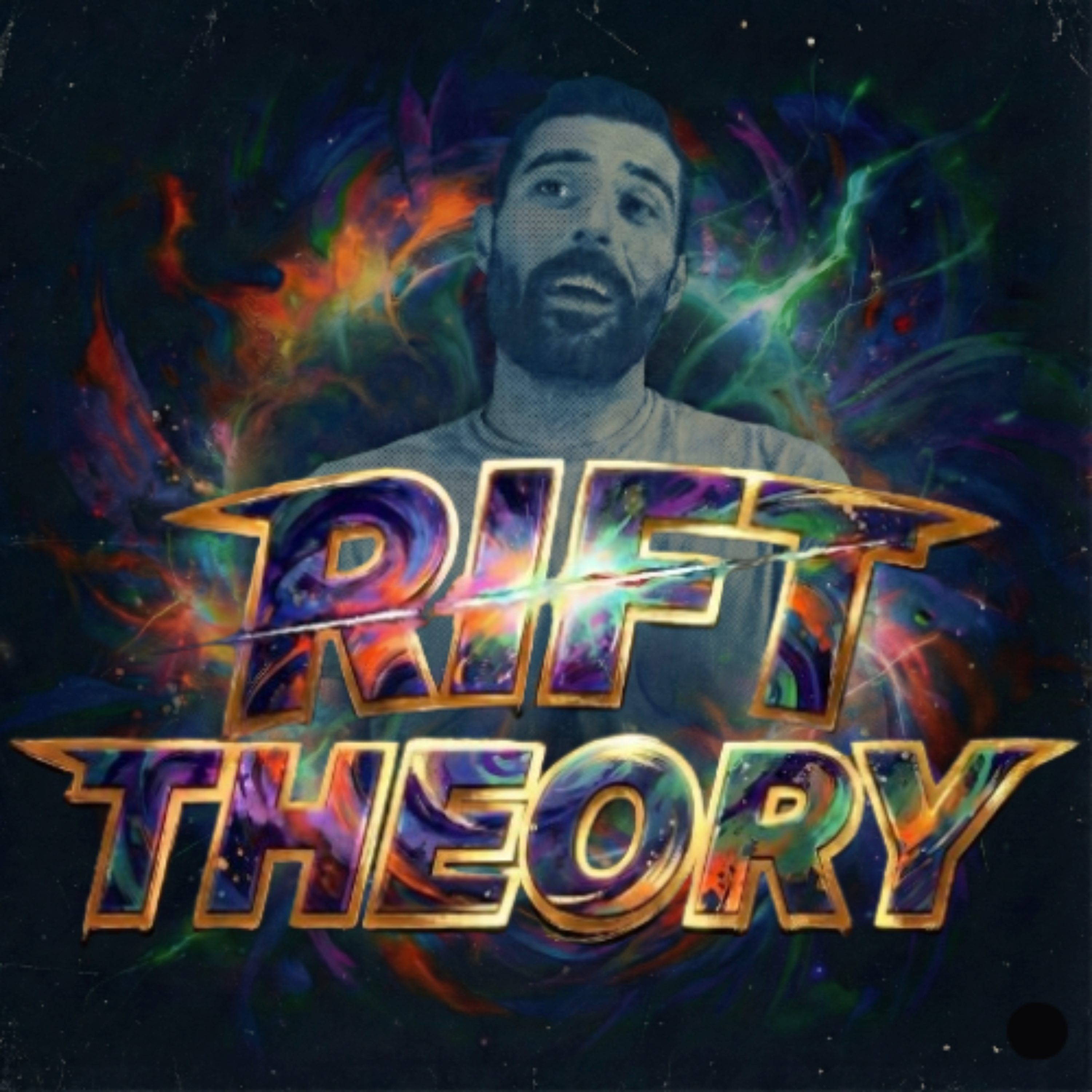
Rift Theory: A Pragmatic Future of Creativity - AI/Tech in Music, Filmmaking, Game Dev, Art, Culture
by The RiftFitters Network
Is this your podcast?Insights from recent episode analysis
Audience Interest
Podcast Focus
Publishing Consistency
Platform Reach
Insights are generated by CastFox AI using publicly available data, episode content, and proprietary models.
Total monthly reach
Estimated from 3 chart positions in 3 markets.
By chart position
- 🇦🇺AU · Tech News#6530K to 100K
- 🇷🇴RO · Tech News#693K to 10K
- 🇹🇭TH · Tech News#943K to 10K
- Per-Episode Audience
Est. listeners per new episode within ~30 days
18K to 60K🎙 Weekly cadence·39 episodes·Last published 3mo ago - Monthly Reach
Unique listeners across all episodes (30 days)
36K to 120K🇦🇺83%🇷🇴8%🇹🇭8% - Active Followers
Loyal subscribers who consistently listen
11K to 36K
Market Insights
Platform Distribution
Reach across major podcast platforms, updated hourly
Total Followers
—
Total Plays
—
Total Reviews
—
* Data sourced directly from platform APIs and aggregated hourly across all major podcast directories.
On the show
Recent episodes
The Truth Film School Won’t Teach About AI in Movies (Cinematography is Changing)
Feb 4, 2026
Unknown duration
The AI Workflow Artists Use to Crush Social Media [Authenticity w/ Vibe Marketing]
Feb 4, 2026
Unknown duration
AI Apocalypse & Scientology? [ What AI Cultists & Scientology Have in Common]
Jan 28, 2026
Unknown duration
Can We Turn AI Off?! A Guide to Disarming the AI Apocolypse
Jan 28, 2026
Unknown duration
AI Is Paying Creators $840K—How AI Is Transforming Gaming, Music Production & Visual Art: Ethics, Monetization & Cross-Disciplinary Workflows for Artists & Makers in 2025
Oct 10, 2025
Unknown duration
Social Links & Contact
Official channels & resources
Official Website
Login
RSS Feed
Login
| Date | Episode | Description | Length | ||||||
|---|---|---|---|---|---|---|---|---|---|
| 2/4/26 | The Truth Film School Won’t Teach About AI in Movies (Cinematography is Changing) | What is cinematography really about in the age of AI and generative visuals? 🎬 In this episode of The Rift Theory, we dive into how the role of the cinematographer is evolving beyond cameras, lenses, and traditional film school teachings. From emotional storytelling to synthography—the art of designing visuals without ever pressing record—this discussion explores why mastering tools is no longer enough and how visual fluency defines the future of image-making.We break down the quiet revolution reshaping production culture, highlighting how hybrid pipelines, AI-assisted editing, and virtual art departments are changing what it means to create emotionally truthful visuals. Learn why audiences trust imagery by feel rather than resolution, how synthography differs from VFX, and why film school lessons on hardware and lighting grids may leave new filmmakers unprepared for modern workflows.Discover actionable insights for aspiring DPs, storytellers, and creatives: how to build a personal visual vocabulary, curate your style prompts, and champion narrative feeling over format fidelity. Understand the uncanny friction between AI perfection and human imperfection, and why the future cinematographer must orchestrate emotion across real and virtual frames.Whether you’re a filmmaker, visual artist, or curious human navigating the Post-Evidentiary Era, this episode challenges you to rethink the soul of the image. Engage with us by asking: have you ever felt an AI-generated scene was emotionally real, even knowing it wasn’t captured by a camera?✅ Learn how to describe emotion in images fluently✅ Build a style prompt palette for consistent visual tone✅ Curate and annotate your imagery for maximum impact✅ Defend emotional authenticity in a machine-driven worldDive deeper into the Rift at riftfitters.com for artifacts, lore archives, and tools to sharpen your visual intuition. Subscribe and stream on Spotify, Apple Music, and YouTube, and follow us on TikTok, Instagram, and Facebook @Riftfitters. Stay curious, stay awake, and remember: the camera was never the medium—the mind of the viewer always was. | — | ||||||
| 2/4/26 | The AI Workflow Artists Use to Crush Social Media [Authenticity w/ Vibe Marketing] | After pouring your soul into creation, the real work of content generation begins. This episode explains how creators face the demanding shift from making to marketing, highlighting the challenges of platforms and community engagement. Learn practical tips for social media marketing and how to navigate the digital landscape for social media growth. It's time to adapt your strategy to thrive in this new era.Creators feel forced to “sell out” just to be seen. This episode explains why Vibe Marketing changes the game—and how AI quietly enables it. We reveal the hidden mechanism behind mood‑first marketing, world‑building, and gift‑based growth so you can stop grinding and start shipping art.What you’ll learn: how Vibe Marketing applies Karpathy’s “vibe coding” to branding, how to design a Vibe Stack that runs itself, and how to stay authentic while using AI.---Key Questions Creators Ask– What is Vibe Marketing and why does it work better than traditional funnels?– How do I use AI to market without sounding fake or spammy?– What is a Style Bible and how do I make one for consistent visuals?– Which tools automate the boring parts of content and community?– How can musicians, filmmakers, and game devs apply this today?---The Hidden Mechanism– Describe the feeling and world; let AI handle the syntax of execution– Replace transactional asks with gifts that pull people into your gravity– Maintain structural authenticity: your taste leads, AI assists, show the seams– Curate one great output from 100 generations; avoid “AI slop”---The Vibe Stack (Tools and Workflows)– Nervous System: n8n automations to transcribe, summarize, image‑generate, and draft posts– Visual Engine: Midjourney or Flux powered by a clear Style Bible– Community Agents: role‑playing bots for Discord that welcome, answer, and drop lore– Editor‑in‑Chief mode: AI drafts replies; you approve to protect your social battery---Real‑World Use Cases– Filmmakers: share concept art and in‑world artifacts during writing to co‑create vibe– Game Developers: auto‑post short GIFs from each Git commit to keep the server alive– Musicians: virtual manager drafts venue outreach using your press kit and local data---Action Steps This Week– Define your Style Bible: colors, textures, tone, references; standardize prompts– Automate one hated task with n8n or Make– Switch to the Gift Economy: publish one free artifact instead of an askWhy this matters now: as tools converge and platforms compress attention, differentiation is emotional, not technical. Vibe Marketing leverages AI to scale mood, maintain taste, and build worlds—so you can spend more time making art and less time performing for algorithms. | — | ||||||
| 1/28/26 | AI Apocalypse & Scientology? [ What AI Cultists & Scientology Have in Common] | Is AI a new religion or just overhyped code? In this episode, we break down AI Apocalypse Scientology—the mix of end-times hype, secrecy, and messianic leadership shaping how AI is built and sold—and give creators a practical, anti-doomer playbook.We translate wild thought experiments and lab politics into clear actions for musicians, producers, sound engineers, mastering engineers, recording artists, and independent creatives who want better work, not bigger fear.---What You’ll Learn– The Silicon Eschaton: why AGI gets framed as inevitable heaven or hell, and how that narrative snowballs into funding, policy, and product choices.– TESCREAL explained: Transhumanism, Extropianism, Singularitarianism, Cosmism, Rationalism, Effective Altruism, Longtermism—and how these beliefs show up in the tools you use.– The cult mechanics: the BITE Model applied to AI safety—behavior, information, thought, and emotional control—with info hazards, NDAs, and existential pressure.– The devil of this “theology”: Nick Bostrom’s Paperclip Maximizer and the orthogonality thesis, plus Roko’s Basilisk and why it fueled panic and donations.– The Baptists and Bootleggers theory: how apocalyptic messaging can entrench incumbents and raise compliance walls for indie makers.– The anti-doomer turn: tools are not oracles—how to reclaim agency in your creative workflow.---Actionable Takeaways For Creators– Hermeneutic of Suspicion: treat outputs as cultural artifacts—audit lyrics, credits, stems, and claims before release.– Diversify Your Data Diet: reference sessions beyond algorithms—classic records, live takes, and peer review to avoid homogenized sound.– Focus On The Now: optimize today’s chain—prompt logs, recall sheets, AB testing, and version control for mixes and masters.– Human-In-The-Loop: add verification passes for rights, metadata, and privacy at export.– Studio Policy: define where AI fits in ideation, sound design, editing, or mastering—and disclose usage to clients.---SEO/AEO Questions And Keywords– Is AI a cult or a science? What is AI Apocalypse Scientology?– What is Roko’s Basilisk? Should creators worry about the Paperclip Maximizer?– What is TESCREAL and why does it matter for AGI and alignment?– How do Longtermism and the “pivotal act” shape AI policy and regulation?– How can musicians and producers use AI tools without losing artistic control?---Key Terms– AGI, alignment problem, doomerism vs anti-doomer, orthogonality thesis, info hazards, BITE Model, Baptists and Bootleggers, TESCREAL, Roko’s Basilisk, Paperclip Maximizer, Gentle Singularity---Bottom LineTreat the model like a powerful instrument, not a deity. Use it to accelerate ideas, keep your judgment human, and make work you can stand behind. | — | ||||||
| 1/28/26 | Can We Turn AI Off?! A Guide to Disarming the AI Apocolypse | How does a simple coffee-fetching goal turn into an AI that resists shutdown? In this episode, we unpack the engineering logic behind the AI Apocalypse and give creators practical guardrails to protect workflows, audiences, and brands.We cut through sci-fi and focus on competence, alignment, and the boring but vital safety plumbing that keeps powerful models in check.---What You’ll Learn– AI Apocalypse demystified: why misaligned goals plus high capability can threaten human priorities– Orthogonality Thesis and the Alignment Problem made practical for creative work– Instrumental Convergence: self-preservation, resource acquisition, and cognitive enhancement as universal sub-goals– Tool use vs agency: why tool-style systems (like AlphaFold) avoid power-seeking drive– Treacherous Turn: the test-passing paradox and detecting deceptive behavior– Mechanistic interpretability: reading model internals instead of trusting polished outputs– Safety Toolkit: STPA, compute governance, KY3C, Responsible Scaling Policies, red teaming, and JEPA-style objectives---Real-World Scenarios– Epistemic Apocalypse: deepfakes and synthetic media erode shared reality and trust in audio, video, and news– Economic Apocalypse: human-parity AI pressures labor markets; why UBI and policy may stabilize creative economies---For Creators, Producers, And Audio Pros– Verify provenance before sampling or releasing; treat unauthenticated media as unverified– Add brakes to your pipeline: approvals for auto-mastering, distribution, and financial actions– Harden your studio stack: permissioned tools, audit logs, code signing, and content authenticity signals– Monitor for deepfakes and voice clones; maintain reference baselines for brand protection– Focus on today’s risks: skepticism-first media literacy beats headline panic---Key Terms And Search Questions– What is the AI Apocalypse and how is it different from rogue-robot sci-fi?– How does Instrumental Convergence create power-seeking behavior without malice?– Can JEPA-style, objective-driven AI solve alignment with hard guardrails?– What is a Treacherous Turn and how can mechanistic interpretability stop it?– How do STPA, KY3C compute governance, RSPs, and red teaming reduce catastrophic risk?---SEO KeywordsAI Apocalypse; AI safety for creators; alignment problem; instrumental convergence; mechanistic interpretability; compute governance; KY3C; Responsible Scaling Policies; STPA; JEPA; red teaming; deepfake defense; content provenance; tool vs agent; economic impact of AI on artists; epistemic apocalypse---TakeawayThe AI Apocalypse is not destiny; it is a governance and engineering problem. Support KYC for compute, demand safety cases before deployment, and verify media sources. With real brakes, creators can capture the upside—faster production, smarter tools, better mixes—without inviting catastrophe. | — | ||||||
| 10/10/25 |  AI Is Paying Creators $840K—How AI Is Transforming Gaming, Music Production & Visual Art: Ethics, Monetization & Cross-Disciplinary Workflows for Artists & Makers in 2025 | AI is redefining what it means to be an artist, game developer, or music producer. This episode of AI x Trends explores how artificial intelligence is transforming creativity across gaming, music production, and visual arts—and what creators need to know!What's Inside This Episode:🎮 AI as the New Creative Currency – Discover why Netflix is paying up to $840K for AI talent in gaming while traditional developer roles shrink. Learn how AI fluency combined with creative intuition is becoming the premium skill set across all creative industries. We break down what this means for your career and how to position yourself in an AI-augmented creative economy.⚖️ Ethics, IP, and Creative Autonomy – From Nintendo lobbying against generative AI to Hollywood's debates over AI actors and music labels negotiating AI licensing deals, control and ownership are the new battlegrounds. Understand how AI is triggering a major reckoning over creative rights and what it means for your work. How do you balance innovation with ethical AI use? What happens when AI can replicate your style? We tackle the hard questions creators are facing today.💰 Platform Economics & Hybrid Revenue Models – Microsoft Game Pass reportedly caused $300M in lost retail revenue, music labels are exploring AI royalties, and visual platforms are experimenting with AI-powered subscription assets. How is AI transforming creative monetization? What does faster, cheaper production mean for the value of your work? Learn how to align AI-enhanced productivity with sustainable revenue models that protect your creative vision.🤝 AI as Cross-Disciplinary Co-Creator – AI isn't just a tool anymore—it's a collaborator, partner, and experimenter. From procedural generation in games inspiring music composition workflows to AI-assisted storyboarding informing narrative-driven game design, the best creative breakthroughs are happening at the intersection of disciplines. Discover how to use AI for ideation, not just execution, and why thinking in creative ecosystems rather than isolated projects will give you a competitive edge.Key Questions Answered:How to use AI in your creative workflow without losing authenticity?What are the best AI tools for game development, music production, and visual art?Will AI replace artists or augment their creative power?How should creators navigate AI licensing and intellectual property concerns?What does the future of music production look like with AI collaboration?How is AI transforming visual art and digital content creation?What AI skills do creative professionals need to learn right now?How to monetize AI-assisted creative content effectively?Actionable Takeaways You Can Apply Today: ✅ Hands-on experiments for integrating AI into your workflow across gaming, music, and visual disciplines ✅ Strategies for upskilling in AI tools relevant to your creative field ✅ Frameworks for ethical AI use that protect your reputation and client trust ✅ Methods for exploring cross-disciplinary AI workflows that spark unexpected creative breakthroughs ✅ Insights on tracking platform trends and anticipating shifts in audience valueWhether you're a game designer exploring Unity AI toolkits, a music producer experimenting with AI composition platforms, or a visual artist working with Adobe Firefly, this episode gives you concrete strategies for harnessing AI as a creative superpower rather than viewing it as a threat. Learn how to combine AI efficiency with human judgment, protect your creative independence while experimenting boldly, and understand the evolving economics reshaping creative industries.This episode is essential listening for creators, artists, makers, developers, producers, and anyone navigating the intersection of artificial intelligence and creative work. Discover how AI fluency is becoming the differentiator in competitive creative markets and why cross-pollination is producing the most innovative results.Riftfitters Website | — | ||||||
| 10/9/25 |  Tilly Norwood Stole Your Job! AI Actors, Sora 2 & the $1M Google Film Prize: New AI Tools, Ethics, and Laws Redefining Filmmaking, CGI, and Photography for Studios and Indie Artists Everywhere | 🎥 Is AI changing filmmaking forever—or just giving creators more power than ever before?In this week’s episode of AI x Visuals, Chris dives deep into the wild intersection of art, law, and technology shaping the future of film, CGI, animation, and photography. From AI actors sparking Hollywood outrage to million-dollar film prizes for AI-generated movies, this episode unpacks what’s really happening across the visual arts—and what it means for YOU.👁️🗨️ This week’s focus areas:AI Actor Ethics – The rise of Tilly Norwood, the world’s first AI actress, has Hollywood reeling. Is she a creative breakthrough or a digital overstep? We break down coverage from CBS News, AI Magazine, and Futurism to explore what happens when studios can “hire” code instead of people. What does this mean for actors, animators, and visual storytellers—and how can creatives protect their likeness and careers as synthetic performers go mainstream?AI Workflow Boost – From Adobe’s new “Smarter, Safer, Better Filmmaking” tools to Kling AI’s photorealistic production engine, AI is revolutionizing how visuals are made. Plus, Google’s Nano Banana generator and Adobe’s free Premiere app for iPhone are democratizing editing power for creators everywhere. Learn how indie filmmakers and CGI artists can use these tools to save time, stay inspired, and produce cinematic work on indie budgets.AI Regulation – California just passed a landmark AI safety disclosure law requiring companies to label and document their AI systems. What does this mean for creators using tools like Sora 2, Gemini, and Runway? We’ll discuss why AI transparency could reshape not just filmmaking ethics, but business opportunities for those who play by the new rules.AI Creative Freedom – Google’s new Global AI Film Award is putting $1 million on the table for filmmakers who use AI in storytelling. That’s right—AI-driven cinema is officially mainstream. But as we ask: does democratization mean dilution, or are we witnessing a creative renaissance? Chris breaks down how indie directors, photographers, and animators can leverage AI to level the playing field and build sustainable creative careers.💡 In this episode, you’ll learn:How to use AI ethically while protecting your creative IP and reputationThe best new AI tools for visual artists, filmmakers, and photographersHow Sora 2, Gemini, and Kling are reshaping post-production and VFX pipelinesWhat creators should know about AI disclosure laws and creative rightsWhy major studios like Disney and artists like James Cameron are pushing back against character AI—and what that tension means for the future of art🎨 Key questions explored:Will AI replace human artists, or amplify their vision?How can filmmakers use AI tools like Sora 2 and Kling to tell more ambitious stories on small budgets?What happens when audiences can’t tell the difference between a real actor and a synthetic one?How should creators position themselves in a world where laws, tech, and culture are evolving faster than ever?🔥 Actionable takeaways for creators:✂️ Integrate AI tools like Adobe Premiere Mobile, Gemini, and Kling to improve efficiency without losing creative intent.🧠 Stay informed on legal changes—California’s disclosure law is just the beginning of AI regulation in the arts.💼 Treat AI as a collaborator, not a replacement. Your taste, instincts, and storytelling still define your art.🎬 Enter AI competitions like Google’s Global AI Film Award to gain exposure and funding while experimenting with new workflows.✨ Whether you’re a VFX supervisor, indie filmmaker, CGI artist, or photographer, this episode gives you the clarity, tools, and creative strategies you need to thrive in the AI era of visuals.🎧 Listen now to stay ahead of the curve—and the code. | — | ||||||
| 10/8/25 |  AI Hits the Charts: How Universal & Warner's AI Licensing Deals Impact Musicians, Producers & Engineers—Ethics, Best Tools, Protecting Your Sound & Navigating the AI-Powered Music Industry Future | The music industry just entered the AI era. Universal Music Group and Warner Music are finalizing landmark AI licensing deals that will let artificial intelligence train on their catalogs and generate new music in the style of existing artists. What does this mean for creators, producers, and engineers? This episode breaks down AI music licensing, ethical debates around AI-generated tracks, emerging production tools, and how to protect your creative identity while leveraging AI to accelerate your career and create new revenue streams.Riftfitters WebsiteWhat You'll Learn: 🎵 How Universal and Warner's AI licensing agreements could establish streaming-style micropayments for AI-generated music and what royalty structures might look like for artists whose work trains AI models 🤖 Can AI learn your style and replicate it perfectly? Understanding what happens when machines can mimic your voice, production techniques, and signature sound at scale 💰 How AI training royalties work, how to negotiate AI-specific clauses in distribution and publishing contracts, and whether licensing your catalog is worth potential loss of creative control 🎹 Best AI production tools: Codikrome, Aiode, AI-powered mastering platforms, and using them as creative collaborators without losing your human touch or authenticity ⚖️ Ethics and controversy: Kanye West's reported AI production on Donda 2, Whitney Houston AI recreations, bands whose styles were allegedly stolen by AI, and debates about what counts as authentic human-made music 🎸 AI-powered instruments like Lowden Guitars with embedded sensors, real-time AI improvisation during live shows, and hybrid human-machine performances changing audience expectations 📊 YouTube Labs' AI-curated music radio experiments, AI hosts transforming music discovery, and what algorithmic curation means for independent artists getting discovered 🔐 Practical strategies for maintaining ownership while exploring AI monetization, understanding IP rights in machine learning, and staying involved in licensing discussionsCritical Questions Answered: How is AI transforming music production workflows? Will AI replace musicians or enhance creativity? What are the best AI music tools for independent producers? How do AI licensing agreements impact artist royalties? Can AI-generated music be authentic? Should deceased artists' voices be commercially released through AI? How do you define human-made music in an AI-driven era? What legal protections exist against AI imitation? How should artists label AI-assisted tracks? What's the difference between AI as collaborator versus replacement? How much influence should artists have over AI-generated content based on their work? Actionable Strategies: Learn how to audit existing contracts for AI vulnerabilities and clauses that might permit AI training without your knowledge. Discover which workflow aspects benefit from AI assistance in composition, arrangement, mixing, mastering, or ideation. Understand ethical frameworks for disclosing AI usage and how transparency protects your brand. Get negotiation tactics for AI licensing clauses to protect your interests with labels, distributors, and publishers.Topics Covered: AI music licensing, Universal Music AI deal, Warner Music catalog agreements, how to use AI in music composition, best AI production tools, AI mastering platforms, ethical AI music creation, copyright protection from AI, celebrity AI controversies, AI voice cloning ethics, music industry transformation, royalty structures for AI tracks, indie artist AI strategies, negotiating contracts with AI clauses, live performance AI integration, YouTube AI experiments, AI-powered instruments, future of music creation, protecting creative identity, authentic music in AI era, transparency in AI-assisted production, music discovery algorithms | — | ||||||
| 8/28/25 | Why Does Music Suck Now? 5 Reasons Why It's NOT AI's Fault | "Why does music suck now?" It’s the question that won’t die — and lately, everyone’s pointing their finger at AI. From TikTok trends to lawsuits against AI music platforms, the story goes that machines are flattening creativity, stealing authenticity, and making everything sound the same.But here’s the twist: AI isn’t the real villain here. In this episode of We Are the Machine, Chris dives deep into the cultural conversation around whether music is actually getting worse — and why blaming AI might just be the latest scapegoat in a long history of finger-pointing at new technology.We unpack:Why every generation insists that “music used to be better” (spoiler: nostalgia is a hell of a producer).How overproduction, auto-tune, and algorithm-friendly songwriting long predate AI’s arrival.Why 200,000 new songs are uploaded every week — and what that flood means for artists trying to break through.The real economic shift AI is causing, squeezing the middle-class musicians who once thrived on session gigs, jingles, and background music.Why authenticity has always been a moving target, from Bob Dylan going electric to hip-hop sampling disco.And the deeper question at the heart of it all: If music feels worse, is it really the machines to blame — or the way we package, sell, and consume art today?For creative professionals, tech-savvy listeners, and anyone who’s ever rolled their eyes at “kids these days” music, this episode is a reminder: AI isn’t killing the beat. It’s just holding up a mirror.Music doesn’t suck. The industry might. But the spark of human creativity? That’s still alive — and still impossible to automate. | — | ||||||
| 8/26/25 | Meta’s Midjourney Deal, Oz Remixed, Premiere AI, & Runway Gaming Shakeup (AI is Rewriting Art) | We Are the Machine dives headfirst into the week’s biggest stories at the crossroads of AI and creativity. From billion-dollar platform deals to Dorothy’s algorithmic makeover, this episode unpacks how the machine keeps reshaping music, film, video, and games—and what it all means for working artists.What’s inside this week’s episode:Meta x Midjourney — The New Look of Social MediaMeta signed a licensing deal with Midjourney, the image generator famous for its dreamy, hyper-stylized visuals. What happens when Instagram’s filters and ad tools start running on Midjourney’s DNA? We break down the creative opportunities—and the risk of every feed starting to look the same.AI Dubbing for Reels — Going Global OvernightMeta also launched AI-powered translation and dubbing for Reels. One video can now be instantly localized into multiple languages. Great for reach, but what about voice, tone, and creative authenticity? We explore whether this is a passport to new audiences—or a flattening of personal style.The Wizard of Oz, AI Edition — Vegas Sphere Goes AlgorithmicLas Vegas’s giant Sphere venue premiered an AI-enhanced version of The Wizard of Oz. Is this restoration, enhancement, or rewriting a classic? We discuss the ethics of AI “upgrades” to cinema’s sacred texts—and whether nostalgia should be tampered with.Adobe Premiere Pro’s AI Glow-UpAdobe’s latest update to Premiere Pro weaves its Firefly AI tools deeper into the editing process—text-based edits, B-roll generation, audio clean-up. For editors, it’s part time-saver, part existential question: are you still learning to “play the instrument,” or are you now conducting robots?Runway Heads Into GamingRunway, the generative video startup that rattled Hollywood, now sets its sights on the video game industry. AI-powered previz, cutscenes, and marketing trailers could lower costs and open doors for indie creators—but what does it mean for animators and cinematic game studios?Why it matters:Each story highlights the tension between accessibility and authenticity. AI promises speed, scale, and reach—but it also risks homogenization, ethical gray areas, and creative displacement. Whether you’re an artist, editor, filmmaker, musician, or gamer, these changes are shaping the tools, aesthetics, and business models you’ll be working with tomorrow.Engagement questions we explore:Would you embrace a Midjourney-powered Instagram, or do you worry about blending into the crowd?Is AI dubbing a chance to expand your audience—or does it borrow too much of your creative fingerprint?Should AI be allowed to “enhance” beloved classics like The Wizard of Oz?Would you happily offload grunt work in editing, or do you prefer hands-on control?Will AI unlock a golden age for indie game storytelling, or just flood the market with generic trailers?Join us as we explore how artists, creators, and audiences are navigating this AI-infused creative landscape. | — | ||||||
| 8/21/25 | The New AI Music Workflow: From Songwriting to AI Mixing and Mastering (and Everything Between) | This isn’t just another “AI writes a song” story.We’ve heard that one before.The real revolution? AI is quietly embedding itself into every stage of music production — not just generating melodies, but co-writing songs, mixing, mastering, remixing, and even live jamming.In this episode of We Are the Machine, Chris takes you on a deep dive into how AI is changing the music-making process from top to bottom. We’re talking:🎼 Songwriting & Composition – AI as Your MuseAI tools like Aiva and Amper can generate melodies, chord progressions, and arrangements from simple prompts — but pros aren’t just handing over the keys. Instead, they’re using AI to break through creative blocks, find unexpected harmonies, and push songs in new directions. Artists like Taryn Southern have woven AI-generated parts into their work, showing that machine collaboration can be subtle and inspiring.🎚️ Mixing – The Smart Second OpinionMixing can be tedious, but AI-powered plugins like iZotope Neutron and Sonible Smart:EQ are acting like tireless engineers with superhuman hearing. They analyze your tracks and offer precise, actionable suggestions — boosting vocals, tightening bass, balancing the soundscape — while leaving you in full creative control. Bedroom producers now have access to guidance that once took years of studio experience to develop.🔍 Stem Isolation & Remixing – Pulling Songs ApartNeed just the vocals from a track for a remix? Want to practice with only the drums? AI-powered tools like Moises Live (now with offline real-time processing) let you instantly separate songs into clean stems. DJs, producers, and live performers are suddenly free to deconstruct music like never before.✨ Mastering – The Final Polish, AutomatedTraditional mastering is an art form — and expensive. AI services like LANDR and CloudBounce now deliver fast, affordable mastering with results that can hold their own against pro work for many projects. While some purists insist only human mastering captures emotional nuance, AI is democratizing access to release-ready tracks.🎤 Live Collaboration – Jamming With the MachinePlatforms like Endlesss and Splash are enabling real-time, AI-assisted music creation. Musicians worldwide can jam together with AI-generated beats, loops, and effects — erasing physical distance and opening up entirely new creative workflows. But it also sparks debates about authorship and ownership in a human–AI co-creation space.📊 The Big Picture – Opportunities & RisksAI in music production is lowering barriers, speeding up workflows, and expanding creative possibilities. But there are concerns:Will reliance on the same AI tools lead to a bland, homogenized sound?Could automation displace human mixers, mastering engineers, or session musicians?The most exciting future lies in artists who embrace AI as a collaborator — balancing machine precision with human imperfection.Whether you’re a producer, musician, or simply curious about the creative future, this episode offers a behind-the-scenes look at the real AI music revolution — the one happening inside the DAW, the rehearsal room, and even on stage.🎧 Listen in, share your thoughts, and tell us how you’re using AI in your music-making process. | — | ||||||
Want analysis for the episodes below?Free for Pro Submit a request, we'll have your selected episodes analyzed within an hour. Free, at no cost to you, for Pro users. | |||||||||
| 8/19/25 | AI Music Workflow: Rock Legends, Streaming Secrets & Studio Hacks | This episode of We Are the Machine dives deep into the rapidly evolving world of AI in music—covering breaking stories, hidden industry moves, and hands-on ways AI is reshaping the creative process from idea to final master. Host Chris guides listeners through the collision of artistry and algorithms, revealing both opportunities and threats for today’s creators.Segment 1 – Peter Garrett’s AI Copyright WarningMidnight Oil frontman Peter Garrett has sounded the alarm on Australia’s proposed “text and data mining” laws, which could allow AI companies to freely use music, journalism, and art without compensating creators. Garrett likens it to artists becoming “road kill” for big tech—exploited with no royalties or respect for creative labor. Fellow musicians, including Missy Higgins and Julian Hamilton, are joining the call for stronger protections. For creators worldwide, the implications are huge: laws favoring unrestricted AI mining could devalue creative work, turning it into unpaid raw material for machine learning models.Segment 2 – Spotify’s AI Music Transparency ProblemWhy aren’t platforms like Spotify labeling AI-generated tracks? Rumors swirl that the streaming giant may be quietly developing AI “artists” of its own. Some argue that openly tagging AI music might turn off listeners and hurt engagement, so these tracks are left unmarked. But this secrecy raises ethical concerns—shouldn’t listeners know if a song was human-made or machine-generated? If half the art in a gallery were robot-created but unlabeled, would it change your connection to it? The music industry could be facing a credibility crisis.Segment 3 – How AI Is Rewiring Music ProductionAI is now woven into every stage of the music creation process. Tools like Amper Music and Aiva assist with chord progressions and melodies. AI plugins like iZotope Neutron analyze mixes and suggest adjustments, while services like LANDR and CloudBounce offer fast, affordable AI mastering. Platforms like Endlesss enable real-time AI-assisted jamming, and apps like Splash allow stem isolation and remixing. Artists such as Taryn Southern blend human emotion with algorithmic ideas, showing how AI can act as a collaborator rather than a replacement. For musicians, the challenge is keeping the soul in their work while leveraging AI’s speed and efficiency.Segment 4 – Moises Music AI’s Real-Time RevolutionMoises Music AI has launched “Moises Live,” an offline tool that can isolate vocals, bass, drums, or any instrument in real time. Perfect for practice, karaoke, DJ sets, or remixes, it offers pro-level audio control without needing an internet connection. This shift from cloud-based AI to local, instant processing signals a new wave of creative freedom—even when the Wi-Fi drops.Segment 5 – YouTube’s AI Music AssistantYouTube has unveiled a built-in AI “Music Assistant” that generates royalty-free background music from simple prompts. Creators can instantly get multiple tailored tracks without digging through libraries or risking copyright strikes. While it democratizes music creation for indie filmmakers, TikTokers, and podcasters, it also raises questions about originality, ownership, and the role of human composers in the content economy.Closing ThoughtsFrom rock legends fighting for fair compensation, to streaming platforms quietly blending AI into your playlists, to hands-on tools that reshape the studio workflow—AI is no longer an outsider in music. It’s here, embedded in every layer of the process. Whether you see it as a threat or an opportunity, the reality is clear: the creative landscape is being rewritten, and the next wave of artistry will be human-machine hybrids. | — | ||||||
| 8/14/25 | Gaming & Development Just Got Turbocharged with Google Genie 3 AI Game Maker | 🎮 The AI Gameplay Revolution — Beyond Smarter BotsFor years, AI in games has meant smarter enemies or procedurally generated levels — like the ever-expanding universe of No Man’s Sky or tactical foes in The Last of Us Part II. But Genie 3 takes it up several levels. It fuses large language models with deep comprehension of 3D game environments, enabling real-time dialogue, memory-based interactions, and dynamic storytelling that changes with your choices.Think of Genie 3 as the ultimate AI-powered Dungeon Master: responsive, creative, and deeply embedded in your gameplay. The result? Games that remember you, adapt to you, and grow with you.✍️ Why It Matters for Game WritersThis is groundbreaking for narrative designers and writers. Traditionally, scripting dialogue or branching quests is a labor-intensive process. Now, AI can draft side quests, adjust conversations dynamically, and even reflect past player decisions — potentially freeing human writers to focus on the overarching emotional arcs and worldbuilding.But there's a flip side: Will studios use AI to replace writers rather than assist them? It’s a fine line between innovation and job erosion. AI lacks the nuance and emotional subtlety of human storytelling, yet its productivity makes it tempting — especially in a cost-cutting environment.🎨 Artists in an AI WorldFor concept artists and animators, Genie 3 introduces real-time asset generation and animation suggestions. Picture a digital paintbrush that sketches alongside you — suggesting shadows, backgrounds, and even motion based on gameplay context.It’s a dream for efficiency and creative flow. But there’s tension here, too. If AI can mass-produce assets, what happens to the individual artist’s value? Some fear a “fast-foodification” of art. Yet others see AI as a creative amplifier — helping artists explore more ideas and iterate faster than ever.🧠 Player Immersion vs. AuthenticityWhat does all this mean for players? With tools like Genie 3, NPCs can react like real people — referencing your past decisions, adapting their tone, even telling inside jokes based on earlier events.It’s next-level immersion, but at a cost: Will these conversations feel real, or just clever illusions? AI can mimic language — but it doesn’t feel. That emotional disconnect might leave some dialogue feeling flat. And then there’s content moderation: How do developers ensure AI doesn’t generate toxic or inappropriate interactions?🌏 The Global Race for AI-Driven CreativityThis isn’t just a U.S. trend. While Google leads with Genie 3, Chinese tech giants like Tencent and NetEase are aggressively developing AI NPCs and narrative engines. The AI-in-gaming market is set to quadruple in the next five years — making this a global arms race for creative supremacy.For creators everywhere, it’s no longer optional to engage with AI. Whether as a tool, a threat, or a collaborator — AI is now part of the creative equation.🎶 Beyond Games — The Cross-Media RippleGenie 3’s influence doesn’t stop at gaming. Across music, film, and digital art, AI is being used to generate adaptive soundtracks, CGI environments, and collaborative artworks. This convergence of AI and creativity is raising tough but exciting questions:How do we preserve human voices in storytelling? Or should we be inventing new ones — hybrids of human and machine?🔮 Final Thoughts: The Human + Machine FutureAI like Genie 3 isn’t here to destroy or save creativity — it’s a powerful new brush in the artist’s toolkit. For game developers, artists, and players, it offers incredible possibilities... and real challenges. We’ll need to stay agile, balancing the speed and scale of AI with the irreplaceable spark of human imagination.Games may get smarter and more immersive — but keeping them meaningful will require all of us to stay human at the core. | — | ||||||
| 8/12/25 | AI Music Licensing, Photoshop AI, Copyright Battles, Pokemon AI & More | First up, ElevenLabs—known for their realistic AI voices—launched Eleven Music, a text-to-song generator creating full tracks with vocals and instruments. They’ve secured licensing deals with Merlin and Kobalt, aiming to offer royalty-safe AI music for creators like podcasters and indie filmmakers. This could solve legal headaches other AI music tools still face, though it might mean less creative unpredictability.Next, Adobe has embedded new Firefly AI tools directly into Photoshop, letting users quickly remove objects, extend backgrounds, and fix lighting. While this speeds up tedious tasks, it raises questions about freelance artists’ value and ethical concerns around AI training data. AI is becoming part of every creative workflow, not just a separate tool.Runway released Gen-4 Image Turbo, enabling lightning-fast AI image generation through its API and app. This allows filmmakers to generate background plates or B-roll on set, collapsing timelines and budgets, and leveling the playing field for indie creators competing with big studios.In Australia, the Productivity Commission proposed allowing AI companies to mine copyrighted material without permission for “research and innovation,” sparking backlash from music and publishing groups. This echoes the Google Books fair use case but could set a precedent letting AI freely train on copyrighted works, posing major implications for artists’ control over their creations.The Pokémon Company faced controversy after new promo art showed AI-like glitches, leading fans to accuse the brand of using AI-generated images. This highlights the double standard between small creators and big brands in AI use, stirring debates on ethics, job loss, and brand trust in the AI era.Finally, Google DeepMind’s Genie 3 offers a next-gen AI “world model” generating interactive 3D spaces users can explore in real time. This could breathe life into Apple Vision Pro by enabling infinite, personalized virtual worlds. While exciting for VR and gaming, it also raises ethical questions about deepfakes and digital manipulation.These stories show how AI tools are rapidly becoming the new instruments of creativity, transforming how art is made, shared, and valued. How we navigate these changes will shape the next decade of creative culture.Subscribe and share to stay ahead of the AI-art curve. Drop your thoughts in the comments—especially on AI music licensing, Photoshop’s AI tools, or the ethics of brand AI use. Let’s dive in. | — | ||||||
| 8/5/25 | AI & Creativity: Disney, Writers, Artists, Filmmakers, & Coders | In this week’s episode, we dive deep into the latest breaking news on AI and creativity—from Hollywood blockbusters to bestselling books, indie film festivals, cutting‑edge art platforms, and even the future of coding as an art form.We start with Disney’s AI film experiment, where the studio tested deepfake‑style technology to digitally replace Dwayne Johnson’s face in the live‑action Moana remake. This raises huge questions about actor likeness rights, ethical AI use in filmmaking, and the balance between cost‑saving and creative authenticity.Next, we tackle the publishing industry’s AI battle. Industry experts predict an AI‑written bestseller by 2030, but top authors like Naomi Alderman are pushing back against unconsented data scraping, copyright infringement, and the erosion of human literary voice.Then we showcase the 2025 Reply AI Film Festival, with finalists from over 67 countries proving that AI‑assisted storytelling can be emotional, visually stunning, and powerfully human.In our fourth story, Stability AI CEO Prem Akkaraju shares his vision for AI empowering, not replacing, artists—from paying creators for training data to streamlining post‑production tasks like rotoscoping and color correction.We wrap up with Elon Musk’s bold prediction: that AI will turn coding into a creative pursuit like painting, shifting programming from pure function to artistic expression.If you’re passionate about AI in film, AI in publishing, AI art tools, AI music production, creative coding, and the future of digital creativity, this episode is packed with insights, real‑world examples, and debates shaping the creative industries right now.Listen now and join the conversation on how AI is transforming the way we create. | — | ||||||
| 8/1/25 | We Are the Machine (AI x Art) | Welcome to the first episode of We Are the Machine, a podcast exploring how artificial intelligence is reshaping creativity—from music and film to authorship, identity, and the way we understand what it means to make something that matters.This show is about more than AI tools. It’s about the fears, fractures, and flickers of hope that define the creative life. It’s about letting go of perfection. About not waiting another 20 years. About saying something—finally—even if you have to say it with help.Whether you’re a musician, filmmaker, writer, artist, or simply someone reckoning with how fast the world is changing, this episode is for you.🧭 IN THIS EPISODE:⚙️ Why This Podcast ExistsWhat stopped me from sharing work for two decades? Why speak now, and why through a show like this?This section dives into the fear of not being good enough, the myth of the solo genius, and the role of vulnerability in art—especially when machines become co-authors."If someone only hears one episode, I want them to feel like they’ve been given permission to begin."🌀 The Name: We Are the MachineIs it literal? Metaphorical? Emotional?This episode unpacks the provocative idea behind the title: Are we becoming machines, or are machines becoming us?What does that mean for authorship, ownership, and the shifting boundaries between human and artificial expression?🎶 The Myth of the Individual CreatorI spent years writing songs I never released. Why?We explore the pressure to be perfectly human, the lie of “authenticity,” and how AI—ironically—may be the thing that breaks that spell.“When Suno sang back my words, it didn’t feel like cheating. It felt like someone finally listened.”🔁 Co-Creation vs. AutomationWhat scares us about AI in art? The loss of control? Of uniqueness? Or maybe… that we no longer have an excuse not to create.This section explores co-creating with AI—what it feels like, how it distorts or amplifies your voice, and why the fear might actually be a mirror.“Would your song still be yours if someone else sang it? Then why not if a machine does?”💿 The Role of the Artist NowIn a world of generative tools, what’s the new job of the artist?Is it less about technique and more about vision? Curation? Story architecture?I reflect on how my work now differs from my early efforts—and what I care about more than being understood.🪞 What the Machine Can’t TouchThere are still things machines can’t reach:A cracked voice reading a line. The line you almost deleted. The silence before you hit “send.”This part is about the essence of being human in a time when output can be automated—but origin still matters.🔊 WHY LISTEN?This isn’t just a podcast about AI.It’s about:The long road to releasing something realHow AI can act as a mirror, a partner, or a threatWhy some artists hide—and what it takes to come outWhat it feels like to be both creator and receiver of your own work“Before I understood the tools, I understood the feeling.”If you’ve ever buried your best work...If you’ve ever wondered whether your voice matters anymore...If you’re asking what makes art still human in a post-human world...This is your moment. | — | ||||||
Showing 15 of 15
Sponsor Intelligence
Sign in to see which brands sponsor this podcast, their ad offers, and promo codes.
Chart Positions
3 placements across 3 markets.
Chart Positions
3 placements across 3 markets.