Insights from recent episode analysis
Audience Interest
Podcast Focus
Publishing Consistency
Platform Reach
Insights are generated by CastFox AI using publicly available data, episode content, and proprietary models.
Most discussed topics
Brands & references
Est. Listeners
Insufficient chart data. Estimates will improve as the show charts.
- Per-Episode Audience
Est. listeners per new episode within ~30 days
N/A🎙 Weekly cadence·70 episodes·Last published 1w ago - Monthly Reach
Unique listeners across all episodes (30 days)
N/A - Active Followers
Loyal subscribers who consistently listen
N/A
Market Insights
Platform Distribution
Reach across major podcast platforms, updated hourly
Total Followers
—
Total Plays
—
Total Reviews
—
* Data sourced directly from platform APIs and aggregated hourly across all major podcast directories.
On the show
From 15 epsHosts
Recent guests
Recent episodes
The Mysterious Suicides of Leda Strike and Charlotte Campbell Revisited Post Hallmarked Man
Jun 19, 2026
1h 00m 55s
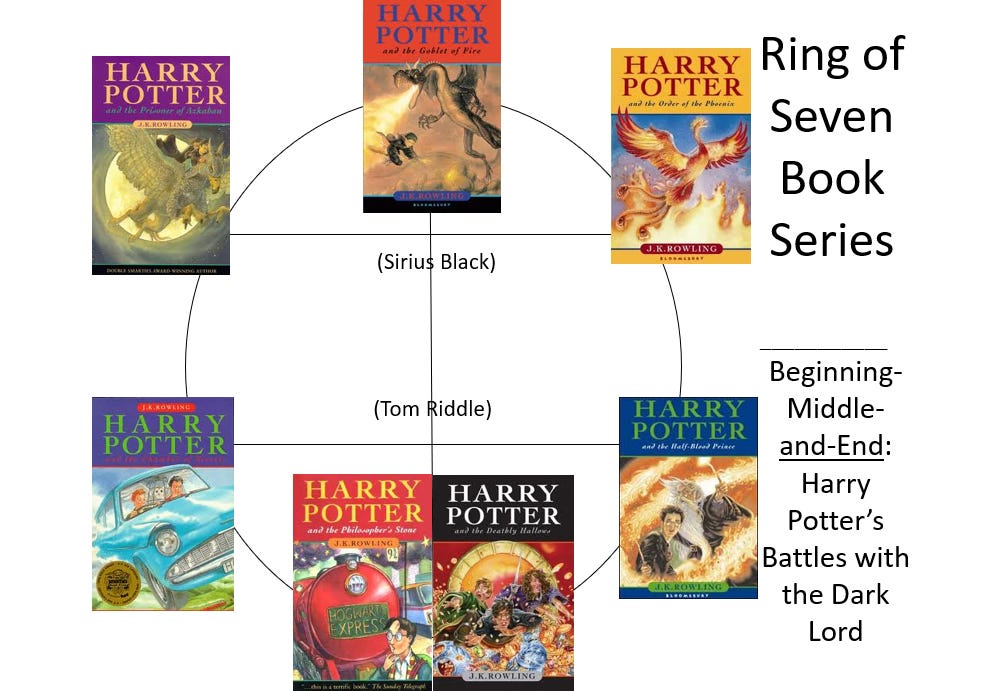
The First Seven Strike Novels Paralleled Their Seven Harry Potter Equivalents; What Rowling Work Did The Hallmarked Man Parallel?
Jun 5, 2026
1h 20m 39s
The Hidden Narratives and Interpretive Ciphers Beneath the Surface Story of Hallmarked Man
May 22, 2026
53m 31s
A Conversation about Cormoran Strike, Literary Alchemy, and Structural Models for the Ten Book Series
May 14, 2026
1h 21m 14s
Wet Squibs, Islamic Cub Names, the Seven Strike Series Structure Theories, and How a Human Being Reads a Story
May 12, 2026
1h 56m 12s
Social Links & Contact
Official channels & resources
Official Website
Login
RSS Feed
Login
| Date | Episode | Topics | Guests | Brands | Places | Keywords | Sponsor | Length | |
|---|---|---|---|---|---|---|---|---|---|
| 6/19/26 | ![]() The Mysterious Suicides of Leda Strike and Charlotte Campbell Revisited Post Hallmarked Man | ‘Fiona F’ is a Hogwarts Professor subscriber in Adelaide, Australia, the truly down under capitol of the South Pacific island-continent. She works as an environmental scientist on the days she isn’t combing through the Cormoran Strike novels of Rowling-Galbraith in search of answers to the over-arching mysteries of that series.The Hogwarts Professor Talking Heads duo invited her to a discussion of her potential solutions to two of the unresolved questions that have to be answered before the epilogue of Strike 10, namely, ‘What really happened in the ruled-a-suicide deaths of Leda Strike and Charlotte Campbell?’ Fiona seems to have broken both cases using information dropped as asides in Hallmarked Man.The Ten Questions that guided their conversation are below with the promised links and Fiona’s time-lines and comments on the Moderator Backchannel they discuss.In brief, about Leda’s death Fiona notes that we learn in Strike 8 that Shanker is familiar with ‘Barnaby’s, the preferred body-disposal business used by the London under-world, to include the Ricci Crime Syndicate. She connects that dot with (1) Strike’s memory of making a drug delivery for Shanker to the Ricci Godfather way back in the day when the two shared a flat and (2) Shanker’s near panicked warnings to Strike not to investigate the Riccis in Troubled Blood. Fiona’s theory? Means, motive, and opportunity point to the possibility that Leda’s heroin overdose was a Ricci ‘message’ to Shanker that he had better not cross them in a drug deal. Readers have missed this possibility because Shanker loved Leda like a mother, which love unfortunately made her a perfect target for the gangsters to ‘get at’ Strike’s adopted brother.And Charlotte’s death? Fiona, unlike much of Strike fandom, accepts the Jeffery hypothesis (see here, here, and here) that Ms Campbell-Ross did not kill herself but was murdered in a staged-suicide (a la Leda Strike, Lula Landry, Jasper Chiswell, and Kevin Pirbright). After a close reading of Hallmarked Man, Fiona realized that Dino Longcaster, whom Tara Campbell married after she had divorced Charlotte’s supposed biological father, may have been, based on his fathering Rupert Fleetwood in an adulterous relationship, Milady Bezerko’s real sperm-donor daddy (and at home molester). Which possible parentage would have made Charlotte and Valentine Longcaster half-siblings. Fiona theorizes from there that the baby Charlotte says was Strike’s was Valentine’s (a la Rupert and Decima’s Lion), that Jago Ross’ children might have been Valentine’s, or both. Valentine, Jago, and Tara shoot to the top of the ‘Charlotte Murder’ suspect list, with Sasha, Rupert, and Amelia as Tara’s agents all possibilities.Fiona, Nick, and John discuss the various Rowling Golden Threads in play with each of these theories — incest, pregnancy traps, staged suicides — and how both Fiona’s Ricci-Shanker and Secret Charlotte theories are textbook illustrations of Rowling misdirection while planting clues in plain sight.John and Nick are grateful to Fiona for getting up as early as she did to chat with them and for sharing her theories here with the Serious Strikers at Hogwarts Professor. Hats doffed with a bow from the waist in admiration and gratitude! The Ten Questions With Links and Notes1. Fiona, you, Nick, and I have been chatting on the moderator back channels since May and we’ve shared your Daddy Dino theory in which Charlotte was another Longcaster child conceived in adultery and Valentine was her incestuous lover and abuser. Nick and I discussed that idea on our ‘Incest Golden Thread’ program. But none of us know who you are really and I just learned you’re living in Central Australia. Tell us about Fiona, a Welsh name?, and what brought you to Serious Striker land?12 April Fiona Comments on Moderator Backchannel:In response to a post by Cheryl Rose Orrocks on 17 Feb 2026, my current theory is that Dino Longcaster is Charlotte’s father and that his son, Valentine Longcaster, will be revealed as her abuser and the possible biological father of Charlotte’s children. Hence the 2nd incest storyline will also involve the Langcaster family. This could be why Charlotte’s mother, Tara, despised Charlotte so much.If Jago Ross is somehow linked to the matter of the DNA test involving Bijou and Strike, it may be because he had Charlotte’s birth children DNA tested to confirm parentage. Maybe Jago discovers he is not the biological father and assumes Strike is, hence the reason he wants to obtain Strike’s DNA results.2. Nick was telling me the other day that he has been re-reading the series and it’s changed his thinking about how he would rank the books, especially in light of Hallmarked Man. I hope he’ll clarify what he means by that – and that you’ll share, Fiona, where Strike 8 is on your list of best to worst Strike novels and if or how it changed your thoughts about the first seven.3. By the time this conversation is posted, I hope to have put up a short summary of your Birthday Party Theory, Fiona, or else it will be the text beneath this conversation. In brief, you lay out the calendar dates after Sacha Legard’s birthday party with respect to Charlotte’s death. Can you tell us why you thought that party had something to do with her death and how you went about setting up the time-line?May 6 Fiona note on Moderator Backchannels:In this video, your comments regarding Rupert Fleetwood and Charlotte’s murder (1:00:17) got me thinking. If Charlotte was murdered, her murderer was likely present at Sacha Legard’s birthday party.After checking out several sources (books (physical copies) 7 TRG and 8 THM, Strike Fans, the Farting Faculty Lounge and Hogwarts Professor) I put together a rough timeline to assemble my thoughts.* Saturday 21 May 2016: Sacha Legard’s birthday. Valentine and Cosima Longcaster are at the party. Rupert Fleetwood gatecrashes and he and Valentine have some kind of confrontation (refer THM Chapter. 36, pages 291 and 292). I presume Charlotte and Amelia would have been at the party as they are Sacha’s half siblings, however I have no evidence to support this.* Friday, 27 May 2016: Strike listens to Charlotte’s voicemail messages. (TRG, Chapter 55, pages 421 and 423).* Tuesday, 14 June 2016: Charlotte is arrested for assault on Landon Dormer (TRG, Chapter 59).* Thursday, 23 June 2016: Strike deletes three voicemails from Charlotte before heading up to his attic flat (Chapter 61). Charlotte Campbell dies (commits suicide?).* Friday, 23 December 2016: When Strike goes to the National Theatre to interview Sacha Legard (THM, Chapter 36, pg. 289). Sacha says he ‘was shooting a film in Mexico (Conquest?) when all this business with him [Rupert] and Dessie happened.’I’m unsure when Sacha was in Mexico (before and/or after his birthday party on 21 May 2016). If he was filming in Mexico after his birthday then he may not have been in London when Charlotte died. If filming in Mexico finished before his birthday, he would have to be on the short-list of murder suspects.As Charlotte loved tension, conflict, and rows, she may have overheard the confrontation between Rupert and Valentine. Presuming the confrontation was about DNA testing and Dino Longcaster being Rupert’s biological father, maybe the DNA results also contained information about other unknown (and related) people with a similar DNA profile to Rupert and the Longcaster’s (Dino, Valentine, Decima and Cosima) and Rupert threatened Valentine with this information. Valentine is scared of his father, Dino, and wouldn’t want the DNA paternity information to reach Dino.If Valentine Longcaster (as possible Charlotte abuser), finds out he is the biological father of Charlotte’s children and realises that Charlotte has found this out, that could be a strong motive for murder, particularly as he was appalled by the incest between Decima and Rupert.It will be interesting to see if Rupert makes an appearance in Book 9.* See Louise Freeman Davis’ Strike and Ellacott Timelines at The Farting Sofa Faculty Lounge.4. Your conclusion is a mind-blower as I’ve written in my notes you to invite you to wake up early down under to talk about it. To skip to the Big Reveal, you think, if Charlotte was at the birthday party or learned from Cosima or Valentine about the Dino-Decima-Rupert genetic conjunction, that Valentine Longcaster has to jump to the top of the Campbell-Ross ‘assisted suicide’ list. How so?5. This is fascinating theorizing, Fiona, and it highlights what Nick has said that the complexity and crowdedness of Hallmarked is a marker of Rowling crafting a “target rich” environment for Books 9 and 10 possibilities. You wrote on 4 June that what if, instead of being molested at home by Trevik, her supposed biological father, she had been abused by a schoolteacher. Why did you think that was possible and how would it color your thinking about her life and death?4 June Fiona CommentHave you considered the possibility that Leda Strike (Peggy Nancarrow) was molested by a school teacher, rather than a victim of incest. Both scenarios are obviously awful. I have been pondering this because Leda/Peggy packed up and moved so often and Cormoran and Lucy never stayed in the same school for very long.6. On 10 June you sent your magnum opus, the Leda Strike life timeline and a ‘Means Before Motive’ examination of her death. Again, why bother and how did you track down the dates?7. What did the data reveal about Leda that you hadn’t seen before?10 June Fiona Timeline for Leda StrikeI have been systematically going back through the Strike books using the JKR finder in an attempt to work out who killed Leda Strike.I am relying on Rowling playing fair and that the answer to the question of Leda’s death and the evidence to support this has already been given to us in the books.My attempt at Leda’s timeline and my murder theory are attached. There are gaps in Leda’s timeline and changing dates in the books. I mostly focused on Leda’s childhood, then the last few years of her life in London. I’d be interested in your thoughts.Constructing Leda’s timeline was also about reaching a conclusion on whether Cormoran Strike was the product of incest. At this stage, I don’t think he was. The timeline doesn’t support the incest theory and I suspect Leda was away from St Mawes from when she married at 18 and left Strike Snr two weeks later until she returned to give birth to Cormoran at Truro hospital at age 20. Too many parties and gigs to go to!I’d be interested in your thoughts.Leda Strike TimelinePeggy (Leda) born in 1954.Ted and Peggy (Leda) mother died when Ted 16 and Peggy (Leda) 2.Peggy (Leda) forcible separation from Ted at the age of two.Peggy (Leda) lived with her paternal grandmother. Ted stayed with their father, Trevik.Ted leaves home for National Service (age 18?)Ted returns from National Service after Trevik dies. (age 25?) Married Joan. Peggy (Leda) (age 11?)Peggy (Leda), at age 18, escapes her paternal grandmother, and runs away with a youth who’d come to Truro with the fair. Changed her name to Leda. Ted (32 years old).Leda married youth from the fair when she was 18 years old. She had run out on her husband after only two weeks and that her sole motivation in marrying Strike Snr. (who, according to Aunt Joan, had arrived in St. Mawes with the fair) had been a new dress, and a change of name.“Leda had never stayed still long enough to present a stable target. Often her children remained in a school for mere weeks before a new enthusiasm seized her, and off they went, to a new city, a new squat, crashing on her friends’ floors or, occasionally, renting. The only people who knew what was going on, and who might have contacted social services, were Ted and Joan.”1990? Leda brought Shanker (age 16), who had been stabbed, home to their squat.1991 Leda Strike met Jeff Whittaker.1992 Nick Herbert and Strike had a joint eighteenth birthday party at the Bell pub in Whitechapel.1992 Leda had fallen pregnant in Strike’s eighteenth year, while he was applying for university.Leda married Jeff Whittaker in 1992.Switch born in December 1992.Leda died in 1994, (age 40?), when Lucy (age 19?) and Strike (age 20?)8. Okay, now that we have Leda’s life in a mental picture, walk us through your Means Before Motive breakdown of the most likely suspects.Fiona’s Theory about Leda’s death: Means before motive* Means: Three Suspects1. Member(s) of Ricci family or Ricci gang member.2. Jeff Whittaker.3. Shanker.All had access to drugs.* Motive1. Unpaid drug debt (Whittaker) and Ricci’s killed Leda as a warning, or2. Rival gang to Shanker’s cousin’s takes revenge (knowing Shanker is close to Leda) and kill Leda as a warning, or3. Drug induced murder by Whittaker.Shanker’s knowledge of organised crime in London is peerless. He knows what happened, blames Whittaker, but has never said anything to Strike. (Refer Troubled Blood, chapter 27, where Strike recalls helping Shanker make a ‘delivery’ in ‘92 or ’93 and Shanker’s reaction to Strike’s recall of that).Maybe Leda was suffocated while she slept (similar to Margot Bamborough’s death), then injected with heroin by her killer.* Opportunity· Jeff Whittaker (lived at squat; a drug user).· Shanker (frequently visited the squat; was close to Leda).· Member(s) of Ricci family or Ricci gang member (local drug dealers) making a delivery.9. So Shanker is both a suspect and a person of knowledge; he either did it or knew who did it? How important is Strike’s memory of the Ricci drug deal delivery for Shanker in all this?10. The beauty of this theory is that it’s been so well set up; who has Shanker who revered Leda on their suspect list when she revered her so – and yet it was just that relationship that would have made her so vulnerable to targeting by the Riccis if Shanker stiffed them… Hence his warning Strike off the Riccis with such care in Troubled Blood and obscuring how he knows about Barnaby is Hallmarked?John Notes 10 JuneI’m intrigued by the Ricci-Shanker connection. Shanker knows about Barnaby’s and that Knowles was dispatched there; Strike sees Marco Ricci later in the story making a delivery to Barnaby’s. If I’m following your notes, Shanker’s panic about Strike investigating the Riccis in Troubled Blood isn’t out of concern for his adopted brother but from the fear that Cormoran will learn of his relationship with the family -- and, as you speculate, that Leda was killed by them as a message to young Shanker not to cross them. Shanker testified against Whittaker to scapegoat him and perhaps because he knew the Riccis would kill him if he told the truth.* Great plot twist and one that explains the whole Knowles plot line in Hallmarked Man and the police interest in Strike’s source of information; Shanker is being presented as a dangerous criminal to readers who are blind (as are Strike and Robin) to the possibility that he was the natural suspect in Leda’s death because of his proximity to nihilist forces. The delivery Strike made for Shanker to Ricci and Shanker’s response to Strike’s memory is a critical catch in all this; well spotted!I don’t think your timeline precludes either Ted being Strike’s father or Trevik molesting Leda as a young woman -- or another possibility. Her birth years and years after Ted’s suggests that Trevik was not her father, that her mother’s death wasn’t natural, and that Ted may have been Leda’s father via an incestuous relationship with his mum, both victims of Trevik’s abuse. Leda’s adoption by her grandmother after her mother died may have been to protect her from Trevik or her simply being cast out by him. Incest is a live issue, I think, in the Cornwall household. This is a public episode. If you'd like to discuss this with other subscribers or get access to bonus episodes, visit hogwartsprofessor.substack.com/subscribe | 1h 00m 55s | ||||||
| 6/5/26 | ![]() The First Seven Strike Novels Paralleled Their Seven Harry Potter Equivalents; What Rowling Work Did The Hallmarked Man Parallel?✨ | parallels in literatureRowling's works+3 | Nick Jeffery | The Hallmarked ManThe Ickabog+1 | — | The Hallmarked ManThe Ickabog+5 | — | 1h 20m 39s | |
| 5/22/26 | ![]() The Hidden Narratives and Interpretive Ciphers Beneath the Surface Story of Hallmarked Man✨ | sub-text analysisRowling-Galbraith+3 | Ed ShardlowNick | Hallmarked ManSecrets of the Craft+1 | — | Hallmarked ManRowling+5 | — | 53m 31s | |
| 5/14/26 | ![]() A Conversation about Cormoran Strike, Literary Alchemy, and Structural Models for the Ten Book Series✨ | Cormoran StrikeLiterary Alchemy+3 | Nick Jeffery | The Literary Alchemy of Hallmarked ManLiterary Alchemy+3 | — | Cormoran StrikeLiterary Alchemy+5 | — | 1h 21m 14s | |
| 5/12/26 | ![]() Wet Squibs, Islamic Cub Names, the Seven Strike Series Structure Theories, and How a Human Being Reads a Story✨ | SquibsIslamic Cub Names+3 | Nick Jeffery | Harry Potter LexiconA Kind of Elvish Craft+1 | Bridgewater Carnival Fireworks FestivalToyohashi+1 | SquibJ.K. Rowling+3 | — | 1h 56m 12s | |
| 4/29/26 | ![]() Is Rowling's Incest 'Golden Thread' the Key to Her Cormoran Strike Finale?✨ | Rowling's worksGolden Threads+4 | Nick Jeffery | Harry PotterCormoran Strike | — | Rowlingincest+5 | — | 1h 41m 44s | |
| 4/19/26 | ![]() A Spirited Conversation about Rowling-Galbraith's Cormoran Strike Series and C. S. Lewis' 'Till We Have Faces'✨ | Cormoran Strike SeriesC. S. Lewis+3 | Nick Jeffery | Till We Have FacesCormoran Strike Series | — | Cormoran StrikeC. S. Lewis+5 | — | 1h 47m 02s | |
| 4/2/26 | ![]() Metallurgical, Literary, and Psychological Alchemy: Is Jung a Good Guide for Understanding J. K. Rowling's Artistry and Meaning?✨ | literary alchemyJ. K. Rowling+5 | Nick Jeffery | Strike-Ellacott FilesLiterary Alchemy – A Primer for Those Interested in J. K. Rowling’s Artistry+1 | — | J. K. Rowlingliterary alchemy+5 | — | 1h 44m 23s | |
| 3/2/26 | ![]() What do Tyler Powell, Rupert Fleetwood, Jolanda Lindvall, and Lady Jensen Have in Common?✨ | character namesRowling's writing+3 | Nick Jeffery | The Allegorical Cryptonyms of The Hallmarked Man, Part One: Ten Cratylic Character Names and their Embedded Meanings | — | Rowlingcharacter names+5 | — | 1h 27m 22s | |
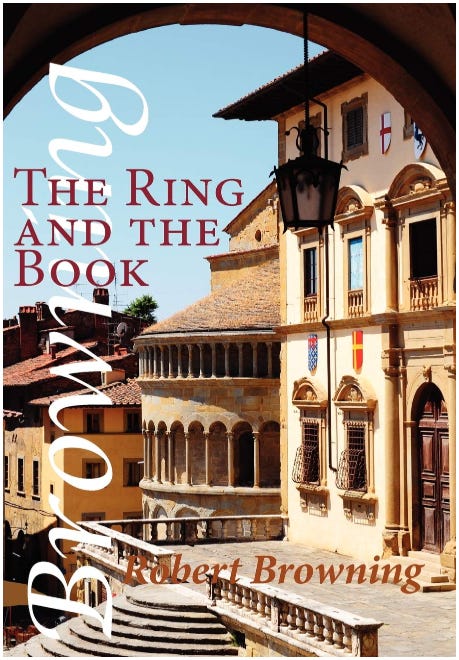
| 2/22/26 | ![]() What the Hallmarked Man Epigraphs Reveal About Rowling-Galbraith's Artistry and Meaning✨ | epigraph analysisliterary connections+4 | Nick Jeffery | The Ring and the BookHallmarked Man+2 | — | Browningepigraphs+7 | — | 1h 37m 17s | |
Want analysis for the episodes below?Free for Pro Submit a request, we'll have your selected episodes analyzed within an hour. Free, at no cost to you, for Pro users. | |||||||||
| 2/17/26 | ![]() 'Sleep Tight, Evangeline,' Miniature Psalters, and the Head of Persephone: A Conversation with Dimitra Fimi✨ | Tolkien Studiesmythology+4 | Dimitra Fimi | University of GlasgowHarry Potter+4 | — | Dimitra FimiJ.K. Rowling+5 | — | 1h 22m 49s | |
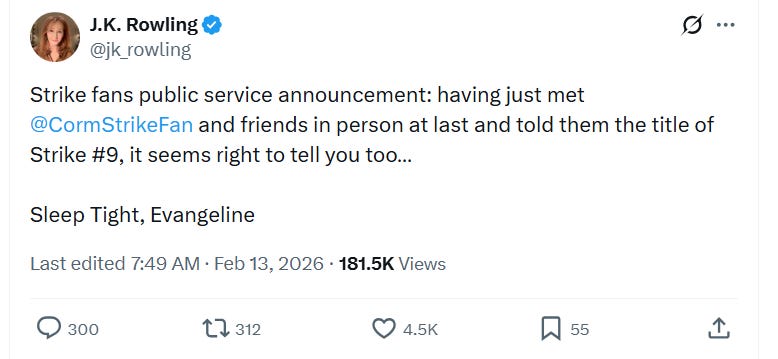
| 2/14/26 | ![]() Valentine's Day Special: The Cupid and Psyche Myth within the Cormoran Strike Series✨ | Valentine's DayCormoran Strike+4 | Nick JefferyDimitra Fimi | StrikeFans.comSleep Tight, Evangeline+4 | — | Valentine's DayCormoran Strike+6 | — | 1h 58m 20s | |
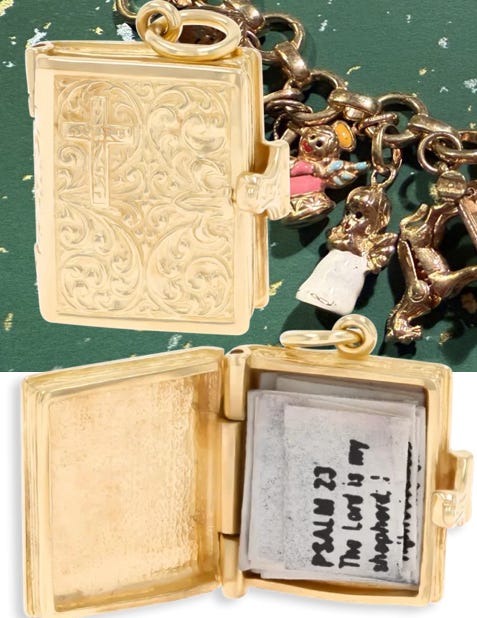
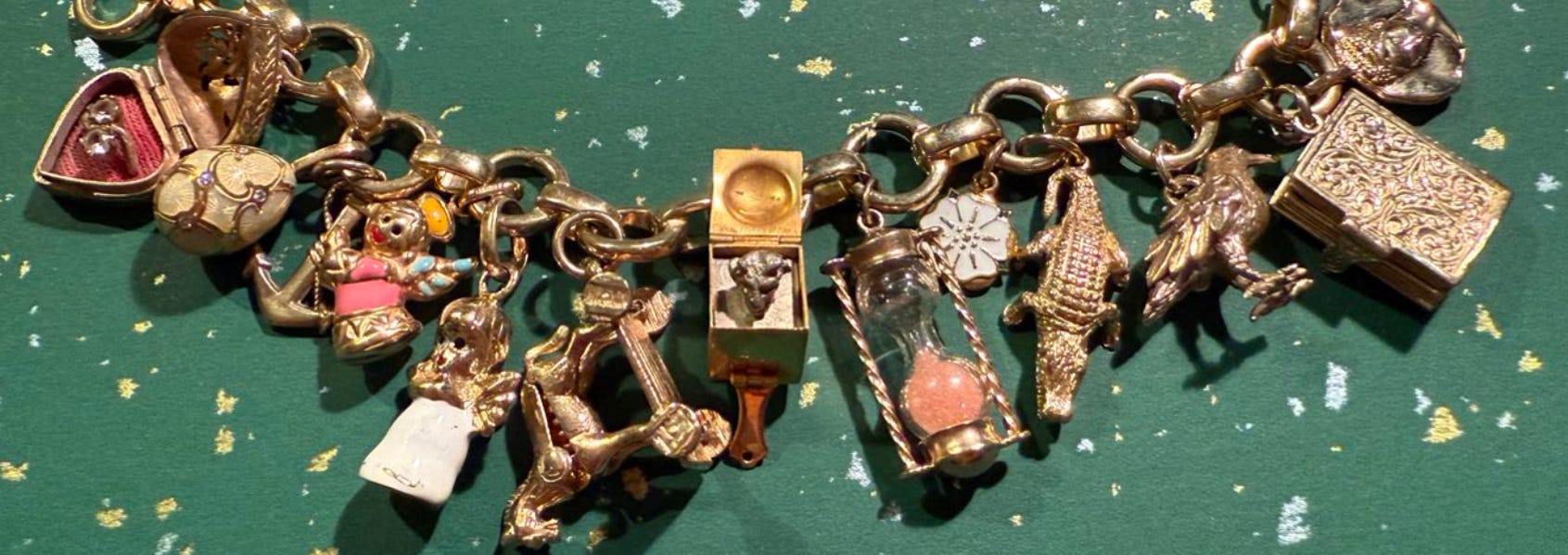
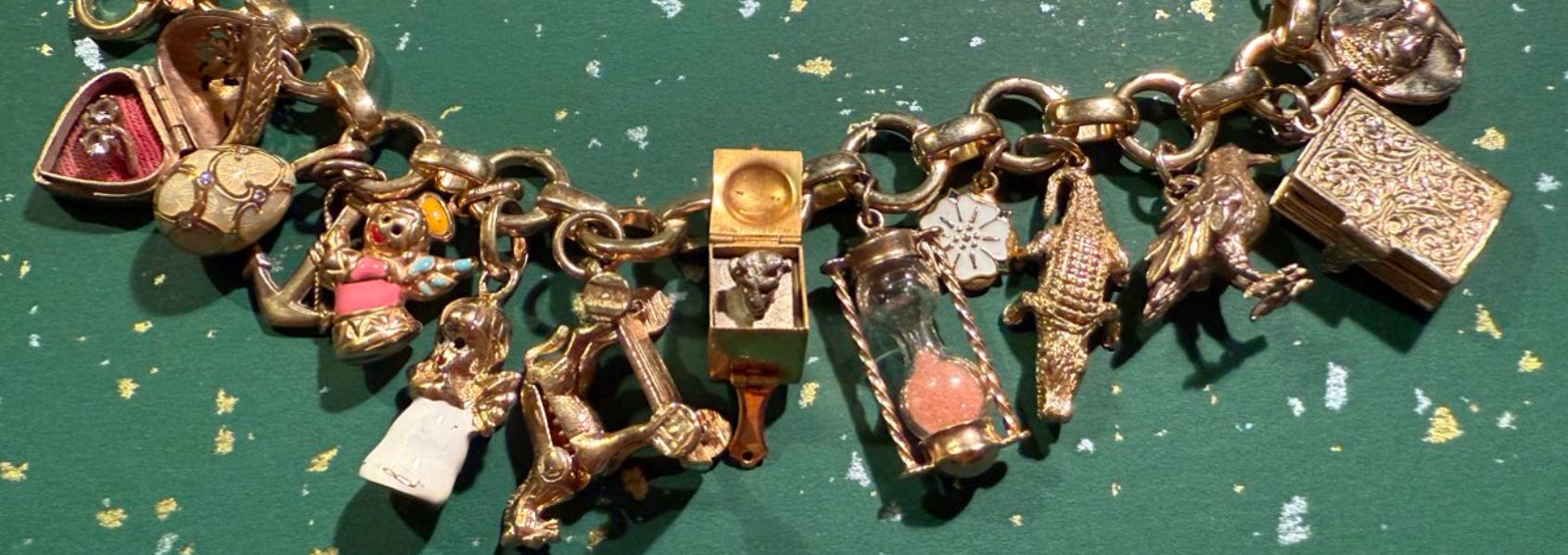
| 2/6/26 | ![]() The Christmas Charm Bracelet of Strike 9 Clues (Part Two)✨ | J.K. RowlingStrike series+4 | Elizabeth Baird Hardy | Hogwarts ProfessorAppalachianInkling.com+3 | — | J.K. Rowlingcharm bracelet+4 | — | 1h 10m 15s | |
| 2/4/26 | ![]() The Christmas Charm Bracelet of Strike 9 Clues (Part One)✨ | J.K. Rowlingcharm bracelets+4 | — | Literary Allusion in Harry PotterThe Strike Ellacott Files+1 | — | charm braceletStrike 9+4 | — | 1h 22m 18s | |
| 1/22/26 | ![]() Robin Ellacott's Imminent Death and Its Out of This World Effect on Strike✨ | Cormoran Strikemurder mystery+4 | — | Universal Humanitarian ChurchStrike-Ellacott Agency+2 | — | Cormoran StrikeRobin Ellacott+5 | — | 2h 10m 05s | |
| 1/12/26 | ![]() Blood! The Crimson Thread✨ | J. K. Rowling's healthblood clotting disorder+4 | Guido | Reading Writing Rowling PodcastHogwarts Professor+5 | — | J. K. Rowlingblood disorder+5 | — | 2h 01m 50s | |

| 12/31/25 | ![]() A Hogwarts Professor New Year Celebration! | Welcome to the Hogwarts Professor New Year’s Celebration! John and Nick look back to a packed 2025, as John looks forward to big changes in 2026. From the marathon Kanreki celebration in July to the joys of sharing The Hallmarked Man with friends around the world and plans for The Hogwarts Professor in 2026. John Granger, Nick Jeffery and the HogPro faculty wish you and your families a happy, healthy and fulfilled new year!1.) John, this time last year you said “I’m hopeful that 2025 will be the most exciting year in Hogwarts Professor’s 20+ year history, at least the busiest since the madhouse period following the publication of Harry Potter and the Deathly Hallows.” As someone who was part of the initial fandom frenzy, how did this year compare?Not anything like 2007 which was a continuous love fest for Harry Potter and that series’ author, Woman of the Year, etc. I was on national teevee repeatedly in the run-up to Deathly Hallows publication and the weblog and podcasts and book sales and speaking dates all did numbers they will almost certainly never do again. Rowling world was the world undivided and I rode that tsunami wave for several years afterwards.Times have changed. Rowling is a much more influential and consequently divisive figure. Her legacy is proving to be at least as great in the political realm as it is in literature with almost 14 million people reading her tweets and her books not selling that well if very well by any other measure.And our role at Hogwarts Professor has changed correspondingly. We sided with Team Rowling against the Gender Theory Extremists in 2020 and were cancelled in consequence. No book deals, no speaking dates, and no podcasts because I refused to bend the knee to Potter fandom’s collective effort to cancel Rowling as a transphobic murderer for stating simple biological and psychological truths.In 2025, though, as I hoped last December and January, we re-emerged as leaders of the Royal Society of Rowling Readers. I am still ostracised, of course, from Potter fandom conventions and the like as well as from Strike podcasts, but our conversations, Nick, have an ever growing following globally and locally and one participating in the best conversations anywhere about the artistry and meaning of Rowling’s work.It’s been a great year and I am again hopeful, especially in light of our move east, that 2026 will be another break through year at Hogwarts Professor.Nick and John share their highlights of 2025 - 2.) Non-Rowling HogPro HighlightNick - Suzanne Collins - Sunrise on the Reaping Elizabeth Baird-Hardy’s posts inspired me to not just read the Hunger Games series, but Gregor the Overlander as well.John: The closing of ‘The Rowling Library’ magazine3.) Highlight from the Lake:Nick - Rowling’s blood disorder - von Willebrand DiseaseJohn: Tough Call! High on my list were (1) Rowling’s legal fund for defending women discriminated against for gender critical beliefs and (2) Rowling in Greenland but I’m going to go with both Rowling’s 7 August ‘Lake and Shed’ Tweets and Rowling’s 12 September ‘Changes in Beliefs’ tweeting post Charlie Kirk.4.) Highlight from the Shed:Nick - the Golden Threads! We have shared “Pregnancy Traps” and “Lost Child” threads this year which join “Bad Dad” and “Ghosts” which feature front and centre in “Hallmarked Man” John: Mythology – the forgotten Shed tool or more precisely the one neglected by even the most serious Strikers and Potter Pundits despite our efforts here really came to the fore in the wake of Rowling’s tweet post Hallmarked Man kerfuffle along with the advent of mythological mavin Dimitra Fimi’s into our conversations.5.) Highlight from Rowling Inc:Nick - The all-cast audio editions of Harry PotterJohn: Casting decisions about Bronte Studios/Netflix casting decisions for the small screen teevee adaptations – Black Snape!6.) Highlight from The Hallmarked Man release:Nick - That first English language sneak peek from Germany and the Robin ectopic pregnancy reveal!John: The realisation that for the first time Rowling wasn’t writing a self-contained Strike mystery with over-arching story details but the first of a three-part series-ending piece in which many of the players from the book will be returning in feature roles.7.) Highlight book 9 and 10 tease:John - Cupid and PsycheNick - J. K. Rowling’s fourth (or fifth) charm bracelet.8.) John Introduces the Kanreki Project and its relationship to fourth generation potter scholarship….· 55 total Substack posts 2023-2024· 3 posts Jan-June 2025…· 31 posts in July and 34 since (today #69)The Goal: Shift the Rowling Reader focus from latest book to work as a whole with the three critical taxonomy categories of Lake springs, Shed tools, and Golden Thread as our guides or lensesThe Means: the Kanreki blitz of Lake, Shed, and Golden Thread highlights from all of Rowling’s work in celebration of Rowling’s 60th birthday (the old) and the follow-up engagement with Serious Strikers before and after the publication of Hallmarked Man (the new)The Results:We nowhere near the finish line or even, I think, the avalanche tipping point that an authorised critical biography will push us over, but we have cleared the forest and prepared the field for that event, work that we will take another quantum leap forward in 2026 with our Lake, Shed, and Golden Thread Rowling Studies 101 online class.Which is to say that this is the year that the Substack Platform has really taken off, with an engaging and intelligent comments section that is really unparalleled, certainly J. K. Rowling fandom. I think much of this has been generated by our video conversations here. We have moved from the audio only Rowling Studies podcast; Nick, as the technical wizard, can you give us a peek behind the curtain? How have we done this, and what’s next?9.) One of the reasons I’m exploring better quality audio and video, is that we can start creating content that can be used as a reference, potentially for many years. Once we can do this, then we can start offering online courses, can we say anything yet about our plans, John?John: As soon as I’m settled in, we’ll finish the Hallmarked Man ring charting (I’ve been listening to the painful Part Five chapters while packing…) and then offer a free five part introduction to L/S/GT thinking and survey of what is known in those categories followed by a ten week course for those wanting a much deeper appreciation of Rowling, roots, branches, and leaves10.) John and Nick Wish Fulfillment Predictions for 2026John: Special guests on our shows – Elizabeth Baird-Hardy, Beatrice Groves, Lindsey and Company from Strike FansNick: A proper interview with Beatrice Groves, Dimitry Fimi or John Granger. I’m more than happy to be the impartial invigilator.John: Critical Biography news, More Rowling Biographical RevealsNick: A biography! (Authorised)John: Michael is Doorstepped and Tells All!Nick: A book! We know Rowling has the plots for a further 5 books one of which is “futuristic” but not set in space. But not the WB television reboot, that is scheduled for 2027!John: Rowling Confirms ‘Ending Trilogy Theory’Nick: Rowling to talk about Fantastic Beasts – this will be difficult… John: Rowling is Special Guest on Hogwarts Professor ShowNick: A get together, with The HogPro team.Apologies for limited commenting on threads and posting during my family relocation!Thank you for your patience, support, and prayers since November and in the coming month! This is a public episode. If you'd like to discuss this with other subscribers or get access to bonus episodes, visit hogwartsprofessor.substack.com/subscribe | 1h 51m 14s | ||||||
| 12/24/25 | ![]() The Most Influential Book Rowling Read as a Child Wanting to Be a Writer is Dodie Smith's 'I Capture the Castle' | Merry Christmas! In between looking at houses to rent and packing up the Granger house in Oklahoma City, Nick and John put together this yuletide conversation about perhaps the most neglected of Rowling’s influences, Dodie Smith’s I Capture the Castle. John was a reluctant reader, but, while listening to the audio book, reading the Gutenberg.com file on his computer, and digging the codex out of his packed boxes of books, the author of Harry Potter’s Bookshelf was totally won over to Nick’s enthusiasm for Castle.In fact, John now argues that, even if Rowling didn’t read it until she was writing Goblet of Fire as some have claimed, I Capture the Castle may be the best single book to understand what it is that Rowling-Galbraith attempts to do in her fiction. Just as Dodie Smith has her characters explain overtly and the story itself delivers covertly, When Rowling writes a story, like Smith it is inevitably one that is a marriage of Bronte and Austen, wonderfully accessible and engaging, but with important touches in the ‘Enigmatist’ style of Joyce and Nabokov, full of puzzles and twists in the fashion of God’s creative work (from the Estecean logos within every man [John 1:9] continuous with the Logos) rather than a portrait of creation per se. Can you say ‘non liturgical Sacred Art’?And if you accept, per Nick’s cogent argument, that Rowling read Castle many times as a young wannabe writer? Then this book becomes a touchstone of both Lake and Shed readings of Rowling’s work — and Smith one of the the most important influences on The Presence.Merry Christmas, again, to all our faithful readers and listeners! Thank you for your prayers and notes of support and encouragement to John and for making 2025 a benchmark year at Hogwarts Professor. And just you wait for the exciting surprises we have in hand for 2026!Hogwarts Professor is a reader-supported publication. To receive new posts and support my work, consider becoming a free or paid subscriber.The Twelve Questions and ‘Links Down Below’ Referred to in Nick and John’s I Capture the Castle Conversation:Question 1. So, Nick, we spoke during our Aurora Leigh recording about your long term project to read all the books that Rowling has admitted to have read (link down below!), first question why? and secondly how is that going?Rowling’s Admitted Literary InfluencesWhat I want is a single internet page reference, frankly, of ‘Rowling’s Admitted Literary Influences’ or ‘Confessed Favorites’ or just ‘Books I have Read and Liked’ for my thesis writing so I needn’t do an information dump that will add fifty-plus citations to my Works Cited pages and do nothing for the argument I’m making.Here, then, is my best attempt at a collection, one in alphabetical order by last name of author cited, with a link to at least one source or interview in which Rowling is quoted as liking that writer. It is not meant as anything like a comprehensive gathering of Rowling’s comments about any author; the Austen entry alone would be longer than the whole list should be if I went that route. Each author gets one, maybe two notes just to justify their entry on the list.‘A Rowling Reading of Aurora Leigh’ Nick Jeffery Talking about ‘A Rowling Reading of Aurora Leigh’ Question 2. ... which has led me to three works that she has read from the point of view of writers starting out, and growing in their craft. Which leads us to this series of three chats covering Aurora Leigh by Elizabeth Barrett Browning, I Capture the Castle by Dodie Smith and the Little Women series by Louisa May Alcott. I read Castle during the summer. Amid all the disruptions at Granger Towers, have you managed to read it yet? How did you find it?Capturing Dodie Smith’s I Capture the Castle: Elizabeth Baird-Hardy (October 2011)Certain elements of the story will certainly resonate with those of us who have been to Hogwarts a fair few times: a castle with an odd combination of ancient and modern elements, but no electricity; eccentric family members who are all loved despite their individual oddities (including Topaz’s resemblance to Fleur Delacour); travel by train; a character named Rose who may have been one of the reasons Rowling chose the name for Ron and Hermione’s daughter; descriptions of food that make even somewhat questionable British cuisine sound tasty; and inanimate objects that have their own personalities (the old dress frame, which Rose and Cassandra call Miss Blossom, is voiced by Cassandra and sounds much like the talking mirror in Harry’s room at the Leaky Caldron).But far more than some similar pieces, I Capture the Castle lends something less tangible to Rowling’s writing. The novel has a tone that, like the Hogwarts adventures, seamlessly winds together the comic and the crushing in a way that is reflective of life, particularly life as we see it when we are younger. Cassandra’s voice is, indeed, engaging, and readers will no doubt see how the narrative voice of Harry’s story has some of the same features.A J. K. Rowling Reading of I Capture the Castle: Nick Jeffery (December 2025)Parallels abound for Potter fans. The Mortmain’s eccentric household mirrors the Weasleys’ chaotic warmth: loved despite quirks, from Topaz’s nude communing with nature (evoking a less veiled Fleur Delacour) to Mortmain’s intellectual withdrawal. Food descriptions—meagre yet tantalising—prefigure Hogwarts feasts, turning humble meals into sensory delights. Inanimate objects gain voice: the family dress-frame “Miss Blossom” offers advice, akin to the chatty mirrors or portraits in Rowling’s world. Even names resonate—Rose Mortmain perhaps inspiring Ron and Hermione’s daughter—and train journeys punctuate the plot.The Blocked Writer: James Mortmain, a father who spent his fame early and now reads detective novels in an irritable stupor, mirrors the “faded glory” or “lost genius” archetypes seen in Rowling’s secondary characters, such as Xenophilius Lovegood and Jasper Chiswell.The Bohemian Stepmother: Topaz, who strides through the countryside in only wellington boots, shares the whimsical, slightly unhinged energy of a character like Luna Lovegood or Fleur Delacour.Material Yearning: The desperate desire of Cassandra’s sister, Rose, to marry into wealth reflects the very real, non-magical pressures of class and poverty that Rowling weaves into Harry Potter, Casual Vacancy, Strike and The Ickabog.Leda Strike parallels: Leda Fox-Cotton the bohemian London photographer, adopts Stephen, the working-class orphan, and saves him from both unrequited love and the responsibility that comes with the Mortmain family.Question 3. [story of finishing the book last night by candle light in my electricity free castle] So, in short Nick, I thought it astonishing! I didn’t read your piece until I’d finished reading Capture, of course, but I see there is some dispute about when Rowling first read it and its consequent influence on her as a writer. Can you bring us up to speed on the subject and where you land on this controversy?* She First Read It on her Prisoner of Azkaban Tour of United States?tom saysOctober 21, 2011 at 4:00 amIf I recall correctly, Rowling did not encounter this book until 1999 (between PoA & Goblet) when, on a book tour, a fan gave her a copy. This is pertinent to any speculation about how ‘Castle’ might have influenced the Potter series.* Rowling Website: “Books I Read and Re-Read as a Child”Question 4. Which, when you consider the other books on that virtual bookshelf -- works by Colette, Austen, Shakespeare, Goudge, Nesbit, and Sewell’s Black Beauty, something of a ‘Rowling’s Favorite Books and Authors as a Young Reader’ collection, I think we have to assume she is saying, “I read this book as a child or adolescent and loved it.” Taking that as our jumping off place, John, and having read my piece, do you wish you had read it before writing Harry Potter’s Bookshelf?Harry Potter’s Bookshelf: The Great Books behind the Hogwarts Adventures John Granger 2009Literary Allusion in Harry Potter Beatrice Groves 2017Question 5. So, yes, I certainly do think it belongs -- with Aurora Leigh and Little Women -- on the ‘Rowling Reader Essential Reading List.’ The part I thought most interesting in your piece was, of course, the Shed elements I missed. Rowling famously said that she loved Jo Marsh in Little Women because, in addition to the shared name and the character being a wannabe writer, she was plain, a characteristic with which the young, plain Jane Rowling easily identified. What correspondences do you think Little Jo would have found between her life and Cassandra Mortmain’s?* Nick Jeffery’s Kanreki discussion of Rowling’s House on Edge of Estate with Two Children, Bad Dad ‘Golden Thread’ (Lethal White)Question 6. Have I missed any, John?* Rockefeller Chapel, University of ChicagoQuestion 7. Forgive me for thinking, Nick, that Cassandra’s time in church taking in the silence there with all her senses may be the biggest take-away for the young Rowling; if the Church of England left their chapel doors open in the 70s as churches I grew up in did in the US, it’s hard to imagine Jo the Reader not running next door to see what she felt there after reading that passage. (Chapter 13, conversation with vicar, pp 234-238). The correspondence with Beatrice Groves’ favorite scene in the Strike novels was fairly plain, no? What other scenes and characters do you see in Rowling’s work that echo those in Castle?* Chapter 13, I Capture the Castle: Cassandra’s Conversation with the Vicar and time in the Chapel vis a vis Strike in the Chapel after Charlotte’s Death* Beatrice Groves on Running Grave’s Chapel Scene: ‘Strike’s Church Going’Question 8. I’m guessing, John, you found some I have overlooked?Question 9. The Mortmain, Colly, and Cotton cryptonyms as well as Topaz and Cassandra, the embedded text complete with intratextuual references (Simon on psycho-analysis), the angelic servant-orphan living under the stairs (or Dobby’s lair!) an orphan with a secret power he cannot see in himself, the great Transformation spell the children cast on their father, an experiment in psychomachia a la the Shrieking Shack or Chamber of Secrets, the hand-kiss we see at story’s end from Smith, love delayed but expressed (Silkworm finish?), the haunting sense of the supernatural everywhere especially in the invocation that Rose makes to the gargoyle and Cassandra’s Midsummer Night’s Eve ritual with Simon, the parallels abound. Ghosts!* Please note that John gave “cotton” a different idiomatic meaning than it has; the correct meaning is at least as interesting given the Cotton family’s remarkable fondness for all of the Mortmains!* Kanreki ‘Embedded Text’ Golden Thread discussion 1: Crimes of Grindelwald* Kanreki ‘Embedded Text’ Golden Thread discussion 2: Golden Thread Survey, Part II* Rose makes an elevated Faustian prayer to a Gargoyle Devil: Chapter IV, pp 43-46* Cassandra and Simon celebrate Midsummer Night’s Eve: Chapter XII, pp 199-224Let’s talk about the intersection of Lake and Shed, though, the shared space of Rowling’s bibliography, works that shaped her core beliefs and act as springs in her Lake of inspiration and which give her many, even most of the tools of intentional artistry she deploys in the Shed. What did you make of the Bronte-Austen challenge that Rose makes explicitly in the story to her sister, the writer and avid reader?“How I wish I lived in a Jane Austen novel.” [said Rose]I said I’d rather be in a Charlotte Bronte.“Which would be nicest—Jane with a touch of Charlotte, or Charlotte with a touch of Jane?”This is the kind of discussion I like very much but I wanted to get on with my journal, so I just said: “Fifty percent each way would be perfect,” and started to write determinedly.Question 10. So, I’m deferring to both Elizabeth Barrett Browning and J. K Rowling. Elizabeth Barrett Browning valued intense emotion, social commentary, and a grand scope in literature, which led her to favour the passionate depth of the Brontës over the more restrained, ironical style of Jane Austen. Rowling about her two dogs: “Emma? She’s a bundle of love and joy. Her sister, Bronte, is a bundle of opinions, stubbornness and hard boundaries.”Set in the 30s, written in the early 40s, but it seems astonishingly modern. Because her father is a writer, a literary novelist of the modern school, do you think there are other more contemporary novelists Dodie Smith was engaging than Austen and Bronte?Question 11. Mortmain is definitely Joyce, then, though Proust gets the call-out, and perhaps the most important possible take-away Rowling the attentive young reader would have made would have been Smith’s embedded admiration for Joyce the “Enigmatist” she puts in Simon’s mouth at story’s end (Chapter XVI, pp 336-337) and her implicit criticism of literary novels and correction of that failing. Rowling’s re-invention of the Schoolboy novel with its hidden alchemical, chiastic, soul-in-crisis-allegories and embedded Christian symbolism can all be seen as her brilliant interpretation of Simon’s explanation of art to Cassandra and her dedication to writing a book like I Capture the Castle.* Reference to James Joyce by Simon Cotton, Chapter IX, p 139:* The Simon and Cassandra conversation about her father’s novels, call it ‘The Writer as Enigmatist imitating God in His Work:’ Chapter XVI, pp 331-334* On Imagination as Transpersonal Faculty and Non-Liturgical Sacred ArtSacred art differs from modern and postmodern conceptions of art most specifically, though, in what it is representing. Sacred art is not representing the natural world as the senses perceive it or abstractions of what the individual and subjective mind “sees,” but is an imitation of the Divine art of creation. The artist “therefore imitates nature not in its external forms but in its manner of operation as asserted so categorically by St. Thomas Aquinas [who] insists that the artist must not imitate nature but must be accomplished in ‘imitating nature in her manner of operation’” (Nasr 2007, 206, cf. “Art is the imitation of Nature in her manner of operation: Art is the principle of manufacture” (Summa Theologia Q. 117, a. I). Schuon described naturalist art which imitates God’s creation in nature by faithful depiction of it, consequently, as “clearly luciferian.” “Man must imitate the creative act, not the thing created,” Aquinas’ “manner of operation” rather than God’s operation manifested in created things in order to produce ‘creations’which are not would-be duplications of those of God, but rather a reflection of them according to a real analogy, revealing the transcendental aspect of things; and this revelation is the only sufficient reason of art, apart from any practical uses such and such objects may serve. There is here a metaphysical inversion of relation [the inverse analogy connecting the principial and manifested orders in consequence of which the highest realities are manifested in their remotest reflections[1]]: for God, His creature is a reflection or an ‘exteriorized’ aspect of Himself; for the artist, on the contrary, the work is a reflection of an inner reality of which he himself is only an outward aspect; God creates His own image, while man, so to speak, fashions his own essence, at least symbolically. On the principial plane, the inner manifests the outer, but on the manifested plane, the outer fashions the inner (Schuon 1953, 81, 96).The traditional artist, then, in imitation of God’s “exteriorizing” His interior Logos in the manifested space-time plane, that is, nature, instead of depicting imitations of nature in his craft, submits to creating within the revealed forms of his craft, which forms qua intellections correspond to his inner essence or logos.[2] The work produced in imitation of God’s “manner of operation” then resembles the symbolic or iconographic quality of everything existent in being a transparency whose allegorical and anagogical content within its traditional forms is relatively easy to access and a consequent support and edifying shock-reminder to man on his spiritual journey. The spiritual function of art is that “it exteriorizes truths and beauties in view of our interiorization… or simply, so that the human soul might, through given phenomena, make contact with the heavenly archetypes, and thereby with its own archetype” (Schuon 1995a, 45-46).Rowling in her novels, crafted with tools all taken from the chest of a traditional Sacred Artist, is writing non-liturgical Sacred Art. Films and all the story experiences derived of adaptations of imaginative literature to screened images, are by necessity Profane Art, which is to say per the meaning of “profane,” outside the temple or not edifying spiritually. Film making is the depiction of how human beings encounter the time-space world through the senses, not an imitation of how God creates and a depiction of the spiritual aspect of the world, a liminal point of entry to its spiritual dimension. Whence my describing it as a “neo-iconoclasm.”I want to close this off with our sharing our favorite scene or conversation in Castle with the hope that our Serious Reader audience will read Capture and share their favorites. You go first, Nick.* Cassandra and Rose Mortmain, country hicks in the Big City of London: Chapter VI, pp 76-77Question 12. And yours, John?* Cassandra Mortmain ‘Moat Swimming’ with Neil Cotton, Chapter X, 170-174* Cassandra seeing her dead mother (think Harry before the Mirror of Erised at Christmas time?): Chapter XV, pp 306-308Hogwarts Professor is a reader-supported publication. To receive new posts and support my work, consider becoming a free or paid subscriber. This is a public episode. If you'd like to discuss this with other subscribers or get access to bonus episodes, visit hogwartsprofessor.substack.com/subscribe | 1h 24m 58s | ||||||
| 12/20/25 | ![]() Why Hallmarked Man is the Best Cormoran Strike Novel and Will Be Considered the Key to Unlocking the Series' Mysteries | John Granger Attempts to Convince Nick (and You!) That The Hallmarked Man will be Considered the Best of the Series.We review our take-away impressions from our initial reading of The Hallmarked Man. Although we enjoyed it, especially John’s incredible prediction of Robin’s ectopic pregnancy, neither of us came away thinking this was the finest book in the series. For Nick, this was a surprise, as enthusiastic J. K. Rowling fan that he is other than Career of Evil every book he has read has been his favourite. Using an innovative analysis of the character pairs surrounding both Cormoran and Robin, John argues that we can’t really appreciate the artistry of book number eight until we consider its place in the series. Join John and Nick as they review the mysteries that remain to be resolved and how The Hallmarked Man sets readers up for shocking reveals in Strike 9 and 10!Why Troubled Blood is the Best Strike Novel:* The Pillar Post Collection of Troubled Blood Posts at HogwartsProfessor by John Granger, Elizabeth Baird-Hardy, Louise Freeman, Beatrice Groves, and Nick JefferyTroubled Blood and Faerie Queene: The Kanreki ConversationBut What If We Judge Strike Novels by a Different Standard than Shed Artifice? What About Setting Up the ‘Biggest Twist’ in Detective Fiction History?* If Rowling is to be judged by the ‘shock’ of the reveals in Strike 10, then The Hallmarked Man, the most disappointing book in the series even to many Serious Strikers, will almost certainly be remembered as the book that set up the finale with the greatest technical misdirection while playing fair.* The ending must be a shock, one that readers do not see coming, BUT* The author must provide the necessary clues and pointers repeatedly and emphatically lest the reader feel cheated at the point of revelation.* If the Big Mysteries of the series are to be solved with the necessary shock per both Russian Formalist and Perennialist understanding, then the answers to be revealed in the final two Strike novels, Books Two and Three of the finale trilogy, should be embedded in The Hallmarked Man.* Rowling on Playing Fair with Readers:The writer says that she wanted to extend the shelf of detective fiction without breaking it. “Part of the appeal and fascination of the genre is that it has clear rules. I’m intrigued by those rules and I like playing with them. Your detective should always lay out the information fairly for the reader, but he will always be ahead of the game. In terms of creating a character, I think Cormoran Strike conforms to certain universal rules but he is very much of this time.* On the Virtue of ‘Penetration’ in Austen, Dickens, and Rowling* Rowling on the Big Twist’ in Austen’s Emma:“I have never set up a surprise ending in a Harry Potter book without knowing I can never, and will never, do it anywhere near as well as Austen did in Emma.”What are the Key Mysteries of the Strike series?Nancarrow FamilyWhy did Leda and Ted leave home in Cornwall as they did?Why did Ted and Joan not “save” Strike and Lucy?Was Leda murdered or did she commit suicide?If she was murdered, who dunit?If she commited suicide, why did she do it?What happened to Switch Whittaker?Cormoran StrikeIs Jonny Rokeby his biological father?What SIB case was he investigating when he was blown up?Was he the father of Charlotte’s lost baby? If not, then who was?Why has he been so unstable in his relations with women post Charlotte Campbell?Charlotte CampbellWhy did her mother hate her so much?What was her relationship with her three step-fathers? Especially Dino LongcasterWho was the father of her lost child?Was the child intentionally aborted or was it a miscarriage?What was written in her “suicide note”?Was Charlotte murdered or did she commit suicide?If she was murdered, who done it?If she committed suicide, why did she do it?What happened to the billionaire lover?What clues do we get in Hallmarked Man that would answer these questions?- Strike 8 - Greatest Hits of Strikes 1-7: compilation, concentration of perumbration in series as whole* Decima/Lion - incest* Rupert’s biological father not his father of record (Dino)* Sacha Legard a liar with secrets* Ryan Murphy working a plan off-stage - Charlotte’s long gameStrike about ‘Pairings’ in Lethal WhiteStrike continued to pore over the list of names as though he might suddenly see something emerging out of his dense, spiky handwriting, the way unfocused eyes may spot the 3D image hidden in a series of brightly colored dots. All that occurred to him, however, was the fact that there was an unusual number of pairs connected to Chiswell’s death: couples—Geraint and Della, Jimmy and Flick; pairs of full siblings—Izzy and Fizzy, Jimmy and Billy; the duo of blackmailing collaborators—Jimmy and Geraint; and the subsets of each blackmailer and his deputy—Flick and Aamir. There was even the quasi-parental pairing of Della and Aamir. This left two people who formed a pair in being isolated within the otherwise close-knit family: the widowed Kinvara and Raphael, the unsatisfactory, outsider son.Strike tapped his pen unconsciously against the notebook, thinking. Pairs. The whole business had begun with a pair of crimes: Chiswell’s blackmail and Billy’s allegation of infanticide. He had been trying to find the connection between them from the start, unable to believe that they could be entirely separate cases, even if on the face of it their only link was in the blood tie between the Knight brothers.Part Two, Chapter 52Key Relationship Pairings in Cormoran Strike:Who Killed Leda Strike?To Rowling-Galbraith’s credit, credible arguments in dedicated posts have been made that every person in the list below was the one who murdered Leda Strike. Who do you think did it?* Jonny Rokeby and the Harringay Crime Syndicate (Heroin Dark Lord 2.0),* Ted Nancarrow (Uncle Ted Did It),* Dave Polworth,* Leda Strike (!),* Lucy Fantoni (Lucy and Joan Did It and here),* Sir Randolph Whittaker,* Nick Herbert,* Peter Gillespie, and* Charlotte Campbell-RossScripted Ten Questions:1. So, Nick, back when we first read Hallmarked Man we said that there were four things we knew for sure would be said about Strike 8 in the future. Do you remember what they were?2. And, John, you’ve been thinking about the ‘Set-Up’ idea and how future Rowling Readers will think of Hallmarked Man, even that they will think of it as the best Strike novel. I thought that was Troubled Blood by consensus. What’s made you change your mind?3. So, Nick, yes, Troubled Blood I suspect will be ranked as the best of series, even best book written by Rowling ever, but, if looked at as the book that served the most critical place in setting up the finale, I think Hallmarked Man has to be considered better in that crucial way than Strike 5, better than any Strike novel. Can you think of another Strike mystery that reviews specific plot points and raises new aspects of characters and relationships the way Strike 8 does?4. Are you giving Hallmarked Man a specific function with respect to the last three books than any of the others? If so, John, what is that exactly and what evidence do we have that in Rowling’s comments about reader-writer obligations and writer ambitions?5. Nick, I think Hallmarked Man sets us up to answer the Key mysteries that remain, that the first seven books left for the final three to answer. I’m going to organize those unresolved questions into three groups and challenge you to think of the ones I’m missing, especially if I’m missing a category.6. If I understand the intention of your listing these remaining questions, John, your saying that the restatement of specific plot points and characters from the first seven Strike novels in Hallmarked Man points to the possible, even probable answers to those questions. What specifically are the hallmarks in this respect of Hallmarked Man?7. If you take those four points, Nick, and revisit the mysteries lists in three categories, do you see how Rowling hits a fairness point with respect to clueing readers into what will no doubt be shocking answers to them if they’re not looking for the set-ups?8. That’s fun, Nick, but there’s another way at reaching the same conclusions, namely, charting the key relationships of Strike and Ellacott to the key family, friends, and foes in their lives and how they run in pairs or parallel couplets (cue PPoint slides).9. Can we review incest and violence against or trafficking of young women in the Strike series? Are those the underpinning of the majority of the mysteries that remain in the books?10. Many Serious Strikers and Gonzo Galbraithians hated Striuke 8 because Hallmarked Man failed to meet expectations. In conclusion, do you think, Nick, that this argument that the most recent Strike-Ellacott adventure is the best because of how it sets us up for the wild finish to come will be persuasive -- or just annoying?On Imagination as Transpersonal Faculty and Non-Liturgical Sacred ArtThe Neo-Iconoclasm of Film (and Other Screened Adaptations): Justin requested within his question for an expansion of my allusion to story adaptations into screened media as a “neo-iconoclasm.” I can do that here briefly in two parts. First, by urging you to read my review of the first Hunger Games movie adaptation, ‘Gamesmakers Hijack Story: Capitol Wins Again,’ in which I discussed at post’s end how ‘Watching Movies is a a Near Sure Means to Being Hijacked by Movie Makers.’ In that, I explain via an excerpt from Jerry Mander’s Four Arguments for the Elimination of Television, the soul corrosive effects of screened images.Second, here is a brief introduction to the substance of the book I am working on.Rowling is a woman of profound contradictions. On the one hand, like all of us she is the walking incarnation of her Freudian family romance per Paglia, the ideas and blindspots of the age in which we live, with the peculiar individual prejudices and preferences and politics of her upbringing, education, and life experiences, especially the experiences we can call crises and consequent core beliefs, aversions, and desires. Rowling acknowledges all this, and, due to her CBT exercises and one assumes further talking therapy, she is more conscious of the elephant she is riding and pretending to steer than most of her readers.She points to this both in asides she make in her tweets and public comments but also in her descriptive metaphor of how she writes. The ‘Lake’ of that metaphor, the alocal place within her from her story ideas and inspiration spring, is her “muse,” the word for superconscious rather than subconscious ideas that she used in her 2007 de la Cruz interview. She consciously recognizes that, despite her deliberate reflection on her PTSD, daddy drama, and idiosyncratic likes and dislikes, she still has unresolved issues that her non-conscious mind presents to her as story conflict for imaginative resolution.Her Lake is her persona well, the depths of her individual identity and a mask she wears.The Shed, in contrast, is the metaphorical place where Rowling takes the “stuff” given her by the creature in her Lake, the blobs of molten glass inspiration, to work it into proper story. The tools in this Shed are unusual, to say the least, and are the great markers of what makes Rowling unique among contemporary writers and a departure from, close to a contradiction of the artist you would expect to be born of her life experiences, formative crises, and education.Out of a cauldron potion made from listening to the Smiths, Siouxie and the Banshees, and The Clash, reading and loving Val McDermid, Roddy Doyle, and Jessica Mitford, and surviving a lower middle class upbringing with an emotionally barren homelife and Comprehensive education on the England-Wales border, you’d expect a Voldemort figure at Goblet of Fire’s climax to rise rather than a writer who weaves archetypally rich myths of the soul’s journey to perfection in the spirit with alchemical coloring and sequences, ornate chiastic structures, and a bevy of symbols visible only to the eye of the Heart.To understand Rowling, as she all but says in her Lake and Shed metaphor, one has to know her life story and experiences to “get” from where her inspiration bubbles up and, as important, you need a strong grasp of the traditionalist worldview and place of literature in it to appreciate the power of the tools she uses, especially how she uses them in combination.The biggest part of that is understanding the Perennialist definition of “Sacred Art.” I touched on this in a post about Rowling’s beloved Christmas story, ‘Dante, Sacred Art, and The Christmas Pig.’Rowling has been publicly modest about the aims of her work, allowing that it would be nice to think that readers will be more empathetic after reading her imaginative fiction. Dante was anything but modest or secretive in sharing his self-understanding in the letter he wrote to Cangrande about The Divine Comedy: “The purpose of the whole work is to remove those living in this life from the state of wretchedness and to lead them to the state of blessedness.” His aim, point blank, was to create a work of sacred art, a category of writing and experience that largely exists outside our understanding as profane postmoderns, but, given Rowling’s esoteric artistry and clear debts to Dante, deserves serious consideration as what she is writing as well.Sacred art, in brief, is representational work — painting, statuary, liturgical vessels and instruments, and the folk art of theocentric cultures in which even cutlery and furniture are means to reflection and transcendence of the world — that employ revealed forms and symbols to bring the noetic faculty or heart into contact with the supra-sensible realities each depicts. It is not synonymous with religious art; most of the art today that has a religious subject is naturalist and sentimental rather than noetic and iconographic, which is to say, contemporary artists imitate the creation of God as perceived by human senses rather than the operation of God in creation or, worse, create abstractions of their own internally or infernally generated ideas.Story as sacred art, in black to white contrast, is edifying literature and drama in which the soul’s journey to spiritual perfection is portrayed for the reader or the audience’s participation within for transformation from wretchedness to blessedness, as Dante said. As with the plastic arts, these stories employ traditional symbols of the revealed traditions in conformity with their understanding of cosmology, soteriology, and spiritual anthropology. The myths and folklore of the world’s various traditions, ancient Greek drama, the epic poetry of Greece, Rome, and Medieval Europe, the parables of Christ, the plays of Shakespeare’s later period, and the English high fantasy tradition from Coleridge to the Inklings speak this same symbolic language and relay the psychomachia experience of the human victory over death.Dante is a sacred artist of this type. As difficult as it may be to understand Rowling as a writer akin to Dante, Shakespeare, Homer, Virgil, Aeschylus, Spenser, Lewis, and Tolkien, her deployment of traditional symbolism and the success she enjoys almost uniquely in engaging and edifying readers of all ages, beliefs, and circumstances suggests this is the best way of understanding her work. Christmas Pig is the most obviously sacred art piece that Rowling has created to date. It is the marriage of Dantean depths and the Estecean lightness of Lewis Carroll’s Alice books, about which more later.[For an introduction to reading poems, plays, and stories as sacred art, that is, allegorical depictions of the soul’s journey to spiritual perfection that are rich in traditional symbolism, Ray Livingston’s The Traditional Theory of Literature is the only book length text in print. Kenneth Oldmeadow’s ‘Symbolism and Sacred Art’ in his Traditionalism: Religion in the light of the Perennial Philosophy(102-113), ‘Traditional Art’ in The Essential Seyyed Hossein Nasr(203-214), and ‘The Christian and Oriental, or True Philosophy of Art’ in The Essential Ananda K. Coomaraswamy(123-152) explain in depth the distinctions between sacred and religious, natural, and humanist art. Martin Lings’ The Sacred Art of Shakespeare: To Take Upon Us the Mystery of Things and Jennifer Doane Upton’s two books on The Divine Comedy, Dark Way to Paradise and The Ordeal of Mercy are the best examples I know of reading specific works of literature as sacred art rather than as ‘stories with symbolic meaning’ read through a profane and analytic lens.]‘Profane Art’ from this view is “art for art’s sake,” an expression of individual genius and subjective meaning that is more or less powerful. The Perennialist concern with art is less about gauging an artist’s success in expressing his or her perception or its audience’s response than with its conformity to traditional rules and its utility, both in the sense of practical everyday use and in being a means by which to be more human. Insofar as a work of art is good with respect to this conformity and edifying utility, it is “sacred art;” so much as it fails, it is “profane.” The best of modern art, even that with religious subject matter or superficially beautiful and in that respect edifying, is from this view necessarily profane.Sacred art differs from modern and postmodern conceptions of art most specifically, though, in what it is representing. Sacred art is not representing the natural world as the senses perceive it or abstractions of what the individual and subjective mind “sees,” but is an imitation of the Divine art of creation. The artist “therefore imitates nature not in its external forms but in its manner of operation as asserted so categorically by St. Thomas Aquinas [who] insists that the artist must not imitate nature but must be accomplished in ‘imitating nature in her manner of operation’” (Nasr 2007, 206, cf. “Art is the imitation of Nature in her manner of operation: Art is the principle of manufacture” (Summa Theologia Q. 117, a. I). Schuon described naturalist art which imitates God’s creation in nature by faithful depiction of it, consequently, as “clearly luciferian.” “Man must imitate the creative act, not the thing created,” Aquinas’ “manner of operation” rather than God’s operation manifested in created things in order to produce ‘creations’which are not would-be duplications of those of God, but rather a reflection of them according to a real analogy, revealing the transcendental aspect of things; and this revelation is the only sufficient reason of art, apart from any practical uses such and such objects may serve. There is here a metaphysical inversion of relation [the inverse analogy connecting the principial and manifested orders in consequence of which the highest realities are manifested in their remotest reflections[1]]: for God, His creature is a reflection or an ‘exteriorized’ aspect of Himself; for the artist, on the contrary, the work is a reflection of an inner reality of which he himself is only an outward aspect; God creates His own image, while man, so to speak, fashions his own essence, at least symbolically. On the principial plane, the inner manifests the outer, but on the manifested plane, the outer fashions the inner (Schuon 1953, 81, 96).The traditional artist, then, in imitation of God’s “exteriorizing” His interior Logos in the manifested space-time plane, that is, nature, instead of depicting imitations of nature in his craft, submits to creating within the revealed forms of his craft, which forms qua intellections correspond to his inner essence or logos.[2] The work produced in imitation of God’s “manner of operation” then resembles the symbolic or iconographic quality of everything existent in being a transparency whose allegorical and anagogical content within its traditional forms is relatively easy to access and a consequent support and edifying shock-reminder to man on his spiritual journey. The spiritual function of art is that “it exteriorizes truths and beauties in view of our interiorization… or simply, so that the human soul might, through given phenomena, make contact with the heavenly archetypes, and thereby with its own archetype” (Schuon 1995a, 45-46).Rowling in her novels, crafted with tools all taken from the chest of a traditional Sacred Artist, is writing non-liturgical Sacred Art. Films and all the story experiences derived of adaptations of imaginative literature to screened images, are by necessity Profane Art, which is to say per the meaning of “profane,” outside the temple or not edifying spiritually. Film making is the depiction of how human beings encounter the time-space world through the senses, not an imitation of how God creates and a depiction of the spiritual aspect of the world, a liminal point of entry to its spiritual dimension. Whence my describing it as a “neo-iconoclasm.”The original iconoclasts or “icon bashers” were believers who treasured sacred art but did not believe it could use images of what is divine without necessarily being blasphemous; after the incarnation of God as Man, this was no longer true, but traditional Christian iconography is anything but naturalistic. It could not be without becoming subjective and profane rather than being a means to spiritual growth and encounters. Western religious art from the Renaissance and Reformation forward, however, embraces profane imitation of the sense perceived world, which is to say naturalistic and as such the antithesis of sacred art. Film making, on religious and non-religious subjects, is the apogee of this profane art which is a denial of any and all of the parameters of Sacred art per Aquinas, traditional civilizations, and the Perennialists.It is a neo-iconoclasm and a much more pervasive and successful destruction of the traditional world-view, so much so that to even point out the profanity inherent to film making is to insure dismissal as some kind of “fundamentalist,” “Puritan,” or “religious fanatic.”Screened images, then, are a type of iconoclasm, albeit the inverse and much more subtle kind than the relatively traditional and theocentric denial of sacred images (the iconoclasm still prevalent in certain Reform Church cults, Judaism, and Islam). This neo-iconoclasm of moving pictures depicts everything in realistic, life-like images, everything, that is, except the sacred which cannot be depicted as we see and experience things. This exclusion of the sacred turns upside down the anti-naturalistic depictions of sacred persons and events in iconography and sacred art. The effect of this flood of natural pictures akin to what we see with our eyes is to compel the flooded mind to accept time and space created nature as the ‘most real,’ even ‘the only real.’ The sacred, by never being depicted in conformity with accepted supernatural forms, is effectively denied.Few of us spend much time in live drama theaters today. Everyone watches screened images on cineplex screens, home computers, and smart phones. And we are all, consequently, iconoclasts and de facto agnostics, I’m afraid, to greater and lesser degrees because of this immersion and repetitive learning from the predominant art of our secular culture and its implicit atheism.Contrast that with the imaginative experience of a novel that is not pornographic or primarily a vehicle of perversion and violence. We are obliged to generate images of the story in the transpersonal faculty within each of us called the imagination, one I think that is very much akin to conscience or the biblical ‘heart.’ This is in essence an edifying exercise, unlike viewing photographic images on screens. That the novel appears at the dawn of the Modern Age and the beginning of the end of Western corporate spirituality, I think is no accident but a providential advent. Moving pictures, the de facto regime artistry of the materialist civilization in which we live, are the counter-blow to the novel’s spiritual oxygen.That’s the best I can manage tonight to offer something to Justin in response to more about the “neo-iconoclasm” of film This is a public episode. If you'd like to discuss this with other subscribers or get access to bonus episodes, visit hogwartsprofessor.substack.com/subscribe | 1h 47m 45s | ||||||
| 12/8/25 | ![]() Full Cast Audio Harry Potter: Is It Worth a Listen? | John Granger rarely listens to audio adaptations of books unless he’s on a long drive, though he admits they have played an important part in his life as a reader.Nick Jeffery listens to audio books everyday and often for hours at a time; he credits the medium for his mid-life rebirth as a reader (re-reader!).Zossima Granger, writer in residence at ProtagonistBook.com (Give the gift of an unforgettable story!) and host of Teller Talk interview series at Zossima’s Story Stack Substack page, cannot remember a time when Harry Potter and audio books were not an important part of his life. He like Nick listens to one book per week or more.So — what do these Potter Pundits and Serious Strikers think of the new Audible ‘Full Cast Audio’ (FCA) unabridged dramatization of Harry Potter and the Sorcerer’s Stone, which in the UK and Commonwealth nations is Philosopher’s Stone?They loved it! No, the adaptation wasn’t perfect, and, yes, there are a few jarring miscues and disappointments. As they explain in their ten point discussion of their experience listening to the Audible production, however, there’s reason to be very excited about this audio version of the first Potter novel and the six promised FCA dramatizations.Nick lays out the audio adaptation history of the Hogwarts Saga, to include, in addition to the background of the new FCA books, the Stephen Fry and Jim Dale legacies. And then he asks the questions below!* What is your relationship with audio books? Are you a frequent listener?* Were the Fry/Dale Potter adaptations an important part of your experience of the Hogwarts Saga?* Did you listen to the ‘full cast audio’ adaptation of Christmas Pig? Other books?* What were your expectations -- fears and hopes -- for the Sorcerer’s Stone full cast audio adaptation?* What was the biggest surprise you experienced in your first listening?* Which of the voice actors brought out a different dimension of the text than you expected?* What is your favorite scene in Stone and was the full cast audio depiction of it a delight or a disappointment?* Fry, Dale, or Full Cast: will you listen to all three versions in the future? Do you have a strong preference?* Thumbs up or down: one to five stars, please, for the Audible production and your biggest grins and gripes.* What changes do you hope the producers will make before they release the next six adaptations?Please join in the conversation by sharing your answers to these questions in the comment boxes below. What is your relationship with books you listen to rather than read? What do think of the new FCA dramatization?And, when you’ve made your contribution to this conversation and you’d like more conversation between Nick Jeffery and Zossima Granger for dessert, check out Teller Talk #4, ‘Harry Potter and the Skill of Reading’! This is a public episode. If you'd like to discuss this with other subscribers or get access to bonus episodes, visit hogwartsprofessor.substack.com/subscribe | 1h 36m 11s | ||||||
| 12/3/25 | ![]() Talking About 'A Rowling Reading of Aurora Leigh' | John Granger in September 2022, weeks after the publication of Ink Black Heart, tackled the tangle of 108 poetic epigraphs in Strike 6 from twenty-two Anglo-American Victorian women poets in search of a common theme, of a prevalent meaning, or, the Holy Grail, a work among the many works that acted to Heart as Rosmersholm did to Lethal White and Faerie Queene did to Troubled Blood. This effort involved listing the poets, the epigraphs (citing poems by each woman), and, without reading each poem, noting simply what each brief excerpt included. You can read the results of those surveys at ‘Ink Black Heart: Intro to Epigraphs 101.’The anticipated result of those tabulations was that the poetic epigraphs in Heart, in tandem with the cardiac Part headings from Grey’s Anatomy, were consistently about the heart as spiritual faculty rather than bodily pump. The surprise finding was that 13% of the epigraphs were from Elizabeth Barrett Browning’s Aurora Leigh. John speculated in conclusion that it was the heart of Rowling’s sixth Strike-Ellacott novel:Again, this is not the place to write at any length about the relevance of ‘Aurora Leigh’ as a mirroring text within Ink Black Heart. Like you, I look forward to Beatrice Groves’ exegesis to complement her Cuckoo’s Calling work with Rossetti’s ‘Dirge’ and Tennyson’s ‘Ulysses.’ The two important things to note here are only that ‘Aurora Leigh’ is the poem most deployed in Strike6 epigraphs and that it is a melange of “Biblical and classical history and mythology, as well as modern novels.” That it would work as something of a template or touchstone for Ink Black Heart, a novel with mythological and hermetic backdrops and archetypal symbols used to reinvent the depth and range of the most modern of genres, the murder mystery, as psychomachian allegory, seems almost a no-brainer. If you can only read one book or poem to buttress your understanding of Strike6, it has to be Durkheim’s Suicide, Evola’s Ride the Tiger, or Browning’s ‘Aurora Leigh,’ and I think the epic poem is your best bet.When Rowling agreed to a live interview with Serious Strikers on Twitter the month after Ink Black Heart’s publication, one hosted by the Barmy Army, John listed the first question he would ask her to be about the importance if any of Aurora Leigh for understanding Strike 6: “Is Barret Browning’s Aurora Leigh the backdrop story to Ink Black Heart the way Rosmersholm and Faerie Queen were to the fourth and fifth Strike mysteries?”Nick Jeffery included this question in a veritable barrage of questions he launched during the Barmy Army interview, and, incredibly, Rowling responded:John concluded in his write up of the Barmy Army interview:If I get “all credit” for the spotting, I must take the blame as well for misspelling Browning’s name and for Nick’s saying there were thirteen rather than fourteen Leigh epigraphs. All credit to @gbjeffen for succeeding in getting Rowling to answer a question, something I have not succeeding in doing in more than two decades of reading her work and writing about its artistry and meaning. Look for the seven point Ink Black Heart: Aurora Leigh post in the coming week.John, however, never wrote up that '“seven point Ink Black Heart Aurora Leigh post” and his expectation of a Beatrice Groves exegesis also never materialized. That project was delayed until Nick Jeffery, in his years long effort to read everything Rowling has admitted to reading and liking (see this list of those books, a list that predates the 2022 revelations in re Aurora Leigh), arrived at the 1856 epic novel in blank verse. Last week Nick wrote up his findings here as ‘A Rowling Reading of Aurora Leigh: The Influence of Elizabeth Barrett Browning’s Aurora Leigh on J.K. Rowling.’John and Nick put Hallmarked Man aside, consequently, in this week’s conversation to talk about this poem, Nick’s essay, and the place of this work in Fourth Generation Rowling Studies. Enjoy!Next week they’ll chart Part Three of Hallmarked Man, discuss the astrological symbols and meaning embedded in Strike 8’s names and plot points, and review with a Generation Hex special guest the long anticipated full-cast audio book of Harry Potter. and the Philosopher’s Stone. Stay tuned — and please join the Paid Subscribers club to keep the HogPro lights on and restore heat and power to John’s home! Many thanks to all subscribers around the world with a special shout-out this week to the six listeners in Norway: Tussen Takk!The Ten Questions and Promised Links:Little Women and Harry Potter: Jo Rowling is Jo March The Seven Points of CorrespondenceYou see, I was a plain — and that is relevant! you know that is relevant, that isn’t a trivial thing, especially when you’re a kid — I was a very plain, bookish, freckly, bright, little girl. I was a massive book worm and I spent a significant part of my reading looking for people like me.Now I didn’t come up with nothing. Y’know, I remember Jo March who had a temper and wanted to be a writer so that was a lifeline. There’s a heroine in a book called Little White Horse that I’ve spoken about publicly who was plain and that was fabulous. “Wow! You get to be a heroine and get not to be a raving beauty..”But y’know these were pretty slim pickings. J. K. Rowling: Deathly Hallows, Part 2, DVD extras, ‘The Women of Harry Potter‘ Mightier than the Sword: Uncle Tom’s Cabin and the Battle for AmericaA fascinating look at the cultural roots, political impact, and enduring legacy of Harriet Beecher Stowe’s revolutionary bestseller.Uncle Tom’s Cabin is likely the most influential novel ever written by an American. In a fitting tribute to the two hundredth anniversary of Harriet Beecher Stowe’s birth, Bancroft Prize-winning historian David S. Reynolds reveals her book’s impact not only on the abolitionist movement and the American Civil War but also on worldwide events, including the end of serfdom in Russia, down to its influence in the twentieth century. He explores how both Stowe’s background as the daughter in a famously intellectual family of preachers and her religious visions were fundamental to the novel. And he demonstrates why the book was beloved by millions―and won over even some southerners―while fueling lasting conflicts over the meaning of America. Although vilified over the years as often as praised, it has remained a cultural landmark, proliferating in the form of plays, songs, films, and merchandise―a rich legacy that has both fed and contested American racial stereotypes. Interview Questions1. [Nick] I wrote the essay, John, but the reason I read Aurora Leigh late 2025 dates back to September 2022 and a discovery you made while sorting through the 108 poetic epigraphs of Rowling’s Ink Black Heart. Before we jump into the Elizabeth Barrett Browning epic poem, can you run us through that effort and finding?2. [John] 13% of course is nothing like the 100% epigraphical backdrops of Lethal White and Troubled Blood but, just reading the Wikipedia summary of Aurora Leigh, I thought it a very strong possibility that it might have served a similar function for Ink Black Heart. Which is where you enter the picture, Nick. I’ve never managed to get Rowling to answer even one of my questions in a quarter century of asking; you pried three answers out of her in one go! And on your first effort? Please tell us that story and what Rowling revealed about Aurora Leigh.3. [Nick] And so we had almost immediate confirmation of your highly speculative conclusion from the epigraphs, John. And you promised a seven point essay of compare and contrast criticism vis a vis Aurora Leigh and Ink Black Heart. What happened to that post?4. [John] So my notes for that were put aside, literally folded and stuffed in my Norton Critical edition of Aurora Leigh, waiting for the leisure time post dissertation to read the verse-novel and write up the seven points. But you revived that long forgotten project with your essay, Nick, so let’s skip to that work. I’m confident few of our listeners are familiar with Elizabeth Barrett Browning or her most important and final poem; can you introduce us to both subjects?5. [John] How easy or hard was it to enter into the story, visualize the surroundings, and empathize with the characters?6. [John] And you charted the ring of Aurora Leigh’s nine parts in your post! How hard was that? You didn’t discuss it at any length in your post; how important do you think that is for understanding the work? Was it largely a hat-tip to the great epic poets?7. [John] If I had one complaint about your exegesis it’s that you only spent two sentences on what I thought were profound findings, namely the ‘meaning in the middle’ and the turtle-back correspondences between parts two and eight. Those are the giant take-aways, I think, of Leigh’s influence on Rowling the Re-Reader and Magpie Borrower-Writer, no? Say some more about that, please.8. [John] You wrote that Rowling’s selections from Aurora Leigh for epigraphs “are not arbitrary; they serve as interpretive keys, inviting readers to draw connections between the 19th-century verse and Rowling’s modern tale of online toxicity, anonymity, and justice.” Can you give us some examples of what you mean?9. [John] Rowling specifies a parallel between Heart’s Zoe and Leigh’s Marian. Can you explain that link and its importance and any other character parallels and inspirations?10. [John] You close with ‘Thematic Resonances and Broader Literary Influence,’ which are probably the most important connections between EBB and JKR beyond the plot point parallels and character echoes in Ink Black Heart. Can you summarize those in a way to push Serious Strikers and Rowling Readers to make the effort to find a copy of Aurora Leigh and read it?*Optional [Nick] So how close did I come to your ‘seven points,’ John? This is a public episode. If you'd like to discuss this with other subscribers or get access to bonus episodes, visit hogwartsprofessor.substack.com/subscribe | 1h 17m 45s | ||||||
| 11/22/25 | ![]() Jonny Rokeby was both Cormoran and Charlotte's Father: The Incest Twist Rowling Has Hidden Inside the Strike Series | The Hogwarts Professor comment threads have been jumping so Nick Jeffery and John Granger decided to dedicate a conversation to a review of the Greatest Hits in the last week (to do a complete review yourself, click on ‘Activity’ in the left margin of the Hogwarts Professor Substack home page).After their reviewing the remarkably global and growing audience of Rowling Readers — 36 countries, 46 states! — and tracking The Presence’s location — her yacht seems to be in Fiji but she is touring Levesden Studios? — Nick and John read out fifteen comment subjects and discuss the merits, deficiencies, and promise of each.The lede story is the theory shared by Jaclyn Hayes that Cormoran Strike and the late Charlotte Campbell were half-siblings with Jonny Rokeby in common as their absentee father. From her notes: I think Charlotte was blackmailed (via threat of exposing the relatedness btw her and Cormoran) into marrying Jago to provide him a male heir. Perhaps their relatedness is even an open secret in Charlotte’s family, similar to the “secret” relatedness of Decima and Rupert in THM (another parallel). Charlotte was forbidden from telling Cormoran about the blackmail, but since she’s conniving and obsessed with him, she uses their unexpected encounter at the Paralympics gala to drop hints about her predicament, hoping he’ll solve the mystery and save her or take her back once she’s fulfilled the terms of her marriage/birth agreement with Jago. She then orchestrates another encounter with Cormoran to drop more hints-- this time at Franco’s, which she knows will trigger the memory of her father’s outrage at seeing her and Cormoran dating again. She hopes Cormoran will realize her father was angry because he knew they were related, not simply because he thinks Cormoran wasn’t good enough for her. She then tells Coromoran things would be different if he’d taken the job her father offered him (calling to mind the job Tara gives Rupert to keep him quiet in THM), and says she found out she was pregnant at Tara’s house and later “lost” (not aborted) the baby. Read the whole thing. Ed Shardlow’s response, in which he points out that the hallmark given to silver and DNA testing of human beings have a lot in common, and Tamspells and Jaclyn Hayes discussion of Strike’s dreams in previous books give the Strike:Charlotte::Rupert:Decima theory some heft. Cheryl Rose Orrocks asked for help with research she is doing on a possible divine marker, mythologically divine at least, being placed in each book at the appearance of that novel’s killer. The only holes in her theory at the time Nick and John recorded their conversation were Troubled Blood and Running Grave — and Catherine has since posted a neat solution for Strike 5. Check that out and please share the missing god or goddess from Running Grave!Nick and John also review and discuss:* Ed Shardlow’s idea that the characters creating narratives inside Rowling-Galbraith stories are perhaps best understood as creating their stories as Rowling writes hers, i.e., inspired by Lake material and crafted with the tools in their Sheds;* Vicky’s thank you to Dr Fimi for the Ursula Le Guin quotation;* Ed Shardlow’s ‘RL Mystery’ with back-up from Tamspells and J. S. Maleksen;* Cheryl Rose Orrocks’ YouTube notes about the Dirty Bomb Theory conversation (and just how wrong John is about Carmen the opera and Carmen Ellacott); and* Answers to listener requests for more information — all of which can be found in the Links section below!In the week to come, John pledges to post his Hallmarked Man Names exegesis, Nick is working on his review of Aurora Leigh, the supposed template of Ink Black Heart (and the only book ever confirmed by Rowling as such), they will record their Part Two ring charting this weekend, and John is reorganizing his 2017 seven week online course — Wizard Reading Formula — for which class Paid Subscribers will get a greater than 50% discount.John and Nick thank everyone listening and especially those active on the comment threads and taking part in the Hallmarked Man Ring Reading Workshop!Links to Subjects Discussed in the Conversation Above:Cheryl Rose Orrocks: Can you let me know the title and author of the book about Gothic elements?The one John used for Harry Potter’s Bookshelf was Patterns of fear in the Gothic novel, 1790-1830 by Ann Tracy, now only ‘in print’ via a Kindle version.John read from his much longer Harry Meets Hamlet and Scrooge: Harry Potter’s Hogwarts Adventures as the Gateway to English Literature in the conversation above, in which the list of subjects is spelled out (e.g., the castle, supernatural atmosphere, horror, isolation, subterranean passages, fragmentation and reunion, prophecy, ancestral curse, tainted blood, bond of blood, graveyard, corpses, Decay of Aristocratic Privilege, Rise of Bourgeoisie, forest, memories, dreams, found book, doppelgangers, scar or tell-tale mark, mysterious stranger, confused origin, night, mist and fog, distant past, death,, etc.).John also recommends The Handbook of Gothic Literature, ed. Marie Mulvy-Roberts, and The Cambridge Companion to Gothic Fiction, ed. Jerrold Hogle.Who is the mystery writer John was talking about who killed a women when she was an adolescent?Anne Perry, author of the Thomas and Charlotte Pitt and William Monk series of historical detective fiction. John recommends Anne Perry and the Murder of the Century, the book written by the journalist who out’d Perry as a convicted murderer writing murder mysteries. Perry died in 2023. J. S. Maleksen I too enjoyed this post, immensely. Can someone recommend a version of Cupid and Psyche and other relevant works of mythology for a Striker who assiduously avoided mythology through seven years of post-secondary education. I’m willing to gut it out in order to understand Rowling’s work. TIA.John shared his favorites in the conversation above — Hamilton’s Mythology: Timeless Tales of Gods and Heroes, Graves’ The Greek Myths, Powell’s Classical Myth, and Schwab’s Gods and Heroes: Myths and Epics of Ancient Greece but Dr Dimitra Fimi responded in the thread today:It’s a really difficult question this, and yet it shouldn’t be. But the truth is that there is no contemporary authoritative collection of Greek/Classical mythological retellings that’s up-to-date with recent scholarship, etc. Catherine recommends Hamilton’s book below, which is still good in many respects, but these earlier compilations (like Bulfinch’s too) often synthesize different versions of mythological narratives, and omit some interesting variations. My recommendations are a bit heavier on the scholarly side of things, but still readable (the issue will be getting hold of them, but I provide links where possible):1) Classical Myth by Barry B. Powell - as implied by the astronomical price on Amazon.uk (https://amzn.to/3JYkLfF) this is mostly available second-hand now, but there is a scanned version via Archive.org: https://archive.org/details/classicalmyth0000powe (you’ll need to create a free account, but once you do you can log in and borrow the book digitally to read)2) Early Greek Myth: A Guide to Literary and Artistic Sources (2 Volumes) by Timothy Gantz is great, and at least easier to get hold of. It gives the tales and their versions as well as an overview of their sources. The Amazon price of Vol. 1, for example, is a bit more accessible: https://amzn.to/4oTFKQ1For those interested in the de profundis interpretation of classical myth, see The Door in the Sky: Coomaraswamy on Myth and Meaning and Symbolism in Greek Mythology by Paul Diel.You can find the post about Beedle the Bard that Dr Fimi discussed in her conversation with Nick and John at her Substack, ‘A Kind of Elvish Craft:’ “You must’ve heard of Babbitty Rabbitty!”: Secondary World Fairy Tales in J.K. Rowling’s Harry Potter Series This is a public episode. If you'd like to discuss this with other subscribers or get access to bonus episodes, visit hogwartsprofessor.substack.com/subscribe | 1h 46m 29s | ||||||
| 11/18/25 | ![]() Reading Rowling as Myth Maker and Myth Re-Writer: A Conversation with Dr Dimitra Fimi | Dimitra Fimi is Professor of Fantasy and Children’s Literature at the University of Glasgow and Co-Director of the Centre for Fantasy and the Fantastic. Her Tolkien, Race and Cultural History won the Mythopoeic Scholarship Award for Inklings Studies and she co-edited the critical edition of A Secret Vice: Tolkien on Invented Languages which won the Tolkien Society Award for Best Book. Her Celtic Myth in Contemporary Children’s Fantasy won the Mythopoeic Scholarship Award in Myth and Fantasy Studies. Other work includes co-editing Sub-creating Arda: World-building in J.R.R. Tolkien’s Work, its Precursors and its Legacies and Imagining the Celtic Past in Modern Fantasy. She has contributed articles for the TLS and The Conversation, and has appeared on numerous radio and TV programs.When the rightly famous and beloved ‘The Great Courses’ series decided to offer a Lord of the Rings entry for their catalog of the very best in scholarship for adult-learners, they asked Dimitra Fimi to create ‘The World of J. R. R. Tolkien,’ one of their most popular courses and one you can enjoy in an Audible edition.Links Promised in Conversation:A Kind of Elvish Craft: The Dimitra Fimi Substack Site* Miniature Books in Children’s Fantasy* Parabasis: A Tribute to Dionysis Stavvopoulos* On Tolkien’s Letter 131 (4): “Romance” vs. ScienceDimitra Fimi articles at ‘The Conversation’* After 150 years, we still haven’t solved the puzzle of Alice in Wonderland (2015)Kanreki Conversations about Rowling-Galbraith ‘Golden Threads’* Pregnancy Traps in the Works of Rowling-Galbraith* Golden Threads in Rowling-Galbraith (1)* Golden Threads in Rowling-Galbraith (2)* ‘The Lost Child’ Golden Thread* Alternative Explanations of ‘The Lost Child’ Golden Thread* The Induced Abortion Hypothesis* The July 2025 Kanreki IndexOur Ten Questions for Dr Fimi:1. How does a woman born and raised on the Greek island of Salamis wind up in Cardiff studying Celtic Mythology?2. You’re a Tolkien scholar and expert in fantasy and Children’s literature. Tolkienistas are legend for looking down their Ent noses at Harry Potter, though there are important exceptions to that rule (the late Stratford Caldecott, his wife Leonie, Amy H. Sturgis, others). How did you meet the Boy Who Lived and what were your first impressions of Rowling as author?3. You have a lot in common with Rowling, no? Tolkien devotee, serious student of mythology, and a wonderful appreciation of the magic of story, especially magical stories for children. The Tolkien influence on Rowling is well documented though she has tried to belittle it, but her use of myths as templates for her stories is less well known but at least as important. What do you make of her admittedly “shameless” borrowing from folk tales and myths?4. I guess this is a segue to the Cormoran Strike books which are awash in myths -- Leda and the Swan, Castor and Pollux, Cupid and Psyche, Artemis and Tisiphone... Am I missing any?5. You’ve seen Rowling’s recent confirmation of the Cupid and Psyche myth in her tweeted painting of ‘Psyche Ascendant.’ That suggests we’ll see the happy ending of the myth in Strikes 9 and 10. Or does it? What did you see of that myth specifically in Hallmarked Man?6. Running Grave has another embedded text, not a myth per se, one that makes sense in light of Rowling’s love of everything the Bronte sisters wrote. Tell us what made you think of Jane Eyre as you were reading Strike 7.7. Rowling did something unusual in 2019, well, among the unusual things she did that year, in inviting readers to interpret her work in light of their ‘Lake’ inspiration as well as her intentional ‘Shed’ artistry. Writers like Lewis and Tolkien would be aghast at that, though Inkling Studies today necessarily include heavy biographical leanings in almost everything written about those authors. What is your take in general on what Lewis called ‘The Personal Heresy’ and about Rowling as a living author inviting that critical perspective while she is still among us?8. It’s fascinating, frankly, that you are not so compartmentalized in your reading that Rowling is still a writer you read outside of her fantasy and children’s literature. Do you read the Strike-Ellacott stories because you also love a good detective novel or is it your interest in Rowling and whatever she is writing?9. Have you read Christmas Pig? John believes that in fifty years, the Lord tarrying, high school and college students will read Pig as Rowling’s representative work the way we had to read Tale of Two Cities or Christmas Carol to be exposed to Dickens.10. John tries to read imaginative fiction through what he calls an “iconological lens,” a method born of his Perennialist beliefs and life as an Orthodox Christian. In what ways do you think your childhood and secondary education gave you a sympathy unusual for multi-valent texts than those born and raised in relatively secular cultures? This is a public episode. If you'd like to discuss this with other subscribers or get access to bonus episodes, visit hogwartsprofessor.substack.com/subscribe | 1h 50m 53s | ||||||
| 11/10/25 | ![]() Ryan Murphy is Charlotte Campbell's 'Dirty Bomb' | Nick Jeffery and John Granger sat down today to talk about the wonderful comment threads beneath their Hallmarked Man posts since publication day. They see every comment on every thread and realized no one else was seeing the brilliant theories and ideas from the Hogwarts Professor community.John was tasked with reviewing every comment post publication comment thread to identify the best offering they had not discussed in previous posts. Nick had the harder job of culling that list down to the best ten ideas; he balked and chose thirteen. John added two, just because.They both recommend you click on the links below as you listen to Nick and John embrace, push back, and marvel at the great Serious Striker conversations to be had here.The best of the best? J. S. Maleksen’s ‘Dirty Bomb Charlotte,’ which makes the credible argument that Rowling has written a back-stage scenario in which Charlotte seduces Ryan F. Murphy to destroy Robin Ellacott. Why? When? What? How? Read the comment beneath the #1 link below and listen to Nick and John talk, no, rave about this seemingly off-the-wall bit of speculation.And then wade through the rest! Thank you to all the contributors to our conversations; please remember it was Nick, not John, who decided not to use your idea. Hallmarked Man Names and Part One ring-charting later this week — stay tuned!Links to Reader Ideas and Theories from the HogPro Comment Threads1. J. S. Maleksen: ‘Dirty Bomb Charlotte:’ Ryan Murphy Killed CharlotteThank you for discussing my first Running Grave RFM comments.As you may have noticed, my theory is a bit of a work in progress. In keeping with the Hogwarts Professor/ Rowling Studies standards, I am striving to put it all together and set forth a textual basis for my contention that the relapsing, unstable RFM we see in the later parts of RG and all of HM is the dirty bomb left by Charlotte with the intent of exacting revenge on Robin and Strike.In RG, after listening to a portion of Charlotte’s final 3 voicemail messages, Strike frets about the possibility that Charlotte will seek out RFM and spin a web of lies to him. He expresses concern in his inner monologue that RFM would have no loyalty to Strike and that RFM could use the information to turn Robin against him.Understanding that I may be in nutter drawer/Gateshead territory and mindful that I am diverging from my original post slightly, I contend that RFM met up with Charlotte at some point, maybe in the month or two, before she died. She used McCabes (the agency she hired to get dirt on Jago in IBH) to get info on Robin, discovered RFM, contacted him seduced him, and filled his head with lies about Strike and Robin.On the night Charlotte dies, RFM is there. They are drinking together. They get into a fight. She assaults him (like she assaulted Strike and Dormer) and because ‘he is mean and aggressive when he gets drunk’ (yes this is where this line from Wardle in RG becomes relevant) he hits her back, they fight, and she dies. He makes the murder look like a suicide, writes a suicide note that is based on the information she has given him about Strike and her family and her kids. There is nothing in the suicide note about Strike being in love with Robin. Remember, the only evidence that this appears in the note is Strike’s egotistical presumption that is based solely on Strike’s conjecture.RFM uses his position at the Met to make sure the final determination is suicide.The guilt and self-loathing he feels thereafter causes him to spend as much time as possible in Spain (rather than taking the earlier flight to see Robin after she escapes from Chapman Farm.) It also causes him to declare his love for Robin on his first night back with her. He’s drinking and unraveling and he thinks if he can make it work with Robin and rescue her from an abusive Strike, it will make up for the fact that he committed murder.This also explains his mistakes in the gang shooting case, including roughing up a suspect and all of the descriptions of him being overly stressed and exhausted including on the night he got Robin pregnant.This is the thought process that led me to post under Nick’s ‘Charlotte was Murdered’ thread. It just took me a little longer to articulate it.Once again, thanks to both of you for all of the fine work you do.* Catherine: Strike 9 will be about Strike searching to find Lost Robin/Psyche3. June McGarry: Incest Part 1 — Leda and Ted Half-Siblings4. Tamspells: Incest Part 2 — Charlotte Raped by Dino Step Father5. Vicky: Names Idea 1 — Decima Mullins – Shirley Mullens6.Kathleen OConnor Names Idea 2 — Rupert Fleetwood – Lady Patricia Fleetword-Chiswell7. Sandy Hope: Cupid and Psyche 1 — Psyche’s Sisters in Hallmarked Man8. Kelly Loomis Cupid and Psyche 2 — Chelsea Arts Club Cupid, Etc.9. June McGarry: — Strike lies to READERS about Paternity Test10. Ed Shardlow — Planet Narnia Theory for Strike series* Ed Shardlow: The Five Strikes in Hallmarked Man11. Brenna Hill — Meaning of Ellacotts’ Naming Puppy ‘Betty’12. Ed Shardlow — Meaning of Hallmarked Man Titles, Other Strike Series Titles13. Ed Shardlow Lions, Eyes, Bridges, Silver, Swans, Steps14. Joanna — ‘Hidden in Plain Sight’15. Brenna Hill — Dirk and EXCALIBUR This is a public episode. If you'd like to discuss this with other subscribers or get access to bonus episodes, visit hogwartsprofessor.substack.com/subscribe | 1h 31m 49s | ||||||
| 11/8/25 | ![]() Charting Hallmarked Man as Ring Composition: An Introduction and Invitation | When Running Grave was published, John Granger charted each Part’s chapter sets, the Book-as-a-Whole, and then the Book as the concluding novel of a seven book series. It took him weeks and weeks, it yielded astonishing revelations via Rowling-Galbraith’s structural artistry, and… it was a rather joyless affair. No one joined him in the process to verify or discount via a separate but simultaneous reading what he found, no one learned how to do it while looking over his shoulder, and very few appreciated what it was all about. Fast forward to September 2025 and the publication of Hallmarked Man. Nick Jeffery and John had collaborated in a month-long Lake-and-Shed reading marathon of everything Rowling had written as well as the Golden Threads running through all her work. They were looking for a new Special Project they could offer the growing list of Paid Subscribers in addition to the weekly conversations and articles they posted for all comers. Why not do a series of posts only the most Serious Strikers would be interested in, a full-on charting of Strike 8?John has posted three Ring Composition throat-clearing exercises complete with video and transcripts — the Heart of Ring Composition, the Mechanics and Mystery of Ring Composition, and a Case Study in Reading a Strike Novel Ring (Career of Evil) — to warm up the niche audience for this adventure. In the conversation above, Nick and John lay out their hopes for this series, namely, that participants will leave with:* an adamantine grasp of what charting a book involves (chapter notes, latch, turn, and t-back lines with explanations);* a clockworks understanding of Strike 8 ‘structural artistry, * charts they’ve drawn of the Parts’ chapter sets as well as the Whole Book; and, most important,* a Ring Reading Skill Set to be deployed on classic novels as well as contemporary favorites, an essential for those who love to read and re-read the Greats, alive and dead.We’ll start with Part One next week; there’s a blank ring below for you to give it a shot and John’s first draft to compare and contrast with your findings.This kind of thing is not for everyone, of course, so most of what goes on here is for all subscribers. Nick and John will be posting about the Hallmarked Man’s new names, Browning’s The Ring and the Book (a big part of Strike 8’s epigraphs), more on the Cupid and Psyche backdrop to the series (it solves some of Robin’s most mysterious behaviors, believe it or not!), and the hidden-in-plain-sight Rowling favorite author and book imbedded in her latest work (no hints!). That’s in addition, again, to Nick and John’s discussions of the theories and insights of HogPro readers, the alchemy, Who Moved the Stone?, the Masonic Symbolism, and the book they rushed to overlook, Maid of the Silver Sea.It’s a great time to be a Rowling Reader — and to be either a paid or free subscriber to Hogwarts Professor! Thank you for your support and engagement with the conversations here.Hogwarts Professor is a reader-supported publication. To receive new posts and support my work, consider becoming a free or paid subscriber. This is a public episode. If you'd like to discuss this with other subscribers or get access to bonus episodes, visit hogwartsprofessor.substack.com/subscribe | 25m 41s | ||||||
Showing 25 of 77
Pitch Fit is a Pro feature
See how bookable this show is for guests, which brands already advertise, the per-episode ad value, and the best-fit guest and sponsor profile. The numbers are blurred on the free plan.
How readily this show books outside guests like you.
How proven this show is for host-read sponsorships.
For Guests
ProFor Advertisers
ProUpgrade to Pro to unlock guest cadence, sponsor categories, fit scores, and per-episode ad value for this show.